Reborn from a historic 1930s art deco bathhouse, the Rockaway Ocean Club is reclaiming the Big Apple’s beach cred
As the summers grow hotter and heatwaves persist, city administrators have turned to real-estate developer CBSK to create more spaces where New Yorkers can cool off and reconnect with the water.
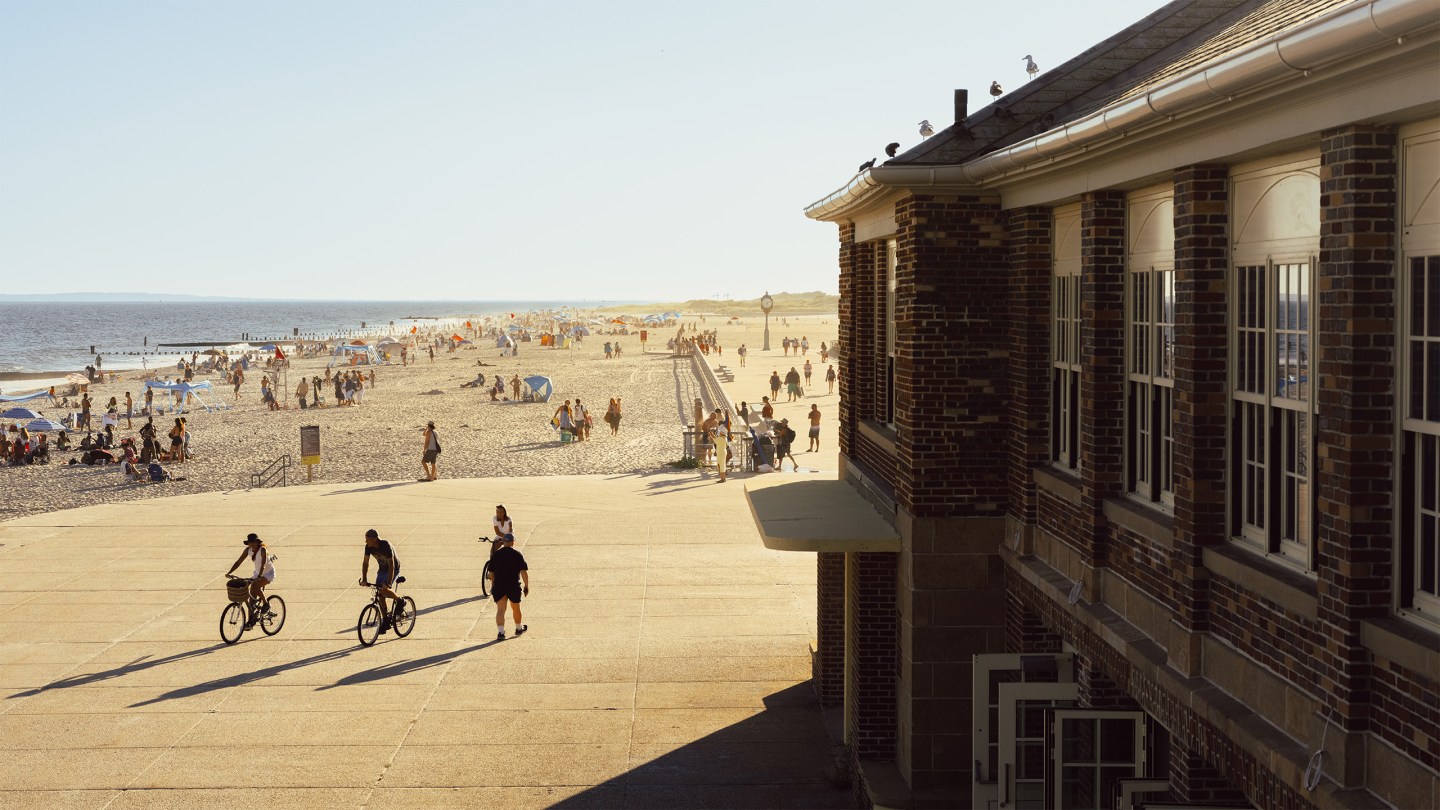
It’s a late-summer evening on the Rockaway Peninsula in Queens, New York, and a salty Atlantic breeze is blowing. The sun’s out, music is pumping from speakers and lobster rolls are being served at The Courtyard, just off the boardwalk at Jacob Riis Park beach.
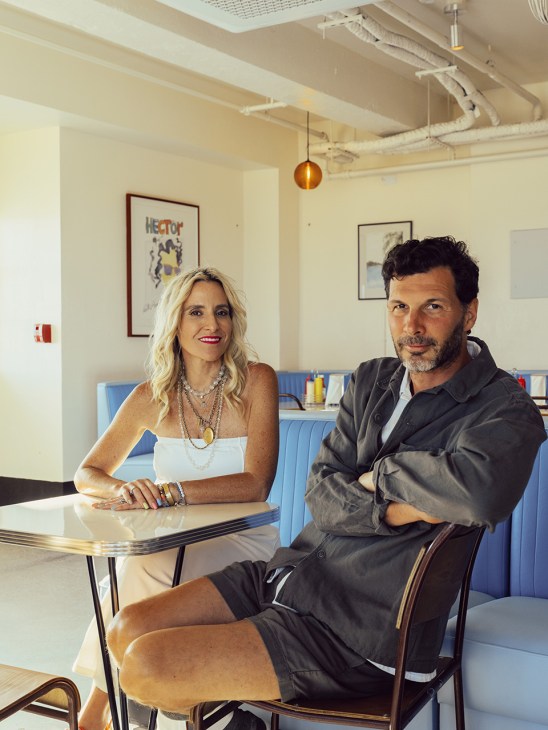
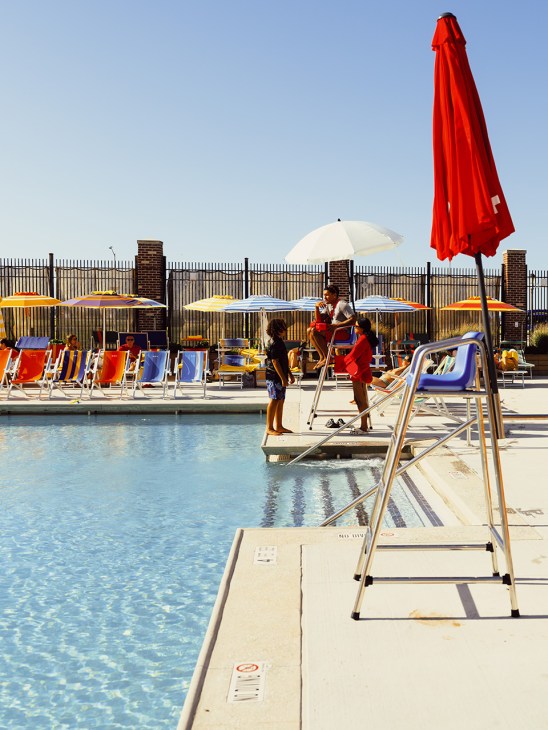
The scene feels a million miles from the pavement-pounding pace of Midtown Manhattan, where steel and glass can dupe residents into forgetting that the city is surrounded by water. “My uncle has lived in New York since 1970,” says Ursula Damani between greeting guests at The Courtyard. “He had no idea that this place exists.” We meet Damani at the soft-launch party for Rockaway Ocean Club, of which she is a founding partner. The club occupies the Jacob Riis Bathhouse, a sprawling art deco building from 1932 that is undergoing an $88m (€76m) restoration. Phase one of the project, which opened at the tail end of the 2026 season, includes a café on the boardwalk and The Courtyard, which will host events. A pool fringed with sunloungers is accessible to club members. Next year, first-floor membership spaces will be added, alongside a 28-key hotel and four food concessions.
The push to give this stretch of coastline a new lease of life comes at a crucial moment. Though New Yorkers experienced a wet summer this year, the season here is growing ever hotter, with heatwaves becoming more frequent and continuing for longer. As a result, there’s an increasing need for places to cool off. City and state administrators agree. Two publicly owned, bay-facing facilities – East Bathhouse at Jones Beach State Park on Long Island and Orchard Beach Bathhouse in the Bronx – were recently refurbished and a floating, water-filtering swimming pool is being piloted near Pier 35 on the Lower East Side.
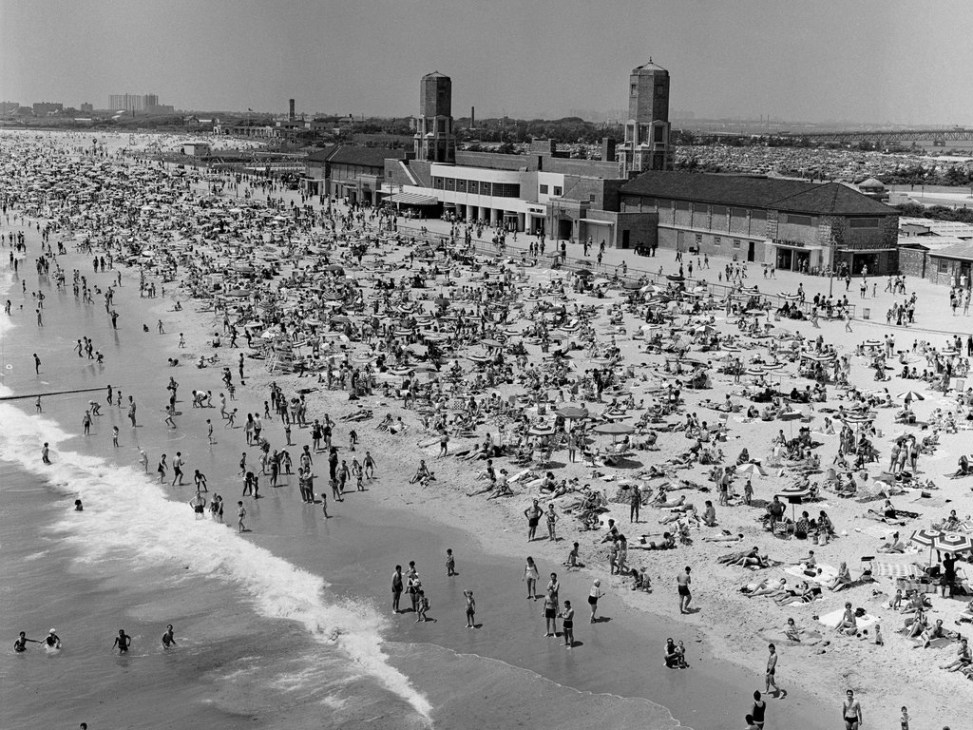
Damani compares the original Jacob Riis Bathhouse to “a sandcastle on the ocean”. Architect John L Plock designed it in 1930 as a place where New Yorkers could take advantage of their coastline, which, at almost 850km, stretches longer than those of Los Angeles, San Francisco, Miami and Boston combined. The bathhouse offered subsidised showers, changing rooms, an open-air dance floor and a solarium, making for an affordable day trip. But this vision for the beach was cut short in 1972 when the facility closed after years of mismanagement and underinvestment from the city, which was then heading for a fiscal crisis. Ownership passed to a federal landlord, the National Park Service, which kept the building boarded up for half a century. Without the budget to do the necessary work, the government agency eventually turned to private-sector companies, including developer CBSK.
Completion of the first phase took almost a decade. The project was hit by delays, some of which were caused by the complexities of dealing with a preservation project – not to mention the pandemic. “I always joke and say, ‘Give me a government acronym: we have probably been in front of them at some point,’” says Damani.
The Rockaway Ocean Club is a little different from the original 1930s vision – a sign of both evolving beach habits (the need to change from formal attire into swimwear is no longer an issue) and the fact that the project will need to be profitable to pay off its loans.
At the soft opening, an Italian-American originally from Gravesend in Brooklyn tells Monocle that he is “worried about change” in the area. Another man overhears and counters, “Everything will turn out fine.” That brief exchange captures the tensions surrounding Rockaway Ocean Club. There has been talk of gentrification and accusations that “The People’s Beach”, as Jacob Riis Park is known, is being privatised; this has led to plenty of online vitriol and calls to boycott the project, even though the beach itself remains public.


What does Damani make of all this? She points out that the bathhouse always used to charge for entry and adds that 60 per cent of the restored site will remain open to the public, including the entire span of the ground-floor boardwalk, with the remaining 40 per cent for members, who pay a fee that starts at $1,000 (€858) a year for Rockaway residents. “There’s a plaque on the building that says, ‘Erected by the City of New York for the recreation of its citizens’. That has been our North Star,” she says. “We’re thoughtful about the diverse traffic that will be coming.”
Pierre Antoine Dourneau, formerly of Soho House, is Rockaway Ocean Club’s chief operating officer. He knows that the club will need buy-in from locals. “We won’t survive without them,” he says. “We’re coming onto their patch so we must be good neighbours.”
Dourneau is passionate about building a community and bringing economic development to this low-income corner of New York. His plans include holding swimming lessons for children and bringing a farmers’ market to what he describes as a “bit of a food desert”. With ambitions to keep the club open from mid-spring through to early autumn, he is already thinking about holding a pumpkin-patch event. If all goes to plan, a new crowd will discover what the Rockaways have to offer: a change of pace, with the Manhattan skyline a distant presence on the horizon, and a welcome respite from the heat. “We’re reminding New Yorkers that we live in a beach town,” says Damani. “That’s one of the biggest joys of this project.”
rockawayoceanclub.com
City of rivers
New York is a city of waterways but you wouldn’t always know it. Its rivers, canals and docks were long treated as dumping grounds for sewage and heavy metals from local industry. Brooklyn’s Gowanus Canal earned the undesirable accolade of being one of the most polluted waterways in the US, while the Hudson also suffered from contamination. The 1930s were the heyday for swimming here but dips were taken far from the canals and rivers.
Robert Moses, who was the city’s parks commissioner from 1934 to 1960, undertook a series of significant infrastructure projects funded by the Works Progress Administration. In addition to the Jacob Riis Park Bathhouse, he oversaw McCarren Park Pool in Greenpoint, Brooklyn, and the bay-facing Jones Beach State Park. But over the decades, many of these spots fell into disrepair and were forgotten – until the recent resurgence in interest.
New York is beginning to re-evaluate its relationship with water. In 2012 a $50m (€43m) renovation brought the long-closed McCarren Park Pool back to life. The East Bathhouse at Jones Beach State Park, shuttered since 2009, reopened this year, thanks to a $100m (€86m) investment. The Bronx’s Orchard Beach Pavilion also reopened to the public this year after receiving $114m (€98m) in funding.
The rivers and canals, however, still have a long way to go. Gowanus Canal is undergoing a multimillion-dollar clean-up but remains toxic. Swimming in the East River and the Hudson remains off limits too but a pilot scheme for a water-filtering floating pool on the East River (named +Pool) is nearing completion and could prove to be a game changer. With summers getting hotter, these projects will be sweet relief.