Keep on trucking
Truckmaker Scania is the first firm to undergo our new HQ Audit. Will the wheels come off as we take a tour of its head office in Sweden?
When it comes to workplace design there appear to be two opposing poles that are slowly sliding further apart. On the one hand you have companies (often big corporate players) that care little for thoughtful design and see their office as yet another item on the balance sheet; the cheaper it can be made, the better. On the other hand you have start-up businesses that seem to think a headquarters should look and feel like a secondary-school common room, complete with beanbags, table-tennis tables and graffiti.
Enough. To redress the balance we’re launching HQ Audit, a new regular feature that will take one thoughtful office at a time and highlight why it works – and also point out a few things it could do to improve. There is still space in between the halogen bulbs of the cubicle farm and the upcycled furniture of the glorified playpen for an office that is comfortable, smart and improves staff wellbeing. This includes the amenities available and perks offered as much as design. And it certainly requires more than a beanbag.
Keeping the wheels turning
Scania
Södertälje, Sweden
It’s snowing hard in Stockholm County’s industrial heartland of Södertälje and truckmaker Scania’s employees are fording into work through slushy puddles. Once inside the red-brick head office, most sigh with relief. Yet this high-ceilinged, well-lit and beautifully furnished lobby would offer tranquillity whatever the weather. For a maker of gigantic lorries and roaring engines, it’s oddly subdued.
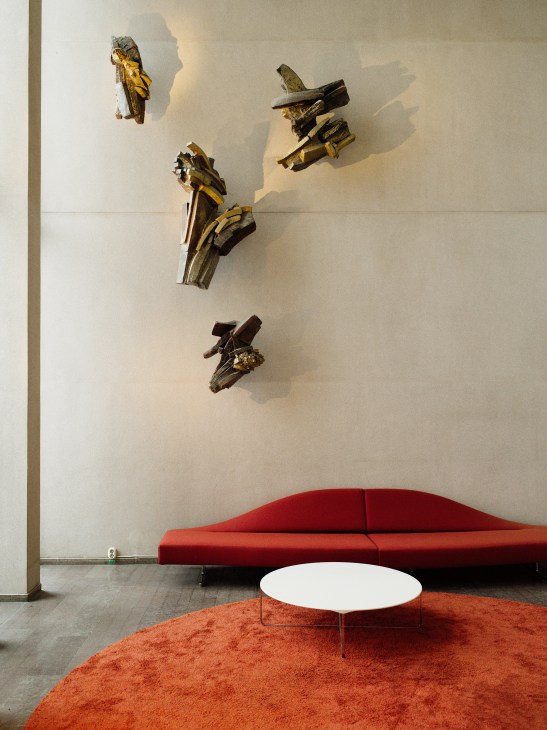
Conspicuous clues to the company’s trade do exist: a Scania truck sits among a dainty flowerbed, a vintage car welcomes visitors at reception and there’s a model lorry in a glass case. But there is no bearded truckie folklore here, only the sophistication of a mid-century sofa, thick orange rugs and armchairs resembling Arne Jacobsen’s Egg chair.
For a truckmaker to have such handsome interiors may come as a surprise to those popping in to strike a deal on the latest HGV. But for the many long-time employees here it’s no extraordinary setting – yet one that garners quiet appreciation.
Established in 1891 as railway-carriage maker Vabis, the firm has evolved through acquisitions and divisions. The Södertälje site covers more than 4 million sq m (or 600 football pitches). The need for more room is behind the disparate architecturural styles: Scania acquired all the buildings it could get around here, including a former shopping centre. But its main office remains in the 1966 red-brick tower designed by Swedish architect Lars Wahlman.
Design
People power
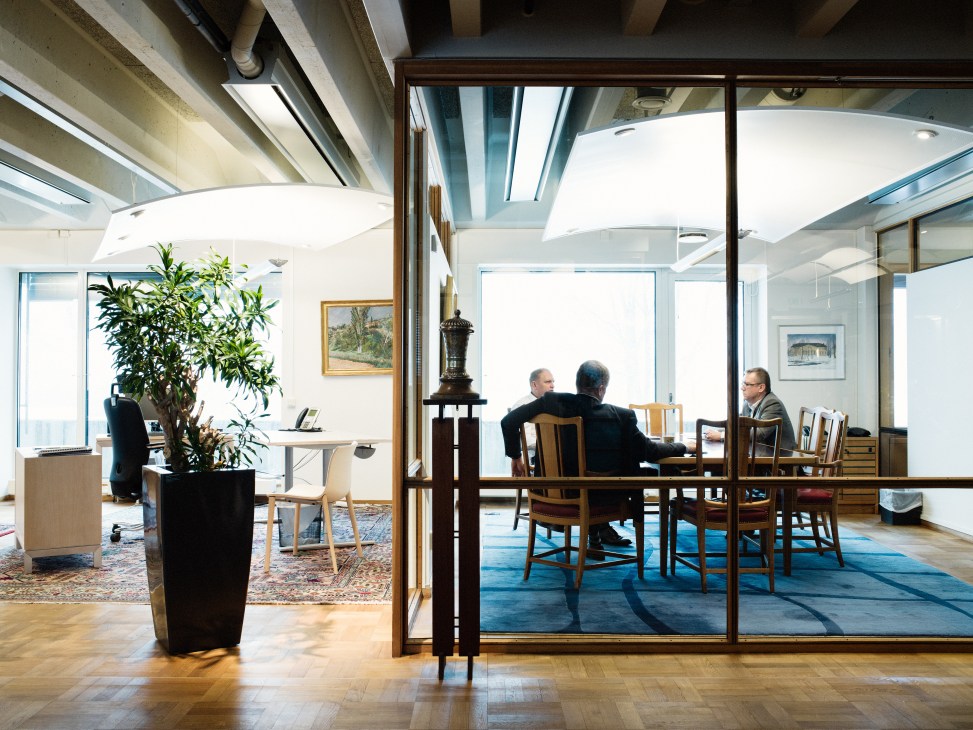
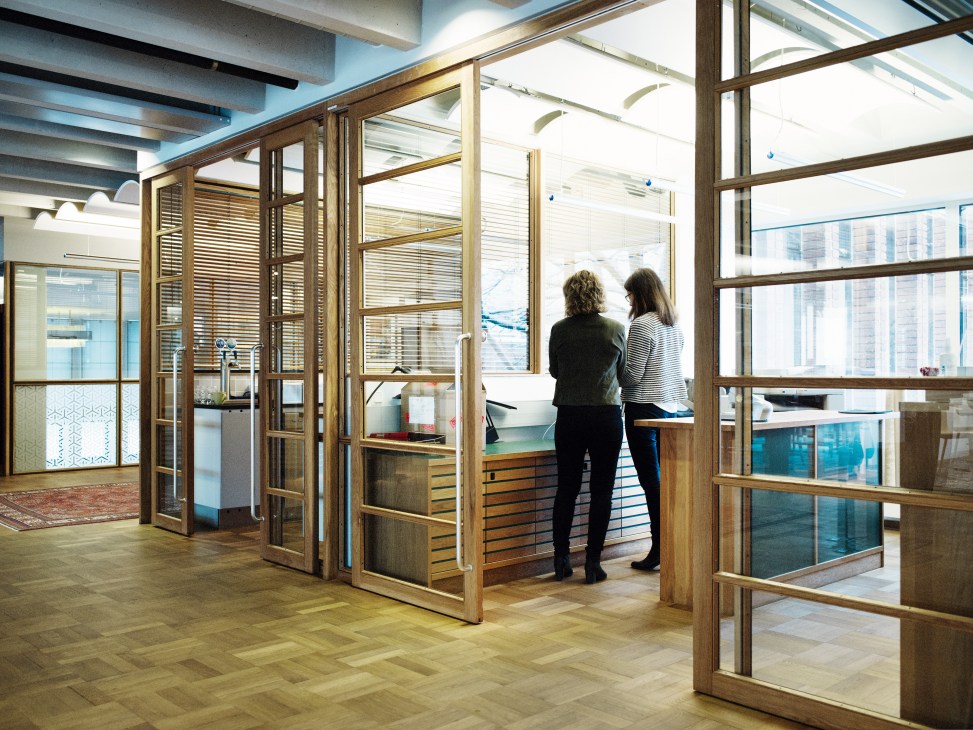
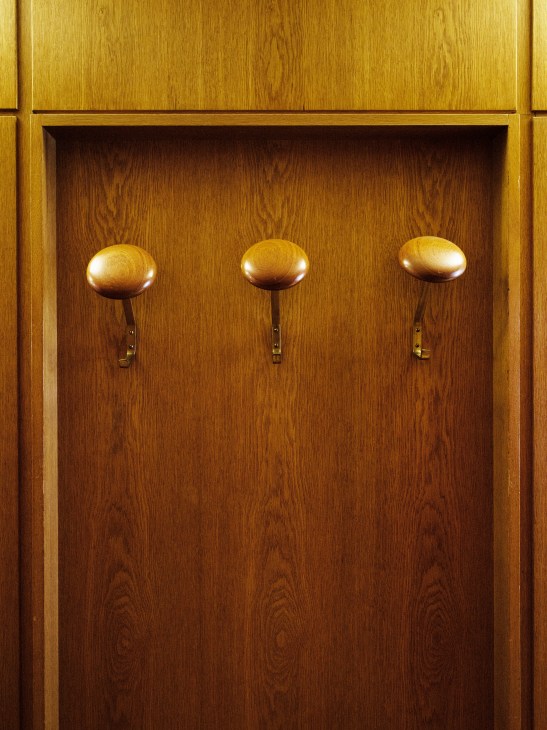
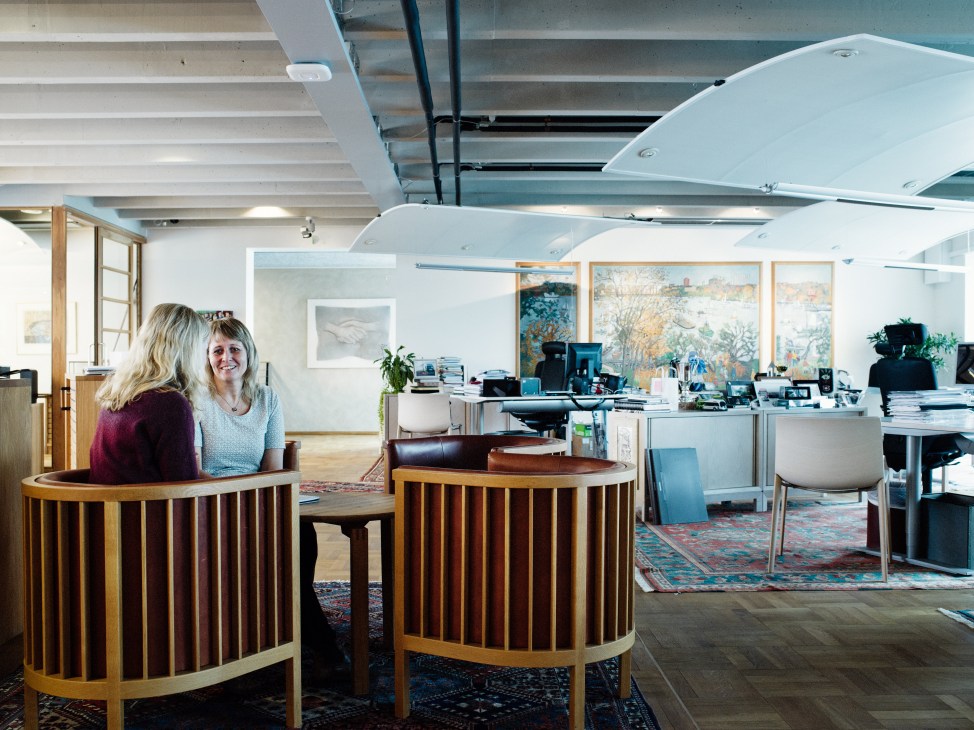
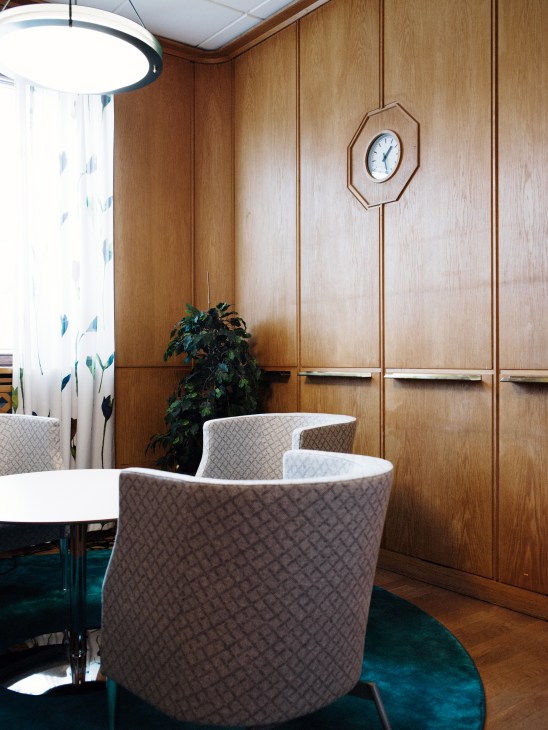
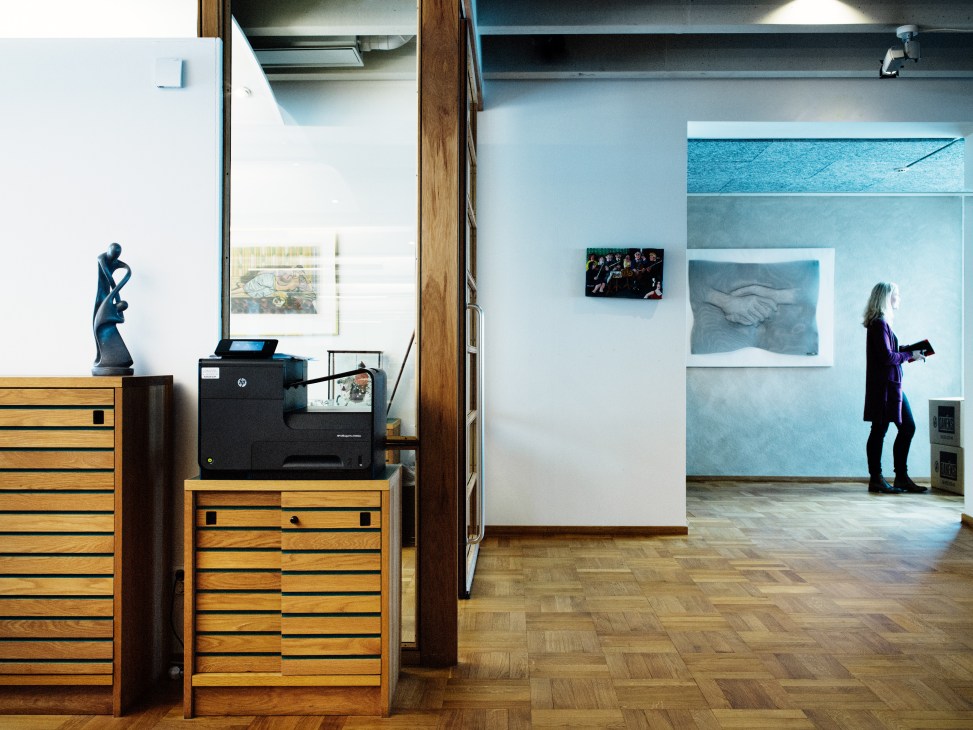
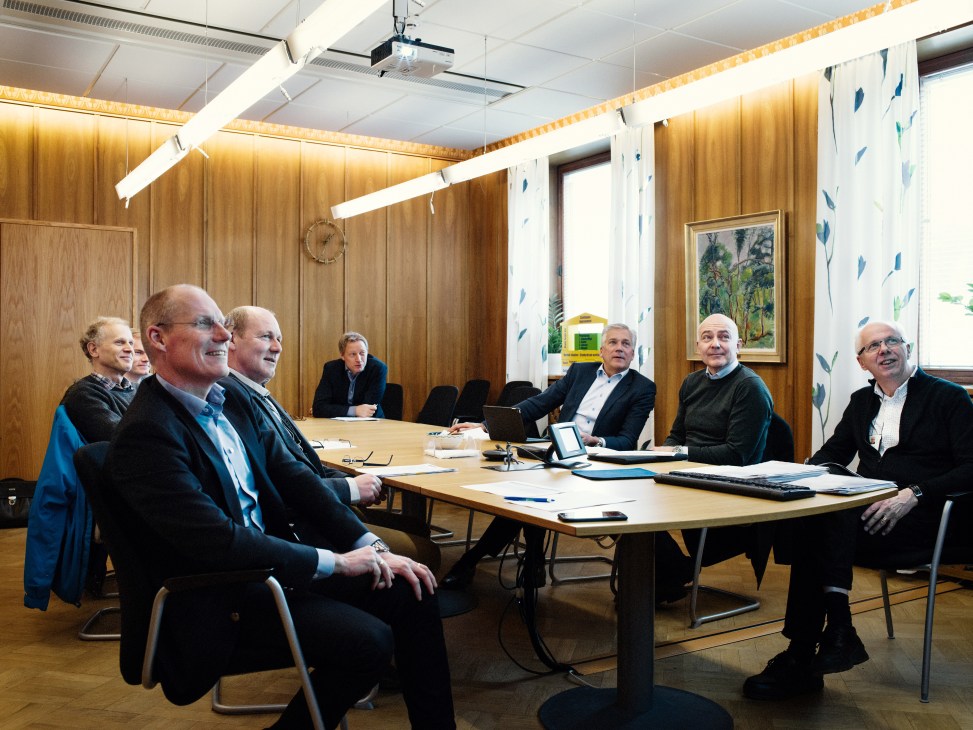
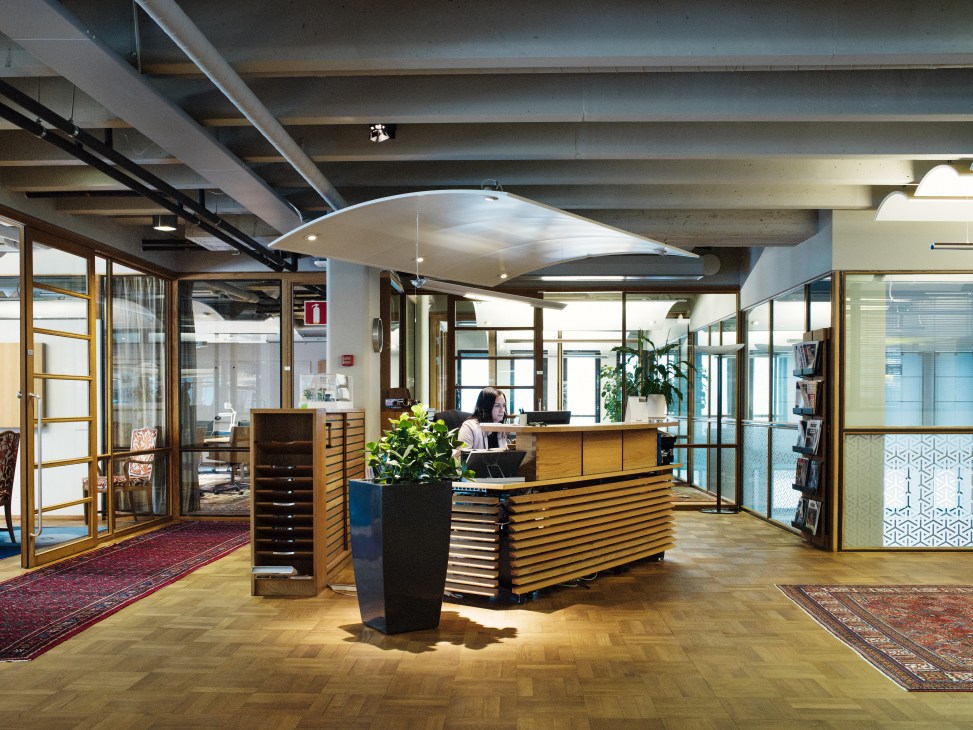
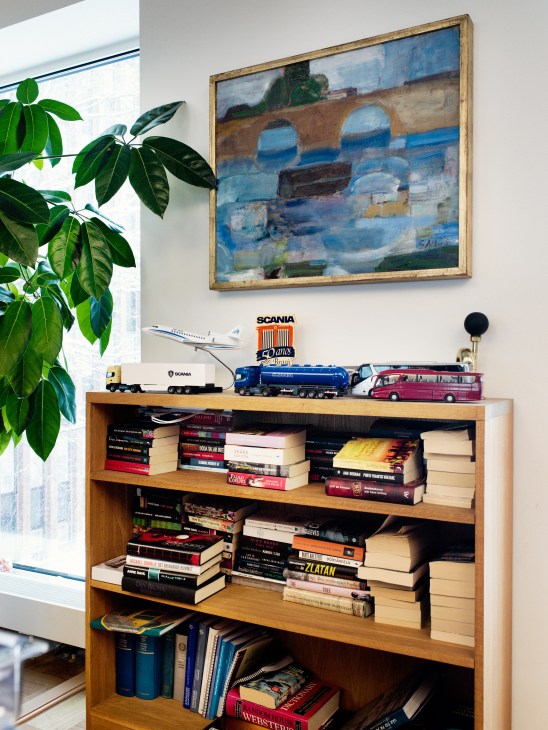
“Some elements have been kept from the old design; we have 1960s Swedish furniture blended with more contemporary items,” says Kent Conradson, head of human resources, as he shows us round the floor where he works along with five other executives, the CFO, CEO and their respective assistants.
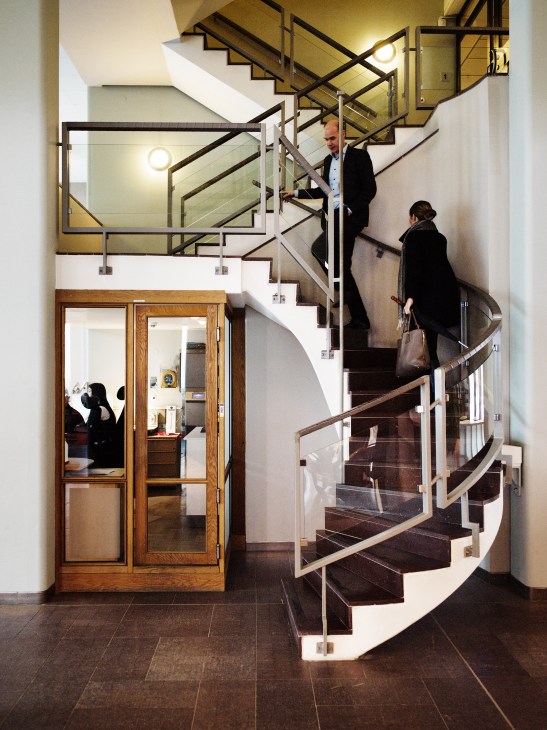
The oak cabinets and round-back armchairs testify to the Scandinavian penchant for 1960s simplicity. Yet one of the smartest decisions Wahlman made in designing the nine-storey building owes much to Swedish enthusiasm for transparency and equality. The executives’ office is on the first floor, not at the top. CEO Henrik Henriksson’s office is up a spiral staircase. “Having our office here offers visibility,” says Conradson. “We’re just above the main entrance so people can see the light is on. It means we’re close to operations and employees; it emphasises openness and shows we have low hierarchies.”
There are few companies that would describe themselves as opaque and hierarchical but Conradson’s claim has substance. Henriksson’s meetings take place in a room with floor-to-ceiling glass walls. Between appointments he grabs a coffee from the floor’s kitchen – where the assistants later prepare a mid-morning fika (coffee break) of grapes and polkagrisar: pink-and-white Swedish candy.
Sat around the oval coffee table near their desks, the assistants listen for the telephone but enjoy one another’s company. “It’s a beautiful office but what’s important is the people,” says Henriksson’s assistant, Eva Skeppström. “Laughs are important when you’re struggling through an intense day.” She’s worked here since 1977 and has seen the great difference the redesign in the 1990s – by Stockholm-based practice Murman – made. Removing isolated modular one-person units created an open, shared space. “It was boring sitting on your own,” says colleague Elisabeth Johnson. “As secretaries it’s unusual to have a team.”
Workspaces
Pride of place
With its Persian rugs, lush potted plants and paintings by the likes of Swedish artists Peter Dahl and Hilding Linnqvist, the executive floor is undoubtedly one of the more pleasant corners of Södertälje’s sprawling site. Yet many of its perks extend far beyond the executive pen; most departments, for example, have a book-swap library similar to the one that’s sat behind Skeppström’s desk. As for the art collection, canvasses and sculptures are ubiquitous throughout the building. Twice a year, all employees can enter a lottery to win one of the works from the extensive collection.
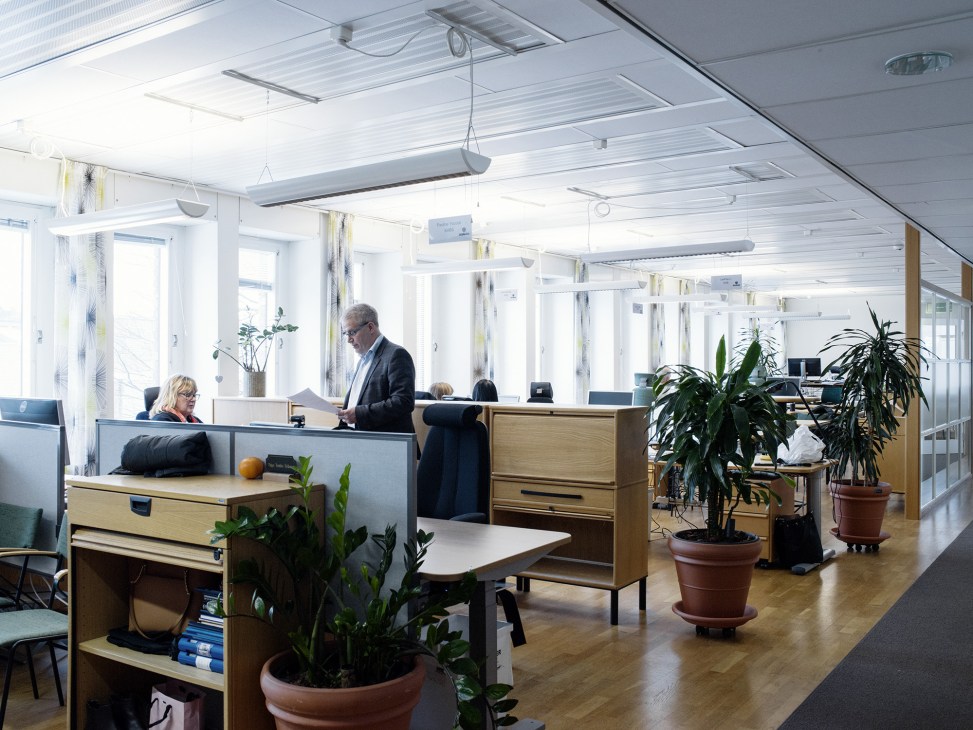
Although the architectural styles differ across the site, workspace layouts remain consistent with one vital, common feature: an abundance of toy Scania trucks on any available surface. The former head office (now home to the production management team) might have a few gorgeous wooden-clad 1940s meeting rooms but for many employees pride comes with or without the vintage furnishings. “I love to walk into the office in the morning,” says brand manager Nils Kjellsson, who works on the second floor of Scania’s main office. “It’s inspiring to work in such a classical industrial location. It’s connected to our way of working too: very down to earth, not flashy, not show-offy.”
Hovering above his head is a sign suspended from the ceiling that details his name and the department that he works for – and every desk on this floor comes with such a label. “One of our driving principles is respect for individuals,” says Kjellsson’s colleague Mikael Persson. “These signs mean that each individual has a name here and that your name is more important than your position. It means that everybody’s opinion is valuable.”
Employee wellbeing
Fit for purpose
As far as the physical and mental health of individual employees is concerned, Swedish laws dictate a high level of company engagement. Yet Scania still goes further than most. All desks in the workspaces are height adjustable so employees can choose whether to work sitting down or standing up. Comfortable high-back chairs can be selected and tweaked to personal specifications in an in-house centre with the help of an ergonomics specialist, who also routinely visits workstations to make sure everyone is happy with their furniture and environment.
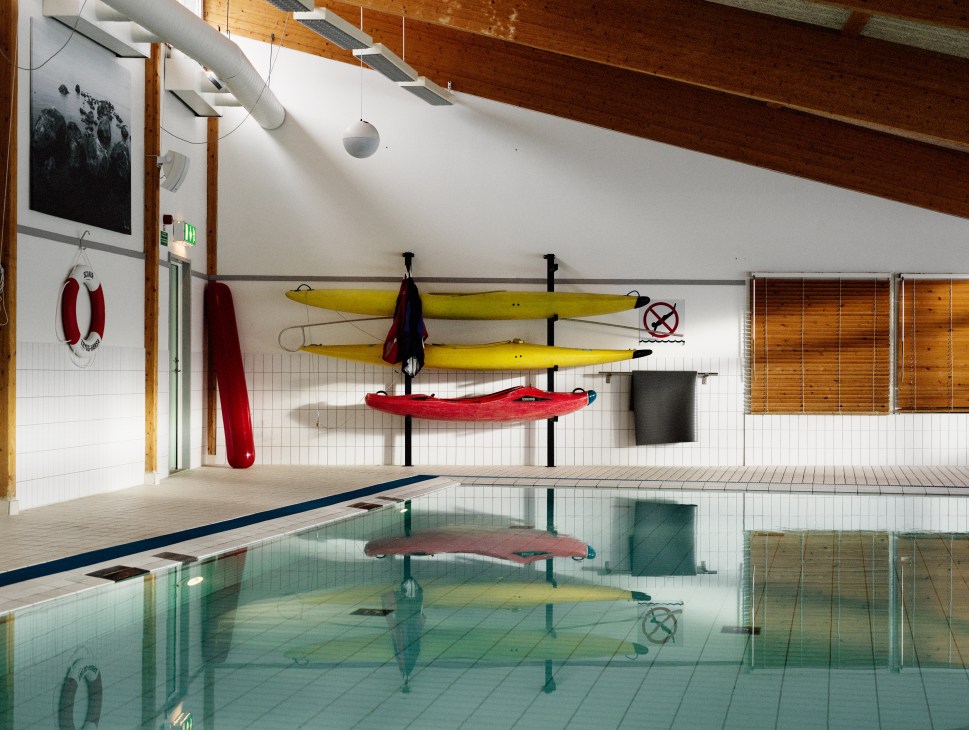
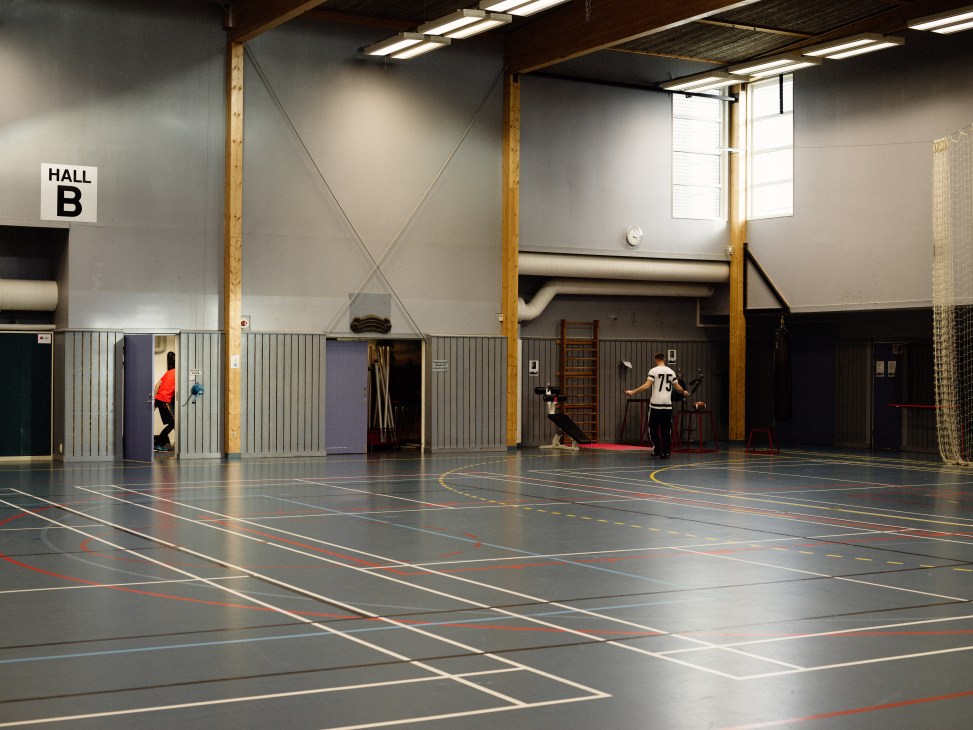
Meanwhile a team of in-house gardeners care for the countless potted plants that bring vitality to every public space and office. And then there’s the health centre, complete with tennis courts, football pitch, hockey field, swimming pool and gym. Attendance is free and employees are not only encouraged to train but duty-bound to dedicate at least one hour of their working week to their physical fitness.
Holidays are looked after too with a summer camp for children and a spot on the southern Swedish peninsula where employees can pitch up a tent and hire rowboats. In an age when “good” office design tends to resemble a playpen more than a workspace and employee wellbeing means little more than installing a table-tennis table, Scania goes above and beyond to make sure staff are kept happy – even in a country that prides itself on its welfare and wellbeing.
Canteen
Food for thought
Feeding the 15,000 workers here is the job of nine canteens spread across the site. To reach our chosen one we have to jump in a car, although we could use the internal taxi department and fleet of minivans that do the rounds here every 10 minutes or so.
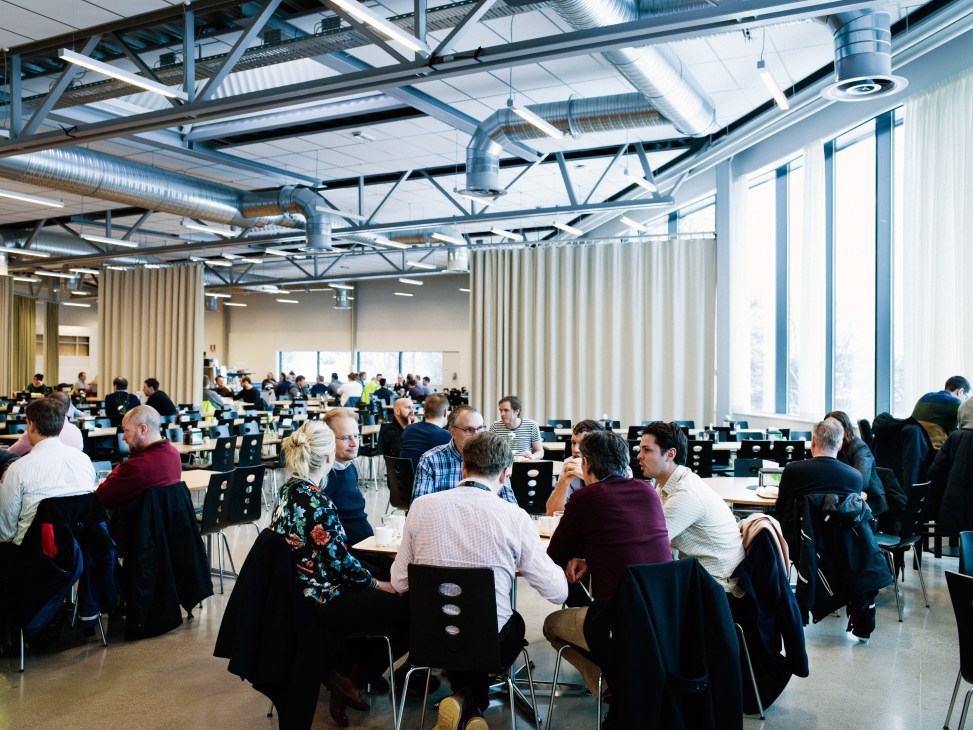
The R&D department is a sadder-looking cluster of cement blocks clinging to a hill. The canteen, which serves the 3,500 employees who work here, is a boxy black structure designed by Stockholm-based bsk Architects seven years ago. Inside, steel pipes give it more the look of a converted warehouse than a mess hall.
On the menu is anything from salads to stews and every Thursday is pea-soup-and-pancake day, as national tradition dictates. This 800-seater canteen is an exercise in streamlined efficiency – the kind of operation you’d expect from a company that makes 70,000 lorries a year.