

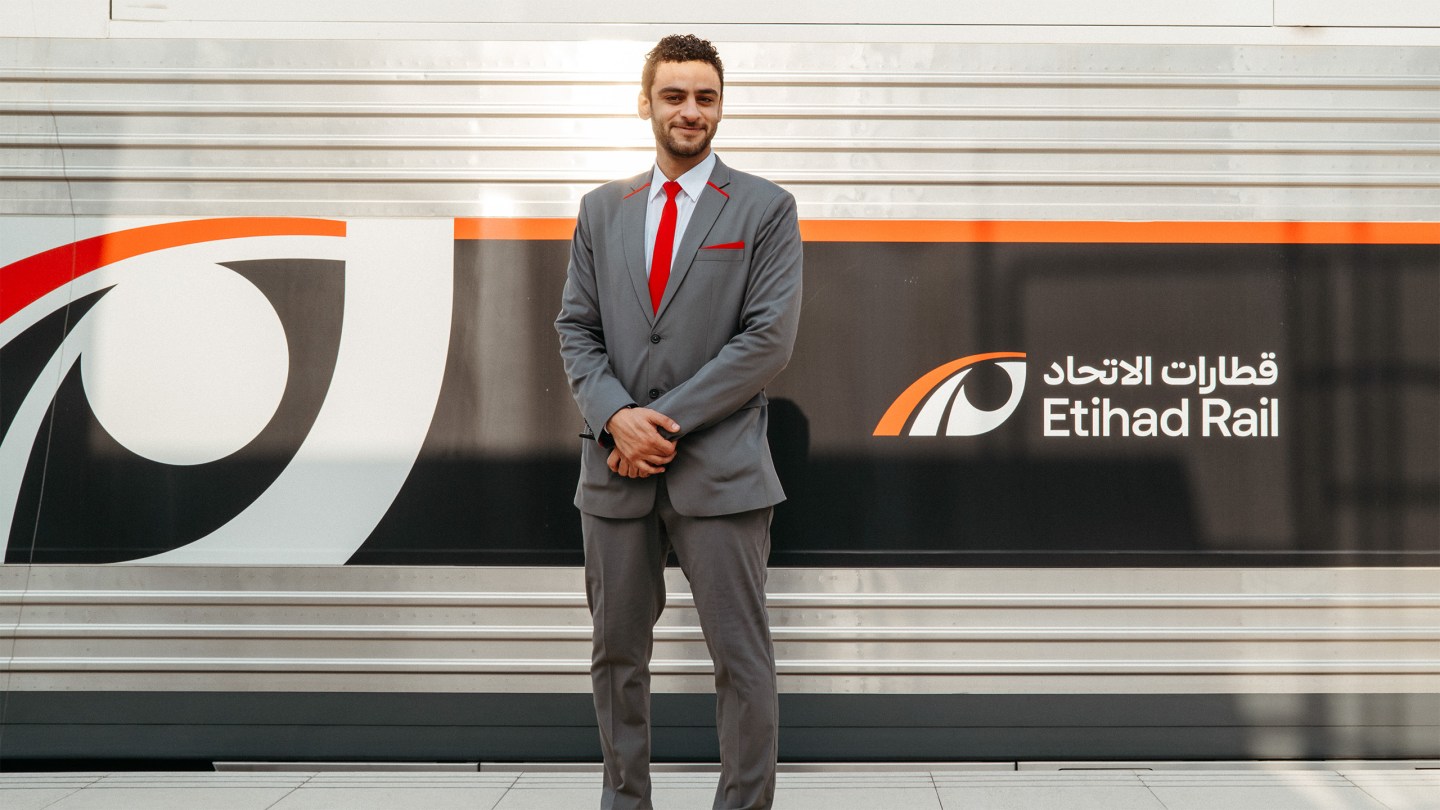
Etihad Rail’s passenger debut puts the UAE’s public transport on the right track
We join Emirati commuters on the UAE rail network’s expanded passenger service. The new line, which links Dubai to Abu Dhabi and beyond, could revolutionise domestic travel for Emirati residents.
From the window of the 08.19 to Fujairah, Monocle watches a man run the length of the platform at Abu Dhabi’s Mohamed bin Zayed City Passenger Train Station, a cup of coffee in hand. The coffee isn’t remarkable but a dash for an intercity train is – at least, here in the Gulf. People in the region are so accustomed to the freedom of driving that a railway timetable is an unfamiliar consideration.
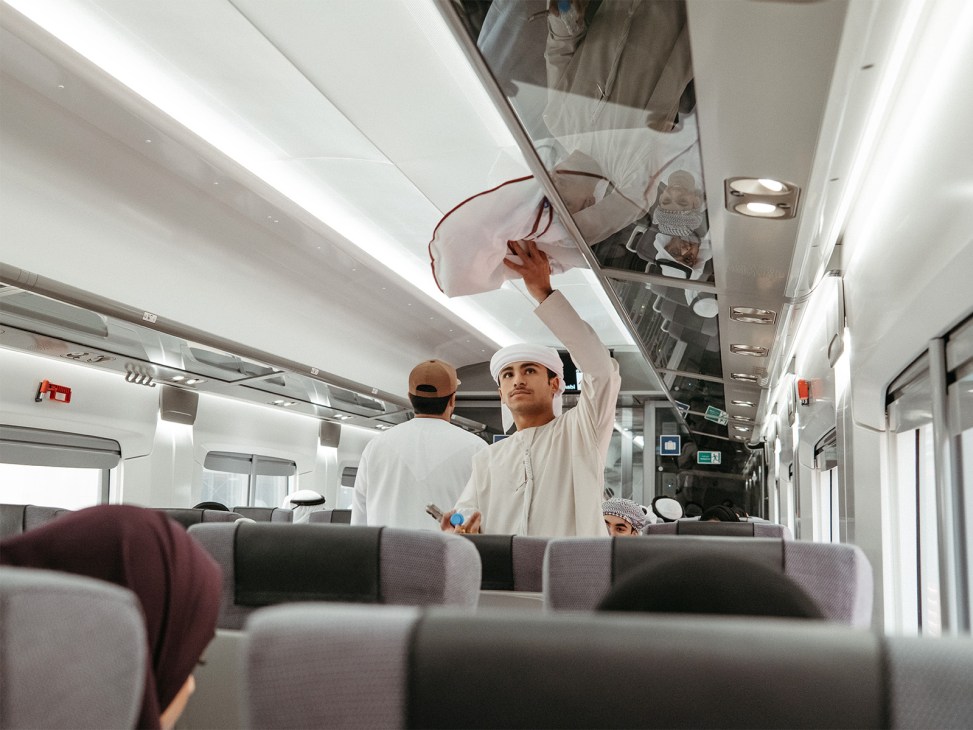
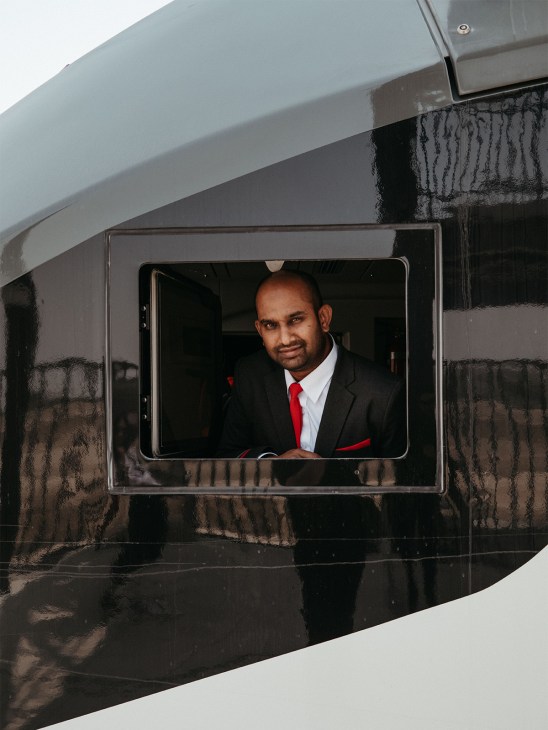
On board, impeccably uniformed hostesses welcome us with more coffee and chocolates. The UAE knows how to make travel feel like an occasion. The challenge for Etihad Rail, which began running trains across a hugely expanded network this summer, is to make rail travel feel routine. In June passenger services started connecting Abu Dhabi and Fujairah using an existing 900km freight network. The trains, capable of reaching 200km/h, make the journey in 111 minutes. Dubai and Al Dhaid joined the line at the end of September, with the centrepiece trip from Dubai to Abu Dhabi taking about an hour.
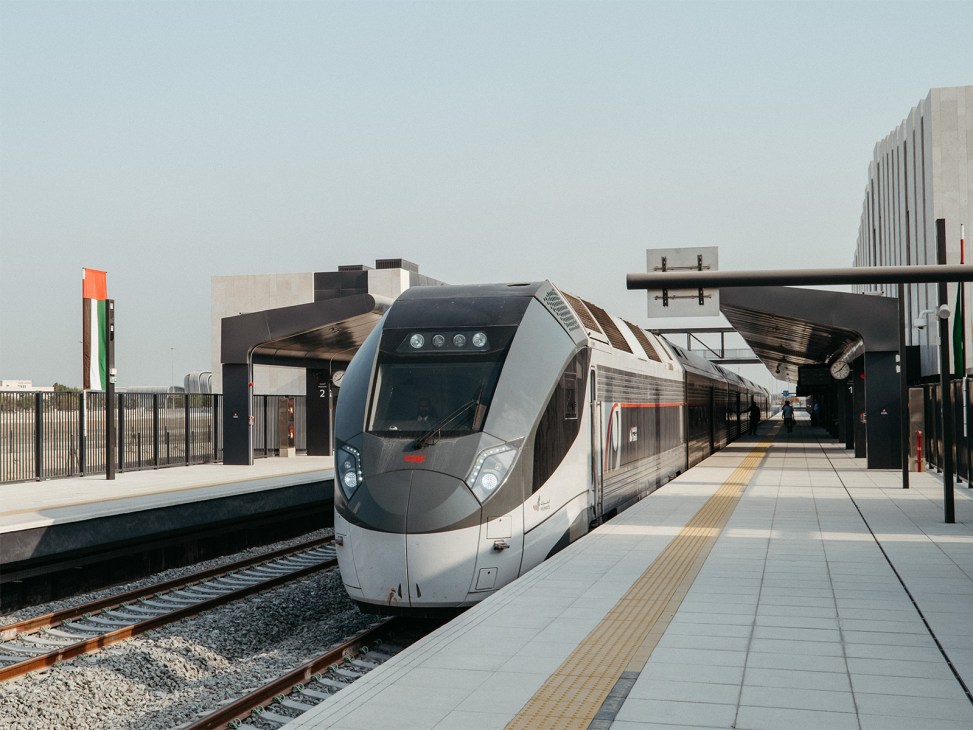
These changes – linking the country’s two principal economic centres and allowing travellers to avoid the car-clogged Sheikh Zayed Road – could revolutionise how people get around. Inside Monocle’s carriage, most of the passengers are Khaleeji (from the Gulf). They read the Qur’an or scroll through the news on their phones as apartment blocks give way to pylons and scrub. A trolley brings tea and spiced milk tea. As we approach Fujairah, many gaze out the windows at the changing scenery.
For residents, the railway could be transformative. A reliable service would make taking a job in another emirate far easier and give greater independence to those who don’t drive. Any reduction in car traffic would also benefit those who never even board a train.
“Every great piece of national infrastructure has two beginnings: the day it’s built and the day people begin making it their own,” Azza Al Suwaidi, Etihad Rail’s COO, tells Monocle. Early ticket sales have been encouraging – 150,000 were bought by mid-September – but it remains to be seen how many regular drivers change their habits. Monocle’s journey suggests that the experience needs some tweaks. There’s a persistent rumble from the carriage floor and the wi-fi is patchy. Passengers bound for Dubai or Abu Dhabi’s main station also have to carefully plan a trip at either end (see box). On our visit, the board at Mohamed bin Zayed City Passenger Train Station lists just three Fujairah departures across the day. Comfort-class trips between Abu Dhabi and Dubai are reasonably priced at AED39 (€9.5) but if repeated daily, with taxi fares on top, the calculation changes.

The network will become more useful after the planned openings in Liwa and Madinat Zayed in November, plus three more in Al Dhafra in December and Sharjah’s University City in March 2027. Hafeet Rail is building a connection to Oman too. And a separate, fully electrified high-speed line is expected to bring Dubai and Abu Dhabi within 30 minutes of each other at speeds of up to 350km/h.
Approaching Abu Dhabi on our return, we spot some passengers touching up their make-up – something that they couldn’t do if they were driving. This is the sort of simple perk that could make the railway indispensable in the UAE.