
The White House says that the ‘golden age’ of American rail is here. So why can’t the US find a new boss for Amtrak?
The US is putting its national rail carrier system back on track with record infrastructure funding. Next it must find a new leader – and its interim president, Byl Herrmann, could be it.
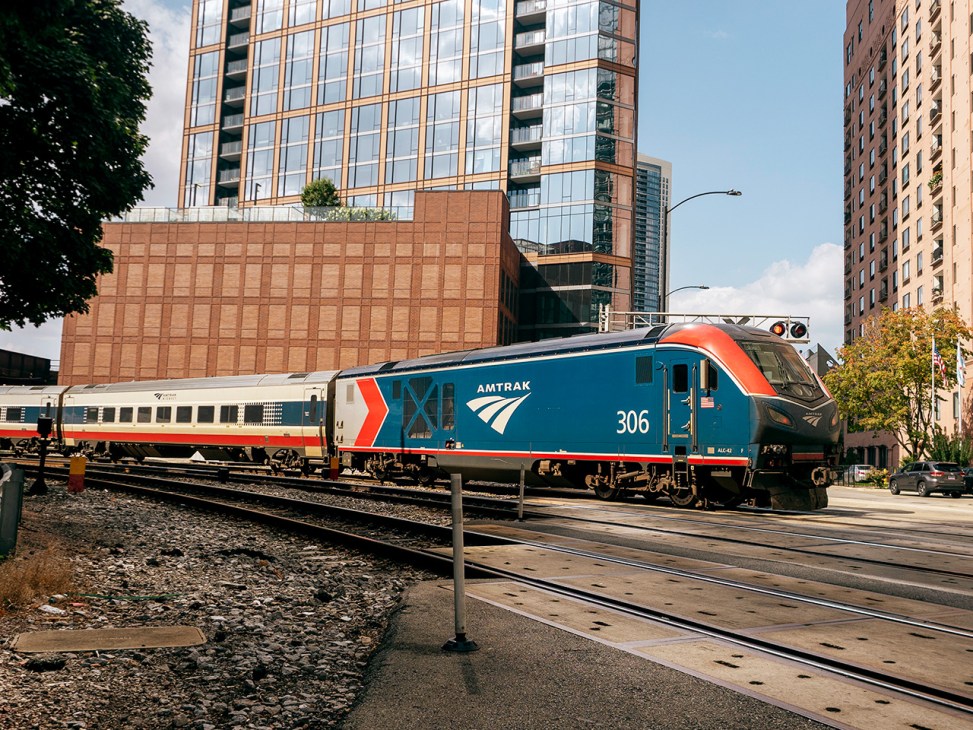
It’s easy to poke fun at slow, unreliable US passenger rail from the cab of a TGV Lyria or, indeed, an Etihad Rail train. But things are looking up for Amtrak, the national rail carrier that launched in 1971 as private lines went bankrupt.
In 2021 the Biden administration signed off on legislation allocating a record $22bn (€20bn) to the publicly owned company and a further $44bn (€39bn) for improvements to infrastructure. The Trump administration has been happy to take credit. The White House has celebrated last year’s upgrade to the high-speed service between Boston and Washington, as well as new routes such as the Mardi Gras Service along the Gulf Coast. The proposed Build America 250 Act that would inject more money into rail has rare bipartisan support in Congress. In August the US transportation secretary, Sean Duffy, declared a new “golden age of rail”.
So why doesn’t anyone want to be the US conductor in chief? Amtrak is on its sixth leader since 2016. “The average tenure for a US corporate CEO is less than eight years,” says Frank Wilner, the author of Amtrak: Past, Present, Future. “Only two Amtrak CEOs have exceeded that average.”
The ideal candidate combines “someone who understands railroading with the political instincts to stand up to Congress”, says Sean Jeans-Gail, the vice-president of policy at the non-profit Rail Passengers Association. Amtrak’s interim president, Byl Herrmann, who has been at the company for almost 30 years, could be that person. “Herrmann has learnt the Sturm und Drang of the often-incompatible relationships involving Amtrak, its politically appointed board, a divided Congress and the often unfriendly freight railroads,” says Wilner.
Herrmann declined to declare his candidacy for the job in an interview with Monocle in September. If he gets the nod, he will have a platform based on international standards after recently leading US delegations to Austria and Spain to study best practices. And, fresh from attending Berlin’s Innotrans trade fair, he has a vision for at least five years of capital improvements. That, he believes, will give US rail the edge – and those TGV and Etihad Rail passengers will finally stop sniggering.