
Where next for Nairobi’s mobility? The city’s ‘boda boda’ drivers think e-bikes are the next step
Electric motorbikes are changing how the Kenyan capital moves. We follow one day in the life of a ‘boda boda’ taxi driver, as he tells us why these two-wheeled vehicles are gaining popularity.
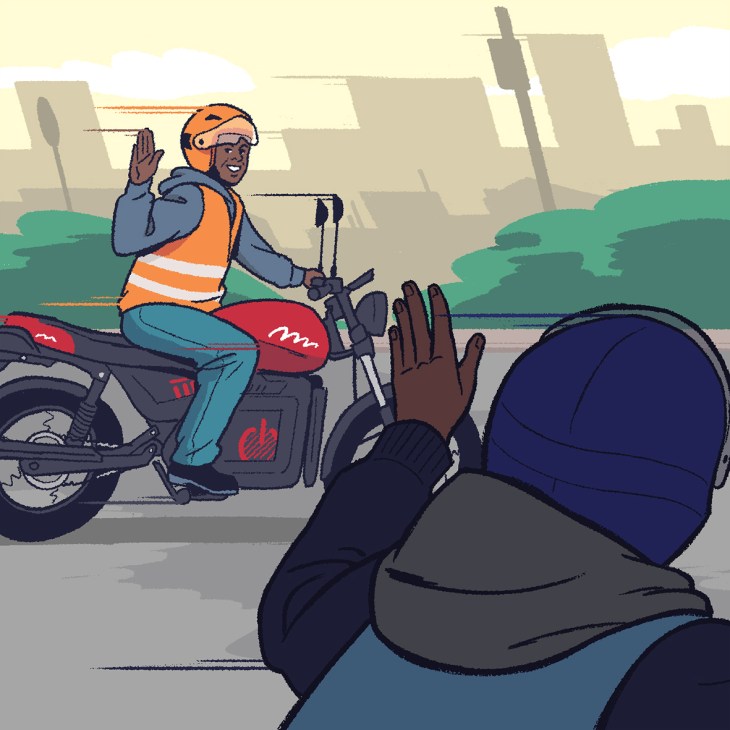
It’s 06.00 and Augustine Khaemba is riding his Spiro Commando electric motorcycle into Nairobi’s CBD, looking for a fare. Khaemba is one of thousands of boda boda riders in the city – an occupation that has boomed since import duty was scrapped for motorcycles up to 250CC in 2008. Today the two-wheeled taxi sector is worth about $5.2bn (€4.6bn) a year. In 2024 some 5,000 of the country’s 69,000 new motorcycle registrations were electric. By 2025, that share had hit about 15 per cent. Across Africa, the International Energy Agency (IEA) counted about 70,000 electric two-wheeler sales last year. In most of the world, electrification means cars. Here, it’s arriving on two wheels.
By 07.30 the streets in Nairobi’s CBD have seized up. Motorcycles squeeze between taxis and private cars, while minibuses jostle for space. But Khaemba slips noiselessly through the chaos. “Silence is good,” he tells Monocle over his shoulder. Most of his morning passengers are traders bound for Gikomba, one of Africa’s largest second-hand clothing markets. An inner-city trip of 45 minutes will set them back about KES200 (€1.38); when it rains, fares can double. Until earlier this year, Khaemba drove an old Bajaj Boxer 150CC petrol motorcycle. Most passengers prefer his new ride. “Female customers like the absence of fumes and burns from the exhaust pipes of petrol motorcycles.”
The “fuel” for his Spiro Commando – a recharged battery – costs about KES300 (€2) a day, half what he spent on petrol for his old bike, though his weekly repayments for the purchase have risen from KES3,100 (€21.33) to KES4,520 (€31.10). All told, he is about KES650 (€4.47) a week better off – not an insignificant sum in Kenya. But what he has really gained is convenience. When Khaemba’s fuel runs low, he pulls up at one of Nairobi’s many battery swap shops, lifts out his spent pack and slots in a charged one. The whole manoeuvre takes under a minute, with one battery carrying him almost 100km. Battery-swapping stations began popping up around 2022 and are now all over the city. Compact steel cabinets, sometimes fitted into existing petrol stations, they are often brightly branded, with stacks of pre-charged batteries waiting to be swapped.
Musyoki Muindi is the managing director of Enzi Electric Motor Co, which runs several swap stations. He spent years in the petrol business before switching to electricity in 2021 and believes there is one fundamental difference between the two systems: with electric bikes, the vehicle and the energy supply can be part of the same business, which is impossible with petrol given the space required and the regulations around selling fossil fuels. Electric motorcycles cost less to run too. In 2024 about 91 per cent of Kenya’s electricity came from renewables. The government has announced a goal of 30 per cent of motorcycles to be electric by 2027, introducing VAT exemptions on EV imports and reducing excise duty to 10 per cent to help it achieve this end.
Similar measures are being taken elsewhere in the region, making African cities pioneers in electric mobility. Ethiopia has banned imports of all combustion vehicles and Rwanda has put a moratorium on petrol-burning motorcycles registrations in Kigali. Kenya is trying a gentler approach but there are still bumps in the road. “While two-wheelers are good at curbing carbon, they haven’t been so good at making the city tidy,” says Lorna Kariuki of non-profit Women Shaping Cities. Electric bikes still take up road space and safety is also an issue. According to the National Transport and Safety Authority, 1,148 motorcyclists died on Kenya’s roads in 2025. Nairobi City County is drafting a new transport plan but effective measures will take time. Still, drivers like Khaemba are mostly concerned with their bottom lines, which are improving. By 20.00 he is heading back towards his neighbourhood, Kasarani, his silent bike disappearing into the traffic.