From workshops to hotels, here’s how Vienna is transforming its hidden gems for a second life
With space at a premium, the Austrian capital has long made a virtue of upgrading and expanding existing properties. We meet some of the people building for the future on old foundations.
Austrian glass-blower Robert Comploj is perhaps best known for his oddly shaped glass sculptures, which he has produced for clients such as marmalade brand Staud’s and energy-drink company Red Bull. But the tousled-haired Comploj also makes time for personal projects. Positioning himself in the space between art, design and craft, he has exhibited work at Vienna’s Hofburg palace and at Art Basel Miami. “There are many kinds of glass-blowing: the Venetian tradition, the Czech tradition,” he says. “I want to have my own style, my own way.”

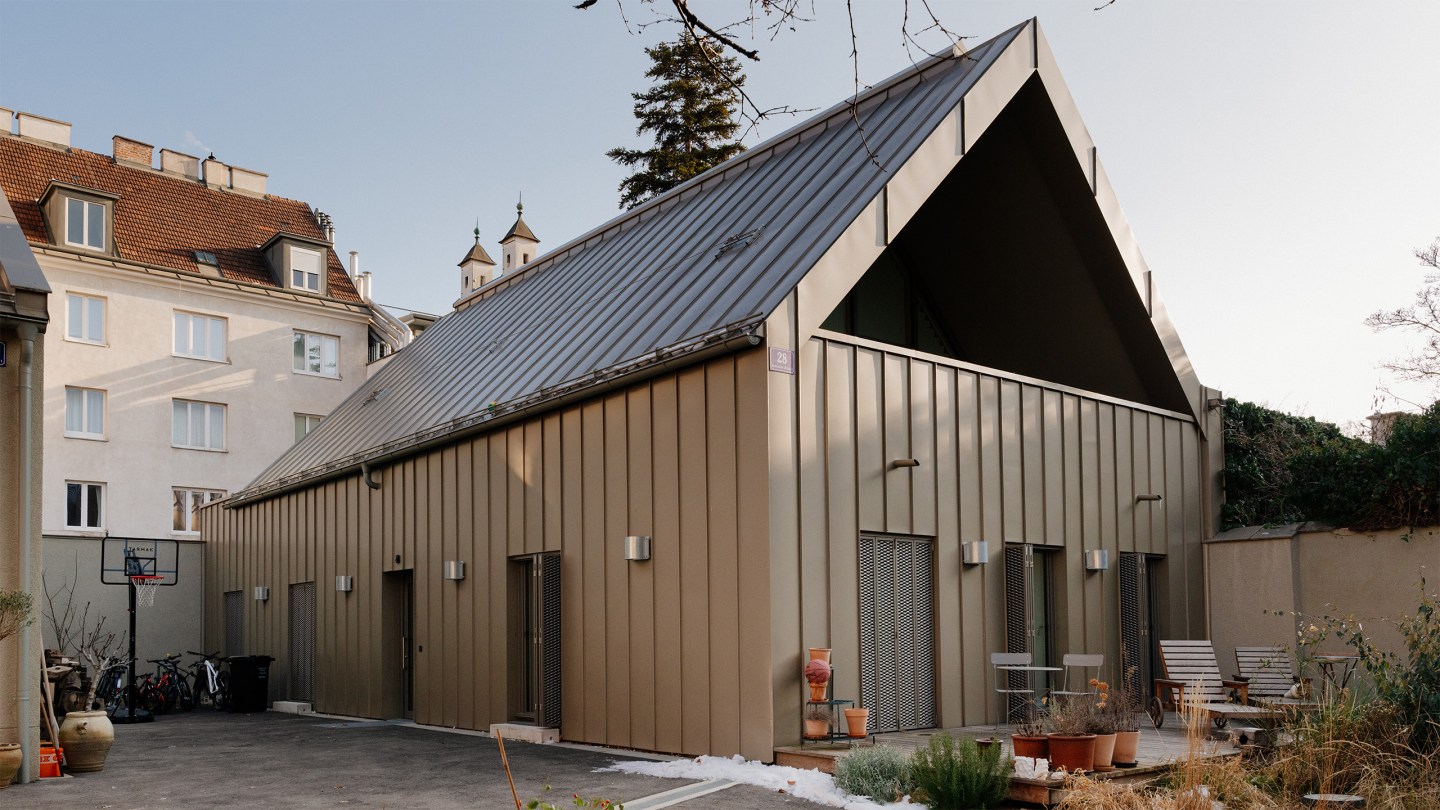
Comploj opened his first studio in Linz, Austria’s third-largest city, before moving to a space in Vienna’s Neubau district. His practice, however, soon outgrew it. His search for an alternative led him some 3km away to the courtyard of a residential block beside a red-brick Lutheran church in the Währing area. There, he discovered a former car-repair workshop spread across two adjoining structures, with offices in a third. He bought them in 2018 and commissioned local architecture firm Berger 1 Parkkinen to convert them into a working studio and home, moving in five years later.
“This place was really run down and out of use for a long time,” says Tiina Parkkinen, the firm’s co-founder, as she walks through the old workshop, which is now Comploj’s atelier. Today the revamped space is flooded with natural light from large windows and skylights. At its centre is a huge furnace, capable of holding about 120kg of molten glass and running almost nonstop. “This is a unique project because of its use as a glass-blower’s studio,” says Parkkinen. “We were interested in representing that in the architecture, through the furnace and the bright space for the showroom.”


Comploj’s home is in the former offices, which have been expanded with an additional floor beneath the pitched roof. The entire space is finished in a muted, Scandinavian palette. “It feels very special to have this small oasis here, hidden from the street,” says Parkkinen. “When you come into the courtyard, there’s a wow effect.”
Such wow-inducing projects are rare in any city but exceedingly so in Vienna, where there are strict limits on new construction – particularly in its central districts – owing to the city’s high population density. As a result, buildings are commonly adapted and reused. In 2024, for example, 7,112 permits were issued for additions, extensions and conversions in existing structures.
How shops became hotel rooms
This predilection for reuse is nothing new in the Austrian capital and extends well beyond residential development. In the early 2010s, two groups of entrepreneurs independently decided to turn some of the city’s vacant ground-floor shops – tobacconists, tailors and so on – into hotel rooms. One was a team that included a hotelier, the CEO of a cultural-management agency and Markus Kaplan, a partner at design and architecture practice BWM. “That’s how these things begin,” Kaplan tells Monocle. “They don’t start if you only talk to architects. You need people from many disciplines.” They named their project Grätzlhotel (Grätzl is the Austrian-German word for “neighbourhood”).
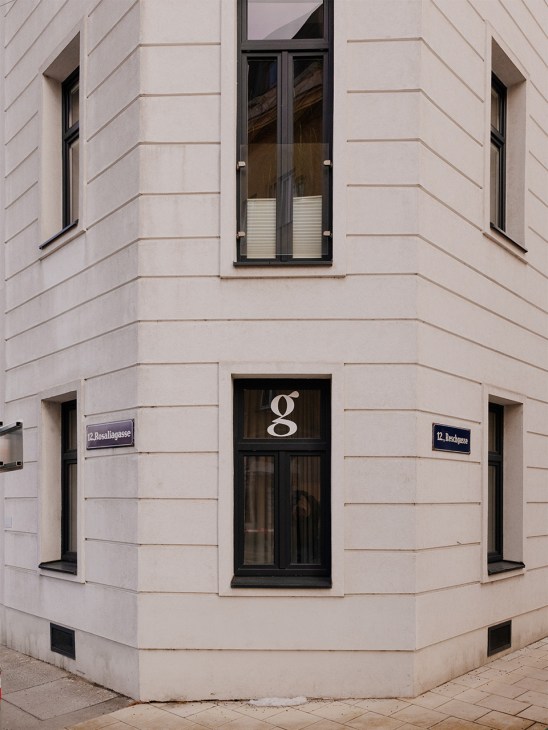
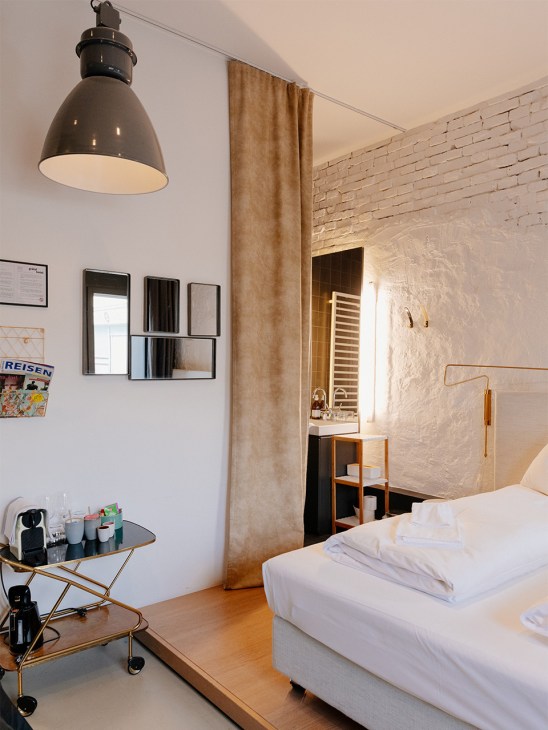
At about the same time, a budding hospitality concept called Urbanauts was pursuing a similar idea. “They were actually a little faster in opening than us,” says Kaplan. Before long, the two groups decided to join forces. Today they offer 24 rooms spread across four districts, with clusters around two major marketplaces. One of these can be found at Meidlinger Markt in the 12th district – a working-class area that is undergoing gentrification. There are nine rooms here, all of which are in former commercial spaces, including a record shop, bakery and shoemaker.
Fabian Feldtmann joined the team in 2023 after studying tourism. “There are so many generic hotel brands these days but this approach really makes you feel connected to the city,” he says. Feldtmann points out Ignaz & Rosalia, a small café in the market that is one of Urbanauts’ “fellows” – co-operating businesses that serve as a kind of lobby for visitors. Another is Heu & Gabel restaurant, which is more upscale and dinner-oriented. “What was interesting was this idea of putting the focus on the neighbourhood,” says Feldtmann.


The radio being re-tuned into housing
While the Grätzlhotels and Comploj’s glassblowing studio quietly enrich the city, one conversion that is under way is anything but discreet: the Funkhaus, the former radio headquarters of Österreichischer Rundfunk (ORF), Austria’s public broadcaster. “Everyone in the country knows this building,” says BWM architect Kaplan, who is in charge of the project. “In the old days, you would send your letters to the radio station to this address.”
The conversion was commissioned by the site’s new owner, Hubert Rhomberg. Under current plans, the building will be transformed into a mixed residential and hospitality development. Its front section will become a hotel. The rear, a five-storey block, will be turned into flats, with an additional free-standing block to one side. Though it’s still early days, apartments have already gone on sale, with prices ranging from €530,000 for a one-bedroom unit to €2.2m for a 166 sq m duplex.
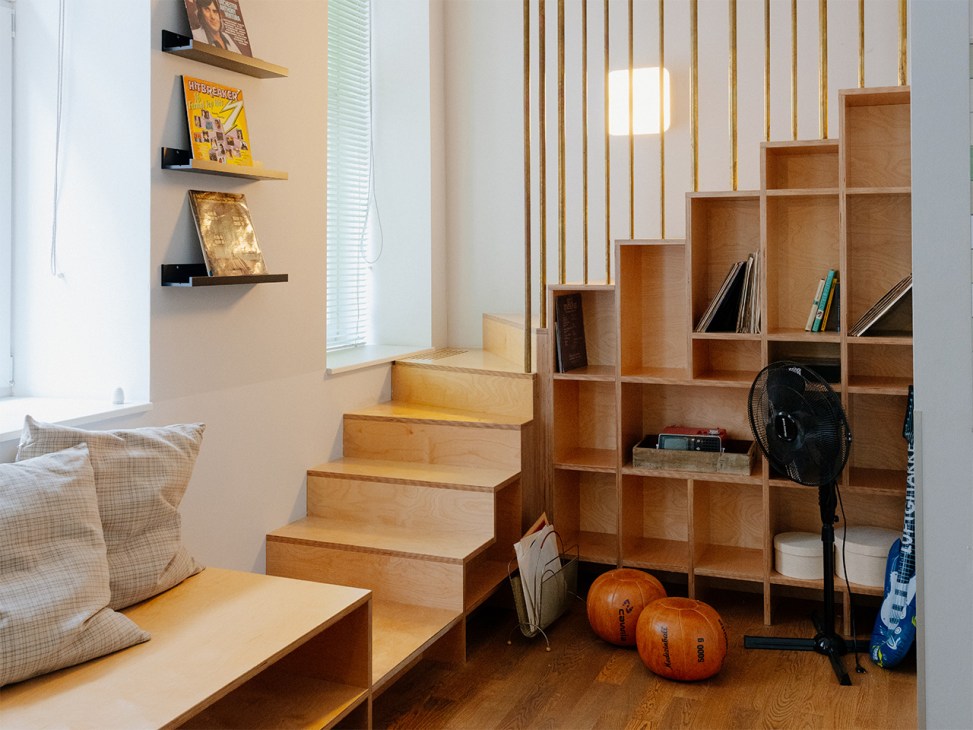
For now, most of the Funkhaus’s radio control rooms and offices are being used as artists’ studios, with some of that spirit set to carry over into the future – BWM’s plans include rehearsal spaces for musicians and public areas. In this way, the Funkhaus redevelopment perfectly reflects Vienna’s community-minded, reuse-focused approach. As Rhomberg says, “We want to lead the building into a new era as a lively, pulsating place that connects past, present and future.”
Vienna’s property market in numbers:
138 days
Average time it takes for a property in Vienna to be sold
€18,730
Average price per sq m in Vienna’s historic first district
20 per cent
Amount of equity that banks generally expect from buyers who are applying for a mortgage. For properties requiring significant renovation, the figure is often 30 per cent
Up to 3.6 per cent
Typical property agent’s commission
11.9 per cent
Proportion of properties in Vienna with their own garden
This article is from Monocle’s March issue, The Monocle 100, which features our editors’ favourite 100 figures, destinations, objects and ideas.
Read the rest of the issue here.