The forecast says 29C and not a cloud in the sky. Neither perfect weather nor the promise of a glass of wine sat under the shade of a jacaranda should really determine whether you attend a conference but, well, they kind of move the dial, don’t they?
I hope that by now we have tapped you on the shoulder a couple of times to remind you that The Monocle Quality of Life Conference is imminent. We gather this coming Thursday for the welcoming drinks and then spend all of Friday and Saturday morning together.
And, yes, even at this stage, I want you to clear your diary and come. So just in case you are dithering, I wondered whether answering a few of the common questions and concerns that hit my inbox might help.
1.
I’m a bit shy – is it OK to come alone?
Yes. Most delegates fly solo. Everyone makes friends and finds their people. I love watching guests arriving solo at the registration and then spotting them again surrounded by their new besties at the leaving breakfast, which is on a rooftop overlooking Lisbon this year. Again and again, I hear about friendships forged and business ideas hatched – in the arc of one conference – that have endured and flourished.
2.
I’m not a conference kind of person. I hate lanyards.
So do we. There are no lanyards, no workshops, no breakout sessions. There are no over-rehearsed Ted Talks, no CEOs doing Powerpoint presentations. We will not make you sing a song or hold hands with anyone in some weird bonding exercise (if you want to have a moment with your neighbour, that’s down to you). Think of it as an urban retreat with interesting people who are keen to do even more with their lives.
3.
It’s quite a lot of money.
Not if it changes your life.
4.
Is everyone super cool? Do I need a new wardrobe?
Yes, most people are super cool but not because of who their tailor is or the logo on their handbag. They are cool because they are inquisitive, caring and know stuff. It’s relaxed: there will be people who embrace a shorts-and-T-shirt vibe and others who feel happier in a blazer. It’s an event where you can be yourself.
5.
I’d like to meet the speakers. Is that possible?
We don’t run their diaries but I am happy to say that most of our on-stage talent is going to be around for the whole event. Conversations that begin on stage often continue late into the night.
6.
And the Monocle team?
We love being good hosts and if you want to catch up with our design editor, Nic; Konfekt’s editor, Sophie; or Tyler, just say hello (it’s likely they will find you first). Or join them on the dancefloor – because there’s always a dancefloor.
7.
Some of the panels don’t seem relevant to me.
You’ll change your mind. Take the hospitality session – this week I have caught up with all three speakers on that panel and I am genuinely excited to see what unfolds. Between them, they know about making brands and going against the flow but also about reorienting a family business and changing careers later in life. Their stories hold the promise of reshaping yours.
8.
Will there be time to explore? I want to see the city.
Yes and we have organised access to some amazing places on the Saturday. We’ll ensure that you go beyond the usual sites that Lisbon visitors see.
9.
Are there any surprises this year?
Of course.
10.
How do I get one of the final tickets?
You can purchase tickets here or email my colleague Hannah Girst now at hmg@monocle.com. Be spontaneous. End summer with a smile.
Want to read more of Andrew’s columns? Click here.
Monocle touches down in Lisbon early next month for our annual Quality of Life Conference. For some, the design of the Portuguese capital echoes saudade, a romantic form of longing for an absent person, place or time. To satiate this yearning, most visitors turn their attention to the yellow trams winding up the 16th-century cobbled streets but in doing so, they often miss a different vision of the city – one built on boldness, foresight and rationalism – in its downtown Baixa neighbourhood.
The reconstruction of this locale is an epic tale that begins with a crisis of biblical proportions. In 1755, Lisbon was struck by an earthquake, followed by a fire and a tsunami, that left thousands dead and much of the city in ruins. Enter Sebastião José de Carvalho e Melo – later known as the Marquis of Pombal – a minister who seized the moment to transform the city’s urban fabric and, ultimately, its society. Three years after the catastrophe, De Carvalho e Melo’s team of engineers and architects produced a plan for Lisbon’s reconstruction – a revolutionary document considered by many to be the first modern urban plan in the Western world, predating Haussmann’s Paris by a century.
Under this 1758 blueprint, housing, commerce, mobility, sanitation and, crucially, the financing of reconstruction were all accounted for. Streets were levelled and straightened into grids; land was parcelled into standardised blocks. Stone window frames and wooden slabs were made uniform, allowing for off-site prefabrication. Each building was reinforced by a cage of timber beams, known today as the gaiola pombalina, to withstand earthquakes.
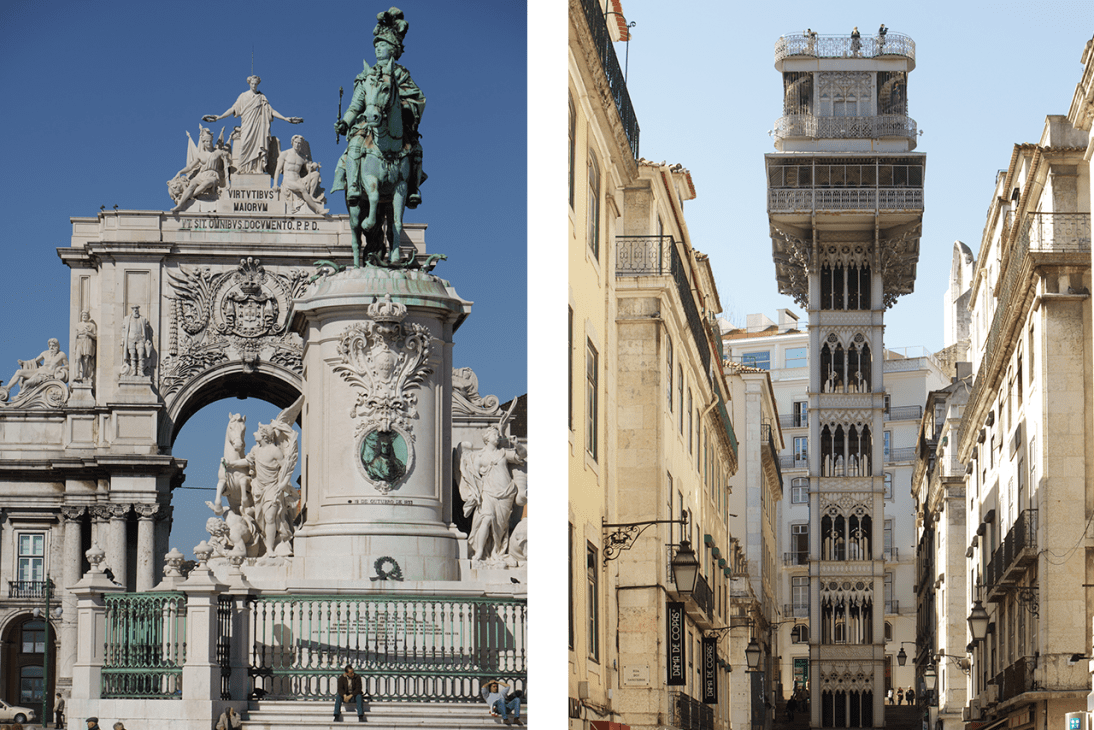
Baixa was reimagined as a whole. It’s now home to landmark structures such as the Praça do Comércio gate (pictured, left) and the neo-gothic Elevador de Santa Justa (pictured, right). The city remade itself in the language of the Enlightenment, shifting from a medieval landscape of alleys and cloisters to one of wide boulevards, where commerce thrived and a middle class emerged. Today the measured elegance of Lisbon’s Baixa endures. Visitors who look beyond the havoc of tourists, tuk-tuks and souvenir shops that now crowd the streets can still admire the harmony and order of a city centuries ahead of its time. The neighbourhood has become a global benchmark for architects looking to reshape their own metropolises, proving that saudade can be transformed from transient beauty into permanent urban-design wonder.
Gaia Lutz is Monocle’s Lisbon correspondent.For more opinion, analysis and insight,subscribeto Monocle today.
Join the fun: Join us for Monocle’s annual Quality of Life Conference in Lisbon from 3 to 5 September, where we’ll meet the people who know how to deliver better quality of life for all.
South Korea’s soft-power ascendancy goes beyond catchy songs, skin-care routines and K-pop Demon Hunters: it also extends to its artistic exports. Multidisciplinary artist Suh Do-ho held a hit exhibition at London’s Tate Modern last year while Lee Bul’s mid-year retrospective arrives this November at the Museum of Contemporary Art Antwerp.
Though Suh and Lee, both in their sixties, attract global eyes on merit, it is impossible to ignore the influence that K-pop’s genre-crossing stars are having on the country’s art scene. The growth of global interest in recent years can be traced to musical icons-turned-patrons such as G-Dragon and BTS’s band leader, RM, whose passion for collecting has moved young people toward fine art. After completing his military service last June, RM is back to growing his collection (and performing); a single post from his Instagram account can ensure that a museum show in Seoul sells out.
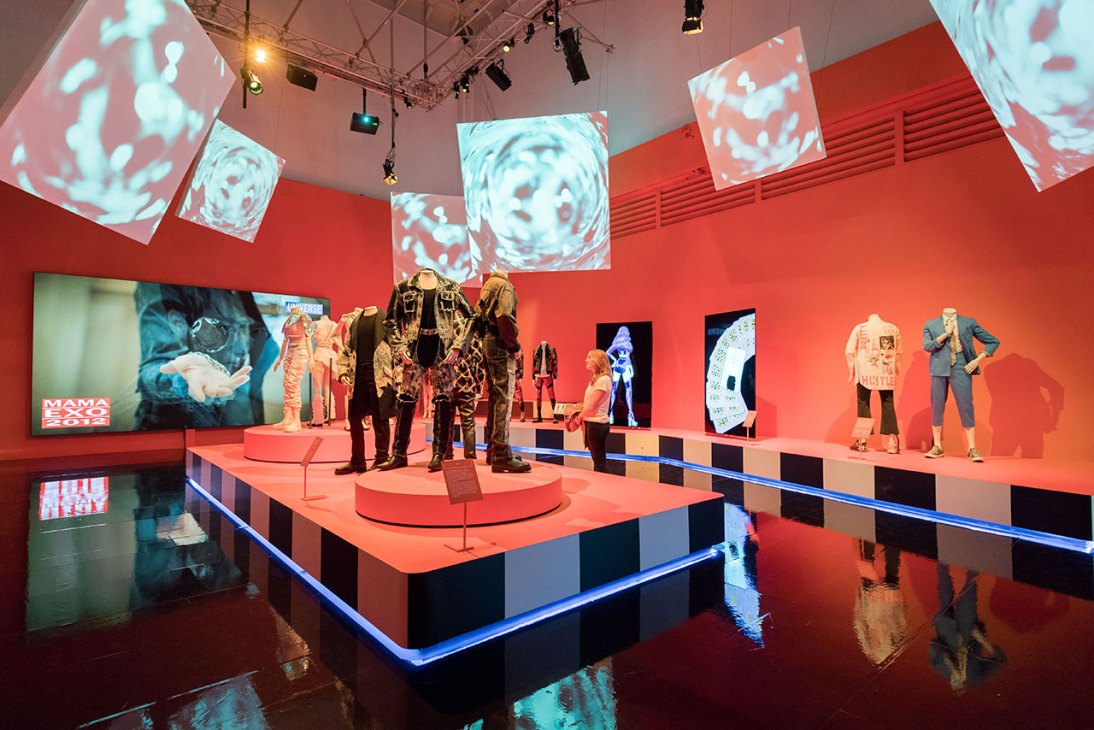
That kind of K-power does not go unnoticed. San Francisco Museum of Modern Art is presenting RM’s personal collection in October, with the show including works by modern masters, such as Yun Hyong-keun, Park Rehyun and Kim Yun Shin. The National Museum of Korea (NMK) in Seoul was a traditional and staid museum until its embrace of popular Korean culture, which transformed it into the third most-visited museum in the world, trailing only the Louvre and the Vatican Museums. Blackpink’s members – Jisoo, Jennie, Rosé and Lisa – recorded multilingual audio guides for its galleries, while NMK’s grey façade and grand plaza were illuminated in hot pink for the group’s latest EP. The museum mania went into overdrive with the release of K-pop Demon Hunters merchandise; fans queued from dawn to buy limited-edition collaborations from the institution’s gift shop.
Say what you will about these pop-culture crossovers but they are injecting plenty of fresh energy and buzz into Seoul’s already well-established museum and gallery scene.
However, it was the arrival of industry heavyweights, including blue-chip international institutions from Centre Pompidou to the Victoria and Albert Museum, as well as Frieze art fair in 2022, that truly transformed the South Korean capital into a must-visit destination for art professionals. Choi Soo, director of gallery PS21, says that she now spends more time in Seoul to meet with visiting collectors and improve her shows instead of hopping fairs worldwide. Homegrown prospects are looking hopeful as well: the country’s art dealers are expecting serious buyers with patronage to emerge from the surge of young collectors seeking quick investment.
Korean art’s global momentum continues this October with Korea, a major showcase at the British Museum. The exhibition, which features works from the collection of late Samsung chairman Lee Kun-hee and NMK, spans 2,000 years of Korean artistic history, including famous celadon ceramics, ink paintings and the works of Suh Do-ho. NMK director Yoo Hong-jun has talked about fans of K-culture going beyond pop music and film to uncover the country’s history. If Korea can pull off a smash hit without the influence of G-Dragon, RM and Blackpink, then K-art will have truly made it on the world’s stage.
Western European countries have some impressive embassies in Bangkok. The riverside compounds of France and Portugal, Thailand’s oldest diplomatic partners, rub shoulders with the capital’s ritziest luxury hotels and premium shopping centres. Dutch diplomats, however, have recently had a change of scenery. Since earlier this month, they have been reporting to an address at Dusit Central Park, a landmark mixed-use development opposite Lumpini Park, rather than their century-old former premises on Wireless Road.
The Hague’s decision to sell off one of its most beautiful Asian outposts – occupying a prime, leafy spot next to the US embassy – is a repeat of a regrettable move by the UK. London left the same road in 2018; British diplomats now occupy the 12th floor of a nondescript office tower that is named after an insurance company. Is it a sign of the times for these middle powers or a sign of decline? The answer depends on who you ask and where you sit.
Young attachés from The Hague on their first posting outside Europe will no doubt enjoy the new facilities, including the shopping centre below and the rooftop bar above. But greyer heads will surely raise a glass of Heineken to mark the passing of their globetrotting nation’s most prestigious shop windows in Asia – a platform for values and principles as much as products. The outgoing ambassador has said that the move has caused a “pain in his heart”, according to foreign correspondent Annelie Langarak, who has been covering the story for national newspaper De Telegraaf.
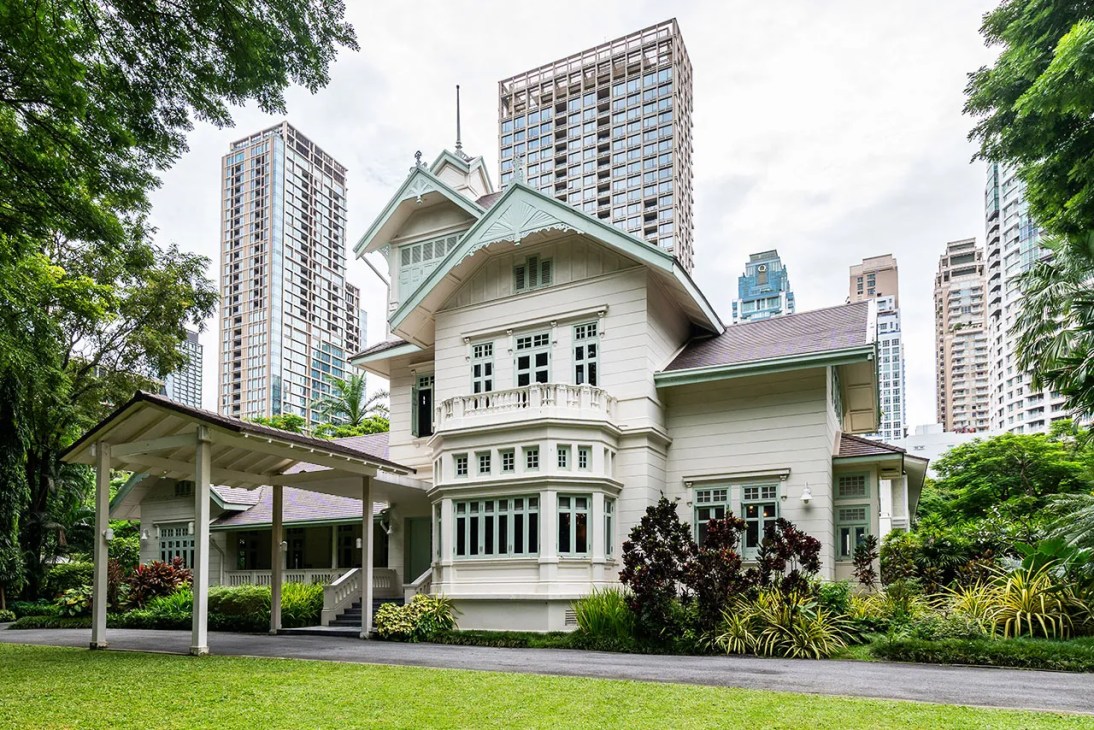
Langarak is a longstanding member of the Dutch expat community in Thailand. Her family typically spends King’s Day, Liberation Day and St Nicholas Day at the embassy party, and she shares her fellow Nederlanders’ anger and frustration about the decision. “We are all part of this and it is a part of home,” says Langarak. The new embassy will now have to hire a ballroom or conference room to host large-scale events and presumably work 10 times harder to deliver the same wow factor to invited guests and visiting dignitaries.
The Netherlands’s decision to downsize its embassy comes after 400 years in Thailand. Dutch ships first arrived in Siam, as Thailand was then known, in the early 17th century, several years before those of their UK rivals. In the first half of the 20th century, both trading nations moved into large compounds on Wireless Road on the outskirts of the capital. Today the road is home to the Swiss and Japanese embassies, alongside a growing number of high-end property developments. The Central Embassy shopping centre was built in the garden of the former UK embassy, which was sold off in 2006. The UK government flogged the rest of its embassy, including some remarkable heritage buildings, during Boris Johnson’s time as foreign minister for £420m (€490m). The proceeds were meant to be spent on upgrades to other diplomatic outposts around the world and the Dutch government seems to be following the same playbook.
At the time of the UK’s embassy sell-off in 2018, the British ambassador claimed that London’s standing in Thailand would not be affected. “Prestige is nebulous and we should be judged instead on what we’re doing here,” he reportedly said. There is merit to that argument but the UK has been fairly invisible during my time in Bangkok. It’s perhaps no coincidence that the two middle powers that have made the biggest impression, France and Australia, have invested in their presence in Bangkok with new buildings designed by homegrown architects. I will leave the architectural critique to our design editor but those two nations’ efforts have demonstrated a concrete commitment to their work in this country that says more than the often nebulous words of many diplomatic speeches.
Imagine fleeing in the dead of night to the British or Dutch embassy for protection, only to find yourself banging fruitlessly on the front gate. That scenario might sound like something straight out of a Hollywood film but it’s a genuine concern in this part of the world, where China likes to flex its authority. Our double agent, free-speech warrior, outspoken artist or valiant human-rights whistleblower turns up at the correct Grade A Sathorn tower – but finds that the lobby is closed after office hours and the security guard has fallen asleep. Jogging over to the US embassy compound would take at least 20 minutes and who knows what reception our hero would get? At a time when the US has abandoned its role as a responsible power and become a playground bully, the world needs to see more from countries such as the Netherlands and the UK – not less.
Will other middle powers follow London’s lead? Selling an embassy in any of Southeast Asia’s rapidly growing cities, from Jakarta to Hanoi, could raise some precious pennies for cash-strapped Nato countries that are under pressure to spend more on defence rather than diplomacy. But before they do, they should consider a third way. Around the same time that the UK sold its embassy in Bangkok, Germany threw open the doors of Deutsches Haus, a state-of-the-art skyscraper in Ho Chi Minh City built on the site of the old consulate. The German consul-general and his team now share the address with some of the country’s leading corporations, including Siemens, BASF and Merck. It’s an impressive calling card in Vietnam’s commercial capital and the Deutsches Haus sign illuminated on the top of the tower can be seen from across the city.
The UK and the Netherlands could have done something similar in Bangkok. Both countries still have the globetrotting multinationals to fill such a tower. Instead, they are both sending out new ambassadors to Thailand to share an office tower with insurers, co-working companies and other paying tenants.
In January the new Film Institute of Greenland was launched, while this September the Nuuk International Film Festival will be celebrating its 10th anniversary. The autonomous Arctic nation, which is part of the Kingdom of Denmark, is bolstering its cinematic credentials for good reason. It sees film as a tool to reclaim the story that’s being told about it globally.
“We think of it as taking back narrative sovereignty,” Inunnguaq Petrussen, the Film Institute of Greenland’s CEO, tells Monocle when we visit his office in central Nuuk. “For about 100 years, other nations, especially Denmark, have been making films about Greenland, our culture, our nature and our environment, and it’s very important for us to tell our own stories.”
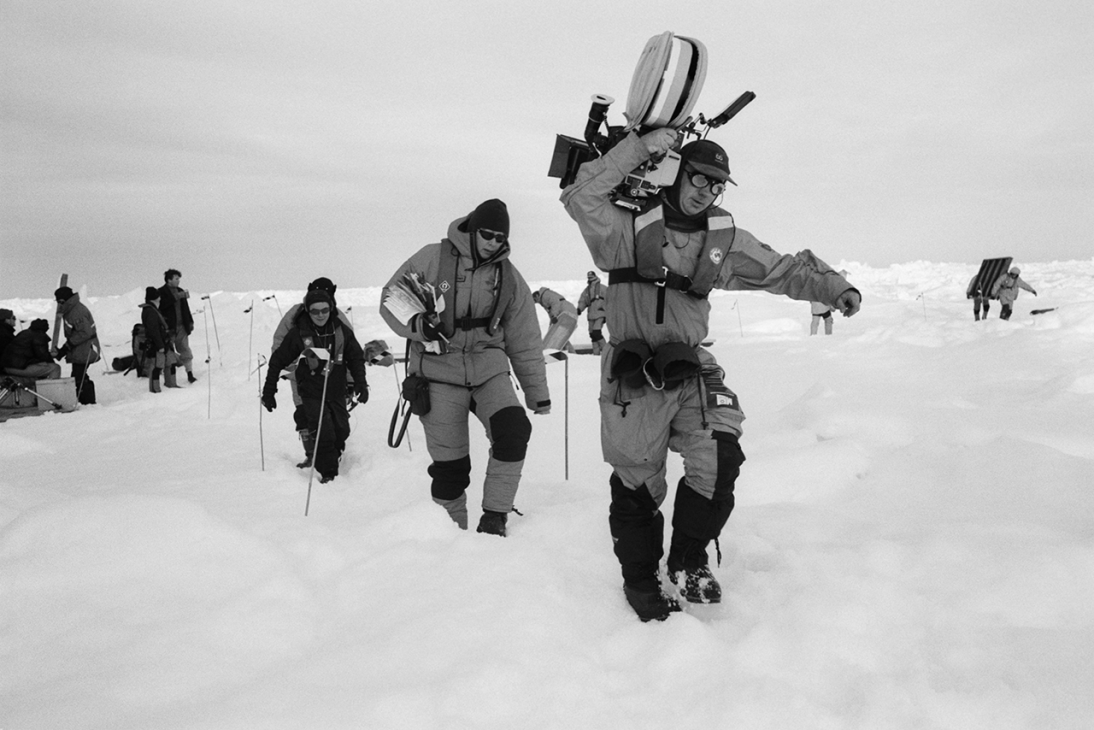
Of late, that narrative has revolved around a story not of Greenland’s making: Donald Trump’s takeover plans. “We have never had so much focus as we’ve had recently,” says Petrussen. “The timing is a coincidence because the institute has been in the pipeline for some years. But many film festivals have already been in contact to say that they want Greenlandic films and want me to come and talk.” That interest resulted earlier this year in a trip to Cannes, where short-film auteur Inuk Jørgensen, the country’s most awarded film-maker, was featured prominently.
The capital’s film festival originally emerged from the initiative of local film-makers and the new institute is considered a natural progression. It has three aims: to network with other similar organisations to help develop the domestic industry; to fund locally made films; and to promote Greenland as a destination for foreign film companies by offering a 25 per cent “refund” of money spent here. The organisation’s initial budget is DKK5.8m (€775,000); a significant portion of this will go towards administration costs, while the rest will be used to help fund films. The Danish government has also contributed a one-off sum of DKK10m (€1.3m) to fund productions that share stories about the territory.
“I have been talking a lot with the Canadian film-makers’ organisation and especially the International Sámi Film Institute, which has been a huge inspiration, and also the Danish Film Institute,” says Petrussen. The Indigenous Cinema Alliance is another ally. “We see being labelled as makers of Indigenous films as a big opportunity because it gets us to the festivals, which gets us seen by the industry, then the public.”
Petrussen has always had one foot in the institutional political world and another in the arts: he has worked both as a political adviser to several Greenlandic political parties and as a singer-songwriter in indie band Inuk. He explains that Greenland’s film scene is particularly strong when it comes to two genres: documentaries (often about climate change) and low-budget horror (most notably by director Malik Kleist). In 2023, Greenland received its first Oscar nomination in the Live Action Short category for Ivalu by Anders Walter and Pipaluk Kreutzmann Jørgensen. “Local people are really supportive of the industry,” says Petrussen. “Every time a Greenlandic film comes out, more people will go to see it than watch Spider-Man.”
Greenland might only have a couple of cinemas, with about 30 or 40 people working full-time in the industry. It typically makes just one full-length feature a year and budgets are small. But Petrussen’s ambitions go far beyond telling domestic stories for domestic audiences. “We want to co-produce films with international film-makers. Canada has been so successful in attracting film companies. We want to work with HBO, Netflix and Disney. That’s the kind of level.”
Michael Booth is Monocle’s Copenhagen correspondent. For more analysis and insights, subscribe to Monocle today.
Further reading:
– If Donald Trump’s threats have made anything clear, it’s that Danes don’t care about Greenland
– Meet the daredevil stunt performers helping Europe’s film-making industry to reach new extremes
– Hollywood is undergoing an economic revolution. Is cinema’s future on course for a plot twist?
China’s technological development has long been perceived as an existential threat to the global order but perhaps Shenzhen’s spooks, America’s TV hawks and the ambassadors of Beijing’s diplomatic quarter have it all wrong. You might have read the headlines this week: “Humanoid robot beats Usain Bolt’s 100-metre record” or “Robot smashes human 400-metre record”. But have you seen the World Humanoid Robot Games? Moments after “smashing” Bolt’s record by 0.19 seconds, the faceless metallic form also smashes into a padded wall, before being doused with a fire extinguisher and stretchered away (by humans). It’s not quite as cool as Bolt’s victory lap at the 2009 World Championships. Rather than being scrapped for parts, he also picked up gold in the 200-metre and four-by-100-metre relay that week too.
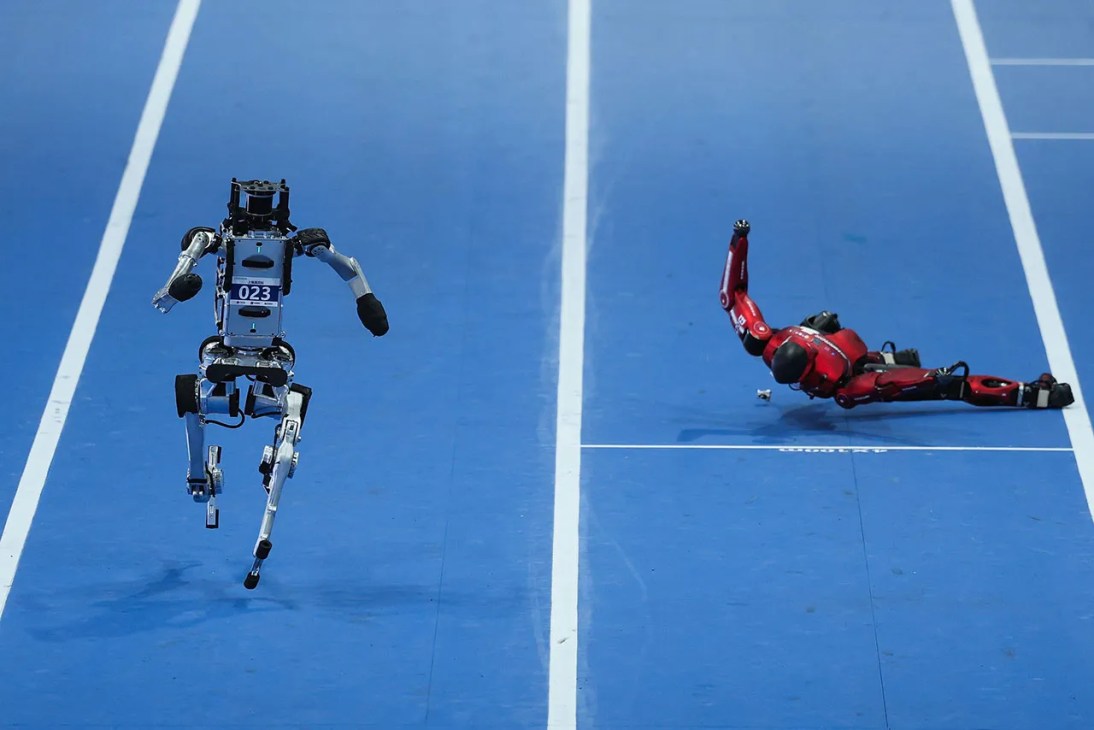
While China’s technological and military prowess is altogether more complicated than this charade, we can take some solace from this event. Just as AI can’t replace the art of a Studio Ghibli film, nor write journalism worth reading, humanoid robots can’t better the spectacle of athletes. We will not be watching droids joust, fence or shoot hoops any time soon. That’s a relief.
Creating humanoid forms capable of sprinting into a heap or even pouring a cup of coffee feels a lot like a big waste of time. We invented machines long ago that are quicker than us over roads, seas and assembly lines. Drones have already begun to offer devastating defence capabilities. Coffee machines are in every home and office. (Indeed, at Dubai’s Museum of the Future, an automated mechanical arm called Café X once made me a coffee in twice the amount of time it would have taken a machine in any hospital waiting room.) China’s robotic and technological capacity will define much of the next century but it needn’t take human form. Morgan Stanley bets that, by 2030, China will produce 450,000 humanoids a year. Whichever Silicon Valley start-up inevitably decides to invest in these dumb droids over human interns or baristas deserves the liquidation that’s surely headed its way.
Almost a decade ago, industry analysts were predicting the decline of the hotel. Decentralised and cheap peer-to-peer business models such as Airbnb were supposedly sounding a death knell. Initially, I must admit, it was a thrill to stay in somebody else’s home and go through their medicine cabinet (I wore the cologne of a man named Matt for the duration of a week-long stay on New York’s Upper West Side in 2013). It was predicated on the notion that, by staying in someone else’s residence, you would have a home-away-from-home experience of slotting into somebody else’s life.
But the novelty is fast wearing off and the consensus seems to be that travellers are returning to hotels for a host of different reasons. Latterly, staying in an Airbnb usually comes with a chore list to complete on check-out; inconsistent property quality is also a factor. My holidays this summer have also helped pinpoint a design issue that’s worth considering too. “You need a house that speaks for itself – the best hotels have good hardware for visitors to enjoy,” explains Constantin Ziegenhain of the Chesa Grischuna in Klosters, whose “hardware” is a multi-storey Bündner Haus – a rural residence defined by heavy stone masonry and deep-set timber forms. Originally a simple wooden inn, it was transformed in the 1930s by Zürich-based architect Hermann Schneider, who commissioned illustrator Alois Carigiet to paint murals on the façade. A bowling alley and grand dining room also define the property. Chesa Grischuna’s guestbook, says Ziegenhain, spans the globe – some people travel here just to seek out the murals.
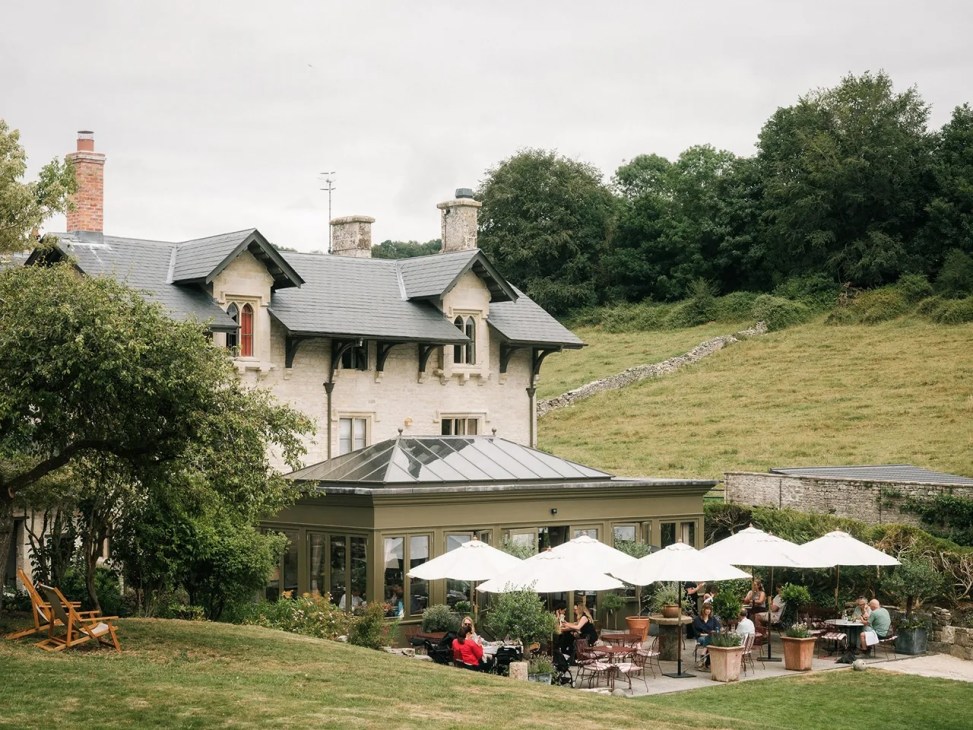
This international pursuit is a reminder that so much of a holiday is built around the environments in which we immerse ourselves – a well-designed hotel, with outstanding “hardware”, can dictate how guests move and feel; how they interact with each other and the surrounding environment over the course of their stay. It’s a level of consideration that simply can’t be replicated by a stay in someone else’s home. The newly opened Teffont House (pictured, above) in Wiltshire is another prime example. Co-owned by Charlie Luxton, whose design sensibilities have been shaped by the likes of London-based Ilse Crawford, the new hotel by the Beckford Group sits in a centuries-old stone house, complete with grand gothic windows and dramatic eaves. Working with designer Natasha Hidvegi, Luxton created a series of distinct public spaces for guests, spanning an orangery, a bar, a lounge, a brasserie-style dining room and an outdoor terrace with Sénat chairs.
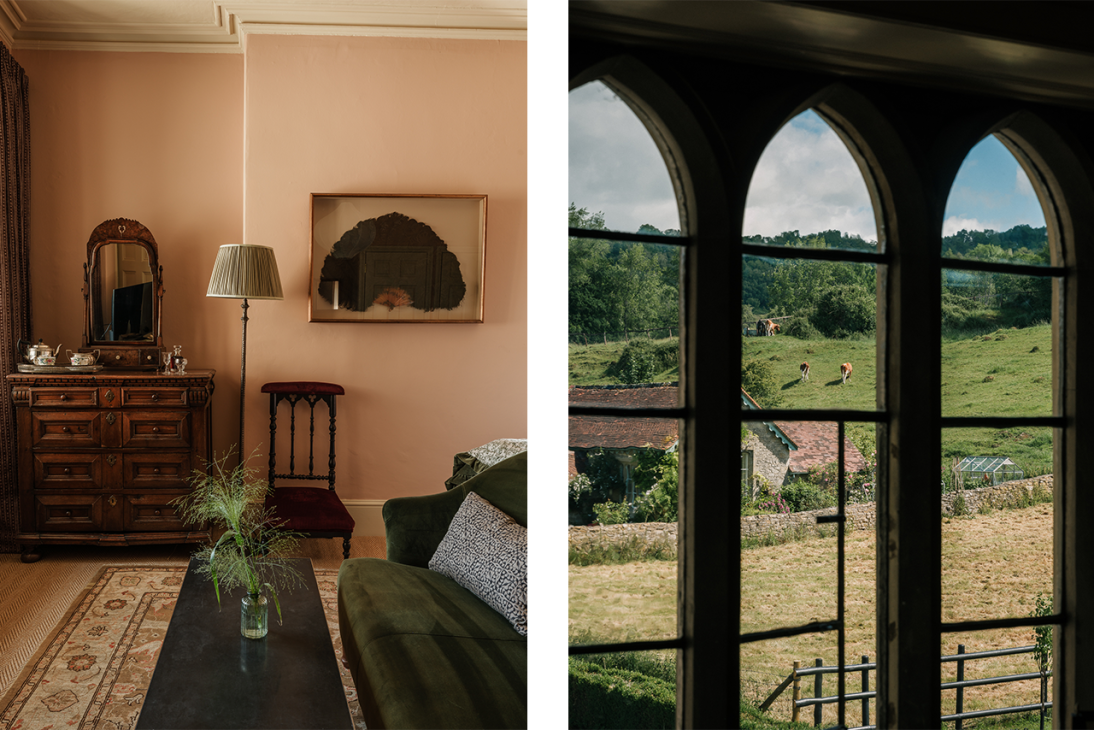
“It’s important to have little areas with different moods,” he says. “You might have a high table where you do some work, a lounge where you sit back and read the paper, then a more upright setting where you can talk. It’s about creating a series of vignettes.” Added to this is the fact that the property doesn’t look to separate itself from its base of Teffont Evias: the reception opens onto the road that runs through the small village and its outdoor spaces, including badminton and croquet courts in a walled garden, sit on the other side of the thoroughfare.
Both projects are a demonstration of the fact that, yes, good hotel design is about the details but also the orchestration of a variety of experiences and movements. “It’s fascinating, the power that the design of a hotel has over how people behave when they’re staying,” adds Luxton. At least in my case, it was a much more powerful force in shaping my holiday experience than cologne from Matt on the Upper West Side.
Beckford beckons: For more from the Beckford group, head to monocle.com for a round-up of exceptionally designed hospitality spaces.
Nic Monisse is Monocle’s design editor. For more news and analysis, subscribe to Monocle today.
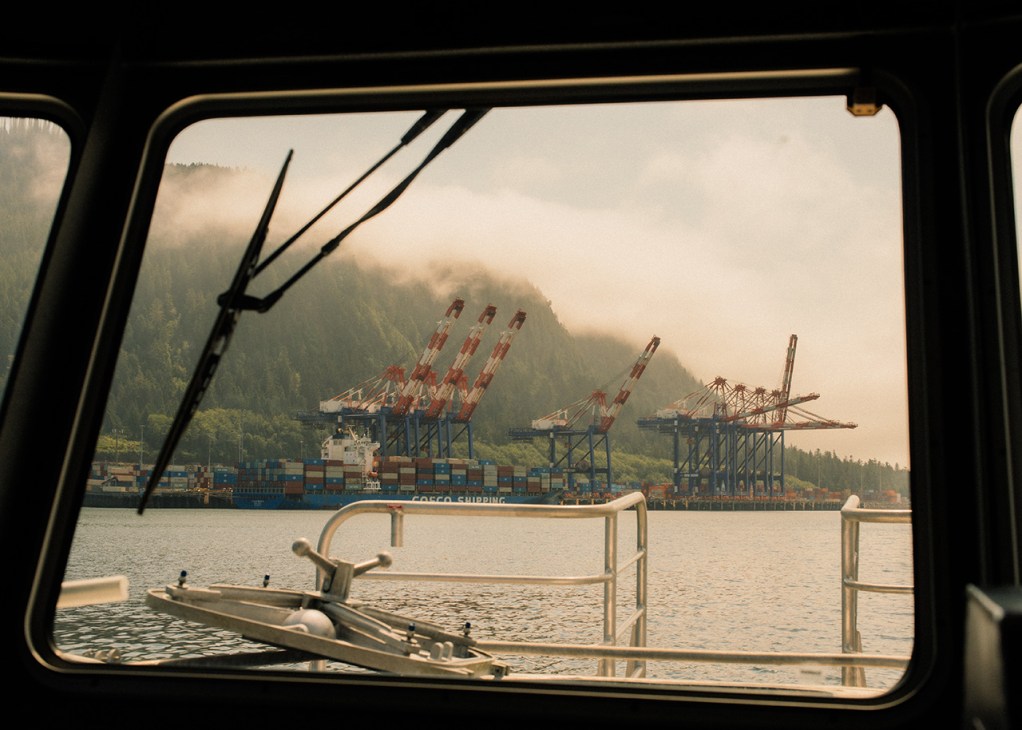
Porpoises and bald eagles greet the GSL Lydia as the 350-metre-long container ship glides into Prince Rupert Harbour in British Columbia after a 12-day journey from Yokohama. It makes an 180-degree turn, then pulls up to a terminal where cranes are waiting to lift its cargo onto trucks or railcars. Until recently, containers would often go back empty. North American consumers have long been eager to buy Asian goods but Canada hasn’t been exporting across the Pacific with the same gusto. Sending raw materials to its southern neighbour, the world’s largest economy, has simply been easier. But a year and a half of belligerence from Washington has damaged the once ironclad relationship between the US and Canada, causing the latter’s prime minister, Mark Carney, to pivot his country’s trade policy towards global diversification. For Ottawa’s current leadership, the race is on to end the nation’s reliance on America.
New facilities for exporting commodities and propane are now arriving at Prince Rupert. The GSL Lydia docks alongside a sliver of port infrastructure that runs for 800 metres. Barely a blemish on this landscape, the container terminal hugs a stretch of coastal rainforest where British Columbia drifts into southeast Alaska. But this remote area, with a population of just 13,000, is the linchpin of Canada’s economic strategy to cultivate new trading partners and build closer diplomatic relations with fellow middle powers.
“We have had a tendency in the past to chart bold new foreign policies without substance behind them,” says David Perry, the president and CEO of the Canadian Global Affairs Institute. “Making a meaningful contribution to a country’s food security or keeping its lights on is something substantial that you can anchor a relationship around.” However, Canada is also discovering how difficult it is to have a virtuous foreign policy and thrive in a fractious world.
On the day that Monocle boards a De Havilland Dash 8 plane for the sole Air Canada flight from Vancouver to Prince Rupert, the White House announces 50 per cent tariffs on a range of Canadian goods. The latest broadside against a neighbour that Donald Trump has needled as the “51st state” is likely a high-stakes tactic in the ongoing renegotiation of the United States-Mexico-Canada Agreement (which replaced Nafta in 2018). The move elicits a fresh round of harsh words – at least, by Canadian standards. Trump is “clearly a bully”, says British Columbia’s premier, David Eby, during an annual meeting of provincial leaders, vowing that there’s “not a chance in hell” that Kentucky bourbon or California cabernet will be returning to his territory’s liquor stores any time soon. A US-Canada trade war has also scuttled a planned opening ceremony for the Gordie Howe International Bridge. The long-awaited crossing between the city of Windsor in Ontario and Detroit, Michigan – named after a Canadian ice-hockey player who made his career on a US team and designed to improve trade flows – couldn’t have come at a worse time.
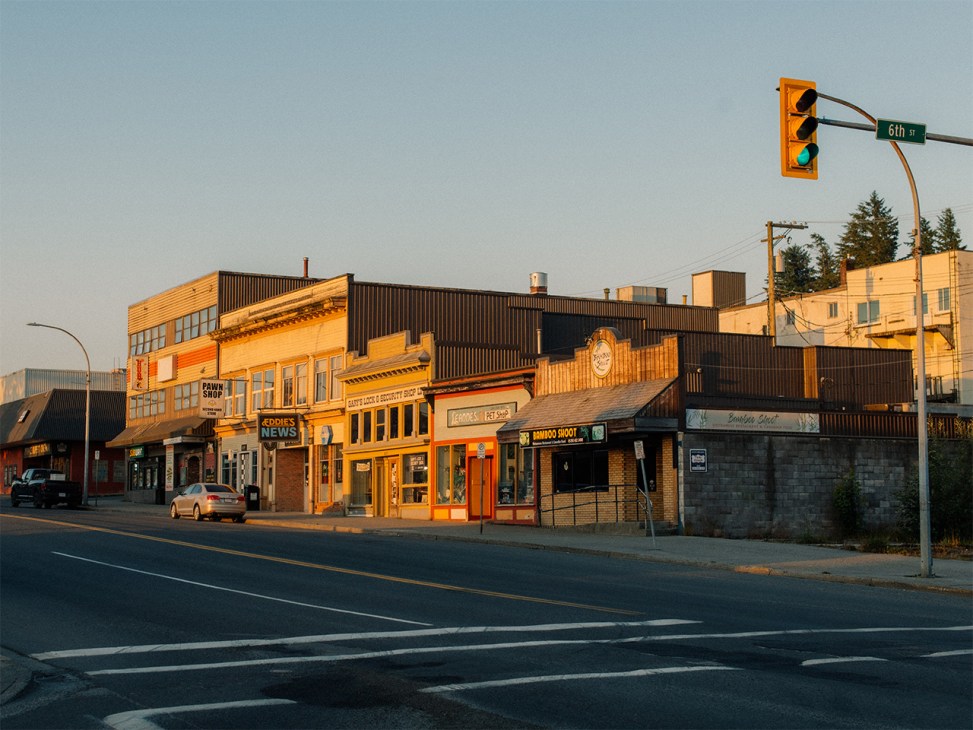


These rocky relations, however, could be welcome news for the Port Authority of Prince Rupert, which has been tasked with ensuring that Canada’s most geographically favoured Pacific port is ready for a future in which exports increasingly head west, rather than south. “I don’t focus on soundbites,” says its CEO, Kurt Slocombe. “I focus on what countries need from a stable trading partner.” Originally from Vancouver, Slocombe moved his family to Prince Rupert, Canada’s rainiest city, in 2007 to open the Fairview Container Terminal. But why offload cargo almost 500 nautical miles from Vancouver, a west-coast metropolis with a major international airport?
Railroad baron Charles Melville Hays would probably have said it was destiny. In 1905 he determined that this deep, ice-free harbour promised the quickest shipping route from North America to Asia, while offering the flattest rail route through the Rockies to a western terminus. Prince Rupert’s pre-eminent booster perished aboard the Titanic in 1912. Two years later, the first train from Winnipeg arrived but Hays’s vision of a “metropolis of the north” didn’t come to pass.
Instead, the town grew more modestly, focusing on fishing and logging. During the Second World War, it served as a logistics hub. By 2001, commercial fishing had collapsed and a pulp mill closed. From a peak population of 18,000, Prince Rupert lost a quarter of its residents. The shift from halibut and lumber to containers was a gamble but also the realisation of Hays’s vision, almost a century after he scoured Canada’s coastline for a suitable Pacific port.
Canada’s west-coast fossil-fuel infrastructure
In June 2025, LNG Canada shipped its first load from Kitimat, 110 nautical miles east of Prince Rupert. The North American west coast’s first liquified natural gas plant is the result of a CA$40bn (€25bn) investment, the largest private-sector initiative in Canadian history. Another LNG terminal is under construction in Squamish, near the resort town of Whistler. Two years ago crude oil began flowing through an expanded trans-mountain pipeline from Alberta’s tar sands to tidewater near Vancouver. In July, prime minister Mark Carney announced a new pipeline from oil-rich Alberta to the Pacific that could begin construction in 2027. A long-planned major expansion of the Port of Vancouver’s container terminal could commence the following year.
The bespectacled Slocombe is mild-mannered and prone to understatement. He has been here from the get-go: first at the container terminal, now at the port authority. Over the past two decades, he has watched both the port and the town grow slowly but surely. Canada’s northern communities can often feel neglected but here there’s a sense of optimism and prosperity in the air. Monocle visits a new longshoremen’s union hall and strolls past a sleek detachment for the Royal Canadian Mounted Police. New trucks and SUVs are parked outside a well-stocked grocery shop, with abundant fresh produce on display – a rare sight in most remote pockets of Canada. The bar and restaurant at Crest, the town’s best lodging, are packed on a Monday night.
How much the longshoremen will move in the coming years depends on the success of Carney’s globetrotting during his first year in office. His four-day trip to China in January, the first by a Canadian leader in almost a decade, pointedly included a stop in Prince Rupert en route. He has also been to India, Japan and Saudi Arabia this year on trade-focused trips.
While the prime minister was making his rounds, construction workers 5km south of the container terminal were toiling in the rain to build Canxport, a CA$750m (€468m) facility designed to make it easy to move exports into containers for shipment overseas. Carney might be returning to Prince Rupert in late August to formally inaugurate it.


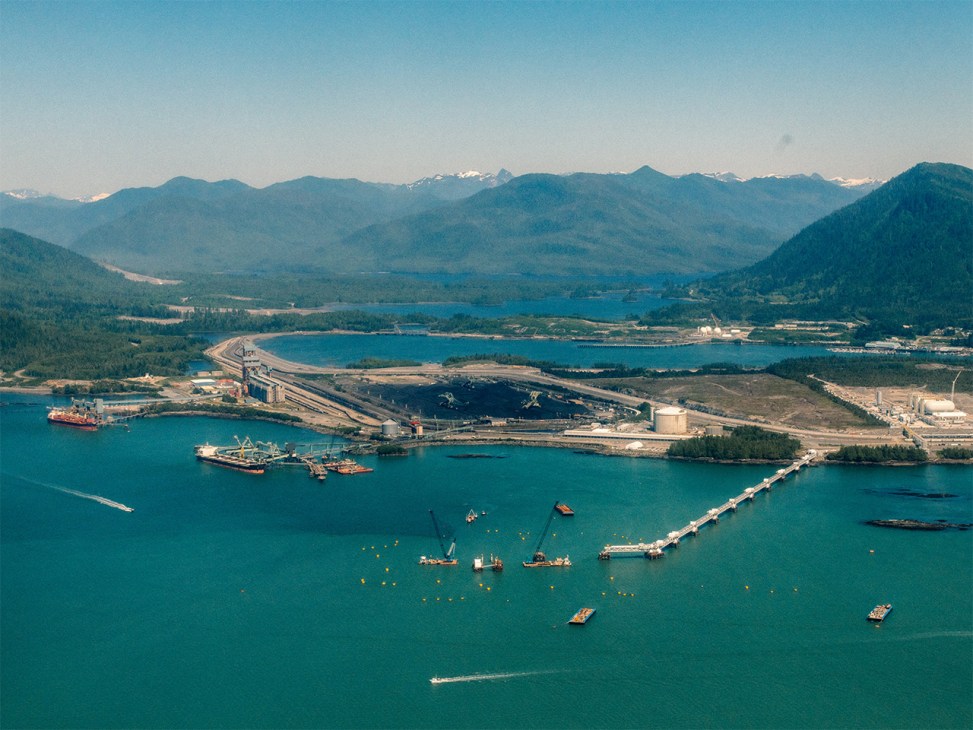
Monocle hops in a Ford F-150 Lightning for a spin around Ridley Island, a port-authority-owned hive of industrial activity. In addition to Canxport, a CA$1.35bn (€842m) project named the Ridley Island Energy Export Facility will help to unleash a flood of Canadian raw materials onto global markets. When it becomes active at the end of this year, it will welcome tankers destined for countries such as China, Japan and South Korea that rely on liquefied petroleum gas (of which Canada is a leading global producer) to power homes and industry.
In the meantime, customers can already make orders for another, less glamorous Canadian export: polyurethane pellets. Their exporter is Montréal-based Ray-Mont Logistics, for which our guide, Ryan Storry, is the local terminal manager. “I’m in charge of this jigsaw puzzle,” he says, gesturing at the choreographed chaos of cranes and containers. Inside a huge, white-domed building, an army of vacuum pipes suck pellets from hopper cars, before soaring five storeys to fill 25kg bags with tiny plastic beads, then stacking them on pallets. Ray-Mont’s Vancouver-based automation expert Luca Villa is troubleshooting the state-of-the-art equipment, which has reduced railcar unloading times from four hours to one, ensuring that Canxport is running at full steam before a potential prime ministerial visit.
Prince Rupert’s new export investments are just the prow of the ship for Canada’s Indo-Pacific trade ambitions. While projects such as Canxport faced traditional regulatory and permitting hurdles that took years to overcome, many of the flurry of new proposals are from Carney’s Major Projects Office, which promises to cut red tape and expedite construction. “The government of Canada is working at a pace we have never seen before,” says Slocombe.

Inevitably, there are detractors: the full-steam-ahead trade strategy, much of it powered by fossil-fuel-based commodities, jars with the image of a country that until recently prided itself on its green credentials. As former prime minister Justin Trudeau said in 2016, “My predecessor wanted you to know Canada for its resources. I want you to know Canadians for our resourcefulness.”
Under his successor, a fellow member of the Liberal Party, the pendulum has swung back in the other direction. Though Carney has maintained a ban on oil tankers in northern BC waters such as Prince Rupert, there has been enough of a U-turn to cause the environment and climate change minister, Steven Guilbeault, to resign from his cabinet. But dissent in the Liberal ranks is unlikely to cost Carney much political capital, says Heather Exner-Pirot of the Macdonald-Laurier Institute, an Ottawa-based conservative think tank. “Elbows up has become more important than environmental purity,” she says.
The economic underpinnings of this Canada-strong foreign policy seem to have also become more important than holding the line on human rights. With the exception of his March trip to Japan, Carney’s trade-focused tours have been to nations where, until recently, the maple leaf was flora non grata. The 2018 arrest of Chinese telecom executive Meng Wanzhou in Vancouver angered Beijing; yet the Canadian prime minister made a point of visiting the city in January to meet Xi Jinping. New Delhi and Ottawa withdrew their respective high commissioners in 2023 following the assassination of a Sikh separatist leader in British Columbia; in February, Carney talked business with Narendra Modi in Mumbai. “Whereas Canada led with its values for those 10 years [under Trudeau], now it’s leading with its interests,” says Exner-Pirot. “We are in an era of realism and pragmatism.”
Prince Rupert in numbers
2,600: Millimetres of annual rainfall
2030: The year that it is projected to become Canada’s second-biggest port, surpassing Montréal
750,000: Maximum capacity of Canxport in 20-foot (six-metre) equivalent units – a unit of measurement used in the shipping industry to quantify how much cargo can be processed
80,000: Barrels per day of liquefied petroleum gas that the Ridley Island Energy Export Facility will be able to process when active
114: Hours saved when sailing to Shanghai compared to journeys from Los Angeles
I have long been intrigued by the rituals of hospitality. When I look back on the years that I spent on the road as a foreign correspondent, I remember warm welcomes more than any other encounters. Whether it was a meal at the captain’s table as I sailed in the Gulf of Aden looking for Somali pirates or a bowl of soup offered by a family in Yerevan as they told me about the Armenian tradition of giving your last crust to guests, I always felt that the most revealing experiences happened in people’s homes over food. I remember the time when I sat down to a lunch of yogurt and sautéed courgettes at a Turkish tile factory in Iznik, where bottles of citrus cologne were passed around to start and end the meal. And then there was the time when I stumbled across a beaujolais nouveau celebration in Toulon with French navy recruits, wearing pom-poms and striped shirts, and ate plates of hot cassoulet as a storm blew in.
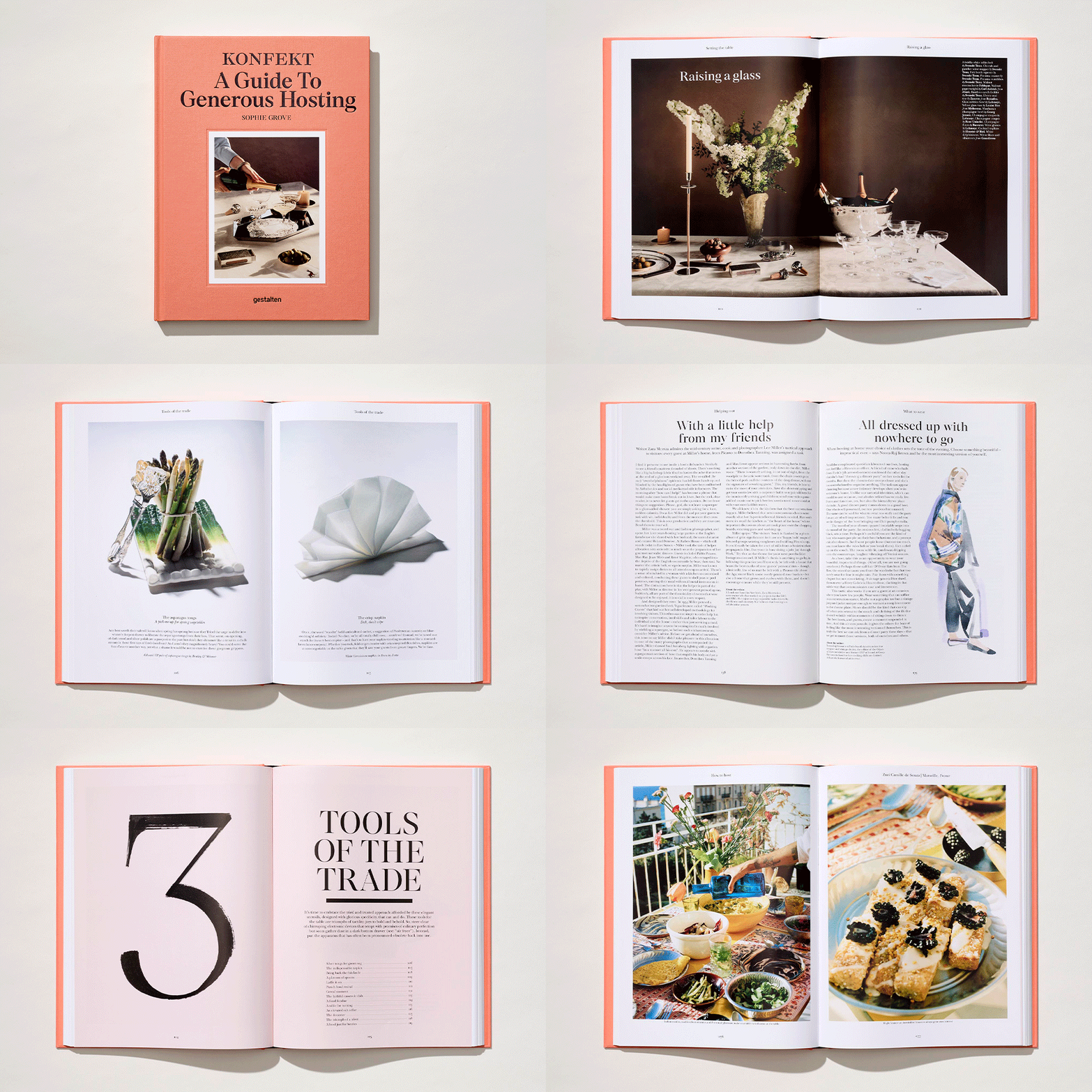
Konfekt’s very first book, Konfekt: A Guide to Generous Hosting, celebrates the value of human connection and warm welcomes. To host is to create a version of home and a sense of belonging. All my life, I have been trying to recreate the light touch of my parents’ more-is-more Sunday-lunch gatherings in Cambridge with an ensemble of astrophysicists, poets and professors. I remember serving peanuts and white wine as their friends danced to Dire Straits across the flokati rugs. I would fall asleep to the murmur of dinner parties or be found snoozing on piles of coats.

It’s why I feel so drawn to tales of hosts, whether it’s Joan Didion’s famous Easter and Thanksgiving parties (notes from her daybooks detail menus, inventories of silverware and recipes for risotto, borscht and Sichuan duck for guests who ranged from Nora Ephron to Jacqueline Kennedy Onassis) or photographer Lee Miller’s dinners in her Sussex farmhouse, where food was served to a coterie of surrealist artists. “We have recipes by her for golden meatloaf and goldfish, and she liked blue spaghetti,” her granddaughter, Ami Bouhassane, told me once. “She designed a whole meal where everything was white. That was in celebration of Man Ray’s exhibition at the New York Cultural Center in 1974: a specially devised dinner menu of salt cod, followed by veal with cauliflower, white rice and white chicory, with vanilla ice cream and lychees for pudding. It was a throwback to the white ball that she worked on with Man Ray in 1930 in Paris, where they projected images onto the guests as they danced.”
Hosting distils a moment: it creates a forum for ideas or quixotic escapism. And isn’t that why we go to the effort of inviting people over? It’s all about the feeling of trying to grasp the intangible. I live for the times when my most talented friend takes to the piano and plays a set of Nina Simone songs at the end of a night or when my children put together a scene from A Midsummer Night’s Dream for a garden stuffed full of guests on the summer solstice. These are brief episodes when spirits soar and reality evaporates.
When humans break bread, they are at their most honest and vulnerable. The dining table is where diplomacy happens and opponents strike deals. It’s where resolutions are made and ideas are hatched. And while some of the formalities and protocols feel obsolete today, this book argues that they are not entirely redundant. Indeed, these pages are a reflection on the meaning and relevance of modern manners in our fast-paced lives. We entertain essayists’ angles on what to wear and how to converse. We touch on the malign impact of phones at the table and what kind of etiquette has a role in contemporary lives. Most of all, this book celebrates the human urge to convene, converse and care for others. Inviting people into your home can be anxiety-inducing. There’s an unspoken sense that your guest might judge your record collection or even rifle through your bathroom cabinet. You are laid bare. There’s the perverse expectation that all of this must be done effortlessly, with a breezy nonchalance that doesn’t veer anywhere near the try-hard.
This self-imposed pressure often deters people from doing it at all. We know that to have people over is to ask for their time and trust – a leap of faith that extends in both directions. The best hosts I know combine an eye for detail with a light touch. There’s resilience too: sang-froid in the face of a blackened tart or curdled custard. But these true maestros lay a careful, often beautiful, scene and then dive in to enjoy it themselves. They let us know that however carefully laid their plans might be, it’s the people who matter.
We all know and cherish those hosts who envelop us as soon as we step into their homes. We feel soothed and inspired, not just by their company but also by how they preside over a hot pan as they ask about love, life, loss and what’s happening in the news. These snatched conversations, propped up on kitchen counters or around tables where candles drip, are when friendships feel at their most lovely. You are an unguarded, unvarnished version of yourself.
Our book transports you to languid lunches, soirées, dinner parties, picnics and tea ceremonies – and there’s a well-mixed Martini in there too. It’s about the poetry of an elegantly set table and the collective joy of a room alive with jostling energy (and even the pathos of tidying up). It is designed to urge the hesitant host to dive in: to rustle up an omelette for a neighbour or throw a wild party. It’s a tribute to the courage and generosity of good hosts and the inimitable art of making it all happen.
Sophie Grove is the editor of ‘Konfekt’. For more warm welcomes and nourishing guidance, order ‘Konfekt: A Guide to Generous Hosting’ today.
Los Angeles spent the summer hosting World Cup matches without a promised piece of infrastructure for the occasion. Skylink, an airport train first scheduled to run in 2023, missed its debut after cost overruns of an estimated $500m (€428m). The people mover hardly looks any different from Disneyland’s Monorail, opened in 1971, which is just down the freeway in Anaheim.
It’s tempting to explain these delays as yet another procurement screw-up but they read to me as symptomatic of a larger illness. California is in a period of managed decline that leadership at state and local levels don’t seem to notice.
The contrast is sharpest for those of us who remember what the state used to feel like. I grew up in northern California in the early 1980s when things seemed box fresh: sparkling malls, nice lawns and new housing developments. The economy was thriving, technology companies were putting down roots and the future felt as though it was under construction. When I returned in 2020 after about 20 years away, I found the natural grandeur intact – the postcard-perfect mountains and redwoods still standing – but the civic confidence largely absent.

In many of LA’s toniest neighbourhoods, you can now hear the occasional siren or helicopter overhead. Affordable housing is scarce and basic functionality, from public bathrooms to well-maintained streets, is treated as an aspiration rather than the baseline. The population seems to segment itself into those who cashed in during the golden years of tech or Hollywood, workers who make the place run and the influencers performing for the algorithm outside Great White or Verve on Melrose Avenue. The much-mocked exodus of the Joe Rogan set to Austin and Miami gets laughed off in the capital of Sacramento but the reasons underneath it are widely understood.
For me, the most uncomfortable part is that those early, wondrous feelings evoked by California during my youth are now felt elsewhere. Spend a week in Abu Dhabi or Dubai and the atmosphere is that of an older version of California, transplanted.
Despite the conflict in the Gulf, entrepreneurs are opening inventive retail concepts in the UAE and the emirates’ infrastructure arrives on schedule. Dubai built a driverless metro network in roughly the time LA has spent not finishing an airport shuttle and the railway connecting Dubai and Abu Dhabi is soon to open. This comparison is not entirely fair, of course. Gulf projects often materialise rapidly as a result of sovereign financing, while in California, developments are largely decentralised and therefore take shape more slowly. What I feel most acutely is a homesickness for an older version of home.
California has run for 15 years or so on the fiscal equivalent of human growth hormone: the compensation and stock of Big Tech company employees based here. This tax revenue has been treated by state officials as an ever-refilling well that can never run dry. Now come proposals that would tax that base, or the companies’s founders, more aggressively, still on the assumption that they and their workforces are immovable. Recent history suggests otherwise. None of these firms are perhaps the most ethical but their revenues help fund the coffers that everything else depends upon.
States, like cities, have cycles. And perhaps California has recovered from worse. But a true recovery requires first admitting the diagnosis. Landing recently into a gritty LAX with nary a luggage cart to be seen, from a modern, gleaming terminal in Taipei, it was hard to avoid the thought that the Golden State was losing its sunny shine. It might not be beyond saving but the state that taught the world what the future would look like is currently importing that feeling from the desert – and no one in charge appears to have noticed.
Colin Nagy is a Monocle contributor. For more opinion, analysis and insight, subscribe to Monocle today.
Further reading:
– How a Los Angeles local created a Monocle guide to a city with no centre
– Village Green: The leafy Los Angeles neighbourhood that puts communities first
– For the UAE, culture is what binds its diverse population and gives it hope in times of conflict