UK Chancellor John Healey is walking a fiscal tightrope ahead of a crunch budget this week Tough choices, we’re told, are the only way to manage ballooning national debt and arrest the steep decline in public services.
Luckily, one already confirmed government policy offers a glimmer of hope that politics can bring us together over mild irritation. Specifically, a fine for antisocial behaviour targeting people blaring music too loudly from their phones in public and a crackdown on littering, vaping and threatening behaviour.
This small bit of statecraft won’t solve the energy trilemma or productivity pitfalls but it could salvage some consensus from the jaws (and bores) of national defeatism. Let’s call this the modest manifesto, or a nudge that petty policymaking people can understand and get excited about in a sea of big promises.

Talking property
House prices are exorbitant, supply limited and wages stagnant. Home ownership is unattainable for many. So let’s start with punitive taxes on estate agents who call damp basements “garden apartments” or cupboards “bedrooms”? Then a swift moratorium on the overuse of the term “up-and-coming” to describe grotty neighbourhoods, before a clampdown on those misleadingly describing unscrubbed graffiti as “street art”.
Tech tax
Customers shouldn’t need to register an account to buy anything and everything online. It’s a toothbrush not a mortgage.
End pissing around
Surely, it’s time that cities recognised the need for taxi drivers, delivery folk and the rest of us to find relief? The aggressive privatisation of public space has left many with nowhere to go. Literally. What say we build some pleasant public toilets and pay people to keep them clean?
Questionable practice
Let’s also agree today to ban the pointless end-of-transaction “customer survey” in all instances. “How did we do today?” Not well. Ditto a blanket ban on endless password prompts and the alarming irony of computers endlessly verifying our humanity online. Is this progress?
Nothing is ‘future-proof’
Anyone claiming to “future-proof” a business, particularly those flogging software, should be compelled to explain in detail exactly what the future looks like – in writing and for scrutiny at a later date. The tech industry seems incapable of predicting next Tuesday let alone what might happen in 2030.
Resilience in word and deed
We need a national campaign to prevent people from framing ordinary activities in Herculean terms. Changing your internet provider or getting a wardrobe delivered is not “a journey”. Also, a slow train, bad lunch or a little drizzle in no way constitutes a “perfect storm”.
Unhappy customers
Fines for companies that replace customer-service teams with an uncomprehending chatbot called Alice, programmed to tell you that she “understands your frustration”. She manifestly does not.
Over to you then, Mr Healey. Your work is important to us. We understand your frustration. But here’s some feedback. Maybe politics needs fewer grand gestures and more fixes for the little indignities that leave us wondering if there’s anyone in charge.
Bookshops are once again flourishing in the Indonesian capital but the business of selling books is only part of the story behind this welcome revival. In Jakarta’s publishing sphere, a creative community is finding fresh ways to celebrate the written word and to support local writers, keeping the art of print alive while bringing readers together in physical spaces. Monocle draws insights into the city’s burgeoning literary scene from five of its leading figures.
1.
The bookseller
Judo Suwidji
Co-founder, Periplus
Suwidji has been drawn to books since childhood. As a boy he became captivated by a map that his father owned, which would later awaken a fascination with illustrated books. Now 62, he is a co-founder of Periplus, one of Indonesia’s largest bookselling chains, with 57 well-stocked outposts nationwide (including a must-visit location in Jakarta International Airport Terminal 3).
Suwidji’s dream is simple: to introduce as many people as possible to the pleasures of reading and, with luck, even inspire some of them to start writing. Though Periplus was founded in 1985 to import foreign titles and magazines, Suwidji now wants more books about Indonesia on his shelves. “What I really hope is that at Periplus, we can introduce talented young writers,” he says. “Whether they write in Indonesian or in English, it does not matter. They are welcome. What matters is that they write well. After that, we will bring in publishers from across the world.”
To appeal to the next generation of young readers, Periplus is investing in its physical shops and recently unveiled fresh interiors, featuring lighter natural woods and brighter lighting, at its branches inside Plaza Indonesia and Plaza Senayan – two of Jakarta’s premier shopping malls. “A bookshop shouldn’t be intimidating,” he says.
2.
The writer
Ratih Kumala
Author of ‘Gadis Kretek’ (‘Cigarette Girl’) and ‘Koloni’ (‘Colony’)
Kumala is one half of an Indonesian literary power couple – her husband is novelist Eka Kurniawan – but that does not make her job any easier. “Survival as a writer demands agility,” she says, speaking to Monocle after participating in a discussion about one of her short-story collections just outside Jakarta. Kumala began her career with shorter works before publishing Gadis Kretek, which Netflix adapted into a series in 2023.
Her latest release, Koloni (Colony), takes the form of a fable about ants to explore themes of hierarchy and gender equality. Penguin Books published the English translation by Dalih Sembiring in August. “My goal when I write a book is simply to entertain. Even now, if my readers feel entertained, then I’ve done my job,” she says, advising young writers to become their own sternest critics and to have the courage to start over.
For Kumala, fiction offers an escape from the daily news cycle but it’s not mere escapism. She weaves together her own life experiences with historical events, feminism and satire. A writer, she says, must evoke the real within the unreal. “Indonesia needs fiction writers who are both critical and sensitive. [Renowned author] Seno Gumira Ajidarma once said that when journalism is silenced, literature becomes the path to speak out. When we are not allowed to report the truth, fiction becomes a way to express what truly matters, in a more humane and emotionally resonant way.”
3.
The book-fair chief
Wedha Stratesti Yudha
Committee chair, Indonesia International Book Fair
Book-related events are booming in Jakarta and they don’t come any bigger than the Indonesia International Book Fair (IIBF). This year’s edition of the annual event, which took place at the Jakarta International Convention Center in early October, drew more than 250,000 visitors and proved particularly popular with children, who could be seen eagerly exploring the lower ground floor in search of picture books and comics. Vica Lietha, author of Eat My Belly, was also there to join a pitching session, telling Monocle that it was a valuable opportunity.
The IIBF has been running since 1980. It is overseen by Yudha, committee chair of the Indonesian Publishers Association. An industry veteran herself, Yudha hopes that the IIBF can give to publishers from across the vast archipelago the same opportunities enjoyed by their international peers and those in Jakarta. “Not every author can be found in a designated bookshop and some publishers face similar challenges when it comes to distribution,” she says, while sipping coffee in the Kompas Gramedia building on Palmerah Street, home to prominent media titles, including Kompas, The Jakarta Post and Tempo.
The IIBF encourages other cities to host similar events and raise awareness of unequal access to publications across the archipelago: more remote islands tend to have higher prices and lower literacy rates. Yudha’s goal is for the IIBF to become a literary hub for readers, publishers and writers to gather and exchange ideas. “The publishing industry cannot develop in isolation,” she says. “It is interconnected with other industries.”
4.
The librarian
Sheilla Njoto
Co-founder, Margin
When Njoto returned to Indonesia from Australia, where she received much of her education, she was struck by the shortage of libraries in Jakarta. “Indonesia’s literacy rate is high but many people read words without truly grasping their meaning,” says Njoto. Channelling her frustration, she decided to do something about it. In 2025, she and two friends, Agatha Tika and Reisky Handika, opened independent library Margin in the Pejaten neighbourhood of South Jakarta as a place to encourage exploration over having to choose a book to buy.
Njoto, an art graduate, helped design a welcoming space to encourage members to settle in for long reading sessions. She also wants the library to host discussions on everything from poetry and art to politics. “Books have the power to ignite empathy,” she says. The 30-year-old is originally from Surabaya, Indonesia’s second-largest city, which sits at the opposite end of Java to Jakarta. As a writer herself, Njoto understands the importance of supporting emerging voices. That’s why Margin has a dedicated space for showcasing fiction and non-fiction titles by local writers, which are available for sale. “We have a special consignment system,” she says. “The writers place their books on our shelves and we only charge a bank transaction fee. It’s a fair arrangement for everyone involved.”
5.
The producer
Handoko Hendroyono
Owner, Filosofi Literasi
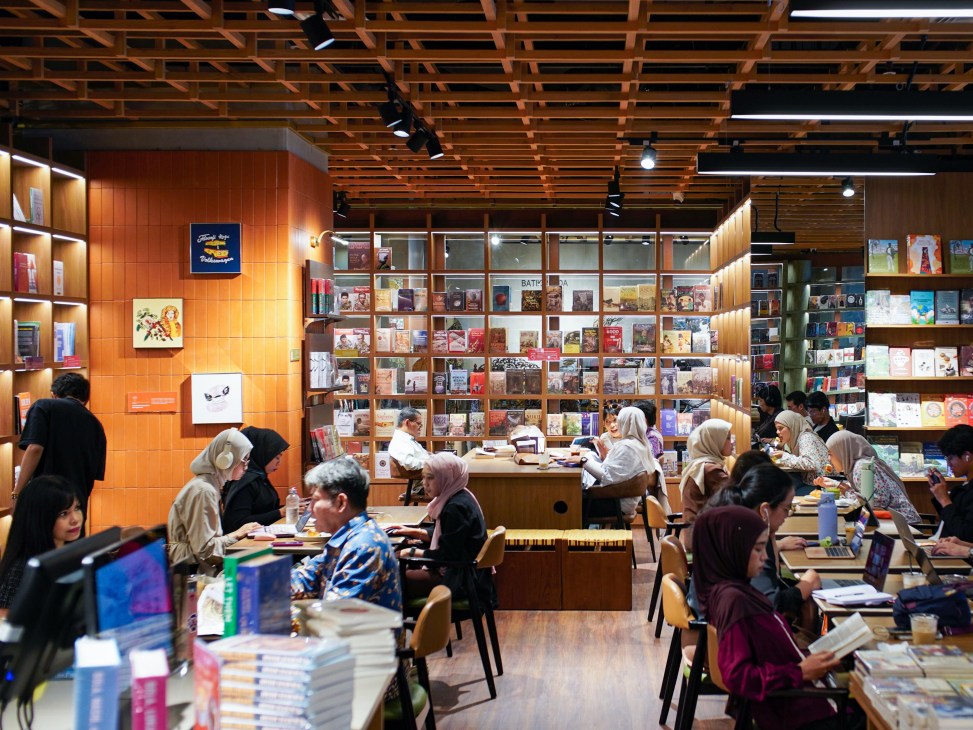
Filosofi Literasi (pictured) opened in August inside Sarinah, a rejuvenated 1960s shopping centre in Central Jakarta. The book café is the passion project of film producer Handoko Hendroyono. The 63-year-old has developed a knack for turning historic buildings into vibrant hangouts via his placemaking initiative, M Bloc Group. Giving Monocle a tour of Filosofi Literasi, he points out titles such as Mustikarasa, a cookbook containing the favourite dishes of Indonesia’s first president, Sukarno, and Atheis by Achdiat K Mihardja, a 1940s novel about a young Muslim’s experience with religion. There are also newer releases, such as Dee Lestari’s Perahu Kertas and Laskar Pelangi by Andrea Hirata. For Hendroyono, technology cannot come close to replicating human touch; he believes in creating physical spaces where conversation can spark new ideas.
The coffee at the café is seriously good too. Indonesian beans are among the world’s best and Hendroyono’s grinding goes back more than a decade. It all started in 2015 with a bestselling book set in a coffee shop, which he turned into a film. Later, he and a friend opened a coffee shop with the same name. Now he wants to complete the circle by using coffee to encourage Indonesian literature and film. “Films depend on books and books need writers who can build universes worth adapting,” he says. “We built Filosofi Literasi because good source material leads to good scripts.”
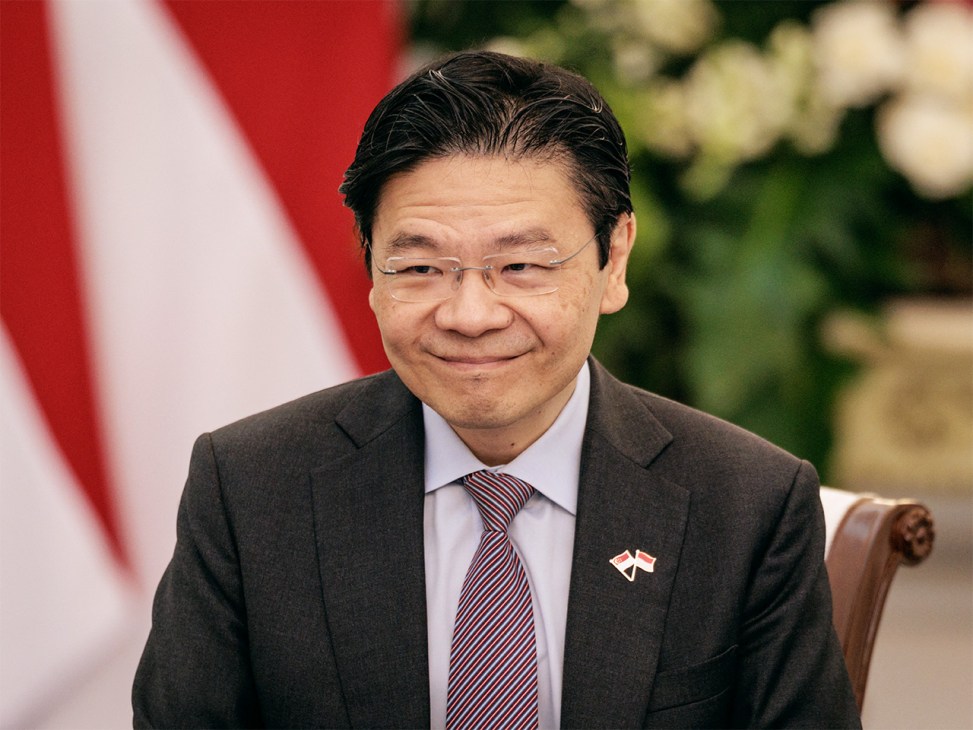
Singapore’s ministers are already among the world’s highest-paid officeholders but their salaries have just been increased even further. Lawrence Wong’s annual pay has risen by 64 per cent to a staggering S$3.6m (€2.51m). By comparison, Donald Trump makes $400,000 (€356,000), while Andy Burnham earns £174,039 (€206,590). Though Wong explained that ministerial salaries had not been revised for 15 years and pledged to donate his pay difference to charity for the next half decade, the timing of the news unsurprisingly drew a spate of negative responses.
Singapore’s retrenchments have reached the highest level since the coronavirus pandemic and many households are contending with cost-of-living concerns. But beneath all the dissent, is there an argument for political officeholders to be accorded bulky paycheques? Will higher pay produce better leaders to steady the ship in volatile times?
Wong certainly thinks so. “Is good government important?” he asked the crowd at the Forbes Global CEO Conference in Singapore earlier this month. If the answer was yes, he said, ministerial salaries would need to be “broadly competitive” with private-sector roles to reduce “the burden, the financial loss and the hurdle of entering politics”. Before last year’s general election, Wong approached several senior permanent secretaries and private-sector CEOs to join the fray but everyone turned him down.
While many have fixated on the eye-watering salaries, it’s also worth considering the hidden personal costs of serving your nation. Heavier is the crown in a social-media age in which public scrutiny has only intensified, from nosy intrusions into your family life to judgements of your every move. Any misstep will likely be weaponised. In July then-acting minister in charge of Muslim affairs Faishal Ibrahim resigned after a “lapse in judgement” over messages to a woman online.
It might seem counterintuitive but paying well can play a role in upholding integrity. Corruption remains a rife, deep-seated issue in Southeast Asia, which only reinforces the need for clean, high wages in the region. Poorly paid politicians make a cesspool for corruption to fester. And the Singapore government has appeared to walk the talk when it comes to punishing underhanded behaviour. In 2024 the administration charged former minister Subramaniam Iswaran with accepting more than S$403,000 (€280,500) worth of gifts – such as tickets to West End musicals and English Premier League football matches – that he could have afforded on his own dime.
Money is, of course, no panacea for producing exceptional political leaders. But we all know that finding an integrous individual with a genuine sense of calling is a tall order, especially in this golden age of performative politics. Everyone wants leaders to be ambitious enough to run for office but humble enough to downplay their proclivities for power; decisive but open to feedback and criticism; and charismatic in global arenas while still approachable to the man on the street. If a tidy sum of money can cushion the cost of public leadership, surely the dividends will outweigh the price. No one can afford to be penny-wise and pound-foolish – not when an entire nation’s future is at stake.
As autumn takes hold in the northern hemisphere, wildland firefighters are hoping for a much-needed reprieve after a scorching summer. While the July fires in France’s Gironde region and Spain’s Almería province might have generated the most attention, more than 1.2 million hectares burned across southern Europe and North Africa, according to EU data. And yet extreme conditions persisted through September, with new forest fires cropping up south of Perpignan, along the Amalfi Coast and in central Greece.
North America faced its own bruising wildfire season, with flames ripping through residential neighbourhoods in Spokane, Washington, and continuing to burn through Canada’s far-northern boreal forests and across the thickly timbered mountains of the Pacific Northwest.
Even as the temperatures cool and much-needed fall rains help to quench the remaining blazes north of the equator, wildfire season is about to heat up in the southern hemisphere. From Australia and Chile to South Africa, the austral summer has its own sobering track record. Meanwhile, January will bring the two-year anniversary of the Palisades and Altadena fires in Los Angeles, a reminder that fire conditions can even develop in winter.
So with an increasingly year-round global wildfire season, who is in the business of detecting and tamping out the flames? Here are five companies sparking new ideas – from analog aviation retrofits to high-tech AI-enabled cameras – to help firefighters on the front lines.
Dryad Networks
Germany

Dryads are tree nymphs in Greek mythology. But in modern-day Germany, it is the brand behind an innovative wildfire-detection system. The company’s green pendulum-shaped sensors hang from trees to catch forest fires almost from the moment of ignition by sensing the gas compounds that are released from burning wood. In thick tree canopies, this method can be faster than camera-based systems.
In 2023 Dryad secured €10.5m in Series A funding to scale its ambitions globally and opened an office in Australia last year. Over the summer, a Korean national-park delegation inspected a Dryad installation deployed in California, while a Dryad team was busy running tests in a remote part of Alaska en route as a finalist for the Xprize Wildfire competition.
dryad.net
Umgrauemeio
Brazil
In 2020 Brazil was hit by devastating wildfires in the Amazon rainforest and the Pantanal. In the latter, flames tinged roughly a quarter of the vast wetland, which is spread mostly across Brazil, as well as parts of Bolivia and Paraguay. The fires shook up a nation whose identity is defined by its close relationship to nature and sparked a desire for domestic technology to detect future fires.
Enter Umgrauemeio, which translates to “one point five”, a reference to the goal of keeping global warming below 1.5C. Using its own high-resolution cameras coupled with satellite data – all fed through proprietary AI-led analytical software – the country pledges to detect new wildfires in under three seconds with its Pantera system. Today, Umgrauemeio has more than 39 million hectares under surveillance across Brazil and Spain, while its wildfire-prevention campaigns have won awards from the likes of the UN.
umgrauemeio.com
Coulson Aviation
Canada

Watchtowers Networks
Australia

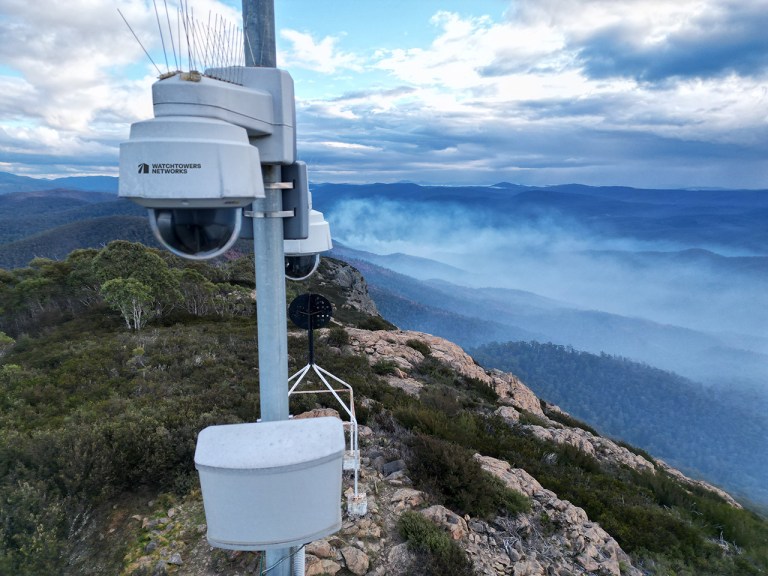

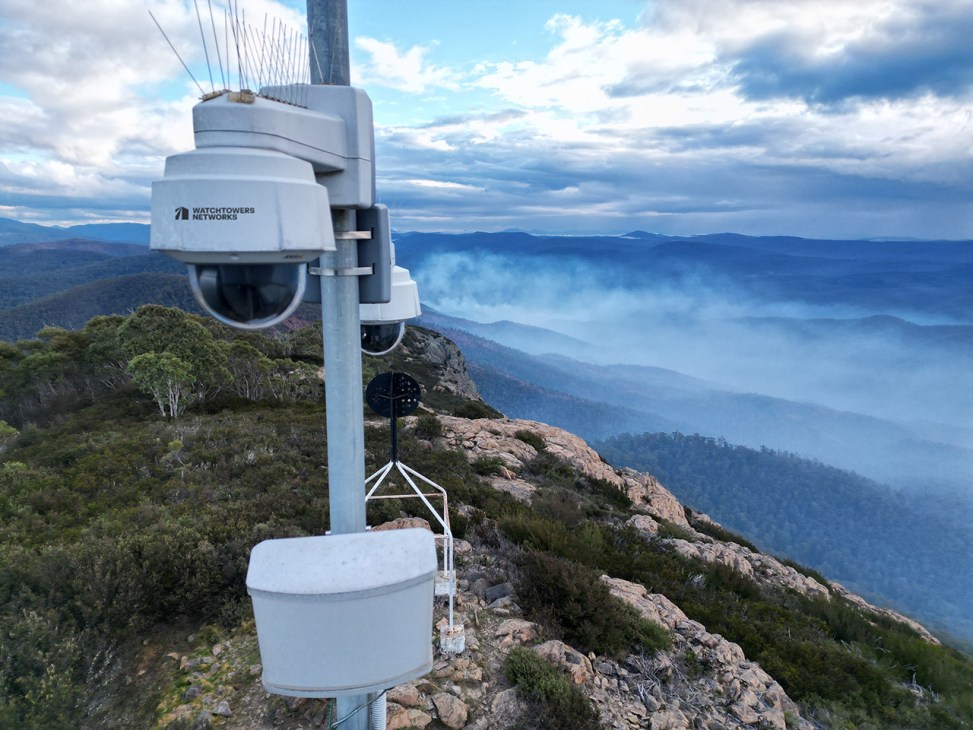
The fire lookout perched on a lonely mountain peak once inspired literature. Jack Kerouac’s Desolation Angels is based on his 63-day stint on Desolation Peak while Gary Snyder’s “Mid-August at Sourdough Mountain Lookout” is a classic Beat poem. Sadly, a set of human eyes deep in the wilderness is a lost art, one to which Australian start-up Watchtowers Networks pays homage with its dual-camera automated systems that rotate continuously to provide a 360-degree panorama over remote forests up to 70km away.
Founded in the wake of the so-called Black Summer bushfires that devastated large swaths of land Down Under from late 2019 to early 2020, Watchtowers’ systems are now in service in New South Wales and the Australian Capital Territory, as well as the US state of Utah, while the company’s new Lookouts service provides a wholly Australian AI smoke-detection model.
watchtowers.io
Seneca
USA

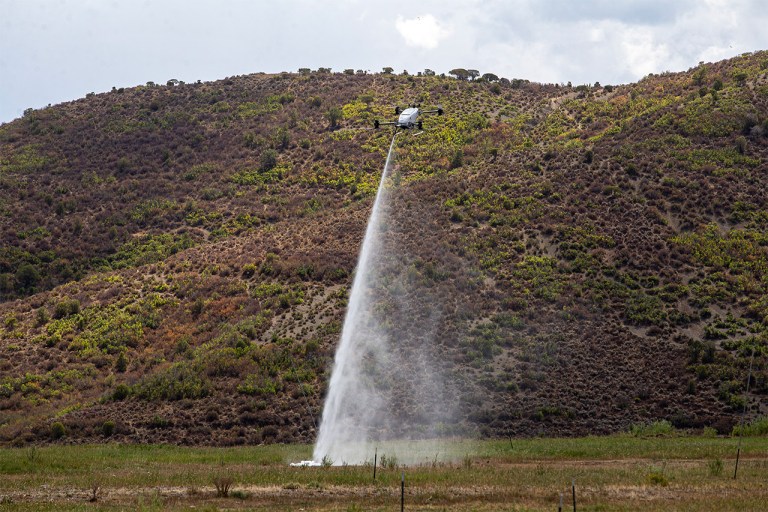

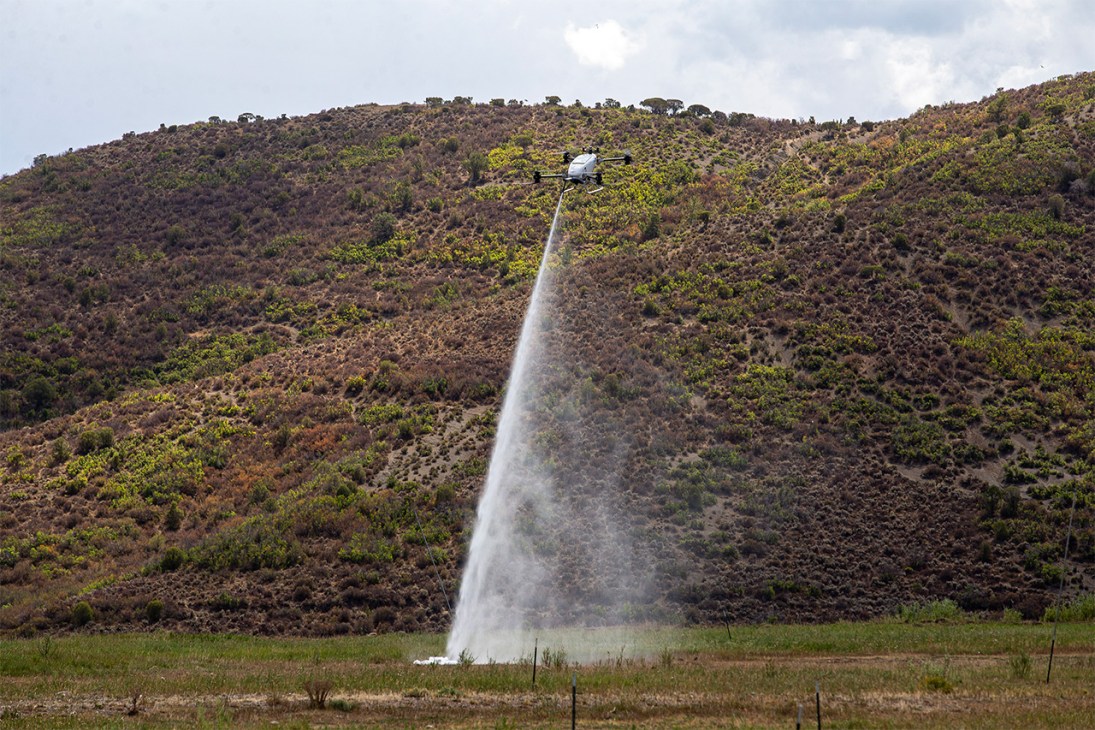
Drones can fight wars, rescue disaster victims and deliver pizzas, so surely they can fight fires too. San Francisco-based Seneca launched last year with $60m (€53m) in venture funding; an advisory board stocked with wildland fire professionals; and a compelling product: autonomous suppression drones that can carry 75 litres of water or foam retardant and spray down spot blazes with high-pressure hoses. Designed to complement, not replace, firefighters, the heavy-duty drones are more like mini-helicopters. They take a few beefy firefighters to muscle but they are small enough to transport on the back of a pick-up truck to a remote fire site.
seneca.com
A most surprising, curious thing happened early Monday evening: some people showed up at my apartment unannounced. Worry not – home invasions have thankfully not arrived in Lisbon and there was a small window of warning in the form of a phone call. “We’re 500 metres away from you and should be ringing the buzzer soon.” They must have been doing some kind of crab walk because it took them about 20 minutes to cover the half kilometre, which gave the household a comfortable margin to shuffle magazines, fluff cushions, check the bar and inspect the lighting. As I went about these tasks, I tried to recall: when was the last time someone came by without days or weeks of planning?
Perhaps if you live in a hilltop village in Piedmont or a cosy town in New Hampshire, this happens every day and you always need to be ready to welcome, host and let the day or evening take its course. I grew up with these types of spontaneous diversions. In Kitchener, circa grade two, Peter would knock on our back door (never the front) and suggest that we go buy some gum and comics or ride our bikes to the park. In early-1980s Ottawa, Susan and Jennifer would call after dinner and invite me over for a swim and a Duran Duran singalong. And in Notting Hill, early 1990s, Melanie, Max, Sally and many others would just drop in on a Saturday afternoon or early on a Sunday evening. Why did it stop? Is it part of modern big-city life? Are we more guarded and private? Is it more of an upper northern hemisphere thing?
Anyway, I was very happy to go down to the lobby to welcome Henri and Solène and shepherd them upstairs via the service lift – not because this was a clandestine operation but because we’re waiting for Kone to come up with an inspired replacement solution for the main lift. Settled in the living room, Solène apologised for the intrusion. She said that they had just attended a screening for one of her documentaries around the corner and felt the urge to seize the moment, swing by to say hello and catch up on the world. As I mixed G&Ts and poured wine while Mats organised the snacks (if you haven’t tried Mercadona’s canned jalapeño olives, you’re in for a proper treat), Henri gave his take on the situation in France and the state of Europe in general, and Solène was full of questions about my recent trip to São Paulo. The conversation moved towards cinema and Solène’s hopes for another Oscar (she’s a producer), more on France and whether Portugal has the apparatus in place to dodge the problems of its neighbours. For the record, I was a bit more hopeful than Henri, as I believe that Portugal has geography, ginga and favourable demographics on its side. But let’s see.
At some point, the conversation moved to furniture acquisitions and sofa makers (the pair have just taken on new digs in another part of town), more G&Ts were prepared and then an invitation was extended to meet visiting parents later in the week. As our Mercadona snack supply was dwindling and there was a nanny who needed to come off shift, Henri and Solène said their goodbyes and disappeared down the service lift. What could have been a perfectly cosy evening à deux turned into something lively, off-script and oddly nostalgic. As we tidied up and sat down to catch the final episodes of The Gentlemen, I decided that it’s time for more spontaneous appearances.
For our subscribers in Manila, you have now been officially warned: I’m about to show up for a little surprise visit and, rather than minutes, you have a full week to prepare. See you soon!
Enjoying life in ‘The Faster Lane’? Click here to browse all of Tyler’s past columns.
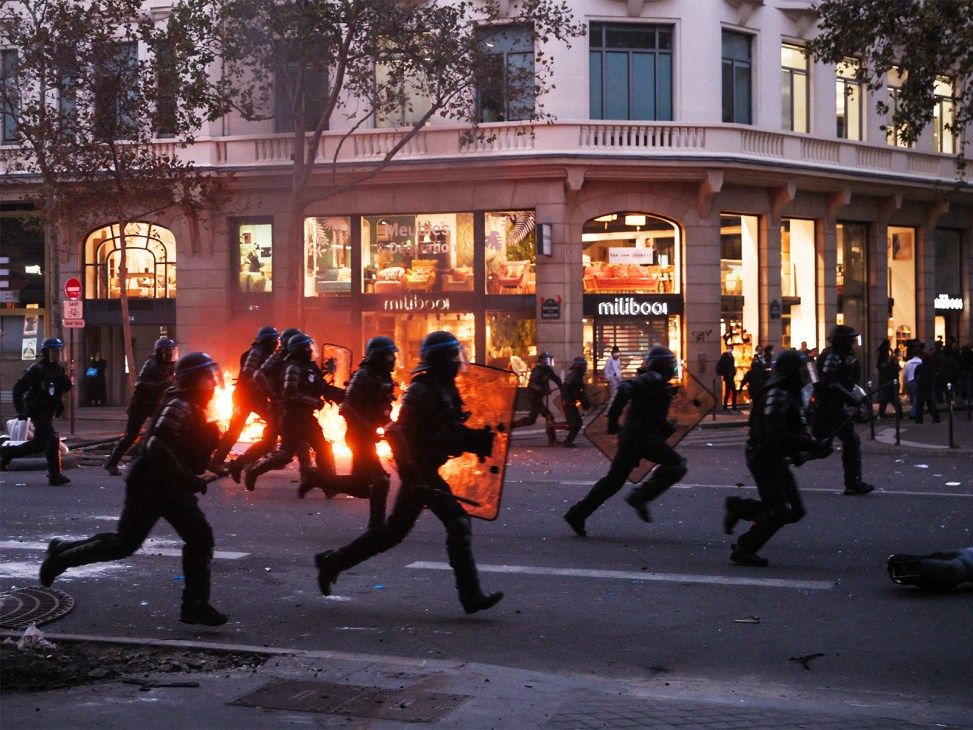
France is preparing for another weekend of unrest following this month’s protests against rising costs of living and the deterioration of public education. What began as peaceful public demonstrations quickly escalated into widespread violence, with police deployed across the country in a bid to prevent further looting and vandalism. According to justice minister Gérald Darmanin, more than 2,000 people were taken into police custody last weekend alone.
In Strasbourg-Saint-Denis, dark plumes of smoke rose from trash-can fires, while looters – hundreds, by some estimates – broke into shops. “They came out of nowhere,” said Vincent, the owner of a tobacco shop in the neighbourhood. He added that he tried to find and call the police but no one came. “They said that they were completely overwhelmed and that they couldn’t help.”
The riots across the country exposed both the government’s lack of preparation for the protests and a deeper issue with its strategy for maintaining public order. Opposition politicians blamed the administration for the misallocation of police forces, questioning why so few specialised units were deployed to quell the unrest and why it took hours to put forces on the ground. In Marseille, only one riot unit was on hand to monitor the demonstrations. Far too few officers were there to respond when several hundred rioters arrived in the city by early morning, breaking into the town hall and tipping over a statue.
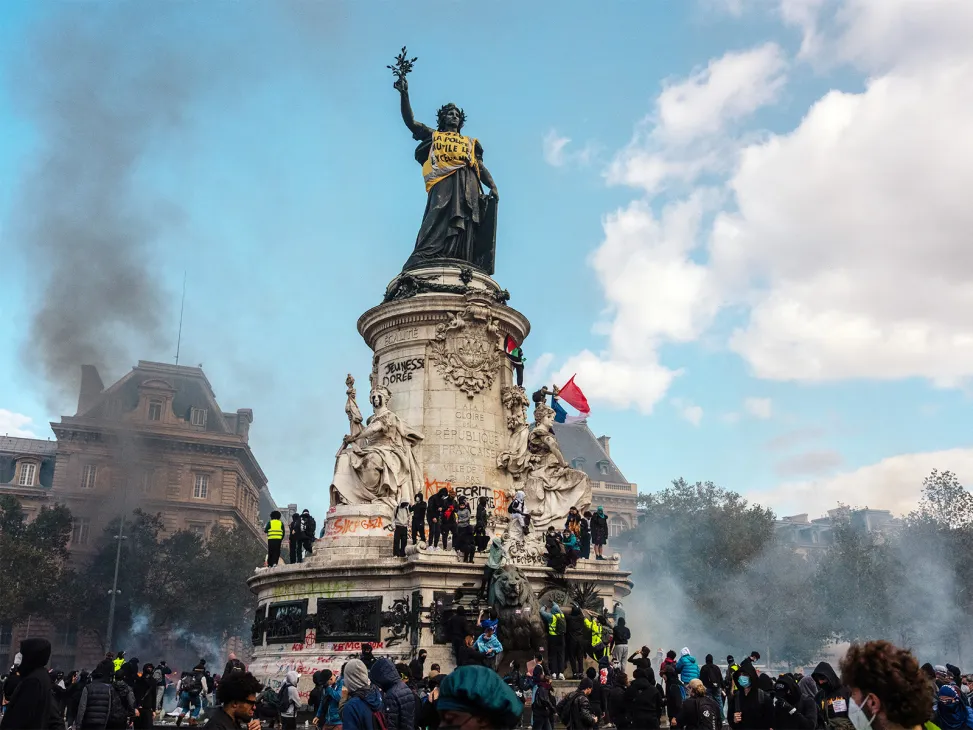
Despite weeks of social-media buzz leading up to the demonstrations, French intelligence services allegedly underestimated their size. On the day of the protests, about 550,000 people took to the streets, which dwarfed the some 60,000 security forces that had been deployed to keep the peace. “In certain large cities, we lost control,” said interior minister Laurent Nuñez on France Inter, acknowledging “a lack of anticipation.”
That limited foresight coincided with the complexity of policing a crowd as varied as the day’s demonstration. Officers had to manage “three topics at once: peaceful demonstrators, opportunistic looters and more organised ‘breakers’ attacking state institutions”, said Sébastien Malzieu, senior police commissioner at the Compagnies Républicaines de Sécurité (CRS) central directorate. The CRS is part of France’s national police force, dedicated to security and crowd control. The group has several specialised units, such as the CRS 8 – a highly mobile and trained riot-policing unit that acts as a Swat team – but these were only deployed in the late afternoon of 17 October to assist with the riots.
“Stopping the violence was difficult and time consuming,” said Malzieu. Police tracked looters throughout the night and over the next two days. “Officers had to go street by street, shop by shop, following the long protocol for making arrests,” he added, arguing that the operation did not result in the collapse of public order. “A great majority of institutions were protected.”
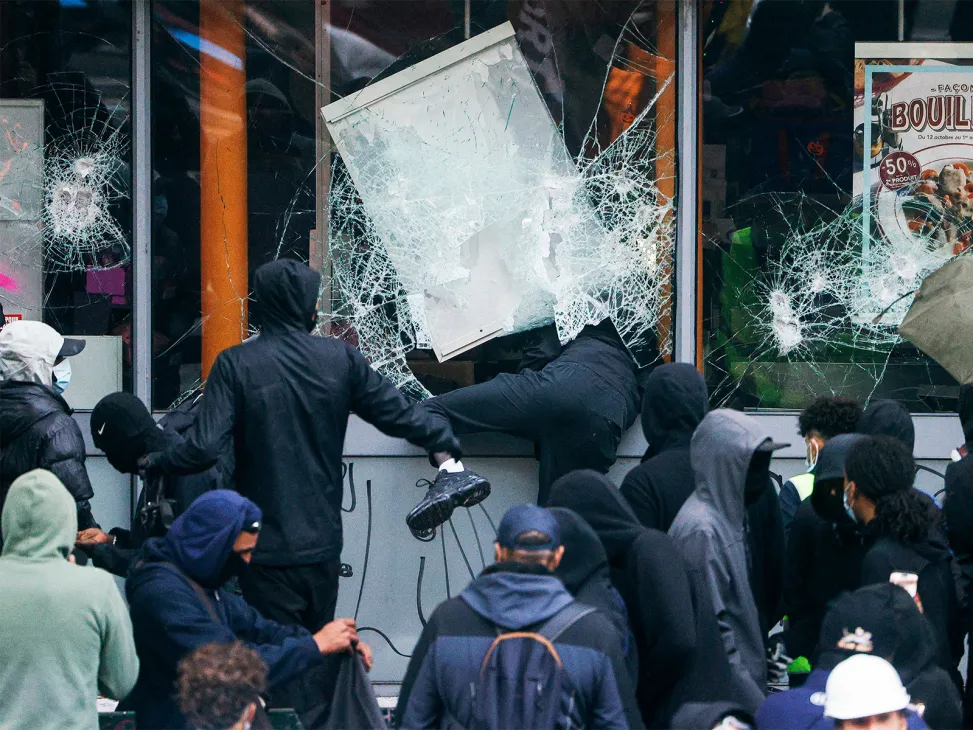
While citizens have expressed outrage over looted businesses and affected town halls, many have also criticised the government and police response to the demonstrations. On the ground, the police used tear gas, rubber bullets and stun grenades in an attempt to stem the unrest. French regulations require several warnings to be issued before force is used but videos circulating online reveal tear gas at peaceful gatherings. Reports also show that the CRS used la nasse (kettling), a controversial tactic that involves surrounding a group of protesters and preventing them from leaving, often trapping peaceful demonstrators alongside those suspected of violence.
Ahead of this weekend’s demonstrations, the government has opted for a drastic escalation of its security measures. On Tuesday it asked local authorities to establish curfews in several cities. To protect sensitive sites, it also announced the deployment of troops from the army’s long-running counterterrorism operation, who were last mobilised during the Yellow Vests protests of 2019. The Brigade de Recherche et d’Intervention (BRI) and Brav-M motorcycle units are also involved today, the latter of which is infamous for several court convictions related to brutalising protesters and journalists.
Mobilising such a battery of militarised police forces reflects a textbook pattern in the government’s handling of street unrest in recent years. During the student protests in early October, interior minister Laurent Nuñez ordered that authorities use anti-riot weapons with “no restraint”. The declaration contributed to renewed public outrage over police violence, particularly around the CRS units, whose use of anti-riot grenades and rubber bullets have maimed several high schoolers during those demonstrations.
“[The government’s] strategy is one of political desperation,” said Sebastian Roché, research director at France’s National Centre for Scientific Research and co-author of La Police Contre La Rue. “The use of the army, for example, is not a strategy that will add efficiency to dealing with public disorder. It sends a message about waging a war against the youth and people who are angry about their purchasing power.”
Where France goes from here is yet to be seen. Its politicians have used the riots as an opportunity to trade blame. Prime minister Sébastien Lecornu attributed the violence to the far left; La France Insoumise’s left-wing leader, Jean-Luc Mélenchon, criticised the government’s policing strategy; and Marine Le Pen’s far-right Rassemblement National blamed the government and immigrants (there is no proof that migrants or the far left were responsible for the riots).
As France prepares to head to the polls next year, policing will surely be at the centre of the debate. Mélenchon and Le Pen offer sharply contrasting visions of law and order. The next presidential election will not only shape how France responds to future unrest but also whether it can find a way out of the cycle of escalation between protesters and the state.
Monocle contacted the French Interior Ministry, which declined to answer questions.
This week gallery representatives, advisers and collectors alike have been crowding into Karl Lagerfeld’s former home at the Hôtel de Maisons in Saint-Germain-des-Prés for Design Miami Paris. Prices, provenance and acquisitions were discussed in hushed tones as the design and art market got down to business at the event.
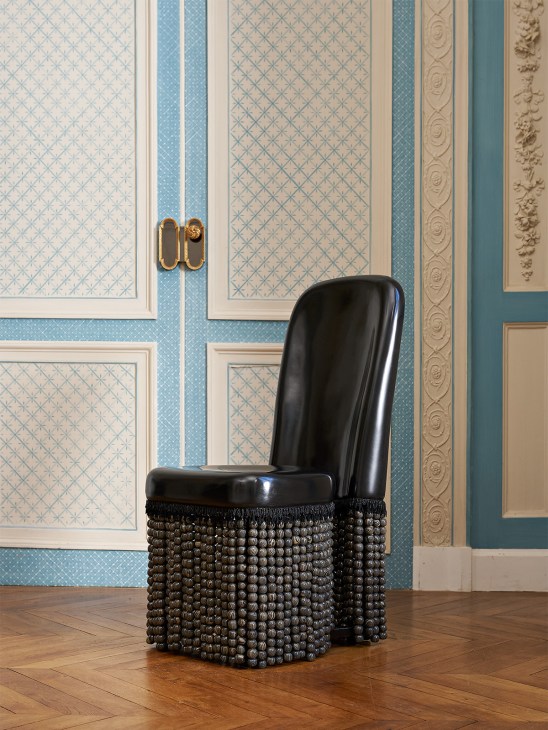
Highlights included the Designers of Tomorrow showcase, a collaboration between Design Miami Paris and Apple. Curated by Rodman Primack, it brought together four emerging studios with the theme of “Design for Presence”. Among its contributors is New York-based Isabel Rower, who presented “Padded Chair 1860”, a 19th-century boudoir-inspired seat with a fringe made of 1,500 ceramic beads. For Rower, a craft’s sense of presence begins in the making, especially with the surrender that ceramic requires: colour and finish are never predictable. “There is this inherent embracing of the presence of the present, of opening the kiln and relinquishing any control,” she says. The slow, laborious, ritualistic process brought her a “monastic” kind of presence. “Rower has created an invitation to sit,” says Primack, explaining that the piece invites people to remain still – to pause. But touch the beads and a soft clatter interrupts the expected moment of rest, drawing attention to the body and its surroundings. “It wakes you up,” adds Rower.
But the chair was not the only work to reward reflection at Design Miami Paris. Wrapping up tomorrow, the multi-day showcase of collectible design – from one-off pieces to antique treasures – was steered by curatorial director, Charlene Prempeh. Here are three other studios and galleries that caught Monocle’s eye.
The A/P Room
UAE




Based in Dubai, The A/P Room made its Paris debut at Design Miami Paris with a presentation of international designers that pushed materials into unexpected territory. California-based artist Rogan Gregory, for one, brought the farm to the table. His almost-two-metre-long upholstered chandelier combines goat fur with gypsum, while his smaller sculptural lights bring together bronze and horse hair.
theaproom.com
Pulp Galerie
France


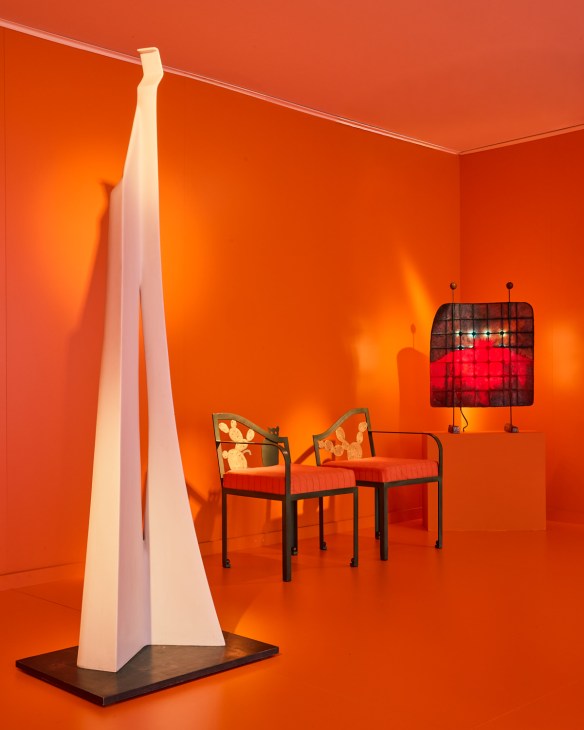
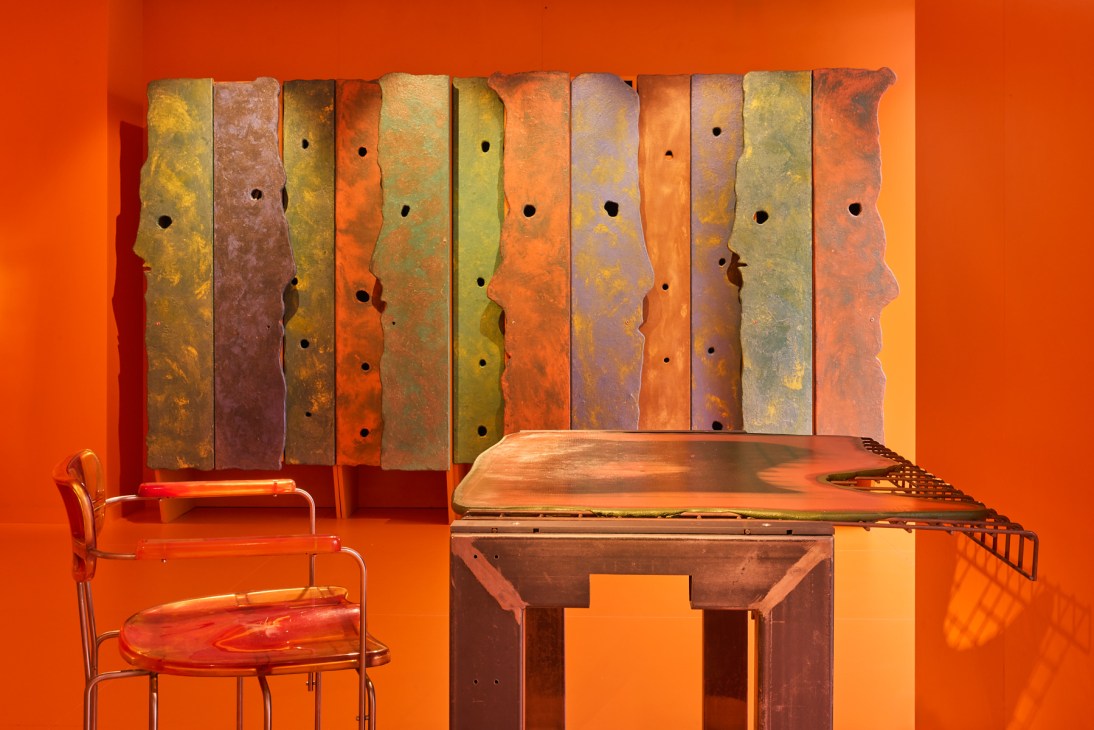
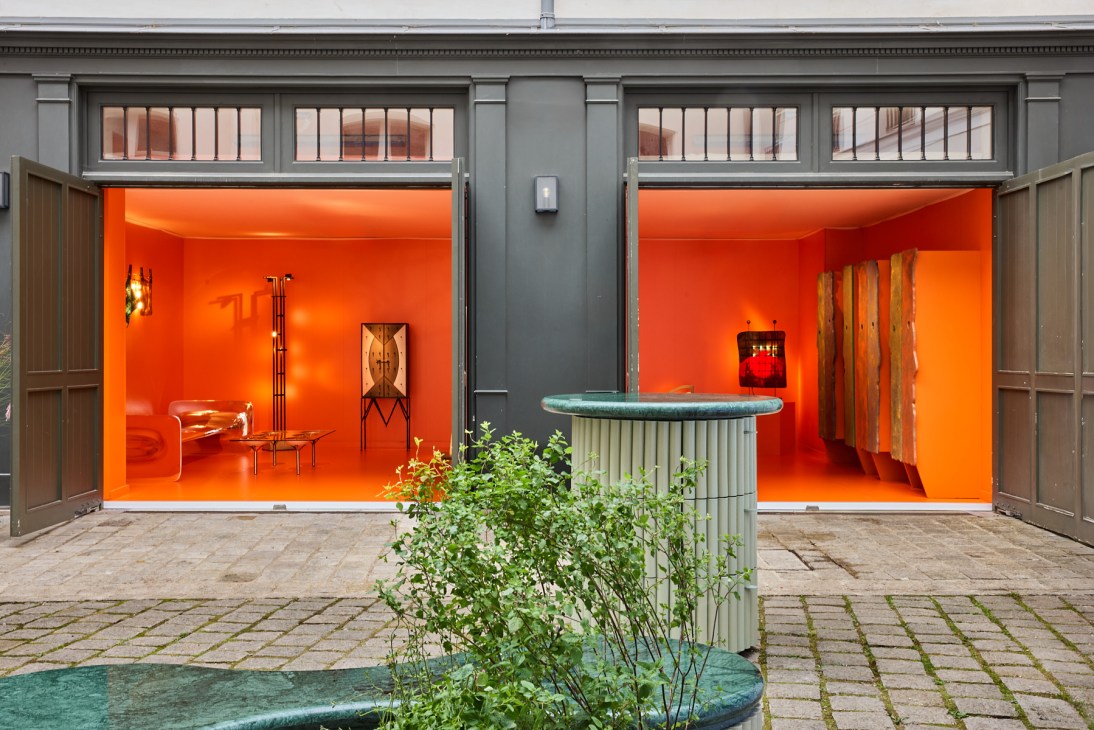
Paris-based Pulp Galerie also made a bold first entrance to Design Miami, with orange walls and a prime spot by the doors of the Hôtel de Maisons. Specialising in design from the 1980s to the 2000s, the gallery’s manifesto reads, “style before function, form above all”. Gaetano Pesce’s Canovaci lights embody this spirit. Made with Italian glassmaker Venini, the luminaries are a ludic nod to laundry strung across Italian alleyways.
pulpgalerie.com
Galerie Scène Ouverte
France


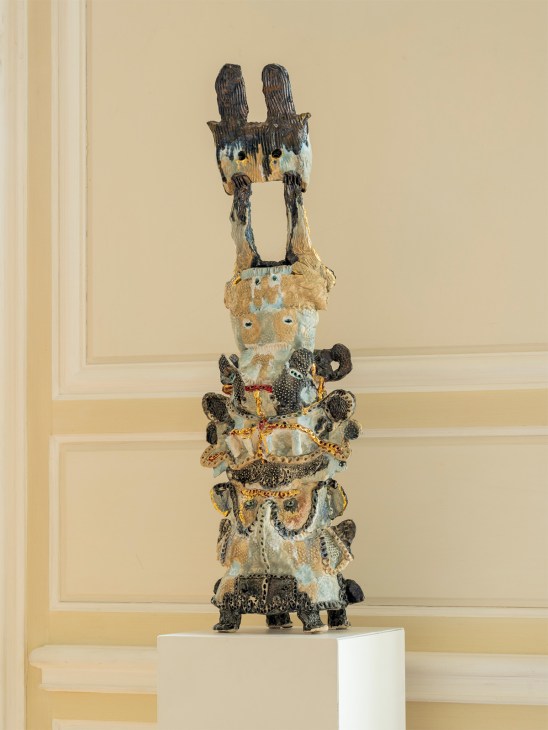
At the presentation of “Around a Desk”, Galerie Scène Ouverte turned the 18th-century room into a sculptural office space. Made from peeled and unfurled layers of maillechort (nickel silver), Studio Lugo’s desk and library evoke the organic. “The manufacturing process is not concealed; it is highlighted, embraced and placed at the very heart of the creative gesture. A sculptural horizontality serves a functional object whose layers of metal unfold like geological strata or petals”, says founder Laurence Bonnel.
galerie-sceneouverte.com
1.
On Tuesday I walked over to Soho to see a preview screening of Spanish-language film La Bola Negra, directed by “Los Javis” (Javier Ambrossi and Javier Calvo). It’s a story set during the Spanish Civil War and the present day. It’s about love and desire. It’s about secrets and telling the truth. It’s about being gay. The film could be an Oscar contender for Best Picture: a campaign that will be aided by the shimmering, mesmerising presence of Penélope Cruz and a poised performance from Glenn Close.
Now, press screenings are not the most intimate of settings. The room is usually packed with seen-it-all critics who make their living from finding fault, taking things apart, spending the duration of the film scribbling big thoughts in little notepads. But in this velvet-chaired cocoon, I found myself lost in this epic, weaving and sometimes fantastical tale. The directors deliberately take their time to stitch all the narratives together (at one point I wondered if I should ask my jotting-away neighbour if he knew what the hell was happening). But even this pacing keeps you transfixed.
Towards the end of the film – when all is finally clear – there’s a fleeting moment when a young man stoops to kiss the head of his boyfriend. It’s just an “I’m here for you” kiss but I felt a tear jog down my face, and then another. I brushed them away. Why was I crying? For them, for me, for us? I need to see the film again because there’s something buried there. A little bit of me? A little bit of you too?

2.
There’s something that I forgot to tell you about my brother-in-law’s funeral. Phil had been partial to a Starbucks, so his granddaughter arrived at the funeral service carrying a venti latte. She placed this next to the coffin. I was desperate to see if, for once, a Starbucks employee had managed to spell a name correctly but I was too far away.
Anyway, this last order for Phil sat there throughout the entire service. It was even there as the curtains closed and the coffin was dispatched to the flames. I have mentioned this Starbucks detail to a few people and it seems that, just as the ancient Egyptians entombed their dear departed pharaohs with all sorts of crap for the afterlife – mummified cats, cooking utensils, electric barbecues – modern grievers are keeping the tradition alive. I have been told of a Sunday roast being brought to a church and numerous pints of beer (even, in one case, to the funeral of a gentleman who had died an alcoholic).
Just so you know, I think that I will be happy to go to the next world free of pizza or pies – even if, finally, the carbs don’t matter. Though if you order one final cheeky margarita, I might be up for that.
3.
On Monday, London will discover that a 1km stretch of the famous retail strip Oxford Street has been pedestrianised overnight. I wrote about this news for the Monocle Minute yesterday. I am sure that the project will be a success but I grew up in a new, postwar town with a fully pedestrianised centre and it was rubbish. It would have been so much nicer with cars. To keep the retail streets pedestrian only, the town was ringed by ugly multi-storey car parks. And, at night, once the shops had closed, it was desolate. People preferred to drive to pubs and restaurants in nearby villages. Over the years the town centre became edgy at night; the walkways stank of wee. Meanwhile, neighbouring towns with traffic, movement and activity thrived.
The plans for Oxford Street seem full of potential. But just getting rid of cars is not enough. I will watch and wait a while before getting too giddy about this change.
Want to read more of Andrew’s columns? Click here.
In a city where tourism is increasingly seen as a threat to local culture, Barcelona’s independent bookshops are thriving. Even as cinemas close and small music venues disappear, the city’s number of bookshops has climbed to 140, a 30 per cent increase since 2008. According to the Catalan Guild of Booksellers, new openings have far surpassed closures in recent years, though some have struggled to keep their doors open.
In 2024, the threatened closure of the historic Llibreria Sant Jordi triggered weeks of public mobilisation. While it ultimately shut, it reopened a year later with a gastronomic offering. The episode underscored deeper anxieties over skyrocketing rents, the declining use of Catalan and the strain that a tourism-driven economy places on local life. And yet, while more retailers stock titles in English and other languages, Catalan-language publishing is growing too. Barcelona’s new wave of bookshops has become a valuable refuge for locals and foreigners alike.
1.
Ona
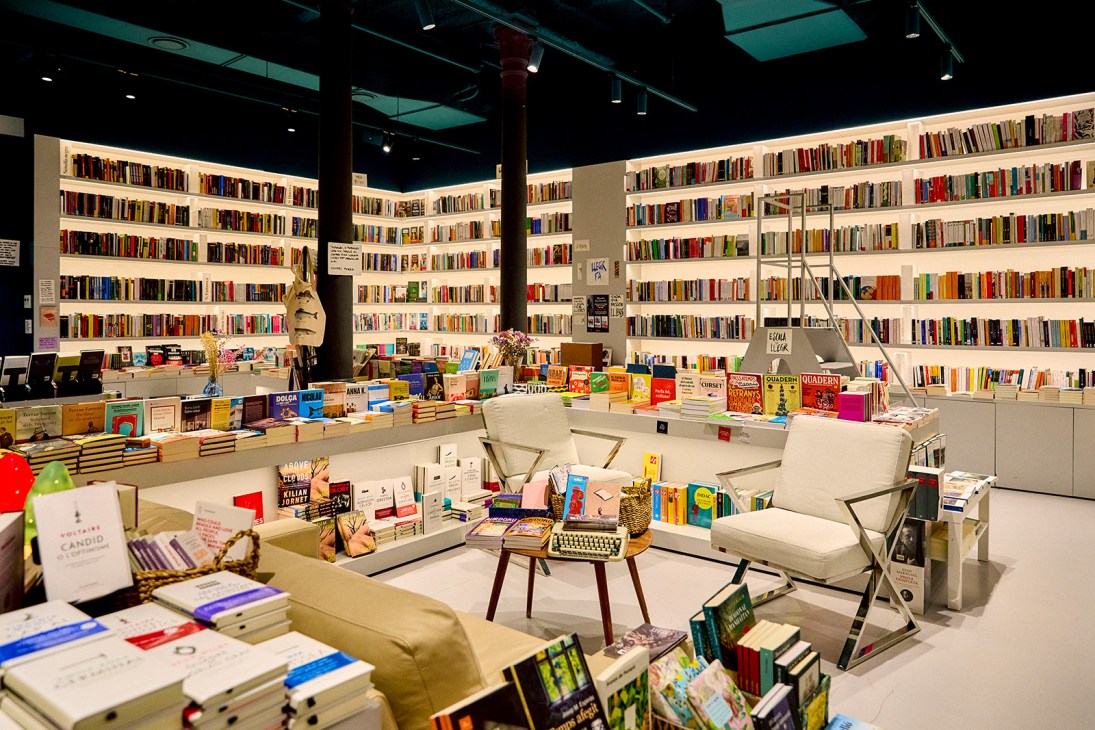
Since launching as a small shop in Gràcia in 1962, Ona slowly built a reputation for its selection of Catalan literature. A few years ago, second-generation owner Montse Úbeda teamed up with entrepreneur Tatxo Benet to expand the business and, upon opening a 900 sq m space on Carrer Pau Claris in 2020, Ona became the world’s largest bookshop dedicated to Catalan-language books.
The boutique also stocks a selection of Catalan literature translated into 15 languages, from English to Mandarin. “We stock 1,500 references by authors who write in Catalan that have been translated into other languages,” says Ona’s director, Iolanda Batallé. “It’s painstaking work because we have to go publisher to publisher but we’re very proud of it.”
Ona has grown fivefold over the past six years, hosting book clubs, talks and live music in its café space, as well as a busy schedule of events in its vast children’s section. “Most bookshops have only about 30 per cent of books in Catalan because Spanish takes over,” says Batallé. “Shops like Ona are very important for the growth of the Catalan publishing industry.”
onallibres.cat
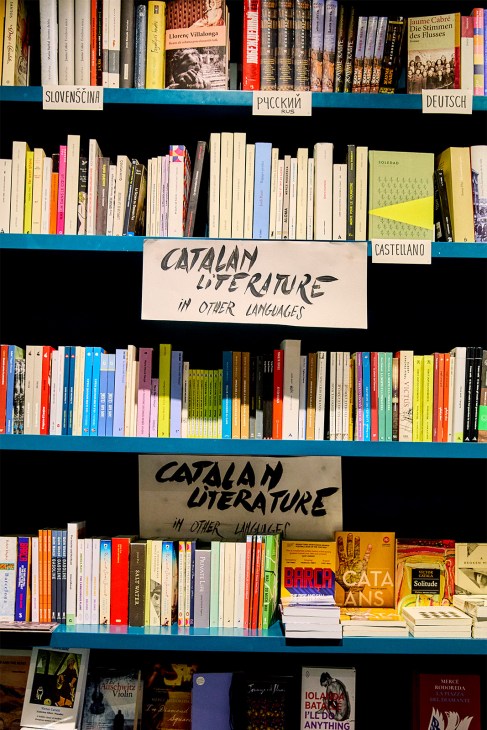
- Recommended novel: Ona director Iolanda Batallé is the author of I’ll Do Anything You Want, published in 2013
- Current bestsellers: Death in Spring and In Diamond Square by Mercè Rodoreda
- Catalogue: 53,000
2.
Llibreria Sant Jordi
When the longtime owner of Llibreria Sant Jordi, Josep Morales, passed away in 2024, the historic bookshop in Barcelona’s Gothic Quarter announced that it would be closing its doors. After an appeal urging book lovers to buy its remaining stock, hundreds of people turned up to purchase discounted books on art, photography, design and illustration. The event morphed into a spontaneous tribute to a local business which – with its listed 19th-century wooden shopfront – had been a fixture of the street since the early 1980s.
“The neighbours made it clear that they didn’t want yet another shop to close,” says Alba Biliotti, who now helps run the business under a new model. To the delight of locals, Llibreria Sant Jordi reopened its doors in December 2025 with most of its interiors unchanged. In the evenings after shoppers have left, the space transforms into a restaurant that hosts book clubs, literary discussions and dinners with authors. “Most people still come because it’s their local bookshop,” says Billiotti. “But now it has two different atmospheres. Some people come for dinner and walk out with a book, while others come to buy a book and end up staying for a drink.”
llibreriasantjordi.com
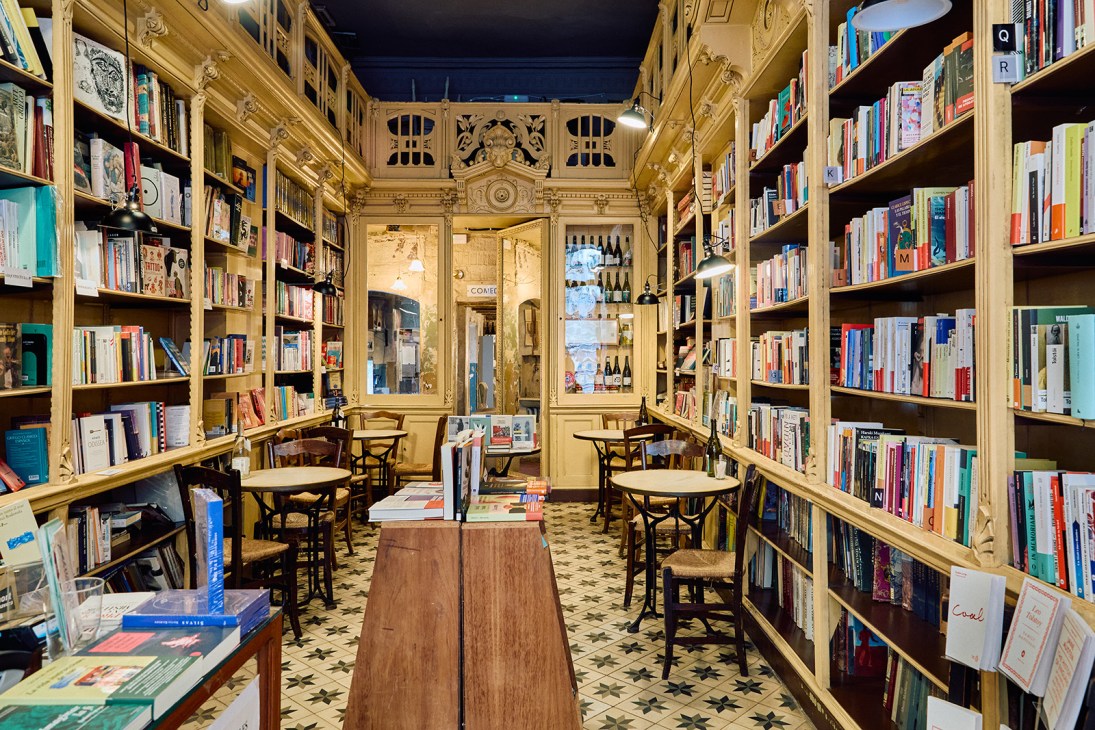
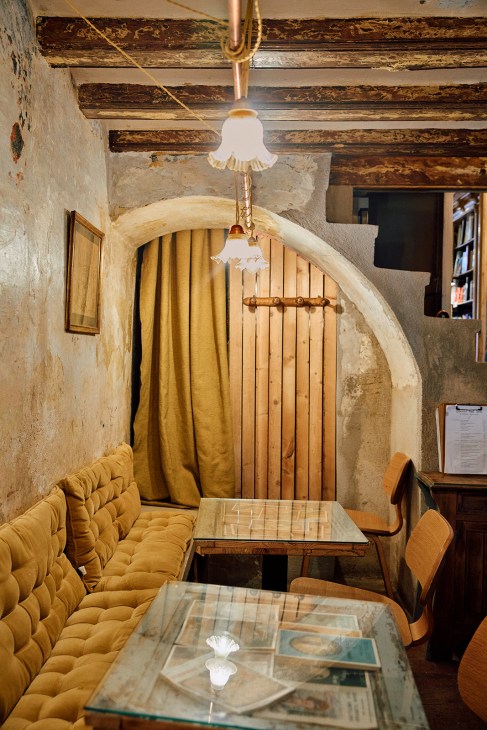
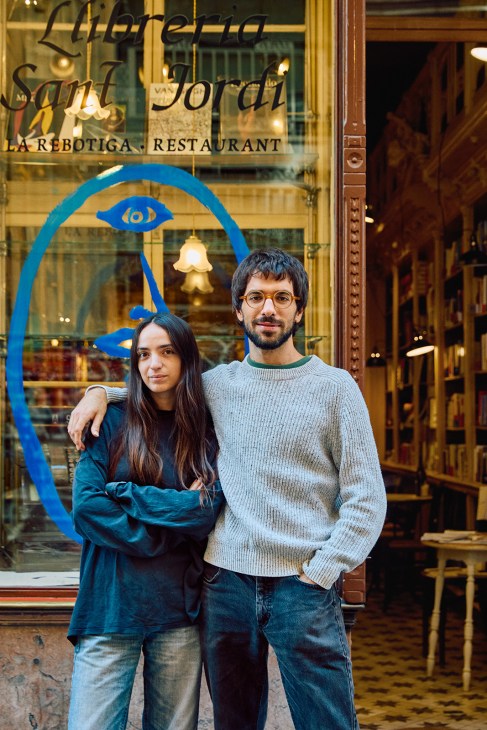
- Year of opening: 1983
- On the menu: Piquillo peppers stuffed with cod brandade and caramelised foie with Kalamata olives and fig jam
- Current bestseller: The Little Frog’s Guide to Self-Care by Maybell Eequay
3.
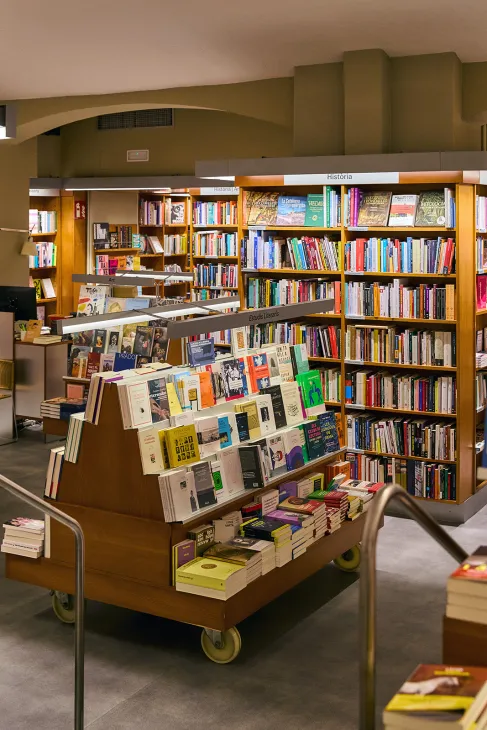
Laie
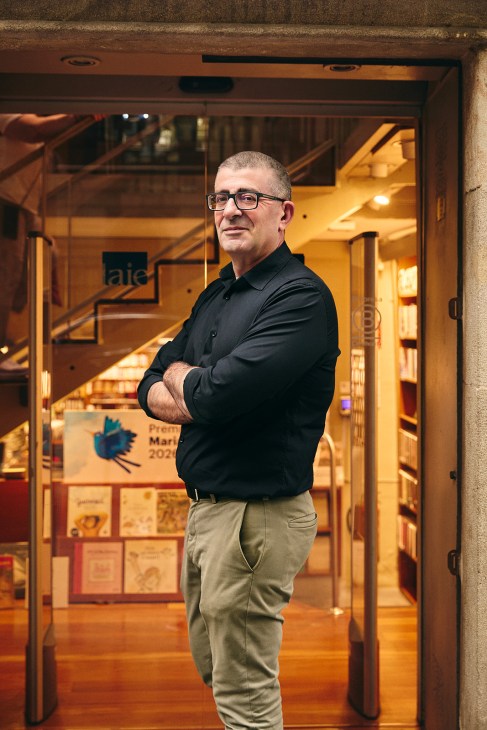
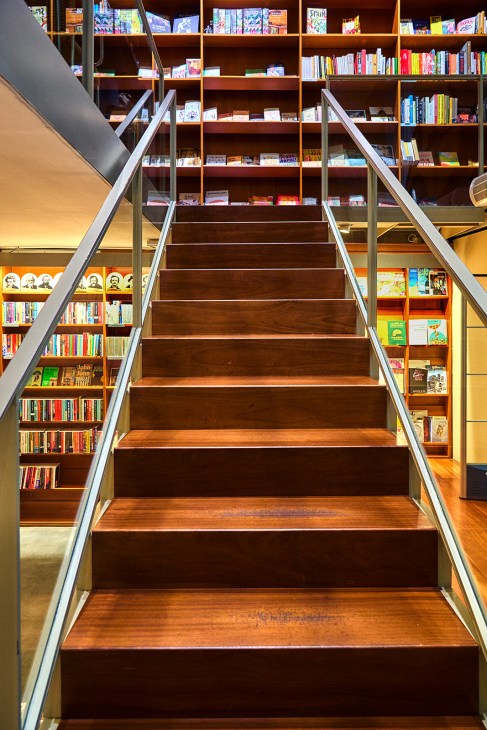
In 1980, four young women opened the doors of Laie on Barcelona’s Carrer de Pau Claris without much fanfare. “Back then it wasn’t customary to announce the opening of a bookshop; it wasn’t considered particularly newsworthy,” co-founder Conxita Guixà wrote for the shop’s 40th anniversary in 2020. “Perhaps three or four people came in during the first few hours.” Four decades later, Laie runs 35 outposts all over Spain, from Santiago de Compostela to Palma de Mallorca.
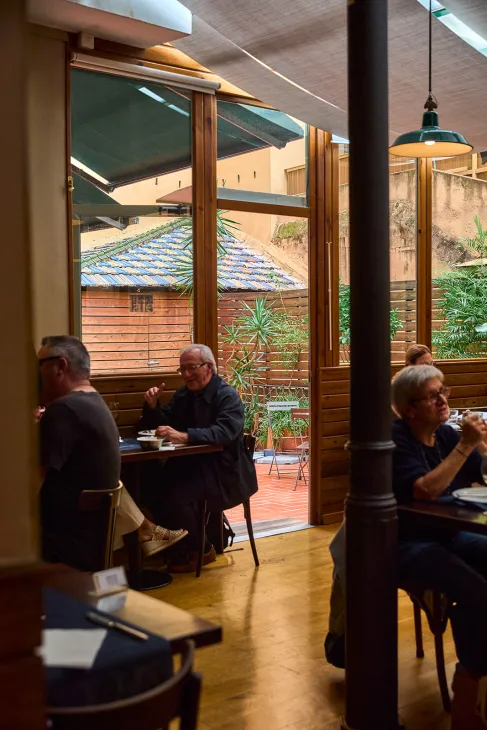
Fresh out of university, co-founders Conxita Guixà and Montse Moragas wanted to create a space dedicated to the humanities and critical thinking. It quickly became a meeting point for the city’s intellectuals, who would hide their favourite books in the wrong sections so that they could purchase them later. In the 1990s, a café and restaurant opened on the first floor. On any given day, you can still spot journalists, authors, playwrights and politicians conducting interviews or discussing book deals over a plate of ham croquetas or fish soup. “Gustavo Petro, the president of Colombia, walked in the other day and I had to act normal,” says literary director Damià Gallardo. “Laie has become a nerve centre of Barcelona’s culture; people have made it their own.”
corporate.laie.es
- Year of opening: 1979
- First book ever sold: An anthology by the Greek poet Giorgos Seferis
- Current bestseller: La Bola by Daniel Verdú, which was recently presented at the bookshop
- Recommended novel by Damià Gallardo: What I Loved by Siri Hustvedt
4.
Llibreria Byron
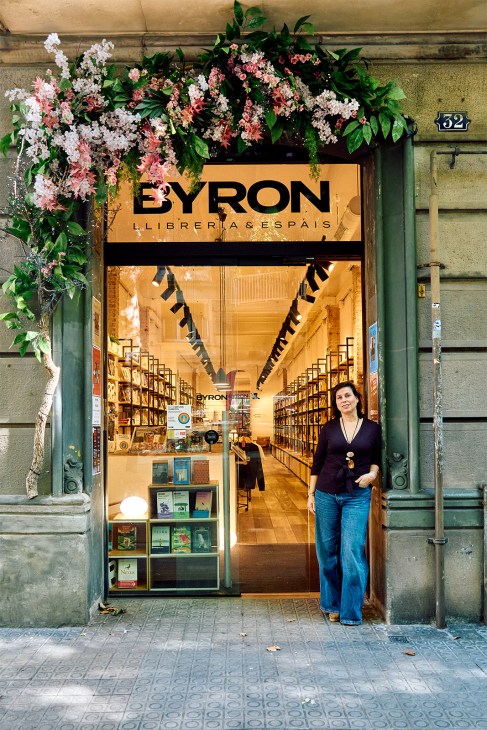
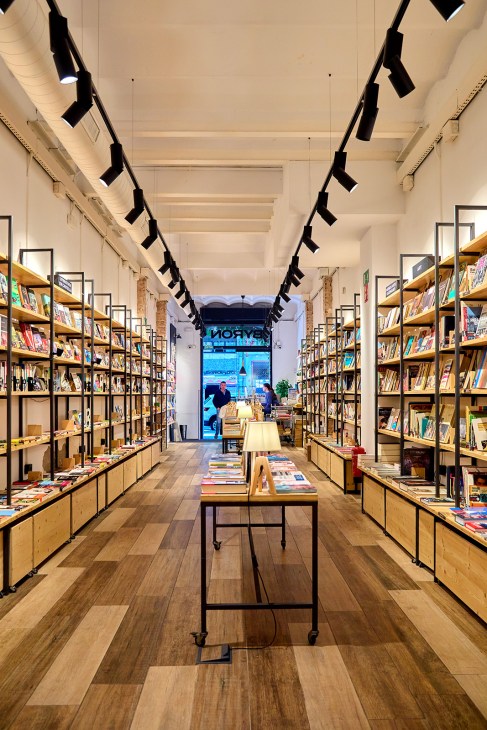
Huygens, a publisher dedicated to academic and educational titles, was planning to open its first bookshop in April 2020 when the coronavirus pandemic hit. When it finally opened months later, it was welcomed by locals who had rediscovered the pleasure of reading during Spain’s strict lockdowns. Founded by editor Mariana Sarrias and law professor Víctor M. Sánchez, Llibreria Byron – named after the British poet – opened with a café, quiet reading nooks and a space for events, designed with the ambition of giving neighbourhood residents a place to reconnect. “We decided to call it a bookshop but right from the start, we wanted it to be more than that: a place where culture is brought to life, not just sold in the form of books,” says Sarrias.
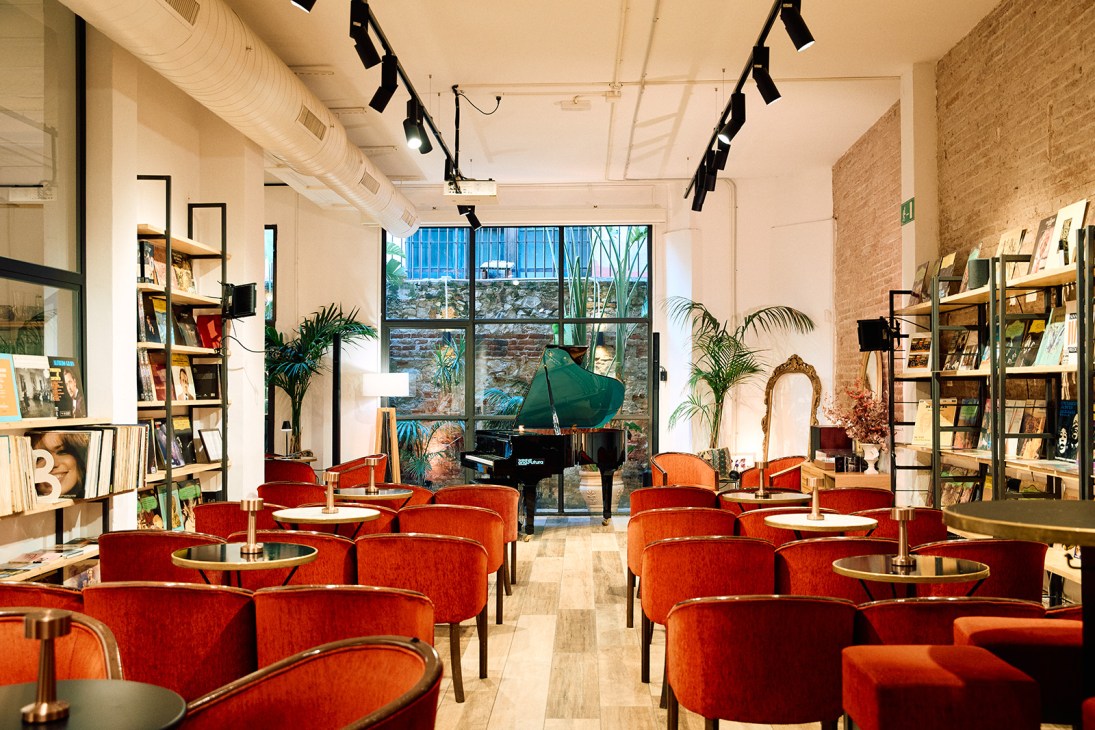
Byron has a large children’s and young-adult section, and a packed calendar of community events. Every Friday a group of neighbours from El Raval gathers for a philosophical coffee hour to debate a variety of questions from the dangers of consumerism to the role of uncertainty in daily life. These discussions often take place around a walnut-panelled fireplace that Sarrias found in an antiques shop and had restored before placing it at the heart of the shop. Though it’s powered by electricity, it still fulfils its intended purpose: to create a cosy, welcoming atmosphere for people to get lost in a book. In the evenings, Byron makes space for music too. The café’s grand piano is used for everything from jazz performances to renditions of Puccini’s Madama Butterfly.
llibreriabyron.com
- Recommended book: A Man Asleep by Georges Perec
- Poetry book-club pick: Hardly Creatures: Poems by Rob Colgate
- Bestselling Spanish-language book: Insular by Franco Chiaravalloti
5.
Llibreria Finestres
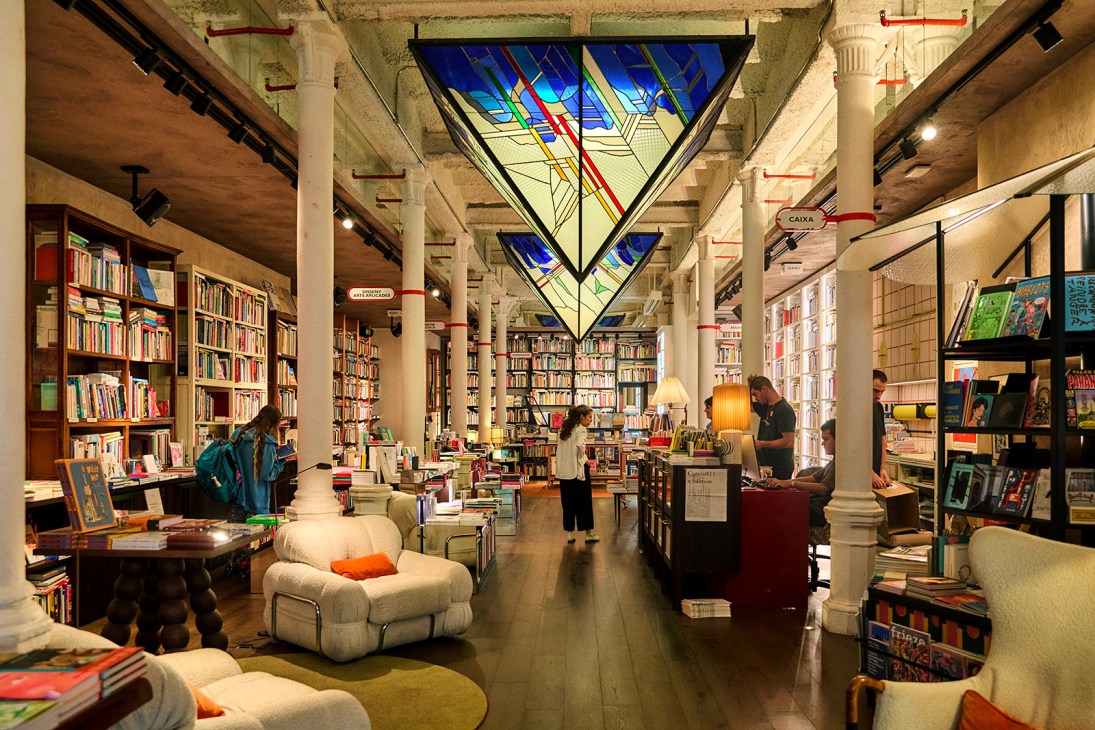
Llibreria Finestres (Catalan for “windows”) opened in 2021 inside a modernist building by architect Enric Sagnier. Just a few steps from Passeig de Gràcia, the shop was designed by Quintana Partners and is furnished with carpets, sofas, well-lit reading nooks and a fireplace. The retailer describes itself as “a bookshop for reading”, where patrons are invited to curl up with a book inside or linger on the terrace with a glass of vermut.
A second location opened shortly after the first, dedicating its venue to comic books as well as publications on illustration and art. Thanks to its success, the business’s expansion has continued: another outpost arrived in the coastal town of Palamós last summer and in May, Finestres Palestina, an outlet devoted to Palestinian culture and literature, opened in the Gràcia neighbourhood. Designed by Valencia-based Palestinian architect Malek Murad Mateu, the latest addition features bright green sculptural bookshelves, hand-woven rugs and an indoor fountain inlaid with a mosaic map of Palestine.
Run by the Finestres Foundation, the bookshop is also behind several literary awards and writers’ residencies. Its impressively multilingual selection includes titles in English, French, Italian, German, Portuguese, Galician and Basque, alongside Spanish and Catalan.
llibreriafinestres.com
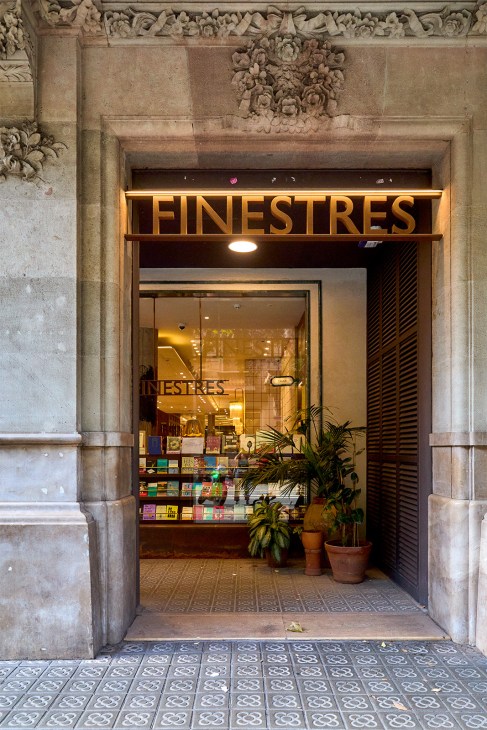

- Number of bookshops: 4
- Phones off: The poor signal inside the shop serves as an unexpected advantage, stopping notifications and incoming calls from interrupting your browsing session
- A line from its foundational manifesto: “We know that there are a lot of bookshops in the city. We also noticed that there are even more readers than bookshops.”
6.
Llibreria Calders
After several bookshops in Catalonia closed following the 2008 financial crisis, journalist and writer Isabel Sucunza and historian Abel Cutillas teamed up in 2014 to open a space to showcase the work of new small publishing houses. Named after Catalan writer Pere Calders, who lived in the Sant Antoni neighbourhood in his later years, Llibreria Calders occupies a former button factory in a small alley. It has gathered a loyal following for prioritising local authors over bestsellers. “At the time there were very few independent bookshops in Barcelona,” says Sucunza. “There also wasn’t a single one named after an author.”
The space resembles a vast wine cellar, with dark bookcases set against bare stone walls. Customers seek it out for its well-stocked poetry section, as well as its selection of titles on theatre and dramatic theory. “Poetry wasn’t so central to the bookshop at first but as soon as we started hosting recitals, we noticed that there was a huge demand for it,” says Sucunza. Readers can continue to pay homage to one of Catalonia’s most famed writers at the nearby bar, Calders, which serves “dishes of exile” inspired by the author’s banishment to Mexico after the Spanish Civil War.
llibreriacalders.com
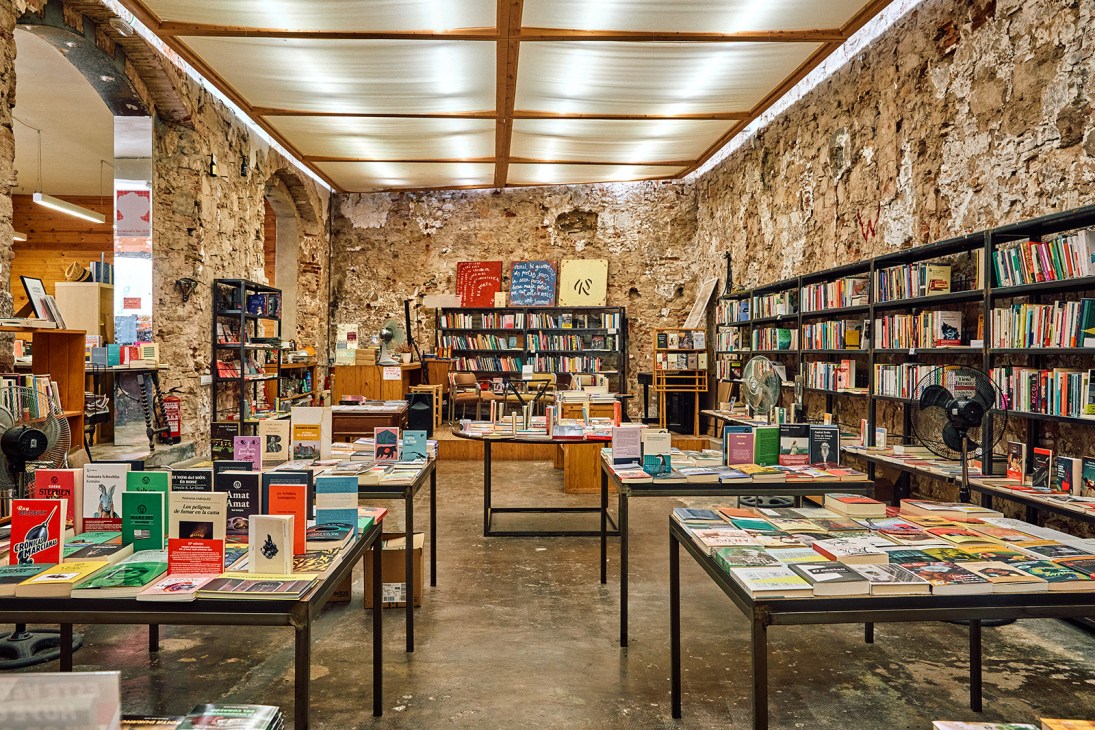
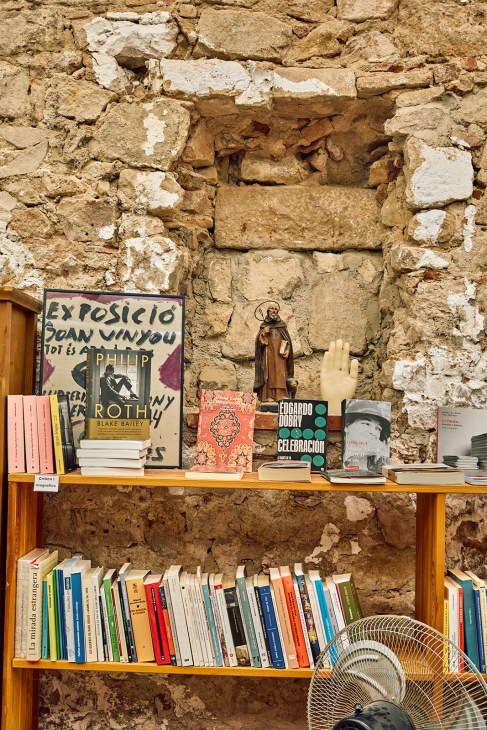
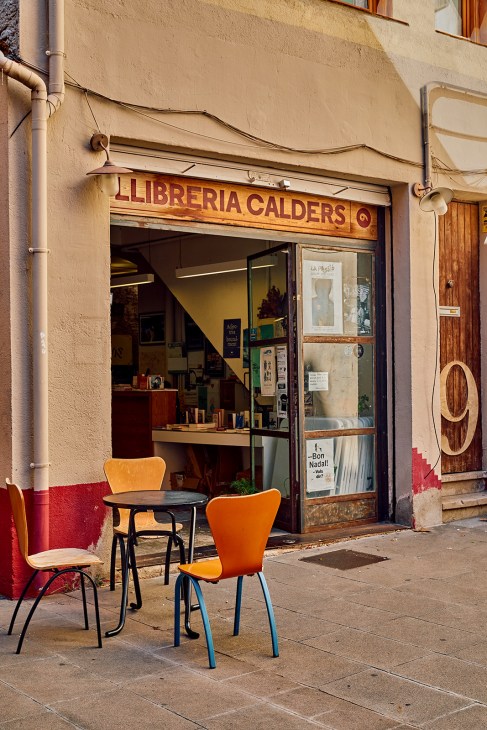
- Books recently presented at the bookshop: A new Catalan translation of Homer’s Odyssey by Pau Sabaté
- All-time favourite book: The Day of the Watusi by Francisco Casavella, a coming-of-age novel about Barcelona from the Spanish Transition to the eve of the 1992 Olympic Games
- Number of titles in stock: Between 10,000 and 12,000
7.
Llibreria Terranova
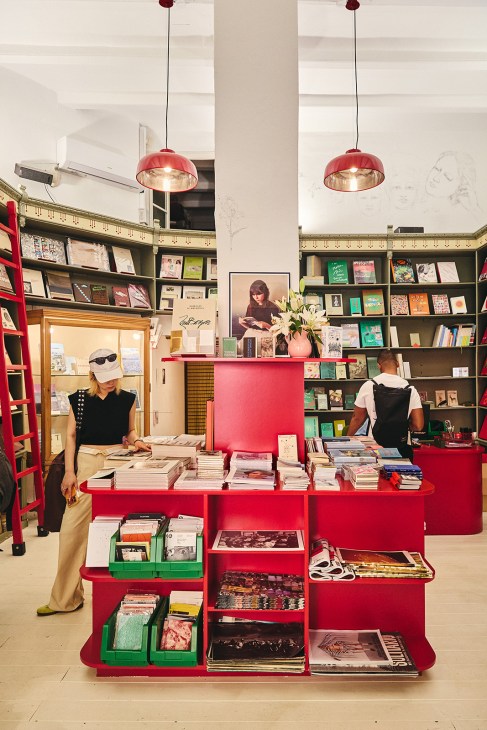
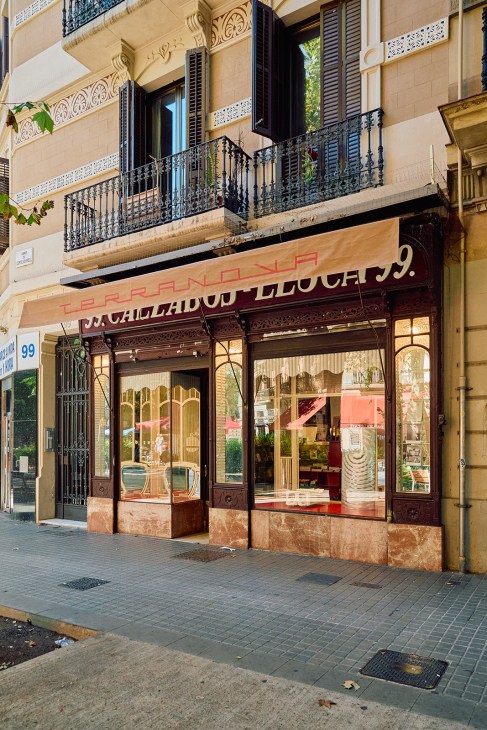
A bookshop that specialises in art publications occupies a former shoe boutique on the corner of a 19th-century building in Sant Antoni. When the space became available in 2020, it caught the eye of Lucía Bonet and Luis Cerveró, who had long dreamt of opening a dedicated outpost of their publishing house, Terranova.
With the help of furniture design studio Owl, the pair restored the modernist listed building’s original features, including its tall ceilings and white wooden floorboards. The original bookshelves, which once stored shoe boxes, returned to their olive-green colour, while a custom-made central island that sits in the centre of the space was painted the same bright red as the Vico Magistretti Carimate chairs scattered throughout.
The shop features Terranova’s design-focused publications, alongside a broader selection of titles on art, fashion and design. Highlights include Servilletas, a book by photographer Felipe Hernández on napkins gathered from bars across Spain, and Sofia Coppola’s visual history of Chanel’s haute-couture designs.
Rather than sorting books by category, the duo has decided to arrange them randomly for customers to stumble upon as they browse. The shop hosts monthly exhibitions and houses a collection of rare books, which are available to view by appointment.
terrranova.com

- Recent exhibitions: Madrid-based photographer Jesús Umbría Brito’s Familia Real, a series focusing on Spanish youth and counterculture
- Period covered by its rare-book collection: More than seven decades, from the 1950s to the present
- Year that publishing house Terranova was founded: 2014
8.
Altaïr
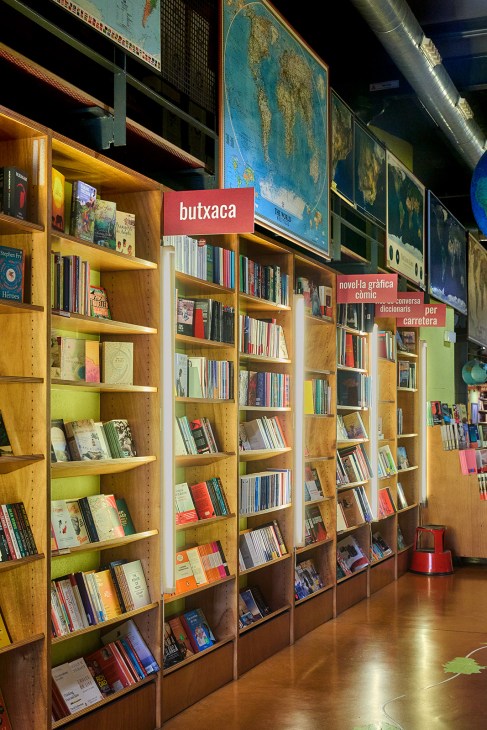
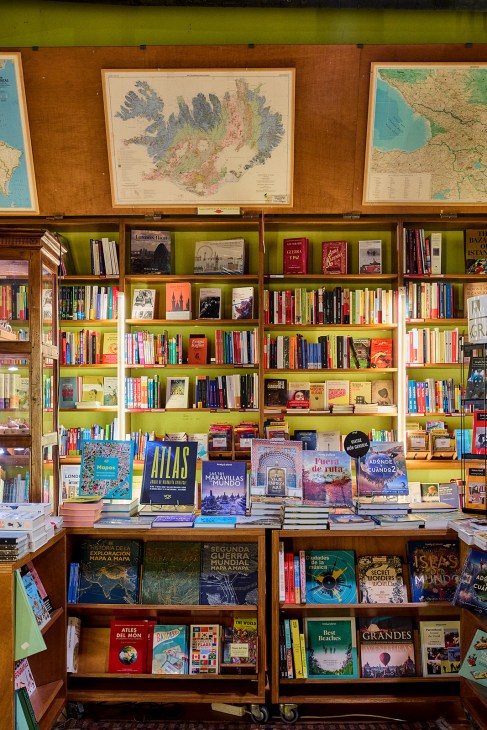
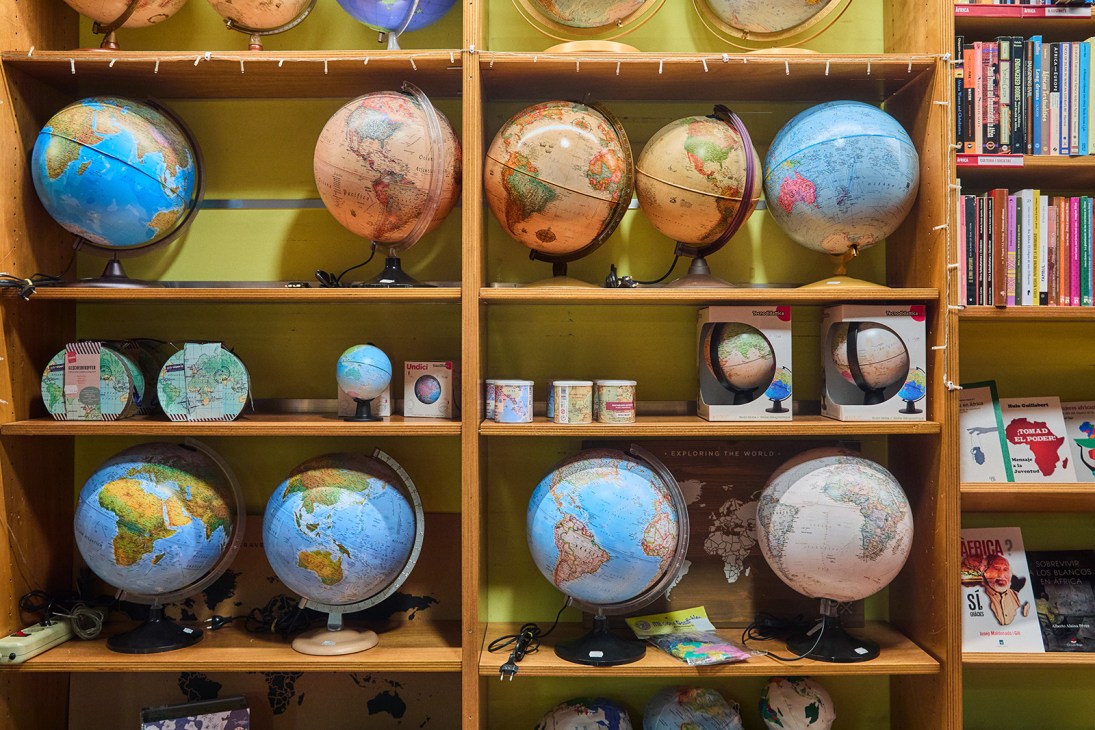
With so many visitors regularly passing through the city, it’s perhaps not surprising that Barcelona is home to Europe’s biggest travel specialist bookshops. In 1979, Pep Bernadas founded Altaïr – named after one of the brightest stars in the night sky – in a small space in Barcelona’s El Raval neighbourhood, where he began to collect guidebooks. It quickly outgrew that first venue and, for the past 20 years, has occupied a vast space spanning three floors in the Eixample, where globetrotters can peruse an unparalleled selection of maps, travel guides and titles that cover every corner of the world. “The only country that we haven’t been able to get any books on is San Marino,” says Altaïr’s director, Helena Bernadas.
Books are organised by country in order of their proximity to Spain, from an extensive selection of publications on Barcelona all the way to a section on Oceania downstairs. Since 1992 the business has also housed a travel agency and an online magazine of the same name, both of which are centred on a “more anthropological than touristic” approach to travel. It is the bookshop, however, that plays the most important role in preparing for any trip. “We like to put together a curated reading list for our customers that includes guides but also fiction or poetry,” says Bernadas. “There are a million different ways to engage with Japanese culture, for example, so we try to find the titles that best reflect our customers’ specific interests.”
altair.es
- Recommended book: The Innocent Anthropologist by Nigel Barley
- Number of maps in stock: 11,000
- Number of guidebooks in stock: 16,000
9.
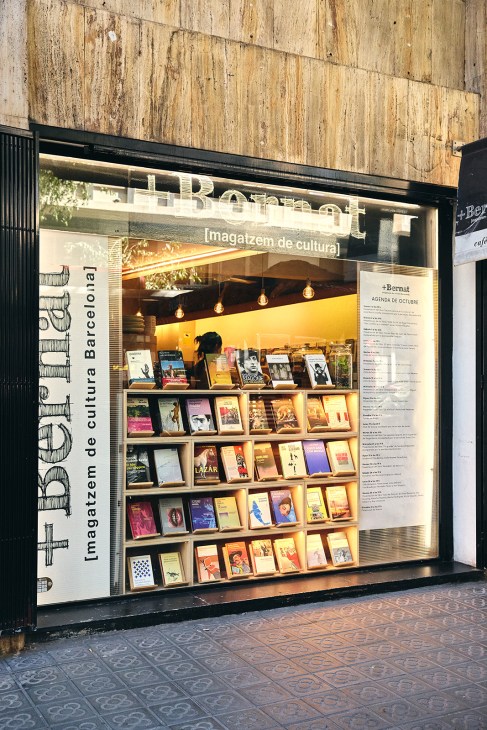
Llibreria +Bernat
During his teenage years, Carles Armengol helped his parents’ business by serving tables at their restaurant in L’Hospitalet de Llobregat. When the establishment eventually closed in 2012 after 80 years in the family, Armengol began to write. His debut book, Collado: La maldición de una casa de comidas (Collado: The Curse of a Diner), was published in 2022 and explores his complicated feelings about the restaurant industry.
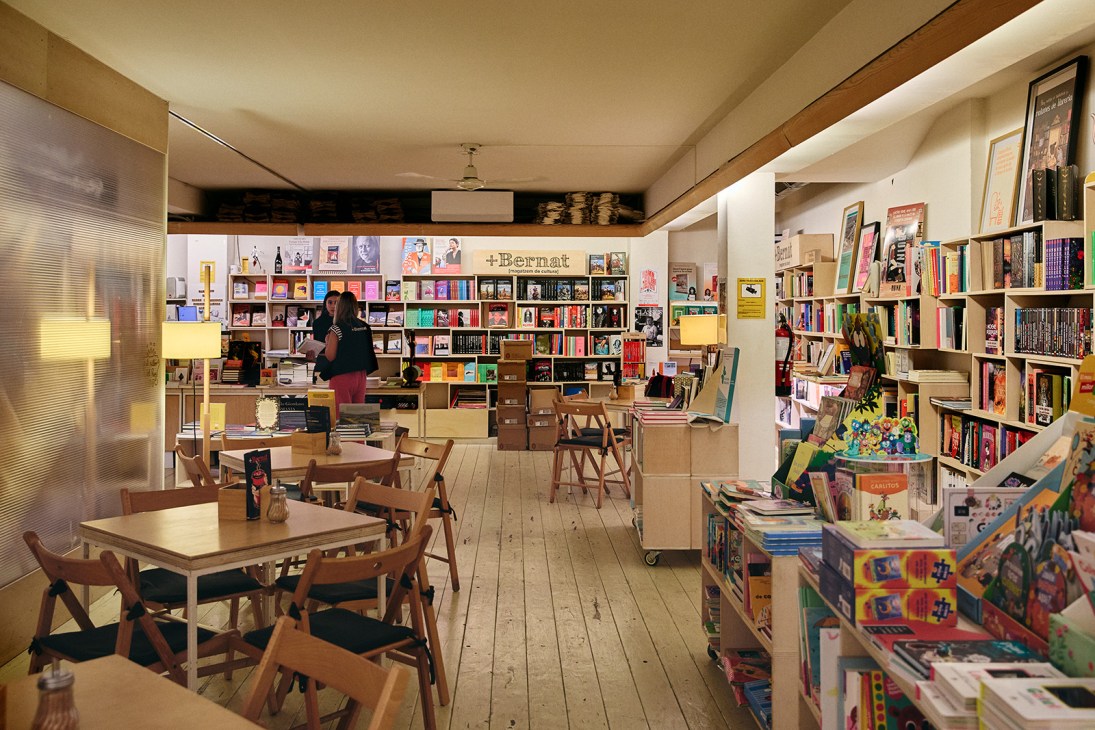
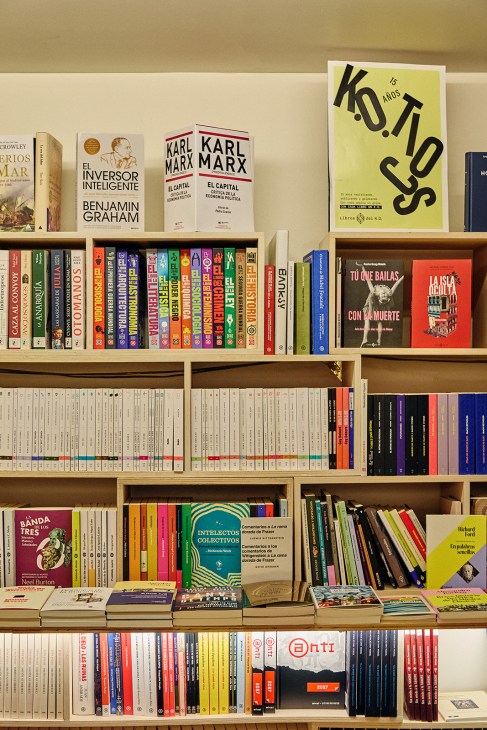
Today Armengol has brought his two passions – food and literature – into a single space. After he presented his novel at +Bernat, the bookshop’s owner, Montse Serrano, offered him the opportunity to open a café inside the shop. Today +Bernat describes itself as a place where “literature feeds you”. Walls lined with the latest releases surround tables where Armengol serves a simple lunch menu of classic Catalan dishes, such as fideu casserole or chickpea stew with calamari. He spends the rest of the day assembling sandwiches named after classics made with local produce, from Crime and Punishment (sobressada and Minorcan cheese, roast aubergine and honey) to Il Gattopardo (mortadella from Bologna with cashew pesto, scamorza and spinach). “A café and a bookshop are destined to work well together,” says Fernando Pelayo, who runs the bookshop while Armengol tends the bar. “They make each other stand out.”
libreriamasbernat.com
- Recommended book: Beginning, Middle, End by Valeria Luiselli
- Bestselling sandwich: The Bikini (Barcelona’s iconic grilled ham-and-cheese sandwich). At +Bernat it is named Collado, after Armengol’s book
- Year that the bookshop first opened: 1978
Further reading?
– Leaf through London with 10 bookshops that are bound to please
– Seven Amsterdam bookshops worth writing home about
– Ten of the best bookshops in Paris
On Monday morning Londoners will awake to a seismic change in how the city gets around. A 1km stretch of Oxford Street, one of the most famous retail strips in the world, will suddenly be for pedestrians only. No buses, taxis or bicycles will be allowed along a part of the road between Orchard Street and Great Portland Street. It’s a switch that was first mooted in the 1960s and that – at various stages – residents, retailers and local councils have thwarted. Determined to deliver the project, London mayor Sadiq Khan set up a development corporation in January that gave him the necessary planning powers to push the measure through. Some 10 months later, it’s happening.
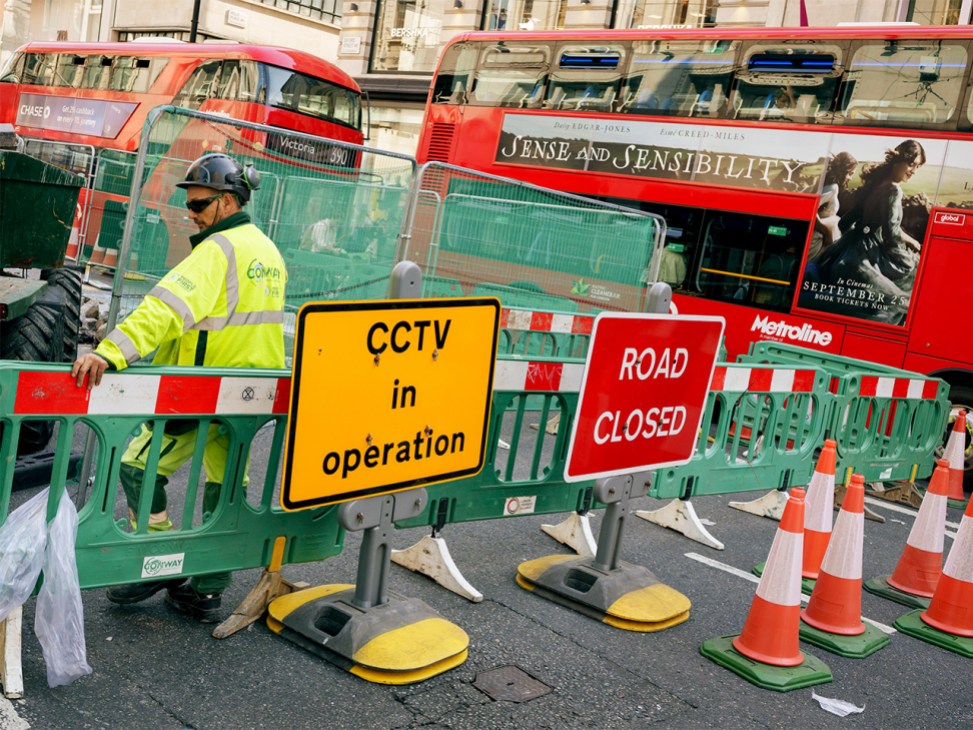
On Sunday night, teams will come in to remove bus stops and redundant traffic signals but it will take some months for new seating, plazas and planting to be added. Nabeel Khan, the new corporation’s chief executive, says that Monday “is going to be the start of what will be a period of change, test and review”. He makes it clear that the key ambition is to make a vibrant street that works for Londoners and visitors. “The economic performance of this street and the wider West End is critical. And all the evidence suggests that once you pedestrianise a space and make it easier for people to visit, to dwell, this results in more spending for retailers.”
Will it work? Pedestrianisation is not always a panacea. In the UK during the 1960s, for example, many town centres lost footfall and became hangouts for vagrants and pockets of crime without the bustle of traffic. Oxford Street will only thrive if it becomes a public space that people have affection for and use, if security is robust and if it does not become a police-car-free haven for pickpockets and phone-snatchers. The ambition, however, is there.
On Monday, Monocle Radio’s ‘The Globalist’ will be reporting live from Oxford Street.
Further reading
Interview: Sadiq Khan on designing the London of the future
After decades of failure, are North America’s pedestrian malls on the road to success?