Almost a decade ago, industry analysts were predicting the decline of the hotel. Decentralised and cheap peer-to-peer business models such as Airbnb were supposedly sounding a death knell. Initially, I must admit, it was a thrill to stay in somebody else’s home and go through their medicine cabinet (I wore the cologne of a man named Matt for the duration of a week-long stay on New York’s Upper West Side in 2013). It was predicated on the notion that, by staying in someone else’s residence, you would have a home-away-from-home experience of slotting into somebody else’s life.
But the novelty is fast wearing off and the consensus seems to be that travellers are returning to hotels for a host of different reasons. Latterly, staying in an Airbnb usually comes with a chore list to complete on check-out; inconsistent property quality is also a factor. My holidays this summer have also helped pinpoint a design issue that’s worth considering too. “You need a house that speaks for itself – the best hotels have good hardware for visitors to enjoy,” explains Constantin Ziegenhain of the Chesa Grischuna in Klosters, whose “hardware” is a multi-storey Bündner Haus – a rural residence defined by heavy stone masonry and deep-set timber forms. Originally a simple wooden inn, it was transformed in the 1930s by Zürich-based architect Hermann Schneider, who commissioned illustrator Alois Carigiet to paint murals on the façade. A bowling alley and grand dining room also define the property. Chesa Grischuna’s guestbook, says Ziegenhain, spans the globe – some people travel here just to seek out the murals.
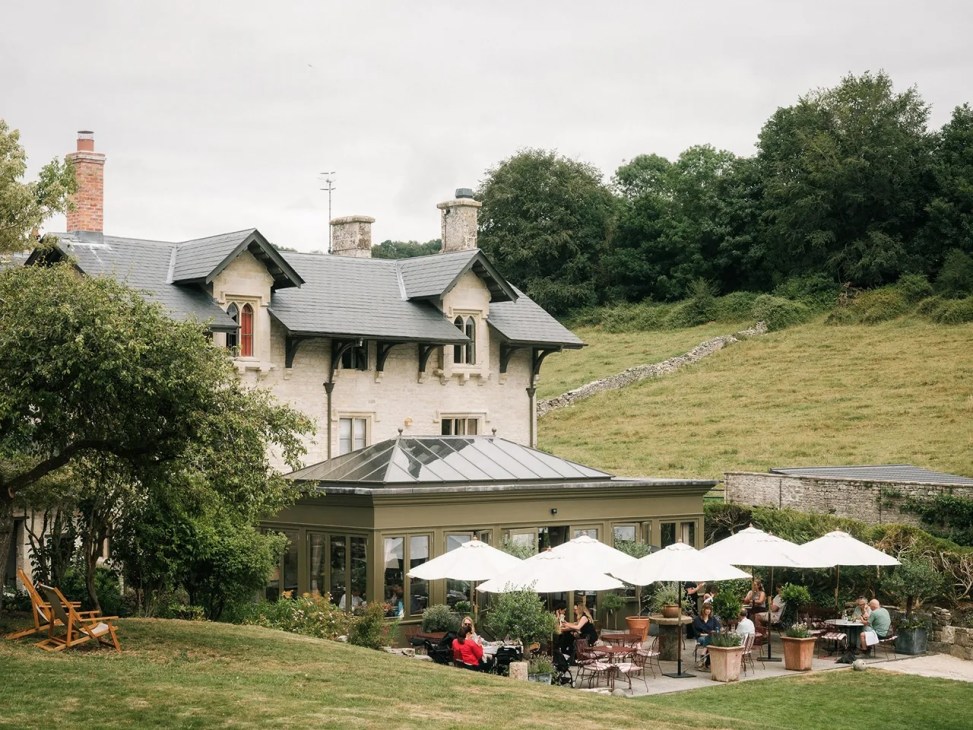
This international pursuit is a reminder that so much of a holiday is built around the environments in which we immerse ourselves – a well-designed hotel, with outstanding “hardware”, can dictate how guests move and feel; how they interact with each other and the surrounding environment over the course of their stay. It’s a level of consideration that simply can’t be replicated by a stay in someone else’s home. The newly opened Teffont House (pictured, above) in Wiltshire is another prime example. Co-owned by Charlie Luxton, whose design sensibilities have been shaped by the likes of London-based Ilse Crawford, the new hotel by the Beckford Group sits in a centuries-old stone house, complete with grand gothic windows and dramatic eaves. Working with designer Natasha Hidvegi, Luxton created a series of distinct public spaces for guests, spanning an orangery, a bar, a lounge, a brasserie-style dining room and an outdoor terrace with Sénat chairs.
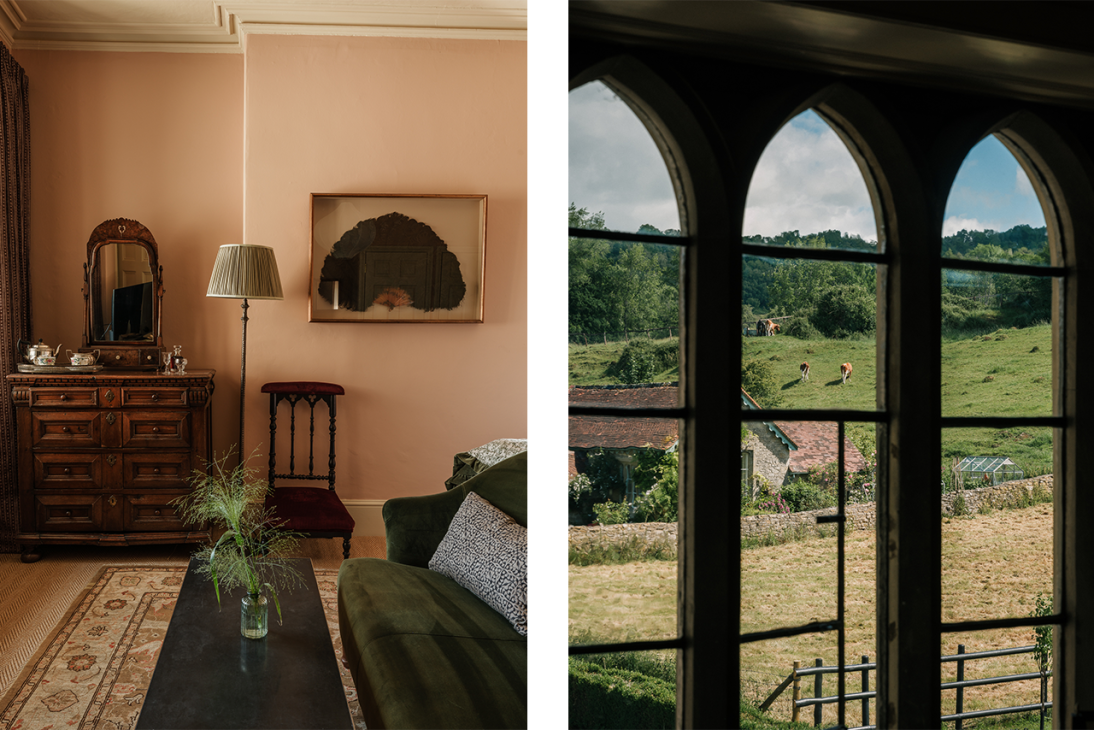
“It’s important to have little areas with different moods,” he says. “You might have a high table where you do some work, a lounge where you sit back and read the paper, then a more upright setting where you can talk. It’s about creating a series of vignettes.” Added to this is the fact that the property doesn’t look to separate itself from its base of Teffont Evias: the reception opens onto the road that runs through the small village and its outdoor spaces, including badminton and croquet courts in a walled garden, sit on the other side of the thoroughfare.
Both projects are a demonstration of the fact that, yes, good hotel design is about the details but also the orchestration of a variety of experiences and movements. “It’s fascinating, the power that the design of a hotel has over how people behave when they’re staying,” adds Luxton. At least in my case, it was a much more powerful force in shaping my holiday experience than cologne from Matt on the Upper West Side.
Beckford beckons: For more from the Beckford group, head to monocle.com for a round-up of exceptionally designed hospitality spaces.
Nic Monisse is Monocle’s design editor. For more news and analysis, subscribe to Monocle today.
In January the new Film Institute of Greenland was launched, while this September the Nuuk International Film Festival will be celebrating its 10th anniversary. The autonomous Arctic nation, which is part of the Kingdom of Denmark, is bolstering its cinematic credentials for good reason. It sees film as a tool to reclaim the story that’s being told about it globally.
“We think of it as taking back narrative sovereignty,” Inunnguaq Petrussen, the Film Institute of Greenland’s CEO, tells Monocle when we visit his office in central Nuuk. “For about 100 years, other nations, especially Denmark, have been making films about Greenland, our culture, our nature and our environment, and it’s very important for us to tell our own stories.”
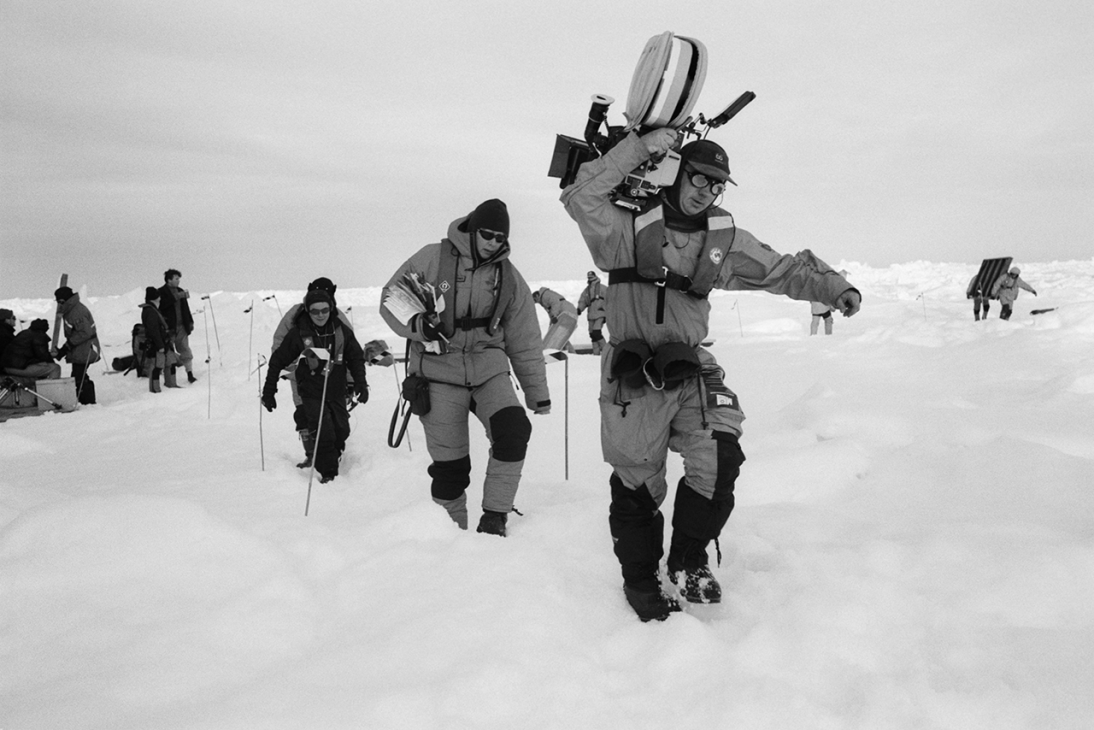
Of late, that narrative has revolved around a story not of Greenland’s making: Donald Trump’s takeover plans. “We have never had so much focus as we’ve had recently,” says Petrussen. “The timing is a coincidence because the institute has been in the pipeline for some years. But many film festivals have already been in contact to say that they want Greenlandic films and want me to come and talk.” That interest resulted earlier this year in a trip to Cannes, where short-film auteur Inuk Jørgensen, the country’s most awarded film-maker, was featured prominently.
The capital’s film festival originally emerged from the initiative of local film-makers and the new institute is considered a natural progression. It has three aims: to network with other similar organisations to help develop the domestic industry; to fund locally made films; and to promote Greenland as a destination for foreign film companies by offering a 25 per cent “refund” of money spent here. The organisation’s initial budget is DKK5.8m (€775,000); a significant portion of this will go towards administration costs, while the rest will be used to help fund films. The Danish government has also contributed a one-off sum of DKK10m (€1.3m) to fund productions that share stories about the territory.
“I have been talking a lot with the Canadian film-makers’ organisation and especially the International Sámi Film Institute, which has been a huge inspiration, and also the Danish Film Institute,” says Petrussen. The Indigenous Cinema Alliance is another ally. “We see being labelled as makers of Indigenous films as a big opportunity because it gets us to the festivals, which gets us seen by the industry, then the public.”
Petrussen has always had one foot in the institutional political world and another in the arts: he has worked both as a political adviser to several Greenlandic political parties and as a singer-songwriter in indie band Inuk. He explains that Greenland’s film scene is particularly strong when it comes to two genres: documentaries (often about climate change) and low-budget horror (most notably by director Malik Kleist). In 2023, Greenland received its first Oscar nomination in the Live Action Short category for Ivalu by Anders Walter and Pipaluk Kreutzmann Jørgensen. “Local people are really supportive of the industry,” says Petrussen. “Every time a Greenlandic film comes out, more people will go to see it than watch Spider-Man.”
Greenland might only have a couple of cinemas, with about 30 or 40 people working full-time in the industry. It typically makes just one full-length feature a year and budgets are small. But Petrussen’s ambitions go far beyond telling domestic stories for domestic audiences. “We want to co-produce films with international film-makers. Canada has been so successful in attracting film companies. We want to work with HBO, Netflix and Disney. That’s the kind of level.”
Michael Booth is Monocle’s Copenhagen correspondent. For more analysis and insights, subscribe to Monocle today.
Further reading:
– If Donald Trump’s threats have made anything clear, it’s that Danes don’t care about Greenland
– Meet the daredevil stunt performers helping Europe’s film-making industry to reach new extremes
– Hollywood is undergoing an economic revolution. Is cinema’s future on course for a plot twist?
China’s technological development has long been perceived as an existential threat to the global order but perhaps Shenzhen’s spooks, America’s TV hawks and the ambassadors of Beijing’s diplomatic quarter have it all wrong. You might have read the headlines this week: “Humanoid robot beats Usain Bolt’s 100-metre record” or “Robot smashes human 400-metre record”. But have you seen the World Humanoid Robot Games? Moments after “smashing” Bolt’s record by 0.19 seconds, the faceless metallic form also smashes into a padded wall, before being doused with a fire extinguisher and stretchered away (by humans). It’s not quite as cool as Bolt’s victory lap at the 2009 World Championships. Rather than being scrapped for parts, he also picked up gold in the 200-metre and four-by-100-metre relay that week too.
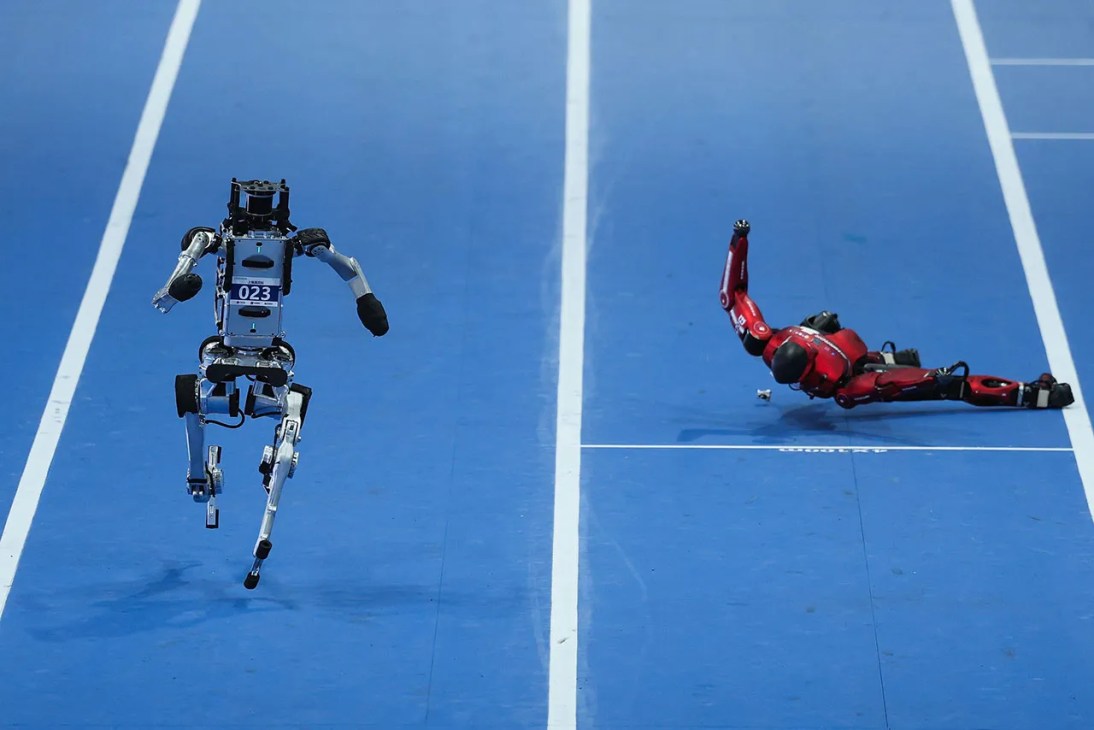
While China’s technological and military prowess is altogether more complicated than this charade, we can take some solace from this event. Just as AI can’t replace the art of a Studio Ghibli film, nor write journalism worth reading, humanoid robots can’t better the spectacle of athletes. We will not be watching droids joust, fence or shoot hoops any time soon. That’s a relief.
Creating humanoid forms capable of sprinting into a heap or even pouring a cup of coffee feels a lot like a big waste of time. We invented machines long ago that are quicker than us over roads, seas and assembly lines. Drones have already begun to offer devastating defence capabilities. Coffee machines are in every home and office. (Indeed, at Dubai’s Museum of the Future, an automated mechanical arm called Café X once made me a coffee in twice the amount of time it would have taken a machine in any hospital waiting room.) China’s robotic and technological capacity will define much of the next century but it needn’t take human form. Morgan Stanley bets that, by 2030, China will produce 450,000 humanoids a year. Whichever Silicon Valley start-up inevitably decides to invest in these dumb droids over human interns or baristas deserves the liquidation that’s surely headed its way.
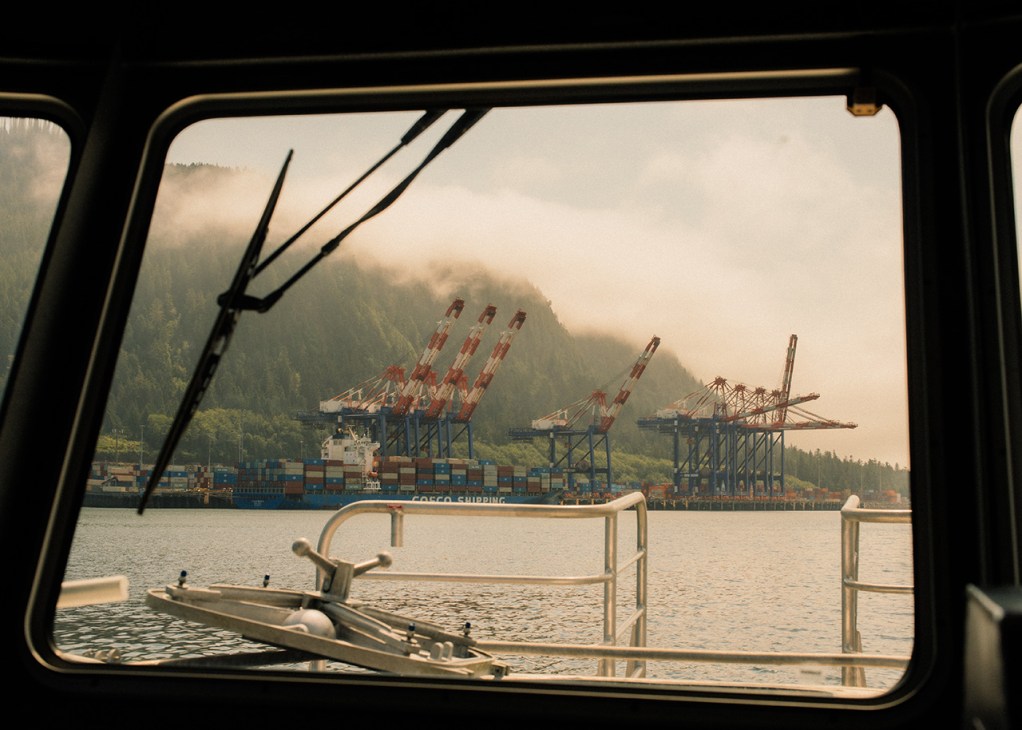
Porpoises and bald eagles greet the GSL Lydia as the 350-metre-long container ship glides into Prince Rupert Harbour in British Columbia after a 12-day journey from Yokohama. It makes an 180-degree turn, then pulls up to a terminal where cranes are waiting to lift its cargo onto trucks or railcars. Until recently, containers would often go back empty. North American consumers have long been eager to buy Asian goods but Canada hasn’t been exporting across the Pacific with the same gusto. Sending raw materials to its southern neighbour, the world’s largest economy, has simply been easier. But a year and a half of belligerence from Washington has damaged the once ironclad relationship between the US and Canada, causing the latter’s prime minister, Mark Carney, to pivot his country’s trade policy towards global diversification. For Ottawa’s current leadership, the race is on to end the nation’s reliance on America.
New facilities for exporting commodities and propane are now arriving at Prince Rupert. The GSL Lydia docks alongside a sliver of port infrastructure that runs for 800 metres. Barely a blemish on this landscape, the container terminal hugs a stretch of coastal rainforest where British Columbia drifts into southeast Alaska. But this remote area, with a population of just 13,000, is the linchpin of Canada’s economic strategy to cultivate new trading partners and build closer diplomatic relations with fellow middle powers.
“We have had a tendency in the past to chart bold new foreign policies without substance behind them,” says David Perry, the president and CEO of the Canadian Global Affairs Institute. “Making a meaningful contribution to a country’s food security or keeping its lights on is something substantial that you can anchor a relationship around.” However, Canada is also discovering how difficult it is to have a virtuous foreign policy and thrive in a fractious world.
On the day that Monocle boards a De Havilland Dash 8 plane for the sole Air Canada flight from Vancouver to Prince Rupert, the White House announces 50 per cent tariffs on a range of Canadian goods. The latest broadside against a neighbour that Donald Trump has needled as the “51st state” is likely a high-stakes tactic in the ongoing renegotiation of the United States-Mexico-Canada Agreement (which replaced Nafta in 2018). The move elicits a fresh round of harsh words – at least, by Canadian standards. Trump is “clearly a bully”, says British Columbia’s premier, David Eby, during an annual meeting of provincial leaders, vowing that there’s “not a chance in hell” that Kentucky bourbon or California cabernet will be returning to his territory’s liquor stores any time soon. A US-Canada trade war has also scuttled a planned opening ceremony for the Gordie Howe International Bridge. The long-awaited crossing between the city of Windsor in Ontario and Detroit, Michigan – named after a Canadian ice-hockey player who made his career on a US team and designed to improve trade flows – couldn’t have come at a worse time.


These rocky relations, however, could be welcome news for the Port Authority of Prince Rupert, which has been tasked with ensuring that Canada’s most geographically favoured Pacific port is ready for a future in which exports increasingly head west, rather than south. “I don’t focus on soundbites,” says its CEO, Kurt Slocombe. “I focus on what countries need from a stable trading partner.” Originally from Vancouver, Slocombe moved his family to Prince Rupert, Canada’s rainiest city, in 2007 to open the Fairview Container Terminal. But why offload cargo almost 500 nautical miles from Vancouver, a west-coast metropolis with a major international airport?
Railroad baron Charles Melville Hays would probably have said it was destiny. In 1905 he determined that this deep, ice-free harbour promised the quickest shipping route from North America to Asia, while offering the flattest rail route through the Rockies to a western terminus. Prince Rupert’s pre-eminent booster perished aboard the Titanic in 1912. Two years later, the first train from Winnipeg arrived but Hays’s vision of a “metropolis of the north” didn’t come to pass.
Instead, the town grew more modestly, focusing on fishing and logging. During the Second World War, it served as a logistics hub. By 2001, commercial fishing had collapsed and a pulp mill closed. From a peak population of 18,000, Prince Rupert lost a quarter of its residents. The shift from halibut and lumber to containers was a gamble but also the realisation of Hays’s vision, almost a century after he scoured Canada’s coastline for a suitable Pacific port.
Canada’s west-coast fossil-fuel infrastructure
In June 2025, LNG Canada shipped its first load from Kitimat, 110 nautical miles east of Prince Rupert. The North American west coast’s first liquified natural gas plant is the result of a CA$40bn (€25bn) investment, the largest private-sector initiative in Canadian history. Another LNG terminal is under construction in Squamish, near the resort town of Whistler. Two years ago crude oil began flowing through an expanded trans-mountain pipeline from Alberta’s tar sands to tidewater near Vancouver. In July, prime minister Mark Carney announced a new pipeline from oil-rich Alberta to the Pacific that could begin construction in 2027. A long-planned major expansion of the Port of Vancouver’s container terminal could commence the following year.
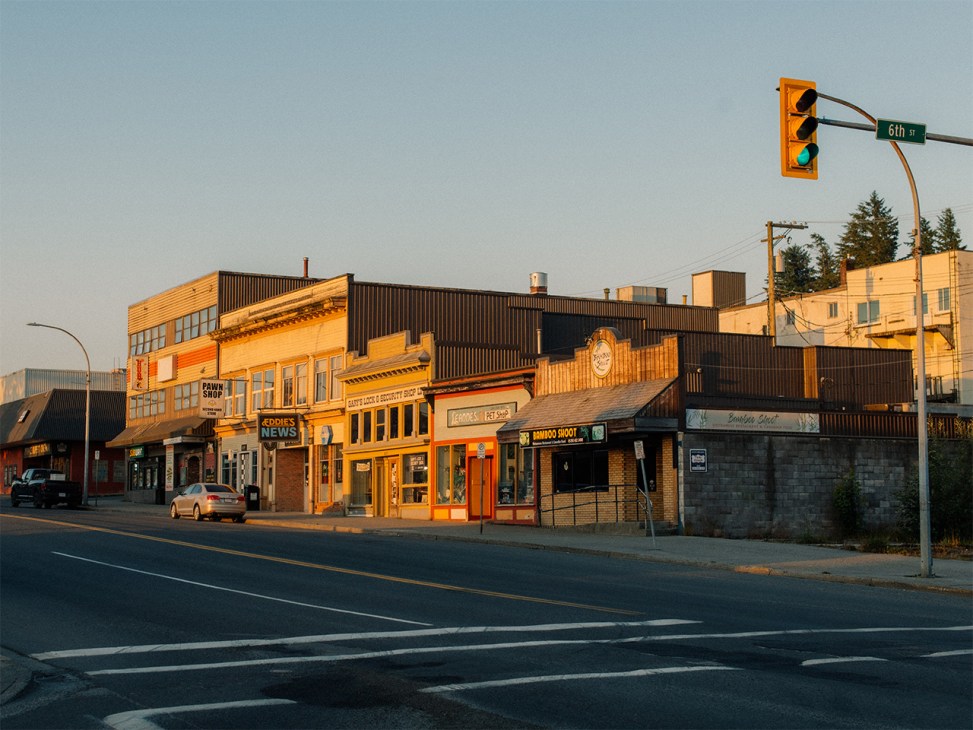
The bespectacled Slocombe is mild-mannered and prone to understatement. He has been here from the get-go: first at the container terminal, now at the port authority. Over the past two decades, he has watched both the port and the town grow slowly but surely. Canada’s northern communities can often feel neglected but here there’s a sense of optimism and prosperity in the air. Monocle visits a new longshoremen’s union hall and strolls past a sleek detachment for the Royal Canadian Mounted Police. New trucks and SUVs are parked outside a well-stocked grocery shop, with abundant fresh produce on display – a rare sight in most remote pockets of Canada. The bar and restaurant at Crest, the town’s best lodging, are packed on a Monday night.
How much the longshoremen will move in the coming years depends on the success of Carney’s globetrotting during his first year in office. His four-day trip to China in January, the first by a Canadian leader in almost a decade, pointedly included a stop in Prince Rupert en route. He has also been to India, Japan and Saudi Arabia this year on trade-focused trips.
While the prime minister was making his rounds, construction workers 5km south of the container terminal were toiling in the rain to build Canxport, a CA$750m (€468m) facility designed to make it easy to move exports into containers for shipment overseas. Carney might be returning to Prince Rupert in late August to formally inaugurate it.


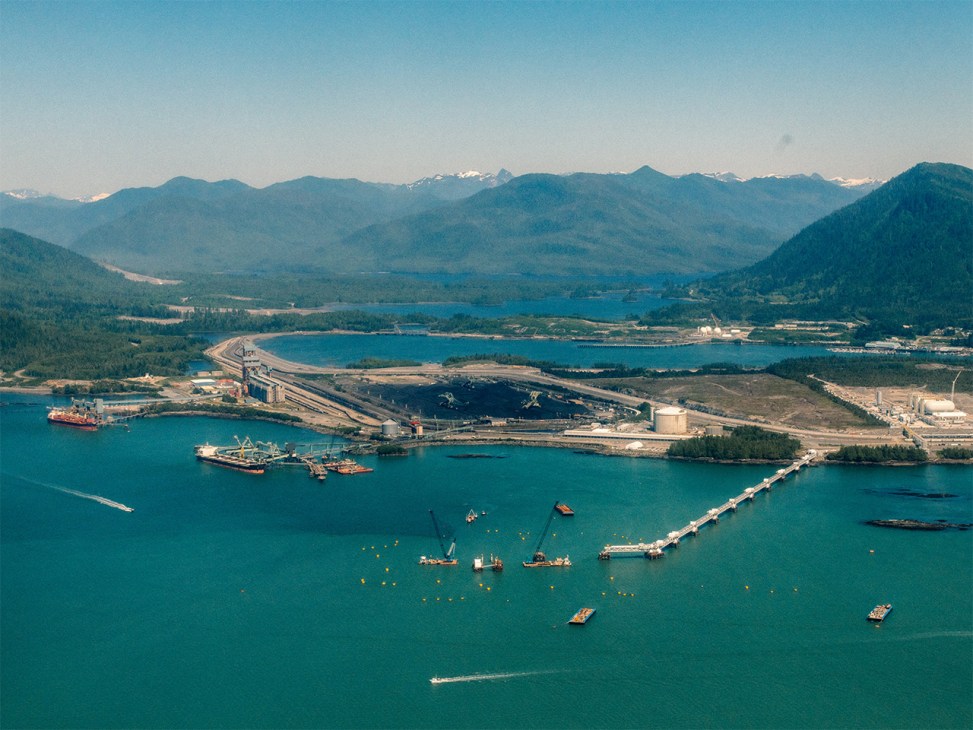
Monocle hops in a Ford F-150 Lightning for a spin around Ridley Island, a port-authority-owned hive of industrial activity. In addition to Canxport, a CA$1.35bn (€842m) project named the Ridley Island Energy Export Facility will help to unleash a flood of Canadian raw materials onto global markets. When it becomes active at the end of this year, it will welcome tankers destined for countries such as China, Japan and South Korea that rely on liquefied petroleum gas (of which Canada is a leading global producer) to power homes and industry.
In the meantime, customers can already make orders for another, less glamorous Canadian export: polyurethane pellets. Their exporter is Montréal-based Ray-Mont Logistics, for which our guide, Ryan Storry, is the local terminal manager. “I’m in charge of this jigsaw puzzle,” he says, gesturing at the choreographed chaos of cranes and containers. Inside a huge, white-domed building, an army of vacuum pipes suck pellets from hopper cars, before soaring five storeys to fill 25kg bags with tiny plastic beads, then stacking them on pallets. Ray-Mont’s Vancouver-based automation expert Luca Villa is troubleshooting the state-of-the-art equipment, which has reduced railcar unloading times from four hours to one, ensuring that Canxport is running at full steam before a potential prime ministerial visit.
Prince Rupert’s new export investments are just the prow of the ship for Canada’s Indo-Pacific trade ambitions. While projects such as Canxport faced traditional regulatory and permitting hurdles that took years to overcome, many of the flurry of new proposals are from Carney’s Major Projects Office, which promises to cut red tape and expedite construction. “The government of Canada is working at a pace we have never seen before,” says Slocombe.

Inevitably, there are detractors: the full-steam-ahead trade strategy, much of it powered by fossil-fuel-based commodities, jars with the image of a country that until recently prided itself on its green credentials. As former prime minister Justin Trudeau said in 2016, “My predecessor wanted you to know Canada for its resources. I want you to know Canadians for our resourcefulness.”
Under his successor, a fellow member of the Liberal Party, the pendulum has swung back in the other direction. Though Carney has maintained a ban on oil tankers in northern BC waters such as Prince Rupert, there has been enough of a U-turn to cause the environment and climate change minister, Steven Guilbeault, to resign from his cabinet. But dissent in the Liberal ranks is unlikely to cost Carney much political capital, says Heather Exner-Pirot of the Macdonald-Laurier Institute, an Ottawa-based conservative think tank. “Elbows up has become more important than environmental purity,” she says.
The economic underpinnings of this Canada-strong foreign policy seem to have also become more important than holding the line on human rights. With the exception of his March trip to Japan, Carney’s trade-focused tours have been to nations where, until recently, the maple leaf was flora non grata. The 2018 arrest of Chinese telecom executive Meng Wanzhou in Vancouver angered Beijing; yet the Canadian prime minister made a point of visiting the city in January to meet Xi Jinping. New Delhi and Ottawa withdrew their respective high commissioners in 2023 following the assassination of a Sikh separatist leader in British Columbia; in February, Carney talked business with Narendra Modi in Mumbai. “Whereas Canada led with its values for those 10 years [under Trudeau], now it’s leading with its interests,” says Exner-Pirot. “We are in an era of realism and pragmatism.”
Prince Rupert in numbers
2,600: Millimetres of annual rainfall
2030: The year that it is projected to become Canada’s second-biggest port, surpassing Montréal
750,000: Maximum capacity of Canxport in 20-foot (six-metre) equivalent units – a unit of measurement used in the shipping industry to quantify how much cargo can be processed
80,000: Barrels per day of liquefied petroleum gas that the Ridley Island Energy Export Facility will be able to process when active
114: Hours saved when sailing to Shanghai compared to journeys from Los Angeles
I have long been intrigued by the rituals of hospitality. When I look back on the years that I spent on the road as a foreign correspondent, I remember warm welcomes more than any other encounters. Whether it was a meal at the captain’s table as I sailed in the Gulf of Aden looking for Somali pirates or a bowl of soup offered by a family in Yerevan as they told me about the Armenian tradition of giving your last crust to guests, I always felt that the most revealing experiences happened in people’s homes over food. I remember the time when I sat down to a lunch of yogurt and sautéed courgettes at a Turkish tile factory in Iznik, where bottles of citrus cologne were passed around to start and end the meal. And then there was the time when I stumbled across a beaujolais nouveau celebration in Toulon with French navy recruits, wearing pom-poms and striped shirts, and ate plates of hot cassoulet as a storm blew in.
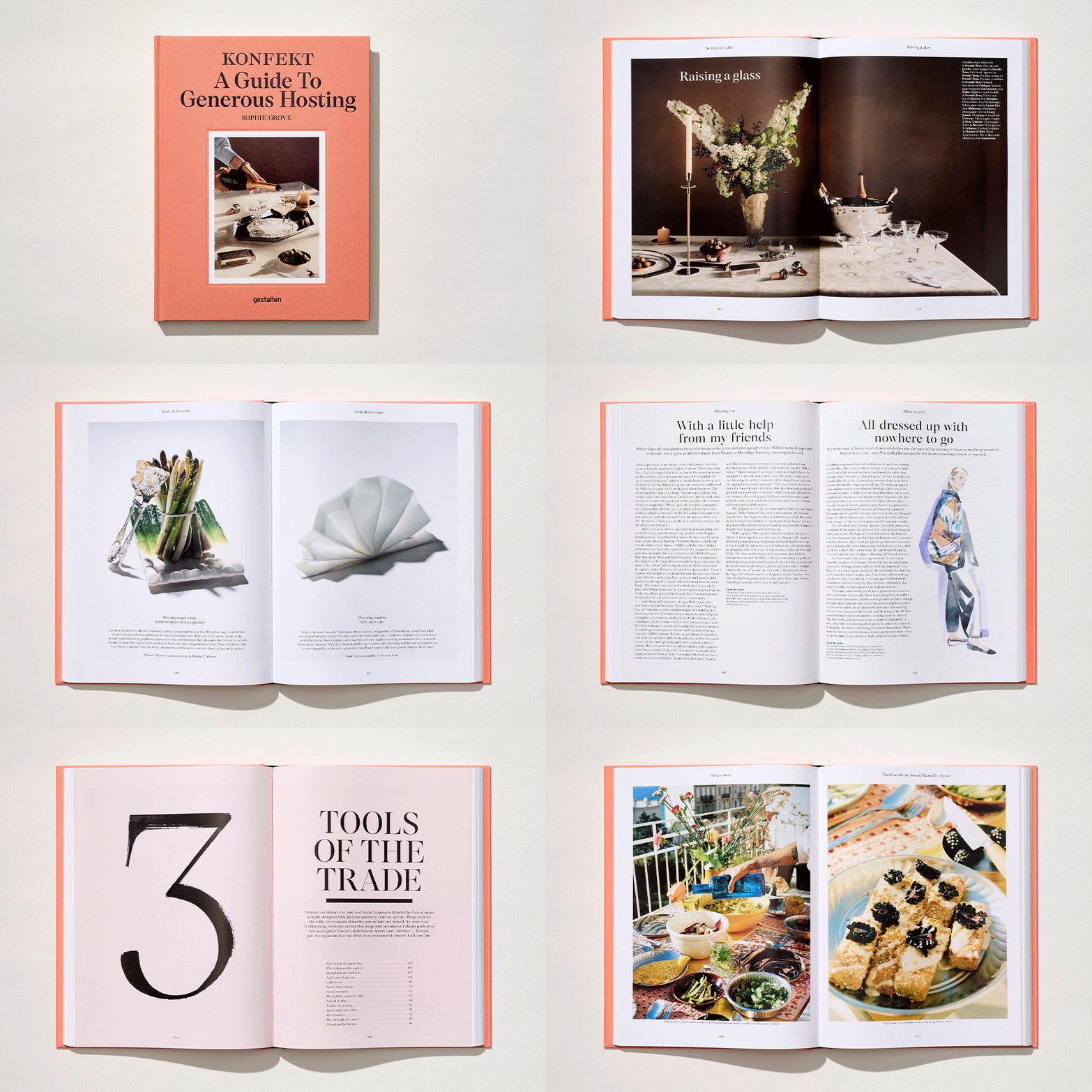
Konfekt’s very first book, Konfekt: A Guide to Generous Hosting, celebrates the value of human connection and warm welcomes. To host is to create a version of home and a sense of belonging. All my life, I have been trying to recreate the light touch of my parents’ more-is-more Sunday-lunch gatherings in Cambridge with an ensemble of astrophysicists, poets and professors. I remember serving peanuts and white wine as their friends danced to Dire Straits across the flokati rugs. I would fall asleep to the murmur of dinner parties or be found snoozing on piles of coats.
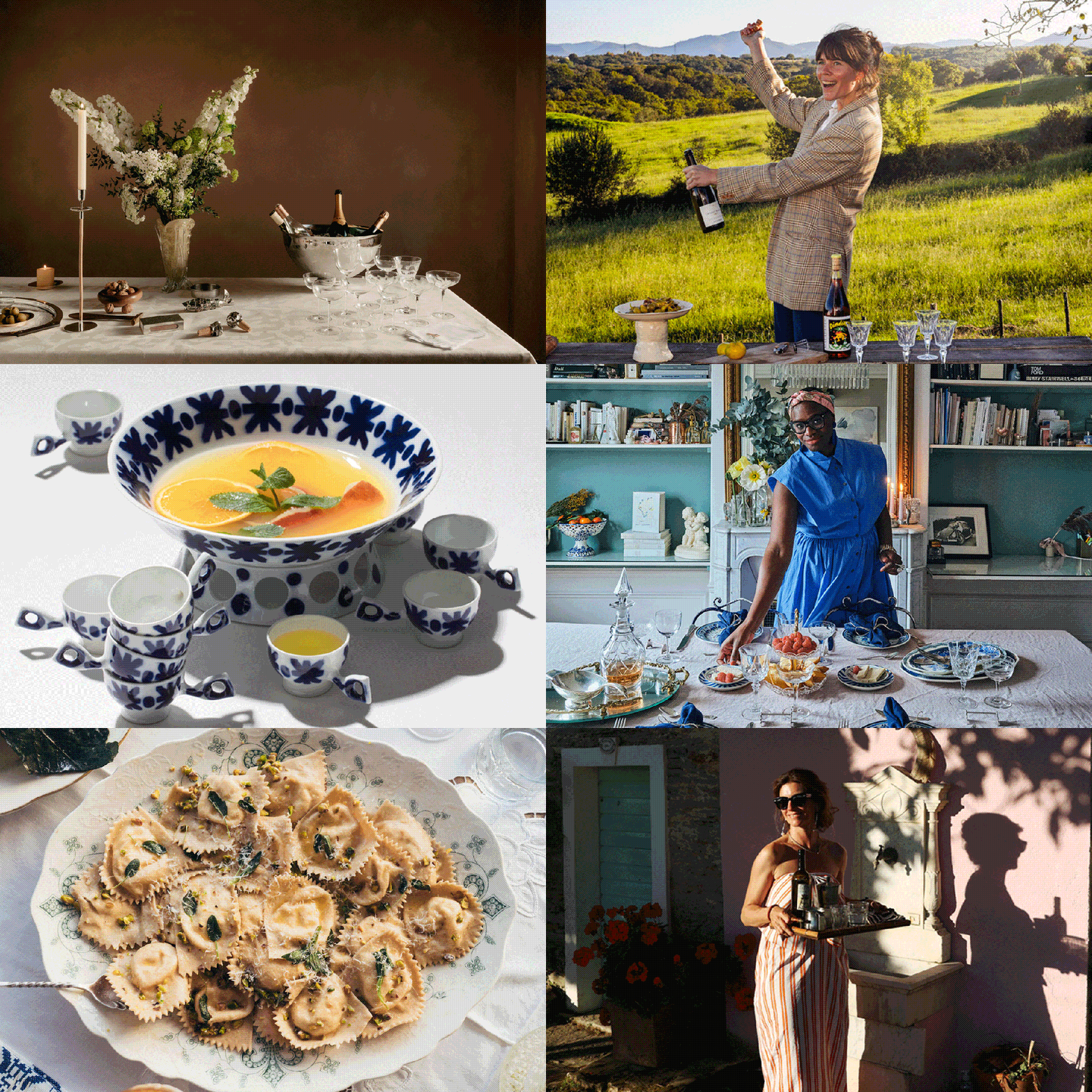
It’s why I feel so drawn to tales of hosts, whether it’s Joan Didion’s famous Easter and Thanksgiving parties (notes from her daybooks detail menus, inventories of silverware and recipes for risotto, borscht and Sichuan duck for guests who ranged from Nora Ephron to Jacqueline Kennedy Onassis) or photographer Lee Miller’s dinners in her Sussex farmhouse, where food was served to a coterie of surrealist artists. “We have recipes by her for golden meatloaf and goldfish, and she liked blue spaghetti,” her granddaughter, Ami Bouhassane, told me once. “She designed a whole meal where everything was white. That was in celebration of Man Ray’s exhibition at the New York Cultural Center in 1974: a specially devised dinner menu of salt cod, followed by veal with cauliflower, white rice and white chicory, with vanilla ice cream and lychees for pudding. It was a throwback to the white ball that she worked on with Man Ray in 1930 in Paris, where they projected images onto the guests as they danced.”
Hosting distils a moment: it creates a forum for ideas or quixotic escapism. And isn’t that why we go to the effort of inviting people over? It’s all about the feeling of trying to grasp the intangible. I live for the times when my most talented friend takes to the piano and plays a set of Nina Simone songs at the end of a night or when my children put together a scene from A Midsummer Night’s Dream for a garden stuffed full of guests on the summer solstice. These are brief episodes when spirits soar and reality evaporates.
When humans break bread, they are at their most honest and vulnerable. The dining table is where diplomacy happens and opponents strike deals. It’s where resolutions are made and ideas are hatched. And while some of the formalities and protocols feel obsolete today, this book argues that they are not entirely redundant. Indeed, these pages are a reflection on the meaning and relevance of modern manners in our fast-paced lives. We entertain essayists’ angles on what to wear and how to converse. We touch on the malign impact of phones at the table and what kind of etiquette has a role in contemporary lives. Most of all, this book celebrates the human urge to convene, converse and care for others. Inviting people into your home can be anxiety-inducing. There’s an unspoken sense that your guest might judge your record collection or even rifle through your bathroom cabinet. You are laid bare. There’s the perverse expectation that all of this must be done effortlessly, with a breezy nonchalance that doesn’t veer anywhere near the try-hard.
This self-imposed pressure often deters people from doing it at all. We know that to have people over is to ask for their time and trust – a leap of faith that extends in both directions. The best hosts I know combine an eye for detail with a light touch. There’s resilience too: sang-froid in the face of a blackened tart or curdled custard. But these true maestros lay a careful, often beautiful, scene and then dive in to enjoy it themselves. They let us know that however carefully laid their plans might be, it’s the people who matter.
We all know and cherish those hosts who envelop us as soon as we step into their homes. We feel soothed and inspired, not just by their company but also by how they preside over a hot pan as they ask about love, life, loss and what’s happening in the news. These snatched conversations, propped up on kitchen counters or around tables where candles drip, are when friendships feel at their most lovely. You are an unguarded, unvarnished version of yourself.
Our book transports you to languid lunches, soirées, dinner parties, picnics and tea ceremonies – and there’s a well-mixed Martini in there too. It’s about the poetry of an elegantly set table and the collective joy of a room alive with jostling energy (and even the pathos of tidying up). It is designed to urge the hesitant host to dive in: to rustle up an omelette for a neighbour or throw a wild party. It’s a tribute to the courage and generosity of good hosts and the inimitable art of making it all happen.
Sophie Grove is the editor of ‘Konfekt’. For more warm welcomes and nourishing guidance, order ‘Konfekt: A Guide to Generous Hosting’ today.
Los Angeles spent the summer hosting World Cup matches without a promised piece of infrastructure for the occasion. Skylink, an airport train first scheduled to run in 2023, missed its debut after cost overruns of an estimated $500m (€428m). The people mover hardly looks any different from Disneyland’s Monorail, opened in 1971, which is just down the freeway in Anaheim.
It’s tempting to explain these delays as yet another procurement screw-up but they read to me as symptomatic of a larger illness. California is in a period of managed decline that leadership at state and local levels don’t seem to notice.
The contrast is sharpest for those of us who remember what the state used to feel like. I grew up in northern California in the early 1980s when things seemed box fresh: sparkling malls, nice lawns and new housing developments. The economy was thriving, technology companies were putting down roots and the future felt as though it was under construction. When I returned in 2020 after about 20 years away, I found the natural grandeur intact – the postcard-perfect mountains and redwoods still standing – but the civic confidence largely absent.

In many of LA’s toniest neighbourhoods, you can now hear the occasional siren or helicopter overhead. Affordable housing is scarce and basic functionality, from public bathrooms to well-maintained streets, is treated as an aspiration rather than the baseline. The population seems to segment itself into those who cashed in during the golden years of tech or Hollywood, workers who make the place run and the influencers performing for the algorithm outside Great White or Verve on Melrose Avenue. The much-mocked exodus of the Joe Rogan set to Austin and Miami gets laughed off in the capital of Sacramento but the reasons underneath it are widely understood.
For me, the most uncomfortable part is that those early, wondrous feelings evoked by California during my youth are now felt elsewhere. Spend a week in Abu Dhabi or Dubai and the atmosphere is that of an older version of California, transplanted.
Despite the conflict in the Gulf, entrepreneurs are opening inventive retail concepts in the UAE and the emirates’ infrastructure arrives on schedule. Dubai built a driverless metro network in roughly the time LA has spent not finishing an airport shuttle and the railway connecting Dubai and Abu Dhabi is soon to open. This comparison is not entirely fair, of course. Gulf projects often materialise rapidly as a result of sovereign financing, while in California, developments are largely decentralised and therefore take shape more slowly. What I feel most acutely is a homesickness for an older version of home.
California has run for 15 years or so on the fiscal equivalent of human growth hormone: the compensation and stock of Big Tech company employees based here. This tax revenue has been treated by state officials as an ever-refilling well that can never run dry. Now come proposals that would tax that base, or the companies’s founders, more aggressively, still on the assumption that they and their workforces are immovable. Recent history suggests otherwise. None of these firms are perhaps the most ethical but their revenues help fund the coffers that everything else depends upon.
States, like cities, have cycles. And perhaps California has recovered from worse. But a true recovery requires first admitting the diagnosis. Landing recently into a gritty LAX with nary a luggage cart to be seen, from a modern, gleaming terminal in Taipei, it was hard to avoid the thought that the Golden State was losing its sunny shine. It might not be beyond saving but the state that taught the world what the future would look like is currently importing that feeling from the desert – and no one in charge appears to have noticed.
Colin Nagy is a Monocle contributor. For more opinion, analysis and insight, subscribe to Monocle today.
Further reading:
– How a Los Angeles local created a Monocle guide to a city with no centre
– Village Green: The leafy Los Angeles neighbourhood that puts communities first
– For the UAE, culture is what binds its diverse population and gives it hope in times of conflict
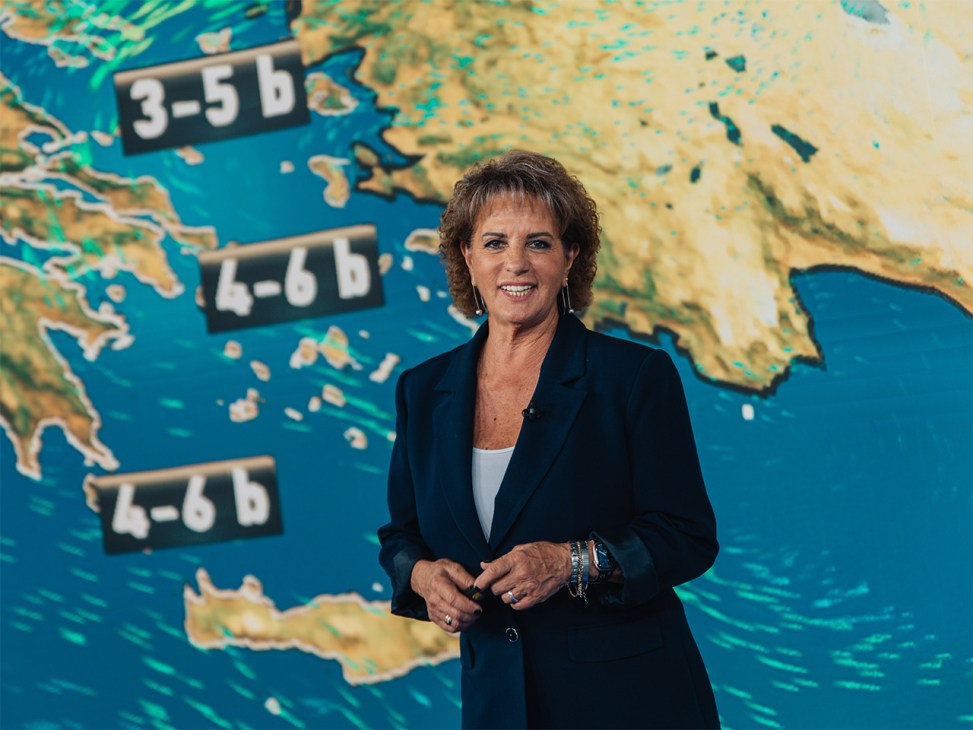
In Greece, summer arrives with two questions: which way is the wind blowing and how hot will it get? Christina Souzi has spent more than 30 years answering both as a trained meteorologist and TV weather presenter (as well as a national institution). For most Greeks planning a ferry crossing or a weekend at the beach, the forecast matters. Having previously worked at the Hellenic National Meteorological Service, Souzi has become one of the country’s most recognisable faces, thanks to her daily bulletins for national commercial broadcaster SKAI TV.
The walls of Souzi’s office in Athens are lined with photographs of the Greek islands. A keen sailor and former speedboat owner, she lights up when she talks about plotting routes across the Aegean and Ionian seas or decoding the meltemi (a Greek summer wind). Monocle meets her as she readies the outlook for the sunniest time of the year.
Do TV weather reports still matter when people can access the same information on their phones?
Yes. They’re still essential, especially when it comes to harsh or extreme weather events.
What’s your favourite part of your job?
I’m a little obsessed with wind patterns. I used to have a speedboat that I would steer myself. I have been all over the Aegean and the Ionian. I liked sailing with friends and everyone would ask me about the winds, especially during the Greek meltemi season, and what was the best route to take or which island to hop to next.
People used to call you up for a forecast. Do you still have that direct connection with your audience?
I still get stopped on the street every day. It’s proof that though people might not watch the bulletin on TV as much as they used to, they still care about the weather and I still have value. Sometimes they ask about the forecast or yell at me because I made a mistake. I might get the temperature in the summer wrong by one or two degrees but it’s not the end of the world. When I get it right, though, it’s the best feeling in the world. Once, I was sent a photograph of a car in Athens that was heavily snowed under. Someone had written on it with their finger, “Souzi called it!”
What are the key skills in your line of work?
You need to be able to take risks. If a meteorologist says that they never make mistakes, they’re lying. We’re not gods. As much as we try, we’ll always make mistakes. I tend to struggle with rain predictions. But I accept defeat. I often apologise on the following day’s show. You also have to be able to use AI as a tool. But you can’t trust it and you need more information than it currently gives you. I fear that people might start using it blindly to predict the weather.
How did meteorology come into your life?
It wasn’t the plan. I was studying mathematics at the University of Patras [in the Peloponnese]. I heard that the meteorology professor was good and thought, “Why not try it?” I fell in love with the class, particularly weather prediction and forecasting. After university, I sat an exam for the National Meteorological Service and was accepted. Back then, people used to call the hotline to ask us what the weather was going to be like so that they could make their weekend plans.
Is there an art to presenting the weather?
You have to combine scientific accuracy and theatricality with communication, live presenting and directing. It shouldn’t just be a simple reading of facts or data but an engaging show. You need to win your audience’s trust within a few minutes.
What are your plans this summer?
I work right up until the end of July. The seaside has always been my big love, so that’s where you’ll find me in August. We love spending time in our home in Anavyssos [on the Athenian coast]. We’ll be back there this year but last summer there was a significant wildfire in the area. We have spent all this year trying to restore the nature around our plot. Thankfully, it has been rainy, so nature has managed to revive itself in a short space of time.
We start this Sunday with a warning or two or five. First, you’re in for a bit more from Portugal as our Quality of Life Conference approaches. Second, our stage is likely to introduce you to some amazing new voices. Third, I want to get you behind the wheel or in the passenger seat of Amble. Fourth, Na Praia is going to be a name that you need to know. And finally, it’s going to be an exciting dash to the year’s end with a host of new Monocle projects on the go.

1.
We’re less than two weeks out from the start of QoL in Lisbon and it will be our biggest, buzziest and chicest yet. Alongside lessons in retail big and small, there will be a discussion about the future of drones from a global leader in the space. You’ll even learn how to walk and we will be staging a very elegant auction of fine items. Most of this will take place at the Gulbenkian, with plenty of sideshows along the way. At the time of sending this newsletter, we have 10 seats left. Drop us a note and see you there.
2.
I just touched down in Zürich from Lisbon, en route to Tokyo. There is so much happening and the city just gets better and better – on almost all levels. There are still some kinks but the homegrown talent mixed with newcomers is a heady creative and entrepreneurial cocktail. I daresay that it’s globally unique.
3.
Did you catch our story on Amble? If not, it’s right here. On Thursday, I had the chance to sample this rugged four-wheeler and I’m lobbying hard for a special edition to mark Monocle’s 20th anniversary. You will want one for all your residences and short-range commutes.


4.
For coming on two decades, we’ve been following José António Uva on his ventures. Zé, as he’s known to his dearest, is behind São Lourenço do Barrocal in Alentejo, is a founder of Amble and will soon unveil Na Praia, an enclave north of Comporta. Full disclosure here, my colleagues at Winkreative did the brand work on both properties and I’ve had a Na Praia preview over the past few days. Yes, I’ve been very involved but it’s beyond anything that I could have imagined. We will reveal much more over the coming months but start planning for next spring. Opening is planned for May.
5.
A bumper October issue, new Konfekt, a Konfekt book, more newspapers, The Entrepreneurs and plenty of events. Clear the coffee table and the diary for the months to come. The season has officially started. Let’s start by playing in Lisboa.
Enjoying life in ‘The Faster Lane’? Click here to browse all of Tyler’s past columns.
One thing is certain this summer: hundreds of thousands of people in Italy will be finding a shady spot in which to leaf through the pages of La Settimana Enigmistica, pencil at the ready. Loosely translated as “The Week of Puzzles”, the magazine has been publishing weekly since 1932, minus two short interludes during the Second World War. Hitting shelves every week, it features crosswords, jokes, cartoons, spot-the-difference puzzles and rebuses – a game involving finding a phrase or word from a combination of letters and images – that have made it a household staple.
“Summer for a large part of Italians is about being under the beach umbrella with La Settimana Enigmistica,” says Alessandro Bartezzaghi, who has worked for the publication since 1982 and became its editor in June 2022. “It’s the same for young people, who see it as a way of socialising, with one person suggesting a solution and another something else. I always say that our magazine is for the solitary in winter and for the social in summer.”
It’s aperitivo time in Milan and Bartezzaghi is sitting in front of an alcohol-free fruit cocktail. Getting him to sit down with Monocle feels like a coup, given that he rarely gives interviews and the publisher, Bresi, is by Bartezzaghi’s own admission “reserved” when it comes to making public statements. Which is why we meet in a bar after work rather than at the offices a short walk away in Piazza Cinque Giornate, the publication’s home for more than 90 years. “Our effort has been to adapt [to the times] without exaggerating,” says Bartezzaghi. “Meaning that even if you knew about certain linguistic novelties, you’d introduce them slowly.” He talks about needing to have “one’s feet in two shoes” – ensuring that the magazine’s reassuringly consistent visual identity isn’t meddled with too much, while also guaranteeing that a 30-year-old solving the publication’s puzzles “doesn’t feel disorientated”.

Bartezzaghi refers to La Settimana Enigmistica as a family affair and it really is exactly that. His father, Piero, was involved with the magazine for a long time and built a fiercely loyal fanbase. He submitted a crossword at the age of 15, remaining a collaborator until in 1960 – a year after his son was born. Bartezzaghi Snr was then asked to join the editorial staff to help support a jump in pagination. He remained there until his death in 1989.
“I’ve been breathing La Settimana Enigmistica since I was one year old,” says Bartezzaghi. “There was a big room in the office where women worked looking after the archive. They’d sit me on top of a pile of phone books in a chair and have me bash away on the typewriter.” His father was famed for difficult crossword puzzles under the pseudonym Zanzibar. His son has adopted the name Zanzara, or mosquito, for his most stinging contributions. The magazine has been entirely advert-free since the 1960s, surviving and thriving on subscriptions and newsstand sales. All of the weekly prizes the publication gives away have been bought rather than gifted to it. “Because we want to be independent from everything and everyone,” Bartezzaghi says. “Which is why for a period we were careful to not insert words into crosswords that might seem like advertising, such as Coca-Cola or Fiat. Now the world we live in is so full of brands that we use them.”
Because the magazine doesn’t have commercial commitments, it has no obligation to report how many copies it sells, though it is known to generate revenues of about €50m a year. When Monocle speculates that weekly sales might be anything from 500,000 to two million, it provokes a chuckle. “In the 1980s and 1990s, we hit more than a million copies a week during the summer,” says Bartezzaghi. While he acknowledges that the audience might not be as captive as it once was, the fact that a printed puzzle magazine can sell six figures per week is still impressive. “Even young people want it on paper,” he says.

A quick glance at a Milanese newsstand reveals plenty of pretenders to the quiz-magazine crown. So what makes the 94-year-old publication, to borrow one of its taglines, “the quiz magazine first for foundation and circulation”? Bartezzaghi points to several factors, including being the original title in the field and the investment in quality that leading the sales charts has allowed – from the talent putting together the 150 to 160 games that pack every issue to the ink and paper used.
Alongside what Bartezzaghi sees as a superior product is what he calls the “spectacular planning” that goes into making the magazine. “You can’t put something that is incorrect,” he says. “If you betray the faith of people, they’ll stop playing.” The magazine works so far in advance that when the team goes away for the Italian summer shutdown, it will have already closed its mid-November issues. Each edition goes through fact-checking that includes drafts and three rounds of corrections. There will also be people who are tasked with solving the entire magazine.
Bartezzaghi compares his role to clearing a way through a jungle, machete in hand, as others follow. “There’s a job of shaping and refining the magazine,” he says. “To such an extent that it almost seems like the whole thing has been written by the same person.” So, this summer, Italians will hardly perceive any changes from one issue to the next.
‘La Settimana Enigmistica’ fact file
1. The first actor to be featured on the cover was Mexican Lupe Vélez, on the debut publication, dated 23 January 1932.
2. The magazine was forced to pause printing on two occasions during the Second World War: for a week during a bombing of Milan in 1943 and for three months during Italy’s liberation from fascism in 1945.
3. The magazine has only had four editors in its history.
4. Alessandro Bartezzaghi’s father, Piero, died in 1989 but had enough of a crossword backlog that his work continued to be published in the magazine until the following year. After that, different authors have taken on the most difficult crossword in the magazine on rotation – something that was previously Bartezzaghi Snr’s sole territory.
5. The holiday special, La Vacanza Enigmistica (pictured, above), which costs €5, features more colour pages than the regular magazine and more games aimed at all ages and abilities.
Here’s the scene. We’re spending the day in Mallorca with two friends from California before they set sail on a handsome yacht which they charter for one week every summer. It’s a proper sailing yacht, not a gin palace. Forty-metres long and with a crew of six. They take the same group of friends away each year but this time there’s a wrinkle. Ash from an erupting Mount Etna has closed Sicily’s Catania Airport and so two of their Italian guests are literally going to miss the boat.
“So why don’t you come for a night?” asks H.
Unfortunately, we already have plans, having promised to see people we love for dinner the next night at a cool beach club, so there can only be one answer. “What do we need to pack?” I ask a little breathlessly. Then I remember the other half once spent an entire 12-hour Greek ferry trip spewing into a supermarket carrier bag. But he’s already doing a hornpipe jig (that’s something to behold). So it seems that we are good to go.
I have been on boats before. Just this past Christmas I sailed to and from Mallorca, though it was on a Baleària car ferry and most of my fellow passengers were nice truck drivers. We still hang out together.
The plan is to meet at 09.00 sharp the following morning in Port Adriano and then sail to Menorca (having only lost my Menorca virginity the week before, I am delighted at the thought of having a second bash so soon). We get to the dock early – no risks to be taken – and I just pray all the time that Mount Etna is still doing its impersonation of my partner on a Greek ferry.
Off we go. The captain explains that there are some simple rules. No shoes – definitely no cha-cha heels on the teak deck. No oily suntan sprays (the teak again). And if you swim in the sea, shower at the back of the deck to avoid salty feet marking – you guessed it – the teak. Really, wouldn’t it make sense to put down some nice teak-print linoleum? Would save a lot of bother.
I think we prove to be good guests – I forget about the salty feet business only once and the captain gives me a bit of a look but somehow doesn’t make me scrub the deck.
H and her husband M are skilled at this yacht business. They have planned the menus weeks in advance, had the wines they love delivered to the boat, thought about at-sea entertainment. It’s the sort of meticulous preparation that makes it all look effortless. We sail around the coast of Mallorca and then, in the late afternoon, over to Menorca, dropping anchor as the light fades. In the softening glow the nearby cliffs look charcoaled onto the horizon. Above us the stars seem to be winking at me.
Then my dear friend Etna comes good again. Catania Airport is still closed. “Would you like to stay another night?” I think you know what I replied.
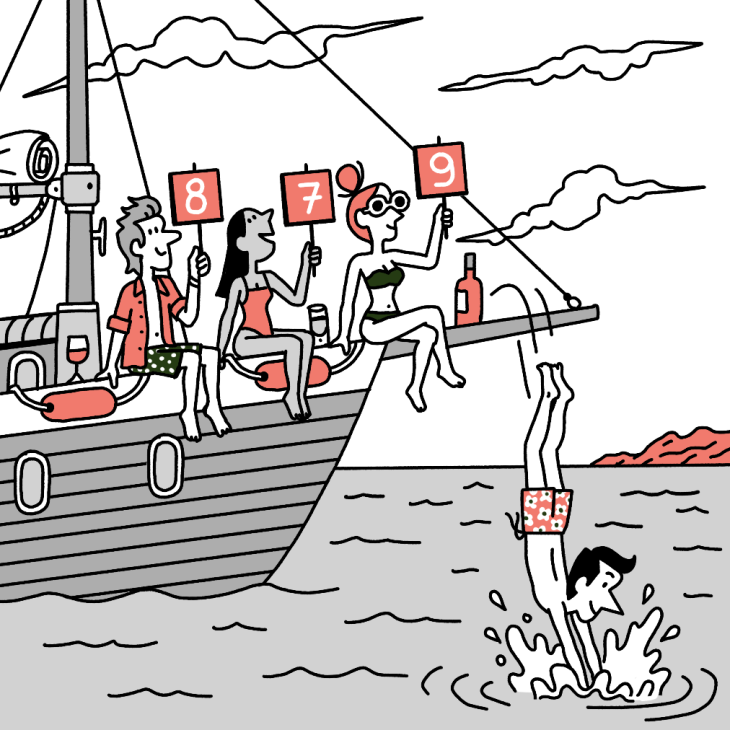
We end up spending three days on the boat, time for life to slow, for long and funny conversations. To find joy in such unexpected things. M encourages me to jump off the boat (in a friendly way), to slide deep into the dark water. He also gives me diving lessons (Tom Daley has nothing to fear). There’s something about jumping into the unknown that’s addictive. I go again and again.
When I was a child and jealous of a friend’s endless fancy holidays, I remember my dad helping me rethink the issue. “When you get to do these things one day they will feel very special. It’s OK to wait,” he assured me. I thought about his wisdom as the tender took me to shore in Mahon. I had had a blast. I had drunk in every moment. I was grateful to my dad and my hosts – but mostly Mount Etna.
Want to read more of Andrew’s columns? Click here.