A studio visit with Andrea Fontanari, the Italian painter behind the Milano Cortina 2026 Paralympics poster
The young artist tells us about the message behind his work and the importance of this rare opportunity to speak to the world.
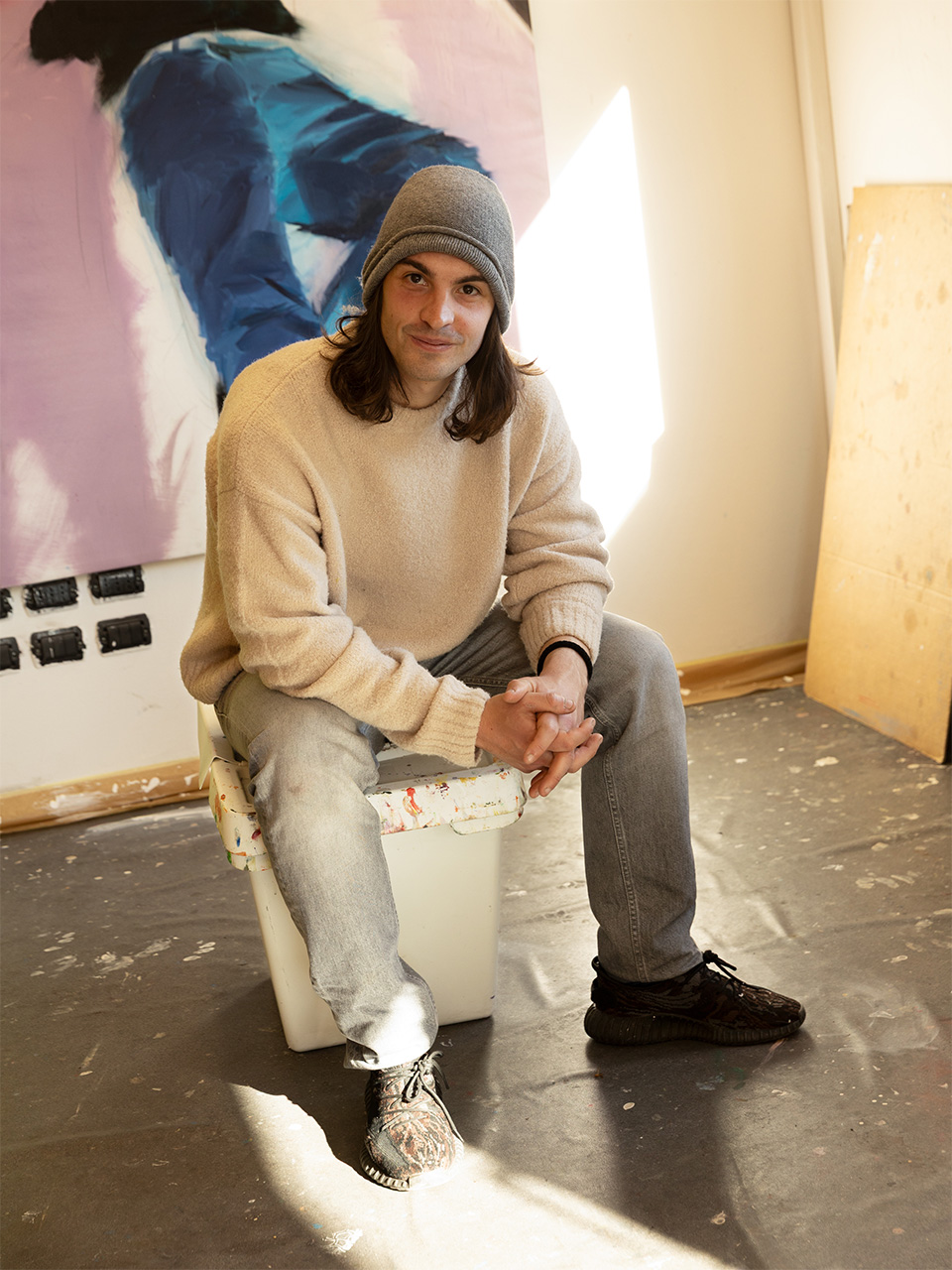
Andrea Fontanari is on the brink of worldwide recognition but you wouldn’t know it from the well-camouflaged location of the artist’s studio in a small hilltop village near Trento at the foot of the Argentario plateau. The massifs of the Adige Valley offer a dramatic backdrop for his canvases, one of which was commissioned as a poster for the Milano Cortina 2026 Paralympics.
It’s an accolade given to many artistic greats: David Hockney, Andy Warhol and Tracey Emin were also selected to create a poster for the Olympics in 1972, 1984 and 2012, respectively. “It’s a huge responsibility to continue the legacy,” says Fontanari, laying out drafts of his poster on the floor of his studio. On the tables are white sheets of paper covered in dabs of Mussini oil paint and tall paintbrushes stored in empty tins of Acquerello Carnaroli rice. “It’s my favourite brand for making risotto,” he says.
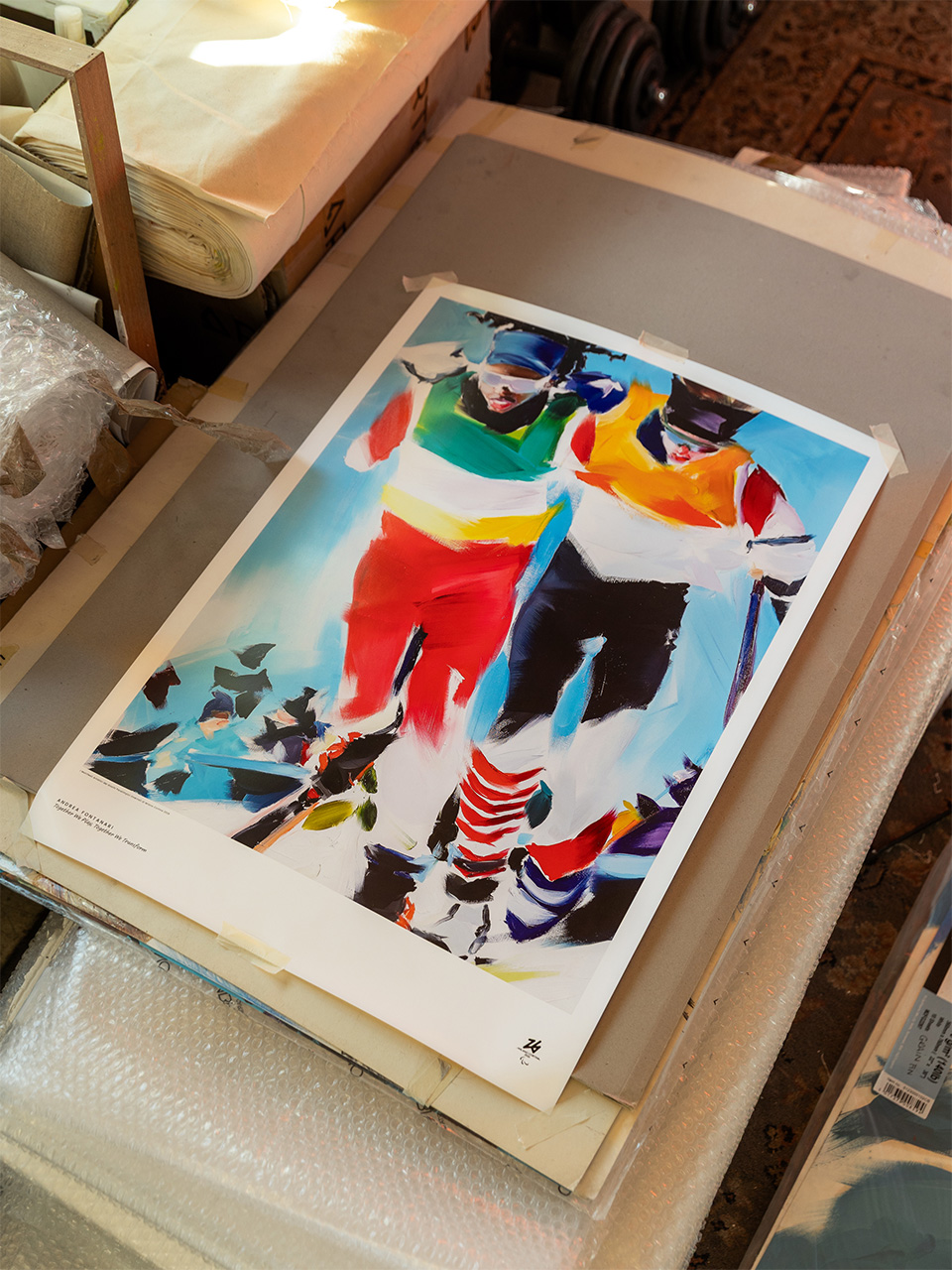
For the 29-year-old painter, this wasn’t just an invitation to create a poster but also a chance to explore the intersection of art and sport. “The Olympics and Paralympics are among the few occasions when humanity recognises itself as a global community,” he says. Fontanari’s poster, entitled “Together We Play, Together We Transform”, was inspired by a photograph of Guinea-Bissau’s Braima Suncar Dabo, who helped to carry Aruba’s Jonathan Busby for the last 100 metres of the 5,000-metre heats at the 2019 World Athletics Championships in Doha. This act became a symbol of the magnanimous spirit of international sport.
Instead of runners, Fontanari’s image portrays two cross-country skiers. “You don’t notice that they’re Paralympians,” he says. “Instead, you get lost in the art.” Did the Olympic Committee give him creative control? Fontanari shows Monocle the brief, which includes the broad themes that it wanted the posters to convey. He points to some of the words and phrases that he chose as a springboard. Among them are “courage”, “new Italian spirit” and “universal language”.
After months of back and forth with the Olympic Committee and various draft sketches and pencil studies, Fontanari’s final version came together swiftly. “It only took a week,” he says. “Once we had agreed on the right image, I followed my instincts and got it onto the canvas.” Wide, sweeping brushstrokes and bold injections of colour (chosen at random so as not to represent any country in particular) give the finished image a sense of fluidity.
“Movement was another key theme,” says the artist, who spent his childhood winters skiing in Trentino. “Growing up in the Dolomites, I saw the mountains as a barrier to the rest of the world.” Today he has a different perspective. “Now, I recognise that the region isn’t isolated but geographically well connected. The Italian Alps border France, Switzerland, Austria and Slovenia. There’s a rich cross-cultural exchange, even in a small northern city like Trento. I believe that this is why my work was selected to represent the Paralympics.”
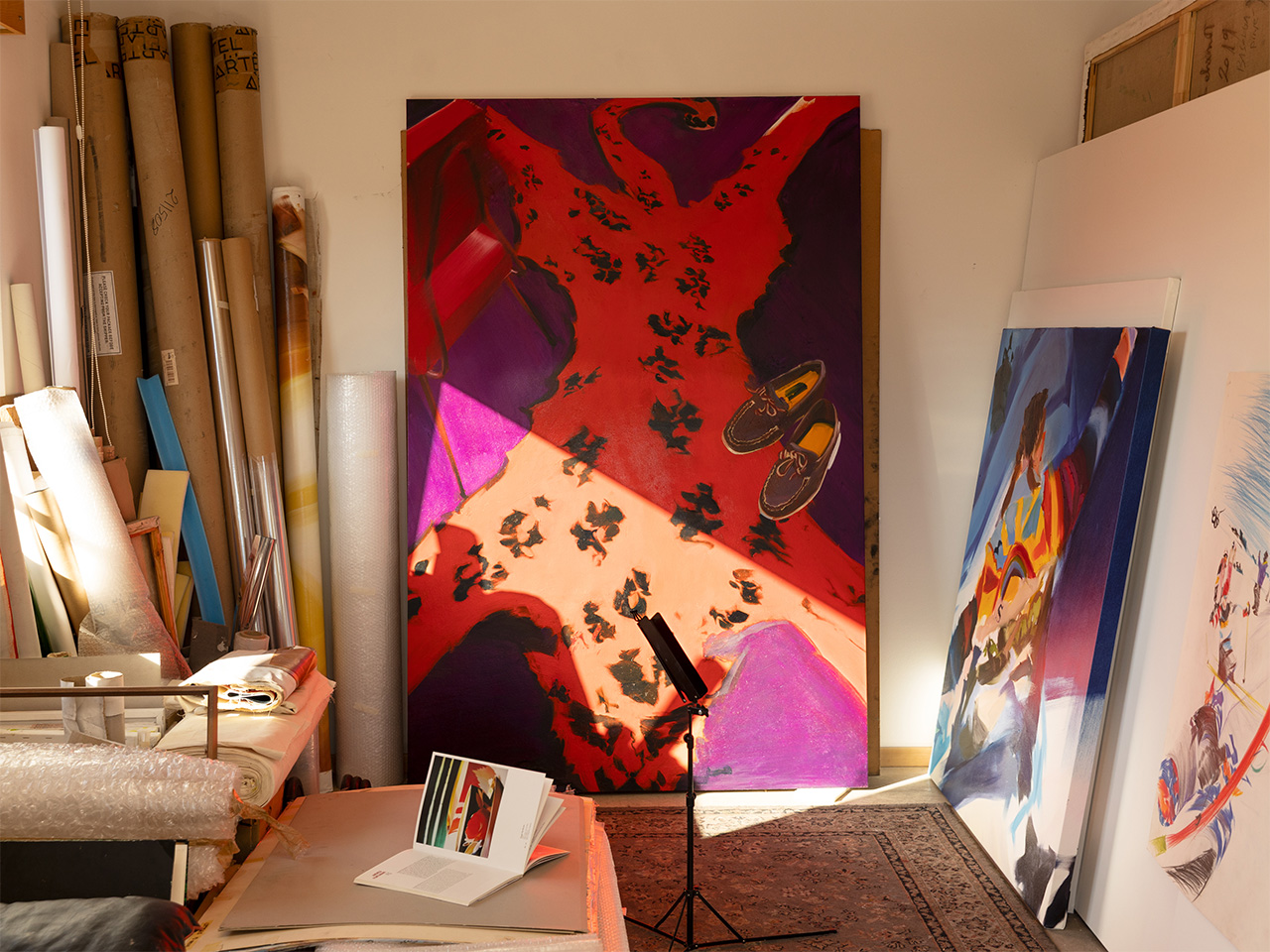
Fontanari, alongside nine others, was chosen from a group of 120 artists from Pittura Italiana Oggi, an exhibition showcasing the work of Italian artists born between 1960 and 2000. The exhibition was on show at the Triennale Milano, one of Italy’s foremost institutions for contemporary art.
Fontanari’s painting, which is reproduced in the poster, is now on display at the Triennale Milano until March, at which point it will be shipped to the Olympic Museum in Lausanne to enter the permanent collection, while the poster will go on display. “One day I would like to go to Lausanne to see it there,” says Fontanari.
He is humble about the growing success of his work, which will be shown at the National Museum of Brasília until mid-February and later in Rio de Janeiro. Fontanari says that he will always find his way back to Trento. “The mountains here are not an easy place in which to work but they constantly open up possibilities and challenge your limits,” he adds. “I don’t think that making art is any different.”
The next generation of Italian artists designing posters for Milano Cortina 2026
Since 1972 the Olympic Committee has commissioned artists to conceive posters that reflect the spirit of the Games. For the Milano Cortina 2026 Winter Olympics and Paralympics, the committee worked with the Triennale Milano to find 10 promising Italian artists under the age of 40 to interpret the spirit of the Games. “We wanted our selection to showcase Italy’s dynamic contemporary-art scene and the next generation of creatives,” says Raffaella Paniè, the director of brand identity at the Fondazione Milano Cortina 2026. “Through their diverse styles, the selected posters show the intersection of sport, art and society, creating a visual legacy.” We meet some of the artists.
1.
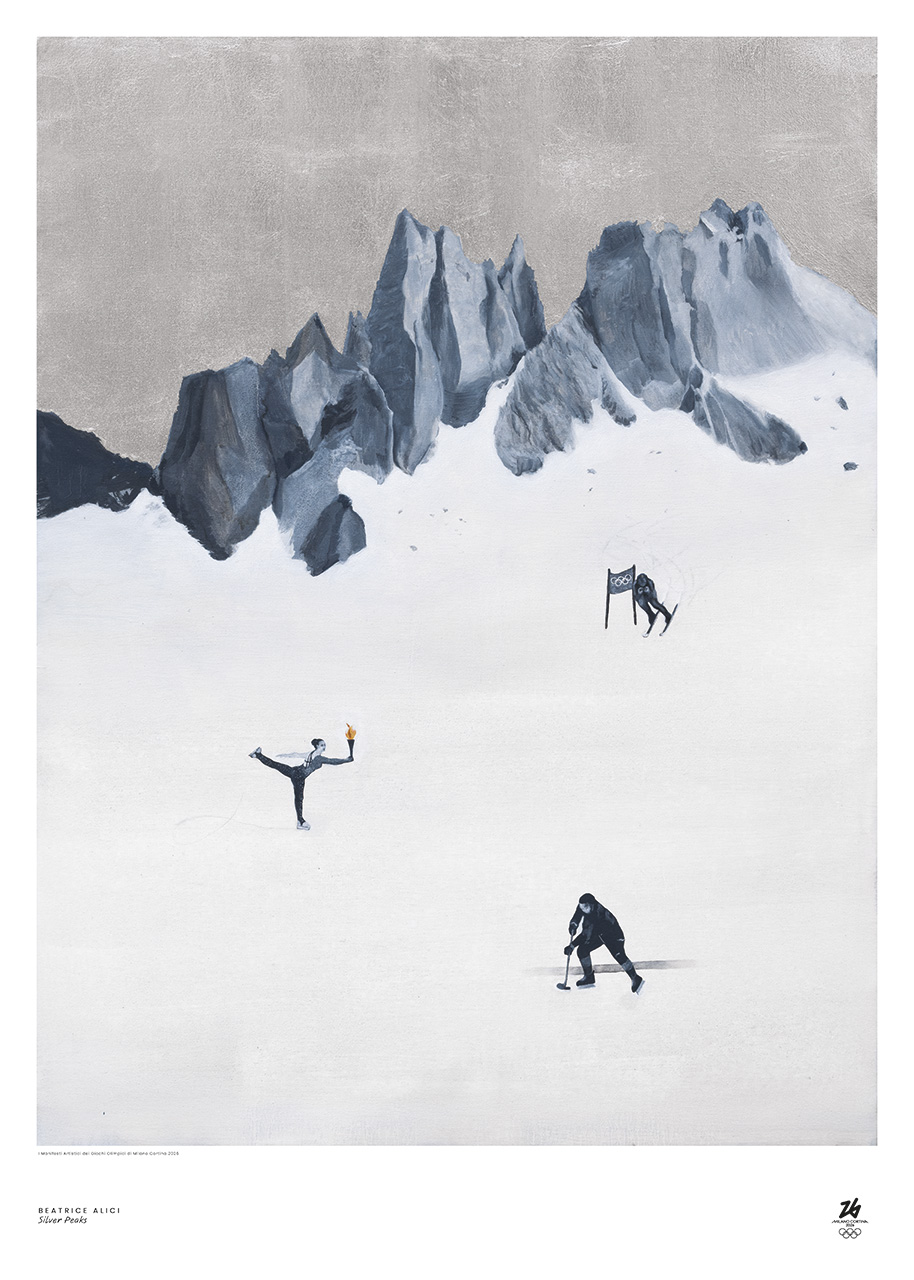
Beatrice Alici Milan
Milan
“I spent my childhood skiing in South Tyrol. Over time, those snow-covered slopes and muted horizons became a quiet archive of belonging. The silvery overcast sky, recreated here using silver leaf, reflects the visual atmosphere and its texture – where recollection turns into light and nostalgia takes on a material form.”
2.
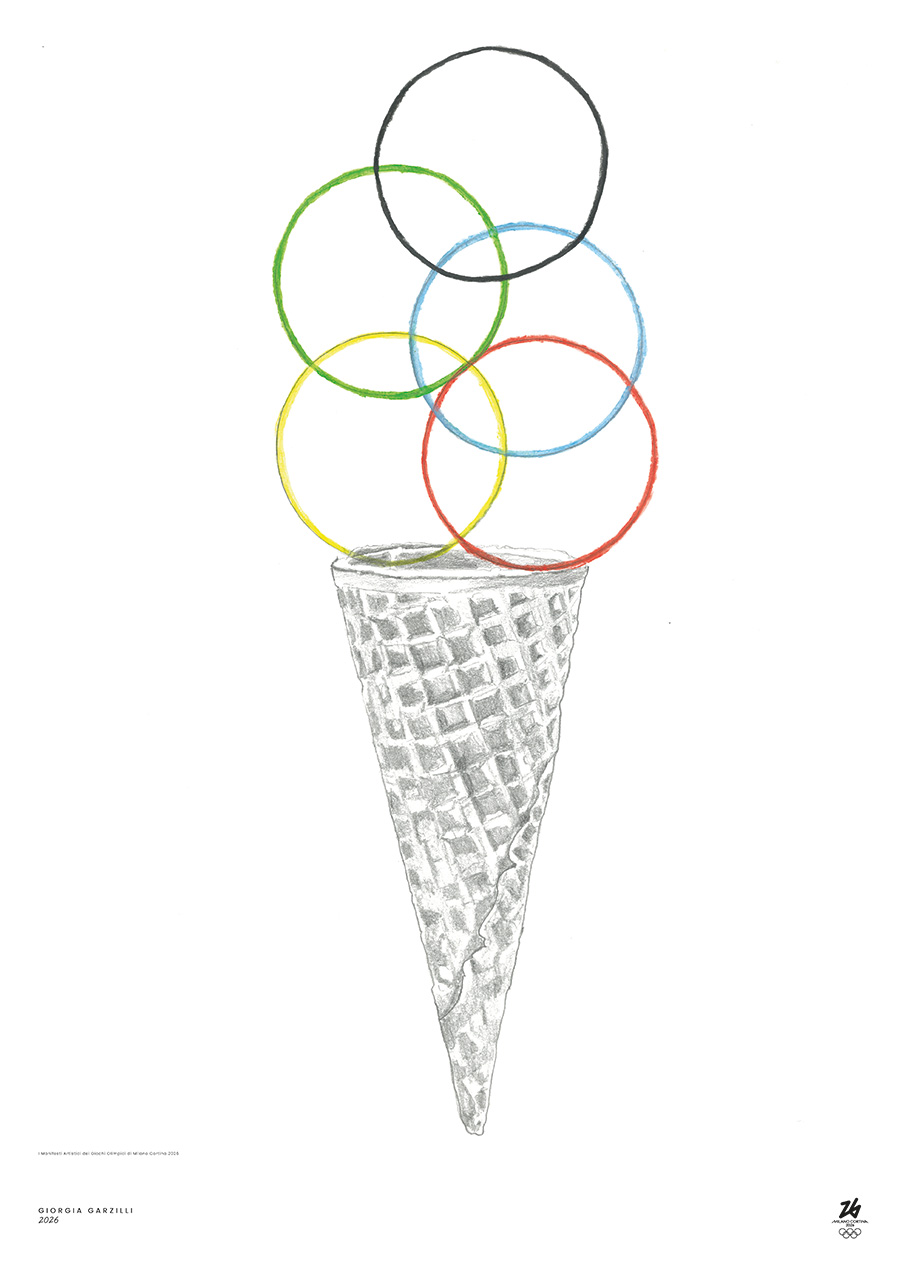
Giorgia Garzilli
Naples and Milan
“I thought about a toy that I had when I was a kid, consisting of a plastic ice-cream cone that, if you pressed a button, would throw the scoop in the air. I’d use it to mark the start of a game.”
3.
Roberto de Pinto Milan
Milan
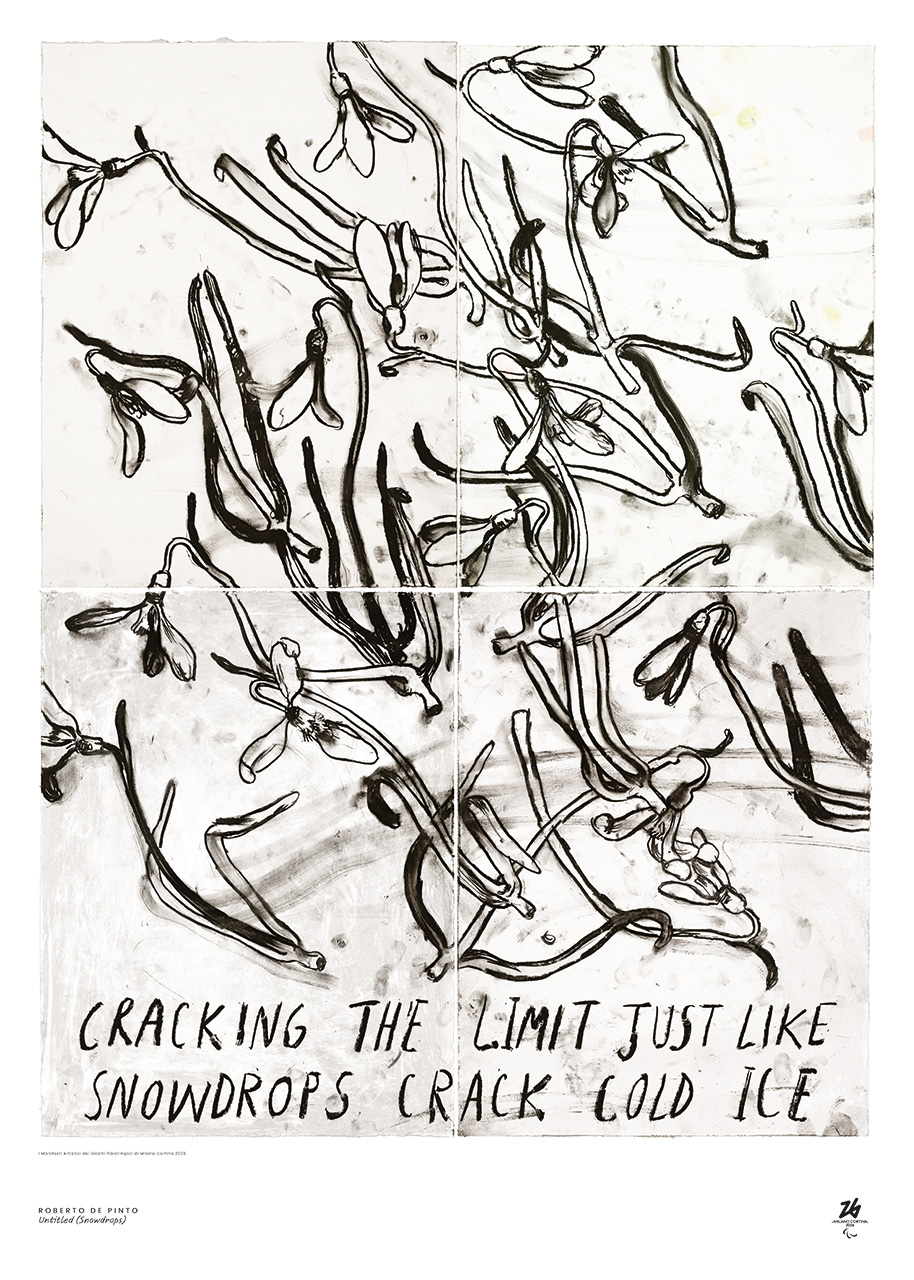
“I chose to represent the snowdrop. In Italy, we call it bucaneve, meaning ‘snow piercer’. Snowdrops bloom at the end of winter, sometimes breaking through ice. This act of pushing to reach the light became a perfect metaphor for the athletes.”