How African art is taking over the Venice Biennale – and the world
For decades, African art occupied the international margins. But several fairs and exhibitions, including the Venice Biennale, are bringing the continent’s creative heritage to the centre.
In late February the 111 artists invited to participate in the main exhibition of the 61st Venice Biennale – themed “In Minor Keys” – were announced. The selection was led by Koyo Kouoh, who will posthumously make history as the first African woman appointed as artistic director of the contemporary arts festival. Following her untimely passing in May 2025, her curatorial team has committed itself to honouring and realising her vision.
The Venice Biennale opens on 9 May and will remain on view until 22 November. Among the invited artists, a significant proportion are African or of African descent. This pronounced representation reflects a broader, evolving trend that has steadily reshaped the global art landscape in the past decade. Across Africa, cultural production and infrastructure are expanding in unprecedented ways. The continent’s art, with its historically centrifugal energies, is exerting a palpable influence on the centre. The 2026 edition of the Investec Cape Town Art Fair (ICTAF), produced by Fiera Milano Exhibitions Africa and held annually in February, reinforced this perspective. As Africa’s largest and most significant international art fair, ICTAF continues to assert the continent’s creative prominence.
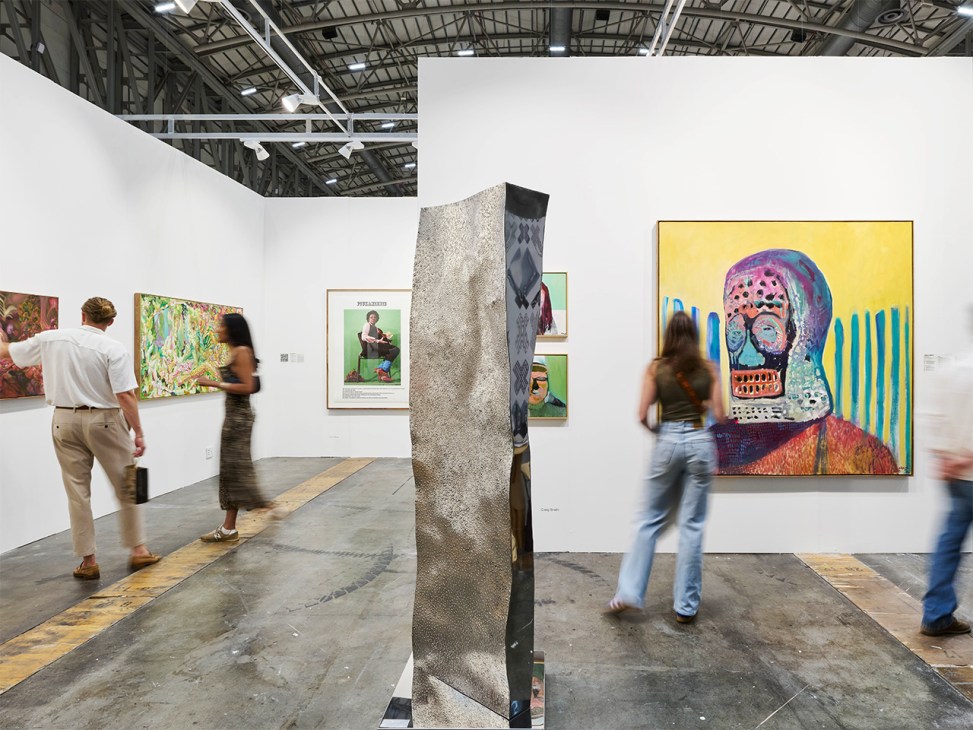
The theme for this year’s fair, “Listen”, anticipated the 61st Venice Biennale’s forthcoming “In Minor Keys” iteration. Minor keys in music do not proclaim – they move subtly, changing the mood from within. The musical scale is associated with introspection, tonal subtlety and a layered emotional register. “The theme, ‘Listen’, functions as both a curatorial framework and a working principle guiding the fair,” says ICTAF director Laura Vincenti. “It is an invitation to slow down the process of engagement in favour of deeper connection and more considered reflection.”
It is unusual for a commercial art fair to adopt a theme, a strategy typically reserved for biennales. Art fairs are oriented more toward market acceleration and consumption. To title the ICTAF edition “Listen” is thus both provocative and somewhat paradoxical. The theme also trickled down into the talks programme and a new series of workshops, another unusual addition to an art trade fair. With these decisions, ICTAF foregrounded the idea of exchange rather than simple commerce, fostering the sharing of knowledge between attendees.
What the organisers proposed was an invitation to engage with artistic systems that fall outside the normative boundaries of what an art fair typically makes visible. While African art occupied the sector’s margins for decades, the fair’s curation – in line with Kouoh’s conviction that art is a transmitter of knowledge – has contributed to situating African art within the global conversation. In the past decade, a new wave of African art institutions has taken shape: including contemporary art museums such as Macaal in Marrakech and Cape Town’s Zeitz Mocaa, as well as Guest Artists Space Foundation in Lagos, a non-profit founded by artist Yinka Shonibare. These developments signal the continent’s growing presence in the world’s art landscape and the crucial role of institutions in supporting cultural organisations where resources remain limited.
While art fairs play an important role in building capacity within Africa’s developing cultural ecosystem, they can face criticism for prioritising commercial interests over community engagement. ICTAF, Vincenti insists, seeks a more meaningful approach. “In this context a fair can provide infrastructure: a professionally managed environment where galleries, artists, curators, collectors and institutions converge,” she says. “As the leading international contemporary art fair on the African continent, we act as a meeting point for global exchange.”
As the art world increasingly looks to Africa for direction, the artists, cultural practitioners and professionals committed to nurturing the continent’s creative future are driving the conversation. Africa’s youthful population, coupled with a rapid embrace of technology, fuels a remarkable surge of innovation. The continent’s art crowd is responding in kind, and the global community is beginning to recognise Africa as a place of creative innovation. African artists have long known this truth; now, the rest of the world is finally catching up.