Inside Lézard Graphique, the French workshop keeping printing traditions alive
Founded in 1979 near Strasbourg, where the printing press was developed, Lézard Graphique is making an art form of its tactile, time-tested processes.
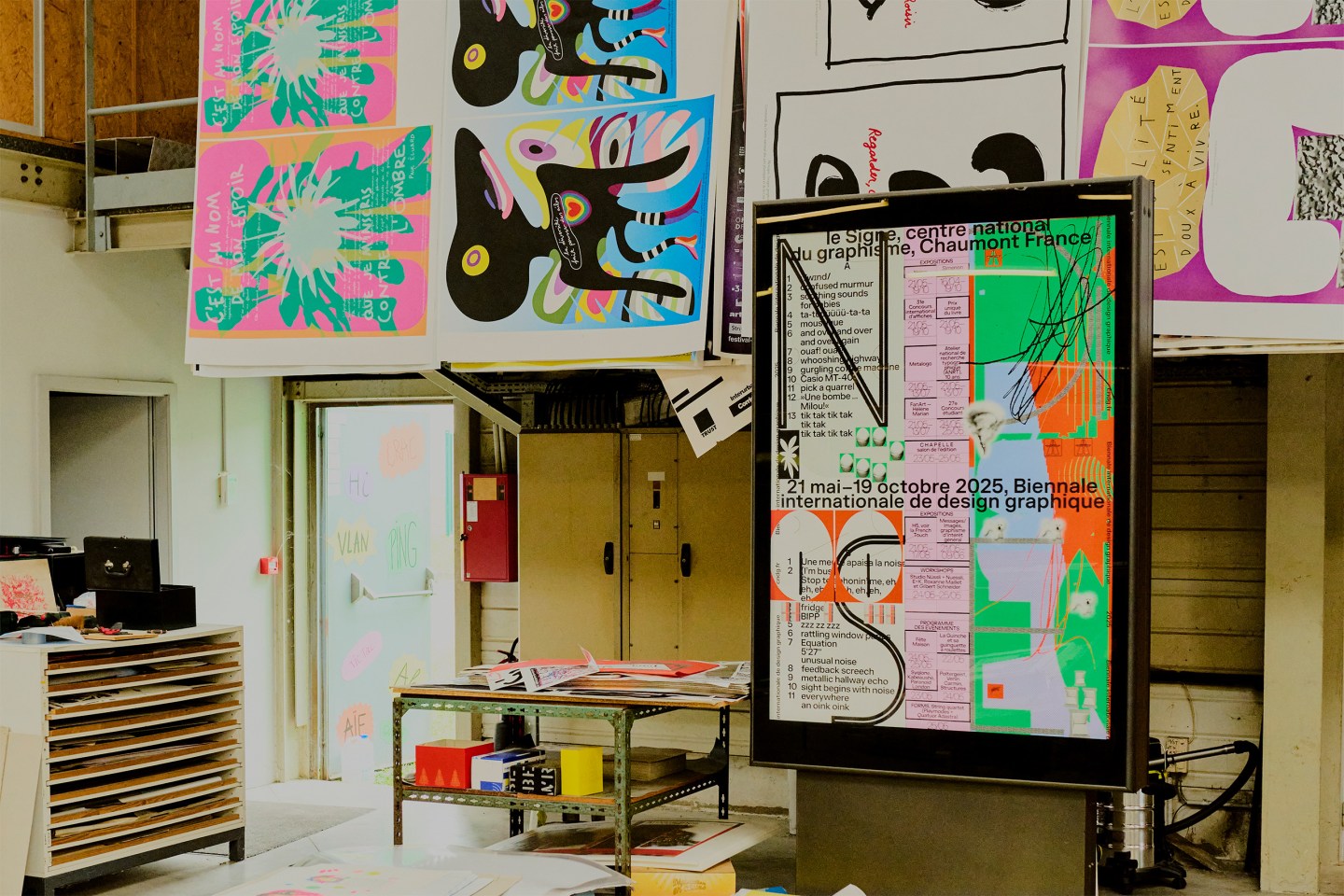
Enter the screen-printing workshop of Lézard Graphique in the town of Brumath, just outside Strasbourg, and you’re greeted by a big picture of a lizard. It’s one of the firm’s cartes de voeux – postcards that it creates at the end of every year to thank its friends and collaborators. “They are collector’s items that we have become famous for,” says Lézard Graphique’s owner, Frédéric Rose. “I recently came across some old ones from the 1990s in an antiques shop. They were worth a fortune.”
Rose, who trained in fine art, is something of a polymath. He also owns companies in exhibition engineering and artificial-intelligence imaging. In 2017 he bought Lézard Graphique from printer Jean-Yves Grandidier, who founded it in 1979. “I wanted to sanctify the studio and protect its savoir-faire,” he says.
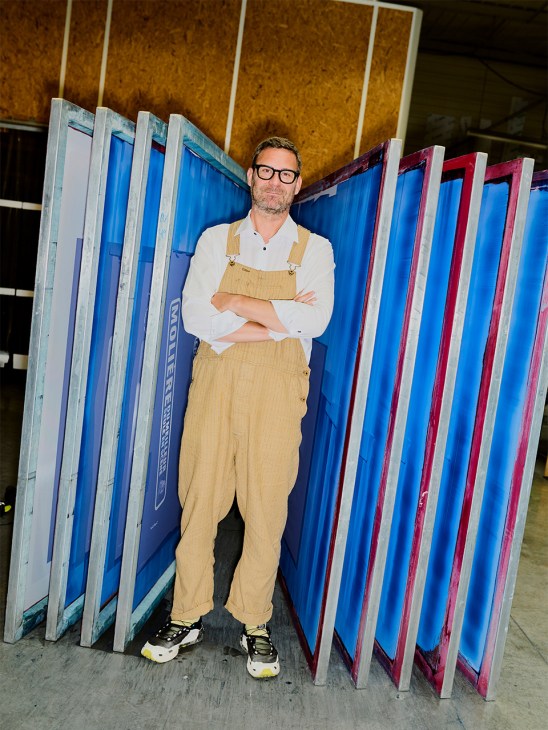
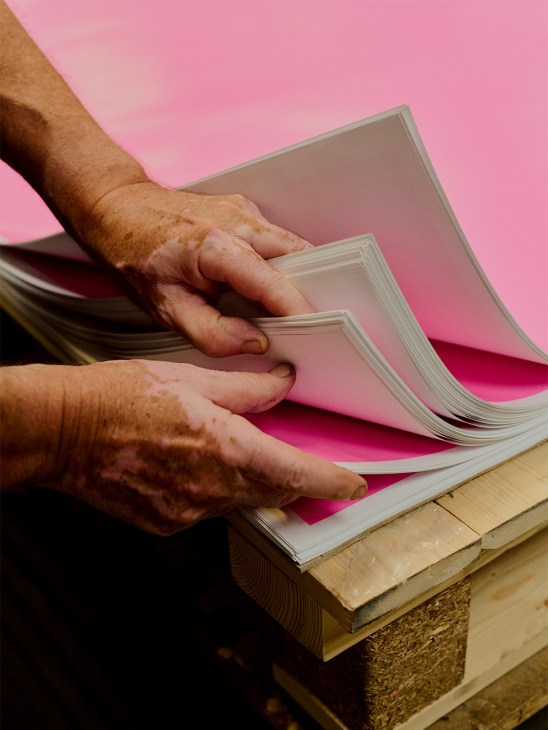
The workshop’s name is a play on the words les arts (the arts) and lézard (lizard). The space specialises in screen printing, a technique that involves transferring ink through a mesh onto a surface, one colour at a time. Today the machines at the Brumath shop are semi-automatic for consistency but every sheet is still individually inspected by a human eye. “That’s the soul of the place,” says business manager Zakarya Després, one of the 11 employees who work here. “The machine doesn’t get tired but someone needs to be there to get the details right. That’s what makes us a workshop, not a factory.”
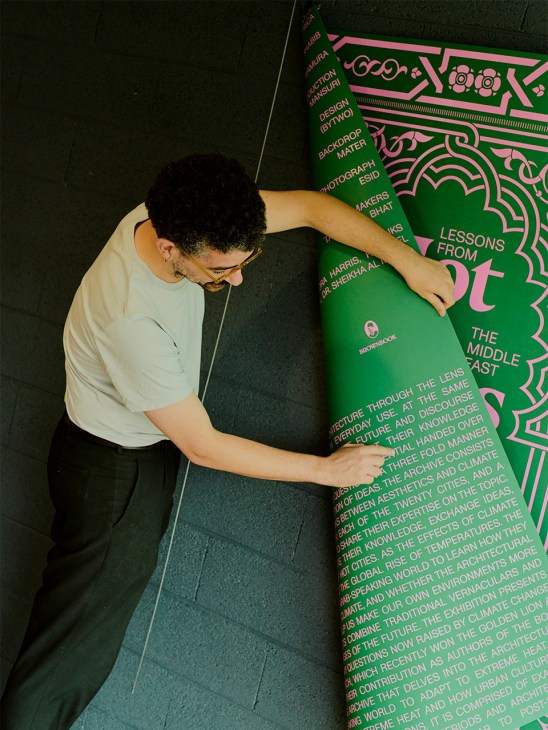
Lézard Graphique’s client list includes artists and cultural institutions (such as Fondation Cartier and Les Rencontres de la Photographie festival in Arles), as well as design studios in Switzerland, Saudi Arabia and beyond. This variety places the workshop right at the intersection between art and commerce. “We’re the only ones able to make these large-format posters at this level of quality,” says Després as he points to a blue poster rolling out of the machine. The print is for Zusammen, a circus show at the Comédie de Colmar theatre, and its pink text and decorative details were inspired by the centaurs of Greek mythology. “These posters last a really long time, which is essential for this sort of promotional tool,” says Després. “They also possess a unique vibrancy. Anyone who knows about screen printing can recognise our work from a mile away.”
It’s no coincidence that Lézard Graphique was founded near Strasbourg. Florian Siffer, the curator of the local Cabinet des Estampes et des Dessins museum, which focuses on prints and illustrations, describes the city’s role in the history of the medium as an evolving story. Johannes Gutenberg, the inventor of the printing press, lived in Strasbourg in the middle of the 15th century and his presence led to the development of the first printing workshops here and, ultimately, a flourishing ecosystem around them. “Soon you had not just printers but illustrators, wood engravers and scholars, all working within the walls of the city,” says Siffer. “You could describe it as a Silicon Valley of print.”
Strasbourg’s competitive environment created breakthroughs as printers refined the technology. From the use of woodcut images integrated into movable type to early colour printing, every new development was pragmatic. “These workers weren’t artists locked in an ivory tower but entrepreneurs with a desire to streamline production processes,” says Siffer. Printers such as Johann Grüninger, who had a workshop here in the 16th century, pioneered modular composite-woodblock illustration. His system allowed different boxes of text and images to be added and fitted together in a way that resembles modern publishing-software layouts. “Grüninger broke down images into reusable elements,” says Siffer. “Human figures, cityscapes and flora could be recombined as needed. It was clever, efficient and ahead of its time.”
Such innovations continued into the 19th century, when lithography made its way into Alsace via its border with Germany. Though the process originated in Munich, Alsatian artists such as Benjamin Zix were quick to experiment with it. “Zix visited the studio of Alois Senefelder, the inventor of lithography, and brought the method back here,” says Siffer. “Strasbourg had presses running colour lithographs before most of France.”
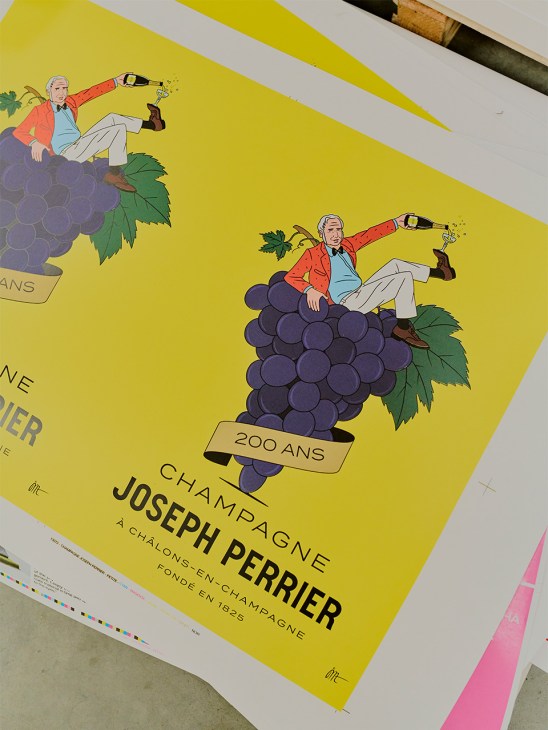
Today institutions such as the Cabinet des Estampes et Dessins tell the remarkable story of this industry and the artists who paved the way. Lézard Graphique does the same. When Michel Quarez, one of France’s most revered poster designers, died in 2021, his godson approached it to reprint some of his work – including an iconic print from 1996 depicting a rooster, its blue feathers and yellow breast contrasting with a bold, pink background. “The screen printer that Quarez used had closed down and we had no original files, so we reverse-engineered it from an existing physical copy: just ink, layers and intuition,” says Després. The result was a new print that honoured Quarez’s style. Made for a Bastille Day party, it’s one of Després’s favourites. “It was really fine work,” he says, pointing to the rooster’s delicate crest. “The balance of art, typography and hand-drawn expression is very French.”
Though Lézard Graphique’s output feels distinctly old-school, experimentation is central. From mirror-like effects created using thermochromic ink to smooth colour gradings achieved by mixing different hues on one screen, there’s a sense that anything can be accomplished within the workshop’s walls. “There are still things that are possible only through screen printing and that’s what makes the process interesting,” says Després. For Rose, this dedication to the medium is a key part of the workshop’s philosophy. “I see what automation can do but it will never replicate the feel of a pigment mixed by hand or a 30-colour print run on thick paper,” he says. “The more that technology accelerates, the more we need places like Lézard to remind us of what can’t be faked.”
Despite Lézard Graphique’s reputation, the past few years have been challenging. “The coronavirus pandemic hit us like everyone else, especially those of us working with theatres, museums and cultural spaces,” says Rose. As the market for screen-printed posters in France has shrunk, Switzerland has become the company’s quiet champion. “There’s a culture of poster art there that’s thriving,” says Rose. “They see a poster not as temporary media but as an art form.” To adapt, Rose is launching Lézard Graphique’s own publishing line, producing limited-edition prints and licensed art collaborations. “We are moving into the gallery space,” he says. “If we can’t exist in the public arena as much as we did before, we’ll become a maker of things that are more like objects of art than tools of promotion.” Rose is also eager to pass on the knowledge of screen-printing to younger generations and the studio welcomes art-school students and apprentices who learn skills on the job.
Despite the pressures, Lézard Graphique remains a stubborn bastion of screen printing, in part thanks to the network of artists surrounding it who value the organisation’s familial approach as much as its expertise. Here, graphic designers work shoulder to shoulder with printers, getting ink on their hands. “It’s something that hardly happens elsewhere today,” says Rose. “At most print shops, you send files by email and hope for the best. Here, you’re part of the process. You see the prints drying. And you get a glimpse of what’s happening in the cultural world.”
For Rose, keeping Lézard Graphique alive means defending not only a way of making but a creative outlook too. “The manual process protects you. AI might be able to replace certain steps in design but it can’t pull a print or feel the paper. The more abstract that the world becomes, the more we’ll need the physical elements of creativity to keep us grounded.”
lezard-graphique.com
Making contact: The lithographic process
Bright ideas
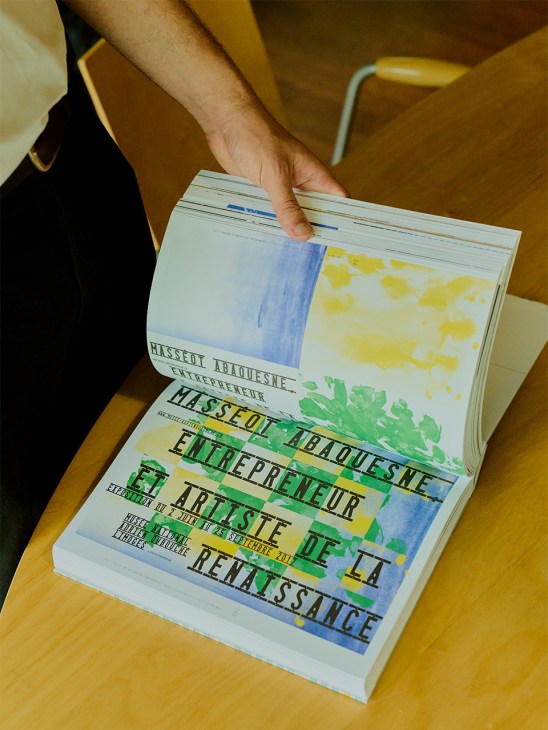
Inspiration can be found in the workshop’s reference library, where a wide range of books, prints and visual materials provide ideas, context and creative starting points.
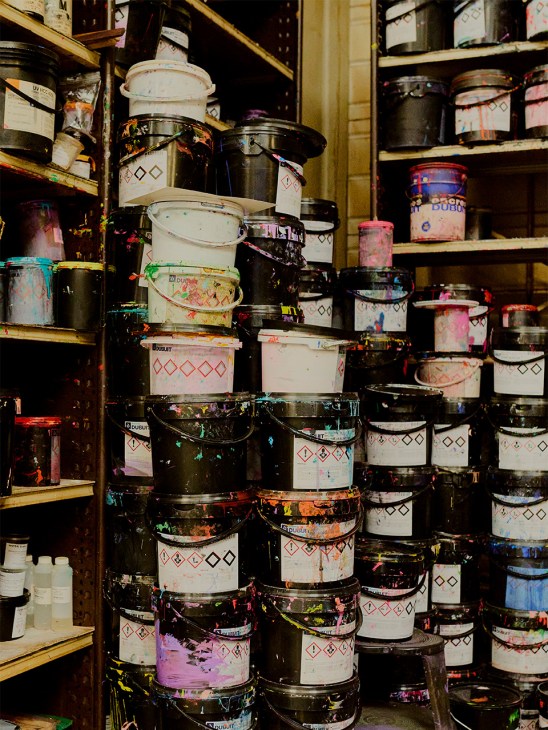
Pick and mix
Towers of paint pots display intensely vibrant colours, carefully selected and mixed, giving Lézard Graphique’s prints their distinctive depth, richness and recognisable visual identity.
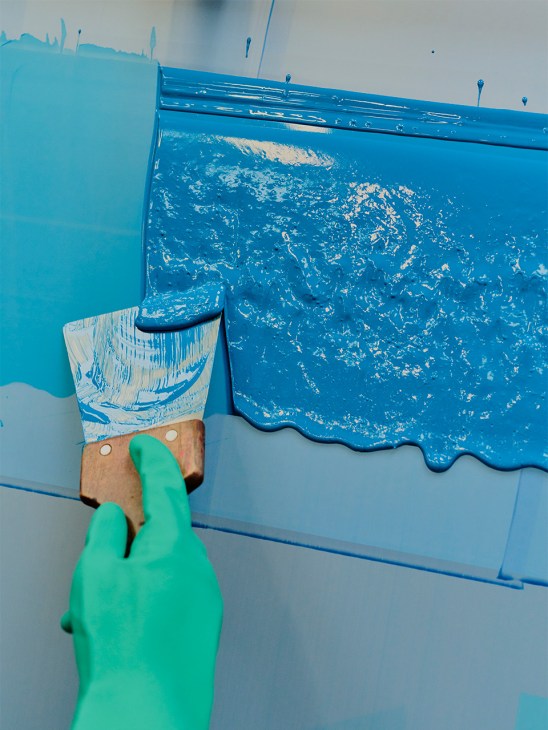
Forming an image
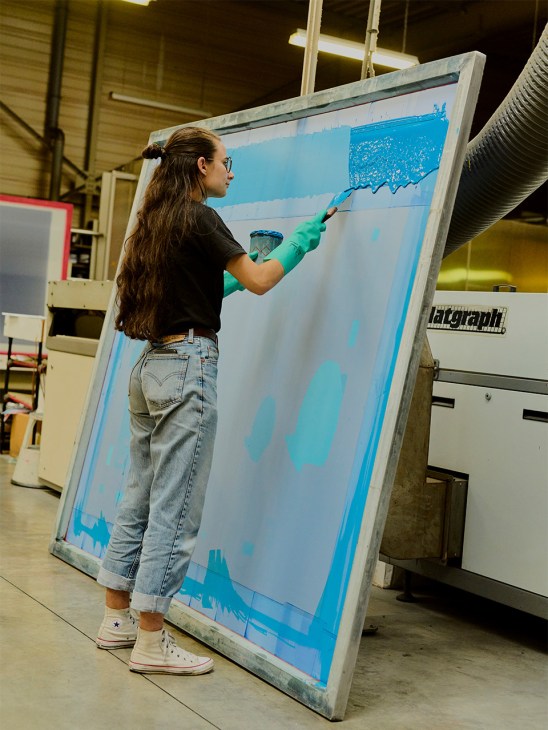
Ink is poured onto the screen and pulled across with a squeegee, forcing it through the stencil to transfer the design to the paper below.
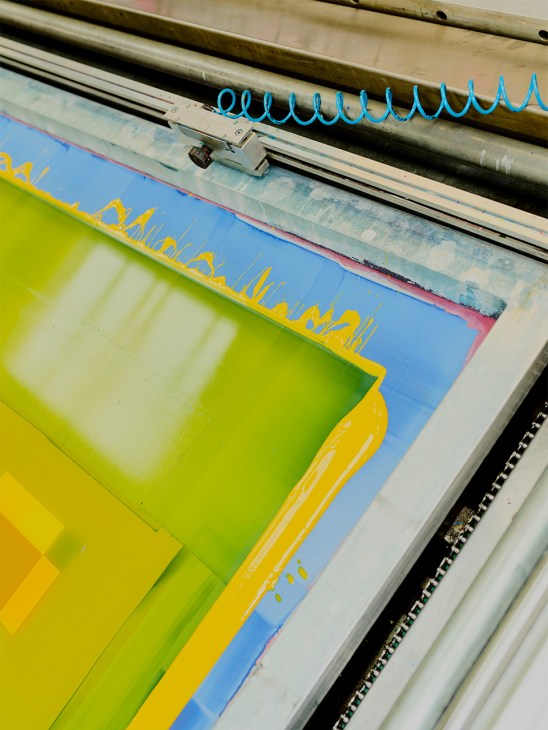
Out to dry
A mesh screen is coated with a light-sensitive emulsion, creating a smooth surface that will later harden under light – except where the design blocks it.
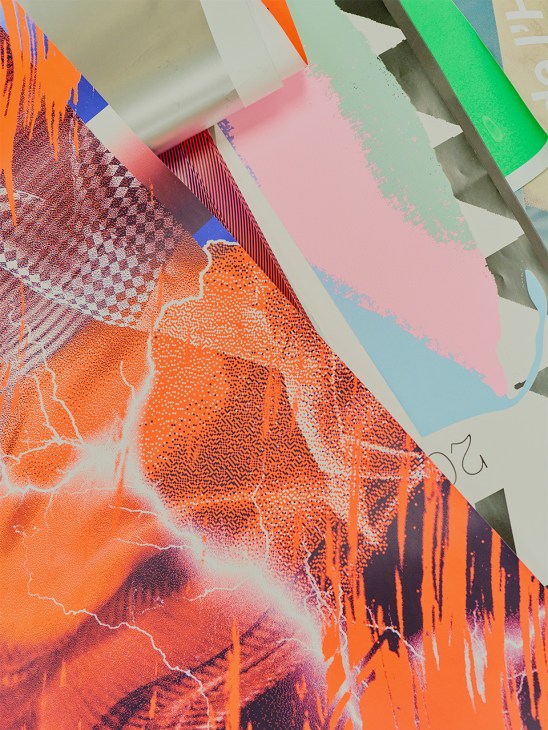
Up for review
The finished print undergoes final drying and inspection to ensure consistent quality, with flawed prints discarded to maintain the high standards of professional screen printing.
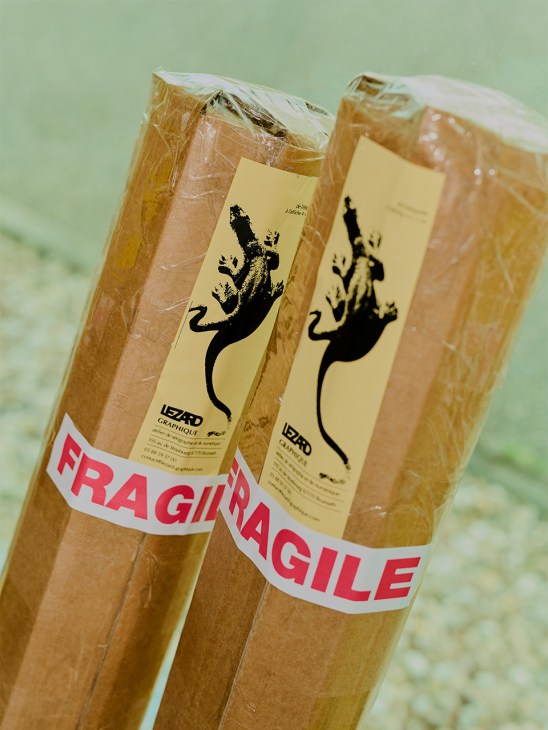
Special delivery
Every print is signed, stamped and prepared for delivery, ensuring that authenticity, quality and presentation standards are met before the work is packaged and shipped to clients.