The London art director collecting Earth’s rarest sculptures: Meteorites
Jethro Sverdloff, co-director of London’s Art Ancient, believes cosmic material is the next frontier in the art collectors’ market.
“Everyone’s fascinated by the idea of holding a piece of the solar system,” says Jethro Sverdloff, co-director of London’s Art Ancient. Sverdloff deals in “exceptional works” – unusual objects that include Corinthian helmets and Iron Age brooches. His business, however, is increasingly devoted to meteorite fragments. In the world of collecting, they are often called the “ultimate rarity”.
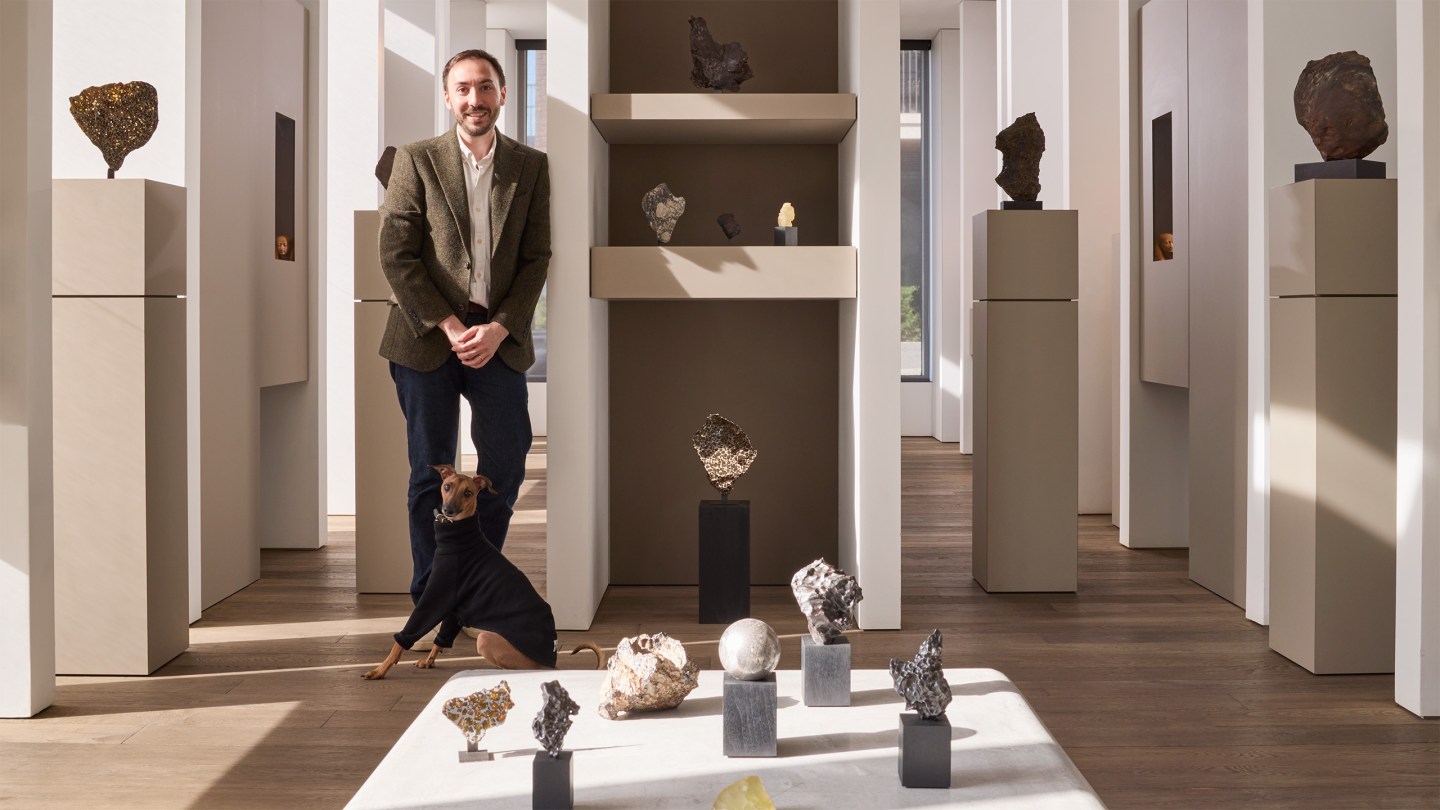
Sverdloff shows Monocle a small black meteorite that landed in Costa Rica in 2019. It formed part of a meteorite shower that was captured on CCTV and dashcams. The piece is on sale, together with the kennel that broke its fall, for £500,000 (€577,000). “Until recently, meteorites weren’t considered a collector’s item,” says Sverdloff, who selects the rocks for his gallery based on their beauty. “Meteorites bear the scars from their atmospheric entry to Earth, which alters their shape and colour.” The mesmerising sparkle of Fukang meteorite fragments, discovered in China’s Xinjiang province, makes them the trophy piece of any collection. “These translucent, gem-quality crystals were shooting stars and they still look like them,” says Sverdloff.


As well as their aesthetic quality, the scientific significance of meteorites makes them precious artefacts. Sverdloff describes them as “messengers from the formation of the early solar system, 4.65 billion years ago”. Meteorites are sculpted by events such as cosmic collisions or extreme heat, creating thumb-like depressions or glassy coatings. These signifiers fascinate Sverdloff. “I have always been drawn to beautiful, storytelling objects, created by the most improbable of events,” he says. “Even after years of handling them, that sense of wonder never really goes away.”
Some meteorites are far rarer than sapphires or diamonds and the sales figures support this. In 2025 a 24.5kg meteorite sold at Sotheby’s for $5.3m (€4.6m), becoming a bellwether for a category that, 10 years previously, was barely present at art auctions. Art Ancient was the first specialist to attend Frieze Masters in 2019 when the gallery presented a timeline of 54 objects – from meteorites to elephant-bird eggs – that charted the history of our planet.
“Major art fairs have shown that meteorites have a cross-category appeal,” says Sverdloff. Art Ancient’s clients include technology and finance entrepreneurs as well as interior designers looking for statement pieces. “What these clients share is curiosity and a desire for pieces that are genuinely rare, visually beautiful and come with great stories.”
How to show off your otherworldly artefact? “Meteorites should be displayed like any other rare, precious object,” says Sverdloff. “When you put them in a vitrine with explanatory labels, they read as specimens. Instead, we give them space and lighting, so they read as sculptures.”
artancient.com
Rarest meteorites:
Martian and lunar. There are fewer than 400 Martian meteorites and 600 lunar meteorites known worldwide.
Most beautiful objects:
Pallasite meteorites with olivine crystals, derived from asteroid belts.
Easiest place to spot meteorites:
The Sahara Desert.