London’s new V&A East Museum remixes the museum format
With a collection organised thematically, the museum presents issues of identity, wellbeing, social justice and environmental action through the lens of art.
“This is the place where makers have sought refuge and inspiration,” says Gus Casely-Hayford, director of the Victoria & Albert Museum, of the area in which London’s newest cultural destination has just opened its doors. V&A East Museum (V&A East), which opens to the public on 18 April, is the latest addition to what was once the site of the London 2012 Olympics and is now a buzzing cultural hotspot in the borough of Newham. “It feels both like we’ve come home and that we’ve been welcomed by east Londoners,” adds Casely-Hayford.
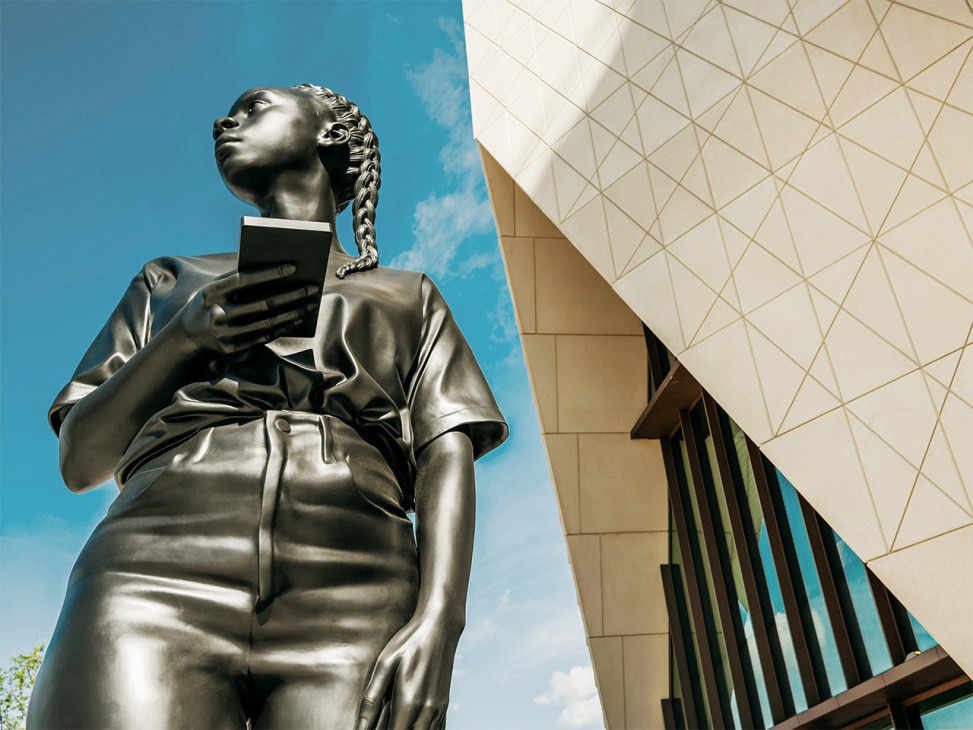
Visitors are greeted at the museum’s entrance by a striking, five-metre-tall statue by British sculptor Thomas J Price. An unlikely sentinel, the bronze figure of a young woman clad in trainers and clutching a smartphone feels right at home here. The borough has one of the youngest populations in the country and creating a museum that not only speaks to that demographic but was also made alongside them has been one of the defining novelties of this project. “Young people advised on everything from our uniforms to the food that will be served in our restaurant,” says Casely-Hayford. “It has been wonderful to reshape our operational and curatorial delivery to reflect their interests, needs and aspirations.”
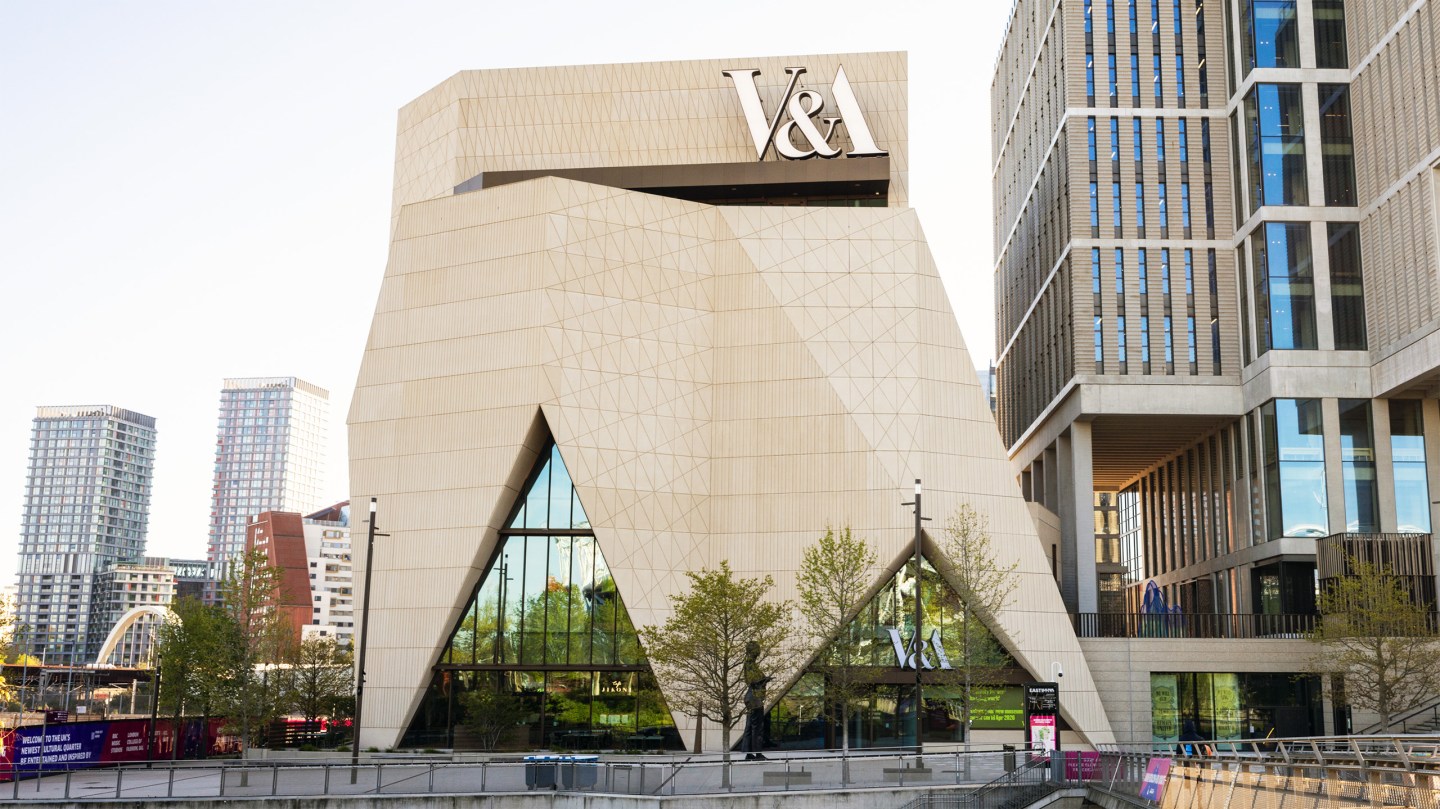
The building itself was designed by architecture firm O’Donnell + Tuomey. It is angular and composed of sand-coloured triangles that tessellate to create a façade that seems to pleat. From the right angle, it has something of a spaceship look about it.
Inside, V&A East comprises three galleries, the excellent Café Jikoni, an events space, shop and terraces. The permanent galleries – named Why We Make – celebrate the creative process by bringing together more than 500 objects from the V&A collection in an eclectic, unexpected way. Local heroes are, of course, paid their dues. On display is a wispy, ethereal dress covered with an angel motif by Alexander McQueen (who grew up in Stratford). It is from McQueen’s final collection before his death in 2010, poignant and hauntingly beautiful. Less ghostly and more garish are Leigh Bowery’s ballet costumes from 1987 – bright, sculptural outfits that include floral-patterned gimp masks and pink sequined cod pieces.
Elsewhere, it is hard to miss a poofy hot-pink dress by contemporary east London designer Molly Goddard. Hanging within the same gallery is an Indian talismanic shirt inscribed with the entire text of the Qur’an from around the late 1400s and a Paimio armchair designed by Finnish modernist Alvar Aalto. This assortment, in the words of Zofia Trafas White, senior curator at V&A East, represents “a fresh and topical remix” of the museum’s collection. “Here, we’ve foregone typical displays based on chronology – displays sorted by materials or geography,” she says. “Instead, we’re looking at big ideas that we know are close to our audiences’ heart – identity, wellbeing, social justice, environmental action. It’s a thematic way to bring together objects that wouldn’t normally be displayed together and that mix of different cultures, countries and time periods is quite unique.”


The first temporary exhibition here catalogues the immense impact of Black British music on culture both in the UK and around the world. Objects tell the story – from Winifred Atwell’s piano to the Banksy-designed vest worn by Stormzy at Glastonbury – but so does the music, as motion-sensor headphones play an ever-evolving soundtrack to visitors while they move through the rooms. “This is one of the great stories of British creativity,” says Casely-Hayford. “It is uproariously inspiring and positive.” The very same could be said of this new museum itself.