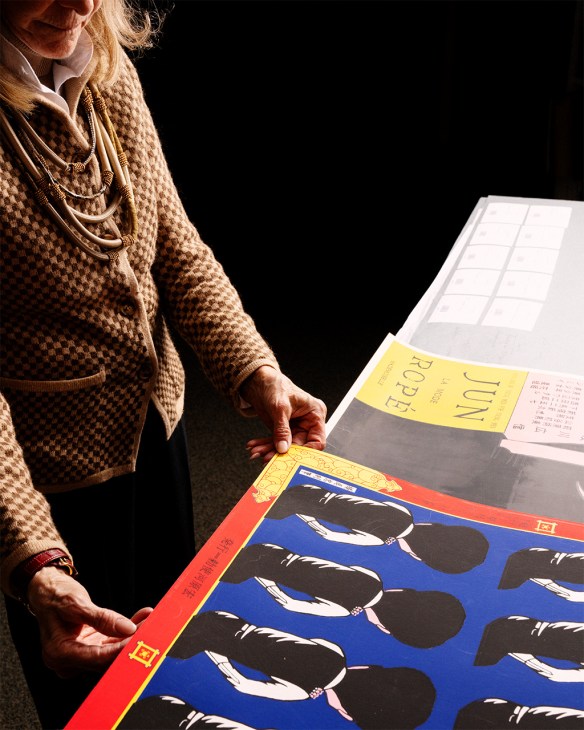
‘Posters are more than just images on paper.’ Susan Reinhold, the poster dealer elevating prints to fine-art status
After acquiring her first-ever vintage poster more than three decades ago, Reinhold has been on a mission to revamp the image of the printed medium.
In 1972, Susan Reinhold bought a vintage art deco poster for $500 – about $3,500 (€3,000) today – from Madison Avenue art-book dealer Robert Brown. Then she called a poster gallery in London, which quoted her twice the amount for the work, designed by French artist Charles Gesmar for cabaret singer Mistinguett. A poster dealer was born. She convinced Brown to go into business with her; together they ran Reinhold Brown Gallery for decades in New York, before relocating to Ridgefield, Connecticut.
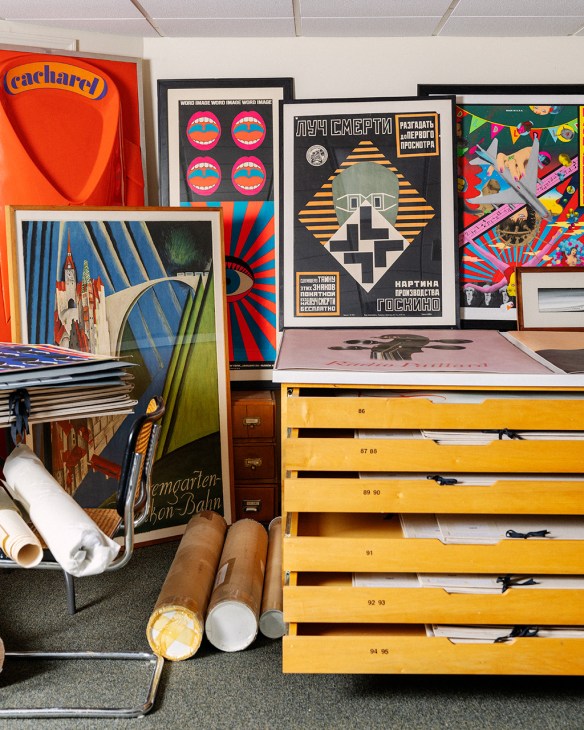
The gallery remains a global clearing house for rare posters. While other dealers and collectors in this field usually organise their wares based on subject matter – such as advertisements for films or those for cars – Reinhold does so in terms of artistic movements: Bauhaus, dada, futurism, constructivism and so on. “Posters are more than just images on paper,” says Reinhold. “They’re works of art and design that teach you about history.”

The poster gallery is also one of the few that specialise in originals, meaning designs that were specifically created for the medium, rather than reproductions of a painting, in their first printing. There are often fewer than a dozen extant copies of a treasured poster from the late 19th to the first half of the 20th century. Over the years, the gallery has sold to Moma in New York and London’s Victoria & Albert Museum, as well as to the late Condé Nast chairman Si Newhouse and fashion designer Ruki Matsumoto.
Rare posters generally range in price from $1,000 (€856) to $100,000 (€85,600). Some, however, have sold for far more. The Los Angeles County Museum of Art acquired Charles Rennie Mackintosh’s 1896 work “The Scottish Musical Review” for a six-figure sum, while the Reinhold Brown Gallery brokered similarly big sales for two designs for Fritz Lang’s 1927 film Metropolis. The robot poster is now the world’s most valuable printed film ad, estimated at about $1m (€853,000). While film buffs are charmed by Metropolis’s cinematic heritage, the appeal for Reinhold was the stylings of designer Heinz Schulz-Neudamm. “I like posters that are intellectually challenging, not just pretty pictures,” she says.
Susan Reinhold on where to start:
1.
Do your research
“Go to a bookshop or library to get an overview of the history of the poster. Acquire ones that are hard to find, visually compelling and resonate with you.”
2.
Only buy originals
“Don’t buy posters that are a reproduction of a painting, sculpture or photograph – and avoid later reprints.”
3.
Condition matters
“This is true until rarity takes over. The rarest posters have the highest chance of holding their value and appreciating.”