As tourism returns to the Syrian coast, Latakia is testing a new life post-Assad
Which way will Syria turn: to a more conservative Muslim way of life or Western-style freedom? Nobody knows for sure but on the beaches of Latakia, many Syrians are enjoying life after Assad.
The road southeast from Aleppo bears the scars of Syria’s long civil war: bombed-out buildings, empty villages and a slow stream of cars passing checkpoints run by young men with rifles. But at some point on the descent towards the coast, the mood changes, the heat softens and the hills become greener, as the Mediterranean begins to announce itself. Military patrols are replaced by roadside stalls selling inflatable rubber rings and garish Lilos.
Latakia, Syria’s main port, was a political power base for Bashar al-Assad and his Alawite followers. Today its streets remain strewn with rubble but there’s also a corniche where women in sleeveless tops and summer dresses amble with their children as they head towards the sea. This is a place that’s very much in transition. Monocle passes a mansion, now occupied by the current government’s soldiers, with an Assad-era Hawk of Quraish emblem hanging on its gate. The money in people’s pockets still bears the image of the leader who fled to Russia in late 2024.
Ahmed al-Sharaa, the leader of Islamist rebel group Hayat Tahrir al-Sham, was appointed president in January 2025, having moved with startling speed from insurgency to state power. His government is now trying to project an image of order, institutional discipline and pragmatism. Syrians and foreign observers alike are watching for signs that this new authority can accommodate a country as diverse, exhausted and suspicious as this one. But on our visit, Monocle doesn’t find a city in fear; rather, it’s a city in swimwear. By the sea, locals gather around plastic tables smoking, ordering rounds of drinks and – in a sense – daring the rest of the country to catch up with them. Women wear bikinis, Lebanese pop singers perform until the early hours and young Syrians drink alcohol in bars, in full view of a police station.
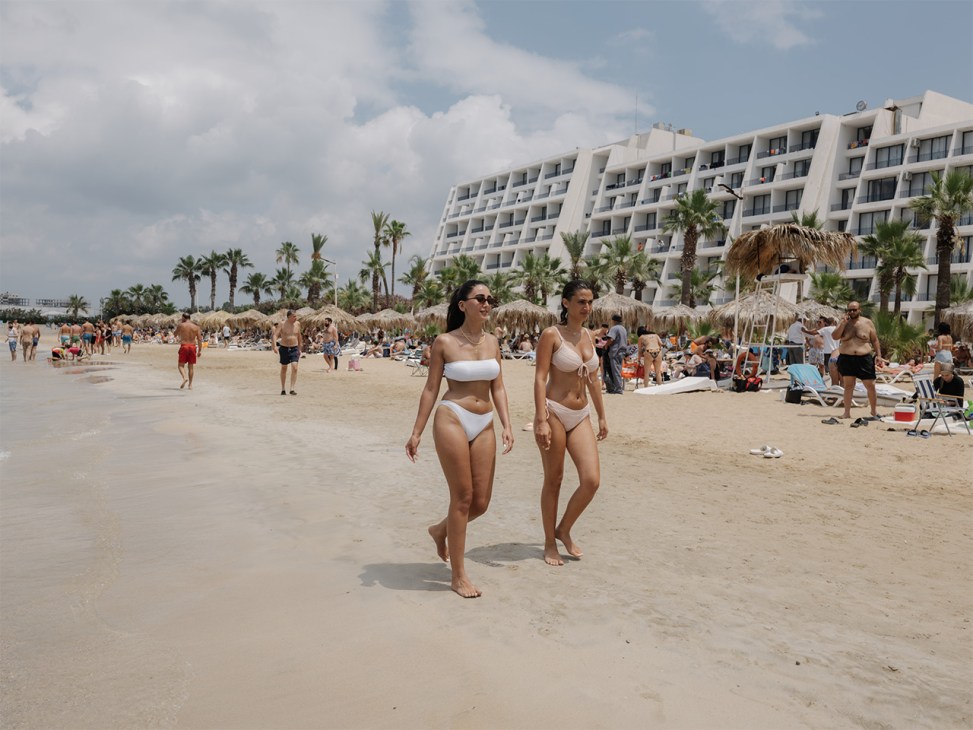
The official answer for how this all works lies in a very Syrian compromise. In June 2025 the tourism ministry issued rules requiring women to wear burkinis or other modest swimwear at public beaches and pools. Western-style ones, however, are permitted at private resorts and luxury hotels. In Latakia, the rules visibly differ from one beach to the next, even when they’re side by side. At the public beach, families arrive with plastic tubs of food, bags of bread and flasks of tea. Women huddle in groups underneath umbrellas, many of them covered in loose clothing and headscarves, while men wade into the sea in below-the-knee shorts.
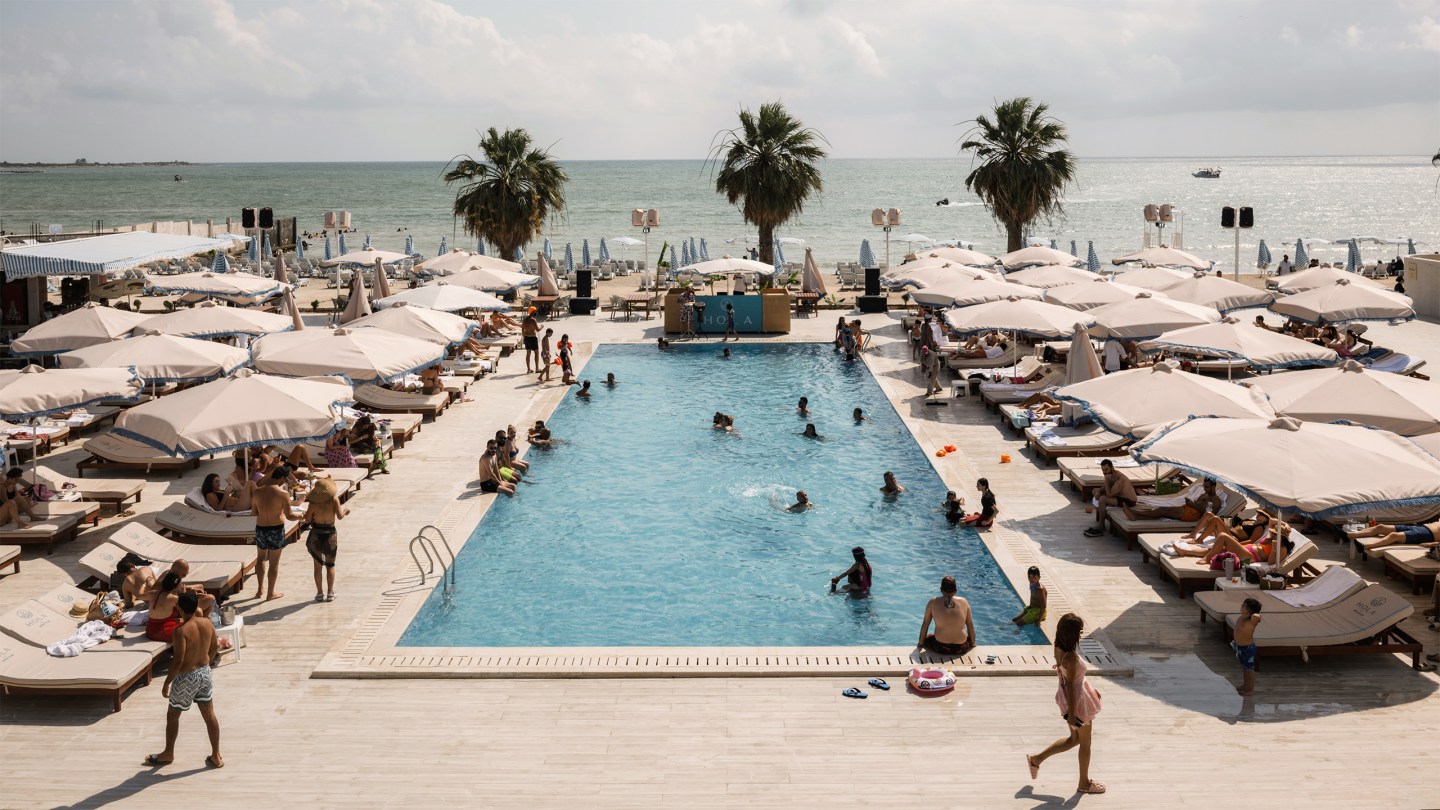
“It’s very beautiful,” one woman tells Monocle, drawing deeply on her shisha. “It’s mainly Arabs who come here, not really Europeans. We hope that tourism keeps growing, especially from outside.” Around her is a home-cooked feast for a wedding party; the sand is strewn with rubbish bags, as children weave between deckchairs. This is one side of Latakia: affordable, conservative, sociable and good humoured. Right next to this, on the aspirationally named Côte d’Azur Road, is another. We arrive on Hola beach club’s opening day to a soundtrack of Arabic club hits and the din of a pool party. More than 300 people have turned up for the first day. It’s polished but not precious – an “affordable fancy beach club”, as its owner, Manaf Kaddour, puts it while showing us around the spa, shops, beauty salon, gym and rooftop nightclub.


“Since the liberation of Syria, many local and international investors have been planning to enter the Syrian tourism market,” says Kaddour. “The faster you enter, the greater the results.” What surprises him most is not demand but the lack of obstruction to his Westernised plans. The old bureaucracy has not disappeared, he says, and banking still needs reform, but there are “no more worries about bribes or internal interference in your business. Latakia is a virgin market.”
The entrance fee for private beach clubs of this kind is about €4 for children and €9 for adults, many of whom travel here from Damascus, Aleppo and Idlib. Abdul Wahed Daboul – the general manager of Afamia Hotel Resort, formerly part of the Rotana group – feels that he’s in the right place at the right time. “Latakia is completely different to the rest of Syria,” he tells Monocle. “Here, people are free and open-minded. This is where they come to enjoy the beach, have a drink and not worry.” On his desk is a picture of him with Al-Sharaa.
Not worrying is easier said than done, though, and Latakia isn’t entirely carefree. The tourism police, created by the new government, is part of an ongoing negotiation. Though they’re not an ominous presence on our visit, officers in deep-blue uniforms patrol beaches and tourist sites. Their role is slightly unclear: they’re not a morality police and are meant to offer security for people and businesses. According to its chief, Osama Marandi, the force in Latakia numbers 225 officers, including 50 women. “Welcome to the new Syria,” he says, with practised warmth.
Female officer Rama Ghanem was once a schoolteacher but jumped at the chance to join the tourism police to help her country and home city grow. “Old Syria was beautiful but now it’s changing for the better. There used to be no rule; now there is. This is our Syria, the people’s Syria. Before it was not.”


The laws are mostly clear. As well as new regulations promoting modesty and banning alcohol on public beaches, there are restrictions on groups of men in some areas – an attempt to keep beaches family-friendly and reduce harassment. “We don’t have a problem with bikinis,” says the tourism police chief. Ghanem quickly clarifies. “They’re allowed and we welcome it, as does the government – just not in public spaces,” she says. Though some things remain in flux, the direction of travel is encouraging, says Ghanem. “People from Aleppo and Idlib wouldn’t come here because of the previous regime,” she says. “Now they can visit all of the historic places. This is freedom.”
Caretaker Ilyas Karkhour guides us through the Virgin Mary Armenian Church, an 820-year-old stone sanctuary tucked into a side street in the city centre. Latakia’s centre is full of cultural treasures. There are churches beside mosques; shopkeepers who slip between Arabic and Armenian; Alawites, Sunnis and Christians living side by side. Back on the beach, the question of cosmopolitanism comes up again. “The mix of cultures and religions has been the essence of Syria from the beginning,” says Caroline Chrakiam, as we disturb her from her siesta on Blue Beach. “For now, we are waiting and seeing.”
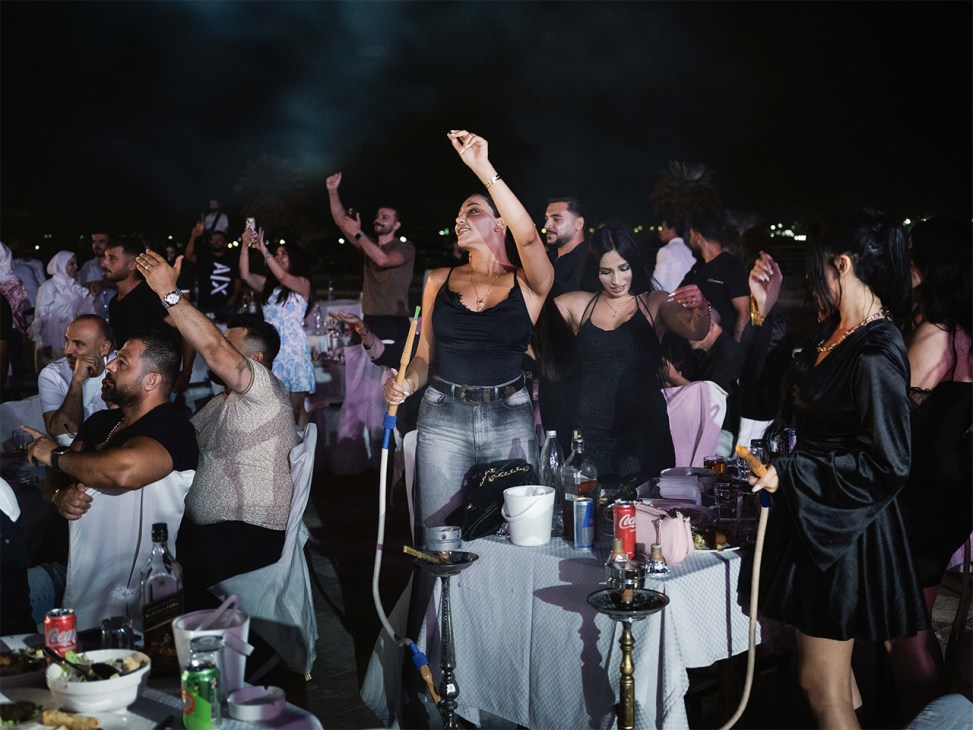
“Wait and see” might as well be the coast’s unofficial slogan. Chrakiam says that there’s hope and freedom but warns against confusing either with certainty. A friend on the sunlounger next to her who has returned to Latakia from the UAE says that the Gulf was “our safe haven during the conflict – our shield”. But here, her family still worries when she goes to the beach and remembers the curfews and anxiety of a few short years ago. “There is still a little bit of fear,” says another Latakian called Kanz, who chooses not to share his surname. “We need time to fully trust these new guys and for them to fully accept who we are.”
On America Street, a predominantly Christian area, the bars begin to fill after the sun sets. At Abu Ghassan Pub, there’s football on. High tables are tightly packed and loud conversations compete with the match commentary. At one point, the bar goes dark: a power cut. Nobody flinches. Karim Morcos, a Latakia resident, shrugs and says that temporary shutdowns are less frequent than they were before, when the electricity sometimes stayed off for hours.
As we leave the hubbub of the pub, we spot a red cap on a shelf. The slogan reads: “Make Syria Great Again”. It’s a joke, of course, but perhaps also a little prayer.
Tourism in Syria
During Donald Trump’s Gulf visit in 2025, the US announced its decision to lift sanctions on Syria. This helped to open up a path to recovery and attracting capital. Last year, Syria signed tourism investment contracts worth about €1.3bn, for projects including hotels, resorts, entertainment and the rehabilitation of historic areas. Many in Lakatia hope that this will mean the arrival of Gulf-backed hotels, renovated resorts, better roads, cleaner beaches and new visitors arriving who can see Syria less as a warzone than a summer destination.
Latakia: Key information
Credit cards generally aren’t accepted so carry cash (both US dollars and Syrian pounds). Tourist visas can be bought on arrival (€130 for UK and European passport holders, €175 for Americans and about €40 for most other countries, such as Turkey and the Gulf states). Aleppo International Airport is the closest hub to Latakia; taxis take two-and-a-half hours and should cost no more than €90. Blue Beach resort has the best stretch of sand but gets busy at weekends. Afamia Hotel Resort’s accommodation is safe, clean and comfortable but perhaps not to the five-star standard that its promotional literature suggests. Visit Souq al-Safan and hidden gems such as X Public House and Radio Latakia. The corniche is bustling and is home to busy markets throughout the week. Latakians head to the beach on Fridays, meaning that most places are shut throughout the day. Away from the seafront, historical Ottoman sites include Ugarit, an ancient archaeological site dating back to 6,000 BCE. There’s also Qalaat Sahyun, a Unesco-listed medieval fortress, and The National Museum.

This article is from Monocle’s Med, Mountains & More newspaper, on sale from 31 July. Subscribers will receive a printed edition including a magazine supplement as part of their subscription. Not a subscriber yet? Purchase a copy of the newspaper here or subscribe today to receive it as part of your package.