How exploring the death-care industry brought Anselm Chan the highest-grossing film in Hong Kong movie history
Chan explains how a personal loss inspired him to make the highest-grossing film in Hong Kong history and what it will take for the local industry to usher in a new golden age.
Anselm Chan had modest hopes for his film The Last Dance, a 2024 feature about Hong Kong’s death-care industry that he wrote and directed. It tells the story of a wedding celebrant-turned-funeral director – perhaps a symbolic career pivot in an economic downturn – and doesn’t exactly follow the formula of popular cinema.
Most of The Last Dance is set in and around a large funeral parlour in a gritty part of Kowloon. The story unfolds in morgues, crematoriums and a coffin shop, revealing a side of the city that few people see (and which many fear seeing at all). It tackles taboos head on, questioning widely held preconceptions, as well as specific rules about who can and cannot conduct Taoist funeral rites.
Chan’s film struck a chord with viewers. It broke box-office records on its opening day and went on to become the highest-grossing film in Hong Kong history, attracting audiences in mainland China, Taiwan and beyond. More than two million seats were sold in Hong Kong alone. Who says that the streamers are killing cinema?
“Since the coronavirus pandemic, Hong Kongers have experienced a lot of loss,” says Chan by way of explanation for the film’s broad appeal. “Many people who left before it all started couldn’t return to say goodbye to their loved ones. This movie made them feel like they could participate in something.”
We’re at the offices of Emperor Motion Pictures in Wan Chai. The production company’s owner, Emperor Group, is a key pillar of the contemporary Hong Kong film industry, funding and distributing commercial movies as well as operating a chain of cinemas and nurturing up-and-coming talent. Chan is part of a generation of homegrown filmmakers in their thirties and forties who are proving that great storytelling and cinematography can go hand in hand with commercial success.
Two of the region’s most successful crime dramas of recent years were co-produced by Emperor: the 2018 Chow Yun-Fat vehicle Project Gutenberg and The Goldfinger (2023), starring celebrated actors Tony Leung and Andy Lau. Their posters in the corridors at the company’s headquarters have now been joined by those for The Last Dance, placing Chan and his work firmly among the city’s cinematic pantheon.
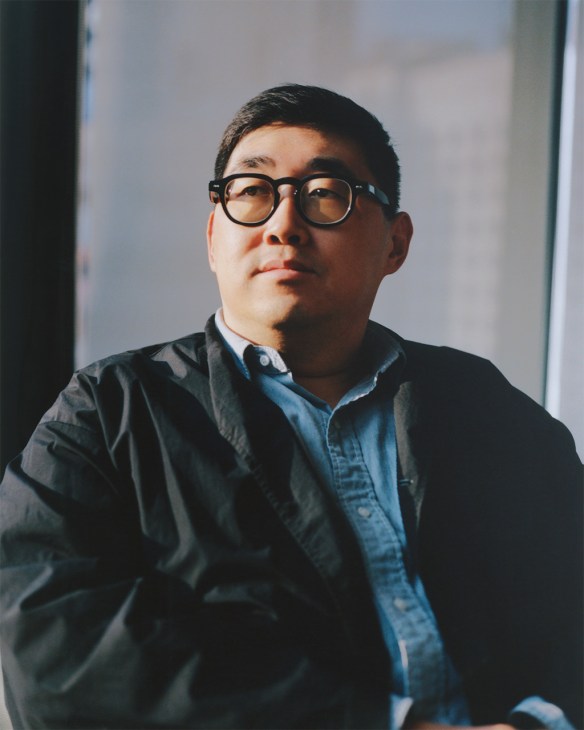
However, he is blunt in his assessment of the current state of the art. “Hong Kong films are not as good as they used to be,” he says from behind thick, black-rimmed glasses, citing a shrinking industry, loss of talent and directors who rely on tired formulas. In the age of Netflix and other streaming services, people have more choice than ever. But Chan doesn’t think that the issue is that people are too easily distracted; instead, he believes that viewers everywhere are getting more, not less, sophisticated. “I need to earn the audience’s dollar. Why should they see my film instead of The Avengers when the ticket costs the same?” The rhetorical question hangs in the air for a few moments before he smiles.
On a typical day, Chan goes to bed at 06.00 or 07.00 in the morning and rises in the afternoon. After meditating at home, he walks to his studio in Kowloon Bay near the old Kai Tak airport. He eats one meal a day, usually a bowl of fishball noodle soup from a local café. He fits his own trips to the cinema around watching Arsenal football games and visits to his local Buddhist temple. His knowledge of filmmaking is impressive. “I absolutely have to watch films at the cinema,” he says, before quickly citing Peter Chan, Ann Hui, Johnnie To and Wong Kar-Wai as his favourite directors.
Chan grew up as a latchkey kid in a tong lau – a walk-up tenement apartment – in the industrial neighbourhood of San Po Kong. His parents met while working at a sand factory, though his father later became a seafarer and spent most of every year away from Hong Kong, working on ships bound for North America. At home alone, Chan devoured films on VHS tape; he particularly loved classics such as The Godfather and Schindler’s List. On his mother’s days off, they would go to see the Chinese opera together.
After graduating from high school, he landed his dream job commentating on horse racing for Hong Kong’s public television broadcaster, while writing for racing magazines on the side. Just as the TV work tailed off, director and producer Wong Jing asked Chan to work as a consultant on a show that he was developing about horse racing. It was a lucky gig that opened the door to a yearslong career as a screenwriter, creating comedies for television and film.
Chan aspired to write and direct his own feature-length dramas but his screenplays were repeatedly turned down by studio executives, who saw him as a “comedy guy”, he says. “I was getting a bit annoyed. Then I realised that comedy was my ticket to becoming a director.” So Chan and his partner wrote a fresh screenplay in two weeks. “I asked myself what I was most afraid of,” he adds with a smile. “The answer was marriage.” The movie Ready o/r Knot, about a long-term couple deciding whether they should get hitched, was greenlit immediately and released in 2021.
It was while preparing that film’s sequel that Chan received some terrible news: his maternal grandmother, who had helped to raise him, had been diagnosed with late-stage cancer. She died on the first day of production and, since visitors were restricted at hospitals during the pandemic, she was alone. Unable to properly say goodbye to her, Chan became depressed. “The more time that we spend with people, the closer we become. But the irony is that our time together is actually running out,” he says. “These are the stupid rules of the game. Why do we have to go through this?”
Propelled by such questions – and perhaps a search for meaning – Chan began to research end-of-life care. He reconnected with a friend who works in the funeral business and was struck by how matter-of-factly he and his colleagues would speak about death. For a year and a half, Chan shadowed staff members at a funeral parlour, after which he finished writing the screenplay that became The Last Dance.
So how does life after the death industry look for Hong Kong’s best young director? Chan says that he is developing a historical drama set in 1960s Hong Kong that explores polygamy, which he informs Monocle was both legal and widely practised here until 1971. His leading men from The Last Dance, Dayo Wong and Michael Hui, have signed on to the project. But has success changed Chan’s idea of his work? Not a bit. “A director’s job?” he says. “It’s to have a point of view.”
Ten top Hong Kong films from the past decade
Hong Kong’s reputation for filmmaking has long shaped how it is seen internationally. Here are 10 picks that offer a close-up on the city today.


This article is from Monocle’s newspaper The Hong Kong Correspondent, which is available to purchase now. In its pages we meet the entrepreneurs going against the grain, survey fresh projects that are reshaping Central and give you a taste of what the fashionable Hong Konger is wearing about town. Plus: Monocle’s favourite places to eat, drink and be merry. Purchase your copy today.