Fondazione ITS illuminates fashion’s overlooked players with its exhibition ‘Exposure – The Power of Being Seen’
A new exhibition in Italy sheds light on the often under-appreciated influence of stylists. The duo behind the show guide Monocle through a hidden world where high fashion meets politics and pop culture.
It is thought that the first professional stylist was Marie Jeanne “Rose” Bertin, who ran a boutique in 18th-century Paris. Her work came to the attention of the French queen, Marie-Antoinette, who was disillusioned with the rigid sartorial protocol of the court of Versailles and looked to Bertin to decode and subvert outdated aristocratic etiquette. With her emphasis on high jewellery, pouf hairstyles and ruffled collars, Bertin laid the foundations for what would become fêted as Parisian haute couture. Her early appreciation of the connection between high fashion and high society demonstrates how styling was born as much from politics as aesthetics. It’s little wonder that Bertin was known as the ministre des modes – the minister of fashion.
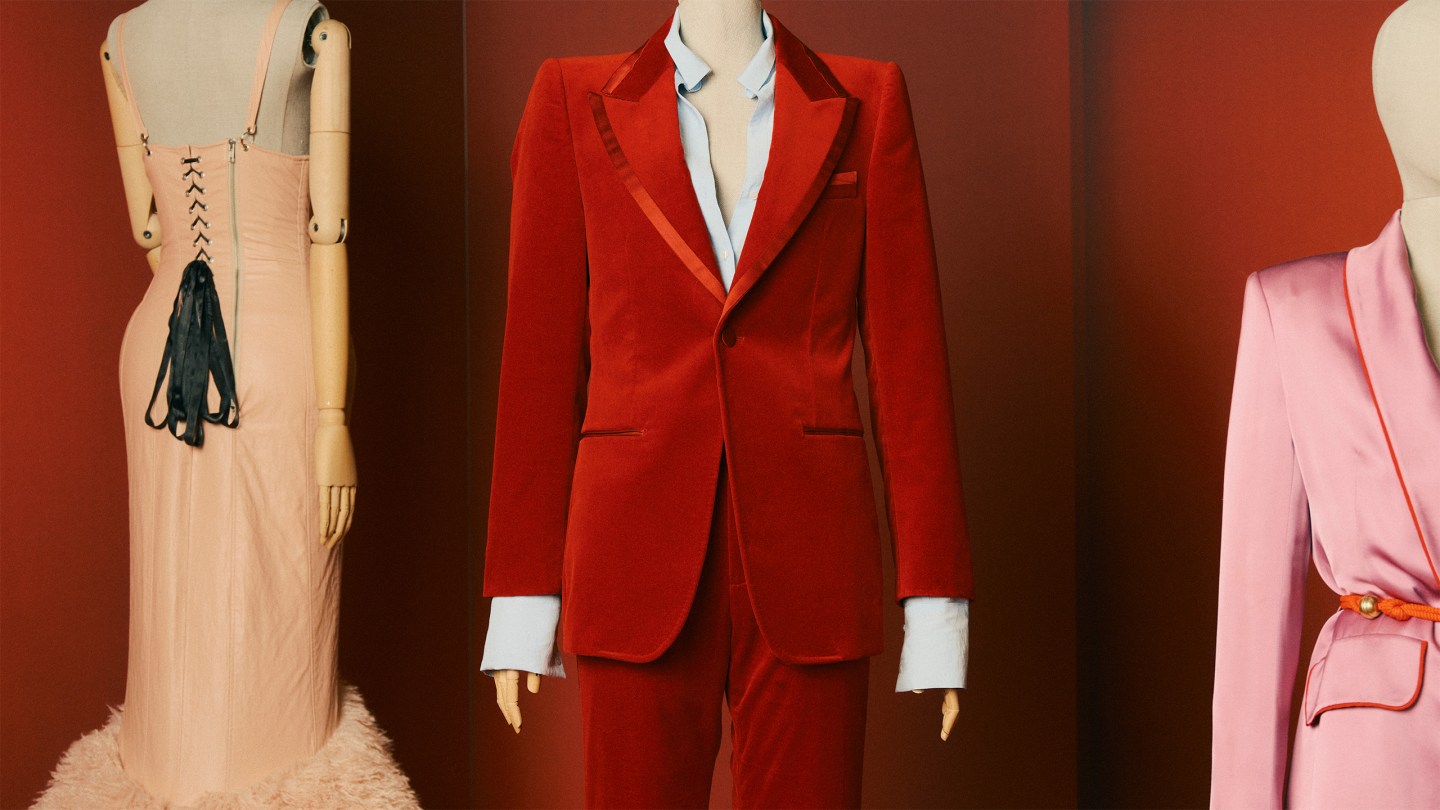
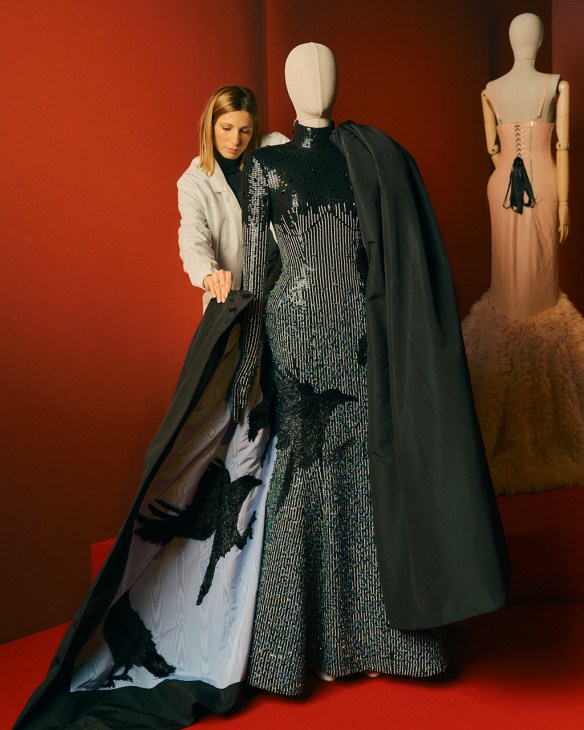
The importance of styling in popular culture is highlighted by a new exhibition in Trieste, from Marie-Antoinette’s boned corsets to Gwyneth Paltrow’s ruby-velvet suit worn at the 1996 MTV Video Music Awards. Exposure – The Power of Being Seen is curated by Belgian stylist Tom Eerebout at Fondazione ITS (International Talent Support), an archive that includes Italy’s first contemporary fashion museum. Eerebout made his name working with the likes of Lady Gaga, Kylie Minogue and Rita Ora. He styled Swedish actress Rebecca Ferguson for the Met Gala in 2024 when she wore a dress and cape designed by Thom Browne, embroidered with ravens – a motif inspired by Edgar Allan Poe – and 60,000 Swarovski crystals. He also chose Lady Gaga’s enormous pearlescent seashell umbrella by UK designer Luke Brooks, which she held for mere seconds as she left a London hotel in 2013 wearing a geisha-inspired outfit. “She handed it to me before she got into a taxi and it has been in my house ever since,” says Eerebout.
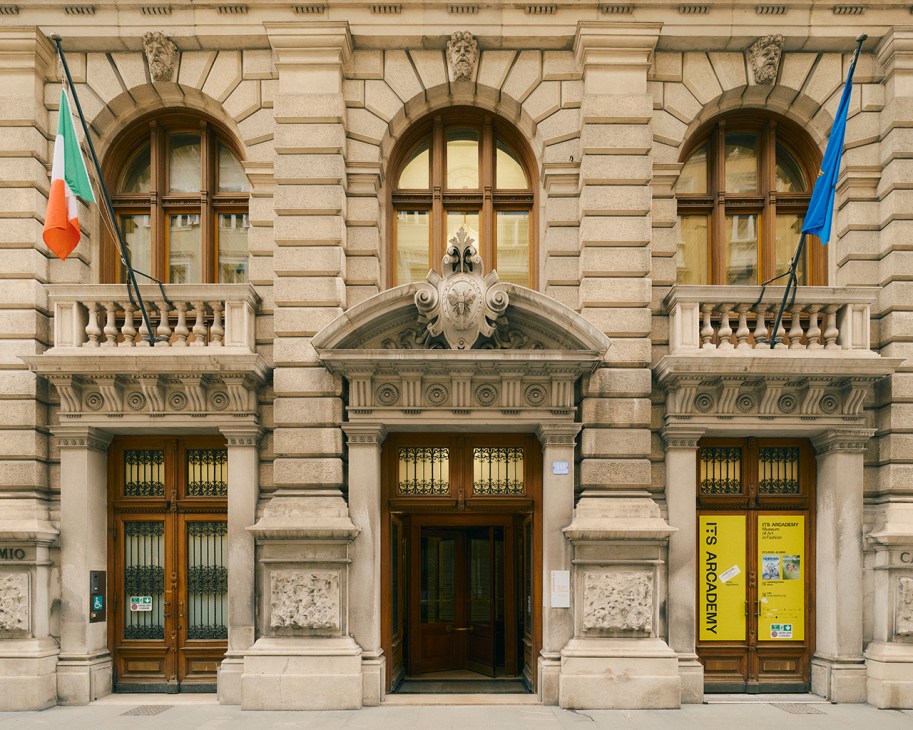
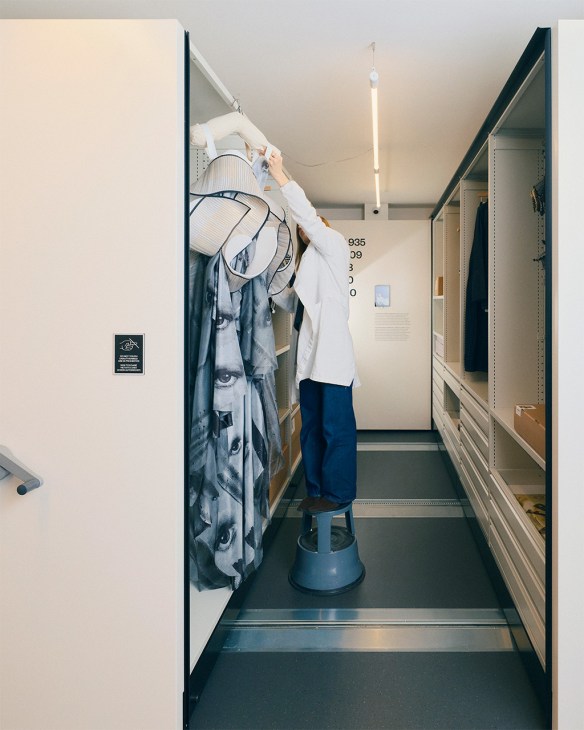
When we arrive at Fondazione ITS for a sneak preview of the exhibition, we are greeted by ITS founder, Barbara Franchin. As the creator of fashion talent competition ITS Contest, Franchin has nurtured the likes of French-Belgian designer Matthieu Blazy, the current creative director of Chanel, and Georgian designer Demna, the creative director of Gucci (she has one of his bespoke pieces in the ITS archive). Since 2002 the foundation has supported more than 700 designers; it invites 10 shortlisted designers every year to Trieste for a 10-day residency, giving them €10,000 each. With this new exhibition, Franchin has decided to unpick the little-known world of styling and celebrate its influence on today’s culture.
“Styling is a form of storytelling,” says Eerebout, who explains that he considered a career in film directing before realising that he could conjure cinematic worlds on the catwalk instead. “Fashion alone is clothing. Styling is what makes it human.” He was also interested in the way that celebrities command attention through their outfits. “In an era of increasing profanity, celebrities are the new saints,” he adds during a tour of the exhibition. “These are the icons to whom we now look for guidance and my choices can make or break them.”


Until recently, however, Eerebout’s craft was under-appreciated. “The photographer used to be at the top of the call sheet,” he says, recalling that actors once dressed themselves for the Oscars. “It was only in the 1980s and 1990s that stylists and creative directors started to become more visible.”
With this exhibition, Eerebout set out to shine a light on a process that usually goes unseen. “I wanted to show my grandma what my day-to-day life looks like,” he says, while admitting that his vocation is often misunderstood. Franchin agrees, adding, “People think of the stylist as someone in a superficial profession, like a personal shopper – only interested in the outer layer.”
Eerebout explains how the red carpet is only the culmination of their work. “It’s an uncomfortable and manufactured situation in which celebrities are gazed upon,” he says. But it is everything that leads up to that final moment that Franchin wants visitors to learn about in Exposure.
For Eerebout, the process begins with looking to muses for inspiration. For the exhibition, he has selected UK singer Harry Styles’s flamboyant jumpsuits and Icelandic singer-songwriter Björk’s spiky headpieces, designed by Japanese milliner Maiko Takeda. But it’s not just fashion that inspires Eerebout. “As stylists, we have to understand the zeitgeist,” he says.
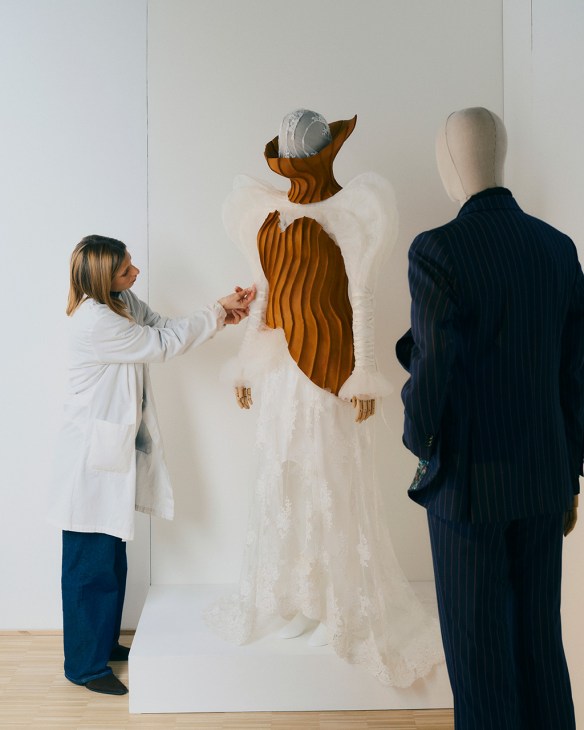
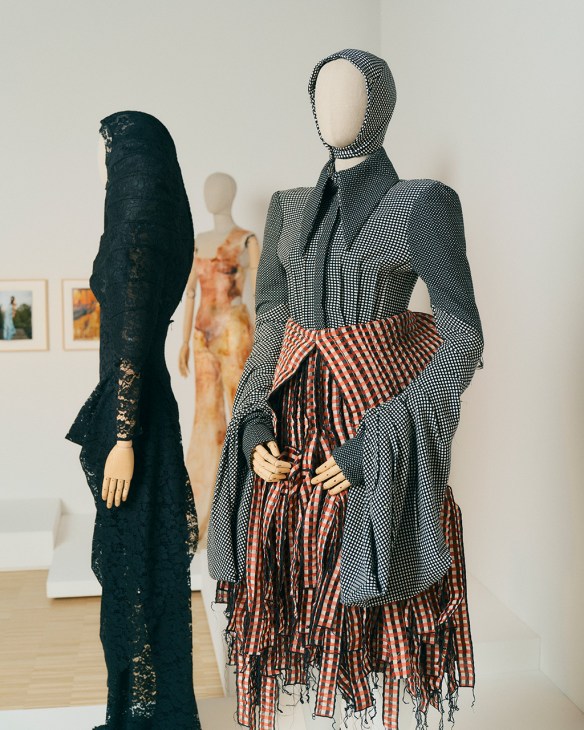
As well as knowing how politics trickles down into fashion – a bread-shaped handbag recently created for the 2026 ITS award parodies the idea of men as the default family breadwinners, for example – the Belgian stylist has an encyclopaedic knowledge of pop-culture references. “I look at subcultures, album covers and street fashion, as well as the intersections with architecture and engineering,” he says, motioning to a structured amber collar by German-Iranian designer Rebar Aziz (pictured above). “But the best way to understand societal references is by sitting in a café and watching the people walking past you. Everyone is a stylist in their own way.”
Looking at the Jean Paul Gaultier dress that Nicole Kidman wore at the 2011 Grammy Awards – a fusion of 19th-century Parisian cabaret with the spirit of London punk – or Maneskin’s glam-rock black-lace top and leather trousers, designed by Christian Boara and on display in the exibition, Eerebout explains that he thinks of styling as an art form that preserves a moment in time. “I never regret a look, because it said something that was worth hearing at the time,” he says.
And, of course, there are the all-important accessories. “A pair of gloves can make or break an outfit,” says Eerebout, motioning to an elegant black leather Schiaparelli pair featuring the maison’s signature gold lock.


Perhaps the most misunderstood part of a stylist’s work, however, is in the final, less tangible stage. “Like modern alchemists, stylists work in the subtle intersection between anatomy and garment,” says Franchin. She is referring to how they create outfits with the wearer in mind, altering the appearance of bodies through small tweaks such as adding a slip underneath a dress to control how the material falls. It’s a reminder that styling is also a form of sculpting. “As a society, we introduce lots of little things to alter the way that our bodies look,” says Eerebout. “There’s a juxtaposition: we often express ourselves by looking like something else.”
Interrogating self expression feels apt in a city that has had to work hard to attract leading fashion talent. “In Trieste, we’re removed from Europe’s fashion capitals,” says Franchin. But that can also be a benefit. “We’re right in the centre of the continent and at a natural crossroads. Fashion here is less influenced by traditional ways of thinking.”
The ITS founder is anchored to her hometown. When the foundation was offered space in Bilbao for its growing archive, she firmly rejected it. “We were born in Trieste and we’ll stay in Trieste,” she says. It seems that this city, with its outsized yet under-the-radar cultural cachet, might just be the perfect place to explain the role of the stylist to the world.
‘Exposure – The Power of Being Seen, from Harry Styles to Lady Gaga’ runs from 26 March 2026 until 3 January 2027.
itsweb.org
Fondazione ITS in numbers
2002: ITS Contest is established
74: Number of countries from which ITS received applications for the 2026 ITS Contest
15,000: Designers who ITS has scouted
1,318: Garments currently held by the ITS archive
50: Number of new pieces that ITS receives a year