‘The mistakes are usually the best part’: Jack White on creating real art in a digital world
The prolific musician and artist’s first major solo show, ‘These Thoughts May Disappear’, is now on view at Newport Street Gallery in London.
Long before The White Stripes shook the music world with “Seven Nation Army”, Jack White was remaking furniture in Detroit. From the age of 15, the band’s singer and guitarist began honing his upholstery skills and exploring “hardware-store art” – both deeply rooted in the American Motor City’s industrial history and urban decay. Though White went on to travel the world with the Stripes and several other bands, his tools were never far out of reach.
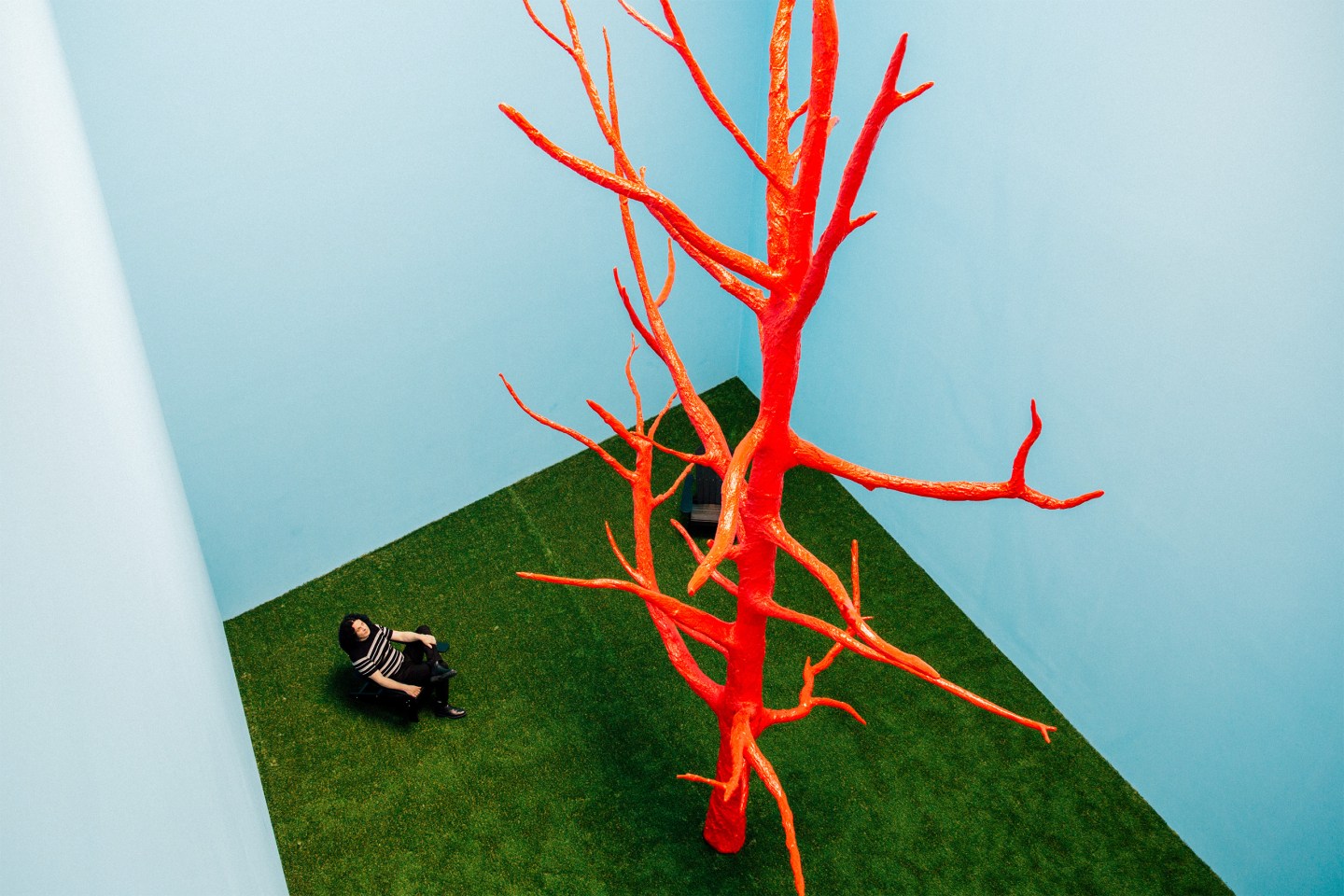
The multidisciplinary artist continued to make furniture, sculptures and interactive works out of his workshops in Detroit and Tennessee for friends and family. Yet, despite decades in the spotlight, White’s prodigious portfolio has never been displayed in a gallery. These Thoughts May Disappear at Damien Hirst’s Newport Street Gallery in London connects craftsmanship, industrial materials and the visual language of the American Midwest while exploring the intersection of art, design and music production.
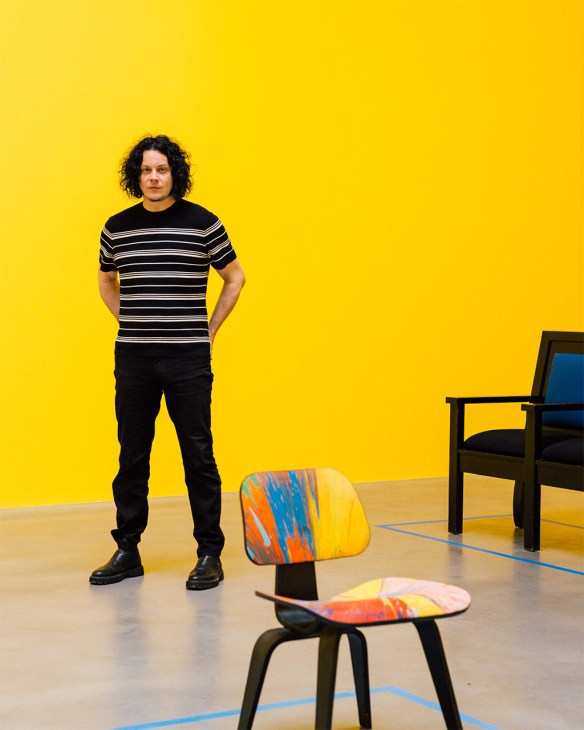
Monocle joined White at Newport Street Gallery for a tour of the show and to hear more about his process, why mistakes are important and how he wants viewers to have a “visceral engagement” with his work.
This conversation has been edited for clarity and length. Listen to the full conversation on The Big Interview.
Your first trade was upholstery. What do you think the relationship is between your craft and your art?
[Upholstery] is an art form. In upholstery, you’re working with fabrics and padding. You’re working with antiques and refinishing wood. So you have to be a carpenter and a wood finisher. My take [is that upholstery is] half sculpture and half functioning furniture.
Over here [is a piece called] ‘Sonic Temple’. A lot of people might just see a nice bench with some blue mohair. This was actually a bench from a Masonic Temple in the US. I knocked it apart, refinished the wood and reglued it together as a gift for a friend of mine. You can plug into it and play instruments through it, but it does strange things to the sound. Masons, with all their secrets – I hid a Masonic sword under the wood. Most people who walk by would just think it was a bench. That’s the beauty of the trade.
You’re a long-standing advocate for vinyl. Are you using art and sculpture as a move away from digitisation?
Anytime you can get something real in your hands, it takes on another level. There’s a reverential nature to [vinyl]. It’s the same as when you go to a movie theatre, you close the doors and turn off the lights: you’re reverential to the artform. People put their phones away and get involved. The best way to get involved in music is dropping a needle, and you actually see [the record] spinning. It’s magical.
There are imperfections in your art, and you often celebrate imperfections in music. Why is that?
The mistakes are usually the best part. We’re living in an age where everything is computerised and they’re trying to remove every mistake. We have now had decades of CGI, or the idea of music and Pro Tools: where on a computer, they’ve clicked out every mistake and they’ve made [the song] perfectly in tune and perfectly in the tempo, perfect from the beginning to the end. That doesn’t happen in real life.
You’ve been creating work since the 1990s. Why is 2026 the time to put it out to the public?
Nobody encouraged me until Damien [Hirst] did. I showed him a few pictures of my sculptures, and he said, ‘When’s your next show?’ I said, ‘I’ve never done a show.’ Then Damien said, ‘Come to my gallery for a show.’ That was four years ago. I found a lot of these pieces in my attic and in my upholstery shop. I refurbished all the older ones from the 1990s, and then [completed] a lot more new ones in the past couple of years. I’ve created so many [pieces] that it has taken up all six rooms of this gallery.


We’re looking at 30 years between the pieces of art, and yet you can tell they’re by the same artist. Have you kept a unique style throughout the years?
I don’t think too hard about things – if I don’t put too much effort in trying too hard, style comes out. That’s true for most artists, you recognise their style because it’s coming from their gut. If you think too hard about it, then you start losing your style. It becomes more mediocre or more pedestrian. If you just go with your gut and make quick decisions, that’s when your style pops out. You can’t help it.
Let’s talk about found art. When is a piece of found art finished? And when do you know that something you’ve found is a piece of art?
You need to have a visceral engagement with it as soon as you see something. You can make up the most incredible story but if people look at [the piece] and it doesn’t engage them, then it doesn’t work. You’re trying to share something with other people. I may see something interesting but other people might see something different. You never know what people like.
There are so many different pieces in this show: sculpture, art, furniture. You can clearly lead in different fields but is there a medium that you prefer to work in?
When it comes to music, I like playing the drums. That’s my favourite part. When it comes to making sculptures and stuff, I enjoy furniture-based things that are rescued from the rubbish heap, as you say over here. Finding beauty [in something that] was one step away from a landfill is something that I am really attracted to.
Your show is going to be open until September in London. People are going to respond differently to different pieces – what is the best response you could get from someone?
Oh, man. Just that they get something out of it. If it brings a tear to their eye or it makes them angry, or they think it’s bullshit or ridiculous, or it makes them laugh. If I listen to Captain Beefheart, sometimes I’m brought to tears by how beautiful it is. Other times I’m laughing at how ridiculous and absurd [it is]. He gets lots of different reactions.
Final question: what does the title of your exhibition, ‘These Thoughts May Disappear’, mean?
I wrote that in chalk on a piece of fabric that I was using to cover a cushion. The idea being that every time someone sits on that cushion, the chalk is going to be wiped away a little bit, and maybe by the time it’s reupholstered 20 to 30 years from now, the whole message would have disappeared. Everything you say to somebody, they might remember it and they might not.
That’s the danger when you create: you go on stage, or you put something in a book, or you paint something. You’re trying to share with other human beings and you might not succeed at it. You might fall flat on your face, you might disappear. We all die, and they say it only takes two generations for someone to be forgotten. That can be a scary thought, or it could be a thrilling challenge to make the best of yourself.