‘We can’t make a newspaper for people with heart problems’: Folha de São Paulo defends independent journalism
Folha de S Paulo has been one of Brazil’s leading daily newspapers for over a century. Editor in chief Sérgio Dávila discusses its evolution, the importance of diversity and why AI won’t replace journalists.
As caterers clear the plates from a lunch in a glass-fronted conference room at Folha de São Paulo’s offices, Sérgio Dávila strides across the editorial department. The editor in chief is seeing a guest – Brazil’s attorney general, Jorge Messias – out to the lifts.
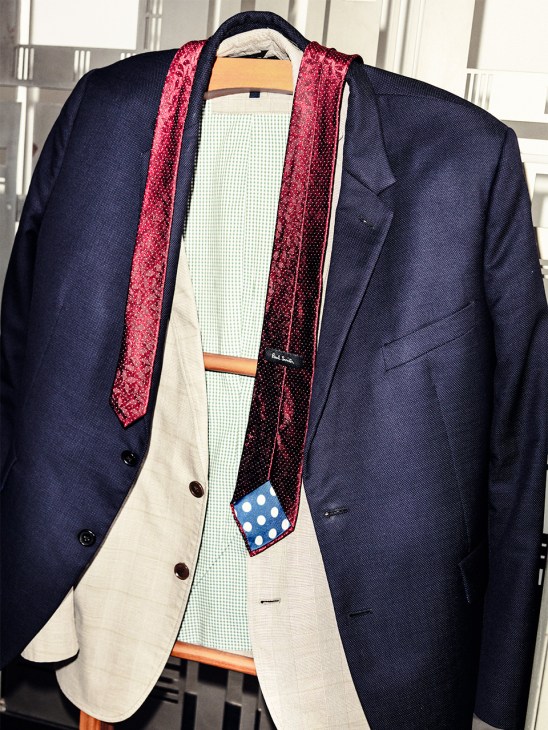
Moments later, Dávila reappears, having changed out of a suit and tie into his dad-chic uniform of a dark-navy cardigan and black slacks. He bought the brown Hugo Boss brogues that he’s wearing at an airport 10 years ago, when he realised that he had embarked on a work trip wearing trainers. Pointing to a suitcase next to his desk, he says that he will be back on a plane this evening, flying to the US to watch Brazil play in the World Cup.
Dávila is used to politicians courting him but this year has been busier than usual, with October’s presidential election looming. It promises to be a tense contest. President Luiz Inácio Lula da Silva is seeking a fourth nonconsecutive term. His main opponent, Flávio Bolsonaro, is the son of far-right former president Jair, who was jailed for orchestrating a coup attempt in 2022.


The stories dominating Folha’s front pages have recently focused on corruption scandals that have implicated the Bolsonaro family and a politician from Lula’s Workers’ Party. The election could go either way for Dávila, that means scrutinising both sides equally.
“A former minister once told me that if you’re a politician, to be part of a story that Folha is running is like falling from a motorcycle,” he says. “You’ll get hurt. You just have to choose the best angle and hope that you’re not left with too many bruises. It doesn’t matter if the government is left or right wing – we’re independent.”
The editor in chief explains how Brazilians have different nicknames for the newspaper, depending on their political leanings. “If you’re from the right, we are ‘Foice de S Paulo’, a pun on the Soviet hammer and sickle,” he says. “The left calls us ‘Falha de S Paulo’ [‘São Paulo Failing’].”
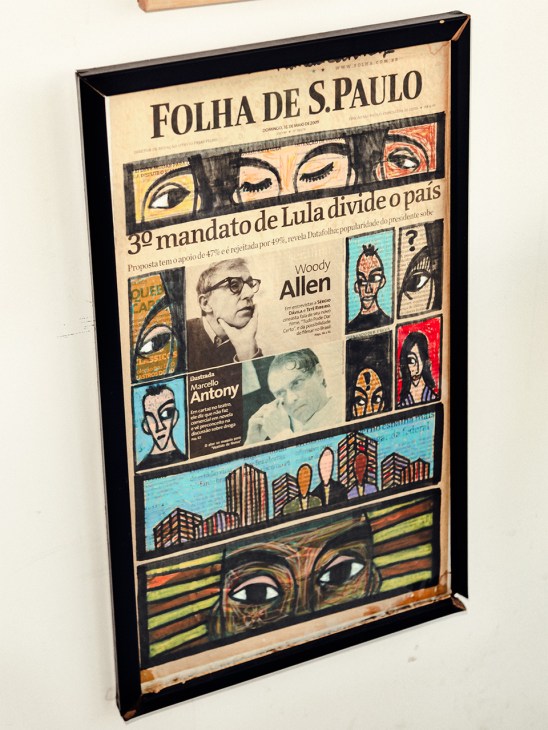
For the past 64 years, Folha has been owned by the Frias family, a merchant dynasty whose wealth came from property and financial services in the 20th century. Octávio Frias de Oliveira, who died in 2007, shepherded the daily through Brazil’s military dictatorship; the opinion pages disappeared during the regime’s most censorial years. In the 1980s the newspaper became a leading voice in the Diretas J campaign for the re-establishment of democracy.
Before he took the reins, in the early 1950s, Folha moved to its current headquarters in São Paulo’s frenetic downtown, where it shares offices with Datafolha, its sister polling company. The wider brand portfolio of Grupo Folha now includes UOL, the largest Portuguese-language internet portal, and digital-payments company PagBank. Pointing to this corporate diversification, Dávila says that it’s the only viable response to the technological revolutions of the past few decades. “Our profession always responds well to this kind of disruption,” he says. “This has been the case since Gutenberg invented the printing press.”
Over the course of 30 years, Dávila worked his way up the newspaper’s ranks, with roles ranging from editing the arts pages to Washington correspondent. But his true beginnings as a journalist, he says, came at the age of eight, when he was growing up as part of a large Paulistano Hispano-Portuguese-Italian family. “I would walk around parties asking my relatives to tell me gossip,” he says. “Then I’d go to my room, where I had a typewriter that my father had given me, and write up the stories and sell them to the rest of the family.”


His audience these days is a little wider. Folha de São Paulo is Brazil’s largest newspaper, with 875,579 subscribers, of which 10 per cent receive physical copies. Founded in 1921 as an alternative to the conservative coffee-baron press that once dominated the newsstands, today it leads more explicitly right-wing rivals O Estado and O Globo, which have 520,000 and 400,000 readers, respectively.
Dávila oversees a workforce comprising 330 journalists, in the publication’s open-plan office and abroad. Correspondents are based in Buenos Aires, New York, Washington, Berlin, Lisbon, Milan, Paris and Beijing. “We also have stringers in about 20 more places but we have to expand more into Africa and Asia,” says Dávila. On top of that is the pool of opinion writers, with 175 names on whom the editor can call to provide arguments for the columns that sit, rather unusually, at the beginning of the newspaper.
Dávila says that Folha’s team of columnists is the largest in the country. “They go from A to Z in terms of political views,” he says. “Whether the subject is soccer or euthanasia, you will always find an opinion in Folha that you approve of and one that you strongly disagree with.” It’s a formula that he inherited from Frias de Oliveira’s son, Otavio Frias Filho, his predecessor and mentor who died in 2018. “He used to say that we can’t make a newspaper for people with heart problems.”
Running such a publication in one of the world’s most social-media-addicted countries can be challenging, especially against the backdrop of the kind of culture wars that are affecting traditional media companies globally. The newspaper’s 5.5 million followers across Instagram and TikTok regularly watch Folha’s journalists on video; retaining the core values of the print edition on such platforms can be a challenge, says Dávila.
“It’s harder to do journalism for younger readers and with younger reporters, because Gen Z isn’t prepared for the kind of shock that we promote in terms of views and ideas,” he says. Yet he remains optimistic about the future and points to an annual trainee programme that he implemented in 2021, which aims to improve the ethnic diversity of the newspaper’s journalists in a country where more than half the population is black or mixed race. Before that, one survey found that 84 per cent of the stories published by Folha and its two main rivals were by white authors.There were 2,500 applicants in the first round, with 20 accepted.
Today’s edition includes a report on the inner workings of a century-old Afro-Brazilian religious festival, written by one of the former trainees. Dávila also highlights a recent story about the trend of people operating low-key burger restaurants from their homes in São Paulo’s poorer periphery. “That’s something that a journalist with a more traditional profile might never have known about,” he says.
Dávila is also far from pessimistic about AI. He’s rather more sanguine about its creeping use in the newsroom, calling it a “frenemy”. Folha now incorporates a team of 10 journalists in a department overseen by its new head of AI. How to use large language models effectively is one of three proficiencies on which potential new editorial recruits are tested – alongside their ability to ask sources the right questions, write in the newspaper’s formal Portuguese and video-savvy storytelling. “AI is a friend because it makes it far easier to be a journalist than when I started and an enemy because once again big tech is taking everything and doesn’t want to pay for anything,” says Dávila. He believes that as long as journalists keep looking for exclusives and breaking stories, Folha will ride out yet another technology revolution. “There’s no AI agent that can have lunch with a minister who talks about a lot of things off the record,” he says. “That’s journalism.”
Sérgio Dávila’s CV
- 1965: Born in São Paulo
- 1988: Graduates from Pontifícia Universidade Católica de São Paulo
- 1988 to 1993: Writes for ‘Playboy’ and ‘Veja São Paulo’
- 1993 to 1995: Joins ‘Folha de S Paulo’ as a reporter for weekly magazine ‘Revista da Folha’
- 1996 to 2000: Becomes editor of daily arts supplement ‘Illustrada’
- 2000 to 2010: Based in the US, Dávila covers events including 9/11 and Barack Obama’s first election
- 2003: Publishes book ‘Diário de Bagdá’, about his experience reporting on the Iraq war
- 2004 to 2005: Awarded Knight Foundation Fellowship at Stanford University
- 2010 to 2019: Returns to Brazil and appointed executive editor at ‘Folha de S Paulo’
- 2019: Assumes his current position of editor in chief