The recent White House ban risks alienating traditional media
The White House’s decision to muffle the voices of certain news channels has shone a light on the importance of traditional media for the public – and the president.
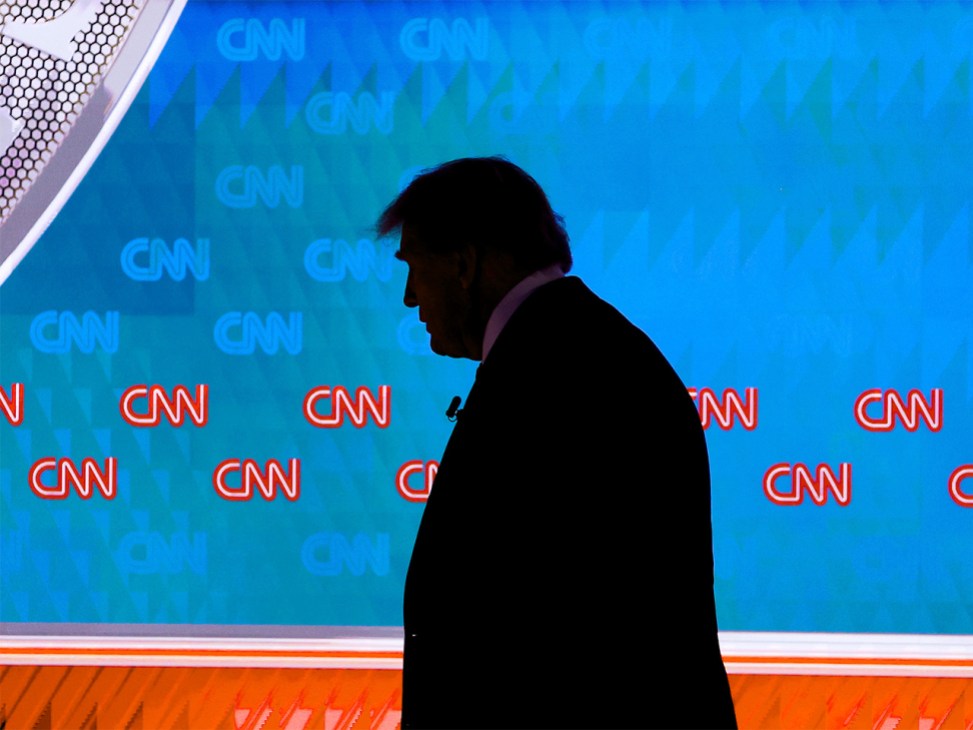
The normally hyper-competitive US news industry sounded like a trade union this week following the Trump administration’s decision to bar CNN, MS Now (formerly MSNBC) and Politico from the White House grounds. The two left-leaning cable news channels and the DC-insider digital news outlet “shouldn’t be able to constantly write or report FICTION and LIES”, wrote the president on his social-media platform. Even if some reporters were allowed to re-enter the White House yesterday, the debacle should spark a renewed confidence in traditional news gathering.
No specific recent incident sparked the eviction and in response the US’s five major TV news networks – ABC, CBS, CNN, NBC and Fox – collectively agreed to suspend pool coverage of White House events. When I tuned into National Public Radio’s coverage of the UN General Assembly on Tuesday, anchor Mary Louise Kelly pointedly told listeners that they would not hear Trump’s remarks “in solidarity with our fellow journalists”.
While rivals standing shoulder to shoulder might seem surprising – especially conservative outlet Fox News’ decision not to cross the picket line – a precedent had been set in 2009. During the financial crisis, the Obama administration sought to exclude Fox from interviews with the White House official who was overseeing the bailout programme. ABC, CBS, CNN and NBC closed ranks and declined to air those segments until Fox was allowed around the microphone.
Back then social media was in its infancy. Today the White House believes that it can shrug off a boycott. On Monday, Trump TV debuted on YouTube with round-the-clock coverage of Oval Office comings and goings. (As of Wednesday, viewership had peaked at about 8,500 – a figure just a few zeros shy of the millions who tune in to cable news networks every day.)
It might be tempting to write off the major TV networks, legacy daily newspapers and nationally syndicated radio stations amid a nimbler media landscape of streamers and their ilk. But this would ignore a vast infrastructure of studios, bureaux, broadcast booths, cameras, audio equipment and the people who run it all – from smart on-air anchors and bold-faced columnists to behind-the-scenes technicians and shift workers at printing presses. These professionals provide the raw material for the online commentariat and podcast hosts.
While a handful of the so-called “new media” landed coveted White House press credentials last year, livestreaming from the briefing room with a jury-rigged smartphone is still a far cry from on-the-ground reportage or the foresight from global correspondent networks. And when the presidential debates roll around in two years’ time, I guarantee that tens of millions of Americans will be tuning in to a legacy network, not Real America’s Voice or The Young Turks.
In a hotel last week, I channel-surfed between CNN and Fox. The former was fixated on a Russian oligarch who bankrolled Donald Trump Jr’s wedding in the Bahamas as symptomatic of the administration’s corruption. The latter trumpeted a federal fraud investigation into a Los Angeles housing scheme to pound Gavin Newsom’s record ahead of his expected presidential bid.
Did the breathless coverage of the other side’s foibles, with guests often speaking from their home offices rather than the studio, endear me to the on-screen reporting? Not particularly. But I found myself doing some further reading. Both stories were factual and I hadn’t come across either in my daily newspaper. As it happens, I went to sleep a more informed citizen.
Gregory Scruggs is Monocle’s Seattle correspondent. For more opinion, analysis and insight, subscribe to Monocle today.