A secret life in pictures
British photographer John Balsom discovered 7,000 pictures shot by his grandfather Percy S Waite in a box at a relative's house in Hampshire. The London-based amateur photographer captured an incredible mid-century moment pioneering colour.
My aunt had been sick for a while so, just before the first lockdown here in the UK, I drove my son 160km south from London to her home in Hampshire’s New Forest to say “hi” and see my cousin’s kids. It was over a cup of tea that my aunt, who has since sadly passed away, asked if I’d ever seen my grandfather’s photographs. My answer was a polite but intrigued “no”.
It was a freezing evening when we marched out to the garage with torches to drag the boxes back into the house. I started opening the crates at random and holding the transparencies up to the kitchen light. I was just flabbergasted by the quality that I instantly saw. The first picture that I pulled out showed a man at a fair. He was wearing a trilby and tie, smoking as the sunlight glints off his tiepin. I’d describe what I felt then as a sort of Vivian Maier moment [the previously unknown US photographer’s work was discovered at auction in 2007 and only posthumously gained international recognition]. It’s different, of course, but to me the discovery of my late grandfather Percy S Waite’s work felt similarly exhilarating.
Finding his photography archive was all-the-more magical for me because I have been a professional photographer for 25 years. I study the discipline all of the time and, honestly, I’m completely obsessive; I’m a hoarder and collector. I had also believed that I was the only artistic person in the family. My mother is a mathematician and my late grandfather had been a successful solicitor. I was dimly aware that he’d been an amateur photographer and an enthusiastic member of Enfield Camera Club in north London. He had even been known to host the occasional family slideshow. But before the discovery, I’d only ever seen a few prints scattered around and I had no idea how prolific he was. I wondered why his work hadn’t been mentioned to me before.
That evening, I drove home from Beaulieu in a haze. Hunched in the boot of my car were four trunks of camera rolls, transparencies, slides and dozens of black-and-white scrapbooks; about 7,000 pictures in total, many of them meticulously kept, cross-referenced and ink-labelled in my grandfather’s own fair hand. My drive back to London was under way but the journey to understanding his work and life was only just beginning. What followed would take me from his tough East End childhood, through Blitz-hit London and onto sunnier snapshots of postwar Paris, Bandol, Beirut and Cascais.
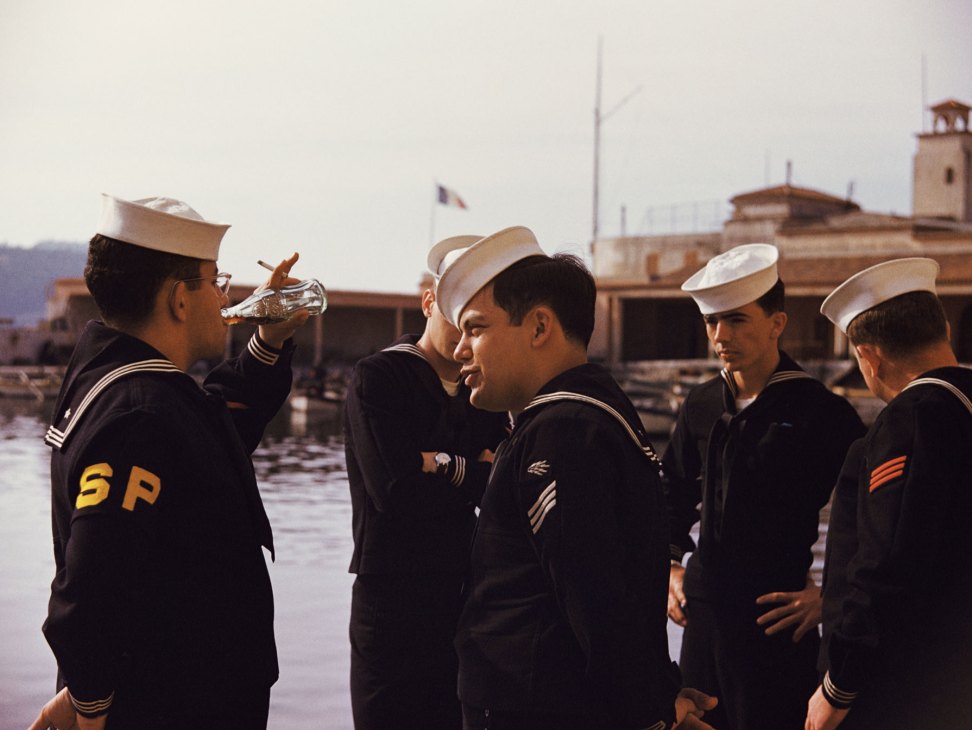
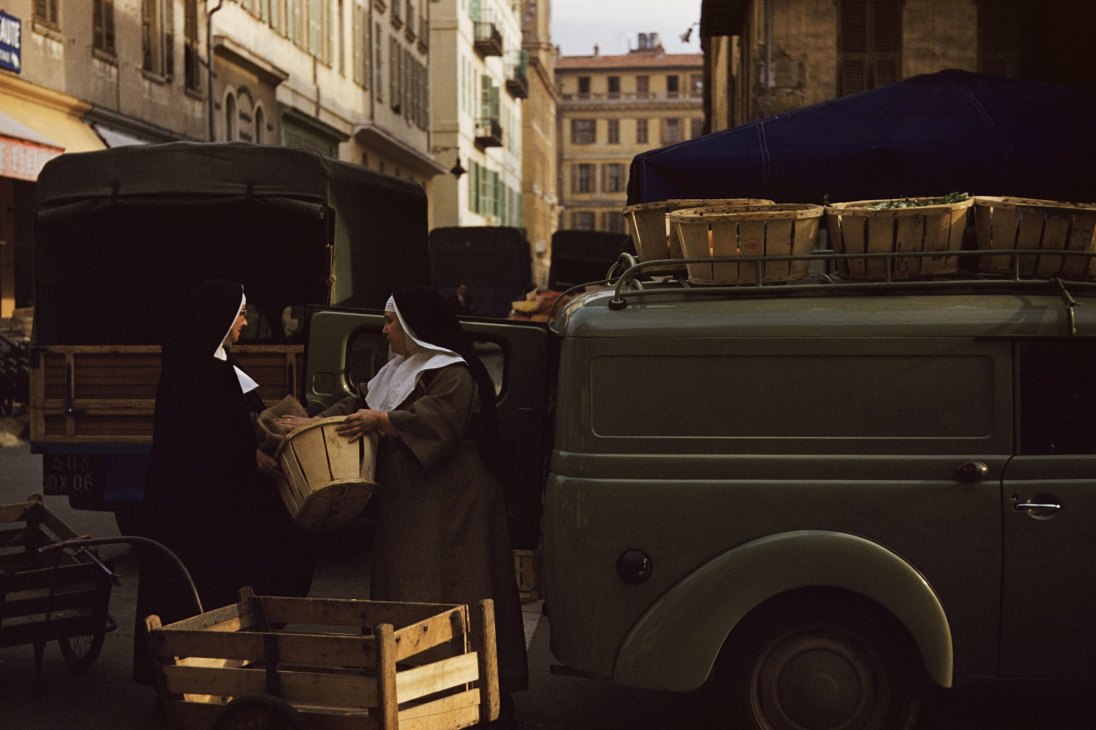
I was seven years old when my grandfather died in 1977. Although I hadn’t really known him, these images drew me into his world. I saw an absence of vanity in his pictures, a love of life and some cheek and humour. His photographs are intimate and I could see that he engaged with people – I can say this because I’ve done a lot of street photography in my time. He clearly had the ability to put people at ease in several languages and you can see that as he’s nattering to a French nun, joking with a Lebanese policeman or chatting to an American GI at the docks. It’s never easy to get people to relax in front of a camera. I love catching people off-guard; if they’re relaxed, they look good.
The images shown in this Expo are taken from what I’m calling his Kodachrome archive, which was taken between about 1950 and 1973. He must have been using a light meter but shooting in direct sunlight with an ultra-sensitive transparency film such as Kodachrome is still very difficult: your exposures need to be superb. The results are amazing, really. I don’t think that there are any bad pictures in the archive.
There are so many themes to unpack in my grandfather’s images. He clearly loved the docks, markets, nuns, uniforms and beaches. He also had an incredible eye for people’s personal style: their hair, brooches, hats, swimsuits and sunglasses. Another thing that I noticed when I pulled that first handful of slides out of the box on the kitchen table in Beaulieu is that, although I picked out the best shot first, I also saw the previous two or three frames that were taken to perfect it. My grandfather was obviously moving through crowds, seeking out and building up to that one final shot. It’s a recurring theme throughout his archive. His eye for composition was excellent.
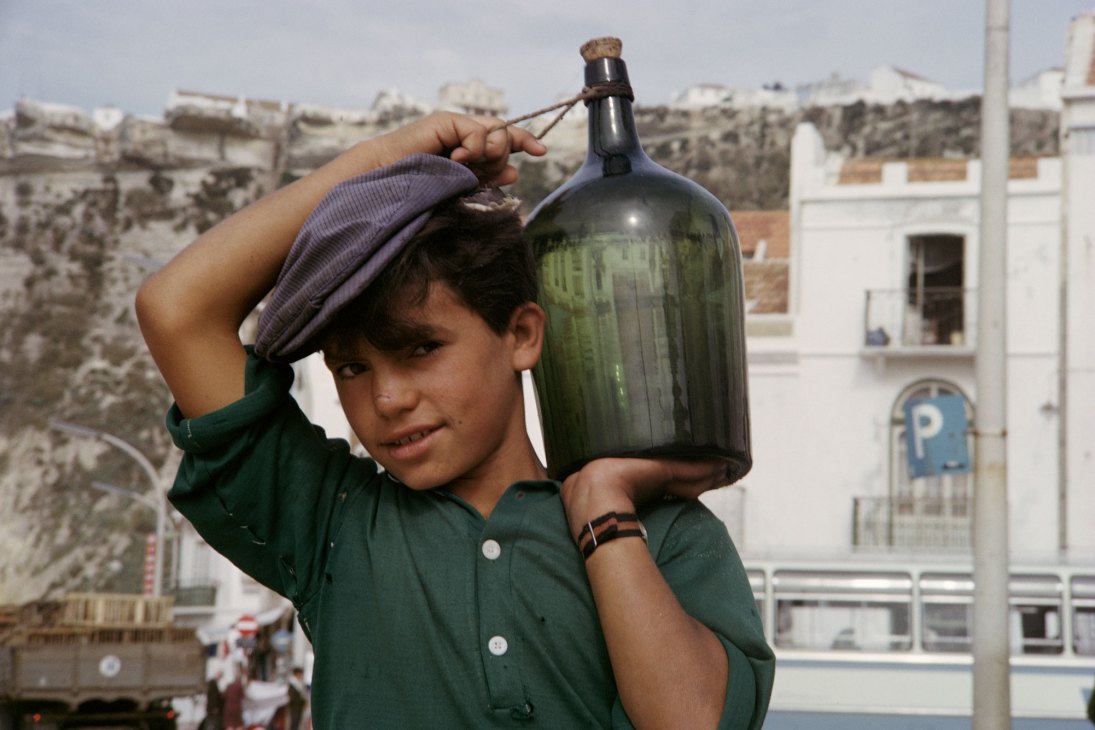
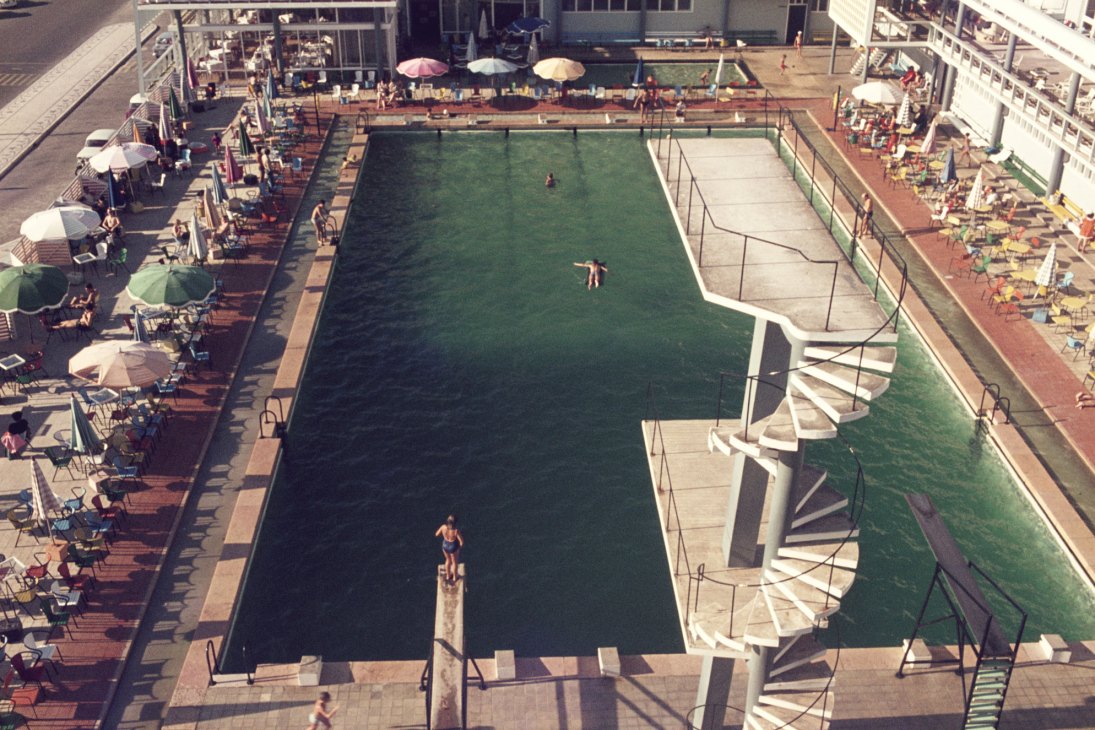
Aside from the many boats, bicycles, airports, folk costumes, children, cats and cafés, one of his favourite subjects was his beloved wife, Alys, my grandmother, who he married in 1936. She was very beautiful, elegant and stylish so he was lucky there. Alys died 20 years ago but even in old age she was flawlessly presented and impeccably dressed. Knowing the archive has helped me know her better too.
Discovering my grandfather’s photography archive has opened a lot of family conversations about who Percy S Waite was and where he came from. His family hailed from London’s East End and he left school at 13. My grandfather’s success came through self-drive, education and a hunger to travel. His brother became a school caretaker. There’s nothing wrong with that but the difference between that and the lifestyle that Percy was able to provide his family is starkly visible in his photography.
Born in 1908, Percy S Waite had a hard start in life. His mother died when he was eight and, despite moving among caring relatives, he had to help support his ill father. As a clerk, he wasn’t conscripted in the war because legal services were deemed essential. At the time, he worked an allotment and helped at a nearby pig farm for extra food during rationing. In the spare time that he did have, he managed to teach himself Latin and shorthand after deciding to qualify as a solicitor.
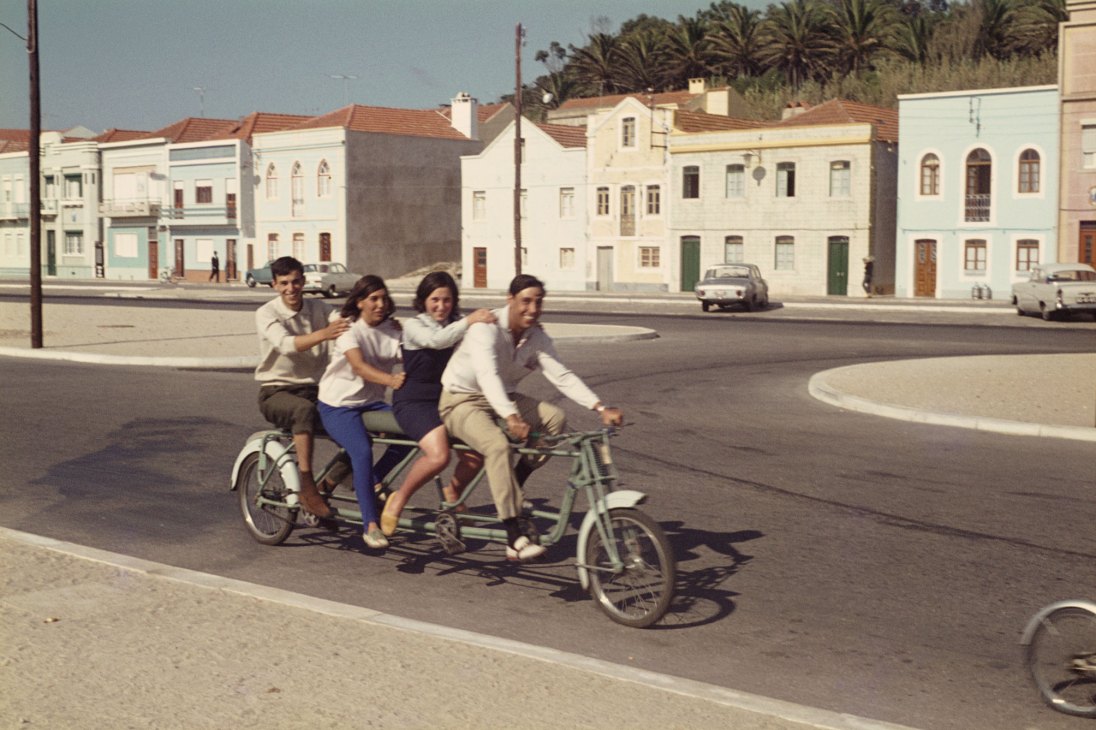
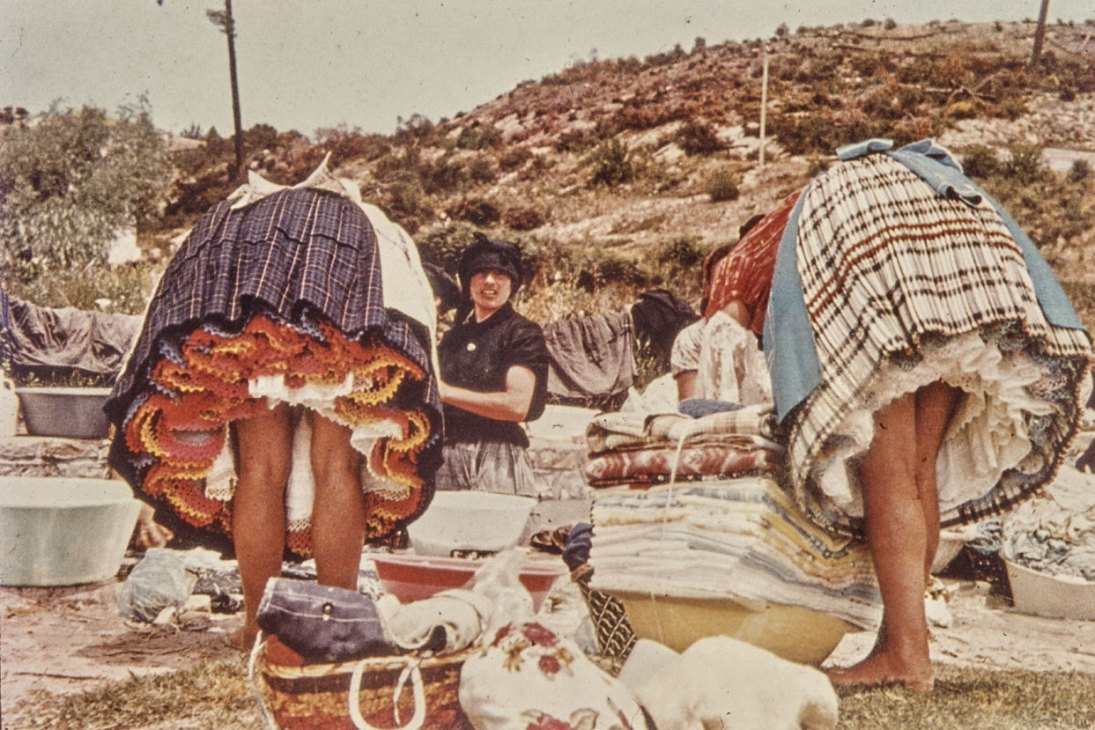
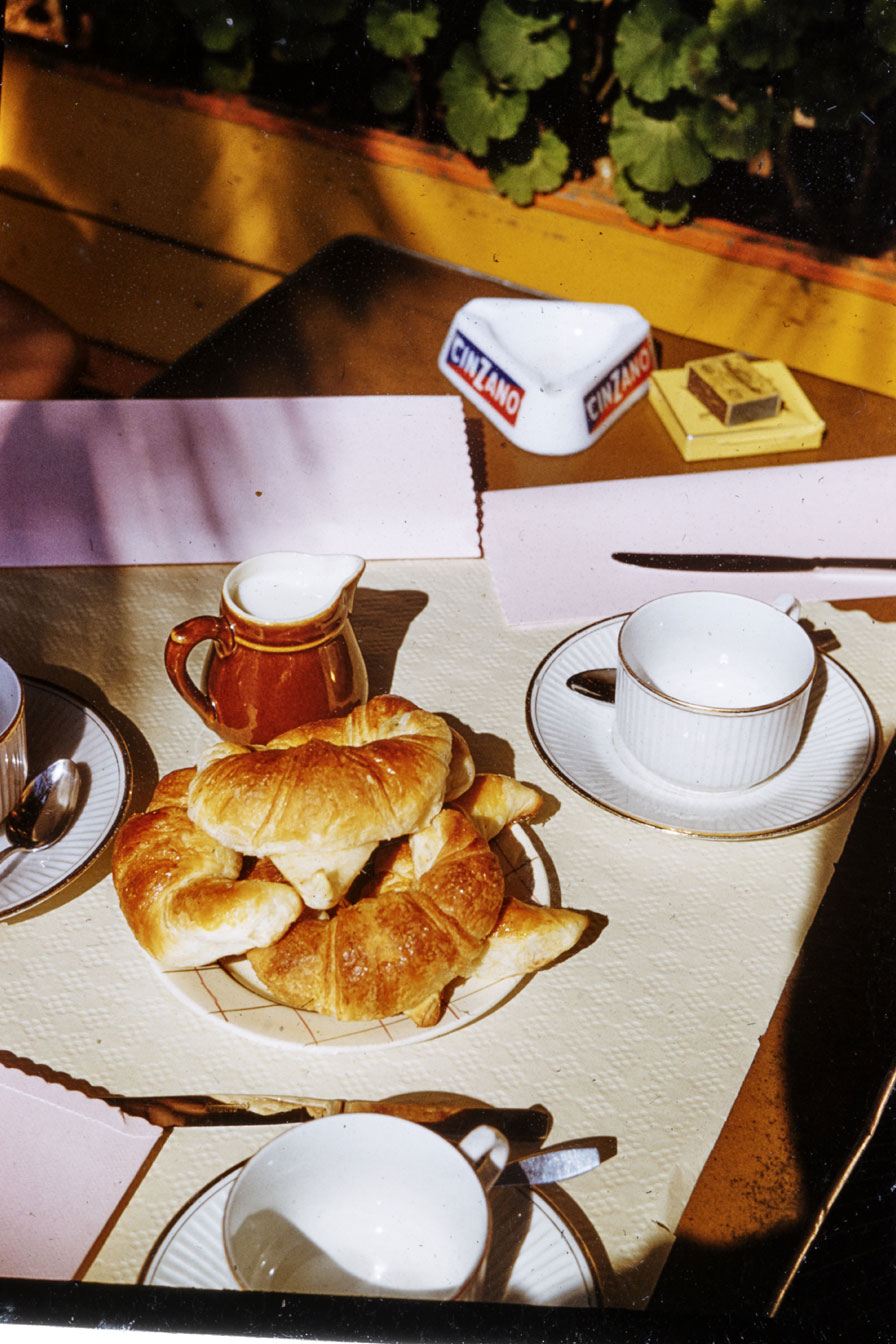
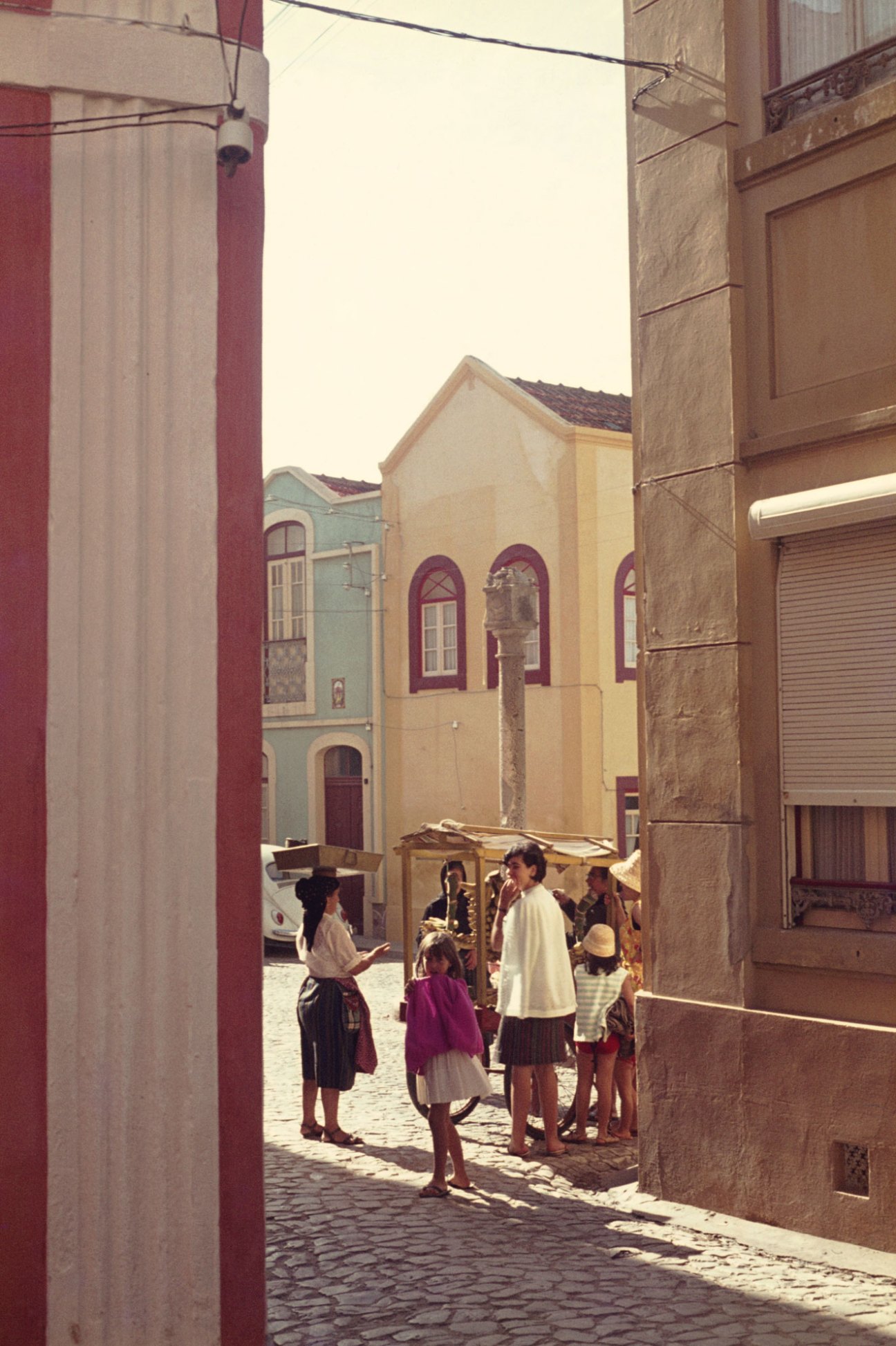
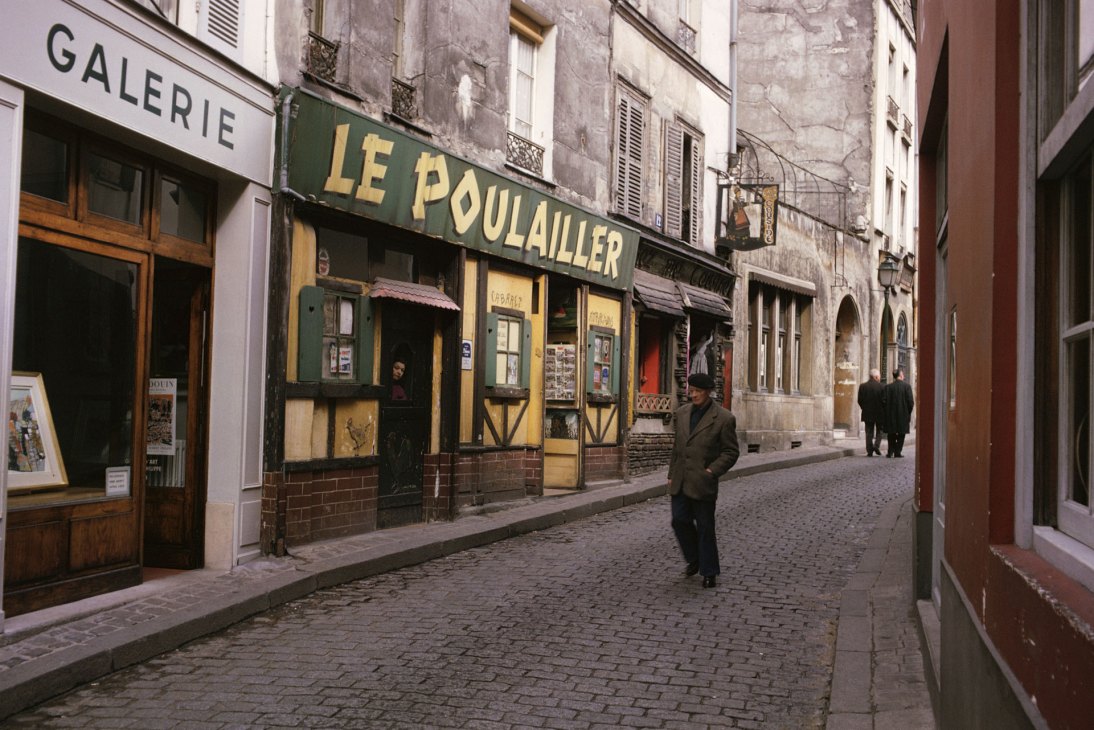
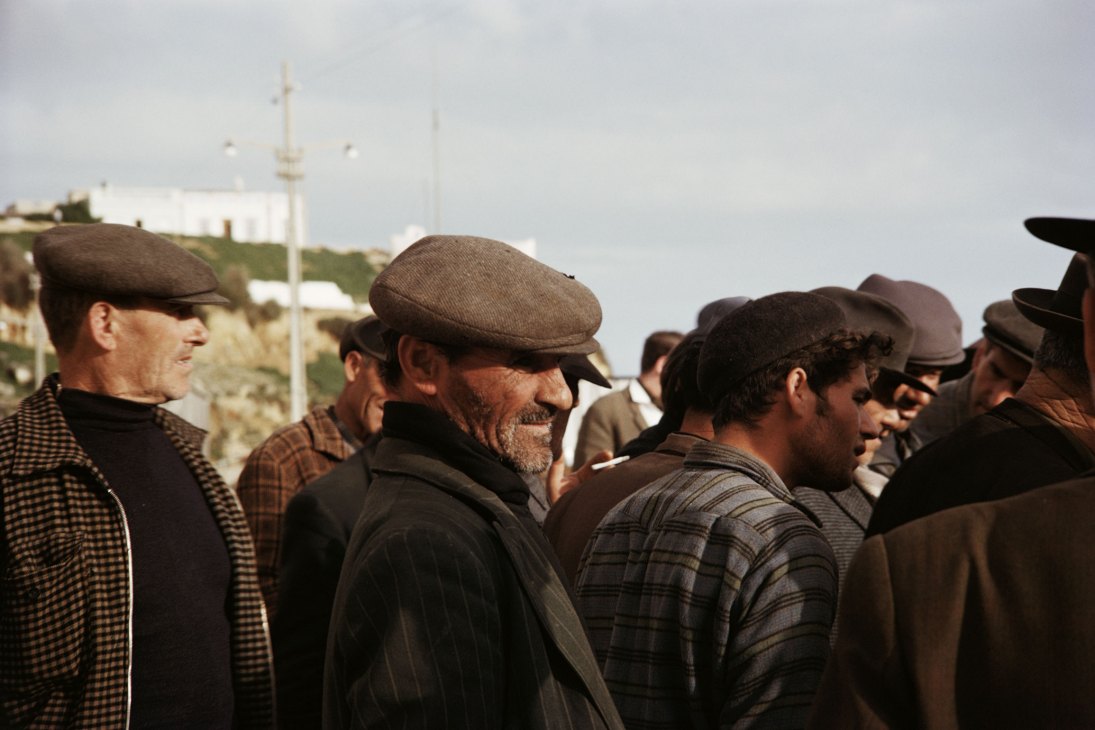
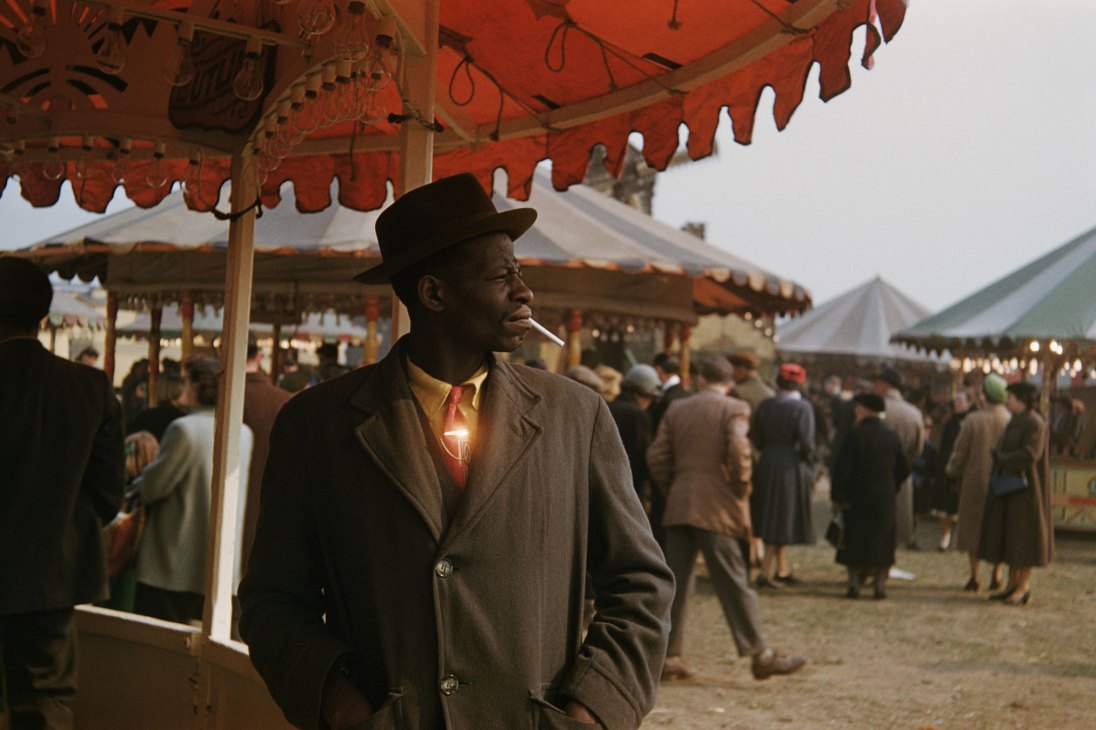
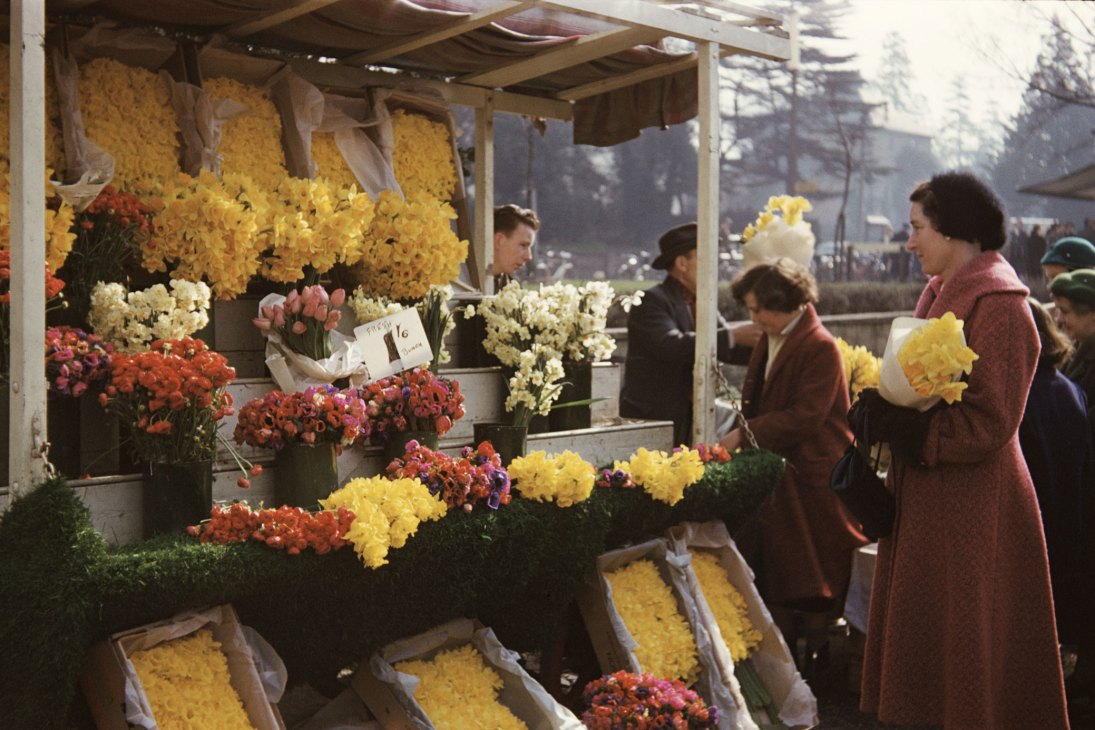
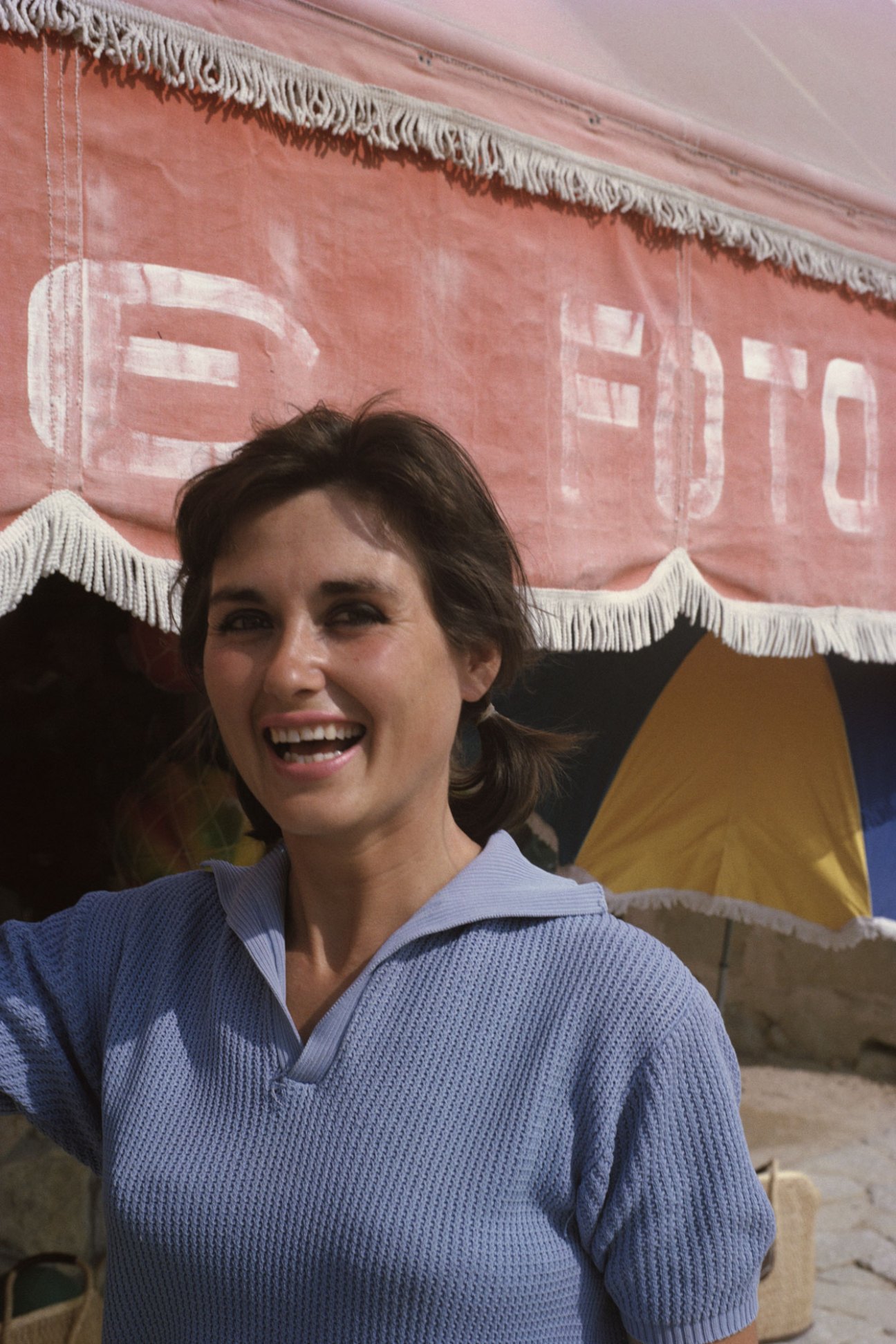
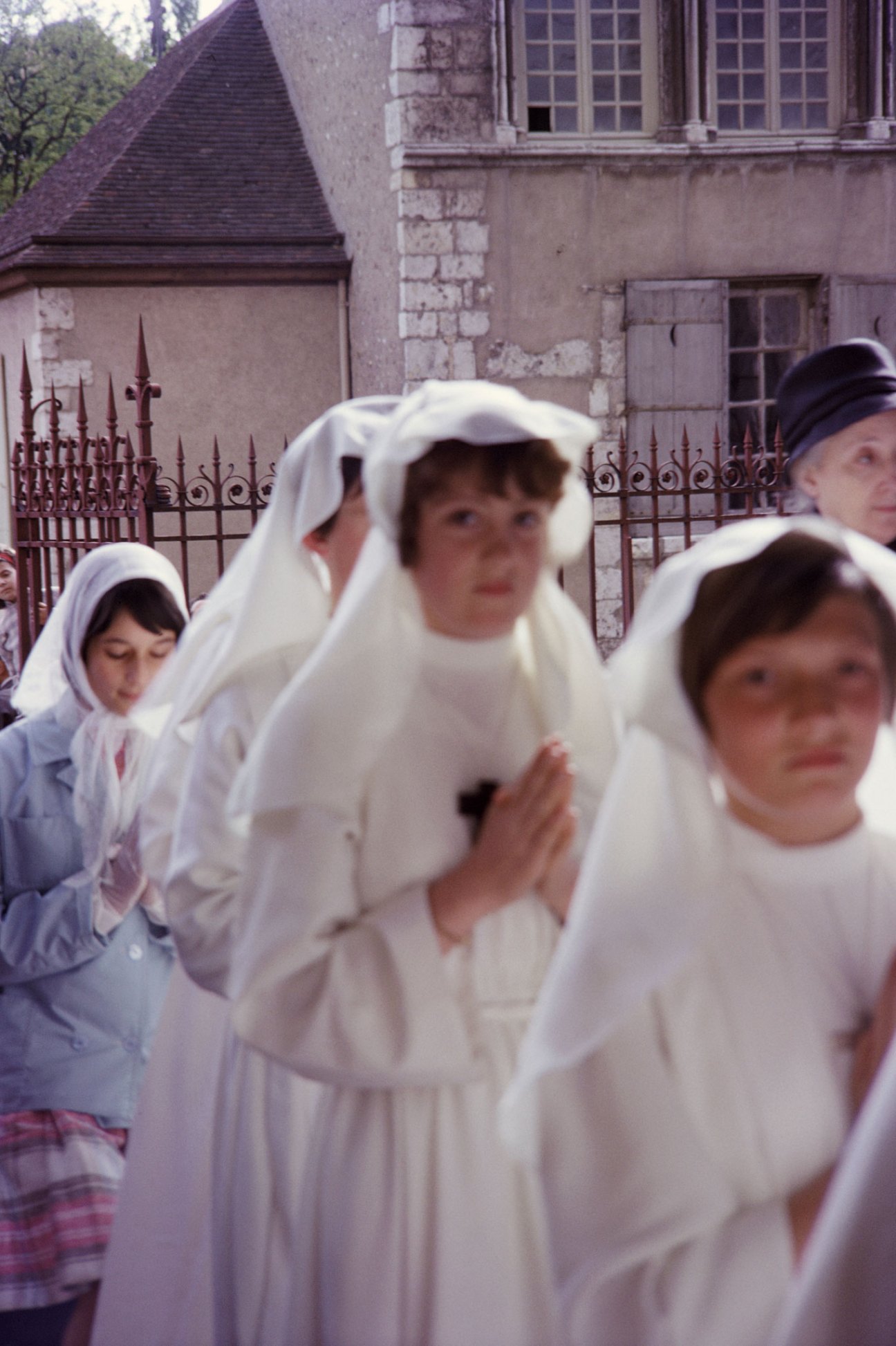
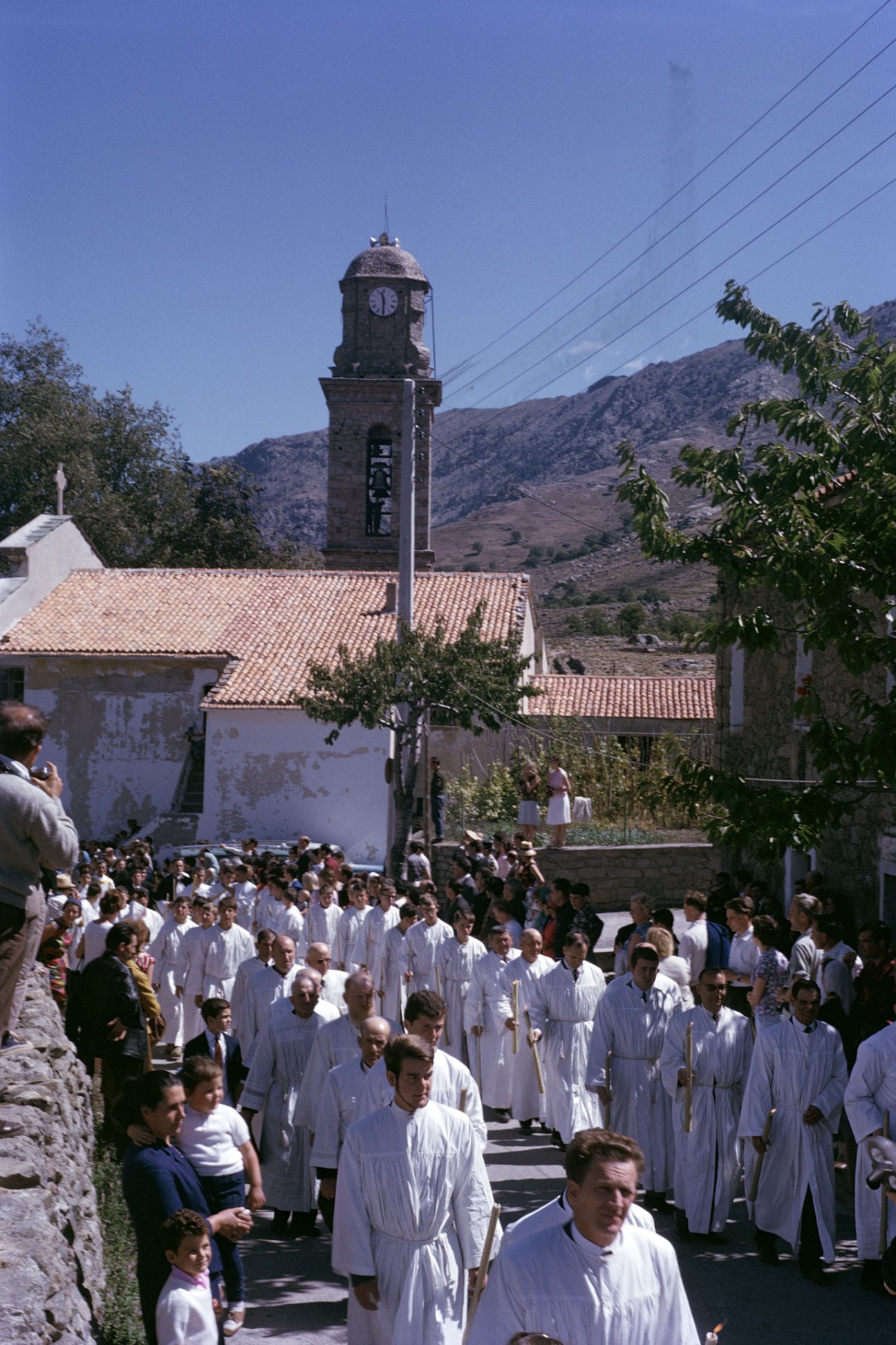
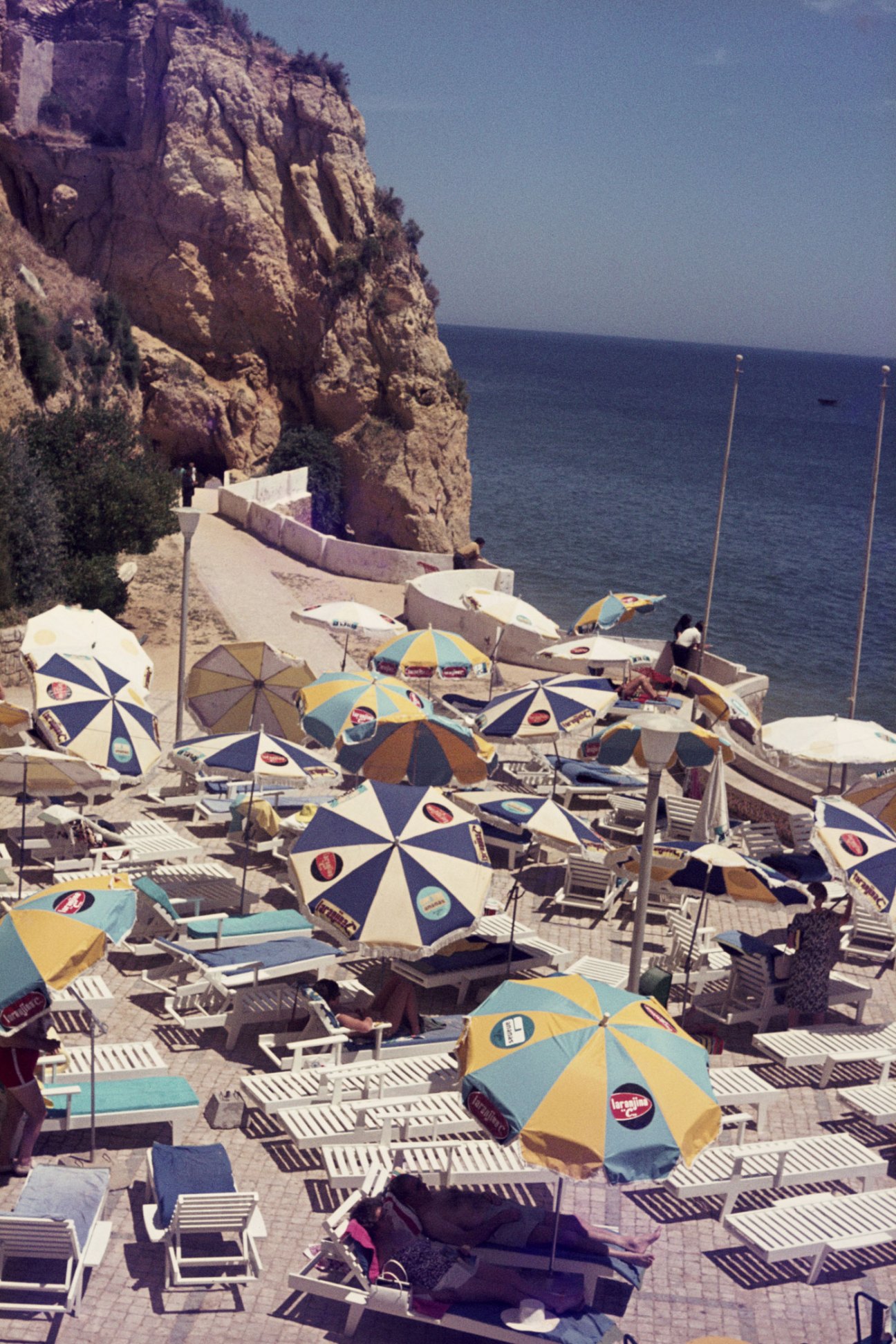
A lot of the pictures in the colour archive date from just five years after the Second World War ended, when the UK was rationing. What’s remarkable is that at this time Percy and Alys were packing up with three kids to visit the south of France. They loved to travel and kept a house in London, another in Lavenham, Suffolk, and a small place that they loved in Bandol on the Côte d’Azur – it’s bloody impressive, considering where he came from. I can see that they dressed in a very elegant way and, while I’m sure they liked the good things in life, they don’t seem to be show-offs. Almost none of the pictures taken feature food, shopping or expensive hotels.
In my heart I am a documentary photographer and, having spent so long with his archive now, I think that this gene – or whatever you want to call it – comes from my grandfather. There are so many similarities in the way that we approach subjects that I can’t claim it as my own, even if we both arrived at it independently.
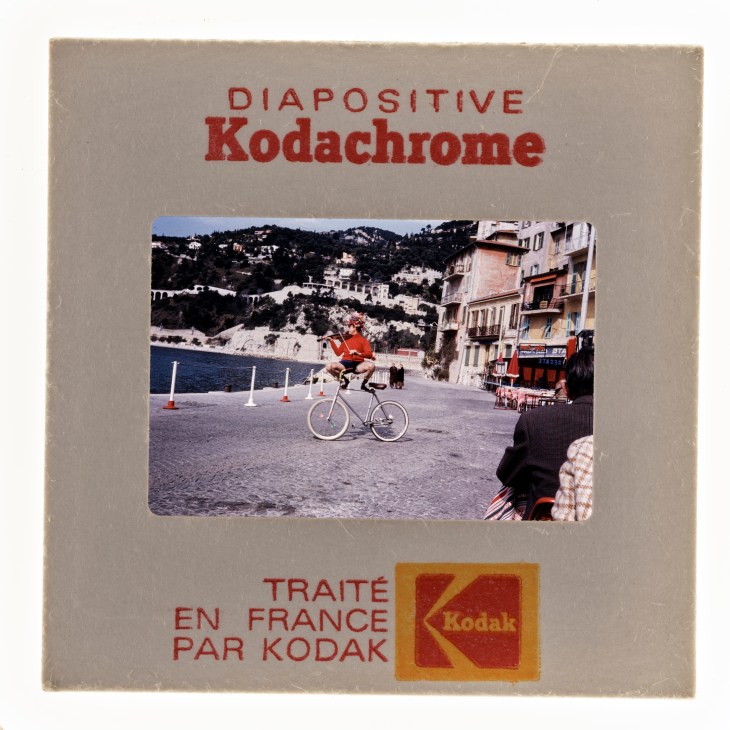
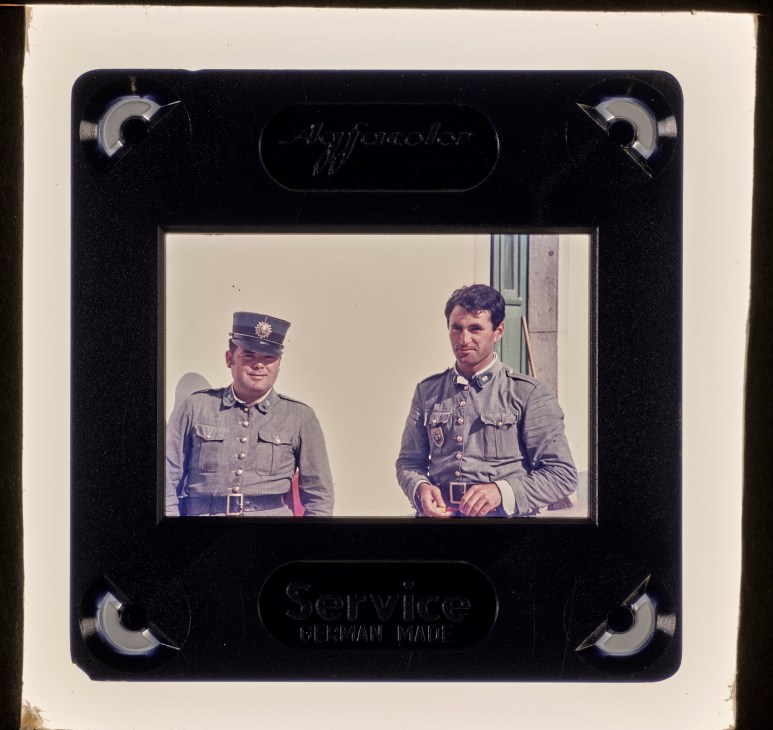
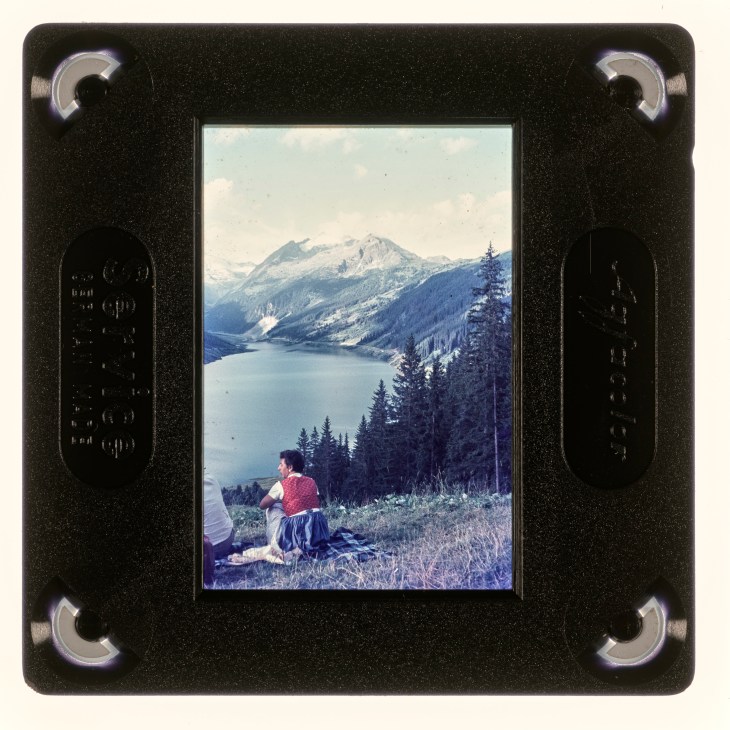
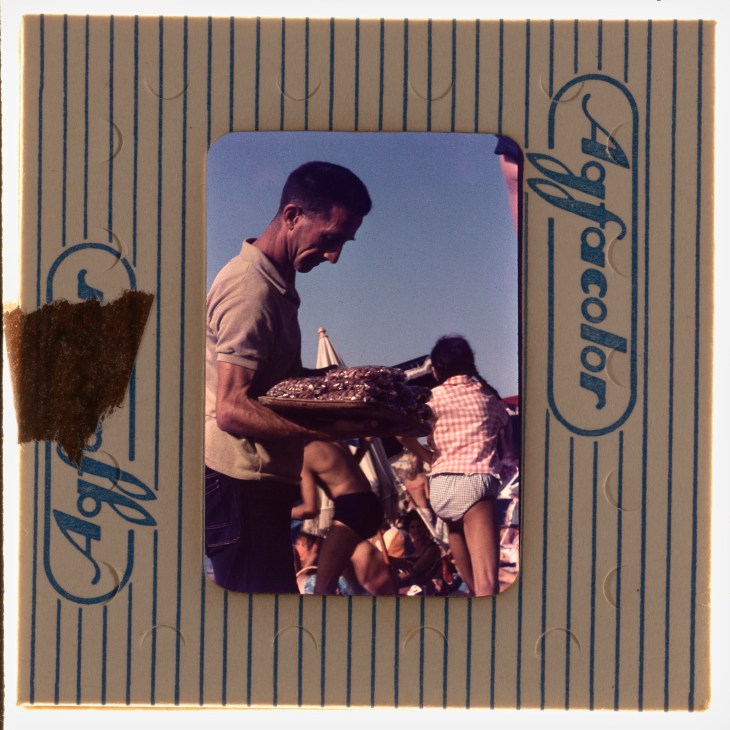
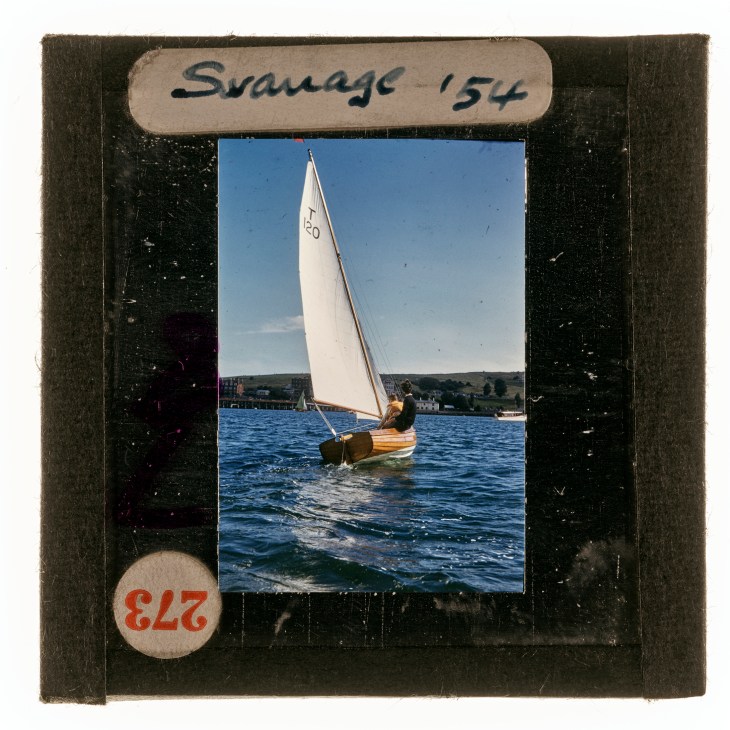
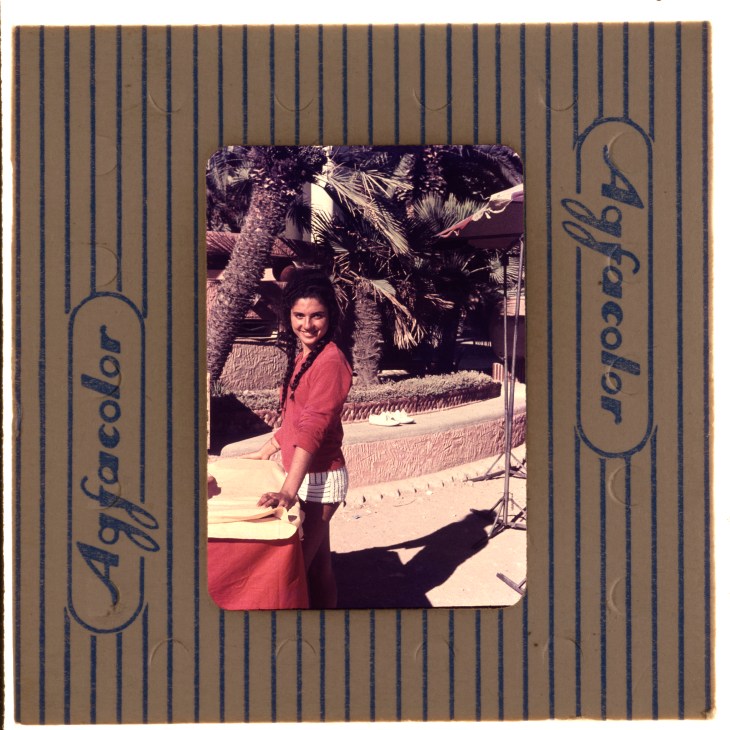
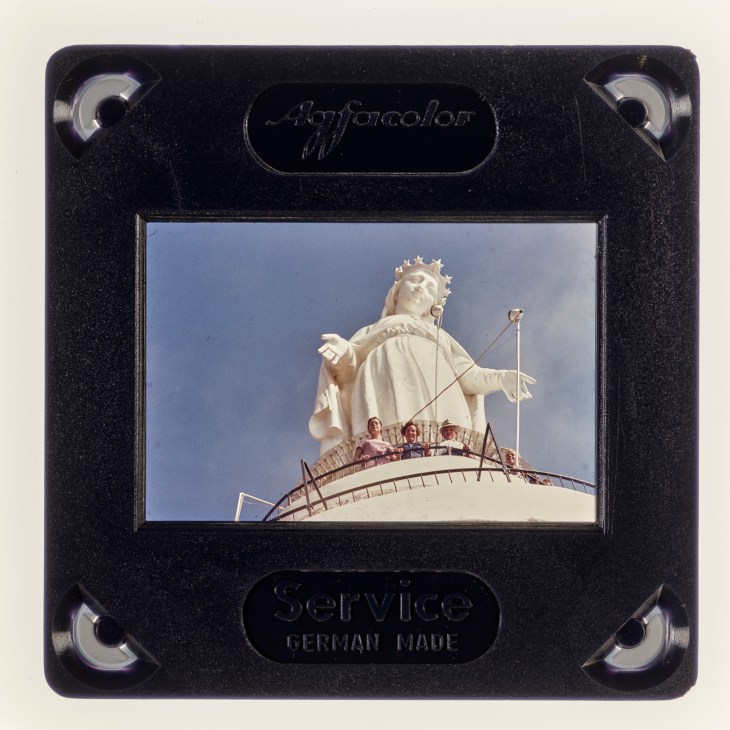
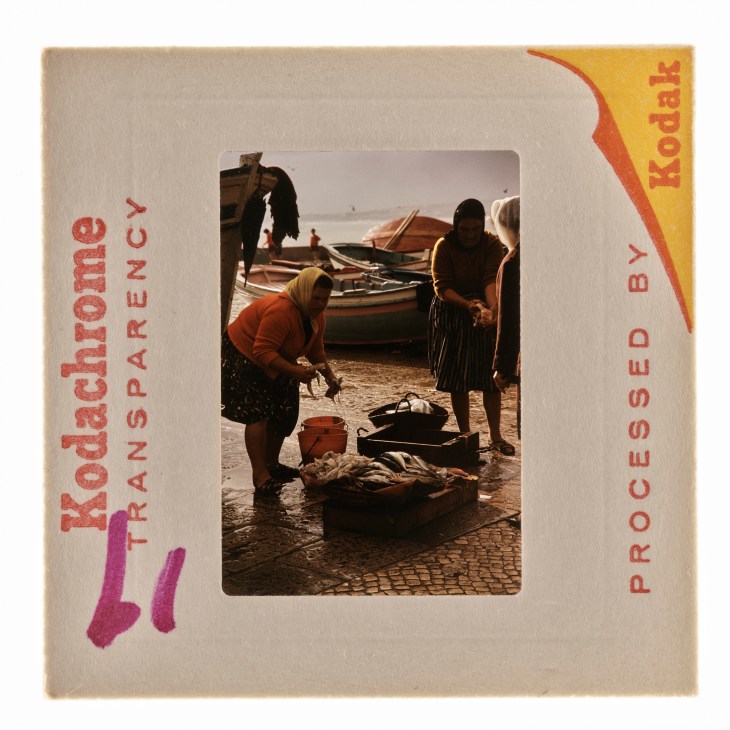
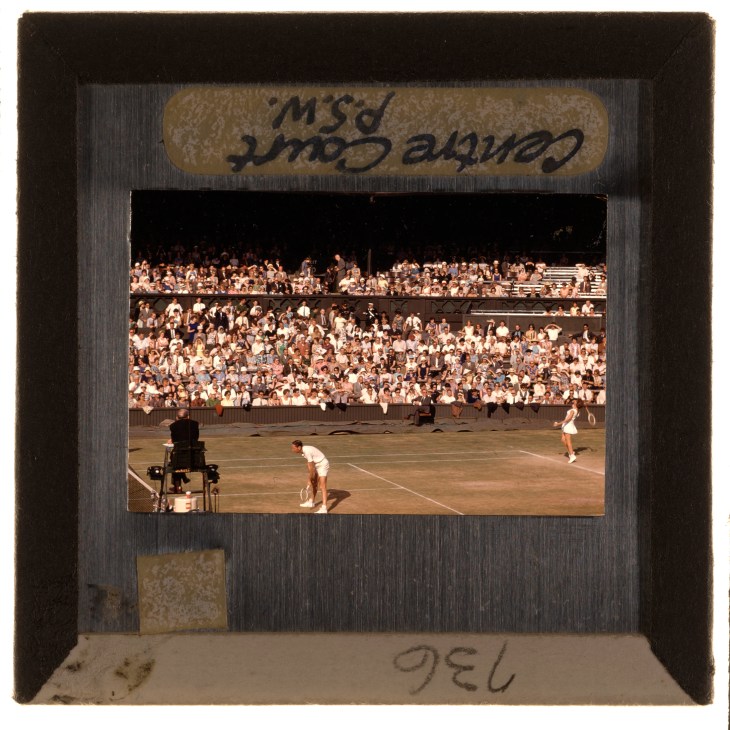
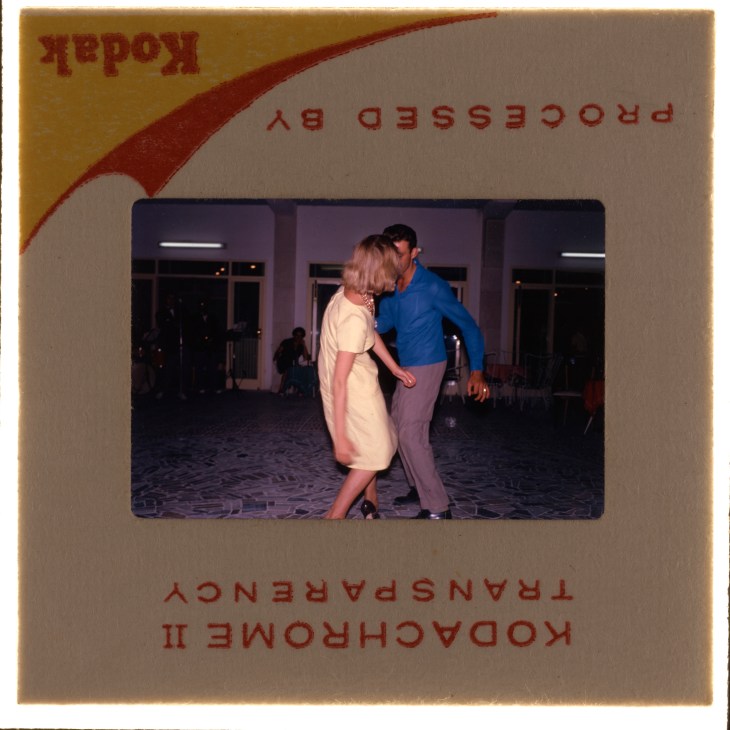
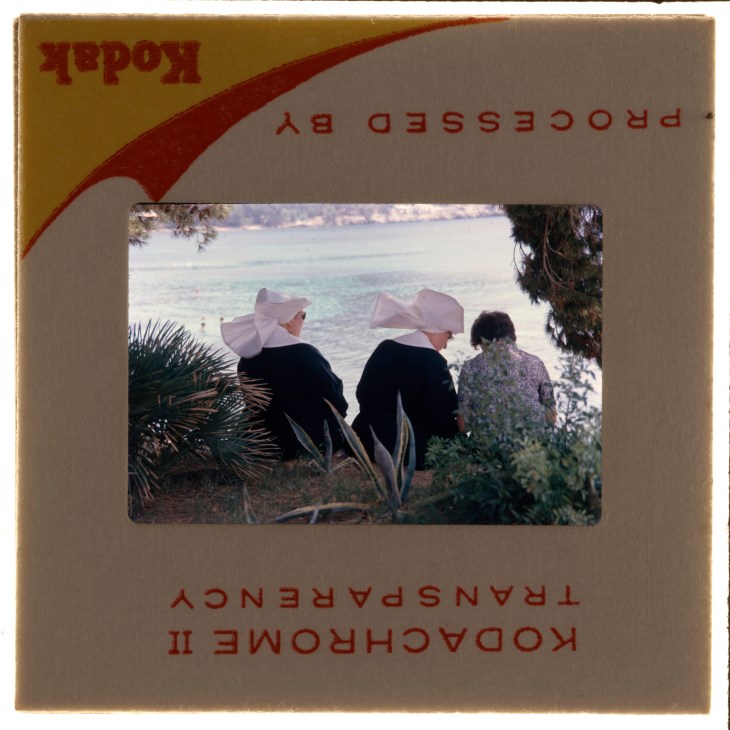
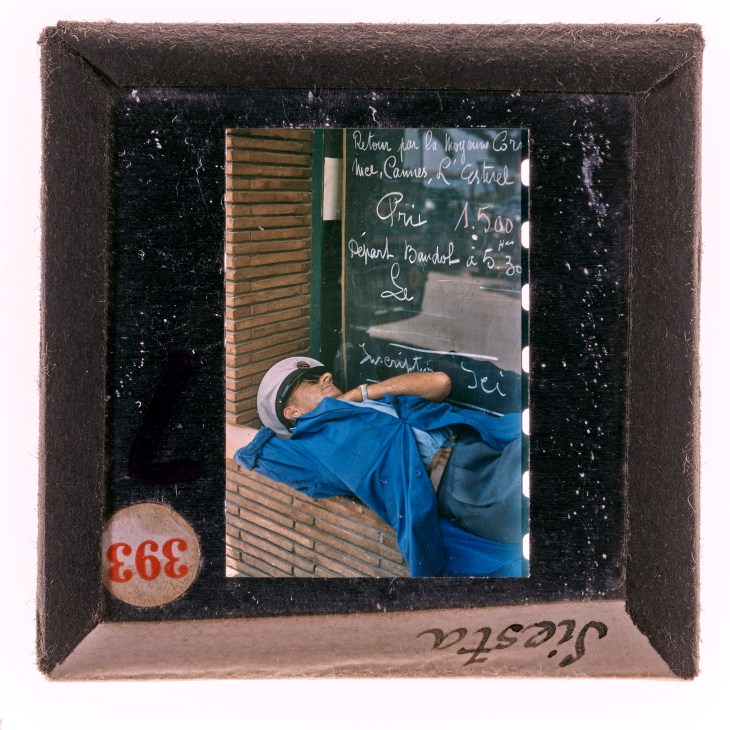
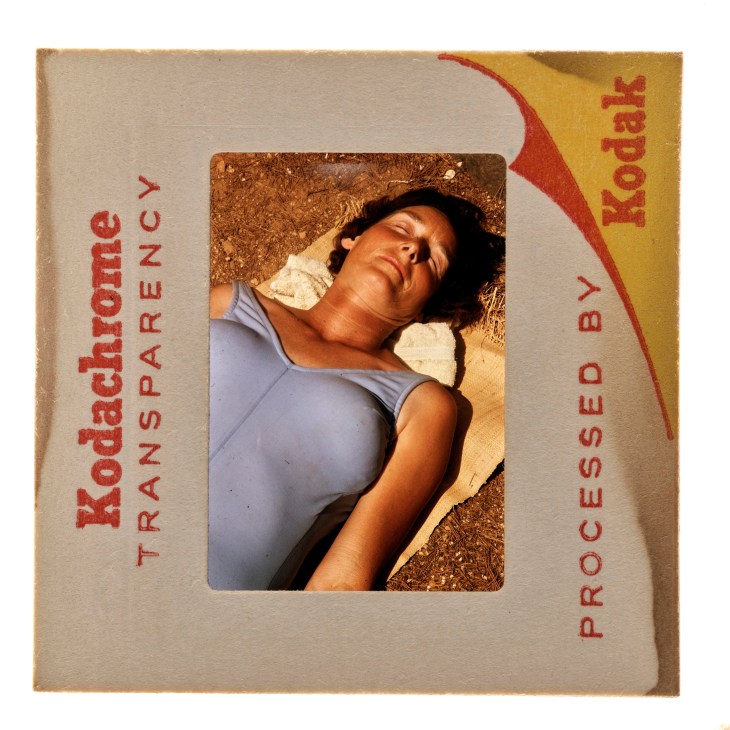
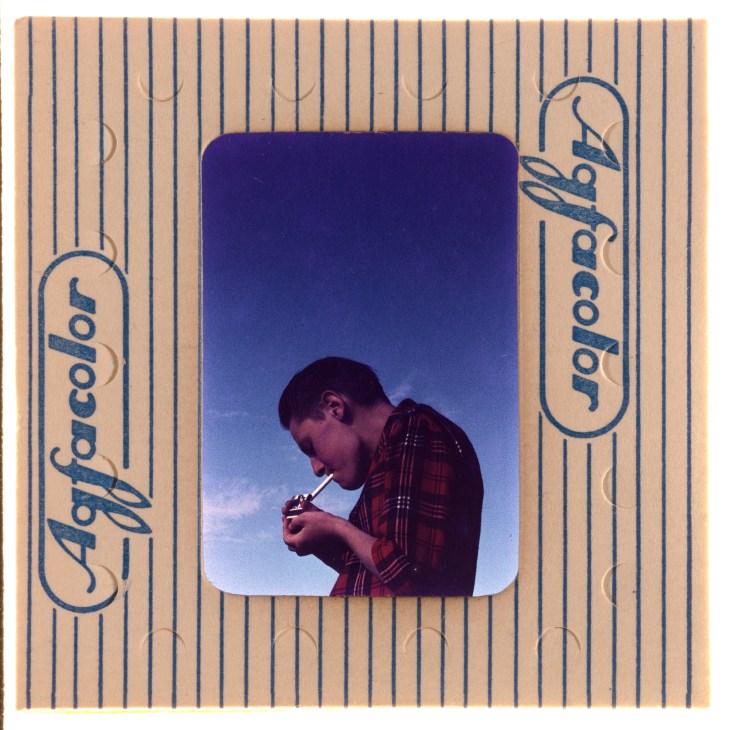
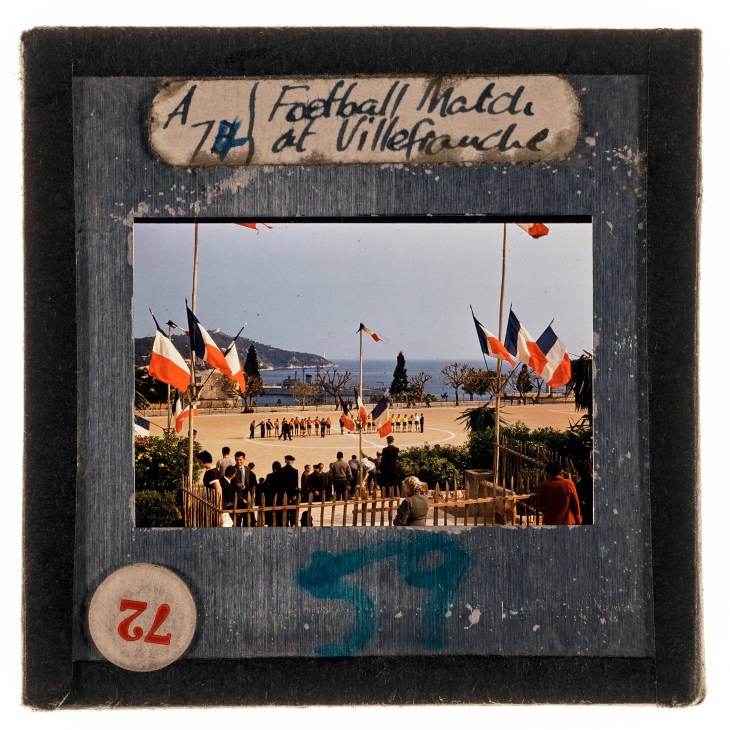
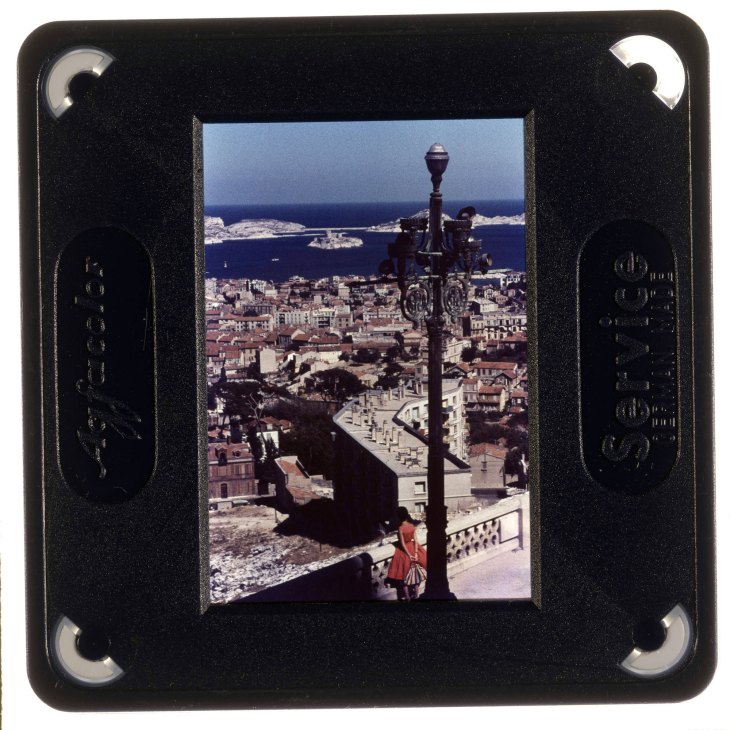
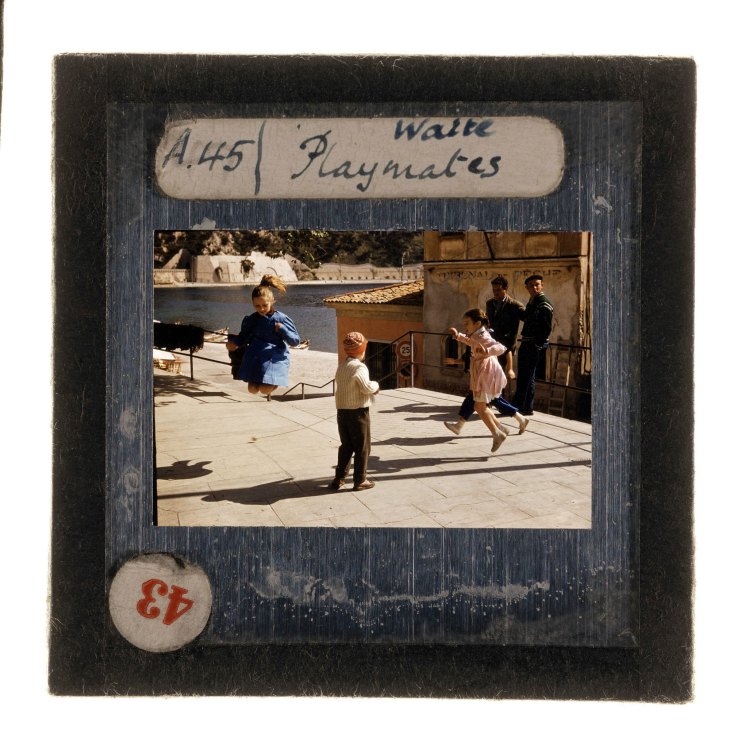
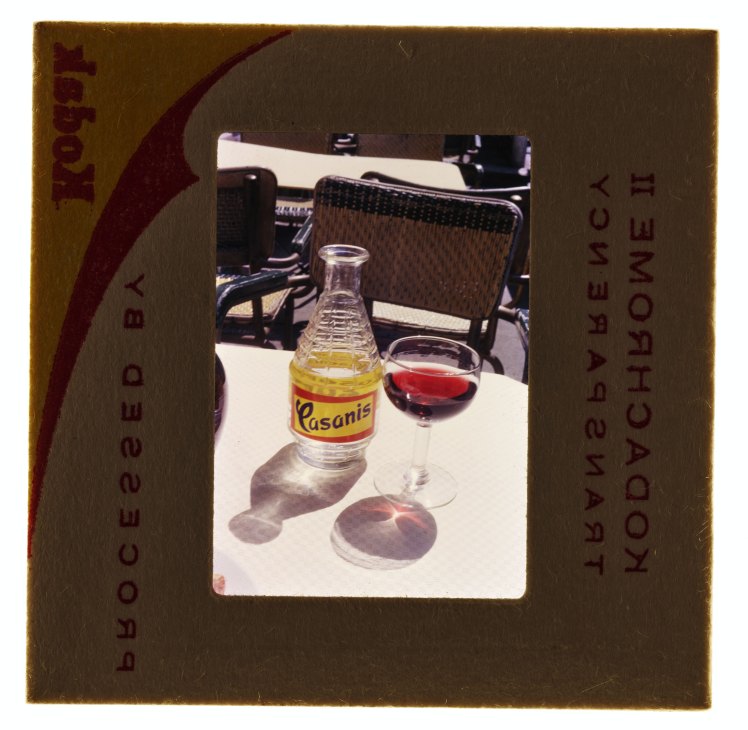
Kodachrome slides discovered in Waite’s archive of about 7,000 images
I did a project on Russian sailors years ago not knowing that decades earlier my grandfather had been hanging around the Marseille docks joking with the US navy’s Sixth Fleet. My mum and aunt remember the beautiful French ladies flocking to the port to meet these handsome American sailors as my grandfather watched on, his Leica shutter snapping in the afternoon sun as the waves broke nearby.
My grandfather, his wife and their three daughters, including my aunt and mother, continued to travel for as long as his health allowed. When he died in the UK in 1977, my grandma sold their house because it was too big for her. She moved to a smaller one, bringing the archive with her in plastic boxes, never thinking to share the photographs. When she died, somebody moved them again, this time to my aunt’s house. After her divorce that house was knocked down and bulldozed before the archive landed in the New Forest. My aunt couldn’t even tell me how it got there and who moved it, so the fact that it survived is still incredible.
I often think about the amazing artists and photographers out there who, like Percy S Waite, just don’t have the appetite, skills or ego for self-promotion. I asked my mum recently how she thought my grandfather might have felt about his images being published. She was sure that he’d be proud that anyone was showing an interest in his pictures, let alone that his grandson was following in his accomplished footsteps. The only recognition that his work received until now was a single award from the Enfield Camera Club, of which he was extremely proud.
I feel as if I know my grandfather much better now. I can see him not just as the elderly man with a walking stick but through a snapshot of who he was and how he saw the world at his physical peak. I’m ambivalent about photographic culture today. It’s become so throwaway, full of mindless pictures. I find myself needing to think twice: should I try to record a moment or just be in it? In this sense, the archive is a time capsule. It’s a different world. It is a good world.
As told to Monocle’s editor, Josh Fehnert
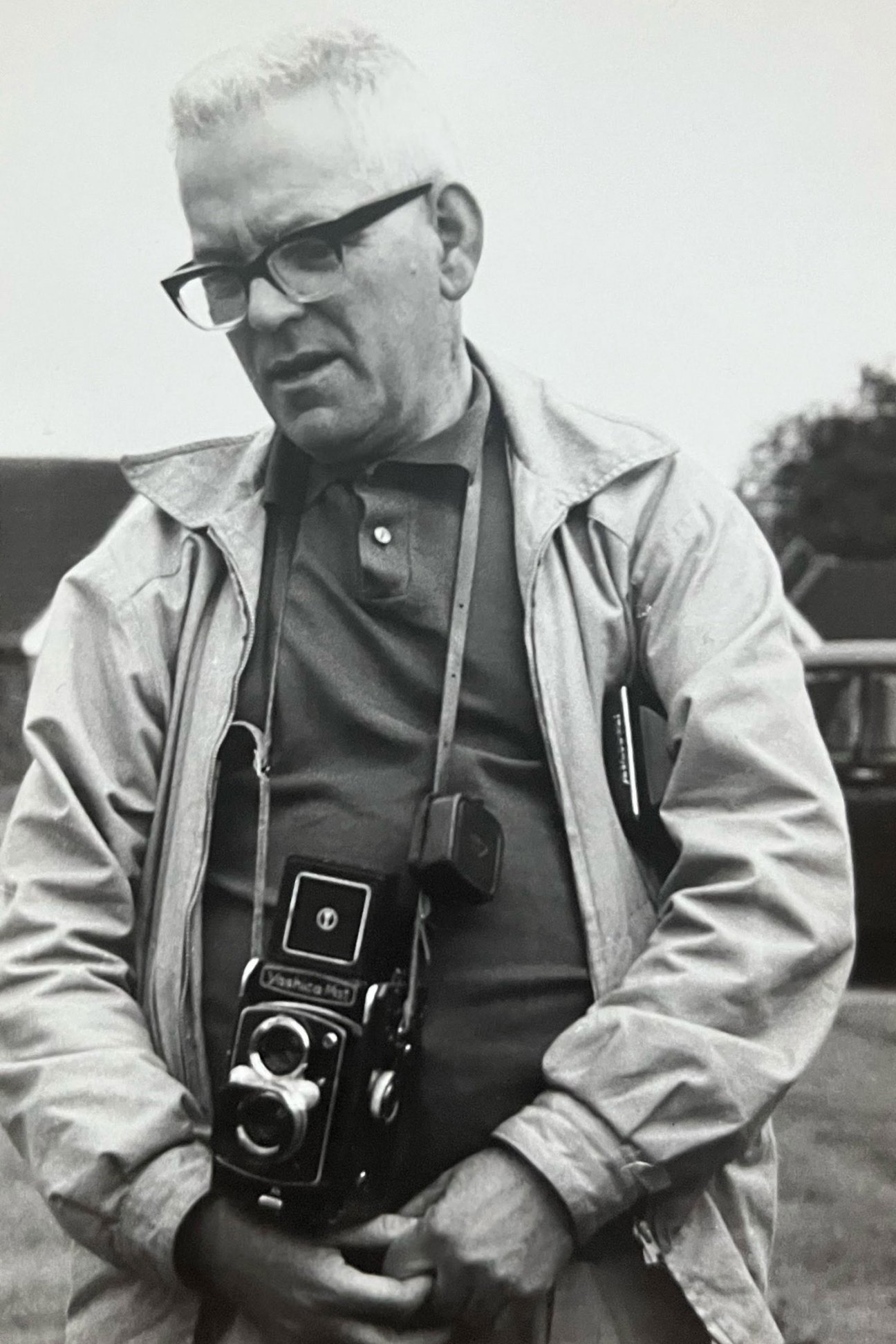
About John Balsom:
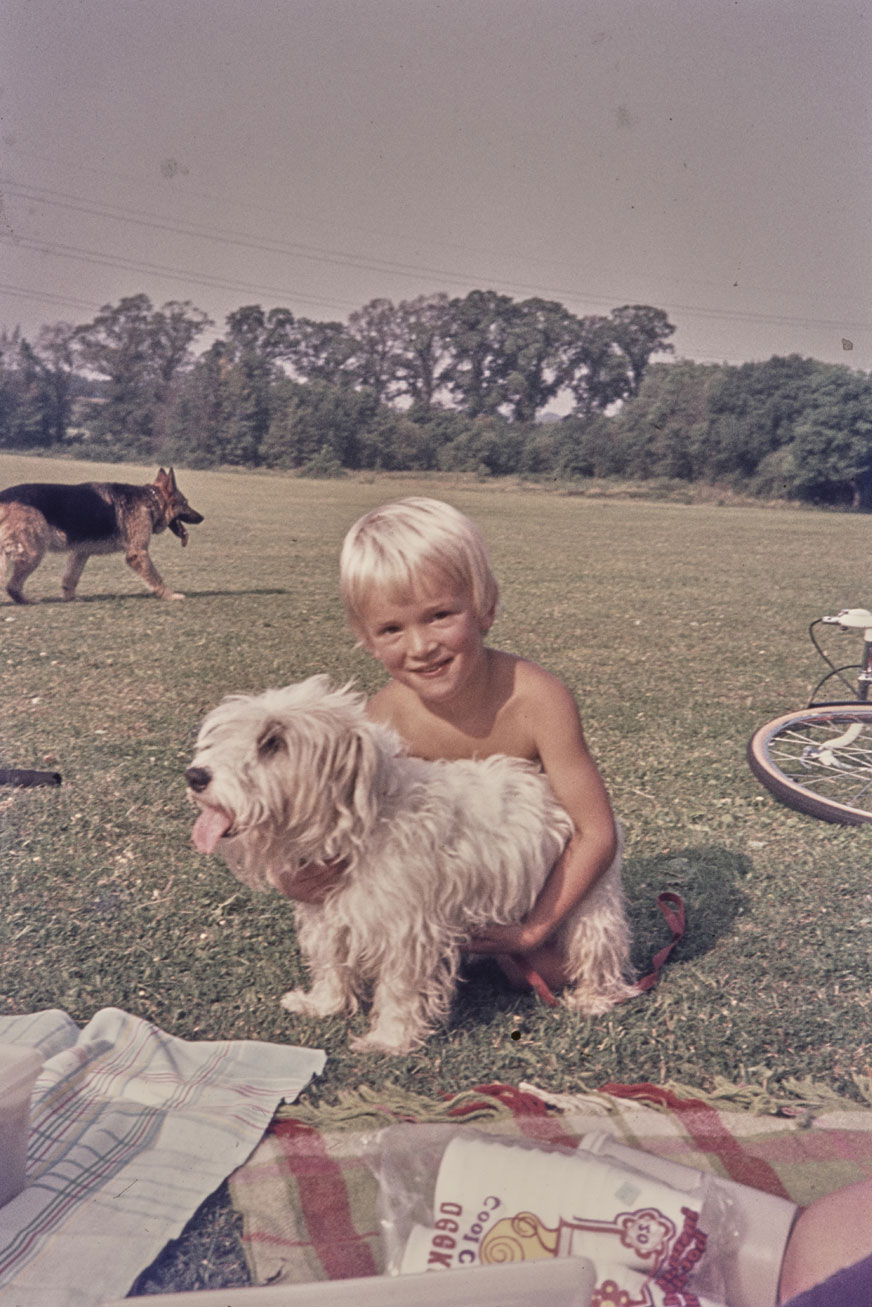
Despite describing himself as a late-bloomer, who worked on building sites until his mid-twenties, John Balsom (pictured, right, as a child) has become a leading documentary and portrait photographer. What constitutes a good picture? “An unstated, unforced moment,” he says. “My shooting style is natural and simple.” That might be true but the results are often breathtaking. Balsom has shot for Monocle since 2007 and we’re very grateful that he decided to offer us the first opportunity to publish selections from the remarkable archive of images taken by his grandfather, Percy S Waite (pictured, left). He hopes to turn the discovery into a book and exhibition in the near future.