Lobby group: how the best hotels can outstay any Airbnb
Almost a decade ago, industry analysts were predicting the decline of the hotel. Decentralised and cheap peer-to-peer business models such as Airbnb were supposedly sounding a death knell. Initially, I must admit, it was a thrill to stay in somebody else’s home and go through their medicine cabinet (I wore the cologne of a man named Matt for the duration of a week-long stay on New York’s Upper West Side in 2013). It was predicated on the notion that, by staying in someone else’s residence, you would have a home-away-from-home experience of slotting into somebody else’s life.
But the novelty is fast wearing off and the consensus seems to be that travellers are returning to hotels for a host of different reasons. Latterly, staying in an Airbnb usually comes with a chore list to complete on check-out; inconsistent property quality is also a factor. My holidays this summer have also helped pinpoint a design issue that’s worth considering too. “You need a house that speaks for itself – the best hotels have good hardware for visitors to enjoy,” explains Constantin Ziegenhain of the Chesa Grischuna in Klosters, whose “hardware” is a multi-storey Bündner Haus – a rural residence defined by heavy stone masonry and deep-set timber forms. Originally a simple wooden inn, it was transformed in the 1930s by Zürich-based architect Hermann Schneider, who commissioned illustrator Alois Carigiet to paint murals on the façade. A bowling alley and grand dining room also define the property. Chesa Grischuna’s guestbook, says Ziegenhain, spans the globe – some people travel here just to seek out the murals.
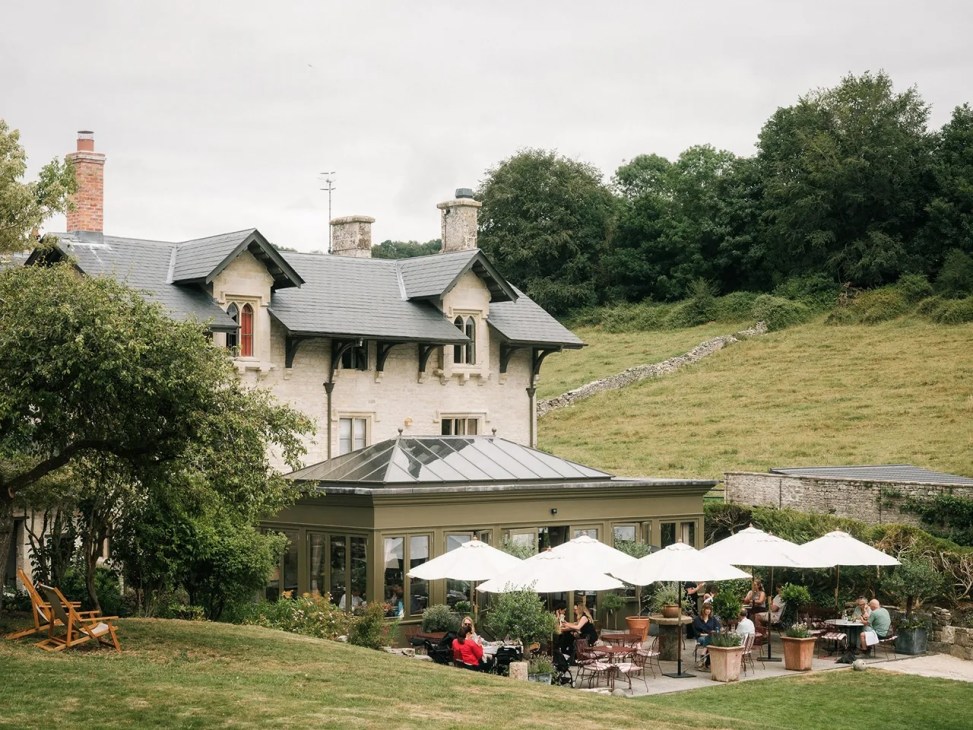
This international pursuit is a reminder that so much of a holiday is built around the environments in which we immerse ourselves – a well-designed hotel, with outstanding “hardware”, can dictate how guests move and feel; how they interact with each other and the surrounding environment over the course of their stay. It’s a level of consideration that simply can’t be replicated by a stay in someone else’s home. The newly opened Teffont House (pictured, above) in Wiltshire is another prime example. Co-owned by Charlie Luxton, whose design sensibilities have been shaped by the likes of London-based Ilse Crawford, the new hotel by the Beckford Group sits in a centuries-old stone house, complete with grand gothic windows and dramatic eaves. Working with designer Natasha Hidvegi, Luxton created a series of distinct public spaces for guests, spanning an orangery, a bar, a lounge, a brasserie-style dining room and an outdoor terrace with Sénat chairs.
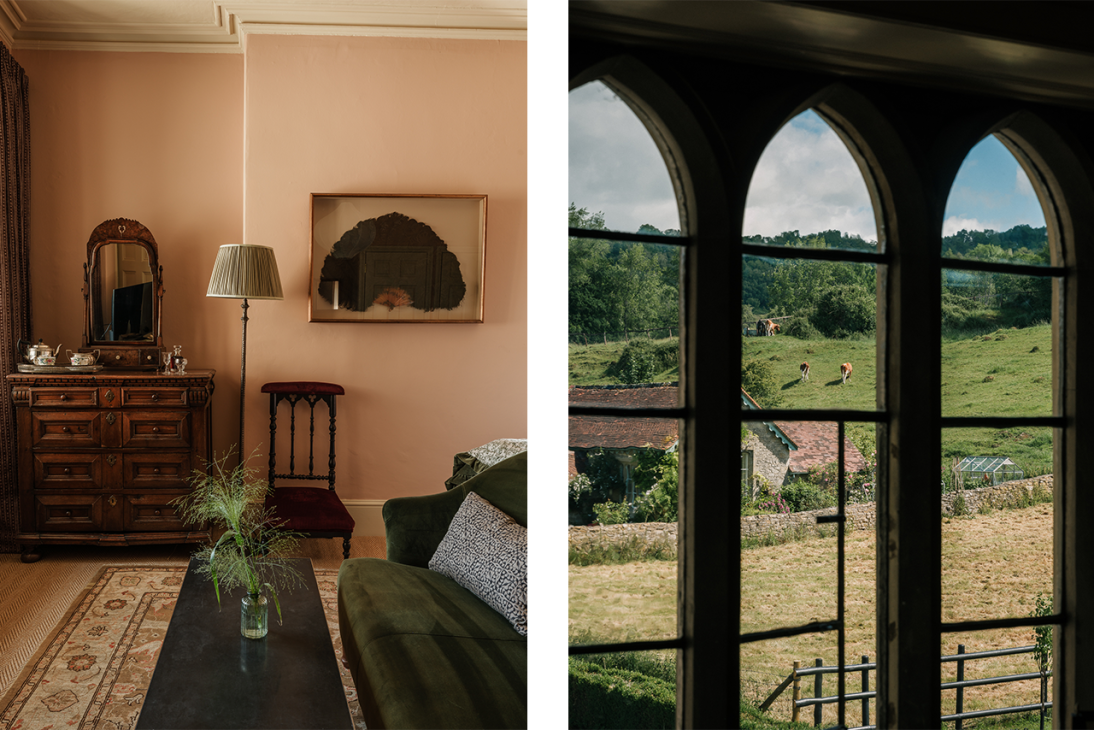
“It’s important to have little areas with different moods,” he says. “You might have a high table where you do some work, a lounge where you sit back and read the paper, then a more upright setting where you can talk. It’s about creating a series of vignettes.” Added to this is the fact that the property doesn’t look to separate itself from its base of Teffont Evias: the reception opens onto the road that runs through the small village and its outdoor spaces, including badminton and croquet courts in a walled garden, sit on the other side of the thoroughfare.
Both projects are a demonstration of the fact that, yes, good hotel design is about the details but also the orchestration of a variety of experiences and movements. “It’s fascinating, the power that the design of a hotel has over how people behave when they’re staying,” adds Luxton. At least in my case, it was a much more powerful force in shaping my holiday experience than cologne from Matt on the Upper West Side.
Beckford beckons: For more from the Beckford group, head to monocle.com for a round-up of exceptionally designed hospitality spaces.
Nic Monisse is Monocle’s design editor. For more news and analysis, subscribe to Monocle today.