When the saints go marching in: Inside Lisbon’s night of sardines and spectacle
The Portuguese capital comes alive as it hosts an annual exuberant and colourful street party that combines a pagan past, divine inspiration and plenty of camp costumes. We join the festivities.
The day starts early at Lisbon’s town hall, where there’s a chemical haze of hairspray and a lot of nervous giggling. In a room that’s usually used for registering births and reviewing minutes of civic meetings, a platoon of coiffeurs and make-up artists is adjusting hairpins and applying mascara to women in white satin robes.
A svelte man enters, wearing a sparkly brooch with matching diamanté-encrusted earrings. With a flourish fit for a flamenco dancer, he claps twice to hush the hubbub in the makeshift salon. “Ten minutes, brides,” he says, as the aerosol-can chorus picks up again.
The women who are being primed here are among a handful of lucky couples selected for weddings in Lisbon’s town hall and Sé cathedral on 12 June, the eve of Saint Anthony’s Day. The summer festivities are the high point of a monthlong celebration called Santos Populares. It’s a festival of devotion to three Catholic saints associated with June – Anthony, John and Peter. The first has something of a home advantage in the popularity stakes: born in Lisbon in the 12th century, he is the city’s favourite religious figure. Known as the saint of matchmaking, Anthony is also inextricably tied to Lisbon’s folklore. Many yearning hearts have deposited votive coins at his statue in the hope of finding love.
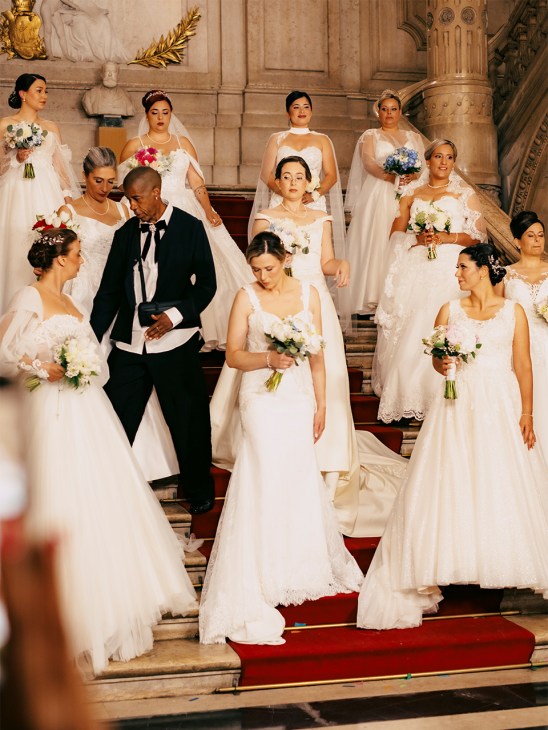
Today’s unusual communal wedding ceremonies are derived from tradition. Taking place since 1958 (albeit with a 30-year hiatus from 1974), these weddings are closely tied not only to Saint Anthony but also the city: everything from the dresses and banquets to the hairdos and honeymoons are presents from the municipality or local businesses.
The brides, many of whom are now clad in sparkling corsets and festooned in layers of white tulle, step onto a grand double staircase lined with golden candelabras. The wedding planner prods and cajoles the mothers and fathers up and down the steps for photographs, before everyone moves into the grand hall for the ceremony.
These five couples – who are all Lisbon residents but, attesting to the city’s changing face, include Chilean, Argentinian and German nationals – take their seats. We are in a stately room that’s adorned with frescoes and fringed with heavy red curtains. The couples receive a swift blessing from the mayor before the officiant begins the otherwise rather by-the-book ceremony. Next to the wooden doors, TV crews frame close-ups of brides’ faces. Producers with headsets and schedules in hand clip along the marble corridors, quietly directing the live transmission that’s being beamed around the country by state broadcaster RTP. Couples take turns to stand and read their vows, stuttering and wiping away tears – intimate moments that are promptly broadcast on TV.
With their unions lawfully made, the newlyweds step onto the balcony to greet those assembled – a moment akin to members of royalty addressing their subjects. Next, it’s to Praça do Município for a first dance. The music of a string quartet swells as the sun, already high in the sky, pushes the mercury past 30C. Around the square, in streets and alleyways, colourful triangular flags are strung up in preparation for tonight’s main event. The arraias, traditional open-air parties, will soon take over the city.
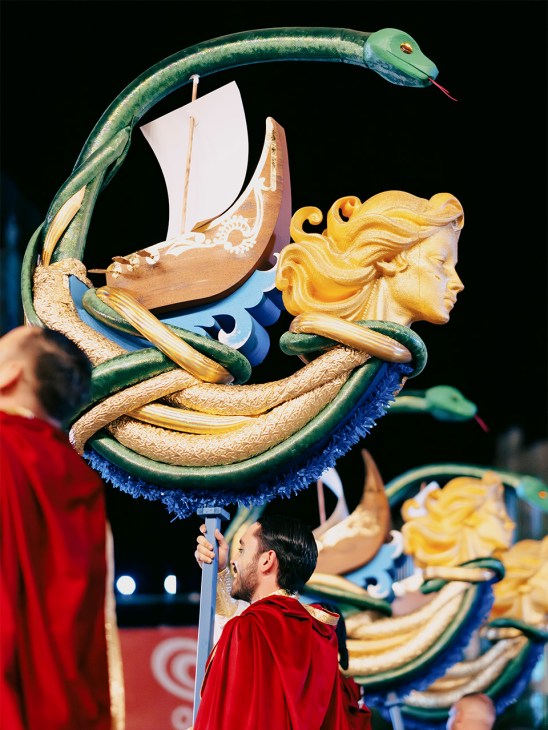
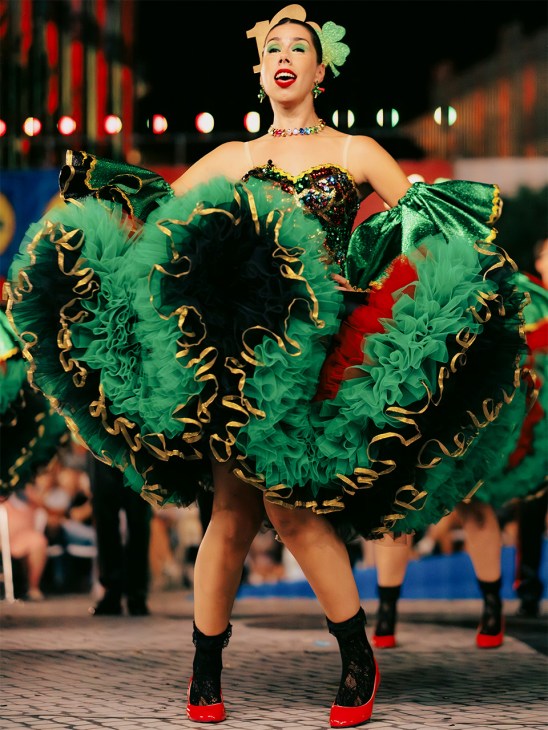
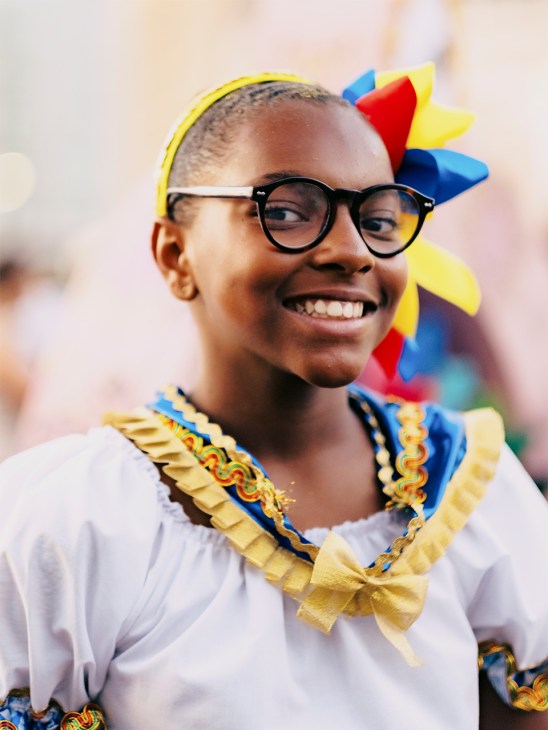
While the season’s festivities are linked to Portugal’s Catholicism, they have a life of their own that predates the church and still make sense in a more secular age. In pre-Christian times, the season marked the bounty of harvest; today it’s an excuse to drink beer, enjoy grilled sardines and indulge in street dancing to the sound of pimba, a kitschy genre of pop music.
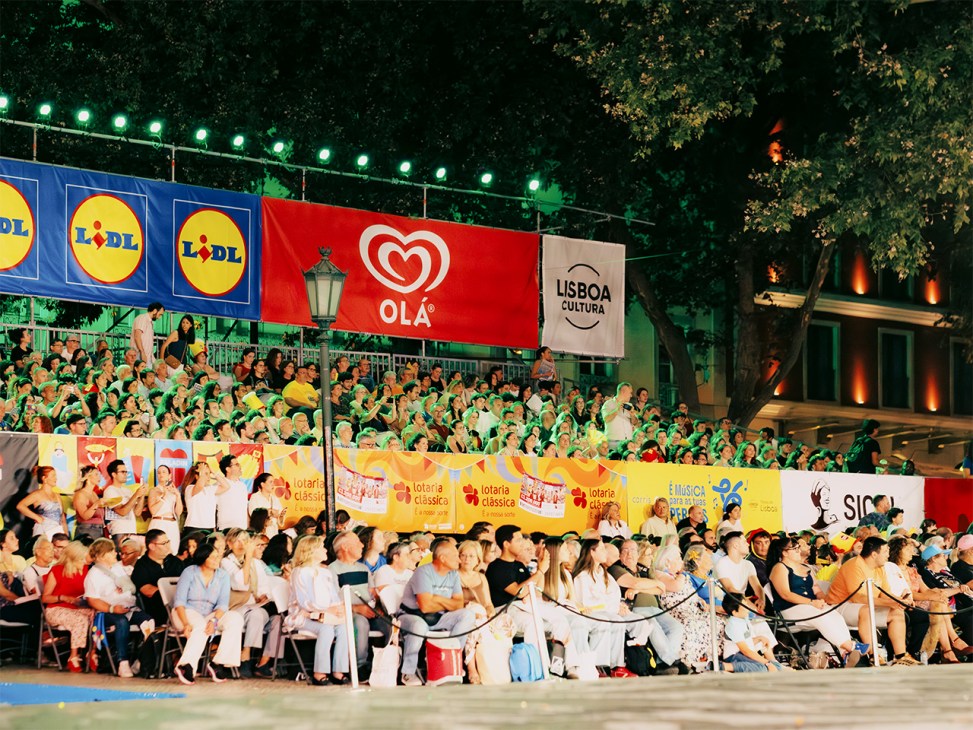
It’s 20.00 and Avenida da Liberdade has been fenced off with metal barricades. People are already lining the way, having arrived early to secure a view, as tourists stop to look on in wonder. After the confetti has settled on the weddings, it’s time for the marchas populares, a glittery pageant in which the city’s neighbourhoods stage their own processions, a tradition that first started in 1932.
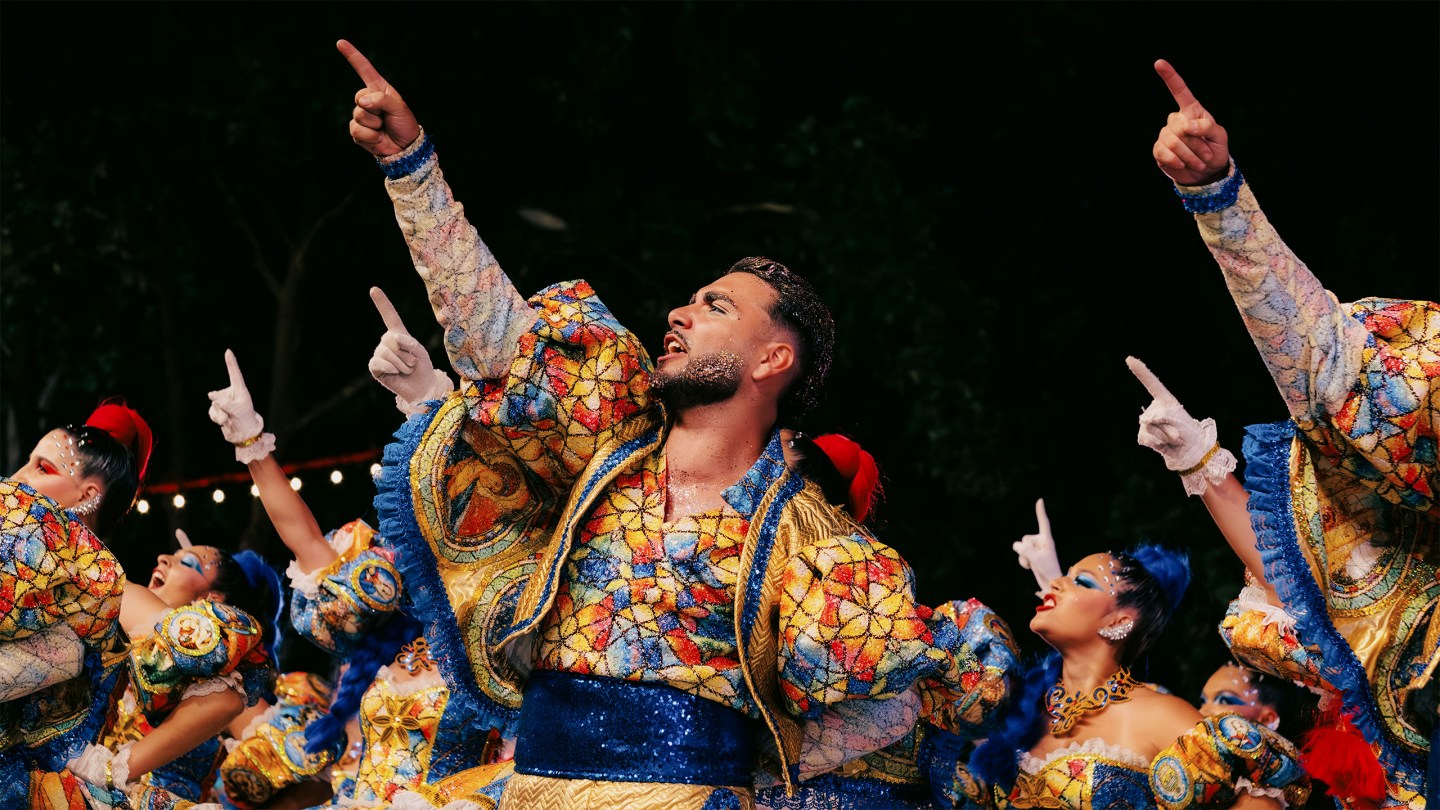
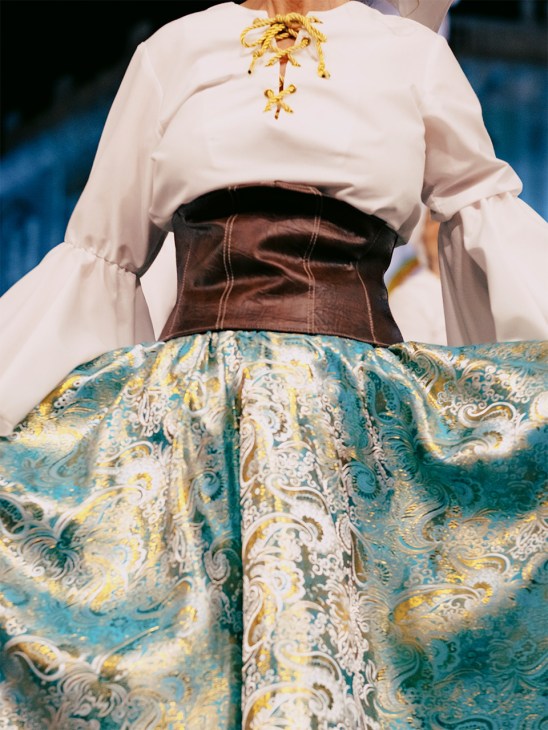
At the top of the avenue, near the Marquês de Pombal roundabout, parade-goers begin to arrive, filling adjacent streets with bursts of colour. They don theatrical, somewhat comical costumes, including oversized sparkly earrings, knee-length golden breeches, shiny stockings and hooped skirts. Most participants are young, some with braces flashing beneath bright lipstick and tattoos peeking from beneath bustiers or shoulder pads.
“My grandmother marched for Campolide and so did my parents,” says one man in a sheer purple top. “This is my 10th time parading for the neighbourhood.” Not everyone participates in honour of their current place of residence, especially since rising prices have pushed many people further out. There’s often a strong family connection to the neighbourhood of choice. “The place where we are born is forever in our hearts,” says one man, attempting to seem serious in his hot-pink flared trousers.
Musicians tune their instruments and stir spectators with bright riffs of brass and percussion, drawing cheers and applause. Swallows slice through the sky and warble as dusk falls and the hour of merriment approaches. Competing groups draw closer, bringing with them an energy built up over months of rehearsals in sports clubs and parish pavilions across Lisbon. Some 500 metres along the avenue, at the main stand, Portugal’s president, António José Seguro, suited city officials and local celebrities eagerly await the start of the spectacle.
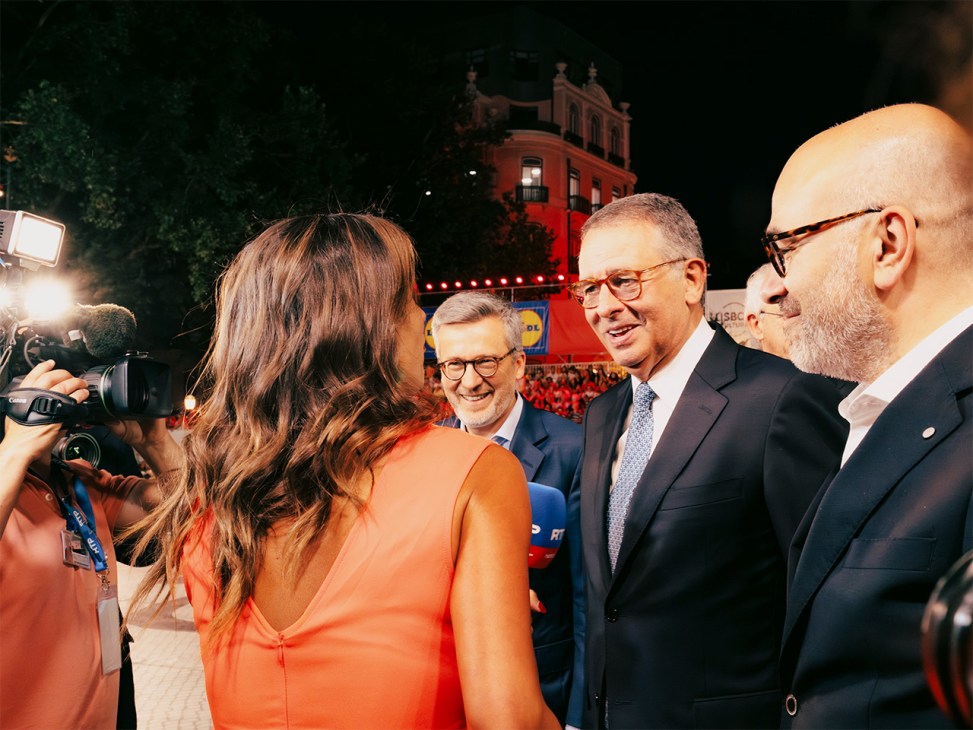
“Every marching group must present a new and an old composition, as well as the grande marcha [a newly composed anchor piece] selected for this year,” says Vítor Agostinho, the president of the jury, who is seated among the dignitaries. It might all look like fun and games but there’s a great deal at stake for those involved. Many of those working backstage are seasoned composers, designers and scenographers. During the next four hours, 20 neighbourhoods will have chances to dazzle the judges. Notes are taken on everything from costumes to music and timing, while penalties are doled out for dropped props.
The newlyweds take to the avenue for a final public appearance – a flash mob performance to a 1980s hit. Then the mood becomes more earnest as the first marching group takes position. With their hands on their waists, chests puffed and chins up, 50 men and women representing Alto do Pina march in a one-two step to the sound of the brass band. Wearing blue and gold – the women adorned with shell necklaces and the men wielding large tridents – they sing of their neighbourhood’s grit and resilience, and praise Poseidon and the varinas (Lisbon’s historic female fish sellers). To the sound of a drumroll, the paraders proclaim their love for their district in the style of battle cries.
Band after band follows, marching with a similar mix of spectacle, courage and camp. There’s a multitude of motifs, some of which are repeated: the Tagus river, for example, or the sea, represented in shimmering blues. These express the fiercely independent neighbourhoods’ common admiration for the riverside city. Salgadeiras – female cod salters – are reimagined in futuristic white-lace headpieces. Cauteleiros, yesteryear’s lottery-ticket sellers, are resurrected with bingo cages stitched onto sleeves and four-leaf clovers on heads.
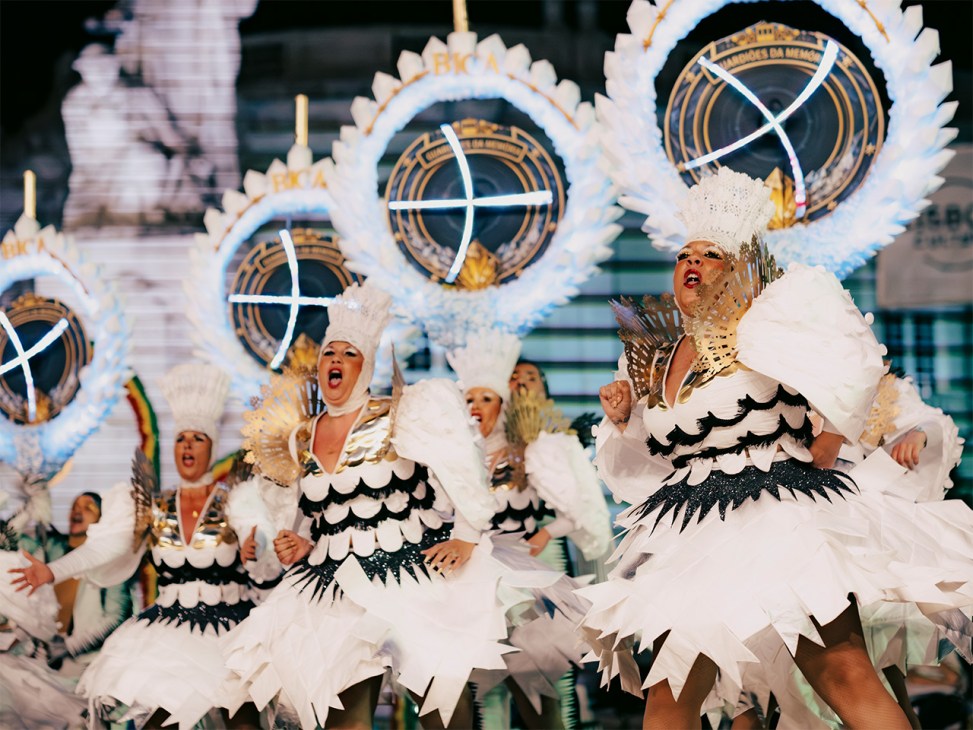
There are tributes to fado, featuring (very) tight sequinned trousers and colourful sleeves as part of an ode to the diversity that’s found in Mouraria’s streets, which are the birthplace of the melancholic musical genre. Inevitably, Saint Anthony receives a shoutout during every performance. The jaunty rhythm of the grande marcha – its chorus now familiar enough for everyone to sing along – carries group after group in and out.
Among those in the stands, no one knows the words better than José Quintela, the author of the 2026 grande marcha’s lyrics, this year themed around the slightly stodgy theme of the 40th anniversary of Portugal’s accession to the European Union. His song extols Lisbon’s open-armed embrace of freedom and diversity, painting a picture of a hopeful future and a city that belongs to everyone. “If you look at the history of Lisbon, we have always been a mix of peoples,” says Quintela.
That is true but there’s an unspoken tension running beneath the celebration: between a city projecting itself outwards and one negotiating the local traditions that it risks losing in the process. It’s a paradox that surfaces frequently in newspapers and during conversations in cafés and, tonight, animates many of the marches.


Some performances tackle this tension head on. After a mid-show interval and servings of caldo verde (hot soup on a warm summer night is another of the city’s many loveable contradictions), it’s time for representatives of the historic, hilly district of Alfama to take to the avenue. Dressed in baroque costumes that are the colours of stained glass, punked up with blue braids and glittered beards, they march with locked arms. Their standout composition, The Saints Must Be Crazy, speaks to recent demographic shifts in a tongue-in-cheek fashion: French is increasingly heard on the streets and fado is sung without its traditional shawl, the song’s lyrics point out. The message – perhaps a lampoon of the gentrification debate – is embellished with cheerleader-style lifts and confetti, which draw loud applause and hurrahs from the audience.
It’s now close to 01.00 and the crowds are thinning but many who remain continue to follow attentively and toes are still tapping. There’s no grand finale. After the last marching band parades down the avenue, the jury retreats to a nearby cinema to deliberate. The results will be announced in the morning. On the pavements behind the avenue, branded paraphernalia of dubious quality is handed out – hats shaped like beer mugs and glasses resembling sardines that might be deemed too cheesy for the average stag do. Stalls sell scratchcards; the cauteleiros might be gone but the dream of fair winds, fortune and chance is still part of the city’s story. The buildings that line Avenida da Liberdade, which is home to elegant international boutiques, overlook the throngs of people coming and going, some weaving through the crowds on their way to the next party, others wobbling home to the neighbourhoods that were just represented. The show is over for another year but its inspiration – this city of contradictions, traditions and exuberance – will be back to its old tricks in the morning.