The tote-bag economy is taking over retail
In Paris and beyond, retailers’ branded bags have become must-have items. Once an afterthought, they now risk eclipsing the wares that their purveyors are principally known for.
Not too long ago I saw a young couple step into Shakespeare and Company, Paris’s storied English-language bookshop. After looking around, one of them turned to the other and said, “Oh. It’s just books.” Perhaps they were looking for a café. Despite their evident disappointment, I’m pretty sure that they left with one of the shop’s coveted tote bags.
No one needs another tote: our cupboards runneth over with them. They accumulate in our closets but more of us seem to be seeking them as souvenirs than ever, to serve as canvas chronicles of our tastes and travels. The tote-bag market in 2025 was worth $2.75bn (€2.33bn). They have, in effect, become the concert T-shirts of our time.
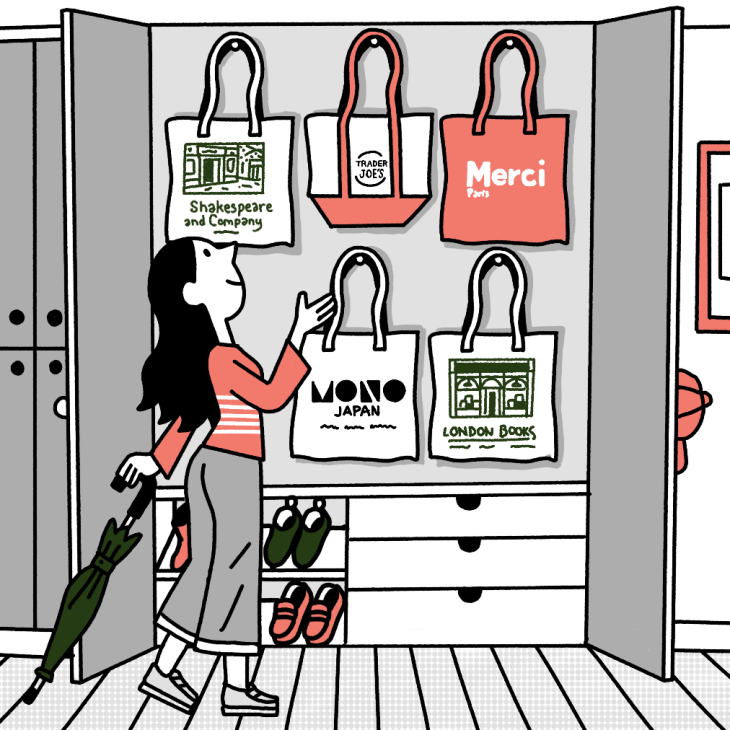
In the French capital, where I live, demand for these sacks is sky high. The trouble is that tote-seekers are warping the businesses that they claim to love. Some of my favourite shops are overrun with people who aren’t even there to buy what the establishment is known for. What they want is a branded bag that doesn’t scream “souvenir”. It simply whispers, “I shop in Paris and might even live there.” Sure, these visitors might walk out with a book, a bowl or a pair of jeans. But what they came for is visible proof of their connection to the City of Light.
At Merci, a chic shop in the Marais, you’ll find bed linens in saturated colours, fashionably lumpy pottery and luxe jumpers. It’s like the old Barneys New York if Barney had grown up in Brooklyn with French parents. But so many people now show up for its bags that the shop has now devoted a register to them and put up a blazing neon sign saying “Le Tote”. Merch seems to be eating up more and more of its space. You have to fight through an ocean of totes, banana bags and trinkets to get to the shoes and clothing.
Local customers of any shop with a coveted tote brace themselves for the summer hordes. Queueing times in the line outside Shakespeare and Company can be 30 minutes or more. (Somehow, I can’t picture the world’s next James Baldwin waiting out there in the heat.) Maybe it should set up a dedicated tote stand, like Merci. Then again, perhaps the bags serve as bait, luring customers to the books. But there must be an existential tipping point at which a business starts selling more souvenirs than anything else.
Some people go to even greater extremes to signal international-shopper status with totes. Fashionable folk in London, Tokyo and Paris are carrying bags from a US grocery chain called Trader Joe’s, a very unfancy place that many of them have never even set foot in. The bags sell in the US for less than $3 (€2.50) and the company doesn’t offer them online. Yet trend followers have paid hundreds for that elusive American cachet on Ebay and even more for rare versions.
Significantly overpaying for a canvas bag from a grocery shop might be the souvenir-tote obsession in a nutshell. I admit that I probably won’t be able to resist buying a few more of them from places that I want to be associated with or support. But there’s something a bit weird about having a cabinet stuffed with empty bags. Sure, they’re souvenirs of places that we have visited, worked or shopped. But we’ll never use them all. We buy these things for what they signal to the world but the story that truly matters is what we carry inside them: the Lewis and Clark-level survival kit that we lug to work, the gifts for the friend in hospital and the lopsided apple cake that we’re bringing over for dinner tonight.
Susanna Schrobsdorff is a former New Yorker who has relocated to Paris. She writes the It’s Not Just You newsletter on Substack. She was previously an executive editor at ‘Time Magazine’.