Alvalade, the 15-minute Lisbon neighbourhood offering the best of urban living and green space
An urban vision that balances social and cultural factors with ambitious streetscapes can deliver thriving neighbourhoods. A case in point is Alvalade, a master plan that has developed into a lively mixed-use area.
The 15-minute city might sound like a contemporary idea but Alvalade has been living it for generations. At central Lisbon’s northern edge, this neighbourhood is home to quiet residential enclaves and bustling commercial streets, avenues lined with modernist buildings, as well as stretches of small, detached homes. There are schools, hospitals, post offices and markets and plenty of tree-shaded pedestrian streets in between. It’s hard to imagine that just 80 years ago this part of town was undeveloped, dotted with rural estates and manor houses.
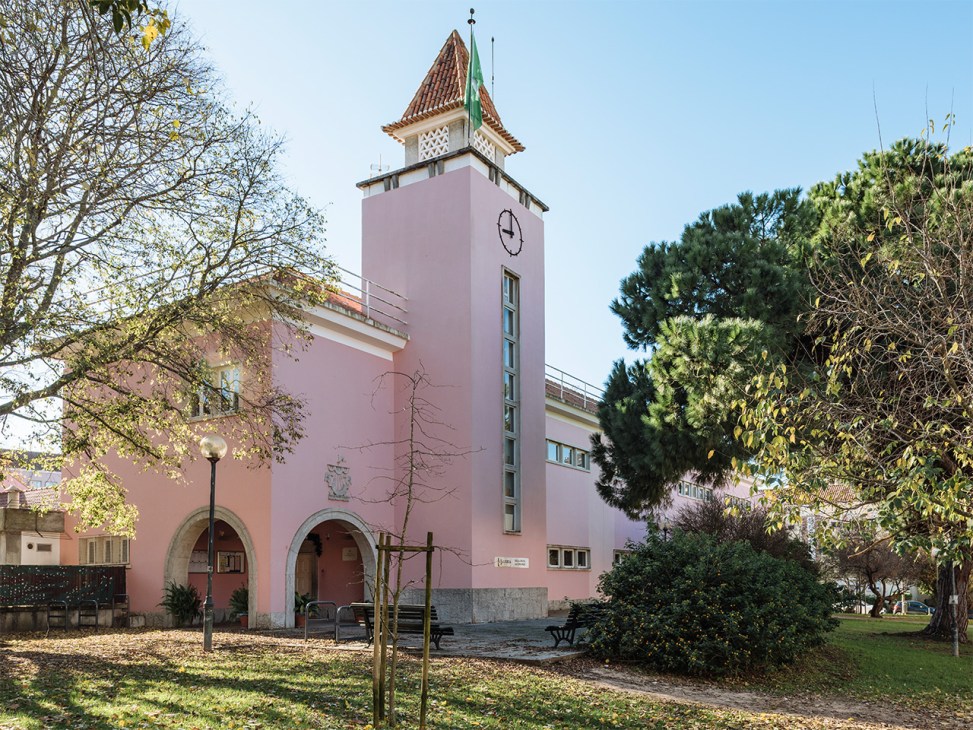
The 1945 urban plan that gave rise to Alvalade was an answer to a major housing crisis in Lisbon. In 1938 city mayor Duarte Pacheco commissioned Russian-born French urbanist Étienne de Groër to plan the city’s expansion northward into its peripheries but it was Portuguese architect João Faria da Costa who was later entrusted with shaping the 230 hectares that would become Alvalade.
Inspired by the garden-city movement, Faria da Costa conceived the neighbourhood as a low- to medium-density area with mixed land use. Large avenues were cut across the terrain, boxing in eight areas each given a purpose – residential, civic, industrial and commercial. “The plan took from a utopian urban ideal,” says Nuno Lourenço, an architect working in Alvalade who walks Monocle through the area. “The idea was that it would allow one to simultaneously enjoy what’s good about the city and the countryside so that there was a social and economic harmony of man with nature.”


Designed to house 45,000 people – newcomers from rural Portugal and those displaced by urban renewal elsewhere in the city – Alvalade was to offer a spectrum of affordable housing, from social units to rent- controlled apartments. To fund the development, the local town hall partnered with the country’s social security funds. Under the Estado Novo dictatorship, Faria da Costa’s plan was implemented swiftly: land expropriations had previously begun and construction started in 1947.
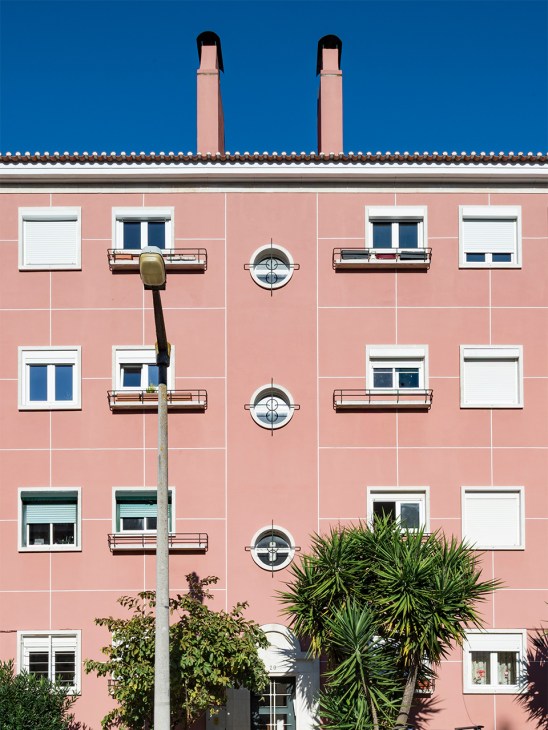
In the first residential zones, three- and four-storey buildings line tree-shaded streets. With simple salmon-pink or yellow façades, these model homes were designed with private backyards so that residents could cultivate small plots. Primary schools, accessed via pedestrian pathways, served as the gravitational pull. “We used to leave for school through the back garden, meeting children on the next street, until we arrived as a group,” says Fernanda Santos, who has lived on one of the U-shaped streets here since 1949. Though many backyards have since been converted into annexes and cars are now much more common, these early plots continue to offer a rare dose of tranquillity in Lisbon. “People still greet each other and when the tangerine tree in our garden bears fruit, it is shared among neighbours,” says Santos.
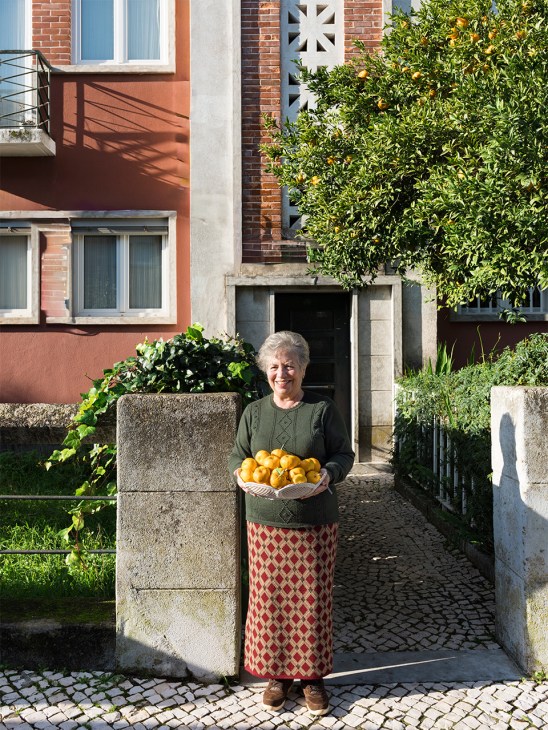
In a telling reversal, these homes, which once commanded the most affordable rents, are now sought-after addresses. “It shows just how relevant the garden-city principles have become again – urban gardening, walkability, proximity,” says Lourenço.
A stone’s throw away, the pace of the neighbourhood shifts. Walking across Avenida de Roma, the broad artery that cuts through Alvalade, Monocle arrives at its commercial core, with Avenida da Igreja as its boisterous high street. Stationers, hardware stores, florists, opticians and plenty of bakeries offer a diversity and density of brick-and-mortar retail.
“Even with plenty of supermarkets around, I buy all my fresh produce from specialty shops – the butcher, the fishmonger, the fruit vendor,” says Filipa Corrêa Mendes, a 35-year-old who moved across town to live on this busy side of Alvalade with her family in 2024. Some businesses, such as ice-cream shop Gelados Conchanata, have been here almost as long as the neighbourhood itself. Others, such as the fashion boutiques of Avenida de Roma, have given way to a more familiar landscape of franchise establishments.
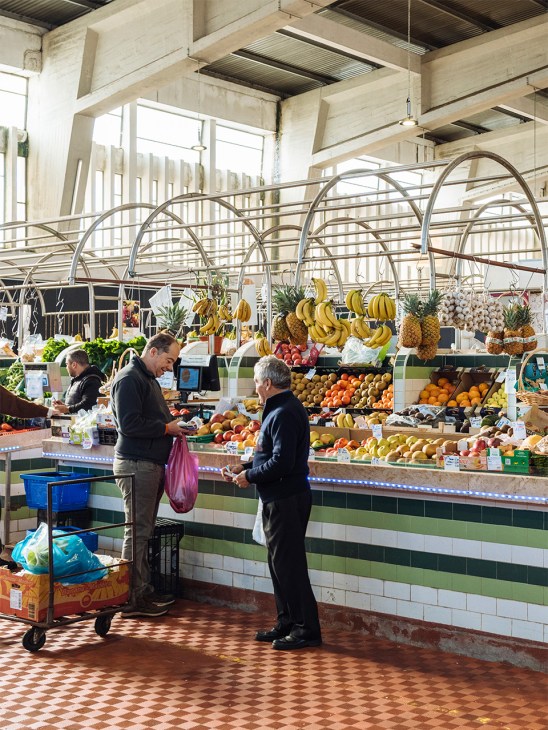
The market, foreseen in Faria da Costa’s plan but only built in 1964, still anchors daily life here. The original master plan also reserved a corner of Alvalade’s commercial zone for crafts and niche industries. Small warehouses, once home to typographers and carpenters, now house art galleries and even the newsroom of online daily Observador – the scale perfectly suited for modern-day industries. “There’s something of old Lisbon here,” says Corrêa Mendes. “But there’s also this lively cultural scene.”
If Alvalade’s conviviality seems to have been inscribed in a blueprint from 1945, part of the neighbourhood’s charm also comes from areas that deviated from the original plan, with successive generations of architects and residents reshaping the neighbourhood over time. A key turning point was the first National Congress of Architecture, which took place in Lisbon in 1948, marking a break with the traditional style of build associated with the Estado Novo regime. Modern architecture began to rise in Lisbon that embraced the principles of Le Corbusier’s Athens Charter – a blueprint for modernist construction.
In Alvalade, Avenida Estados Unidos da América remains one of the city’s most striking testaments to this era, with elongated apartment blocks raised on pilotis. “The plan’s original, more conservative rows of houses were reimagined by architects who were often in opposition to the regime,” says Aquilino Machado, who was born in Bairro das Estacas, a pioneering residential complex built in 1954 at Alvalade’s southern edge. Instead of private backyards, the gardens – designed by landscape architect Gonçalo Ribeiro Telles, who was later jointly responsible for the gardens at Lisbon’s Calouste Gulbenkian Museum – flow freely from one block to the next.
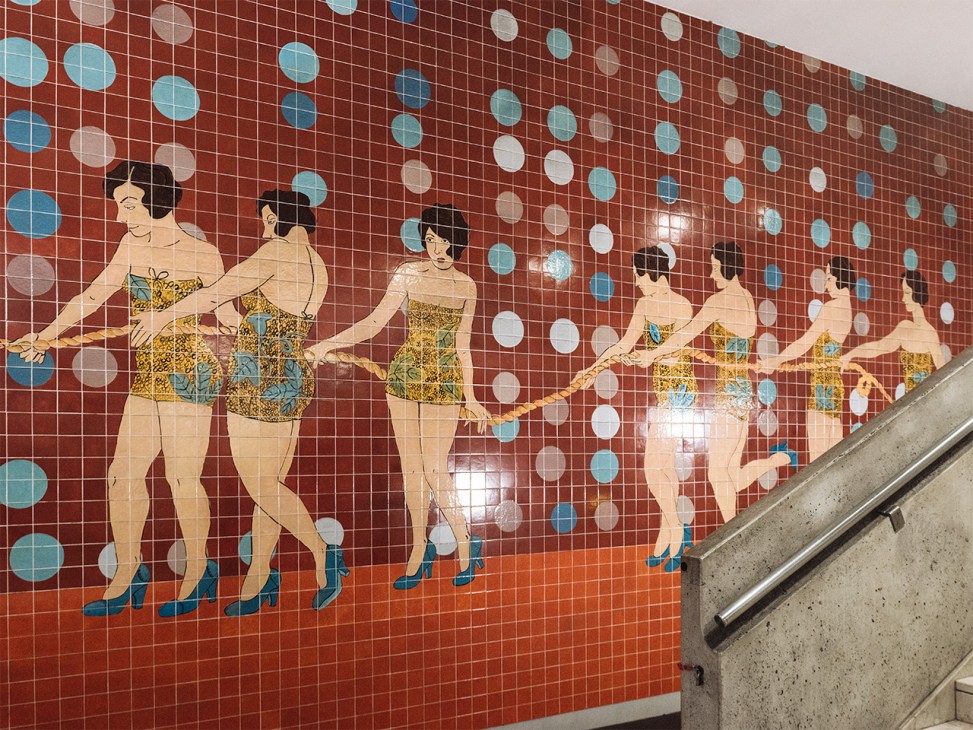
Shifting social and political tides in the years leading up to, and following, the Carnation Revolution in 1974 left their mark on Alvalade, as residents began to inhabit the neighbourhood in new ways. Boosted by the arrival of the Metro in 1972, Alvalade evolved from a quaint peripheral district into a vibrant hub, drawing visitors from across the Portuguese capital to its shops, cinemas and theatres. Local cafés emerged as cultural fixtures, frequented by filmmakers and intellectuals. Some remain, such as the iconic Vá-Vá, though its sleek, renovated interiors now cater to contemporary dining rather than heated political debate.
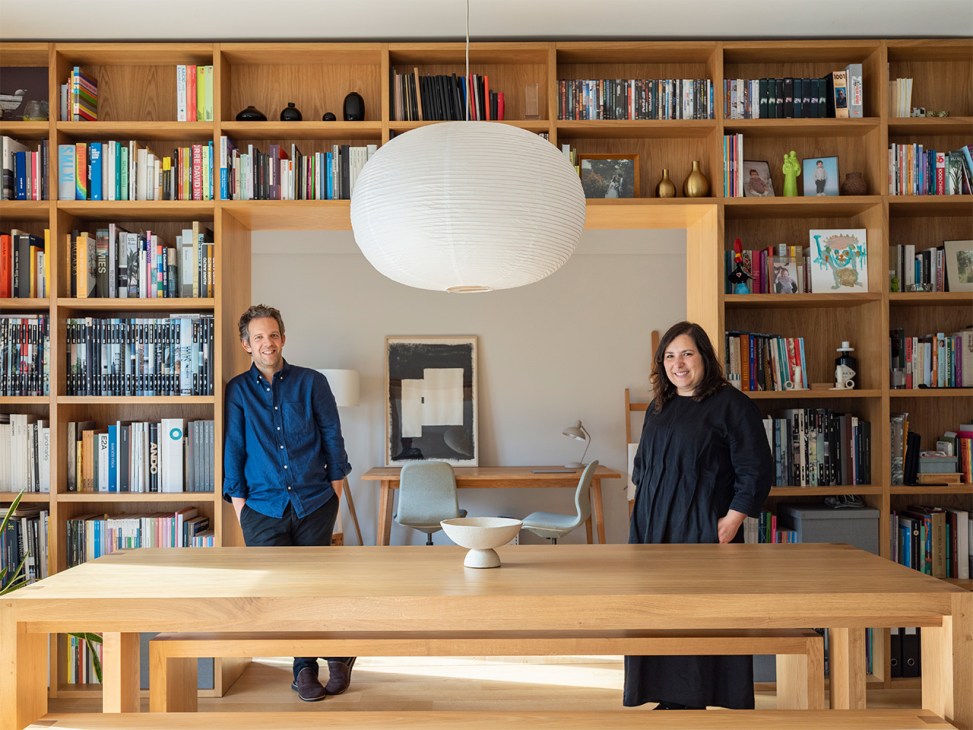
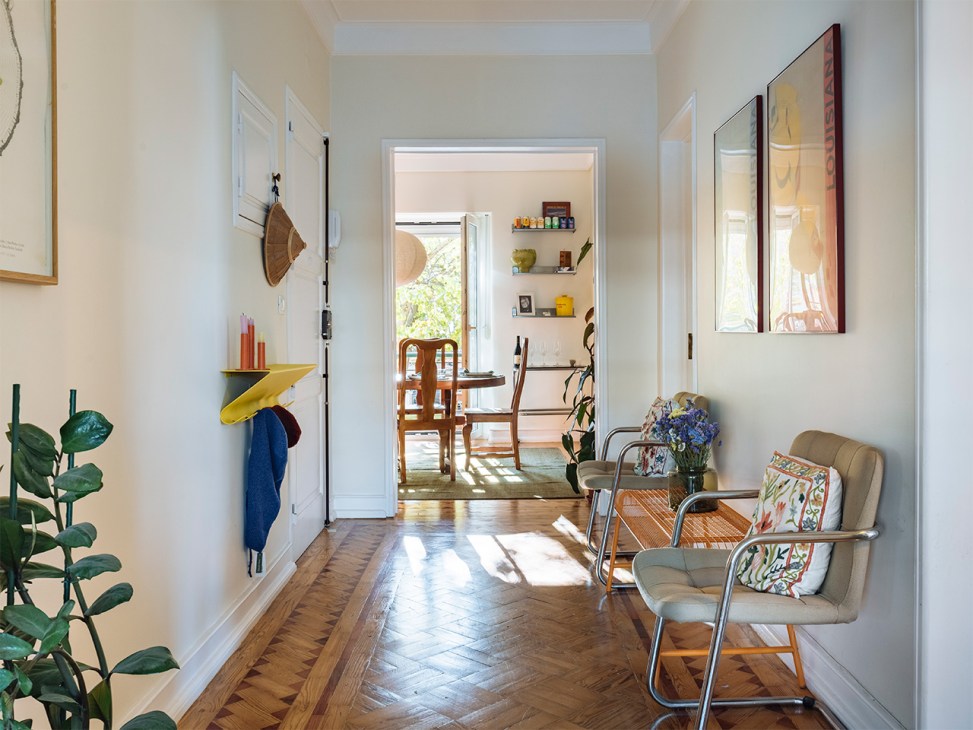
A social renewal is gradually taking place here, with young families living alongside established residents. “If we can, we try to buy homes for our children and grandchildren here,” says Santos. “They want to stay in Alvalade.” Mário Serrano and Margarida Fonseca, for instance, inherited their apartment on Avenida do Brasil from Fonseca’s grandmother. In 2021, the couple, both architects, renovated the space, removing walls to create a light-filled, open-plan apartment. “There’s not much reason for us to leave Alvalade. Our work is here, our children’s schools, the shops and restaurants,” says Serrano. “Everything is within walking distance.” A short distance from their home is José Gomes Ferreira Park, a large green space shaped in the 1950s by Ribeiro Telles but dating back to a time when Alvalade was mostly rural. “It’s a pearl within the city,” says Serrano.
An 18th-century palace stands in the heart of one of Alvalade’s first residential developments as a reminder of the land’s rural past. Today, it houses a library, where long-standing residents such as Santos regularly meet to work on a project that shares and safeguards the area’s memories. Surrounding it, the Ateliês dos Coruchéus – two town-hall-managed buildings – contain artist studios and host exhibitions. Children fill the adjacent playground, creating a generational mix that feels vital. Despite being conceived under a radically different social and political order, the life that continues here is a tribute to 80 years of design and construction for conviviality and community.
Utopian visions
Through the 20th century, plenty of architects dreamed up utopian schemes intent on improving quality of life. Initiatives such as Le Corbusier’s Radiant City (skyscrapers set in vast green spaces), Frank Lloyd Wright’s Broadacre City (decentralised communities) and Tony Garnier’s Une Cité Industrielle (the separation of residential, industrial and civic uses) never saw the light of day – but João Faria da Costa’s work at Alvalade did.
While site-specific, unlike visions such as Le Corbusier’s Radiant City, the Portuguese architect’s vision was defined by making primary schools the nucleus of each sector of the development. With the distance between school and home easily covered on foot, it put pedestrians and people, especially children, at the centre of an urban vision – a quality that helped bind together the community and has, no doubt, contributed to Alvalade’s longevity.