

Rotor is on a mission to rescue the building industry from its throwaway habit
Why demolish and discard when you can dismantle and reuse? We meet the team behind the Brussels firm salvaging materials from old buildings and giving them a second life.
“For most of history, you had to be mad not to reuse,” says Tom Schoonjans, a project manager at Brussels-based design firm Rotor. Today, however, this seems to be a minority position. The construction industry is the world’s biggest environmental polluter, responsible for almost 40 per cent of global carbon emissions. Amid the constant churn of demolitions and renovations, only a small amount of materials is rescued from landfill sites. For more than 20 years, Rotor has been practising and advocating a more sensible way of building.
Founded in 2005, Rotor is a non-profit that conducts publicly funded research into reuse projects and helps other architects to incorporate circularity into their work. Soon after its launch, the founders realised that the most direct way to promote reuse was for the company to dismantle buildings itself. Rotor DC, a spin-off salvage business with a warehouse in Evere, was founded in 2016. “One of the issues that we face today is that our economy is very white collar,” says Schoonjans. “People have lost the ability to work with materials, so they’re trying to solve the circular-economy equation with digital tools.” But we can’t rely on computers to fix this problem.
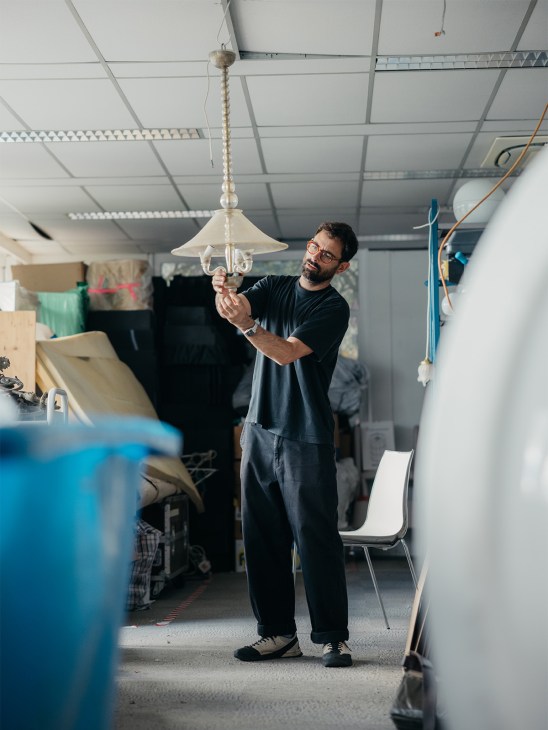
Implementing circularity is easier said than done, says Schoonjans. The existing building – or “the mine”, in industry lingo – first has to be inventoried in a time-consuming process that Rotor calls a “reclamation audit”. Working with developers, engineers and contractors, the architects must figure out what parts of the structure can be reused. Then comes the stage of slicing through floorboards or solid stone, plus cleaning, transporting and storing tonnes of material.
Reuse was historically the norm. Most of the solid stone columns that you see in Italian churches once belonged to earlier buildings. Aristocrats in medieval Rome stripped the marble off the Colosseum and repurposed it for their palace façades. In Istanbul, sixth-century builders used stone Medusa heads sourced from a Roman temple to build water cisterns. Stones repurposed in this way are called spolia – a word that comes from the Latin for “spoils” taken in war. Until the 1930s, demolition rubble wasn’t considered waste. Contractors paid for the right to take apart an old building, then turned a profit by selling the materials, from wooden staircases to floor tiles, to the public.
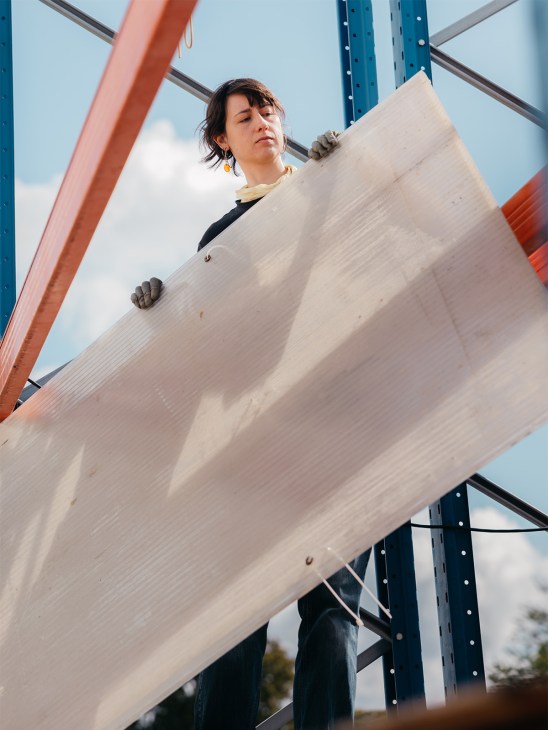
unfashionable materials in a new light
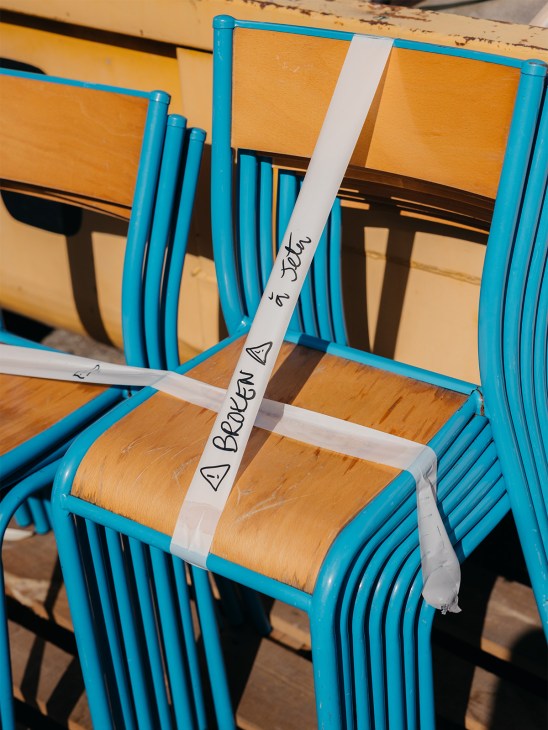
prices if you’re willing to make repairs
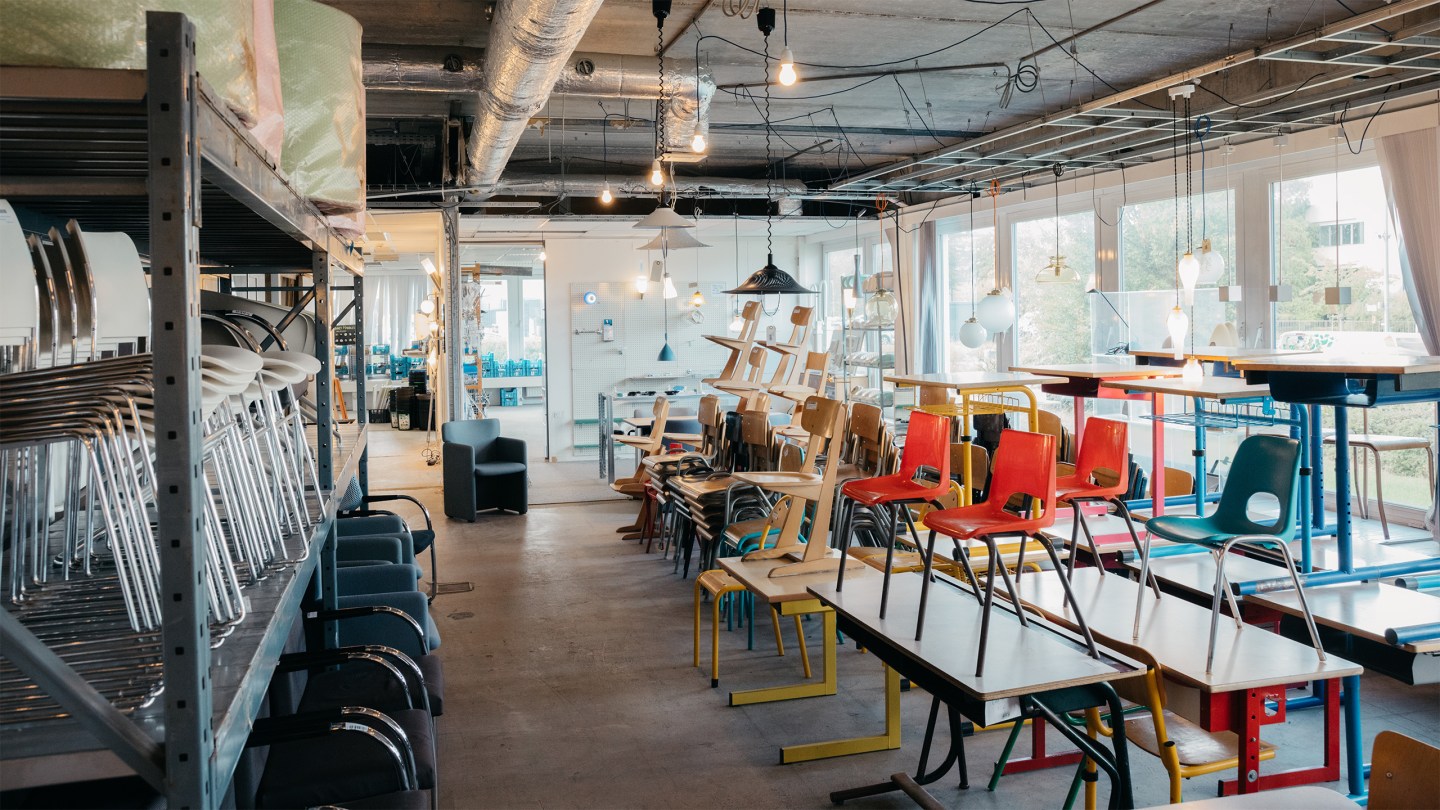
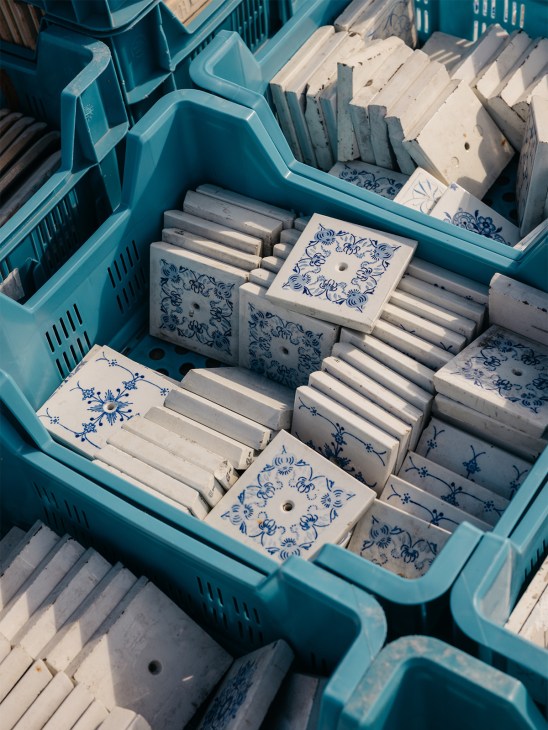
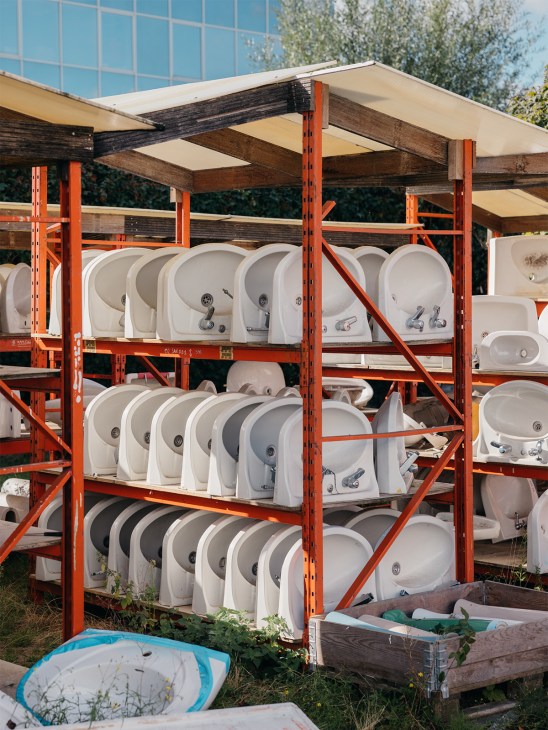
It was only with the expansion of industrially produced materials after the Second World War and the usurping of stone and brick by concrete that new became cheaper than old. Entire buildings started to end up in landfills. Rotor DC is bucking this trend. In its warehouse, there are long corridors lined with doors and crates of granite cobblestones; an outdoor shed is dedicated to sinks. There’s plenty of office furniture and enough school desks to fill dozens of classrooms. The company’s speciality is tiles. “We are obsessed,” says Margot Saulnier, Rotor DC’s commercial director and co-manager. Thanks to a proprietary machine that cuts off old mortar, Rotor DC can offer vintage Winckelmans tiles that once covered the floor of a school or a municipal building but now look as good as new.
The business’s focus is on postwar buildings, which most salvage yards would consider unworthy of their time. “The aesthetic barriers to reuse can be hard to overcome,” says Schoonjans. He gives the example of granite, which had a spell of popularity in 1990s countertops but now looks dated. The team tries to give the material a fresh appeal through the way that it’s cleaned and presented.


One of the well-worn adages of modernism is that a designer should be able to work from the scale of a spoon to that of a city. Rotor approaches reuse with the same philosophy – or, at least, from the scale of a bathroom tile to that of an office park.
For the past decade, the non-profit has worked on integrating reclaimed materials into the renovations of two modernist office buildings in Brussels, Multi and Oxy. The architects catalogued the contents of the existing structures and figured out what could be reclaimed, repaired and replaced with pre-used pieces.
Since both buildings were renovations, almost 90 per cent of the original materials were preserved. For Oxy alone, however, the remaining 10 per cent amounted to more than 30,000 tonnes of new materials. Rotor sourced about 600 tonnes of reclaimed materials – mostly natural stone for panelling and pavements – from other office renovations around Europe. This amounts to about 2 per cent of the new materials used in the building. That might not sound like much but it’s equivalent to the entire annual turnover of Rotor DC’s warehouse in Evere.


“With reuse, there’s no way to meet existing demand,” says Schoonjans. In other words, quality salvage is unable to keep up with a global construction industry built to, well, build. “We need to question the demand first and foremost.” Fortunately, though, Rotor is growing. Next year it begins a major renovation of its site in Evere. The expansion will triple the amount of storage space that the company has access to, easing one of the main problems facing reuse companies – that there’s insufficient room to store everything. The space has become increasingly necessary as Rotor’s fame has grown. Rotor DC’s materials used to come from salvage operations run by the non-profit Rotor; now they’re from its own dismantling work and from contractors and individuals bringing items to Evere.
Rotor has become one of Europe’s most established salvage experts. The firm’s practical know-how is presumably appreciated by bureaucrats racking their brains for ways to clean up the continent’s construction sector. There are many policies that could help reuse to become more common: creating strong tax incentives for developments that adopt it, levying a heftier carbon tax on the industry’s biggest polluters or loosening rules around the standardisation of building components. Project by project, Rotor shows that working with old materials is compatible with modern architecture. “Proving something by making is really powerful,” says Saulnier.
rotordb.org; rotordc.com