How Devaux & Devaux revived Mont Salève, the iconic 1930s cable-car station above Geneva
'The balcony of Geneva' has finally been fully realised by an extensive renovation.
Sitting at a height of 1,100 metres, the Mont Salève cable-car station might technically be located in the Haute-Savoie region of France but the area is commonly referred to as “the balcony of Geneva”, thanks to the views of the Swiss city and the surrounding lake that it offers.
Dreamed up by Swiss architect Maurice Braillard and built in 1932, the station was resurrected last year after extensive work by Paris-based architecture firm Devaux & Devaux Architectes (DDA). “It’s a very poetic project because, all the way up there, you’re suspended between the sky and the ground below,” says DDA’s founder, David Devaux. “It’s a type of architecture that doesn’t really touch the ground. When you’re in the building, you feel as though you’re flying through the clouds.”
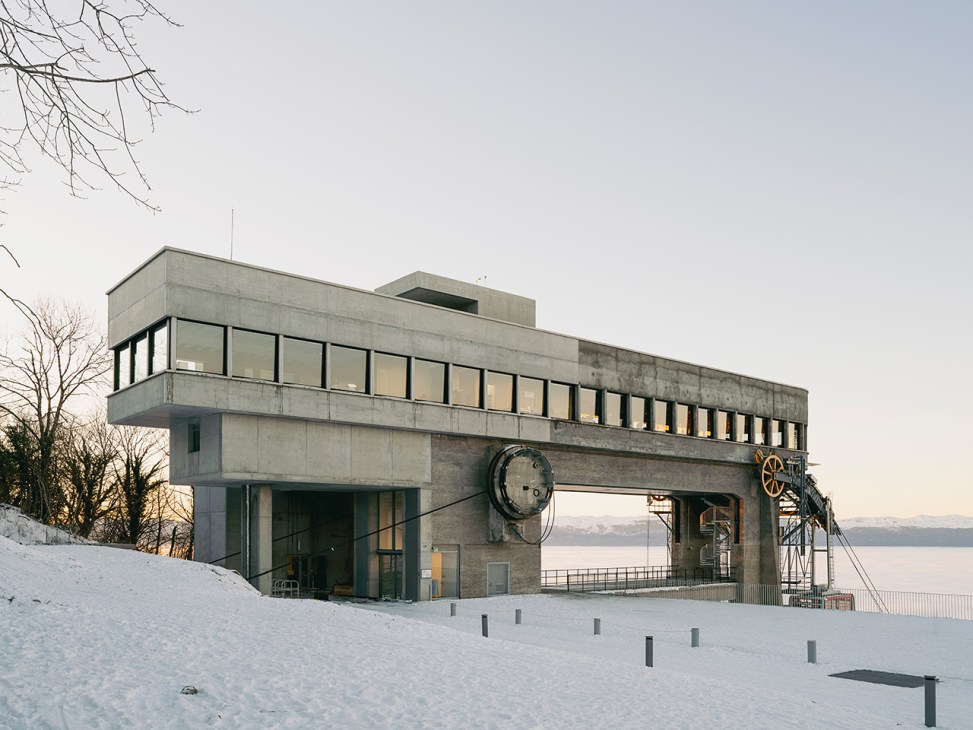
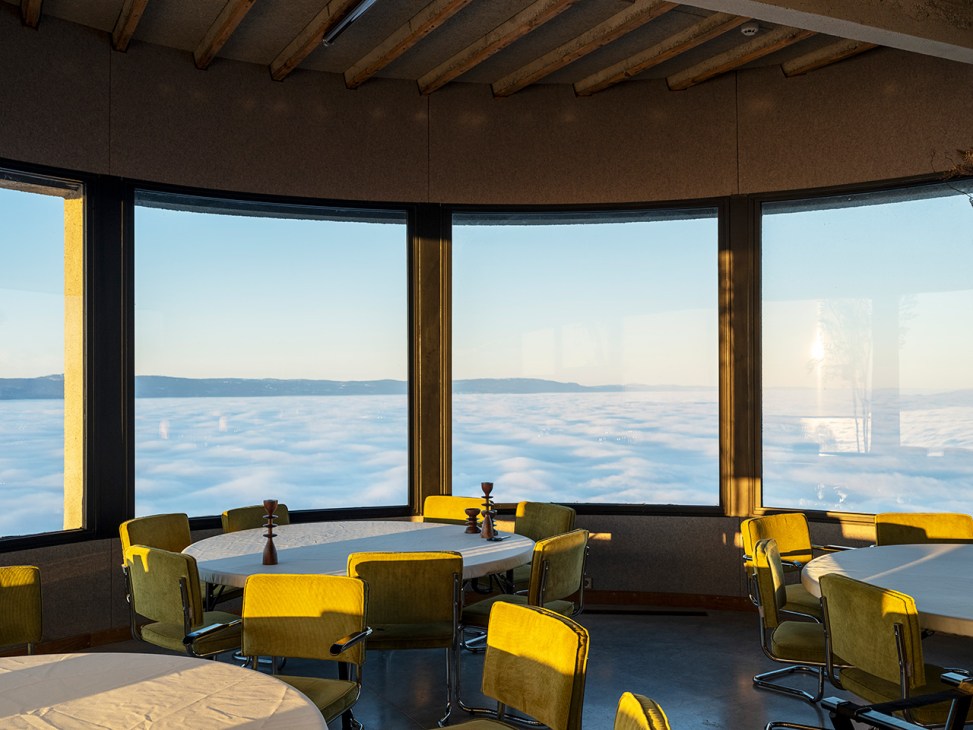
With his partner, Claudia Devaux, David won a competition in 2018 to restore the structure to its former glory – as well as going one step further. Today, a climbing wall on the western side of the building, an exhibition space, coffee shops on the ground floor and on the top level terrace, as well as a restaurant with panoramic views offer a wide range of visitor experiences.
However, hikers, paragliders and climbers on their way to the great outdoors can simply bypass these facilities if they want to. “It was important for us to provide direct access to the mountains without people having to pass through an exhibition or a gift shop,” says David, before adding that the strength of the project lies in the station’s inherent role as a piece of infrastructure that requiring the use of a car.
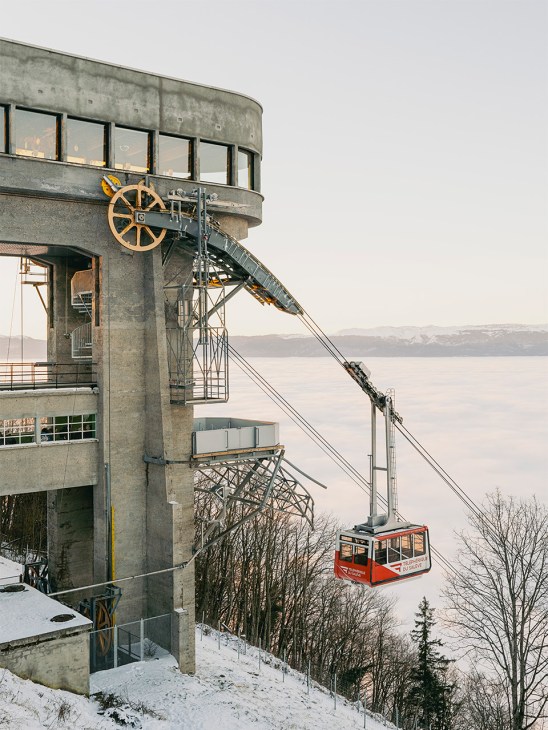
A key goal of the restoration was to reveal the original concrete façades from the 1930s that had been covered up in the 1980s as part of a preservation effort. “It was an atypical project in many ways because it was a historical, unfinished monument and perched halfway up a mountain,” adds David. “There were very specific stakes at play but the intention was never to pick up the commission where [Braillard] had left it. We took over a space that he had built but wasn’t habitable. Then we made the space come to life, as he had imagined.”
DDA chose to keep additions to the structure that were in keeping with the existing concrete, steel and glass – materials often used throughout the mountainous region for their durability and ability to withstand the elements. And as the station projects forward over a cliff, the use of hardy concrete offers the reassurance of human engineering within a natural context, albeit in a way that seeks to celebrate, rather than dominate, the landscape. “What’s interesting is not really the building itself but the rapport with nature that it facilitates,” says David. “It frames the horizon, the sky, the emptiness underneath. It’s very powerful as an experience.”
dda-architectes.com