
Where ideas have room to breathe: Ten creatives on the personal spaces that shape their work
We meet outstanding architects, artists and designers in spaces that have influenced them, from dance floors to museum halls, to find out how these places have informed their approach to their own practice.
We trust designers to make the buildings and objects that shape our lives. The amount of natural light in a home or the materials that it’s made from can change our mood; the make of a sofa can affect whether we’re able to truly unwind. So where do the people behind our furniture, homes, offices and civic buildings find inspiration? And how do these ideas find their way into their work? Here, we meet outstanding creatives in spaces that have influenced them, from dance floors to museum halls, to find out how these locations have informed their approach.
1.
Joana Abreu
Abu Dhabi office, UAE
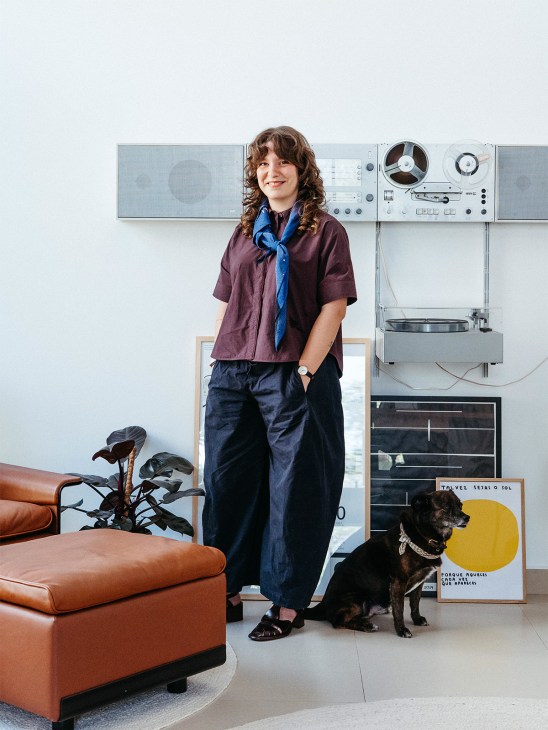
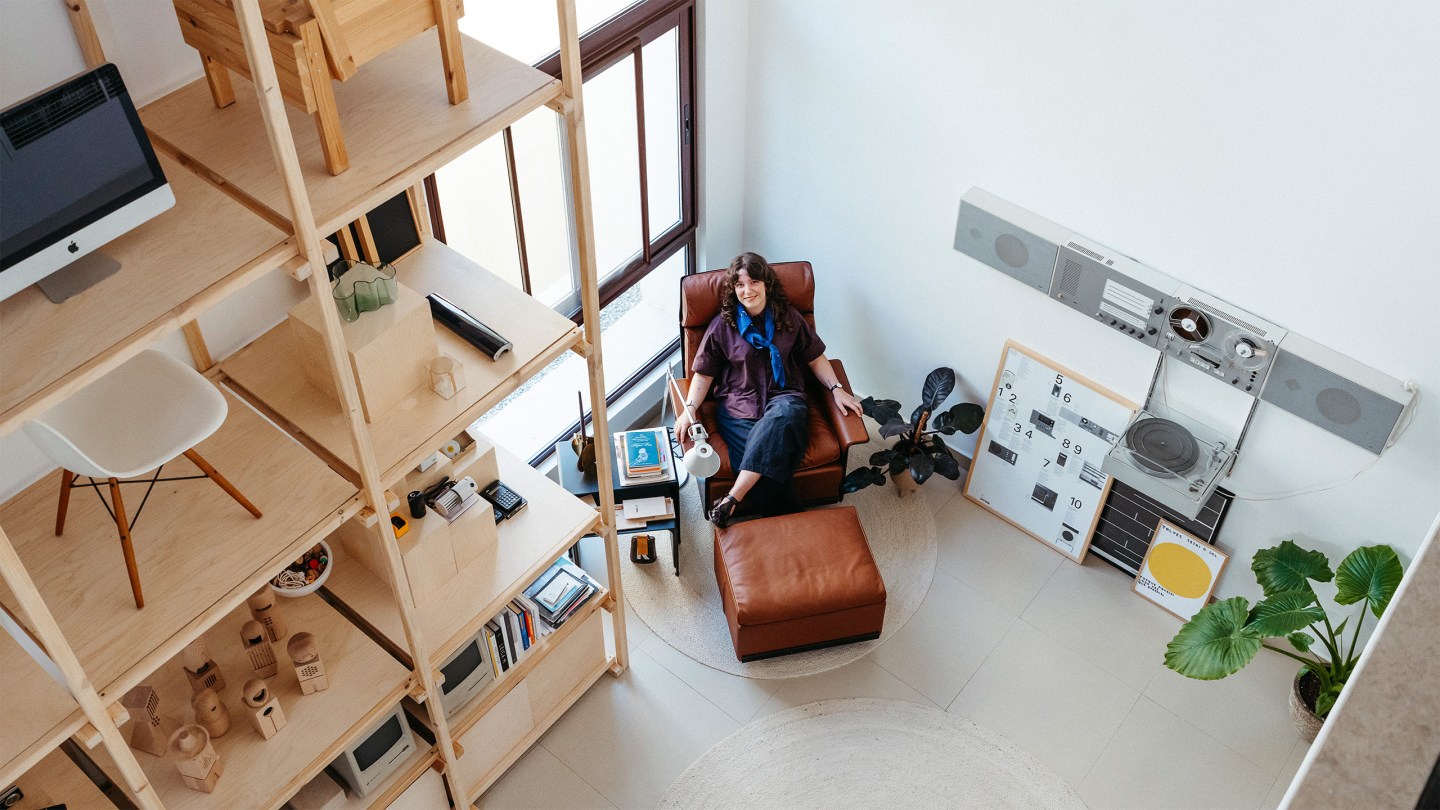
Joana Abreu’s favourite place to clear her head is rather full: a double-height office in Abu Dhabi with pale timber shelving, packed with cameras, chairs and a Dieter Rams sound system. “You walk inside and just want to take it all in,” says the founder and creative director of design platform and shop Fount.
The office and collection belong to her father, designer Nuno Abreu. Spending time in the room, which contains so many desirable things, has taught her to ask how much is actually necessary – a useful question for someone whose working life involves deciding what other people might want to have in their homes. “In this age of Pinterest and Instagram, you can get very lost,” she says. Here, she can return to familiar objects and reconsider the features that have kept them relevant. “It helps me to focus on what is essential and functional – but beautiful at the same time.”
Joana Abreu is the creative director of Fount, a concept shop and community space.
2.
Francisco Jaramillo
Museum of Modern Art of Medellín, Colombia
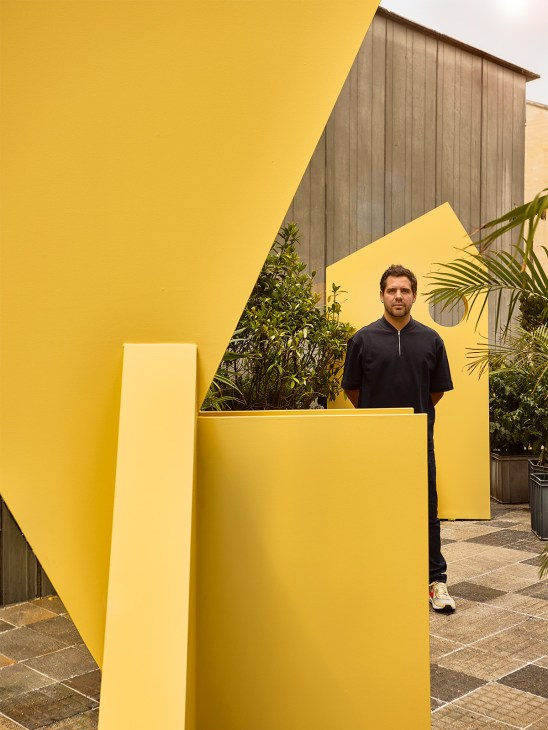
“When the museum opened, there was nothing else here,” says Francisco Jaramillo, the founder of design studio Fango, glancing at the gleaming high-rises and buzzing cafés that now surround the Museum of Modern Art of Medellín (MAMM). When the soaring brutalist extension was unveiled in 2015 in Ciudad del Río, a once-gritty manufacturing district, there was nothing quite like it in the city, both architecturally and culturally. Medellín was beginning to earn a reputation for its architecture but its design scene was still fairly nascent. “I remember thinking, ‘Wow, something like this is happening in my city,’” says Jaramillo.
The new building, with its striking façades of concrete, glass and perforated screens, was designed by local studio Ctrl G in collaboration with Peruvian firm 51-1 Arquitectos; it is an extension of the museum’s previous space, a steel plant dating back to 1938. The architectural addition has not only gone on to transform Ciudad del Río but changed the ways in which the people of Medellín appreciate design. It began by hosting free outdoor film screenings on the last Friday of every month, making a significant cultural statement in a city marked by deep economic inequality. Jaramillo remembers arriving to find people from all walks of life huddled together in the plaza, their eyes fixed on the giant screen. It was a remarkable sight and made him realise that MAMM’s impact reached far beyond the city’s creative circle – a belief that informs his own work with local artisans. “It’s good not just for designers but for the wider community too,” he says.
Francisco Jaramillo runs Fango, a design studio based between Medellín and Barcelona, with a practice known for using local materials and working with skilled artisans.
3.
Isern Serra
Tres Xemeneies de Sant Adrià, Spain

In the early 1970s an electric utility company tapped engineering firm Informes y Proyectos to build a new power plant on the seafront in Sant Adrià de Besòs, on the outskirts of Barcelona. As its name suggests, Tres Xemeneies de Sant Adrià is defined by three chimneys that rise 200 metres into the sky, pushing exhaust fumes above Barcelona’s immediate atmosphere. Some 50 years later – and 15 years since the plant’s closure – it remains a regional landmark. “It was built for a precise and necessary purpose, with no intention of becoming beautiful,” says Isern Serra. “Yet, with time, it has acquired an extraordinary presence.”
The Barcelona-based designer has negotiated Monocle’s access to the facility, which is typically closed to the public, to show how its inadvertent longevity has made it a source of architectural inspiration. “It reinforces something that I constantly look for in my work: the idea that architecture does not need to explain itself,” he says. “I am interested in spaces that are calm, essential and honest, where materials, light and proportions are allowed to speak for themselves.” But Serra also sees it as an example of how architecture can foster a sense of community and carry shared memories. Plans were laid to demolish the plant but grass-roots local campaigns ensured its eventual preservation. Most recently, it has hosted exhibitions and events, and there are plans afoot for it to be transformed into a media hub. “Too often, buildings are replaced and the traces of their past disappear with them,” says Serra. “But a city should be able to evolve, adding layers of meaning, without losing its identity.”
Isern Serra is a Barcelona-based designer whose work spans architecture, interiors, furniture, lighting and exhibition design.
4.
Andra Matin
AM residence, Indonesia
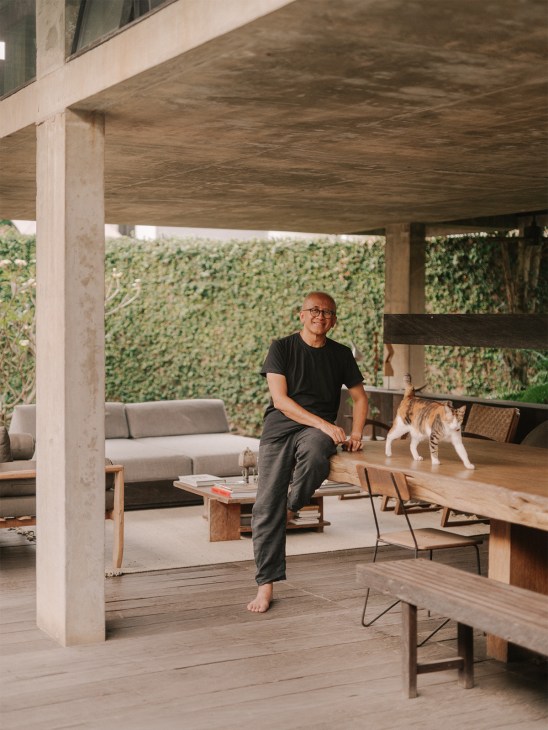
“I created this house without any architectural drawings,” says Andra Matin, welcoming Monocle to his home in the quiet, leafy neighbourhood of Bintaro in South Jakarta. “I wanted to prove to myself that I could still design after 20 years of being an architect.” Made predominantly from concrete and kayu ulin (local ironwood), the Indonesian architect’s house is a testament to his approach to architecture – one in which he “celebrates the country’s tropicality in a modern setting”. Inspired by the traditional Balinese bale (an open-sided pavilion), Matin created a living and dining space next to a verdant garden and enticing pool, where he and his family (and 70 cats) can sit freely and enjoy Jakarta’s balmy climate, with unobstructed views of a leafy nearby square.
The home complements a wider collection of existing spaces and buildings now owned by Matin, including his studio and a neighbouring coffee shop. The result is a development that is more than a family home but rather a living, working architectural laboratory. Here, Matin has created a peaceful contrast to the bustling city, where architecture and nature combine: a chance to put into practice what he sees as the essential qualities of good architecture. “I believe in context,” he says, explaining that good design needs to be connected to place. “Whether it’s climate or culture, technological or social, design has to relate to its context.”
Andra Matin is Indonesia’s leading contemporary architect, creating homes and civic structures that are in tune with the country’s tropical climate.
5.
Stephanie Barba Mendoza
House of Koko, UK
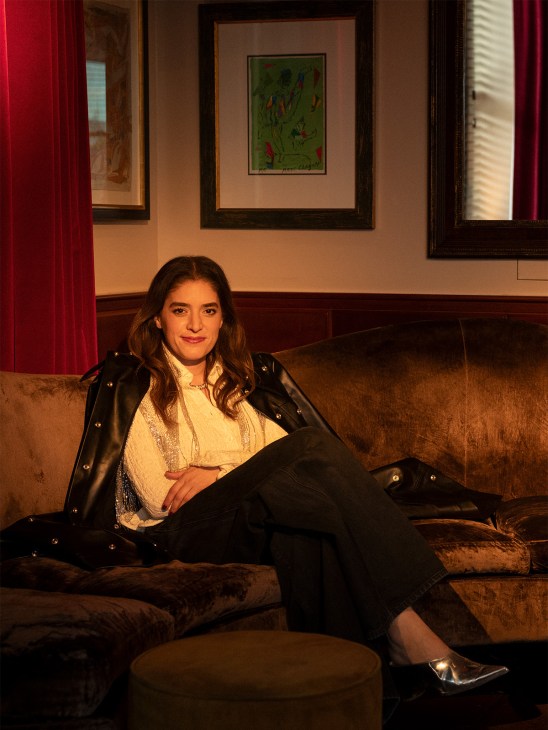
“One of my happiest places is the dance floor,” says Stephanie Barba Mendoza. “I love music. For me, dancing is almost like a religious experience.” The Mexico-born interior designer has spent more than 20 years in the music-filled UK capital, and Koko has a special place in her heart. Monocle meets her at the House of Koko, the backstage, members-only area of the Camden venue that first opened in 1900 as a Victorian theatre, before evolving into a leading music outpost. Part of its appeal, says Barba Mendoza, is its many levels, the quality of the sound system and lighting, and, especially, the signature disco ball above the main dance floor. “But obviously the most important thing is the line-up,” she says. “It brings really great musicians.”
Beyond the dance floor, Barba Mendoza’s professional life is thriving. She established her namesake design office in 2020. Music, appropriately, permeates her work process; the same tracks that bounce from wall to wall in Koko help to give her inspiration when she’s working. “When I do anything creative, I always put my headphones on with dance music,” she says. “I get excited and I’m dancing as I’m doing stuff. I think if you’re in a good place and you feel great, you’re probably more open to making better things because you’re doing it with a happy thought or feeling.”
Stephanie Barba Mendoza is an interior designer whose bold, sensory designs include residences alongside commercial and hospitality projects.
6.
Manuel Aires Mateus
Atelier Cecílio de Sousa, Portugal
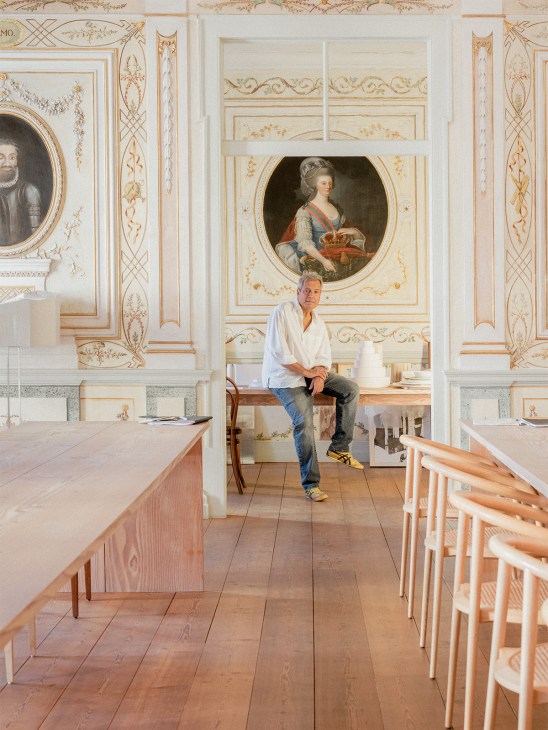
“It’s where I spend most of my time,” says Manuel Aires Mateus, as he welcomes Monocle into the office of his namesake Lisbon-based architecture firm that he established with his brother, Francisco, in 1988. The four-storey townhouse takes its name, Atelier Cecílio de Sousa, from the street on which it stands. The practice moved into the almost 250-year-old structure in 2017. The move followed a restoration that involved the complete rebuilding of its roof and the addition of another floor, with further works carried out with a light touch. Stonework, paintings and stucco ceilings were retained; a curved white staircase is the most significant addition to a building that now holds meeting rooms, workstations, two model-making workshops and a multipurpose space.
“Working in this place, which is full of experiences and has a long history, is about being part of something that reveals the sense of continuity that Europe has,” says Aires Mateus, sitting beneath a portrait of Dona Maria I, Portugal’s queen when the building was constructed in the 18th century (two additional floors had been added in the 1890s). The space, lined with tiled skirtings, wainscoting and framing panels, features a large ceiling mural of horsemen and cherubs. All of this contrasts with the geometric and monolithic architecture for which the firm is known, an approach defined by the play of light and shadow. But the building does reflect Aires Mateus’s belief in the role that memory and knowledge play in the spaces that we inhabit. “It’s about a relationship with time,” he says. “This feeling of being part of history is what remains. As an architecture studio, we like good spaces, independent from the time that they were created.”
Manuel Aires Mateus is a Lisbon-born architect who co-founded the studio Aires Mateus.
7.
Tara Lal
Florence residence, Italy
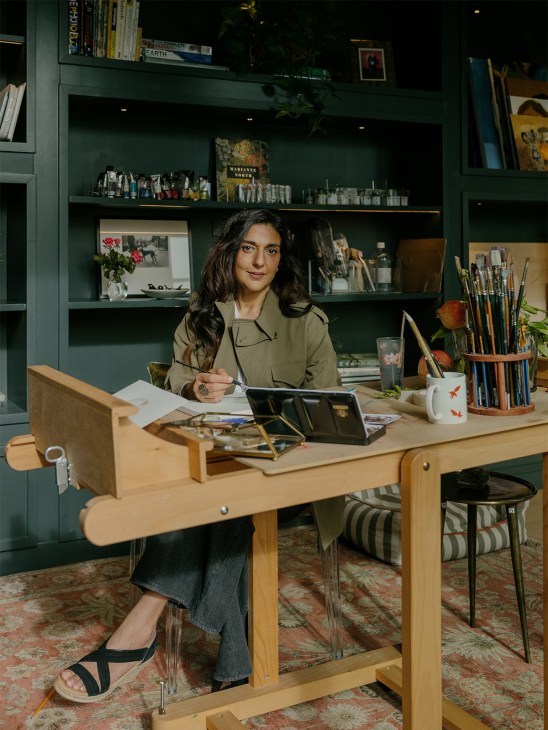
“My dream was to have a studio overlooking a garden with a pond,” says Tara Lal. Monocle meets the creative director and conservation scientist in her richly textured, book-lined studio at her home on the outskirts of Florence. Abundant natural light floods through the space, a converted greenhouse where lemon trees were once stored to survive the winter. The founder of Aranyani, a New Delhi-based conservation and creative-arts initiative, moved here in 2026. After living in an apartment, she is now settled in the four-bedroom, 14th-century Italian villa. “It has a special place in my heart,” she says of the city, adding that she studied architectural history at the University of Florence. “I really wanted a home that was lush – where I could grow my own vegetables and have a studio that connects me to the work I do.”
Every window of the home, says Lal, offers a spectacular view. “I can see the hills of Florence, cypress trees and the most beautiful ancient wisteria tree that is growing here.” There’s also an olive grove and a vegetable garden where she grows her own produce. The residence bears the marks of every previous occupant through additions and renovations. Lal is contributing too, replanting heritage varieties of Florentine fruit trees. It’s a fitting metaphor for her conservation work, which looks to bridge the gap between science and cultural heritage through education programmes and architectural installations. “We’re reviving a natural meadow to attract the bees, birds and insects that will revive the ecosystem,” she says of the villa’s garden.
Tara Lal is a creative director and conservation scientist, with an architecture diploma from London’s Architectural Association.
8.
Theaster Gates
Richard Hunt Studio, USA
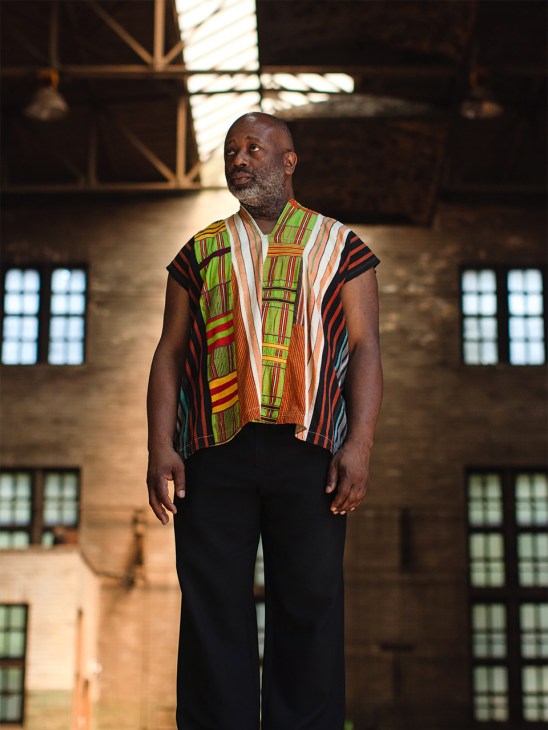
A former electrical substation in Chicago holds personal significance for Theaster Gates. Built in 1909 for the city’s railways, it was acquired in 1971 by artist and sculptor Richard Hunt – a mentor to Gates – who turned it into his residence and studio.
“The first detail that makes the space important is that Richard and I spent time here together,” he says, welcoming Monocle to the vast, four-storey-high interior, flooded with natural light, thanks to towering windows and a skylight. After graduating from the School of the Art Institute of Chicago, Hunt spent a year in Europe on a fellowship during which he visited Constantin Brancusi’s Parisian home-cum-studio and was inspired to create a similar set-up in Chicago. The former substation proved ideal: its huge bridge crane, a relic of its industrial past, allowed Hunt to move his large sculptures around the interior. “He made the space adapt to what he was thinking about,” says Gates. “He was constantly working between scales: nothing was too small, nothing was too big. When I think about my own work, I recognise Richard’s fearlessness around scale, his commitment to learning, his library, his maquettes.” As well as holding significance for Gates, the building has long been an important hub for Chicago’s creative community. Hunt hosted live music, art exhibitions and dance events in the 1970s, 1980s and 1990s, and regularly welcomed guests until his death in 2023. “Richard had this tremendous willingness to say yes to friends and strangers, showing love in his studio space,” says Gates, who recently purchased the property to preserve it for future generations. “It was made beautiful and powerful partly because of his personality and spirit. I would wish that for every space I have, for every building.”
Theaster Gates is a Chicago-based designer and artist, admired in equal measure for his creative output and community building.
9.
Patricia Anastassiadis
Pinacoteca do Estado de São Paulo, Brazil
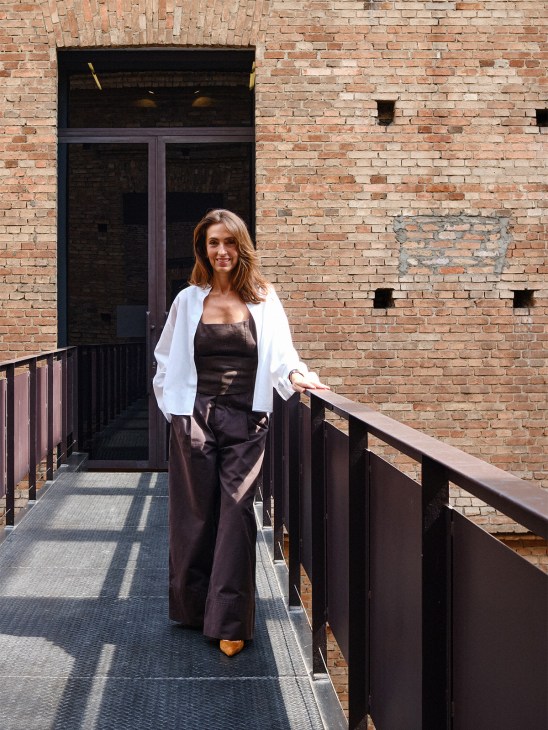
The Pinacoteca do Estado de São Paulo on the edge of Jardim da Luz holds an important place in Patricia Anastassiadis’s life. “It’s a museum set within a park,” says the Brazilian architect. “Both were part of my childhood and played important roles in shaping who I am. Like so many museums around the world, it has the ability to transport me to different periods and moments in history. Museums offer surprises, emotions and knowledge – all of which I am constantly seeking in life.”
Work began on the building in the 1890s to the design of Ramos de Azevedo and Domiziano Rossi, with the structure originally intended to serve as the headquarters for an arts and trades school before plans changed. By 1905, the state was using it to house its painting collection. Never fully finished, with exposed brickwork throughout, it turned into an important cultural institution, earning heritage status in 1982. It underwent a significant overhaul in the late-1990s, led by Pritzker Architecture Prize winner Paulo Mendes da Rocha, who embraced the building’s historical flaws, repairing the exposed brick masonry and adding a grid of glass skylights over the internal courtyards. “It has been the setting for a transformation that brought the past into the present,” says Anastassiadis. “It reflects the idea of continuity rather than rupture, which is what I believe in, both in life and in architecture.” Exemplifying this best, perhaps, are Mendes da Rocha’s sleek, steel-and-glass walkways that traverse the interior courtyards, connecting the upper-level exhibition halls. “I find them beautiful but it’s also about what they symbolise,” says Anastassiadis. “It’s the connection between past and present, and the constant search for dialogue – with the territory, people, culture, art, nature and beauty.”
Patricia Anastassiadis is a São Paulo-born architect and interior designer known for sleek hotels and residences.
10.
Sophie Lou Jacobsen
Gene’s, USA
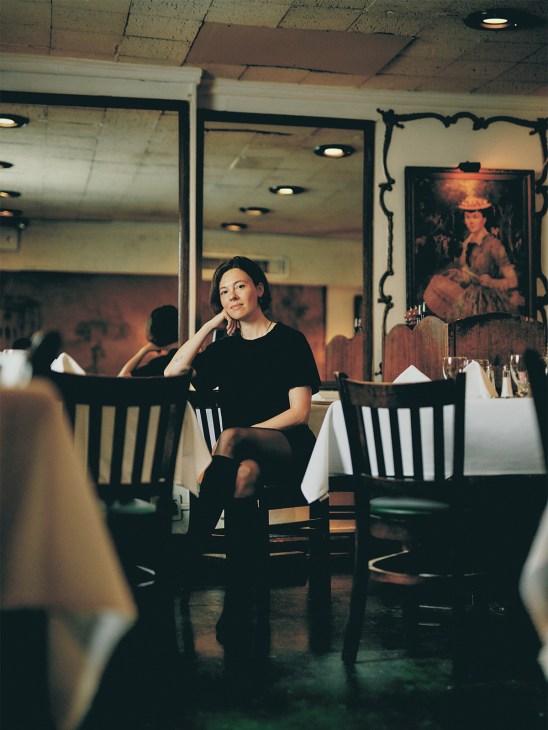
When Sophie Lou Jacobsen first visited Gene’s, an Italian restaurant in Manhattan, she was attracted by its simple, unfussy, anachronistic charm. “The dining room is a long, rectangular space full of tables set with white tablecloths, flanked by a mural on one side and a wall of mirrors on the other,” says Jacobsen when she meets Monocle at the West Village osteria. “The surprising details are the low, drop-panel ceilings and linoleum flooring. It’s not everyone’s idea of luxury and style but, thanks to this, the sound in the room is unbeatable.”
The French-American designer says that this is a key ingredient in the success of Gene’s because it’s the kind of place where patrons want to eavesdrop. “You overhear incredible stories being told by the people sitting around you,” adds Jacobsen. “The room is full of the most interesting West Village characters.” (It wouldn’t be unusual to see Sarah Jessica Parker or Parker Posey posted up at the bar, for example.) Bouncing between New York, Paris and Milan, Jacobsen is known for creating elegant homewares, with everything from her cutlery to water pitchers and glassware bringing a sense of playfulness to dining tables. Her latest collection, Disco Aperitivo, was a nostalgic nod to 1970s and 1980s Italian disco glamour and the ritual of aperitivo. It’s fitting, then, that she loves Gene’s. The menu is classic Italian-American fare: veal cutlet parmigianas and generous side servings of spaghetti. The booze – provided by longtime bartender Franco – flows just as freely as the conversation. “It’s a place you can come back to over and over again,” says Jacobsen. “It makes New York feel like home.”
Sophie Lou Jacobsen is a French-American designer renowned for creating homewares, lighting and collectable pieces for everyday use.