Venice’s Fratelli Tosi shows how artisans beat automation with centuries-old craft
In an increasingly convenience-focused world, the global craft industry is thriving. We visit a Venetian biennial to meet the makers turning their skills into successful business.
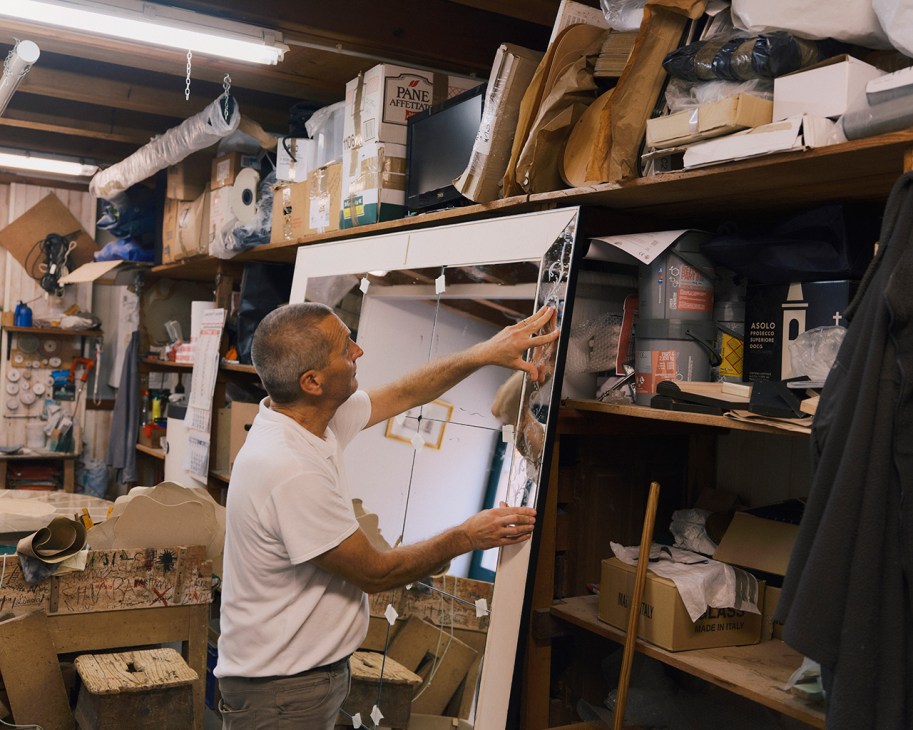
Inside a small workshop down a narrow street on the island of Murano in Venice, brothers Massimo and Mirco Tosi are examining a traditional Venetian mirror that they have laid on a table. They take small pieces of cut glass from wooden drawers and assemble them around the border. It’s all part of a process that involves cutting and silvering glass, engraving by hand and arranging ornamental mirrored pieces. It’s a highly skilled, intricate craft that the brothers know intimately. Their company, Fratelli Tosi, can trace its family roots back to the early 20th century. Their father did the same work as them; their grandfather too. “I was 13 or 14 when I first started coming here to help out,” says Massimo. “And then I started full-time at 20 after I completed my military service.”
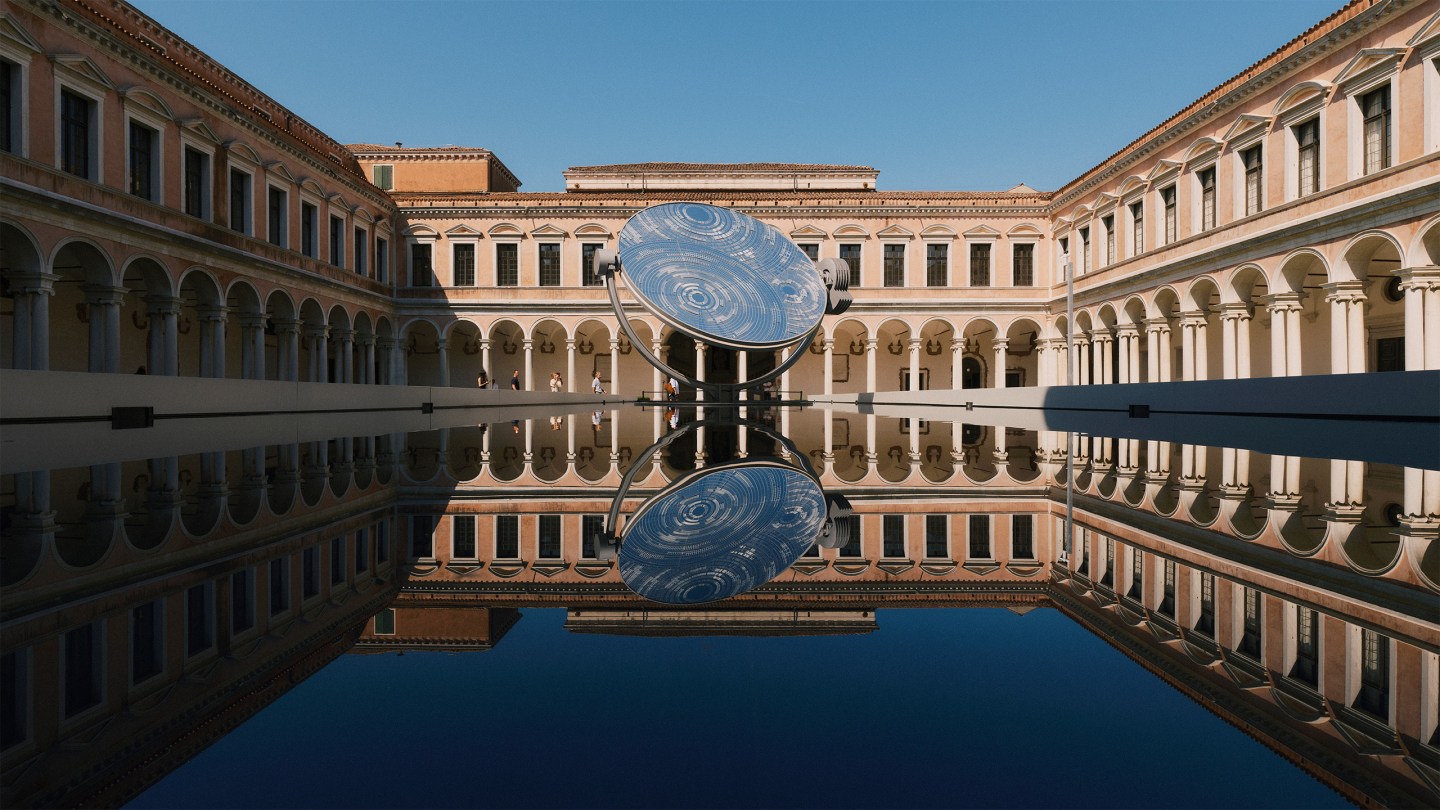
Three Fratelli Tosi mirrors were recently on display at Casa Sanlorenzo in an exhibition showcasing the artisans and craftspeople of Venice and the Veneto region. It was part of Homo Faber, a large event celebrating contemporary craft that takes place every two years on the island of San Giorgio Maggiore and other venues around the lagoon city. In 2026 the event – organised by the Michelangelo Foundation, a Swiss non-profit co-founded by former Richemont CEO Johann Rupert – featured more than 700 objects by some 500 artisans from about 70 countries. The artistic direction was overseen by British designer Es Devlin, who created a cinematic, immersive experience set to voiceovers and music. In one room, objects rotated on a circular bookcase that created shadows playing across the walls; in another, an illuminated “moon” rose out of a former swimming pool, displaying a series of vases.
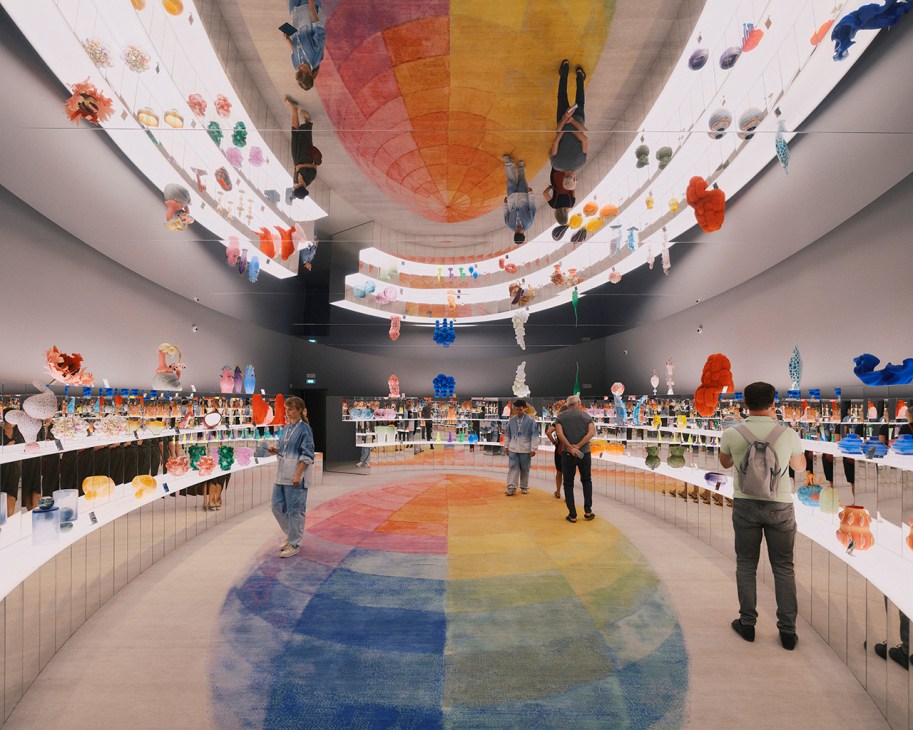
Homo Faber’s fourth edition also included artisans at workstations in an attempt to shed light on the people behind the pieces. This year’s artistic direction wasn’t conceived in a vacuum. The word “craft” seems to be on everyone’s lips – and not just in the design industry. For some, in our increasingly automated and AI-focused world, there is a yearning for objects that are tactile and handmade. The global arts and crafts industry is expected to grow somewhere between 7 and 9 per cent a year between now and 2030.
Fratelli Tosi certainly seems to be riding this wave. Massimo says that things have been taking off since the pandemic ended, with revenue doubling in the past year alone. He mentions a restaurant project completed just before the summer in Miami and a current order of four six-metre-high mirrors destined for Riyadh. For any artisan, success rests on their ability to read the market. Though Fratelli Tosi produces contemporary mirrors on request, buyers still want the classical Venetian look. “It’s a product that people appreciate a lot,” says Massimo.
Behind every immaculately assembled mirror or beautiful piece of pottery, there’s a need for a certain amount of business acumen and entrepreneurial spirit. The Tosi brothers used to attend trade fairs spanning Dubai, Milan, Lebanon and New York but the costs were too high, despite the guarantee of work for the whole year. So they have instead chosen to focus on e-commerce events such as 1stDibs in the US and Italy’s Artemest (which curated one of the Casa Sanlorenzo exhibitions). The decision is paying dividends, even though online sales don’t make up the bulk of the brand’s income. These sites are a vital “shop window”, says Massimo. “The more things that you do, the more visible you are,” he says. “If you don’t do it, no one will come to ring your doorbell.”
Though some artisans have gallery representation, being in this creative industry often means working for yourself – and that entails balancing visibility with ensuring that you don’t devalue your art. The industry is by no means an easy one. Because of the onward march of technology and the potential threat of cheaper copies undercutting an artisan’s meticulous work, the business side can be as important as the skills.
During Homo Faber, Monocle meets Florence-based woodworker Leonardo Cappellini, whose antiquity-influenced amphoras are in a room called “An Alphabet of Objects”. Cappellini worked in the circus until switching to woodwork seven years ago. It has been quite the rise, cemented by his selection for the 2026 edition of Homo Faber. He talks about the importance of putting yourself out there but also of knowing when to adapt. “You need to do everything at the beginning,” he says. “After that, you can be selective.” Now that Cappellini has reached a greater level of recognition, he has stopped taking part in Florence’s Mostra Internazionale dell’Artigianato, a fair that he used to attend earlier in his career.


Back on Murano, just round the corner from Fratelli Tosi, Alessandro Boscolo says that his focus isn’t business – he’s much more concerned about making his art. The glassblower, who made a rose-coloured triptych featuring a reliquary, a chalice and a vase for Homo Faber, has an entrepreneurial flair nonetheless. For one, he shares a business with his mother across two studios and several employees selling small glass pieces to customers. This is balanced with more experimental work. Like the Tosi brothers, Boscolo learnt from his family and started working full-time at the age of 13. “I feel like I’ve never worked in my life because I do what I love,” he says.
Boscolo gets his name out there by teaching abroad and at home in Venice. From a bench in his shop, he shows Monocle his custom tools, including a contraption adapted from an old water boiler that keeps glass at a constant temperature. He also uses a special blowing pipe that has a plastic tube attached and a mouthpiece that allows him to blow while using his hands to shape the glass. “I want to have a very specific type of production,” he says.
Being good at business and having an innovative streak certainly help. But success often comes down to something much simpler. In the face of our reliance on machines, craftspeople have an ace up their sleeves: they are able to tell a passionate story about what they do, without a bot in sight. It’s why many of the people who we meet – including Jessica Jue, a silverware artisan from London, and Venice-based Chinese jewellery artist Huang Xiaozhe – like to sell to customers face to face. Boscolo says that when he tells potential clients about the motivations behind his work, they’re often moved.


Micromega, an elegant glasses shop that was founded in 2003, knows about the power of personal interaction. There is currently only one Micromega outlet in the world, despite the brand counting the likes of Yoko Ono and Elton John among its clients. Micromega only sells its own frames, which are handmade without glue, screws or soldering, using flexible titanium or gold. They’re made at a small workshop a few minutes’ walk away and this relationship is one of the reasons why the business is thriving. “As soon as someone comes here, we explain what’s behind Micromega,” says Anna Carlon, the daughter of the founder, Roberto. “The first thing that they say is, ‘I have never seen anything like this in my life.’”
Five tips for running a successful craft-based company
The future of craft looks bright, with luxury brands and discerning buyers investing in handmade pieces. Here are five tips for making a business work.
1.
E-commerce is a shop window
Don’t expect online sales to dominate revenue. Instead, see them as a means of generating visibility and attracting real-world enquiries.
2.
Meet face to face
Make a point of the story behind your work. Personal contact at trade fairs converts browsers into buyers.
3.
Allow visitors into the workshop
Showing customers exactly how and where a product is made builds trust and justifies price.
4.
Balance solid sellers and experimental pieces
Make money with pieces that hold mass appeal while pursuing riskier ideas on the side. This funds creative freedom without sacrificing stability.
5.
Adapt tools and processes
Look beyond your own trade for inspiration and learn from how other industries solve similar problems.
The industry in numbers
The craft sector is booming. Here are some key figures that reflect its worth.
Value: The global handicraft market is poised to reach €847.2bn by 2030.
Growth: The industry is expected to grow between 7 and 9 per cent annually between now and 2030, hitting 10.5 per cent growth by 2035.
Distribution: Mass retailers still lead the market with 39 per cent of sales, the largest revenue share.