Three bold furniture studios making Palma a design outpost to watch
Whether you’re looking to fill an island home with beautiful designs or select some statement pieces to be shipped across sea, these three studios are the names you need to know.
Mallorca was once an island of makers – of shoes, textiles, tiles, clay tableware. While these craft traditions have been challenged and often diminished, there are still numerous ateliers and factories keeping manufacturing alive. But more than just sustaining these practices, there are designers developing modern, vibrant businesses with global ambitions.
Here we profile three studios delivering furniture collections that are helping to make Palma a design city to watch.
1.
Resmes
Island roots, global ambitions
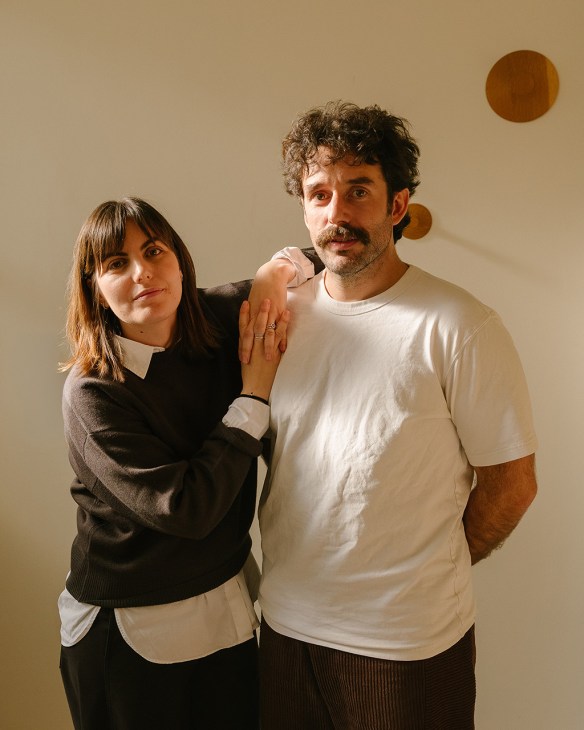
As a young designer nurturing a fledgling business, it’s easy to be overwhelmed by the effort it takes just to keep going. But when Monocle visits Joan Morell and Elena García’s studio-cum-showroom in Palma, the husband-and-wife team behind furniture- and product-design company Resmes explain that beyond finding customers and doing their own photography while assembling product lines, they have another pressing task: writing a manifesto – and one that’s not too demanding or restrictive.
“In Mallorquín, the words ‘res més’ translate as ‘nothing more’ and so our brand’s name has a very specific meaning,” says Morell. “We want to make products that feel essential. But we are at the point when we need to write down what we stand for. We need a manifesto.”
García can already articulate one of their guiding principles. “We want to be the solution to our clients’ problems,” she says with manifesto-like clarity. The pair met as teenagers and dated through university, worked variously for design studios and architecture offices and, three-years ago, started their company as a side hustle. The couple are now fully committed both to the business and to each other – they married last summer.
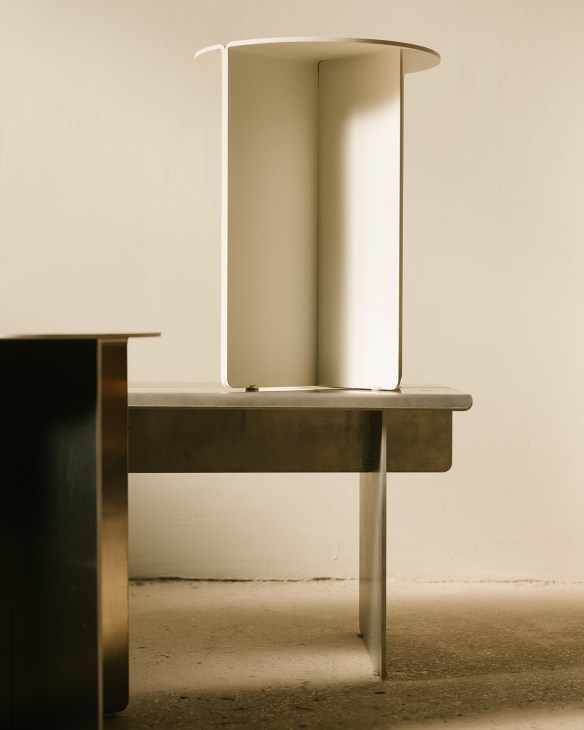

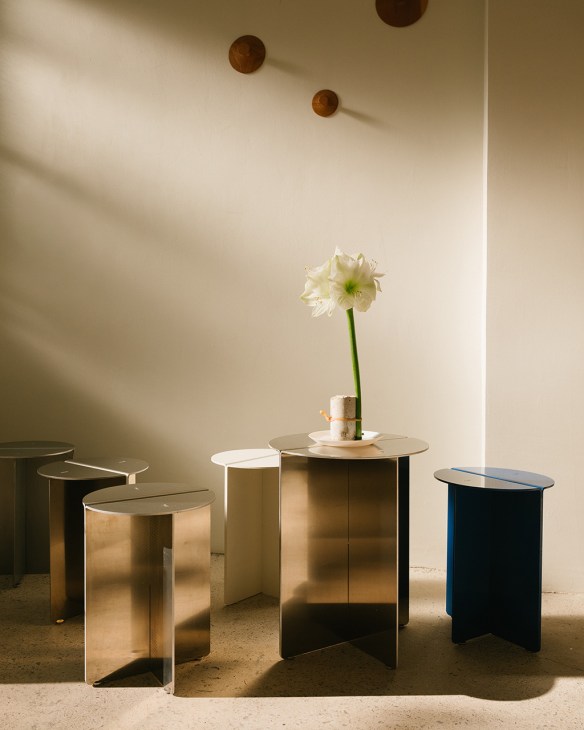
Resmes has a portfolio of products that are made to order and, while often informed by the island – the pair tap into local craft traditions and support Mallorca’s carpentry workshops – it isn’t limited to only using the island’s resources. The founders are thinking big, finding ideas and materials from where it feels right for a product. “Mallorca is important to us and shapes us but what matters most is the story, not just what we have here on the island,” says Morell.
There’s the Cadira chair crafted from oak with a handwoven-chord seat that takes nine hours to make, which they have taught themselves how to complete in numerous intricate patterns. Then there’s the growing Pleg collection (named after the Mallorquín word meaning “to bend”) made from aluminium, which today includes a bench, two small tables and shelving. The metal is supplied from the mainland and Morell and García oversee the assembling and spray-painting.
The collection has proved popular with restaurants, shops and hotels but the pair also want direct contact with homeowners so that they can provide those promised solutions in domestic settings too. Another thing they want to offer? Products with fair prices. “We’re trying – let’s see what happens,” says Morell.
resmes.es
Further reading: See how multi-brand shop Colom worked with Resmes.
2.
Adriane Escarfullery
Bold chairs and tropical modernism
It’s all coming together for Dominican-born furniture designer Adriane Escarfullery – but it has been a rather epic journey to get here. The 35-year-old has had to overcome many setbacks and teach himself not only to design his large, full-bodied chairs (think tropical modernism mixed with the aesthetics of Børge Mogensen, the Danish designer of the famous Spanish Chair) but also to make them by hand and market them too.
We find him in his studio in a central residential neighbourhood of Palma, Mallorca. His regal chairs are on display on the ground floor, while in the basement workshop there are piles of leather that he is arduously stitching to use as upholstery, prototypes for new sofas and a photography set-up (with which he is shooting images for his website). “I am a designer but I have had to become a builder too,” he says as he guides Monocle around his workspace.
Until a few months ago, Escarfullery was running the entire operation from a co-working space, trying not to infuriate the other tenants with his banging and sawing. But then came a dream commission to work with celebrated architecture company Ohlab on Terreno Barrio, an upcoming hotel in the city. “It has changed my life,” he says.
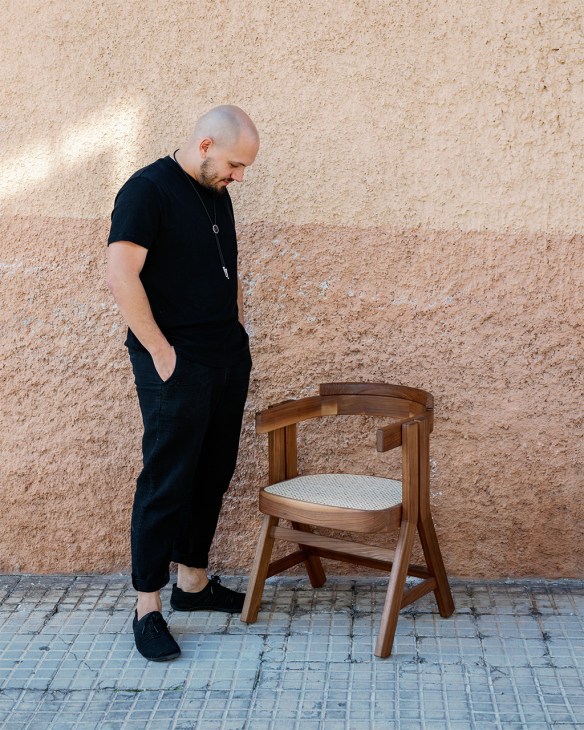
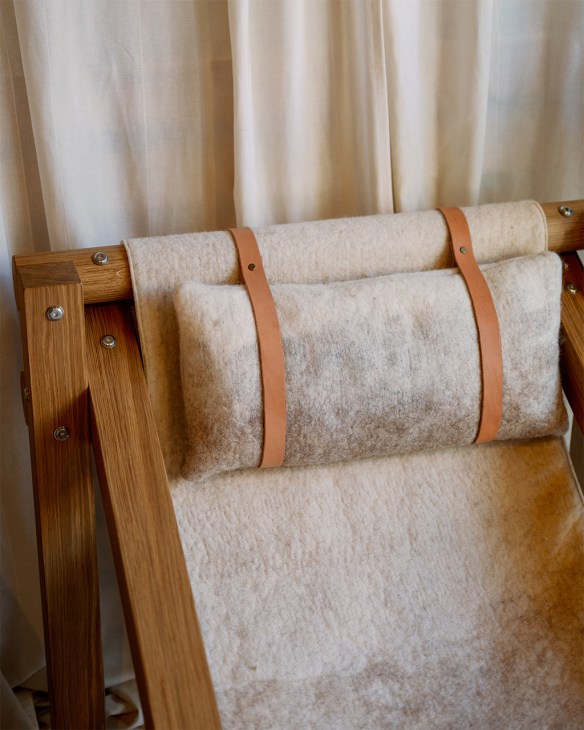
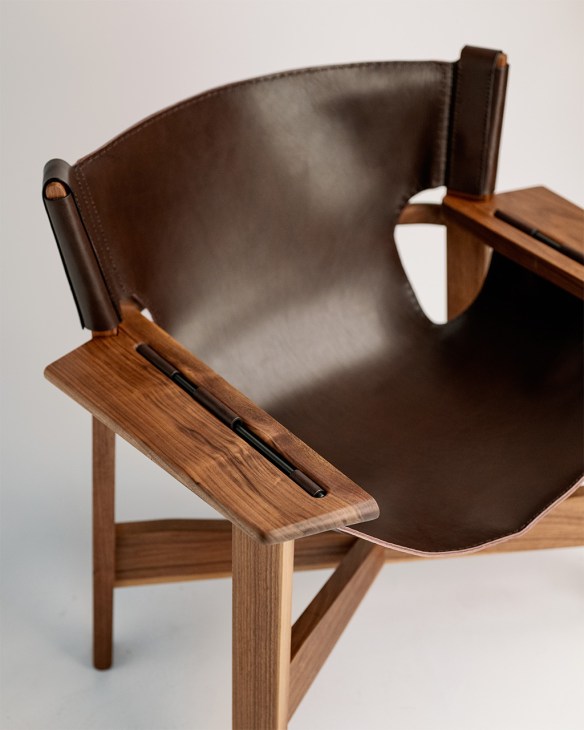
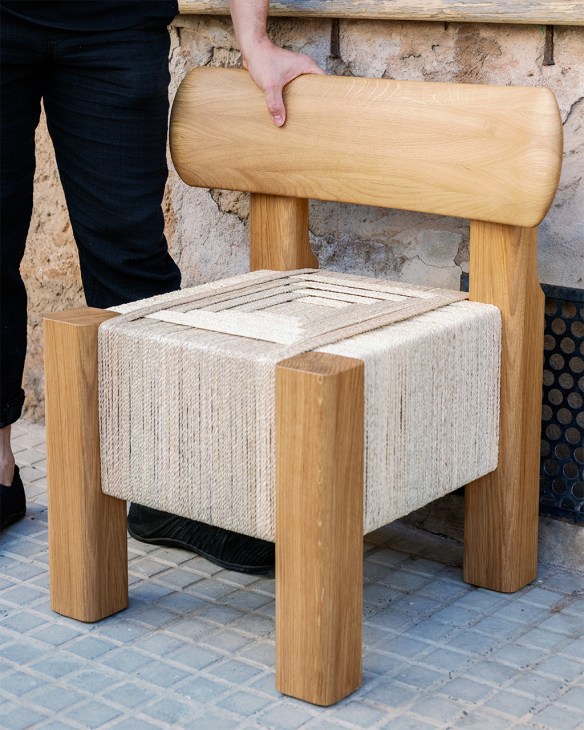
Escarfullery’s family – his mother and stepfather, along with four of his many brothers – moved to the island when he was 16 years old. It was here that he went to design school, before heading to Lyon in France, where he worked at an architecture firm that made furniture. He had also previously studied in London in 2014.
“I did a lot of things wrong in the beginning,” he says. “I found a carpenter to make my first prototype but, because I didn’t know how to brief him properly, I had to wait three months. Then, when I attached the seat, it was so horrible and really uncomfortable.”
In the end, it took him 18 months just to have a single model made that he was happy with. Luckily, he now has carpenters who he can rely on. Today his line-up includes the chunky Fee Fi Fo Fum chair, which is made from recycled wood and was inspired by the 1947 Walt Disney film Fun and Fancy Free. Then there’s the stocky Elef, with rope seating and a wide backrest whose shape was influenced by “the ears of an elephant”. The Ohlab commission promises to put Escarfullery’s work in front of a far wider audience. No matter what happens next, one thing is sacrosanct to him. “I want to have the time to enjoy Sunday lunch with my mum,” he says.
adrianescarfullery.com
For more on this story, pick up the March issue of Monocle.
Further reading: See the mountain house that Ohlab built
3.
Studio Jaia
Reimagining island traditions
Anna Lena Kortmann grew up in Cairo, studied in Mainz, Melbourne and Paris, and became an interior architecture and exhibition designer in Los Angeles and, for 10 years, Berlin. But she was after something – and somewhere – else. She knew Mallorca from holiday visits and started spending time on the island, initially working remotely on architecture projects but perhaps looking for a reason to put down roots and use her hands again.
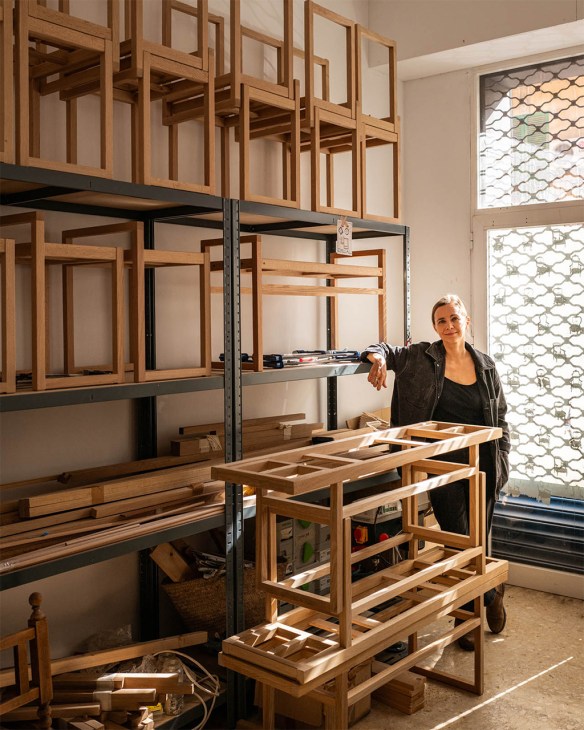
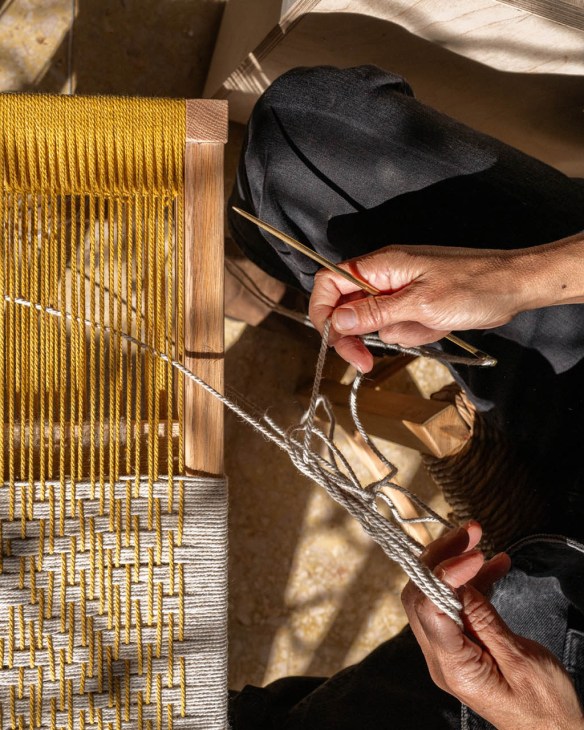
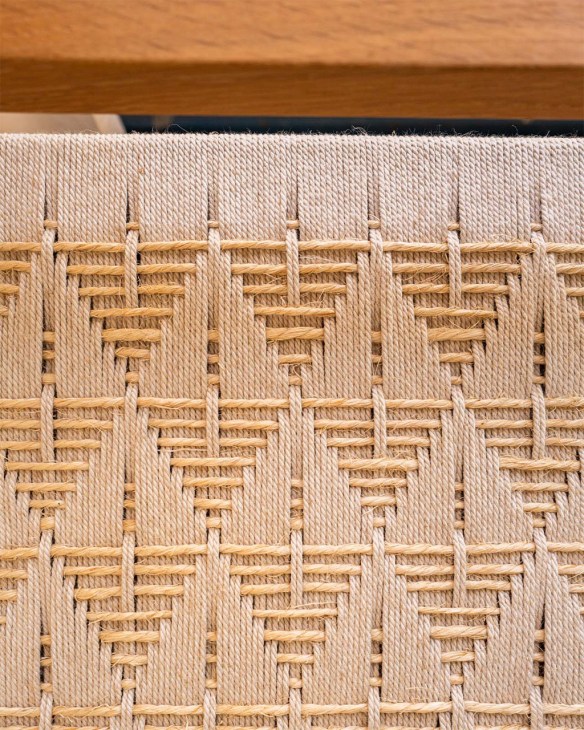
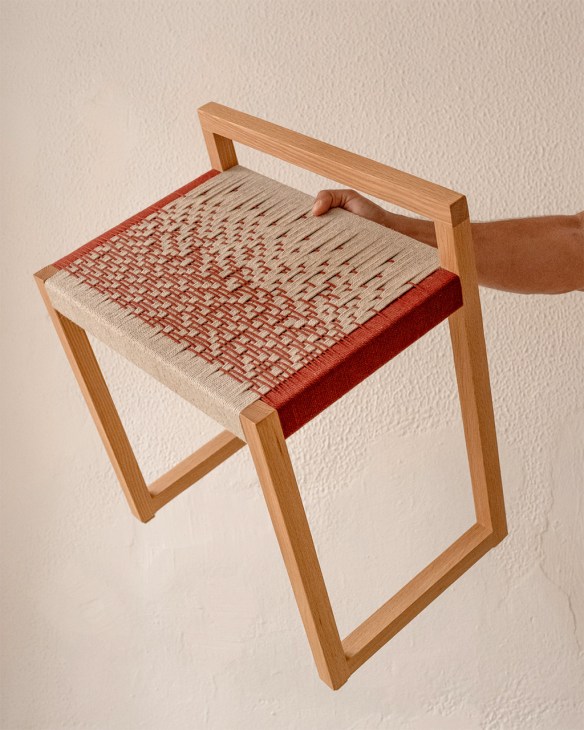
“I missed the creation part and working with materials. Here, in Mallorca, I discovered these traditional chairs with beautiful weaving,” says Kortmann. “I found someone who taught me how to do the weaving. It was not a business idea to start with, but it became one.” In seven years, Kortmann started her business, making everything herself, including tapping into her woodworking skills to build the furniture. “I changed the frames as I didn’t want to use dark wood and I found a finer cord – a recycled cotton. After that I didn’t want to stop.”Since then the business has developed apace. In 2022, Kortmann moved to a larger space in Palma’s Pere Garau neighbourhood where in addition to the workshop there is a showroom, which is open by appointment. Today she works with a carpenter who makes the frames for the furniture, while she and her team focus on the weaving. “The larger space means that I can also take on bigger, one-off commissions,” says Kortmann. There has been another recent bonus: one of her Puput stools has been acquired by the Design Museum of Barcelona for its permanent collection.
studiojaia.com
Further reading: Want to know more about Mallorca’s creatives? Find out more in this report on Chiara Ferrari.
For more on Palma’s design shops and makers, make sure you read our Palma City Guide, which is free for subscribers.