How do you judge design? For SR_A, ancient Greek philosophy holds the key
Dipping into the well of Eudaimonia can provide a holistic approach to form, function, and cultural significance
How do we evaluate good design? It’s a question that I’m continually mulling over. While I have some strong views on aesthetics – and others can be wrong – I appreciate that beauty is in the eye of the beholder (though this doesn’t mean that “sustainable innovations” need to look like they grew from a vegetable patch). This means that looks alone cannot be the benchmark. Louis Sullivan’s 1896 axiom, “Form follows function” is the rallying cry of modernism and still feels like a good way of evaluating design. The idea that an object or building should be shaped by its intended function ensures that the world is in service to the user. But such an approach can discount ornamental or craft traditions that bring much joy. What is more, neither the aesthetic or utilitarian viewpoint properly considers the means of manufacture, whether rooted in cultural traditions or contemporary quality.
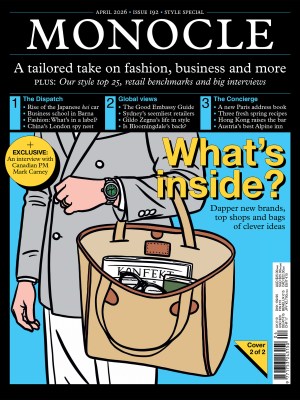
Speaking to Samuel Ross for Monocle’s April issue, however, has unveiled a new matrix for design evaluation. “Our practice really comes down to being able to syndicate our ethos through every factor of what it means to live daily,” says Ross, who co-founded British studio SR_A with Yi Ng in 2019. “This work fundamentally draws from the well of eudaimonia – or human flourishing – through the lens of design.”

Eudaimonia is achieved by practicing virtue and cultivating practical wisdom. For me, this ancient Greek principle developed by Aristotle leaves room for holistically evaluating a design based on good form, great function, quality manufacturing and aesthetics. Imbuing this in a design practice translates to products and buildings that intend to serve people and their communities. As for practical wisdom when it comes to design, this is rooted in the idea that objects should be made with an intelligent eye for stripping unnecessary parts or processes to reveal essential functions, while care is still given to building methods and localised manufacturing.
The team at SR_A have taken this outlook to deliver products that are materially innovative and culturally significant, including everything from furniture and pavilions to watches and clothing lines. For proof you only have to look at the timepieces that the practice has produced with Hublot. The pieces tap into the hidden potential of the historic Geneva-based firm (practical intelligence) to produce timeless, durable wares (good intent). There’s also their work for Indetex, with Zara, which allowed them to bring well-designed clothing (good intent) to consumers at an accessible price point (practical intelligence). By rooting their work in this philosophical outlook, the studio’s varied portfolio has a cohesive vision. “[It works because] the same consumer that wants to purchase a watch from us also wants those same values in their house, their bathroom or the consumer electronics that they’ll be wearing,” says Ng. In this case, they’ll also get a product that speaks to their flourishing too.
Nic Monisse is Monocle’s design editor.
Further reading:
SR_A share their strategy behind building a luxury brand portfolio through innovation and partnerships