An inside look at Carlo Ratti’s minimalist Olympic torches for Milano Cortina
The 2026 torches were created to withstand the rigours of a multi-stage relay and winter weather. We ask the designer about how he landed the coveted job and what makes this year’s torches unique.
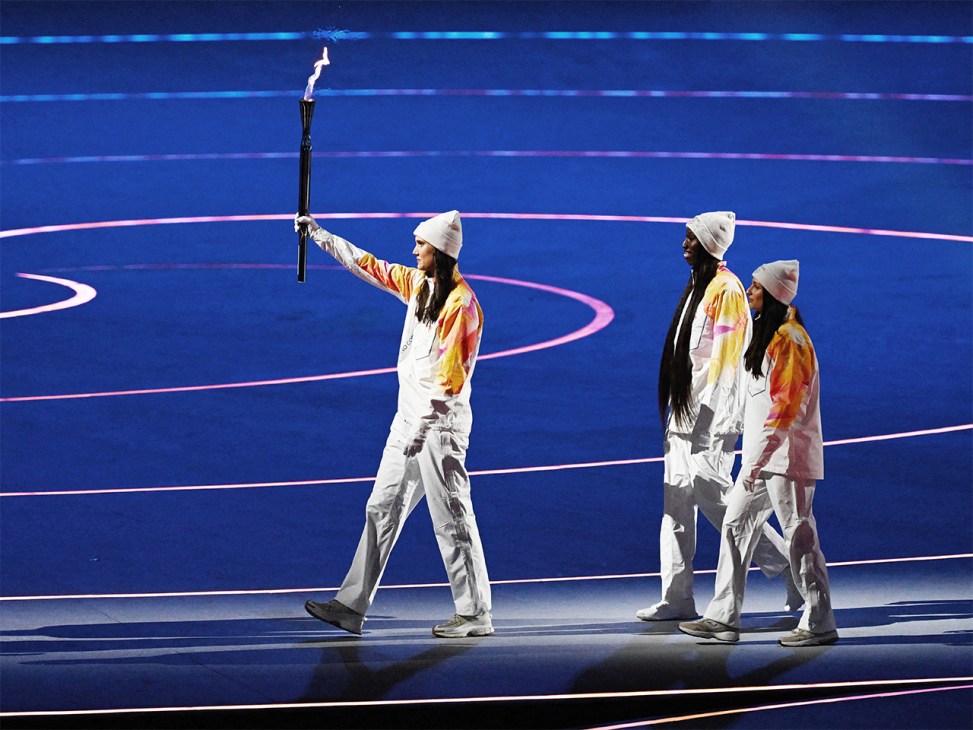
For most of the world, the Milano Cortina Winter Olympics began on 6 February. But the official Olympic torches began their duties more than two months before the opening ceremonies. The torch relay is a tradition that signals the lead-up to any Olympic Games and the latest round began on 26 November 2025 in Greece’s ancient Olympia before hopping over the Ionian Sea for a 60-stop tour of Italy.
Unveiled last April, the torches were designed by Carlo Ratti Associati and the Cavagna Group. Carlo Ratti, a founding partner of the studio and director of MIT’s Senseable City Lab, said the design process for the torches was a collective affair, with many people working on the mechanics of the burners. An Olympics torch must be as durable as it is beautiful and one for the Winter Games must also be braced for inclement weather and altitude. Dubbed “Essential” for their streamlined appearance that emphasises the flame, the torches – one blue for the Olympics and the other gold for the Paralympics – are made from recycled aluminium and brass alloy that reflects light.
Ratti joined Monocle in Milan to discuss the design process for the torches. This interview has been edited for clarity and length.
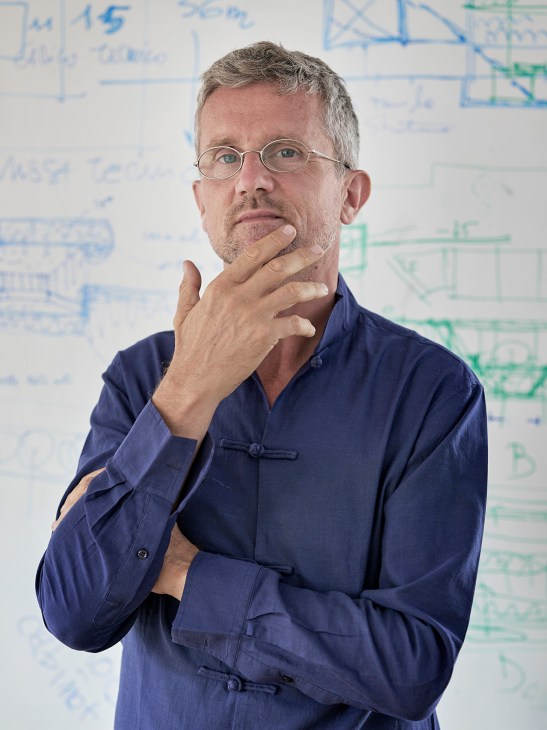
How did you get the job of Olympic torch designer?
There was a contest. [The committee looked] at things [we] had designed and one of the things [they also looked at] was [how you perceive] the value of the torch because it’s going to be seen by billions of people.
Where did you start the design process?
The beginning was like a relay in its own right. We all went to the Olympic Museum [in Lausanne], where the previous torches are. The other thing that is similar to the Games is that [the design process is based on] teamwork. [We worked] with Versalis, Cavagna, engineers, along with other people looking at the flame and the aerodynamics. It was not just one person with a blank sheet of paper.
How is this torch different from its predecessors?
If you look at recent Olympic torches, the exercise has been a lot like car design. At the core you have the burner where the flame is produced, with a lot of technical components, and the outside is built around it. What we tried to do was the opposite: we designed the torch around the burner and left an open slot where you can see the burner generating the flame. That also helped us to use less aluminium.
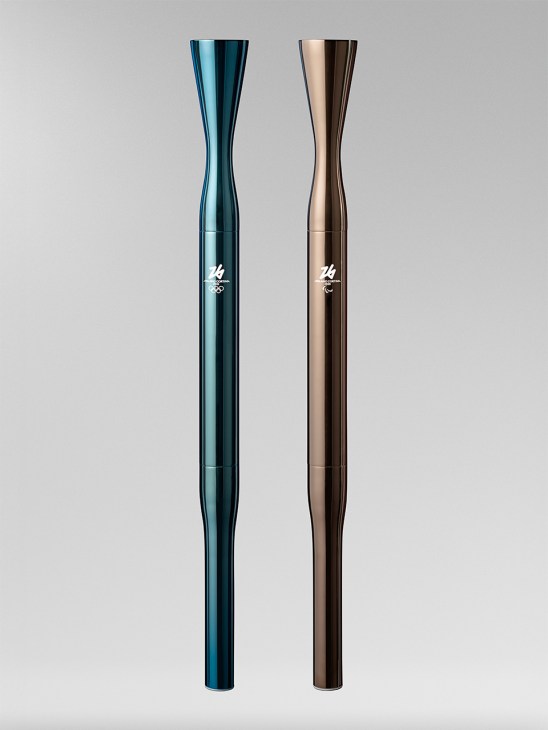
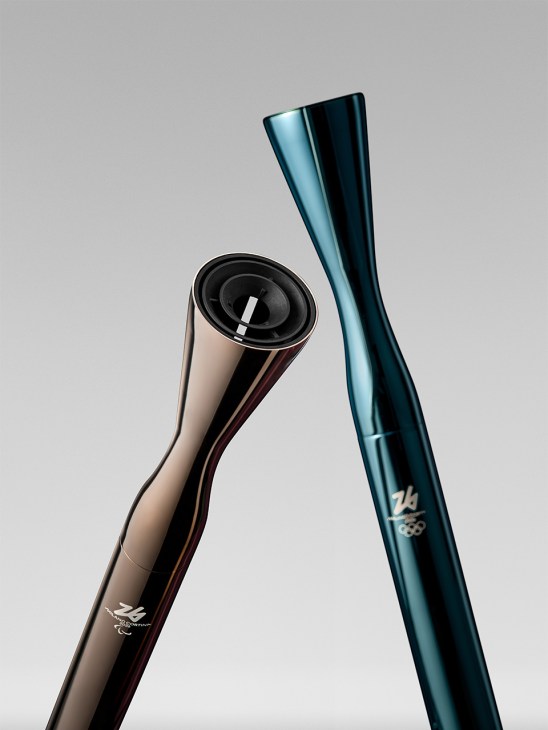
You mention car design: is it a reach to see classic Italian supercar heritage in [the torch]?
I think there is a little bit of that – Italian design of the 20th century but also a lot of technology. Working with Versalis, we did research on materials and performed many tests, minimising the design and making it the lightest torch ever. That was more difficult than just creating a shape around the core.
Does designing the torch earn you a pass that gets you into any event you like?
No, I don’t have those passes but I’ve loved every minute of it.
More design coverage from the Milano Cortina Olympic Games, read on below.
– From the Olympic Village to student housing: Manfredi Catella on building Milan’s future