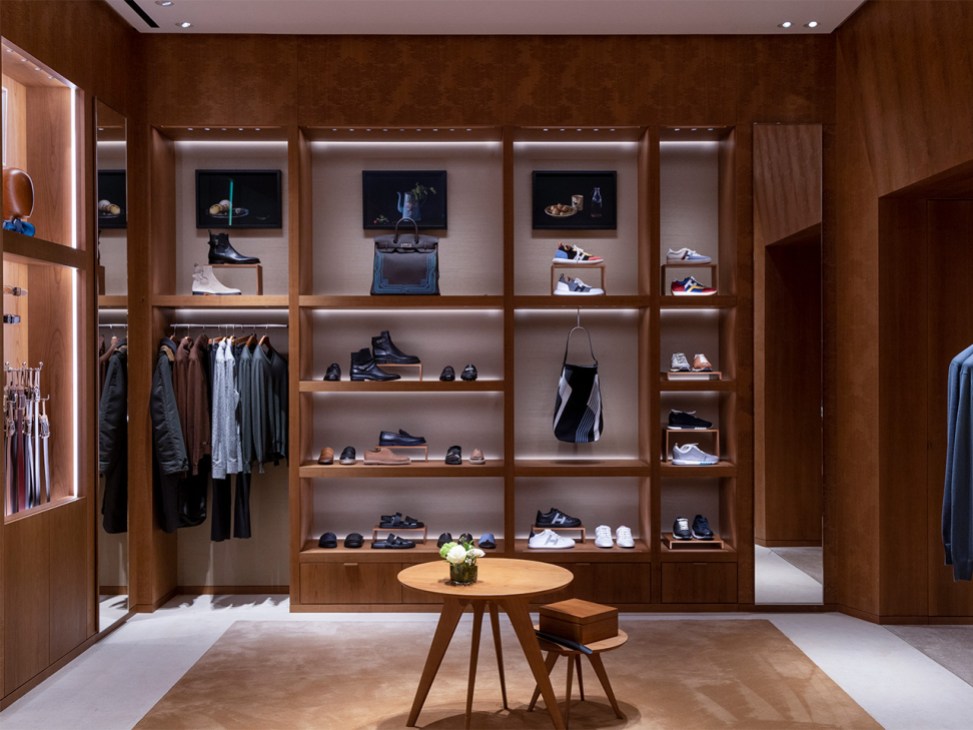
Meet Rena Dumas and RDAI, the design minds creating beautiful Hermès boutiques worldwide
The award-winning practice behind Hermès’s unique boutiques is harnessing craft and architecture to help brands bring their values to life in physical spaces.
Anyone who has ever stepped into a Hermès boutique – and there are more than 300 worldwide – has experienced the Parisian brand’s meticulously designed interiors, housed in architectural marvels. But few will know about Rena Dumas, the woman who dedicated much of her life to translating the essence of the maison into bricks and mortar. “Rena was very humane and intuitive,” says Julia Capp, the CEO of Rena Dumas Architecture Intérieurs, today known as RDAI. “It was extremely important to her how you felt within a space, how you sensed it both personally and culturally.”
Dumas, who died in 2009, grew up in Athens before studying interior design in Paris. There, in 1959, she met her husband, Jean-Louis Dumas, the CEO of Hermès from 1978 to 2006. She founded RDAI in 1972 and designed interiors, studios and offices for Christie’s, Yves Saint Laurent and John Lobb. But the boutiques for Hermès were where she could really impart her vision – and capture the essence of a brand. She started in the mid-1970s by delving into the French luxury brand’s archives for the redesign of the flagship on Rue du Faubourg Saint-Honoré.

Her collaborations in the following decades included working from 1998 to 2001 with Pritzker prize-winner Renzo Piano on a luminous 15-storey skyscraper in Tokyo’s Ginza district, housing Hermès’s Japanese headquarters; there’s also the flagship in Seoul, which includes a museum, café and offices, completed in 2006. Dumas believed that every Hermès boutique should be unique while staying recognisable.
Today, under the leadership of Dumas’s close collaborators, architects Denis Montel and Julia Capp, RDAI has a team of 120 people. The pair joined the practice in the late 1990s during a period of growth and worked closely with Dumas before taking over to continue her legacy. Montel is executive vice-president and artistic director, though the company is still tied to the Dumas family. “When Rena met someone, she would immediately sense what they could be,” says Capp, an Australian who worked in London, Hong Kong and Shanghai before joining the practice in Paris. “She didn’t look at either of our portfolios. She’d seen what we were working on and asked whether we wanted to work for her.”
The firm has since expanded beyond interiors into architecture. In 2014, RDAI won France’s top architecture award, the Équerre d’Argent, for the Cité des métiers Hermès workshop in northeastern Paris, featuring a façade combining hand-moulded and glazed bricks. Other projects under Montel and Capp’s direction include residential towers in Taiwan and the interiors of the five-star Hotel SO/Paris in 2022. But it’s the detailed, high-end interior design for Hermès that the practice is best known for and where experimentation and creativity – particularly with materials – take centre stage and define its distinctive approach.
RDAI’s studio is housed in a grand Haussmannian building in the heart of Paris, a short walk from Place des Victoires. Montel and Capp welcome Monocle through a courtyard that was once home to the piano-maker Érard – Franz Liszt was a regular visitor – and into their office, with its lofty corniced ceilings and a grand marble staircase. The first floor is home to an open-plan workspace; a corridor lined with rolls of fabric, timber samples and lengths of rope; and the studio’s Materials Library, a room where floor-to-ceiling shelving is densely packed with samples in every conceivable finish and texture. Here, a small team is dedicated to the office’s deep research into new, custom materials and techniques that will inform future interiors, particularly for clients such as Hermès.
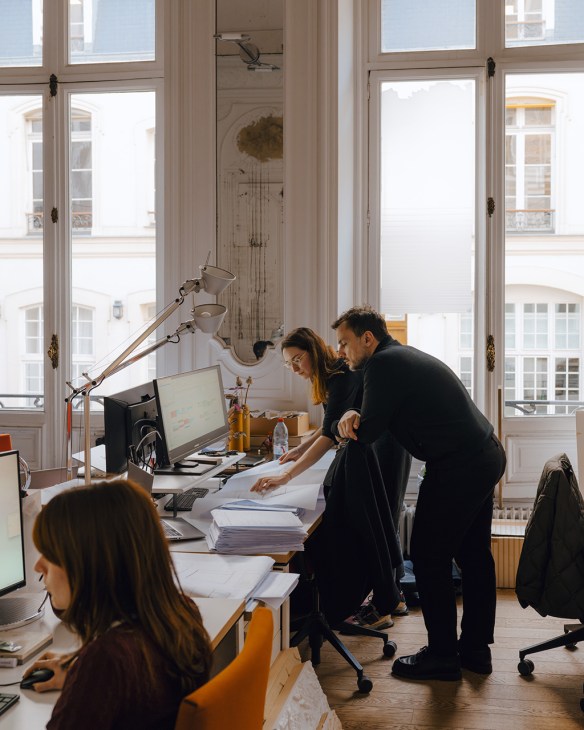
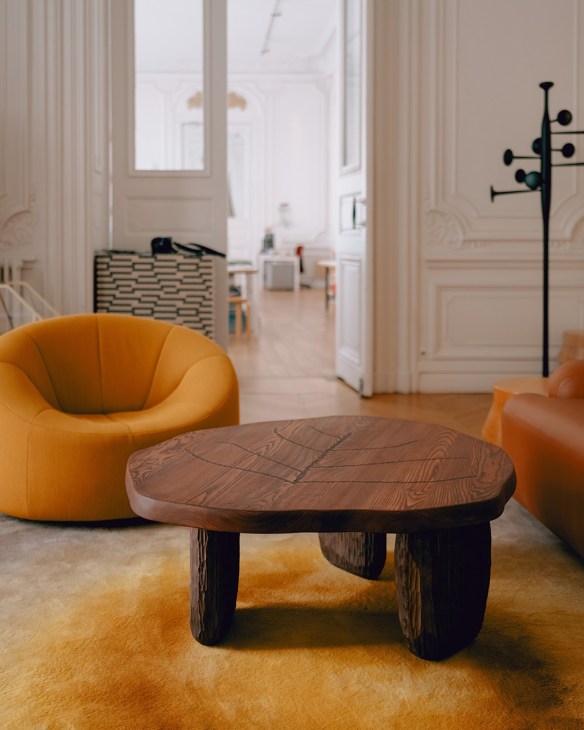
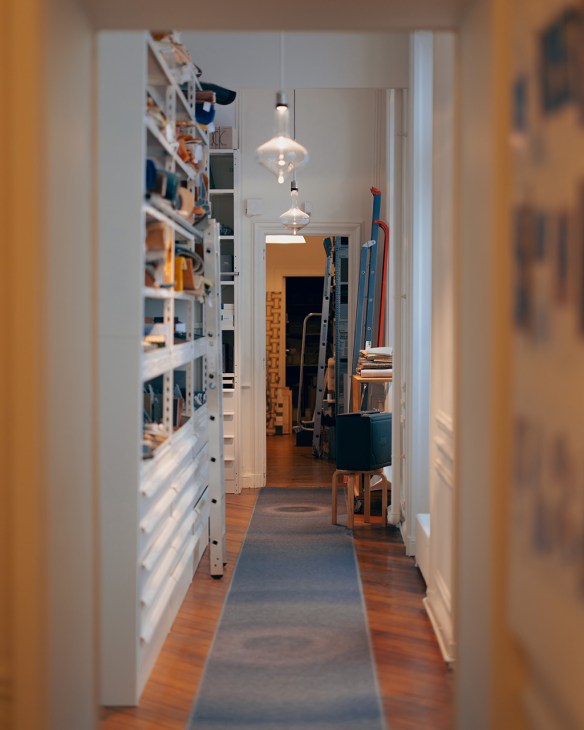
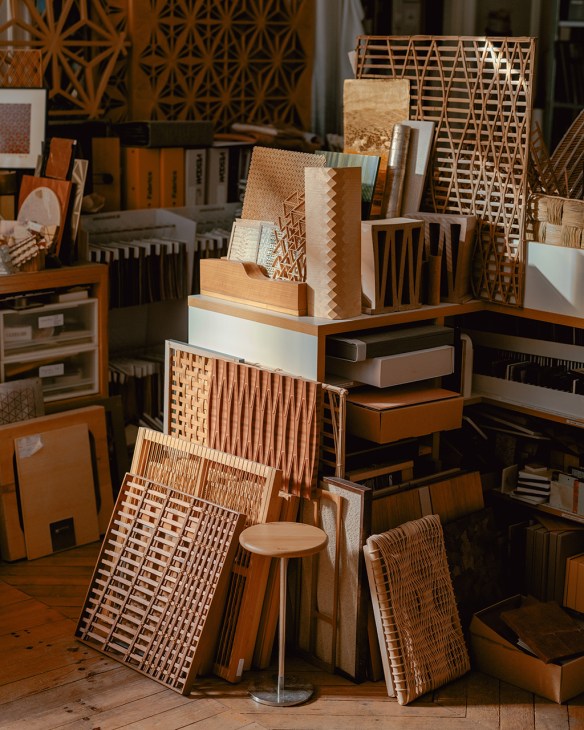
Over the years, the Materials Library has amassed a list of some 7,000 international suppliers and tens of thousands of samples. “There’s something almost a little exaggerated about the way that we work,” says Montel, explaining that craftspeople are tracked down all over the world to work with the collection of materials. “Increasingly, we don’t search for new materials. We produce them after seeking out the necessary skills.”
It’s an approach that translates to the firm’s work for Hermès. The design for every new boutique begins with rigorous research into its geography, social customs, gastronomy and, above all, local crafts traditions. Collaboration with regional artisans informs interiors in which nearly every element is custom-made, from tapestries to tiles and carpets. In the Mumbai shop, for instance, some walls are clad in bamboo-veneer marquetry in a deep blue recalling the painted houses of Jodhpur, while others are enveloped in hand-embroidered fabrics produced by a workshop of 80 women across 10 villages.
In Lille, contemporary rugs incorporate motifs referencing Dutch paintings in the city’s picture gallery, while at the recently relocated shop in Hanoi, tables reinterpret the traditional Vietnamese technique. “Every boutique is an ambassador for local craftsmanship,” says Capp. “Hermès is a luxury goods brand but it is also a brand of craftsmanship. So, we’re communicating what the brand does.”
Every Hermès boutique is distinguished by a striking façade – the threshold that first engages the passer-by and often where local crafts are reimagined and pushed in new directions. For the shop in Fukuoka, the façade draws on kumiko, a traditional Japanese woodworking technique in which intricately carved pieces are joined without glue or nails. RDAI had the pieces precision-cut by machines and then assembled by hand. Similarly, in Lyon, which is often described as the “city of silk”, both the shop’s wall fabrics and the woodwork feature embossed details that are reminiscent of brocatelle fabric. These creations are sometimes the result of relationships that go back several years or even decades before a project finally comes to light. “It’s constant exploration,” says Carole Petitjean, the director of RDAI’s Materials Library and design department. “It’s a research process that is carried out everywhere in the world all of the time, regardless of whether there’s a specific project.”
Despite maintaining a consistent design approach to their work, no two of RDAI’s Hermès shops are identical but all are immediately recognisable as belonging to the brand. That coherence comes not from repetition but from a disciplined approach to texture and proportion and, above all, an obsession with colour cultivated by Rena Dumas. “Before meeting her, I didn’t know one could be so precise with colour,” says Montel, adding that new names had to be invented – “smoked aubergine”, “fresh butter” or “water mint” – to capture the nuances that standard palettes could not express.


Dumas’s own furniture designs extend this philosophy. Conceived largely in her spare time – what she called her “secret garden” – the approximately 60 pieces that she created reflect the same attention to materiality and modularity that’s seen in her interior design. They include a hand-knotted carpet in raw silk with a central yellow sun motif, a chestnut folding screen and console, and a small modular table in figured ashwood that can be divided into two smaller consoles. Though the practice has long reissued these designs, only recently has this dimension of the studio’s activity been more formally developed. A new department, RDAI Éditions, is set to launch later this year.
Only a few ago, investing this degree of detail and resources in physical retail might have seemed questionable, even for luxury brands. But Montel is confident that RDAI’s approach has a bright future. “The way that a brand can really communicate about itself is not online,” he says. “Boutiques are increasingly important. And even beyond shops, architecture can play an important role.”
Portfolio
RDAI has designed Hermès shops across the globe. Here are three of our recent favourites.
1.
Hermès Vienna
2023
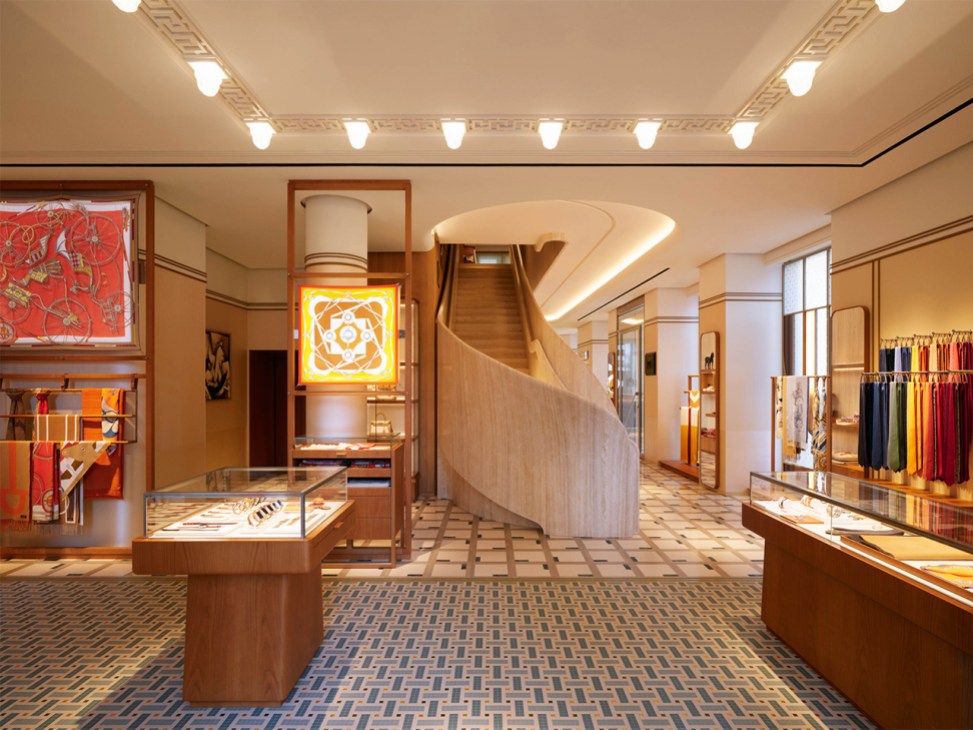
Housed in an 18th-century building, RDAI’s concept draws aesthetic inspiration from the Viennese secession. It features bespoke glass globes, art nouveau-style stucco mouldings and a gently winding staircase.
2.
Hermès Omotesando
2021
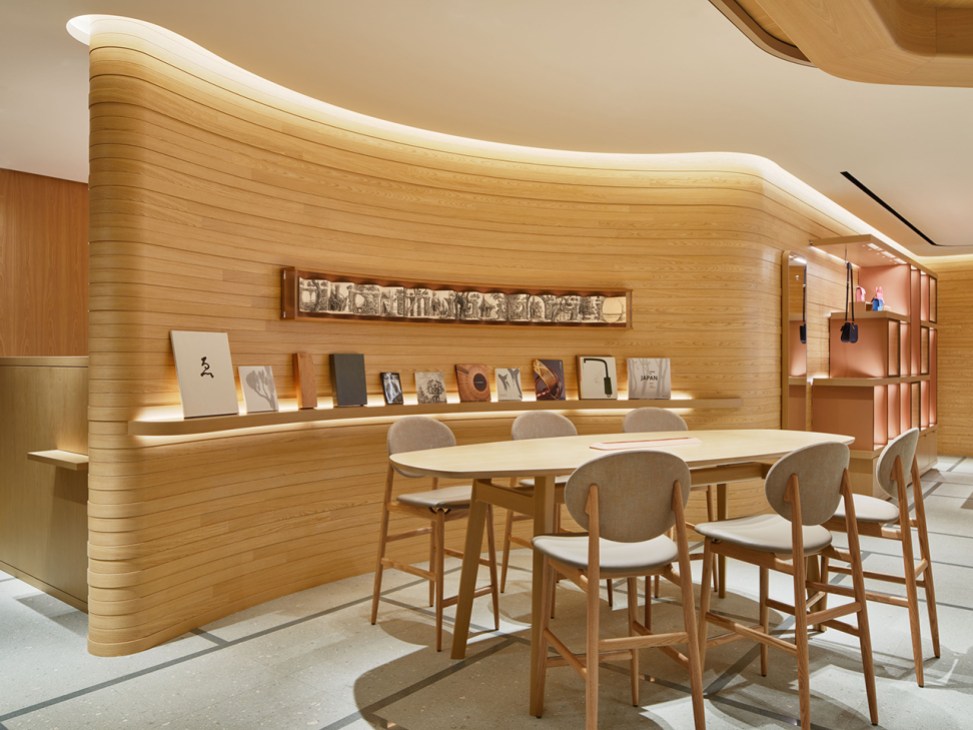
This shop features a geometric copper-coloured stainless-steel cladding that wraps around its exterior. Inside, curving walls and bamboo marquetry bring a sense of play to the retail experience.
3.
Hermès Lyon
2021
Referencing Lyon’s nickname, the city of silk, the shop’s wall fabrics and woodwork have embossed details reminiscent of brocatelle fabric. The original building was renovated and extended to include adjacent premises.