How do you design a warm and welcoming home? Villa Housu in Finnish Lapland has found the answer
‘In Lapland, the weather writes its own patina’: Helsinki-based practice Fyra decided to work with, not against, nature for a holiday residence situated north of the Arctic Circle.
Architects working in Finnish Lapland have long grappled with how to create spaces that can uplift the soul in a cold, dark climate. One eloquent answer can be found near Ylläs, 115km north of the Arctic Circle. Designed by Helsinki-based studio Fyra with architecture practice Ark Helsinki, Villa Housu serves as the second home of Fyra’s CEO, Hanna Neuvo, and her family.
The villa is a study in Finnish pragmatism. Wrapping around the building are boards of finely sawn spruce. “The aim was to make it look as though it had always been there,” says architect Otso Virtanen of Ark Helsinki. The timber, treated with iron sulphate, will eventually fade from blond to silver-grey. “In Lapland, the weather writes its own patina,” he says. “That’s how the house will find its place among the pines.”

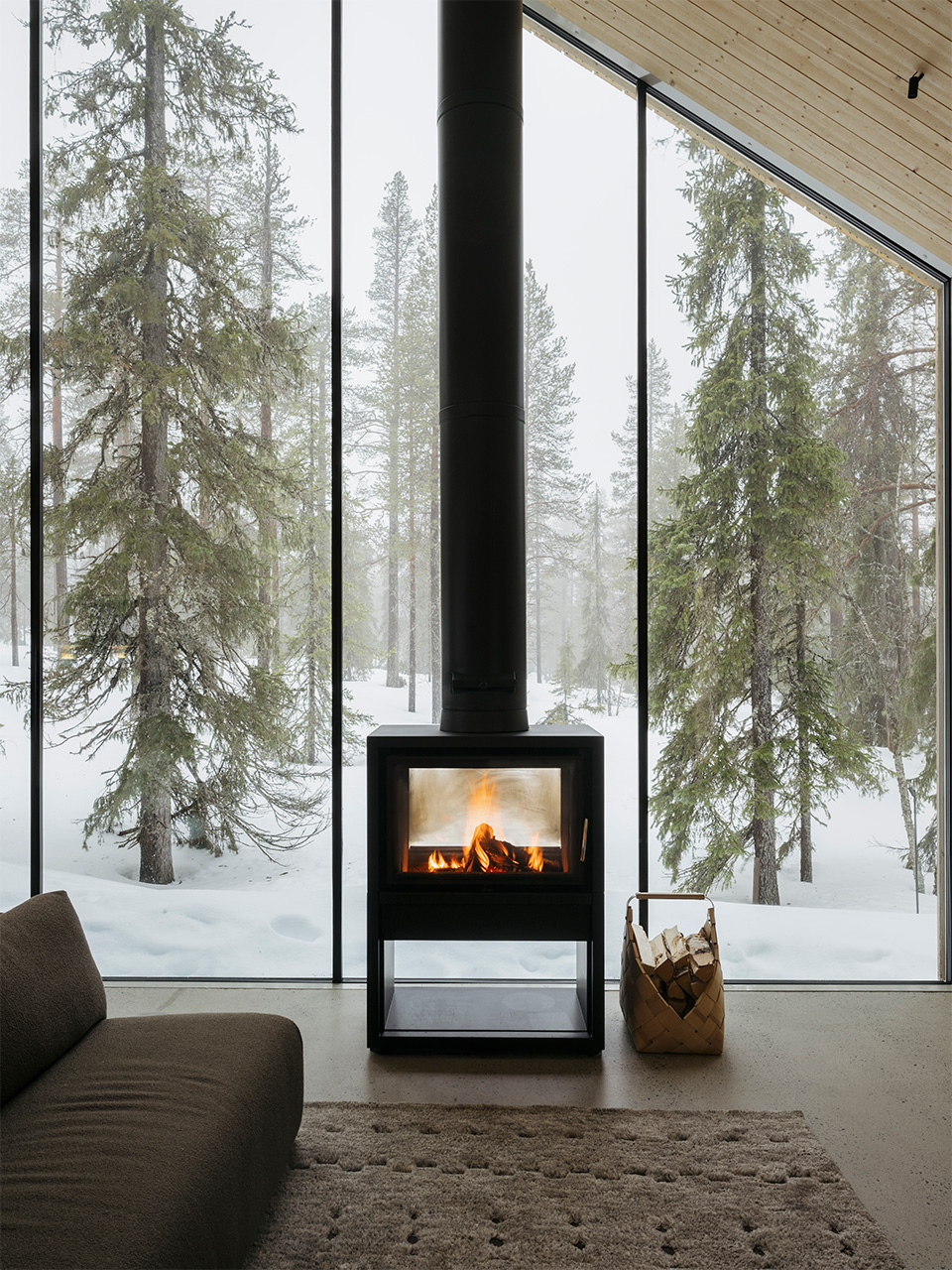
Villa Housu is built for year-round use. The north demands flexibility: weeks of sun alternate with months of half-light, while temperatures swing from 30C to minus 35C. “A home should offer safety without cutting you of from nature,” says Eva-Marie Eriksson, a partner at Fyra, when we meet her at the firm’s new studio in central Helsinki. The villa achieves that balance through texture and tone, rather than colour. “In winter, glossy surfaces become mirrors,” says Elisa Ryhänen-Derrett, an interior architect at Fyra. Her solution here was to use matte finishes that create warmth. Nothing gleams and everything invites touch.
The residence’s floor plan is simple: a long sweep of space that faces the treeline. The entrance, kept tidy thanks to a separate storage area used for skis and outerwear, opens into a living area framed by broad panes of glass.
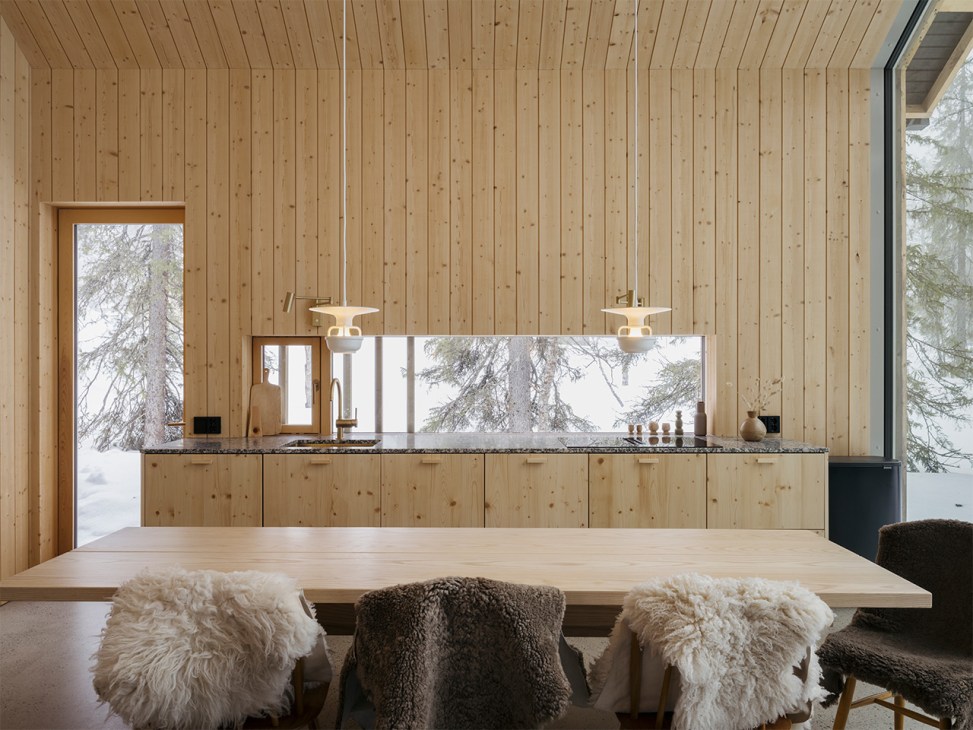
The interior feels cocooned and comfortably warm. The structure is wrapped in cellulose insulation; the floors, connected to a geothermal system, emit a low, even heat. “The best technology is the kind that you can forget about,” says Virtanen. Lighting is also discreet. Helsinki’s SAAS Instruments supplied the LEDs integrated in the fitted furniture so that illumination seems to emanate from the materials themselves.
For all its elegance, Villa Housu is a home built for living in. Fitted cabinets accommodate snowboards and guests’ accoutrements with quiet practicality. This sensibility extends to the furnishings. The kitchen features tasteful light-grey Viitasaaren granite countertops from stone refinery Loimaan Kivi, while Artek pendants hang overhead. Sitting in a corner nearby is a vintage chair by midcentury designer Ilmari Tapiovaara.

Lapland’s architectural identity has long been caught between extremes: the faux-Alpine chalet on one side and imported urban minimalism on the other. Villa Housu offers a third path that taps into the region’s vernacular. “People sometimes build here as though they were in the Alps,” says interior architect Ryhänen-Derrett. “We wanted to create something that fits the scale of this place.” For her, minimalism is less about empty spaces than about proportion and calm. “Here, comfort comes from the balance of things, not from decoration.”

In summer, the house changes character. The midnight sun filters through the same spruce walls that glowed amber in candlelight in winter. “The seasons bring their own palette,” says Erikson. “You don’t need to add colour when the world does it for you.”
Designing for the chief executive could have been tricky. By all accounts, however, the process went smoothly. “It was more like a dialogue than a commission,” says Neuvo. “They know us and how we live. There was no need to explain.” For Virtanen, making decisions about Villa Housu was natural and unhurried. “We’d sketch over coffee,” he says. “There were no long presentations, just conversations.”
The result was a house that immediately felt lived-in. The materials will weather and age – but the house will only grow richer for it. The approach of accepting nature, rather than resisting it, is what makes this country’s design so adept in the Arctic. Where others might see limitation, Finns see opportunity.
fyra.fi
How to design for cold climates
Founded in 2010, Helsinki-based Fyra has built a reputation for creating inviting environments, from hospitality, residential and retail spaces to work environments and cultural institutions. Here are three tips for cold-climate architecture.
Out of sight: When designing the views, consider both what you want to see and what you don’t. Keep light pollution outside the frame and bring as much nature as possible into it.
Inner light: In addition to the need to insulate against the cold, lighting and materials should create a warm atmosphere.
For all seasons: Cold places aren’t cold all year. So forget the Christmas look – design for every kind of weather.