Floor plans to die for: The perfect architecture for murderers, serial killers and satanists
Blood spills differently on a beautiful floor. From Gaudí killing-spree settings to modernist murder pads, architecture has long been crime’s elegant accomplice. Here are some of the most notable pairings from popular culture.
The Spanish Netflix series Ciudad de Sombras (City of Shadows) is a six-part crime drama set in 2010 Barcelona. The show unfolds in a city still uneasy about the 1992 Olympics, which displaced people from their homes to make way for new sports facilities, beaches and museums. Nearly 30 years later, they continue to be eased out of their apartments in the name of progress.
While there are other plotlines to do with cancer, child abuse, teenage suicide and Spanish TV, the key narrative of the series is the kidnapping and subsequent burning alive of various public figures, all taking place in buildings by Antoni Gaudí. Ciudad de Sombras is essentially an entertaining detective series that features spectacular architecture. It’s why, as yet another poor unfortunate is being flambéed, all you can think is: “I need to get to Barcelona and visit everything that Gaudí ever designed.” (Bookmark Monocle’s Barcelona City Guide, if you do.)
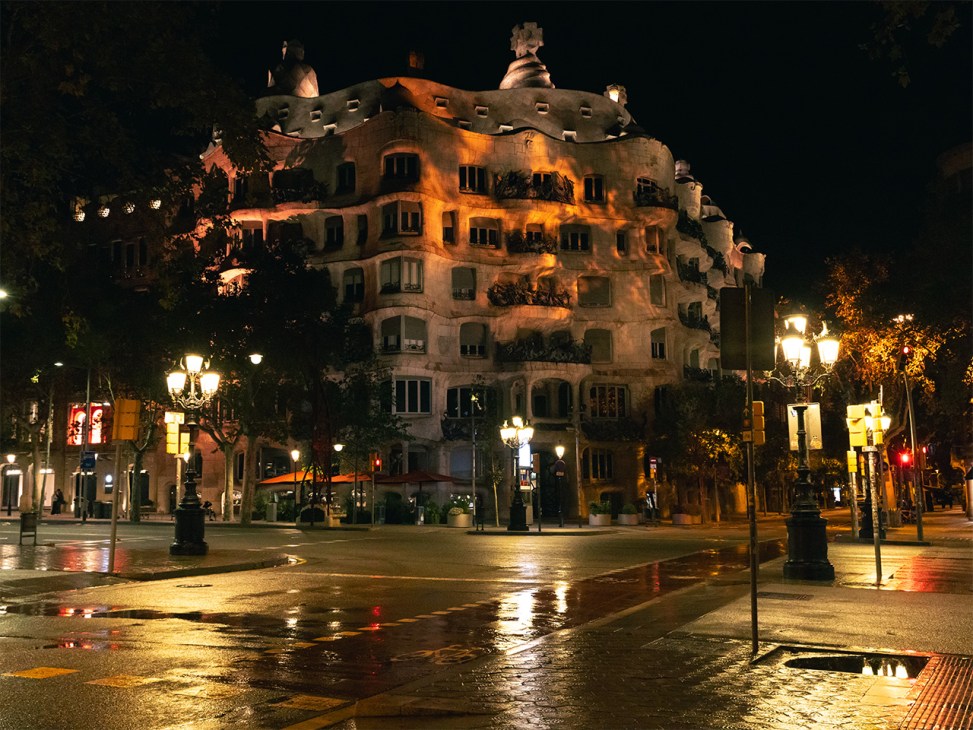
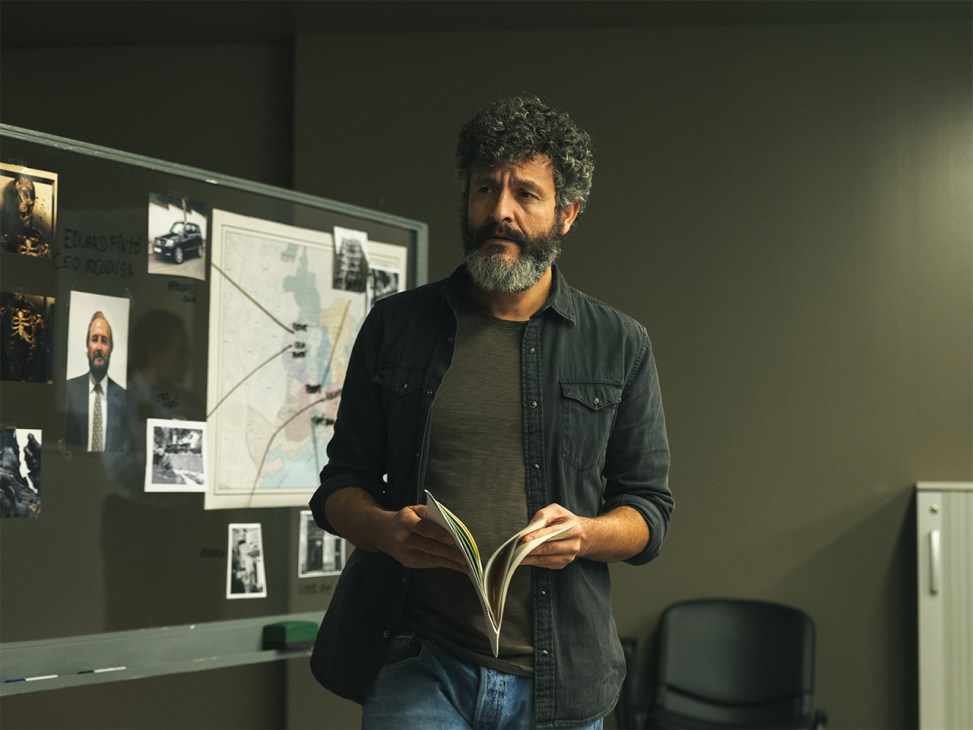
Of course, this is not the first time that the art of building design has stolen the show on screen or in print. Here are five more killer cultural outings for people who like double servings of crime and architecture.
1.
Hawksmoor
Novel by Peter Ackroyd
The award-winning novel, which is set in both 18th-century and contemporary London, tells a two-track story. One follows ecclesiastical architect Nicholas Dyer, a secret Satanist who sacrifices humans as part of his building process (you do have to be careful with these architect types). The other revolves around a policeman, Nicholas Hawksmoor, who is investigating a series of modern-time murders that have been committed at Dyer churches. Now, there was an architect called Nicholas Hawksmoor in 18th-century London, who designed many of the churches that Dyer designs in the book, such as Christ Church Spitalfields and St Anne’s Limehouse – hence Ackroyd borrowing his name. Many people who read Hawksmoor subsequently made visits to the rather spooky churches featured in the novel. Most, it is believed, made it home again.
2.
North by Northwest
Film directed by Alfred Hitchcock
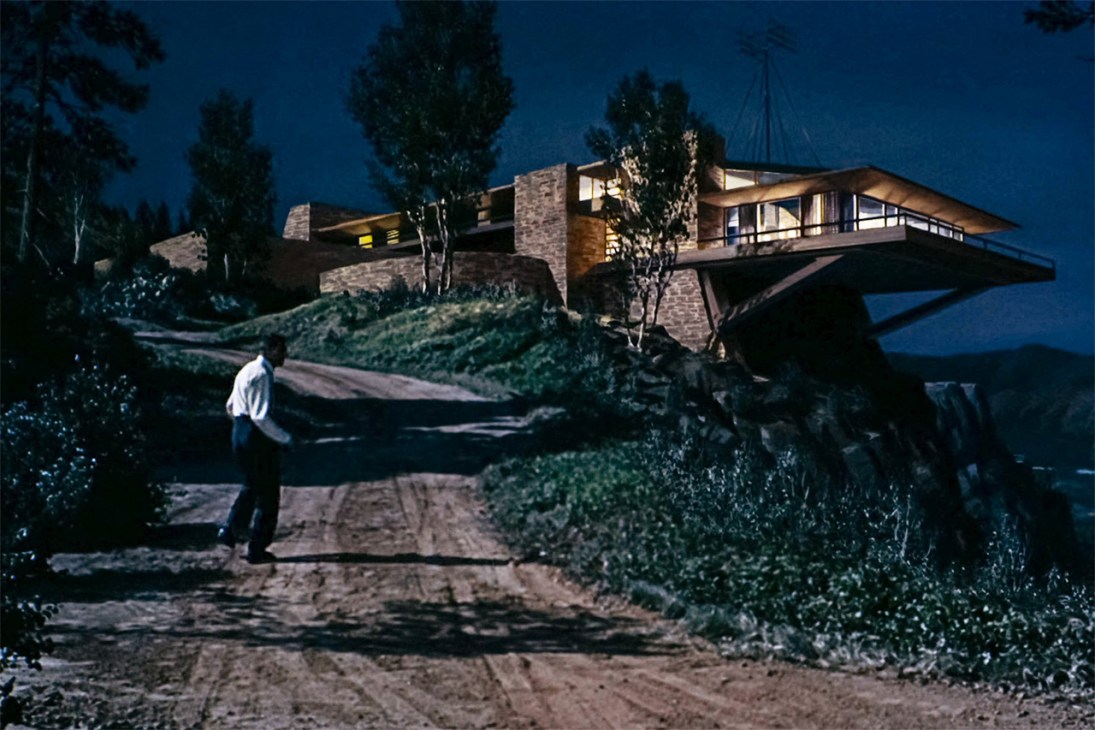
This spy thriller starring Cary Grant, Eva Marie Saint and James Mason had another unexpected star – a villain’s lair called the Vandamm House. Although it was just a set, Hitchcock used Frank Lloyd Wright’s masterpiece, Fallingwater, as inspiration for its design. The Vandamm House was only on screen for some 14 minutes, yet it became a much-talked-about element of the film. To this day, the iconic structure has many fans and has even inspired several real-life houses.
3.
American Psycho
Film directed by Mary Harron
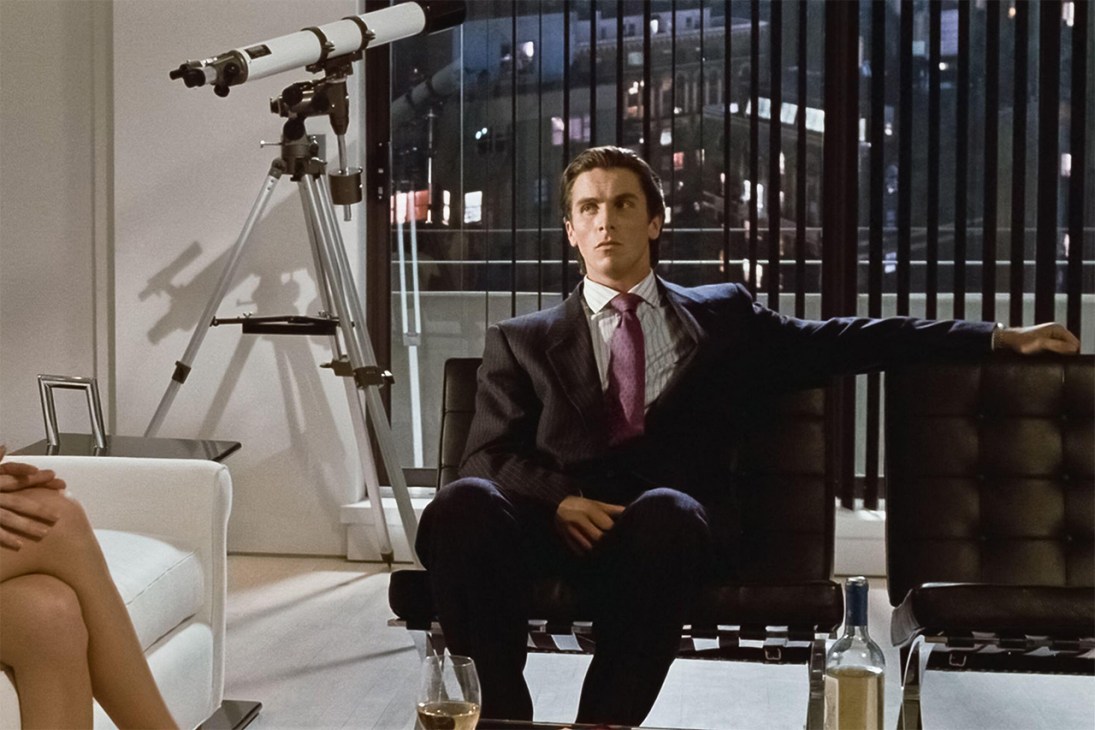
Contemporary – especially modernist – architecture in movies is often associated with people up to no good: chilly folk who might murder you for a sin as slight as scratching their Eames chair. There is perhaps no better example of this than American Psycho. While the story is set in Manhattan, much of the filming took place in Toronto, in a stark and amazing 1967 project by Mies van der Rohe. The Toronto-Dominion Centre features two brooding black towers and it is here that Patrick Bateman, played by Christian Bale, works (and when taking time out from investment banking, kills people). The character’s apartment has more pieces by the celebrated architect, including the famous Barcelona chairs. The movie plays on a common notion with its choice in locations and furniture: minimalism is evil and stark rooms are likely hangouts for narcissist killers.
4.
Poirot
British TV series based on the books of Agatha Christie
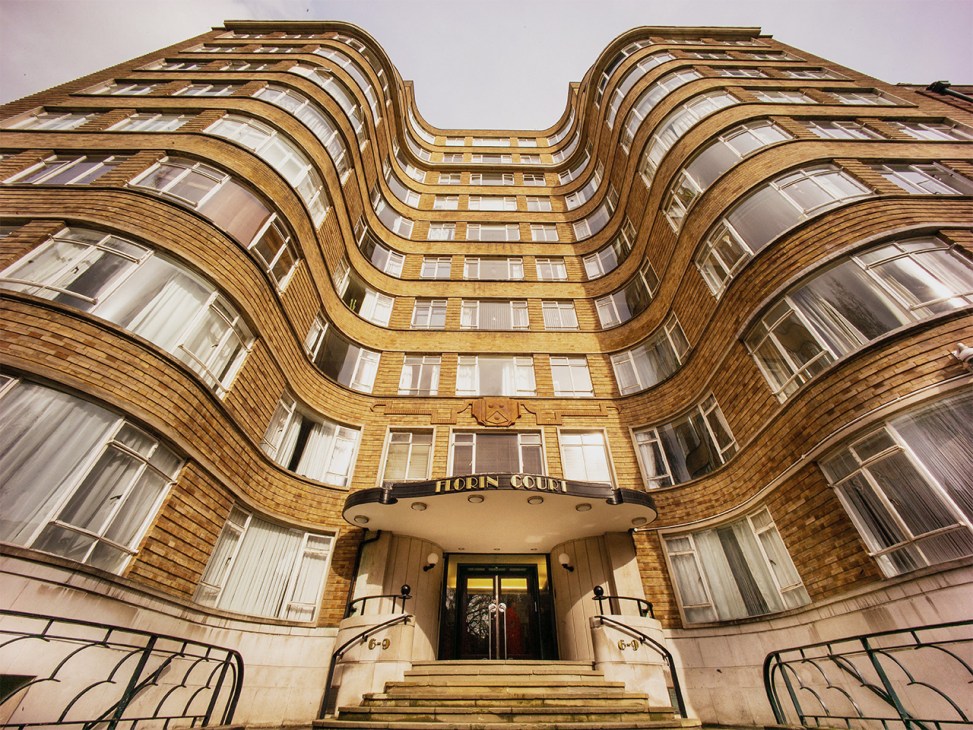
The murders in this show are a little less grisly than in American Psycho but the on-screen architecture is used for a similar narrative impact. Poirot, despite his old-fashioned manners and attire, lives in Whitehaven Mansions, an elegant art deco apartment building. And as a stand-in, the series used wavy-fronted Florin Court in London’s Charterhouse Square. The choice of home suggests a man who is actually rather modern at heart – driven by science, meticulousness and an aesthete to boot. A similar narrative is present in the life of Agatha Christie herself. In 1941, after her home was bombed in the Blitz, she moved to the Isokon building designed by Wells Coates and completed in 1934. Today the structure is still regarded as a clean-lined modernist break from the past.
5.
Body Double
Film directed by Brian de Palma
The 1984 erotic thriller might not have been a box-office triumph but the house at the centre of the action could shrug that off – it had regularly been cast in movies and TV shows and continues to be put in the spotlight. The building in question is the Chemosphere, a residence by the celebrated American architect John Lautner. The property, which was erected in 1960 in Los Angeles, looks like a flying saucer sat on a concrete pillar. This, and other Lautner houses that are also perched on cliff edges, have become cinema stalwarts because they not only hint at wealth but also a detached, voyeuristic view of the world: they provide an ability to pry into the life of a city unobserved. And there was Lautner thinking he just made nice homes.
‘City of Shadows’ is available to stream on Netflix now.