Village Green: The leafy Los Angeles neighbourhood that puts communities first
For a house to feel like a home, residents need a sense of connection. We visit three residences to learn what keeps them in this rare traffic-free corner of a car-focused US city.
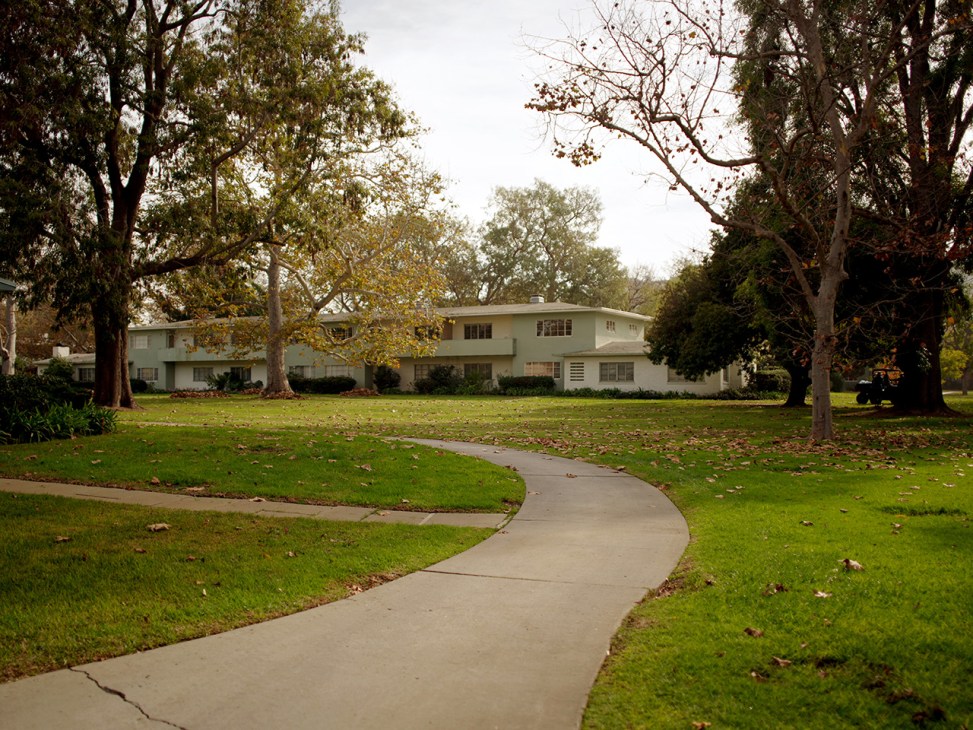
When a coyote appears on the lawn outside the window of John Florance’s home, neither seems surprised. “They’re a nightmare for the cats,” says the 63-year-old. “But it speaks to just how close to nature this place is.” This is life at Village Green, a car-free oasis of 629 homes in southwest Los Angeles. Here, across 28 hectares, a network of pathways and gardens lined with trees creates what feels less like urban housing and more like a small town that happens to be 15 minutes from downtown.
The development was born of early 20th-century ideas about how cities should be built. In 1898, British urban planner and social reformer Ebenezer Howard founded the garden-city movement, an approach to urbanism that placed space, light and nature at the heart of town planning. By the 1920s, US planners had begun emulating such developments across the Atlantic.
Among them was EG “Lucky” Baldwin, a developer who commissioned a team to create Village Green. Its design featured interconnected, light-filled apartments and park-like grounds, with more than half the development’s footprint dedicated to greens and garden courts. Opened in 1942, the project demonstrated the beauty of one of the defining features of the movement: the superblock. Here, cars were banished to perimeter garages. Soon after opening, the project won a distinguished award from the American Institute of Architects’ southern California chapter.
When the first residents moved in, they were middle-class professionals attracted to what the Los Angeles Times described as a “new and finer style of living” that resembled “the quiet and beauty of the country”. Today’s residents are drawn here for similar reasons.
1.
The Florence Residence
Love thy neighbours
John Florance moved to Village Green in 2009 after a friend invited him to visit. He had been living in a downtown loft and immediately noticed the contrast. “The temperature drops at least two or three degrees because of all the trees,” he says. “It’s our own little microclimate here.” His home has no air conditioning but Florance manages fine. “There are about two weeks out of the year when you’re kind of miserable but just turn on the fans and you’re good. It’s the leafy trees, providing shade, that are a blessing.”
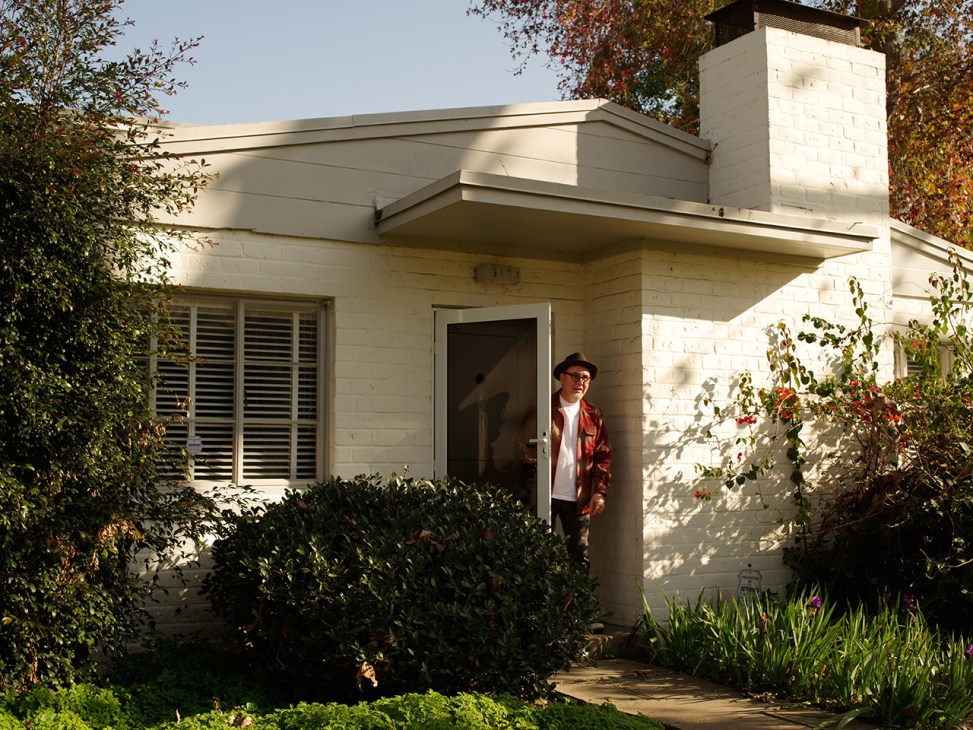
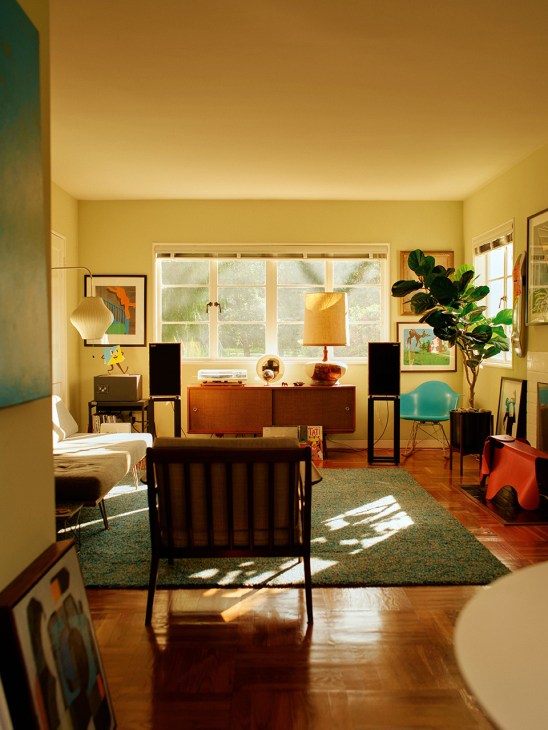
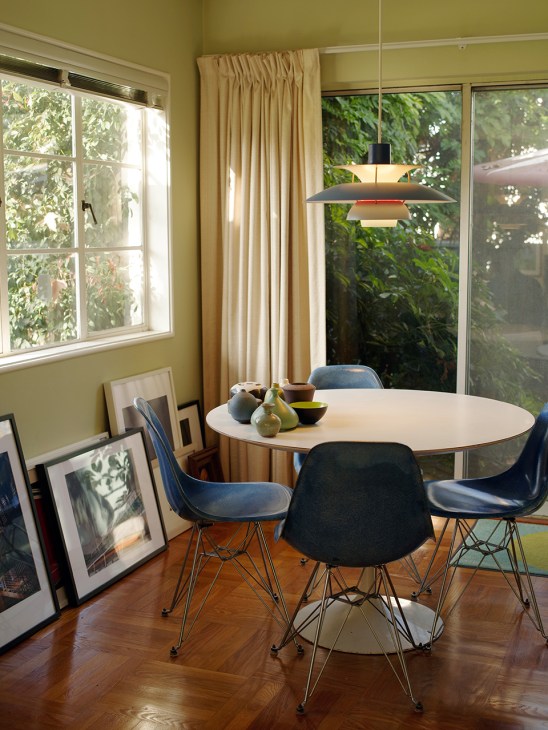
Inside his compact home, sunlight pours through metal-framed windows. In the living room he opens a closet to reveal a floor-to-ceiling record collection. “For such a small space, there’s a lot of storage,” he says, putting on a record. “It’s the details – the doors, the windows, the generous proportions – that show how much thought was put into the building. You wouldn’t get such details today.”
What keeps Florance at Village Green is the social element. “I’ve lived all around southern California and I’ve never known so many of my neighbours as I do now,” he says. “People are happier among trees and greenery and that is conducive to getting to know your neighbours.”
2.
The Creighton residence
Breathing space
Across a lush lawn is the entrance to the home of the Creighton family. Here, a pomelo tree heaves with fruit, its giant citrus weighing heavily on the branches. Scout, a miniature Australian shepherd, provides an enthusiastic greeting, as Heidi Creighton, 50, an architect and fellow of the American Institute of Architects, stands by the doorway. Inside is her husband, Robert, also 50, an industrial designer and professor, and their teenage children, Samantha and Alexander.
“We live in a two-bedroom townhome, which is cosy for the four of us plus our dog,” says Heidi, explaining that most of the development’s homes are compact. They range from 84 to 150 sq m, which was typical for the 1940s in southern California but small by today’s standards. “In this country, we’re obsessed with space and needing big things but it isn’t necessary. This house is more than enough. It’s about how it functions and how you use the space.”


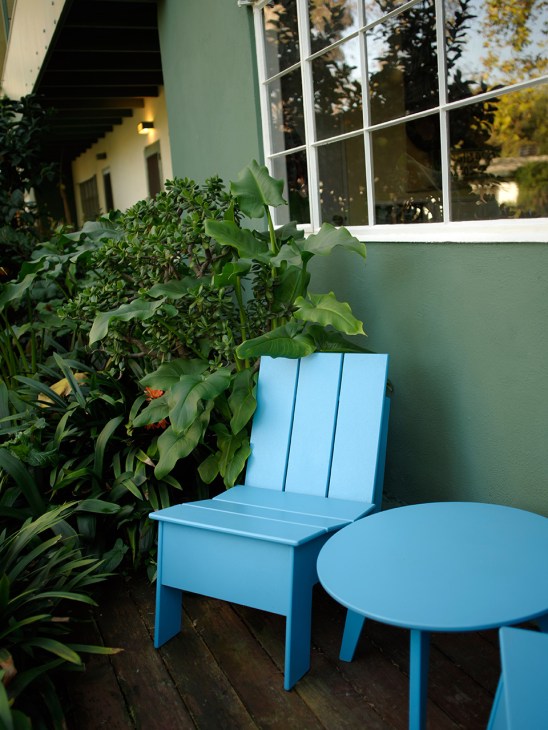
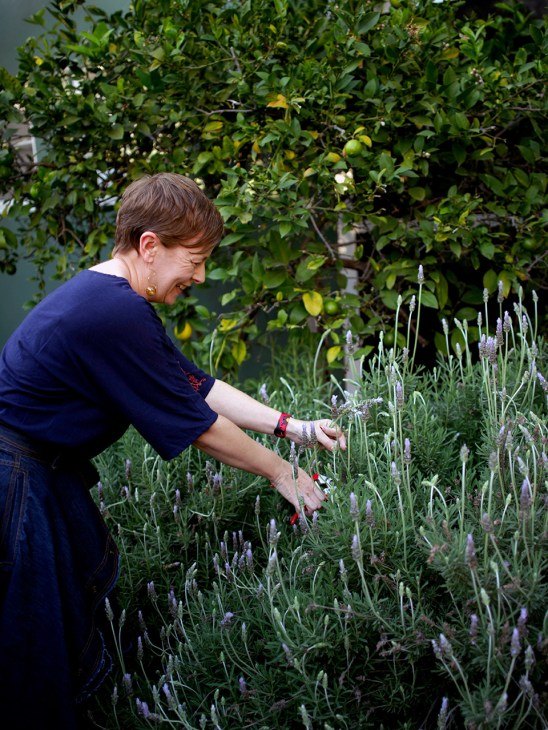
The dining room opens onto a patio with a vegetable garden where lavender, passion fruit, lemons, blueberries, lettuce, tomatoes, beets and carrots are growing. “It’s special to have that connection to outside,” says Heidi. “We have the sounds of hawks calling during the day and owls hooting at night.”
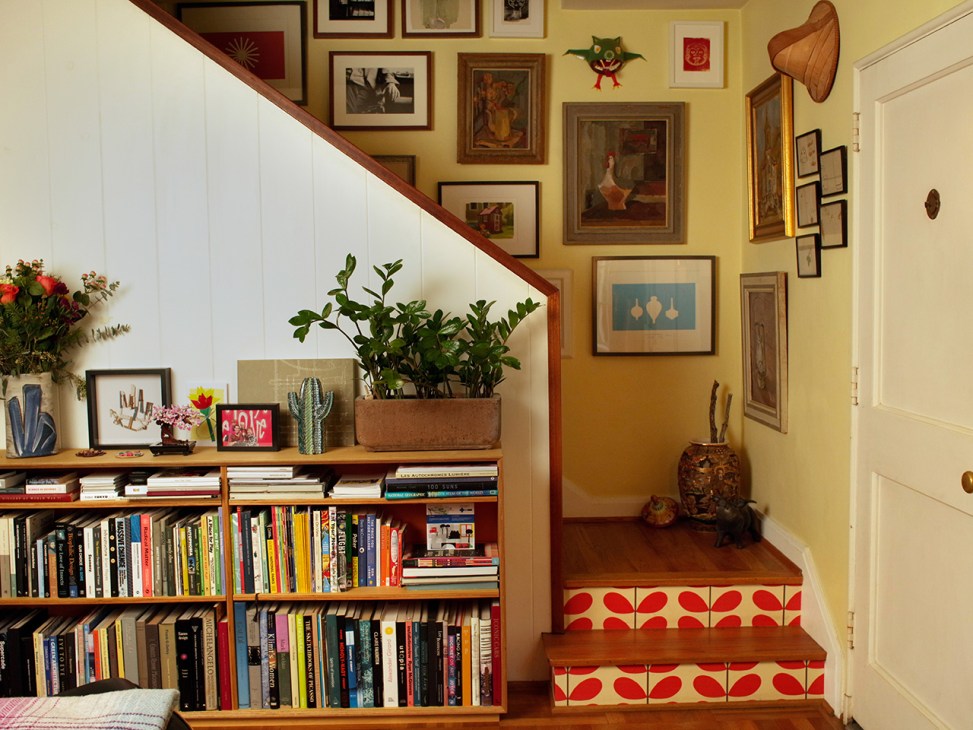
As an architect, Heidi’s favourite design element is the home’s stairwell. The architectural intervention creates a spacious void filled with art and photographs – much of it created by family members, including a large painting by Robert’s mother, Diana, who once lived in Village Green with her parents. “Technically, our children are fourth-generation Village Greeners,” says Heidi.
When the Creightons are asked about their favourite memories, each family member offers something different. For Robert, the charm lies in its sense of quiet. “I love how when I go for a morning run and walk through the Green, afterwards there are no cars or planes or helicopters – rare in this city,” he says. “What is left are the quiet sounds of nature.” Heidi recalls jazz concerts on the main green, Samantha remembers community pasta nights, and Alexander’s answer is simple: “It is everything, honestly.”
3.
The Hawken residence
Family values
Walking from the Creighton residence, past a pair sitting on a bench under a canopy of carob trees, Monocle reaches the Hawken family’s residence. Inside the 92 sq m home are Aidan, 50, a musician; his wife, Andrea, 43, a creative director; and their three children, Gabriel, Raphael and Anya. The couple explain that while their home might be small, its compact nature has shaped family dynamics for the better.
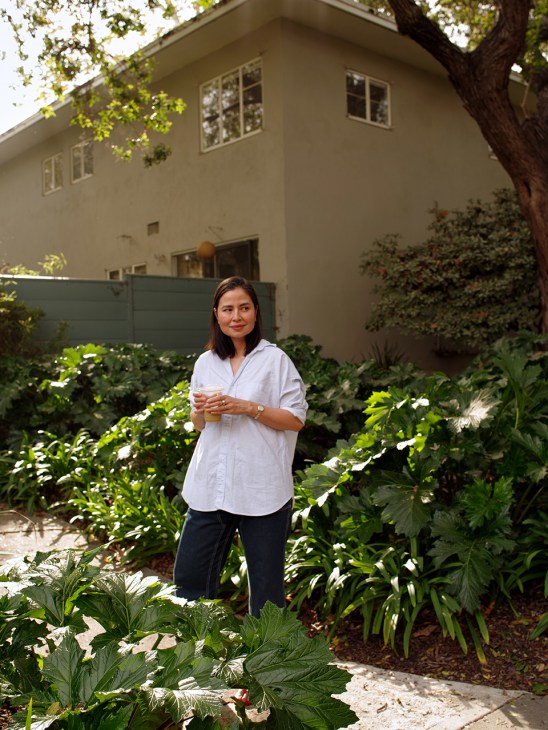
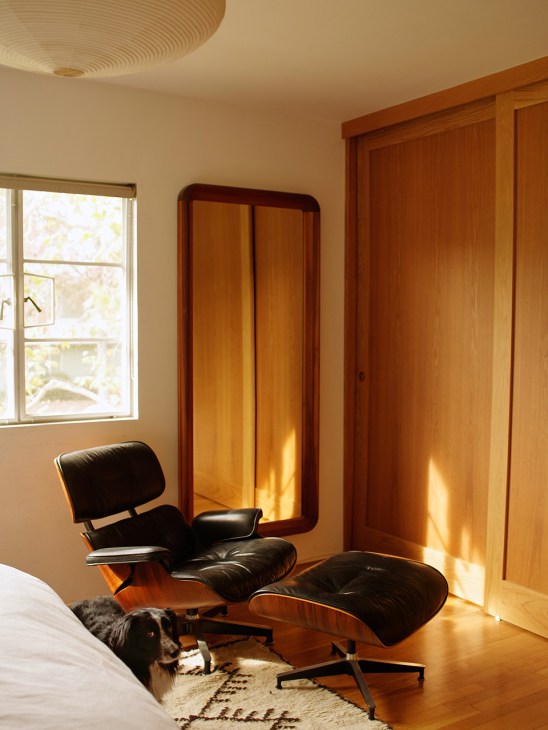
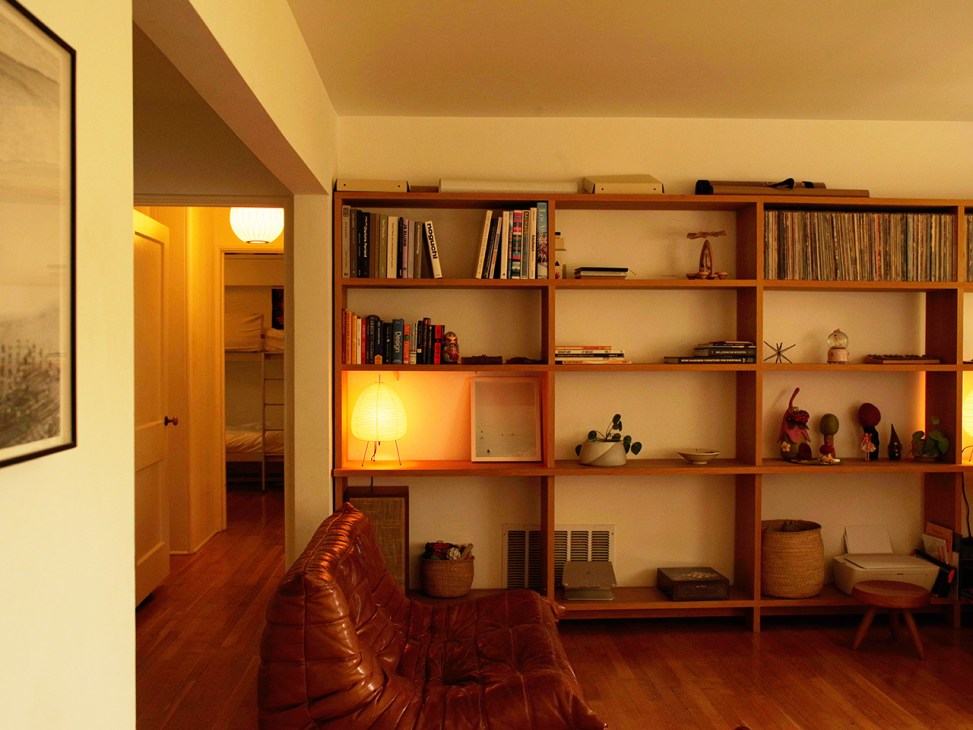
“Everything is close and privacy is limited but this has contributed to us being a close-knit family,” says Andrea. “Our children are used to sharing space, conversation and daily life. At the same time, our expansive outdoor environment gives them a sense of freedom and healthy independence. They feel safe roaming freely, experiencing a childhood that feels reminiscent of another era.”
The Hawkens moved to Village Green in 2012 and say that they would have left Los Angeles years ago without it. “The community we have built here has been pivotal to our thriving in the city,” says Andrea. “Los Angeles is a notoriously lonely place. The constant driving, traffic and physical distance between people make it difficult to connect. That loneliness is simply not present when you live within a true community.”
Village Green preservation society
Despite the love that residents have for the Village Green development, the challenges of maintaining this 80-year-old community are significant. Having been added to the National Register of Historic Places in 1993, there are, understandably, certain rules in place with regard to what adjustments, repairs and additions can be made to both the housing and landscape. Responsibility falls on the Village Green Owners’ Association, which is led by an elected board of directors who respond to requests from residents. Some would like modern amenities, such as air conditioning, but the electrical systems need upgrading; others would love solar panels but that’s not heritage approved. Despite this, the architectural spirit continues to stand the test of time.
“Village Green is the best built example of garden-city planning principles in the US, with its superblock site planning, massive greenbelt and the relegation of auto circulation and storage to the perimeter of the property,” says architectural historian Katie Horak. An adjunct associate professor at the University of Southern California’s School of Architecture, and a principal at Architectural Resources Group, a Los Angeles-based design studio with particular expertise in historic preservation, Horak is also a former Village Green resident.
“It’s a special place. It was an experiment in progressive social housing and it continues to inspire students, designers, scholars and residents as a successful model,” she says. “Eighty-five years after its construction, it still feels as relevant today as ever. Not only relevant but rebellious really in its prioritisation of creating a healthy, happy community over maximising profit.”
LA remains a city where the car is firmly rooted in both landscape and mentality. Yet for the residents of Village Green, there is a sense that they have found an oasis – a slice of southern California before the automobile, where the focus remains human and community-minded; where neighbours live in harmony with each other and the landscape.