The 10 best bridges in the world, selected by architect Ezra Groskin
For Groskin, designing a bridge is more than building a structurally sound crossing. Here he shares what drew him to the practice, bridges as social infrastructure and his top-10 examples.
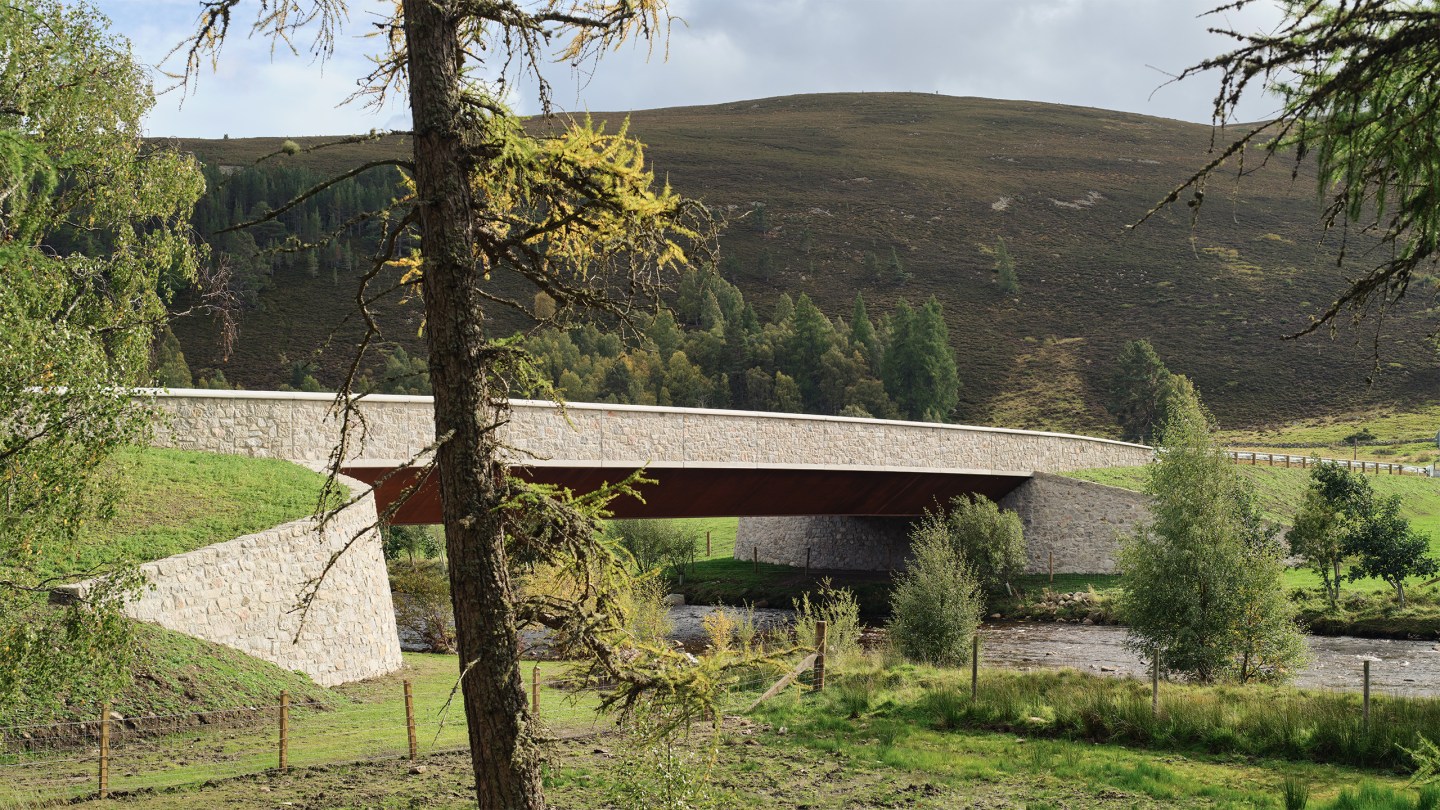
Ezra Groskin builds bridges, in every sense of those words. A director at London and Aberdeenshire-based practice Moxon Architects, Groskin designs bridges that align with the company’s ambition to deliver landscape-led infrastructure that also celebrates craft. Moxon has an impressive portfolio with work including a foot-and-bike crossing made from timber in Baiersbronn, Germany, and the Small Dean Viaduct in the English county of Buckinghamshire that will, once completed, carry high-speed trains.
For Groskin, however, the best bridges don’t only allow the swift traversing of a ravine or highway. They also unite communities and encourage human interaction, placemaking and even loitering (in the nicest sense possible).
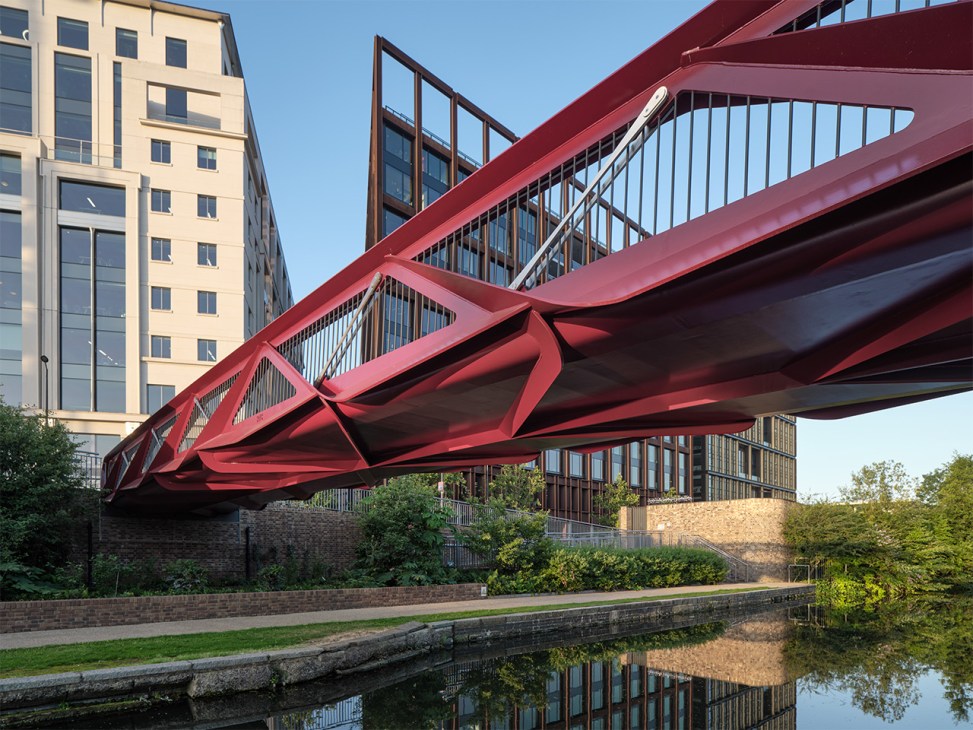
“At the Coal Drop Yards development [at King’s Cross in London], we designed two bridges,” he says. “The first one was just about getting people on foot and bicycle from point A to B, but a few years later the developer brought us back to do a second bridge, 100 metres down the canal. And this one was different. It was about creating [a place] where people would come and linger – a bridge where people would say ‘let’s go meet on the red bridge, then we’ll get dinner’. It’s a destination bridge,” he adds of the steel Espérance Bridge.
Groskin fell into the profession by accident. “I trained as an architect in the US and became obsessed with structures that express their function,” he says. “I didn’t even know that there was such a thing as a bridge architect until moving to London in 2008. I was interviewing at different practices and one of them had a bridge team – and I ended up learning the trade.”
Bridges are places to linger
What has kept Groskin building bridges is that it’s a trade in which engineering and design come together, allowing him to create physical connections that are attractive, expressive and enjoyable to use. Yet to deliver a truly great bridge, it’s important to explain to a client that they have the potential to provide more than a functional connection. “With a lot of bridges, you invite people to linger in the middle,” he says. “You make the bridge wider at its highest point so that you can have some seating there. That way you’re making a place where people can stop and rest, which also invites you to stay, look at the view and see what’s going on.”


Moxon’s designs are stripped back, lean and often free of visible supports. Groskin explains that there has been a general shift away from the elaborate bridges that made headlines at the turn of the century, sometimes for the wrong reasons (London’s Millennium Bridge is still called the “Wobbly Bridge” by some in reference to a problem at its unveiling – since fixed – where it would sway if too many people traversed it in unison). “There was a race to see who could make the slimmest bridge or the most ambitious bridge. You put all this effort into the engineering and ended up with complicated structures that were difficult to maintain. Clients realised that maybe it wasn’t worth it,” he says.
Meandering crossings are the way to go
There’s another trend that Groskin points to: meandering bridges designed to slowly get you to where you need to be. In part, this trend is born from the need to create new urban routes for cyclists and keeping them moving at a leisurely pace especially when sharing a crossing with pedestrians. Indeed, Moxon has become something of an ambassador for such structures. “These bridges zigzag across an obstacle and there’s another functional element: they can get you up a hill without actually going straight up it,” says Groskin. “As you zigzag, you also get to see the structure of the bridge around the corner and see what’s holding you up.”
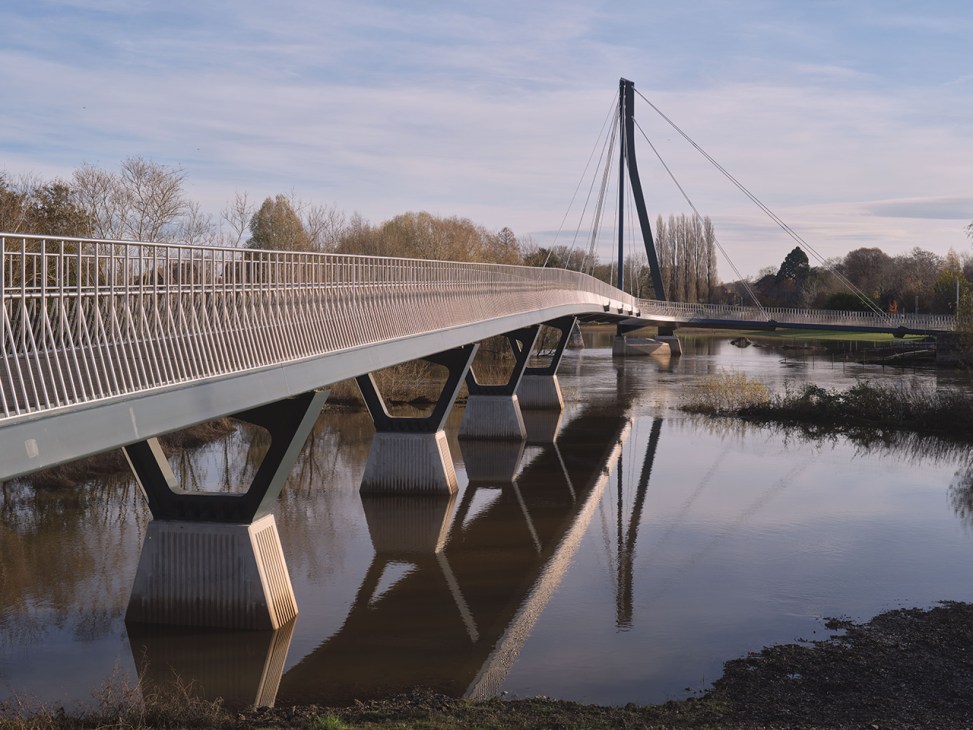
Building bridges is also about, well, building bridges. It’s when speaking about his work’s potential to unite people that you see why Groskin has stuck to the trade. “We recently finished a project north of Worcester, [England]. It’s an area where there are students on one side as well as a lot of older retired people, and the bridge connects a park to a new community. The next nearest bridge is 10 miles (16km) upstream. I don’t think that we anticipated the impact the bridge would have on these communities. You have people who have lived on opposite sides of the river for years and were never able to visit their friends [as easily as] they can now,” says Groskin. “It’s a small thing but it is influencing the daily lives of people, expanding their network, changing their habits.”
Here are 10 of Groskin’s favourite bridges, from New York and Cornwall to Switzerland and Vermont.
1.
The covered bridges of Vermont
Designed by: Various
Location: Vermont, US
The Gold Brook Covered Bridge – otherwise known as Emily’s Bridge – is a favourite. I grew up swimming under it most summer afternoons, long before I discovered or appreciated bridge design. So many of the lessons that I’m learning today about materials, craft and culture are embedded in these bridges and vernacular structures.


2.
Brooklyn Bridge
Designed by: John A Roebling, Washington Roebling and Emily Warren Roebling
Location: New York, USA
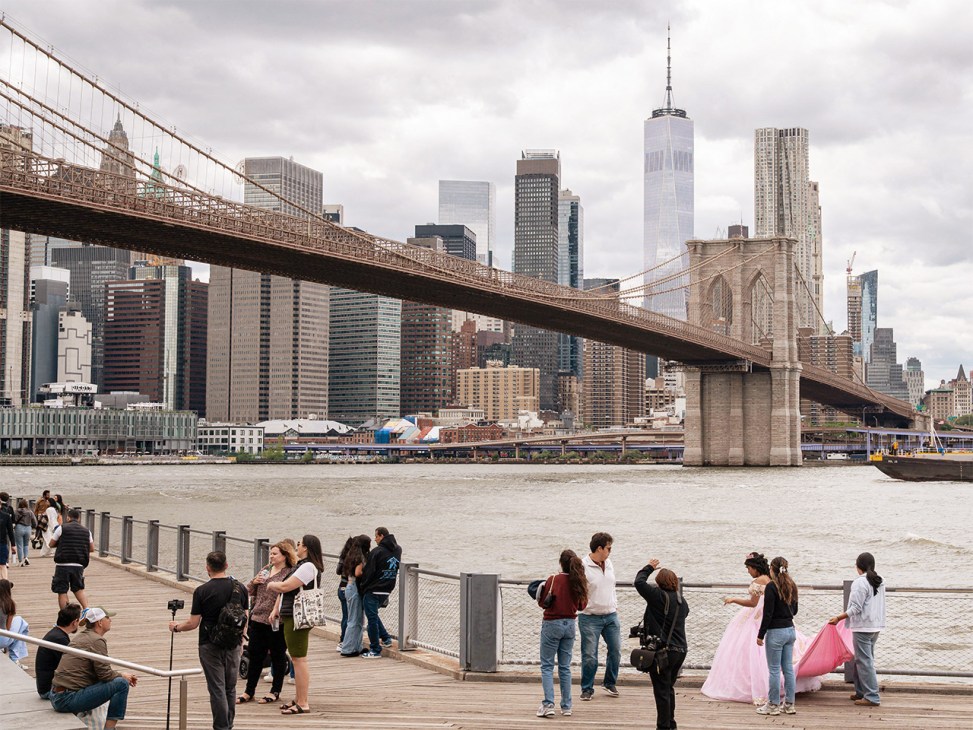
A classic for good reason. I spent two years commuting over this bridge along the elevated walk-and-cycle way. It’s a landmark where function trumps aesthetics – a critical connector within the city. It taught me how to use a bridge as a resident and visitor. Crossing this bridge was a chance for me to transition from home to work and back.
3.
The High Line
Designed by: James Corner Field Operations, Diller Scofidio + Renfro and Piet Oudolf
Location: New York, USA
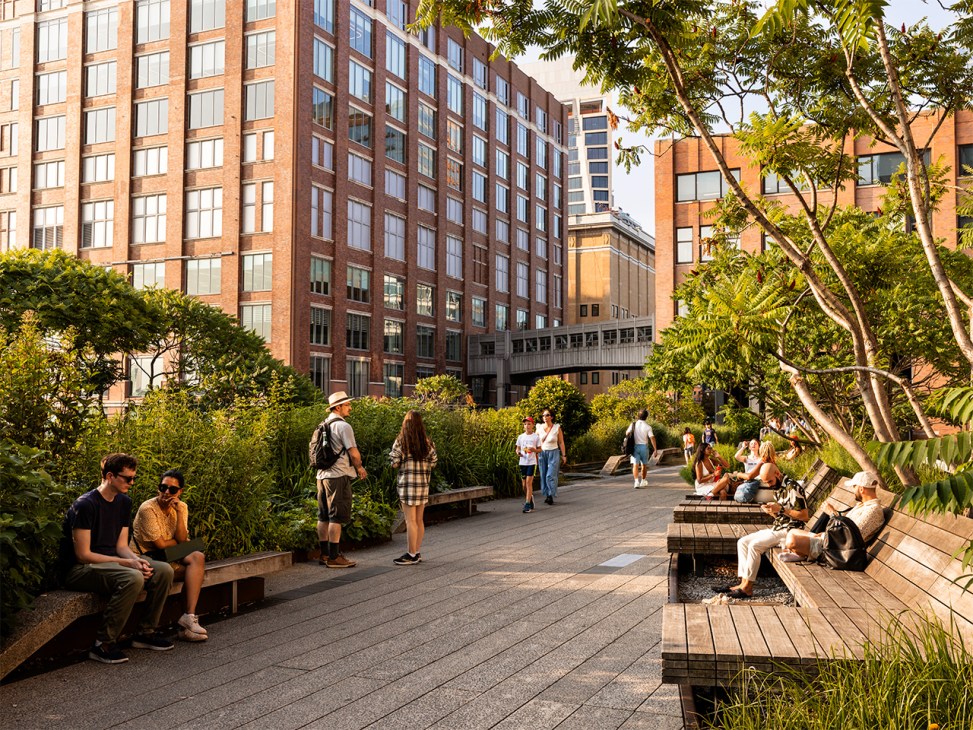
I’ve watched this New York project evolve over 20 years. It changed the way that we think about reuse and regeneration. While it’s now a park that winds its way along Manhattan’s West Side, it was originally an elevated rail link, transporting freight in and out of the city’s meatpacking district. As a continuous bridge with repetitive spans (a viaduct), it was an ideal opportunity for repurposing because it is wide and sturdy. The vision and commitment that made this project happen are commendable, as is the design, detailing and landscaping.
4.
Sackler Crossing at Kew Gardens
Designed by: John Pawson and Buro Happold
Location: London, UK
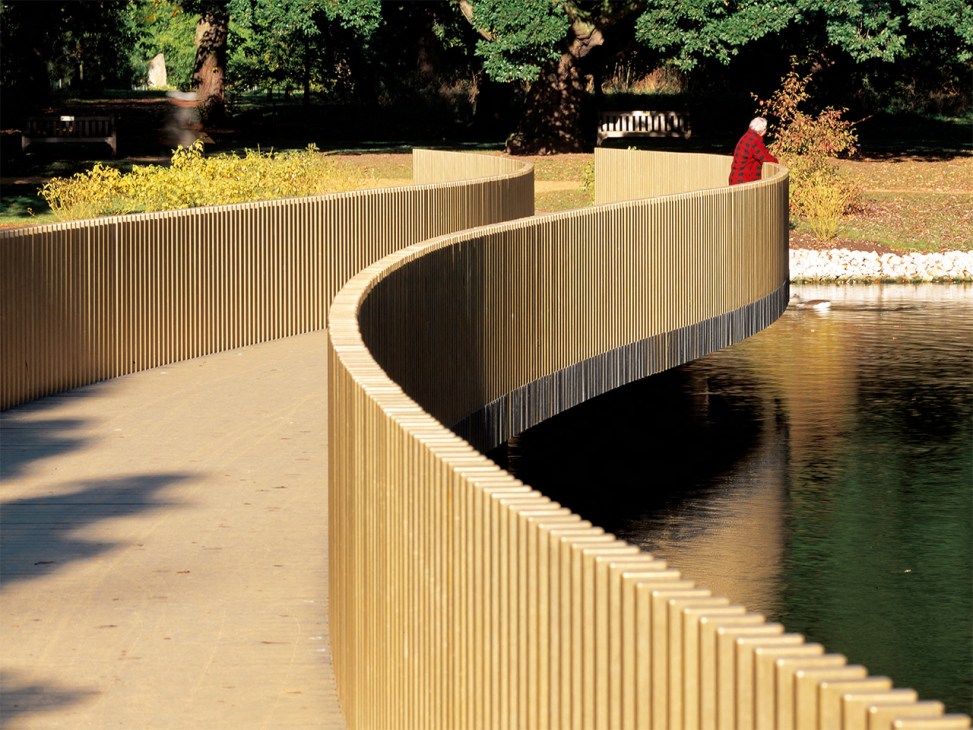
This west London bridge is proof that a modest structure can be a delight to use when materials and details are well considered. It’s a simple array of stone planks with shaped bronze parapet posts sweeping along an S-shaped curve. The supporting structure is almost invisible as it hovers just above the water. It’s understated engineering and well-crafted architecture at its best, sitting perfectly in the garden setting.
5.
Tintagel Castle Footbridge
Designed by: Ney & Partners
Location: Cornwall, UK
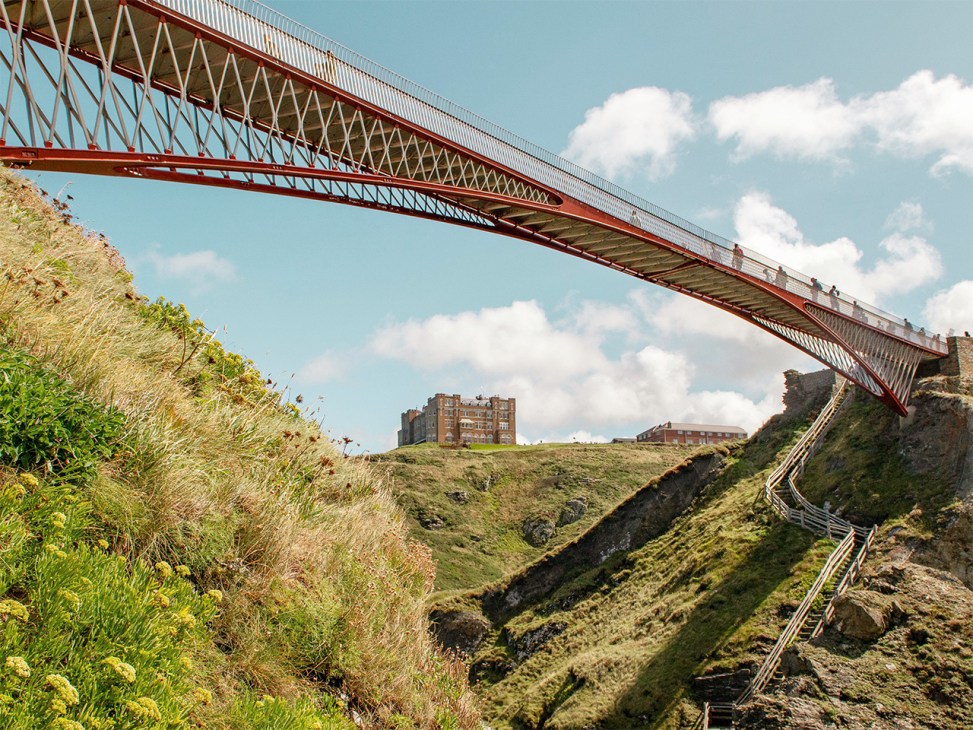
A stunning bridge in a stunning landscape. The form is daring, and the site is exposed and dramatic; crossing this bridge requires courage. The deck is made of slates on edge – a nod to its context and history that reads as a work of art.
6.
Somers Town Bridge and Espérance Bridge
Designed by: Moxon Architects and Arup
Location: London, UK
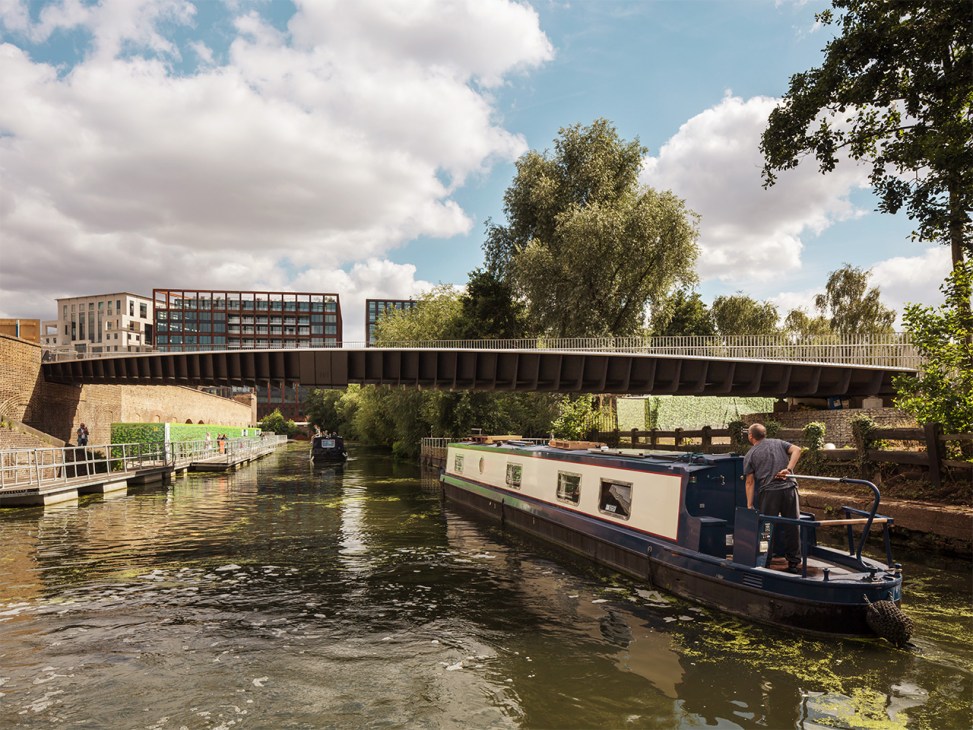
It was Somers Town Bridge (connecting Kings Cross to Camden) that drew me to Moxon Architects, where I’m now a director. A few years later, Espérance Bridge, which is just around the corner, proved that two bridges, linked in location and spirit, could take on very different forms. Both structures are contemporary responses to their Victorian industrial setting. The first is an ultra-efficient connector, its form optimised to span the canal. Its downstream cousin is an eyecatcher – an expressive, sculptural truss that invites users to cross and linger over the water and the adjacent canal-side urban theatre.
7.
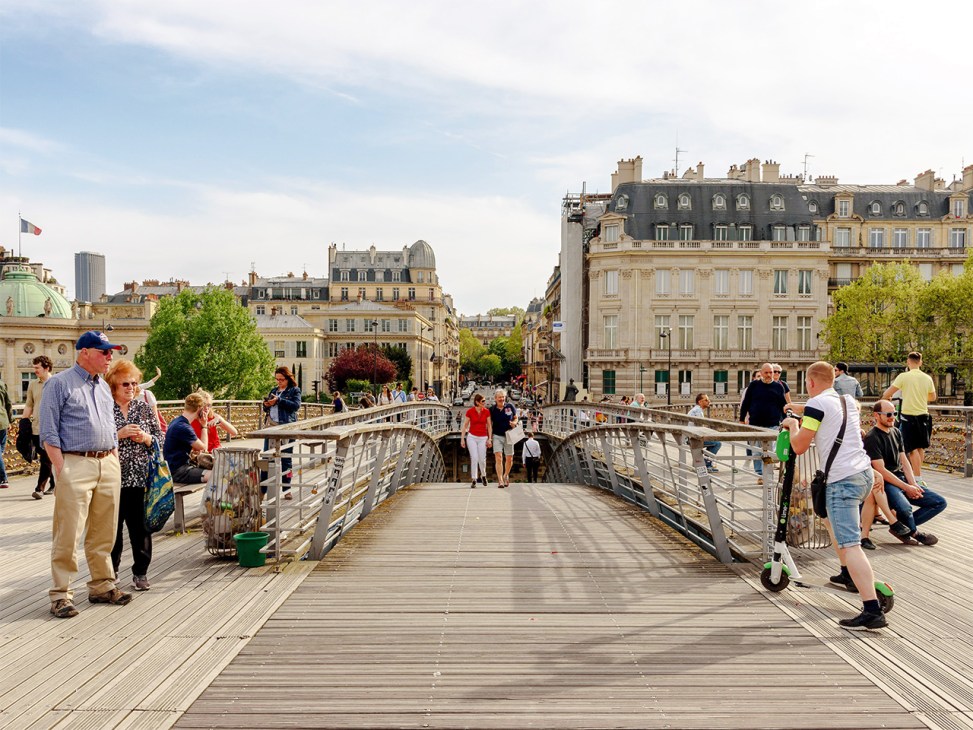
Léopold-Sédar-Senghor Footbridge
Designed by: Marc Mimram Architecture Ingénierie
Location: Paris, France
An ambitious urban bridge in a rich setting that connects different levels with ease. By linking both sides of the river at the bank and on the street, it caters to a range of desired lines of movement simultaneously. The articulated arch structure is both modern and in keeping with Paris’s collection of romantic heritage bridges.
8.
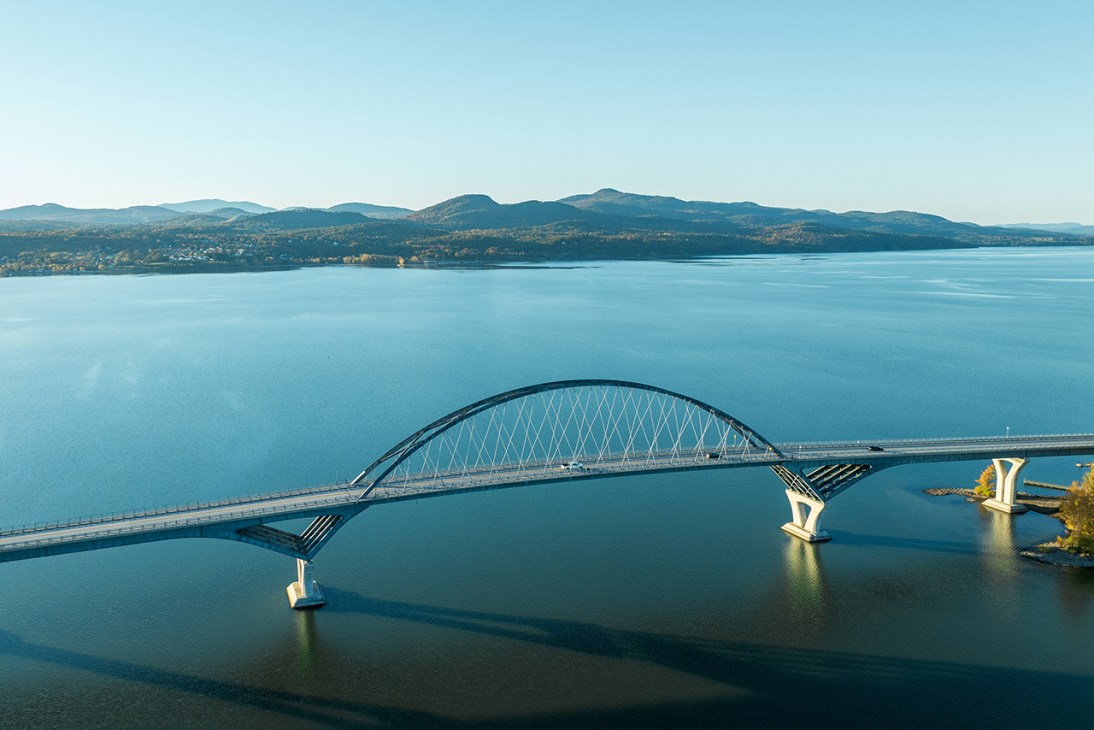
Lake Champlain Bridge
Designed by: Ted Zoli of HNTB
Location: New York to Vermont, US
Innovating for all the right reasons in a very familiar landscape, this critical bridge is a replacement crossing that was built rapidly in a challenging environment. The approach spans that rise from the water were used to lift the entire arched span into place without conventional cranes. The form speaks to this process: functional, elegant and well composed.
9.
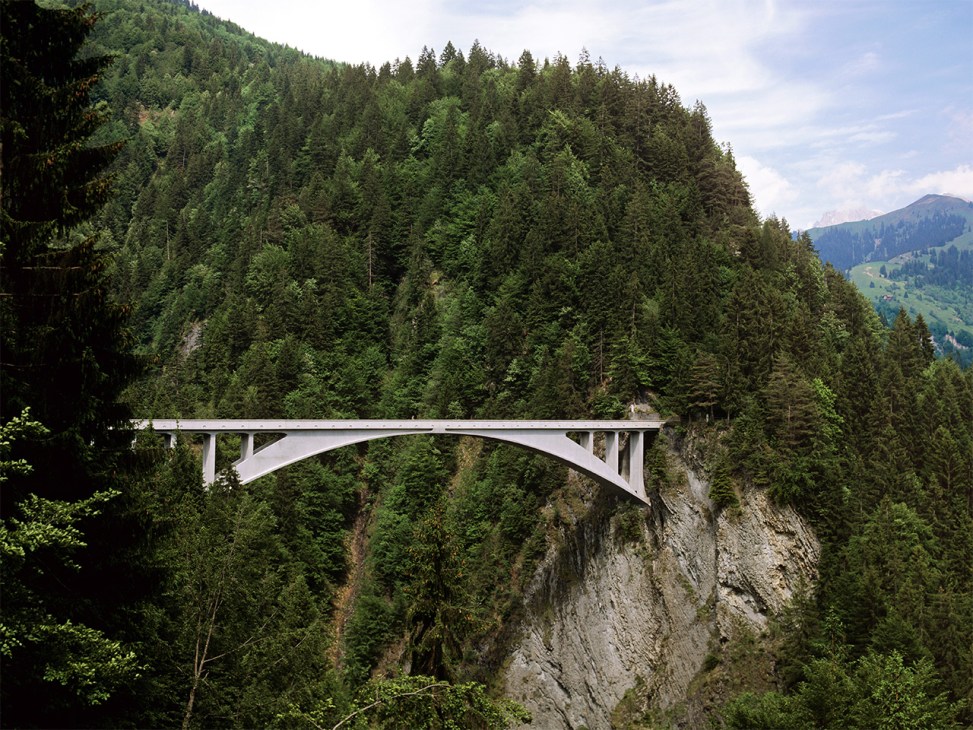
Salginatobel Bridge
Designed by: Robert Maillart
Location: Schiers, Switzerland
A structure for the ultimate bridge-lover. Long before computer-aided engineering and design, this bridge pushed the limits of form and construction. It’s a clear expression of force, transferring bridge loads to the steep valley sides far below. It was built to connect a tiny community to the wider district, demonstrating the role that design can, and should, play in infrastructure.
10.
Pùnt da Suransuns
Designed by: Conzett Bronzini Partner AG
Location: Viamala, Switzerland
One of several inspiring bridges in this gorge by Jürg Conzett. Perfect concept, detail and execution. Difficult access inspired solutions that appear simple and impossibly refined. I was fortunate to visit last summer with a group of pontists led by Jürg himself. I will certainly return to see the rest of the series.