Ditch the discounts: Sample sales are big on business but small on substance
All great fashion brands value their image. So why do so many throw it all away once sale season comes around? Shifting stock at pace can damage dignity. One culprit demeans brand identity more…
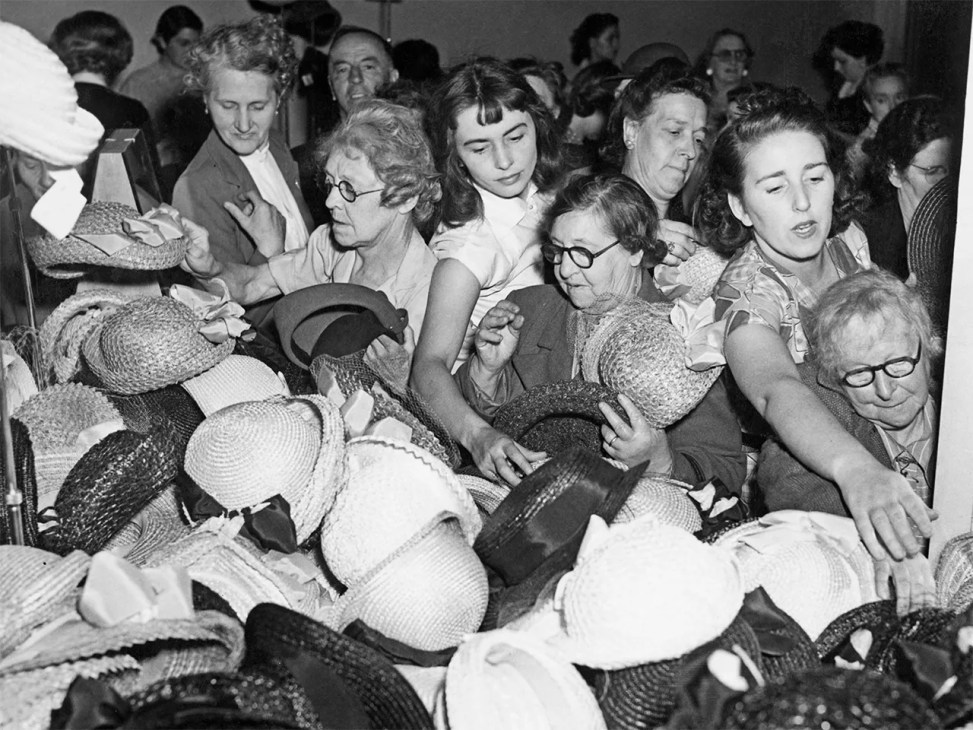
Imagine yourself in a queue. It’s one-hour long and stretches as far behind you as it stretches ahead. It’s also composed almost exclusively of men wearing the same outfit, the products of a recognisable brand, whose clothes you have admired in the past. The queue winds its way into an indeterminate space where examples of these clothes hang from wobbly rails in large numbers. Cardboard boxes are filled with brand-new scarves and ties.
The atmosphere is competitive. You look at what the men are wearing, as well as what’s on the hangers. The clothes, you think, as a tall man elbows his way between you and an unsteady rack, don’t look very nice anymore. And the tall man has extremely sharp elbows.
Popping into a sample sale might sound like an agreeable way to pass an idle hour between lunch and your next meeting. It might even seem like an interesting opportunity to get a handle on the locals as you stroll around a foreign fashion capital and snag a bargain at the same time. Buyer, beware.
A label’s carefully constructed identity and the logic of manufactured scarcity – desire piqued through limitation – go out the window at a sample sale. The true value of visual merchandising is thrown into sharp relief. The odd gem nestles among a case study in bad inventory planning. Over-ordered seasonal misfires, the stuff that didn’t sell at the time, is given a second, cut-price chance. Despite the atmosphere and the sharp elbows, the approach seems to work. With prices lowered, the question “Why buy?” gives way to “Why not?”
It’s not hard to find an unpleasant shopping experience in 2026. And it’s not difficult to learn why – and how – the culture of sales is contributing to an environment of overconsumption and unrealistic consumer expectations. Smaller brands and businesses that try to do interesting things struggle to compete in a market where someone, somewhere, is always knocking two-digit per cent reductions off the price.
What’s trickier is tracking down the boutiques where expertise and dedication are given free rein to present a thoughtful selection of garments in their best light. Where people passionate about their work, who know more than you do and are prepared to spend the time sharing the benefits of their knowledge with you – and your wardrobe. A good retail experience, after all, treads a fine line between deliberation and impulsiveness: a long-considered purchase can layer very nicely over a shirt bought on a whim. At a sample sale, value collapses like a cardboard box overstuffed with last year’s T-shirts.
Not every sample sale is the same. Some truly live up to their name; there are unique pieces and bargains to be found. For the rest, well, there’s no doubt that selling surplus stock to fanboys is a better alternative than sending it straight to landfill. But better yet would be to mitigate the risk of that surplus. The challenge for brands is finding the sweet spot by limiting production runs, not to manufacture scarcity but instead to manufacture responsibility. Customers can make it easier by short-circuiting discount hysteria to ensure that impulse is informed, reflecting critically on the thoughtless desire that prompts men to queue for an hour in the rain, for example. In doing so we might find ourselves prepared to spend a little more and buy a little less.
Augustin Macellari is a Paris-based journalist and regular Monocle contributor. If you’re after a good place to shop, why not check out our City Guides?
And for more on boutiques and well-considered retail…
– Amid retail-sector uncertainty, boutiques and catalogues are making a comeback
– Best boutiques in the world: Neighbour, Vancouver
– Brooklyn boutique L’Ensemble proves that privacy and intimacy are the new luxury