Endyma Berlin: The secret fashion archive renting museum-quality designer pieces
In a span of 15 years, 33-year-old Michael Kardamakis has assembled a 6,000-piece collection of late-20th-century fashion.
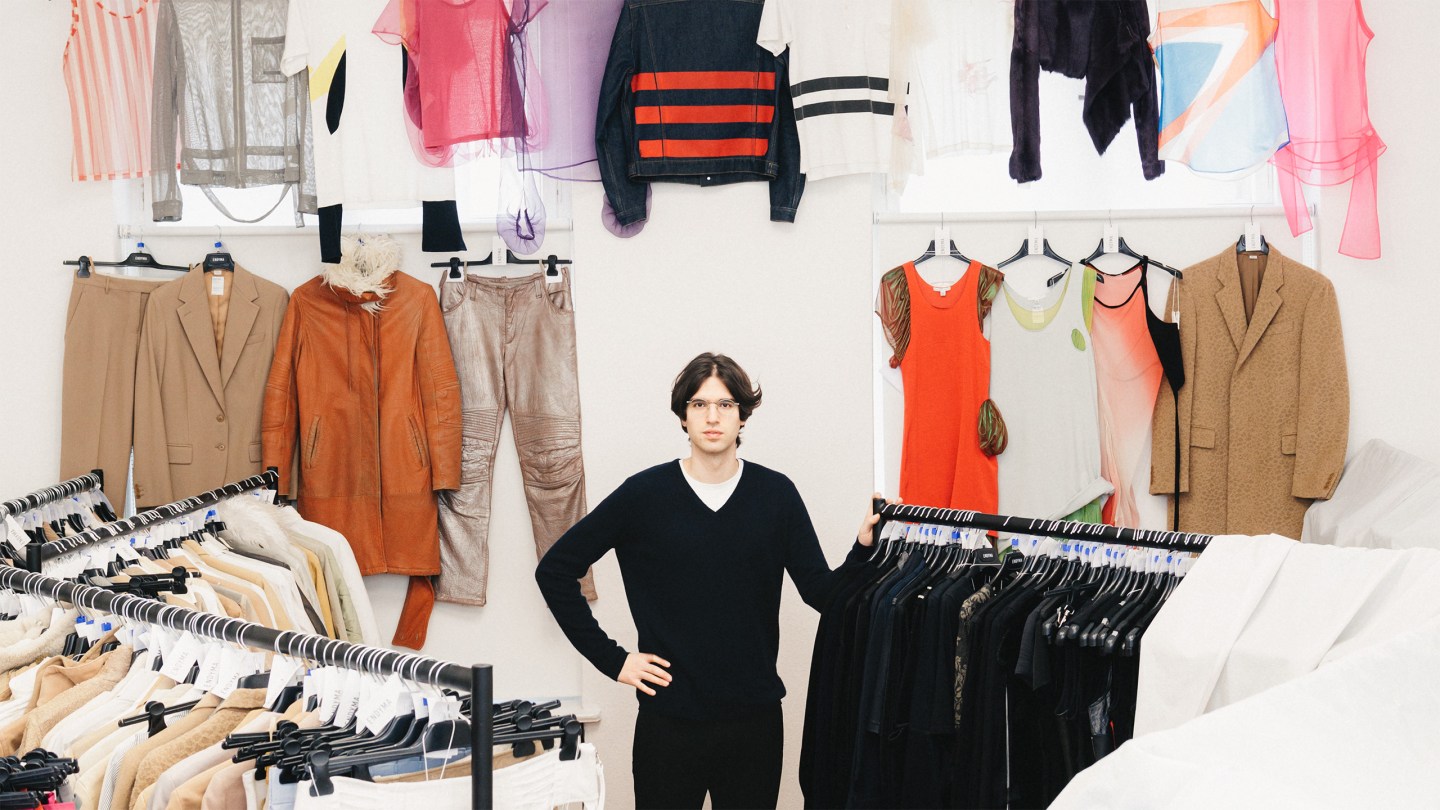
Whether they’re a student or a creative director, anyone who arrives at fashion archive and dealership Endyma is first asked to wash their hands. Visitors are then instructed not to pull on any of the garments on the racks but gently lift them by their hangers – and ideally avoid touching them at all. “Even if it’s just a bunch of T-shirts, I treat it as a life-or-death situation,” says founder Michael Kardamakis.
These aren’t any old T-shirts, of course. Kardamakis, a Greek-born 33-year-old, has spent 15 years assembling a goldmine of 1980s and 1990s fashion, including the world’s largest collection of Helmut Lang garments. The clothes take up a whole Altbau apartment in Berlin’s Schöneberg district. The front of house is reserved for the Austrian avant-garde designer, while the back holds designers such as Burberry, Armani and Jurgi Persoons.


Endyma (Greek for “garment”) operates as a shop and reference library for the fashion industry, with pieces rented out for shoots or used as inspiration for collections. Designers study the garments to copy the collar construction of a leather coat or to figure out how Lang adapted a military strap for a silk organza dress. “It activates the imagination,” says Kardamakis of Helmut Lang’s design. “It’s just the right amount of wrong.” On the racks, hangers with blue cubes mark items that aren’t for sale. “Others might be available, depending on my mood,” says Kardamakis. Prices start at €150 but rise to four digits for rarer pieces. A Helmut Lang biker jacket from 1999 will set you back about €2,000. Kardamakis’s customers are those in the know. “They’re people who already have 20 biker jackets,” he says.
Every Endyma item is treated with museum-level reverence and all acquisitions get a painstaking touch-up. This can mean taking garments apart by the seams to wash the pieces separately. For shopping appointments, staff will prepare a rack of clothes to try on and then de-lint all of the linings afterwards.
Despite having no formal training in fashion – he studied art history at university – Kardamakis has a couturier’s knowledge of tailoring. During tours, which are given for a modest fee, he waxes poetic about the differences between officers’ greatcoats and sailors’ peacoats, or variations in screen printing on denim. The brands that he collects are those that experimented with the construction of clothes, before much of luxury fashion was swallowed up by marketing budgets and logo-mania. “Brands put on a crazy show but what they make money on is €45 perfumes,” he says. “These were just cool clothes for cool people to wear.” Endyma weaves them back into runways, magazine spreads and your wardrobe too.
endyma.com
Items in the collection:
There are 6,000, of which 3,500 are Helmut Lang.
Kardamakis’s key advice:
Avoid dry cleaning. The safest way to wash clothes is by hand at home, laying them flat on a towel to dry.
Resurgent brand:
Giorgio Armani.