Japan’s beloved FamilyMart reimagines the convenience store at its new Tokyo flagship
“Konbini” are ubiquitous in Japan but FamilyMart’s next-generation concept, Famima Park Azabudai, directed by Nigo, transforms the everyday retail category into a bold queue-worthy destination.
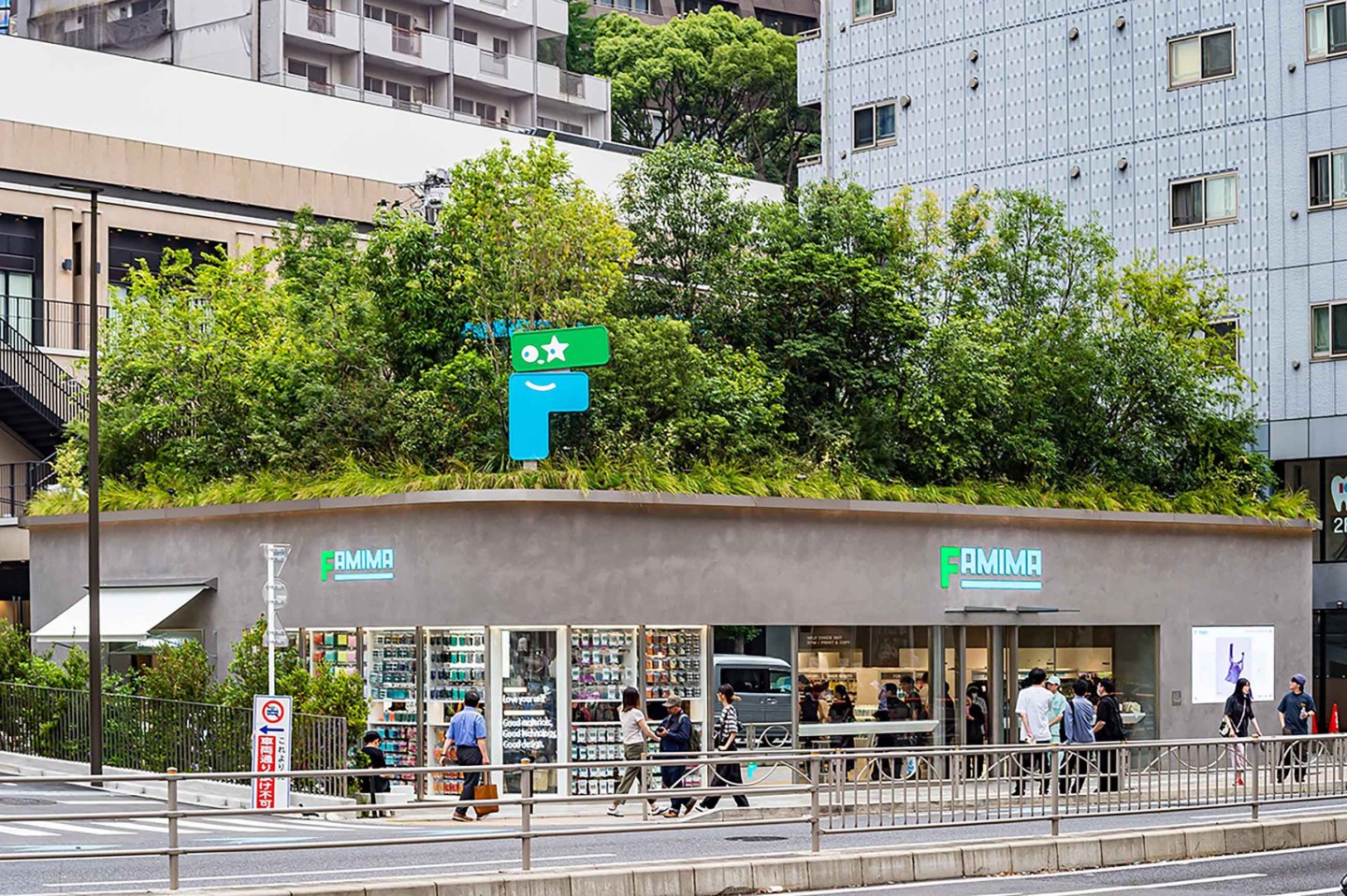
Unsuspecting shoppers turning up at FamilyMart’s latest convenience store in Tokyo last Friday were met with scenes reminiscent of a new release from the hottest of fashion brands: two-hour queues, a cap on purchases and a crowd ravenous for merchandise. Exterior details immediately announced that this was a special opening and a fresh departure for FamilyMart, which operates 16,400 shops across Japan. There was a redesigned logo – still in the company’s signature blue and green – a sharp new look for the interior and a rooftop luxuriantly planted with trees.


This isn’t any old FamilyMart: it’s Famima – in this case, Famima Park Azabudai. The new concept was devised for the company’s 45th birthday and brings together some of Tokyo’s most prolific creators: Nigo, the creative director and the man behind streetwear brands A Bathing Ape (which he established in 1993) and Human Made; Masamichi Katayama, whose studio Wonderwall has, for more than two decades, produced some of the city’s most memorable retail interiors (including many for Nigo); and Hiromichi Ochiai, the fashion designer behind Convenience Wear, FamilyMart’s inspired line of basics that took the market by storm in 2021 and has already shifted more than 30 million pairs of socks.
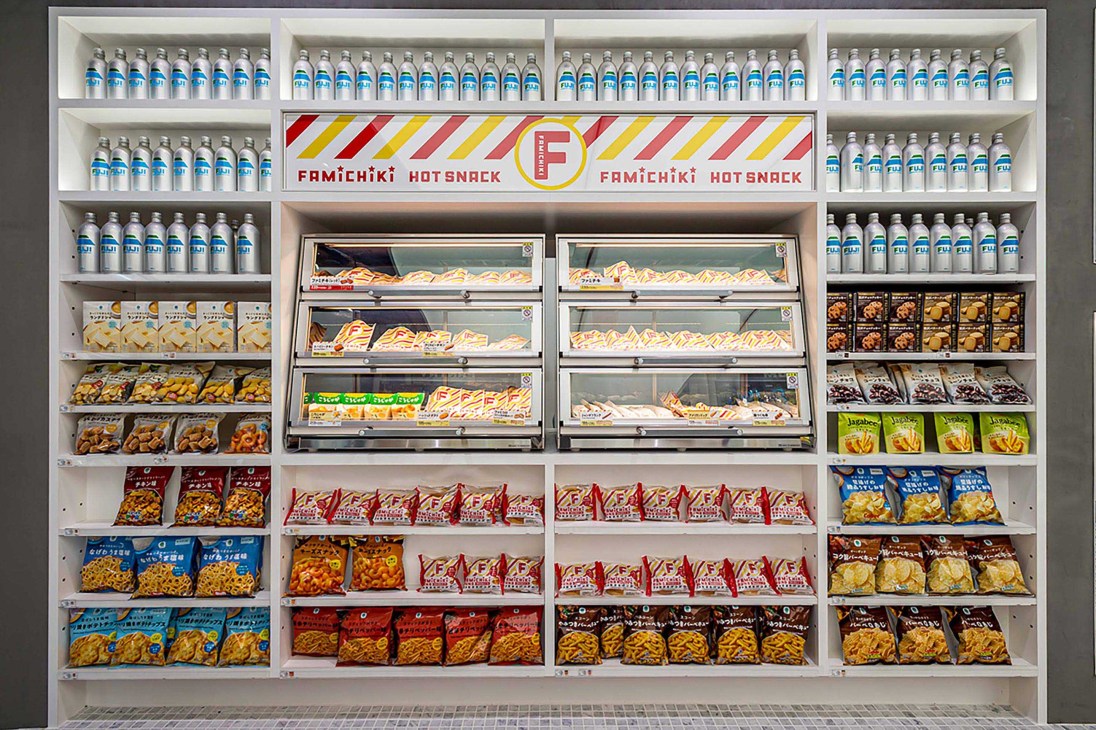
“It all started with the idea of ‘I wish there was something like this in a convenience store,’” says Nigo, Famima’s creative lead. Just over a year after his partnership with FamilyMart was announced and following many discussions, this abstract thought has taken a tangible form: a next-generation convenience store on the fringes of the Azabudai Hills development that breaks with typical konbini design convention. The goal was to make a convenience store so special that people would go out of their way to visit it.
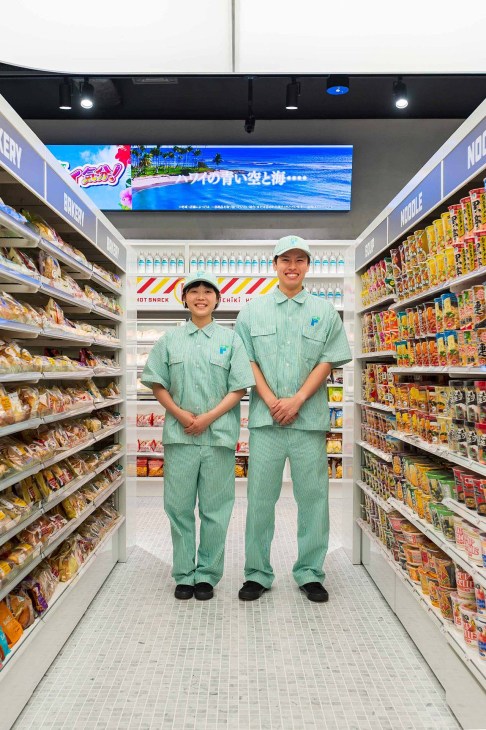
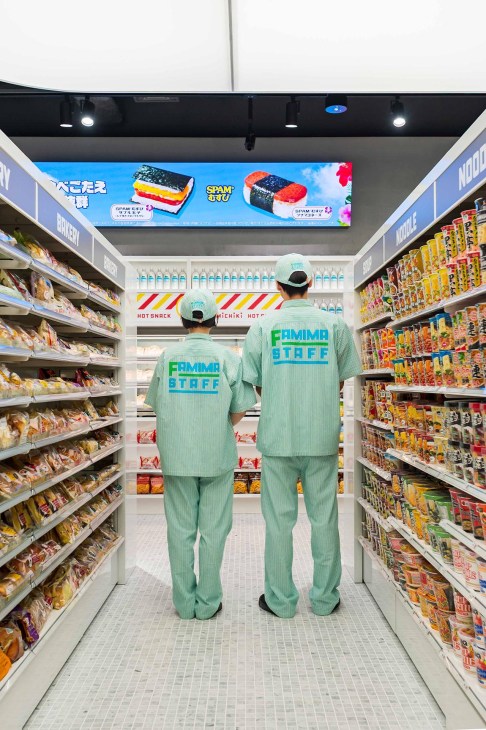
Nigo’s magic touch is everywhere – from the logo to cushions, T-shirts, stickers and tote bags. He is a man who understands the power of the ordinary; under his inspired eye, cheap boxes of tissues become collectables. Even the blue, green and white striped staff uniforms, in a robust cotton-look fabric rather than the usual wash-and-wear konbini nylon, look good enough to buy.
Convenience Wear’s concept – “good materials, good techniques, good design” – continues to go from strength to strength. The new Famima has limited-edition exclusives, fitting rooms and clothing assistants. There are denims (jackets and jeans that quickly sold out) and a new brand ambassador in the shape of popular actor Tadanobu Asano. Ochiai’s unerring sense of colour has created a delicious wall of socks and T-shirts wrapped in now-familiar clear packaging. Before Convenience Wear, most thought that no fashion brand could thrive in the confines of the konbini. Ochiai is proving them wrong.
Neat touches from Katayama’s Wonderwall include Famima Stand – a window where shoppers can buy takeaway goods, including Fami-Chiki (FamilyMart’s relentlessly popular boneless fried chicken), then sit on a bench outside. The eccentric rooftop forest is a stroke of genius, creating a welcome thicket of greenery. Occupants of the surrounding high-rises are afforded their own view, a giant “F” sign not visible from the street. As ever, Wonderwall has brought the fun factor to what could be a quotidian shopping experience.


The project has rethought the konbini, a beloved and fundamental part of daily life in Japan, while keeping its DNA. Famima is still a convenience store – it has all the food, essentials, cash machines, delivery services and microwaves that any other would have. “We wanted to embrace the rationality of the Japanese convenience store but explore the sense of enjoyment and richness that lie beyond it,” says Katayama. “We didn’t want to create a place that people would visit just for convenience; we wanted to refine its appeal and uniqueness so that people would feel compelled to go there.”
There are now around 56,000 convenience stores around Japan – engines of innovation that have the customer base and ubiquity to drive trends. Used by all walks of society, regardless of age, gender or wealth, the konbini represents retail at its most democratic. “Convenience stores are a type of business that Japan can be proud of on a global scale and represent a unique culture,” says FamilyMart’s representative director and president Tatsuo Odani. For him, the Famima project not only reboots the standard convenience store but also offers a route forward for the business. “To achieve sustainable growth in the future, transformation and evolution are essential,” he says. FamilyMart, he hopes, can become a “global brand that cannot be imitated”.
As it explores new possibilities for the konbini format, FamilyMart says that lessons here can be implemented at other locations. For now, there are no concrete plans for other standalone stores but Famima elements are being rolled out in regular FamilyMarts across Japan. Nigo, as always, is at the forefront of this shift. “We hope that this next-generation convenience store will allow people in Japan and around the world to experience Japanese culture and lifestyle.”
family.co.jp