‘There is no formula. It’s heart and soul.’ Restaurateur Jeremy King breathes new life into Simpson’s in the Strand
After five decades shaping London’s most iconic dining rooms, Jeremy King and his longtime collaborator Shayne Brady tell Monocle how they’re rethinking restaurant interiors and embracing evolving tastes.
Restaurateur Jeremy King OBE has launched some of London’s most enduring dining spots, including The Wolseley, Brasserie Zédel and, more recently, The Park and Arlington.
For the past 15 years, King’s longtime creative collaborator Shayne Brady has helped to bring these spaces to life. The duo’s latest project, Simpson’s in the Strand, carries a legacy stretching back nearly two centuries. The chess-club-turned-restaurant first opened in 1828 and, since 1904, has been known for dishing out roast meats and Yorkshire puddings on silver trolleys. The Edwardian venue closed in March 2020 due to the coronavirus pandemic and has been undergoing extensive renovations since King purchased it in 2022.
This month, Simpson’s opens its doors once again. There are several distinct venues under one roof: the traditional Grand Divan, theatrical Romano’s, the classic Simpson’s Bar, the seductive Nellie’s bar and a small ballroom.
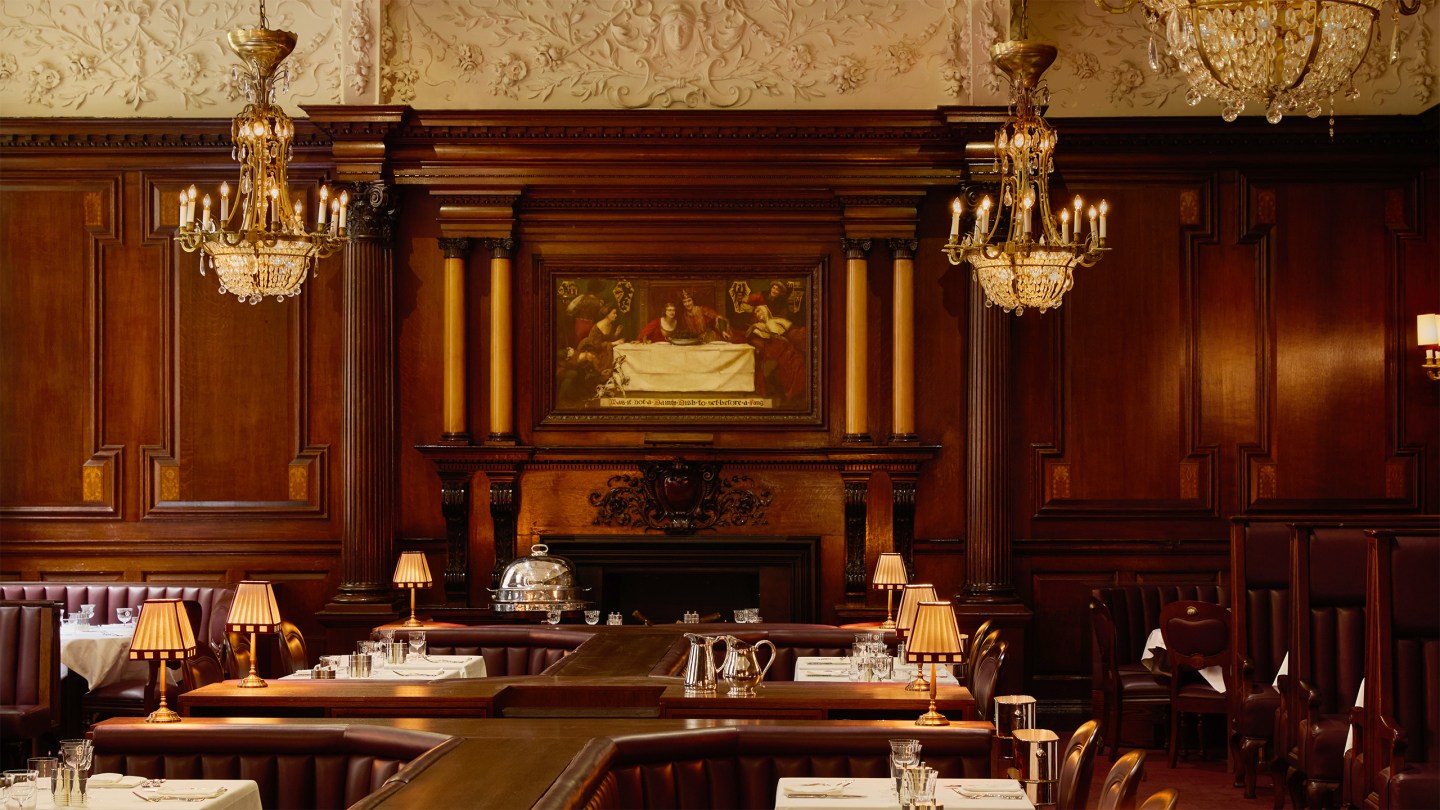
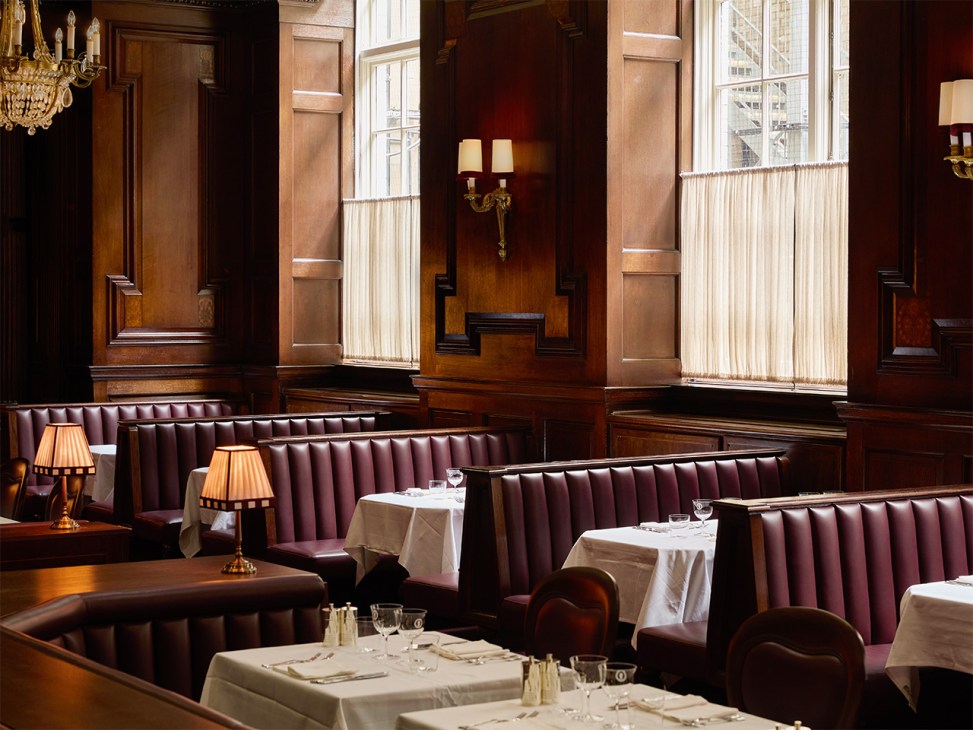
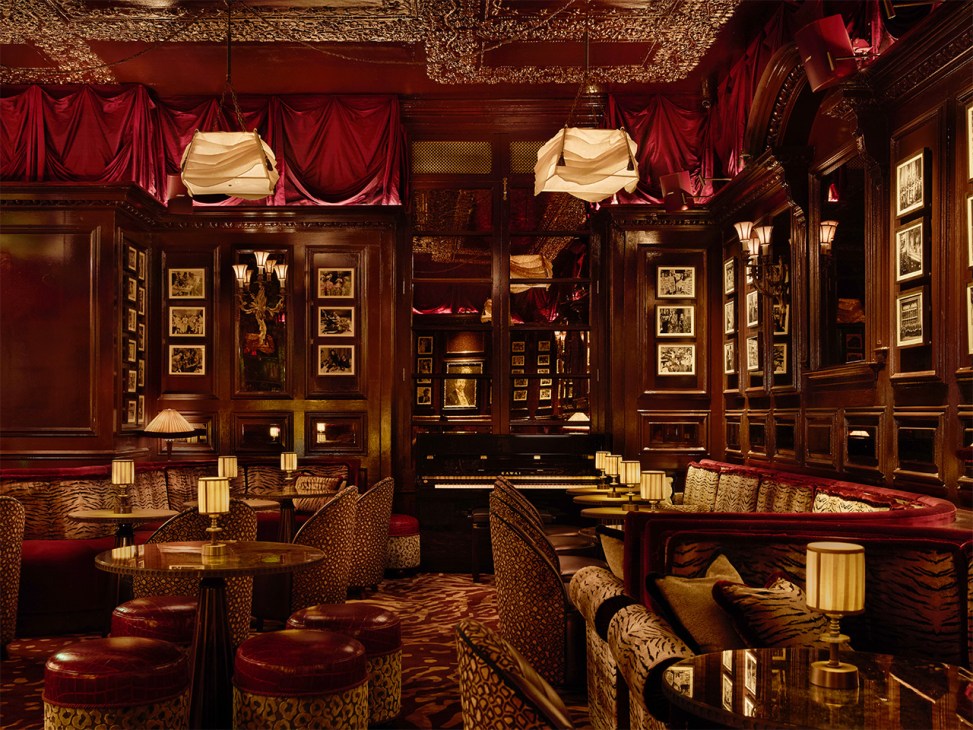
In 1862, Simpson’s former owner Edward William Cathie insisted that the restaurant serve only British food, christening its menu the “Bill of Fare”. More than a century on, King upholds the tradition with dishes that remain “English to the core”. This includes carvers wheeling silvery trolleys of Devonshire beef between tables in the Grand Divan. Romano’s, which is more intimate and convivial, offers lighter plates beneath portraits of 20-century playwrights who once gathered here. Throughout the vast institution, Brady’s design honours Simpson’s legacy with walnut shutters, chandeliers and leather booths.
Jeremy King and Shayne Brady joined Monocle’s Hassan Anderson at Midori House in London to discuss the reopening of Simpson’s, their 15-year creative partnership and how diners’ tastes are evolving.
This conversation has been edited for length and clarity. Listen to the full interview on The Monocle Weekly from Monocle Radio.
How do you take something as historic as Simpson’s in the Strand and turn it into something fresh and new?
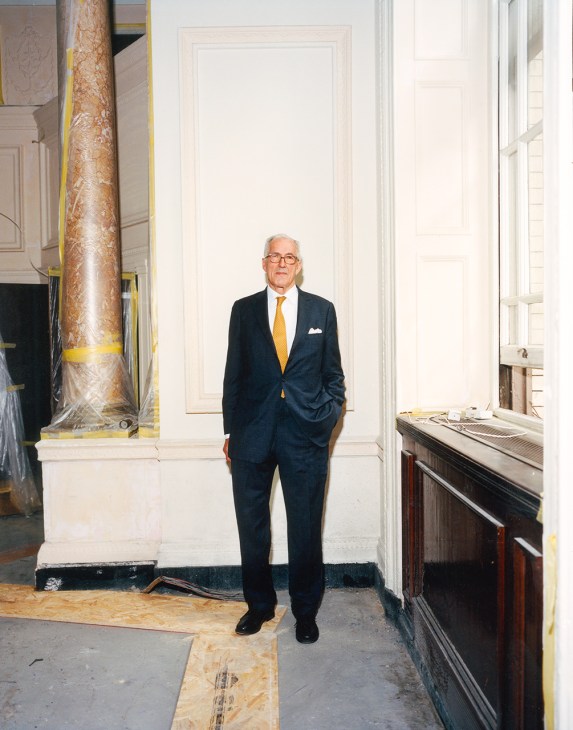
Jeremy King: It’s that notion of ‘fresh and new’ that has been troubling us because I, for many years, was averse to publicity and social media. [People] feel like a new restaurant has to have a slogan. The people I work with kept saying that it was a ‘reawakening’, which I banned. ‘Rediscovering’ was better. This site has been close to my heart for more than 25 years. We first looked at acquiring it in 2000 and finally bought it in 2022. Four years later, the beauty of it is that Shayne and I have had almost too much time to think about it. While the delay was punitive financially, we’ve created a better restaurant for it.
Was there a moment that reassured you that the project was worth all the work?
JK: About 18 months ago I toured my friend, who is a hotelier, around the restaurant. We got to the end and I thought, he’s going to tell me that I’m mad and say, ‘What are you going to do with it? How are you going to fill these rooms?’ But to my surprise, he said, ‘Jeremy, this is fucking fantastic. There is nothing like this. There never will be.’ I think Shayne and I both had to remind ourselves that it is, excuse me, fucking fantastic.

Shayne, what went through your head when you first saw the restaurant?
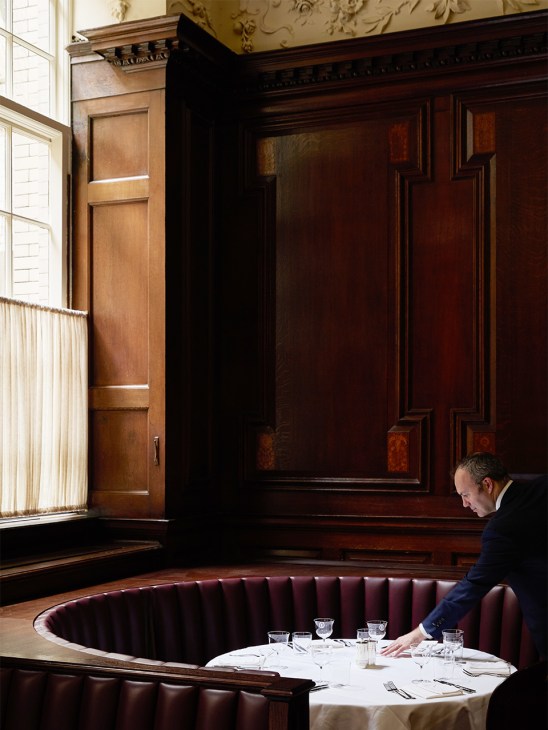
Shayne Brady: When we walked the site, Jeremy made a point that really struck me: that this should feel like it has been loved by every owner that has had it over the past 120-odd years. The building [in the way that we recognise it] was built in 1904. We’re not ripping it out. We’re not creating something modern and new within it, nor should we, because I think it is, to use Jeremy’s phrase, ‘the grand dame of restaurants in the city’.
What have you learned about how to design a space and what details do you look for from a designer?
JK: The most important thing is practicality. So often, restaurant designers don’t understand that. There needs to be a simplicity of design. My oft-repeated phrase is ‘Great design should never shout for attention but should withstand scrutiny.’ That’s the essence of it and that’s why Shayne and I work so well together. Sometimes I’ll say ‘TTH’ (‘trying too hard’). Restraint is so important and you garner much more authority through restraint. Shayne understands that.
What details do you focus on when it comes to designing a space?
SB: The one thing that Jeremy taught me early in my career was to sit in every seat on the floorplan. How does that seat feel? What is that guest looking at? The other thing is lighting. All of Jeremy’s restaurants are famous for being able to take you from breakfast to dinner. That’s [due to] the lighting. Lighting gives that feeling in the air – that intangible thing that makes you feel if it’s right or not.
JK: I would echo what Shayne says about lighting. It’s the single most important thing. The person I learned the most about lighting from was the great Peter Langan, who said, ‘Great lighting is about shadow.’
What are some of your favourite spaces to entertain or eat in and what do they have in common?
JK: I have always loved The River Cafe and there are other places – both in London and around the world – where the unifying aspect is the spirit. I often get asked what the most important ingredients are in terms of how a restaurant appeals to a diner and I always say they are heart and soul. This is a frustrating answer because how do you define heart and soul? That’s the whole point. Just as with literature or music, there is no formula.
SB: I like restaurants run by people that you see on the floor. Wildflowers with Laura [Hart] and her husband [Aaron Potter] is incredible – it almost feels like being invited into her home.
How are people’s tastes changing and what is staying the same?
JK: They’re more sophisticated. We are starting to appreciate restaurants more and there’s no ignominy in working in a restaurant. There was a massive class structure when I first came into the business. In the early 1980s, there was a survey about how often people eat out at what we would call a ‘white-tablecloth restaurant’ across the country. It was less than once a year. If you did that survey now, I think that figure would be very different.
SB: I struggle with restaurants that are designed to scream for attention. Designing for photography or Instagram is my pet peeve. However, I think that the younger generation – I hope – are starting to buy into restaurants that have a long lineage of heritage as opposed to the all-singing, all-dancing new restaurants.
We’re told people drink less and go to bed earlier. How optimistic are you about London as a place to go out, eat well and have fun?
JK: Fashion dictates what people follow. I would like to feel that we can turn that around. We have a very late licence at Simpson’s. The whole point of living in the city is to embrace it.
Finally, for both of you, what are you like to work with?
JK: I used to think that I could never be seen making a mistake because that would weaken my authority. Now, Shayne and I are both people who readily admit our mistakes and are happy to admit [when] we’re wrong but at the same time argue it.
SB: I always remember when I first met Jeremy at a presentation for The Delaunay and he said, ‘We’ll be talking a lot.’ I thought that meant nine months. I didn’t realise he meant 15 years. What I enjoy about working with Jeremy is that he will sit and ponder something. He’ll look at something and have his reservations but it’s not a complete no. There’s no shouting. It’s a safe space to have an open forum. That’s what gives rise to us designing something great together.
simpsonsinthestrand.co.uk