Vale trailblazing architect Frank Gehry. Here are three projects that set the modern master apart
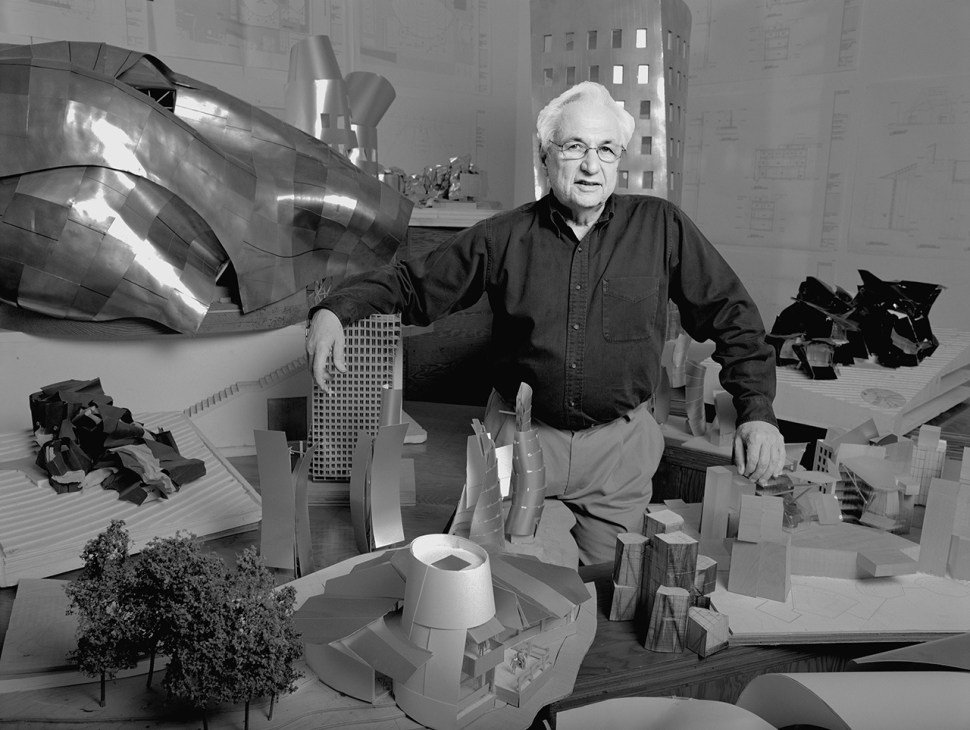
Frank Gehry, one of the great titans of architecture, has died aged 96 at his home in California. Here are three spectacular and recognisable projects that attest to a lifetime of unparalleled achievement.
Born in Toronto in 1929, Frank Gehry moved to Los Angeles as a teenager – the city where he established his namesake architecture practice in 1962, after studying at the University of Southern California, Harvard Graduate School of Design and a brief stint in Paris. The architect, who passed away yesterday following a respiratory illness, was famed for his sculptural, curvilinear designs that appear to defy conventional geometry. In 1989, he was awarded architecture’s highest honour, The Pritzker Architecture Prize, for a body of work that was visually and materially unexpected, and respected for its ability to transform entire cities, uplift the spirits of citizens, prompt regeneration projects, and entice visitors from near and far. However, it was his Museo Guggenheim Bilbao, completed in 1997, that made Gehry a household name across the globe. Few architects can boast careers as varied, far-reaching and original, here are three projects that evidence Gehry’s lifetime of achievement.
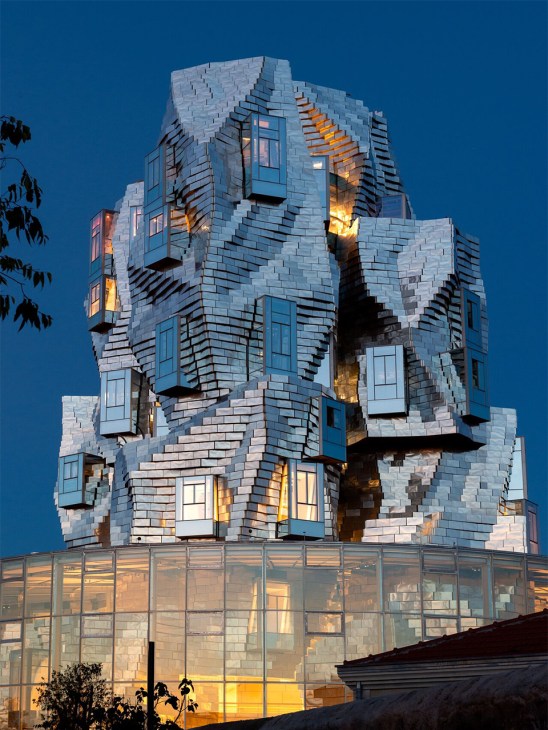
Luma Arles, France
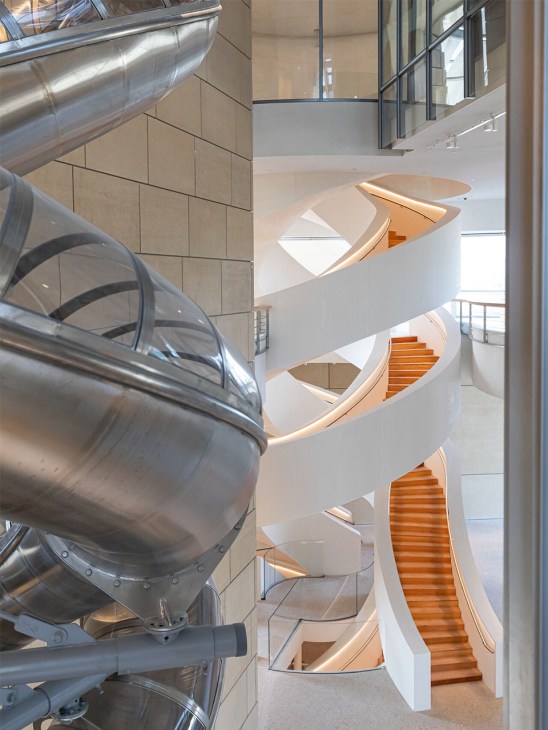
Gehry’s work in the small city of Arles in the south of France cements his legacy of city-shaping cultural buildings. Here, the Canadian-American architect designed Luma, an interdisciplinary art complex that pays homage to Vincent van Gogh’s “The Starry Night”, mirroring shades of the Provençal sky overhead. Opened in 2021, the tower’s twisted façade captures the ever-changing colour variations in both the sky and the rocky landscape of the nearby Alpilles mountain range. At the foot of the structure sits a glass rotunda inspired by Arles’ Roman amphitheatre, which serves as a reception area for visitors.
The result is a creative campus where artists, researchers and scientists can work together to deepen the understanding of issues related to the environment, education, human rights and culture. “We are expanding the definition of what a cultural institution can be,” Mustapha Bouhayati, CEO of Luma Arles, told Monocle at its opening. “The building has become a contemporary beacon of the Mediterranean, imbuing the city and the people of Arles with a transformative energy.”
Dr Chau Chak Wing Building, Australia
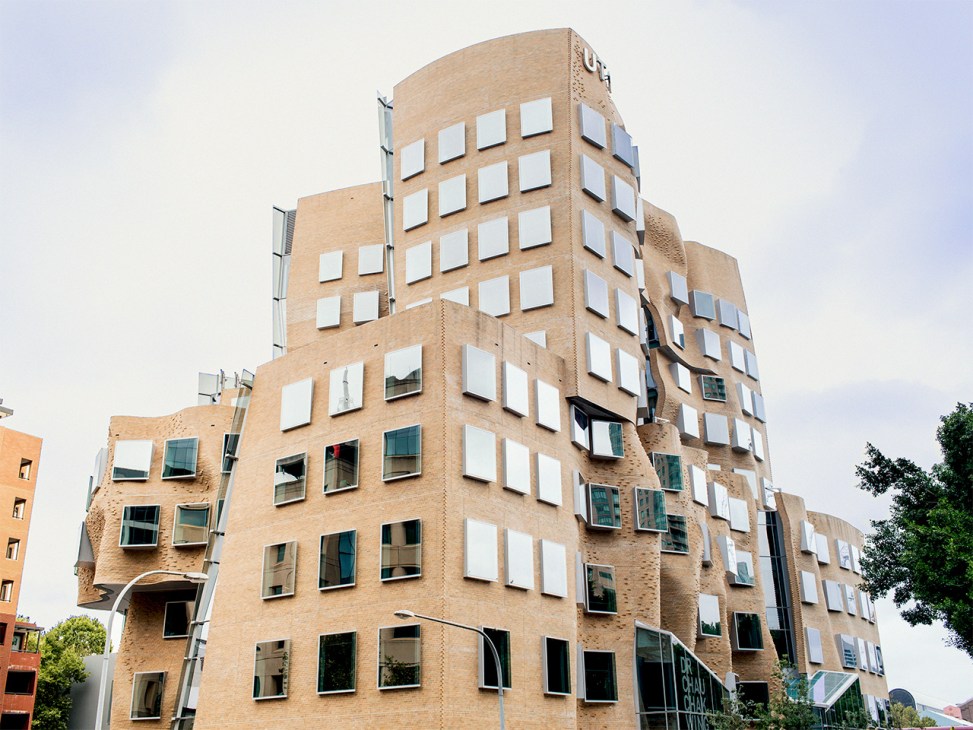
Gehry’s first and only building in Australia was for the University of Technology Sydney. The university had a long history of commissioning unremarkable (or plain ugly) structures but this work from Gehry bucked that trend. Completed in late 2014, its bold, undulating façades of folds and creases saw Sydneysiders affectionately dub the building the “squashed brown paper bag”. Such a comment, from Australians, is praise of the highest order.
The structure honours Australian-Chinese businessman and philanthropist Dr Chau Chak Wing, who put AU$20m (€11.4m) towards the AU$180m (€102.5m) project. It comprises 320,000 custom-made bricks and, in characteristic Gehry style, internal finishes include stacked timber and plenty of mirrors. The structure also interfaces beautifully with the city thanks to an entrance from The Goods Line pedestrianised walkway and a streetfront café.
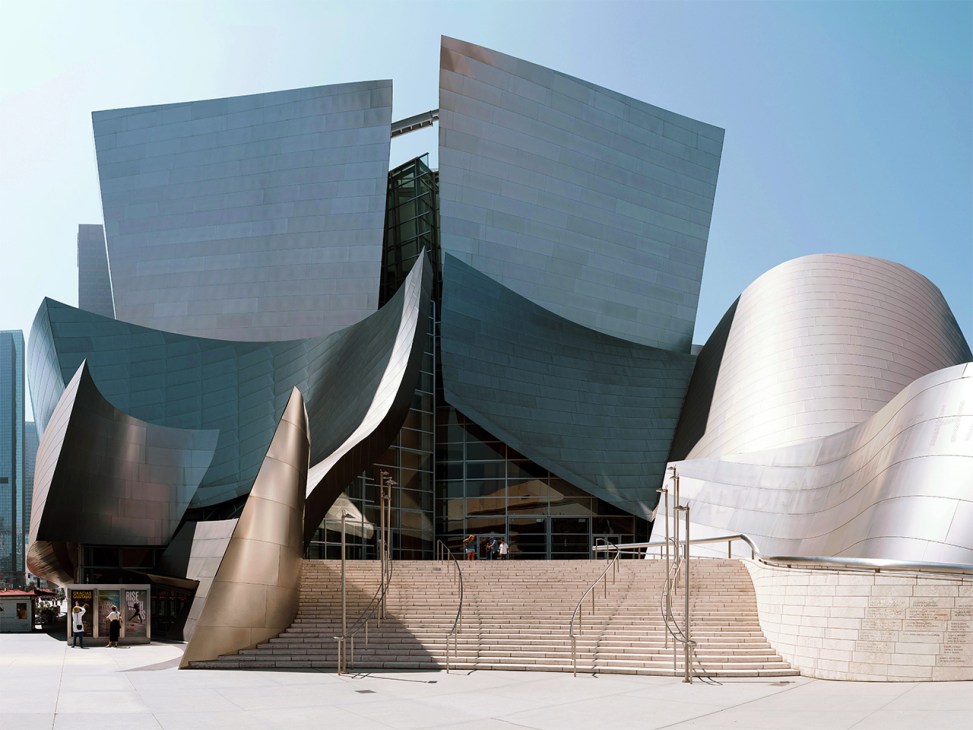
Walt Disney Concert Hall, USA
This structure is a shimmering, deliberately disjointed statement in the architect’s adopted hometown. While unquestionably impressive inside – watching the resident LA Philharmonic in the modular 360-degree space is epic – the real marvel is the external façade of steel curves, akin to an LA take on the Sydney Opera House.
The project began in the late 1980s after a $50m endowment from Lillian Disney to honour her late husband. Ten years later, the building still wasn’t complete and costs had blown out to more than $265m. Happily, private donations rolled in and the concert hall (which Gehry described as a “living room for the city”) finally opened in 2003. It complements Gehry’s outstanding body of work in southern California, which includes his 1980 Spiller House in Venice and the 1978 Gehry Residence in Santa Monica.