Alpino
Letter from Italy: Feeling positive ahead of the Olympic Winter Games Milano Cortina
Walk through Milan’s Biblioteca degli Alberi park and past the Bosco Verticale and you’ll soon notice the Lombardy government’s skyscraper headquarters in the distance. Pictures of skiers and snowboarders have appeared across its façade along with signage declaring Italy’s commercial hub as a “host region”. The hosting in question is of the Olympic Winter Games Milano Cortina 2026, from 6 to 22 February. Milan, which shares top billing with the Dolomites ski resort, is readying for its moment in the global spotlight.
Despite the stress and cost (estimated at more than €2bn), these Games present an opportunity to show both the city and wider country in a positive light. While the Winter Olympics don’t attract the same level of interest as the summer version, Italy could still reshape how it is viewed if it pulls off a successful Games – the country’s first since Turin 2006.
Fortuitously, this comes at a time of renewed confidence in Italy’s competence. Its prime minister, Giorgia Meloni, is presiding over the third-longest-serving government in the country’s post-1945 history and, despite some unsavoury social policies, she has helped rein in national debt – even if her detractors have accused her of austerity. Milan’s 2026 Games-inspired upgrades won’t be on the same scale as Barcelona’s in 1992, widely seen as a particularly successful transformation of a host metropolis. But that’s largely because the Lombard capital has been on a mission to convert itself from grey, industrial blob to sunny, cosmopolitan hub since it hosted the World Expo in 2015. As Milan becomes more attractive to live in – including for wealthy foreigners lured by a recent suite of tax incentives – it can demonstrate that the city is about more than big statements and lofty words. Milan Cortina is the snowy platform on which to do this.
There are plenty of soft-power medals to be won, particularly in culture and design. From January to March, the city’s Triennale museum will host White Out: The Future of Winter Sport, an exhibition exploring the intersection of design and sport. International design clout is offered by the UK’s David Chipperfield Architects, which built the new Santa Giulia arena – one part of the eponymous neighbourhood’s significant transformation. In nearby Porta Romana, US-based Skidmore, Owings & Merrill completed the Olympic Village in October ahead of schedule – magic words for any host city.
While no Olympics is ever plain sailing, the mood on the streets is upbeat, with a poll by Ipsos Dox showing that 63 per cent of Italians are positive about the event (and not just those set to make a killing through short-term rentals). Now comes the hard part: ensuring that everything stays on-piste.

How a new generation of hoteliers is keeping Grindelwald on the map
“Differentiation is the recipe for success today,” says Lars Michel of Hotel Fiescherblick, which he has run with his brother, Matthias, for about three years. “In the past, it used to be more about group tourism,” he says. “Today, however, there are more travellers looking for quality and something special.”
The Fiescherblick stands next to Hotel Gletschergarten, run by the brothers’ parents and founded in 1899 by their great-great-grandfather. “Our great-grandmother, Huldi, was the first woman in Grindelwald to drive a car in the 1930s,” says Lars. “She was quite a character.” In Hotel Gletschergarten’s lobby and staircase, he shows Konfekt (Monocle’s sister publication) a series of black-and-white family photographs, including one of him and Matthias as little boys. Their next venture – Da Huldi, a small osteria that is expected to open across the street in 2027 – will be named after their great-grandmother.
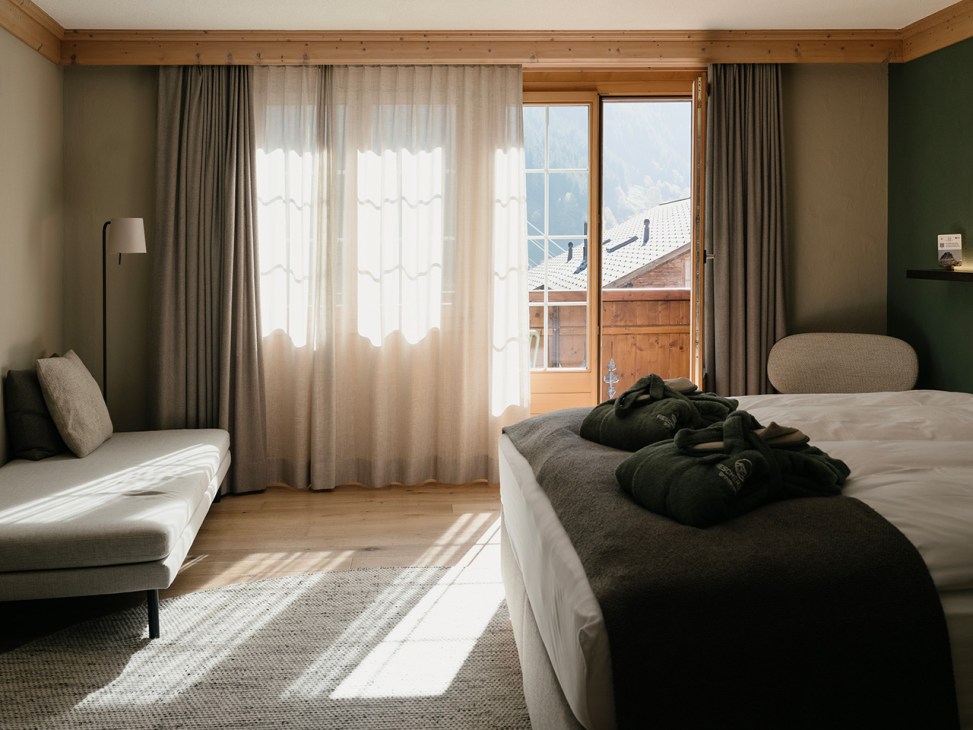
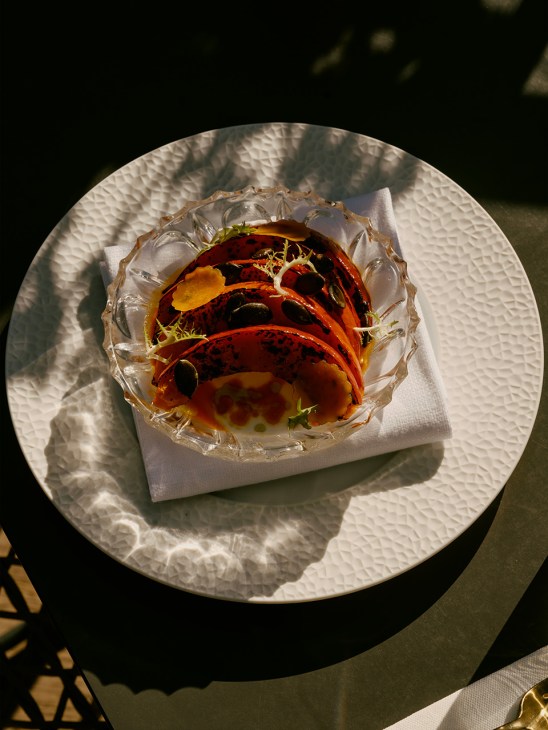
A special treat can be found at the Fiescherblick’s restaurant, where chef Aurélien Mettler serves a 13-course tasting menu in the evenings using fresh, locally sourced ingredients. From the menu, Konfekt opts for homemade sourdough bread with Alpine butter and warm cauliflower with gochujang and pumpkin seeds; this is followed by Grindelwald venison with potatoes, peach and cabbage. The Michel brothers lend a hand by harvesting mushrooms in the autumn and blueberries in the summer, which adorn the plates. This collaborative spirit has helped to make Grindelwald a hub of excellent cuisine after a long day on the slopes.
Jan and Justine Pyott, who moved to Grindelwald in 2016, embody the same spirit. Originally from Biel, Jan is an ex-triathlete, while Parisian Justine was an avid base jumper with an interest in both urban and mountain jumps. “You can’t be a professional in sports forever,” says Jan. “Neither of us has any training in hospitality or tourism, so taking over one of the oldest hotels in the region, which dates back to 1864, has been a great adventure.”
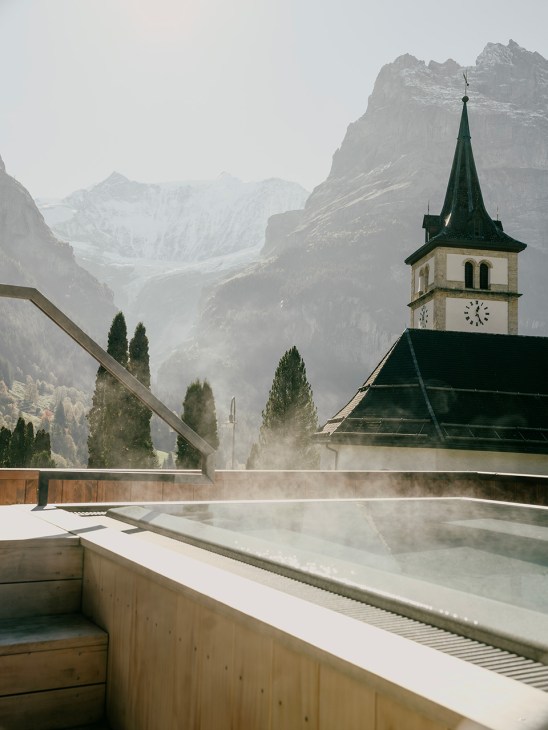
The couple also operate the Grindellodge, an inn with an interior that subtly evokes Japanese decor with plenty of light wood. Here, in the evenings, Umami restaurant serves warming ramen soups and donburi rice bowls prepared by Tokyo-born chef Shota Hasegawa. This connection to Japan is no accident. The Alpine village has a long history with the country’s mountaineers, says Jan. In 1921, Maki “Yūkō” Aritsune achieved the first ascent of the Eiger’s Mittellegi Ridge; in 1969, Japanese climbers conquered the Direttissima route up the Eiger north face.
In 2025 alone, seven family-run hotels handed over their leadership to younger family members. “The movement and creativity in the sector are inspiring for all of us,” says Stefan Grossniklaus, the host of Hotel Aspen and president of the Swiss Hotel Association Bernese Oberland. The village is defined by its proximity to the mountains and a strong sense of connection to the land, with about 70 working farmers.
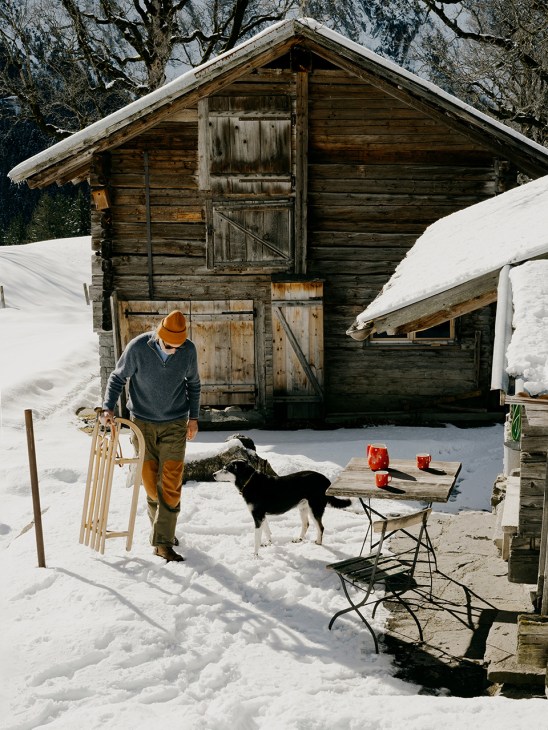
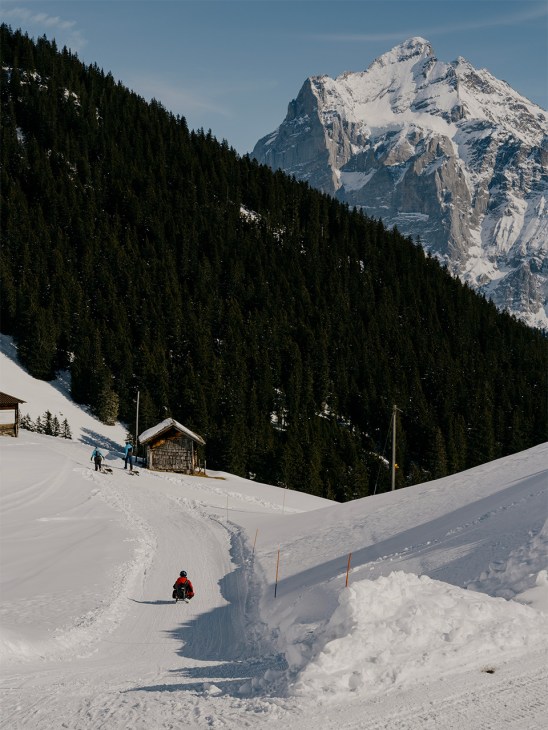
For all the innovation in the valley, the quirks of the past remain very much alive. It was this village that pioneered wooden bicycle sledges known as Velogemels in the early 20th century. They’re still produced locally and feature in a traditional race that’s held every February. It’s a joyful celebration of Alpine heritage and speed.
This article is from the journalists at our sister publication, Konfekt. The perfect gift of sharp dressing, drinking, dining, travel and design. Explore gift subscriptions here.

Ateliers Marcel Carbonel, the figurine workshop carrying on the legacy of Provençal santons
“It feels a bit like playing with Lego,” says Baptiste Vitali as he opens drawer after drawer filled with colourful clay figurines. Vitali is showing Konfekt (Monocle’s sister publication) around Ateliers Marcel Carbonel, a 90-year-old workshop in Marseille that he and his brother, Hugo, took over from the founder’s family in 2021. The atelier’s niche is the santons of Provence: intricate figurines used in the nativity scenes that many French families create in the run-up to Christmas.
With his stylishly stubbled face, Vitali looks more like a start-up CEO than the head of a history-steeped craft studio but when he explains to Konfekt what attracted him and his brother to this workshop, he speaks with passion and commitment. “We wanted to keep a local institution and tradition from dying,” he says.
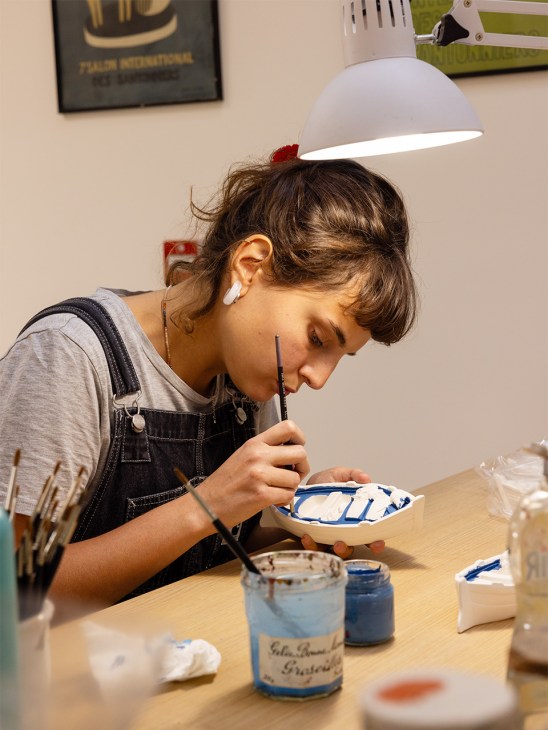
Santons date back to the French Revolution, when political leaders closed churches and banned the celebration of Midnight Mass. To make up for the loss of public Christmas festivities, the people of Provence began displaying nativity crèches at home, populating them with miniature characters that were modelled from papier-mâché, breadcrumbs, cardboard and cork, then, later, red clay. But rather than sticking to the biblical line-up and landscapes, they included villagers whom they encountered in their everyday lives: the fisherman proudly carrying the catch of the day, the milkwoman, the dapper mayor and the chic arlésienne with her chignon hairdo.
These tableaux of Provençal life quickly gained popularity across France, with hundreds of ateliers in and around Marseille catering to the nationwide demand for santons during the craft’s heyday. Today, some 120 ateliers remain in the region and, though many pieces are passed down from generation to generation, there’s still plenty of demand for new ones – be it to add to the family collection or to start a set from scratch.
When Konfekt visits, the atelier is in the bustle of the pre-Christmas season. With a team of between 15 and 25 staff, depending on the time of year, it’s one of the largest santon workshops in Provence. Unlike with most of its competitors, no part of the process is outsourced to home-based artisans. “In a few weeks, it’s likely that we’ll come in on a Monday morning and find 1,000 online orders waiting for us from the weekend,” says Vitali, looking at his watch to check the date. “We have to ensure that our stock is ready before the rush hits. In the past, santons were very roughly made. But Marcel Carbonel attended a beaux-arts school so he helped to elevate the craft.”
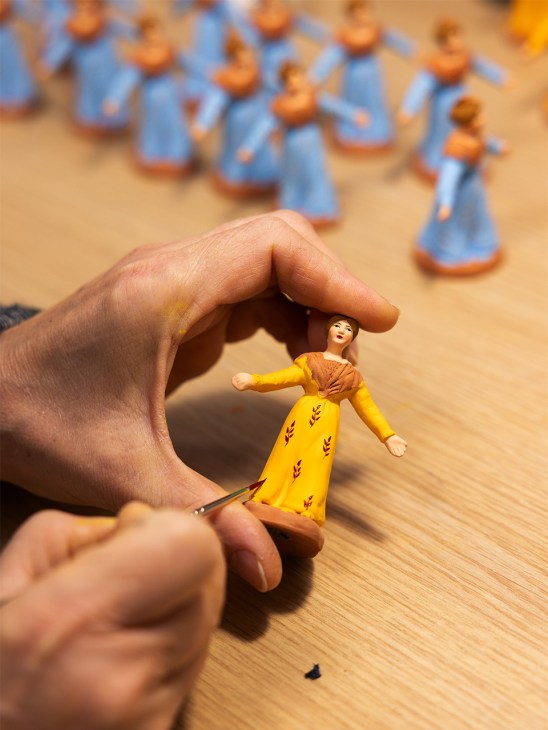
The founder’s background in fine art also explains why all of the gouache colours are made in the workshop, following recipes originally conceived by Carbonel. The result is a palette of vibrant yet nuanced colours that shop-bought paints could never achieve. When these are paired with the original mother moulds, it means that a figurine made today can look exactly like one from 90 years ago.
Despite the continuity of the collections, new models are introduced every year. For 2025, the additions are a pregnant woman and a future father holding a wicker bassinet. Because there are many collectors of the atelier’s work, these additions are usually the year’s bestsellers. Meanwhile, people tend not to replace the santons that they already have, regardless of their condition. “Even if they are missing an arm, they are still kept because they remind you of that Christmas in 1980 when your son dropped Joseph as a little boy,” says Vitali. “A santon is a memory.”
This article is from the journalists at our sister publication, Konfekt. The perfect gift of sharp dressing, drinking, dining, travel and design. Explore gift subscriptions here.
The kitchen is the heart of the home for cookbook author Mimi Thorisson
Mimi Thorisson has a simple recipe when it comes to hosting a successful festive evening with friends. “I always envision a meal in three gentle acts: an apéritif with something crisp and salty, a generous main course and a dessert that feels like a little celebration,” she tells Konfekt (Monocle’s sister publication) from her home in an elegant 19th-century building in Turin.
As the former Italian capital, the Piedmontese city has a rich cultural offering and a unique culinary heritage. The freshest ingredients are sold at the Antica Tettoia dell’Orologio market, where Thorisson picks up two Bra sausages and stacks of leeks for today’s lunch. On the menu is a quick apéritif with sage syrup, vodka and lime juice, and a creamy chestnut soup, followed by a leek and Bra sausage pasta. For dessert, she has chosen an apple ricotta cake, a recipe from her new cookbook, A Kitchen in Italy.
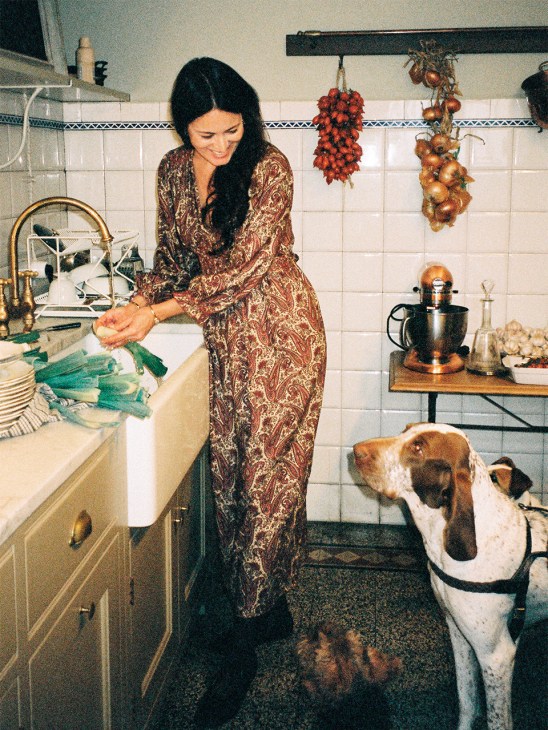
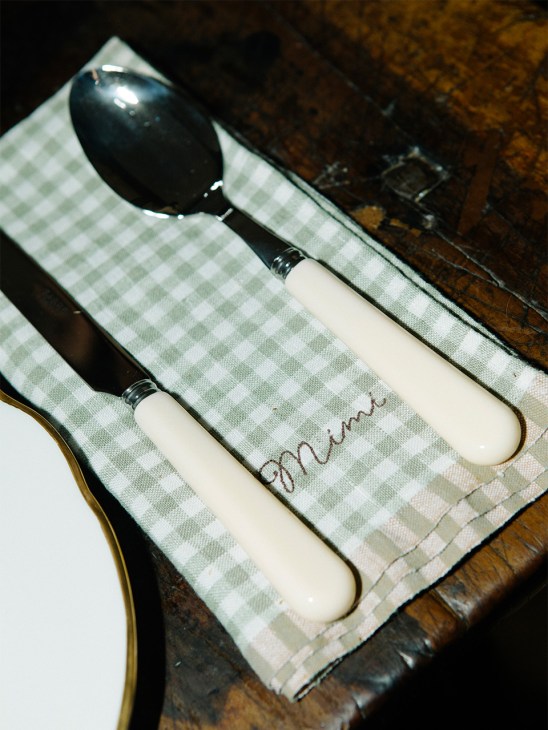
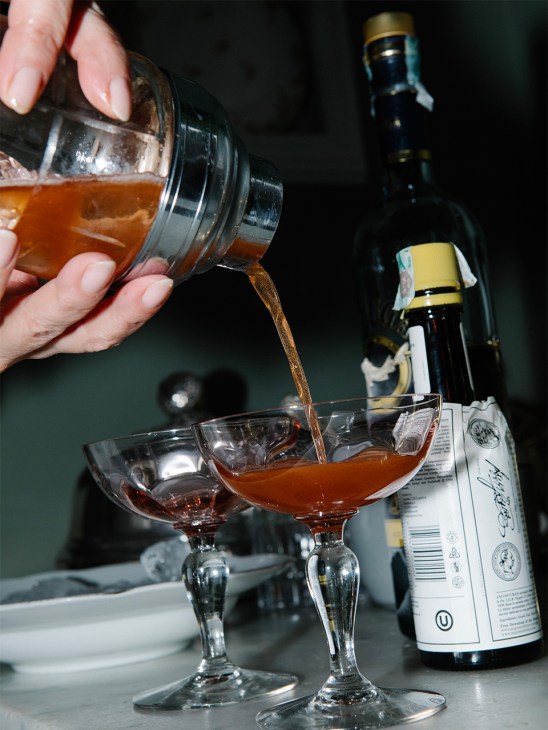
Thorisson grew up in Hong Kong. After studying in London, working in Hong Kong and living in the French Médoc countryside, the former CNN staffer turned author has now called Turin home for seven years. With her husband, she has produced four cookery books, including A Kitchen in France and French Country Cooking. Today she regularly organises culinary workshops in Venice, Naples and Hong Kong, as well as Turin.
But when she cooks with her children, the author tells Konfekt, it’s never about achieving perfection. Instead, what’s important are their small hands rolling dough and the laughter that finds its way into the soup. “Unless I am travelling, we sit together every night, even if the meal is simple,” she says. “The table is where we share the stories of our day.”
This article is from the journalists at our sister publication, Konfekt. The perfect gift of sharp dressing, drinking, dining, travel and design. Explore gift subscriptions here.
How singer Charlotte Dos Santos channels Norway’s winter landscapes on her ‘Neve Azul’ EP
“This place reminds me of my grandfather’s cabin,” says Brazilian-Norwegian singer Charlotte Dos Santos. “To me, that smell of pine walls and crackling firewood is Norway.” Shrouded in fog almost 500 metres above Oslo, Frognerseteren restaurant has been serving skiers since the 19th century. It’s here in a room that the country’s king sometimes reserves for dinner that the 35-year-old musician meets Monocle to discuss her latest EP, Neve Azul – her first major project since her debut album, Morpho, in 2022.
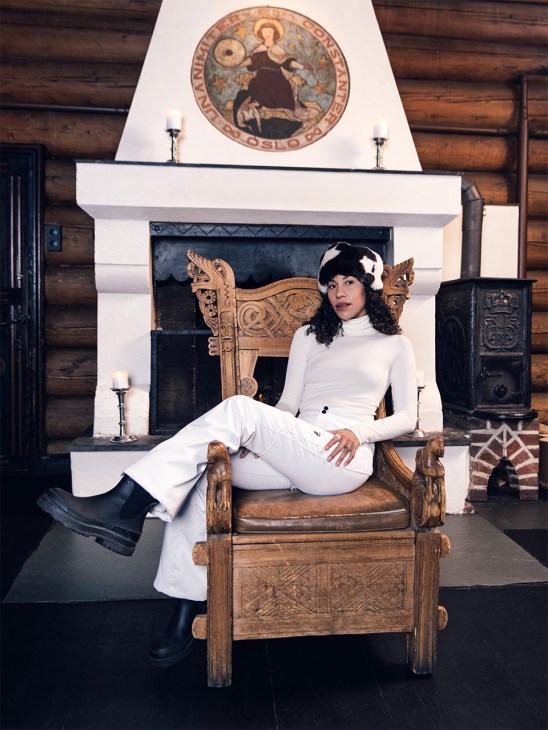
substance with a dash of Alpine inspiration on her new EP, ‘Neve Azul’
Recorded live to analogue tape and released by Dos Santos’s own label, True Node Records (named after an astrological term relating to the position of the lunar north node), the project is a departure from her first two albums. “I’ve always written and produced my music myself, doing all of my arrangements, but I missed collaborating,” she says. “I wanted to go back to the basics and have musicians playing live together in a room, like during my classical jazz training.”
The result is a five-song collection that feels more intentional, with a vintage sound. Its title track, “Neve Azul”, is a bossa-nova-infused ode to the Pyrenees, written after a long drive that Dos Santos once took through Spain and France. It was pieced together from ideas that she had while in the driver’s seat, looking out at azure-tinted ridges and cobalt crests in the distance. “That blue and my synaesthesia helped me to form the song right away,” she says.
Dos Santos, who was raised in the High North, says that its landscapes are intertwined with her imagination. “I grew up chasing trolls and fairies around my grandfather’s cabin,” she says. “I had this huge inner world.” Today she finds it easier to tap into that inner world in winter. As the Norwegian capital readies itself for plummeting temperatures and snow, habits among locals change. “It’s an introspective time,” she says of the months indoors. “I love hibernating, listening to beautiful music and writing. The quiet brings creativity.”
Given the inspiring landscape, why don’t we hear more music from Norway? Dos Santos is candid about how cultural codes can leave things feeling regimented. Janteloven is an informal but deeply internalised set of Scandinavian social norms that, she says, can dampen individuality. It’s a belief that has helped to ensure social harmony and equality – as well as a type of governance whose results are often the envy of Europe – but it doesn’t necessarily nurture individual talent. “You’re not supposed to think that you’re better than anyone,” says Dos Santos. “Teachers always told me that music wasn’t realistic for me. I was the only one in my class like this and the escapism in my music comes from that isolation.”

Dos Santos admits that she didn’t always feel Norwegian at school. Being half-Brazilian meant feeling out of place in such a homogeneous city. “So I followed my intuition and decided to lean into that difference,” she says. Her love of travelling and her studies took her to Brazil, the US, the UK, Germany and Spain, where creative expression was more celebrated. But the singer believes that Oslo and Norway as a whole are now changing.
“I hear a lot about how Norwegians are yearning for that big-city feeling,” she says. Fashion is usually the first sector to break through and Oslo’s streets are becoming less defined by pastels and reserved silhouettes. Donning a cosy alpaca scarf and glittering jewellery, Dos Santos is clearly part of this crowd, which is determined to liven up the capital city’s dress code. You needn’t be a cultural historian to note how changing fashions can be a sign of changing times. Still, now working independently from Oslo, with her biggest audiences in the US and the UK, Dos Santos does sometimes feel a sense of distance. “Building a team here can be daunting but the country’s creative scene is developing quickly.”
Live music is breaking new ground. Festivals are cropping up across the country, from fjord-side performances to celebrations in the Arctic Circle, such as Trevarefest. But as winter presses pause on such activities, the season gives artists a chance to recalibrate. The coming months will offer an opportunity for family dinners and celebration, with rakfisk (fermented fish) and pinnekjøtt (lamb) on the table as Dos Santos hosts “with Brazilian abundance”. And there’ll soon be more music for her to share too – she has recorded nine out of 12 songs for a project in 2026. As winter beats at the windows, Dos Santos seems in tune with her surroundings.
Read next: Cabin fever: Three stand-out holiday homes in Norway