Issues
Aerotim’s design-led hangar in Kyiv is an example of industrial architecture that soars
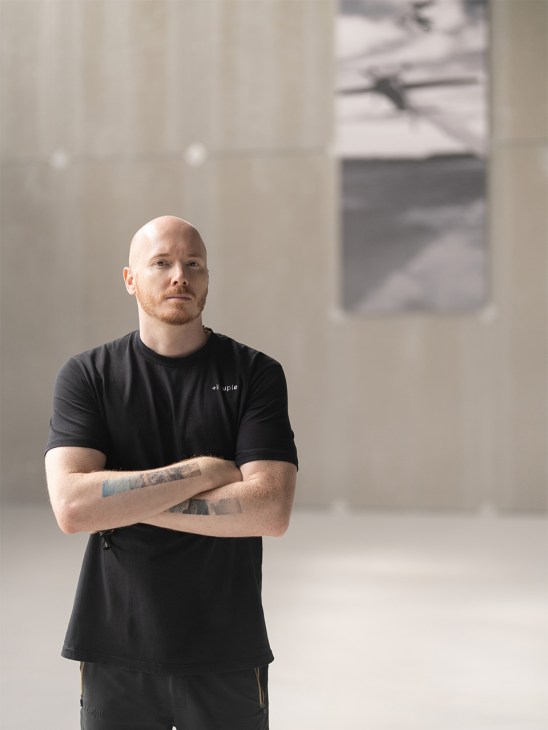
Specialised industrial facilities, from mechanics workshops to aircraft maintenance sheds, often have soulless interiors constructed to deliver efficiency. But Dan Vakhrameyev has shown that such spaces can be inviting too. The co-founder of Kyiv-based creative studio and lighting brand +Kouple has designed a new hangar and living area for Aerotim, a stunt-plane collective led by champion pilot Tim Fatkullin.
Built in a classified location in Ukraine, the structure serves as Aerotim’s base of operations – a meeting place for its pilots, drone operators, cameramen, skydivers and videographers. Split over two levels, the building combines repair and maintenance areas with storage and crew facilities. Despite the temptation to respond to the high-octane, high-risk nature of the work, the interiors are decidedly muted. “The overall design language is deliberately restrained,” says Vakhrameyev. “We relied on exposed surfaces, honest materials and precise detailing to create a mature, disciplined environment suited to pre- and post-flight routines.”
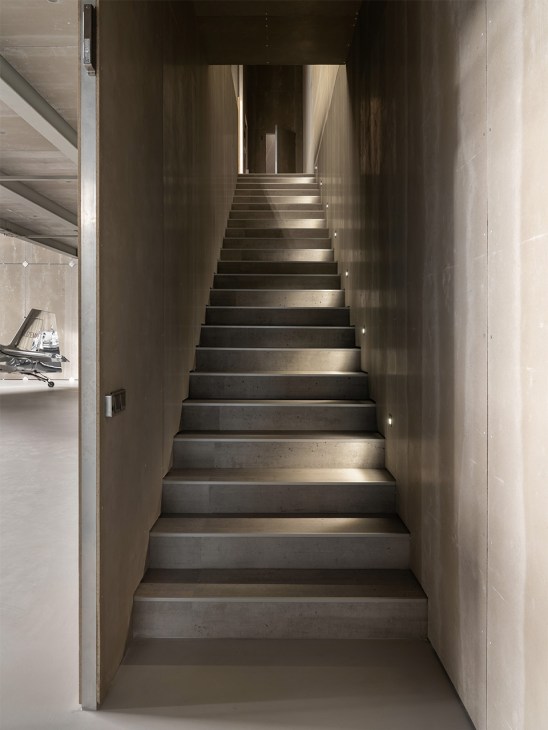
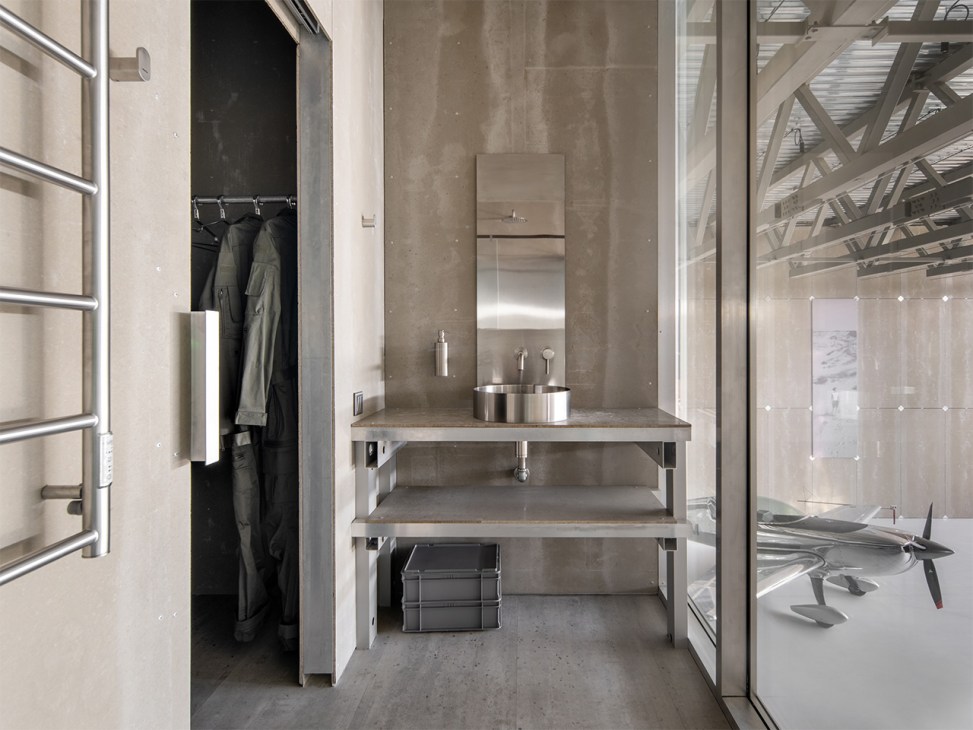
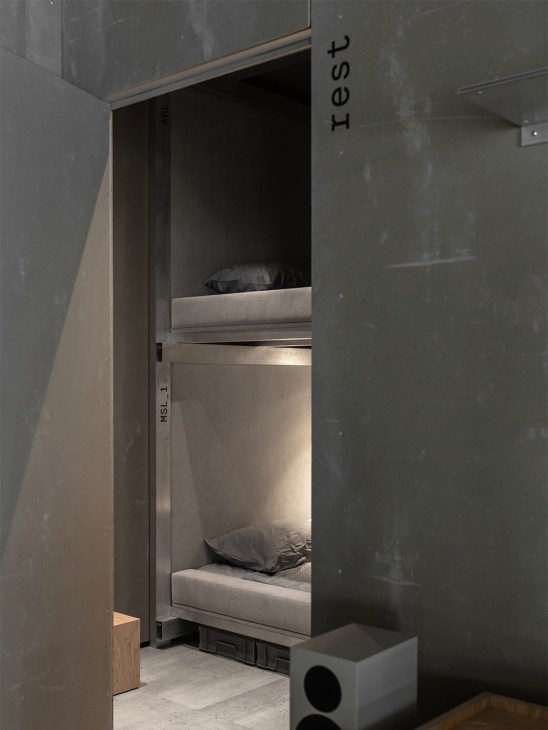
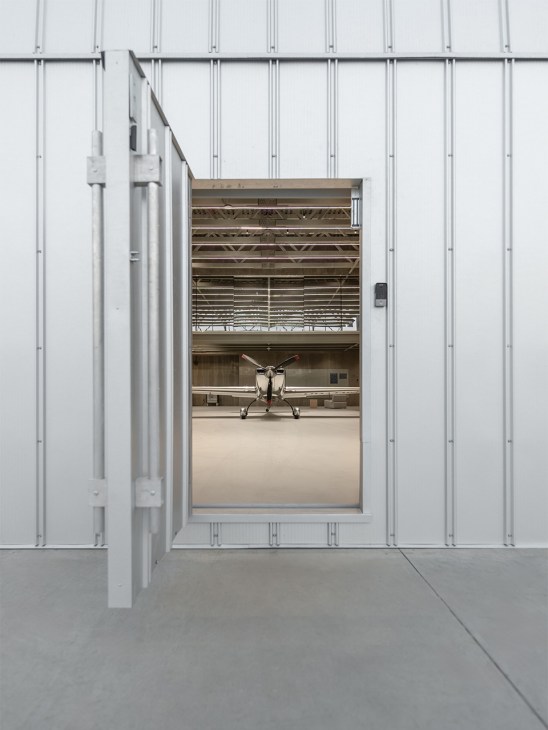
The structure’s defining exterior features are raw zinc doors that open to allow for light aircraft to taxi in and out of the hangar. Inside, the structure is fully exposed with steel trusses and technical air-duct engineering systems emphasising the functional nature of the building. That quality is enhanced by cement-bonded particle boards that clad the walls – a design choice that allows for easy repairs – and visible joints reference rivet-fasting techniques. Spot-accent lighting highlights sleek aluminium fuselages of the aircraft that it hosts.
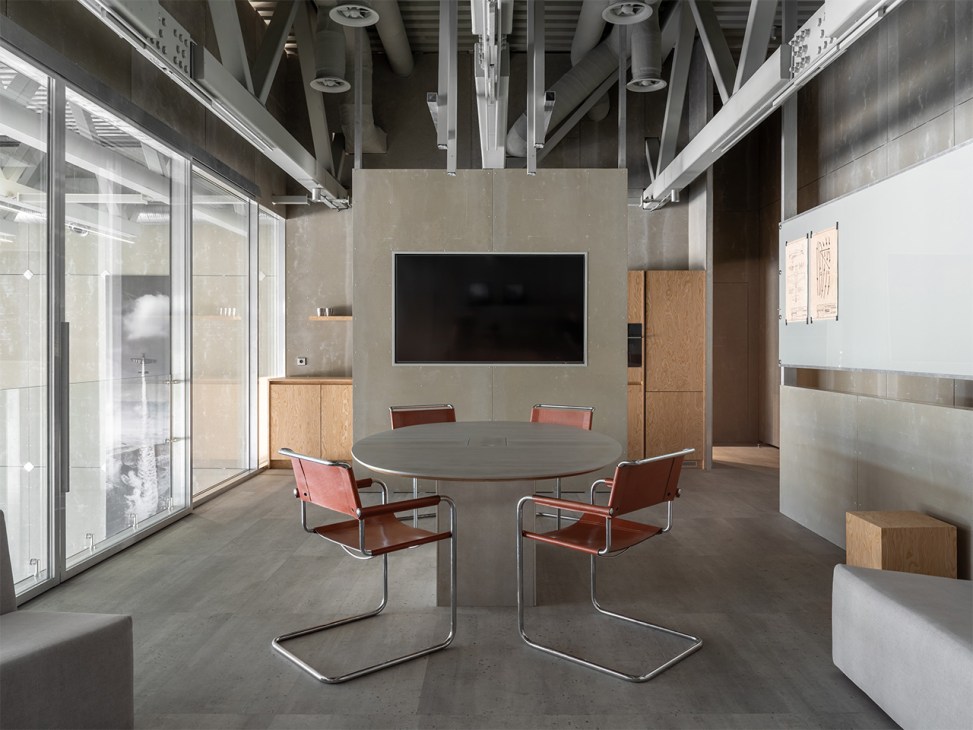
On the mezzanine level, a crew station is surrounded by floor-to-ceiling glass windows that overlook the ground-floor. Linear LED lighting provides a consistent glow, while the semi-transparent polycarbonate exterior cladding allows natural light to flow in. Amenities for the crew are organised around a central area (ideal for flight task briefings and meetings) with space for leisure, an office, sleeping, changing rooms and showers, and a kitchen. Natural-wood cabinets, sofas by Ukrainian furniture firm Propro and vintage chairs soften the area. It’s a base where both pilots and planes feel at home.
pluskouple.com
This article is from Monocle’s March issue, The Monocle 100, which features our editors’ favourite 100 figures, destinations, objects and ideas.
Read the rest of the issue here.
A perfect joint: Another Country and Goldfinger aim to grow without compromising quality
London-based Another Country’s acquisition of fellow furniture maker Goldfinger late last year made perfect sense to those who know both firms. While their values are aligned like a tongue-and-groove joint, each has different strengths: the former is known for peerless service and timeless designs, while the latter’s sustainable credentials and bespoke work stand out.
In an age where mass production and a constant eye on company scalability is an unfortunate norm, it’s increasingly rare to find acquisitions that aren’t part of a larger plot to cut corners. But Another Country and Goldfinger’s pairing is refreshing, precisely because the two companies are explicit in their desires to grow without compromising quality. “We have always kept an eye on complementary businesses that we could collaborate with,” says Another Country’s founder, Paul de Zwart. “Then we came across Goldfinger – a beautiful little jewel of a company that has had such a fantastic impact.”
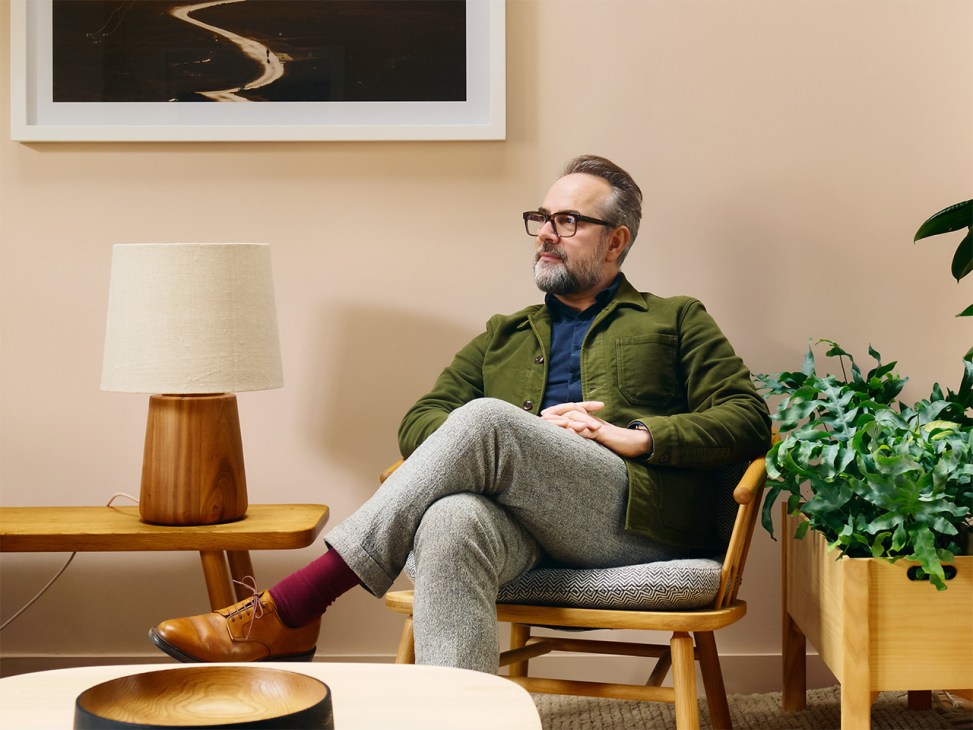
De Zwart characterises the development as a partnership rather than a takeover. When it comes to finding companies to link arms with, there’s no detail too small. “I recently spoke to a very well-known maker in the industry,” he says. “I asked him whether he knew who his electricity provider was. He was surprised – but when you’re a brand that is truly concerned about sustainability, these kinds of credentials are so important. It’s how we should all be thinking.”
The partnership also goes beyond the showrooms and workshop floor, with Another Country stepping in to support Goldfinger’s ongoing Young Makers programme – a fully funded, week-long social-impact initiative for London’s disadvantaged youth. “It’s an extension of the care we have for nature,” says De Zwart. “In our mind, we’re helping communities and training future makers, preparing them for life.” They also provide field trips to clients they’re engaging with to better demonstrate the enormity of the sustainability efforts being made. “We expose them to the world of nature recovery and offer an insight into the challenges caused by global warming and biodiversity crises. It’s directly tied to what we do and our clients appreciate the insight.”
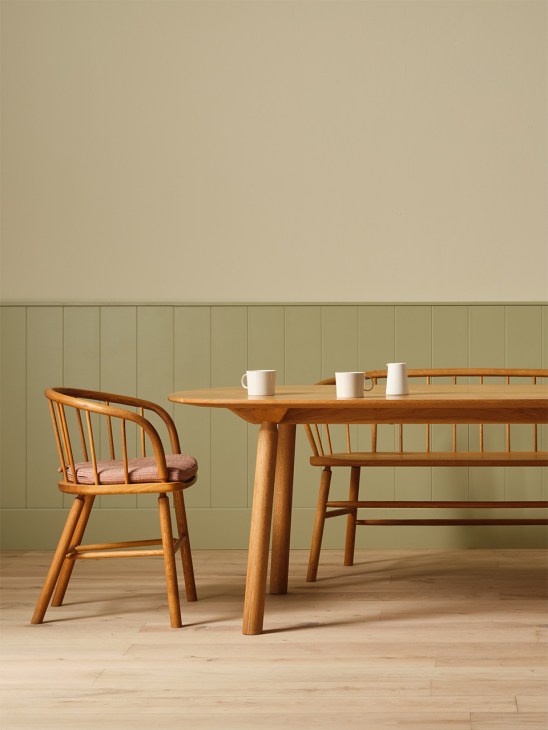
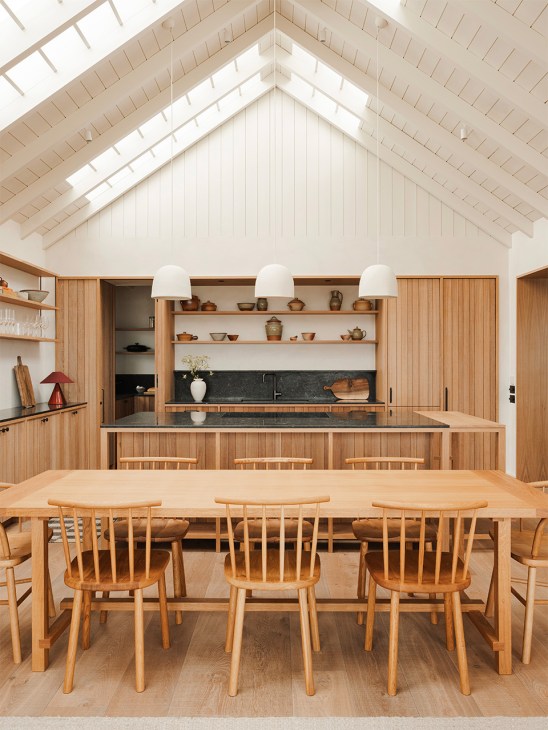
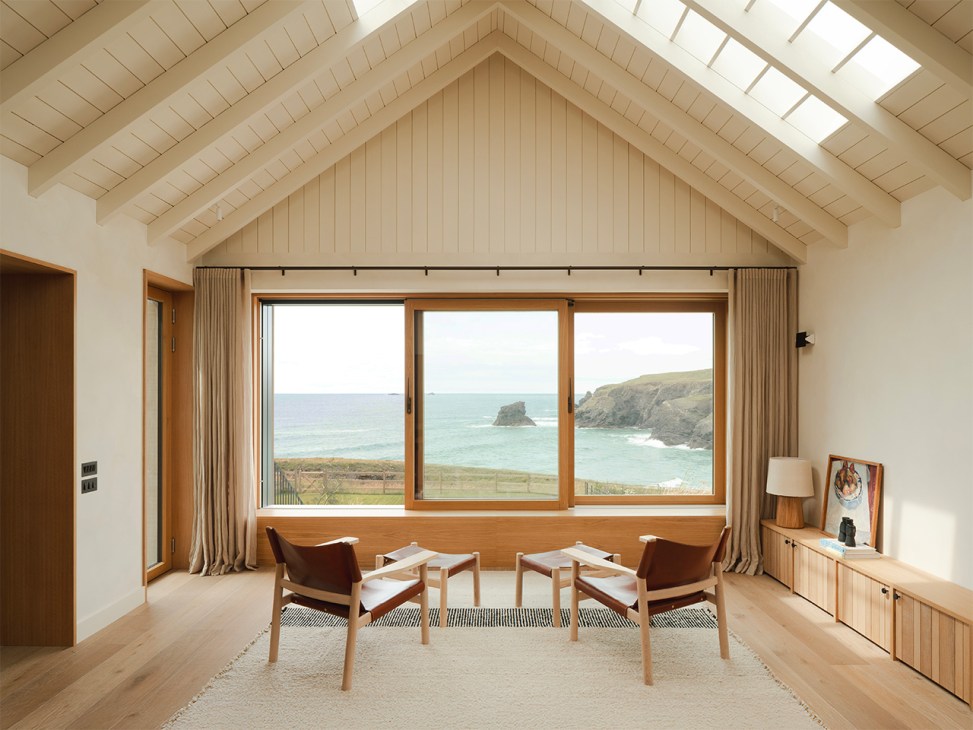
Uniquely, the partnership between the two brands means that each is staying independent while sharing information and methodology across everything from marketing to design. One such tenet is Goldfinger’s Tree Cycling principle: the process of sourcing material from trees that have been felled due to disease, weather or lost to urban planning. The infrastructure and operational power of Another Country, widening its scope to include Goldfinger’s prioritisation of renewability, bodes well for both businesses’ growth. “We see it as expanding our expertise across the board,” adds De Zwart. “Whether it’s off-the-shelf collections or fully bespoke, we have made ourselves more appealing to the market.”
This article is from Monocle’s March issue, The Monocle 100, which features our editors’ favourite 100 figures, destinations, objects and ideas.
Read the rest of the issue here.
‘I’m obsessed with feeling cosy at night’: Willo Perron on designing Knoll’s Bun lounge chair
The Bun lounge chair defies easy categorisation – a sofa and armchair in one. Created by Willo Perron for US furniture firm Knoll, it’s inspired by a chair that the French-Canadian designer found at a California thrift shop. The Los Angeles-based creative has worked on everything from bespoke retail spaces and runway shows for high-end fashion brands to productions for global musical talent; his portfolio features an eclectic and unconventional mix that is also reflected in his furniture design.
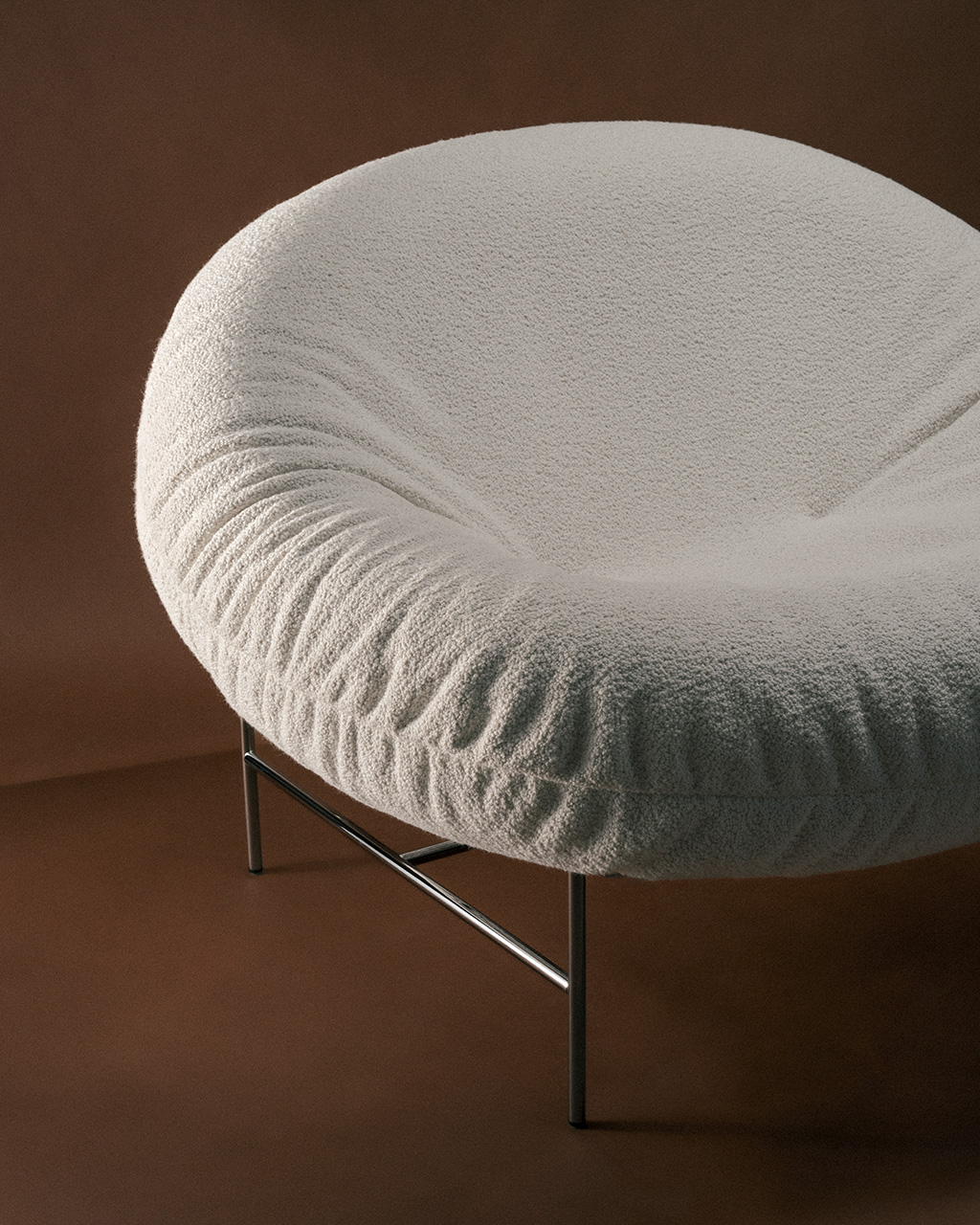
“Certain elements stayed from the original but I just kept working on its structure,” Perron tells Monocle. That structure centres on a thick, bao bun-type mass landing gently on stilt-like legs, which disappear beneath it, giving the whole piece a feeling of weightlessness. Sitting in the chair, its gentle curve invites an abundance of reclined positions, while its round form allows it to sit appropriately in any space. Here, Perron chats to us about his design intent and ambition for the piece.
Where did the initial inspiration for the Bun lounge chair come from?
I found a chair at a thrift shop and thought ‘this needs work’. I kept trying to improve and work around the original structure, developing it to find the right balance. There are probably about 10 different versions of it in my studio. I eventually brought it to Knoll as an almost finished piece and they used their expertise to finalise the ergonomics and the structural components.
How did you envisage the piece?
The initial ambition was [to find a way] to make something that’s quite heavy feel like it’s floating by placing all of that volume on tiny legs. That’s also true for the final version, especially with its chrome legs that reflect the environment. It feels like a big, fun, floaty cloud.
Does the piece respond to broader trends in the design industry?
We can lose the plot a little bit as designers when form proceeds function. You can make a really beautiful chair out of a rock but you wouldn’t want to spend any time in it. These are the kinds of things I want to address – making objects that are meant to be lived with. One of my main concerns is comfort and I’m obsessed with feeling cosy at night. The Bun responds to that by balancing a bit of indulgence.
How does this reflect your design ethos?
There are two distinct areas in my practice. There is the studio, which has a client base, and then there is a more personal part. This part involves me finding chairs at thrift shops and playing around with them until they become something like the Bun. I’m really curious and attracted by everything from the hyper contemporary to antiques. I don’t think I have a fixed aesthetic, which means there’s a playful, casual and unstructured approach to my work.
knoll.com
This article is from Monocl’’s March issue, The Monocle 100, which features our editors’ favourite 100 figures, destinations, objects and ideas.
Read the rest of the issue here.
DNCO rebrands Amsterdam’s business district as an urban village
The best branding exercises can transform your perception of a place – and that’s exactly what DNCO has achieved with its work in Amsterdam’s Zuidas neighbourhood. Here the London- and New York-based agency worked in partnership with property specialists Victory Group to challenge local perceptions of the precinct. The area, which is dominated by the former headquarters of the ABN AMRO bank, is now being transformed into a collection of new homes, workspaces and neighbourhood gardens.
“A big project such as this one needed to have immediate punch to communicate its bold vision, as well as have long-term impact as the vision comes to life,” says Simon Yewdall, strategy director at DNCO. “The aim for this branding exercise is to help transform Zuidas from a typical monocultural business district into somewhere that’s as varied and human as the rest of this city.”
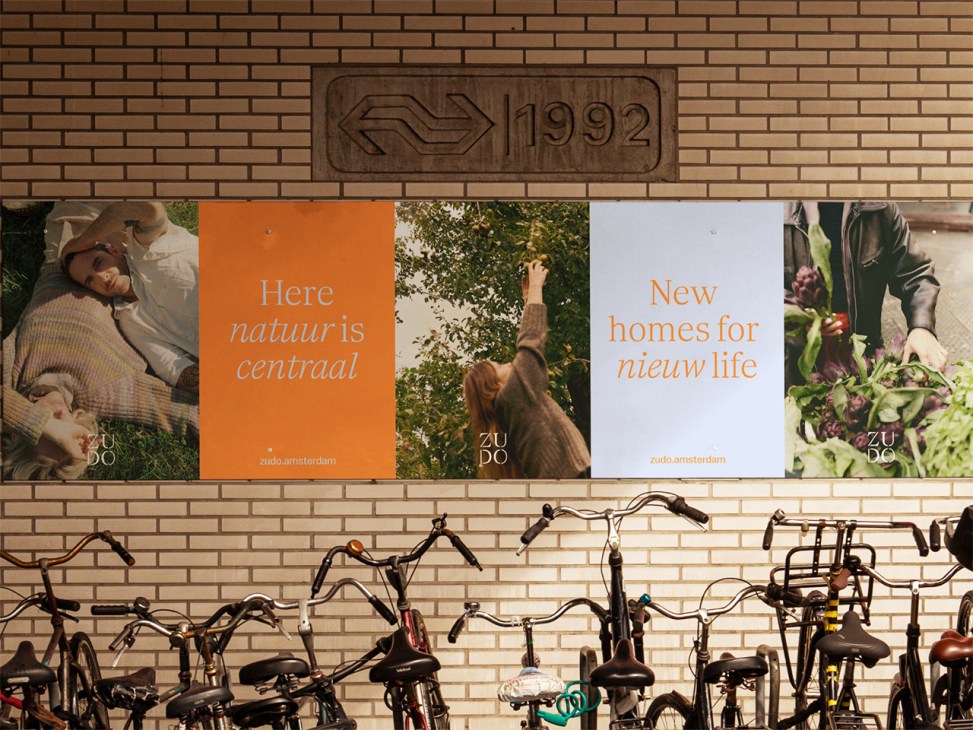
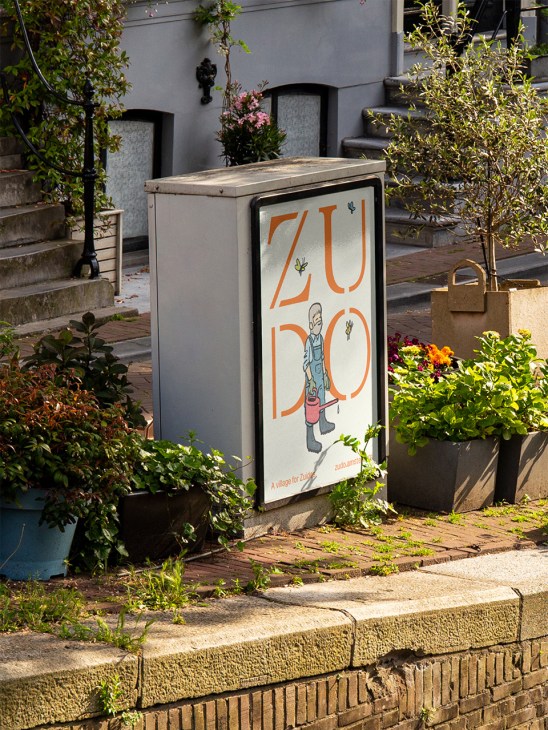
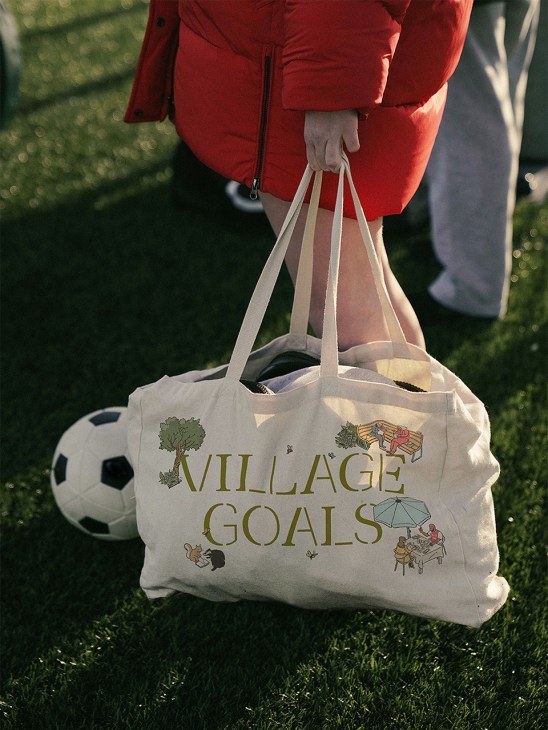
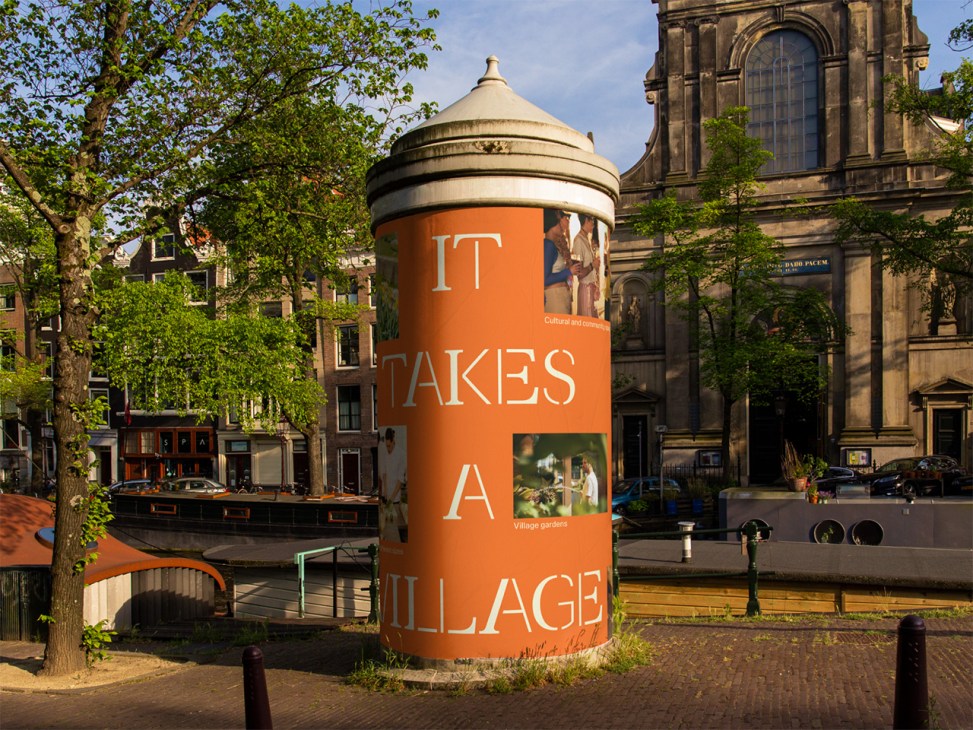
To deliver on this vision, the DNCO team renamed the area “Zudo” – a neat portmanteau of Zuidas and the Dutch word for village, dorp. The firm worked with local type foundry Bold Decisions to create bespoke serif and sans-serif typefaces. The bold, stencil-like font emphasises the contrast between a corporate legacy and community-minded future in Zudo.
Tokyo-based illustrator Luis Mendo was employed to create imagery for everything from coasters to tote bags, revealing how the neighbourhood could look. “The illustrations show the layers and life of a village and how it can grow over time. We also developed a logo, which references how one monumental site is being opened up and turned into streets and squares,” says DNCO’s design director Katy Angus. “From a brand-design perspective, it needs to flex for different audiences to last and feel fresh over time. Our work needed to feel personable and capture the warm associations that Dutch people have with the idea of a village.” The result? A vision for a brighter future for Zuidas, something that all Amsterdammers can buy into.
dnco.com
This article is from Monocle’s March issue, The Monocle 100, which features our editors’ favourite 100 figures, destinations, objects and ideas.
Read the rest of the issue here.
In praise of Sara Wheeler, a clear-sighted laureate of the world’s frozen regions
In this age of head-mounted HD cameras and space tourism, the role of the travel writer seems unclear. Brave and erudite souls such as Robert Byron and Bruce Chatwin once bestrode the culture, taking readers to places of which they could only dream (or, indeed, read), teaching them about those far-off lands but also what it means to be alive anywhere. Though visiting much of the world no longer requires intrepid travel, there are still places that remain terra incognita in the popular imagination. These are the ones that Sara Wheeler likes to visit.

The writer’s work, which is mostly dedicated to Earth’s polar regions, has a frosty sheen. Her book about the Arctic, The Magnetic North, is essential for understanding a part of the world whose significance has grown since Donald Trump’s threats against Greenland. In a dazzling tour d’horizon, Wheeler lays out why the region has so beguiled those from lands further south, while also detailing what life is like for the Arctic’s people and what it takes to survive (and thrive) in such challenging terrain. Its introduction includes the line: “The survival of civilisation as we know it hangs on what happens in the Arctic.” But the book is not simply a climate-change jeremiad. It is a story about people that achieves the universal, providing a torch for our collective humanity to warm and light the road ahead, however icy it might be.
This article is from Monocle’s March issue, The Monocle 100, which features our editors’ favourite 100 figures, destinations, objects and ideas.
Read the rest of the issue here.
Why Fuglen chose Kyoto’s Shichiku neighbourhood for its newest Japanese space
On a sunny morning in Kyoto’s Shichiku neighbourhood, there’s a lively crowd at Fuglen coffee shop’s latest opening. Dog owners sit out front, an older gentleman thumbs a book and friends natter. The Oslo-based company established its first overseas outpost in Japan in 2012; it also has branches in Tokyo and Fukuoka.
“We had been dreaming about an outpost in Kyoto for years,” says Keiya Takahashi, who runs its Japan operation. “The city has a strong coffee culture and we wanted to be here – but not right in the centre.” Luckily, Takahashi and Fuglen’s founder, Einar Kleppe Holthe, were introduced to designer Shin Mononobe and his jewellery-maker wife, Ami Masamitsu, who were renovating a 58-year-old shop connected to a small factory: just what Fuglen was looking for.
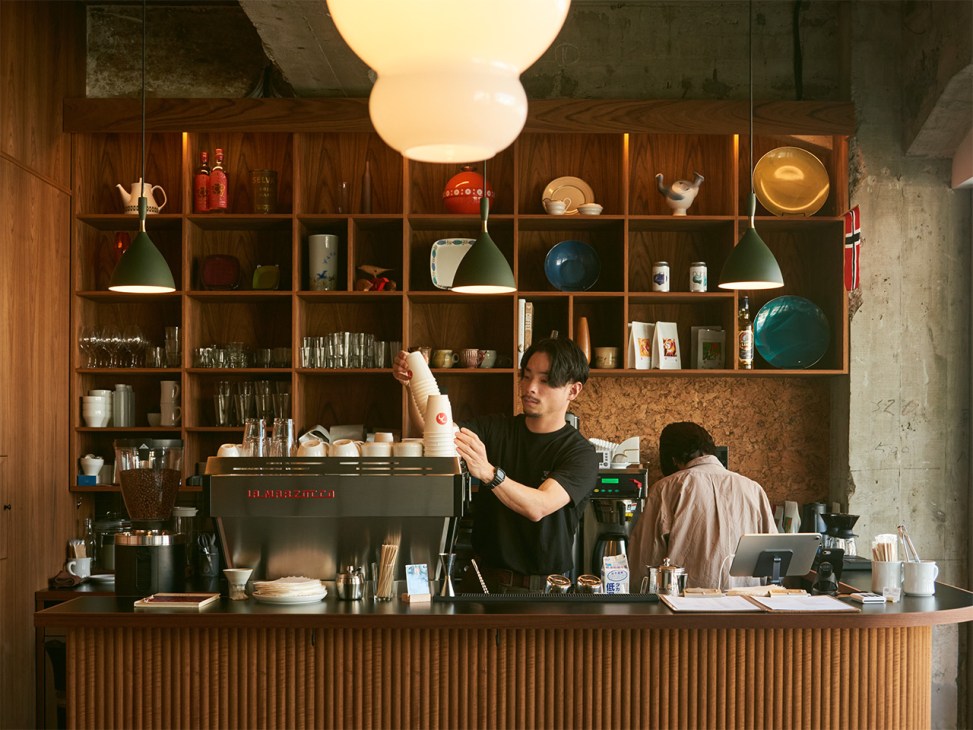
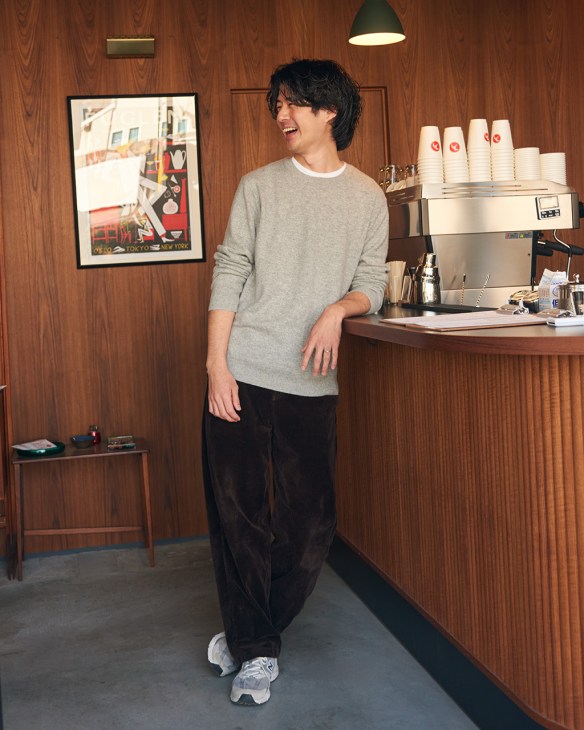
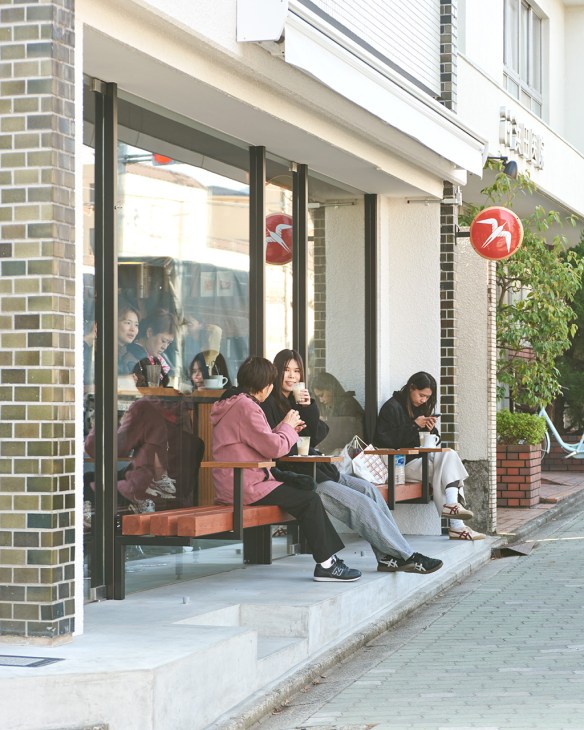
Today, Mononobe’s studio and Masamitsu’s jewellery workshop are hidden away at the back of the café; the latter’s shop, Ausome, which sells a mix of contemporary and vintage jewellery, is in the basement, while the pair live upstairs in a refurbished apartment with their young daughter. The spacious rooftop reveals open vistas of the city and the hills beyond. The building – which has already become a magnet for Kyoto’s creatives – has been refreshed without its past life being erased.
The Kamo river is close by; so too is a local shopping street and 1000-year-old Imamiya Shrine. Coffee shops (kissaten) have been at the heart of city neighbourhoods across Japan for decades but Takahashi says Fuglen Kyoto was inspired by the spirit rather than the aesthetic of those old-school institutions. “We aren’t trying to do something ‘retro’,” he says. “A kissaten has to be authentic, with a real community.”
In a city getting a bad name for overtourism, this friendly neighbourhood feels detached from the frenzy. Mononobe and Masamitsu – neither of whom hails from Kyoto – have been welcomed with open arms. “Kyoto is often seen as a difficult city to settle in but we found the opposite,” says Masamitsu. “People were really interested in what we were doing – they wanted to celebrate with us.” Opening from 7.00 to 18.00 allows Fuglen’s rhythm to shift with the time of day and the café has quickly inserted itself into the daily life of Shichiku. Takahashi says Fuglen is looking to open another shop in Kyoto, probably somewhere more central. It will be hard to improve on the current set-up.
fuglen.no
This article is from Monocle’s March issue, The Monocle 100, which features our editors’ favourite 100 figures, destinations, objects and ideas.
Read the rest of the issue here.
Read next:
Monocle’s full city guide to Kyoto
A walk through Beymen’s stunning OMA-designed flagship in Tersane
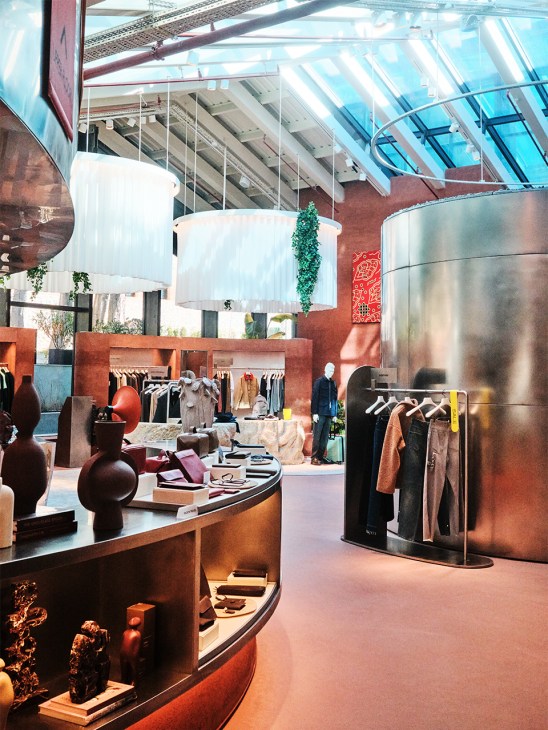
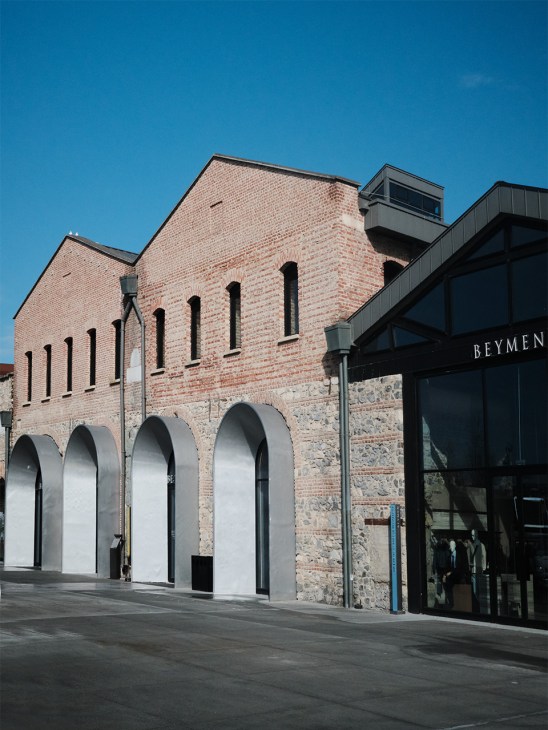
When Elif Capci, the CEO of Turkish luxury retail brand Beymen, took charge of the company 17 years ago, she didn’t imagine that she would be opening a flagship shop on the Golden Horn. The tributary cuts through Istanbul’s oldest districts but, for decades, the waterfront was dilapidated and the surrounding neighbourhoods were neglected. Today, Capci is showing Monocle around Beymen’s new concept shop in Tersane, a 600-year-old military shipyard that has been reimagined as a leisure and hospitality area.
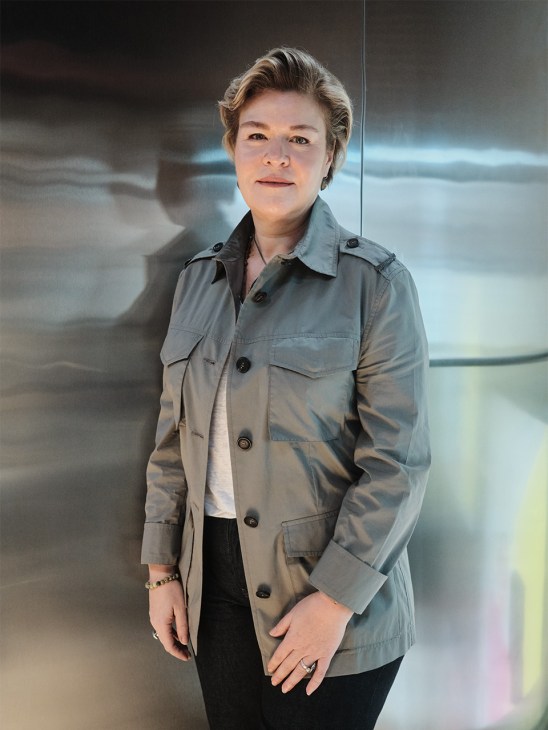
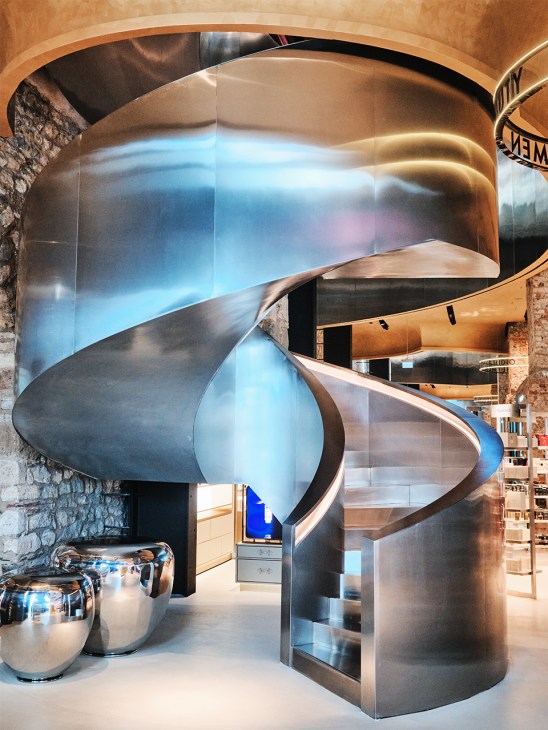
The shop is set within the remains of one of the original 15th-century shipyard buildings, a huge stone hangar by the waterside. The ruins have been filled with complementary modern brickwork, while metal and exposed wooden beams tie the old masonry into the newer structures. The original industrial proportions have been kept; the ceiling soars up to its original height, with a second floor housing private fitting rooms on a floating mezzanine. The entrance ways that once accommodated ships have been turned into huge arched windows looking onto the water.
“It is a very special location – we got the jewel in the crown,” says Capci. “It is not just a shop. This was a lot of responsibility on our shoulders. Our first question was to pick the right architects.”
Beymen commissioned the international collective Office of Metropolitan Architecture (OMA) to transform the site. The design team broke up its vast footprint of 12,000 sq m into eight long parallel galleries, each ending in a window. At the other end, a newly built ninth gallery connects them and hosts the main entrance lobby. Each gallery uses different colours and materials, and is decorated with pieces from Beymen’s art collection. Walking through them is as relaxing as browsing a museum; there’s “a common DNA – they all speak one language”, says Capci.
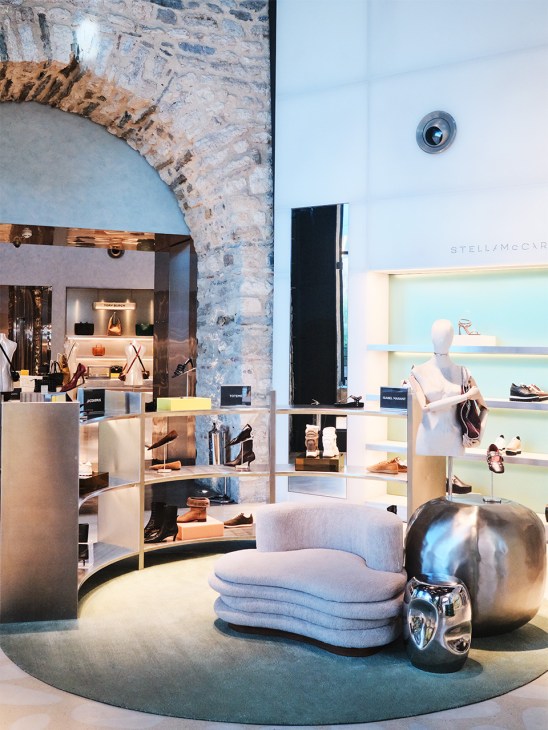
Established as a fabric store in Istanbul’s Sisli district in 1971, Beymen is today Turkey’s answer to Bloomingdale’s or Selfridges, stocking more than 900 international luxury brands as well as its own ranges. And while 30 per cent of its revenues come from online sales, it is in the physical space that Beymen excels.
Capci has stayed ahead of the competition by turning the shop into an experience rather than a simple retail space, ensuring that she still meets customers. “This isn’t just a shop; it’s a lifestyle destination,” she says. “We host events, pop-ups and talks. The bond that we build with our customers is different. We know what they want and that has worked well for us.”
beymen.com
What to buy from Beymen
- Beymen Club handbag: Head to Gallery 2 to pick up a fetching handbag bearing Beymen Club’s distinctive bird logo. The Tersane shop will open a bag exhibition including pieces from major brands’ archives in April.
- Etro bed throw: Give your bedroom a sense of timeless elegance with a throw from storied Italian brand Etro, known for its exquisite fabrics. You’ll find one in the home gallery, Loft 2.
- Academia basics The Beymen-owned essentials brand boasts comfy oversized T-shirts and understated staples.
This article is from Monocle’s March issue, The Monocle 100, which features our editors’ favourite 100 figures, destinations, objects and ideas.
Read the rest of the issue here.
Zegna’s ‘golden fleece’ material is a new language of elegance
Zegna’s autumn/winter 2025-26 collection took inspiration from the Piedmontese capital of Turin, a city close to the brand’s heart and not far from its HQ in Trivero. On show within the mix of chunky bombers, suede jackets and long trenches was a material innovation best discovered by touch: Vellus Aureum. Latin for “Golden Fleece”, this softer-than-cashmere merino wool is partly inspired by a suit made for the brand’s founder, Ermenegildo Zegna, for a trip to Teatro Regio di Torino.
Vellus Aureum isn’t just a pleasure to the touch or a theatrical flourish though; instead it’s a feat of craftsmanship and the result of years of research and sourcing. Procured from pure-bred Australian merino sheep, this rare hair makes up less than 0.05 per cent of the annual global wool production and each fibre is so fine that they’re barely visible to the naked eye.
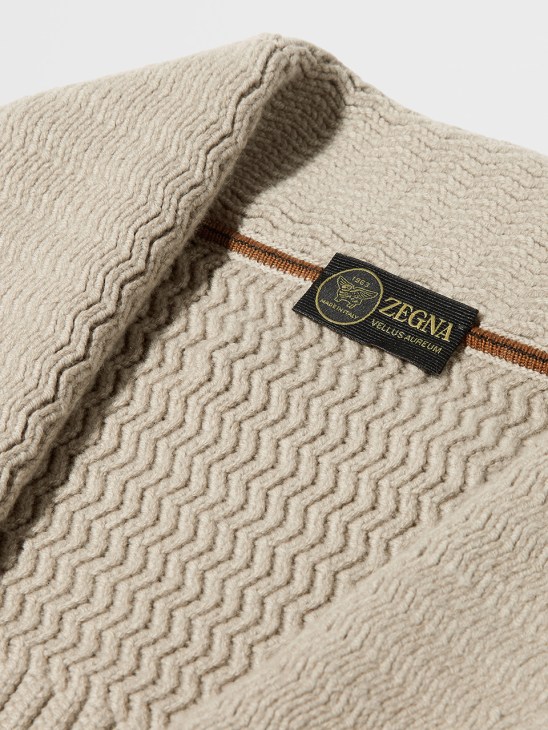
“With Vellus Aureum, we wanted to explore the full potential of the world’s finest wool, not only in terms of softness but also durability, resilience and timeless beauty,” says Alessandro Sartori, Zegna’s artistic director. “It’s not just about luxury; it’s about a new language of elegance rooted in nature, craft and innovation,” he adds. “This collection represents a true milestone for Zegna, one that celebrates our legacy while shaping its evolution.” The traceable, sustainable fabric is a testament to the founder’s quest to use the best materials – and it goes to show that not all innovations mean forgetting the past.
zegna.com
This article is from Monocle’s March issue, The Monocle 100, which features our editors’ favourite 100 figures, destinations, objects and ideas.
Read the rest of the issue here.
Dine like a New Yorker at GAT, a new elite watering hole in Stockholm
If anyone can transform a district with a classy yet cosy French-inspired bistro, it’s the trio behind beloved spots Tjoget, Paradiso and Liebling – restaurants that have drawn crowds in Stockholm for years. Joel Söderbäck, Andreas Bergman and Simon Åhnberg (pictured) have now launched GAT, a New York-inspired space with a restaurant and bar, opposite Stockholm’s opera house. (The name is an abbreviation of the central square, Gustav Adolfs Torg.) It sits snugly inside the Davidsonska Huset, which was once a bank, then a travel agency selling tickets for steamships headed for the US. “We would like this to be the new gathering spot for the neighbourhood,” says Söderbäck.
It’s easy to imagine GAT becoming the watering hole of choice for Sweden’s top politicians – the Swedish parliament meets around the corner, after all. Ballet dancers and opera singers, curators from museums and technology workers from the nearby Spotify headquarters should also help to make up the numbers.

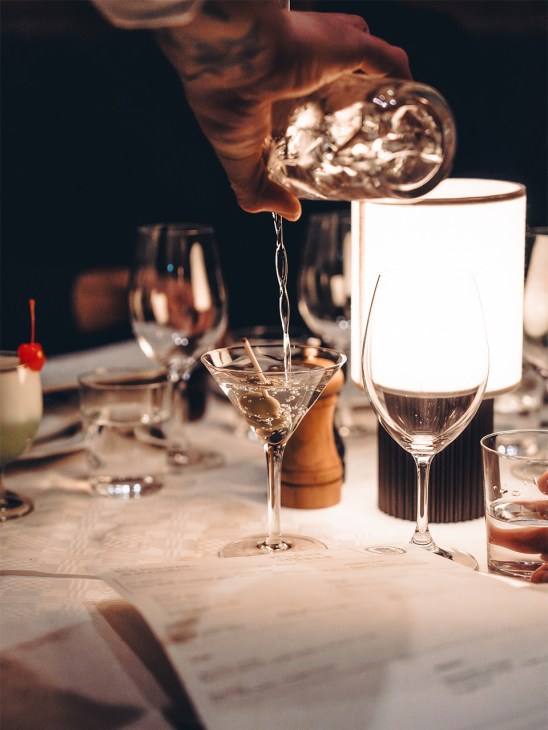
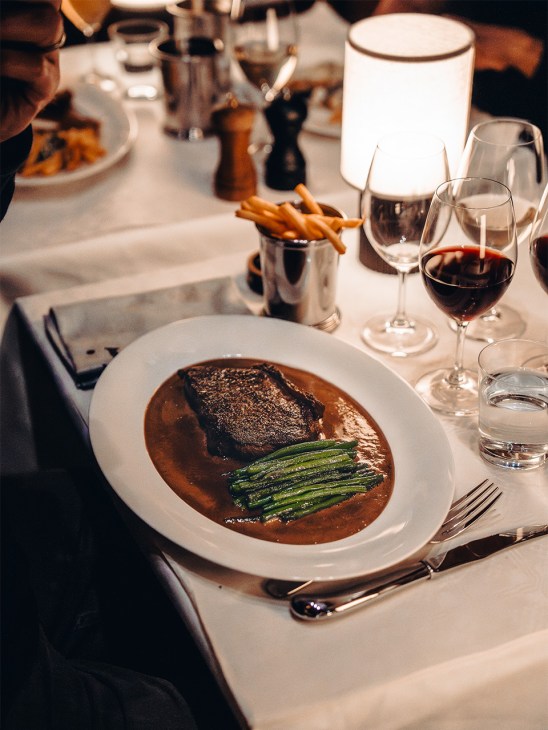
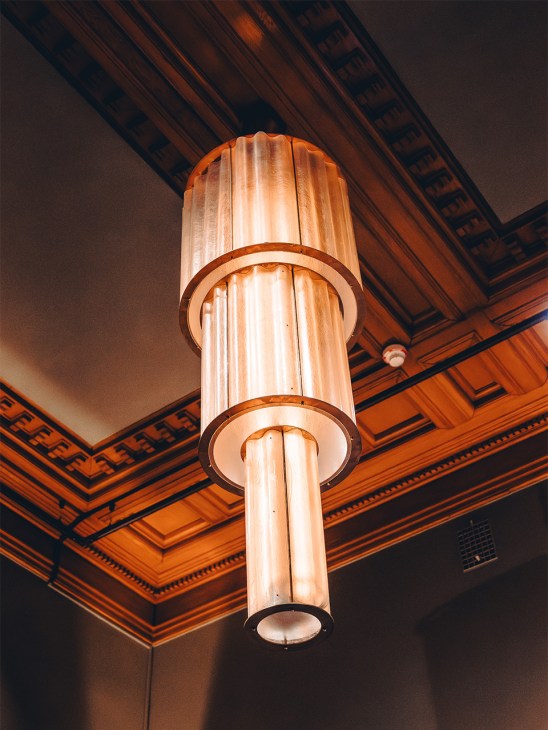
Though the building itself is expansive and stately, with high ceilings and oak-panelled interiors, architect Andreas Martin-Löf has imbued GAT with an elegant, welcoming charm. The dining room and bar feature two of his spectacular art deco-style lamps made in sheets of glass fibre. Our picks from the menu include the scrumptious prawn cocktail, the king crab legs and the onion pie, topped off with GAT’s signature midori sour cocktail.
gatstockholm.com
This article is from Monocle’s March issue, The Monocle 100, which features our editors’ favourite 100 figures, destinations, objects and ideas.
Read the rest of the issue here.
Deux Gares Express brings style back to Parisian station dining
The advent of quick, low-cost air travel brought the heyday of grand train journeys to an end and with it a venerable institution: the glamorous railway restaurant. In the 1900s these establishments turned train terminals into destinations in which to linger but they were subsequently replaced by samey, uninspiring chains. Thankfully, things are changing – at least in Paris.
When Parisian hospitality group Touriste opened Deux Gares Express in October 2025 – just below its Hôtel Les Deux Gares – the restaurant concept seemed a little nostalgic. But located between the Gare de l’Est and the Gare du Nord, the site, which overlooks the tracks, now enjoys plenty of footfall.
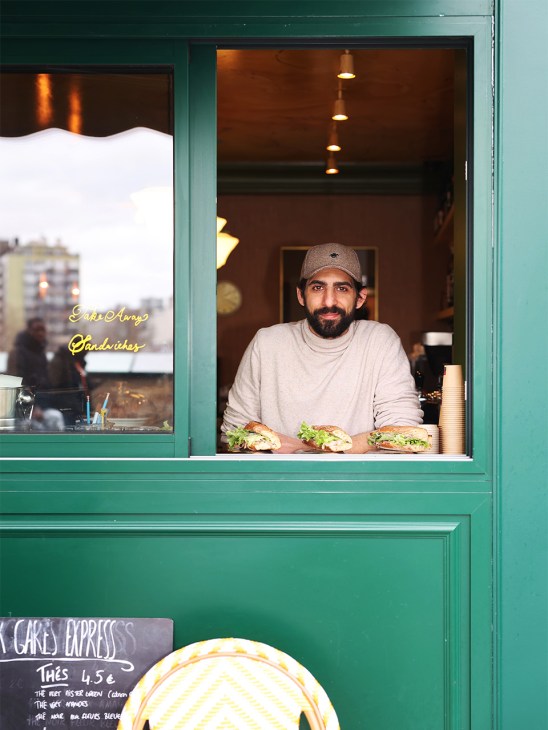
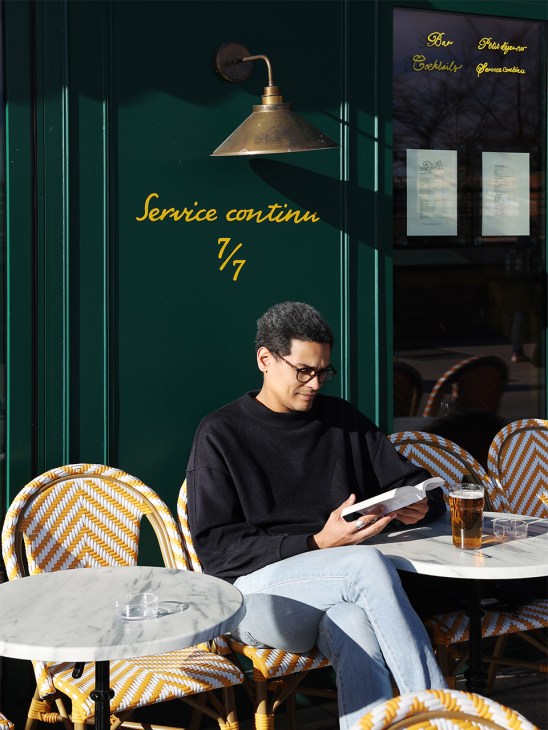
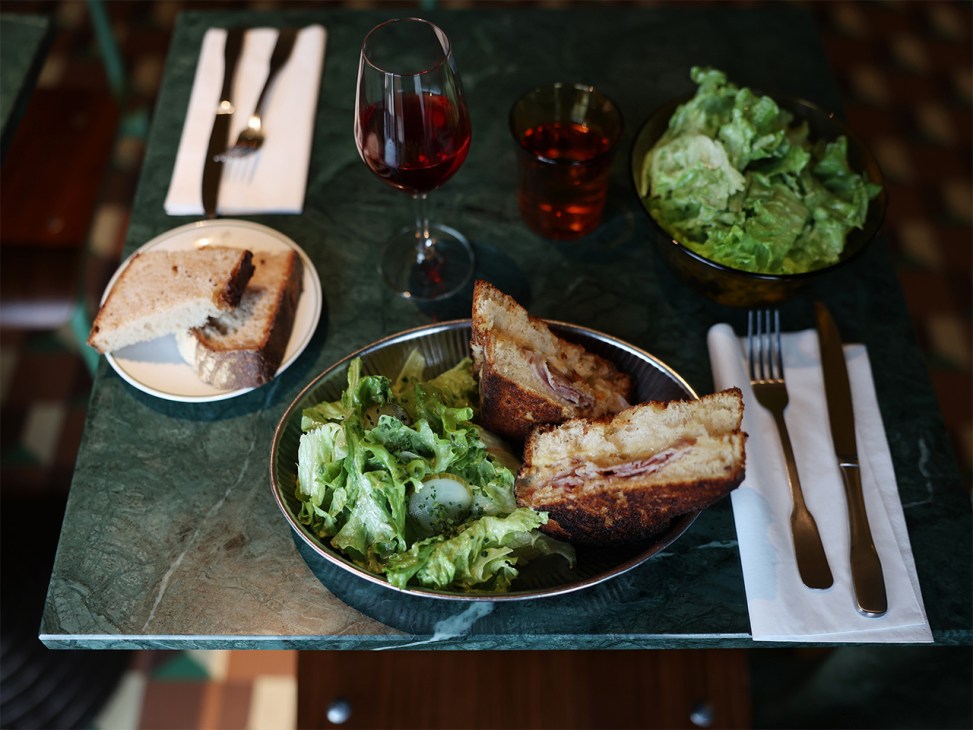
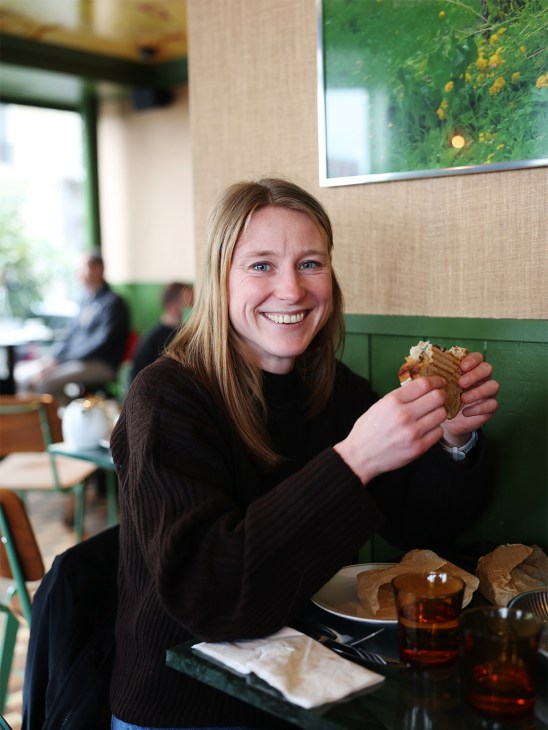
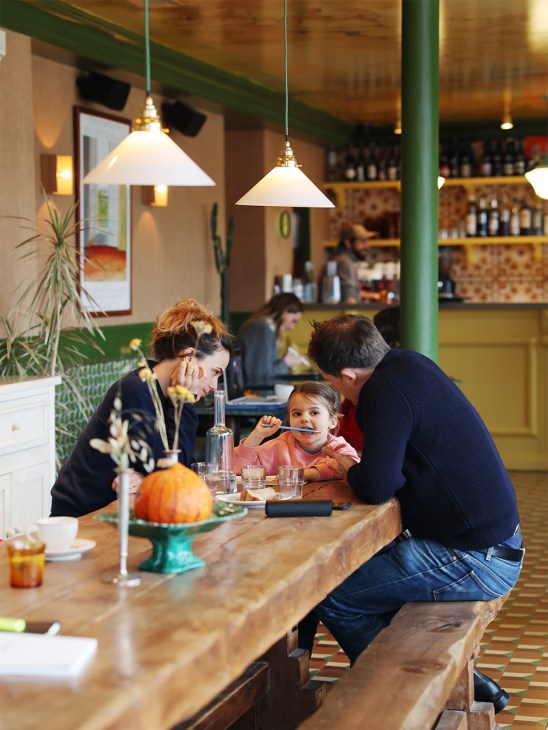
Understanding the transience of its clientele was important, says founder Adrien Gloaguen. “Efficiency is the key aspect of the express concept. The dining counter plays a central role. You can sit there and enjoy the dish of the day in 20 minutes while keeping an eye on the clock.”
Gloaguen also had a point to prove. “For too long, ‘station food’ has been synonymous with mediocrity,” he says. “We wanted to challenge that stereotype. After all, a good meal is the best way to start or end a journey.” Dishes include oeuf mayonnaise, brioche croque monsieur and soup of the day.
The interiors are by UK designer Luke Edward Hall, who cherry-picked the best in French and British design with panache. The eccentric 1970s style includes green marble tables, antique furniture from a French monastery and a dresser that looks more like something from a domestic kitchen than a commercial one. “The idea was to recreate the excitement of the station buffets of yesteryear but with a bolder colour palette and a touch of humour,” says Gloaguen. “The result feels almost cinematic.”
Open from 07.30 until 22.00, Deux Gares Express is more dependable than the trains. Gloaguen ensures that Parisians and travellers are fed from morning until night. “Stations never sleep and neither do hotels,” he says. “We need to be there at all times of the day.” The railway restaurant, it seems, is back on track.
hoteldeuxgares.com
This article is from Monocle’s March issue, The Monocle 100, which features our editors’ favourite 100 figures, destinations, objects and ideas.
Read the rest of the issue here.