Issues
The affairs agenda: India’s travel boom continues to reshape global tourism
Tourism: India
Holiday hot spot
India’s outbound and inbound tourism looks set to continue its upward trajectory this year. The country is projected to be the fastest-growing inbound market for many Southeast Asian countries in 2024. And, in return, Indian nationals will be able to travel smoothly in the other direction too: both Thailand and Malaysia dropped short-stay visa requirements late last year, while others, including Vietnam and Indonesia, are reportedly considering a similar waiver.

Also working in New Delhi’s favour is the drop-off in Chinese arrivals to the region. While there is still a way to go to match the numbers that arrived from China before the pandemic, Southeast Asian destinations are already beginning to introduce new direct flights to and from major Indian hubs, such as Bangalore and Mumbai. A McKinsey report, published last November, suggested that India’s outbound travel has the potential to grow to more than 80 million by 2040. These numbers are also strengthened by rising income levels nationwide and a strong economic outlook.
But at the heart of India’s tourism boom is the simple factor of ease. “Decisions are based on visas, frequency of flights and seamless connectivity, plus the choice of hotels and price-point per night,” Paul Charles, CEO of luxury global travel consultancy the PC Agency, tells Monocle. And then there is another important factor: “Whether locals speak English.”
Essentially, the future looks bright. “India’s energetic, young population is definitely on the march,” adds Charles. “Destinations ignore them at their peril.”
The Foreign Desk
Andrew Miller on: Standing alone
“Strategic autonomy” was one of the vogueish buzzwords of 2023 and it needs to be one of the priorities of 2024. This is the idea that Europe – and this is very much Europe the continent, as well as the EU political bloc – should be ready, willing and able to defend itself without relying on the US. Strategic autonomy has become a pet cause of Emmanuel Macron and though his foreign policy has not lacked flights of vainglorious eccentricity, this is not one of them. Europe’s complacency regarding this matter has been, or at least should have been, jolted twice in recent years. First, in 2016, by the election of Donald Trump, a president contemptuous of America’s allies and indifferent to its obligations. Second, in 2022, by the invasion of Ukraine by Russia. It is far from impossible that by this time next year another Trumpian tantrum by American voters might result in Europe facing both of the above at once: effectively at war to its east and abandoned by its mighty ally to the west.
Europe has complacently allowed the US to pick up a hefty chunk of its defence tab for far too long. There is no reason why the continent should not become what Macron has pitched as a “third superpower”. Though experience suggests that time and energy spent on the idea of a unified EU military is probably time and energy wasted, more can be done to make Europe’s extant forces more self-sufficient and cohesive. Another idea that should become as important as strategic autonomy is interoperability. One cause of Europe’s dependence on American kit is the ease of buying off-the-shelf from the US compared to adapting purchases from the continent’s hotchpotch of competing national defence industries. It has been the great success of the EU that its members are vanishingly unlikely to fight each other again; everything should be geared towards the common threat to the east.
Strategic autonomy will be complicated – and expensive – but embracing it now will be good practice. Macron doubtless has a case when he hints that France is the natural default leader of a strategically autonomous Europe; since Brexit, France is the only country that’s a member of Nato, the EU and the UN Security Council’s permanent five. But it is just three years until voters elect Macron’s successor. There is no guarantee that it won’t be Marine Le Pen, or some other isolationist populist who might be friendlier to Russia and a less reliable ally to its more immediate neighbours. In 2024, Europe needs to start thinking about how to rely less on France as well.
Andrew Mueller hosts ‘The Foreign Desk’ on Monocle Radio. Listen live at monocle.com/radio every Saturday at midday London time or download as a podcast.
Health: Philippines
Plenty to chew over
“Here I am, yummy French fries! I’m so crispy and I smell great,” sing the cartoon chips (write Nathan Paul Southern and Lindsey Kennedy). The transfixed toddler stops wailing; his father is relieved. We’re in the Philippines, where the big story is a public-health emergency. Heart disease is the country’s biggest killer, followed by cancer and diabetes. Life expectancy here is 70, compared with 75 in Malaysia, 74 in Vietnam and 70 in Cambodia, which is twice as poor. The Philippines also has 655 McDonald’s branches (plus 1,186 of domestic rival Jollibee’s) while Vietnam has 20 and Cambodia has none. Many former colonies absorbed their occupier’s cuisine: in the Philippines, America’s legacy is junk food. Five of the world’s top 20 countries for diabetes prevalence are US territories or former colonies. In 2013, American Samoa had the world’s highest rate of diabetes and 93 per cent of the island was obese.

The US (which, at 76, has a low life expectancy for a high-income country) can’t resist foisting its food on poorer nations. The government spends $2bn (€1.85bn) annually on food aid, including buying and donating excess American crops. But this can undercut local producers. During the Afghanistan War, it is likely that the reluctance to support wheat farmers increased reliance on opium. In Laos, where 60 per cent of land is used for rice, the last thing farmers need is competition. So why does the US send American rice to its Laotian school meals programme?
As an NGO worker explained, despite an abundance of cheap, familiar, local ingredients, the programme was instructed to use American lentils, which the children, being children, refused to eat. American aid can achieve so much but pushing its cuisine on countries often leaves a bitter taste.
Nathan Paul Southern and Lindsey Kennedy are journalists and security analysts based in Cambodia.
In the basket
Swelling the ranks

The new pride of the Marinha Portuguesa’s fleet will be the 108-metre-long D Joao II, named after the 15th-century king who oversaw a previous revival of the Iberian nation’s maritime enterprise. To be built by Dutch shipwrights Damen, it looks like an aircraft carrier but isn’t – its flat deck and ramp will launch helicopters and drones. Portugal is emphasising its possibilities for marine surveillance and research but it has more pugnacious capacities if needed. It is similar to, if smaller than, Turkey’s recently commissioned drone-carrier TCG Anadolu. Just as drones serve as budget alternatives to fighter jets, so do drone carriers to aircraft carriers – the most recent aircraft carrier commissioned by a European Nato country, the Royal Navy’s HMS Prince of Wales, cost €3.7bn.
In the basket: One drone carrier
Who’s buying: Portugal
Who’s selling: Netherlands
Price: €132m
Delivery date: 2026
Politics: Americas
Boiling over
The peaceful reputation of Latin America and the Caribbean was tested in December when Venezuelans voted to exert their claim on the oil-rich Essequibo territory that comprises two thirds of neighbouring Guyana. The sabre-rattling prompted Brazil to move troops closer to its shared border with the potential belligerents and for the US to hold joint military exercises with Guyana. The Venezuela-Guyana dispute, which dates to 1899, is pending at the International Court of Justice. But despite the region not seeing a major land war since the 19th century, three territorial disputes have been lodged with the court.
Belize-Guatemala:
Settlers carved out the tropical enclave of British Honduras and harvested wood from the southern half of what is modern-day Belize, which Guatemala claims as its own. At stake? The world’s second largest coral reserve, a major tourism draw.
Colombia-Nicaragua:
The San Andrés archipelago is three times closer to Nicaragua than Colombia but the latter holds sway over the islands, much to the former’s consternation. One of the least visited corners of the Caribbean, the coral islands are a Unesco Biosphere Reserve.
Bolivia-Chile:
Landlocked Bolivia claims that Chile owes millions of dollars for downstream use of the Silala River. La Paz is still sore that it lost its oceangoing port during the War of the Pacific, which ended in 1884.
The Agenda: How the Olympics could jeopardise the French capital’s ‘bouquinistes’
Retail: Paris
Final pages
Julia Webster Ayuso on the Olympian threat looming over the iconic booksellers on the banks of the Seine.
“There’s the Louvre, the Passerelle des Arts, the Vert-Galant garden.” Jérôme Callais is pointing to the different monuments he can see from his workplace, a book stall on Paris’s Quai de Conti. “When I finish in the evening, I walk across the Pont Neuf and watch the sunset.” For the past 400 years, booksellers such as Callais have lined the banks of the Seine. They are as intrinsic to Paris as the Eiffel Tower or Notre-Dame but in recent years their existence has come under threat. First there were the gilet jaunes protests and transport strikes disrupting their trade, then came the coronavirus lockdowns that forced them to close. Now they face an existential challenge: citing security concerns, city hall announced in July that the booksellers’ iconic green boxes must be removed in time for the opening ceremony of the 2024 Olympic Games, which will take place on the river. The bouquinistes have never left their spot and are worried that they won’t survive the move.
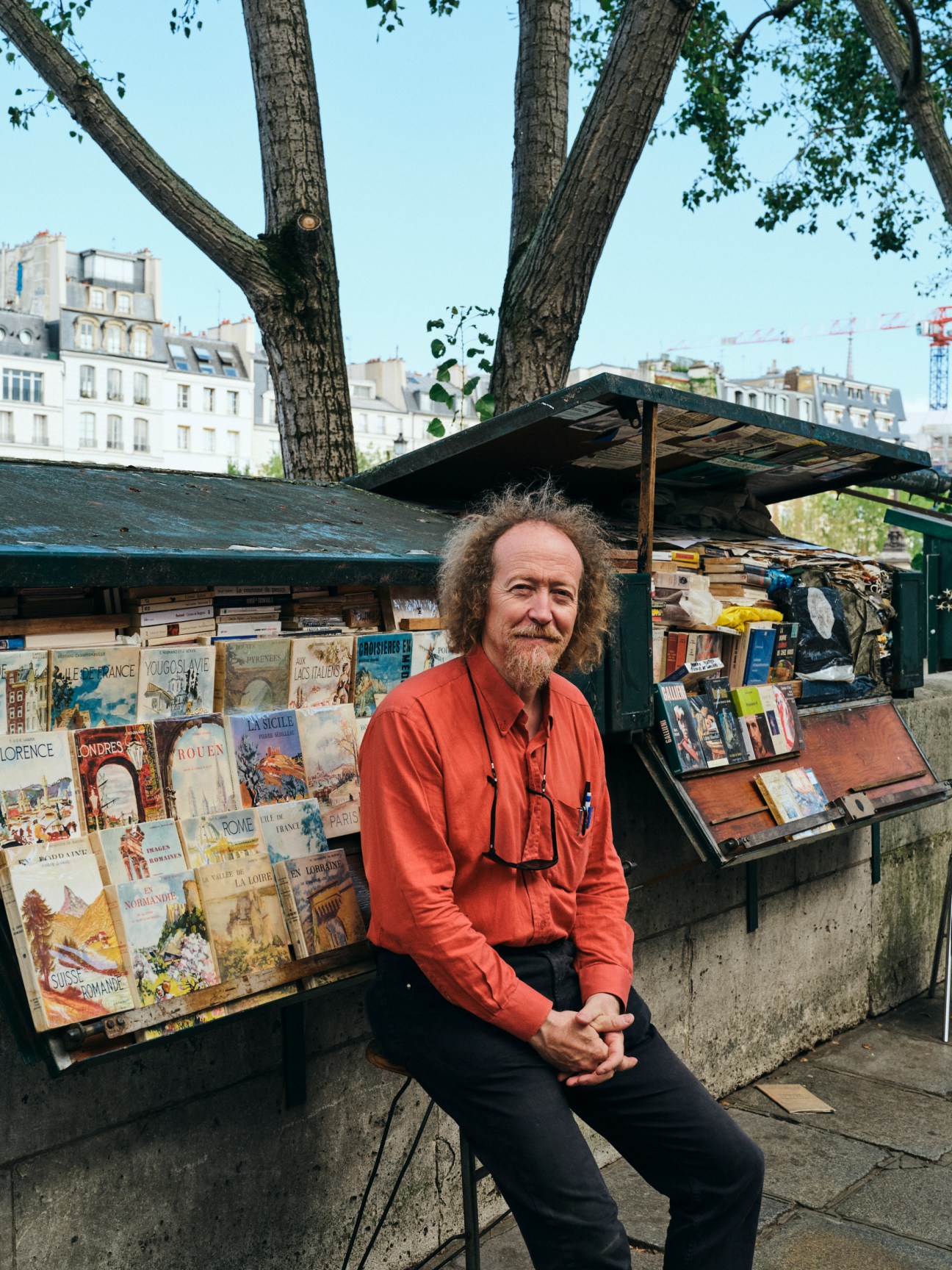
“The authorities are supposed to promote the city and its monuments, and now they want to make one of the biggest symbols of Paris disappear,” says Callais, who is the president of the Cultural Association of Booksellers of Paris. “It makes no sense.” He explains that most of the wooden boxes were set up 50 years ago or more and risk falling apart if moved. The authorities have said that they will pay for the temporary relocation of 50 per cent of the booksellers to a “literary village” in Bastille and offered to replace any damaged boxes. But the bouquinistes don’t think that this is viable and it’s unclear when they will be allowed back – if at all. Callais, who makes no more than a few dozen euros a day from sales, says that depriving the bouquinistes of their place by the Seine could deal a final blow to those who are already struggling. “Nobody does this for the money,” he says. “I would make much more if I stayed at home and sold my books online. But this is a different ethos: you meet people, you share things, you watch the world go by. Sitting in front of a computer, that’s not life for me.” When Monocle visits on a sunny Monday afternoon, an elderly woman stops to reminisce about her youth, a student lingers for a chat about music (Callais had a previous career as a double-bass player) and a book dealer arrives to offer his selection of old editions. Most have heard the news and offer their support.

The bouquinistes have survived previous attempts to ban their practice, including by Baron Haussmann, the architect of modern Paris. Today the 233 sellers don’t pay rent but are assigned a space by local authorities where they can set up five boxes, which they must open at least four days a week (if weather allows). The majority of what they sell must be made up of secondhand books, prints or magazines, though they’re also allowed to sell some souvenirs. Every bouquiniste is a bibliophile and some are specialists. All are a human lifeline in the age of Amazon.
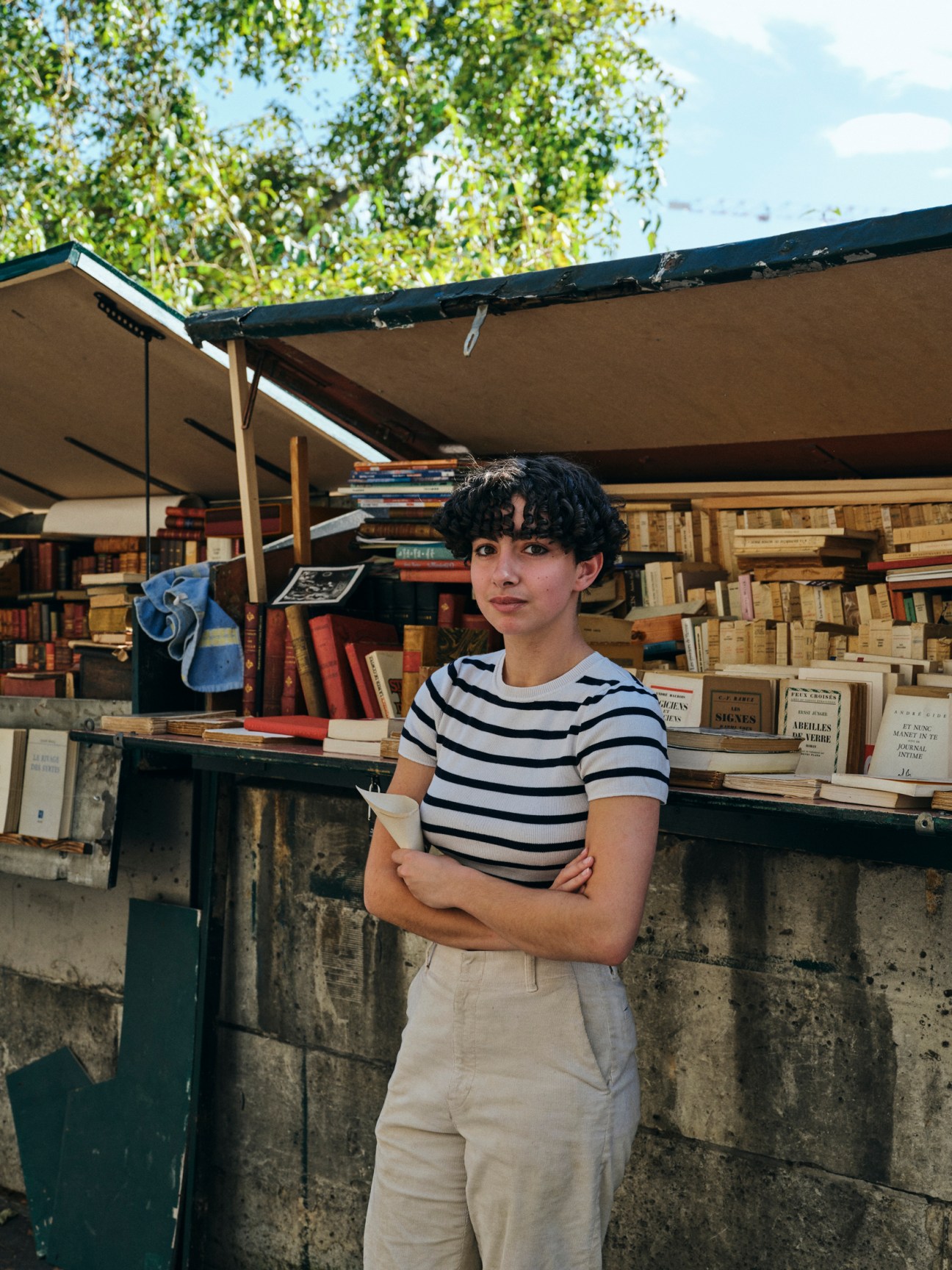
On the other side of the bridge, Véronique sells mostly comics, and a few steps upstream from her, Gilles Morineaux focuses on rare books. Though most bouquinistes are retirees, young people also see the profession’s appeal. Among them is 19-year-old history student Fanfan Derai, who works as an assistant on Morineaux’s stall, a role known as an ouvre boîtes (“box opener”). “It’s a fantastic profession,” she says. “You meet all kinds of people.” Could she see herself here in the future? “I would like to have a different career first, and then return to the quais,” she says. Hopefully the bouquinistes will still be here.
Julia Webster Ayuso is a journalist and Monocle contributor based in Paris.
Setting the stage: The team behind the Norwegian National Opera & Ballet
Only the top of the iceberg that is the Oslo Opera House can be captured in a photograph: much of it is subterranean. Designed by architecture firm Snøhetta and completed in 2008, this is the workplace of more than 600 permanent staff members, who keep busy rehearsing Petipa pas de deux, belting out Verdi arias, stitching silk-and-sequin dresses and ensuring that the Norwegian National Opera & Ballet’s 300 or so yearly shows run smoothly. The people milling about the building’s public roof terrace, sun-tanning, taking photos and even (when conditions allow) downhill skiing are also important pieces of the puzzle.
“To an extreme degree, it has helped us to build pride,” says Ingrid Lorentzen, former ballerina and one of the artistic directors who lead the institution’s programme. “We’re a young nation when it comes to culture.” The Norwegian Opera was founded in 1959 and was long housed in a modest theatre in the city centre. But everything changed when Snøhetta was commissioned to design a new building and shipped 36,000 pieces of white marble from Carrara to Oslo’s industrial harbour. Since moving in 16 years ago, the company has grown into a world-class institution renowned for a daring repertoire and inclusive attitude.
By welcoming everyone into the building (and on top of it), Oslo Opera House flipped the idea of what such a stereotypically elitist institution can be. That said, even more thought was put into the interior: the oak-panelled main stage has some of the world’s most advanced acoustics and scenography. “All of the artists we get here think big,” says Lorentzen, noting that their workshops build sets that few theatres can match. “We have huge productions that can’t go anywhere else.”
Asked how it feels to stage shows inside one of Norway’s top tourist attractions, Lorentzen recounts a conversation with Kjetil Taedal Thorsen, co-founder of Snøhetta. “He said that the building is nothing without its content,” she says. “Without the theatre, it would be a monument. Monuments are dead. This is a living house.”
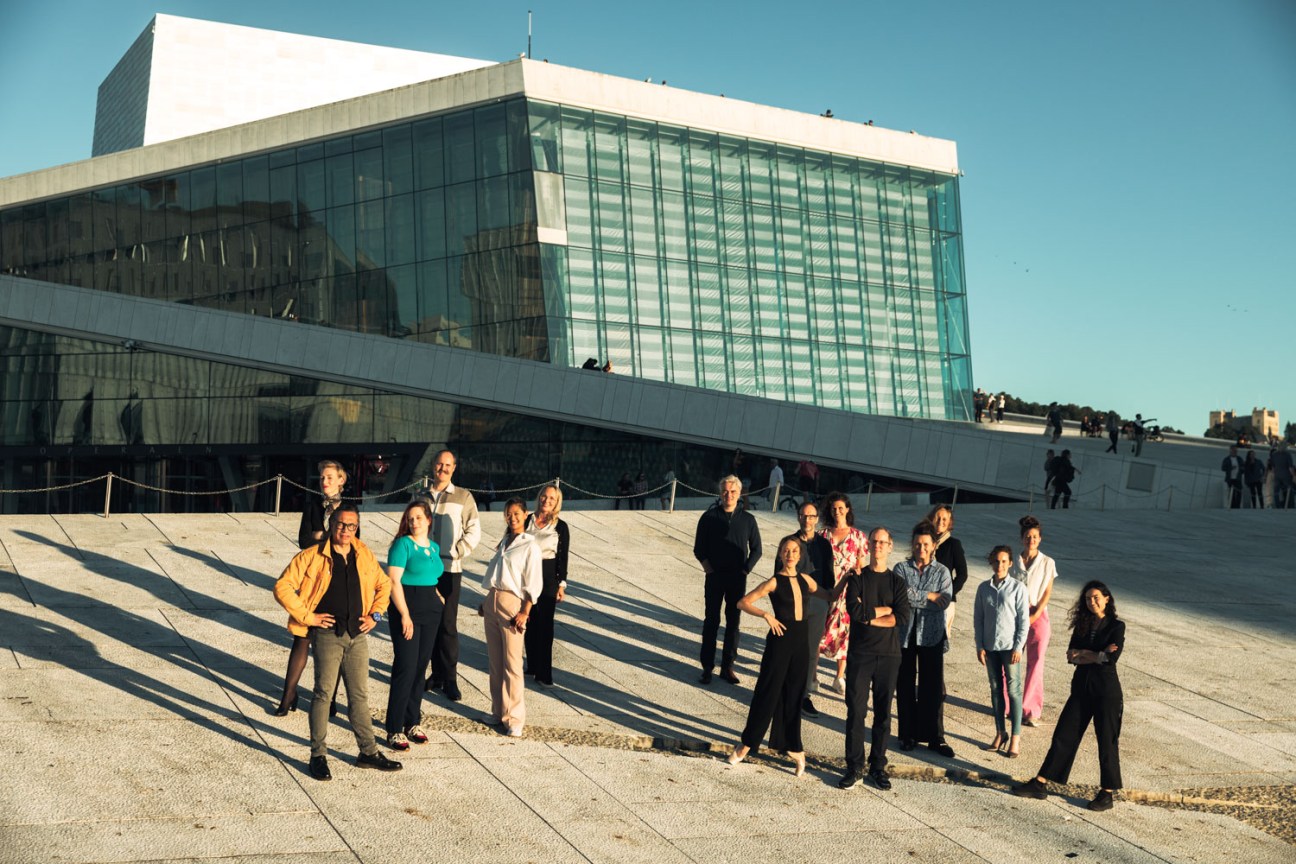
The institution’s three leaders
The Norwegian National Opera & Ballet is led by a trio who oversee its opera, ballet and orchestral departments. Former prima ballerina Ingrid Lorentzen and mezzo soprano Randi Stene will be joined in August by Edward Gardner, a conductor extraordinaire from London who is currently serving as musical advisor. With creative remit over their respective fields of expertise, they work with a 600-strong team to put a show onstage nearly every night of the week.
From the back row to the front, left to right:
1.
Stella Johanna Rømcke
Front-of-house manager
The marble foyer is Stella’s domain. Her high heels make her easy to spot.
2.
Magnus Staveland
Soloist, Norwegian National Opera
The tenor grew a moustache for ‘La Traviata’. He’s thinking about keeping it.
3.
Edle Stray-Pedersen
Conductor, Children’s Chorus
Her secret to making a choir of five- year-olds sing in tune? “Never give up.”
4.
Edward Gardner
Musical director
The conductor whisks between the London Philharmonic and the Operaen.
5.
Knut Breder
Manager, Ballet School
Decides which talented toddler should go to the country’s best ballet school.
6.
Ingrid Lorentzen
Artistic director, Norwegian National Ballet
Started out at the Operaen as a dancer.
7.
Helle Sørbye Larsen
Chief producer, Norwegian National Ballet
The ballet teacher-turned-economist has productions for 2029 now on her desk.
8.
Meliha Beglerovic
Head of workshops
Trained as an engineer, her job is to find a way to realise directors’ wildest visions.
9.
Lars Kolstad
Stage manager, producer
Has three decades’ experience giving performers the cue to take their places.
10.
Kari Ulfsnes Kleiven
Chorist, Norwegian National Opera Chorus
Don’t stand too close when the soprano warms up her higher octaves.
11.
Catharina Chen
First concertmaster, Opera Orchestra
Catharina plays a Vuillaume and a Stradivarius.
12.
Yolanda Correa
Principal dancer, Norwegian National Ballet
The Cuban prima ballerina pirouetted her way from Havana to Oslo.
13.
Jahn Magnus Johansen
Leader of the Norwegian National Ballet 2
Just got back from a tour of Norway scouting for ballet talent.
14.
Randi Stene
Opera director
Sometimes still takes the stage herself.
15.
Jane-Eve Straughton
Administrative leader, the Norwegian National Opera
The organisational whizz cut her teeth at the English National Opera.
16.
Kristina Bell
Head of sewing workshops
The Operaen’s petites mains makes fairy tales come to life.
Iceland’s first lady Eliza Jean Reid continues to champion gender equality
As guests nibbled on Icelandic lamb and sipped Icelandic vodka at a trendy Seattle cocktail bar, an Icelandic DJ spun Nordic tunes. The occasion: a VIP reception for Taste of Iceland, a travelling roadshow that immerses key markets in the country’s food, culture and design. Among the ambassadors? First lady Eliza Jean Reid.

That Canadian-born Reid, who has been married to Icelandic president Guðni Th Jóhannesson since 2004, would become one of Iceland’s soft-power envoys was as unexpected as a Viking ambush. When she met her future husband while they were students at the University Oxford, her knowledge of his homeland was limited. But as their courtship progressed, and with Jóhannesson’s daughter living in his native country, there was a decision to be made. “If we wanted to be together, we had to go to Iceland,” says Reid. When she made the jump across the North Atlantic, she was determined to do so on her own terms. That meant finding a job, making friends and integrating into the community. “I moved to Iceland for him,” she says. “I wanted to stay there for me.”
Learning the Icelandic language was key to Reid’s assimilation. She studied at the University of Iceland in the evenings while working in marketing for a software start-up. After two years of study and years of language immersion drawn from raising a family in Iceland, Reid can now comfortably give television and radio interviews in the language.
She needed those skills in 2016, when in a mere seven weeks her husband went from academic political pundit to president – a ceremonial head-of-state position – thrusting her into the national spotlight. As a foreign-born Icelander, she has raised the immigrant population’s profile in a country stereotyped for its ethnic homogeneity.
There is no formal role for the first spouse in the Icelandic constitution. But Reid insisted that she would not be “arm candy for my husband”. She only accompanies him to formal occasions, such as the September golden jubilee for King Carl XVI Gustaf of Sweden, if there is a dedicated role. “I wanted to confound expectations about female spouses in politics,” she says.
The CV
1976: Born in Ottawa.
1999: Graduated with a master’s in modern history from the University of Oxford.
2003: Moved to Iceland.
2004: Married Guðni Th Jóhannesson.
2014: Co-founded the Iceland Writers Retreat.
2016: Became first lady.
2017: Named United Nations special ambassador for tourism and the sustainable development goals.
2022: Published her first book, Secrets of the Sprakkar: Iceland’s Extraordinary Women and How They Are Changing the World.
This is why much of her busy travel schedule is for her own agenda. In addition to her tourism promotion with Business Iceland, which runs Taste of Iceland, she is a UN special ambassador for tourism and the sustainable development goals. In 2014 she co-founded the Iceland Writers Retreat, drawn in part from Reykjavík’s status as a Unesco City of Literature. Eight years later, Reid published a book: Secrets of the Sprakkar: Iceland’s Extraordinary Women and How They Are Changing the World.
Last year those various hats led her to touch down in Chicago, New York and Berlin in one month alone. “These are ways I can work to enhance Iceland’s presence on the world stage,” she says.
As the subject of her book suggests, Reid is passionate about Iceland’s hard-earned reputation for gender equality. She was pleasantly surprised that no one batted an eyelid when her first employer’s board president breast-fed while chairing a meeting. Women hold leadership roles across society, from the bishop of Iceland to the national police commissioner.
That said, those gains didn’t stop her joining the Women’s Strike in October to ensure that the world’s most gender-equal country doesn’t backslide. She will continue to investigate these themes in her second book, a mystery novel. It will be set in Iceland, of course. And, true to form, it will have a strong female lead.
The opener: Kyrgyzstan’s flag row, Australia’s seal problem and Italy’s generation strain
The list: Tips for 2024
Word to the wise
Tyler Brûlé on six things that should be on your radar this year.
Just in case this jam-packed issue doesn’t sate your appetite for inspiration, here are a few more things to see, do or buy.
1.
If you’re planning to stop off in Lisbon this spring or summer, I recommend an upper-floor suite at the Hotel das Amoreiras. Owner Pedro Oliveira has done a fine job, not only with the lighting but also with the comfy banquettes, which have the perfect backrest angle.
2.
There’s a good chance that we’ll see you during Salone del Mobile in April. If you’re hesitating because of the hotel prices, why not stay in Lugano and take the train into Milano Centrale? Hotel Gabbani is near the station and affordable. Sign up to our newsletters to keep on top of our events during the fair.
3.
Air France is expected to unveil its new First Class concept soonish. Early sketches suggest that it wants to outdo Lufthansa and Swiss with an evolution of its much-loved four-seat cabin.
4.
Wardrobe looking a bit thin? Try Heschung for footwear, Ripa Ripa for lido essentials, Yindigo AM for boxy cashmere cuts, Tembea for canvas holdalls and Howlin’ for hits of colour.
5.
If you want a runabout, the Suzuki Ignis is quickly becoming the vastly improved answer to the Fiat Panda.
6.
French TV’s morning-news wars have resumed. TF1 has launched a crowded, overlit programme to take on France 2’s Télématin and BFMTV’s flagship morning show. If you’re not familiar with France’s take on morning TV, it’s worth a peek. Good Morning America it most certainly isn’t.
Chequered flag

One look at Kyrgyzstan’s rankings in the UN’s Human Development Index or Transparency International’s Corruption Perceptions Index will lead the reader to conclude that the country has bigger issues than the curvature of the rays of the sun depicted on its flag.
Some Kyrgyz lawmakers believe otherwise. They’ve become concerned that the sun, which has adorned their national banner since 1992, looks more like a sunflower. In the Kyrgyz vernacular, “sunflower” is also an insult, which seems like something someone should have noticed at the time.
Kyrgyzstan’s president, Sadyr Japarov, has declared that the wobbly rays are “one of the reasons why this country cannot get off its knees”. It could be argued that Japarov’s own corruption, oppression, nepotism and populist tub-thumping might be more culpable – and that picking a row over the flag is some sort of diversion.
The plan, then, is to straighten the rays, though this might not solve the problem. A subsidiary argument rages about the yurt shown cradled within the sun, which some believe is depicted with insufficient slats in its roof.
Let sleeping seals lie

Australians grow accustomed to bizarre interactions with unusual wildlife, cohabiting as they do with a menagerie of fauna that’s belligerent and eccentric. Australia is possibly the only country on Earth where a boss will be inclined to believe the employee who claims to be delayed by an enormous seal blocking their driveway.
Exactly this obstacle was recently faced by a citizen of the state of Tasmania, whose vehicle was hemmed in by a 600kg southern elephant seal that had chosen her front yard for a snooze. The seal, christened Neil by poetic locals, has previously accrued his fair share of online fame by sunning himself on beachfront roads.
Another thing that Australians grow accustomed to, if they wish to survive to an appreciable age, is leaving the native creatures alone. Neil’s host would have been doing entirely the right thing if she had taken his arrival as the cue for a day off – or possibly a sign from the universe to go back to bed herself and call it a duvet day.
Reporting from…
Monocle has a network of correspondents in cities around the world. Our brief updates here include news on London’s rising skyline, a pioneering opening in LA and a Japanese airline’s new pet project.
London
Tower surge
The City of London’s skyline is continuing to sprout glassy new towers. The financial district expects 11 of them to be built by 2030 with interest in office space from technology firms as well as banks. For all the talk of hybrid working, the City is still bucking trends.
Los Angeles
Open for viewings
A mile-long open-air art museum is due to open this month, with Sankofa Park, designed by Perkins & Will, as its centrepiece. A welcome investment in South Central LA, the project, Destination Crenshaw, is billed as the world’s largest collection of public art by black US artists.
Tokyo
Air of the dog
Some good news for the Tokyo bureau’s canine contingent: Japanese airline Star Flyer now allows small dogs (and cats) on all domestic flights. Pet tickets cost ¥50,000 (€316) and owners are allowed to sit next to their pooches in the back row.
Slippery slope

If there is one thing everyone knows about Switzerland, it is that everything in the country is superbly maintained and fastidiously clean to the extent that any second-class train carriage could be instantly repurposed as an operating theatre. Startling, then, to learn that some Swiss ski lifts have descended into dishevelment.
Dwindling snow has forced the abandonment of at least 65 such installations. Some have been vandalised, appropriated by squatters or turned into party venues. It seems an affront to Swiss stereotype. Here are three other portents of national decline which the cantons concerned would do well to watch.
1
German cars
It would grievously damage Germany’s image if the production lines of Mercedes-Benz, BMW and Audi began rolling out unsightly backfiring jalopies.
2
Italian food
Widespread rethinking of brand Italy would ensue should travellers start noticing that every meal suddenly wasn’t the best thing they had ever eaten.
3
French abruptness
Visitors who descend on France for the Paris Olympics this summer will all leave disappointed if at least one waiter doesn’t roll their eyes at their pronunciation of “bourguignon”.
Know your stuff
Norwegian technology start-up Add + Space aims to be the new Airbnb – but for stuff. Users log their excess items on an app and the firm will send someone to scoot them all away. The service’s quirky orange bicycles can already be seen in New York.
In addition to traditional storage units being used to house these items, private individuals can let any extra square footage as somewhere to store your paraphernalia. You can then keep track of your things through a “virtual closet” on the app. And at the press of a few buttons, your items will rematerialise on your doorstep.
It sounds like a winning formula: Airbnb-style renting combined with seamless delivery reminiscent of a takeaway service and an AI-powered gimmick. However, though turning your closet into everyone else’s might be a brilliant business plan, ultimately this makes cities more hospitable for commodities than for people. While being ostensibly new, this innovation feels like more of the same.
Strained relations
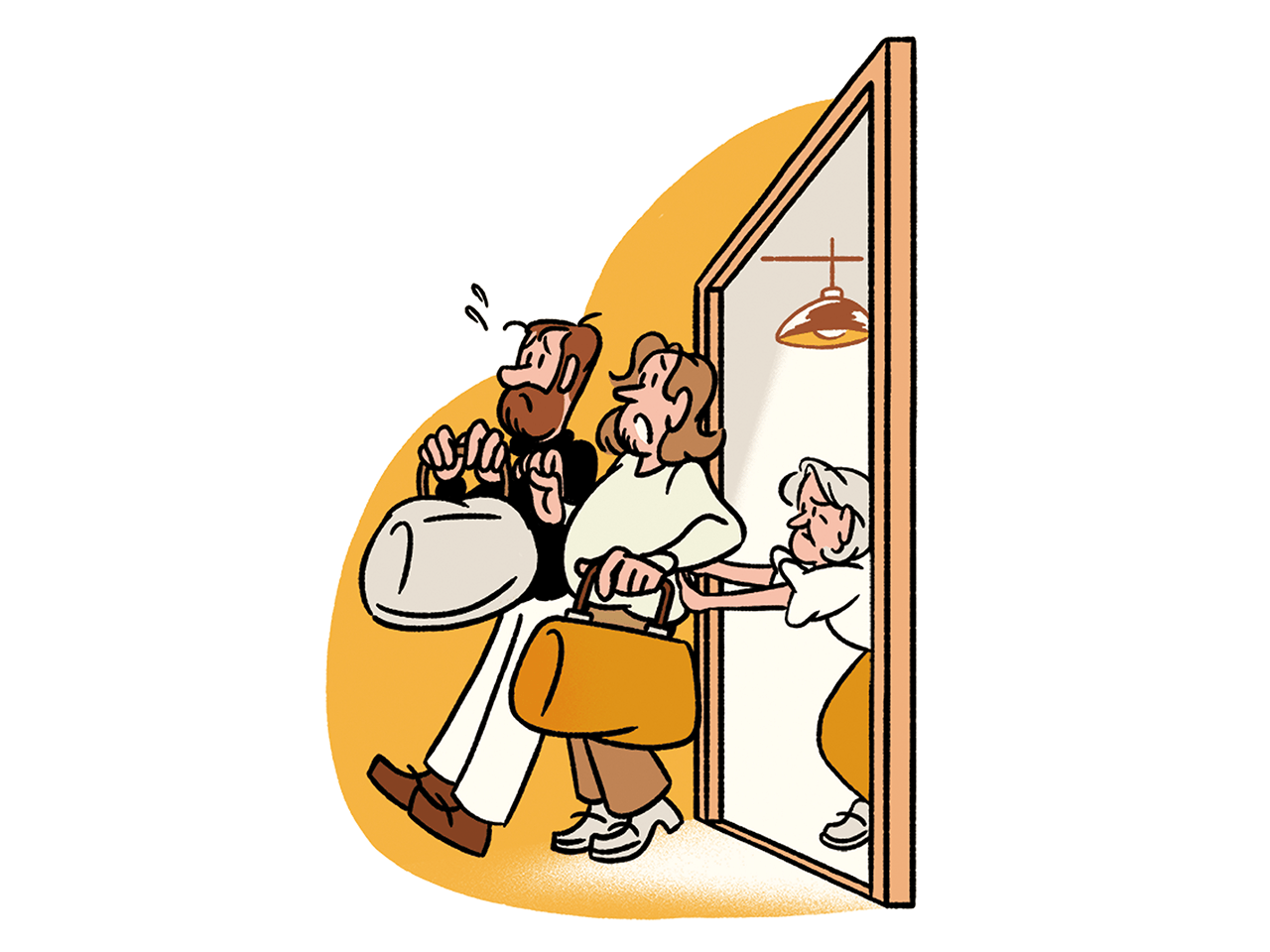
Italy has a reputation for being family-oriented, with many generations happily living together under one roof. But a 75-year-old mother from Pavia recently went before a judge to kick her children out of the nest. The woman took her sons, aged 42 and 40, to court to force them to move out, after they declined to leave. The judge ruled in her favour, issuing an eviction order.
The bamboccione (big baby) who refuses to become independent is a part of Italy’s perception of young people. In reality, a tough economy and an unsteady job market are keeping young Italians in their family home longer than they would like. A 2022 Eurostat study found that Italians move out on average at age 30, compared with 23 in France and 21 in Sweden.
Correspondent’s view: Washington Wheel of fortune

On a street outside the campus of the US National Institutes of Health, a centre of scientific and medical excellence on the outskirts of Washington, an advertising sign swaying in the wind offers tarot readings. Not far away, a thrift shop that has gone out of business has been replaced by a hastily put-together shop promising psychic consultations.
By my count, it’s the fourth such offering in a few blocks in my Washington neighbourhood. The renewed fascination for paranormal assistance is part of a wider trend that has been sweeping across the US of late. According to data from research group Ibis World, the psychic-services industry in the country was on course to reach record revenues of more than $2.3bn (€2.1bn) in 2023 – a significant increase from $1.9bn (€1.75bn) just a decade ago. Ibis World speculates that this is related to a shift away from organised religion towards New Age spirituality in some sections of US society (more than 25 per cent of adults in the country now claim to see themselves as spiritual, rather than religious in the traditional sense), as well as aggressive online marketing on social media.
Fears for the future also evidently loom large, particularly among younger generations. A recent study found that one in four millennials in the US turn to fortune tellers for financial advice, while economic and political uncertainty are pushing people towards unorthodox sources of solace. According to polling by Yougov, more than 20 per cent of Americans have consulted a medium, psychic or fortune-teller at some point in their lives.
Perhaps it’s unsurprising that so many are seeking guidance wherever they can. With political chaos, deep polarisation ahead of this year’s presidential elections and the potential return of Donald Trump, everybody wants to know what’s around the corner.
“It’s not at all clear what will happen,” says Michael Shermer, publisher of Skeptic magazine. “When there’s uncertainty and anxiety, and society is a little unstable, belief in conspiracy theories and the paranormal goes up.” Perhaps it’s only a matter of time before US politics-watchers swap their pollsters for palm readers.
Iowa emerges as America’s overlooked economic powerhouse with thriving tech and manufacturing sectors
Des Moines
Capital connections
Iowan connections will be on the up thanks to Des Moines International Airport’s new passenger terminal, for which work is set to begin in 2024.
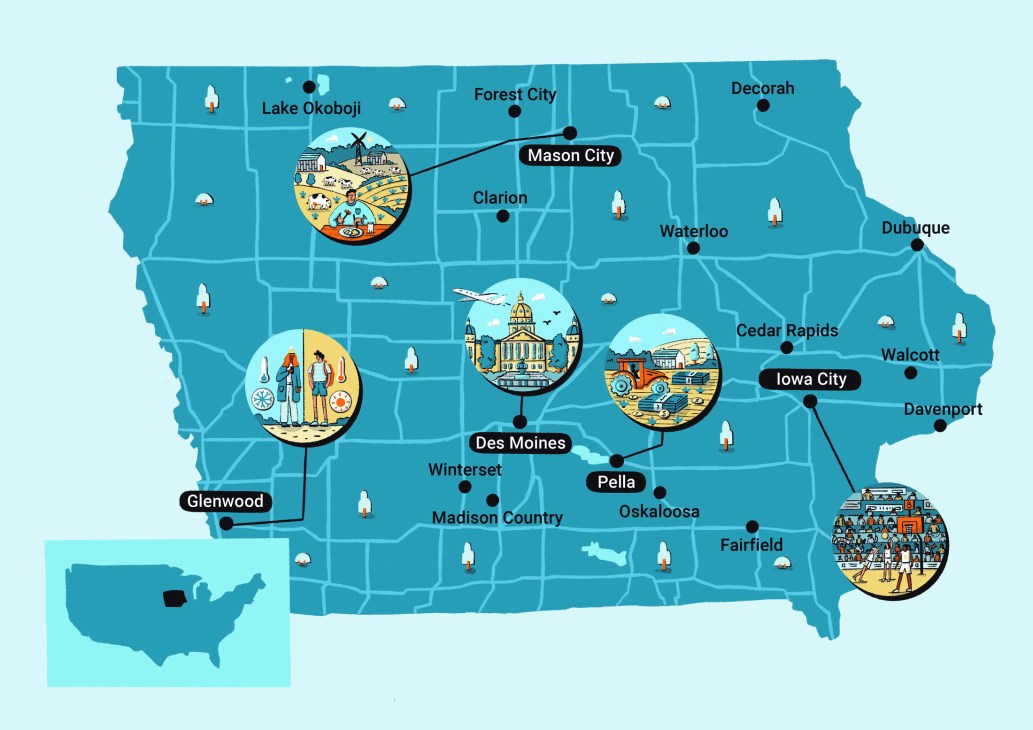
Pella
Economic variance
Advanced manufacturing, technology, insurance and financial services are developing across the state and in towns such as Pella, where the likes of tractor manufacturer Vermeer is based.
Mason City
Fine food
With 85 per cent of Iowa’s landscape dedicated to food production, produce always lands fresh on your plate in markets and restaurants. In Mason City, you can grab a bite at The Draftsman in the Frank Lloyd Wright-designed Historic Park Inn.
Glenwood
Four seasons
There’s always a seasonal showcase in Iowa. In Glenwood, there is an average high of 30C in July and a low of minus 1C in January.
Iowa City
Collegial atmosphere
Iowa’s big universities are closely linked to their communities. A record-breaking 55,646 people recently attended a University of Iowa women’s basketball game. The Division I sporting rivalry between the University of Iowa Hawkeyes and Iowa State University Cyclones has been dividing the state since 1894.
Shaping the state
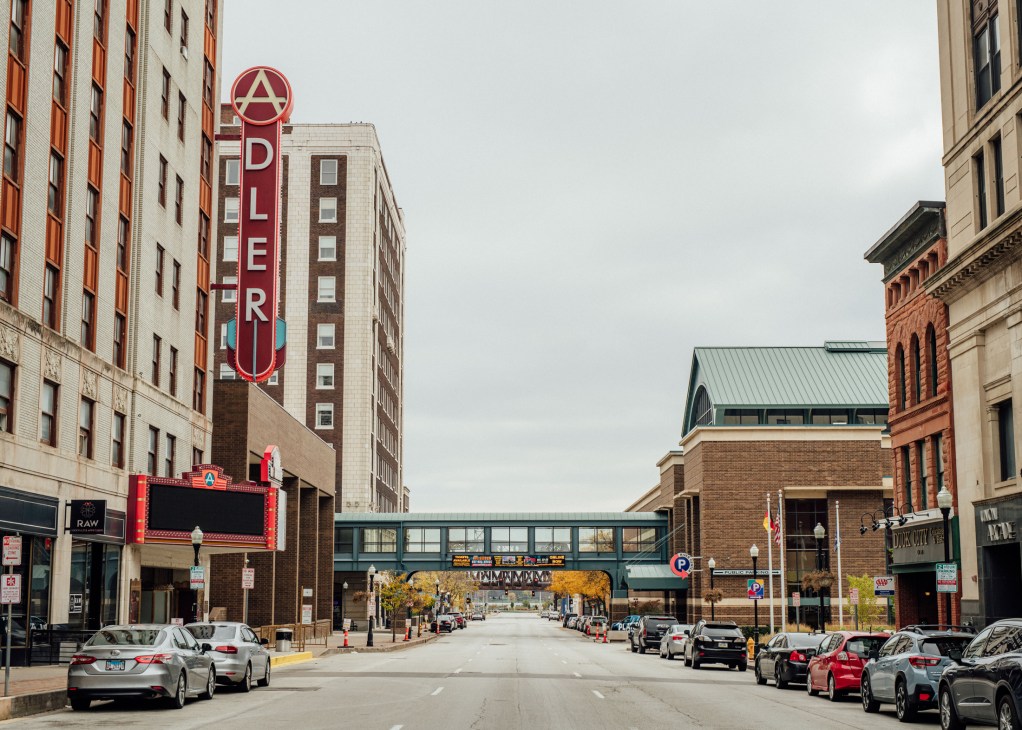
Welcome to Iowa
“Iowa nice” might be a local stereotype but, as states and nations battle to win talent, the state is leveraging its personable image to expand on established sectors in manufacturing, biotech, finance and more. This survey will explore case studies in downtown renewal and entrepreneurial smarts across Iowa, and look at the long history of private patronage that has built exceptional public art collections and feats of contemporary design. Being the very middle of the Midwest means that this bucolic state is often wrongfully overlooked but “flyover country” this is not.
Q&A
Debi Durham
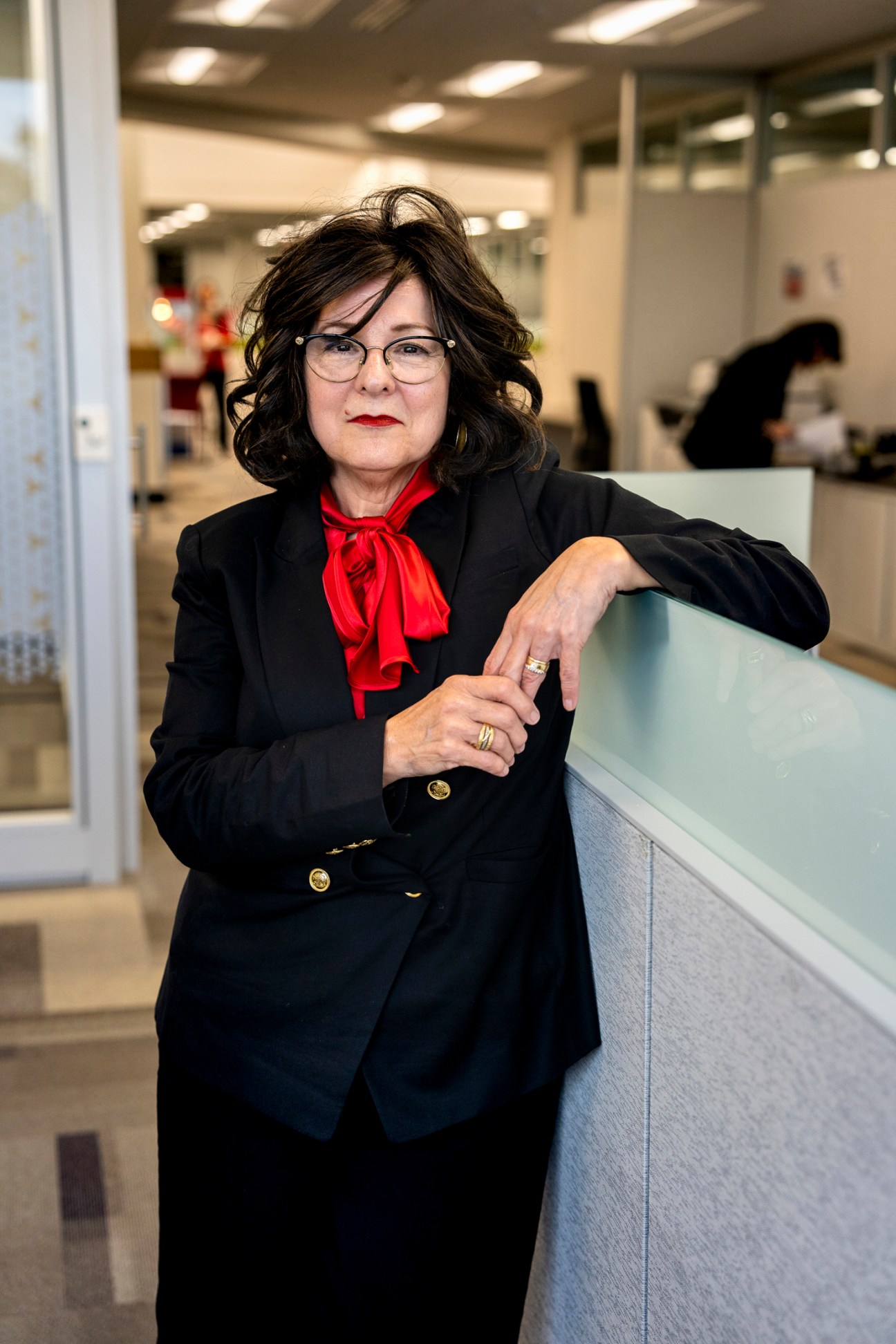
As director of the Iowa Economic Development Authority (IEDA), Durham is the first point of contact for any ambitious business wanting to make headway here.
There’s a perception that Iowa is rural and conservative. Is it correct?
This is a very rural state, no doubt about it. But if people come here, they will recognise how sophisticated Iowa is. We have a long history of embracing different cultures. Look at the caucuses: political candidates come to Iowa and want to be vetted by us because we keep it real. We do a great service to the nation because we can still have tough conversations.
Where are the opportunities in Iowa?
There’s a lot of entrepreneurial thinking, particularly in terms of research and development. In manufacturing, it’s about automation and digitalisation; in biosciences, it is firms pushing the envelope to what’s next, and in finance and insurance, which are mature markets here, firms are seeing innovation and acceleration as the way to grow.
What business incentives are there?
The governor has been very bullish about making us more competitive. We have a strategy that, by 2026, we’ll get down to a flat 5.5 per cent corporate income tax rate on sales within the state. For corporations that make all their sales outside Iowa, they will pay zero corporate income tax.
Transforming fortunes
Downtown revivals
Across Iowa, a broad reassessment is underway of how its urban centres reflect the kind of quality of life that has been long-enjoyed by residents in its famed rural and agricultural landscapes. From reviving riverbanks to launching cultural venues, here is how three of Iowa’s downtowns are reviving themselves.
Capitol Theatre, Davenport

Davenport’s beloved Capitol Theatre reopened this summer. Built in 1920 but left derelict more than a decade ago, it is reviving the city’s cherished pedigree as a live music hub. It will have a cinematic companion in late 2023 with the opening of The Last Picture House, a cinema and bar. The new venue is co-owned by Hollywood writer-producers Scott Beck and Bryan Woods; the latter was born in Davenport and both were raised nearby.

EMC Downtown Park, Des Moines
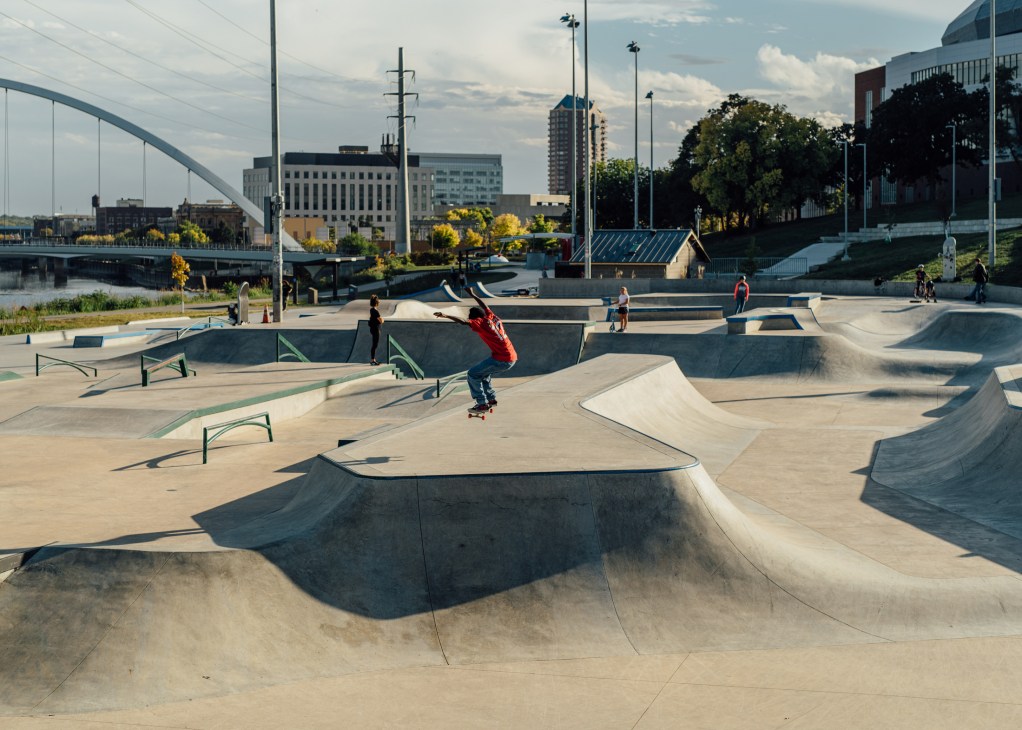
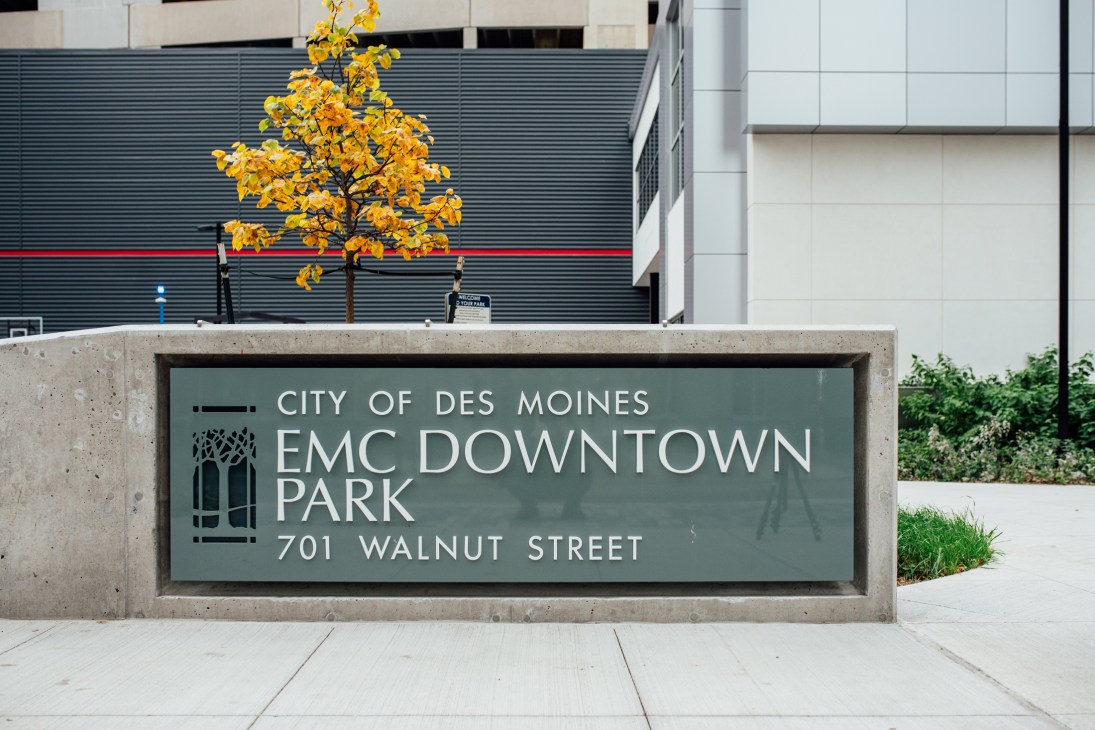
Iowa’s ties to the Olympics run deep as 20 Olympians hail from the state. But a site next to the Principal Riverwalk in downtown Des Moines is now a qualifying ground for one Olympic sport in particular: skateboarding. Opened in 2021, Lauridsen Skatepark is the largest in the US; it’s currently being certified to allow the staging of national events. For those without Olympic ambitions, head to EMC Downtown Park: the city’s first pocket park. Built on the site of a former department store that burned down a decade ago, it opened in 2023 to cater to downtown’s growing population.
Millwork District, Dubuque
Dubuque’s former industrial hub has, since 2009, been undergoing a transformation. Plans were drawn up to preserve its heritage and create a mixed-use neighbourhood that would support the city’s growing economy. The revitalisation efforts included infrastructure investments that turned the old warehouses into lively spaces that attract shops, restaurants and offices. One local highlight is Brazen Open Kitchen, where founder and head chef Kevin Scharpf has forged relationships with farmers across the state.
Home of entrepreneurs
Full of beans
Blk & Bold
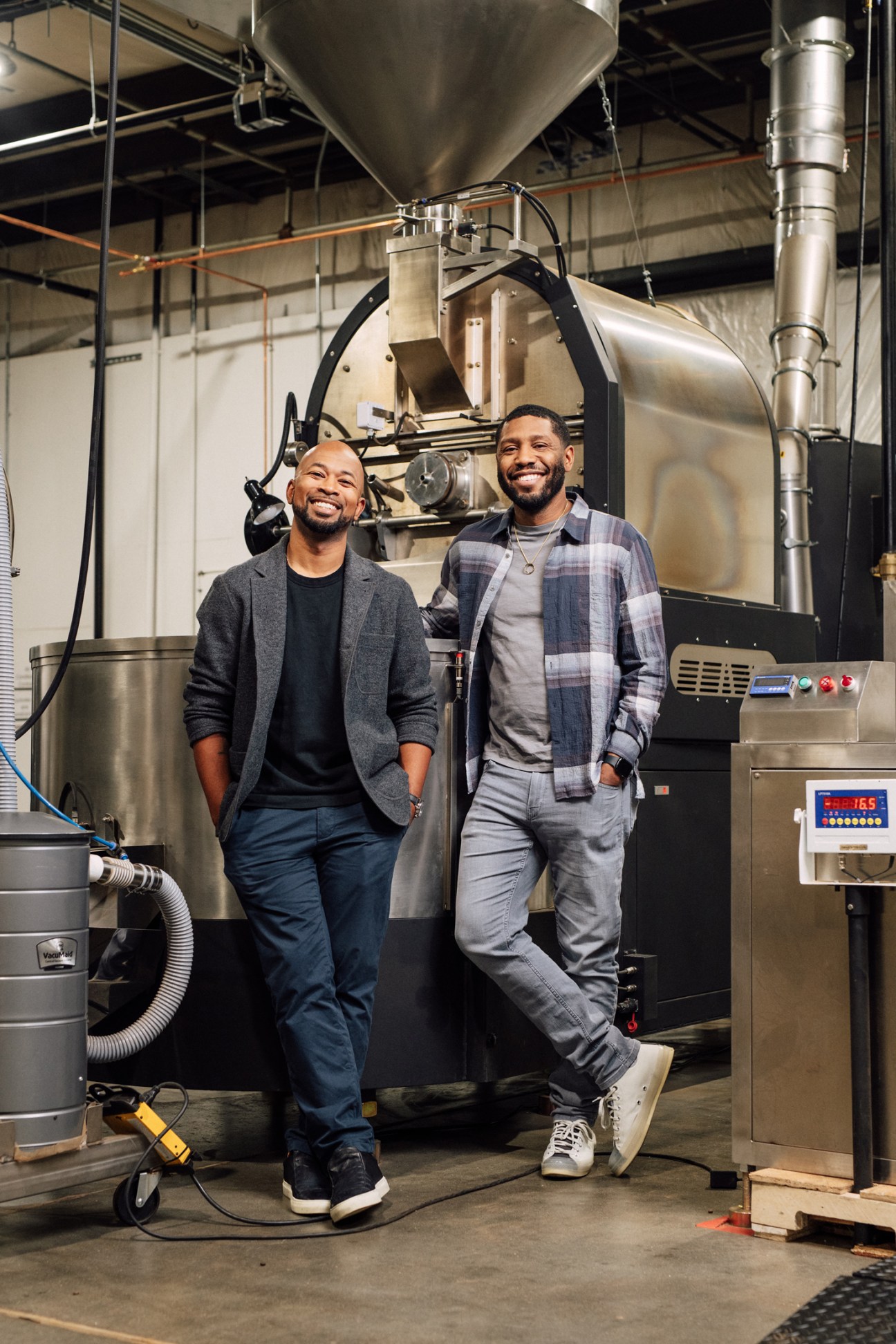
Pernell Cezar speaks with the passion and the pace of an entrepreneur whose brand is going places – but that might also be all the coffee he drinks. He founded roastery Blk & Bold in 2018 with his business partner, Rod Johnson. Friends since childhood, the pair met in the hardscrabble suburbs of Gary, Indiana, and reconvened in Iowa to fulfil their vision of a premium roasted coffee brand aimed at a mainstream market.
“We want to do artisanal but at scale,” says Cezar, who explains that, while the likes of Starbucks have cornered the mainstream retail market, smaller third-wave coffee shops produce only in small batches and at a high price. “I wanted an option that you could buy at Target and actually enjoy the experience.” Blk & Bold is sold in 11,000 locations across the US, from grocers to university cafés, with their largest market being Los Angeles. This is reflected in the fact that the roastery has been named the fastest growing company in Iowa for the past three years. “We give five per cent of our proceeds to 14 organisations that we support, which teach urban farming, refurbishing technology and appreciation for the outdoors,” says Johnson.
The pair have settled in Iowa thanks to the lifestyle and ease of doing business but they’ve not forgotten where they came from. Cezar hints at opening Blk & Bold cafés, including one in Gary. “Coffee shops done well can be the heartbeat of a community,” he says.
blkandbold.com
Expansive state
Engineering in Iowa
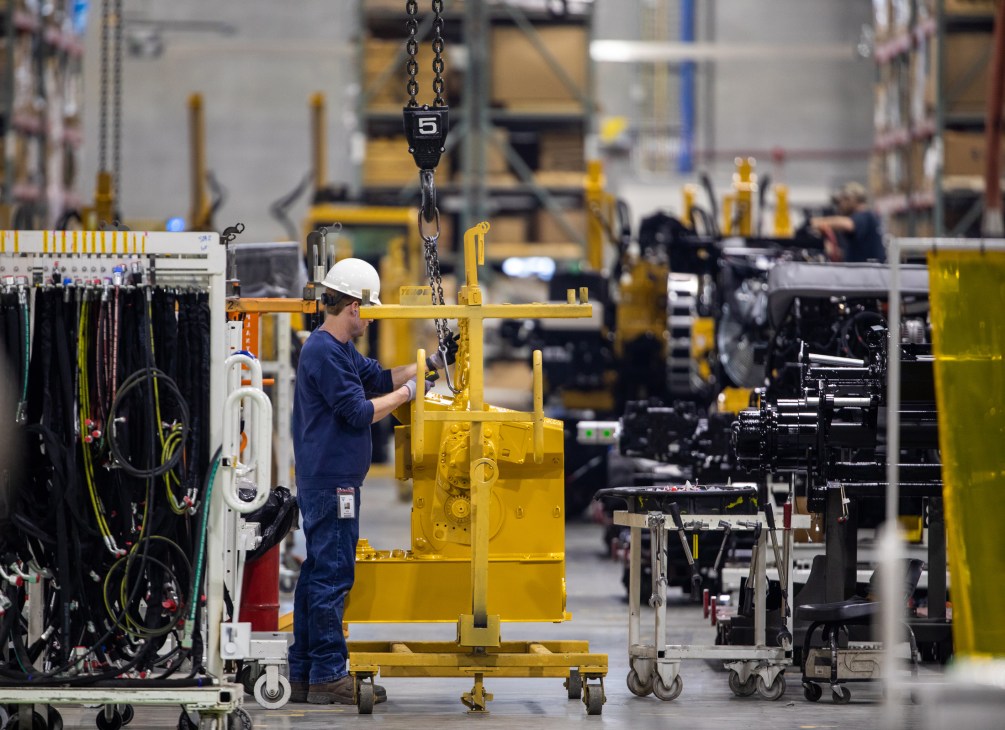
There are more than 3,000 workers at Vermeer’s 1.6km-long stretch of factories and offices in Pella and the family-owned business is as Iowan as it gets. Starting out as a tractor repair shop, its signature yellow agriculture machinery has kept the state’s corn farmers moving since 1948. Vermeer is a global operation, with a presence on six continents, yet in Pella it remains a very labour-intensive operation as skilled engineers turn raw steel into machinery.
Vermeer’s third-generation CEO, Jason Andringa, is bullish about the future of making in Iowa. “Our best days are in front of us,” he says. “Although the origins of the business are on my grandparents’ farm, more than 80 per cent of our business today is in infrastructure.” Vermeer is increasingly building machines that incorporate automation and AI, even if many factory processes remain hands-on.

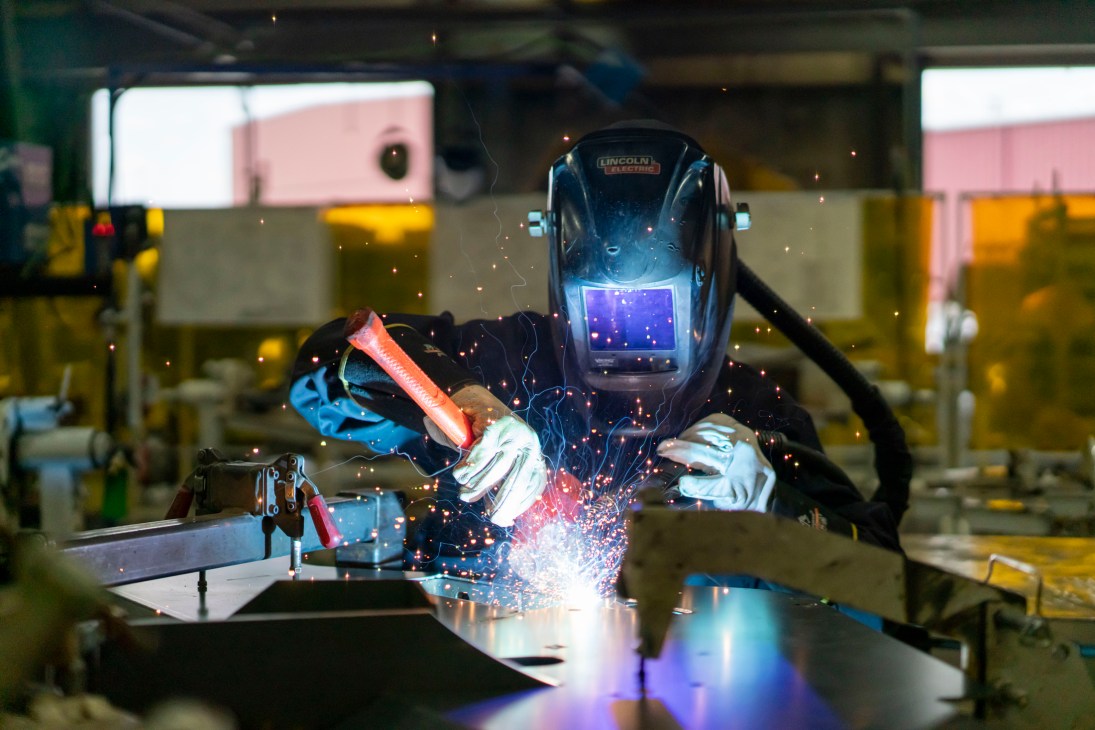
In Des Moines, a lean operation is making similar leaps in additive manufacturing, a form of 3D printing; Collins Aerospace, a global subsidiary of defence giant RTX, has completed a $14m (€13.1m) expansion of its facility. Its growing team is turning out complex engine parts for civilian and military aircraft. “For Collins, it can offer a major reduction in lead time,” says site lead Renee Begley. “If we want a part, we can just print it.”
vermeer.com
collinsaerospace.com
Plugged in
Tech companies
Iowa is the birthplace of the world’s first electronic digital computer, completed in 1942. Today the state’s tech boom continues thanks to a skilled workforce, generous tax incentives, high-speed fibre broadband and strong infrastructure. Here are three top companies helping to establish Iowa as the “Silicon Valley of the Midwest”.
OpenLoop
This pioneering telehealth start-up is revolutionising access to healthcare in the US, by connecting patients with a nationwide network of providers offering quality, virtual services. Founded in 2020 and headquartered in downtown Des Moines, the company is planning significant expansion in the next three years, seeking to add more than 400 new jobs.
openloophealth.com
VizyPay
This Waukee-based fintech company processes entrepreneurial-driven payments to support small enterprises across rural America. VizyPay’s specialised services address the unique challenges faced by these businesses – and it’s seeing impressive expansion. In 2023, it was ranked 1,841 on a list of the fastest-growing private companies in the US.
vizypay.com
PowerPollen
Headquartered in Ankeny with research operations in Puerto Rico and Texas, PowerPollen is revolutionising corn production with the first scalable pollination technology for commodity crops. By redistributing pollen effectively, the patented tech empowers farmers, enhances agricultural sustainability and solidifies Iowa’s status as a corn-production leader.
powerpollen.com
Home on the farm
Grand View Beef
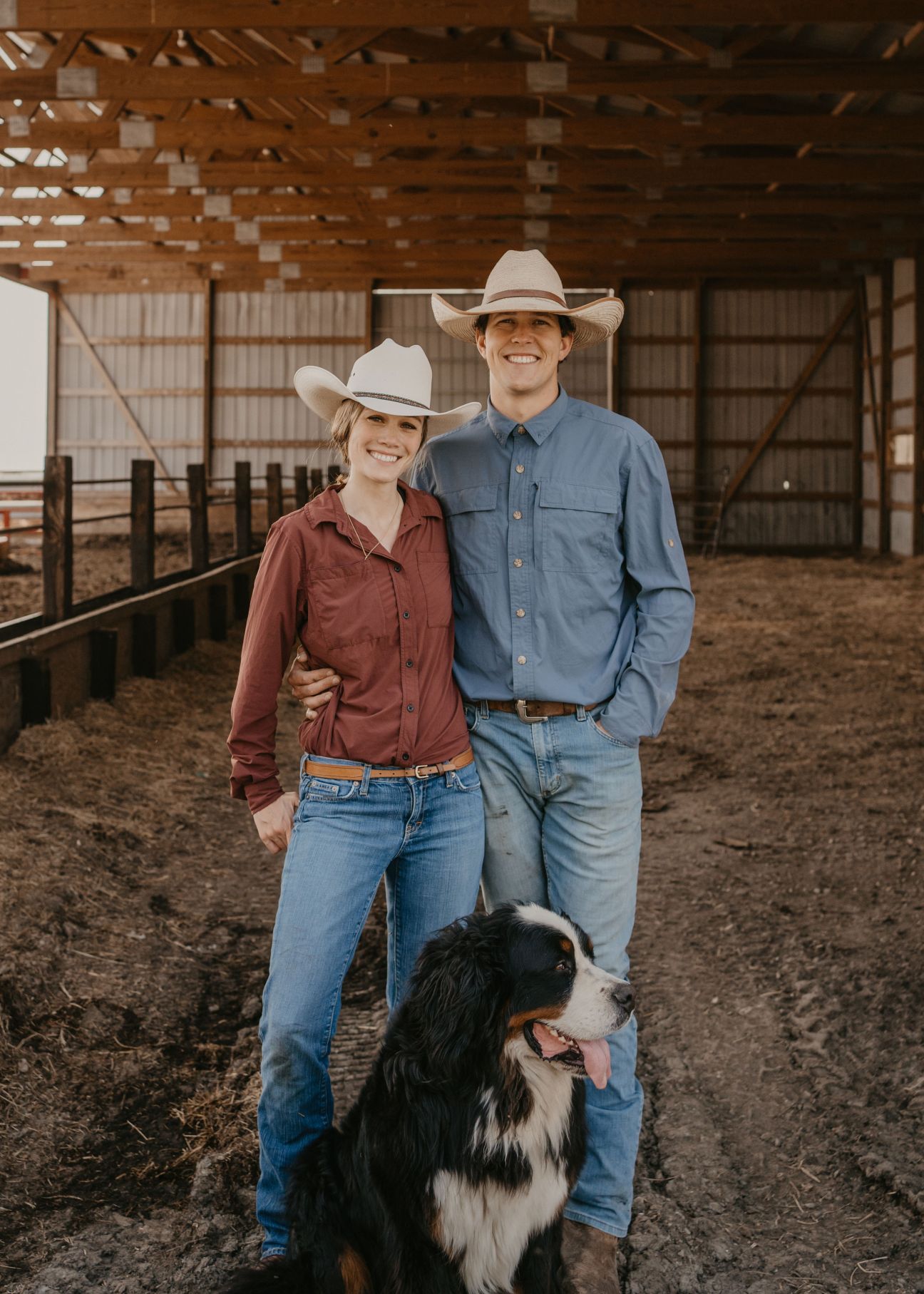
It’s not uncommon for small towns to lose young talent to huge metropolises. But a reverse of this traditional journey has taken place in Clarion, Iowa (population: 2,700). Here, Washington-native Amanda Severson runs Grand View Beef with her husband, Knute.
The couple met in Seattle, where they were both working for the city’s NFL football team, the Seahawks. Love and business pulled them back to Knute’s hometown of Clarion, where, despite no agricultural experience, Amanda has helped grow the brand into one of the Midwest’s finest suppliers of 100 per cent grass-fed beef.
Using Horned Hereford cattle stock purchased from Knute’s family farm, the duo has grown their business with the support of local banks, USDA programmes and NRCS conservational incentives. “One of the reasons I love running our business here is the relationship that we have with our banker and other local businesspeople,” says Amanda. “I feel like the local community, and the state as a whole, really wants to see other Iowans succeed.”
grandviewbeef.com
Driving ambition
Winnebago

Few vehicles are as synonymous with road trips as the Winnebago – and these road-ready RVs have emerged from a factory in Forest City since 1958. A prototype all-electric RV was revealed in 2023, which comes in the wake of a skew towards younger buyers getting behind the wheel.
winnebago.com
Cereal numbers
Quaker Oats
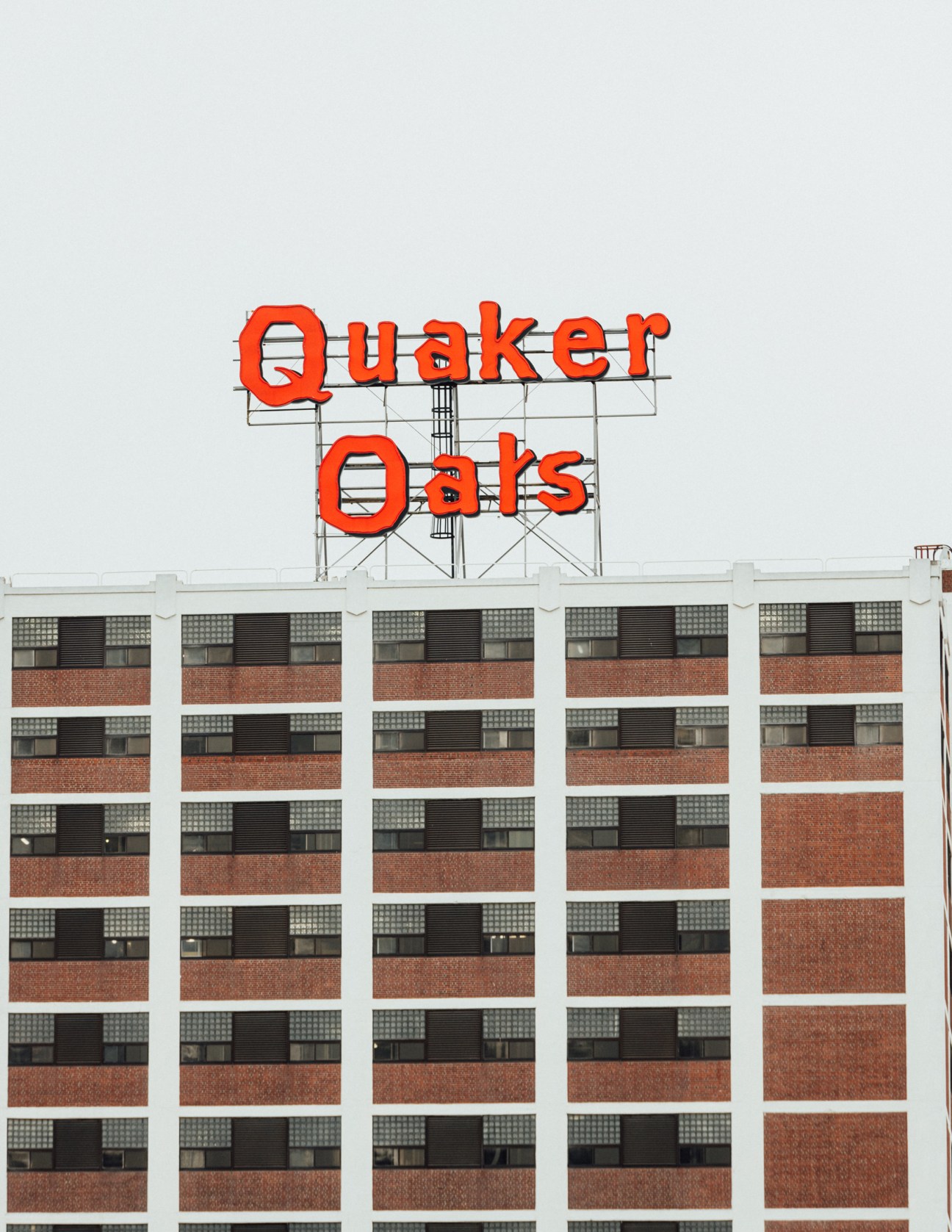
The Quaker Oats Company began in 1901, after four oat mills formed a brand with national reach. That merger included a cereal mill in Cedar Rapids; now known as the Quaker Oats plant, it has become the Iowan city’s most recognisable landmark. Sitting on a bank of the Cedar River, it is the world’s largest cereal mill – its alabaster silos are a source of local pride and a symbol of industrial heritage. The facility processes more than 900,000kg of oats daily in Iowa’s second-most populous city, producing an array of oatmeal, grits, snacks and cold cereals. It’s also equipped with an industry-leading proprietary process for making gluten-free options of the grain.
The Quaker plant serves as a cornerstone of the local community, aligning itself with the city’s identity – and its economic vitality, as one of the area’s big employers, with more than 1,000 workers. It’s a reputation that PepsiCo tapped into when it acquired the company in 2001.
The facility plays a key role in sustaining Cedar Rapids’ key contribution to North America’s food production, thanks also to the fact that more than 40 per cent of the continent’s bread is produced with yeast from the city.
quakeroats.com
Essential reading
Significant authors
Writers’ Workshop
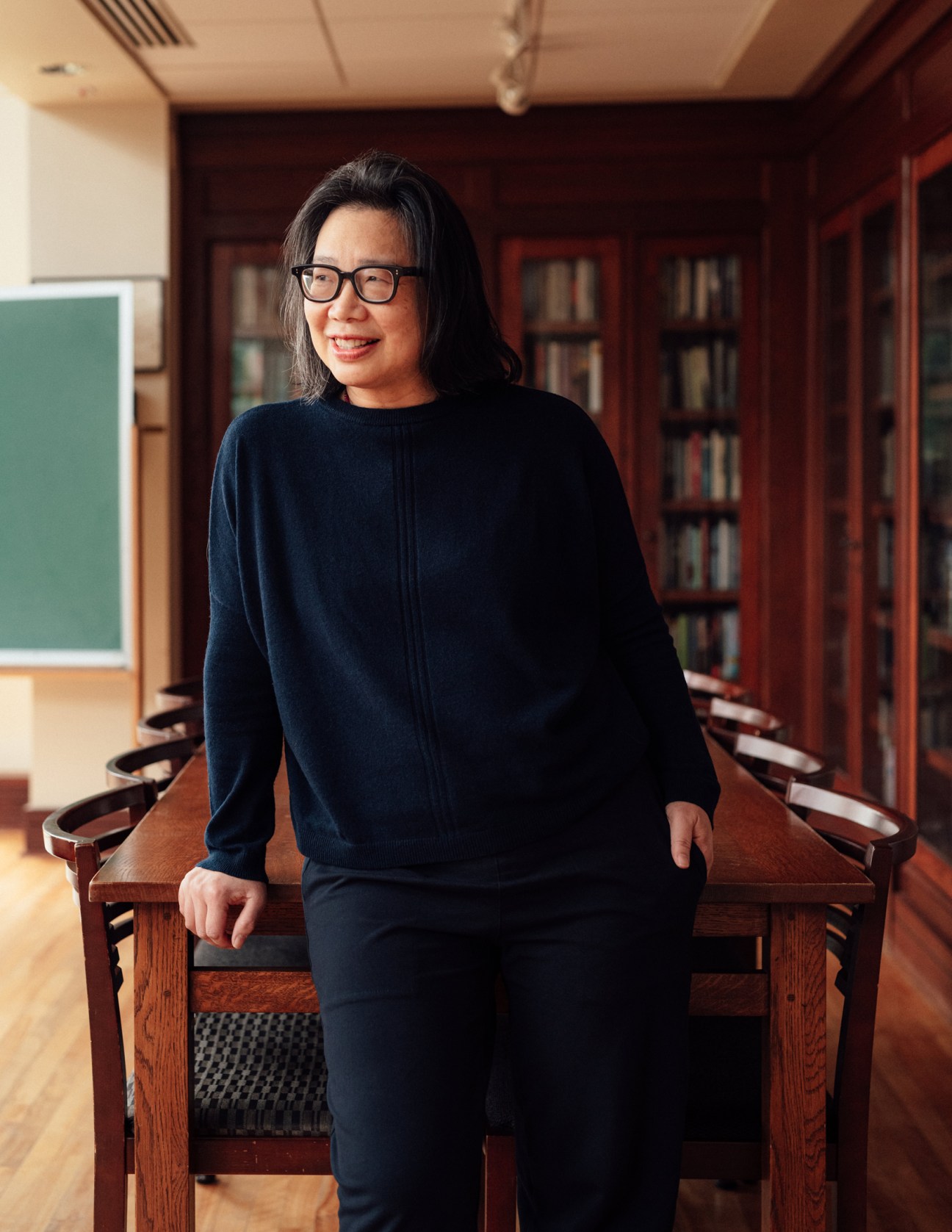
As the oldest creative writing degree programme in the US, the Writers’ Workshop at the University of Iowa is so synonymous with the history of great American literature that people often forget that it is not a national institution. John Cheever and Philip Roth were among its past faculty, while alumni regularly bag Pulitzers or become poet laureates. “On this year’s longlist for the National Book Award, there were 10 books and five of them were by Iowa alums,” says Lan Samantha Chang, director of the programme and author of multiple prize-winning books, including a short story collection, Hunger, which she wrote in part while studying at the Writers’ Workshop. “When I first came here, I felt immediately as if I were in a part of the country where there were fewer distractions and a very strong literary culture. Iowa City is a city of readers and writers.”
Indeed, the university has just added a new campus building dedicated to nonfiction writing and is trying to elevate other forms to the prestige enjoyed by Writers’ Workshop. The programme has remained relevant and highly regarded because it is primarily about honing the craft. “Our programme values the act of writing and tries to make that central to the experience,” says Chang.
writersworkshop.uiowa.edu
Fine print
Iowa newspapers
Iowa is a hotbed of news media. Here are three top outlets worth reading.
Iowa Capital Dispatch
Launched in 2020, this is one of Iowa’s newer outlets. It is part of States Newsroom, a national not-for-profit network that funds journalism in the state capitals.
The Cedar Rapids Gazette
Iowa’s last independently-owned daily is an important mainstay with 32,000 print readers. It was first published as an evening journal in 1883.
Quad-City Times
Owned by Davenport-based Lee Enterprises, this daily broadsheet was founded in 1855. It circulates throughout its namesake Quad Cities region on either side of the Iowa-Illinois border.
Free sheets to the wind
‘Little Village’
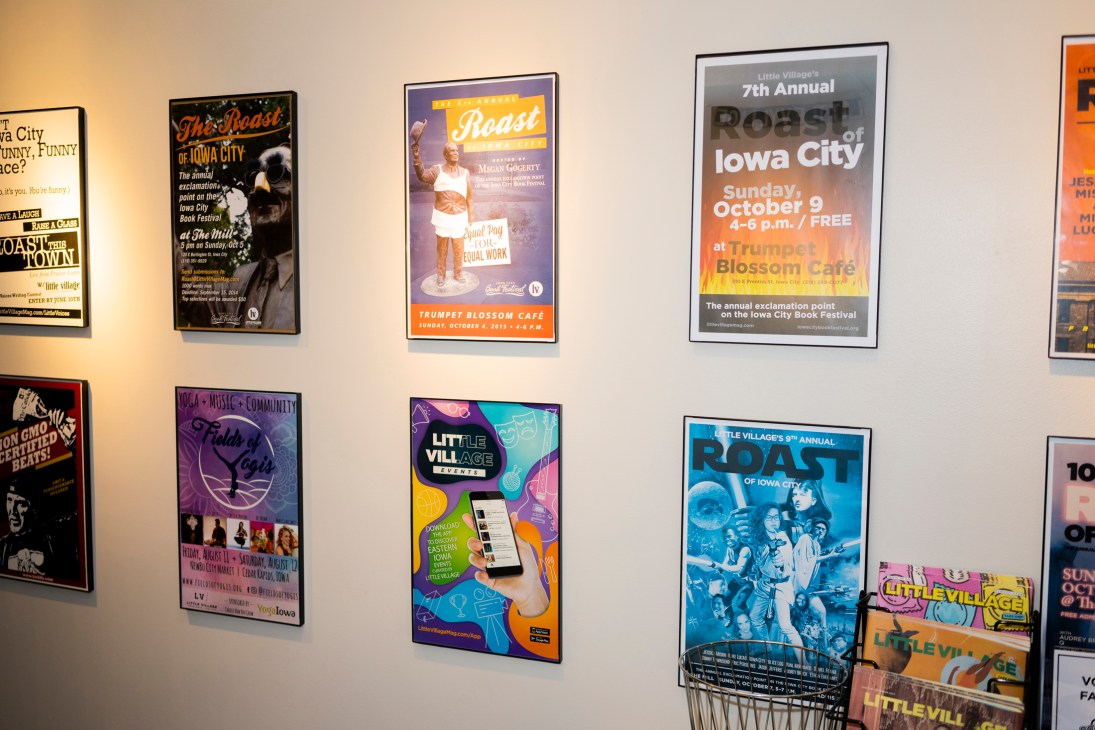
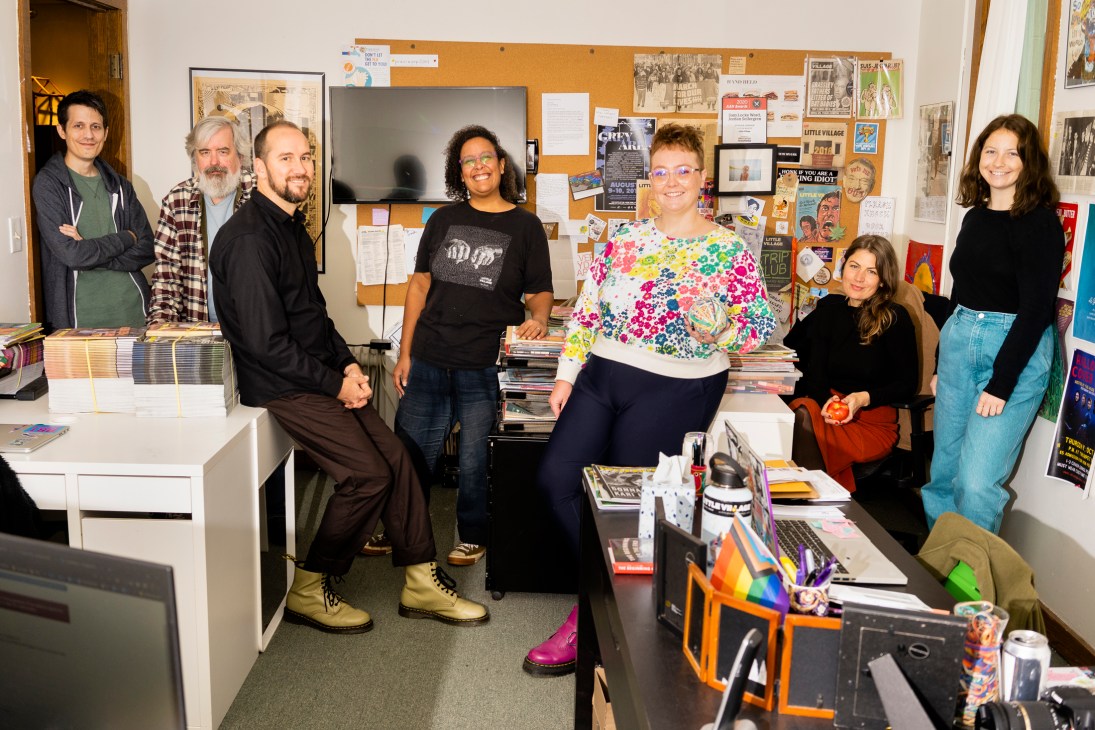
A short walk from Iowa City’s downtown is the office of Little Village. The free print monthly has covered music, culture, news and politics in Iowa since 2001, garnering a loyal readership. “Our emphasis on speaking to, and trying to engage with, the whole community has really paid off,” says president Matthew Steele. The newspaper’s broad base of readers and advertisers, he adds, has buffered Little Village from the flux experienced by print publications elsewhere. “Although we’re a free newspaper, our readers are willing to chip in, through paid subscriptions, so that we don’t require a paywall.”
Design
State of the arts
Higher purpose
University of Iowa
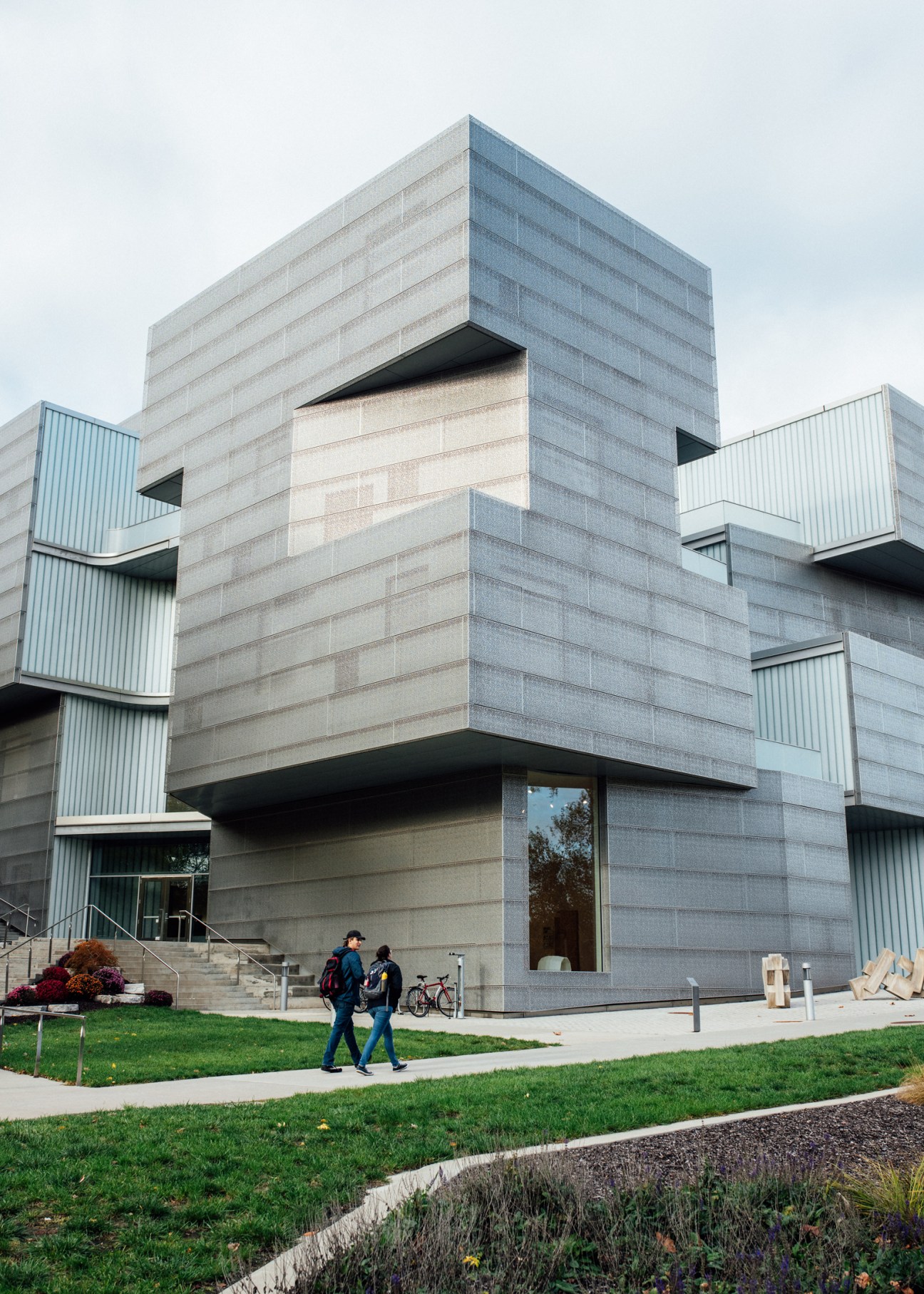
The University of Iowa’s leafy, picturesque campus, which seeps into Iowa City’s bustling downtown, is not only one of the state’s most storied seats of learning but renowned as an architectural hub too. Its department buildings include Max Abramovitz’s original Stanley Museum of Art, built in 1969 after his work on New York’s Avery Fisher Hall and United Nations complex. There’s also Frank Gehry’s laboratories for the advanced technologies department, built in 1992. Newer highlights include Hancher Auditorium by Pelli Clarke Pelli Architects, Steven Holl’s striking Visual Arts Building and Art Building West, and the Voxman Music Building by LMN Architects.
The university has erected buildings that are meant to mirror and invoke the loftier aspirations of the students who use them. “The university felt the need to express its deep level of creativity in the architecture,” says university architect and senior vice-president of finance and operations, Rod Lehnertz. He has continued the shift from the beaux-arts designs, inspired by the 1893 World’s Columbian Exposition in Chicago, that defined Iowa’s original campus buildings. “They encouraged us to bring internationally renowned architects to do internationally recognised architecture here,” he adds.
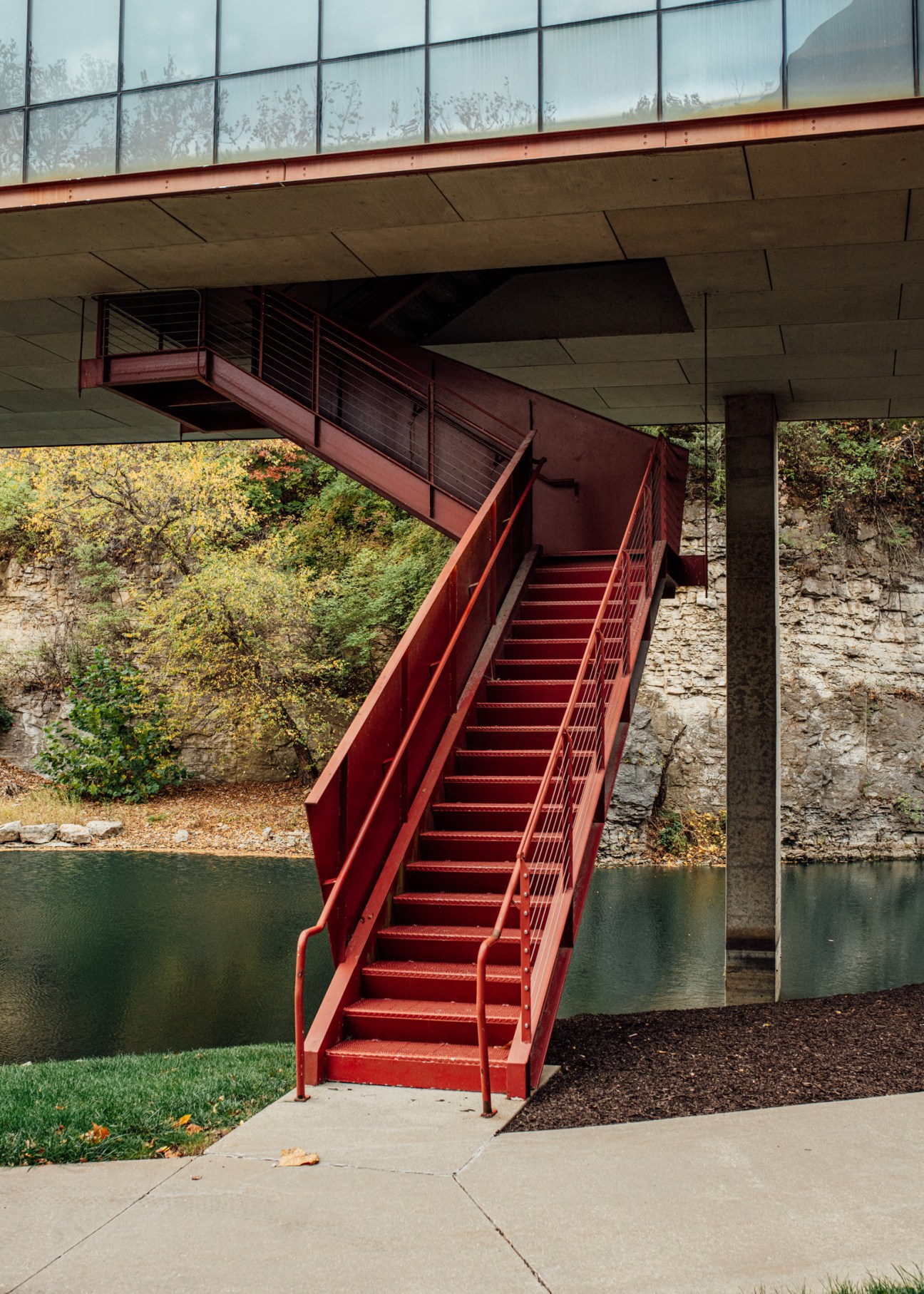
Class on glass
Grant Wood
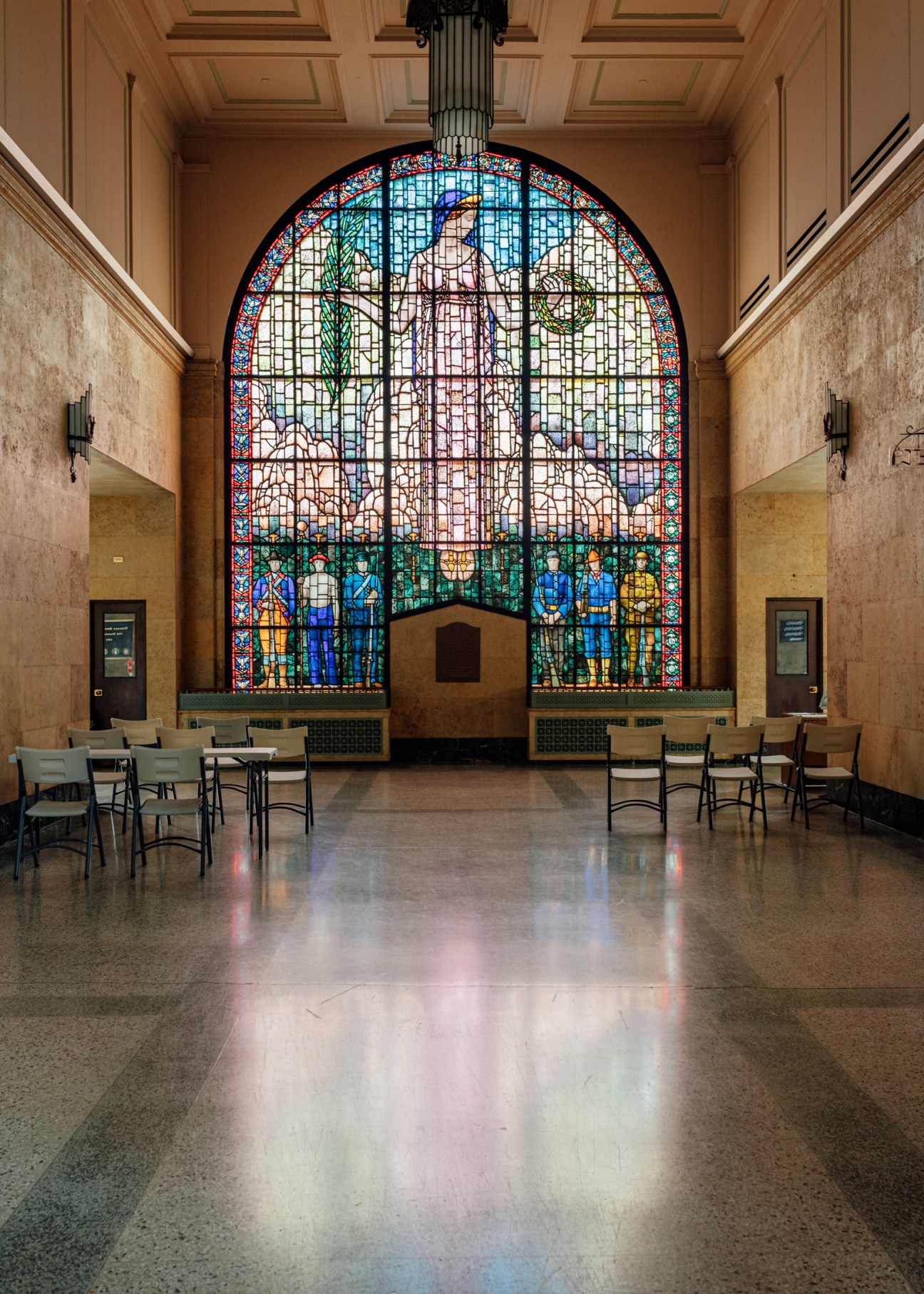
The Veterans Memorial Building, which opened in 1927, remains one of the most recognisable landmarks in Cedar Rapids. Unusually it is a working building rather than a static monument. Its beaux-arts design serves both military veterans and the city: a vast coliseum sits below a ballroom flanked by a city hall and chamber of commerce. The most impressive component is artist Grant Wood’s stained-glass Memorial Window, the creation of which is said to have inspired his most famous painting, “American Gothic”.
cedar-rapids.org
Food and retail
Taste the difference
Shopper’s paradise
Eden
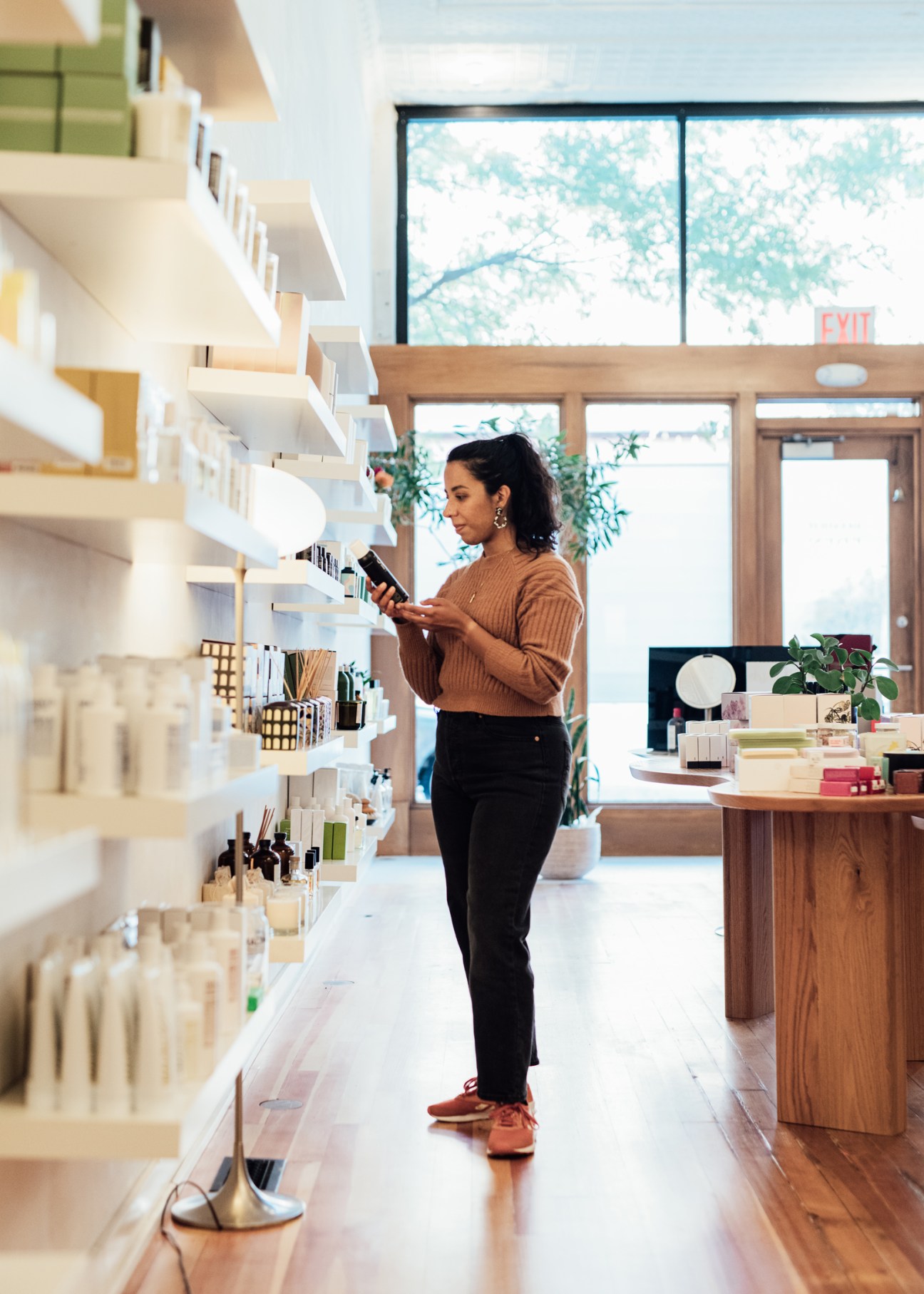
The success of the Des Moines-based beauty and lifestyle shop Eden points to a largely untapped local purchasing power. Owner Hannah Krause has found a loyal customer base for her East Village shop. “The store is a place where people come to feel taken care of,” says Krause, a former journalist who took over the business from its late founder in 2020. “You get to the heart of a culture of a city by owning a small business. People here will jump through hoops to buy from us.”
edeniowa.com
Historic East Village is Des Moines’ independent retail district. Here is our pick of the area’s shops.
Fontenelle Supply Co
Leather goods and outdoor gear. Profits from select items go to support the local countryside.
fontenellesupplyco.com
Indie House
One-off furniture and homeware shop that has grown out of an interior design business.
indiehousedesign.com
Storyhouse Bookpub
Literary hangout with a handpicked selection of books, plus events and readings.
storyhousebookpub.com
Shop around
Three retailers we like
An unexpected retail renaissance is unfolding in Iowa as a growing number of high-end boutiques and speciality shops establish a firm foothold in the state’s vibrant towns and cities. From fine furniture to artisanal foods, merchants are catering to a discerning clientele who appreciate quality and craftsmanship.
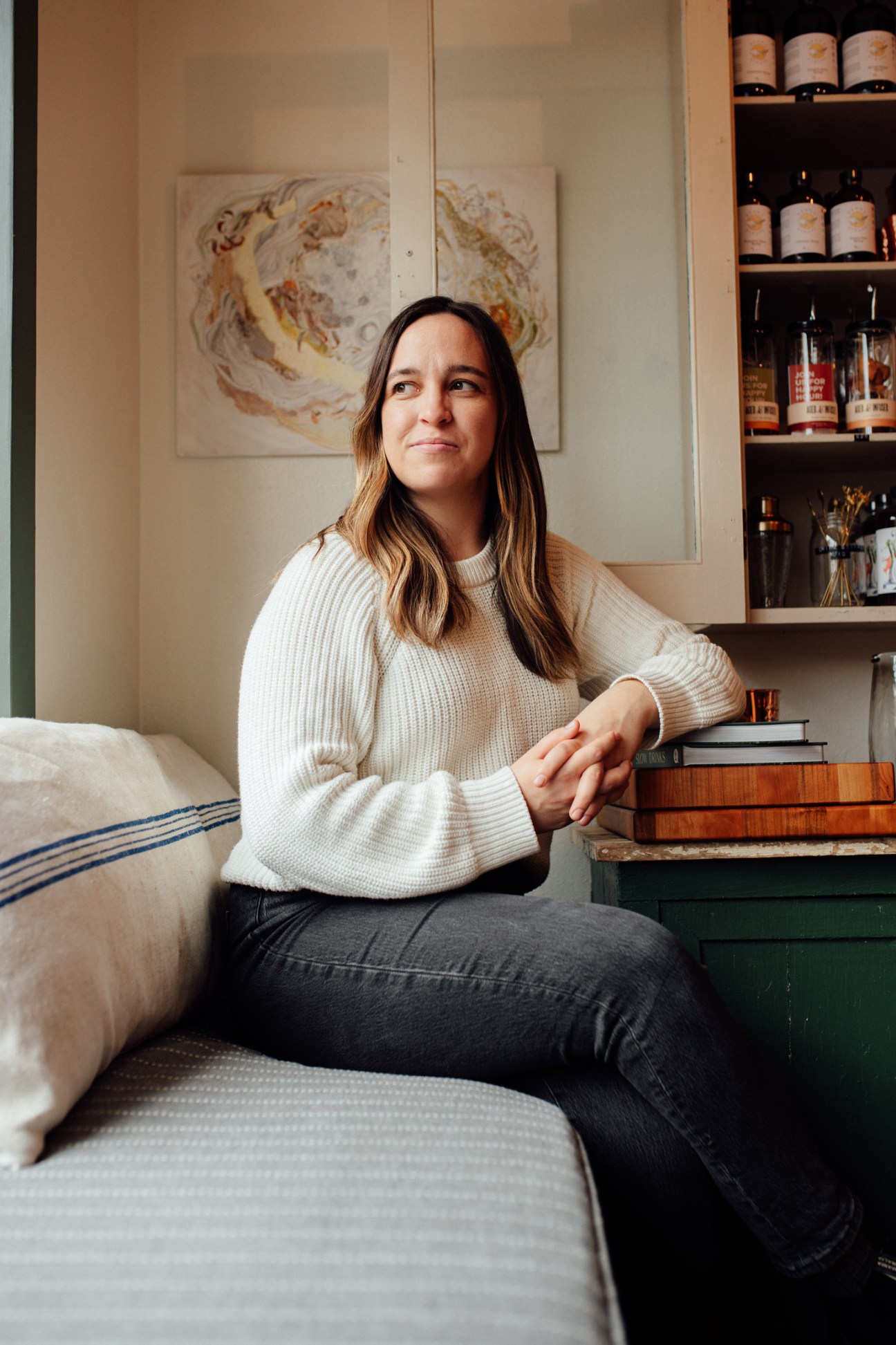
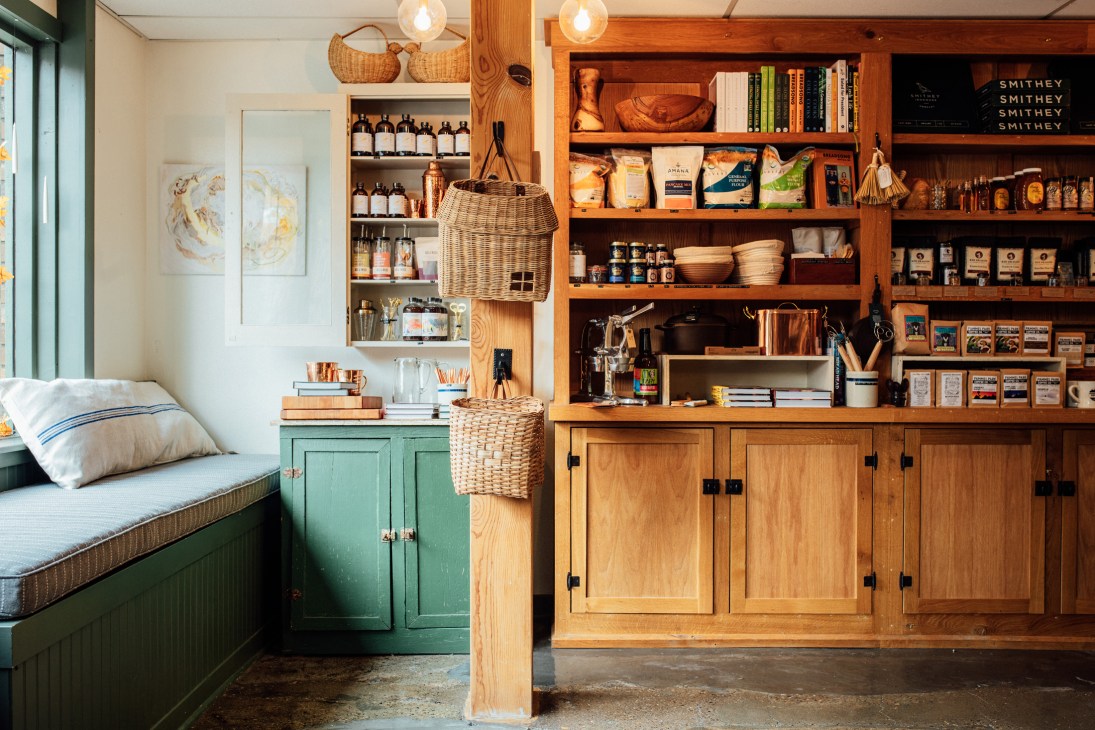
Des Moines Mercantile
Mallory Richardson’s general store opened in 2020 in the up-and-coming Highland Park neighbourhood as a tribute to the tiny but artful homeware and gourmet food brands scattered across Iowa. “About 80 per cent of our products are made in the state,” says Richardson. These include the famed wool blankets of the Amana Colonies and balms made by the Locust Grove Farm Co.
desmoinesmercantile.com
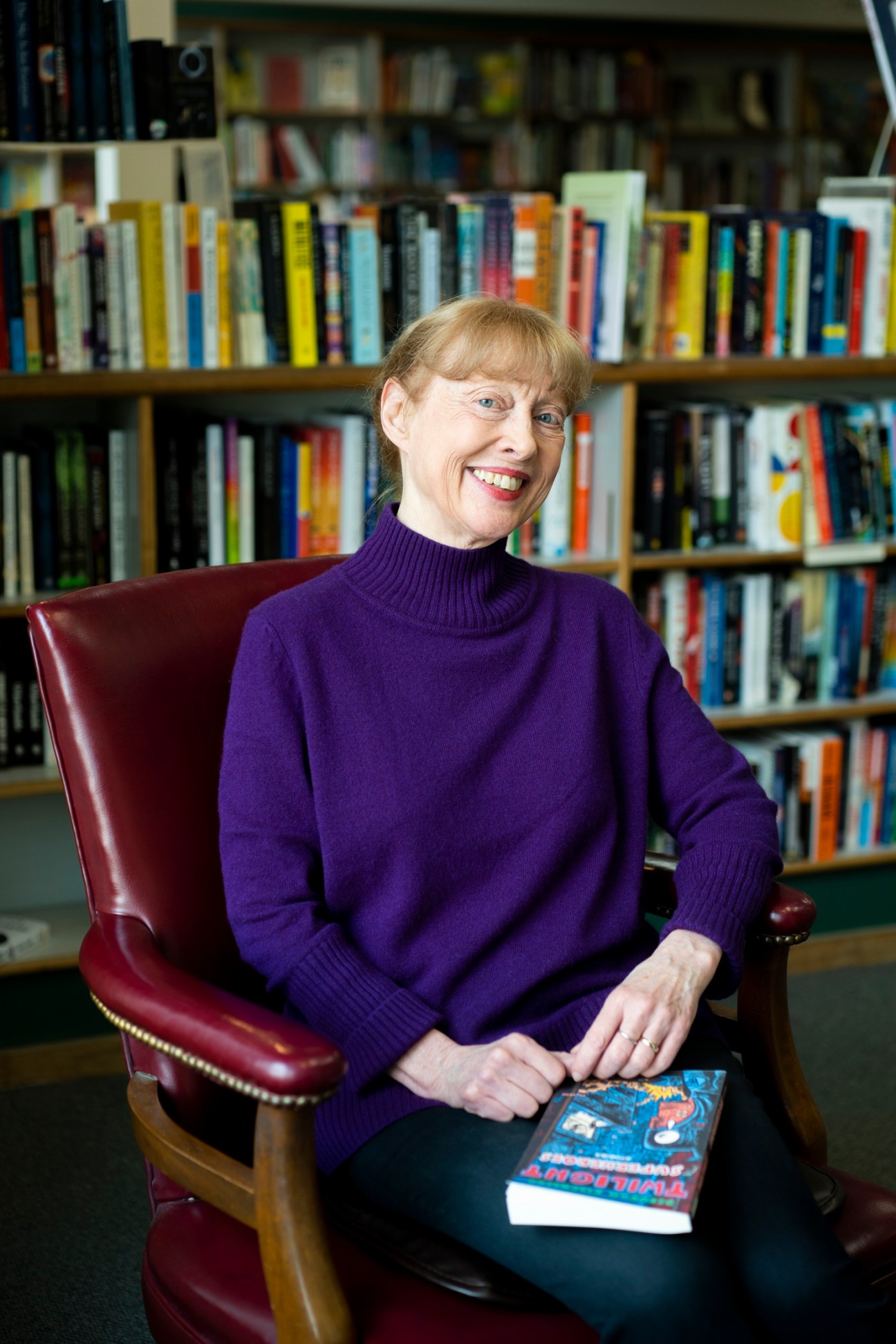
Prairie Lights
Giving an in-person reading at Prairie Lights has been a rite of passage for US and international authors almost since Iowa’s best-known independent bookshop first opened in 1978. Barack Obama, John Irving and Alice Munro have all crossed its storied threshold over the years and literary events still take place almost every day of the week.
prairielights.com
The Cheese Shop
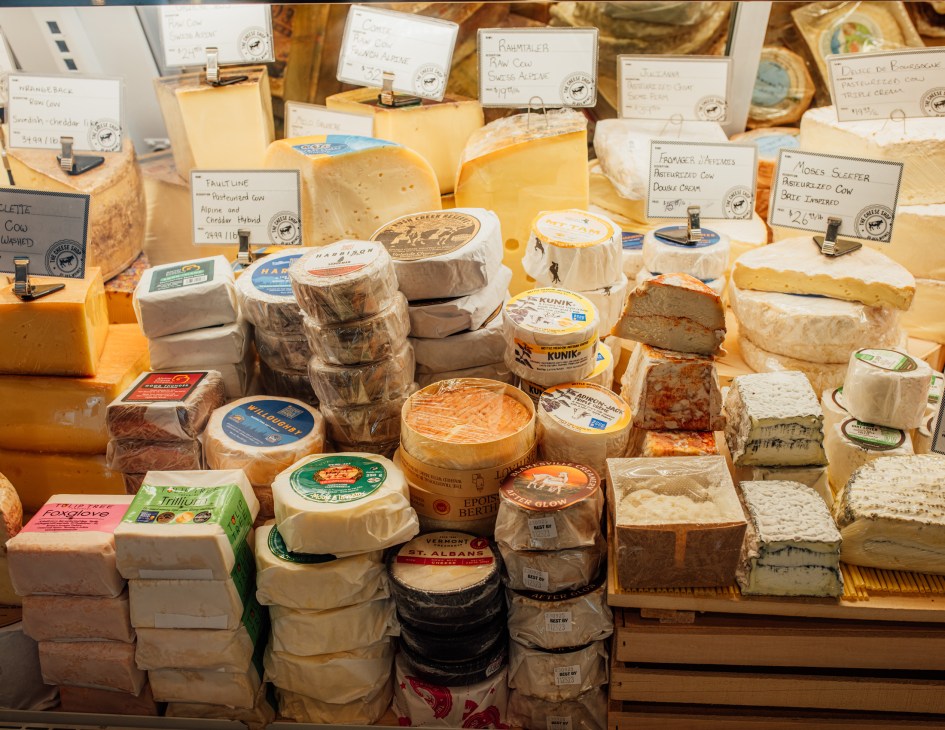
Located in the leafy Roosevelt district, The Cheese Shop is one of Des Moines’ top independent food retailers. “We’re a shop built on relationships,” says long-serving manager Darren Vanden Berge. Founded in 2011, the shop stocks alcohol and cured meats alongside more than 100 cheeses, including the tasty Pleasant Ridge Reserve and Prairie Breeze – Iowa’s favourite cheddar.
thecheeseshopdsm.com
Inn and out
Frank Lloyd Wright
Before he was chased out of Mason City for running off with one of his client’s wives, Frank Lloyd Wright bequeathed an architectural icon to this Iowa outpost. The Historic Park Inn is the last working hotel designed by the modern master, completed in 1910 with subtle nods to Japanese forms in its design that anticipated Wright’s Imperial Hotel in Tokyo.
“The so-called Prairie style was about design that blended in with autumn colours, with overhanging eaves and a sense of intimacy,” says Teri Elsbury of Wright on the Park, a non-profit organisation founded in 2005 to save the inn. It had fallen into a dilapidated state before it was put up for sale on Ebay in 2005. Wright on the Park has helped to recapture as much of the architect’s original vision as possible, reopening it as a hotel in 2011 after a $20m (€18.7m) restoration.
Over the years, flatscreen TVs and a bit of Midwest motel chintz has drifted into the rooms but the bones are impressive, as is the preserved atmosphere of cloistered calm. Mason City is a trove of Midwest modernism: just down the road from the Historic Park Inn is Wright’s Stockman House, as well as a number of residences designed by Prairie style acolytes.
wrightonthepark.org
Eat on the go
Quick refuel guide
From artisan bakeries preparing mouth-watering pastries to cosy cafés serving up locally roasted coffee, Iowa’s culinary reputation is firmly on the rise.
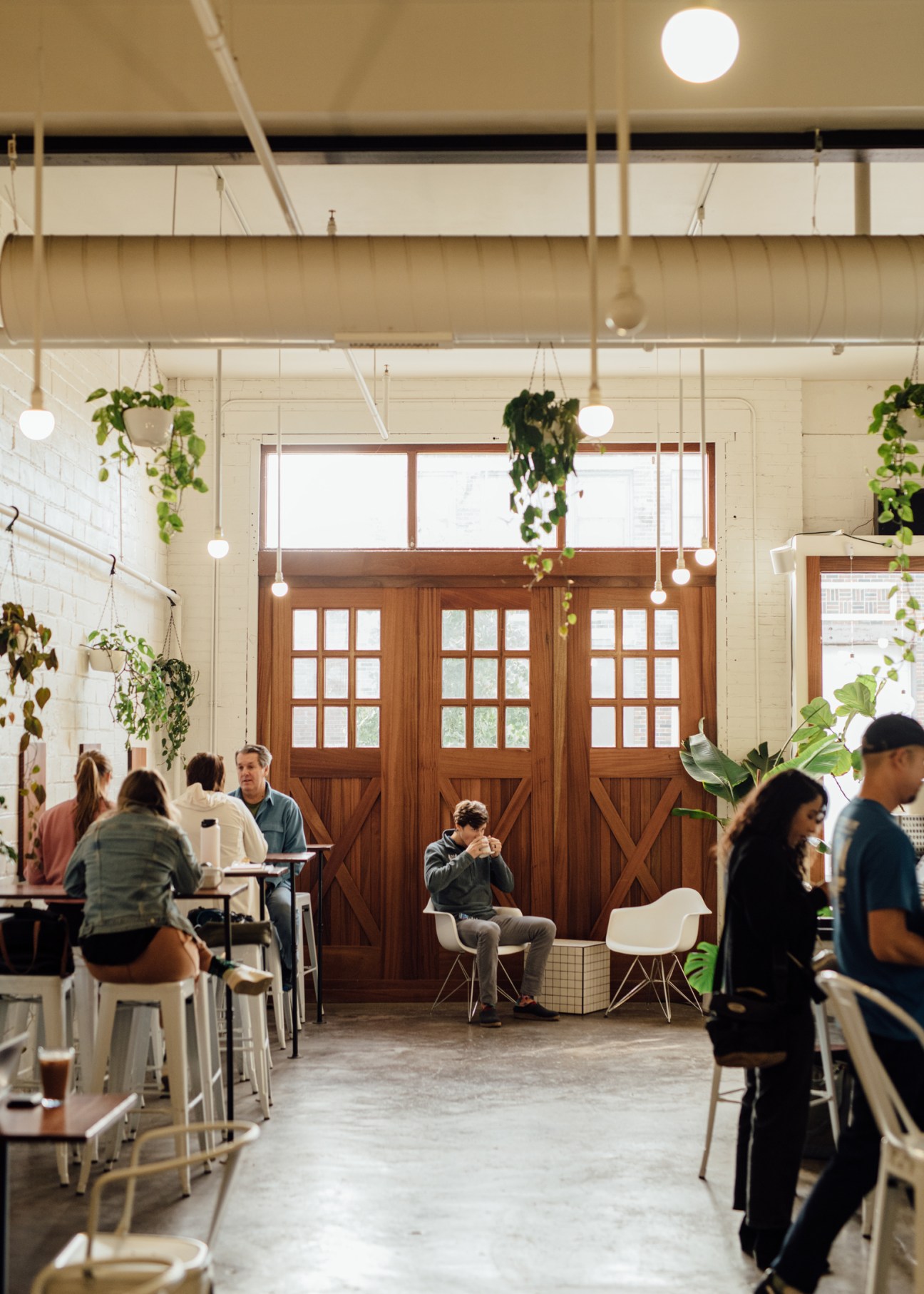
Horizon Line Coffee
Founded in 2017 by friends Brad Penna and Nam Ho, Horizon Line Coffee was one of the first independent cafés and roasters to elevate Des Moines’ coffee sector. “The culture here has grown quite a bit,” says Penna. The café is a short stroll from Pappajohn Sculpture Park.
horizonlinecoffee.com
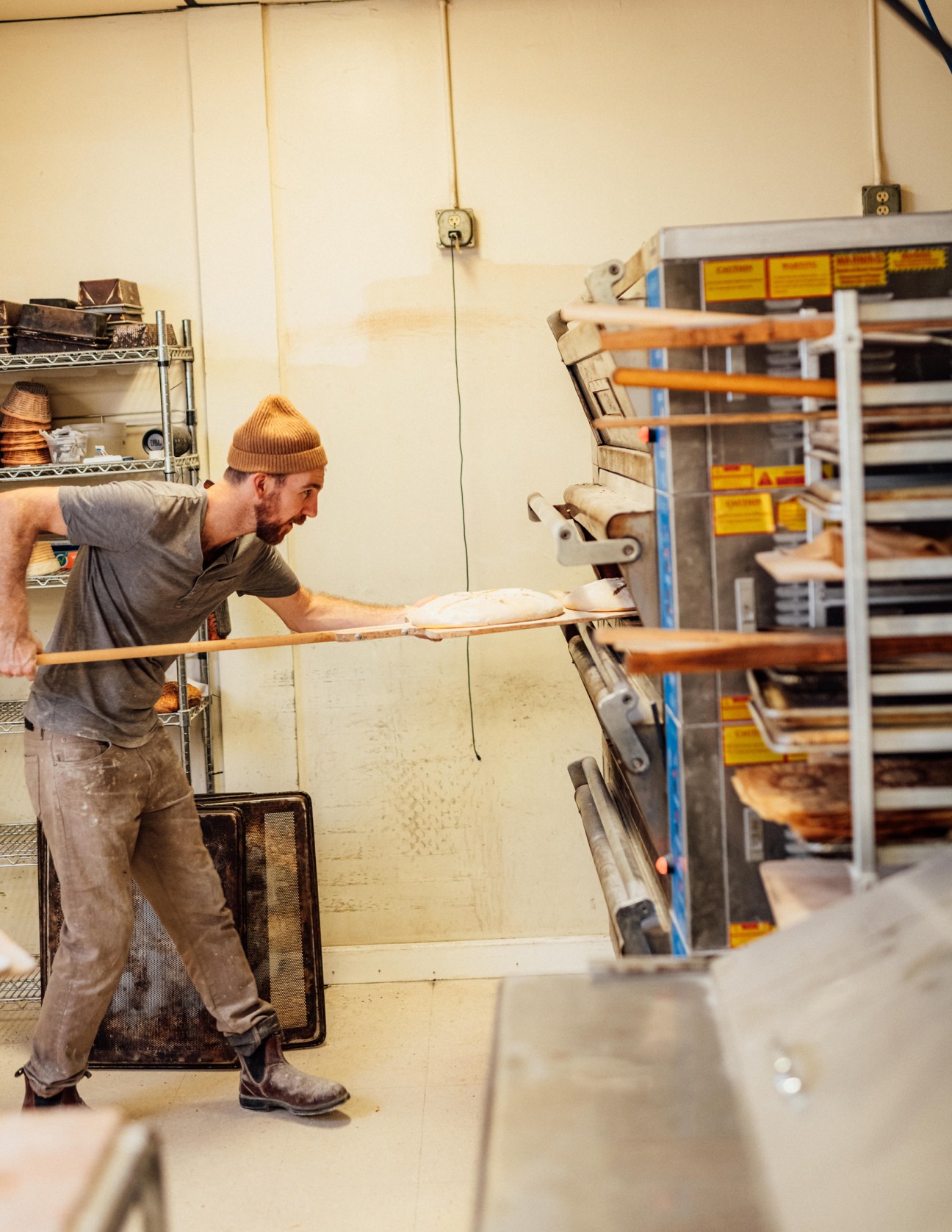
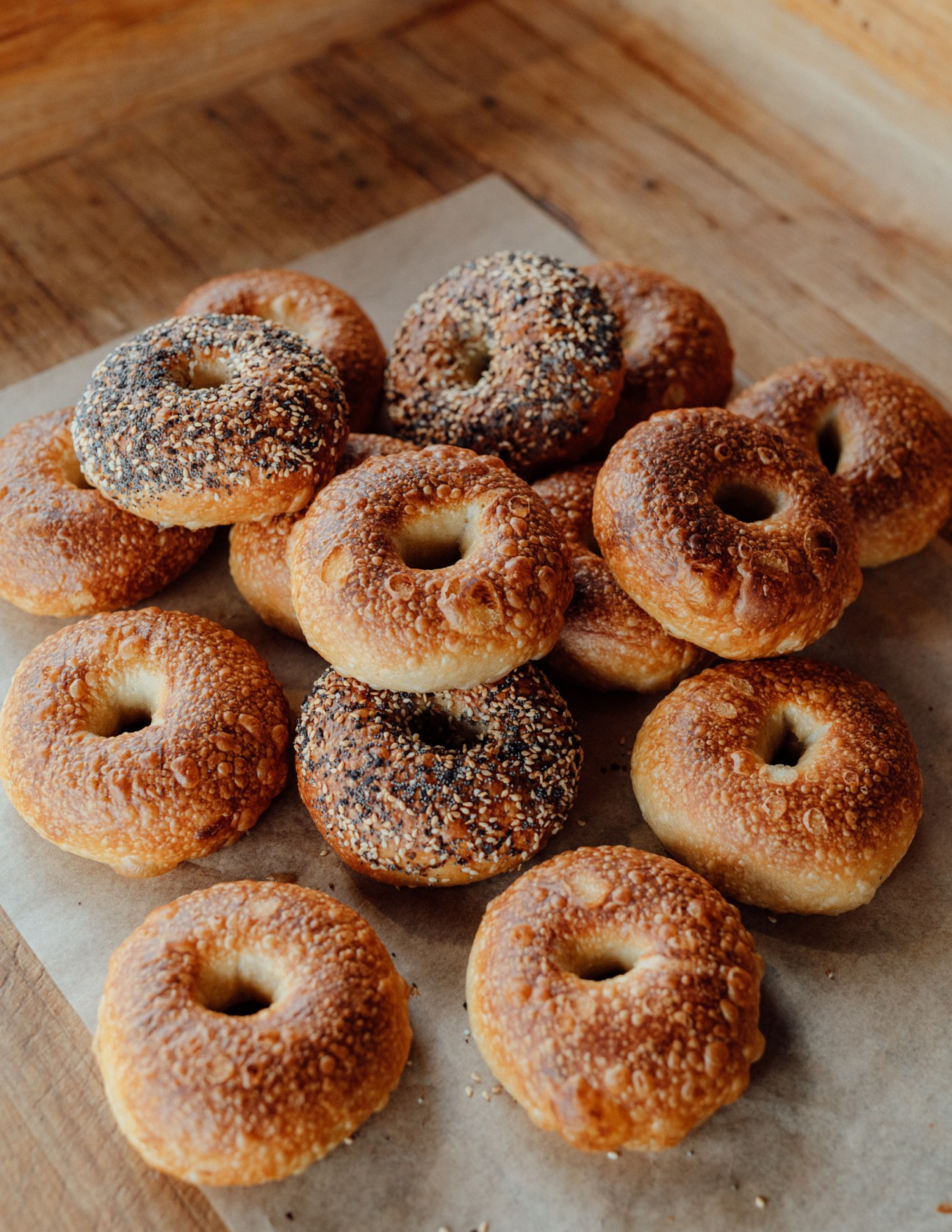
The Local Crumb
Aaron Hall launched his award-winning bakery in the reconfigured space of a former school classroom in Mount Vernon in 2016. Two years later, he was nominated for a prestigious James Beard Foundation Award, as his sourdough loaves became sought-after across Iowa. Far from a typical baker, Hall has eschewed a traditional shopfront and instead sells bread at farmers markets, direct to restaurants or out of the “trunk of his car” in Iowa City car parks on Friday mornings. It’s an unusual business model but one that has rightly earned him national recognition.
thelocalcrumb.com
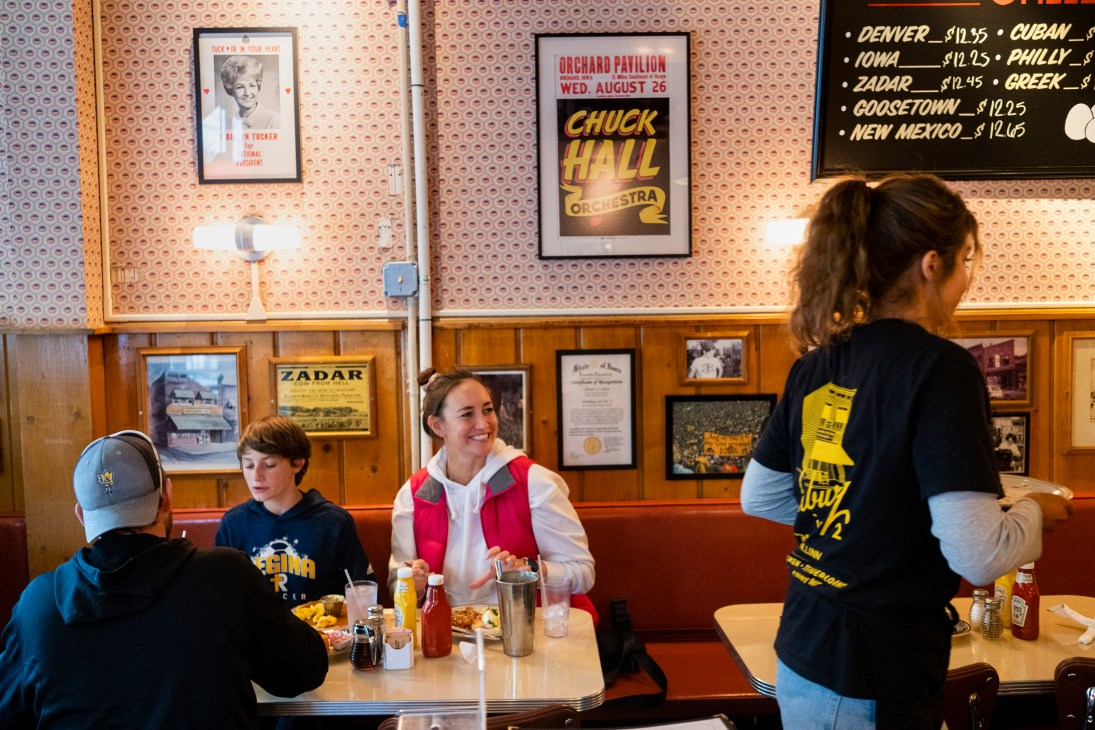
Hamburg Inn No 2
For Iowa-bound presidential hopefuls, there is one unmissable pitstop in Iowa City: the storied dining room of the Hamburg Inn No 2. Established in 1948 and famed for its “pie shakes” (a milkshake blended with a slice of pie), the cheerful diner was thoughtfully restored in 2023, its walls lined with placards, posters and photographs of its famous patrons over the years.
hamburginn2.com
Inventory
Iowa destinations
Places to be
Five essential stops
Whether you are heading to Des Moines on business or settling in Iowa City for a better quality of life, these are the pit stops that we recommend as you wind your way across the Hawkeye State.
1.
The Redstone Building, Davenport

The roots of the Von Maur department store chain began in this beautiful redbrick location. Today the building includes the Bix Beiderbecke Museum, a tribute to the jazz legend.
bixmuseum.org
2.
Iowa 80 Truckstop, Walcott

Off exit 284 of Interstate 80 sits the world’s largest truck stop. Pay a visit to the Trucking Museum next door, where you’ll find vintage trucks and other memorabilia, as well as multimedia exhibitions.
iowa80truckstop.com
3.
Cedar Rapids Museum of Art, Cedar Rapids

The impressive building has 16 galleries, home to rotating exhibitions and one of Iowa’s finest art collections, which includes works by the likes of Grant Wood and Jun Kaneko.
crma.org
4.
Arnolds Park, Lake Okoboji

The Okoboji Lakes are popular with sun-seekers. Pull off the highway at Arnolds Park, where West and East Okoboji Lakes meet, to find an amusement park, beach and picnic spots.
vacationokoboji.com
5.
Covered bridges, Madison County
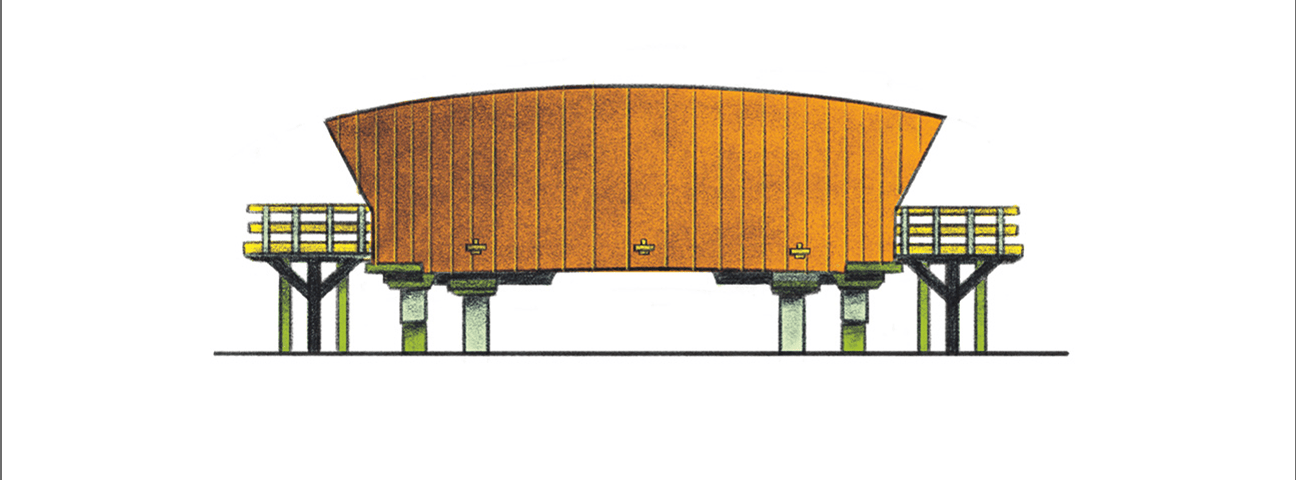
Iowa has a surprising number of Hollywood hotspots, including the covered crossing in Clint Eastwood’s 1995 film, The Bridges of Madison County. It is one of a number of structures that offer a lovely setting for a quiet walk.
madisoncounty.com
Local knowledge
Address book
Cobble Hill Restaurant, Cedar Rapids
Seasonal menu, local produce.
cobblehillrestaurant.com
Toppling Goliath Brewery, Decorah
One of Iowa’s best regarded, independent breweries.
tgbrews.com
The Cave, Des Moines
Bottle shop and wine bar.
thecavedsm.com
Moglea, Des Moines
Paper goods and stationery.
shop.moglea.com
Projects Contemporary Furniture, Des Moines
Furniture, lighting and objects.
projectsfurniture.com
Surety Hotel, Des Moines
Set in a restored beaux-arts building from 1913.
suretyhotel.com
The World Food Prize Hall of Laureates, Des Moines
Historic agricultural museum.
halloflaureates.org
Brazen Open Kitchen, Dubuque
Founder Kevin Scharpf is known for his hearty menus.
brazenopenkitchen.com
Field of Dreams, Dyersville
Made for the 1989 film, a movie set and baseball field.
fieldofdreamsmoviesite.com
Fishback and Stephenson Cider House, Fairfield
Independent cidery launched by four friends in 2014.
fscider.com
Daydrink Coffee, Iowa City
Opened as a kiosk in a plant shop, now a standalone site.
daydrink.coffee
Book Vault, Oskaloosa
One of Iowa’s most evocative independent bookshops.
bookvault.indielite.org
Spheres of influence
Our double issue takes you from one year to the next, from December’s joy (we hope) to a more contemplative January when plans are made, ideas hatched. But many of the stories and themes that have shaped 2023 are likely to remain relevant in the new year and beyond. Some of the mood music will be stuck on repeat.
One of the themes that will continue to be crucial is security – from how nation states use their might for self-defence to how cities protect their citizens from a multitude of threats, both man-made and natural. It’s a topic that we shouldn’t shy away from because it affects so many things: whether businesses feel that it’s the right time to invest, whether parents are confident about allowing their children to walk home from school in the dark, and more.

That’s why this issue contains two deep dives into the question of what we can do to make ourselves feel more secure. Our foreign editor, Alexis Self, has commissioned a series of stories looking at topics such as defence spending, South Korea’s growing role in manufacturing the kit that the world’s armies want, and spotting risks – but he has also explored the value of negotiating with your foes and how a nice inflatable tank might be all that you need to keep your soldiers out of harm’s way. Then, in the business pages, Petri Burtsoff investigates how to protect our cities from floods, air pollution, terrorist attacks and other dangers without scaring people unnecessarily or limiting personal freedoms. Safety and the ability to trust that things will be OK are essential for the gentler elements in our lives to flourish. You can’t have a good quality of life if you think that it can be swept away at any second. It’s a subject that we need to debate.
Balance is also vital. This double issue is host to our Soft Power Survey, which looks at how nations can win friends and gain global influence through the use of such things as culture, diplomacy, food and design. I always find the annual survey fascinating as it charts the rise and fall of the nations featured and how, while people back home might grumble about their leaders or the state of the economy, out in the wider world their country’s brand appeal can often be shining brightly.
A good example of a cultural play with glowing soft-power credentials is bande dessinée, the graphic novels that come out of France and Belgium. It’s a tradition that took off years ago with the likes of The Adventures of Tintin and Asterix but is now a vast publishing phenomenon. And it’s a sophisticated one: the stories told cover everything from history to espionage, design movements to biographies. In a meta move, we commissioned Belgian artist Hamo to produce a comic about the comics. I must add that Tyler Brûlé, our editorial director, is a fan of the genre and played a key part in the negotiations; I was only surprised that he didn’t make an illustrated appearance.
Two final things to flag. In our design pages, there’s a story about Finnish timber that includes a report on how the furniture brand Artek is embracing imperfection. It has been looking at its supply chain as it seeks to meet its environmental commitments and one of the conclusions is that it needs to use more of the felled birch that’s the mainstay of its furniture. The pursuit of perfection meant that as little as 10 per cent was being accepted as worthy of use. But now it is looking at how knots and marks can be embraced and has released a version of its Stool 60 that celebrates the blemishes. It’s a wonderful example of how a simple change of mindset can transform how we see beauty.
Then there are cakes. This issue’s Expo is a big cake shop with a display of festive buns, brioches, spicy confections and creamy temptations that puts the icing on the issue. Please feel free to get stuck in.
Finally, a thank you to all of our readers for your support across the year (and it was great to meet many of you at our events). We hope that you have a merry Christmas and joyous end-of-year celebrations, and wish you a safe and happy 2024. With some cake on the side. And, as always, feel free to send ideas and thoughts to me at [email protected].
Legends in the baking
1.
Spice of life
Lebküchnerei Woitinek, Nuremberg
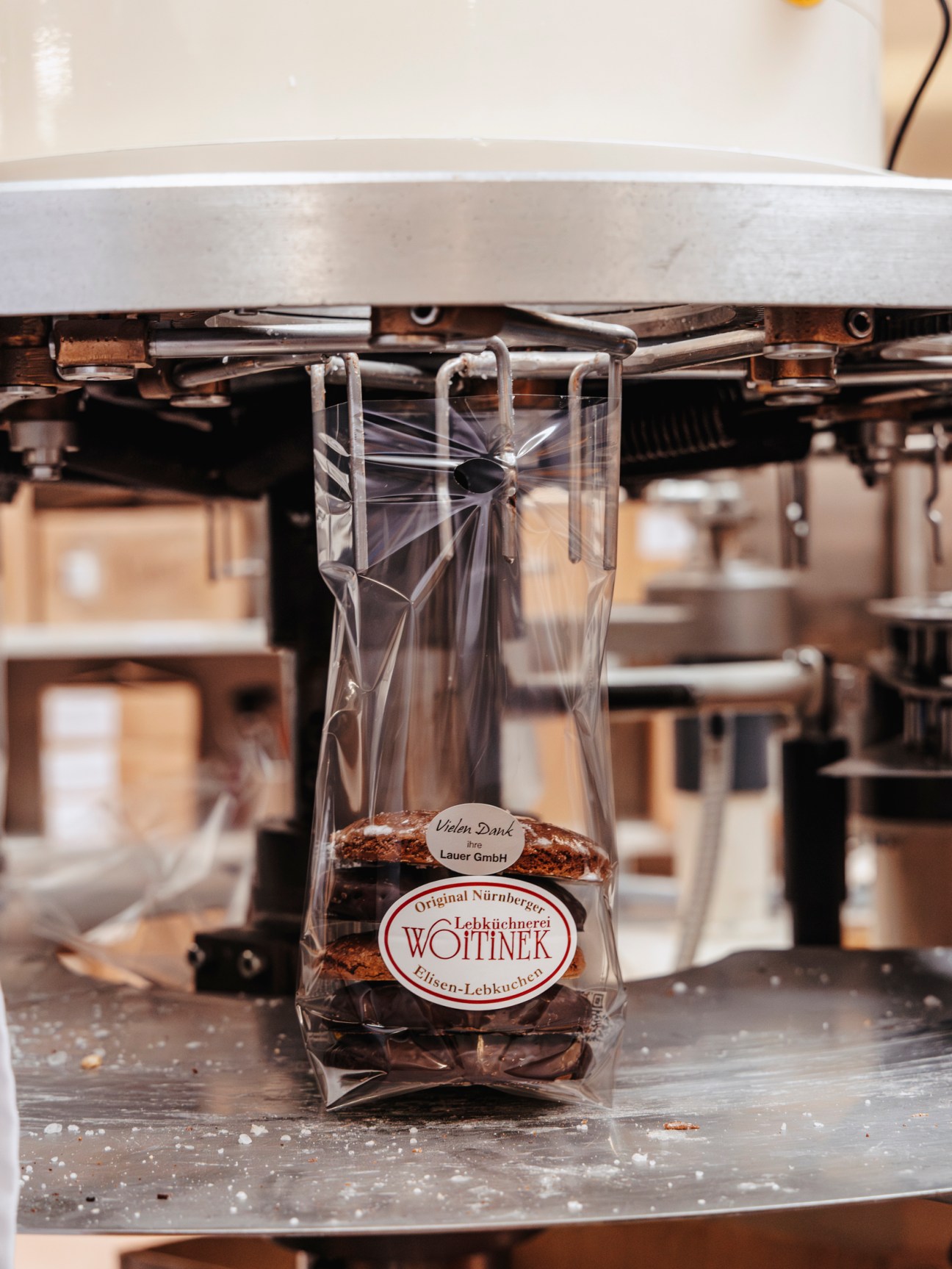
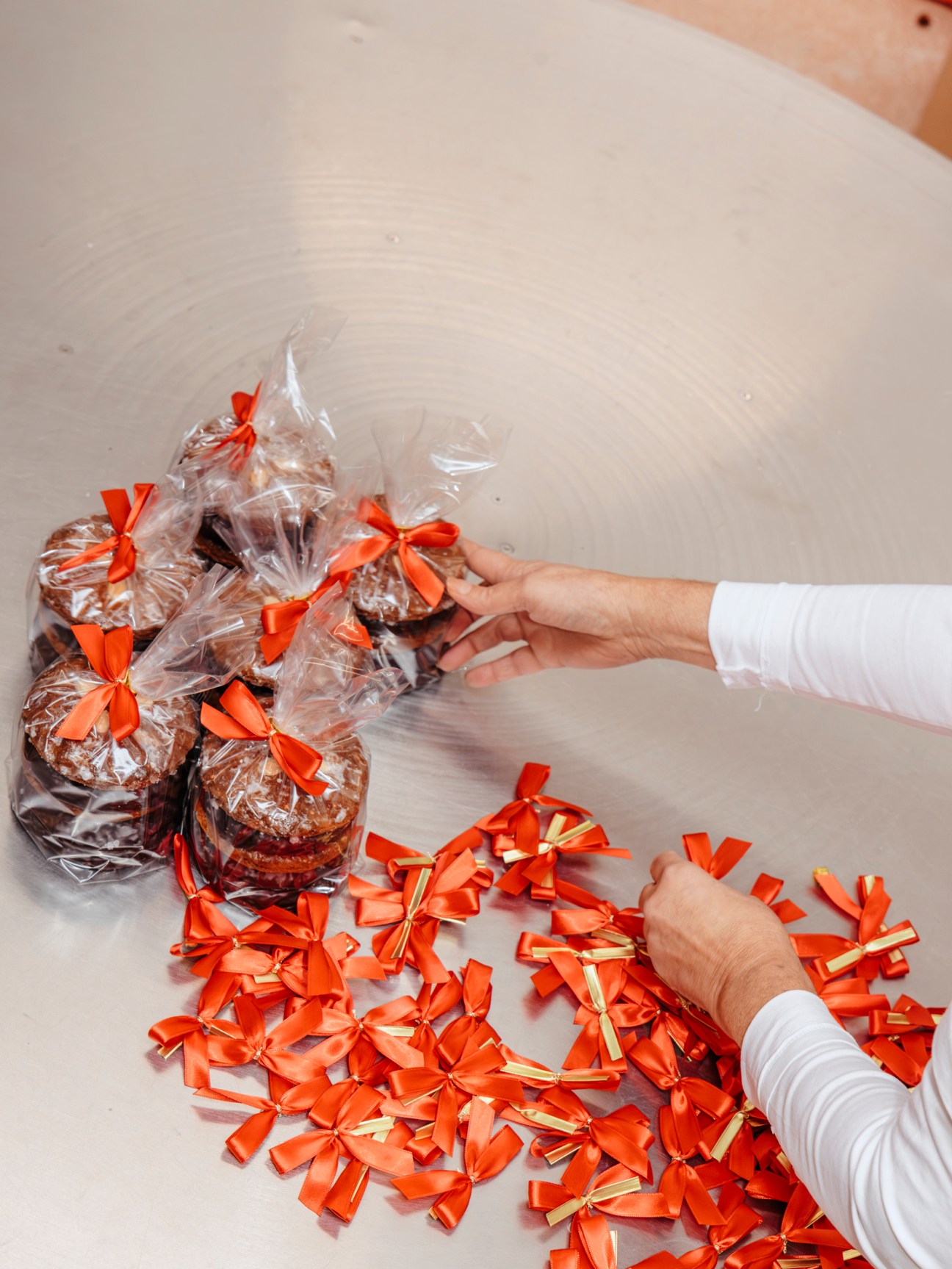
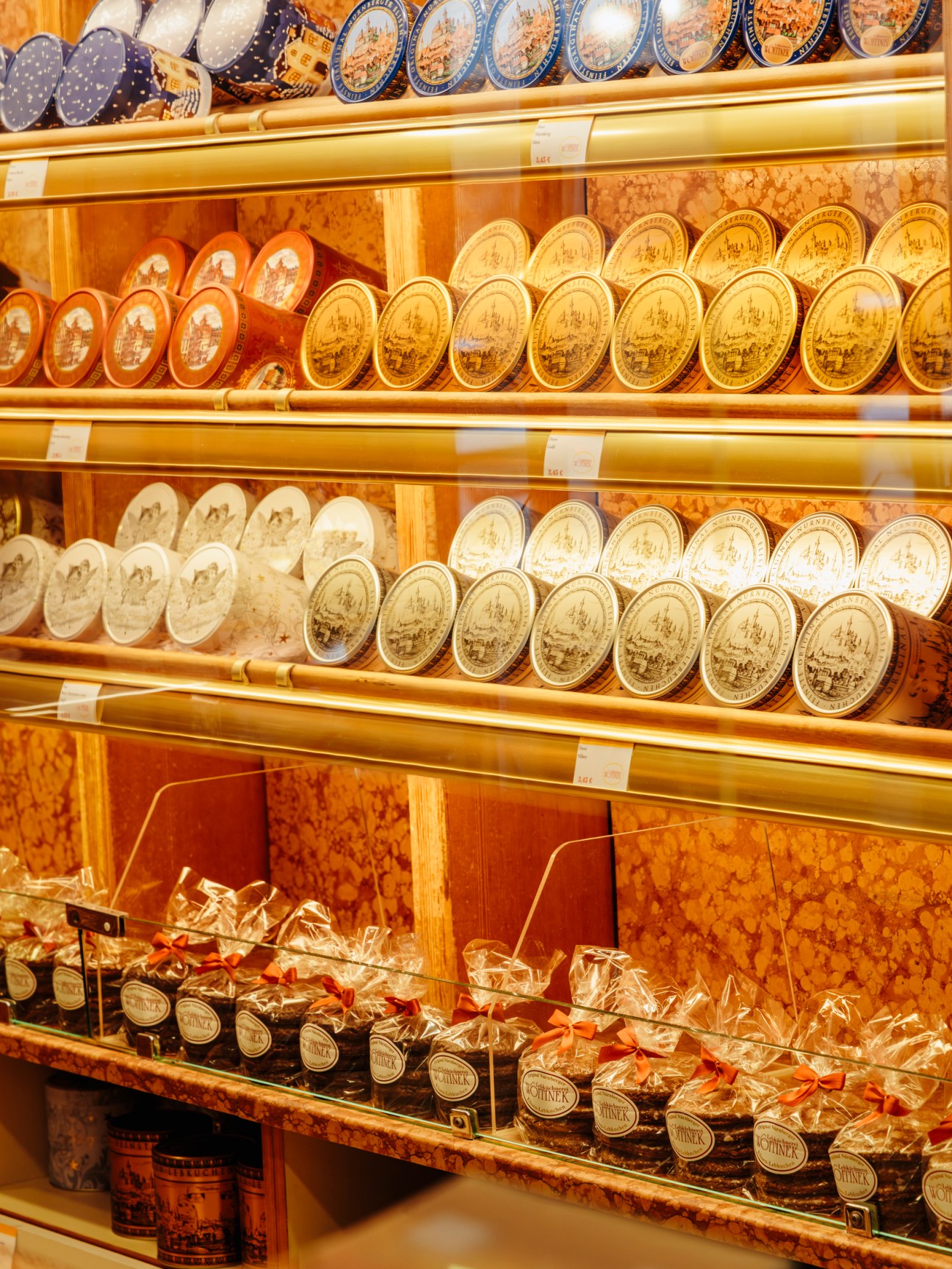
At first glance, the modern shopfront of Lebküchnerei Woitinek in Nuremberg’s Steinbühl neighbourhood is like that of a typical German bakery. A second look, however, reveals that there’s no bread on offer, no rolls, not even a pretzel. Instead, the shelves are stocked with red-ribboned packets of Lebkuchen, a traditional gingerbread from Nuremberg that’s enjoyed at Christmas.
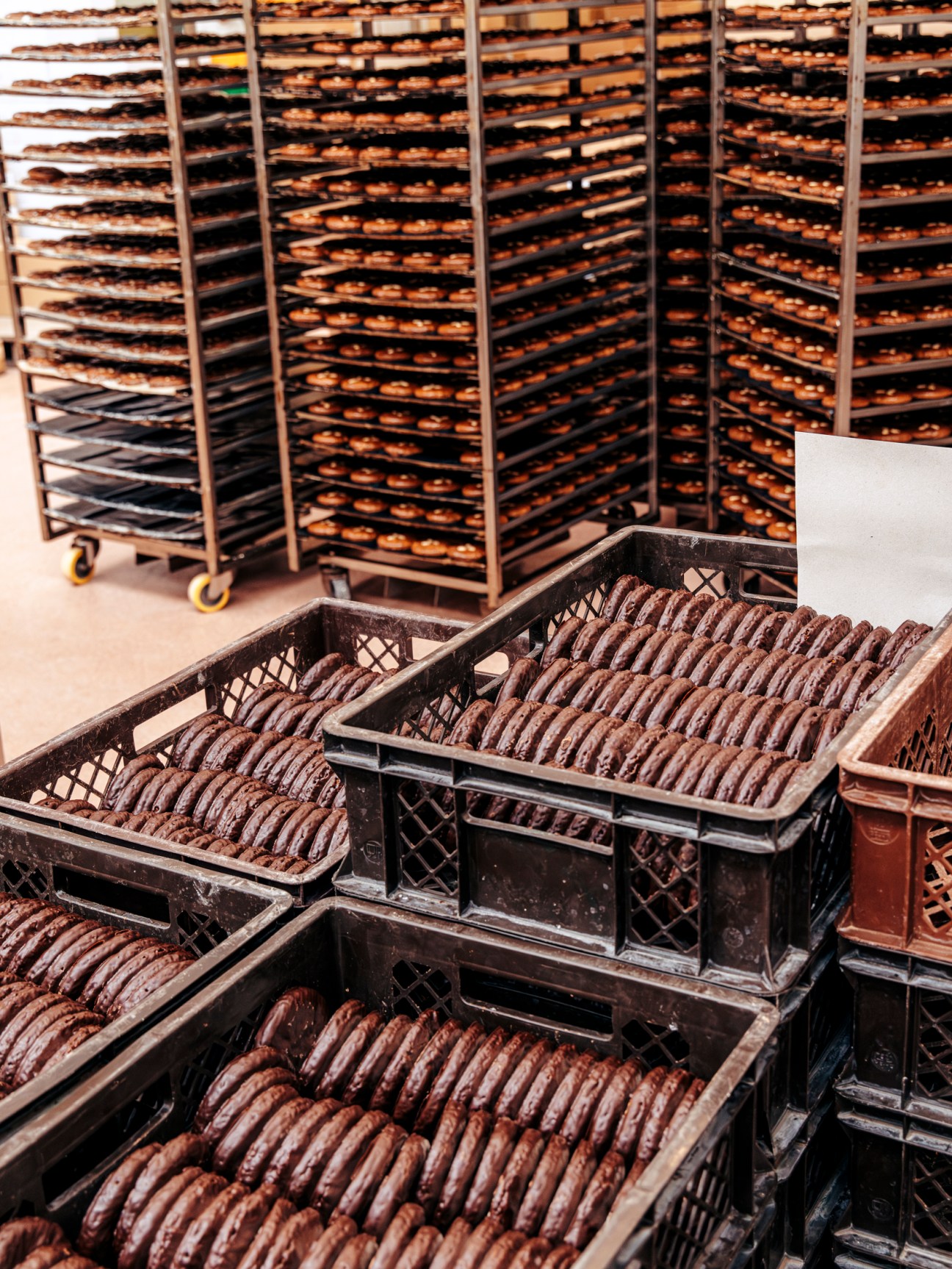
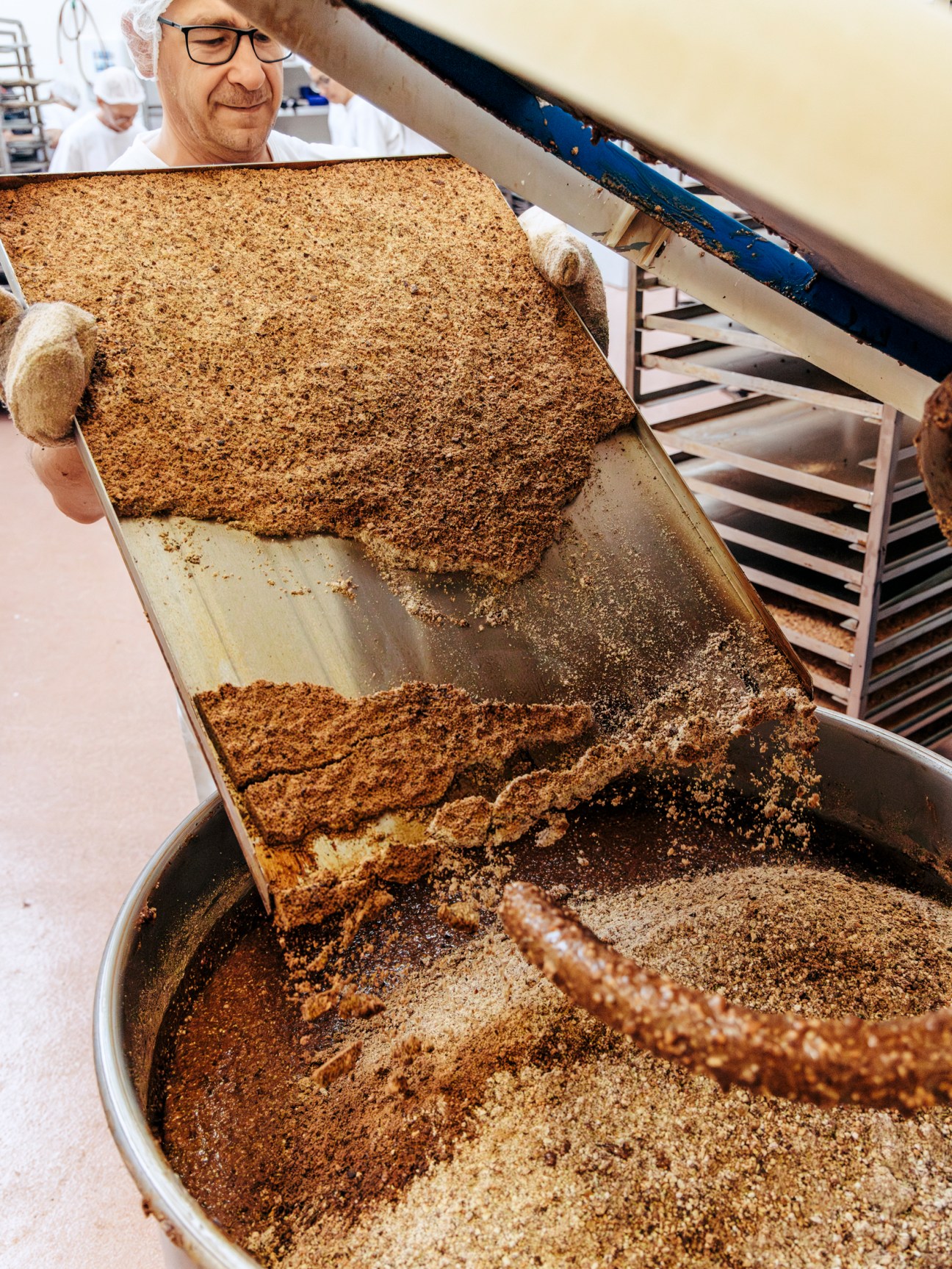
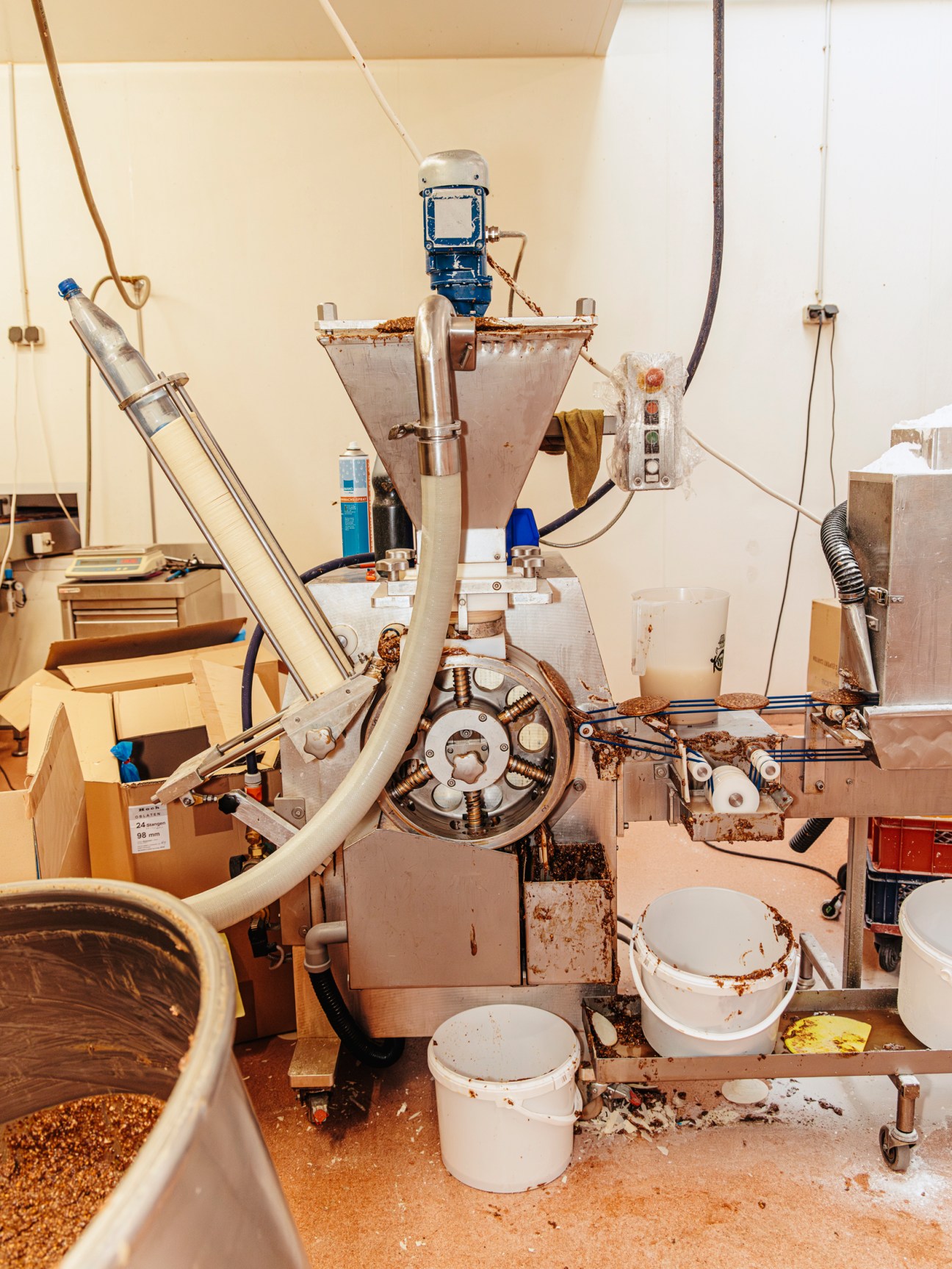
Today, Lebküchnerei Woitinek is still family-owned, run by fourth-generation baker Bernd Woitinek alongside his wife, Pia, and their three children. “My great- grandfather built this business in 1895 and I took over from my father in 1995,” says Bernd, now in his mid-fifties, as he shows Monocle through the manufacturing facility that brims with stacks of boxes filled with fragrant Lebkuchen. A small group of women wearing hairnets are busy packing various kinds of gift boxes. “I thought I could run the Christmas gingerbread production from here for a few hours a day after the regular baking in the morning, but our Lebkuchen were so successful that it proved impossible to do both. So, in 2004, we decided to stop making bread in order to focus on the festive season.”
The production of gingerbread has long been associated with Nuremberg, ever since its heyday as an important stop on the international trade routes of the 14th century, playing an essential role in the buying and selling of spices. Early recipes for Lebkuchen (which can be dated to 1395) list only honey, flour and spices along with a raising agent such as ammonium carbonate. After the Lebküchnermeister (master gingerbread bakers) formed a guild in 1643, the recipe evolved to a richer, moister version that includes almonds, nuts and eggs. Today, Bernd still uses his grandfather’s recipe to produce three million of the rich, nut-laden cakes between August and December.
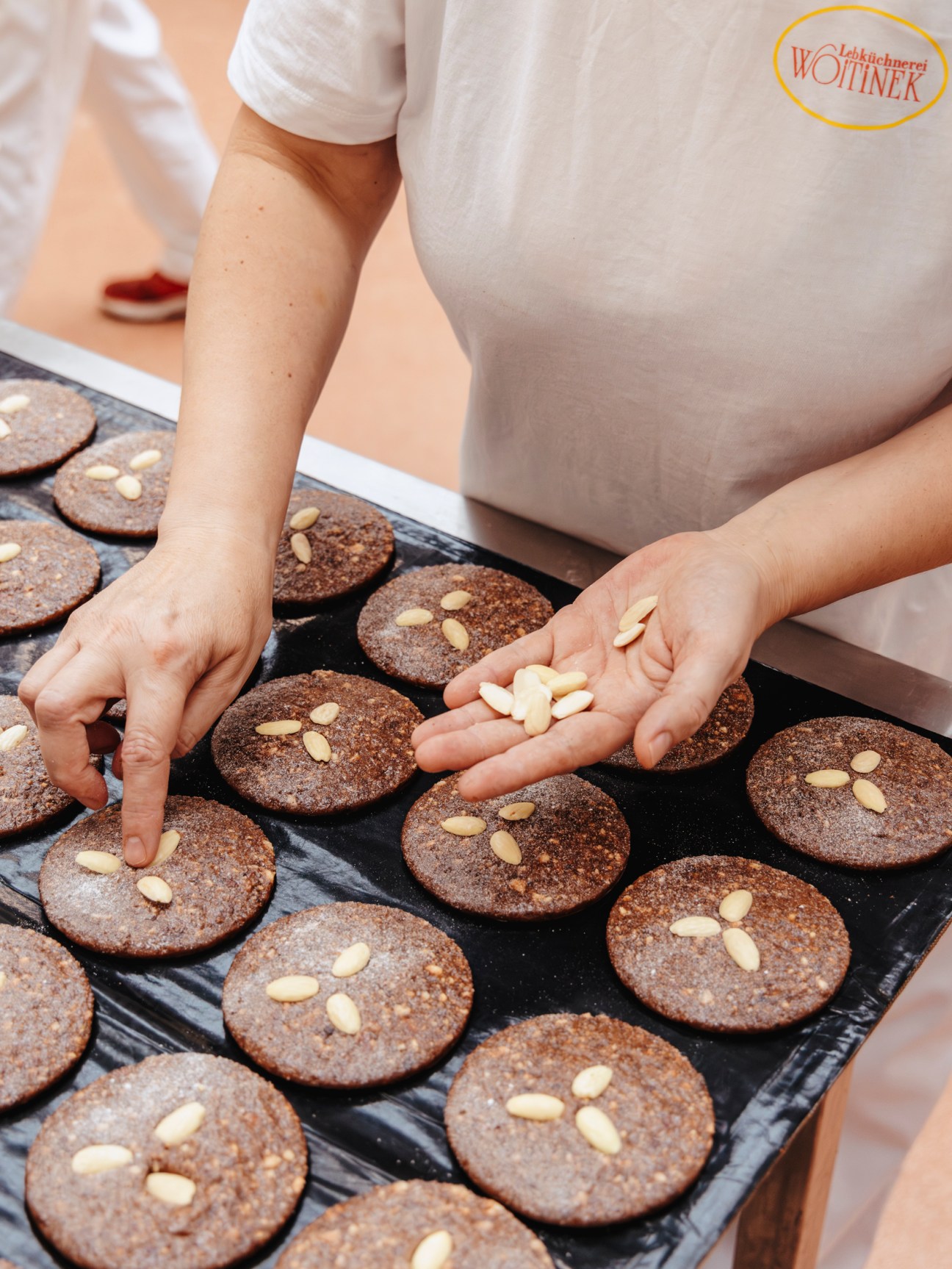
Surrounded by Lebkuchen in their office and on the production floor, where they can be found handing out tasty samples to staff and customers, the Woitineks are at peace with the historical and cultural significance of their gingerbread. Bernd, somewhat embarrassed, even admits to not being particularly fond of it. However, when asked about ingredients and texture, he has clear preferences. “I like the nuts roasted and chopped quite rough for a little crunch,” he says as he breaks up a piece of Lebkuchen, which should never be cut to avoid squishing the dough. “I use a special hazelnut marzipan for additional aroma, but with only 2 per cent flour, just enough to stabilise the dough and retain the moisture.”
Most importantly, Lebküchnerei Woitinek’s spice mixture, which makes up only a tiny proportion of the dough, is custom-made by one of two remaining local spice traders. “The quantities we need are too large to mix all the cloves and cinnamon, cardamom, star anise, allspice, black pepper and nutmeg ourselves,” says Bernd. Finally, for the chocolate coating, the gingerbread baker creates his own mix of special beans. Though he might not indulge in them often himself, this traditional Nürnberger Lebküchnermeister is clearly proud of his family’s famed gingerbread.

2.
Where life is sweet
Scaturchio, Naples
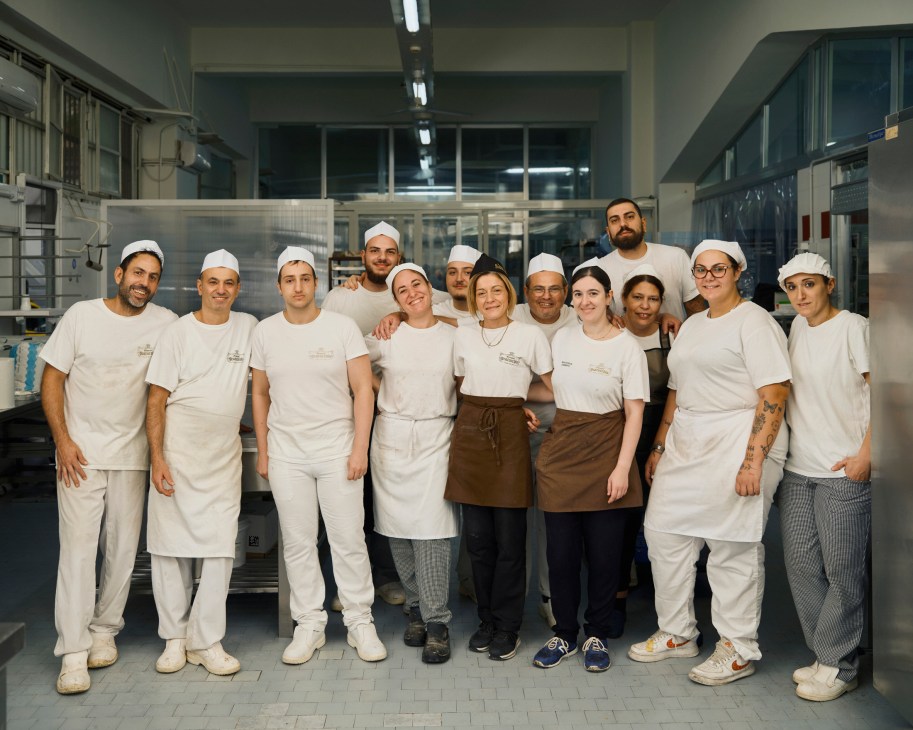
Walk along Via Mezzocannone in Naples and you’ll reach yourself in Piazza San Domenico Maggiore, where the San Domenico obelisk towers above a square populated with lively cafés and university students on their way to lectures. Here you’ll find Giovanni Scaturchio and his family’s pastry shop, which was established in 1905. A century later the name is synonymous with the mouthwatering flavours of Naples’ most celebrated pastries, such as the baba sponge cake and sfogliatella puff pastry. At Christmas, the smell of honey and candied fruit permeates the square as the Scaturchio bakery fills its windows with Neapolitan struffoli (deep-fried dough balls doused with honey).
“They’re a symbol of good wishes for the new year,” says Giacomo Cautiello, director of the Scaturchio laboratory, where recipes and pastries are developed and painstakingly perfected. In his vanilla-and-sugar-scented office, Cautiello explains that Neapolitan Christmas desserts are intended to signify the promise of abundance and prosperity in the coming year. Every dessert is made for a specific time in the festive season; struffoli are to be eaten during the two-week period between Christmas and the Epiphany.
The origins of struffoli can be traced back to antiquity, when delicacies made from fried dough and honey were common. The recipe was refined by monks during the medieval ages before entering the homes of Neapolitans during the 18th and 19th centuries. Scaturchio’s version hasn’t changed for more than 100 years. The dough is made from sifted flour, water, eggs and butter, mixed and cut by hand into small balls (the smaller the better) and fried in peanut oil. The golden spheres are then drowned in an aromatic paste that combines honey, orange, cinnamon and vanilla before being dressed with fruit. “The orange and lemon peel is grated by hand,” says Cautiello. “You can’t begin to imagine how much fresh orange juice we drink in the laboratory during that time.” Struffoli, which are meant to be enjoyed by the spoonful, have a crunchy exterior and soft interior, delivering a bitterness in the fruit that marries the richness of the honey.
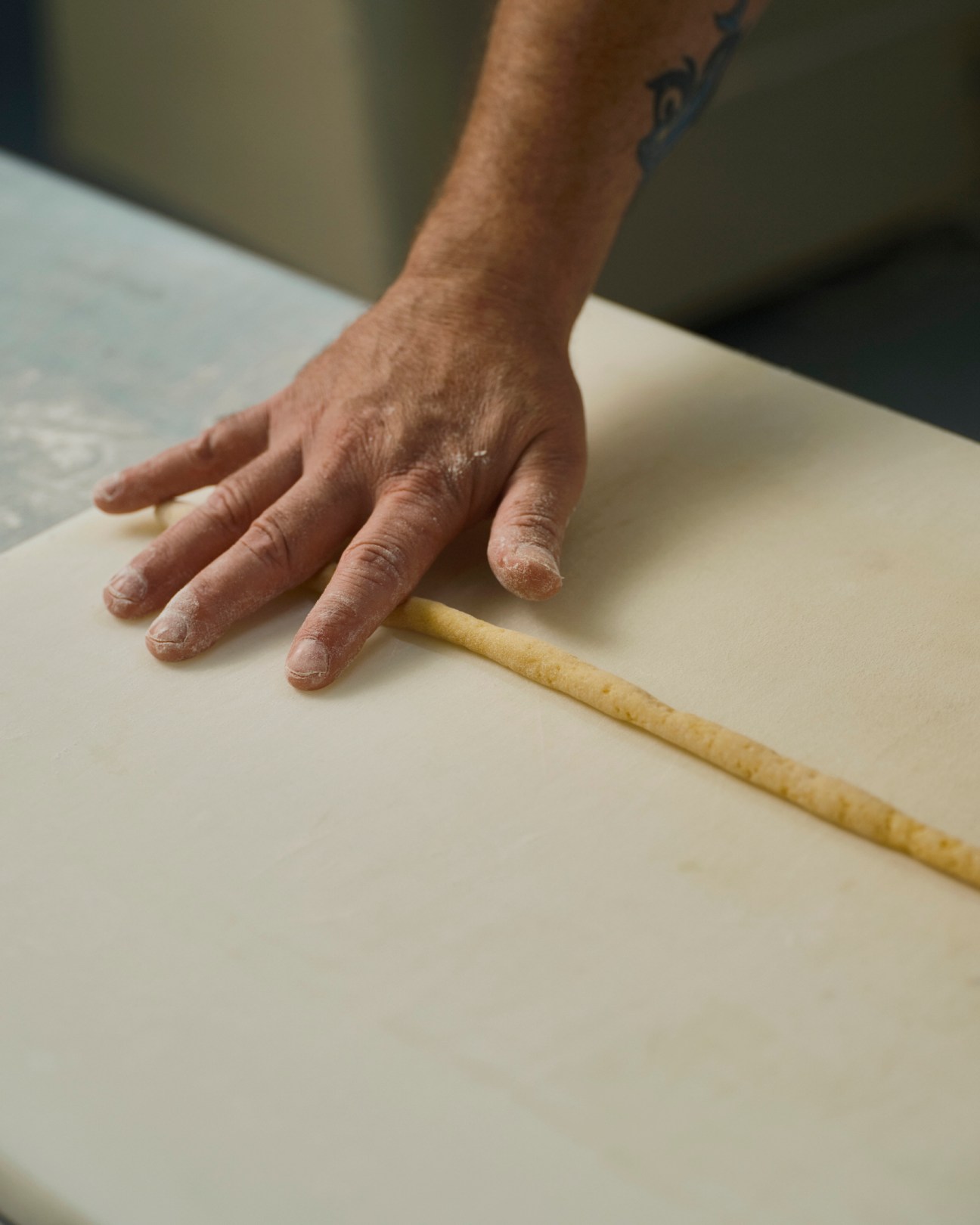
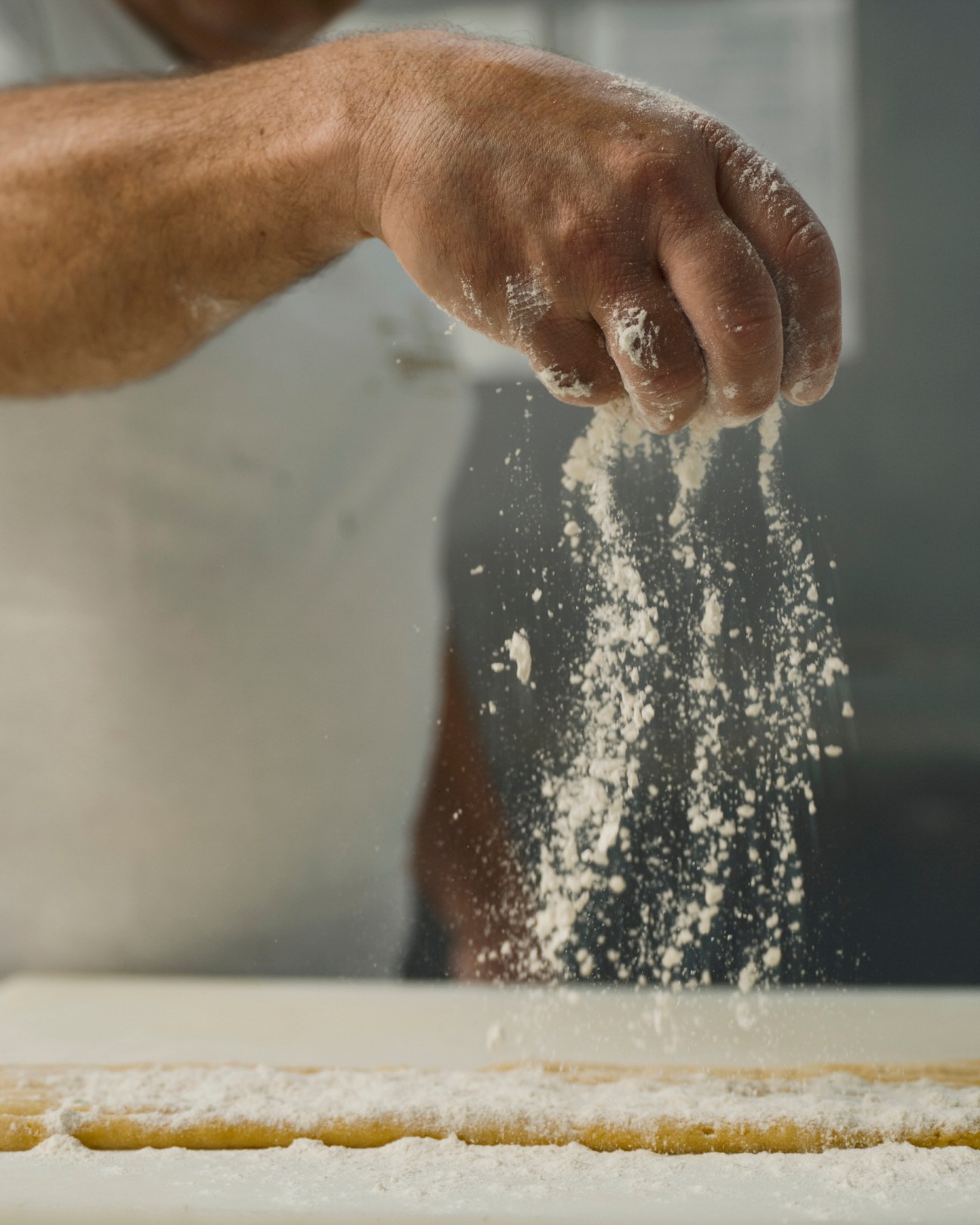
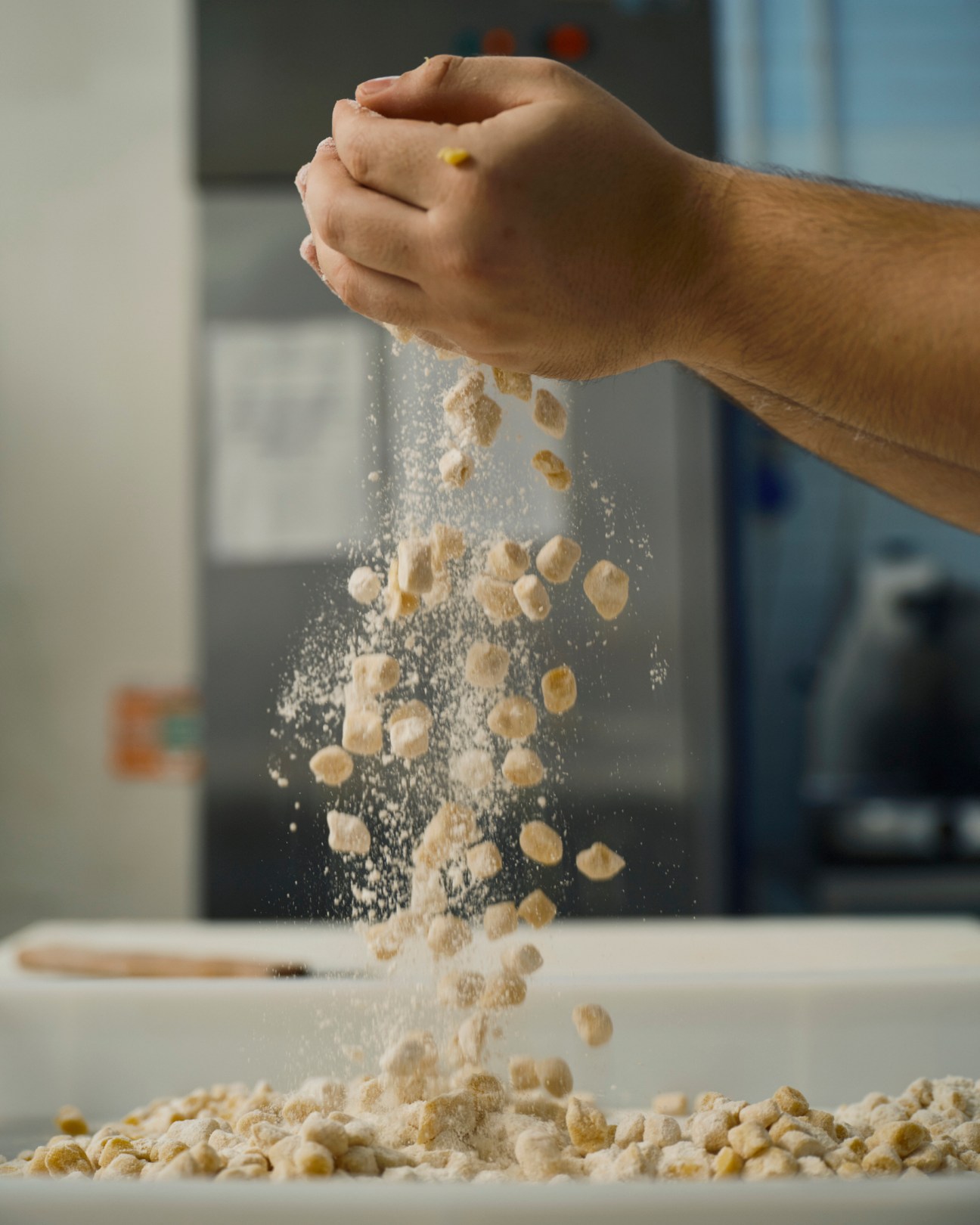
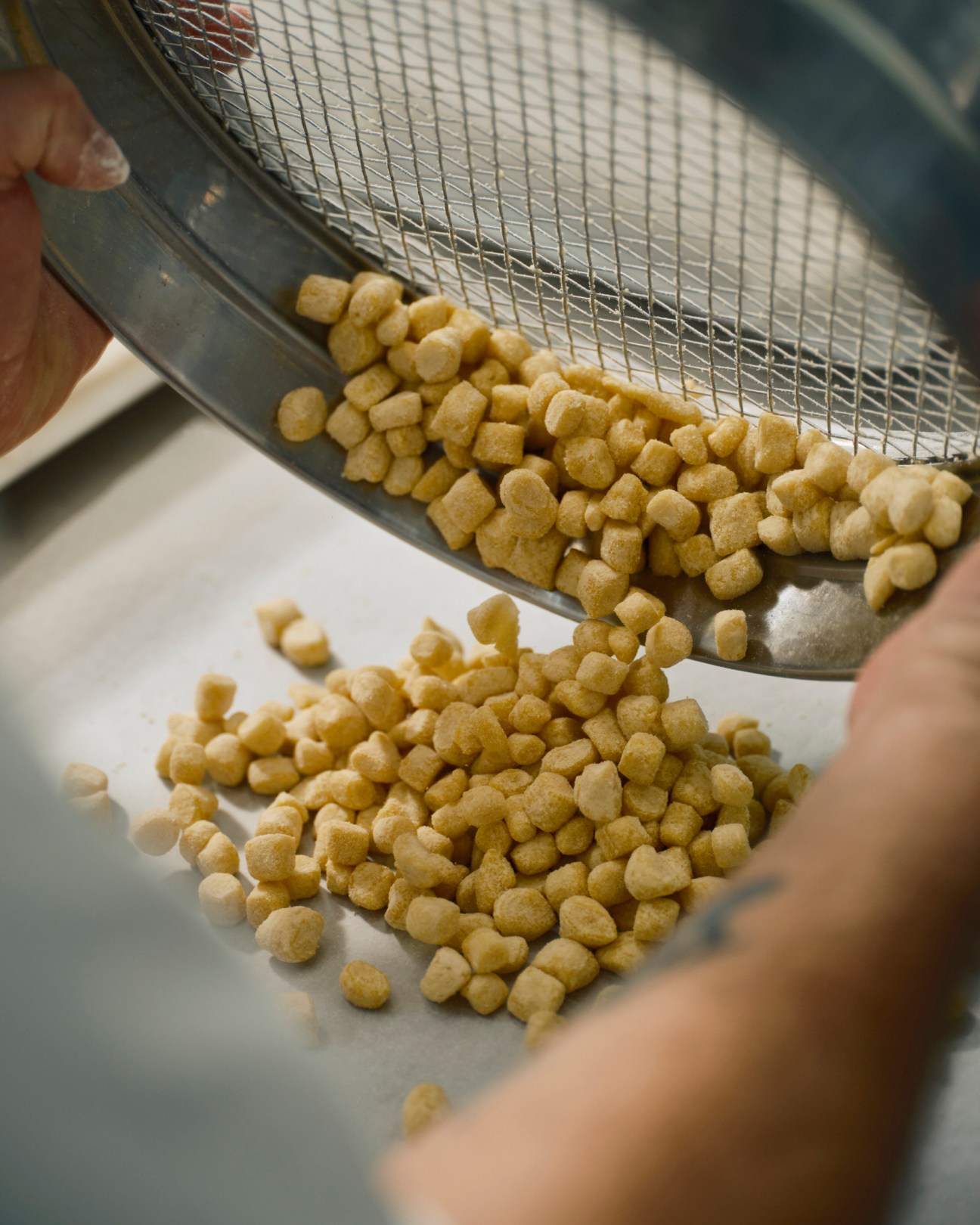
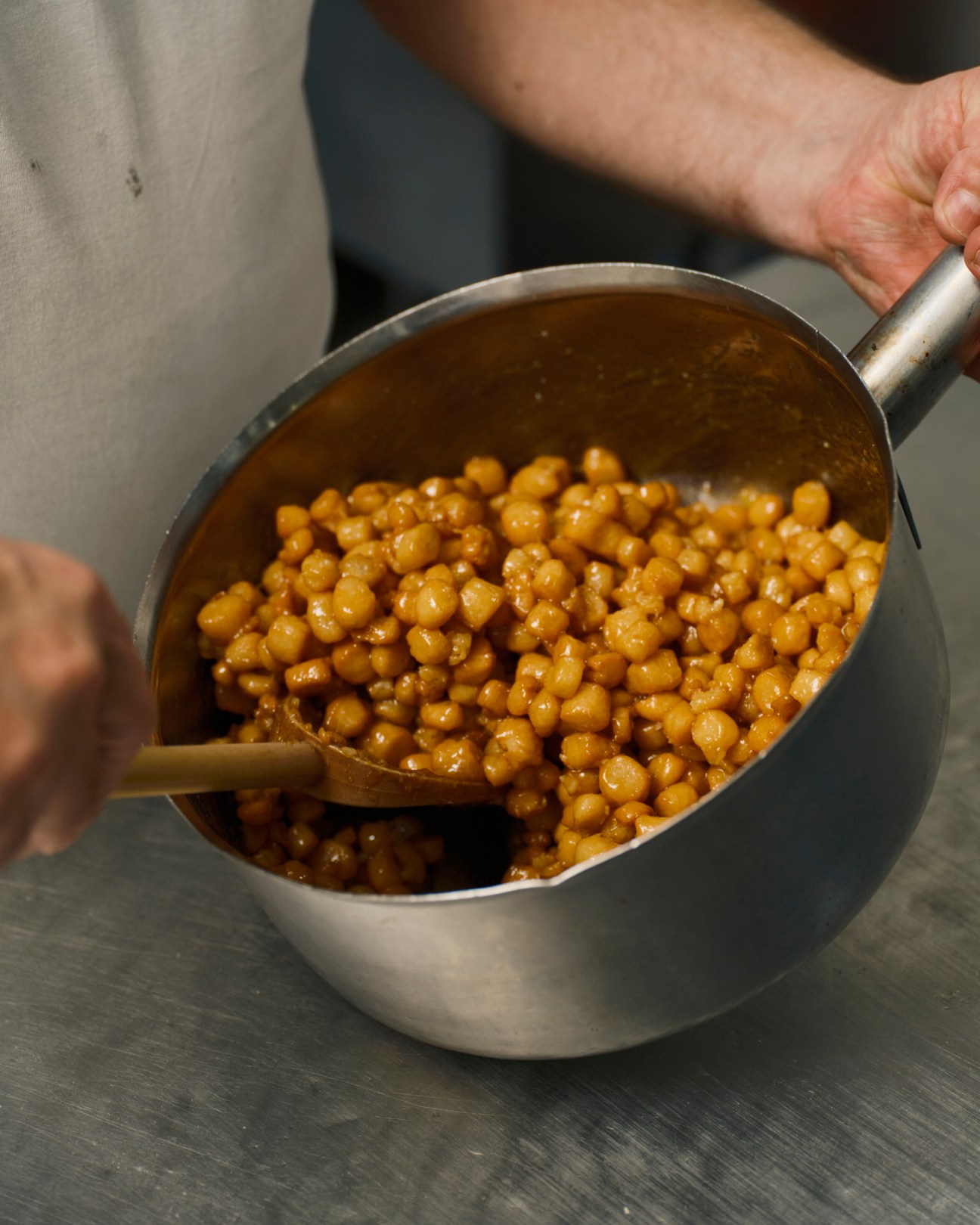
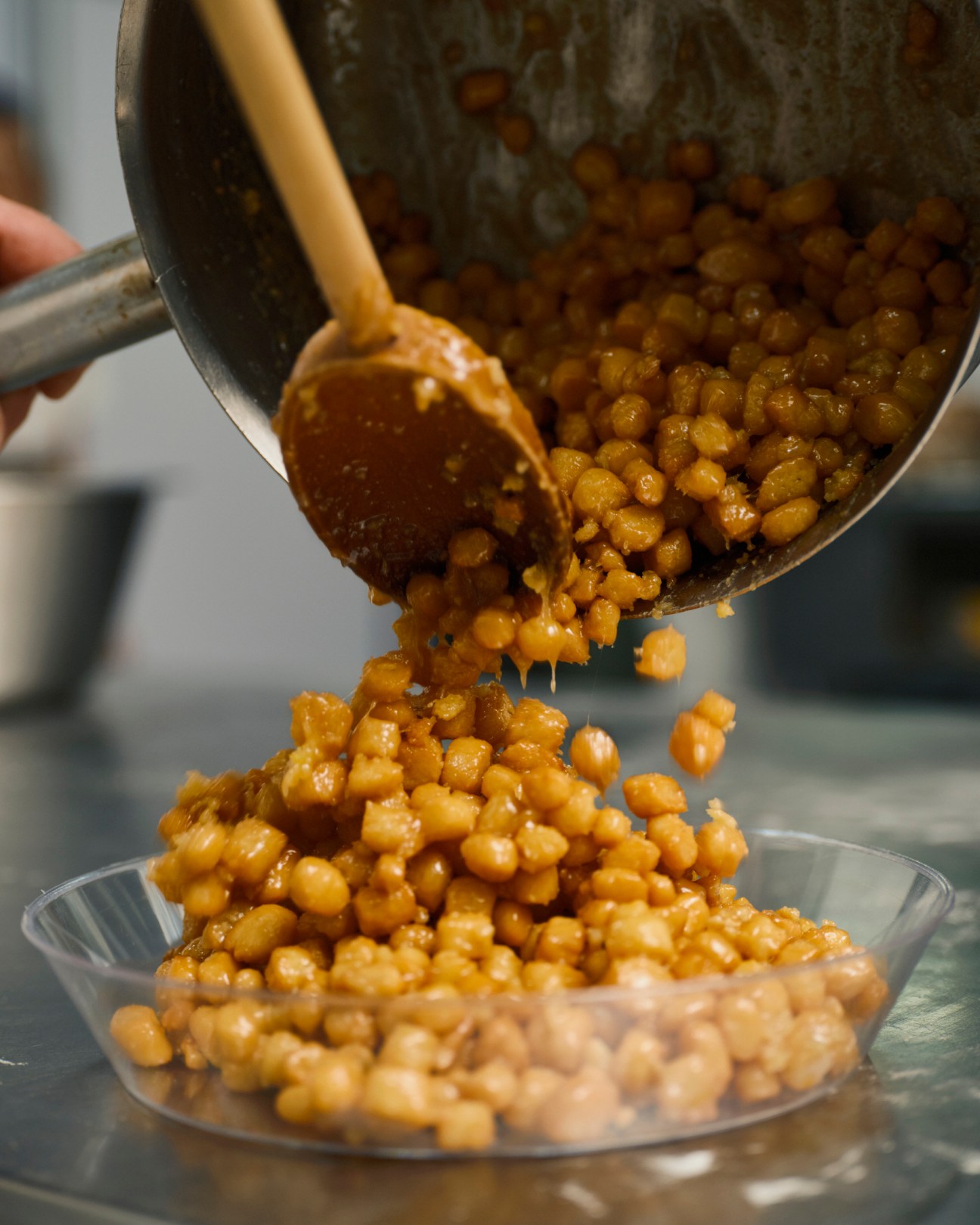
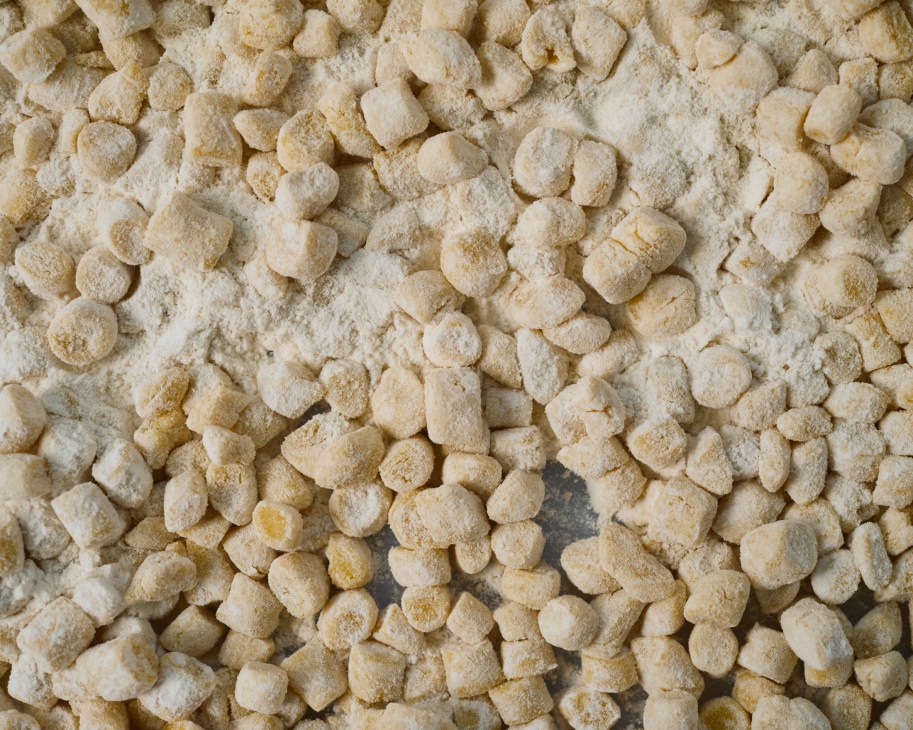

The importance given to the quality of the ingredients is what has set Scaturchio apart for nearly 120 years. For Cautiello, it’s what makes the difference between a dolce (a dessert of high quality) and something that is simply sweet food. “You always have to select the best,” he says.
Back inside the San Domenico outlet, operations director Alfredo Donvito reveals the second secret of the shop’s success. “It’s the hands of our pastry makers, who are passionate about doing things the traditional way, which gives our products a different taste,” he says. A bowl of struffoli isn’t just a sweet but a piece of the city’s people, traditions and the small things that make Naples what it is. “Here, confectionery and food in general has been transmitted to us by our mothers and grandmothers,” says Donvito.
The pleasure derived from a perfect dessert is at the heart of everything that Scaturchio does. “Our products are a small luxury,” says Cautiello. “When you sell struffoli, you must sell it with passion and a smile, ensuring you’re creating a pleasurable moment for the person in front of you.”
3.
One of a kind
Asimakopouloi, Athens
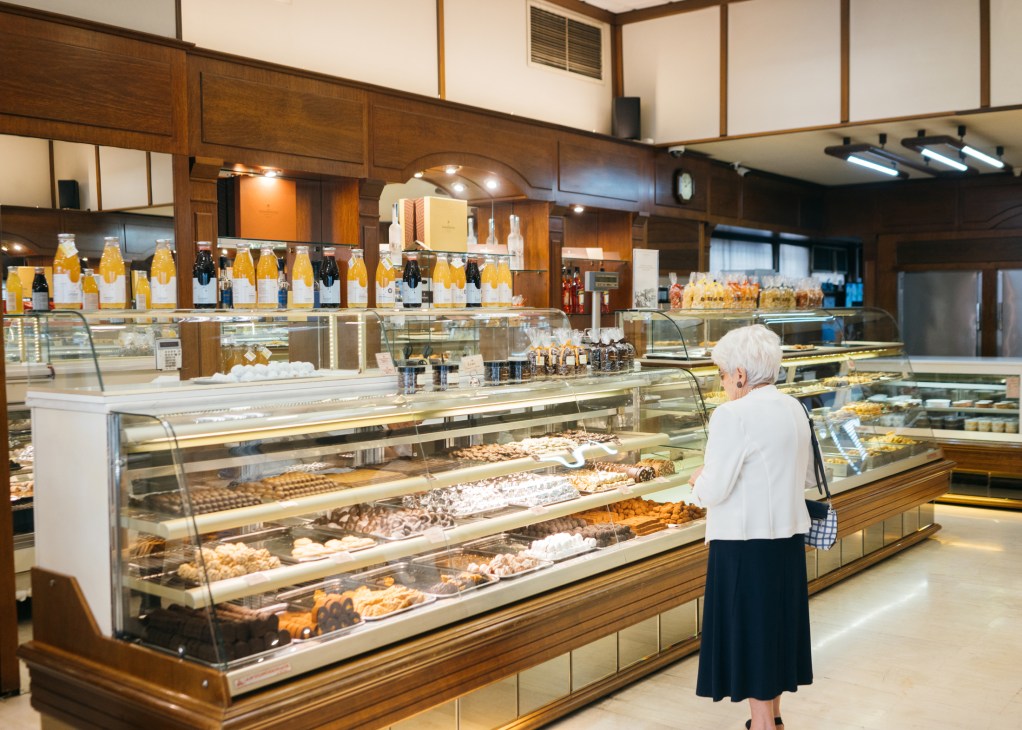
For Athens bakery Asimakopouloi, the festive period is a race against time. Racks of vasilopita – traditional Greek New Year’s cake – are wheeled in and out of industrial-size ovens, arriving still warm into the clutches of customers who queue around the block to get one. “It’s all hands on deck at this time of year,” says Vasilis Asimakopoulos, a third-generation baker who today runs the business with his sister Jane, father Dimitris and uncle Thanasis.
The business was founded in 1915, originally selling a small range of dairy-based products such as milk, yoghurt, rice pudding and galaktoboureko (syrup-soaked custard pies). Over the years, this grew to include chocolates and baked goods, and the business has garnered a reputation as the producer of some of the city’s finest vasilopita. The dessert is something of a cake-brioche hybrid, consisting of a simple mix of sugar, flour, butter, eggs, milk and orange zest. Asimakopouloi’s vasilopita is made using a traditional blend of fresh sheep and goat’s butter, as well as cow’s milk sourced from small dairy farms in Spata and the Megara region in Attica, which is pasteurised on-site at the bakery. “It is extremely fresh,” says Vasilis. “And this combination gives the cake a more robust taste.”
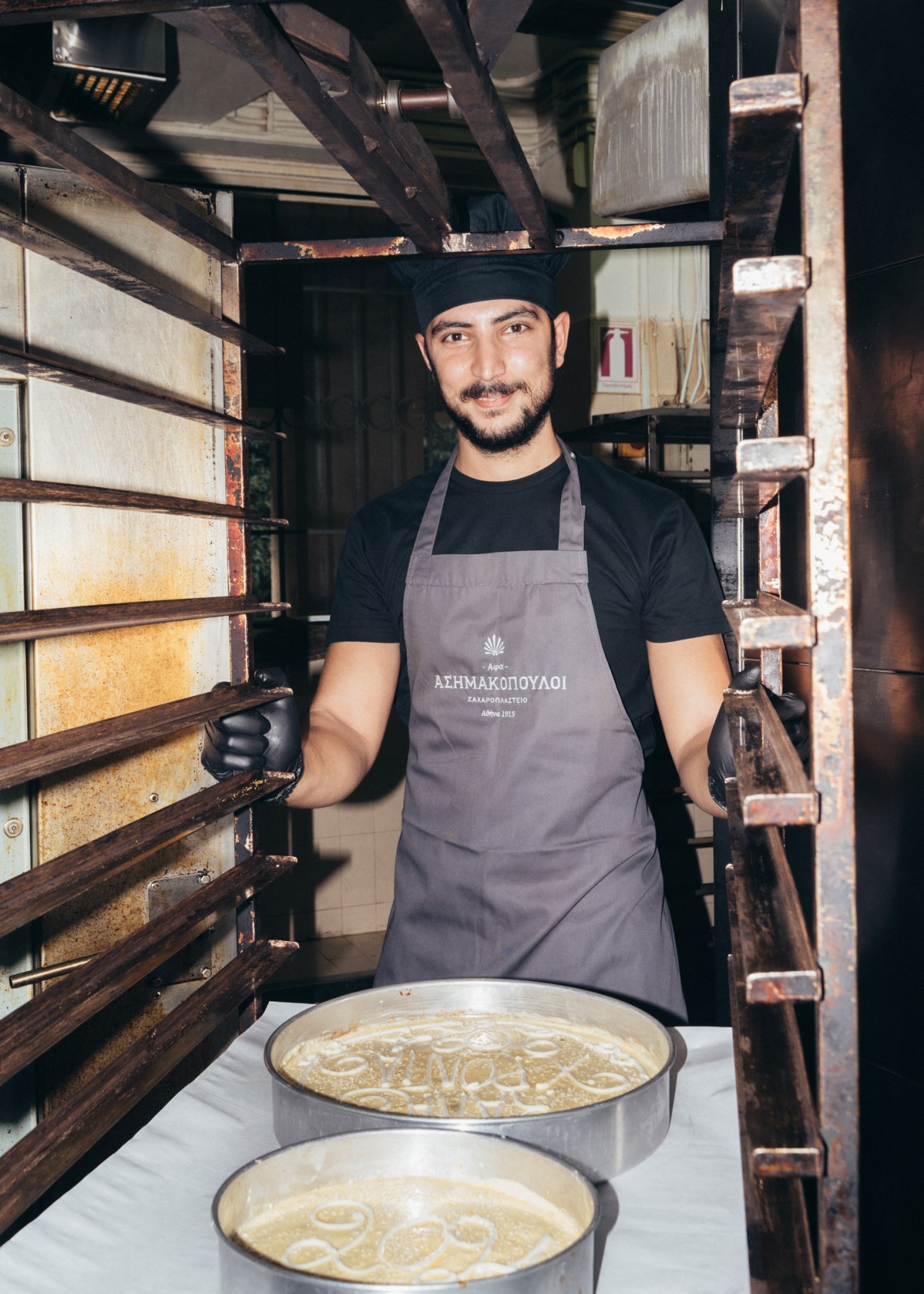
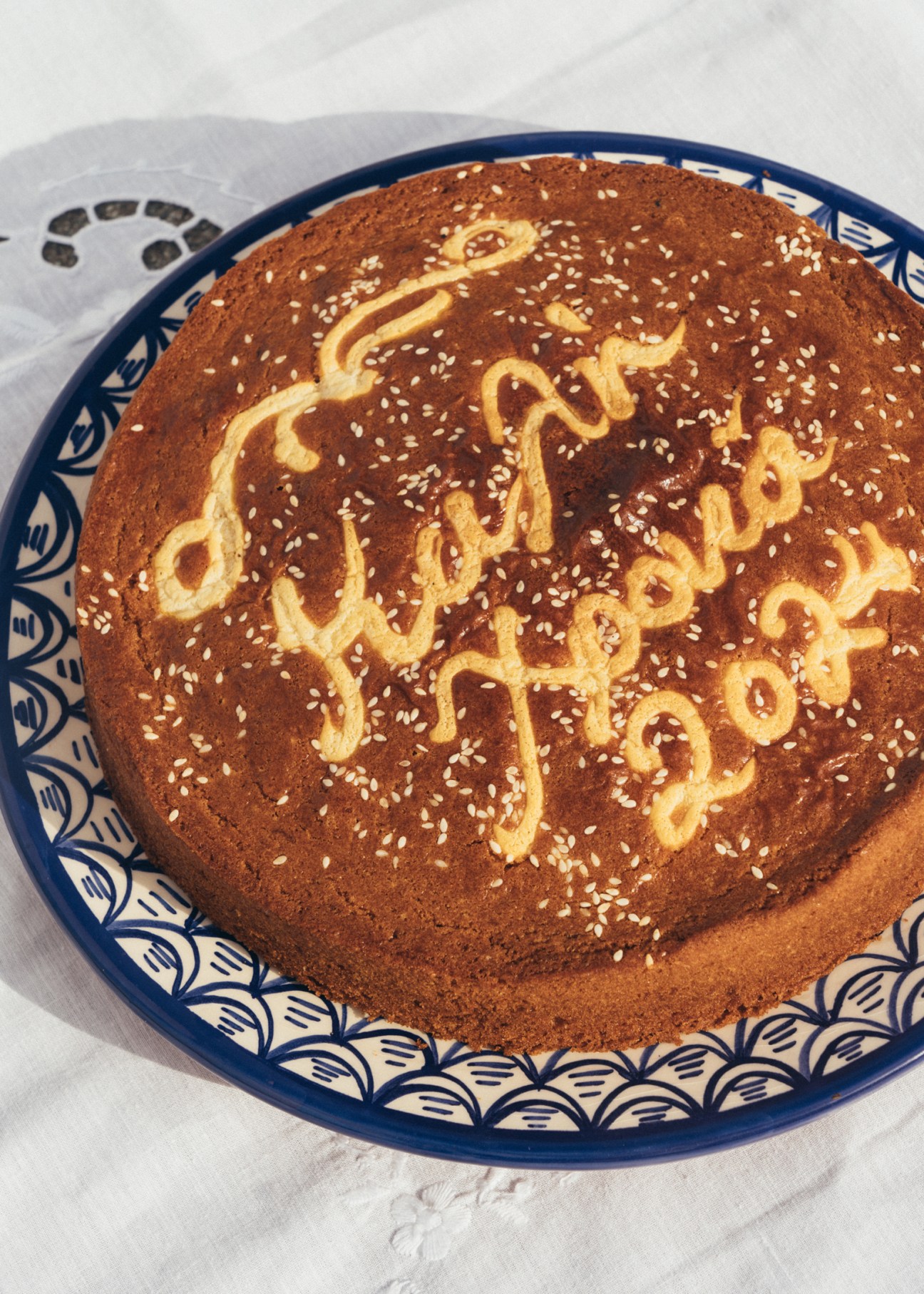
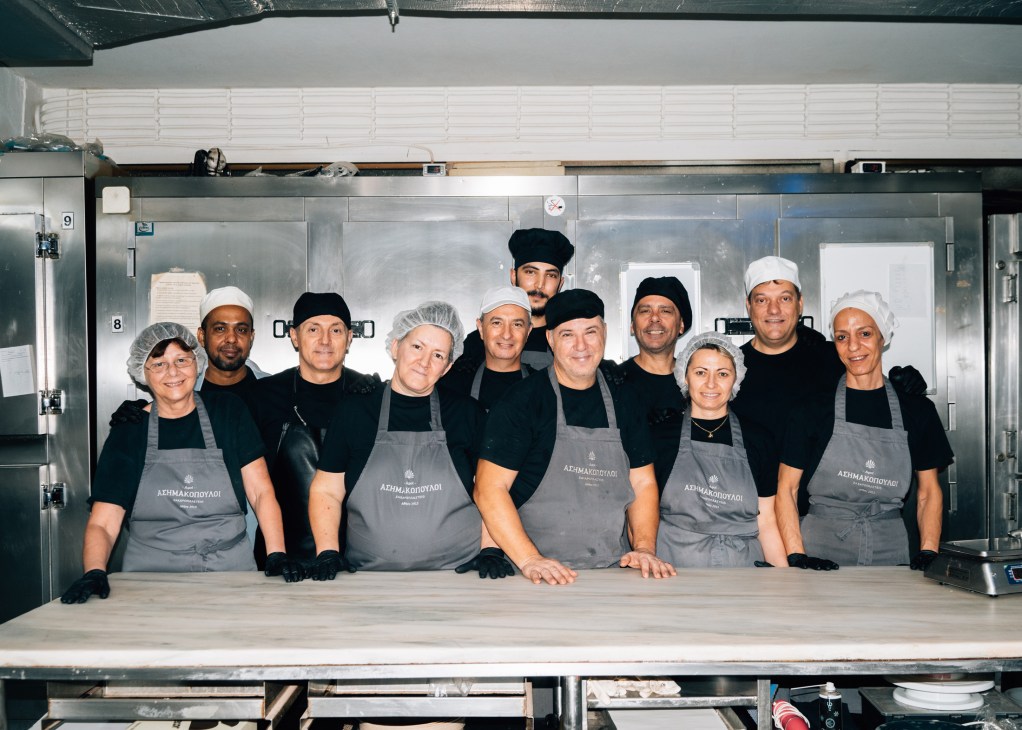
The word vasilopita means “bread of Vasilis” and is named after the medieval Saint Vasilis, a bishop from Cappadocia in modern-day Turkey. There are different variations on the story as to why the cake bears his name but the predominant one claims that, when his diocese was under siege, he asked citizens to raise an offering of money and jewellery to use to bargain with their attackers. When the ransom was given to the invaders, they were so ashamed by the collective generosity that they refused to take it and ended the siege. When Saint Vasilis attempted to return the valuables to their owners, he couldn’t identify what belonged to who and so decided to bake them all into a cake that could be sliced and distributed evenly.
Today a coin is either usually baked into the cake or slid underneath before being cut. Whoever discovers it is blessed with good fortune for the year ahead and often given a banknote set aside by the head of the household. To honour the tradition, customers at Asimakopouloi are given a special coin every year to slide under their vasilopita. “Last year a woman in her seventies came in to show me her collection of our coins,” says Vasilis. “She had been buying our cakes every year for the past 25 years.”
Along with Spyros Dimopoulos, head chef at the pastry department, Vasilis can be found honing the exact recipe for the vasilopita. “Our cakes are the result of 60 years of trial and error,” he says. “We still use a lot of my grandfather’s old techniques but we always try to make things better. We’re working with unprocessed ingredients, so you don’t know exactly how the butter or milk might be in any given year, or the flour might be really strong. So we need to adjust the quantities accordingly. I always put on about 5kg over this period from testing all the different variations.”
4.
Fit for royalty
Confeitaria Nacional, Lisbon
Confeitaria Nacional has celebrated many firsts in its near 200-year history. The elegant pastry shop – founded in Lisbon in 1829 – was, for example, the first establishment in the city to have a public telephone. It was used to communicate between the shop, Confeitaria Nacional in Praça da Figueira, where the establishment is located to this day, and the pastry kitchen when stocks ran low and a replenishment of baked good was in order.
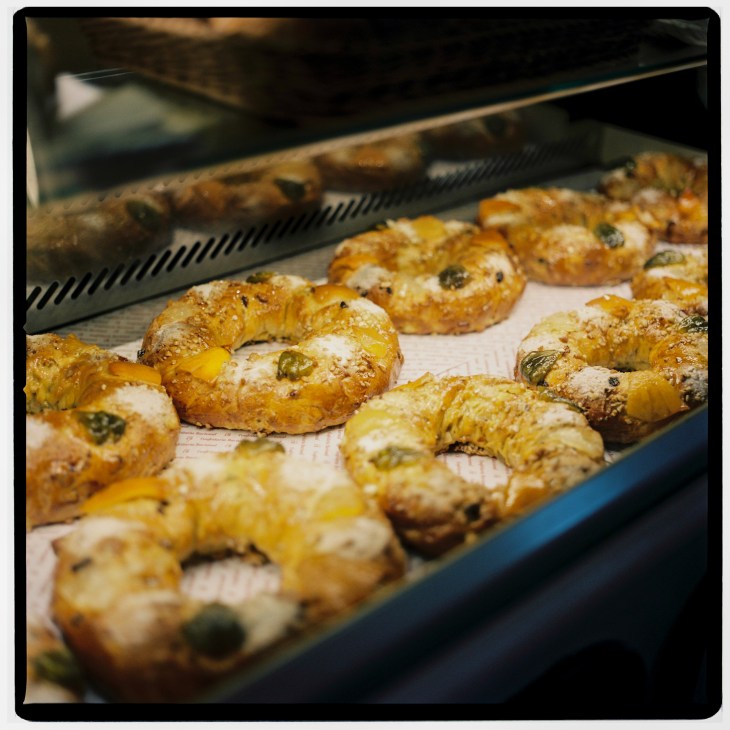
Confeitaria Nacional was also the first shop in Portugal to sell the now ubiquitous Christmas cake, bolo rei, or king cake. The circular brioche takes its name from the three Magi who presented Jesus with gifts; today bolo rei is meant to be eaten on 6 January to celebrate the trio’s visit to the newborn baby. The recipe for this brioche containing raisins, nuts and candied fruit was brought to Portugal from France (where the galette des rois reigns) by Balthazar Castanheiro Junior, the son of Confeitaria Nacional’s founder. At the time, Confeitaria Nacional was the official provider of pastries to the royal household and the bolo rei was swiftly devoured by both the monarchy and the general public (when Portugal was declared a republic in 1910, there was a movement to rename the cake the Bolo Presidente but it never caught on).
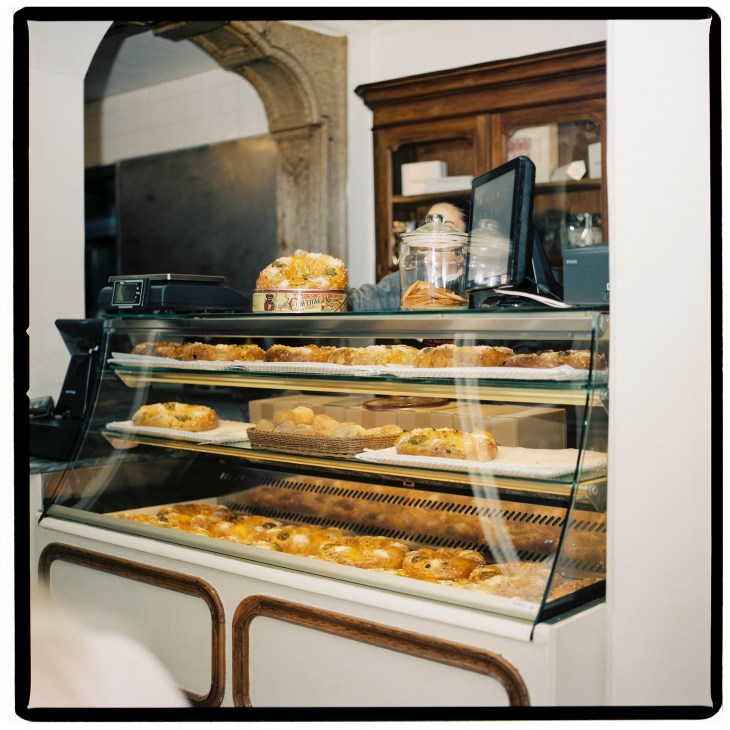
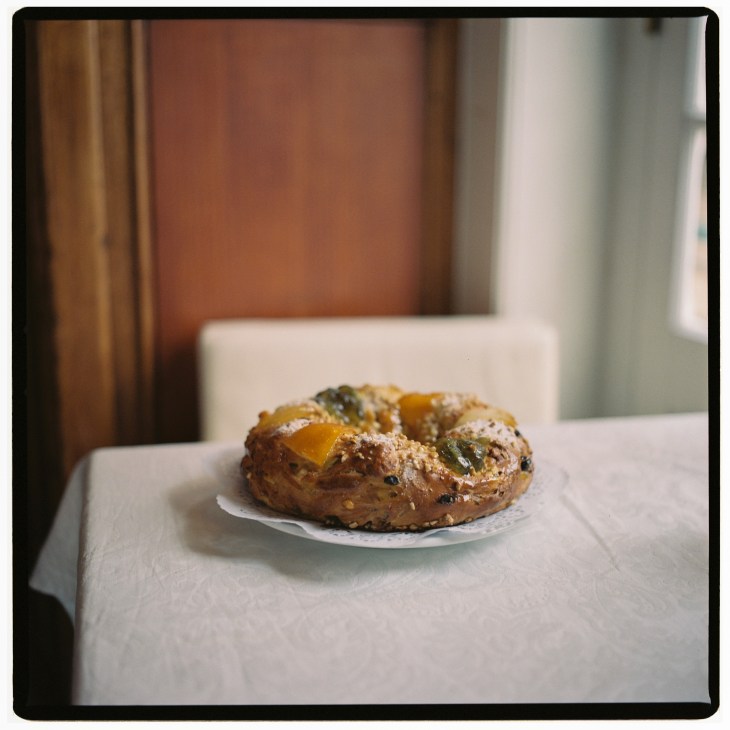
Today, bolo rei is a staple at any Portuguese Christmas table, sold in bakeries and supermarkets around the country. Traditionally, a fava bean and a little silver trinket (usually a small figurine of a saint) are inserted into the cake. Whoever finds the fava bean in their slice is expected to buy (or bake) the bolo rei the following year. The lucky person who receives the slice of bolo rei with the silver trinket becomes king for the day and will enjoy good fortune in the coming months. Sadly, in recent years some bakeries have done away with inserts completely due to the risk they might pose as choking hazards or tooth-breaking devices.
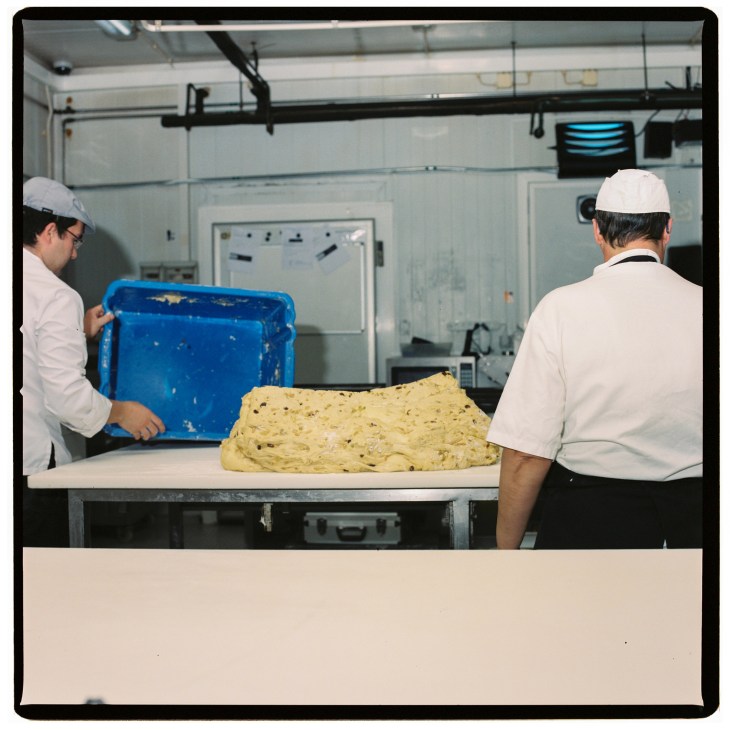
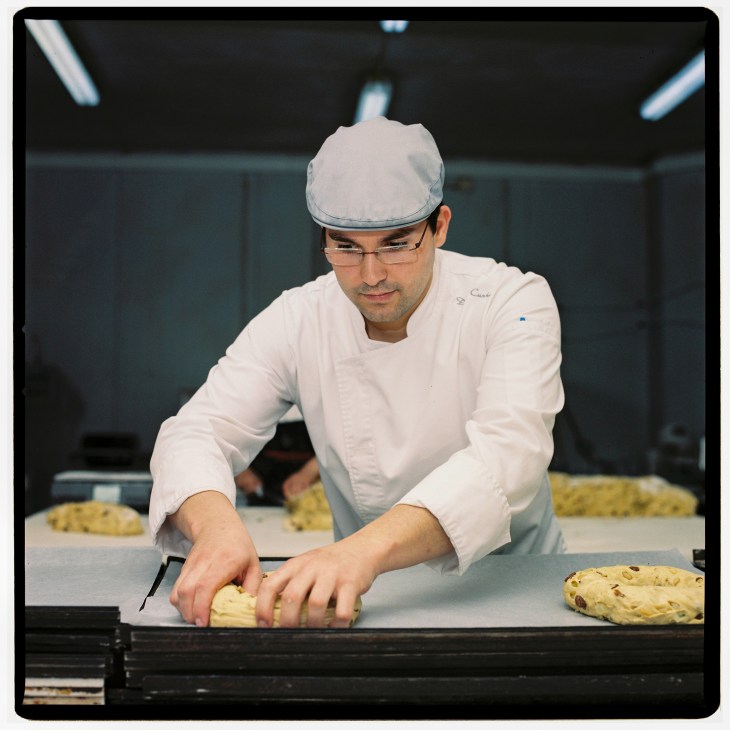
In Confeitaria Nacional, sales start in October and production wraps up just before Easter – for those who want to extend the pleasure of eating the cake well after 6 January. In the three days leading up to Christmas alone, 6,000 cakes are made in Confeitaria Nacional’s kitchen and the red-and-yellow tins that they are packed in fly off the shelves of its three Lisbon shops.
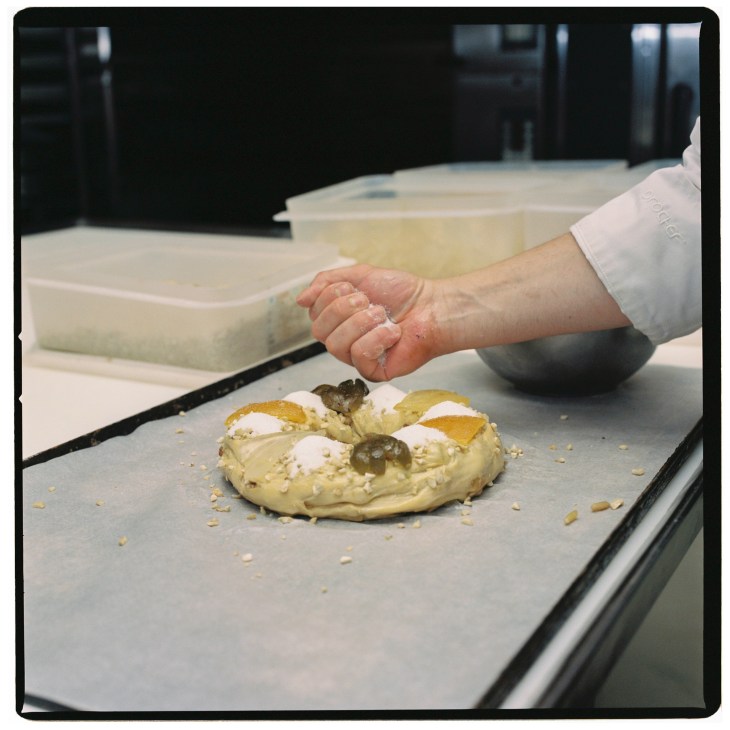
Though the cake is now found all over Portugal, Confeitaria Nacional does things in a unique way, starting with a secret ingredient that, it is said, only two people know: the establishment’s sixth-generation owner and the head pastry chef. The establishment also prides itself in not using any artificial colourings in its candied fruit. Whatever the secret ingredient is, it must be doing something right. The famed cake has remained a classic over the years, sought after by Portuguese at home and by the country’s diaspora. Last year, Confeitaria Nacional set up a distribution network to sell its bolo rei in what’s known as the “saudade market“– countries home to large Portuguese communities such as France, Luxembourg, Netherlands and Spain – so that expatriates can savour their country’s Christmas crown jewel, wherever they happen to be.
5.
Festive fruit
Colombin, Tokyo
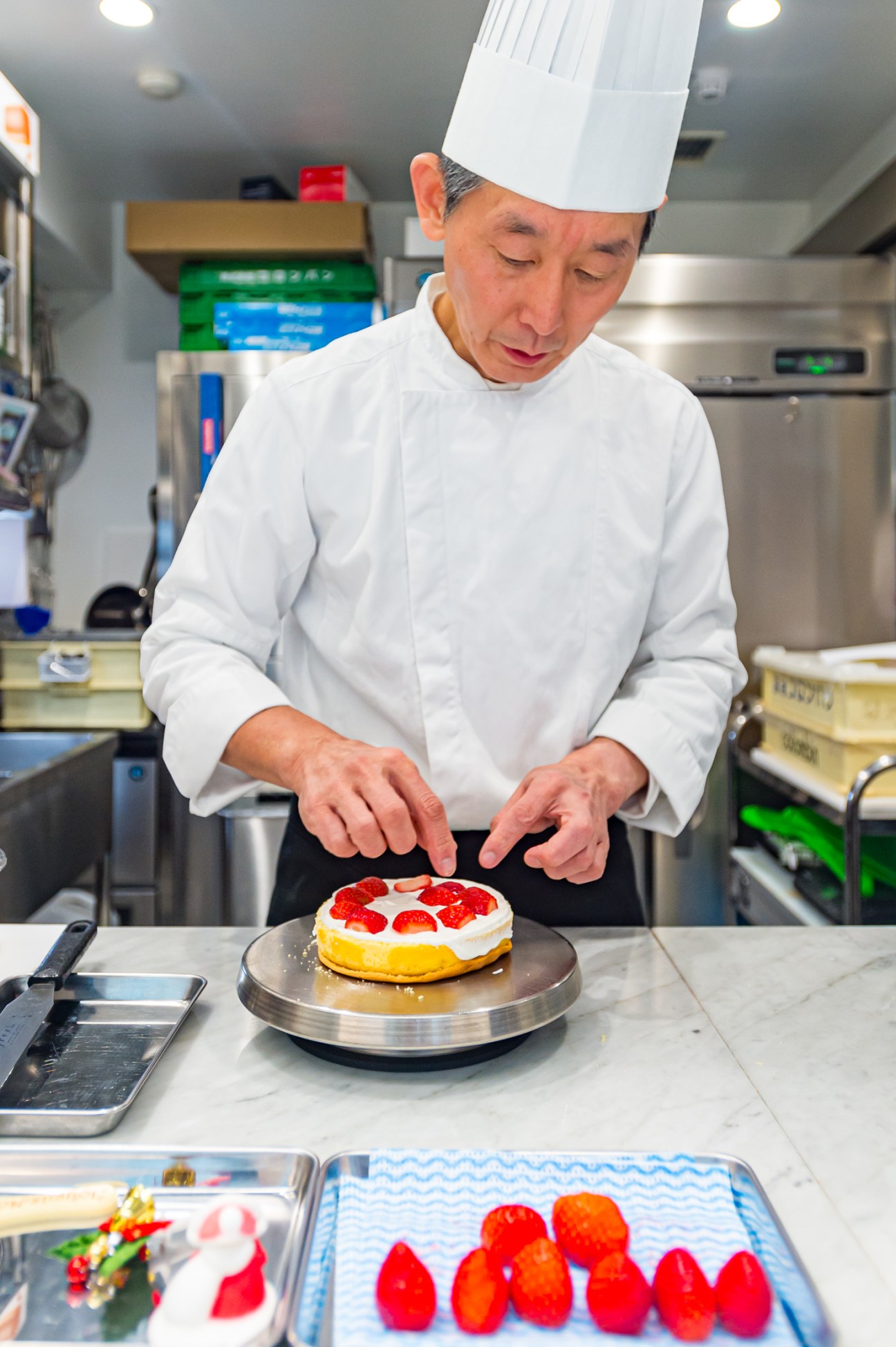
Japan has never had much time for the alcohol-soaked heft of a traditional fruit cake, preferring instead to celebrate Christmas with a frothy strawberry shortcake. This simple but sublime confection of featherlight sponge, whipped cream and fresh strawberries originated with Kuniteru Kadokura, a baker who worked in the Japanese royal household before studying pâtisserie in France (the first person from Japan to do so) and then returning to open his own establishment, Colombin, in Tokyo in 1924.
The invention of the Japanese strawberry shortcake came a few years later, made possible by a series of converging events. First was the introduction to Japan of homegrown strawberries and then the arrival of whipped cream. Hayato Futaba, who, like Kadokura, was working in the Imperial household, started growing Western fruits in greenhouses at Shinjuku Gyoen. The strawberries took off in 1919. Meanwhile, Nakazawa Dairy obtained machinery from the US to start whipping cream. The sponge itself was less complicated: Kadokura based it on castella, a Portuguese-influenced sponge cake that bakers had been making in Nagasaki since the early 16th century.
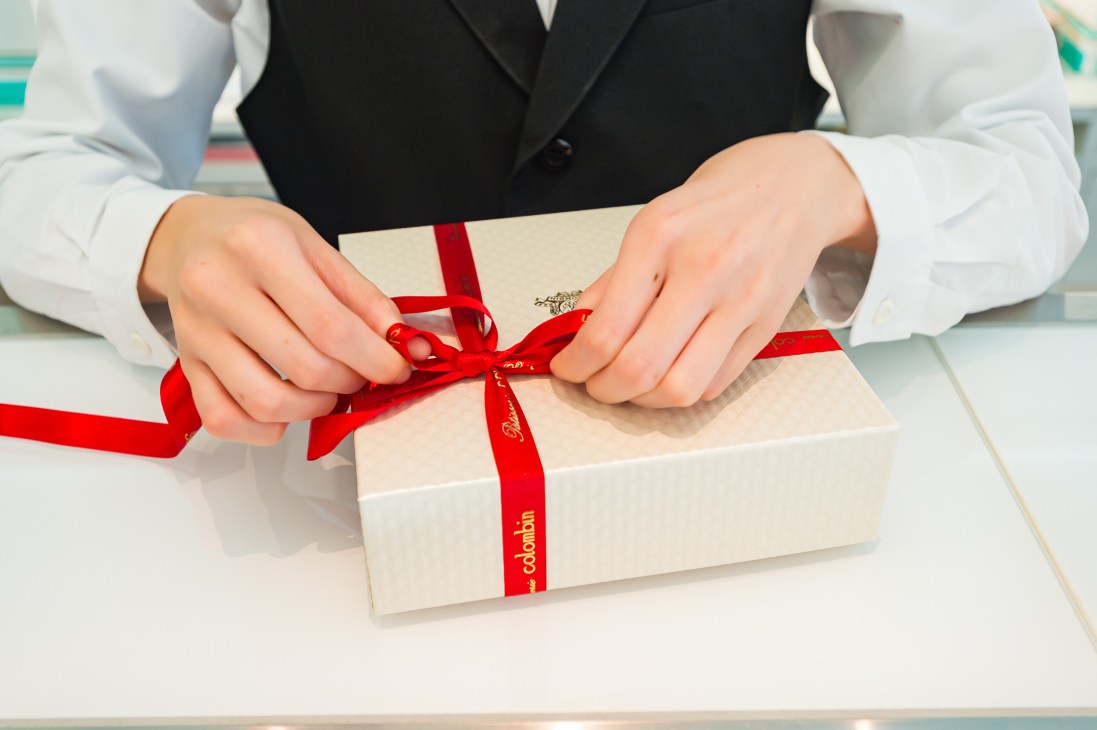
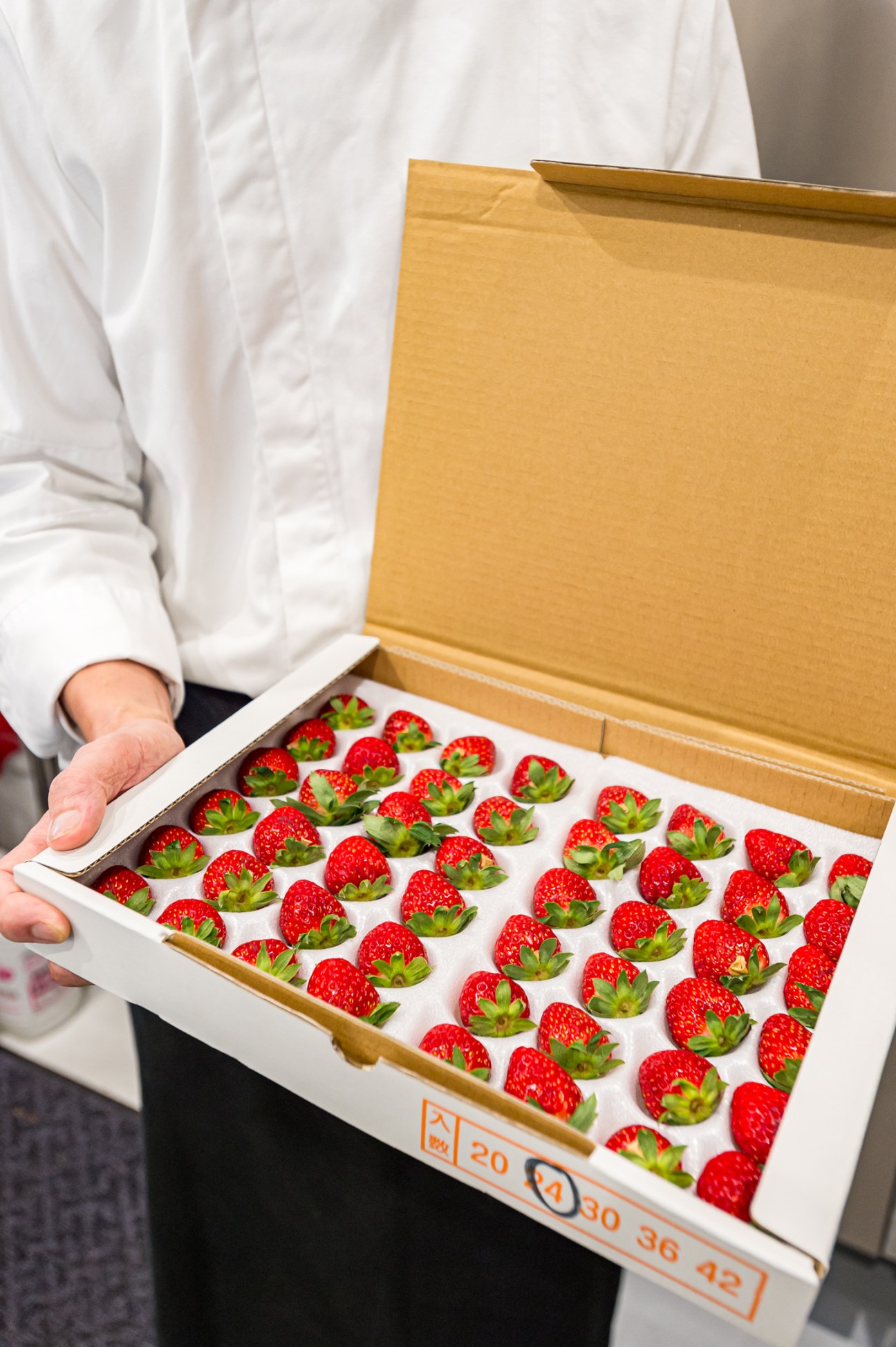

The strawberry shortcake morphed into a Christmas staple a few years later and Colombin continues to make thousands (they’re expecting to sell 4,000 this year). There are many versions that appear anywhere from convenience stores to independent pâtisseries but Colombin offers an authentic experience. The recipe has barely changed, apart from the reduction of sugar in the cream from 20 per cent to 10 per cent. A photo from 1959 reveals that even the swirly piped cream is much as it was. Colombin’s head pâtissier today is Yasuhiko Horie, who joined the company in 1978. “It’s a very simple cake to make,” he says. “The secret is in the ingredients.”
The Colombin sponge, says Horie, is denser than some due to the addition of extra egg yolks. The whipped cream is still made specifically for Colombin by Nakazawa and with a rich double cream to achieve a snowy whiteness. The cream is mixed with sugar and Madagascan vanilla. The strawberries are always the best available: a firm but sweet Suzu Akane variety from Hokkaido. In Japan, the strawberry season used to start in January but farmers have since made it earlier to meet the Christmas demand.
Colombin had to pause production in 1944 owing to a shortage of sugar but bounced back after the war. By 1955 it had a shop at Haneda Airport. Colombin’s old Harajuku shop was recently swallowed up in a development, but the company’s attachment to the area, which began in 1967, continues with the new shop that opened in spring 2023.
The old favourites are present and correct; so too are marble cakes, cream puffs, apple pies and jars of crème caramel. Chef Horie notes that the stollen has also become fashionable with Tokyoites in recent years. But strawberry shortcake is still the star of the show come December. The design changes every year but the basic format – Santa in a bed of strawberries – remains. “It’s tempting to make it more elaborate but you have to remember that every cake is decorated by hand,” says Horie. And if Christmas isn’t a time that calls for traditions, when else does?
Trading places
The joys of going shopping are undisputed: nothing beats the experience of walking into a physical space, taking in its interiors and signature scent, and making a fresh discovery or striking up conversations with fellow customers and staff. That’s why brands have continued to invest deeply in expanding their retail networks, tailoring outlets to their locations and offering bespoke services for loyal clients. This winter, for example, much-loved brands such as Visvim and Paris-based L/Uniform have invested in new outposts in Tokyo to cater to locals’ and visitors’ growing appetite for well-designed shops.
The multi-brand boutique is also back on the rise, thanks to creative retailers with the canny ability to scour the market and curate best-in-class collections. Madrid’s Sportivo and Beige Habilleur in Paris are just two examples of fast-growing multi-brand shops; both have been expanding their businesses and celebrating new openings in their hometowns this winter. An international outpost is in the works for Beige Habilleur too. In these pages, Monocle rounds up some of the best new openings. Happy shopping.
1.
Meeting in the middle
L/Uniform, Tokyo
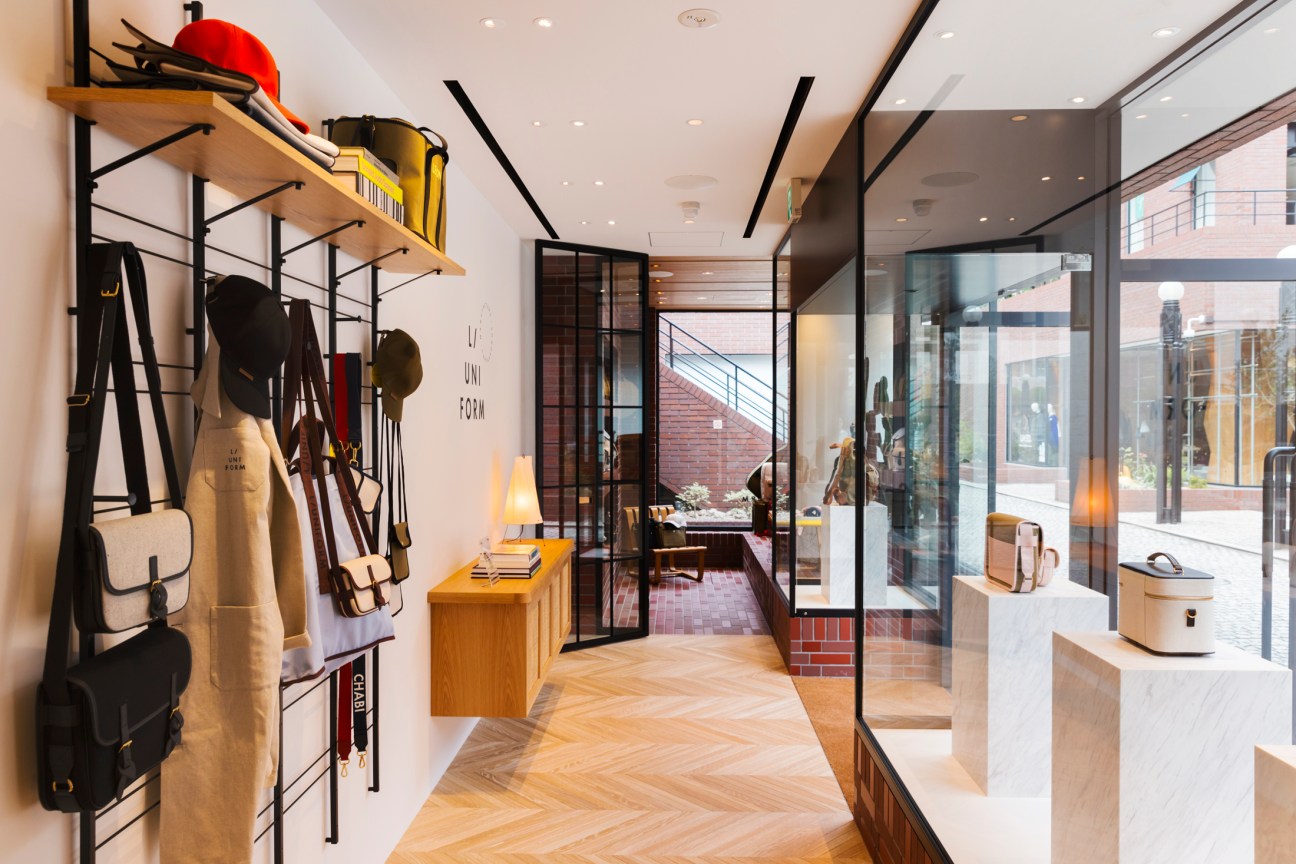
Founded by Jeanne Signoles in 2014, French bag label L/Uniform now offers a collection of canvas and leather styles in more than 100 variations. Japan is its biggest market, so expanding its footprint here was a priority. The brand’s new shop in Tokyo’s Minami-Aoyama district is its second flagship shop in the country.
Wanting it to feel like a Japanese house from a French perspective, Signoles called on Masamichi Katayama and his studio, Wonderwall. “I put myself in the mindset of a French architect who likes the work of Junzo Yoshimura,” says Katayama. He installed paper lanterns by Isamu Noguchi and pieces including armchairs by George Nakashima and Katsuo Matsumura; a backlit paper screen changes brightness throughout the day. “Materials such as brick tiles combine with chevron-pattern flooring, a European-style desk area and more to create a mix of Japanese and Western.”


Bags remain at the heart of the brand but the shop’s line-up also includes a folding stool with a canvas seat, cushions and dog leads. Every bag has a number and most items can be personalised with initials. A suitcase called No 40 combines canvas with Spanish calf leather. Travel has never looked so chic.
luniform.com
2.
Outside advantage
Norrøna House, Baerum

It has been more than 90 years since Norwegian adventurer Jørgen Jørgensen founded outerwear label Norrøna but the demand for its durable winter apparel remains strong. Four generations later, Jørgensen’s great-grandson, who bears the same name, is leading the business into the next chapter with the opening of Norrøna House, a new multi-purpose hub featuring an indoor-climbing gym, a development factory, repair centre and Nordic restaurant. Here, he tells Monocle about the ambitious venture.


What is the concept for Norrøna House?
We wanted to create a hub for our customers where they can find inspiration, get their gear fixed and meet each other. The experience needs to be different from what you can find online. The building is a paper mill from 1862 with a waterfall outside where freshwater salmon swim. It’s a green area but also close to the centre of Oslo. It’s great to be able to design products in the same place where we can meet our customers. We want to combine this affinity for nature and good design because many consumers now wear our pieces in urban environments too.
Tell us about the design of the space.
All of the shop’s fixtures, including smaller details such as the hangers and mannequins, are made in-house and have been tailored to fit our brand identity.
What else is the company focusing on?
Norrøna has its own travel agency, which is in the process of building lodges north of the Arctic Circle. These are remote locations in fantastic nature reserves that offer all kinds of outdoor activities. At Norrøna, we don’t just provide the gear but also the experiences that it enables.
norrona.com
3.
Leader of the pack
Sportivo, Madrid

Sportivo has been a go-to destination for Madrid’s best-dressed men for more than 20 years. As its reputation has grown, so too has the list of labels that it stocks, from UK brand Mackintosh to Scandinavian names such as Norse Projects. Keen to keep expanding its offer without overcrowding the original shop on Conde Duque, founder Goyo Otero started looking for a second location. Last autumn, Sportivo opened a shop in a former palazzo dating back to 1907 on the nearby Calle Limón. The ground-floor space had long been empty.
“It was used as a motorcycle-repair shop,” says Otero, who enlisted Mayice Studio to refurbish the interiors. The design team stripped back the space, keeping its exposed plaster walls and terrazzo flooring and adding fresh white paint to its ornate Doric columns. The original light fixtures have been fixed up and towering windows flood the shop with natural light. Clothes are hung from metal rails or arranged on tempered-glass sheets strung by wires from the ceiling. The design was kept minimal to ensure that nothing distracts from the clothes.
“This space is for the higher-end designers that we stock,” says Sportivo buyer Nacho López, referring to collections by the likes of Lemaire and Dries Van Noten, as well as emerging brands such as US-based And Austin. There are plans to add more homeware and books to the shop’s offering too. “We’re happy to be starting a new chapter,” says López.
sportivostore.com

4.
Hitting the jackpot
Visvim, Tokyo
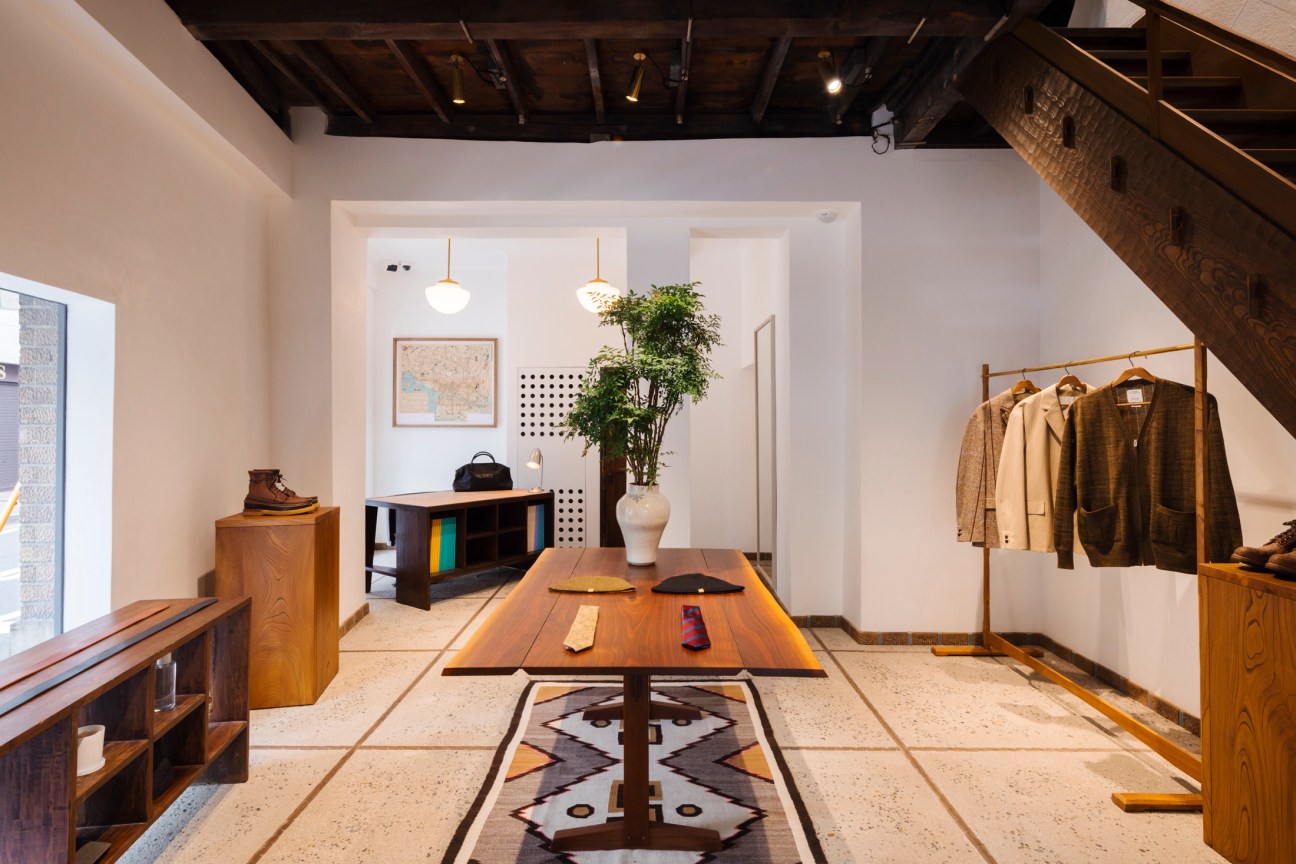
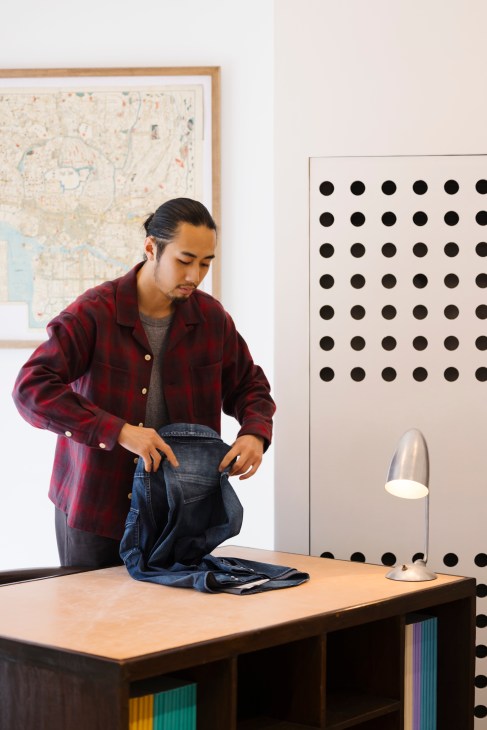
Such is the popularity of Hiroki Nakamura’s Tokyo-based label Visvim that first-day customers at its latest opening in Ginza were drawn from a lottery. Housed in a 90-year-old, three-storey building, the shop combines Nakamura’s love of Americana and Japanese craft, hence the vintage map of the city on the wall and the custom carpet from the US that lines its vip room.
Trends are largely irrelevant for Nakamura, who returns to his core designs season after season. A new denim jacket, featuring a corduroy collar, has been given a dorozome mud-dye treatment in Kagoshima, while a pair of striped wool trousers was inspired by traditional Japanese silhouettes. You’ll also find Visvim’s popular hand-sewn Brigadier boots and sweaters hand-knitted in Tohoku. “It’s not just about preserving old things but enhancing them,” says Nakamura. “It’s great to pass on history in this way.”
visvim.tv
5.
Men about town
Beige Habilleur, Paris
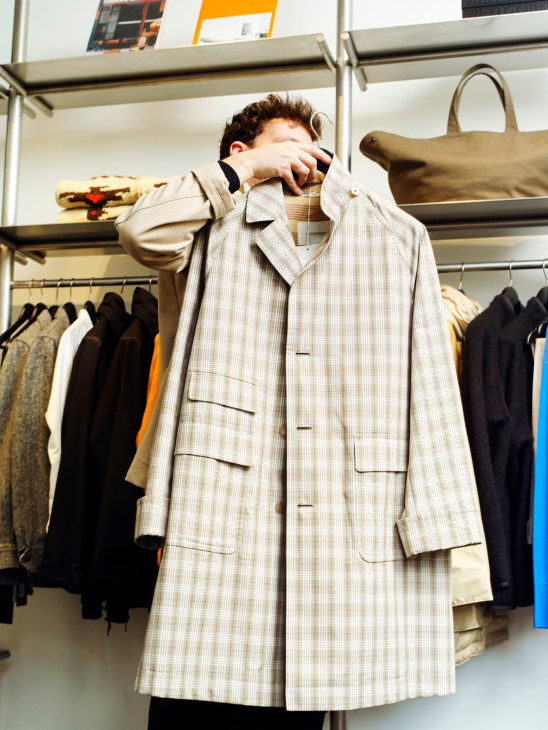
“You will always need a good blazer or a tweed jacket,” says Basile Khadiry, co-owner of Beige Habilleur, a Parisian menswear boutique that is celebrated for its wide-ranging collection of what he calls “modern classics”. Khadiry and his partner, Jean-Baptiste Ménétrier, launched the business as an online retailer in 2015, before opening a showroom in the French capital’s 16th arrondissement that quickly evolved into a boutique.
The duo initially wanted to help revive what had become a dull residential neighbourhood but, in late 2023, they seized the opportunity to move to a more central location. The new shop is on the corner of Rue Bonaparte, a short amble from the bustle of the Saint-Germain-des-Prés quarter. As a result, more curious passers-by wander in. Meanwhile, many of the locals have already become regulars.


Artistic director Pierre-Alexis Guinet and architecture studio Corto-Corto designed the space to evoke a walk-in wardrobe. Its brown velvet carpet makes you want to kick off your shoes, while the centre of the shop features mirror cabinets, a banquette and display cases for leather accessories. “The idea was to imagine what a traditional menswear boutique would look like today,” says Khadiry.
The answer to this is also reflected in the clothes hanging on the boutique’s steel racks: think relaxed tailoring, chunky knitwear and rubber sneakers. Khadiry, who previously worked at luxury businesses including Louis Vuitton and Chalhoub Group, tells Monocle that he is committed to finding “the best item in each category”. That includes plenty of Japanese brands, from coats by Cohérance to shirts by Haversack, and warm knitted jumpers by Scottish brand Jamieson’s, as well as wool jackets by South Tyrolean brand Rier. When they can’t find exactly what they are looking for, Khadiry works directly with brands to create their own in-house designs, including a line of shirts made with Neapolitan tailor Salvatore Piccolo.
Khadiry is also part of the team behind independent print magazine L’Étiquette, alongside his friend Gauthier Borsarello, who is the creative director of Parisian label Fursac. Borsarello will soon be selling pieces from his extensive vintage collection in the new shop. “The items will rotate every two weeks,” says Khadiry. “We are always trying to find a balance between the old and the modern, and the cool and the traditional.”
beige-habilleur.com
Creative resistance
It is almost two years since Russia’s invasion but Ukraine’s creative industry is still going strong. Many Ukrainian designers have had to put their family’s security first, moving away and setting up temporary homes and workspaces across Europe, from Warsaw and Berlin to London. But their commitment to both representing their country’s cultural heritage and supporting their teams and manufacturing partners – the majority of which stayed in Ukraine, eager to continue working –remains their priority.
Here, three brand owners and entrepreneurs tell Monocle their stories of displacement and how, against all odds, they have managed to adapt to wartime conditions and continue growing their businesses.
1.
Dressing the first lady
Natalia Kamenska
Stylist and co-founder, Gunia Project

When Ukrainian designer Natalia Kamenska woke up to the sounds of explosions outside her Kyiv flat in the early hours of 24 February 2022, she lay still in disbelief. “I was half-asleep and didn’t register the noises at first,” she says.
That morning marked the displacement of millions of Ukrainians from their homes. Kamenska, stylist to Ukraine’s first lady, Olena Zelenska, and co-founder of fashion and homeware brand Gunia Project, was among them. She made the decision to leave in the early spring of 2022. “I knew that if the whole population got up and left, we wouldn’t have enough resources to resist Russia,” she says. “But I had to prioritise my role as a mother. I couldn’t risk my child’s life by staying, so we left for Berlin.”
This was a familiar journey for Kamenska, who had been splitting her time between the city, where her husband lives, and Kyiv, where her business had been based. This time, though, it was different: surrounded by refugees pulling their suitcases across the platform, the designer thought that she might never get to return home.
A lot has changed since those early, grey spring days. In Kyiv, cafés, bars, restaurants, galleries and factories have reopened, while a record number of businesses have been rebuilt to respond to the realities of the war. “I understood that we could restart when the postal service and taxis began working again,” says Kamenska with a smile. Once settled in Berlin, she focused on restarting Gunia Project’s operation, following calls from her team and network of artisans who were keen to get back to work. Gunia Project’s first post-invasion sale was a series of candles in aid of the Ukrainian army. Soon after, the brand went back to selling its full range of jewellery, glassware, ceramics and clothing. Against all odds, the journey between Germany and Ukraine again became routine.
“At first, it was all a bit of a mess as our production came to a complete halt,” says Kamenska. “The eastern Ukrainian factory that used to source clay for us shut down, so we were searching for another supplier for more than a year.” Gunia’s clay supplier has now reopened but the brand is also looking to find production partners in Europe to facilitate international orders. “It’s our responsibility to keep going,” she says. “Fashion is a vital part of the economy and designers have to continue working to support Ukrainian society and those who protect it. We’re showing that we’re serious about business.”
Before the war, Gunia Project was rising in popularity thanks to Kamenska and co-founder Maria Gavrilyuk’s elegant designs, which often reference folk culture. Today, on the streets of Kyiv, it isn’t unusual to spot people dressed in the brand’s embroidered shirts. Ukrainians abroad recognise one another by wearing the same Gunia Project signatures – a way for them to express their solidarity with Ukraine and support local businesses from afar. Kamenska has also been witnessing fashion’s soft power as part of her ongoing work as Zelenska’s stylist. “In the first days of the war, Zelenska was adamant that she didn’t need stylists or make-up artists – there was no need for it during wartime,” says Kamenska. “But when she had to start travelling abroad to represent her husband, Volodymyr Zelensky, we had to rethink the way she dressed.”
Retaining the simplicity and sticking to muted colours, Kamenska explains that clothes became Zelenska’s source of strength and a tool of diplomacy. “Nowadays most Ukrainian women will choose a suit for official engagements to boost their confidence,” she says. “I still like to use small details such as brooches to convey messages. A flower is a symbol of returning home, an ear of rye is a symbol of Ukraine and so on.”
Kamenska is adamant about using her resources and international network to continue the conversation and act as an ambassador for Ukrainian culture. “Through Gunia, I feel that I can tell the world about my country, about our traditions and culture. To me, this comes hand in hand with our struggle for independence. There is so much beauty that we must save from destruction.”
guniaproject.com
Kamenska’s hopes for 2024
“I hope that 2024 is the year that rewards our resilience with a victory. But to achieve this, we need the international community to continue supporting Ukraine by sharing news of what is happening in our country, donating to local charities and, of course, buying from Ukrainian brands and artists.”
2.
Fighting for the future
Julie Pelipas
Founder, Bettter
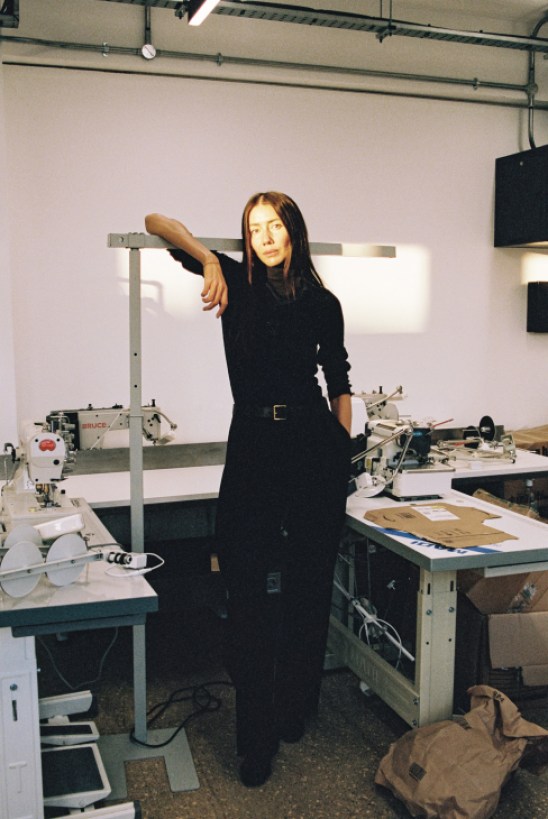
Julie Pelipas, the Ukrainian founder and creative director of fashion brand Bettter, sees herself more as a creative problem-solver than a designer. Since launching her own brand in 2020, she has committed to addressing fashion’s overproduction issues and offering solutions – mostly in the form of elegant tailoring made using upcycled textiles that would have otherwise been written off as deadstock. “Deadstock is not a popular topic,” Pelipas tells Monocle from her studio in London, the city she relocated to after having to flee Kyiv in February 2022. “I don’t want to confront people, but rather show them that we can create something fantastic and new using what we already have.”
Originally from Mariupol, Pelipas has a background in fashion journalism and used to work in Kyiv as a stylist and Vogue Ukraine’s fashion director. She left her post in 2020 to start her upcycling business and convince the fashion industry to adopt a more regenerative mindset. “There is an estimated $6bn [€5.7bn] worth of deadstock going to waste,” says Pelipas. “The numbers are buried deep in research because brands prefer to keep stock on financial balance, burn it or throw it away.” Her challenge was in persuading the big fashion houses to give her access to their unused or unsold materials.
In the past two years, she has had to face a challenge of a different scale, forcing her to rethink both her brand’s trajectory and her personal life. Having sensed political tension from early on, she moved to London with her two children a week before Russia invaded Ukraine – a decision she says that she took as a mother rather than as an entrepreneur. Still, she found ways to adapt her business’s operations to her new reality: research and development for Bettter now takes place in London and most of the label’s small-batch manufacturing has been relocated to Portugal. Pelipas was forced to shutter her own manufacturing facility in Kyiv but has sourced new partners across the country and keeps 30 per cent of production in Ukraine – something that she is eager to maintain. “Relocating took a lot of energy from us. I promised my team that I would keep them safe and not lower their salaries,” she says. “I’m responsible for 30 people, with some choosing to remain in Ukraine and others relocating.”
The same sense of responsibility has also driven her to take on an unofficial ambassadorial role for Ukraine, using her connections in the international fashion community to raise awareness for her home country and highlight the work of fellow Ukrainian creatives. Through Bettter Community, a non-profit initiative, she offers Ukrainian designers access to her label’s global platform and showcases their work. “I realise how privileged I am to be in London, to see normal life outside my window,” she says. “I had to witness my family go through a nightmare, often with no electricity and little water or food. They can’t erase that horror from their souls. As a nation, we’re dealing with a generation of physically and mentally broken people.”
Even while facing the trauma of the war, Pelipas has kept her business going. Her dedication is paying off: in May, EU regulators pushed to ban the destruction of unsold clothes and a month later, Bettter received the lvmh Karl Lagerfeld prize with a reward of €150,000. “The prize came at a good moment,” says Pelipas. “It was an important push to develop the business further, at a time when we were feeling down and exhausted.”
In the face of war, fashion can often appear trivial but for Ukrainians, dressing well is an act of resistance. “I can’t sit here and be silent,” says Pelipas. “If I give up on Bettter, I give up on myself and that would almost mean giving up on my country. Any person, at some point, faces a decision: are you here to fight or will you give up?”
bettter.us
Pelipas’s hopes for 2024
“In 12 months’ time, I want to be sitting here talking about the reverse situation: the world becoming more peaceful and our industry moving beyond its old ways. Collectively, we have made a lot of mistakes but I have hope that there’s a better future ahead.”
3.
Finding a purpose
Mary Furtas
Founder, Cultnaked

Designer Mary Furtas is the life of any party: sharply dressed in Helmut Newton-inspired blazers or evening dresses of her own design, holding engaging conversations and being the first on the dance floor. A former photographer, she founded her own fashion label just over five years ago in her home of Kyiv and turned it into an international success. “My husband and I had just bought a flat in Kyiv, we were planning a big renovation, we just had our baby and Cultnaked, my brand, was growing every single month,” she says from Warsaw. (She currently divides her time between London and the Polish capital.)
Despite her energy and optimism, she has also been living with the fear of war for nearly a decade. “The conflict has been here since 2014 but no one used to pay attention,” she says. “When it all started, I had lost some friends, so I was hyper-aware of it and when Russian troops started gathering around our borders in the summer of 2021 and then again in December of the same year, I became extremely anxious. I would wake up every day not knowing what to do: will I have to run when something happens? Will they close the borders? Will I survive this, if the currency collapses?” When her fears were confirmed and she woke up to Kyiv being bombed last February, she rushed to the border with her young daughter. After a gruelling 17 hours, they reached Poland. “I barely remember the next few months,” says Furtas. “We went to Lodz, tried Krakow, where everything was too expensive to rent. We then drove to Portugal and from there ended up in the UK. Anywhere we were, we wouldn’t even get out of the house because we would see no joy in anything.”
Furtas started finding glimmers of hope when a Ukrainian logistics company resumed international deliveries and she received new orders on her website. “The momentum was lost: we couldn’t offer the quick deliveries we used to and more than half of international transactions on our site would fail,” she says. “Still, when I saw orders coming through for the first time after the invasion, I felt as though there was a chance that I might survive. Plus, my team in Lviv were telling me that they wanted to continue working. They knew when they needed shelter – there are sirens before every bombing now – and felt that there was no point in sitting at home any more.”
To adapt, Furtas established a UK business entity, relaunched her website and moved her Lviv production office from the ninth to the second floor, so that people can evacuate the space faster. She also established a temporary base in Warsaw, which allows her to drive to and from Lviv every couple of weeks to meet her team, shoot campaigns locally and oversee production. Her recent summer campaign was shot after a sleepless night following threats of a nuclear attack. “Of course, I’m scared every time I go back, but this is about being a team and I’m not going to let my team down,” she adds. “Also having my own workshop means that I can control the quality. I know every stitch; I don’t need to fly to the Far East to make my clothes. It all happens in a compact 150 sq m space. That’s our answer to having a sustainable supply chain.”
Furtas has managed to grow her company’s revenues to $700,000 (€652,000) in 2021. She is expecting further growth and is now plotting to expand into footwear and handbags, as well as launch a second label. “The best thing is to just do something – and I’ve always had this drive to create,” she says. “You’ll never be fully happy when there’s a war, you’re always being dragged into dark places. But you learn to live with this. Today I understand that the most productive thing that I can do is to keep on going and keep fighting. By growing the brand, I generate income and help the economy – and the country.”
cultnaked.com
Furtas’s hopes for 2024
“I hope that the international community won’t shut their eyes to the war in Ukraine or ignore the effect on its own security. There’s a huge increase in propaganda, trying to silence Ukrainians or make us look unworthy of support, so people should keep joining our demands for protection.”