Issues
Affairs
SOFT POWER ICON
Mongolia
Heavy duty
With 1,187 career wins and a record 45 grand tournament victories, Hakuho Sho is often described as the greatest sumo wrestler of all time. His retirement ceremony in 2021 was attended by dignitaries including a former Japanese prime minister and the president of the Toyota Motor Corporation. But Hakuho is not a typical yokozuna (those who have achieved the highest rank in sumo).
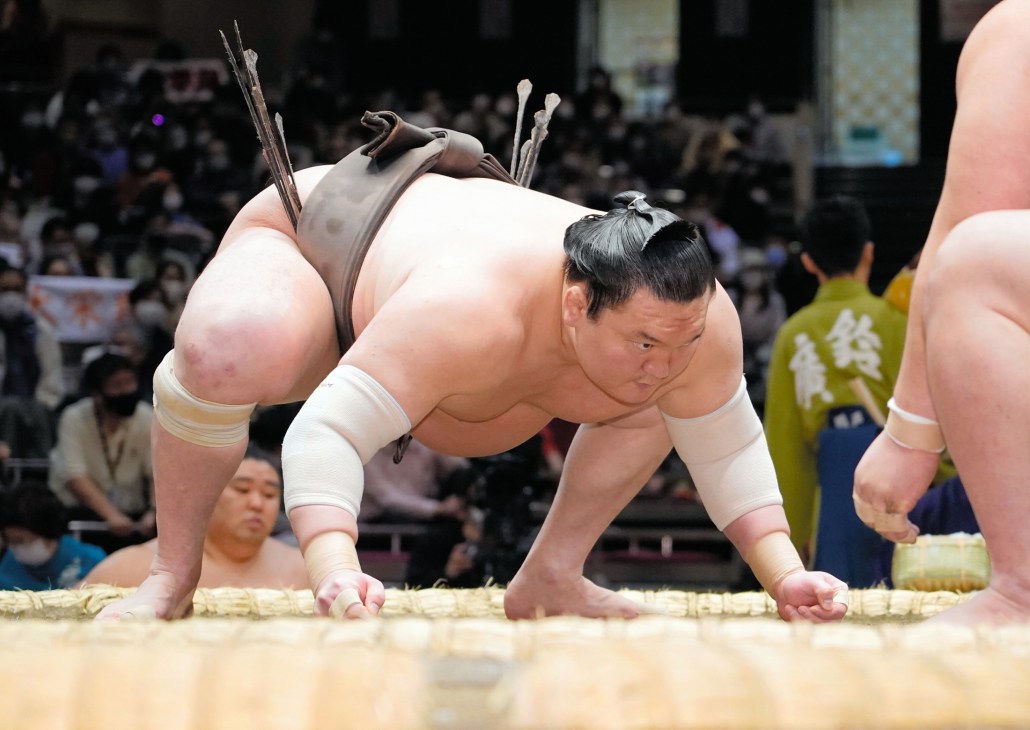
Born Mönkhbatyn Davaajargal in 1985 in Ulaanbaatar, he emigrated to Tokyo at the age of 15 to follow his dream of becoming a sumo wrestler. In 2011 he returned to his homeland as Hakuho Sho, national sumo champion, to launch the Hakuho Cup, a competition encouraging a new generation of Mongolians to embrace Japan’s national sport. Sports Nippon described the competition as “a bridge for friendship” between the two countries – a bridge of which Hakuho is a steadfast cornerstone.
Diplomatic Spat
Church vs state
Who vs who: Russia vs Bulgaria
What it’s about:
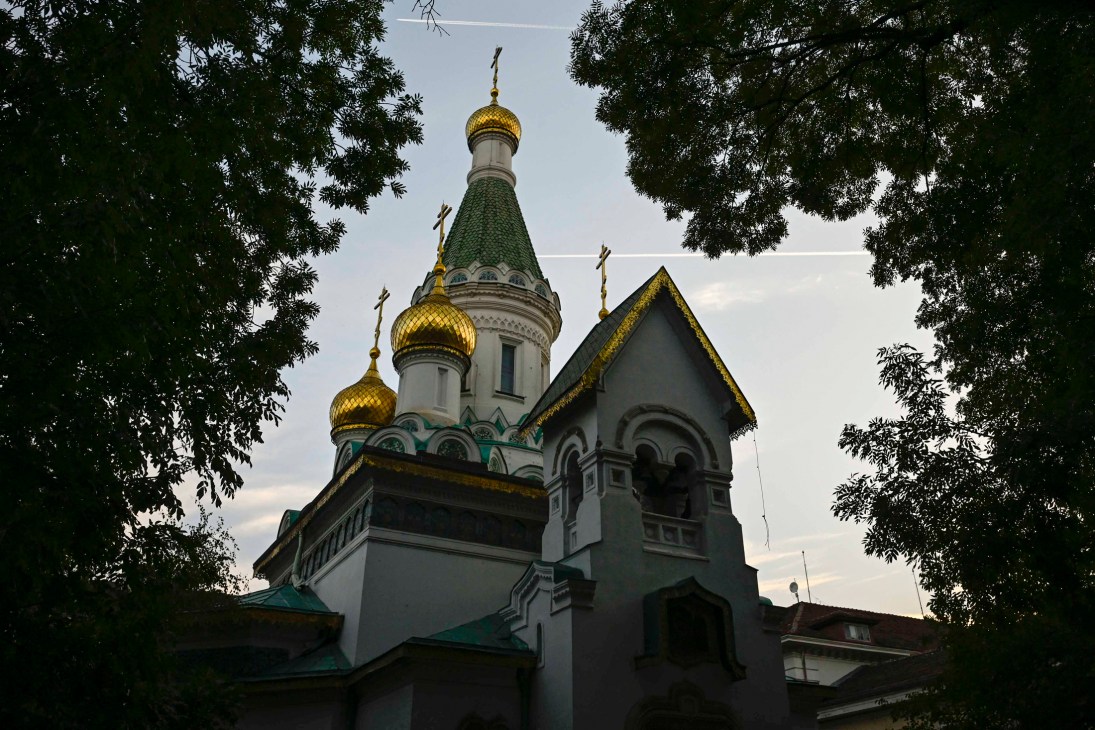
Russia has summoned Bulgaria’s ambassador in Moscow to a meeting without caviar after Sofia threw out the head of the Bulgarian franchise of the Russian Orthodox church. Bulgaria accused Archimandrite Vassian – and two Belarusian clerics retained by Sofia’s church of St Nicholas the Miracle Worker – of attempting to “influence the social and political processes in Bulgaria in favour of Russian geopolitical interests”.
What it’s really about:
Bulgaria’s recently elected prime minister, Nikolai Denkov, has made a point of reckoning with Russia’s long-standing meddling in Bulgaria. It is not impossible that, as one Bulgarian MP has suggested, Archimandrite Vassian is “a representative of Russian intelligence in a robe”. Possibly not coincidentally, the major opposition party to Denkov’s coalition is an out-and-proud pro-Kremlin operation.
Probable resolution:
Russia will huff and puff (it has already described Bulgaria’s move as “blasphemous”). It is sadly unlikely, however, that Russia will pause to wonder why pillaging one of its Western neighbours on an absurd pretext has not enticed the rest of the former Soviet sphere to re-embrace Moscow.
The Foreign Desk
Having sympathy for politicians
Andrew Mueller on…
It is not fashionable to sympathise with politicians but making The Foreign Desk often prompts gratitude that I have my job, not theirs. I shake their hands after interviews at some summit or conference and toddle off to an agreeable dinner with colleagues, while they go back to attempting to ensure the security of Europe, or some such task. Possibly during such a dinner, we decided that if we couldn’t exactly organise it for listeners to walk a mile in the shoes of these decision-makers, we might be able to have them spend half an hour at their desks.
We recently aired a three-episode season under the sub-heading “In The Room” (wherever you get your podcasts, etc). We sought out people who had, at pivotal moments in recent history, been in the room – or, as the case might have been, aboard Air Force One as it flapped frantically about the US attempting to evade terrorists, or on the bridge of a Royal Navy frigate as the order was given to abandon ship. We considered three events: September 11, the Falklands War and the secret meetings that preceded the release from prison of Nelson Mandela. The intention was to remind our listeners, and ourselves, that human affairs are more often than not directed by people sitting around a table asking themselves and each other frantic variations on, “What the hell do we do now?” Even – especially – in such circumstances, our leaders are obliged to maintain a façade of implacable calm. It is usually only off the record, or after the event, that politicians will admit what a strange and terrifying thing it is to find yourself actually sitting at that table.
If there was one representative moment of some extraordinarily illuminating (and humbling) conversations, it was when we asked Andrew Card, former chief of staff to US president George W Bush, to recall the morning of 11 September 2001. There was a point at which Card knew that a second hijacked aeroplane had hit the World Trade Center – at which, indeed, much of the world knew that America was indisputably under attack – but the President of the United States, reading a book to an elementary school class, did not. Card had seconds to decide what to say and how to say it. His boss, it can reasonably be argued, went on to make decisions that seemed to many at the time like lousy ones – and proved every bit as regrettable as predicted. But he made them, as all leaders do, with incomplete information, against a backdrop of shifting circumstance and with little knowledge or control of their consequences. History is a much easier thing to judge when we know how it turned out.
Mueller is the host of Monocle Radio’s ‘The Foreign Desk’.
Politics
India
Name check
Invitations to September’s g20 summit in New Delhi were signed off by the “president of Bharat”. A mix-up in the mail? Not quite. While India is the country’s official moniker in international parlance, Bharat is its Hindi name. Commentators have interpreted the news as a sign that the ruling Bharatiya Janata Party and Prime Minister Narendra Modi intend to change the country’s name (as represented in English) in the UN register. This, it is believed, would appeal to its Hindu nationalist voter base.

But politics aside, what would such a name change actually entail? “The names of countries in local languages are usually laid down in constitutions,” says Pierre Jaillard, chair of the United Nations Group of Experts on Geographical Names. Once a name change is constitutionally formalised, “the country can notify the UN by means of a simple note,” he adds. “It is then immediately entered into the UN terminology database.”
“Each people has the right to speak its own language, even when referring to other people or foreign places”
In the Indian constitution, English and Hindi are both cited as official languages, while both India and Bharat are used to refer to the country (though the latter is only used once). So, in theory, the name change would be straightforward.
However, Jaillard notes that the UN’s terminology database doesn’t mean much on its own. For one, every country has its own national authority on place names, which have no obligation to align with the UN. Furthermore, the real aim of changing a place name is not to alter a database entry but to have it reflected in general usage. “This might take years of diplomatic effort,” says Jaillard. “And even then it might never succeed.” The nation formerly known as Swaziland is one example. When it changed its name to Eswatini in 2018, most countries updated their charters and common usage to reflect this. However, in Jaillard’s home country of France, the name Swaziland – a remnant of British colonial rule – persists. And there’s not much that Eswatini can do about it.
“On the one hand, each people has the right to decide on its own name and the names of places that belong to it,” says Jaillard. “But on the other, each people has the right to speak its own language, even when referring to other peoples or foreign places.” He admits that this is a contradiction but it is not his job to weigh in on which of these rights is more important – that is up to each country and each individual’s conscience. “The balance remains to be defined,” he says. And that is something for the advocates of “Bharat” to consider.
Transport
Seoul
Green card
Seoul’s metropolitan government has announced that the “Climate Card”, a new multi-use public transportation pass, will be available from 2024. For a monthly fee of 65,000 won (€46), cardholders will have unlimited access to Seoul’s vast network of subway and bus lines, bike-share system and, when the Han river water bus launches next year, boat services too. The card will be available to purchase next summer, after a five-month pilot programme. The impetus is twofold: it is intended to mitigate rising costs of living and reduce carbon emissions by decreasing car use.
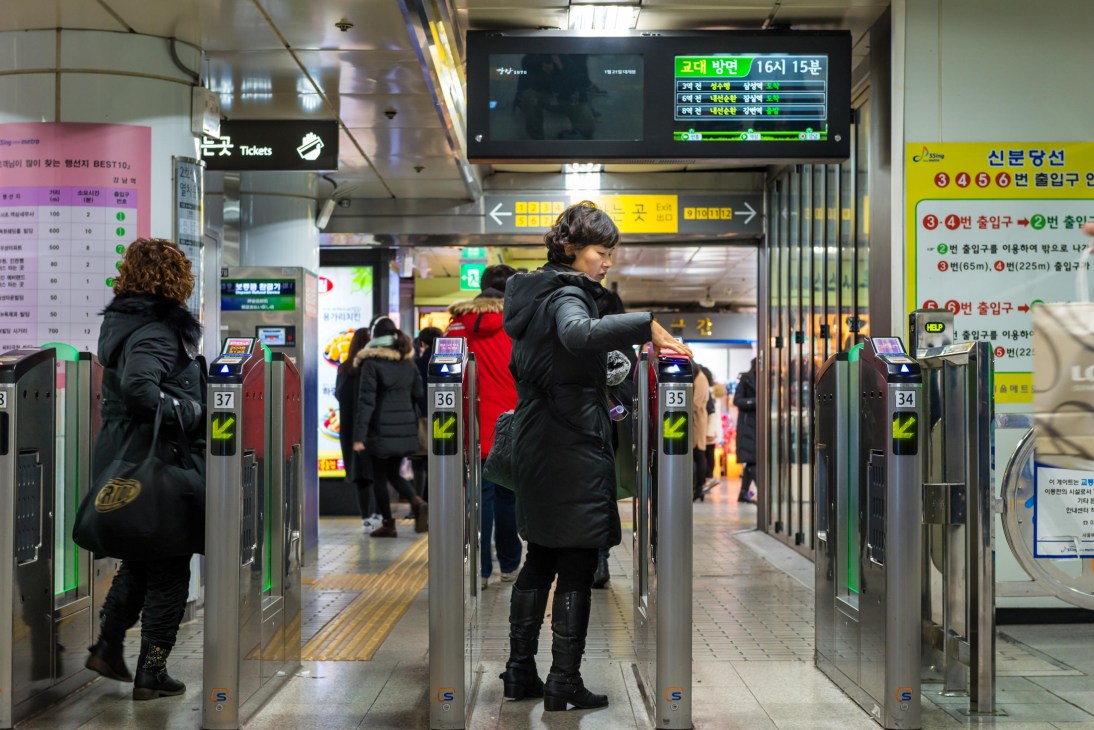
In 2022, Seoul’s mayor, Oh Se-hoon, also introduced a five-year climate plan that included replacing half of the city’s public buses with electric vehicles and building 181km of cycle paths. These initiatives are part of a broader push by the South Korean government to tackle climate change. Last year newly elected president Yoon Suk-yeol reaffirmed the previous administration’s goal of achieving carbon neutrality by 2050. Much will depend on a nationwide reduction in coal use but action within Seoul, the country’s most populous city as well as its economic and political hub, is crucial. With transportation accounting for 17 per cent of the city’s greenhouse- gas emissions, the Climate Card is a positive step.
Images: Alamy, Getty Images
Business
The Entrepreneurs
Manufacturing with a conscience
Tom Edwards on…
“We want things to last,” says Eyerusalem Kidane, co-founder of Ethiopian premium leather-goods company Sabegn. “It’s a core value of mine: I don’t want to keep buying the same thing over and over. This is also ingrained into how we design things. We use scrap; we use upcycled material. We don’t want to use new things to make more stuff that ends up in landfill. This is our ethos.”
From Sabegn’s workshop in Addis Ababa, Kidane and her colleagues produce beautiful bags from waste leather, incorporating traditional weaving techniques and design flourishes. After working with European and US brands, Kidane now has global ambitions for her own range. Starting with a concept store that opened in the Ethiopian capital in 2018, Kidane has built a loyal customer base attracted by provenance as well as the end product.
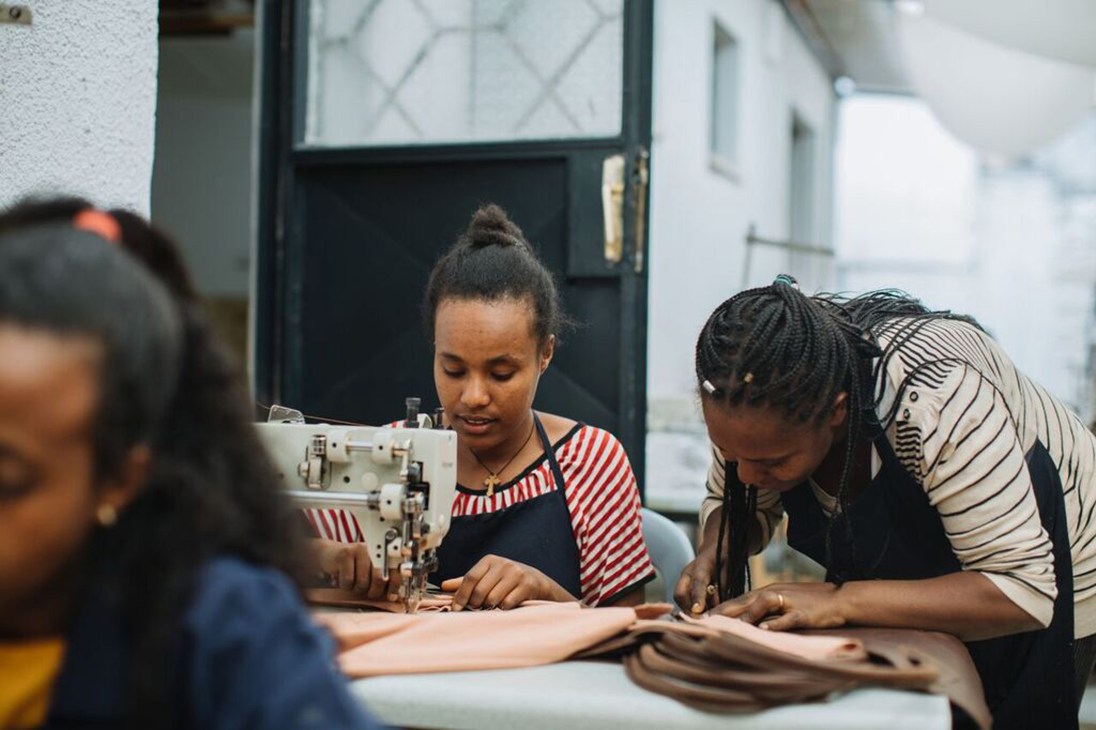
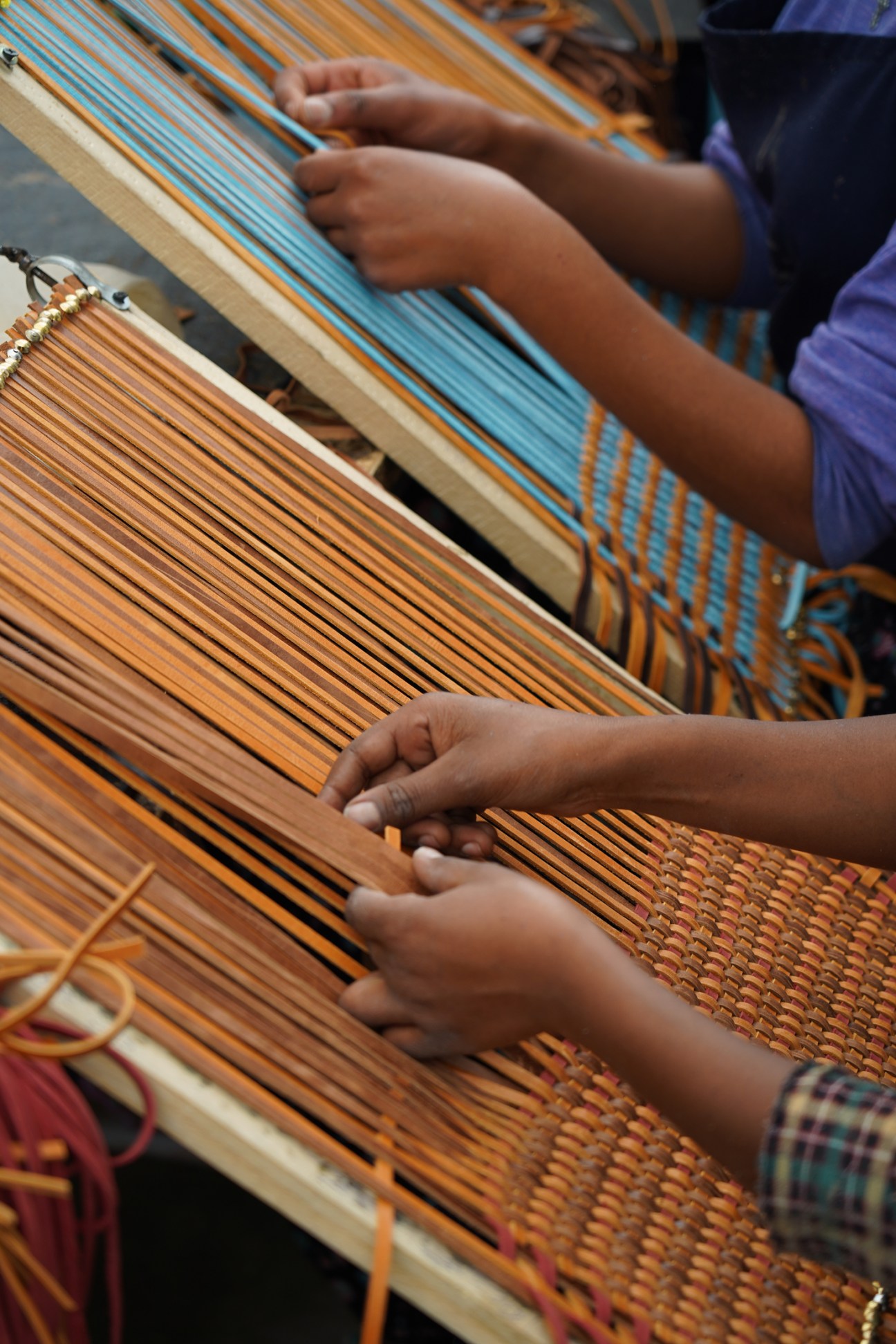
“We must use materials that are sustainable and we want the product we make to last,” says Kidane of her ambitious social enterprise. “It’s also one of the reasons why we went into a pre-order model: we don’t want to make things that will end up being thrown away.” The numbers certainly make impressive reading: as much as 10 tonnes of waste leather is used in a single collection of Sabegn bags. This is material that otherwise would have been destined for landfill. When Kidane and her sister, Elizabeth, founded the business more than a decade ago, they wanted to reflect the values of their family, which has been involved in the crafting of jewellery in Ethiopia for several generations.
As Kidane explains, however, Sabegn is about far more than artisanal manufacturing. “What brings us purpose is seeing our colleagues grow,” she says. “This is something that my mother taught me: to always help develop people. I think we have succeeded with that in Sabegn. My colleagues, mostly women, stay with the business for years. Paying salaries that make people able to save money for a better future is a vital part of what we do. The majority of people working in global fashion are not paid a living wage,” she adds. “We are making a difference here in Ethiopia – and this is how we want to keep doing things.”
To hear more from business owners on the move, listen to Monocle Radio’s weekly programme ‘The Entrepreneurs’.
Aviation
Norway
On the crest of a wave
Elfly Group is developing electric aircraft from its base in Bergen, Norway – and it’s on the ascent, not least thanks to an nok84m (€7.5m) grant secured in September from the Norwegian government. Its 20-person team has a handful of projects but their flagship product – and the reason behind the grant – is a commercial electric seaplane dubbed Noemi. Elfly released the specs and design for the aircraft in June and says that it hopes to have a prototype ready to take flight by 2025, with service entry in about 2030.
On the surface, this might look like any other fledgling regional electric-aircraft project: Noemi promises seating for between six and 13 depending on configuration and boasts a range of about 170km, meaning that its use is somewhat niche. Yet, because it’s a seaplane, that niche could turn out to be rather large. Designed initially with Norway and its challenging-for-transport terrain in mind, the aircraft could provide a whole new level of convenience and sustainability to any number of places – wherever there’s water to land on.
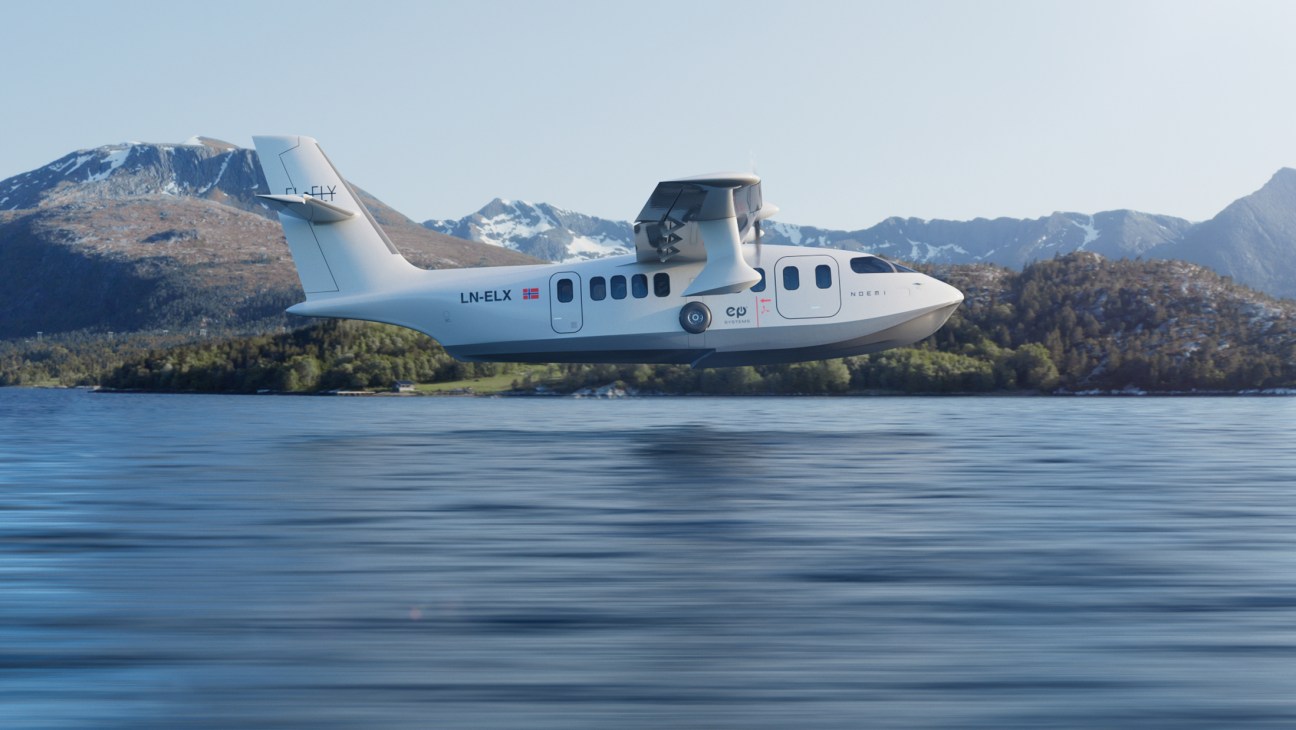
As a seaplane, Noemi can skip congested airports and deliver passengers from one city centre to another. But it also promises a revolution for those in remote communities – again, just look to the towns and cities amid Norway’s west coast fjords, for instance. An efficient, emissions-free nine-seater could even mean guilt-free flights from Stavanger to Bergen, for example, whereas right now the journey by bus, car or ferry takes about five hours. Or how about Odense to Copenhagen over in Denmark? The list goes on.
That’s not the only thing Elfly is doing differently. The firm plans to flip the traditional manufacturer-airline ecosystem and business model on its head by obtaining an Air Operators Certificate and operating the aircraft itself. That’s right: the company does not intend to sell its aircraft to anyone. (Though if the idea takes off as it hopes, it’s difficult to imagine that Elfly won’t reconsider.) Running a global seaplane airline and an electric-aircraft manufacturing firm at the same time would present a series of challenges. But at home, it sounds like the perfect solution for an initial foray into the Norwegian market. And the idea already has a natural advantage in Norway because the government has mandated that all domestic flights be emissions-free by 2040. Elfly is well on its way.
An emissions-free nine-seater could mean guilt-free flights from Stavanger to Bergen, for example
Fittingly and unsurprisingly, the Noemi seaplane is modelled primarily after ships, though the aircraft’s design is reminiscent of Northrop’s famed Grumman g-73 Mallard too, another rugged and robust seaplane. Elfly says that it is designing the Noemi to be able to operate in waves of up to two metres in height. Whether passengers will accept flying (and landing) in those conditions is perhaps another question. Still, the Noemi sounds nothing if not capable – and highly promising. We look forward to climbing aboard.
Retail
Taiwan
Scenes from a mall
Shopping centres are thriving across Asia and new players continue to enter the market. Among them is Taiwanese property developer jut Land, which has opened its first mall, Noke, in Taipei’s Dazhi area. Designed by Michael Lin, the building houses 95 tenants over seven floors. The project has given the 35-year-old company, best known for building luxury flats, a new perspective on construction: rather than handing over the keys to buyers and closing the door on its way out, this time it’s in it for the long haul. The ribbon-cutting at Noke was just the beginning.
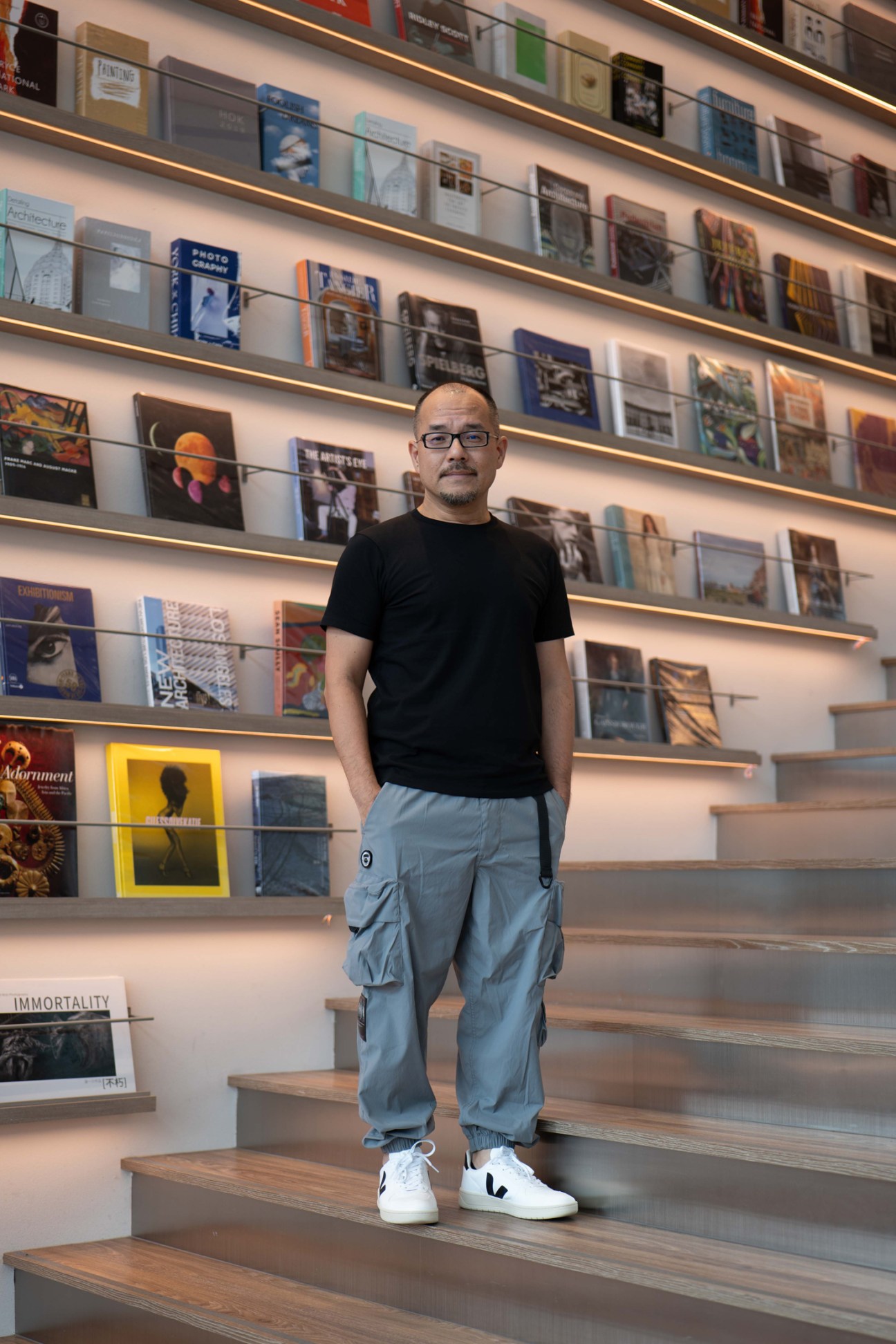
“It’s a living building that’s open to the public so we needed to design a space that could grow and change,” says Aaron Lee, jut Land’s 52-year-old deputy chairman and the driving force behind Noke. Wearing cargo trousers by A Bathing Ape and Veja trainers, he gives Monocle a tour of the €93m investment. It’s a sizeable down payment by a company that turns over about €467m a year and there’s a lot riding on Noke’s success. “It’s too expensive to be a one-off,” says Lee.
On the day that we visit, every corner of Noke is busy. Visitors queue for an art exhibition on the ground floor and a longer line forms for takeaway Taiwanese tea. Upstairs, lunch is being cleared away at a hot-pot restaurant designed by Kengo Kuma, while young people skate on an ice rink. At the heart of it all is an open-plan Tsutaya bookshop; though Taiwan has its own bookshop chains, Lee (pictured) knew that Tsutaya would open doors to other Japanese businesses that he wanted to work with, such as Onibus Coffee. “[The Noke outlet] is the number-one Tsutaya for sales in Taiwan,” says Lee.
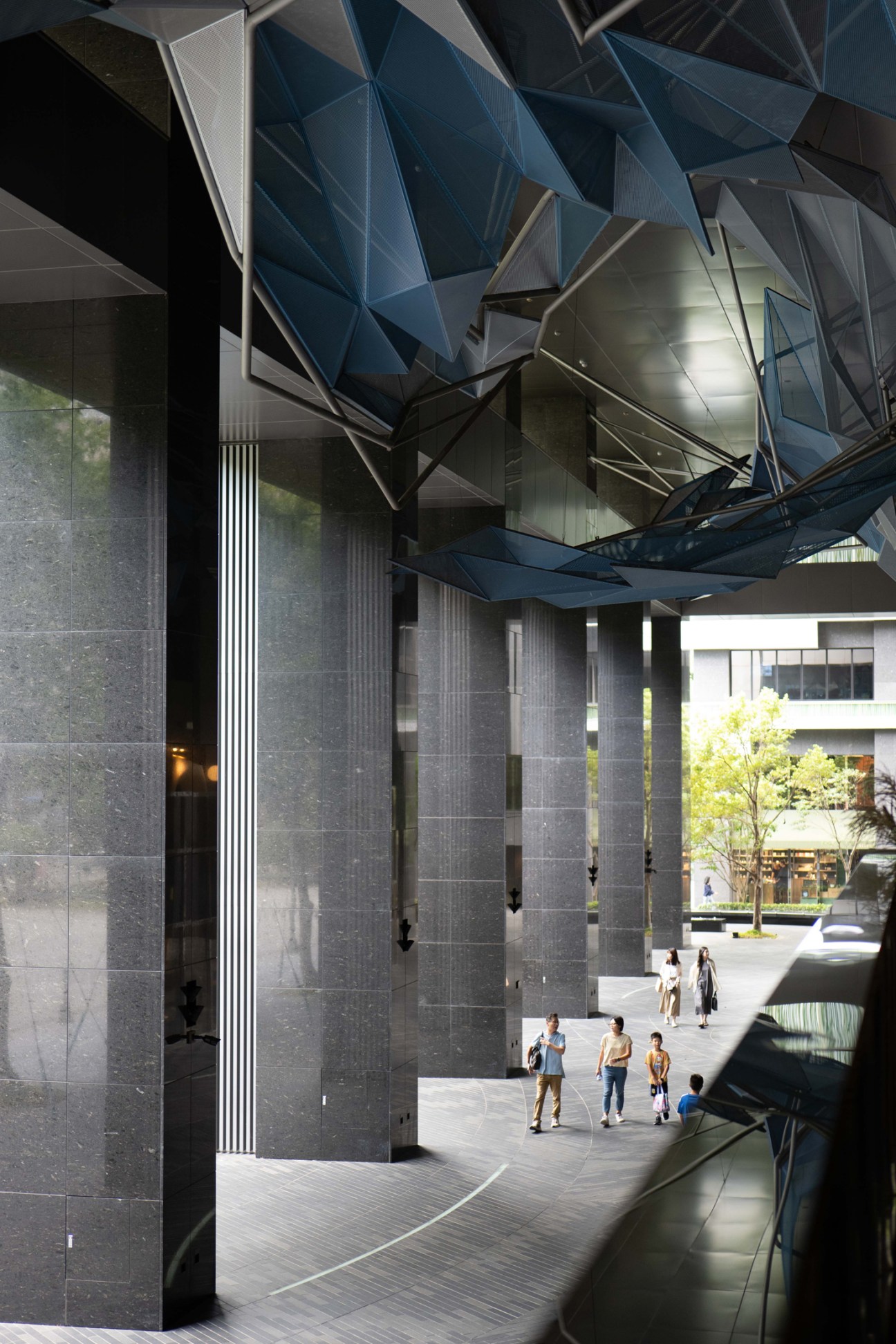
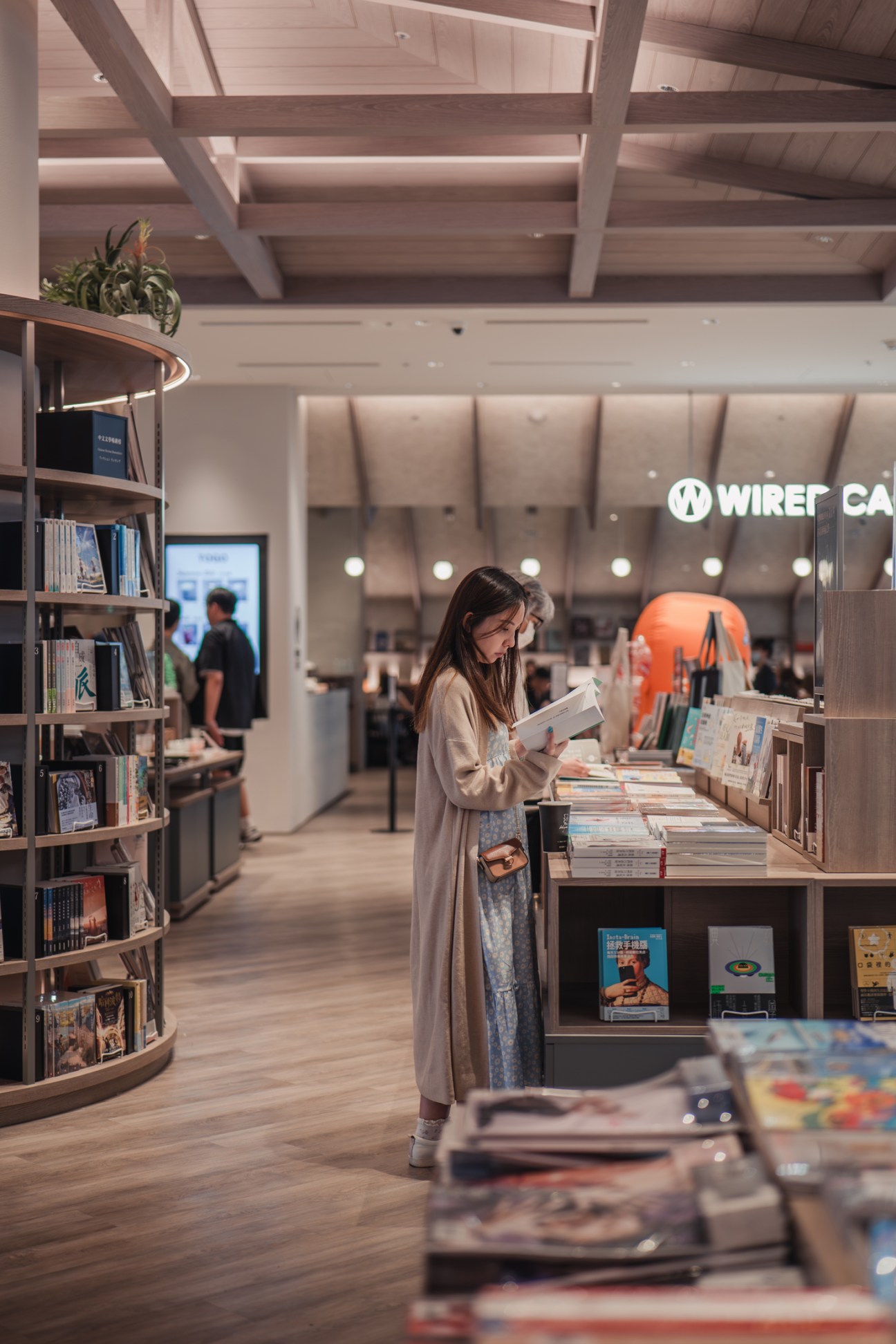
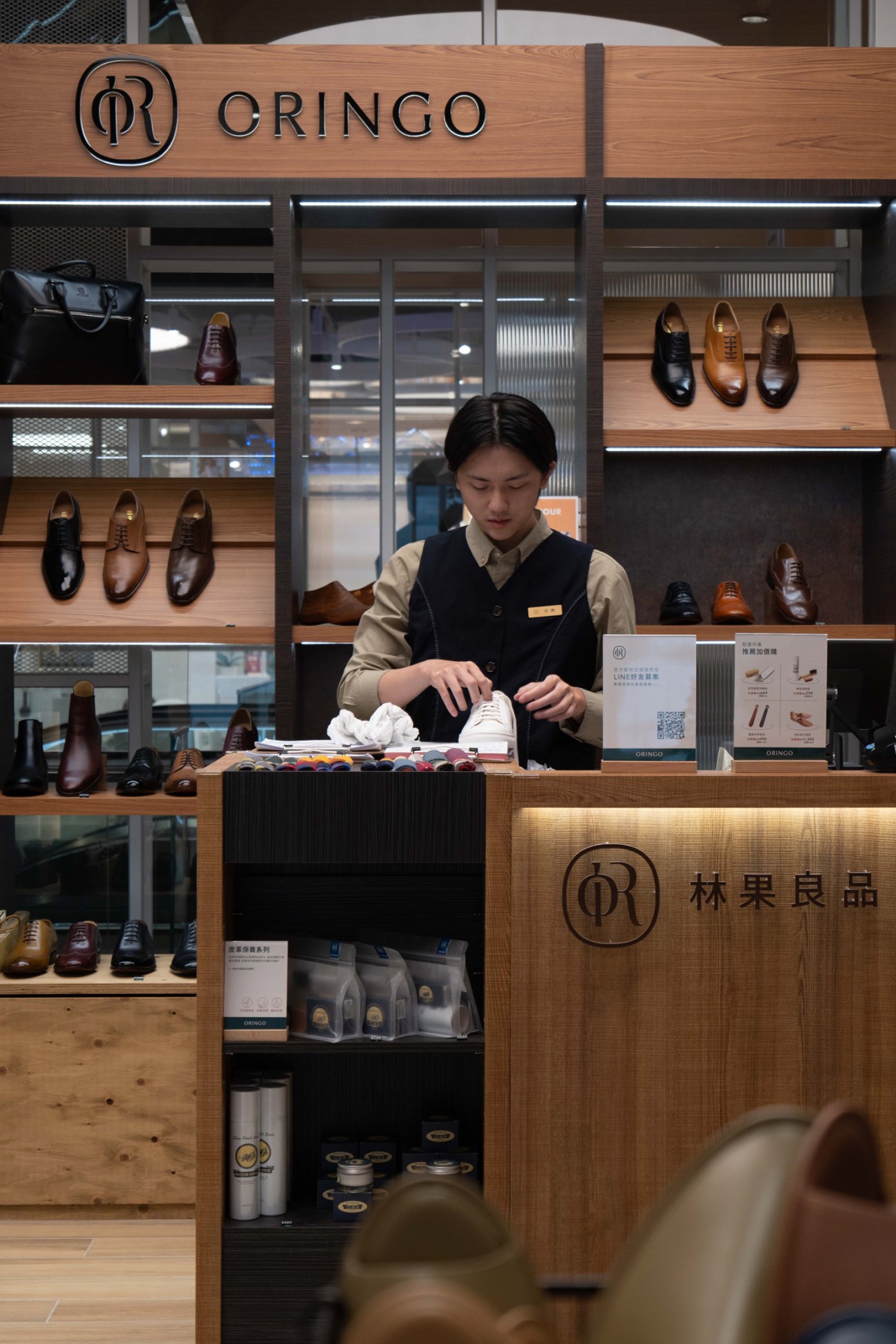
jut Land manages 15 shops at Noke. Most of these are in-house concepts created under Lee’s stewardship. He joined his father’s company about 25 years ago and started running its everyday operations in 2005. Since then his strategy has been to increase the number of transactions that customers make with the company from the current level of one property purchase every 20 or 30 years. His first move was to open an interior-design firm. Designer furniture showrooms came next, followed by flower shops, bakeries and cafés. A shopping centre brings them all under one roof. “We owned the land that Noke sits on for a long time without knowing what to do with it,” says Lee, who used his strong background in retail to win the backing of his family members on the board.
Taking on a fresh challenge has clearly energised him. “The mall is only at passing grade right now – I give it 60 per cent,” he says, spotting problems everywhere. The pandemic has prevented the leasing team from signing every tenant on his wish list and his biggest challenge currently involves talent. Experienced retailers are stuck in the past, he says, while outsiders with fresh ideas about the future of the shopping centre lack the industry experience to know what is achievable.
jut Land has been building apartments in Dazhi for more than 30 years. Noke could “jump-start the neighbourhood” as a workplace, according to Lee, who has plans to build six commercial towers in the vicinity over the next 10 years, including a new headquarters for the company and a tower by Japanese architect Tadao Ando. “Property is a very local business and every district has its own giant,” says Lee. “We could quite comfortably keep doing what we have been doing but I want the challenge of turning jut into the big Taiwan brand.”
Furniture
China
Q&A
Demos Zhu
Founder and CEO, Mingus
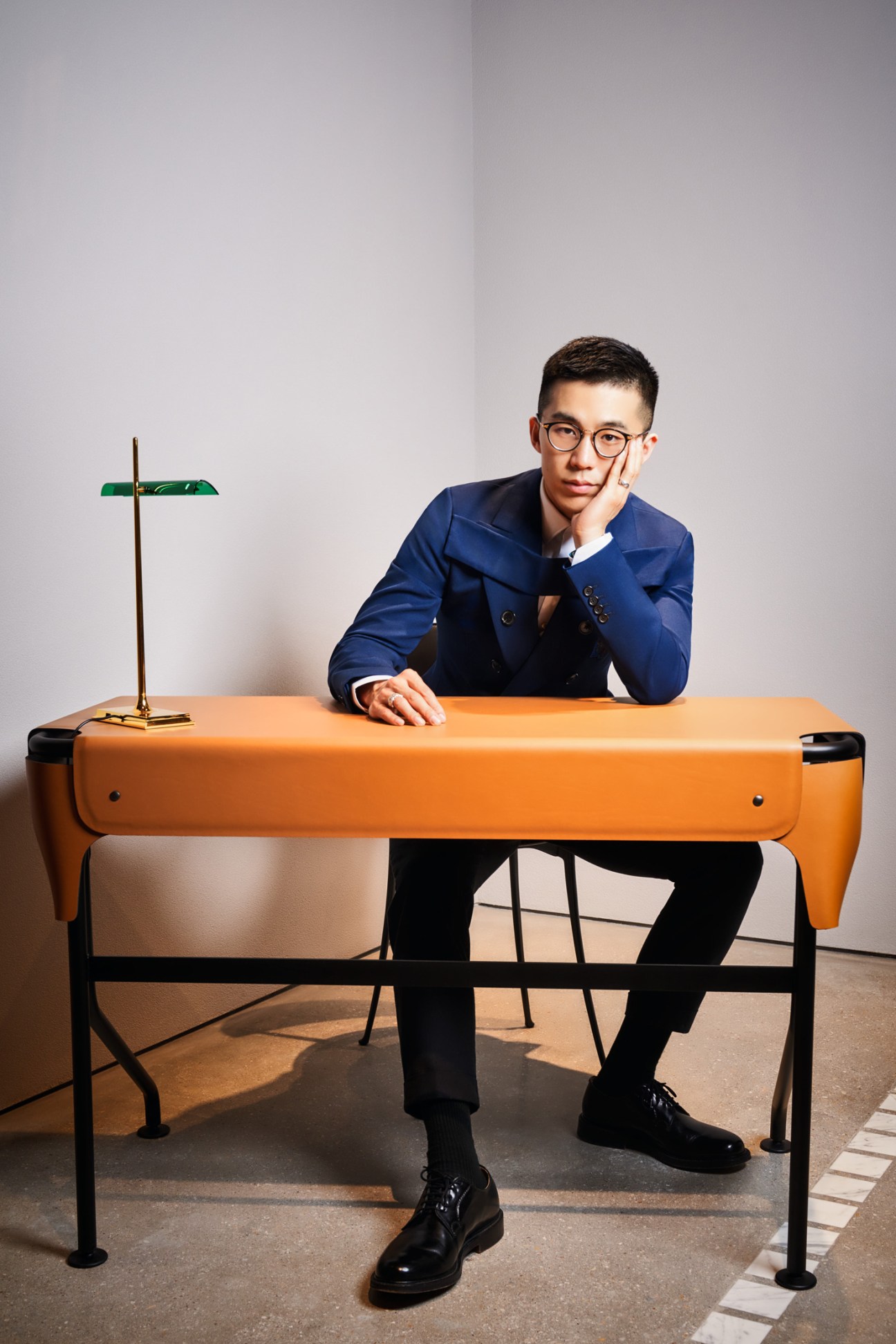
Mingus has nine furniture and home furnishings showrooms in China’s four biggest cities. Founder Demos Zhu opened the first multi-brand showroom in 2019, before opening solo shops for the likes of usm.
How’s business?
Our sales have increased but our stores are not going to meet the expectations we had at the beginning of the year.
Your bestselling brand?
usm. Before they started working with us in 2020, they’d been in China for more than 10 years but were quite small. We did a marketing campaign and launched the flagship store in Shanghai last year. The whole store space is like an apartment; we positioned usm as residential.
What’s the future for furniture retailing?
Consumption is now encouraged so people change their furniture more. My parents’ generation bought expensive furniture and talked about it doubling in value in 10 years’ time. People my age talk about design and comfort.
Images: Elfly Group, Sabegn
Pulling the plug
“Alas,” lamented a few Parisians. “At last,” said many more. After a referendum in April in which residents voted overwhelmingly to banish free-floating rental e-scooters, the French capital bade adieu to them on 1 September. Five years ago, the city became the first in Europe to introduce them at scale. It felt like a good idea at the time: an app would tell you where the nearest one was, you’d unlock it with a click and on you hopped. There was no obligation to wear a helmet or even a capacity limit; three people hugging on to a single e-scooter became a common sight.
As for using the roads, riders preferred zigzagging on pavements, which was much more fun. And when you finished your trip, you could leave the vehicle anywhere. Hundreds were recovered from the Seine every year.
This fantasy of liberté quickly became a nightmare. The number of rental e-scooters shot up to 20,000 in 2019 and 40,000 in 2020, according to analytics firm Geo4cast. They were everywhere, often piled in heaps in the middle of the pavement. The joy had gone. It became a tale of destruction, accidents and fatalities. Le Parisien reports that 1,193 people were injured by e-scooters between 2019 and 2022, and six people died. The city started regulating their use in 2020 and their number was capped at 15,000. It was an improvement but it felt like too little, too late. Most of us had grown to hate what we at first cherished.
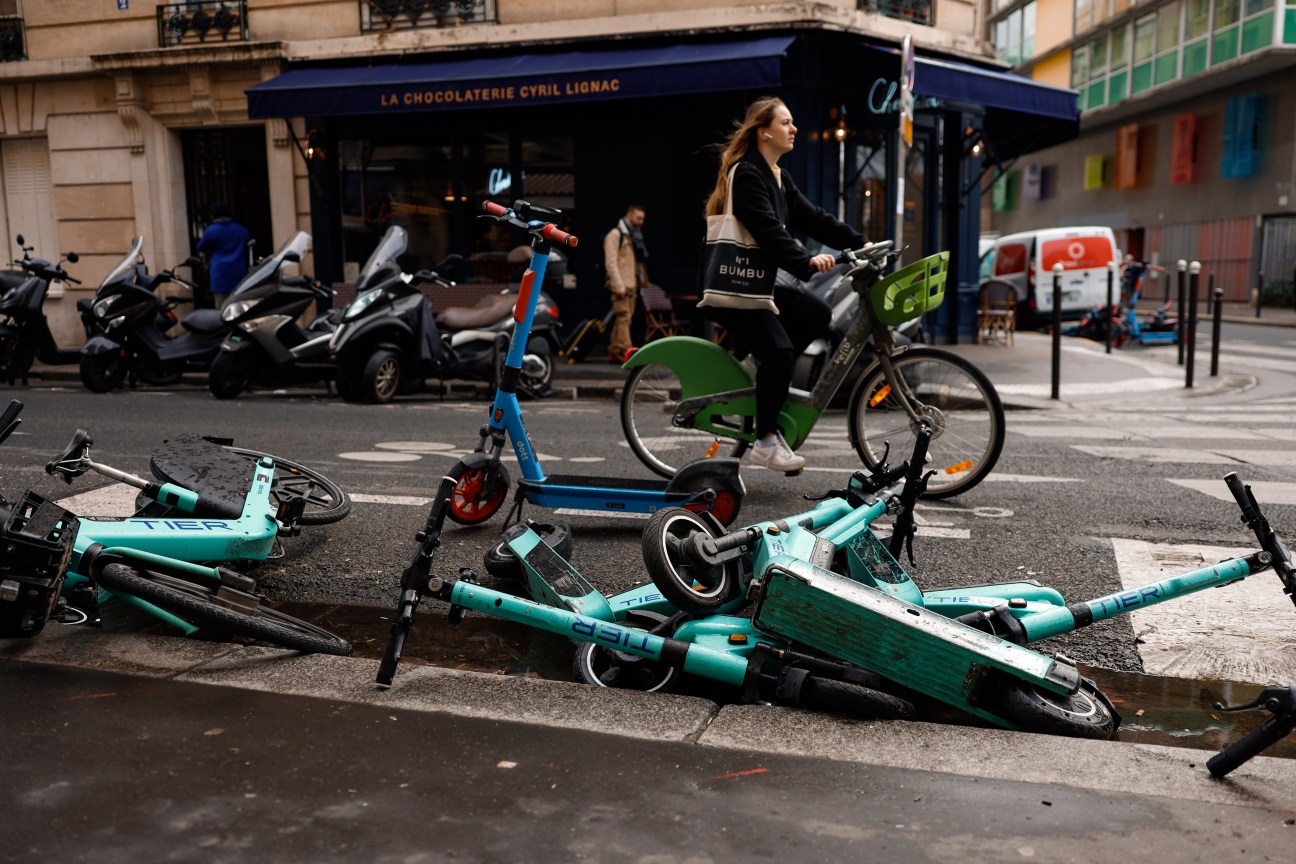
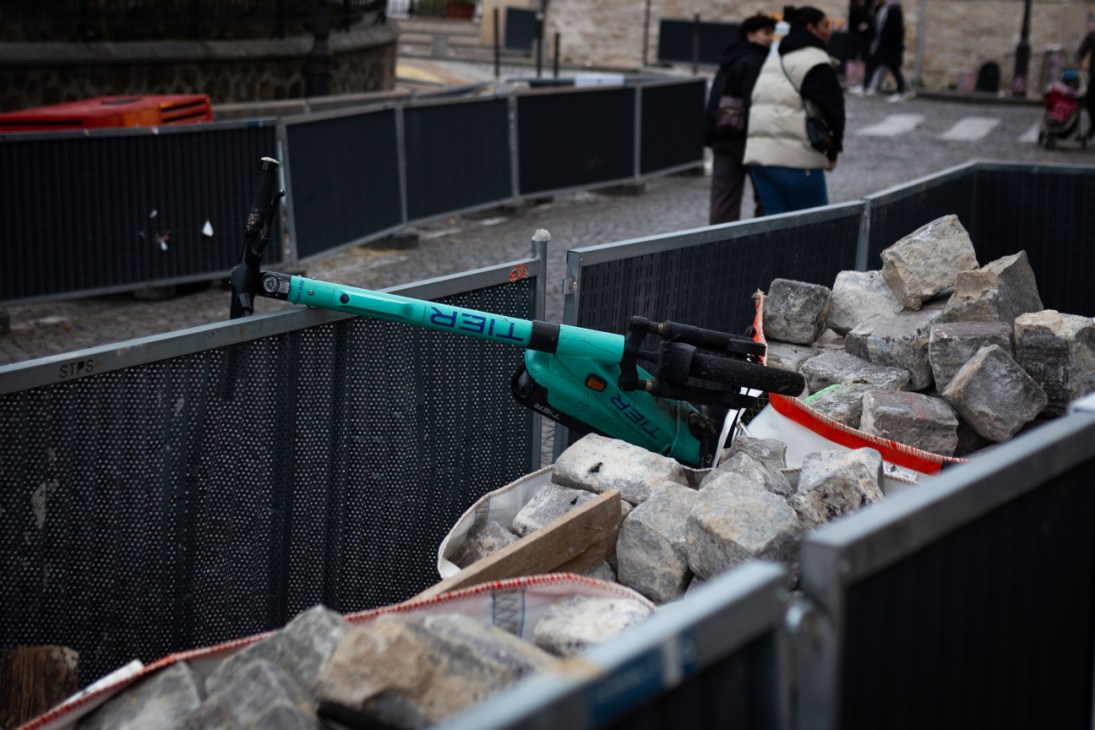
Does Paris feel different now that rental trottinettes have gone? There is certainly a welcome sense that sanity has prevailed. But e-scooters are still part of the scenery: privately owned ones haven’t been banned and people who loved to commute on them have just bought one. Those who have invested in their own e-scooters usually behave much better than the free-floating tribe: most wear helmets and neatly fold up their vehicles when they reach their destination, rather than leaving them in the street.
E-scooters are only one part of the e-revolution and what the French call la mobilité douce (“soft mobility”). This shift in the way we travel has many guises: roller-skating, gyro pods, hoverboards (such as those made by Segway) and, of course, bicycles and e-bikes. Paris, which rolled out the world’s first city-run bike-sharing programme, Vélib’, in 2007, has developed its cycle lanes and services at great speed. Today, alongside Vélib’, which has about 400,000 subscribers, private providers offer about 13,000 free-floating e-bikes – a number that is expected to rise steadily as we approach next summer’s Paris Olympics. Meanwhile, laws have encouraged employers to finance their workers’ e-bikes or e-scooters. Since the pandemic, streets such as Rue de Rivoli, which runs east to west from Le Marais to the bottom of the Champs Elysées, have been given over to the softly mobile.
If there is a lesson to be drawn from Paris’s experience with rental e-scooters, it’s that regulation should come before (rather than after) the introduction of a new mode of transport, especially in an old city that is popular with tourists and well known for its charming but narrow streets. After this calamitous episode, the French capital can now look forward more serenely to hosting the Olympics. Having won its bid by promising to halve the Games’ carbon footprint, the city is building dedicated “Olympic lanes” that will allow an expected 10 million visitors to cycle from one event to another. Those who want to go from the Stade de France to the Aquatics Centre (the only new permanent building constructed for the Games) can simply walk across a new bridge above the A1 motorway linking those two colossal sports arenas.
In the end, the trottinette saga only reasserted the importance of orderly soft mobility. As far as urban transport is concerned, careful planning is always better than freewheeling improvisation.
Paris-based journalist Poirier’s latest book, ‘Left Bank: Art, Passion and the Rebirth of Paris 1940-1950’, is out now.
Pots of gold
Judging by the sharp architecture and immaculate interiors, you might expect Vermicular Village – a cookware showroom, shop, restaurant and café in Nagoya – to be the work of a young company making its mark on the design world. Not a bit of it: Vermicular is the brand name of a company that emerged from a family-run iron foundry that has been manufacturing in the city for more than 80 years. At the heart of this retail and hospitality operation are the cast-iron pots and frying pans that are being made a short drive away.
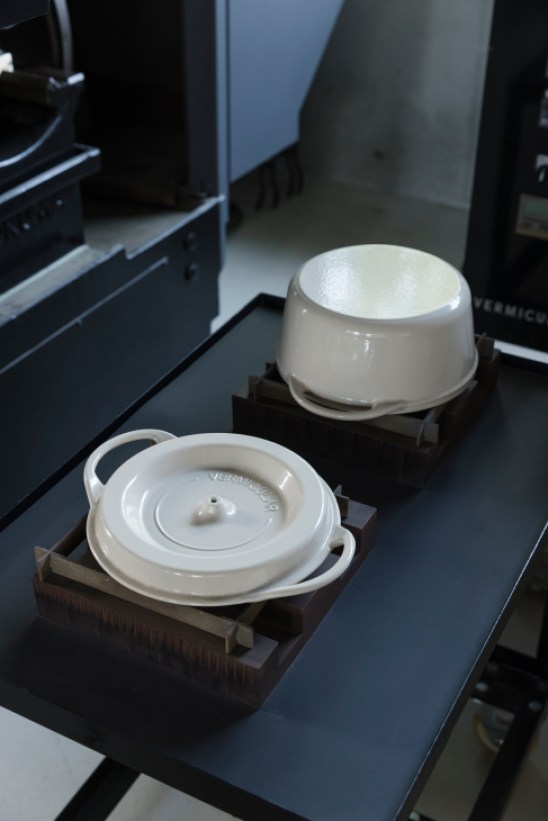
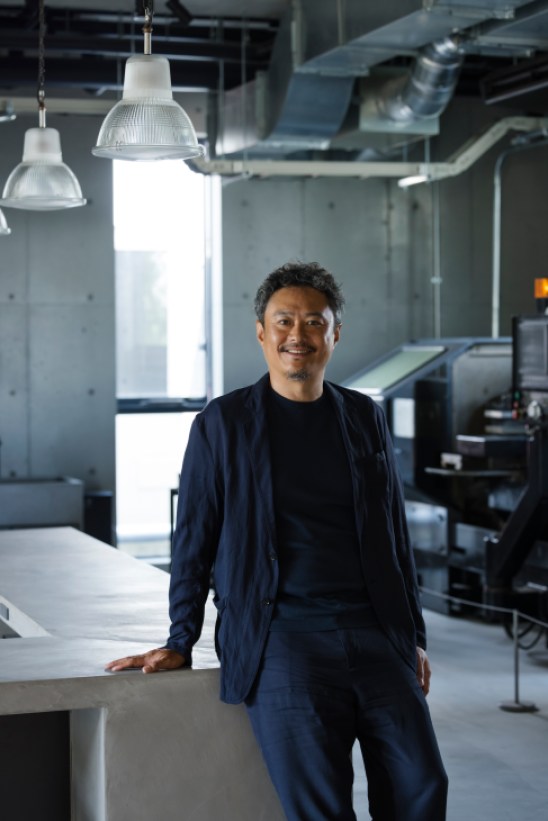
Vermicular’s origins date to 1936 when the Hijikata family founded Aichi Dobby, a foundry known for its skill in precision casting machine parts. When the latest recession hit, however, the company’s future looked precarious and it might have closed but for the determination of the third-generation heirs, Kuni and Tomo Hijikata.
The brothers were determined that the family business and its exceptional craft folk were not going to be consigned to history. Rolling up their sleeves, Kuni became a casting expert, while Tomo set about mastering precision engineering. The challenge was to shift the company’s skill set away from supplying parts for ships (a dead end at this point) to something that could revive its fortunes.
“The enamel we use doesn’t pass any smell onto the food. And because the seal is so tight, the umami and aroma are all kept inside. Nothing escapes”
Research pointed the brothers to the kitchen and, eventually, to the creation of an enamelled cast-iron cooking pot. Tomo realised that the foundry was uniquely positioned to make a pot with a perfectly fitted lid – no mean feat, as it turns out.

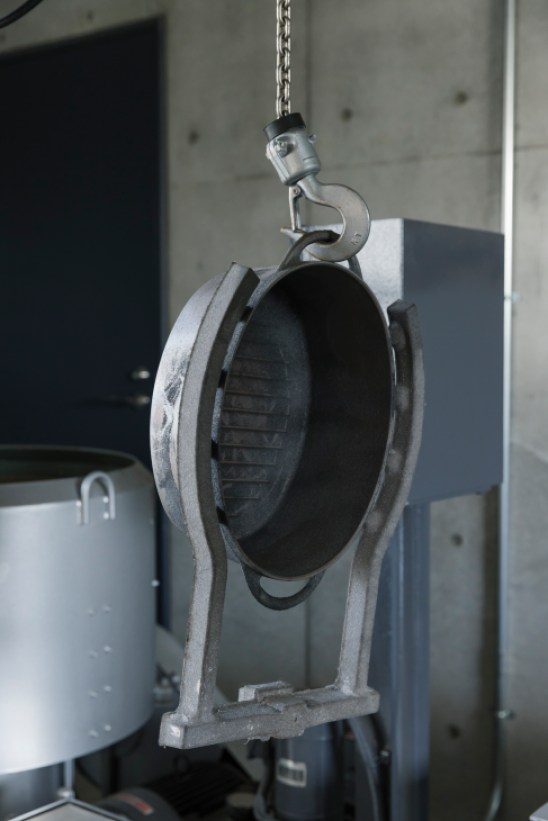
There are other household names in the enamelled cooking-pot business but none had cracked the problem of closing the gap between the pot and the lid. Simply put, in the immense heat of the casting process the iron warps. The brothers knew that they could do better. Three years and 10,000 attempts later (they had to create a new alloy and a new enamelling process) the team had solved the problem. The Vermicular gap – a mere 0.01mm – allowed for a near-perfect seal, which from a cooking point of view, means that the flavours stay in the pot. Ingredients need little extra flavouring, meat is unusually juicy and even the least competent cooks find that they can produce a delicious meal.
When the pot hit the market in 2010, influential food bloggers spread the word and before long there was a 15-month waiting list (in the early days, production was slower but now the company can make 20,000 pots a month). Shoppers loved the unusual colour palette too. This was partly a result of a commitment not to use cadmium. “To make a red or yellow – good colours for kitchen equipment – you need cadmium, which is a harmful substance,” says Kuni. “The craftsmen might inhale it when they’re blowing on the furnace or it will flow away in the wastewater, so we don’t use it.” Vermicular pots don’t use lead either.
The oven pot was followed by a rice cooker, the Musui-Kamado, which is now being used by everyone from home cooks to top-end Ginza sushi restaurants. To Western diners who don’t necessarily share (or understand) Japan’s obsession with perfectly cooked rice, the Musui-Kamado is marketed as the world’s first cast-iron induction cooker inspired by the traditional Japanese stove (or kamado). There are also ultralight, rust-free cast-iron frying pans with handcarved wooden handles.
Every product relies on the skill of the factory workers. Pots and lids are hand-machined (a sight to behold – the worker taps on the lid to judge, by ear, if there is even the slightest warping), which no other manufacturer bothers with. The Vermicular enamelling technique involves three rounds of handspraying, drying, finishing and baking each piece at 800C.
Sensitive Japanese palates appreciate the effort. Take the rice cooker, for instance. “If you use a regular rice cooker, the flavour of what it’s made from – usually rubber or aluminium – transfers to the rice,” says Kuni. “The enamel we use doesn’t pass any smell onto the food at all. And because the seal is so tight, the umami and aroma are all kept inside. Nothing escapes.” The frying pans have their own qualities, notably that moisture instantly evaporates from the enamelled surface, which means that soggy stir fries are a thing of the past.
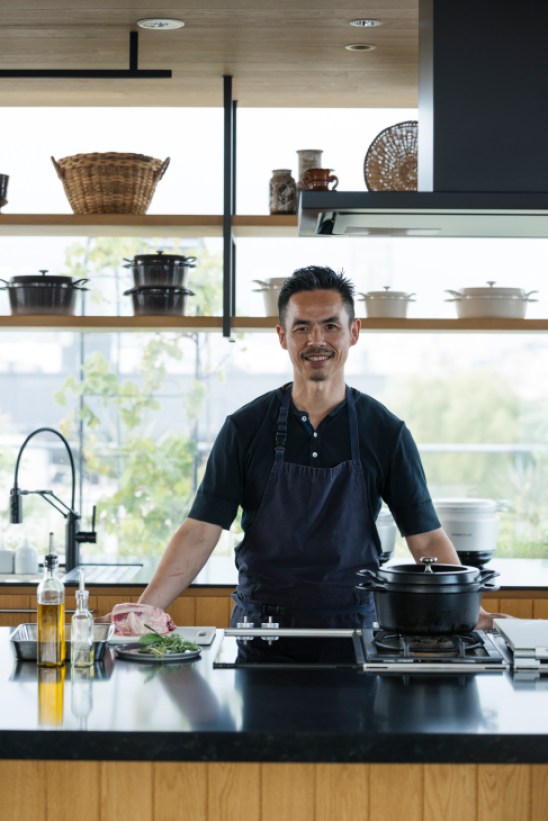
The Hijikata brothers look at Vermicular as a lifestyle, hence the photogenic showroom and the artfully styled cookbooks, which are a big hit with pot-lovers. An in-house design team keeps a tight rein on the shops and branding, and the company also retains an executive chef, Naoki Toya, who comes up with recipes that show how to master the signature musui (waterless) cooking technique and get the best out of the products. There are collaborations with ceramic makers and art printers too.


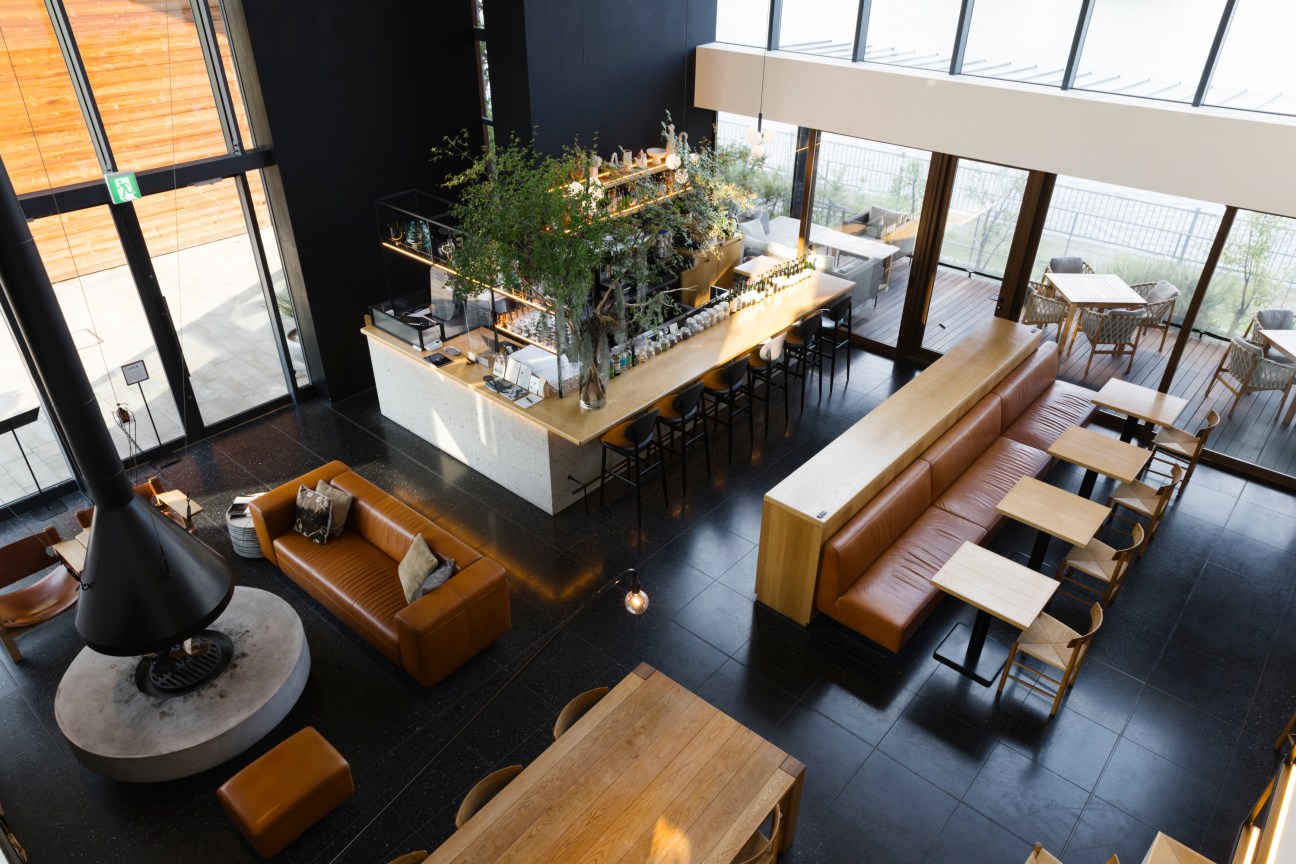
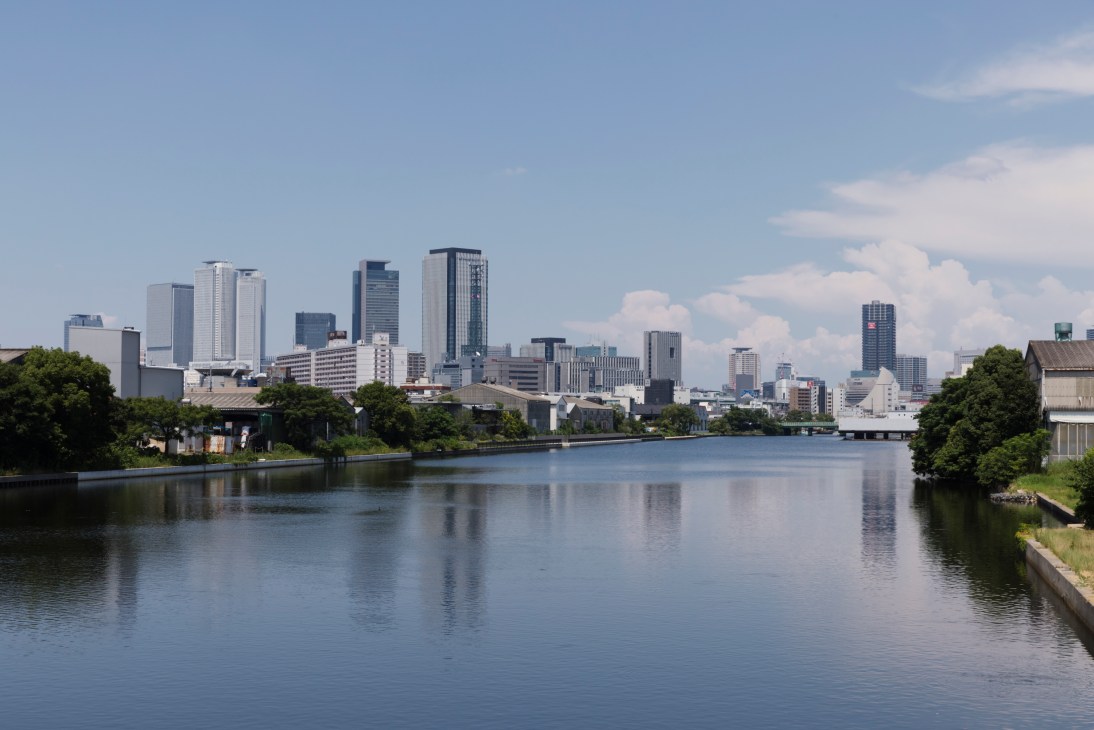
Opening their showroom in Nagoya was an obvious choice for the brothers. “The closeness to the factory was one factor but the other was that this area – Nakagawa-ku – is where we grew up and went to school,” says Kuni. “Our grandfather lived right across the river from here. It’s our way of giving back to the neighbourhood.”
This autumn the company launched its latest product: the Oven Pot 2. Years of making the original oven pot – they’ve sold more than 630,000 – propelled the development of a new pot that is thinner, lighter and quicker. Chef Toya is already lining up recipes to show what the new pot can do (restaurant-quality fried rice, high-speed roasting and a rich curry in 45 minutes). Some customers love their hefty old oven pot but those who want to make the switch can bring in their pots to be recycled. The colours are as chic and muted as ever – an oyster grey or a soft pink among the choices.
Fans come to the showroom to buy pots, cookbooks and kitchen accessories; they can then go down the road to the Pot Made Bakery (yes, even buns can be made in the tiniest 10cm oven pot) or dine in the airy restaurant, appropriately called The Foundry, all overlooking a stretch of water.
The care and attention to detail shown by everyone, from the founders to the factory workers, is clear. This is more than a business; they are pouring their hearts into the Vermicular brand. “The factory has been open since 1936 and it has never closed,” says Kuni with pride. “That means a lot to us.”
vermicular.jp
Train gang
Like any true judoka, Haruki Uemura is modest about his sporting achievements. A ninth dan black belt, a World Champion (Vienna, 1975) and an Olympic gold medallist (Montréal, 1976), Uemura, 72, is adamant that he was nothing special until he turned 18. Even then he had to work hard for his success. “I was the smallest in my weight class – I was 100kg and 174cm tall,” he says. “Most of my competitors were 190 centimetres and up. I remember one who was 220cm and 170kg.” He still beat them all.
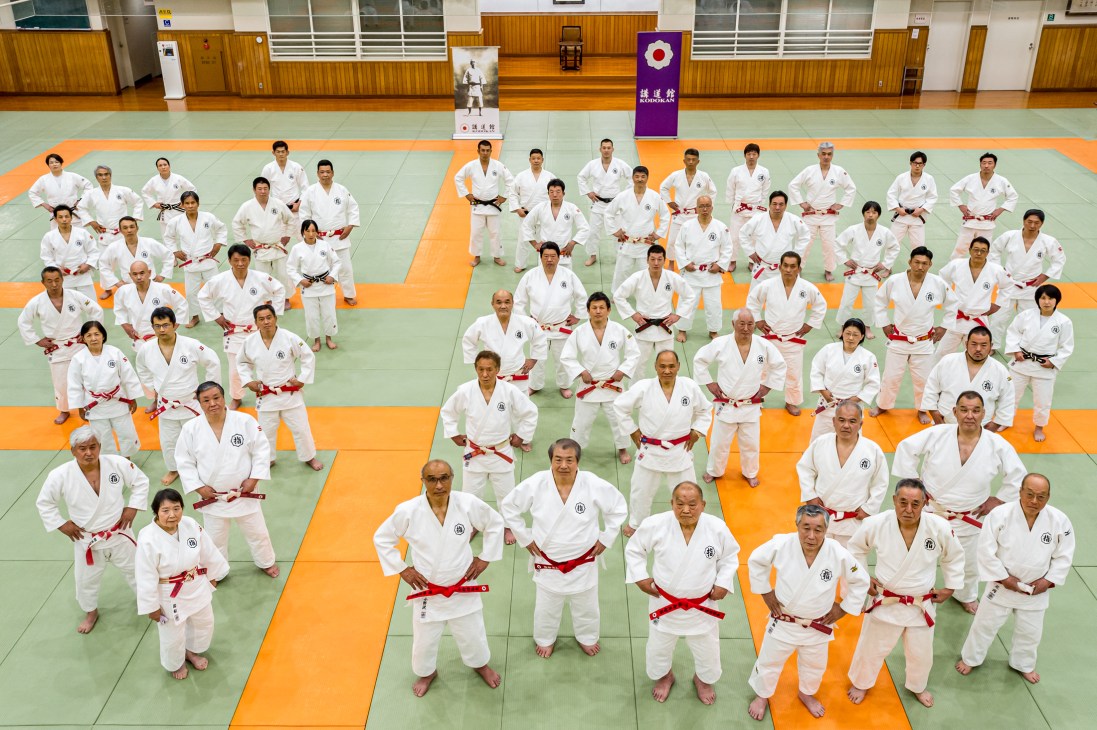
Since 2009, Uemura has occupied the most revered position in Japanese judo: president of the Kodokan Judo Institute in Tokyo, which might be described as the sport’s spiritual home. Kodokan was founded in 1882 by Jigoro Kano, the man who first created judo. Back then there were only a handful of disciples; today there are millions of judoka in more than 200 countries.
There are many judo federations but it’s the role of Kodokan to rule on everything from technique to ranks, banning dangerous moves and codifying 100 techniques to keep global judo competitors on the same page. The institute’s modern eight-storey home sits close to Tokyo Dome. Judo practitioners from home and abroad come to train and study here.
There are training spaces, accommodation and classes for men, women and children; a library (with 5,000 books relating to judo), a hall of fame and the biggest training mat of all, the main dojo. There are more than 150 instructors enrolled to teach here. They teach technique but also reiho (decorum), respecting others and fair play. “A good judoka is strong but kind,” says Uemura.
Kodokan dispatches instructors around the world. Uemura’s colleagues are all seasoned judoka too. They understand that judo is not just a sport but a way of learning about life. “This job is all about communicating judo to the rest of the world and to the next generation, so I’m constantly researching and reading old books,” says Uemura. “There is still so much for me to learn.”
In the balance
“It’s not Finland. It’s not Sweden. It’s something in between.” A voluble Swede is describing Åland to Monocle on an afternoon ferry back to the main island. He’s right, in more ways than one. Åland is a collection of some 6,700 islands in the Baltic Sea, positioned about halfway between Stockholm and the Finnish coastal city of Turku. Its 30,000 inhabitants are overwhelmingly Swedish speakers but Åland has been Finnish territory since 1809. Landing at the islands’ only proper airport – a compact propeller plane does the 35-minute hop from Stockholm – you’re met by fresh salty air. “People here are a little special,” says our German-born taxi driver. “A little back-in-time.” Trying to get a meal in the capital, Mariehamn, past 20.00 on a Sunday proves tricky. A waitress at a mercifully open pizzeria-slash-sports-bar shrugs. “It’s Åland.”
Despite the sleepy nightlife, this is no political backwater. Åland is the subject of no fewer than four international treaties, which give it significant government autonomy from Finland and a demilitarised status. This means that no armed forces can be stationed here in peacetime. This began in 1856, after the Crimean War. Åland’s proximity to Stockholm meant that, in words attributed to Napoleon III, a military base here would be “a pistol pointing directly to the Swedish heart”. The victorious French and British insisted that Russia, which controlled Åland at the time, keep it free of fortifications. This was reiterated three times in diplomatic settlements after the First World War, the Finnish-Soviet Winter War and the Second World War. But Russia’s full-scale invasion of Ukraine last year has prompted a tightening-up of Baltic security. Finland joined Nato in April and has increased its military spending by 36 per cent; Sweden, whose Nato bid is awaiting ratification from Turkey and Hungary, conducted its largest military exercise in 25 years this spring and is refortifying the Baltic island of Gotland. Given Åland’s similarly strategic position, its demilitarisation has come under scrutiny. Several MPs in Helsinki’s new right-wing coalition support scrapping the policy. One, Atte Kaleva, bluntly stated that “Åland’s freeriding should end”. Finland’s foreign ministry has opened a legal review into the islands’ treaties, which was due to report as Monocle went to press.
Twenty-first century Åland is not without a security presence. Its police are armed, as are its border guards, who have an office in Mariehamn and another on Kökar, a small outlying island with barely 200 residents, reached from the main island by a two-and-a-half-hour ferry. As the boat chugs along, small spits of land appear out of the thick, early morning mist. Kökar is scrubby and rocky, with scattered houses and a few herds of cows. Clumps of reeds and red boathouses line the shore. The mist lifts for a few hours in early afternoon and the sunshine briefly transfigures a rather severe landscape into something idyllic.
Here Monocle meets Juri Jalava, deputy head of Åland’s 33-strong border guard, whose shaved head and steely blue eyes are offset by a toothy grin. His officers are equipped with pistols and rifles but no military-grade kit such as machine guns and artillery. One of the border guard’s “daily chores”, says Jalava, is patrolling the sea and identifying vessels that pass through or near the islands. Vigilance has been heightened since the Ukraine invasion – they’re on the lookout for accidents at sea and issues with electrical cables. “Such disruption could mean something else,” he says. Jalava mentions, without elaborating, “interesting” observations in the northern Baltic but no uptick in Russian vessels veering too close to Åland’s territorial waters. “I think we have gone back to the Cold War era,” he says, meaning a time when states were careful with each other’s boundaries.
In wartime proper, Åland’s demilitarisation is temporarily lifted and the border guard is merged with the Finnish military. The islands’ territorial waters were mined during the Second World War, and on a small hill above their station are piles of rubble: the remains of gun emplacements and bunkers built during 20th-century wars and then destroyed in order to comply with the four treaties that govern Åland’s fate.


Some think that this isn’t enough to keep the islands and their defenders safe. Charly Salonius-Pasternak, leading researcher at the Finnish Institute for International Affairs, says that no large country would accept, as Finland has to, “that it has responsibility for defending a territory but it cannot fully prepare to defend that territory”. When demilitarisation was first introduced in the 1850s, it could take weeks, or even months (depending on sailing conditions) to launch a naval attack. But “the time-distance equation has changed dramatically”. An enemy assault would be much quicker today and if Finnish troops aren’t allowed to train on Åland and familiarise themselves with its terrain, then some of them would “die unnecessarily”, says Salonius-Pasternak, due to lack of preparedness.
Susanna Mickwitz is the owner of the only grocery shop on Kökar that is open all year. “If, God forbid, we’re moving to war, everyone here should help in whatever way they can and not expect others to come and help us,” says Mickwitz, who relocated to the island from Helsinki with her husband 10 years ago. Like many who Monocle speaks to, she knows of more young men signing up for military service – which is optional for Ålanders but compulsory in mainland Finland – since the war began.
Åland’s first military reservist group was founded last year by Jonas Back, who led a 25km “march” through Mariehamn in April. Proper military training involving weapons has to be carried out on the mainland, where Swedish-language courses held by mpk, Finland’s national reservist organisation, have attracted dozens of Ålanders. He thinks that the ban on mpk activities in Åland is “overprotective”, given reservists are private citizens and demilitarisation “only applies to state actors”. If given permission, he plans to set up a shooting range for reservists on Åland next year.
Mariehamn is a small city of some 11,000 people. The centre, an architectural hodgepodge of modernist office blocks and traditional Scandinavian design, quickly gives way to suburbs with pastel-coloured houses. It’s built along a small peninsula so you’re never far from a bracing sea breeze. In the days of the windjammer – huge, iron-hulled sailing ships built to carry cargo – it was a major shipping hub: Åland-owned vessels carried Australian grain to Europe until the 1940s. Today the port is more likely to welcome ferries carrying tourists who descend in the summer for hiking, swimming and other outdoorsy pursuits. By mid-September the season is over, bar a few hardy Germans, and the unused docking machines look like strange metal sculptures silhouetted against a white sky.
Mats Löfström, Åland’s sole MP in the Finnish parliament, has a room in the old offices of Gustaf Erikson, once the islands’ biggest shipowner. He cautions against Finland revisiting or even breaking any of the treaties. It would lead to a diplomatic “race to the bottom and that doesn’t serve small countries”, he says. “In that world, only big superpowers will dictate the rules.” The deputy head of Åland’s local government, Harry Jansson, agrees. Abolishing Åland’s status would “go against everything that is at the very heart of international relations”. Permitting the creation of a reservist organisation was up to the mainland authorities, he says, and it wouldn’t have been allowed by Åland’s 30-person parliament, which supports demilitarisation. “I don’t think a couple of weekends on the Finnish mainland will make any difference when it comes to defending the islands,” says Jansson.


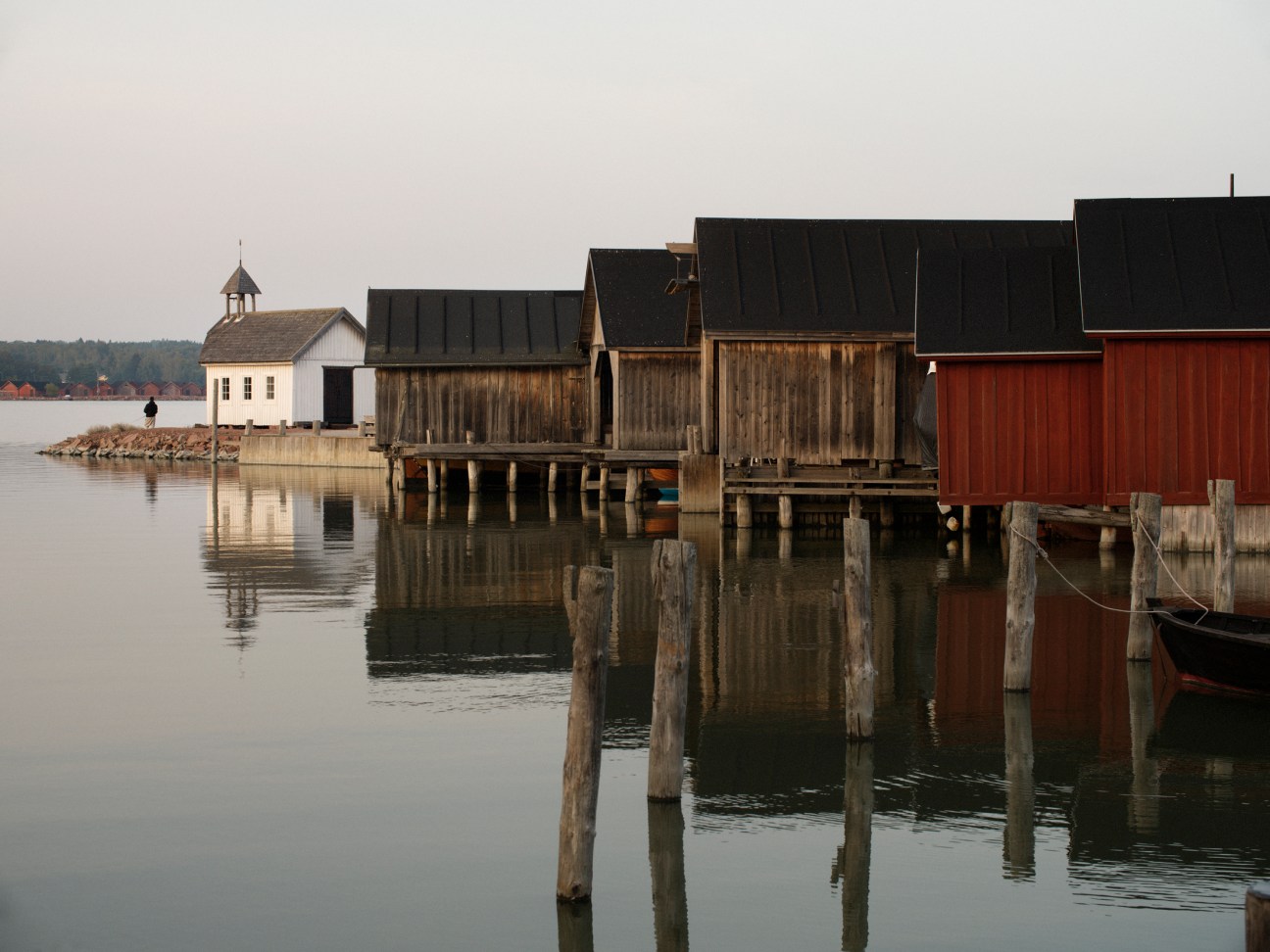
One problem that Löfström sees with the demilitarisation debate is that “people don’t know that there are military plans for Åland but they cannot be disclosed to the public” – hence an impression that the islands are defenceless. Those plans, Salonius-Pasternak says, would probably involve “specialised archipelagic maritime units” from Finland and Sweden, similar to the UK’s Royal Marines and equipped with high-speed boats. It’s a “robust” strategy, he says, but one that could be significantly improved by lessening constraints and constructing bunkers to store ammunition, for example. But any changes wouldn’t be dramatic. “No one is calling for any sort of military base,” he says. Besides a few Finnish soldiers occasionally training on the islands, most Ålanders “would not notice” any difference.
Among many locals here, questions about demilitarisation are refused in a polite Scandinavian way. But opinions that are offered tend to lean towards the status quo. “Most people want demilitarisation,” says Ingvar Darnemo, a plumber who was taking the inter-island ferry to change someone’s radiator valves. Erik Nordlund, an 83-year-old former sea captain and shipping manager, thinks it’s “a paper tiger, really” – Stalin and Lenin didn’t ask about Åland’s legal status when they attacked Finland. Demilitarisation is a “relic”, he says, albeit one that serves as a “good symbol” for the islands and is worth maintaining. But according to Sia Spiliopoulou Åkermark, director of the Åland Islands Peace Institute, a local ngo, it offers far more than symbolic value. The “Åland example” – an effective system of autonomy for a minority group – has been cited in negotiations over contested territories from Cyprus to Kashmir. When Hong Kong was transferred from British to Chinese rule in 1997, the dispute-resolution body between Hong Kong and mainland China was modelled on the one between Åland and Finland.
Peter Eklund, chef and co-owner of Café Viktor in central Mariehamn, says that demilitarisation “is a two-edged sword”. “In peacetime, it’s a great thing,” he adds. “But when the shit hits the fan, it’s totally different.” If the Ukraine war leads to “some form of real aggression” from Russia against Finland or Åland, he would favour reconsidering the policy. “We have to defend our way of life somehow.” The issue comes with considerable cultural baggage. The second Åland treaty, from 1921, was part of a League of Nations intervention to stop Sweden and a newly independent Finland going to war over the islands. Despite an unofficial referendum in which more than 95 per cent of residents said that they wanted to join Sweden, Finland was granted sovereignty – partly due to the diplomatic nous of its chief negotiator, Carl Enckell. To compensate, Ålanders were granted political autonomy, protections for the Swedish language and property laws that favoured natives. Even today, you have to be a resident on the islands for at least five years to buy a house in certain areas. Autonomy within Finland is accepted to the point where both independence and joining Sweden are fringe beliefs at best.


The demilitarisation debate, therefore, is partly a proxy for Åland’s cultural distinctiveness from mainland Finland. If military rules are altered, might language rules be next? Jansson, the deputy head of government, is clear: “We only watch Swedish television; we are culturally part of Sweden.” Kenneth Smulter, a 59-year-old sport and health teacher at Mariehamn’s secondary school, says that “in sports I’m a Finn”. Otherwise, he considers himself an Ålander with “our own culture”. Two of his pupils, Hanna and Sofia, agree. Like many people here, neither of them speaks Finnish, though their Swedish has a distinct Finnish accent.
A few minutes’ walk from Mariehamn’s government buildings is a Russian consulate, established in 1940 to allow the then ussr to monitor the islands’ demilitarisation. Today, it’s only home to the consul and his wife. Since the war began, there has been no sign of either of them and a petition demanding the consulate be closed has accrued more than 50,000 signatures. At 17.00 every day, Ålanders gather outside the consulate to protest against the war in Ukraine. On a Tuesday afternoon in early September, it consists of 20 people and a golden retriever. “U-kra-i-na,” they chant. Then they sing Beethoven’s Ode to Joy, followed by more chants – “free Na-val-ny”; “Pu-tin, kill-er”. It’s wrapped up in five minutes and the crowd filters away. Among the attendees is Kaveh Bahar, an Iranian refugee who came here with his family in 1992. Why protest? “I don’t like dictators,” he says. “If Putin wins in Ukraine, he doesn’t stop.” Demilitarisation is a model that has worked, he adds. “Maybe we could be a model for the rest of the world.”
It seems unlikely that a small Baltic archipelago would be particularly cosmopolitan but it is. There are 300 Ukrainian refugees here; many residents Monocle meets come from Sweden, mainland Finland or further afield. Roberto Ferrari, an Italian from near Bologna, met his now-wife in a nightclub here. Mariehamn in the summer used to be “like Rimini”, he says, with young Finns exploiting the long, balmy daylight to party endlessly. Denise Bergvall worked as a nurse in Saudi Arabia and Lebanon before coming back and eventually opening an antiques shop. “We are the children of sailors,” she says. “They brought home ideas and we were influenced to go abroad.” This worldly outlook has long gone hand-in-hand with a contentedness, bordering on complacency, about Åland’s seclusion from the world’s military realities. But a choice, now discussed after decades of silence, has come into view: to retain demilitarisation or to properly prepare for a near-unimaginable conflict. As war rages unabated in Europe, this discussion is likely to only grow louder.
Deep focus
Photographer Anastasia Taylor-Lind grew up travelling across the English countryside in a caravan, spending her days reading children’s books and Wilfred Owen’s war poetry. At the time, she had limited access to the outside world so her first significant encounter with photography was when she came across Don McCullin’s reportage on the Vietnam War at school. “I had an immediate visceral reaction,” she says.
Taylor-Lind decided to become a photojournalist. In 2003, while studying at the University of Wales, Newport, she travelled to Kurdistan to report on the women of the peshmerga during the Iraq War. She later lived and worked in places such as Syria, Gaza and Lebanon, before heading to Ukraine, where she took photographs of Kyiv’s Maidan protests in 2014 that cemented her status in the field.
A lot has changed since then: in the aftermath of the uprising, Vladimir Putin annexed the Crimean peninsula and, in February 2022, Russia invaded Ukraine. However, Taylor-Lind has continued to report from the region. Earlier this year her photographs of the conflict were the subject of an exhibition at London’s Imperial War Museum.
When Monocle visits Taylor-Lind at her flat in east London, she tells us that she has returned home earlier than expected after being injured in a Russian missile strike on a restaurant in Kramatorsk. Though her scrapes are still visible, Taylor-Lind is in a cheerful mood, offering us coffee and biscuits while her wheat-coloured lurcher, Blaze, looks on.

We step out for a stroll in Abney Park, an eerie but peaceful cemetery in Stoke Newington. She tells us that though the people she photographs in Ukraine are often in close proximity to death, life doesn’t stop for them – which is why her images focus on the normality that persists amid the conflict. Earlier this year, Taylor-Lind and Ukrainian journalist Alisa Sopova, a frequent collaborator, received a grant from the National Geographic Society to support their work after almost a decade of self-funding their projects.
Taylor-Lind views it as her professional responsibility to share the realities of life on the front lines while avoiding sensationalism or clichés. “Objectivity and truth-telling aren’t always achievable – but what a huge misrepresentation it is when people tell stories that don’t reflect those whose stories are supposedly being told,” says Taylor-Lind. As a woman in a field dominated by men, she has also been plagued by the question of who gets to share other people’s narratives to the point of putting her camera down for long stretches and turning her attention to poetry instead.
Taylor-Lind stresses the importance of portraying her subjects respectfully and with compassion. “In reportage, you might find yourself in someone’s bedroom, photographing children waking up in the morning,” she says. “You’re asking for intimacy and trust, and to report on life as it is, without intervention.” She still grapples with how best to do this. “I have come to the conclusion that I won’t find better ways to represent people through photographs if I’m not taking pictures,” says Taylor-Lind. “I need to deal with these issues in a practical way. Still, what right do I have to tell someone else’s story?”
Before we part ways, Monocle asks Taylor-Lind how she summons the courage needed to take these pictures. “I’m not fearless,” she says. “I’m incredibly afraid and I should be. Everyone asks me, ‘What will you do when the war ends?’ But I’m pretty sure that wars never end for those who experience them.”
The CV
1981: Born in Swindon, UK.
2004: Graduates with a BA in documentary photography from the University of Wales, Newport.
2014: Her first photographic book, Maidan: Portraits from the Black Square, is published by Gost books.
2016: Becomes a Nieman Fellow at Harvard University.
2022: Taylor-Lind’s debut poetry collection, One Language, is published by Smith|Doorstop.
2023: An exhibition of her work, Ukraine: Photographs from the Frontline, opens at the Imperial War Museum in London.
Locked and loaded
Dressed in chinos, trainers and a black polo shirt, Luis Cobos, the Spanish founder and ceo of one of Mexico’s leading manufacturers of safes, is standing in a factory on the outskirts of Querétaro when he begins to show us around a room lined with rows and rows of lockboxes. Most of them will end up in the homes of wealthy individuals, he says. Or at supermarkets and convenience stores. Founded in Mexico City in 2013, his company Bull Safe has no trouble selling its products.
While safe-making in Latin America’s largest Spanish-speaking economy is still a niche industry – mostly metalworkers managing small businesses – high crime rates in the country mean that it’s a growing one. Cobos, who estimates that most medium-sized businesses and more than a third of Mexican households making more than $100,000 (€94,465) a year own a safe, is intent on meeting that demand. “In Mexico, people who make safes are often craftsmen who have workshops with four employees,” he says. For such businesses, delivering large orders to corporate clients is a big challenge. Cobos, on the other hand, has built Bull Safe into one of Mexico’s most successful medium-sized manufacturing companies. His strategy? Investing in modern production equipment, developing a software-monitored management plan for efficient step-by-step production and training 55 workers to master specific tasks in the factory. “I have very good employees,” Cobos tells Monocle. In 2018, the company produced about 1,000 units a year; now it makes up to 700 every month.

At the factory, the tasks vary. Some employees design safes using 3d computer software and create plans to programme machines that laser-cut sheets of steel; others weld, powder-coat and oven-cure the units. We watch a group of workers as they fill the doors and walls of each product with concrete. Cobos nods towards a set of hammers and mallets, and explains that traditional metalworking tools are only used to correct small errors if pieces with small defects emerge.
Cobos shows Monocle to a safe that can be tested by pushing its door closed, rotating the circular handle to the left so that the thick steel deadbolts slide into place. Everything locks shut with a satisfyingly solid click. “It feels heavy, right?” Cobos asks, chuckling.
While he is satisfied with the quality of his products, he knows that there is always work to do. Honing Bull Safe’s software and customer service features, for example, is a major priority for the ceo. Customers are already able to monitor and even open their safes remotely. He is interested in finding out how he can make this system better. “We update designs every year,” he says of his products, which cost between $400 (€378) and $3,000 (€2,835).
He is now also looking to the direct-to-consumer model successfully implemented in Mexico by the paint producer Comex, a division of ppg, for inspiration. His reasoning is simple. Over time, Cobos has realised that investing in physical retail spaces often pays off. “I opened a shop in Mexico City – we saw sales grow,” he says. “So I launched stores in Querétaro, León, Monterrey, Mérida and Cancún.” Cobos’s next frontier? “The plan is to enter the US market.”
While Cobos has supervised and guided the company’s development, he still finds it remarkable how quickly Bull Safe has evolved. “There was never a plan from the beginning but we sell better products at better prices,” he says. “It’s been organic growth.”
All hands on deck
Just as in a good newspaper that covers everything from boardroom manoeuvres to sports-field shenanigans, the writers and editors at Monocle have diverse reporting beats. On any given day, we’ll have someone in a conflict zone and another decoding fashion runway shows; someone at their desk hunting down an elusive architect while another quizzes a think-tank analyst. All these beats, these editorships, are demanding, come with pressing deadlines, require tenacity and collaboration. Sometimes stories don’t work or don’t deliver the insight or access to merit space on page but there are times when the team returns to the office to write, debate and edit having all bagged their quarry. This has been one of those issues.
Let’s start at the end and our Expo. Grace Charlton is one of Monocle’s youngest writers and this month we dispatched her to write about some of Milan’s oldest residents: the glamorously turned-out women known as “sciure“. Working in partnership with photographer Andrea Pugiotto, a Monocle regular, their task was one that required charm, grit and an ability to shrug off rejection. They had to approach these great women in the street, persuade them to pose for the camera and make sure that they didn’t run off when they heard what the focus of the story was (being a sciura has connotations of grandness that not everyone is happy about – though, these days, it’s increasingly a bit of a compliment). Anyway, they got the story. Women who have developed a personal style across the years that reflects their characters march across our pages.

Meanwhile, at the front of this issue, Alexis Self, our foreign editor, has shepherded along a report by the writer Marcel Cartier and photographer Peter van Agtmael. It saw the duo travel to the border between Iran and Iraq to meet young women who have come to Iraqi Kurdistan from Iran to join the peshmerga, the band of militants who fought for the region’s autonomy from Baghdad and who hope to one day liberate Kurdish territory from the influence of Tehran’s theocratic rulers. These stories might look and sound gulfs apart but they share the same commitment to storytelling.
In between these dispatches, two key themes play out across our pages. On page 87, you’ll find our inaugural Retail Awards, where we celebrate some of the store owners, buyers and developers who see in shopping more than a chance to drop some cash. Over the years, Monocle has championed the cause of good retail because, at its best, it anchors communities, champions the well-made, supports local businesses – and people – and creates spaces where a multitude of events and moments of inspiration can take place. And, at a time when many big US and European cities are struggling to keep their malls and shopping strips vibrant, we wanted to shine a light on some best practice around the globe.
But this is also our autumn style and fashion special – and here another skilled editor steps forward: Natalie Theodosi. She can help you fix your wardrobe but it’s the interviews she lands that will really change your fashion outlook. This month she meets Frédéric Arnault, Tag Heuer’s 28-year-old ceo, who is on a mission to make it a billion-dollar timekeeping business, and Elizabeth von der Goltz, ceo of Browns, the group now owned by Farfetch that wants to recreate the magic of in-person shopping. These are big business players with insights and visions that go beyond the world of just style.
Our design editor brought home a report on how architecture can shape educational outcomes and we trained our cultural lens on Gerhard Steidl, the go-to publisher for the greats of art and photography. In our opening pages, we deliver moments with polymath Edmund de Waal, a strange Egyptian roadtrip and a meeting with Portuguese architect Álvaro Siza.
Now it’s over to you. We hope that you enjoy the issue and the places it takes you to. You can send ideas, thoughts and reflections on it (and anything else) to me at [email protected].
Have a great month.
In the hot seat
Frédéric Arnault
CEO, Tag Heuer
Switzerland

Frédéric Arnault, Tag Heuer’s 28-year-old ceo, took the top post at the lvmh-owned watchmaker in 2020 with big ambitions to turn the company into a €1bn business. He has already made a number of left-field moves that have commanded the attention of both the industry and watch collectors, from investing in new materials such as lab-grown diamonds to debuting higher-priced models and releasing five-minute action films rather than traditional ad campaigns. Another key pillar of his strategy has been to reignite the brand’s ties with the world of racing so that Tag Heuer becomes synonymous with racing watches in the same way that, say, Omega has come to define diving watches. So far it has been working: according to estimates by Morgan Stanley, the company’s sales reached chf729m (€762m) last year, up from chf682m (€711m) in 2021.
Arnault’s flair for innovation and readiness to challenge watch-industry conventions shouldn’t come as a surprise: his father, Bernard Arnault, transformed the lvmh group into a €79bn business by way of bold, unexpected investments in luxury brands. Yet Arnault, much like his father, also has a deep appreciation of the watchmaking craft and the history behind Tag Heuer’s famous designs, particularly the Carrera, the sporty timepiece designed in 1963 by brand founder Jack Heuer, who looked to Le Corbusier’s architecture and Charles Eames’s furniture for inspiration. Here, Arnault tells Monocle how he plans to balance modernity and tradition – and reach his targets.
Why have you chosen to focus so much of your communication efforts on the Carrera this year?
There are a lot of people who don’t necessarily know that this is a watch that was released back in the 1960s, so we need to talk about it and show it to the world. We never moved far from the original design concept and it has remained relevant and modern, so it’s something to be proud of. Our approach has been to stay away from re-editions and instead update vintage pieces with new modern design details.
Why have you chosen to release a short film, ‘The Chase for Carrera’, instead of running a traditional campaign?
It’s important to invest in deep, engaging storytelling, especially in today’s world when people might look at one brand one day and move on to something else the next. We wanted to push the boundaries. People are used to short 30 or 60-second video campaigns but we created a five-minute film with one of the best directors [David Leitch] and some of the best actors in Hollywood [Ryan Gosling and Vanessa Bayer]. It’s a big brand statement that allows you to feel the spirit of racing that this watch reflects. It’s important not to take yourself too seriously and bring elements of fun in a campaign – that’s very Tag Heuer. We’re a luxury brand but we also want to be accessible in some ways. Tag Heuer watches tend to be the first watches people receive or buy for themselves – that’s a unique position to be in.
How important are the brand’s ties to racing?
I wanted to invest heavily and reassociate the brand with the sport. When you think of a brand that is linked to racing, it needs to be Tag Heuer – which is why we are rebuilding amazing partnerships with Formula One and increasingly talking about the Carrera as a racing watch. After all, the Carrera Panamericana [which inspired Jack Heuer’s design] was a rally race in the 1950s. Customers who are into racing might make up a smaller percentage of our audience but the rest also enjoy the fact that this is a timeless, sporty design. If you think about it, most of the people who wear diving watches might not go diving either but the association gives the watch more substance. It’s more about the spirit of the sport.
Why did you choose to introduce new materials such as lab-grown diamonds to Tag Heuer designs?
I’m convinced about that vision and chose to invest in lab-grown diamonds because we can use them in really unique ways. They come in shapes and textures that wouldn’t be possible to achieve with natural diamonds, so they give a new flavour to the design of the watches.
How are you keeping up with the watch industry’s ever-increasing quality standards?
We are continuing to improve both the quality of our movements and our assembly process. There are monthly checks on our return rates to make sure that we always stay below certain levels and these have continued to decrease every year. Recently we introduced five-year warranties for some of our watches and invested in solar-powered movements, which will allow customers to have the same watch for as many as 15 years without needing to have it serviced. This has meant continuing to make investments to increase the capacities of our four manufacturing sites. We have our own dial manufacturer, which also produces dials for other companies. It’s why we have been increasingly seen as one of the top players from a manufacturing perspective. We have been ensuring that we don’t make all of our investments at once. As a result, we can absorb any added costs [due to inflation].
You have laid out some big financial goals for the business. Where do you see most areas of potential?
Our key priority is to keep investing in quality and the perceived value of our signature watches. We don’t want to grow too much in terms of volume. Most of the growth moving forward will be a result of added value. We have been releasing a number of higher-priced timepieces; you wouldn’t normally associate them with Tag Heuer, yet we have had great success with them. We believe that this is the way forward.
tagheuer.com
Elizabeth von der Goltz
CEO, Browns
UK
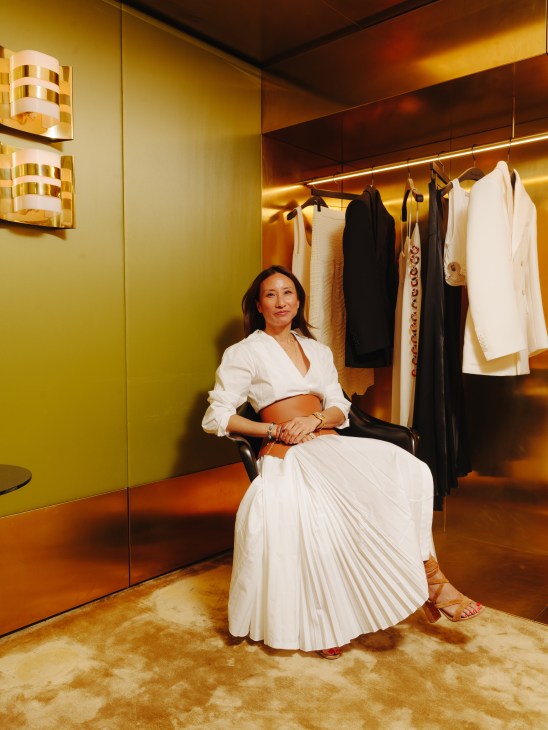
When Elizabeth von der Goltz began her career as a fashion buyer, working for the now-closed New York institutions Barneys and Henri Bendel, she remembers sitting near Joan Burstein, the founder of London’s Browns boutique and admiring her as a “real icon”. “She was a true risk taker who always went out to discover the new generation of talent,” says Von der Goltz. Nearly 20 years later, she is sitting in the leafy courtyard of the Browns boutique (a stone’s throw from its original South Molton Street address) as the company’s newly appointed ceo.
In the years that have transpired, Von der Goltz has held leadership positions at Bergdorf Goodman, Net-a-Porter, Matches Fashion and, more recently, taken a detour to Boston to complete the Advanced Management Programme at Harvard Business School. She has also experienced the transformation of fashion retail first-hand: the days when her former employer Barneys was heaving with stylish New Yorkers at lunch hour are in the city’s past and investors are no longer bidding for online retailers, many of which are now sitting on piles of unsold stock.
Browns too has faced a slowdown since the coronavirus pandemic, as well as internal management changes. But Von der Goltz is coming into the business with optimism. “It’s the perfect time to decide how we move forward,” she says. Farfetch, with its highly efficient marketplace model and multi-faceted portfolio (the company also invests in fashion start-ups, owns the Milan-based New Guards Group and has partnerships with the likes of Chanel, Chopard and Harrods) is helping to refine her formula for success. “Farfetch is a business of the future with a platform that can help to power the Browns business globally,” she adds. “Everything else in the retail landscape is based on dated business models.”
Here, she tells Monocle how she plans to reignite the joy of boutique shopping and turn Browns into London’s most vibrant gathering spot.
How have you been reshaping Browns’ strategy?
Like the rest of the industry, we have gone through so much transformation since the pandemic, including supply-chain disruptions and inflation. We had to sit down and re-envision our mission, our positioning and product strategy. There’s so much more we can be doing in the world of ready-to-wear, for instance. It’s not about buying more; we want to keep a sharp focus on our point of view instead, introduce customers to new names and ways of wearing familiar styles.
The shop is also very important in building our community. My aim is to create a real destination, a cultural hangout in London. Whether you want to shop for a one-of-a-kind item or come to Native [the courtyard restaurant], Browns should be top-of-mind – just like Colette used to be in Paris. That’s why we’re also thinking about having more artistic residences. Creating loyalty to a space is essential. I would love for Londoners to feel that attachment to Browns and for travellers to make it their regular stop when they’re in town.
Where do you see the most potential for growth?
I see opportunities across the board. Menswear is particularly interesting at the moment and evolving at a faster rate than womenswear. There’s a move away from streetwear hype into something a lot more grown up, so we have an opportunity to introduce customers to best-in-class tailoring or dress shoes, styled in our modern ways. We have also been investing in advanced technical wear, as well as vintage watches and fine jewellery. The aim is to host more events with our designers next year, bring in more products and talk to our top clients. Another priority is to make sure that we are changing the shop floors on a monthly basis so that our customers can discover new items every time they come in.
Is new talent as important now as it has been in the past, when Joan Burstein, for instance, would snap up fashion students’ entire graduation collections straight off the runway?
I actually think that we can take this heritage further into the future, by giving these young talents a global platform. Today there’s so much noise out there; it’s even more important to offer something that’s emotional, something that you can’t find anywhere else. We do also carry Gucci and all the rest of the big-name brands but it’s all about balance and curation.
What role does the digital arm of the business play?
It’s important to keep growing the online business because not everyone will be able to come into the boutique all the time. The focus for us is best-in-class service: our customers should be able to get what they need from us, no matter where they are in the world. Being powered by the Farfetch platform also means that we have a big global audience – no one has that many eyeballs if they’re building a site on their own. It’s not about technology for technology’s sake but about creating an ecosystem where customers can get the best service, customised recommendations and access to our stylists, both online and in the shop.
How did returning to education change your outlook as a leader?
I had access to professors who are on Fortune 500 boards and fellow students who have worked across industries. Hearing how they have made it through the current socioeconomic shifts and evolved the cultures of their companies helped me to think about leadership and how to share my new vision for Browns with the team. This kind of experience opens you up to finding creative solutions. You also learn that even as you’re hitting your goals, you always need to keep an eye on the future.
brownsfashion.com
Kristoffer Juhl
Co-founder and managing director, Tekla
Denmark
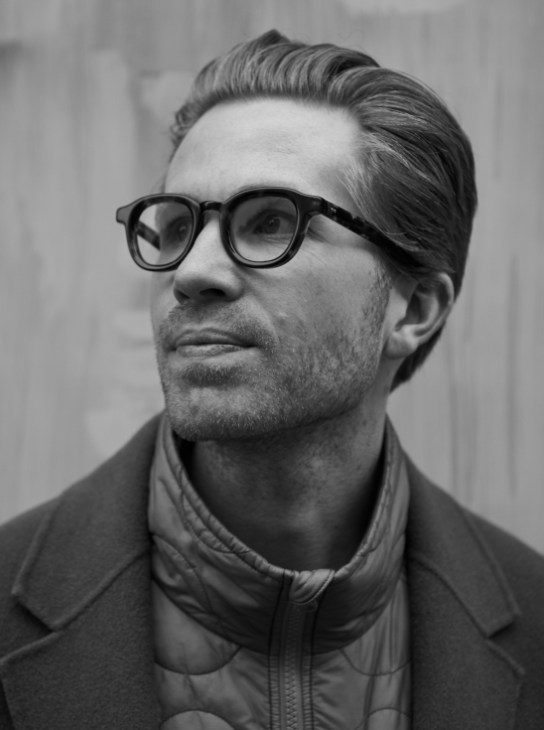
Charlie Hedin and Kristoffer Juhl founded Tekla Fabrics in 2017, with a handful of samples and the desire to breathe some fresh air into the world of bedding. Over the past six years, the company has experienced a meteoric rise, evolving into a globally recognised “personal luxury” brand, known for its pyjamas, silky soft bed linen and neutral-hued towels.
Much of its success has been a result of Hedin and Juhl’s obsession with high-quality, minimalist branding – its boldface logo is loved by many – and cleverly-executed collaborations with Finnish furniture powerhouse Artek or French fashion brand Jacquemus.
Recently, Tekla opened its first flagship in Copenhagen – a pared-back space located in a historic building that dates back to the 1930s – and plans to continue investing in retail with shops in London, Paris and New York also in the works. Here, we talk to Juhl, the firm’s co-founder and managing director, about Tekla’s rapid rise and highly promising future.
Take us back to the genesis of Tekla.
I have known Charlie [Hedin] since 2014. Years ago he pitched me the idea that he wanted to make bedding. I had never really given it much thought – that it was something that my mother gave me for Christmas – but I loved his energy and enthusiasm. In 2016 he started working on an identity for Tekla, looked for manufacturers and had some samples made at home. He then asked me to help him run operations and it felt natural to join forces.
How did you find your first customers?
If you walk into most shops that sell bedding, you can only buy white or grey sets; we wanted to challenge that. We visited shops in Scandinavia and tried to win over the buyers but we were often told that our product was “a nice little capsule” that lacked consistency. So we expanded our range and, as a result, the customers that we wanted to work with saw the potential. Tekla began with strong branding and then evolved into an emerging label within home textiles, known for its modern values.
How would you define your brand’s values?
Our focus is on being a responsible brand; international retailers expect you to be as sustainable as possible. These companies have environmental goals to reach and it’s easier for them to ask new labels to be compliant, rather than huge ones to change. It was in our interest to be sustainable but we also thought that if we were building a brand, we might as well do it right. For us, this means making high-quality products that last for as long as possible. We also think about functionality because towels and bedding aren’t just square pieces of fabric; they have to feel incredible day after day, not just the first time that you use them. This comes down to the materials and how you educate your customers to make their products last.
Inclusivity is also extremely important to us. We develop quality products and, while they come at a price point, we don’t want to push it too far. Our audience is a great reflection of this: we have 14-year-old customers who want towels and pyjamas but we also sell nightgowns to 80-year-old retirees.
How important is the role of your manufacturers?
Most of our manufacturers are based in Portugal. We haven’t changed them since we started the company and we are significant customers for all of them. They have taken the time to understand what we want and why details matter: why that extra stitch is important and why some things cannot be compromised on. We have grown together and so we challenge them to do better – it’s no secret that 90 per cent of our environmental footprint lies upstream. So in our journey towards becoming even more responsible, those relationships are important. We often find ourselves in the position of educating them, which has been key in building Tekla and is even more important going forward.
You’ve been behind a number of sell-out collaborations. How do you choose your partners?
Fashion has always done well to bring elements of culture into designs. We realised that no one was doing that in our industry and so we saw it as an opportunity to explore our interests, particularly in art and architecture. We were very lucky to be able to work with British architect John Pawson. As someone who builds houses that only few can afford, he wanted to work on a more accessible product. Why not create a beautiful range of blankets or bedding that is a bit more affordable?
Your first flagship shop has just opened. How important is physical retail to your brand?
It was inevitable that at some point we needed to have a physical manifestation of the brand that we could control. I tell our team here that getting feedback from customers in the shop is like digging for gold. We want to ensure that we are using their insights to help us optimise the shopping experience and so that they feel valued.
What’s next for the business?
It’s no secret that we are very ambitious when it comes to retail because that’s how we can further establish the brand. The market is changing: there are fewer multi-brand boutiques in Europe, which is unfortunate. But it also means that there are new opportunities for us to create our own retail experiences. When thinking about the next steps for Tekla, we’re looking at expanding into international capitals such as London, Paris and New York. We need to figure out how to keep our communities excited about constantly returning to the physical shop.
teklafabrics.com