Issues
How Moia’s autonomous vans aim to transform Hamburg’s public transport
An impeccably polished gold-and-black van has pulled up on the street in front of me in Hamburg. At first glance, it looks like an electric Volkswagen Crafter but it’s clearly custom, embossed with “Moia” in white lettering above the grille. As the door slides open, I get in and sit in one of the six seats that feel racing-car-like. With a form that curves around the sides at the top of the seatback for added privacy, they are intended to have a “cocooning” effect. There are also usb ports and wi-fi.
My trip to Hamburg Airport is part of an app-based ride-pooling service offered by Moia, a mobility start-up owned by the Volkswagen group (hence the vehicles), which has been operating in Germany’s second city since April 2019 and Hanover since 2018. Ride pooling – point-to-point travel in which strangers share rides for lower fees, while accepting slight detours plotted by an algorithm as others are picked up and dropped off – is nothing new. But Moia, alongside its City of Hamburg partner, is involved in a huge experiment. The crucial part of the plan is that Moia will switch its human-driven fleet to autonomous vehicles by 2025. It will also scale up from the 300 vehicles it currently operates to at least 5,000 autonomous vans.
“Autonomous vehicles will be a game changer,” says Moia’s CEO, Sascha Meyer. Moia isn’t currently profitable, he admits, as it’s impossible for the company to reach the size it wants to be with human drivers. There’s also the issue of rigid working patterns and what Meyer calls “the challenge of mixing the shift of the driver to the demands of the customers”. For example, there might be a spike in usership on Monday morning but then there’s a big lull, even though a driver’s shift might only be half complete. On my weekday afternoon trip to the airport (€11.20; far cheaper than a taxi), only one other person gets in.
Clearly, Hamburg city hall sees the potential of Moia in pushing the boundaries of both electric and autonomous driving in a premium-feeling way. It already has an ambitious plan in place called Hamburg-Takt, aimed at getting Germans out of their cars and onto public transport. Hamburg-Takt envisions public transport acccess within a five-minute reach of every Hamburger. In order to meet these goals, public transport will need to become a lot more elastic. Which is where Moia comes in. “Public transport [here] is on time,” Anjes Tjarks, senator for transport and mobility transition, tells Monocle. “But it is hard to make the system flexible. And this is an interesting new dimension for public transport.” Moia might be able to cut through from A to B where a train would take a more circuitous route; or offer a suburban or rural service that is responsive to demand rather than continuous.
Wander around Wandsbek, the largest of Moia’s three Hamburg hubs, and you’ll see rows of neatly parked vans outside, many of them hooked up to high-speed Porsche chargers. But it’s an inconspicuous room on the building’s first floor – the service centre – where staff receive a constant stream of data about traffic flow, the position of vehicles, the number of passengers and the state of the battery. Moia might be live but its current phase is clearly part of an endgame as knowledge is acquired. “What we do in Hamburg is for testing; it’s for learning; it’s for creating the product,” says CEO Meyer.
Of course, betting on autonomous technology isn’t without its risks. The technology is still evolving and Moia’s previous partner, Pittsburgh-based Argo AI – backed by both Volkswagen and Ford – announced that it was closing after failing to attract new investors towards the end of last year. But Meyer says that he is “really happy with the first results” of its collaboration with new partner Apex AI. Autonomous vehicles are now being tested on a track in Munich, while vans are going out on Hamburg’s streets with a test driver. A closed group of passengers will be able to hop on an autonomous Moia vehicle next year, ahead of the 2025 switchover.
Though US cities might be ahead of the game in terms of autonomous driving, senator Tjarks believes that Hamburg can be “world leading” because of its focus on a flexi vision of what public transport can be, rather than using it for private cars. Moia’s bold vision wouldn’t have been possible without Hamburg being open to collaboration, formally incorporating the company into its transit network this year. “There are so many people who understand the importance of autonomous driving for the public transport system,” says Meyer. “We get tremendous support and not a lot of push backs.
Ed Stocker is Monocle’s Milan-based Europe editor at large.
Best in show
TV
Arkitekten (The Architect)
Viaplay
Set in a not-so-distant future where drones walk dogs, this Norwegian satirical drama follows young architect Julie (Eili Harboe), who lives in a car-free Oslo and is inspired to turn empty parking blocks into cramped residential accommodation to combat rising house prices and unreachable mortgages. The resulting series is a compelling, if slightly dystopian, visual treat.
Dansegarderoben (Chorus Girls)
Plex
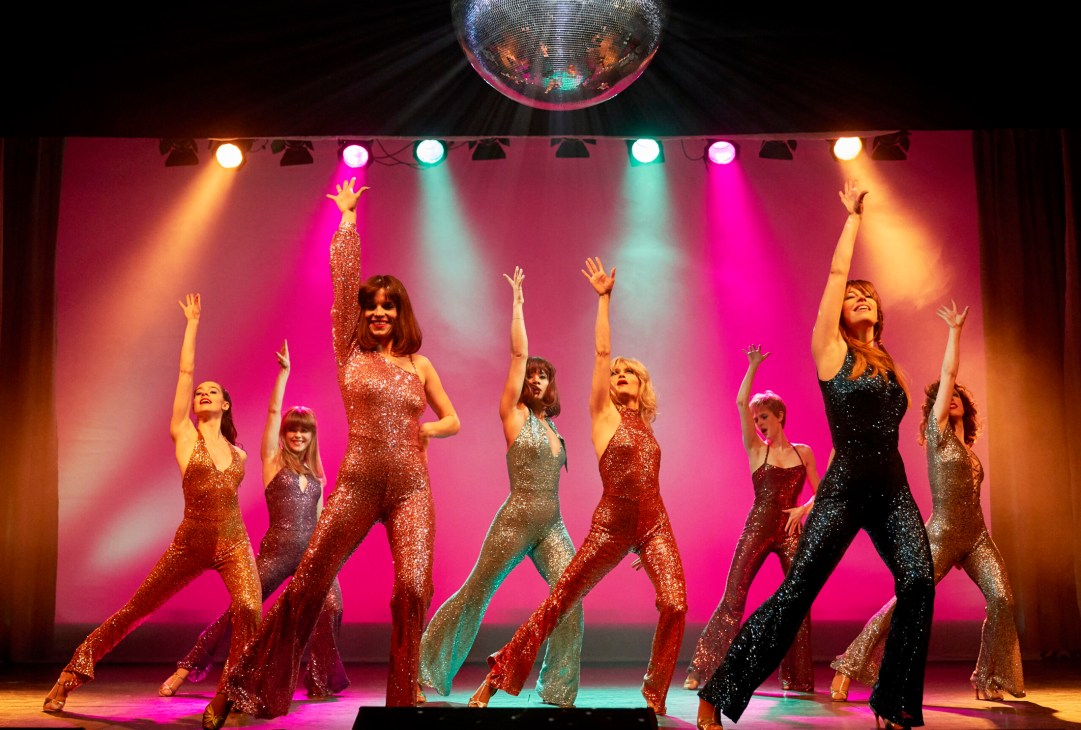
This Danish series explores the 1970s women’s rights movement through the story of eight dancers who take the stage at Copenhagen’s Cirkusrevyen, the biggest revue theatre in the country. Directed and created by Ditte Hansen and Louise Mieritz, who also star in the series, the programme’s screenplay is based on interviews with real-life performers from that era, exploring the determination and solidarity that formed between them.
Film
Theater Camp
Molly Gordon and Nick Lieberman
This mockumentary in the tradition of This is Spinal Tap is a delight for anyone with a penchant for breaking into song. Featuring an ensemble cast that includes Ben Platt, Ayo Edebiri and Amy Sedaris, it’s set during summer in upstate New York, where a group of musical-theatre-leaning kids are at odds with their teachers. When their camp is threatened with closure due to financial issues, they must put on a memorable show to keep it open.
‘Theater Camp’ is released on 25 August
Afire
Christian Petzold
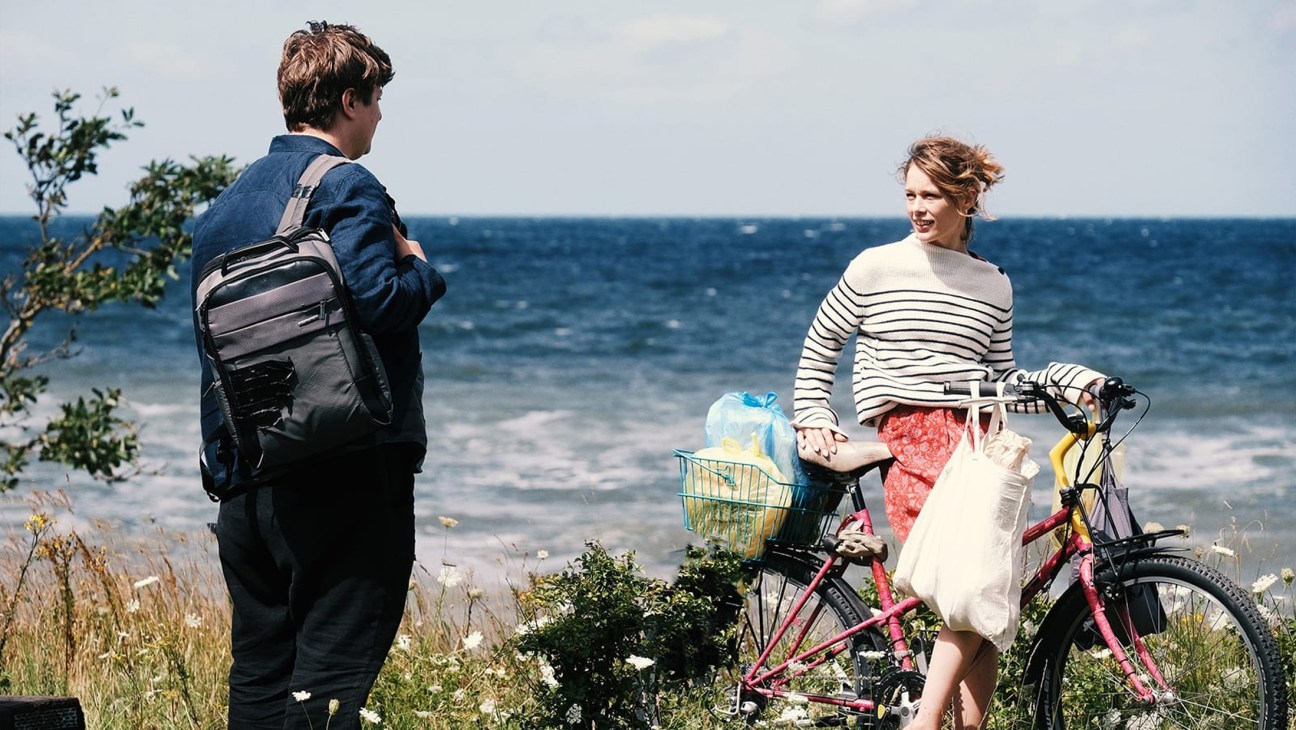
Leon has writer’s block and a bad personality. Thinking that a getaway to the seaside with his photographer friend Felix (also struggling for inspiration) might solve their problems, they instead end up in a complex relationship with unanticipated housemate Nadja. Behind them, a forest fire slowly burns. Petzold’s funniest film, Afire is a deft exploration of the bumpy intersections of creativity, desire and longing.
‘Afire’ is released on 25 August
Past Lives
Celine Song
Playwright Celine Song turns to film to deliver a love story so personal that it becomes universal. Korean émigré Nora randomly reconnects with her childhood sweetheart Hae Sung, rekindling their bond as adults through childlike language and unreliable Skype calls. Song’s film is a meditation on lives lost and gained through emigration, while its melancholic romanticism has made it one of the year’s most talked-about debuts.
‘Past Lives’ is released on 8 September
Art
Ruth Asawa Through Line
Whitney Museum of American Art, New York
Californian sculptor Ruth Asawa treated drawing as more than just preparatory sketches. Studying under Josef Albers at Asheville’s experimental Black Mountain College, she developed a style based on repeating natural motifs. The more than 100 pieces collected here demonstrate crisp line-work as precise and engaging as her trademark wire sculptures.
‘Ruth Asawa Through Line’ runs from 16 September to January 2024
Niko Pirosmani
Fondation Beyeler, Basel
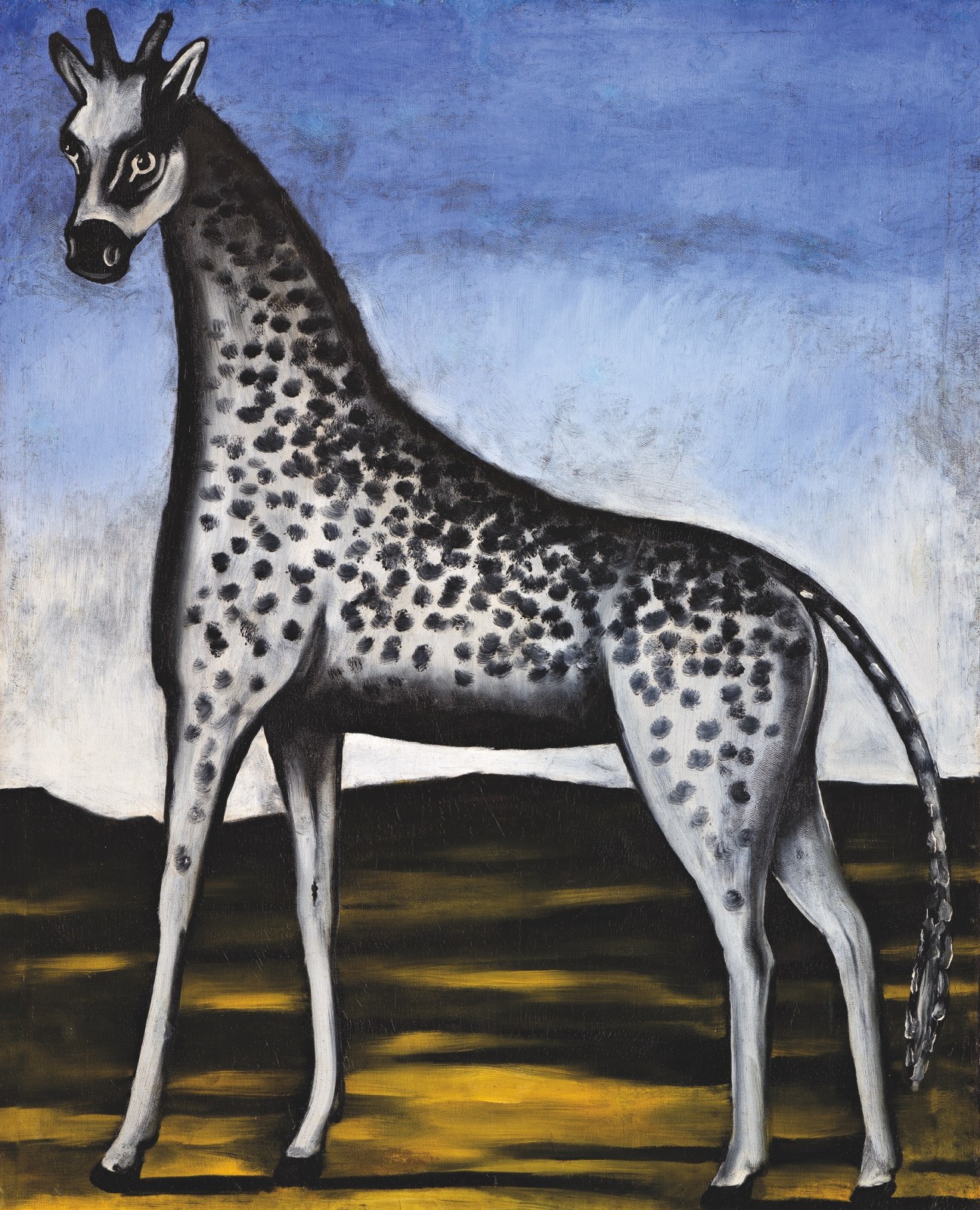
Niko Pirosmani’s work wasn’t intended for gallery walls. Many of his naive portraits and daily scenes were painted in return for food and lodgings. The Georgian folk artist died in 1918, only posthumously gaining favour via a 1969 film and Picasso portrait. This retrospective will further underline his primitive charms.
‘Niko Pirosmani’ runs from 17 September to 28 January 2024
Books
A Wreath for the Enemy
Pamela Frankau
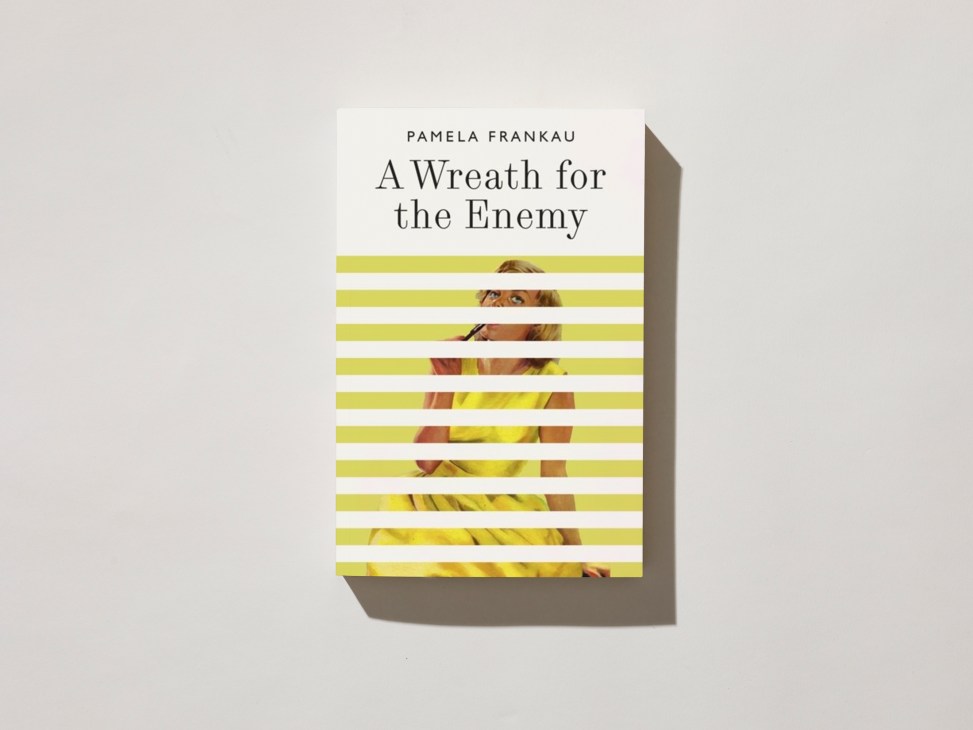
Penelope Wells longs for a normal childhood. While holidaying in the French Riviera, where she is forced to grow up too soon, she steals moments to watch the children nextdoor, who enjoy a playfulness that she never had. The unexpected friendships between these multifaceted characters eventually leads to chaos when their lives inevitably collide.
‘A Wreath for the Enemy’ is out now
Bring No Clothes: Bloomsbury and the Philosophy of Fashion
Charlie Porter
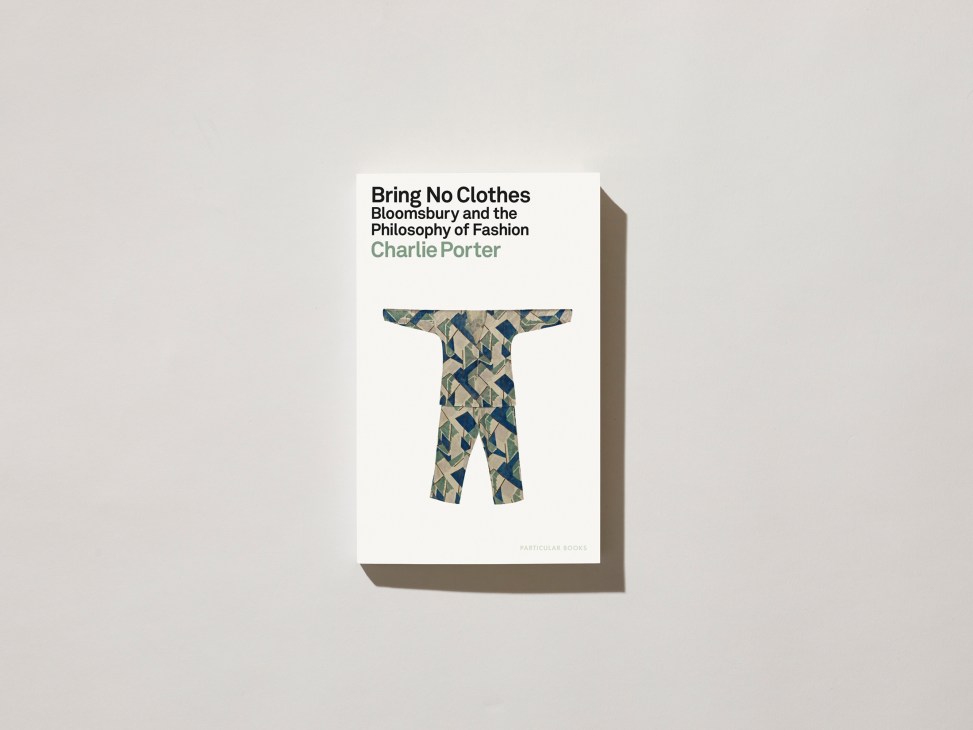
Two years ago, Porter gave us What Artists Wear, a sparky account of the clothes sported by modern and contemporary artists. Now the curator and critic is back with a deep dive into the wardrobes of radical 20th-century artists’ collective the Bloomsbury Group. Behind colour choices and hemlines are fascinating insights into their bodies and minds.
‘Bring No Clothes’ is released on 7 September
The Librarianist
Patrick deWitt
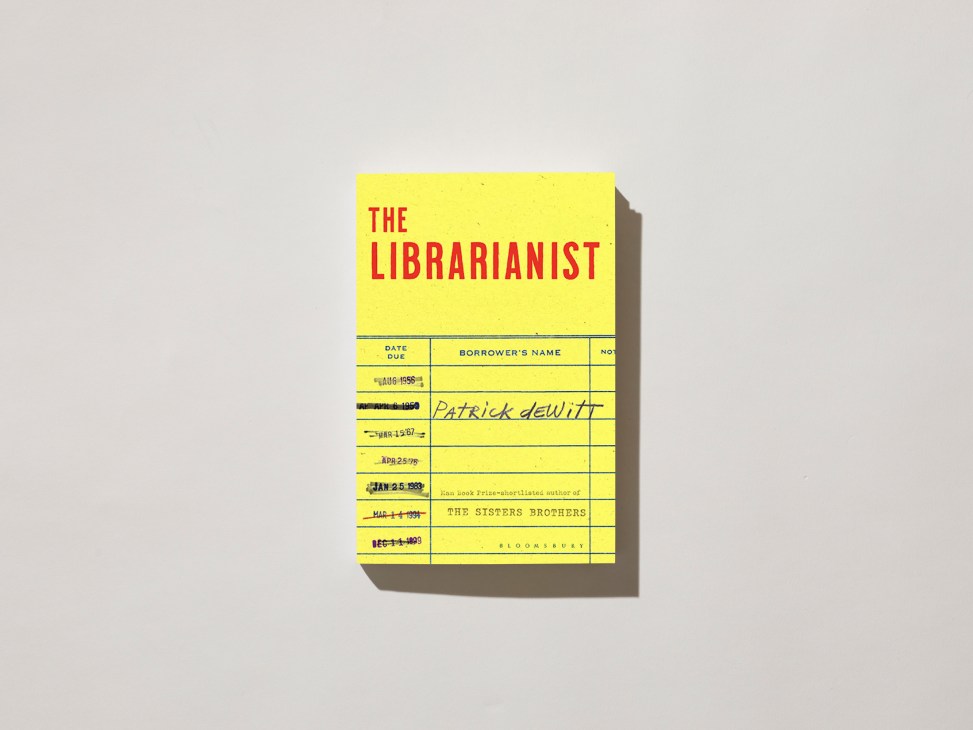
Award-winning author DeWitt tells the heartwarming tale of Bob Comet, a retired librarian seeking solace in sedate Portland life. Weaving accounts of wartime bravery, lost romance and the unconventional joys of the everyday, DeWitt celebrates the extraordinary moments nestled within the ordinary with wit and empathy.
‘The Librarianist’ is out now
Pet
Catherine Chidgey
Justine always wanted to be her teacher’s pet. When the crown is hers, she revels in being the chosen one. But as things at the school start to go missing, tension descends on the classroom. Chidgey’s novel soon turns into an exploration of racism, misogyny and oppressive Catholicism, viewed through the microcosm of a school in 1980s New Zealand.
‘Pet’ is out now
The Glutton
AK Blakemore
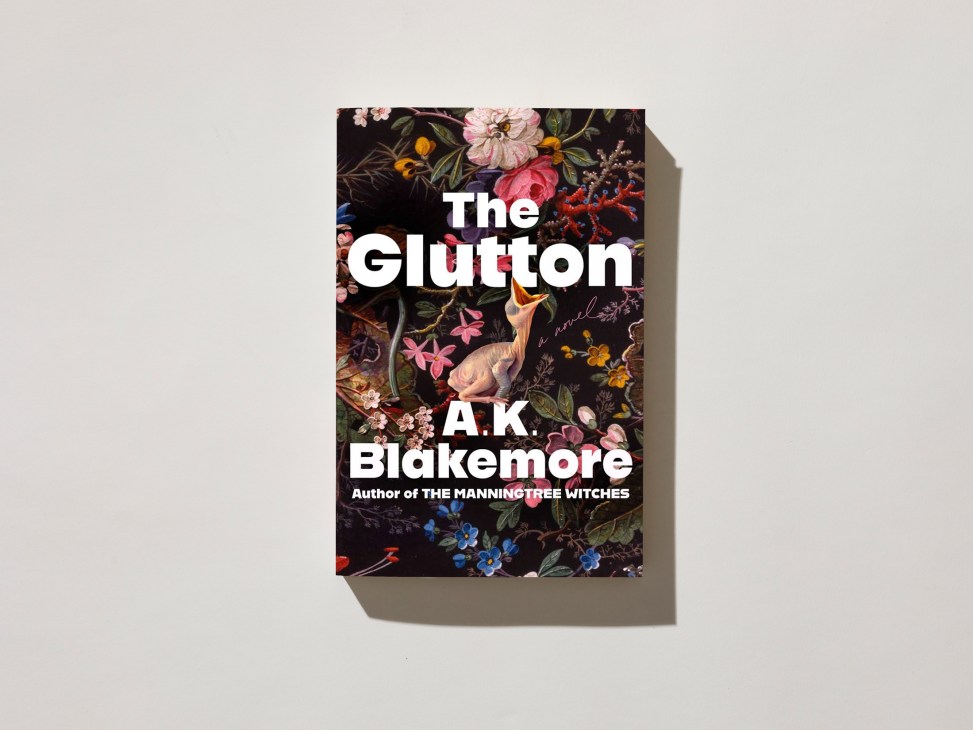
Set in 18th-century France, the author’s follow-up to The Manningtree Witches tells the strange story of Tarare, a peasant with an insatiable appetite. As he lies in a hospital in Versailles, we learn of his journey from the south of France to Paris. The Revolution is raging and through Tarare’s thrilling travels we witness all the upheaval in a fierce and lyrical tale of desire.
‘The Glutton’ is released on 21 September
Photography
Zoe Leonard: Al río / To the River
Museum of Contemporary Art Australia, Sydney
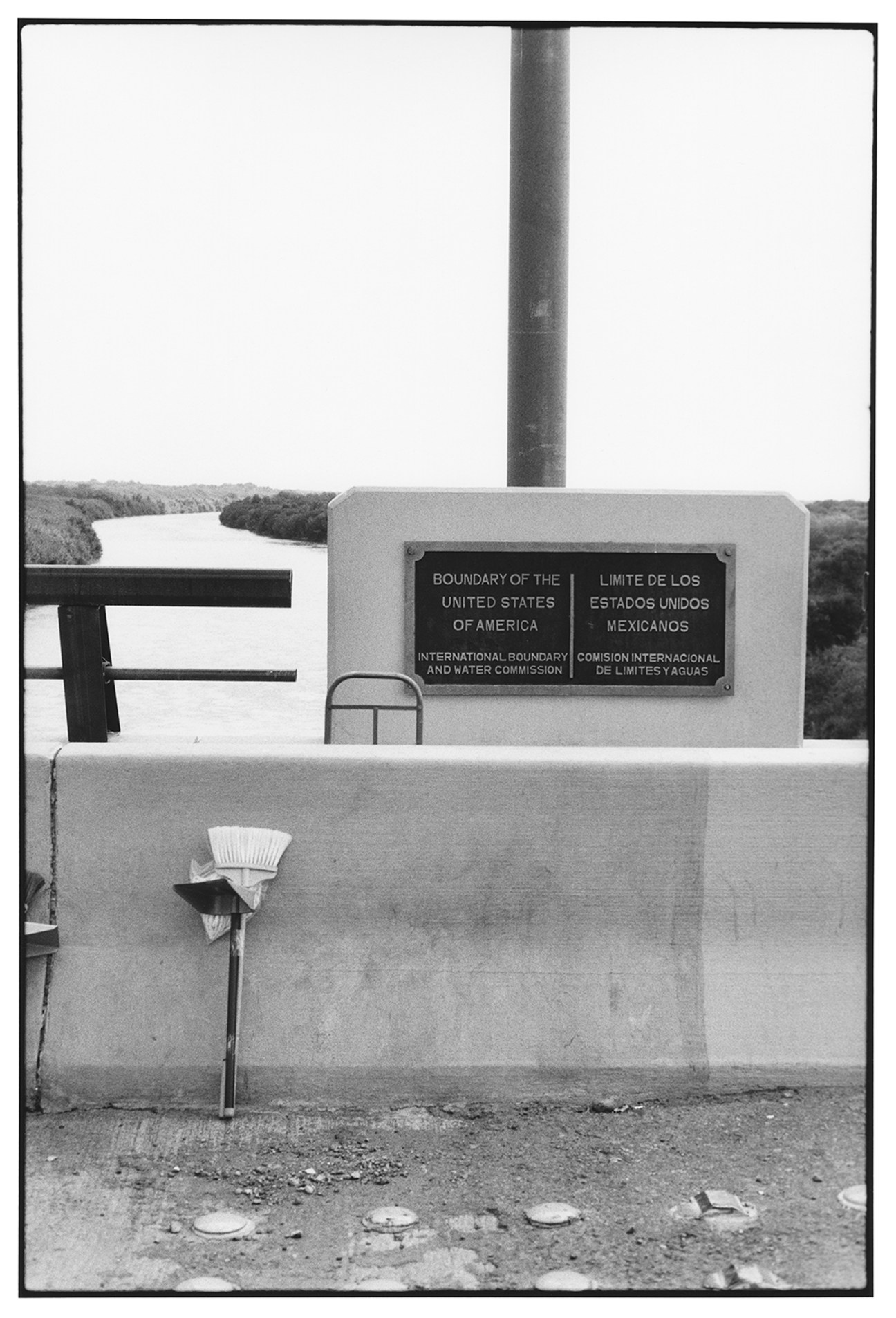
The US-Mexico border is defined in part by the Rio Grande river – or Río Bravo, depending on which side you’re on. Zoe Leonard spent six years exploring both banks with her camera, focusing on the communities and complex ecosystems in powerful monochrome images that reveal the starkness of border life.
‘Al río/To the River’ runs until 5 November
Music
João
Bebel Gilberto
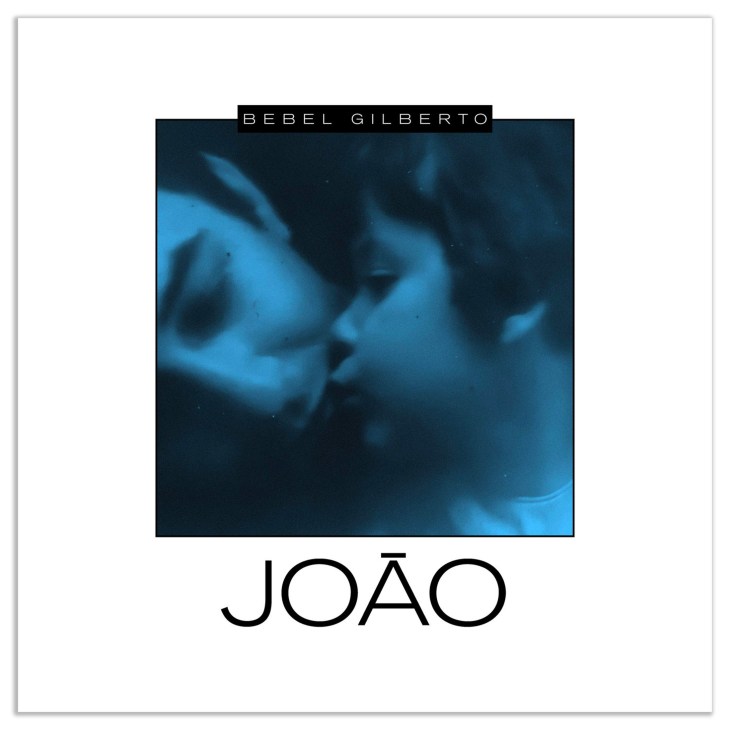
João is Bebel Gilberto’s musical love letter to her father, the late Brazilian legend João Gilberto, also known as the father of bossa nova. Drawing from her personal and musical memories, Bebel delivers new interpretations of some of Brazil’s most iconic songs. Her delightful tones work perfectly on famous tracks such as “Ela é Carioca” and “O Pato”, bringing a youthful zest to classic, smooth samba.
‘João’ is out now
Mid Air
Romy
The first solo work by Romy, also a member of popular electronica band The XX, is a euphoric celebration of nightlife and hedonism. A sense of optimism permeates the whole album, culminating in the club-ready “Enjoy Your Life”. Romy was clearly inspired by 2000s pop-dance tracks in songs such as “The Sea”. There’s also a celebratory approach to sexuality and its fluidity in captivating tunes such as “She’s On My Mind”.
‘Mid Air’ is released on 8 September
World of Hassle
Alan Palomo
Using his birth name for the first time instead of the moniker Neon Indian, Mexican-born singer Palomo delivers a confident, lush album. Influenced by the sophisticated pop of Bryan Ferry – plus a healthy dose of Italo-disco – the record brims with originality. From the catchy “The Return of Mickey Milan” to the breezy “Stay-At-Home DJ” and the electropop of “Meutrière”, there’s something to suit all dance floors.
‘World of Hassle’ is released on 15 September
Images: 20th Century Studios/Searchlight Pictures, Tine Harden/TV2, Infinitart Foundation, Sideshow & Janus Films.
Still Life: Tony Hay
On with the show
Last autumn, Iranian news presenter Niusha Saremi’s telephone lit up with a message that contained a photograph. The picture, sent from Iran, was of a billboard stationed along a highway – one of several that were being erected around the country. It read, “Wanted – Dead or Alive” and featured mocked-up mug-shots of five famous television journalists who work for Iran International, the 24-hour news broadcaster launched in London in 2017. Saremi’s portrait was among them.
“They are trying to brainwash people,” says Saremi, speaking from Iran International’s newsroom in Washington, the network’s temporary broadcast hub since February. Her magazine programme Titr-e Avval (The Lead) is about to begin, starting at 12.30 Eastern time, 20.00 in Iran. Among the stories on the line-up today are an investigation into how the cultural wing of the Iranian Revolutionary Guard Corps has been copying popular international television formats – such as talent contest America’s Got Talent – and turning them into pro-government propaganda tools. “They want to make us look like the aggressors,” says Saremi. “We are trying to be a voice for people who have been silenced – the government does not see the media as its friend.”
The billboards began appearing shortly after Tehran named Iran International and other free-to-air outlets, such as BBC Persian and Manoto TV, as terrorist organisations in November 2022. “I try not to think about it; it is a stress and it makes me feel sad,” says Saremi. “Everyone wants to be on a billboard but not like this.”
In February, British counterterrorist officers advised the network that the risk to the channel’s journalists in the UK had become so acute – despite a ramped-up police presence and security fence around the complex – that broadcasts should stop immediately.
“There was no notice at all,” says Mehdi Parpanchi, Iran International’s executive director of operations in the US. The network faced two choices. “Either we had to stop broadcasting entirely or bring everything abroad. The first one was not an option: we couldn’t allow the terrorists to stop us because we knew that their main goal was to shut down the channel.”
Moving an entire news network from one country to another in the space of a weekend – while keeping it on air – was a herculean endeavour. “It was a huge logistical project,” says Aliasghar Ramezanpoor, an Iranian former deputy culture minister and the channel’s executive editor, who is based in London. Ramezanpoor was among the first to be warned by police of an imminent threat to his safety and was advised to relocate to a safe house. He declined to do so. “We were lucky because of the level of courage that our colleagues had.”
Several journalists were eventually flown from London to Washington and the studio’s capability was expanded to allow it to broadcast 24 hours a day. “It happened on a Friday and I was here on Sunday,” says Saremi. “We moved quickly.”
Over the years, Iran International’s journalists have honed ways of reporting on the country that they are in exile from. “I miss a direct connection to my own people,” says Samira Gharaei, a senior correspondent who covers the White House and the US State Department. Some of her recent stories have examined Iran’s drone manufacturing sector, as well as Tehran’s military supply to Russia for its ongoing war in Ukraine.
Gharaei left Iran in her twenties, after her coverage of alleged vote-rigging in the 2008 presidential election made her a target. “My name was on a blacklist,” she says. “Then there were fewer jobs and payments. Life got really difficult. Every Wednesday I needed to go to an office to answer questions. I went in but I didn’t know if I would come out. All of this pressure accumulated and so I decided to leave and pursue another path.”
Reporting on home from abroad is an inherently challenging task. But when 22-year-old Mahsa Amini died in hospital after being held in police custody last September, being at a distance was an asset. “We were the only main channel to cover the story 24 hours a day,” says executive editor Ramezanpoor, noting the network’s decision to broadcast rolling coverage of the ensuing national demonstrations as women across the country removed and burned their headscarves in protest. “We are not activists, nor were we following a specific political agenda. We were just reporting on what citizens in Iran were saying.”
Members of the public sent the channel more than 1,000 videos, photographs, voice recordings and messages from Iran every day at the height of the demonstrations – material that would have been impossible to broadcast from inside Iran. It was all sifted through, examined and either corroborated or discarded by the news team overseas. “Everyone here is of different ethnicities; we are from different provinces,” says senior correspondent Gharaei. “We had a lot of people talking to friends and families inside Iran and saying, ‘OK, this video is coming from that square, let’s call my auntie and ask if something is really happening.’ But we needed to be extra cautious and careful because one of the Islamic Republic’s tricks is to send you disinformation and then undermine you.”
Being outside Iran also means that the network can report its stories with a depth, scope and perspective that would not otherwise be possible. “It allows us to tap into a more comprehensive network of sources and experts,” says Parpanchi. If a government report on the state of the economy is published in Tehran, the channel’s large roster of commentators fact-check the official version live on air. “Ultimately, our goal is to bridge the information gap for our viewers, to offer a more holistic view of the world around them.”
Examining events from abroad can also help temper the way the network approaches its coverage of events inside Iran. “You can never be numb to any story,” says presenter Fardad Farahzad, shortly after his eponymous weeknight interview show finishes for the evening. “Even though the government is hostile towards you, you still want to be impartial and fair.” Today’s programme includes coverage of the Nato summit in Lithuania as well as an in-depth discussion on the territorial dispute between Iran and the UAE over a cluster of Gulf islands. “Our viewers are looking at us and other broadcasters from the outside to open a window onto what’s actually happening in their own country. But because of the relatively large number of reporters that we have worldwide, we can inform them of what’s happening outside of Iran as well.”
Still, Iran International isn’t immune from scrutiny from other quarters. As a registered company in the UK, it is privately funded and therefore does not generate revenue via commercials. Its primary shareholder is a joint Saudi-British national: this has spurred reporting in the international press that the network’s coverage harbours an agenda that indirectly furthers Saudi Arabia’s long-held hostility towards Tehran. Volant Media, Iran International’s parent company, refutes this. “There is nothing to hide,” says Parpanchi. “To me, what matters as a journalist is not who is funding this news organisation. What matters is whether I am making independent editorial decisions. We are only a stone’s throw from The Washington Post. Is Jeff Bezos interfering in the editorial decisions that it is making? Some of the most prestigious news organisations in the world have bowed to pressure from the Iranian government. The choices that we make here, however, are 100 per cent our decisions.”
White House correspondent Samira Gharaei believes that this editorial line explains the network’s extensive reach inside Iran. “People greatly appreciate how objective we are,” she says. But neutrality doesn’t always evoke praise: her recent coverage of the legal proceedings against Donald Trump spurred several viewers to get in touch. “We have audiences in Iran that like Trump so when we report on him, they don’t like it. But overall, I really think that we are having an effect on Iranian people, and how they think about the news.”
An increased reticence among many Iranian households to admitting to tuning in to the channel (for fear of being placed under surveillance) has made it difficult to ascertain precise viewing figures. But it is estimated that more than 90 per cent of Iranian homes have a satellite dish. Given that the network is broadcast 24 hours a day, on several channels, it makes it almost impossible for the Iranian authorities to jam its signals or to take it off the air for prolonged periods.
Later this year, Iran International is expected to resume its presence in the UK, at a new studio complex in London, which, the network says, will be larger than its previous ones. “Our ambition is to improve the quality of the work that we do with more investigations about what is happening in Iran,” says executive editor Ramezanpoor. “The threats mean that the job that we are doing as journalists is successful. That’s the positive side. It’s an encouraging message for us.”
Hold the phone
When the musician Prince used to perform live, he would have a dedicated security detail on hand to shine a light at any person in the audience who dared to pull out their phone to take pictures. Some comedians now call people out if they catch them sneaking a peek at their screens and occasionally have them read their messages aloud. Many performers have become so frustrated at audiences staring at their phones or videoing them on-stage that they have refused to play.
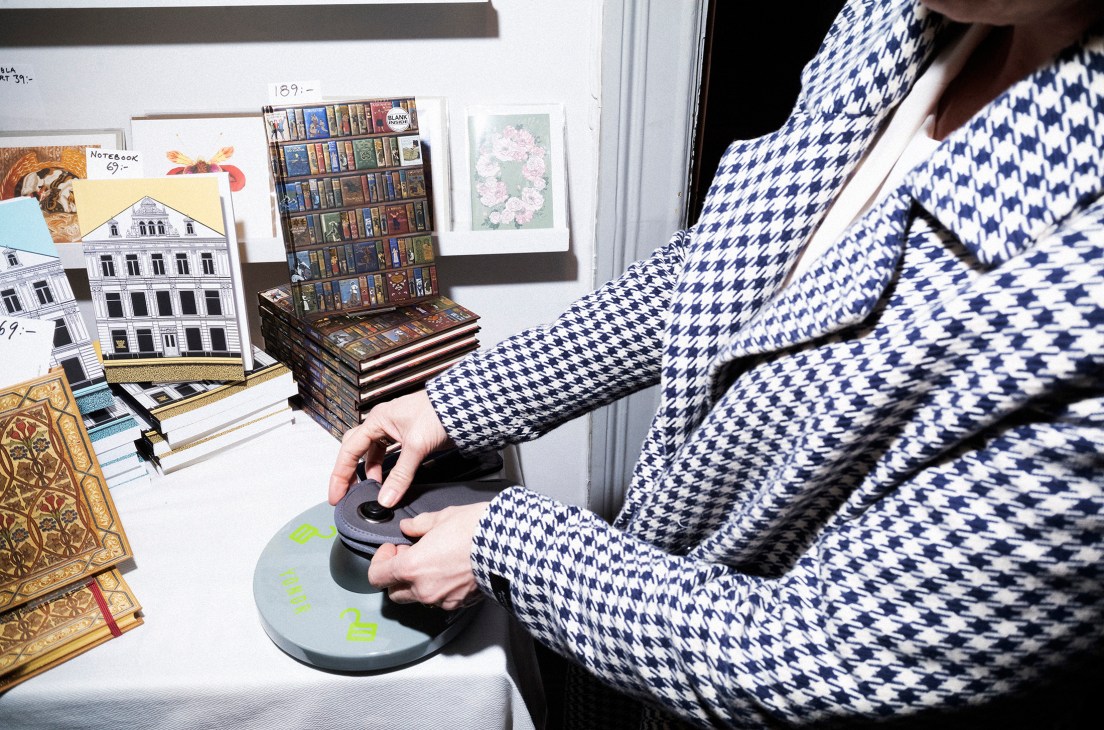
California-based Yondr offers a low-fi solution to the woes of these performers: a magnetically sealable pouch in which audience members lock away their phones for the duration of the show. Show-goers keep hold of their pouch throughout – so no phone separation anxiety – and these can be unlocked at any time using a Yondr device outside in the foyer, in case they need to make an emergency call.
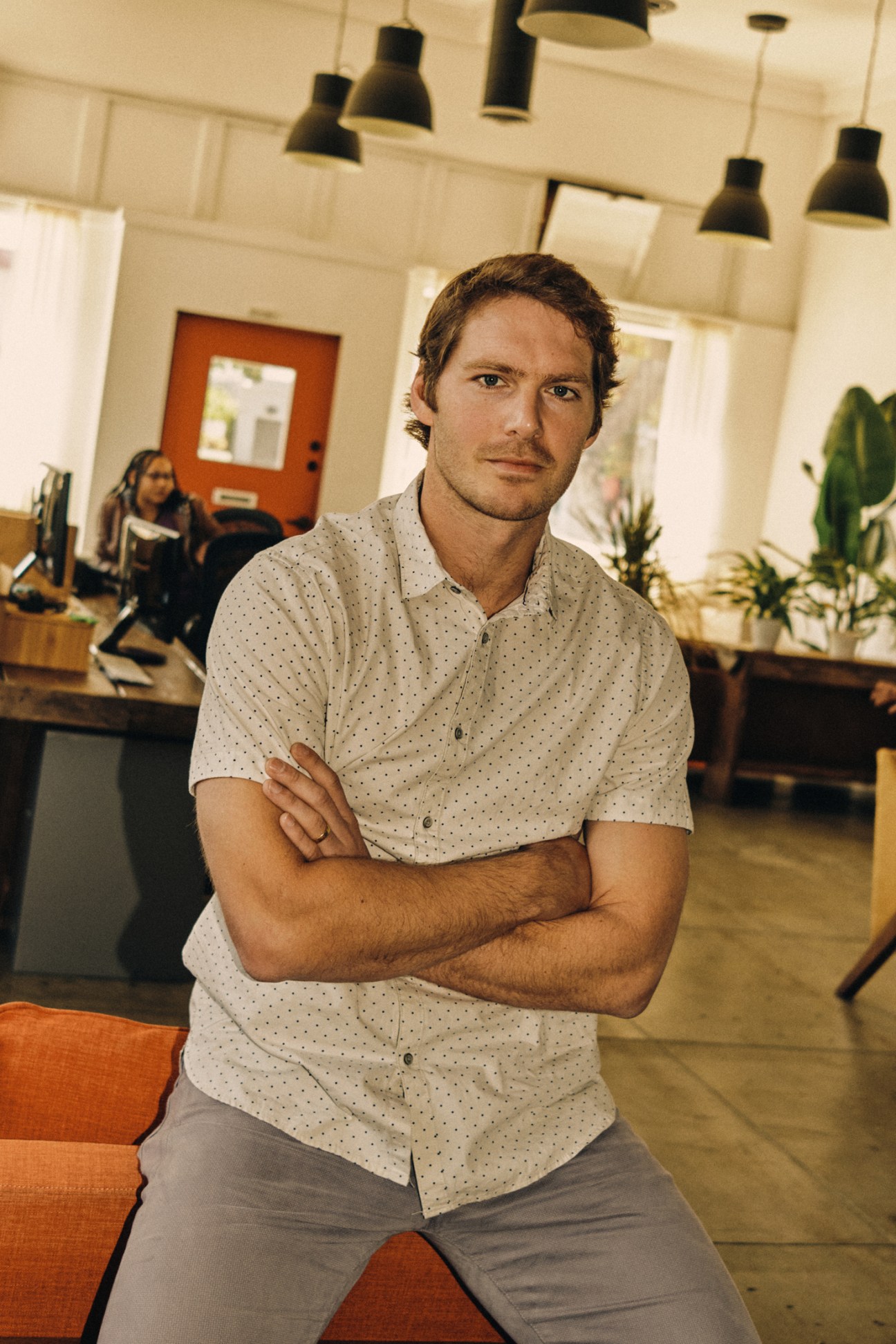
“It’s very difficult to avoid the solicitations of that thing buzzing in your pocket for three hours,” says Yondr’s founder, Graham Dugoni, when we meet in his company’s peaceful HQ just outside Venice Beach, Los Angeles, which has some cell-phone-free areas. “Phones are designed to capture your attention and draw you in.” Before he was an entrepreneur, Dugoni was a professional soccer player and understands the pressure of having to perform in front of a crowd. He believes that the urge to look at our phone is not an addiction but rather something that’s now hardwired into us, a bodily impulse.
Civil society has also not kept pace with technology, Dugoni explains. It isn’t enough to trust that people will keep their phones in their pockets, so they need a nudge. “That’s one reason why our pouch is grey and very bland,” he says. “It’s there just to set a new ground rule, a new social etiquette.”
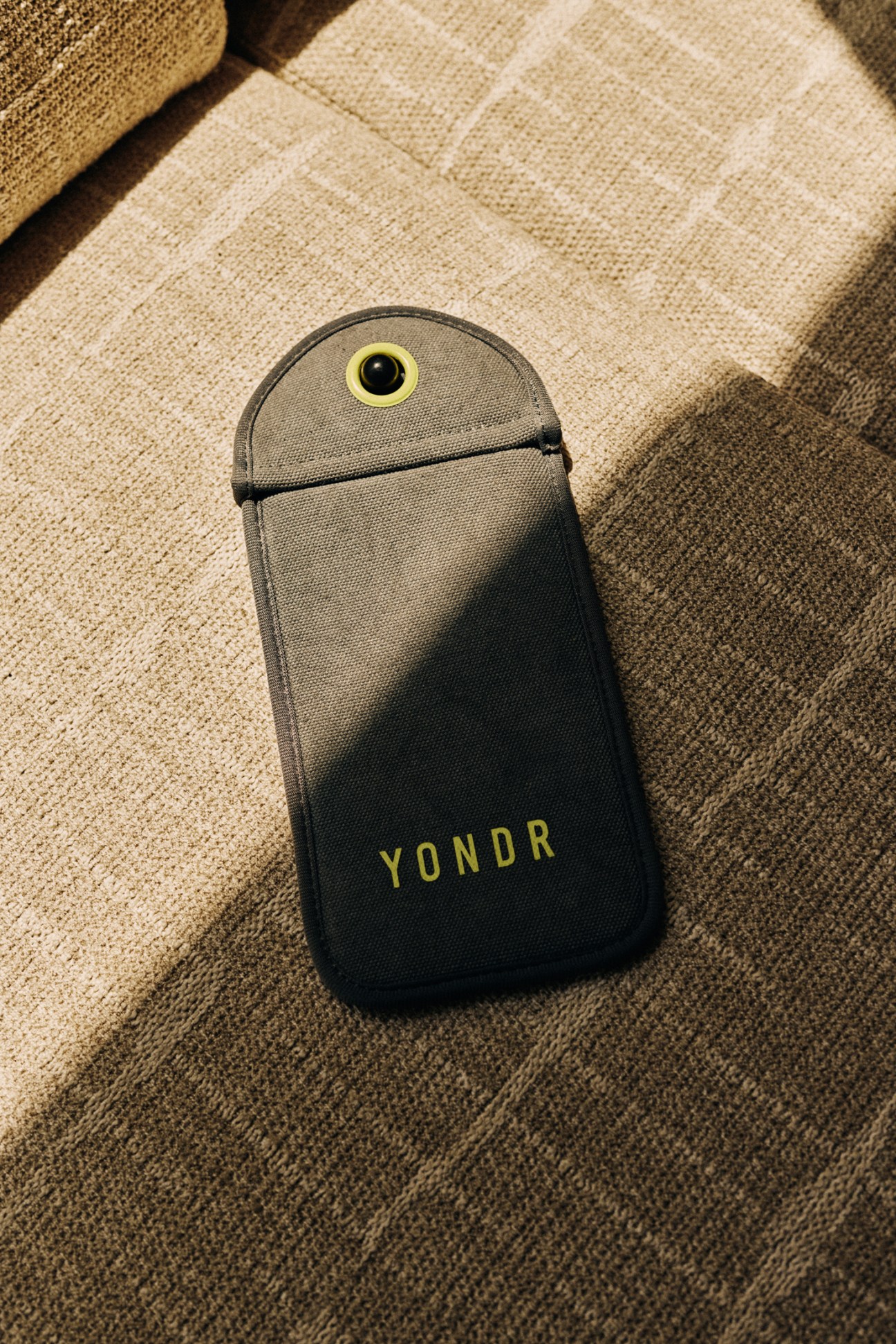
Yondr debuted in 2014 and had early adopters such as Chris Rock and Madonna. A mix of comedy clubs, theatres and concert halls now make its pouches a mandatory part of their live experience. Last year the company serviced six million seats worldwide, while its own phone-free music festival, Over Yondr, took place in June in the Catskills Mountains in New York state. The brand has tapped into a growing suspicion that the computer in your pocket is changing how we gather and socialise. Venues say that Yondr can be the difference between an absent-minded audience glancing at their screens or one swept up in a collective experience.
“There’s a complete shift in the attention span of the crowd,” says Lucy Sinsheimer, talent co-ordinator at comedy club Zanies in Nashville, Tennessee, which uses Yondr for almost all of its shows. Comedians tell Sinsheimer that it makes them feel free to try out new stuff, even if it might not bring the house down. “Comics feel much safer on stage knowing that people aren’t going to record the material they’re working on and put it on the internet without their consent,” she says.
This is not just a question of copyright but also one of privacy. Dugoni’s inspiration for Yondr came in 2013 when he saw someone dancing in the crowd at a music festival, unaware that a total stranger was filming them, perhaps with the intention of putting the video online. “These days, we think that smoking on aeroplanes was the craziest thing in the world; to me, this is no different,” he says. “In the future, people will say, ‘Well, of course, you can’t videotape anybody, anywhere, all the time.’” Yondr also kits out US courtrooms seeking greater assurances that jurors can’t surreptitiously communicate or record testimonies on their phones.
“That’s how it came to me that device-free spaces would become a necessity in modern life,” the founder explains. “For a young person, going to school or a party, imagine knowing that something you might do could get recorded and stay online forever.”
About 2,000 schools in the US now use Yondr, as well as a growing number in Europe and Australia. Lennox Middle School, in a tough neighbourhood in Los Angeles, adopted the pouches last year after its 1,300 students returned from lockdowns glued to their phones. “What had once been a minor annoyance meant that we could no longer get our work done,” says principal Lissett Pichardo. It wasn’t just texting in class, it was playground punch-ups on Tiktok and students taking unwanted photographs of faculty members.
Of course, there was fierce resistance – some children tried to crack their pouches open on the desk – and parents also worried that kids would be left helpless without their phones if someone with a gun showed up at the school (a depressingly frequent occurrence in the US). “Any first responder will tell you the last thing they want in that situation is people calling up giving false information, clogging up the airwaves, or parents showing up,” says Pichardo. “But I get it, on a gut level.”
Nevertheless, the principal pressed on and says that the pouches have helped kids get used to not having their phones with them for at least eight hours a day; locking up mobiles has become less necessary as students learn to switch them off and keep them in their bags.
Perhaps, for many of us, the fatigue of being always online will eventually take the sheen off our persistent screen time. Dugoni was encouraged by a recent trend among younger people who covet flip phones that can only make calls and send and receive text messages. “We’re moving back to simpler is better,” he says. American teens are also clamouring after the point-and-shoot digital cameras that were sold in the mid-2000s.
Yondr will release an at-home version of its signature product later this year. It’s a basic beech box that stops phones receiving a signal and keeps them out of sight, out of mind. It can also be locked. The idea is to keep the box in one room of the house, where family members can go to check their phone.
If this all sounds a bit ritualised, then that’s the point. Just as smokers now instinctively know to go outside when they need to light up in public, the way to break the pattern of whipping out your phone at any given moment is to set basic boundaries that become unspoken rules about when it is socially acceptable. As a business, Yondr has had success because it’s helped venues make those boundaries clear and unambiguous for everybody.
Being phone-free won’t make a show great or a dinner party come to life but it can help to keep everyone present and in the room. Dugoni says that he has watched that change come over people after first putting their device in a pouch before a show: their hands initially twitch at their pockets but within minutes they’re drinking and making conversation with other people in the queue. “Those are the little interactions that make up civil society and are, right now, being sliced up by technology,” he says. “If you allow those moments to flourish, while centring the experience around culture, that’s a good recipe.”
Focus group
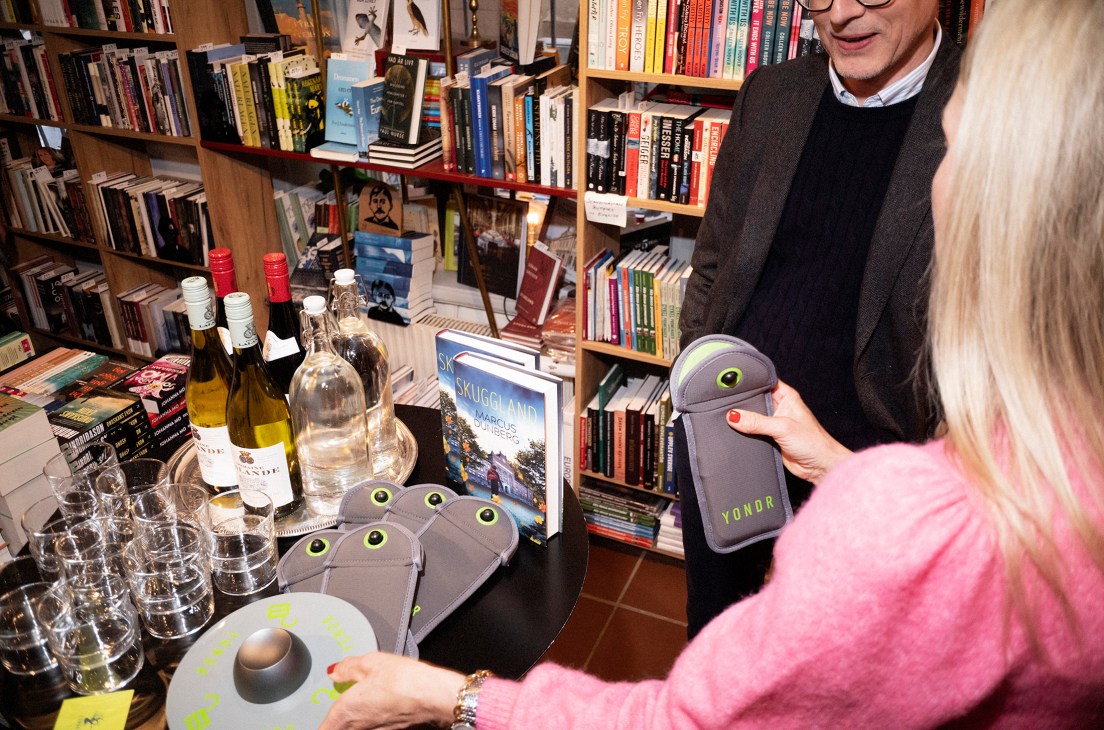
At a bookshop in Stockholm’s Old Town, people are being stopped at the door. It may seem harsh but the purpose is all good. Owner Helena Landberg simply reminds people that this is a phone-free book event. “Just slip your phone into this and carry it with you,” she says and hands them a small Yondr pouch, which locks as soon as it is closed. “When you leave you can just unlock it again,” she says reassuringly.
Whether it is the complimentary wine or detachment from their phones (or both), people seem curious and ready to talk. “It’s so refreshing,” says Cecilia Trolle, who is attending with her friend Frida Hübinette. “You become more present without your phone.”
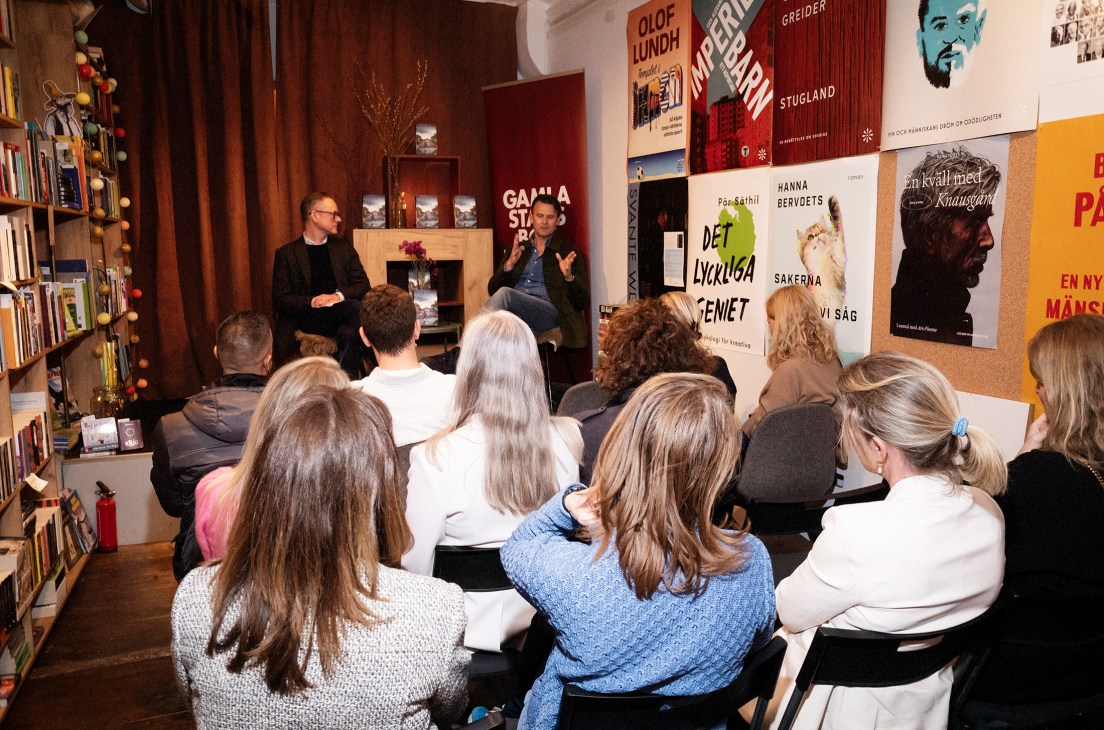
Meanwhile, the centre of attention for the evening – Swedish author and columnist Marcus Dunberg – has taken the stage to talk about his debut novel Skuggland, about bullying at a prestigious school in Stockholm, that came out in March. If it wasn’t for the host for the evening, Mia Ljungberg Nevado, founder of the LookUp movement, this would be the moment that people usually reach for their phones to capture the event for their social media. But instead of phones in the air, everyone keeps their heads up, focused on the conversation.
“Did you know that the average person spends four non-work-related hours a day on their phone? Imagine how many books you could read instead,” Ljungberg Nevado tells the audience. “My movement, LookUp, is about inspiring and curating authentic experiences – without phones – where people can just be, enjoy and connect with each other.”
In 2018, Ljungberg Nevado started paying attention to how our phones and screens were beginning to take away focus from our experiences, whether it was a sunset by the ocean, a museum visit, a concert, a lecture or dinner with friends and family. “I saw a need for a deeper human connection in a world where we are spending more and more time in our digital lives and on our screens. That said, I am absolutely not against phones or technology or social media. I just want us to have better etiquette and balance about when and how to use it.”
This is the first time that Ljungberg Nevado has used Yondr pouches and attendees are positive about going phone-free. “There is 100 per cent focus on the conversation,” says Eva Redhe. Another guest, Angelina Jolin adds: “I wish we could go back to what it was like before smartphones arrived. This reminds you what an event is really all about.”
At the end of the talk, not a single phone has disrupted the occasion. Bookshop owner Landberg is over the moon. “Did you notice that there were no phones ringing or a person desperate to take a call?” she says. “Just a slight panic by someone who needed to find out what time it was.”
Inside the restoration of Alvar Aalto’s Sunila housing estate
Famed mid-century Finnish architect Alvar Aalto believed that people’s lives could be transformed by pairing functionalism – design driven by use and not looks – with humanistic principles. It’s an ethos that he and his wife, Aino Marsio-Aalto, tested with their design of an expansive residential development for the workers of the Sunila pulp mill. On the outskirts of the small city of Kotka, a 90-minute drive from Helsinki, the development was built in the late 1930s with some additional structures added after the Second World War. The project consists of 29 buildings, including terraced houses and detached homes, set in a lush landscape of rocky hills and verdant coniferous forests. For Aalto, who was in his mid-thirties at the time, a mass housing project of this scale was the perfect opportunity to show how his architectural philosophy could transform the lives of ordinary people by providing quality homes en masse.
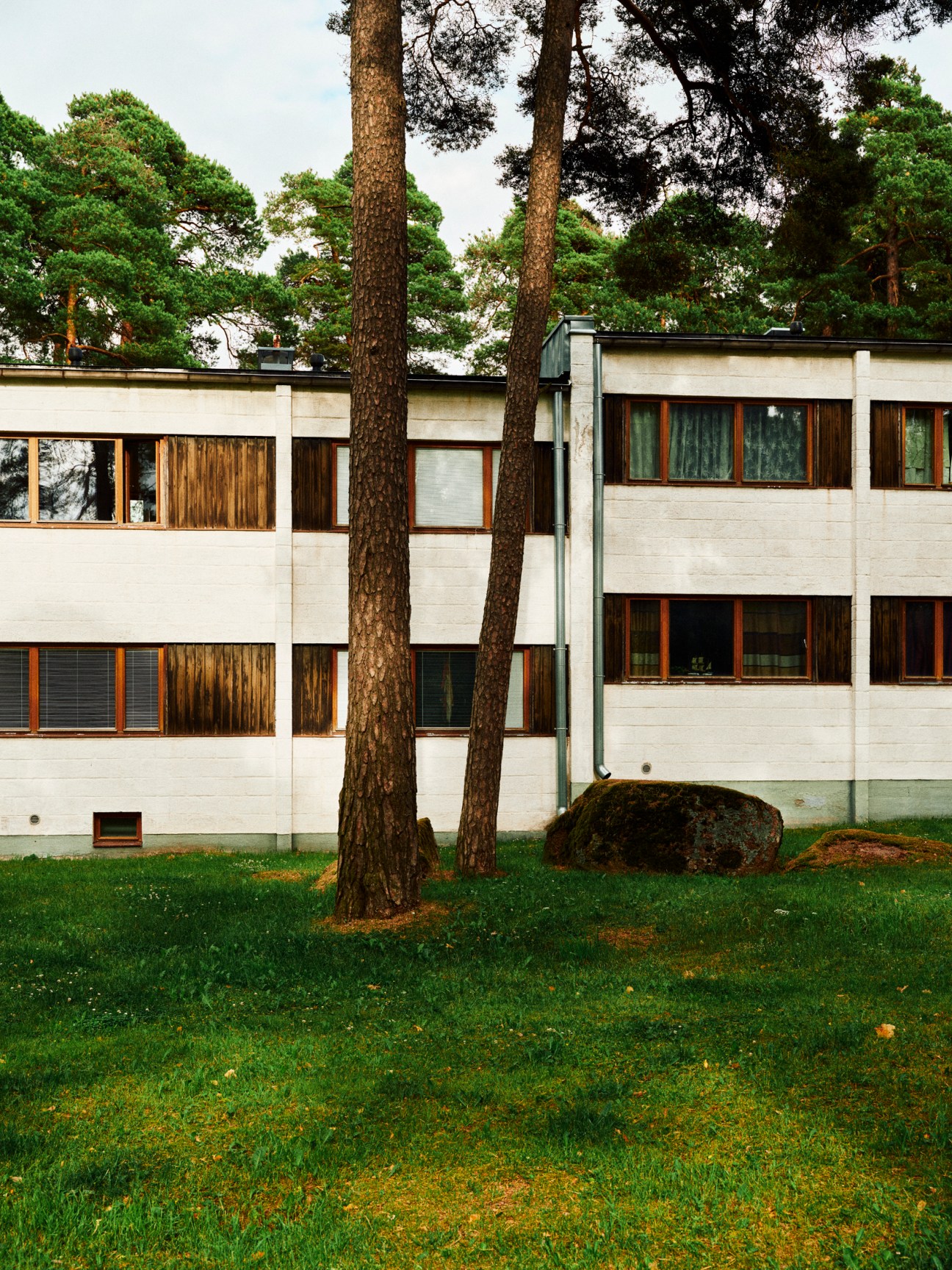
Despite these lofty ideals, the area fell into disrepair in the latter part of the 20th century. The Sunila mill’s importance to the Finnish pulp industry waned (though it is still operational) and the Aalto homes, originally owned by workers, were sold off. Kotka’s city hall used some of them for social housing, while private citizens purchased others at staggeringly low prices. Sunila had been all but forgotten as an architectural treasure until a recent surge of interest in the area was triggered by a host of design-savvy Helsinkiläiset buying apartments for weekend getaways. These new residents, who include museum directors and high-ranking public servants, have been restoring the interiors to their original state and giving façades gentle nips and tucks. “I just fell head over heels in love with this area,” says Jani Kylmänen, sitting on a vintage Aalto-designed Artek 69 chair in his compact Sunila apartment.
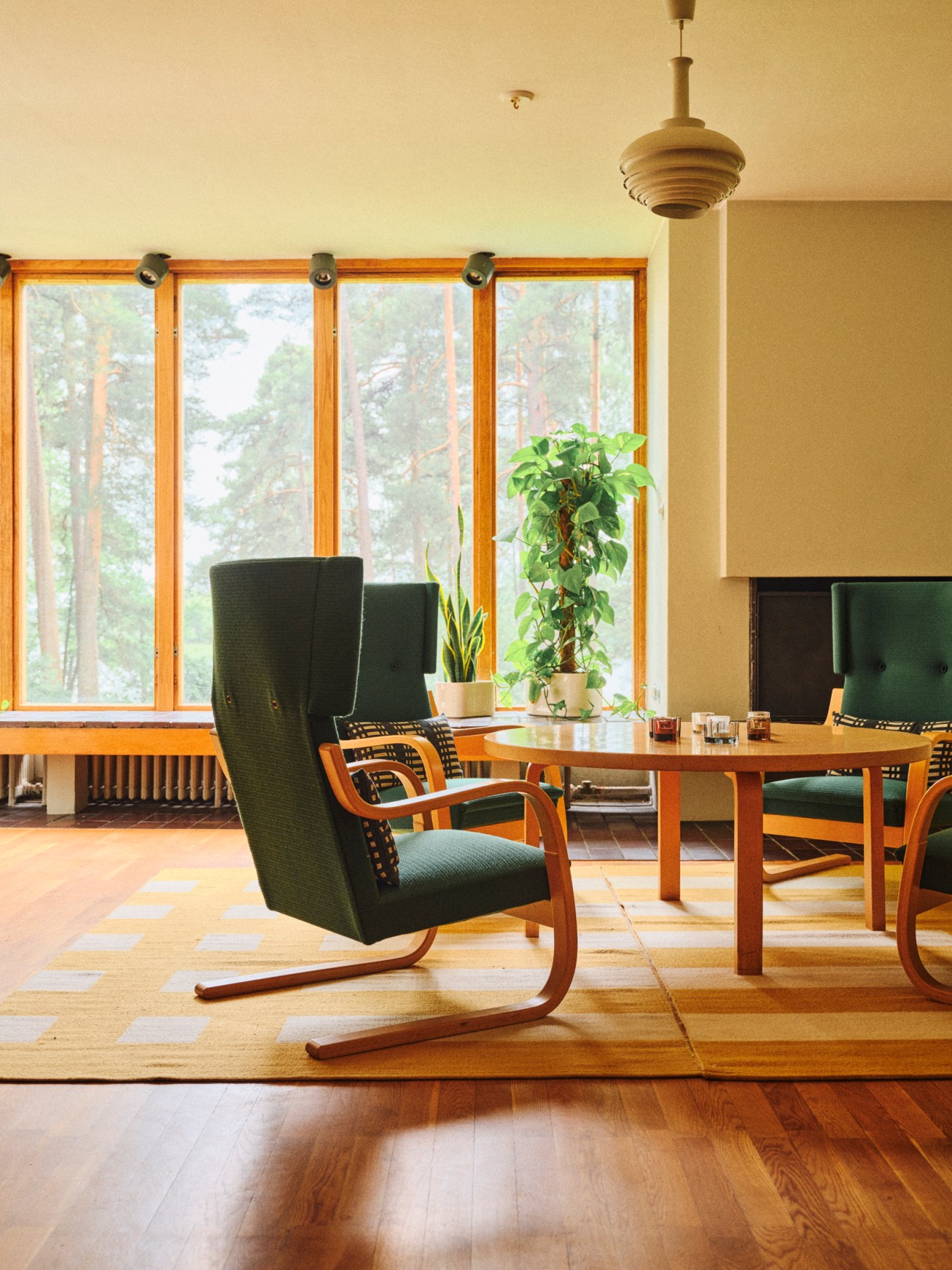
The Helsinki-based property and furniture entrepreneur bought the residence in 2019 as a holiday home. Much of it, including the wooden kitchen cabinets and the foyer coat rack, was in its original state. Kylmänen painstakingly restored the parts of the home that weren’t true to Aalto’s vision to their initial look and feel by exposing original surfaces and commissioning master carpenters to replicate the missing pieces using methods from Aalto’s era. Kylmänen also scoured vintage furniture shops for Aalto items from the 1930s, such as an extendable dinner table made from birch, designed by Aino Marsio-Aalto. There’s even a custom-made bent birch chair that Alvar designed for the 1939 World’s Fair in New York, where, coincidentally, Sunila grabbed the world’s attention as a progressive new model for workers’ housing. “It is our duty as residents to uphold Aalto’s legacy and the spirit of this beautiful area,” says Kylmänen. “Without Aalto, this would be just another forgotten suburb in a decaying industrial area.”
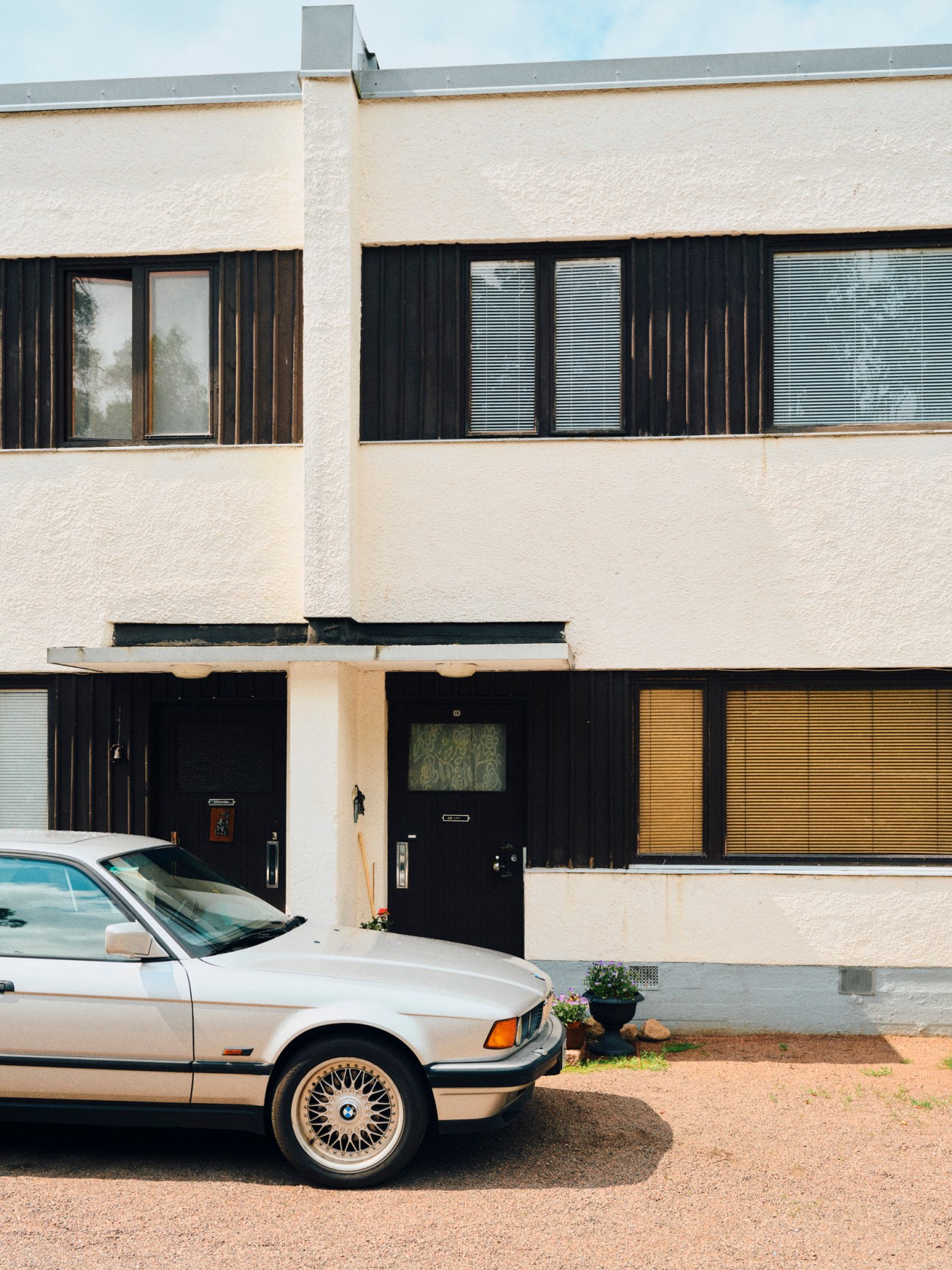
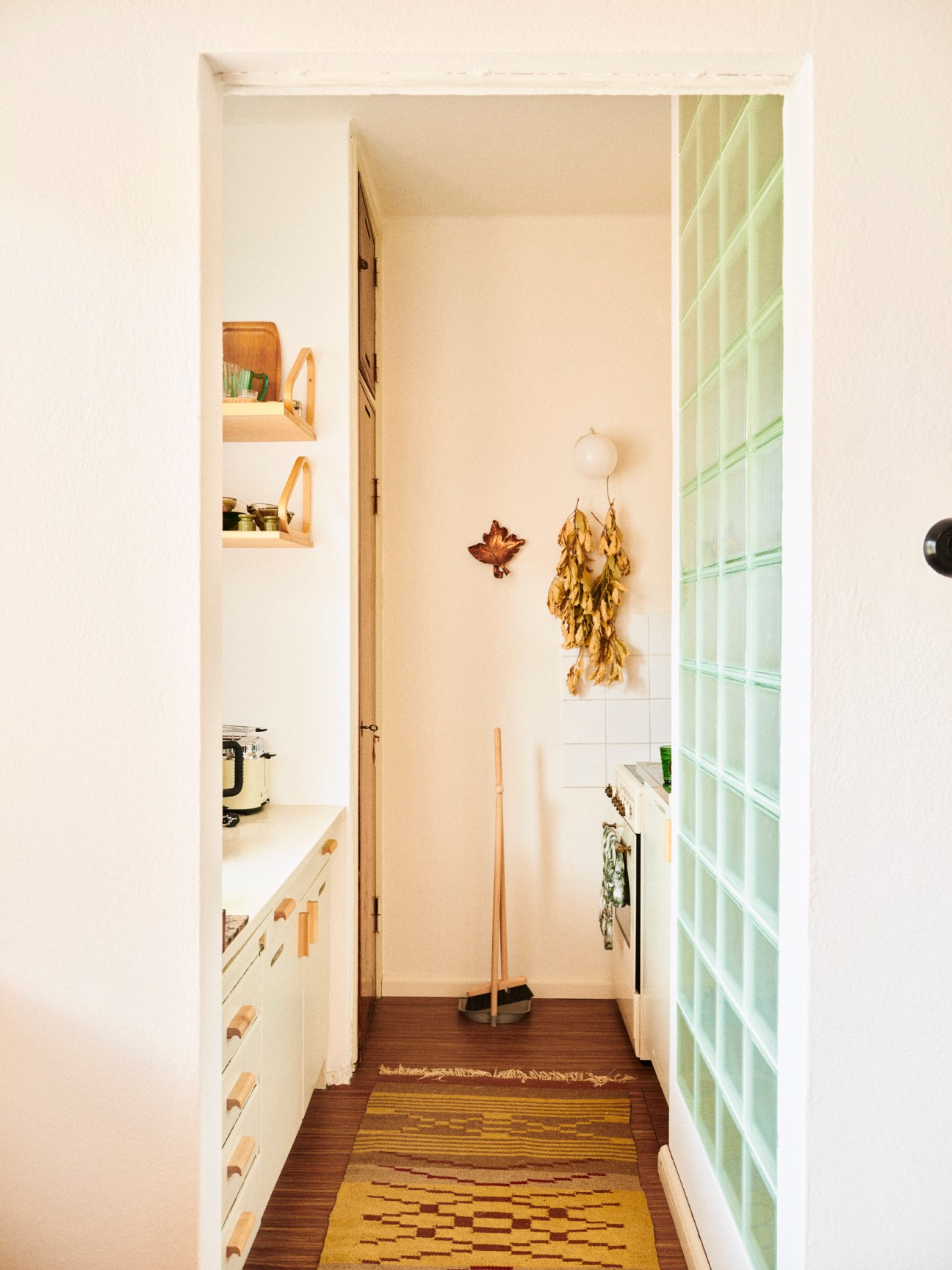
Yet in Finland, where the great majority of Aalto’s work is located, the architect’s name does not always invoke the same veneration as it does abroad. This is partly because his buildings are so commonplace (there are more than 400 of them) and partly because many historic and revered neoclassical and art nouveau buildings were torn down to make way for Aalto’s functionalist works. “For a long time, the locals did not want to move to Sunila despite it having some of the cheapest properties in the area,” says Kylmänen. “To some degree, this is still true today. Most people who move in because of Aalto come from other towns and cities.” Kylmänen is involved in the residents’ association, Pro Sunila, whose members meet to promote and look after the area and to exchange ideas about how to renovate their apartments in a way that respects the development’s legacy. “Much of the area was built almost 90 years ago,” he says. “It is not always easy to find the materials and the shades of paint that were used back then.” That sense of community and of taking care of the entire area is important for Kylmänen, who was attracted to Sunila not only by the opportunity to reside in an original Aalto apartment but also by what he calls the development’s “spirit”. “Aalto designed everything here and you can sense his design philosophy wherever you go, from the way that the buildings are placed to follow the forest’s topography to how the surrounding nature interplays with design choices such as the placement of the windows.”
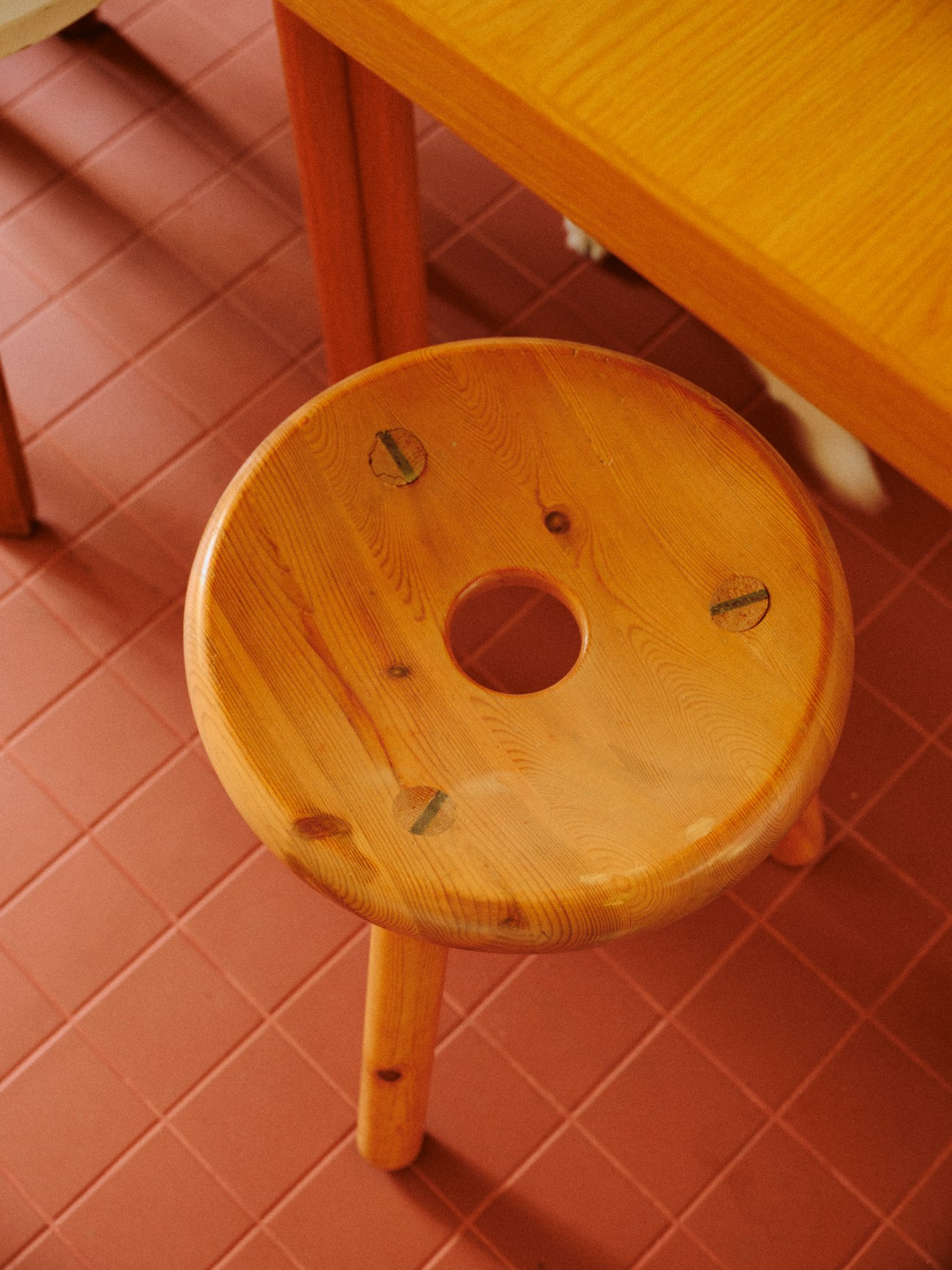
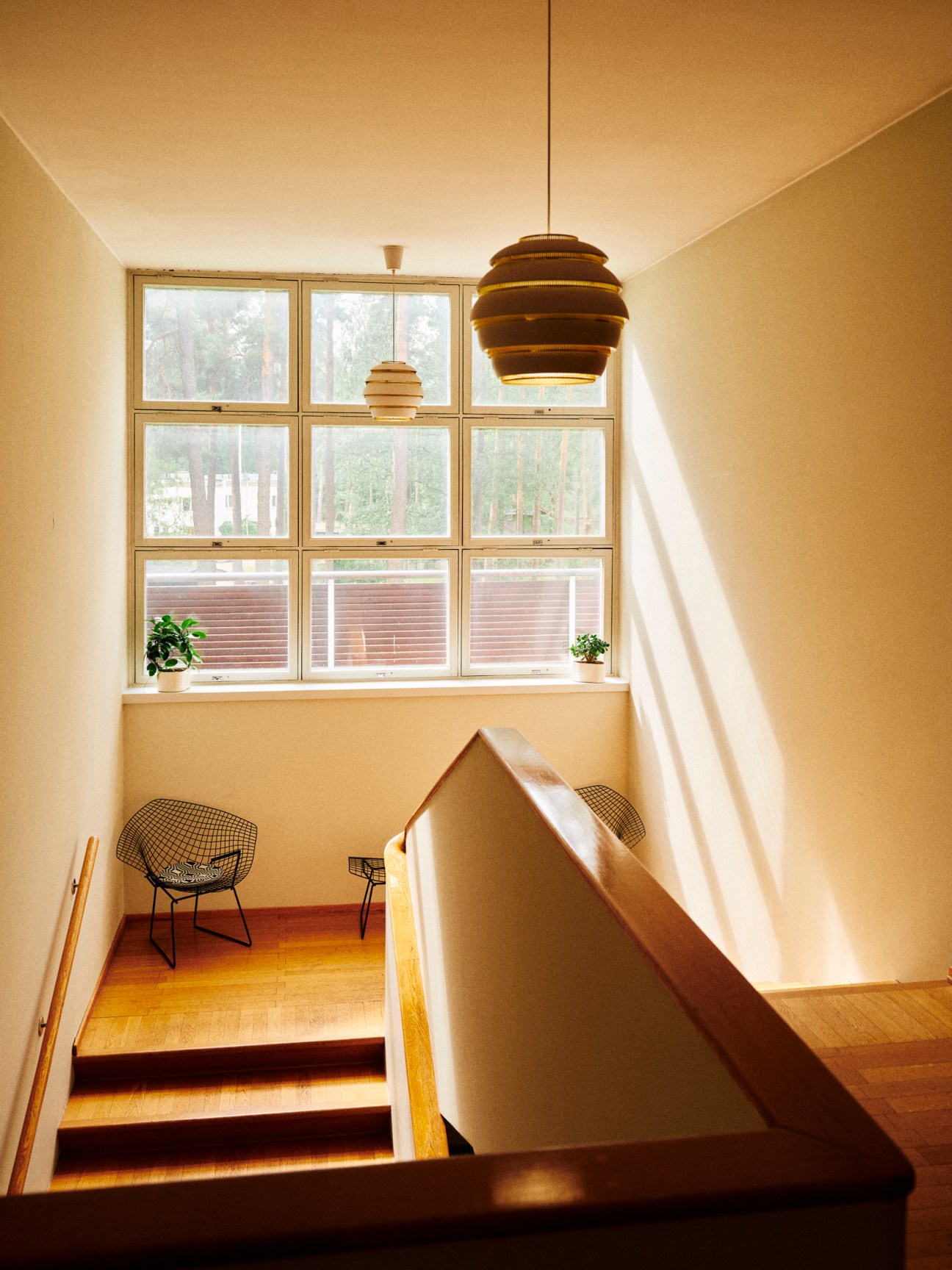
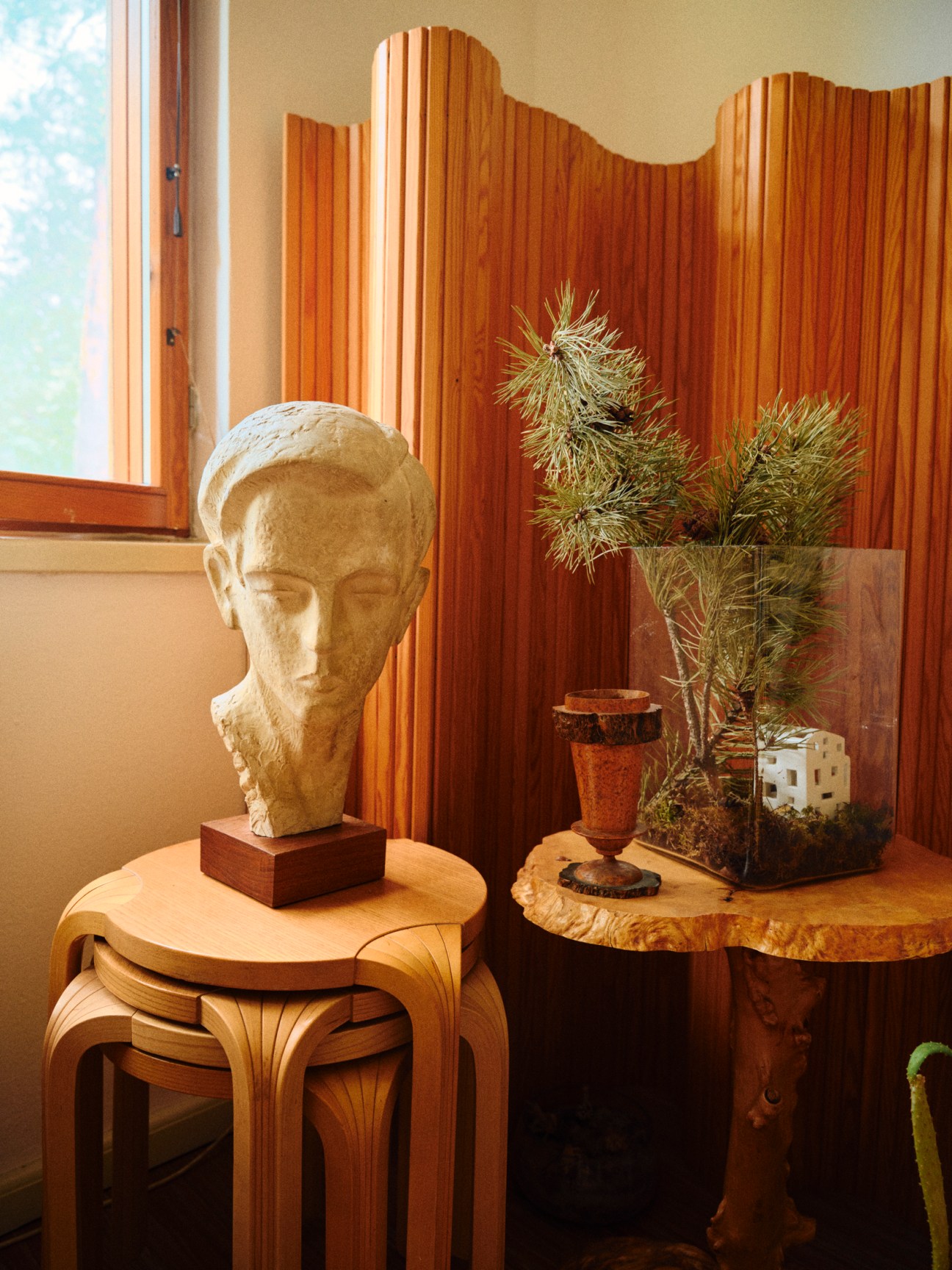
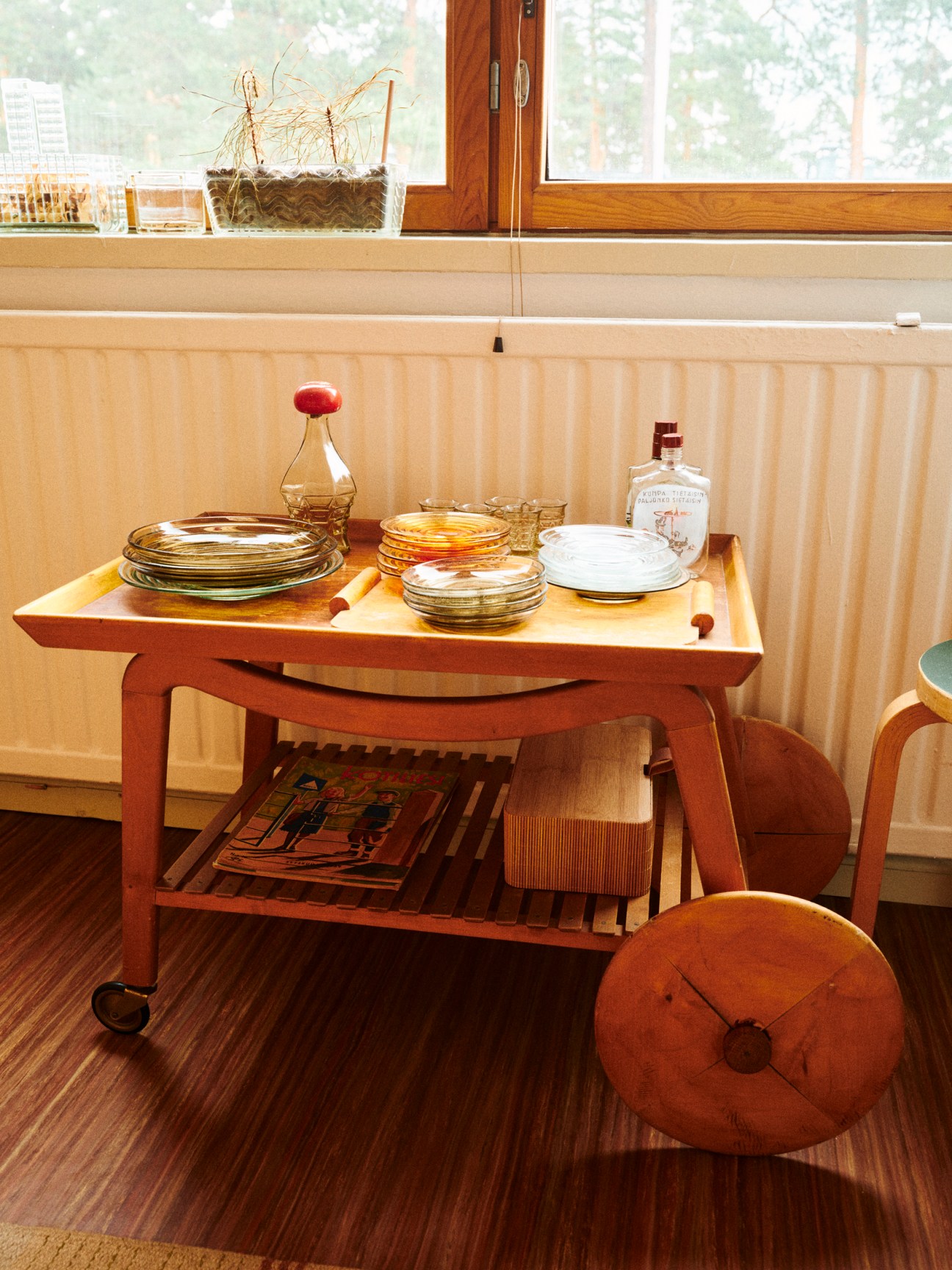
It was the same holistic design approach and legacy that attracted Maija Tanninen- Mattila, the former director of the Helsinki Art Museum, to Sunila in 2021. “When Aalto was commissioned to design the area, he was given a lot of creative freedom to realise his vision for a modern factory area,” she tells monocle while sitting on the large veranda of her 1939 terrace apartment. “I am fascinated by his humanism and his idealism.” Tanninen-Mattila’s summer home is a great example of this: its sharp white contours sit gently in the undulating landscape and it has a timeless boxy form that, if not for the cracking paint and patina of wear, looks like it might have been designed only recently. “It does have that ‘wow’ effect,” she says. “What makes it more special is that the industrial society in the 1930s was very hierarchical, yet Aalto wanted even the workers’ residencies to look great.”
If Kylmänen’s home is a veritable Aalto museum with almost no modern touches, Tanninen-Mattila’s residence combines elements from that era, such as a 1930s wooden club table with Aalto’s signature L-shaped legs, with modern comforts such as kitchen appliances and a shower. “It is my second home and I want it to have that lived-in look,” she says. “But I don’t want it to clash with Aalto’s architectural language.” Tanninen-Mattila, an art historian by training, has stacked her bookshelf with tomes about Aalto and other modernists – not just architects but artists too. She is fascinated by the era. “By moving here and looking after the area, anyone can contribute to nurturing Aalto’s cultural legacy,” she says. Such is her passion for Sunila that Tanninen-Mattila has recently bought another apartment in the area, which she is in the process of renovating. “The responsibility of looking after this place made me even more emotionally attached to it.” It’s an attachment that’s also shared by Laura Aalto (no relation). The longstanding former CEO of Helsinki Marketing, which promoted the Finnish capital to the world, Laura bought an apartment in Sunila with her husband in 2021, almost on a whim.
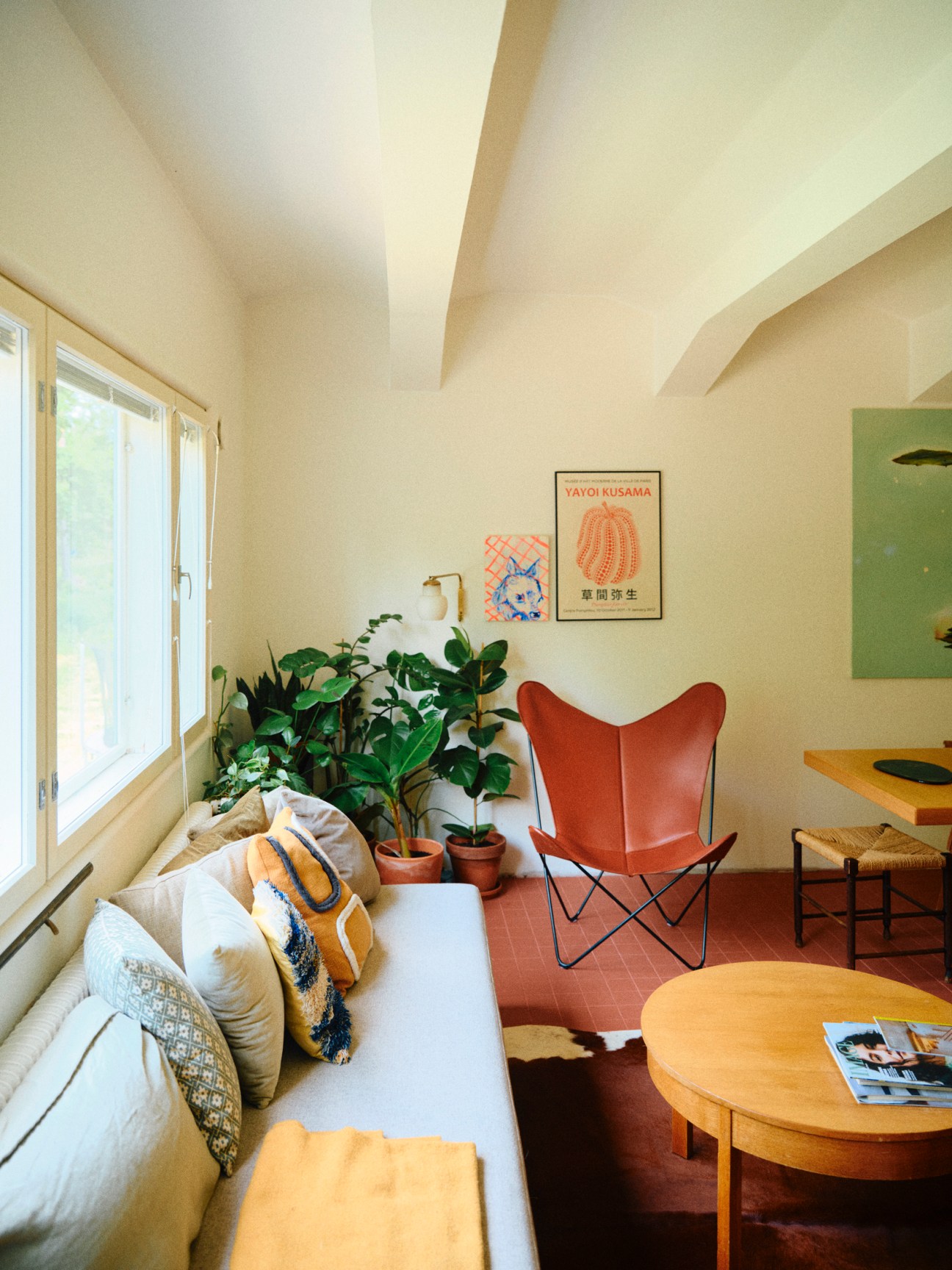
“We happened to drive by and fell in love with this entire area, its plan and the placement of the buildings,” she says. Used as a holiday home, it is finished with works by contemporary Finnish artists, a modern bookshelf by String and an Akari floor lamp by Isamu Noguchi. They sit alongside vintage Artek furniture from the 1950s, creating a harmonious look that isn’t out of place in the 1937 building, which features thick ceiling beams and round wooden hand railings. “Great architecture stays relevant by adapting to contemporary needs,” says Laura. “The way that light hits the building, and how the transitions from one room to the next are marked, is all part of the enduring magic of Aalto’s architecture.”
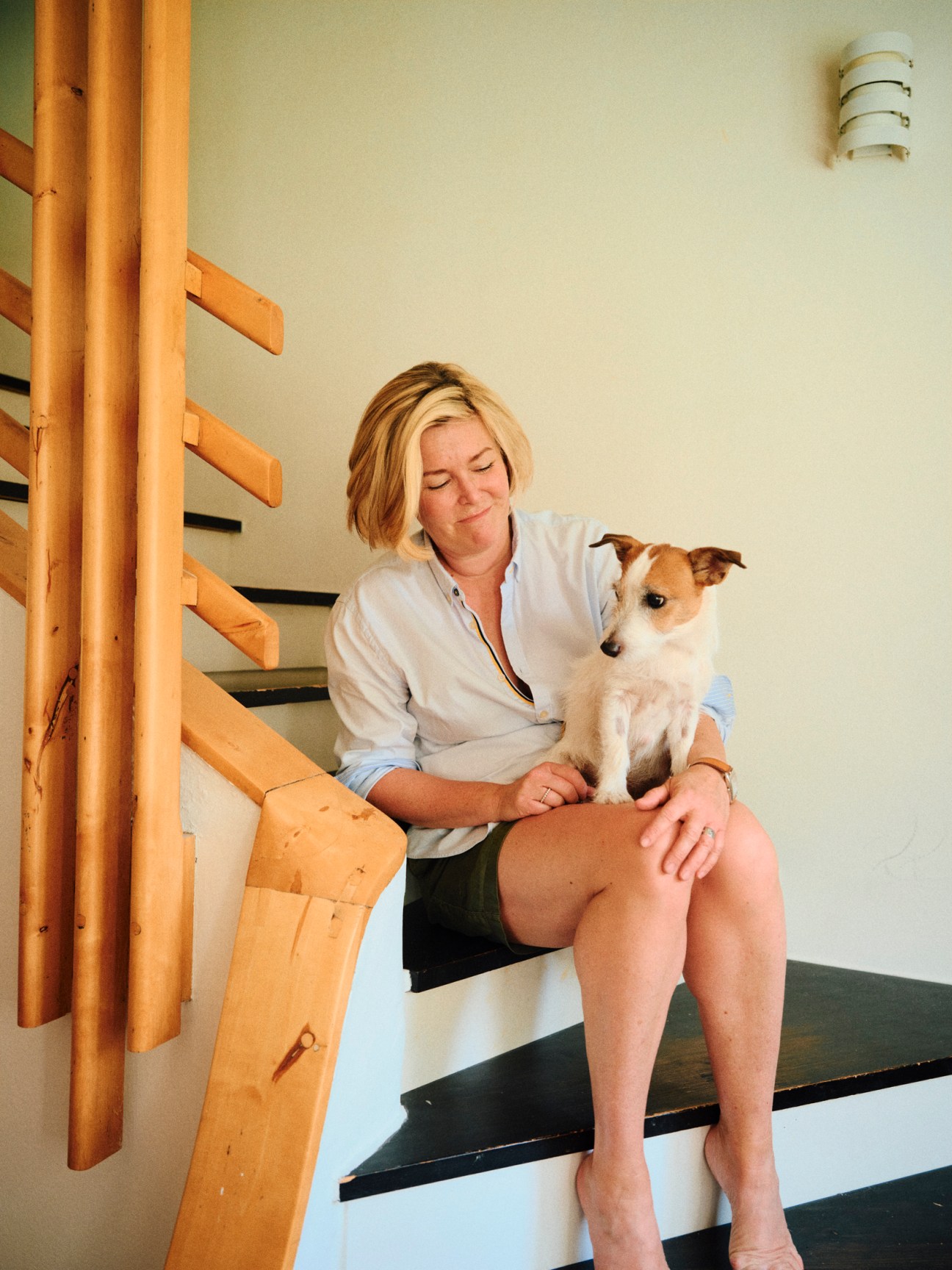
She is convinced that the best way to protect noteworthy buildings is to use them – to live in them. And she says that we shouldn’t shy away from adapting them, albeit in ways that do not clash with the original design intent. For Laura and her husband, this meant making the kitchen larger than the original so that they could comfortably cook meals and host guests. “Aalto made homes for people – and people’s needs change,” she says. “I’m convinced that he would have wanted his buildings to evolve over time.” Laura explains that she has developed a strong connection to Sunila, despite living in Helsinki for most of the year. “It’s a wonderful community, very versatile. Our neighbours are comic-book artists, nurses and pensioners – and they have all welcomed us with open arms.” This year the residents of Sunila will also open the doors of their homes to visitors for the annual Alvar Aalto Week, organised by Kotka’s city hall. Artek, the company that Aalto founded and which propelled his furniture design to global fame, is working to restore one of the development’s apartments so it can be used as its showroom during the event. Despite the newfound interest – and the fact that the Finnish government has included Sunila on its list of Aalto works for which it seeks Unesco World Heritage status – there is no hiding the fact that many of Sunila’s Aalto buildings are in poor shape and need a lot of work. But the renaissance has begun. Aalto once famously said that his buildings are never complete but always evolve with the times. Here’s hoping that the continued influx of design-minded individuals to Sunila will prove the famed modernist right.
Little EV, big ambition: how Microlino is rethinking the urban car
Known for its factories and car-repair shops, Turin’s La Loggia neighbourhood is part of the Piedmontese capital’s industrial outskirts. Down one of its side streets is a gated warehouse that’s almost indistinguishable from all the others nearby – except for a minuscule, bright-orange vehicle parked in the forecourt, glinting in the summer sun. Its popping colour and bubble shape make it look like something that you might see in a remake of The Italian Job. But it isn’t a Mini; it’s a Microlino. Soon, Swiss brothers Merlin and Oliver Ouboter – Microlino’s CMO and COO, respectively – are welcoming Monocle inside and showing us around the high-ceilinged buildings.
The twentysomething co-founders are housemates near Küsnacht, where the company is headquartered, but these days they are in La Loggia every week to check on the vehicles rolling off the production line. Turin, with its Fiat heritage and well-established supply chains, makes perfect sense as a place to build these pod cars. So far, Microlino, which bills itself as “born in Switzerland” but “raised in Italy”, has produced 1,400 of them. It is hoping to make 3,500 this year, a number that the brand is planning to double in 2024. “The first strategy isn’t to think how big we want to be but how big the category can be,” says Oliver.
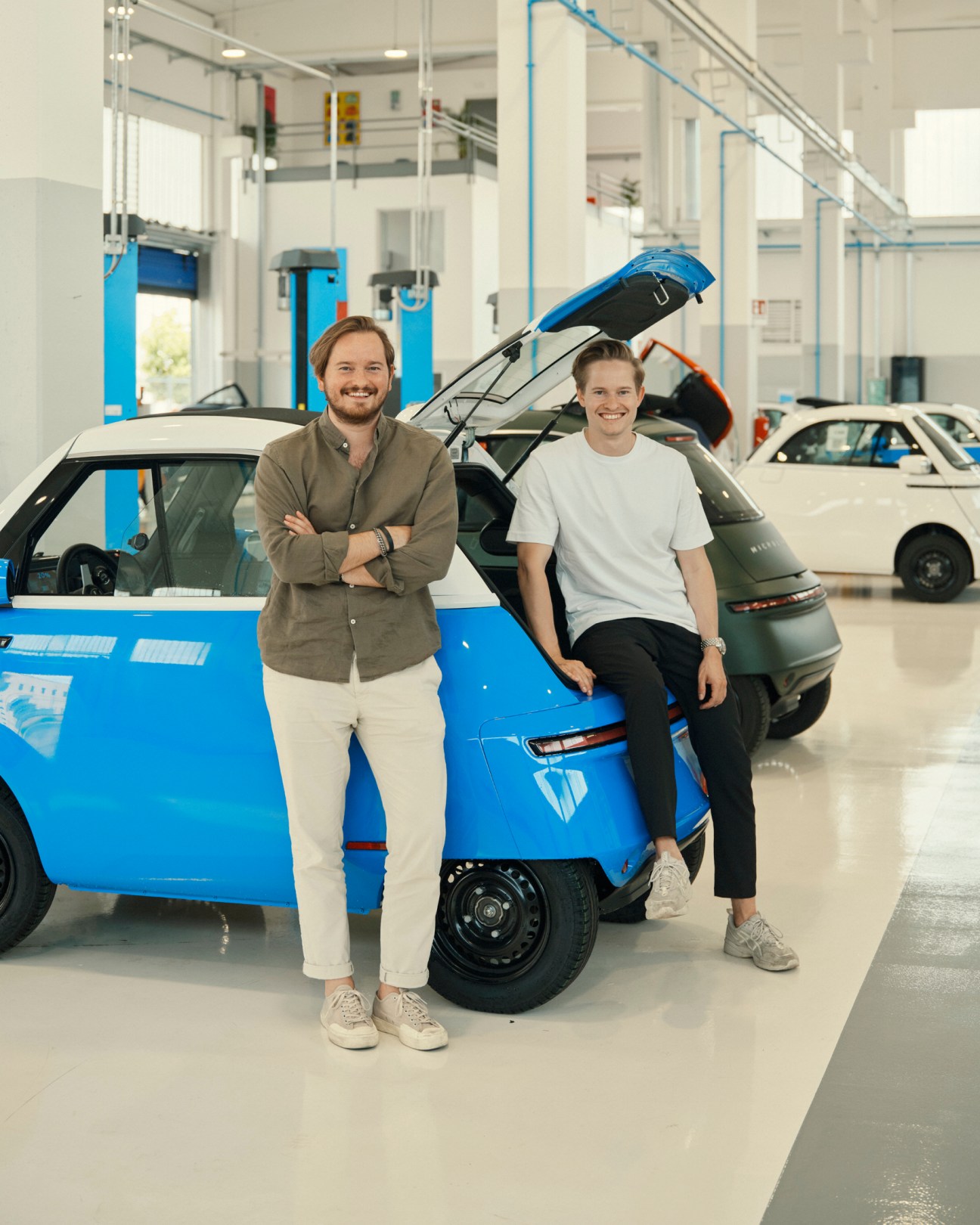
That category – small vehicles designed to squeeze into tight urban spaces – was pioneered by the likes of Germany’s Smart. Microlino is hoping to blow the sector wide open. Technically not even a car, the two-seater is something between a motorbike and an automobile, an electric vehicle (EV) segment that is becoming increasingly popular in European cities, as well as in places such as Israel and Japan. In most European countries, you need a driving licence to operate one but it carries a motorbike number plate. Bizarrely, there’s no legal requirement for it to have a rear-view mirror.
Mini EVs are booming in popularity but their design has sometimes felt like an afterthought. Take the Citroën Ami, probably Microlino’s biggest competitor. It might be good value at about €9,000 but it looks boxy and rather plasticky. The Renault Twizy and Estrima’s Biró, meanwhile, have minimalist chassis that make them resemble moon buggies (the Twizy’s side doors don’t come as standard). Microlino clearly saw a gap in the market.
“We wanted to do something in this small-car category,” says Merlin, as we pass Microlinos being given a final once-over under bright overhead lights. “But none of them looked like a vehicle that I would buy or drive. We thought, if we do this, it has to have some design and lifestyle appeal.”
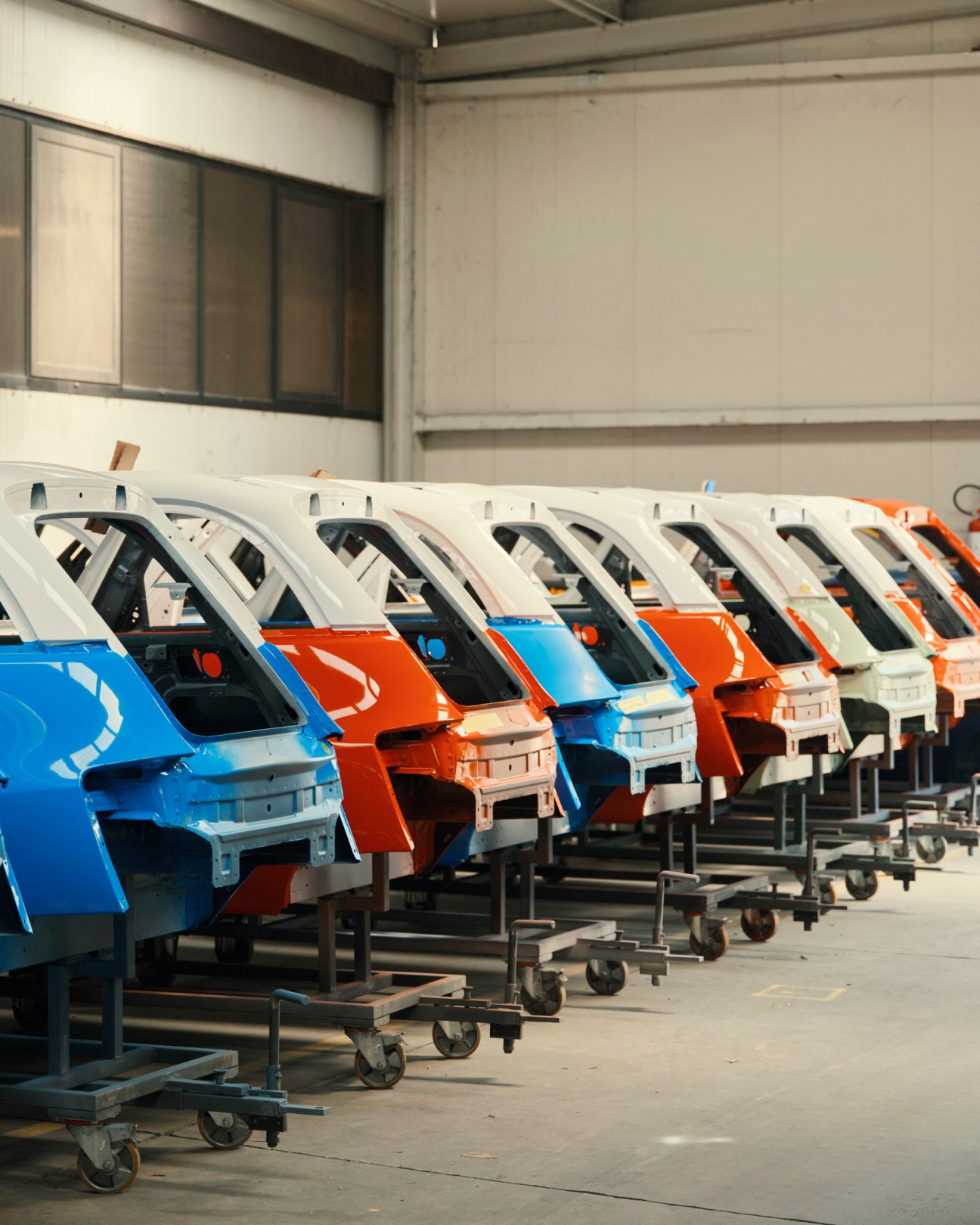
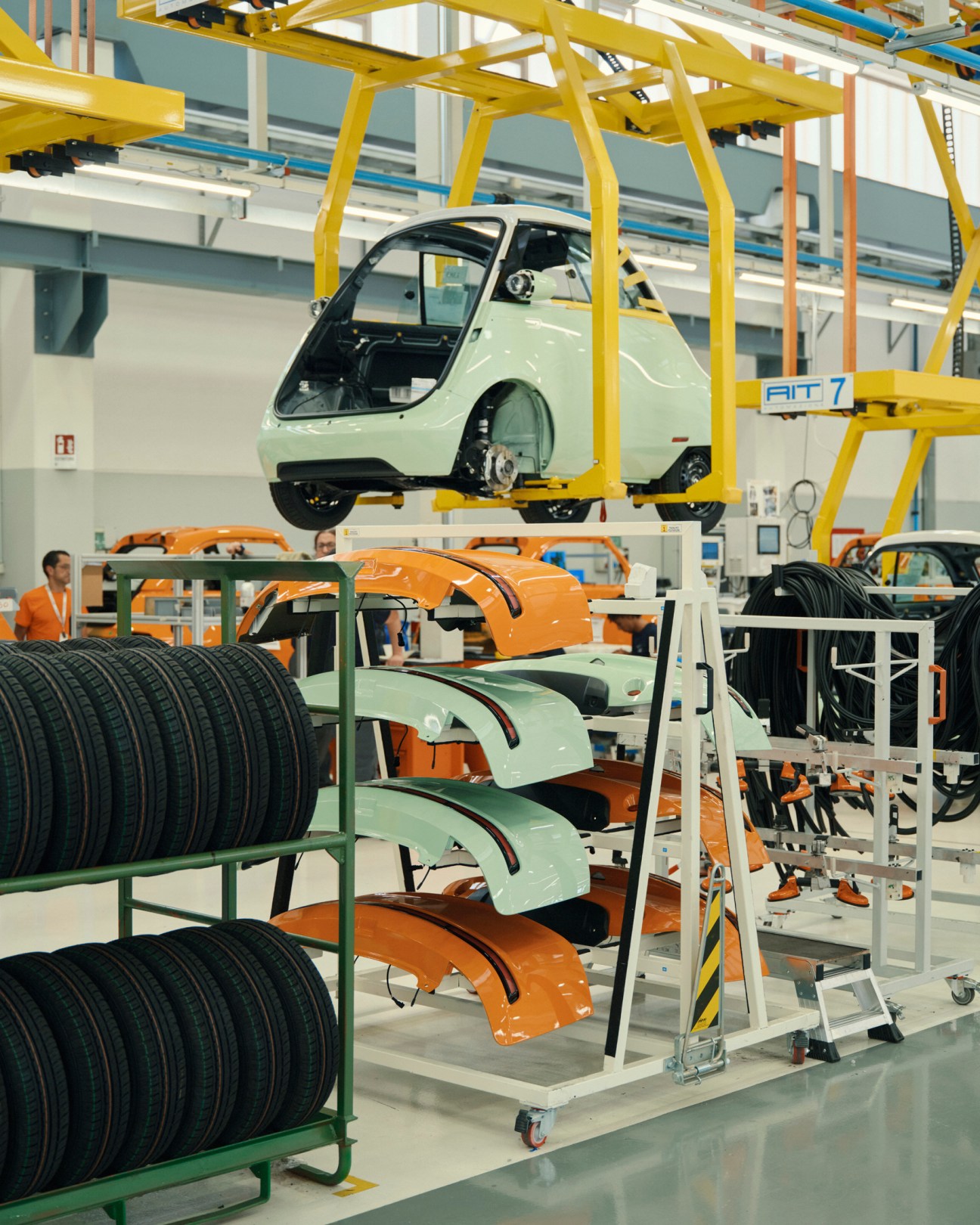
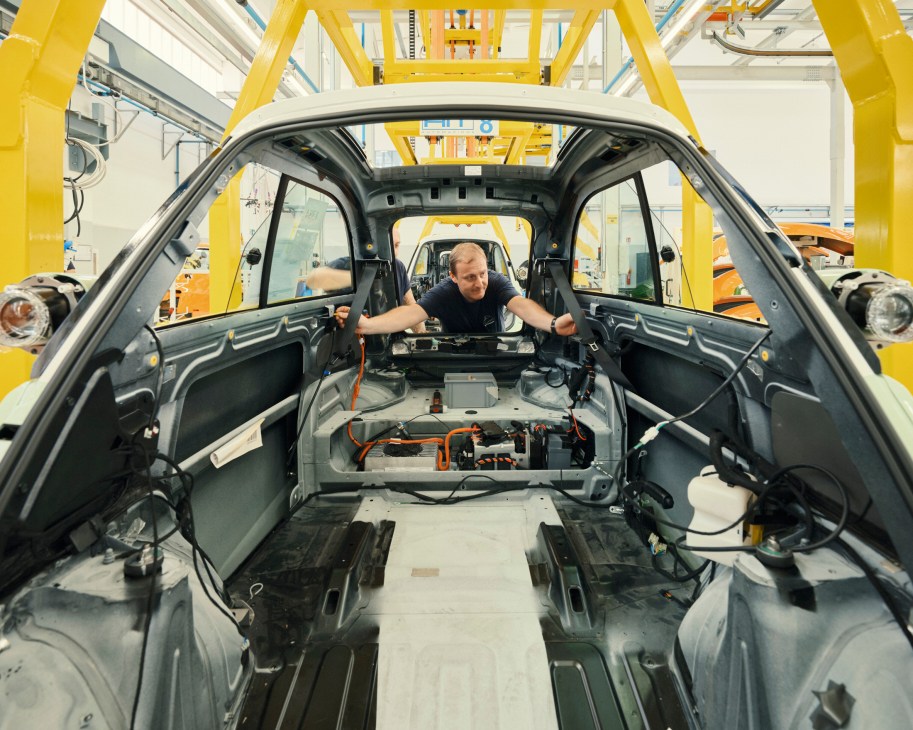
That’s why fun and sexiness are built into the Microlino’s dna. A sliding fabric sunroof comes as standard and there are about 10 car colours to choose from, ranging from vivacious orange to toned-down and smart dark green. As we wander through the factory, which employs approximately 150 people, an as-yet-unreleased version of a model called the Spiaggina (which literally means “small beach”) catches our eye. It is built for summer: its window glass has been removed on the sides and back to allow for some serious cross-ventilation. The Spiaggina, which comes in baby blue with blue-and-white stripes on the sunroof fabric, looks like the perfect vehicle for zipping to a post-swim aperitivo in Capri.
Microlino offers buyers the option of a two-tone colour scheme, leaving the top half of their EV white with another hue below. If that feels like a nod to the mid-20th century, that’s because it is: the Ouboters acknowledge the bmw Isetta, one of the world’s first bubble cars that burst onto the scene in the 1950s, as a major influence. Indeed, the Microlino borrows the Isetta’s most iconic feature: the front-opening door. “The front door is not just a design joke,” says Merlin. “It has a purpose. You can park very close to other cars and exit onto the pavement.”


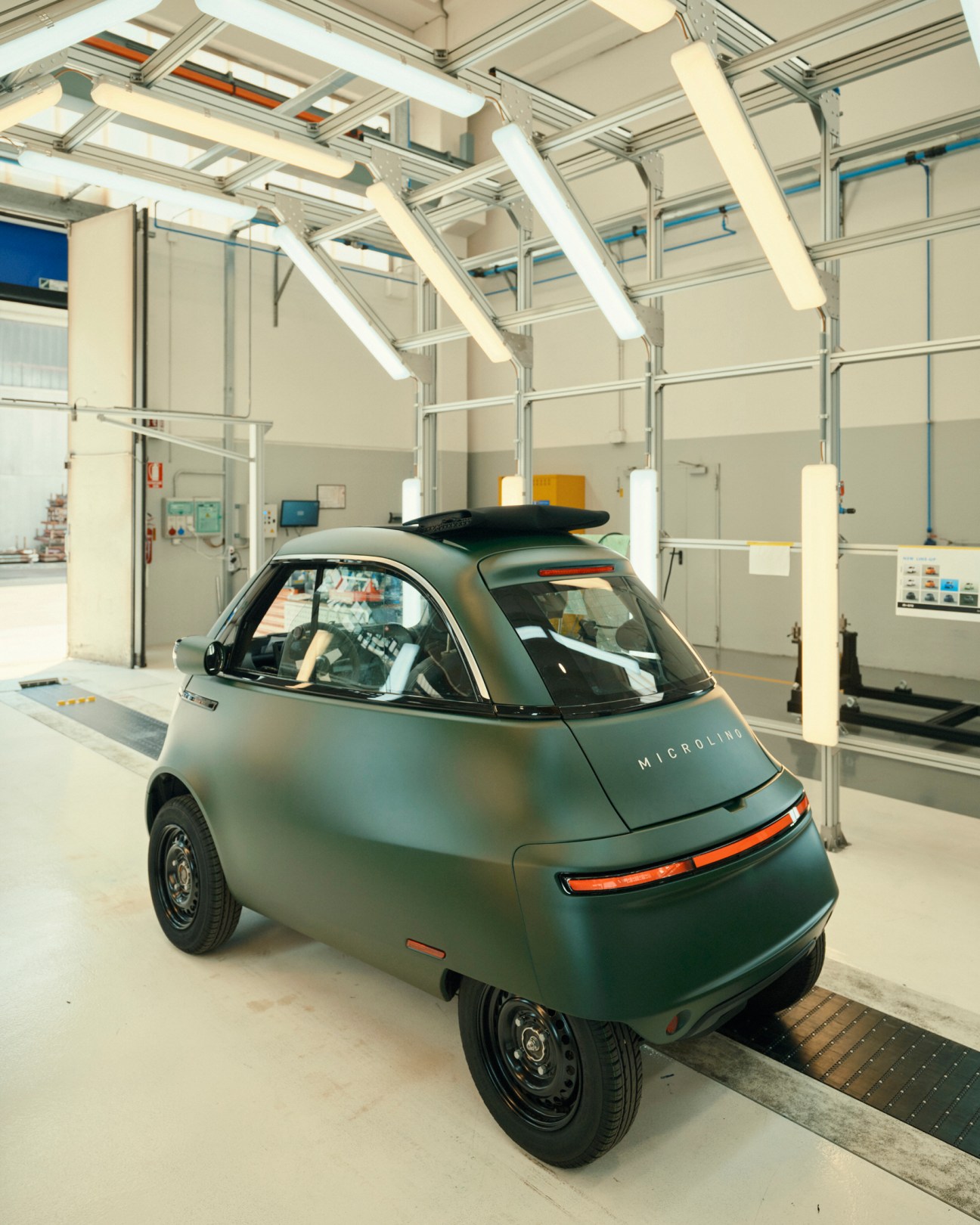

Bubble cars might have looked good but they were also a flash in the pan, fading into obscurity almost as quickly as they arrived. So what makes Microlino think that things will be different this time around? Oliver argues that, in the past, buying a small car was simply a stepping stone to being able to afford something bigger. Now, however, people are motivated by questions such as, “How can we use space more efficiently and be more eco-friendly?” In other words, people might actually aspire to own an electric Microlino.
With its price tag of between €16,500 and €23,000 (depending on country and configuration), it isn’t cheap for its size. But it also has a higher-quality finish than many of its competitors, with a unibody chassis made from aluminium and steel, just like a conventional car. And while many similar vehicles can only reach about 45km/h, the Microlino hits 90km/h (monocle verified this; see page 128) with a battery range of up to 230km.
Microlino is part of a much larger Swiss company called Micro. Its CEO is Wim Ouboter, the father of Oliver and Merlin, and something of a legend in urbanism circles. A doyen of micromobility, he invented the much-copied kick scooter in 1999; at its height, it sold about 80,000 a day (the company still shifts more than 1.5 million units a year). Though Ouboter Sr is heavily involved with Microlino, especially when it comes to strategy, the day-to-day running is handled by his two sons.
It has been quite a ride to get to where Microlino is today. The vehicle was launched as a concept at the Geneva International Motor Show in 2016 as a possible way forward for micromobility. But the response to the design was so positive that Micro decided that it should go into production. An ill-fated joint venture, which led to lengthy legal battles, slowed progress; after a settlement was reached in 2020, the Microlino needed a design tweak. That year the company started working with international design firm Icona to produce the Microlino 2.0, as the vehicle rolling off the production line in La Loggia is sometimes called. Headquartered in central Turin, Icona has offices in cities from Shanghai to Los Angeles.
We hop into a convoy of Microlinos (what else?) to make the 20-minute journey downtown to the leafy square where Icona is based. Inside a grand palazzo d’epoca, we are welcomed into a large meeting room, where the windows have been thrown open to allow in the breeze. “The first step in the design process is always to try to go as far as we can,” says Andrea Leoncini, lead exterior designer at Icona. The brief was to update the Microlino; this involved enhancing the curves, changing the dimensions of the pod to make it higher and more spacious, and installing a modern-feeling strip light on the front and rear of the vehicle, among other tweaks.
The vehicle had to be simple because of the limited space – a constraint that required ingenuity from the designers. A bar was placed on the inside of the front door, acting as a dashboard with a touch screen in the middle to control basic car functions. It also has a leather handle at the far end so you can lean forward and shut the door. As well as being a clever design fix, solving many problems at the same time, it’s an intentional reference to the crossbar of a scooter – a way to work mobility baby. “I see many people trying to copy this bar now,” says Icona’s Matteo Pandolfi. “You can even hang objects from it. It has a world of uses.”
The Ouboters have never claimed that Microlino will solve the challenges of urban mobility in the 21st century in one fell swoop. But they do believe that they are building a small electric vehicle fit for urban use that can do many of the things that its much larger, overengineered and gas-guzzling cousins can do. Maybe it has something to do with the fact that it is easy on the eye but the Microlino seems to be the one thing that everyone can agree on. “People who say that they don’t want any cars on the road are quite open to this category, as are the car fanatics,” says Oliver. “There is common ground.”
On the road
Monocle’s Ed Stocker takes it for a spin.
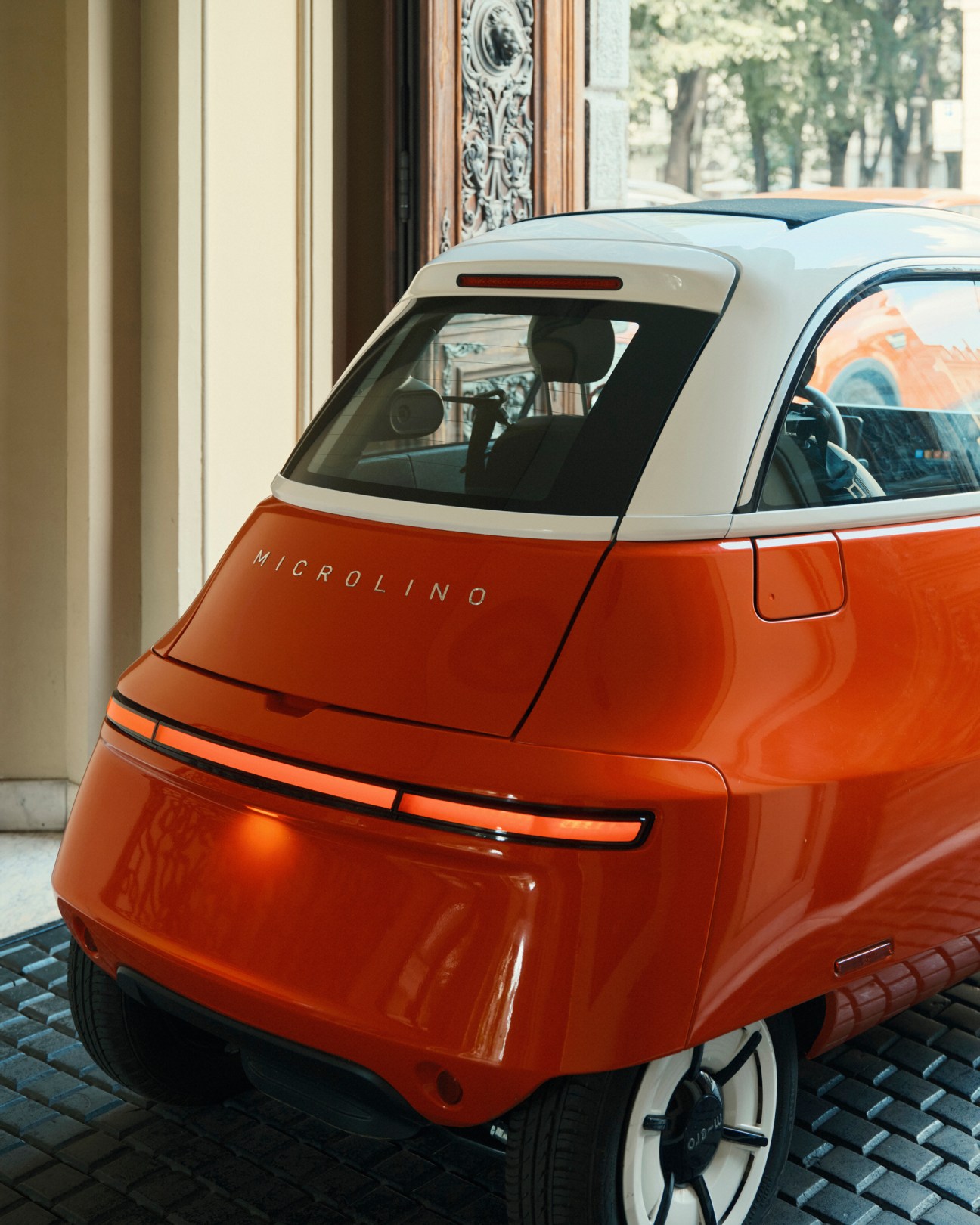
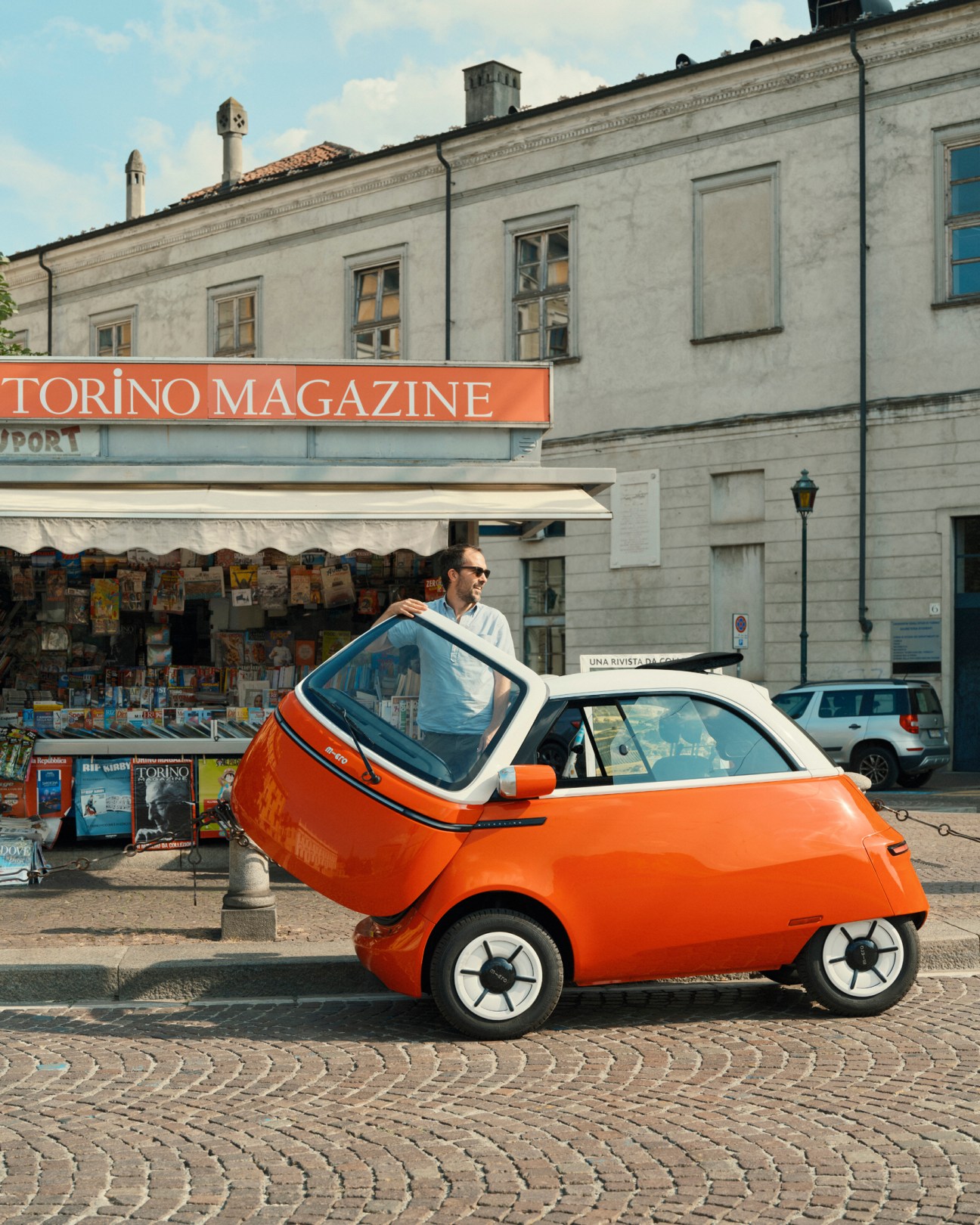
Press the small button on the side of a Microlino and the front door pops open. When I climb in behind the steering wheel, it somehow feels more spacious than it looks from outside (though it’s a cosy fit once our photographer, Andrea Pugiotto, slides onto the bench seat beside me). It’s a sweltering summer day but there’s no air conditioning, so we open the sunroof and windows for a bit of the hairdryer effect. There’s a screen for the speedometer but that’s as smart as the car gets for now; a phone holder is built into the dashboard. Every vehicle comes with a portable smart speaker, which is a nice touch.
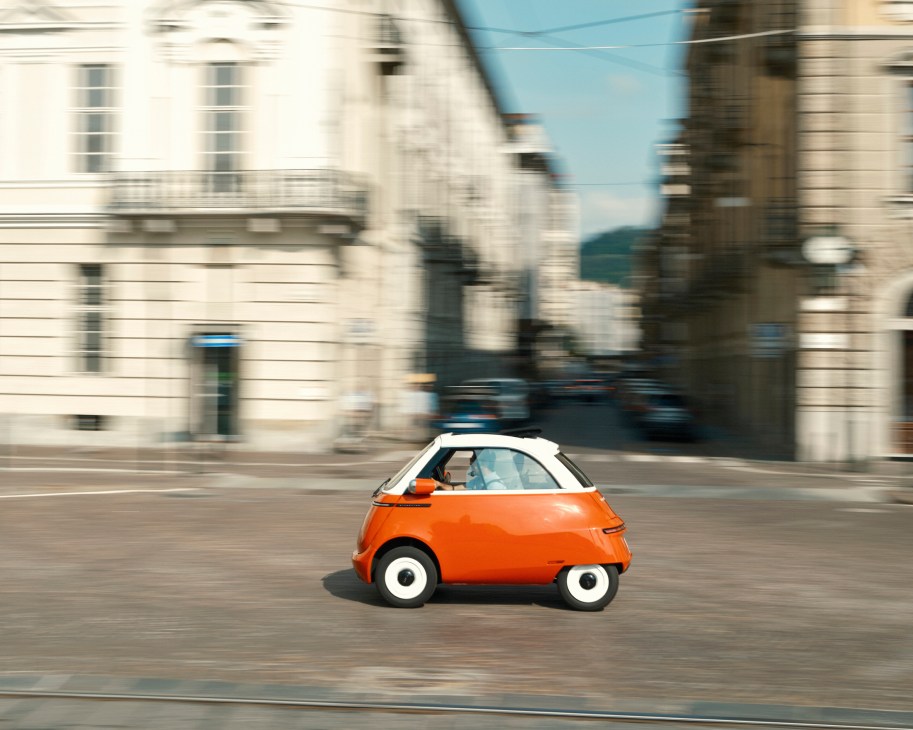
As we set off for central Turin, I notice how well it handles. There’s no power steering, so you’ll need to exert slightly more effort on a three-point turn (if you ever have to do one in a vehicle this small). And, yes, you’ll feel it when you hit a pothole (and there are several heading into Turin). But it has real power and we manage to hit the 90km/h top speed with no feeling of wobbliness (there’s also a nifty “sport” mode that gives you extra va-va-voom for hills). Apart from one petulant child who didn’t seem impressed, the Microlino is also a crowd-pleaser. Men in cars turn to check it out at traffic lights and women tell us, “Che bella!” This isn’t a car and it doesn’t feel like you’re driving one. But who cares? It’s a lot of fun.
Open house
On the drive from Fiumicino Airport to the centre of Rome, one of the first sights to command attention is the Palazzo della Civiltà Italiana, standing tall on the horizon. The neoclassical building – its breathtaking scale has earned it the nickname Colosseo Quadrato (“Square Colosseum”) – is now home to the headquarters of Roman fashion house Fendi. It stands as a symbol of the brand’s powerful presence in its hometown, as well as its ever-growing ambition in the luxury market.
Fendi has been part of Romans’ lives since 1925 when it opened its first leather goods workshop on Via del Plebiscito. Almost a century later, having gained global recognition and backing from luxury conglomerate lvmh, the company plays an active role in preserving the city’s heritage and telling new stories about the Rome of today. It funded the renovation of Palazzo della Civiltà before moving in, helping to remove any connotations with fascism (the building was constructed during the era of Benito Mussolini) and transforming it into a vibrant, cultural hub.
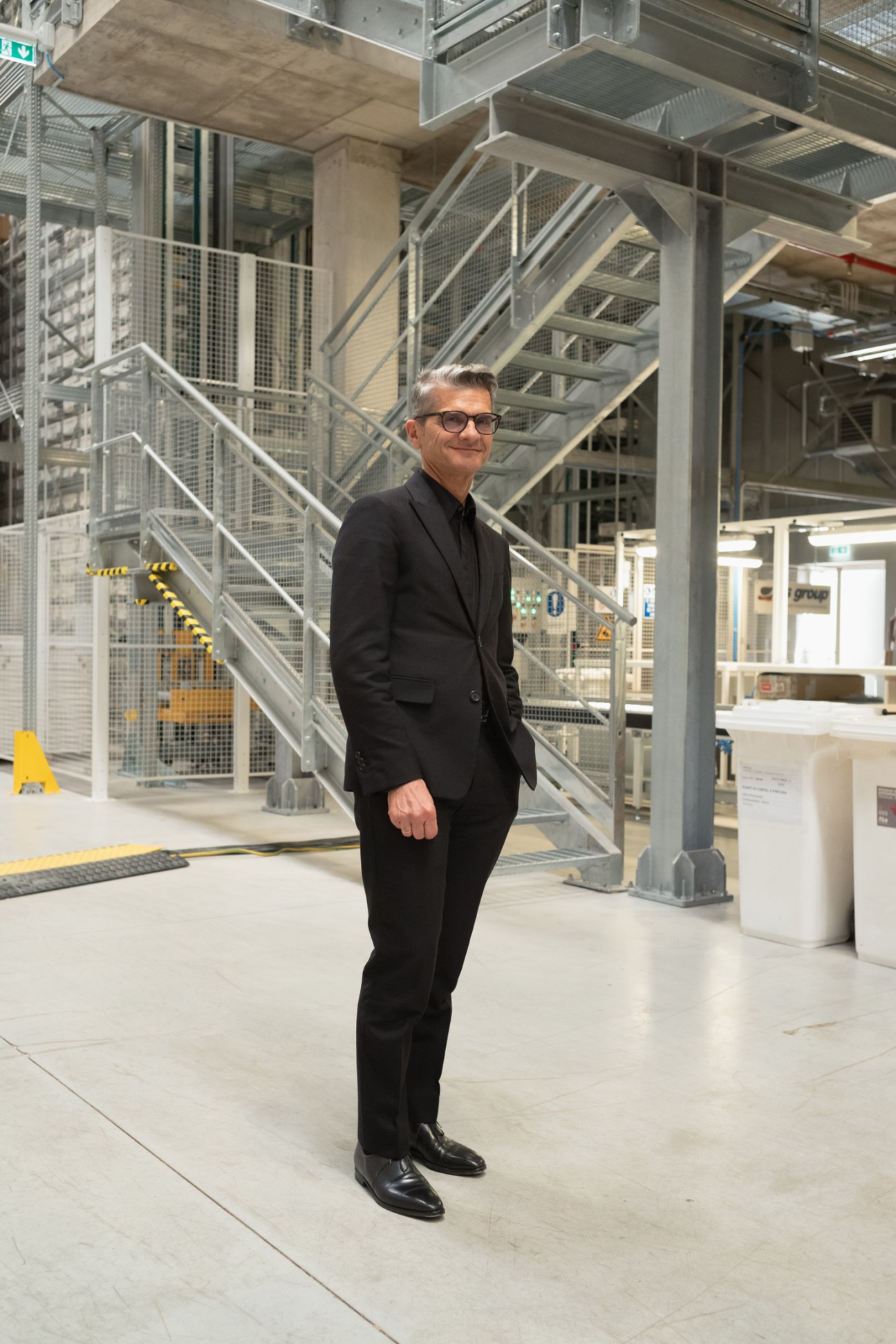
The house’s design, communications and executive teams all sit in this Roman HQ and will confirm that walking through its grand entrance every morning, or looking up at the 68-metre-high concrete and travertine structure, never ceases to amaze. “This building now says Fendi just as much as our logo,” says Serge Brunschwig, the company’s French-born chairman and CEO, sitting on the airy balcony next to his office. “It has the same blend of classicism and modernity that we aim to express with our brand. I moved here five years ago and inspiration seems limitless.”
Fendi makes a point of sharing some of these moments of inspiration by frequently opening the Palazzo to host public exhibitions. These offer a taste of what goes on the creative team’s mood boards and of the infectious feeling inside the building, with elegant men and women constantly waltzing in and out holding stacks of paperwork, rolls of fabric or one-of-a-kind Fendi Baguette bags.
Most recently the brand held an exhibition celebrating Italian sculptor Arnaldo Pomodoro, showing some of his most recognisable bronze sculptures alongside sketches of unrealised architectural projects and a Fendi Peekaboo tote bag, customised by the artist. “Rome has so many different dimensions,” says Brunschwig. “And since there would be no Fendi without Rome, we do anything we can to give back.”
The beating heart of the Fendi business may remain firmly in place in the Eternal City but its ambitions today are as global as ever. The aim is to bring the world to Rome but equally to get out there, meet customers in new markets, gather inspiration from other cultures and build an international business.
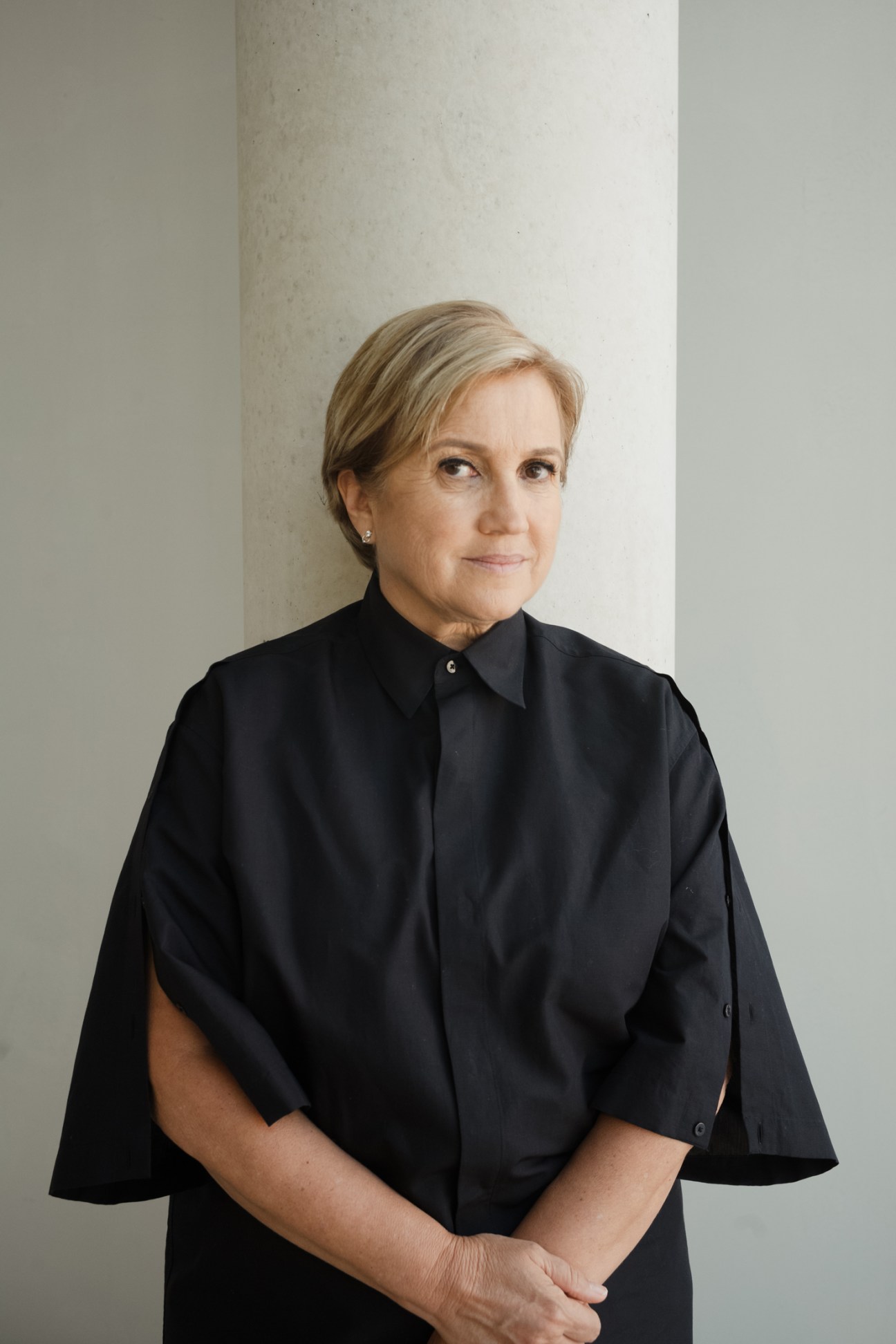
Creative Director of Accessories, Children’s and Menswear
Thanks to a 54-year-old partnership with the late designer Karl Lagerfeld and the creative leadership of Silvia Venturini Fendi, a third-generation Fendi who now helms the business’s accessories, children’s and menswear divisions, the brand’s name is well established. In any café in a big European capital, it’s not uncommon to spot a woman wearing gold-tinged aviators bearing the famous FF logo, or clutching a Baguette bag, one of Fendi’s many iconic accessory designs. Yet this is a smaller business with a lot of new ground to cover, especially when compared with some of its French counterparts in the lvmh portfolio, including Dior and Louis Vuitton.
According to Exane bnp Paribas, Fendi has surpassed the $1bn (€890m) mark in sales, while Dior and Louis Vuitton ring up $7bn (€6.3bn) and $20bn (€18bn) respectively. “This gives you the ambition to dream where you can go next,” says Brunschwig. “We want to continue pointing to new ideas and expanding the family. We call it our chosen family; I was adopted.”
Opportunities abound as far as Brunschwig is concerned. He has been spearheading retail openings in Tokyo’s Omotesando district, Doha’s new Hamad International Airport and the Dubai Mall in the past year. The arrival of British designer Kim Jones has also heralded a new chapter for the brand’s womenswear and haute couture divisions; jeweller Delfina Delettrez Fendi (Silvia’s daughter and one of Jones’s muses) has joined the family business, debuting its first jewellery collection this year; while Silvia Fendi’s menswear has been enjoying a renaissance of its own. “It’s a brand established by a strong woman and addressing the type of man who is on the go, who has an international outlook and appreciates elegance,” says Brunschwig, pointing to his own black, slim-cut Fendi suit. “There’s a lot of potential to grow a business established on these principles.”
This summer the brand hosted one of its most impressive men’s runway shows in its newly renovated factory in the Tuscan town of Capannuccia, a 30-minute drive from the centre of Florence. It signalled its ambitions to expand the reach of its chic menswear designs and to do so while retaining the highest manufacturing standards. The Capannuccia facility was renovated by Fendi’s architecture department alongside Milan-based firm Piuarch, which developed the initial concept; it now resembles a modernist lab rather than a traditional factory, with state-of-the-art equipment and sun-filled offices. It was a worthwhile investment, given the brand’s commitment to setting new industry benchmarks when it comes to transparency and ethical manufacturing in the luxury sector, as well as its historical ties with Tuscany.
Adele Fendi travelled to the region in the early 1920s to explore leatherworking and started the company as an accessories business with her husband, Edoardo, shortly afterwards, having fallen in love with the craft. Today most of the brand’s leather goods are still produced in the region and the team of artisans remain Fendi’s primary sources of inspiration when developing new patterns or innovative materials to update the menswear designs. It’s why the investment in Capannuccia was about improving the team’s quality of life as much as it was about guaranteeing the quality of the products they produce.
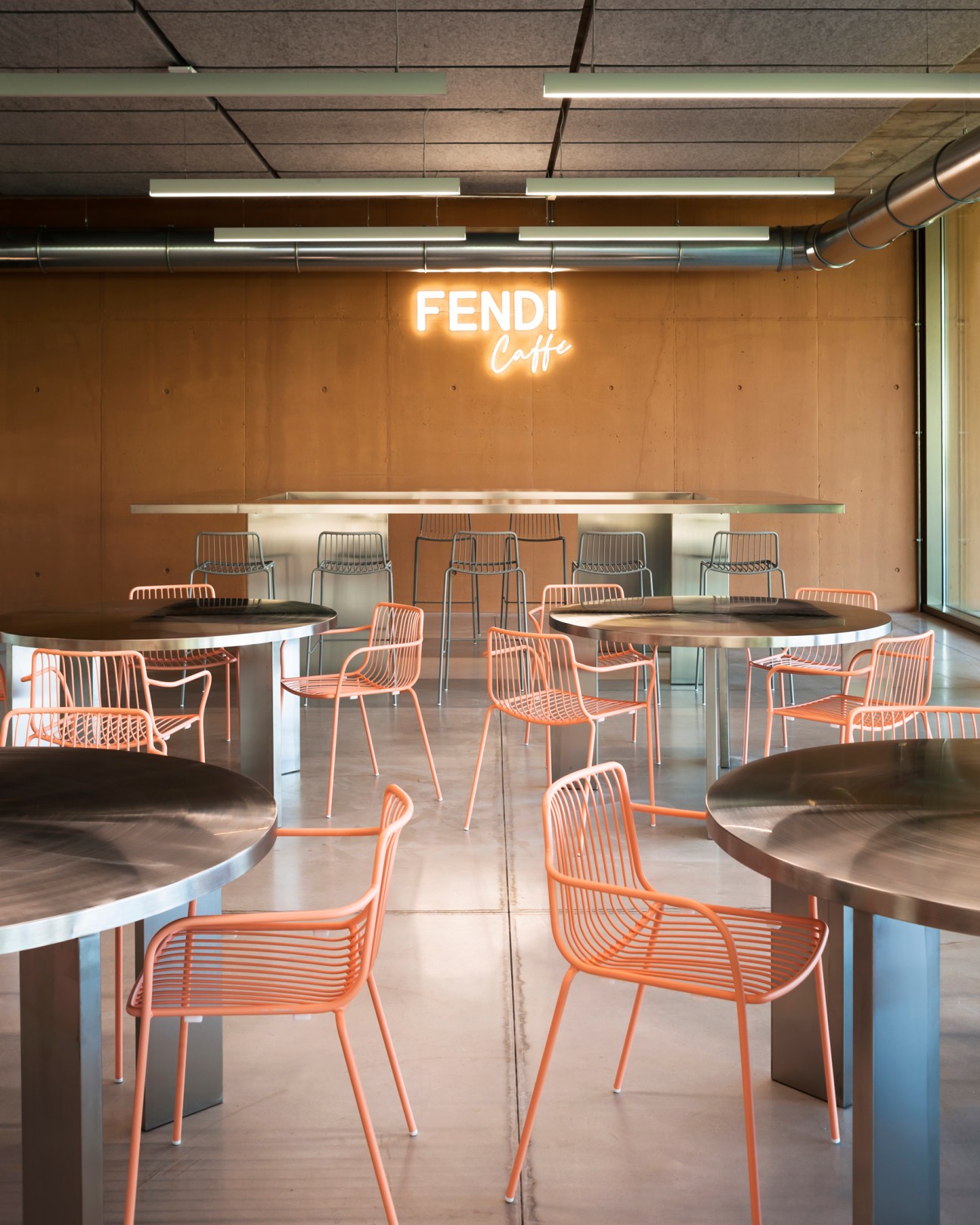
The new facility is surrounded by nature, including different species of Mediterranean scrub trees filling the courtyards, and a sprawling olive grove that might soon start producing Fendi olive oil for the employees. “There’s this cinematic vision of the craftsman crouching over a table doing very repetitive work but today the reality is very different,” says Silvia Fendi. “Our factory looks more like a science lab. It’s where we do all our innovation research and we teach people all the skills they need to create a product from start to finish. It makes them proud of the products that they make and I know that in some bags there are even hidden signatures, so that they can keep track of who made what.”
Opening up the doors of the factory to host a runway show is one way of turning the spotlight on all those who are working behind the scenes, and sharing these moments of pride with the brand’s broader audience. “We wanted to show more about ourselves as a company – our way of doing things,” says Fendi, who also pays homage to the team through the understated, workwear-inspired designs she presents for the occasion. “I’m really interested in experimenting with fabrics and workmanship. If you have something as interesting as a handmade fabric or an intricate construction technique, the silhouettes you design should be practical and clean, or it becomes too much to take in,” she says of the minimalist aesthetic that has defined her time as a menswear designer.
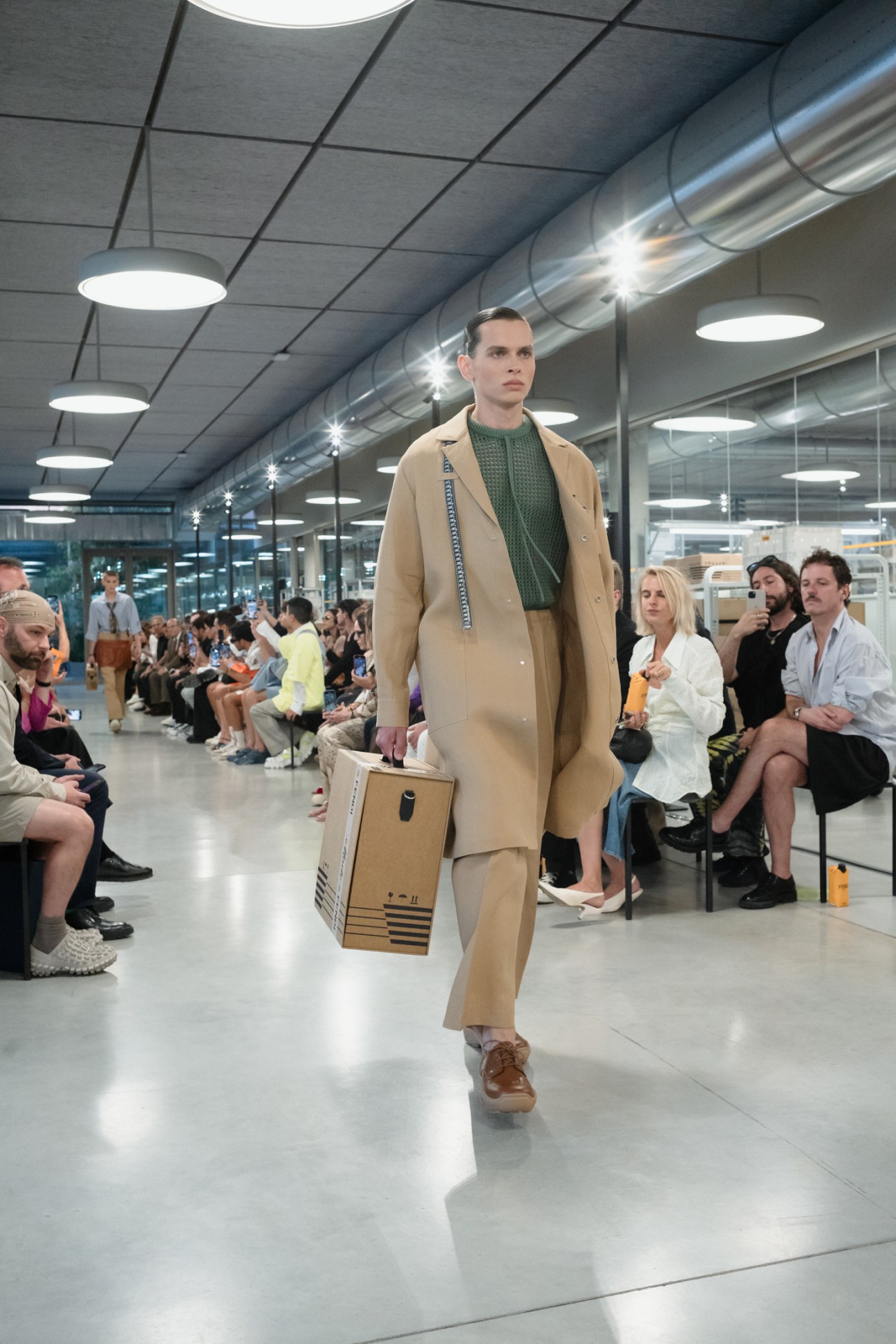
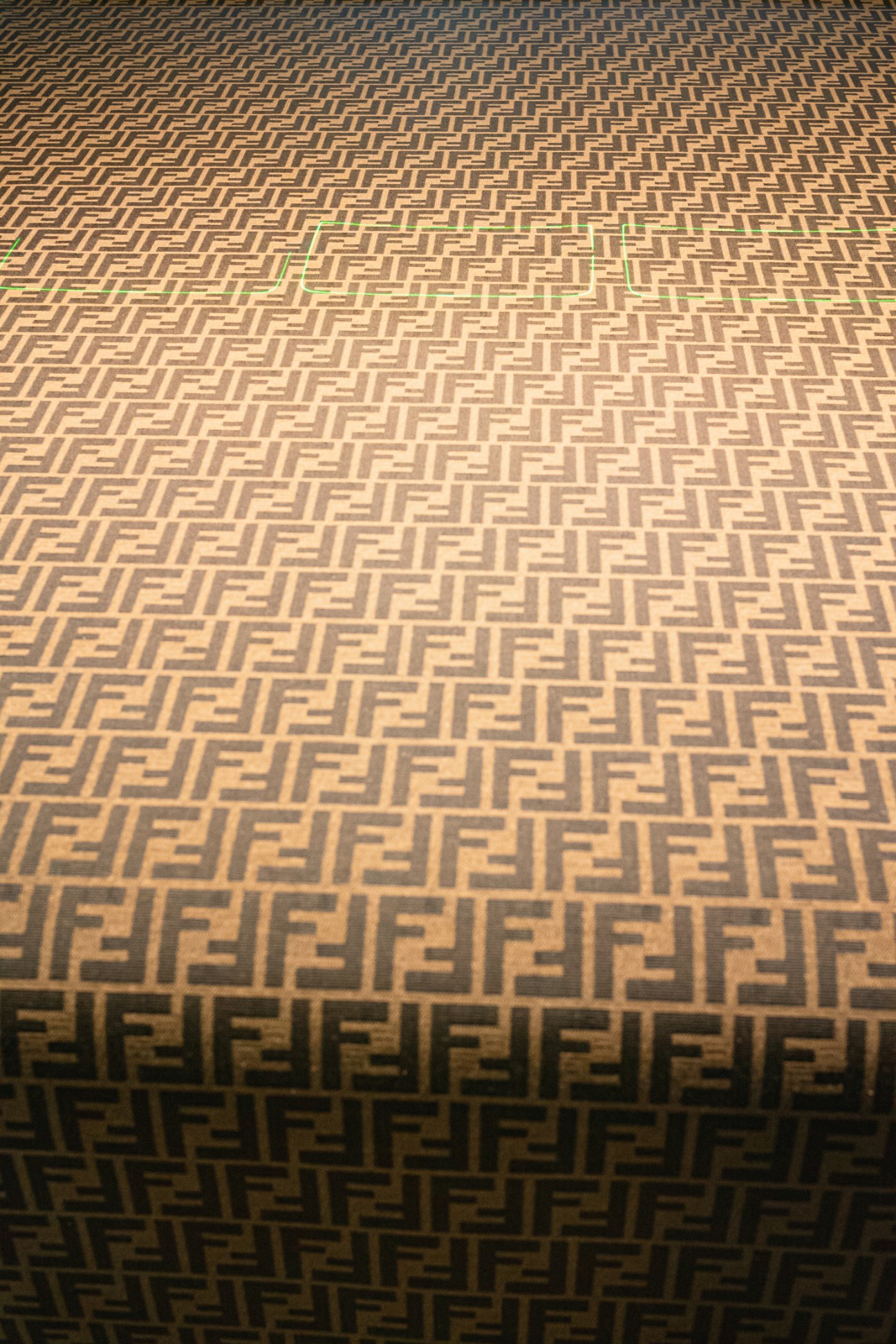
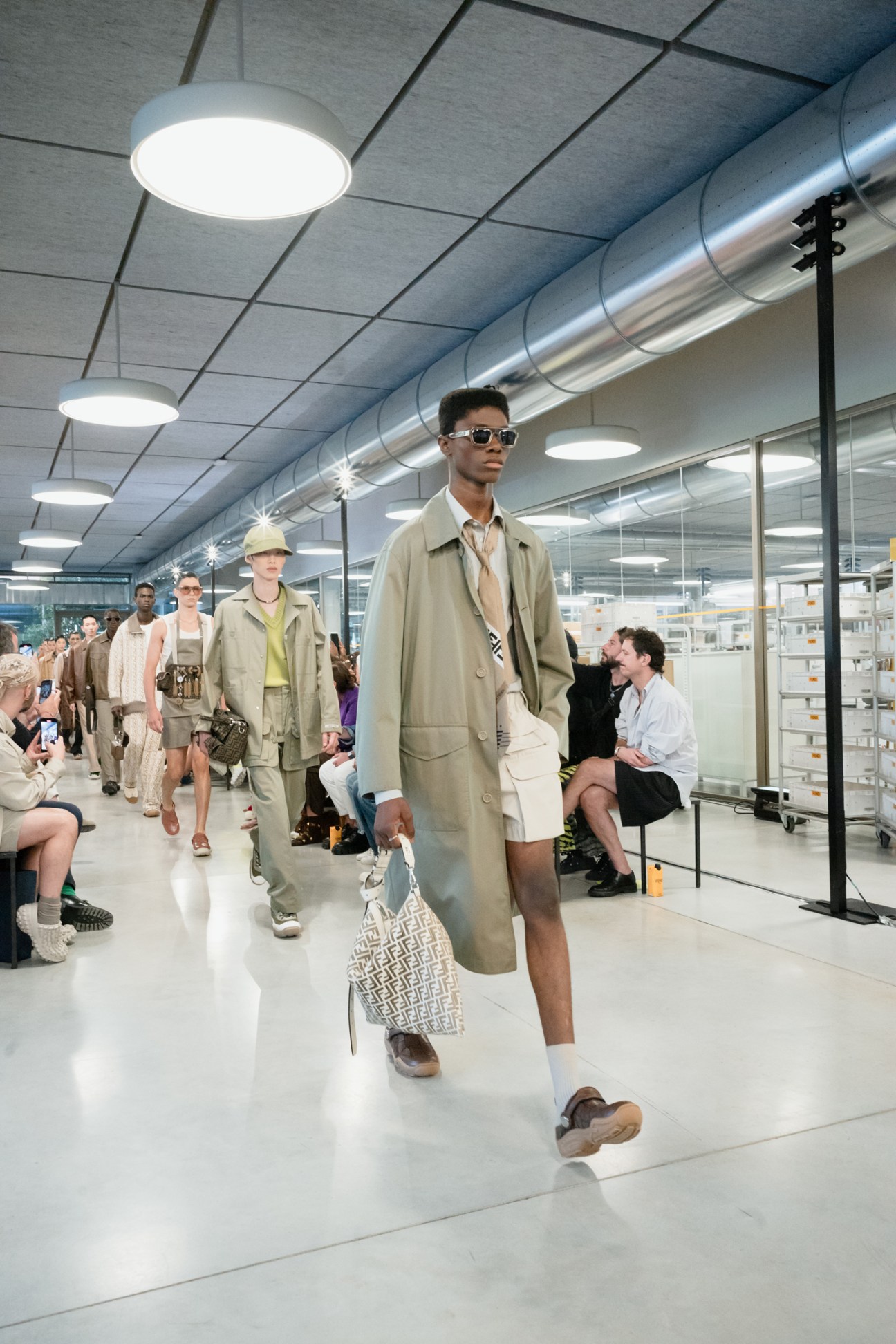
It’s a refreshing approach that has helped evolve the brand’s identity beyond obvious associations such as the FF logo. “I’ve always appreciated pragmatic clothing,” says Fendi. “But today, with men’s fashion becoming liberated from most rules, we can experiment much more with workwear and functional clothing. Maybe it’s a result of more women designers doing a great job in menswear.”
The new collection features direct references to the artisans’ uniform, via rubber-soled clog shoes, aprons worn over tailored trousers and shirts made from Japanese washi paper. “The classic uniform of the craftsman used to be made from paper,” says Fendi. “I also wanted to add striped shirts with rolled-up sleeves and ties, because today to be an artisan you need to have manual skills but also an engineer’s mind for using different machines. I’m always interested in this relationship between man and machine.”
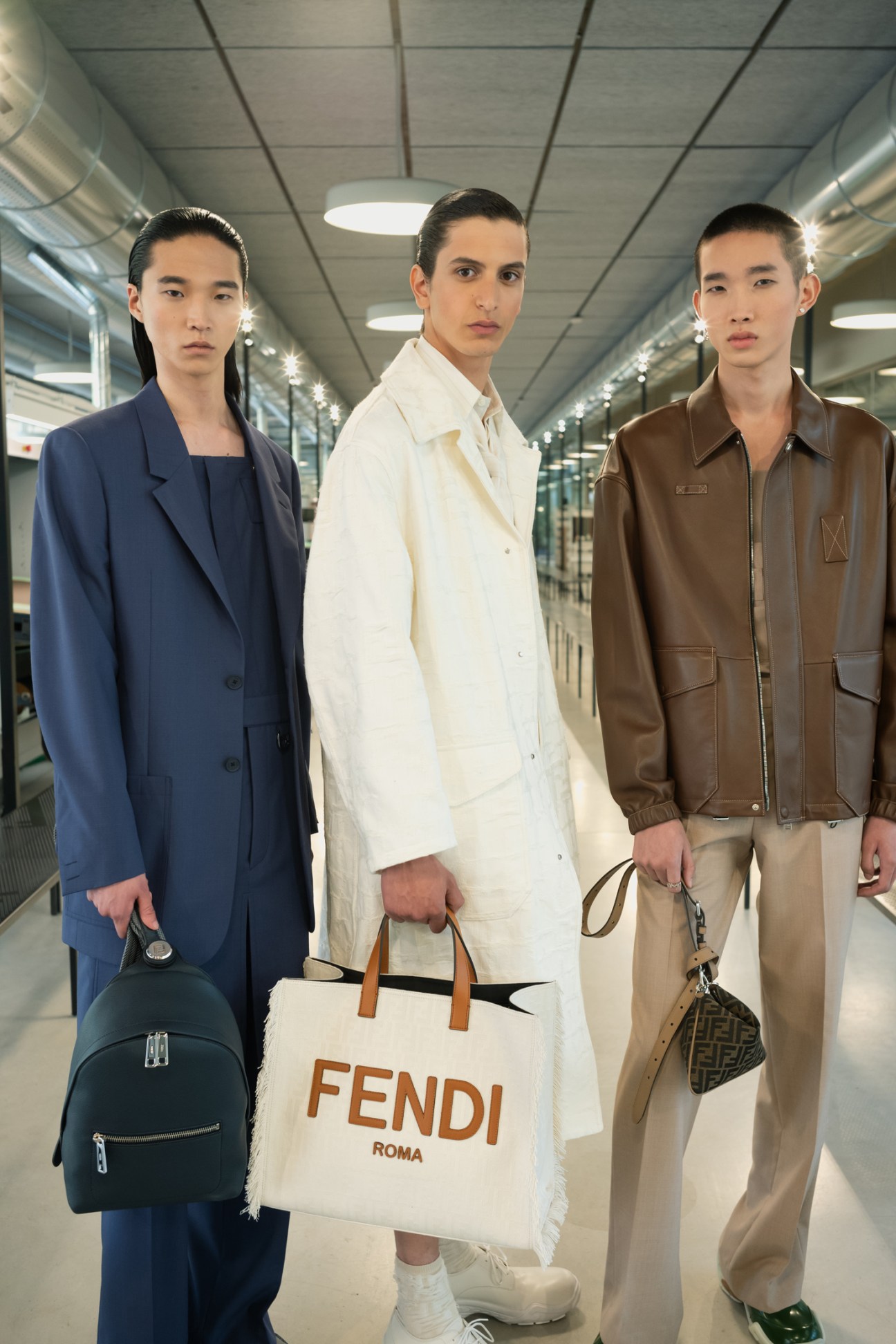
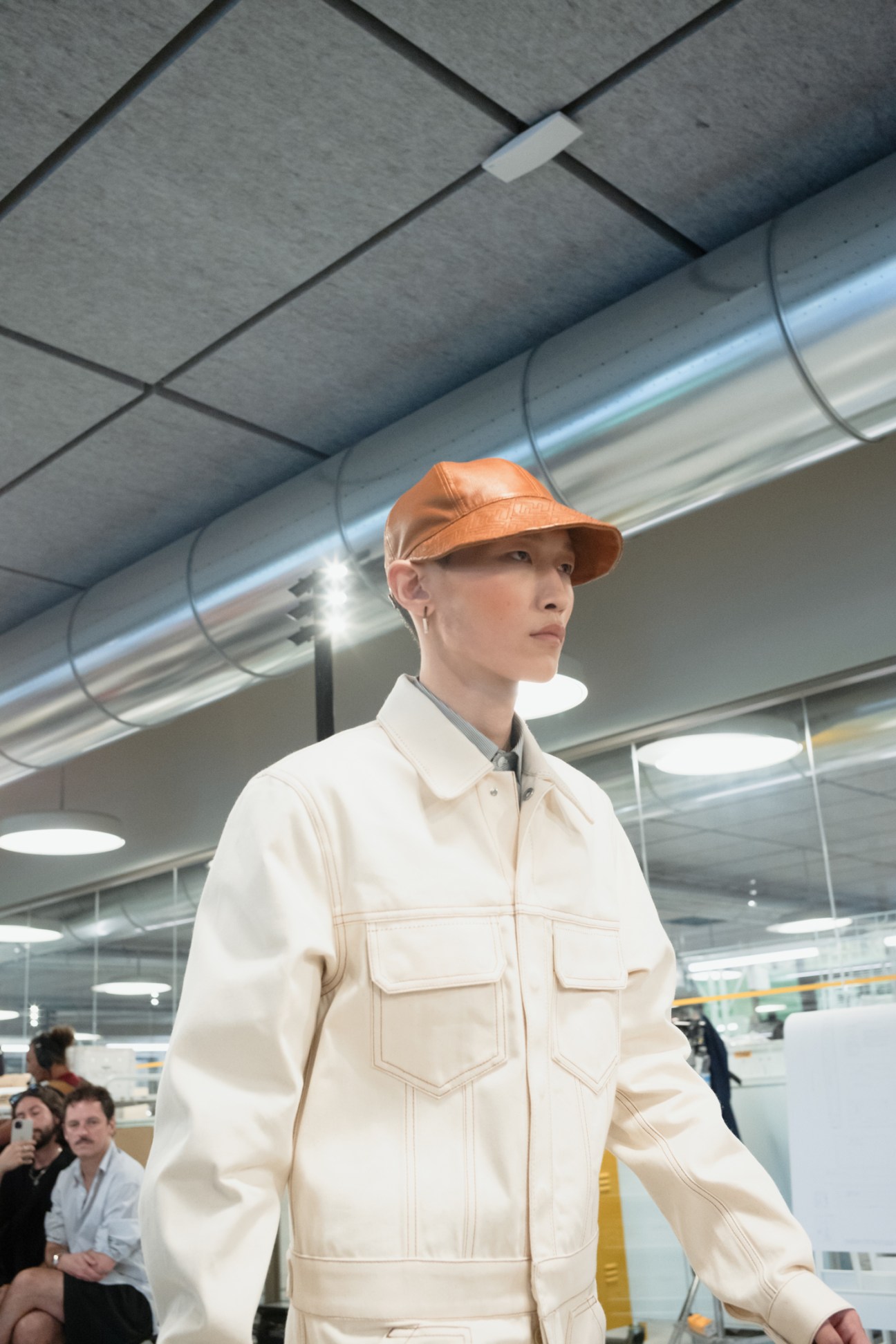
Unlined blazers highlight the skill and handwork that goes into creating a Fendi tailored jacket, while exposed backs add a touch of sensuality. “This is a sexy job, at the end of the day,” says Fendi of her mission to modernise the image of this line of work and attract a new generation of artisans to Capannuccia. A walk around the factory’s all-white office floors and workshops, buzzing with men and women of different ages (all dressed in their black FF branded T-shirts), suggests that she is well on her way.
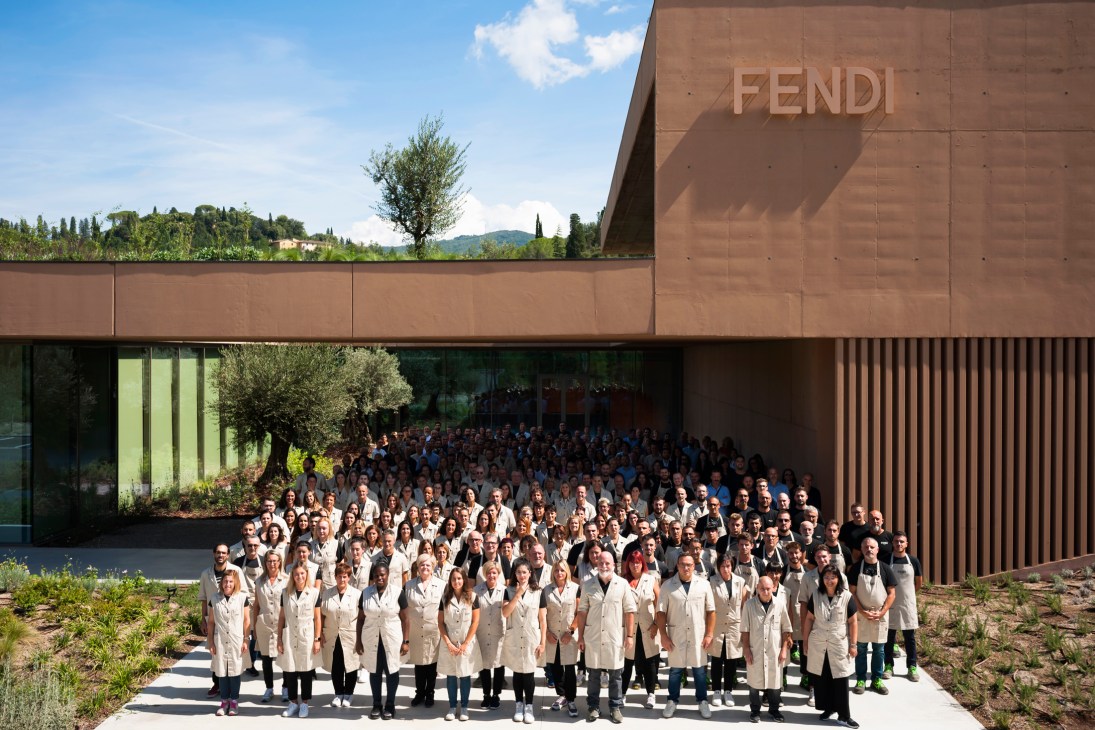
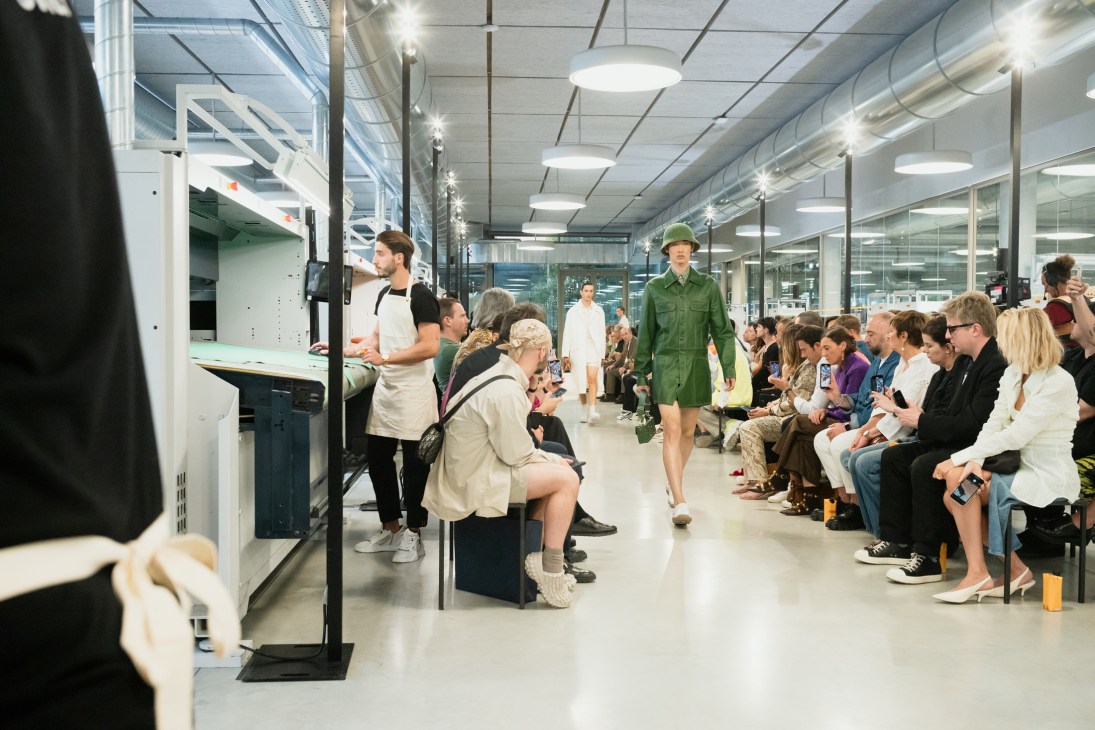
The show unfolds between the artisans’ workstations while they continue sewing handles onto shoulder bags, cutting leather patterns and hand-painting the edges of intricately embroidered clutches, relatively unbothered by the fanfare around them. They only put their tools down during the show’s finale, changing into white work coats and joining Fendi for her final bow. “The portrait of the solo fashion designer is very much in the past,” she says. “We all now know that you can’t do anything by yourself in this business. A designer is just a spokesperson for the brand. We work together with our colleagues, so I wanted to show how invaluable they are by making them part of this show.”
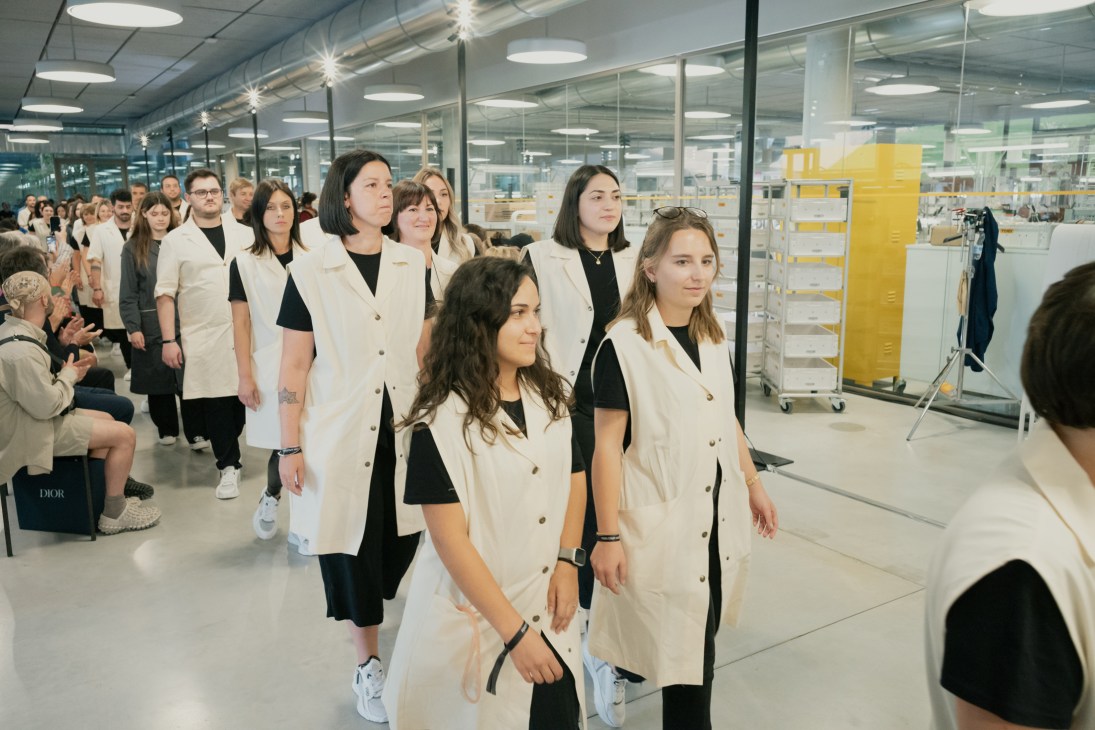
The family spirit shines through when the artisans join Fendi for that finale walk, as well as later in the day when they gather on the factory’s rooftop, dancing the night away alongside DJ Diplo, Brunschwig, Fendi and her daughters. “This sense of community and ongoing conversation is important for us,” says Fendi. “You can tell that there’s still a family behind it all even if the family doesn’t run the business any more. It’s evident in our long-lasting collaborations with Karl [Lagerfeld] and now Kim [Jones], who joined us to oversee womenswear and works so closely with Delfina [Delettrez]. I guess people choose themselves here.”
The brand might need to return to its usual Milan showroom for next year’s fashion show, yet the factory will remain Fendi’s creative laboratory, where all the magic happens. Built for the future, it can accommodate double the amount of employees it currently has in its workforce. Given the new apprenticeship schemes in place – Brunschwig is working with the Italian ministry of education on an initiative dubbed Adotta Una Scuola (“Adopt a School”) to promote craft to young talent – and the appealing working conditions on offer, there’s renewed confidence that all the workstations will soon be filling up. “This is the place that will allow us to grow,” says Fendi. She plans to continue her own frequent trips to the factory, to brainstorm with the team and recharge in its surrounding nature. “Working here is regenerating – just looking outside nourishes your soul. And at the end of the day, beauty attracts beauty.”
Better nature
Sitting on the terrace of hotel Es Racó d’Artà, you can look down the hill across fields and forests as birds flit overhead and croaking frogs let rip from the lily pond. It’s a version of Mallorca that many visitors to this popular beach destination never see but these mountains, this landscape, is the island at its best.
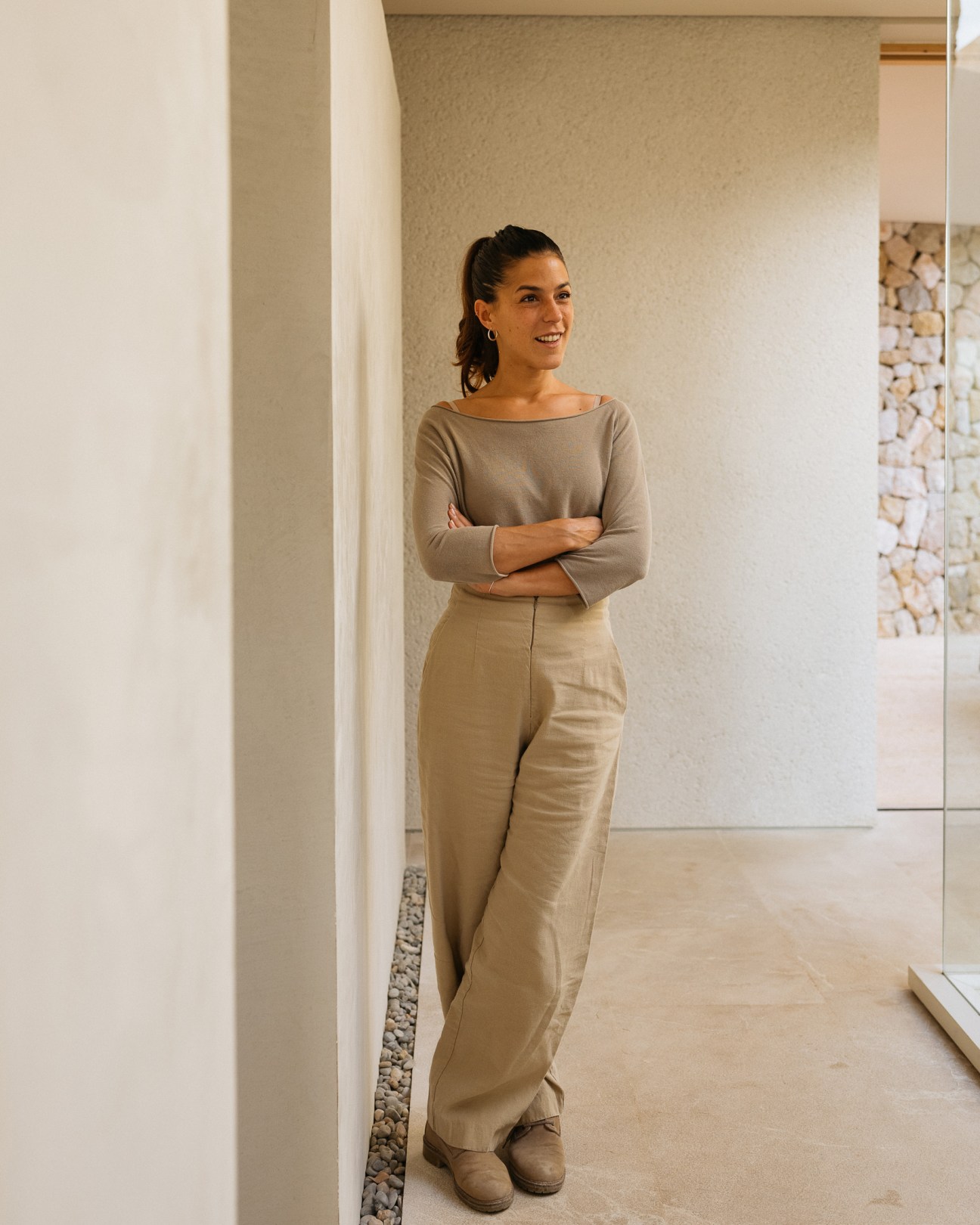
Es Racó opened just three days before the pandemic started and, after that, there were numerous stop-starts triggered by waves of lockdowns. This past year has finally seen the venture in full flow, says María Rincón, who is part of the hotel’s management team and has been working on the project for five years. She is a passionate advocate for this special spot. But to describe this as a hotel is to underplay the scale and vision behind the project, which is owned by celebrated Mallorquín architect Antoni Esteva and his friend, builder-developer Jaume Danús.
The property sits on a vast estate of some 185 hectares, which was snapped up by the duo when the family that owned it finally decided to sell up. It was in need of some care, having been abandoned for 50 years – the old stone farm buildings had fallen into disrepair and fertile fields were neglected. Esteva (who has overseen the sensitive restoration of several buildings on the island, including the lauded Son Gener Hotel) and Danús wanted to give something back to the island, and show respect for its traditions, crafts and the way of life. So the first thing that they did was to tend the soil, planting xeixa – an ancient variety of wheat – as well as 14 hectares of vines (they will start making wine next year), harvesting olives to make oil and setting up bee hives. Only then did they give their full attention to the dilapidated finca, slowly turning it into the heart of the hotel. They also developed a series of casitas, some with private pools, and villas that are subtly dotted across the landscape, as well as spaces for yoga, meditation, a soothing spa and a beautiful seasonal outdoor pool.
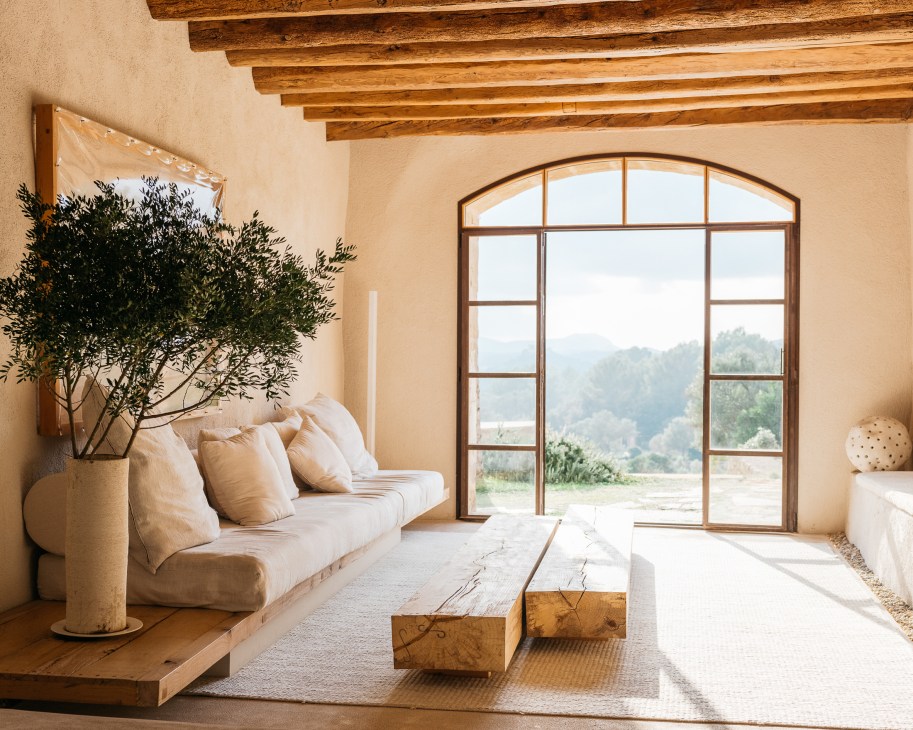
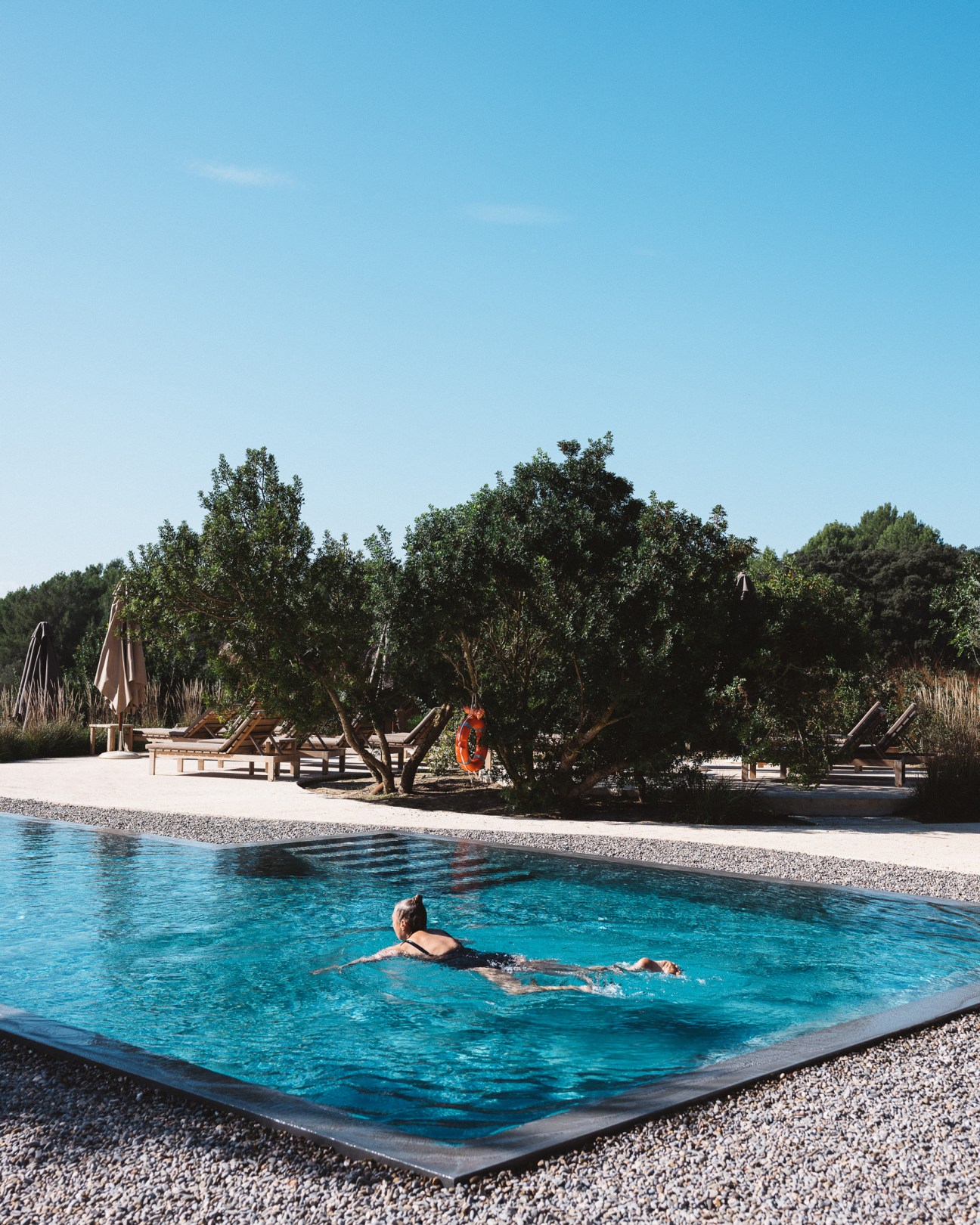
Es Racó pitches itself as a retreat and there is an emphasis throughout on enabling guests to reconnect with nature, talk and eat food from the farm. Es Racó encourages you to jump on a bike or get in your car to explore the nearby villages – the idea is to connect with the people who have lived here for generations. Staff will also guide you to some special beaches when the waves call.
The serenity at Es Racó has many sources. It comes from the architecture and design, and the use of materials that are simple and noble – stone, timber, lime plaster, woollen rugs – and chosen to age gracefully. The colour palette – a neutral mix of soft creams and whites – also plays a role. Then there’s the art, which is rich with nature references, especially the work of island-based artist Hiroshi Kitamura and ceramicist Jaume Roig. Even the linen staff uniforms are perfect; they are made by the fashion label owned by Esteva’s daughter Rosa.
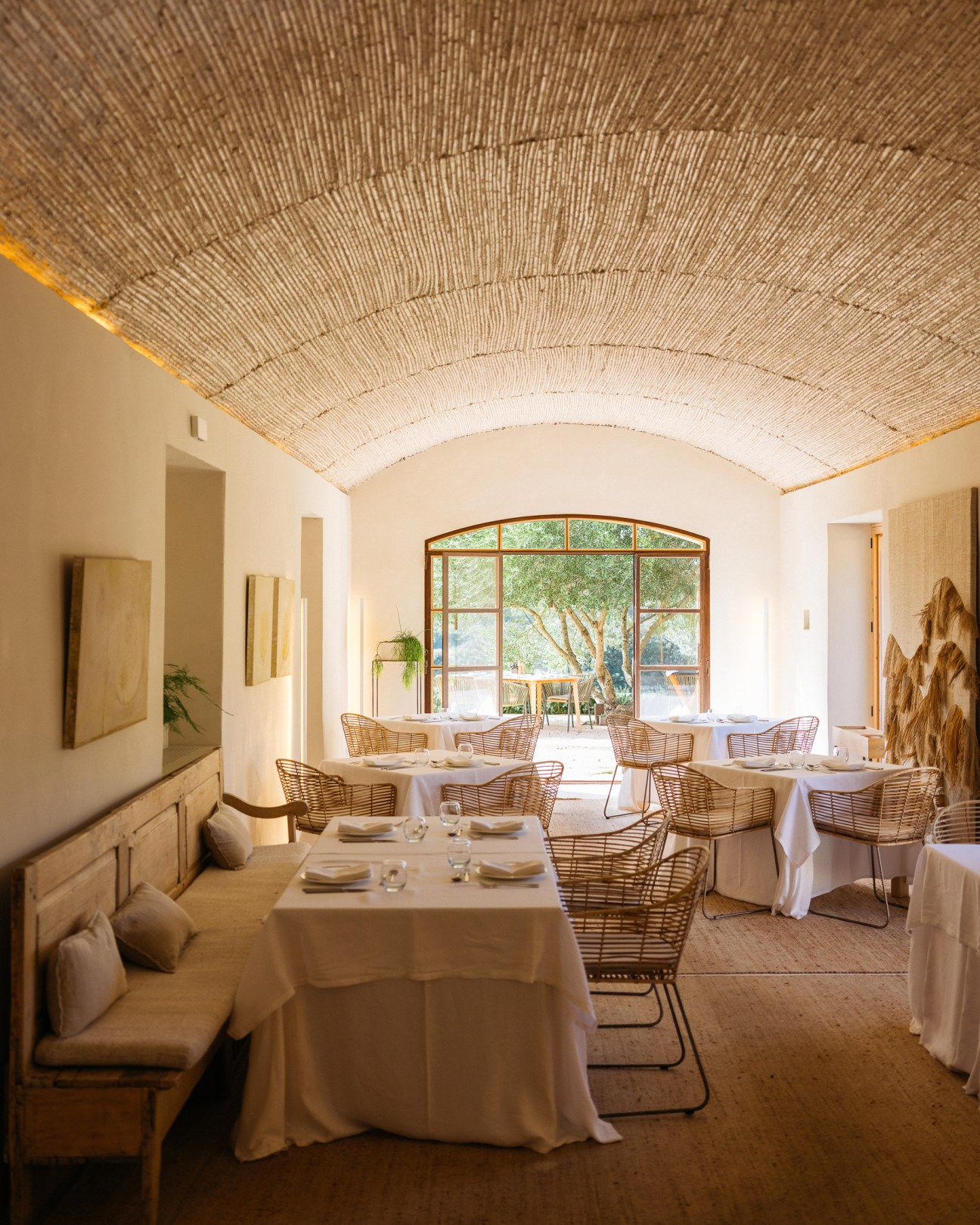
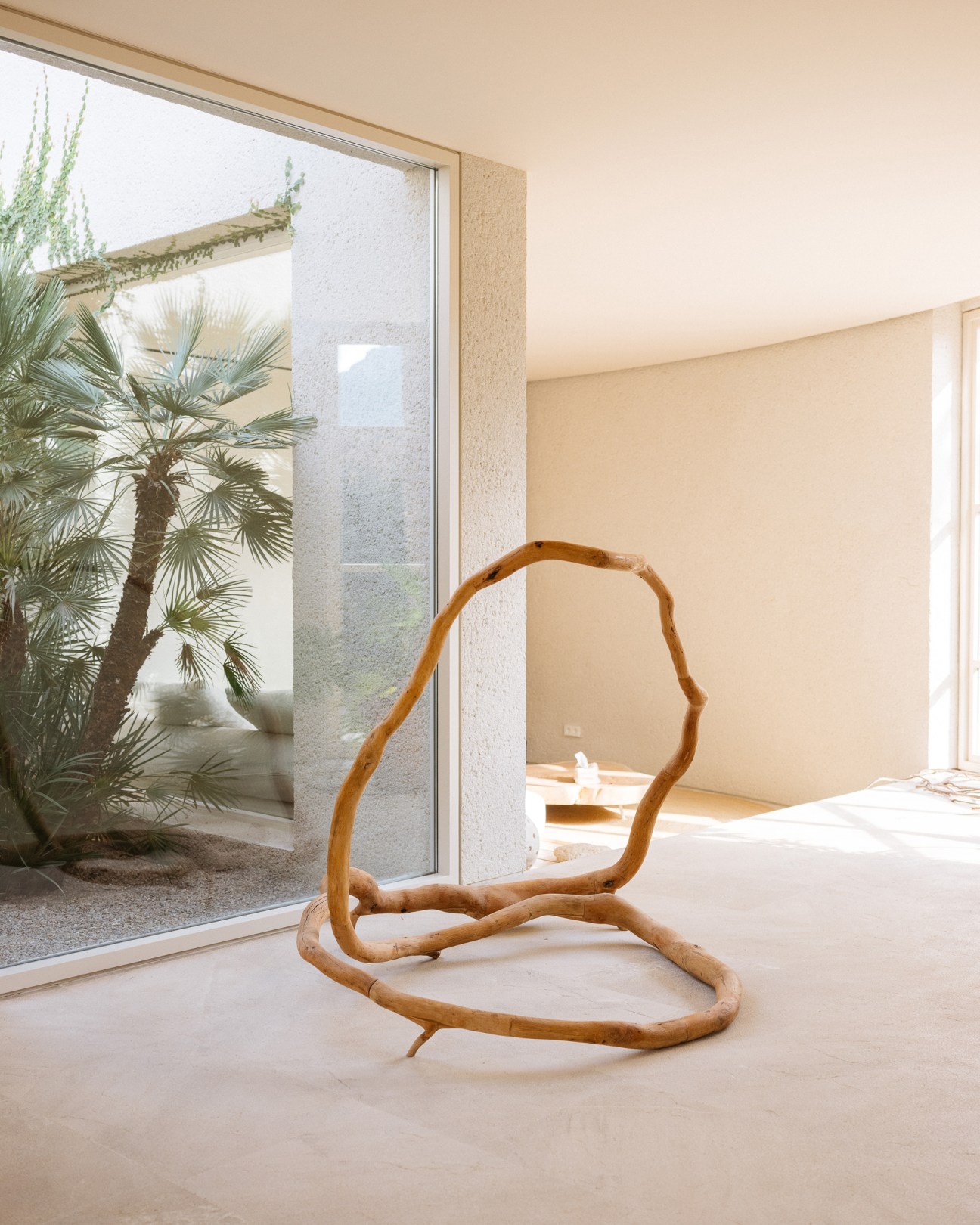
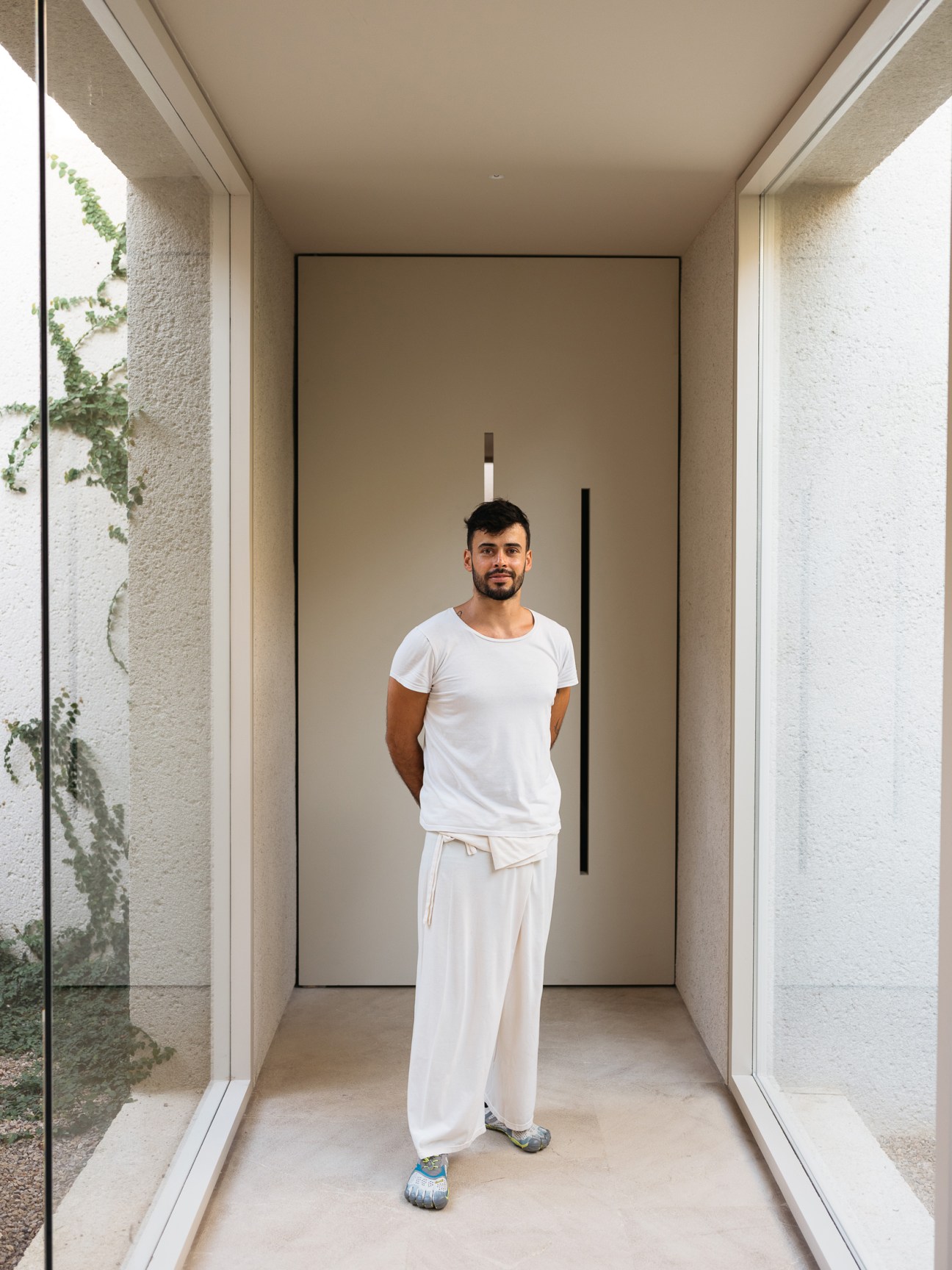
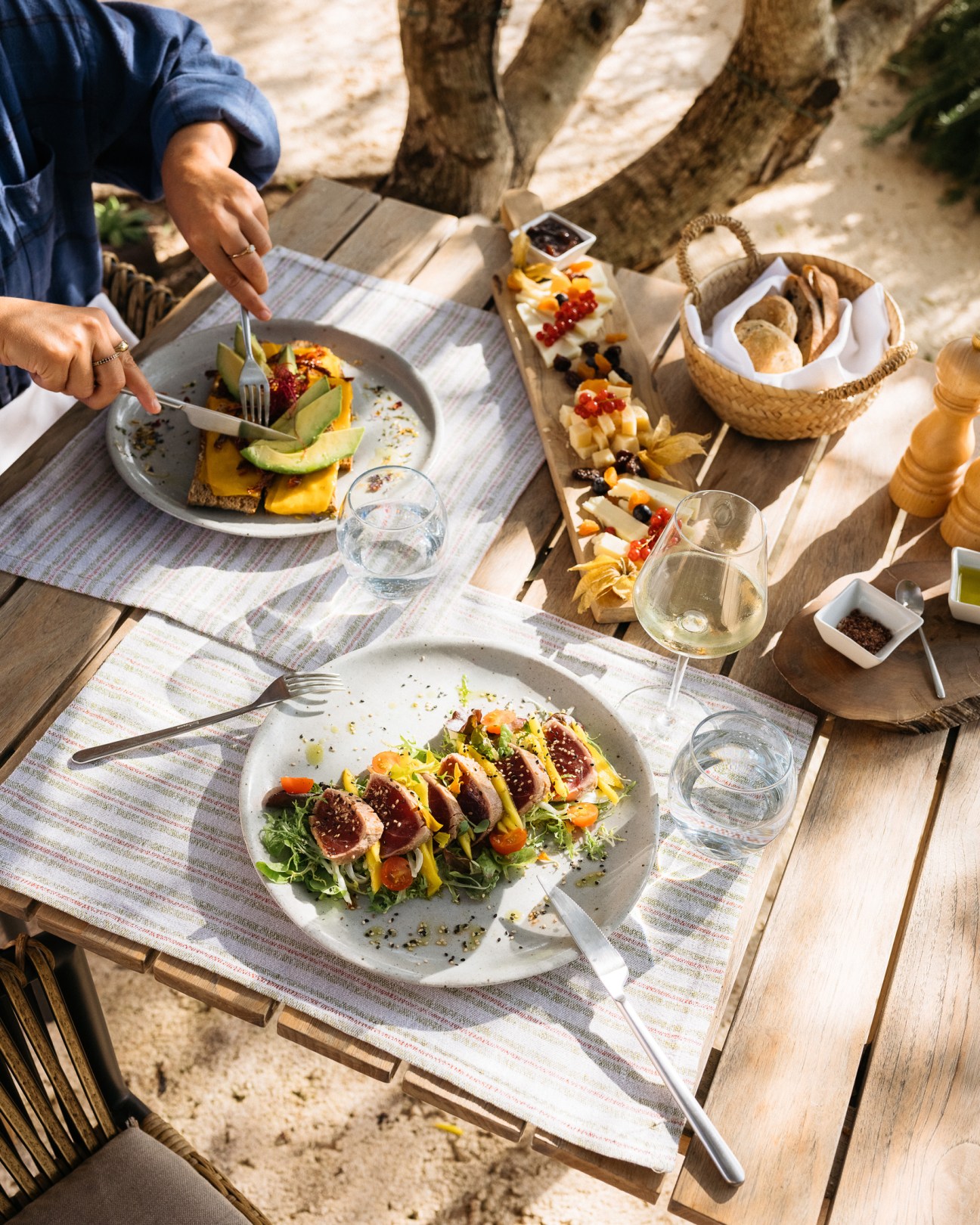
There’s integrity too. Local artisans and workshops have built much of the furniture. There’s also a focus on being sustainable, using solar and geothermal energy, and allowing carefully engineered shafts of daylight to illuminate the subterranean treatment rooms. In short, every space is considered and truly beautiful. But there is something bigger at play here: an attempt to reset tourism on the island and to find a path back through the fields to a Mallorca of memory.
esracodarta.com
For more hotels in Spain pick up a copy of ‘Spain: The Monocle Handbook’, which is available now at Monocle.com/shop
All you can eat
Florette
Toronto
The Victorian shopfronts and elegant townhouses that line Toronto’s Queen Street West have long been home to some of the city’s nicest independent shops and dining rooms. Among the newest is Florette. “The way I discovered Toronto as a teenager was through its restaurants,” says founder Jerry Zhang, who left a career at Warner Music to open his own venue. “That’s how I fell in love with the city. I wanted to open something that was part of what makes Toronto’s food scene special.”
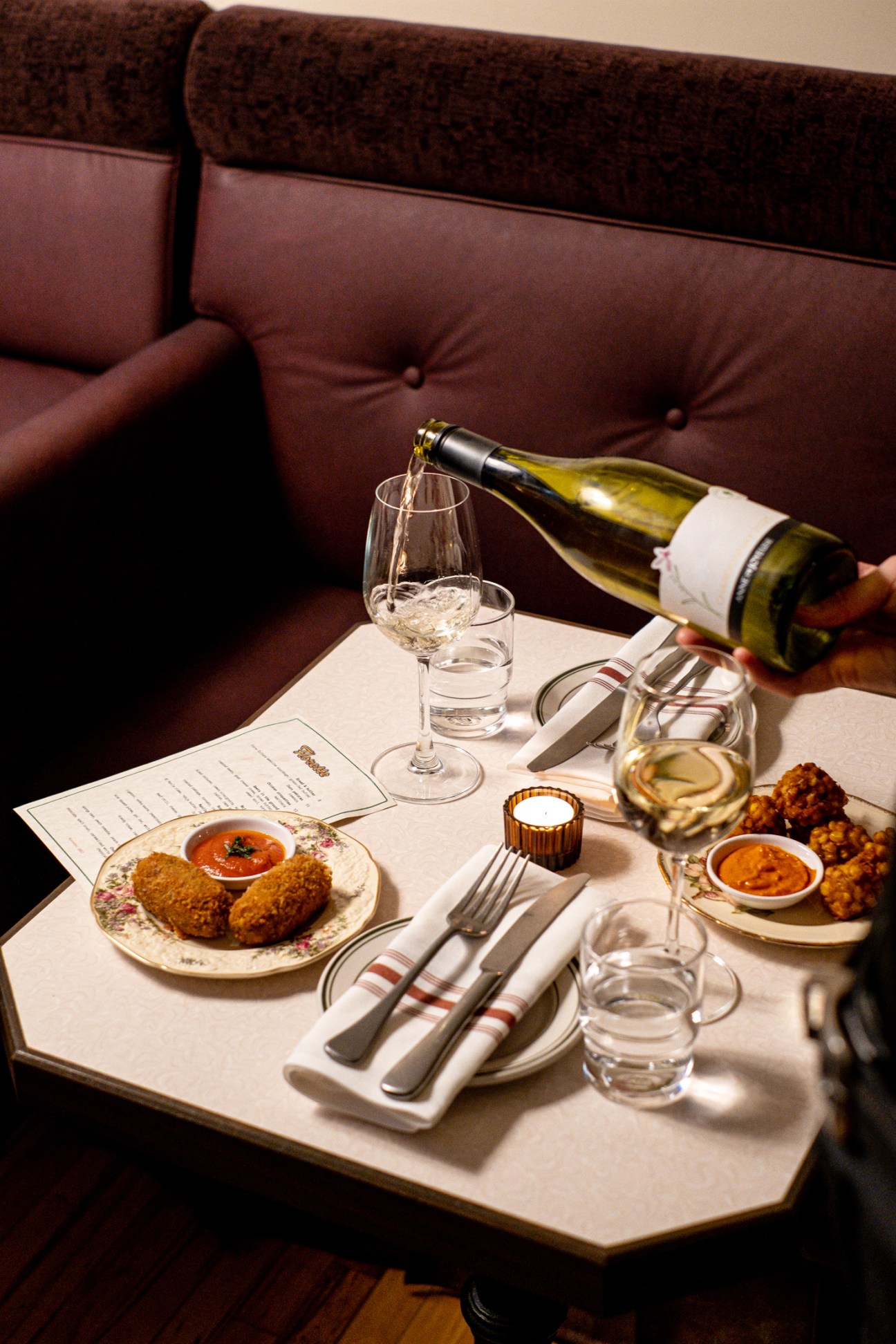
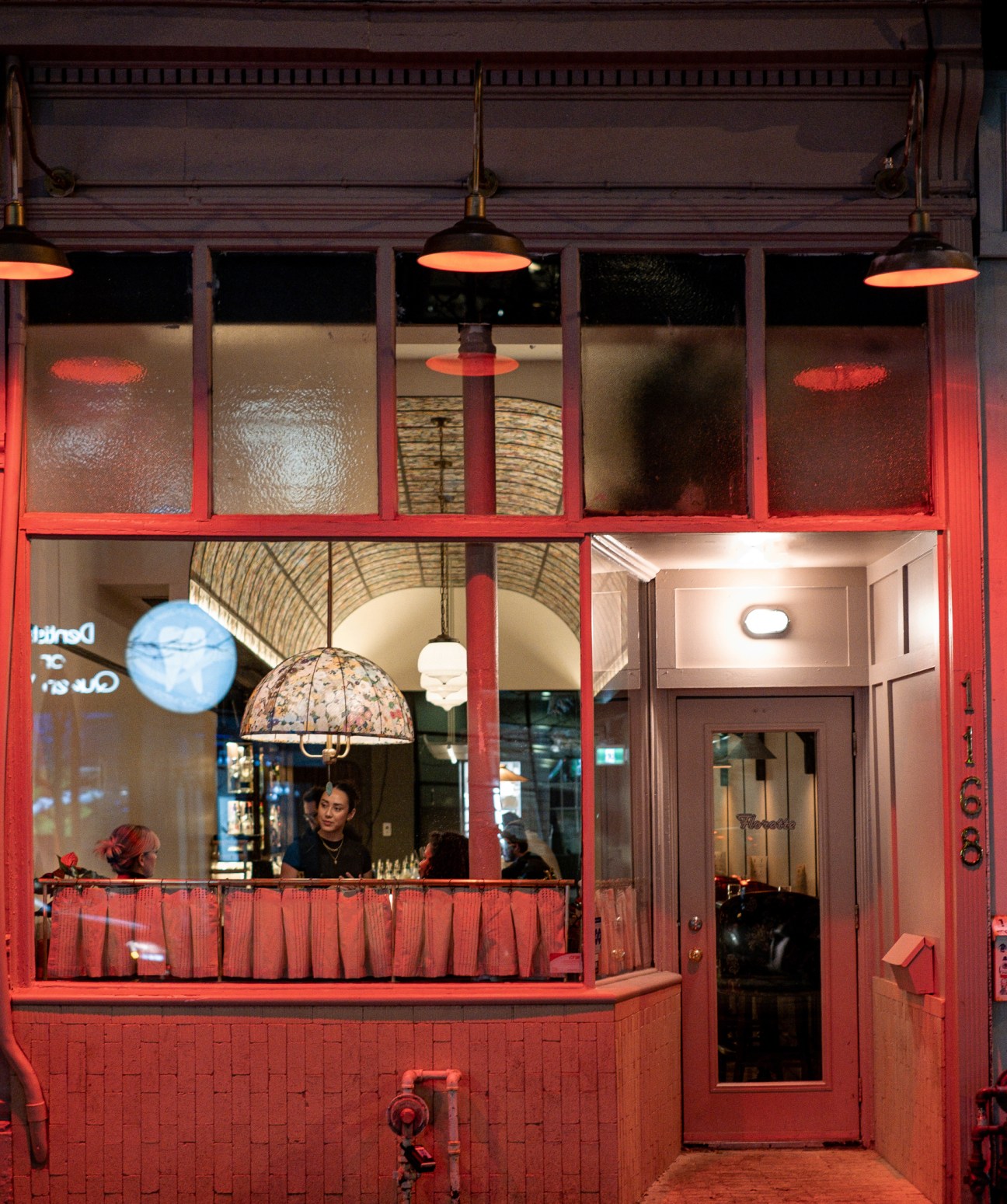
Toronto studio Denizens of Design saw to the interiors, which include a luminous ceiling printed with flowers. The furniture is either custom-made or sourced from antique dealers nearby. Florette’s menus are mercurial and defy categorisation – try clams from the Pacific coast served with fried curry leaves or chicken croquettes with house-made marinara sauce.
florettetoronto.com
Apollo Inn
Melbourne
Chef Andrew McConnell and partner Jo McGann’s Apollo Inn is a mere 50 metres from their beloved bar and restaurant Gimlet, the site of one of Melbourne’s first ever public houses. This intimate cocktail bar has new interiors by Sydney-based design firm Acme and draws inspiration from the timeless bars of Europe, with low lighting, wood panelling and a bijou 30 covers.
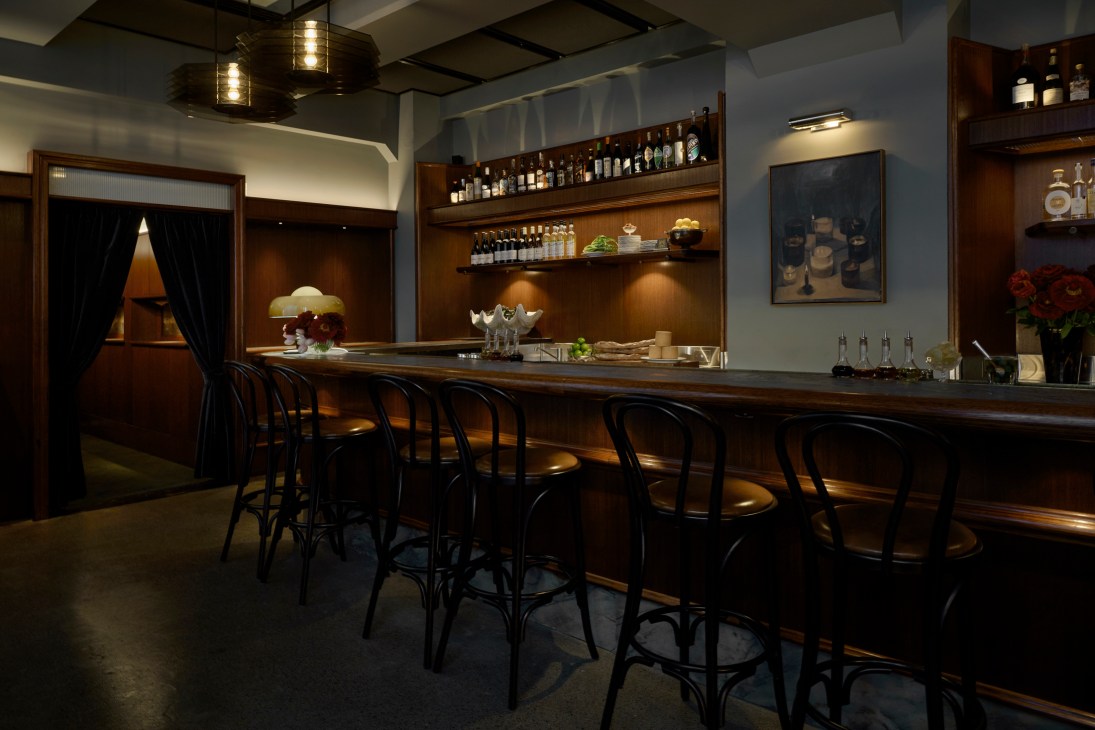
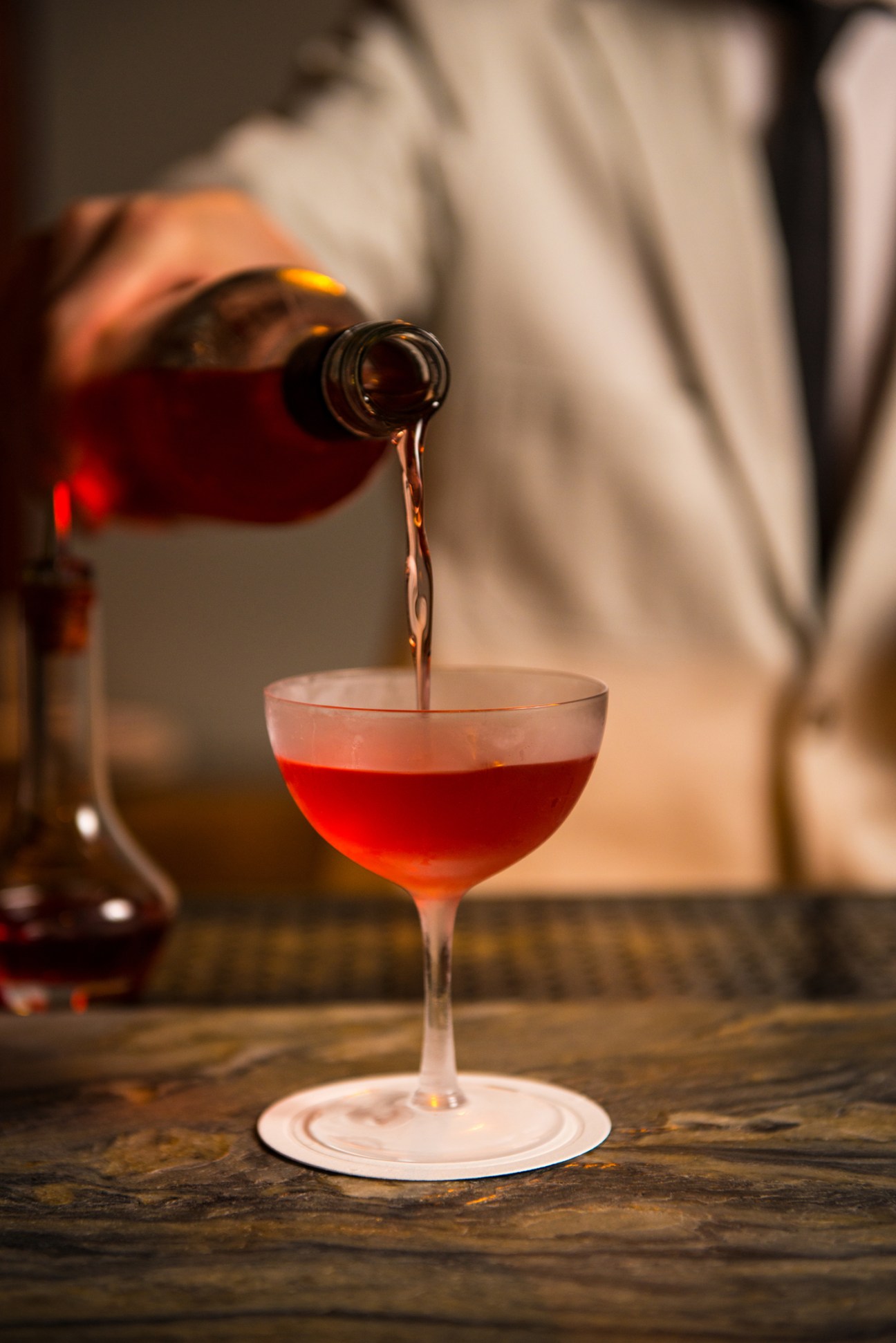
McConnell kept the menu tight and a little more rustic with 10 or so dishes that change regularly but can include a perfect prawn cocktail, oysters on ice or a classic beef carpaccio. There are four martinis on the menu, while house cocktails include a picon bière (chinotto, blood orange and juniper with French lager), a stinger (brandy and crème de menthe) or a classic champagne royale.
“The vision has always been in the back of our minds,” says McConnell. “We wanted to create a place that can happily be the night out or the before or after: one that was more focused on the drinks than on food.”
apolloinn.bar
Bostich
Berlin
Bostich opened in late spring but feels like it has been in Berlin’s Wilmersdorf for ever. Swiss-born restaurateurs Simon Bühler and Yllnora Semsedini wanted to create a place in which diners would linger. “[For those] evenings when you dress nicely because you are looking forward to time well spent with friends,” as Bühler puts it. “And with food that everyone enjoys.”
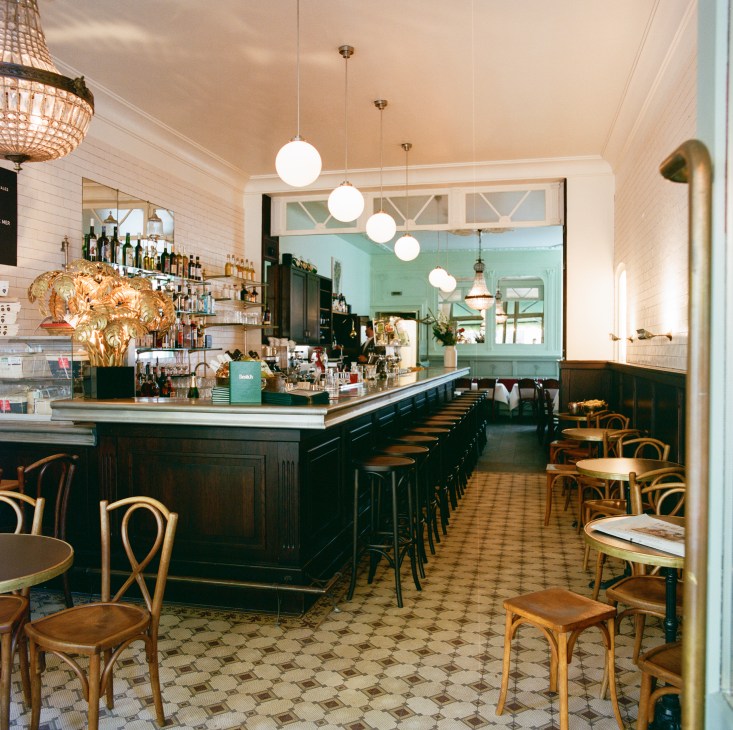
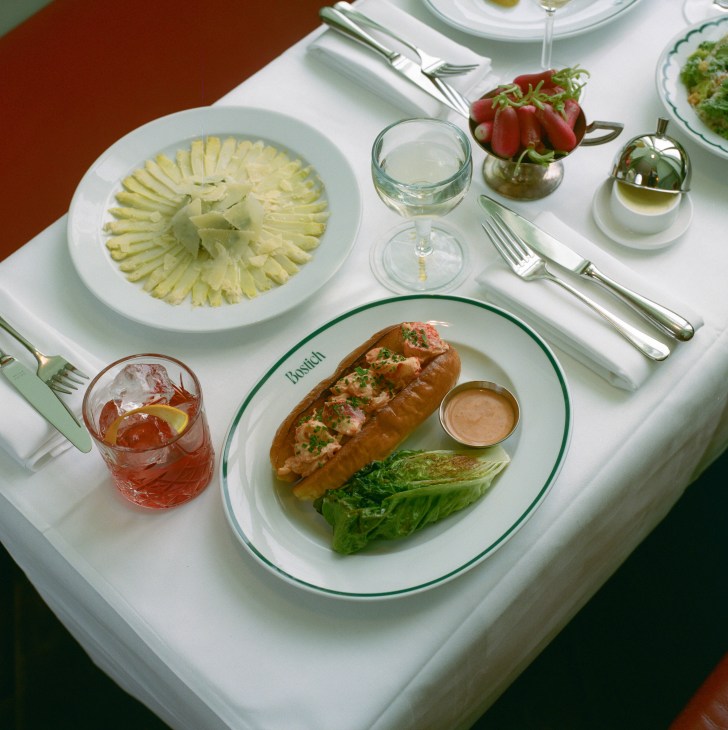
For Bostich that means fresh oysters and shrimp cocktails in the afternoon sun and unpretentious but high-end classics, such as buttery carrots, mashed potatoes and veal served in a fetching copper pot. Other highlights include tender lobster roll, truffle risotto and, to finish, a crêpe suzette (flambéed at the table by the brilliantly named chef Sarah Fillet. Design-wise there’s a whiff of 1930s France, with Maison Jansen palm-tree lamps, red wicker chairs and round bistro tables.
bostich.berlin
Sturehof
Stockholm
Sturehof, founded in 1887, has just reopened at its original address at 2 Stureplan in central Stockholm. The restaurant, which is spread across two floors, now seats 400 with a further 150 covers to come in 2026.
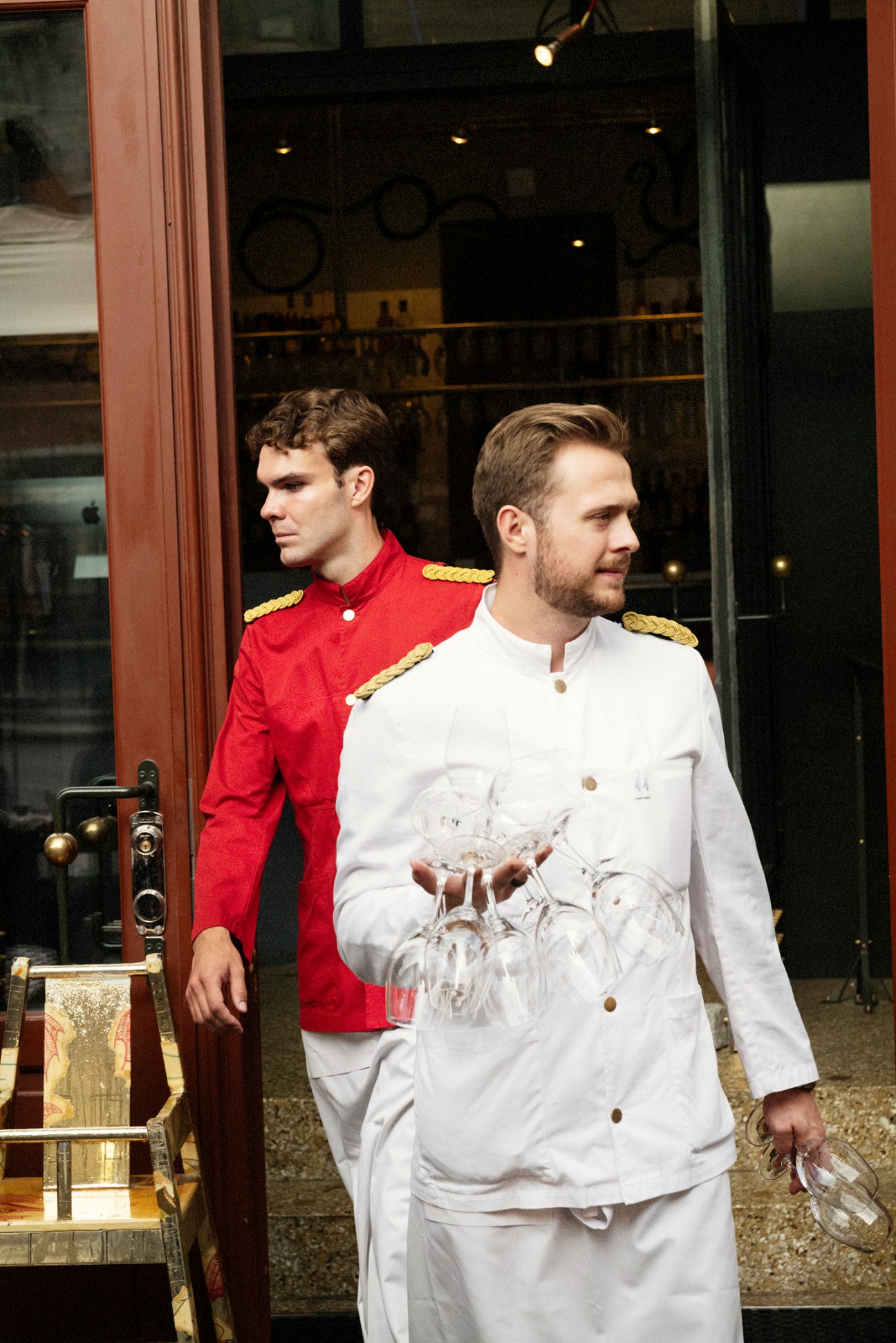
The space has been carefully updated by Stockholm practice Dinelljohansson: expect white tablecloths, oak panelling, terrazzo floors and black leather seating. There’s a book-lined dining room upstairs where books not only add to the atmosphere but are available to buy. Downstairs, there’s a snug 16-cover bar.
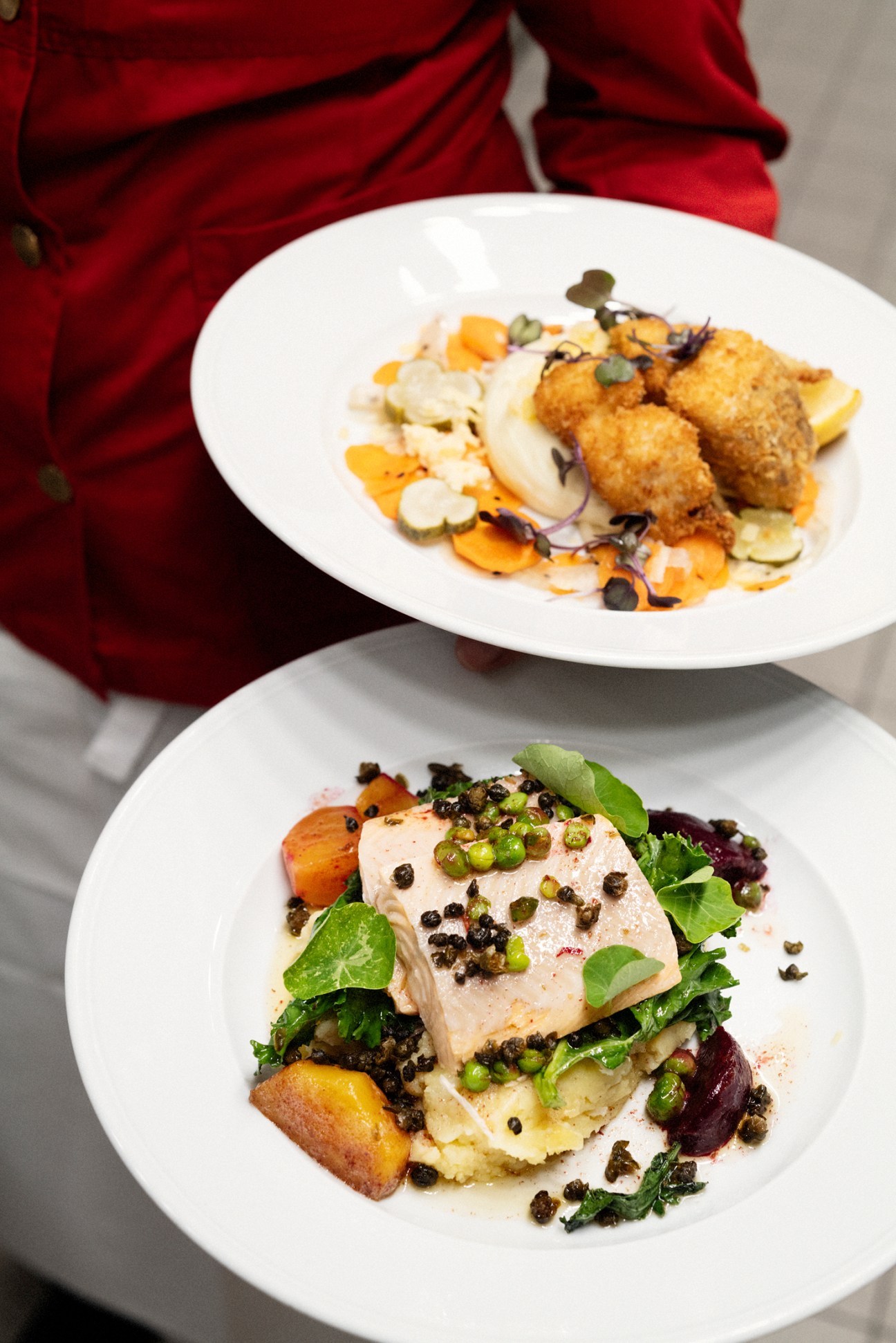
Seafood is still the speciality; Monocle sampled crayfish from Smögen on the west coast, served with radishes grown in the kitchen’s farm in northern Stockholm. Classics such as turbot with butter sauce or fresh Baltic herring caught by Sturehof’s own fishing boat are never far away. Occasionally, game hunted by the founder, PG Nilsson (whose restaurant group is an investor in Monocle), appears on chef Michael Larsson’s always-pleasing menu.
sturehof.com
Ember
Berlin
After stints at Copenhagen’s Noma and Berlin’s Ernst, chef Tobias Beck decided to focus on cooking on an open fire. After a few years of pop-ups across Berlin, Ember has at last found a home on a rooftop in Kreuzberg. Reached by taking a run-down elevator in a courtyard, the space has an outdoor terrace-cum-kitchen and a glass-walled dining room with appealing views.
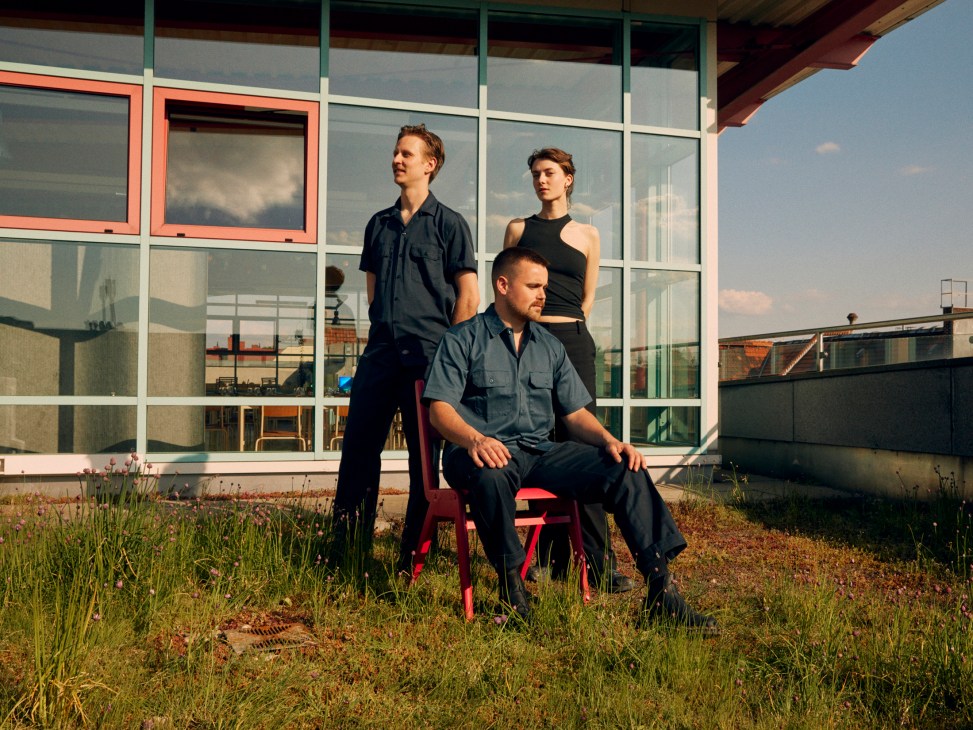

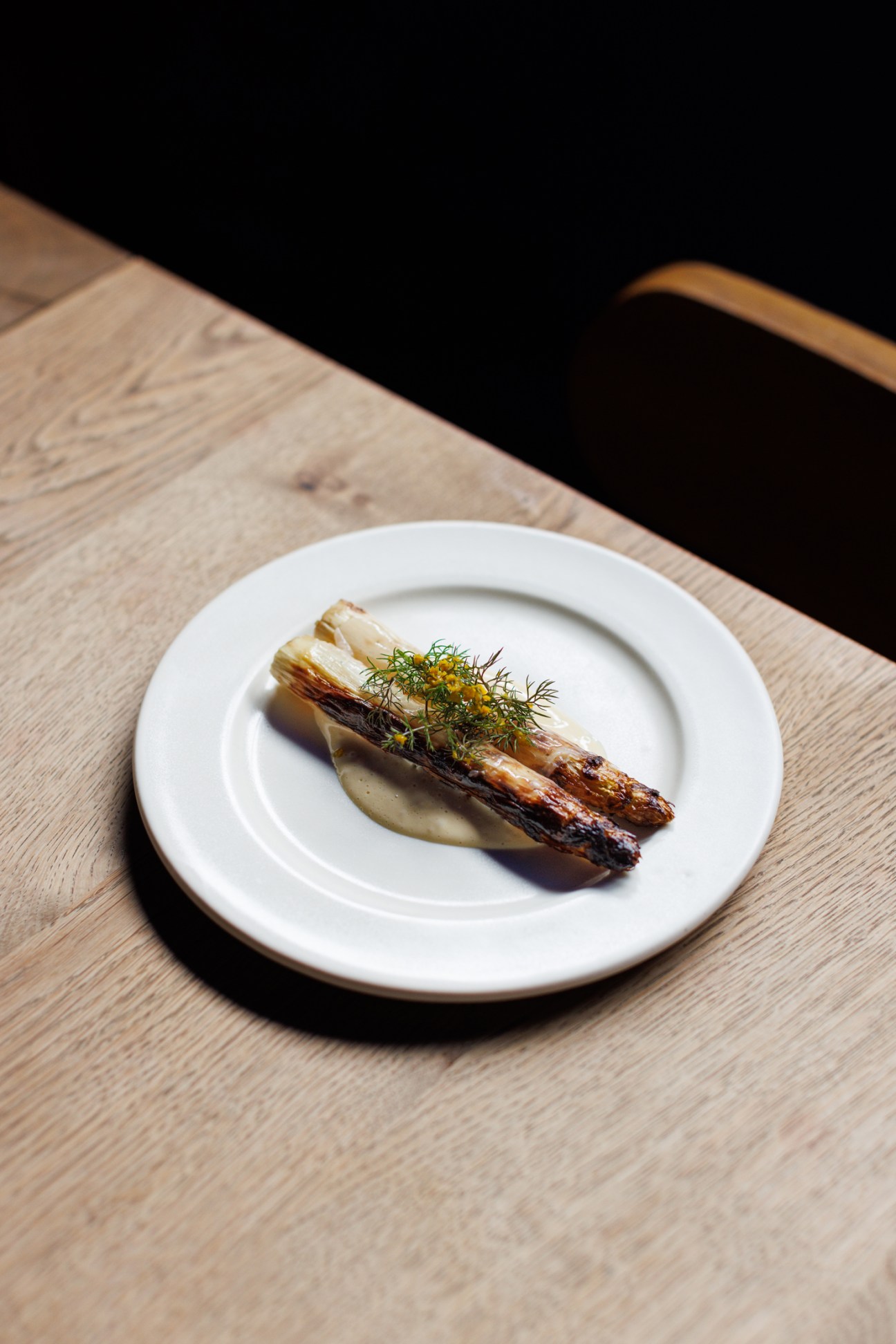
Beck’s approach to barbecuing steers clear of typical fare. “Germans love to grill but I’m trying to challenge the macho culture,” he says. Ember’s four-course tasting menu features dishes such as young asparagus with herb-packed sauce, slow-cooked lamb tacos and flaky wood-fired mackerel, all washed down by crisp natural wine.
ember-ofc.com
’Swill’ magazine
Sydney
The second issue of Sydney-based Swill magazine brings to light the often overlooked moments of everyday culinary culture. “It’s about the pure joy, play and creativity that exist in the hospitality industry,” says journalist and editor Myffy Rigby, who launched the large-format quarterly in 2022 after a spell at Time Out Australia and other publications.
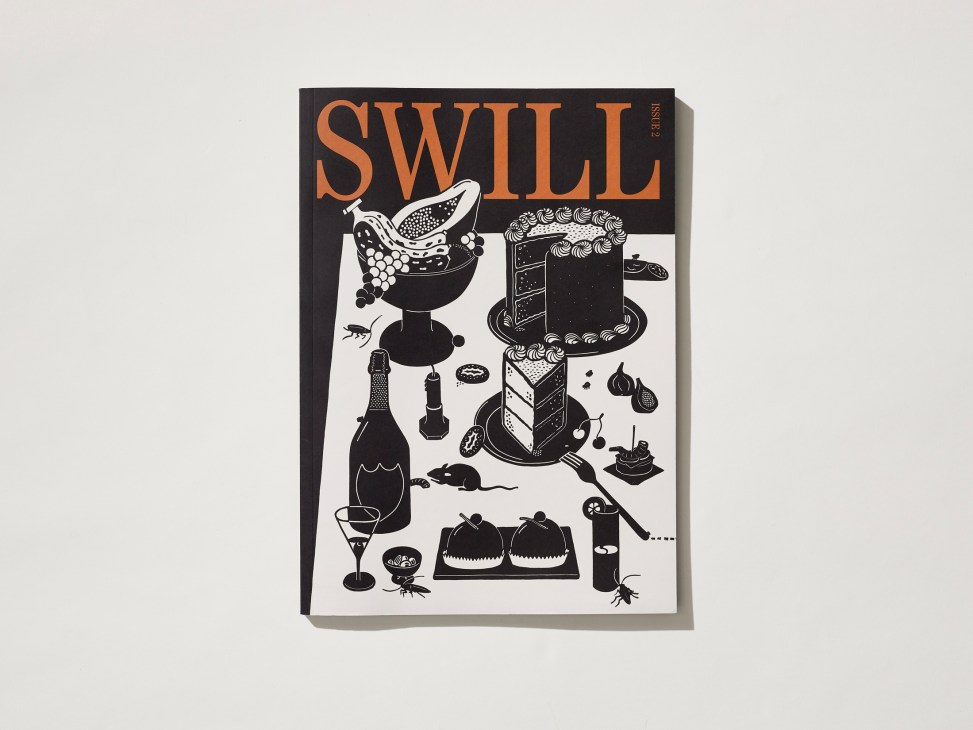
Behind the cover – an artful tableau by illustrator Allie Webb – readers will find a feature on the Mexican torta, a defence of the maligned Long Island iced tea, a fond farewell to Sydney institution Frankie’s Pizza, and plenty more besides. Look out for Issue 3, which jumps from the coast of India to a tour of Philadelphia with leading American pizzaiolo Joe Beddia. Tuck in.
swillhouse.com
Recipe
Pea and crab crostini
“I can’t wait to serve this refreshing snack to guests,” says our Swiss chef Ralph Schelling. “Some lightly toasted chilli flakes or a little honey will also go well with this dish and you can substitute the crème fraîche with fresh ricotta, as I did recently.”
- Ingredients
- 150g fresh peas
- 1 fresh baguette
- Olive oil, to drizzle, plus extra for serving
- 50g white crab meat
- 5g tarragon, finely chopped
- Black pepper, freshly ground
- 1 lemon, zest and juice
- 4 tbsps crème fraîche
- Chilli flakes, to taste

1.
Method
Cook the peas in boiling salted water for 4 minutes. Drain, cool under cold water and then drain again.
2.
Cut the baguette into eight slices. Place on a baking sheet, drizzle with a little olive oil and toss to coat. Grill for 2 minutes on each side. Set aside to cool.
3.
Place the peas in a bowl and mash with a fork. Mix in the crab meat, tarragon, black pepper and a drizzle of olive oil, as well as the zest and juice of half of the lemon.
4.
Spread a little crème fraîche on every toasted slice of baguette. Top each with a dollop of the crab meat mixture.
5.
Serve with more grated lemon zest, chilli flakes and a drizzle of olive oil.
ralphschelling.com
For more recipes and food news (plus Tyler Brûlé and Andrew Tuck’s columns) sign up to The Monocle Minute newsletter today.
IMAGES: José Cuevas, Valentin Cheli
Magnetic fields
Rock stars find many ways to part with their wealth but Takeshi Kobayashi has always taken a philanthropic view with his spending. A successful musician in his own right, as well as the producer for multimillion-selling Japanese band Mr Children, Kobayashi might have gone on a lavish spending spree. Instead, in 2003, he joined with other musicians to co-found AP Bank, an investment initiative to help businesses that were trying to move in a sustainable direction. Next he opened an organic restaurant, Kurkku Kitchen, in Harajuku. Then he bought a slice of land in Chiba and in 2010 turned it into an organic farm. Gradually, that rural idyll – barely an hour’s drive from central Tokyo – has become a sustainable food mecca and, as of last year, a hotel.
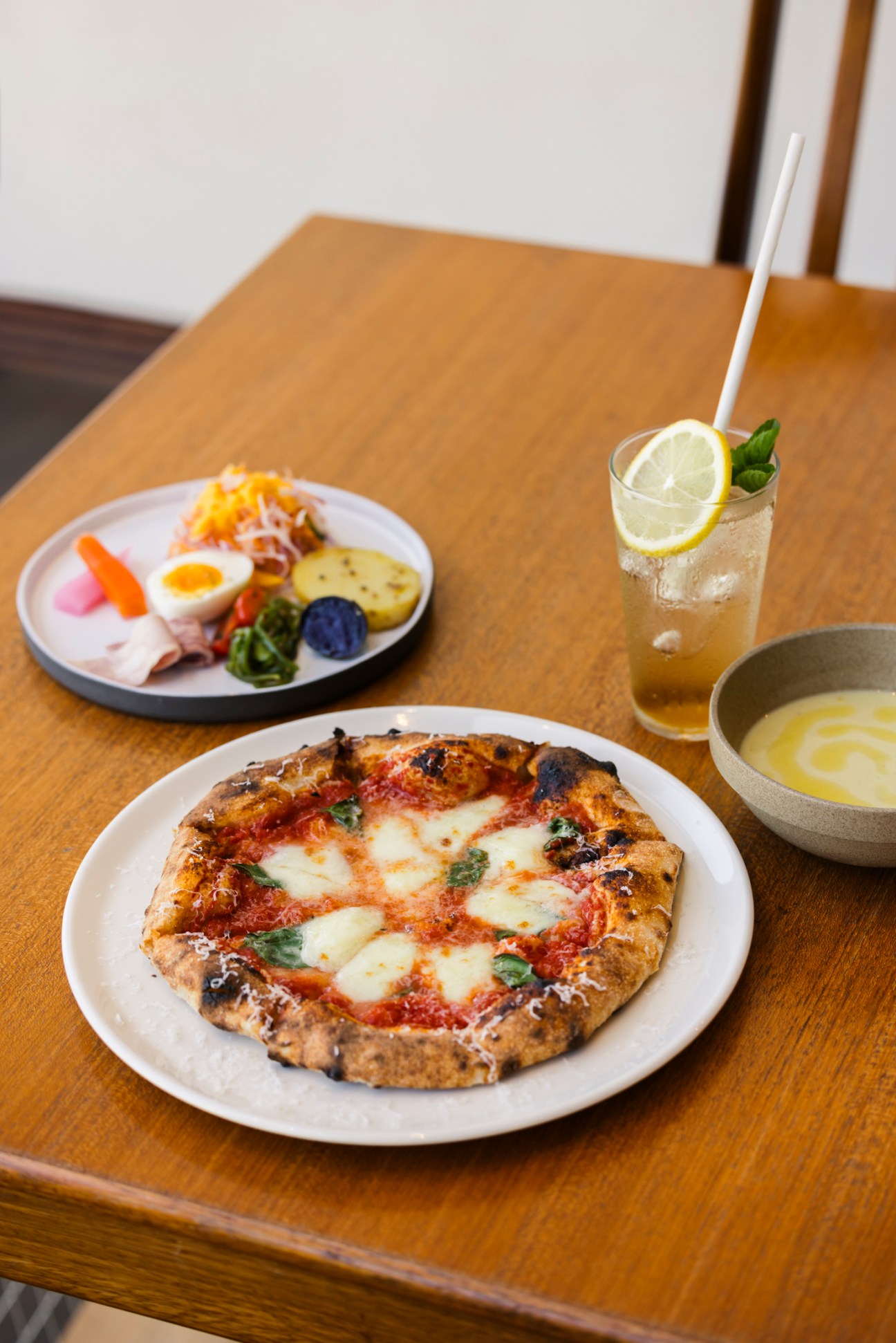
Kurkku Fields (kurkku means “cucumber” in Finnish) occupies a rolling patch of 30 hectares. Today it’s a model of organic agriculture practice, with rows of carefully tended vegetables, about 900 chickens roaming freely in their own quarters and water buffalo, dairy cows, goats and sheep. It’s not for show either. The produce is used in the restaurant, which serves vitamin-packed lunches and woodfired pizzas to a full house. The ice cream stand sells fluffed-up soft ices made with the cows’ milk; the milk from the water buffalo, sheep and goats is used for cheeses that turn up in the shop, bakery and restaurant.
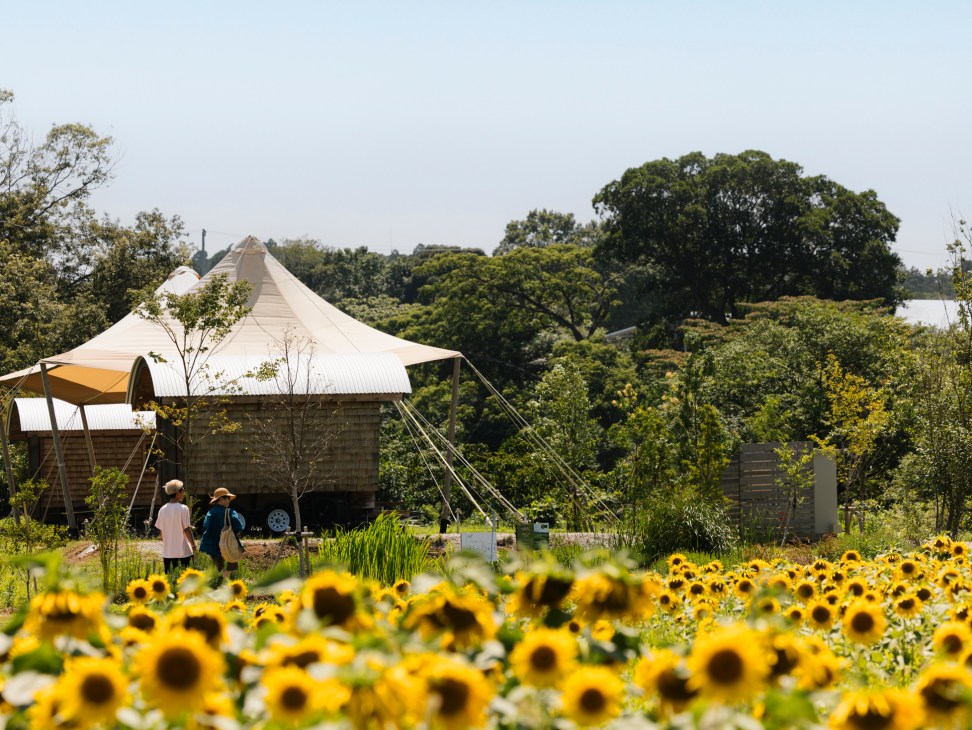
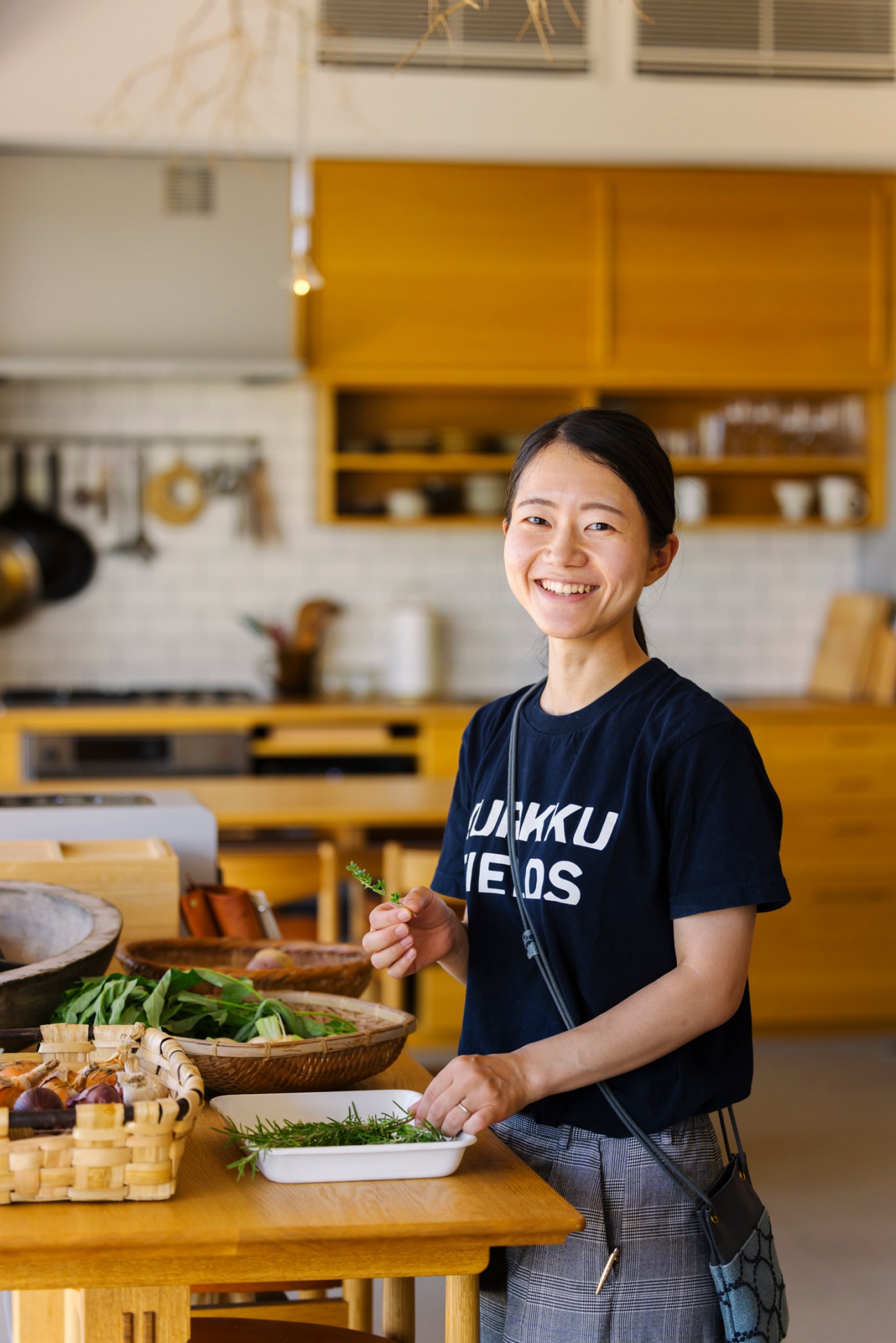
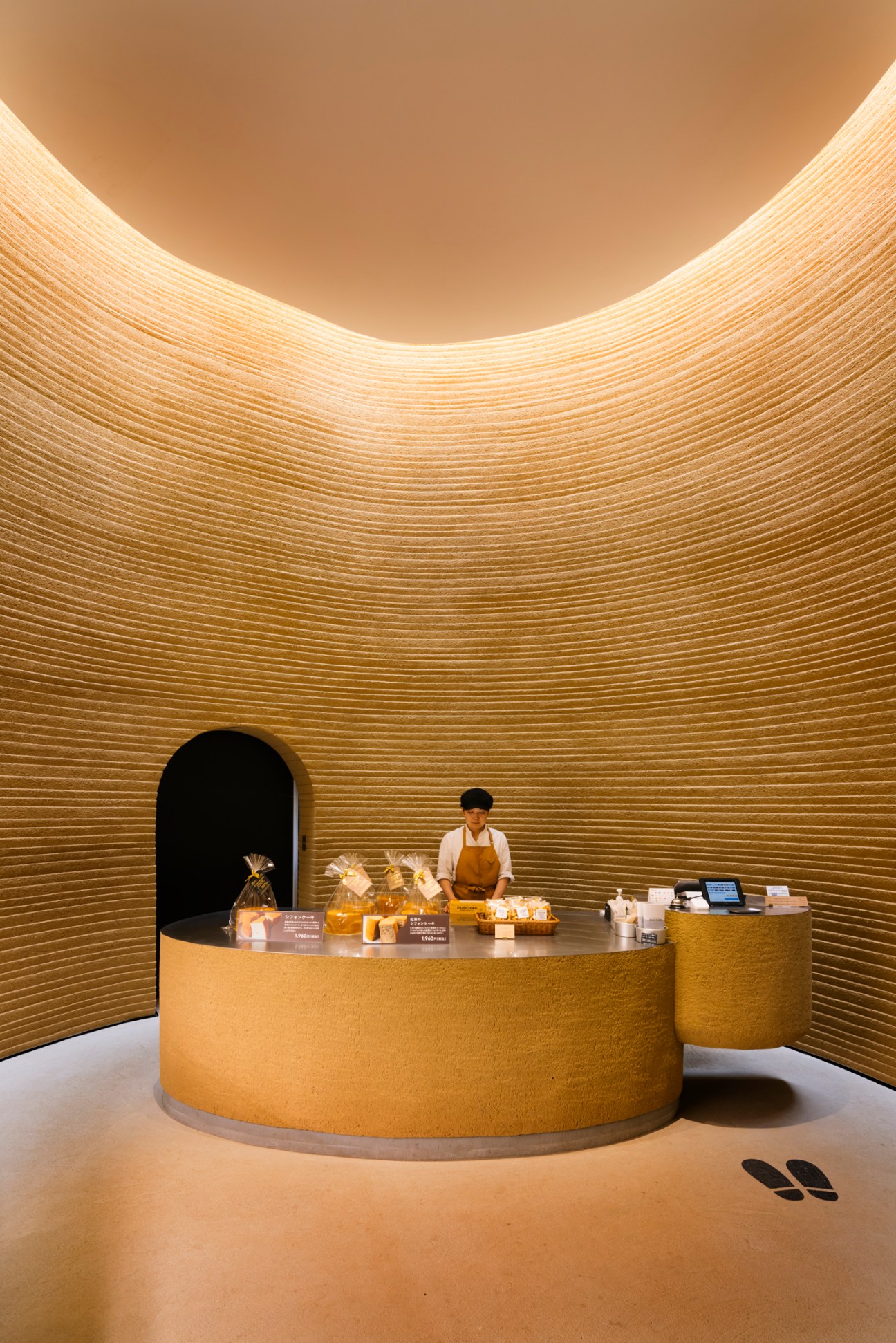
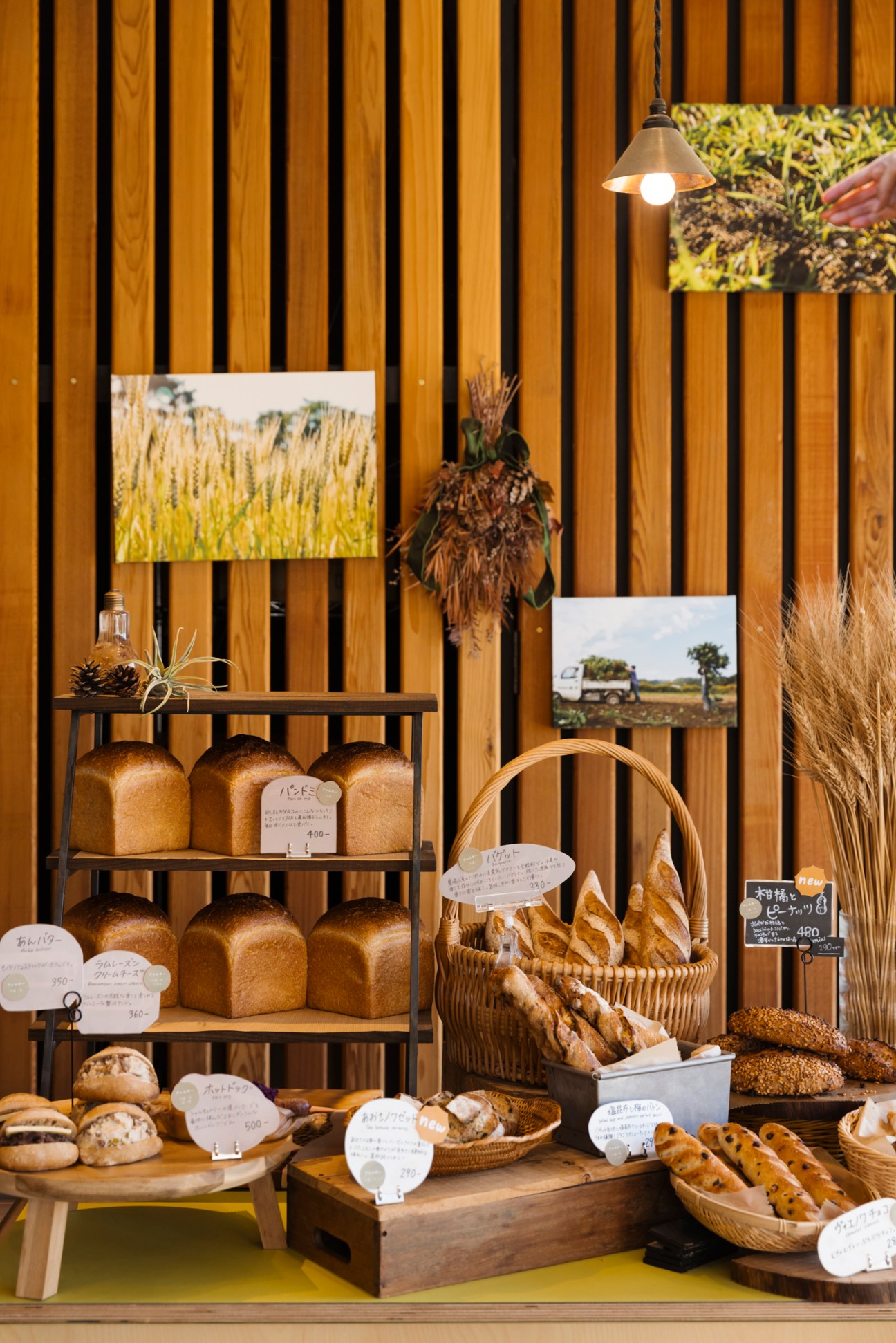
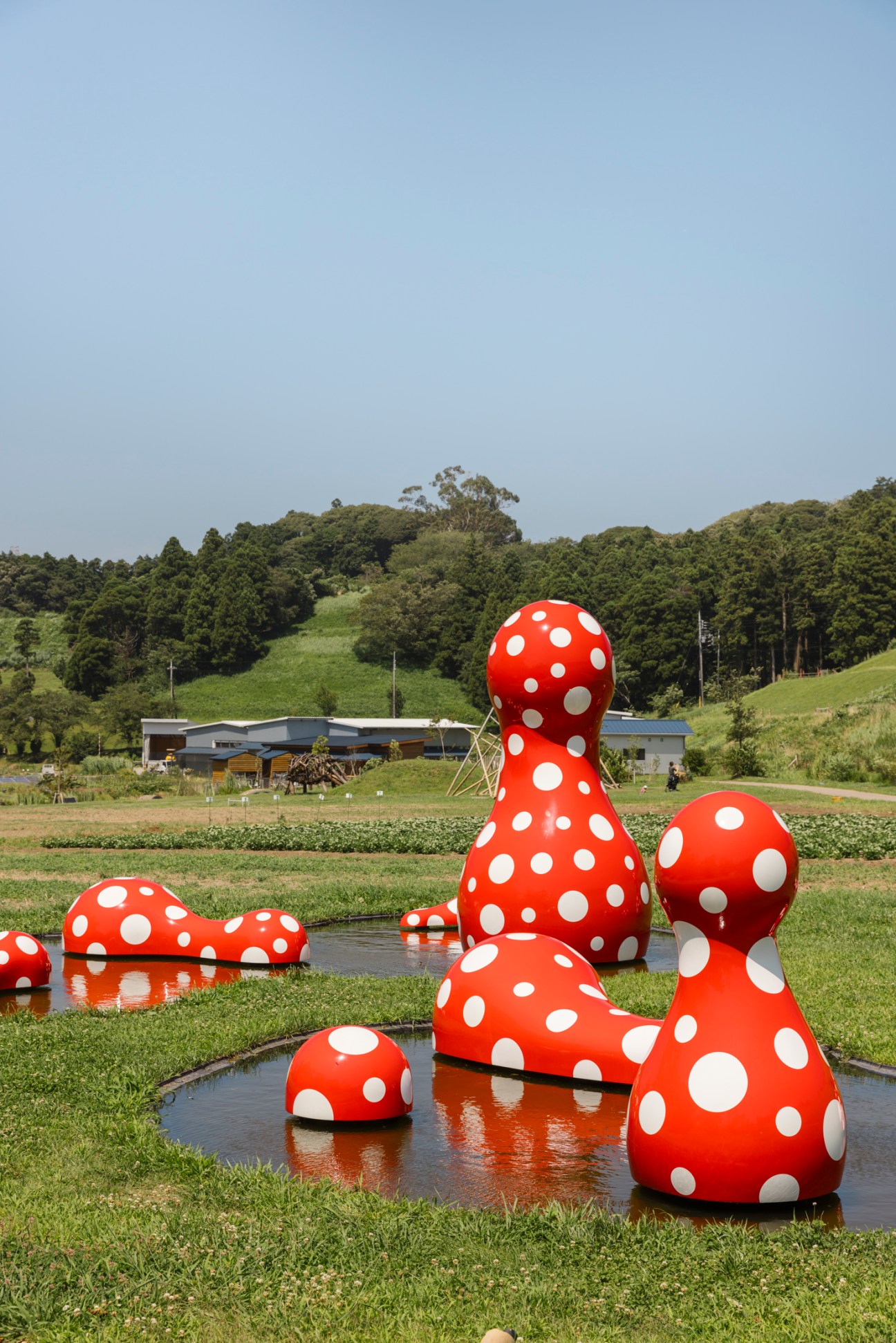
Visitors can come just for the day, enjoy the views and stroll around the grounds. Music (composed by Kobayashi, naturally) wafts through the air and contemporary art pops up in surprising corners; one of Yayoi Kusama’s famed Infinity Mirrors sits in a grassy nook. There’s a farm shop selling everything from Kurkku merchandise to fresh vegetables, and a deli serving home-cured ham and burgers made from locally hunted boars (generally seen as a nuisance by farmers in Japan). Chiffon sponge cakes are baked and sold in a dedicated building, with the eggs for them and for the softest crème caramel coming from the farm chickens.
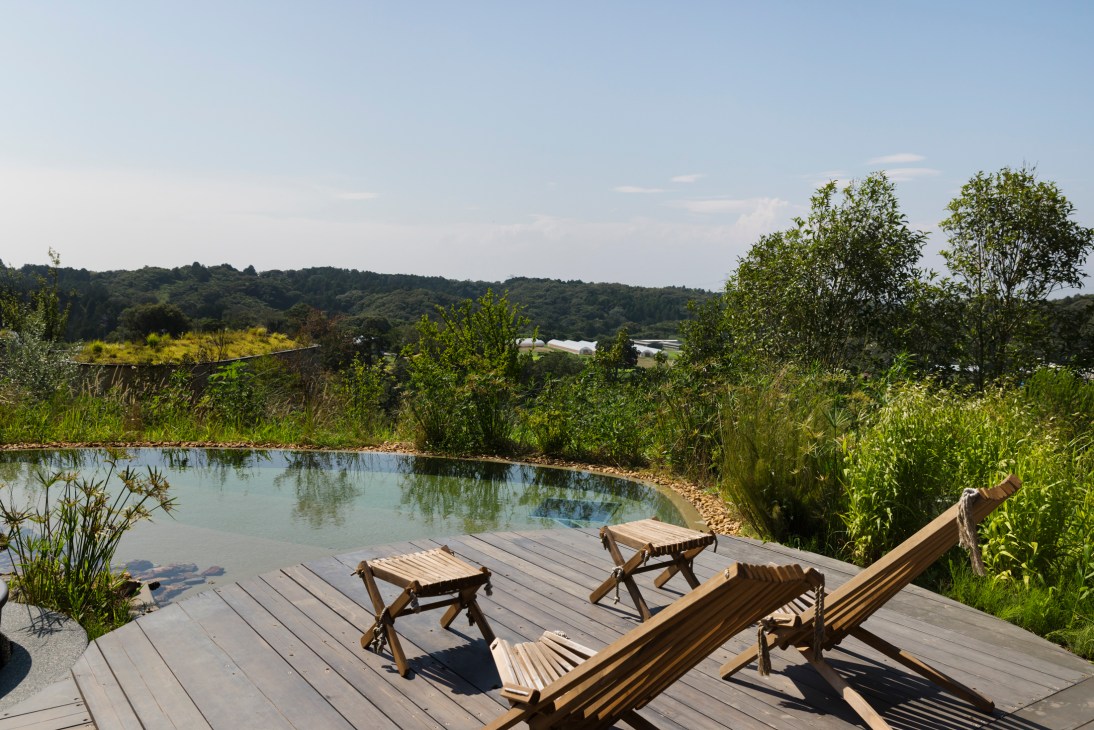
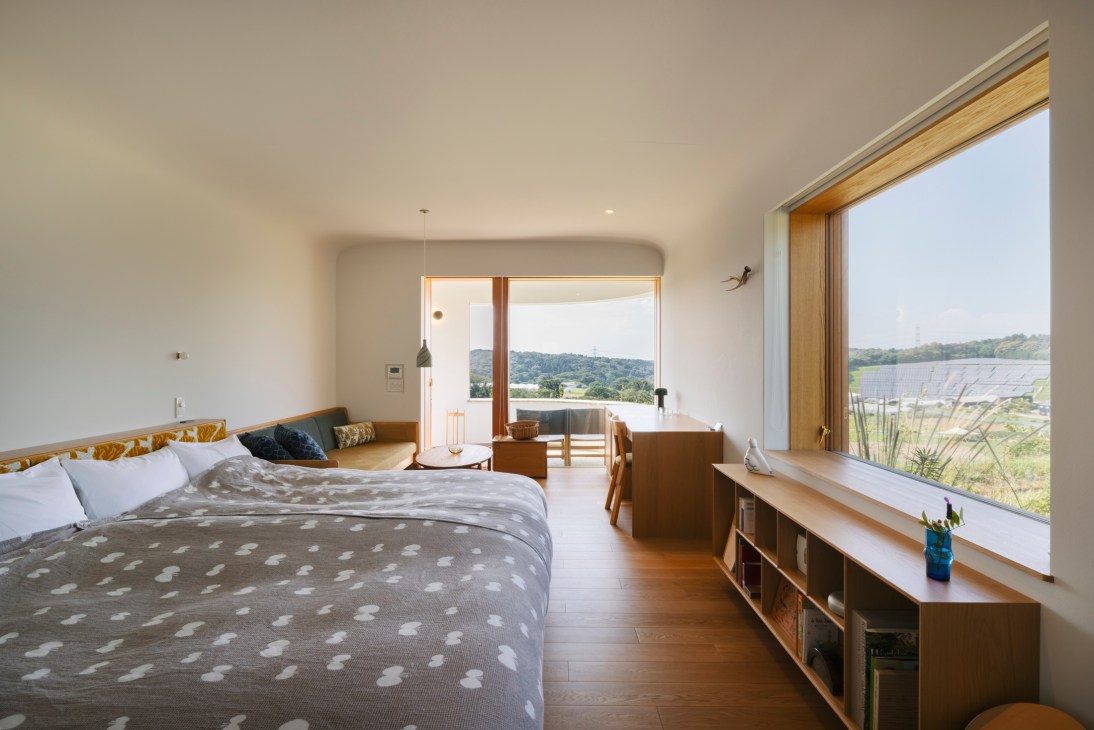
Those who want to stay can opt for one of the rustic wooden huts or this year’s hotel addition, Cocoon. Comprising seven freestanding rooms, a sauna and plunge pool in a fragrant garden planted with herbs and trees, Cocoon is the work of Akira Minagawa, whose Scandinavian-sounding brand Minä Perhonen encompasses fashion, textiles and interiors.
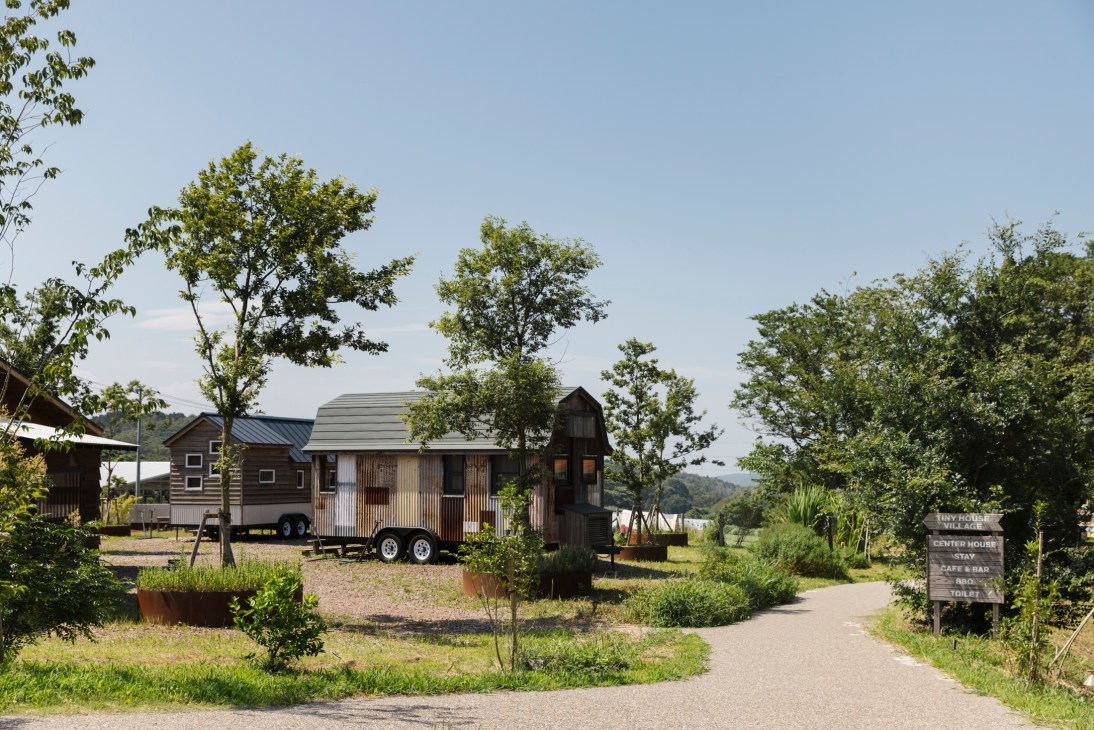
“We already had an accommodation facility called Tiny House Village on the grounds,” says Kobayashi. “The concept for that was learning that a small space could be enough, which was a first step for people to appreciate this place. But I wanted Cocoon to be something different: a place for deep thinking, where people could spend the night with a sense of floating in the middle of nature. So I talked to Minagawa-san; his products are wonderful and I had a gut feeling that there would be a good synergy. I asked him to take care of the entire concept.”
“I was really happy when I received the offer,” says Minagawa. “I’d been interested in creating ‘proactive’ accommodation for a few years; a place that doesn’t offer luxury or special services but is somewhere people can have an experience that they can’t have in their daily lives, in a simple setting. This goes back to my teenage years when I was travelling as a backpacker. I would buy food at the market and cook and eat together with the other people in the dormitory I was staying at; it left a deep impression on me.”

Minagawa worked with Takato Yoshida’s Kyoto studio Ikken on the architecture; the curvy wooden pods are decorated with Ikken’s timber furniture along with Minä Perhonen bedspreads and cushions; the bathrooms are lit from above by a skylight in the grassy roof. All guests get to experience a 90-minute farm tour, picking their own herbs and vegetables; they can either cook their own food in the shared kitchen – some visitors relish the time to cook away from home – or enjoy a meal prepared by chef Yoshiki Yamana with charcuterie made by chef Osamu Okada (who also happens to be a hunter) and fresh cheese from Hidetoshi Takeshima. The kitchen is fully equipped and the fireplace handpainted by Minagawa.
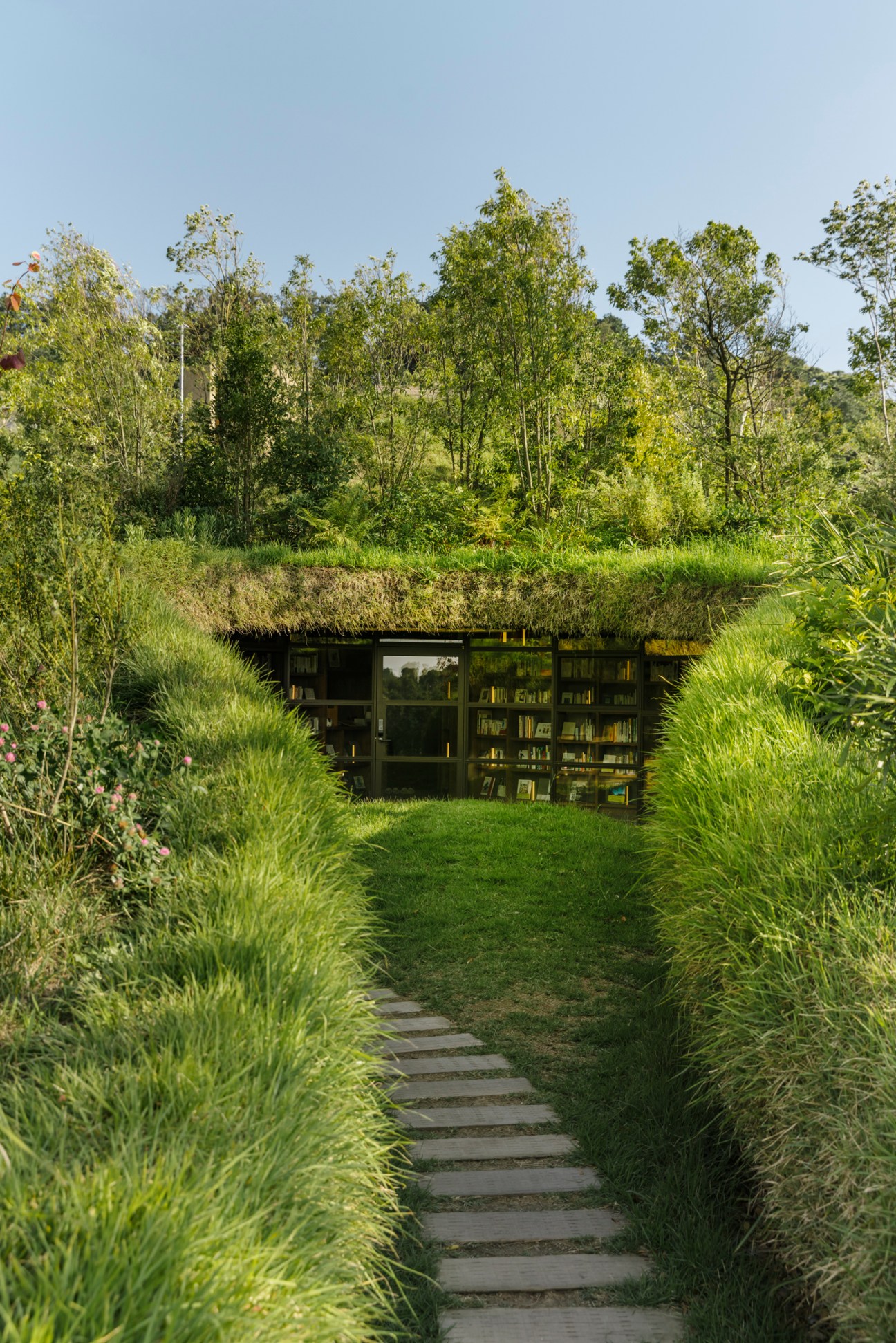
Another new opening on the site this year arrived in the form of an inspiring open-all-hours library, designed by architect Hiroshi Nakamura. Semi-submerged under a grass roof, it offers readers a cool retreat from the summer heat. The 3,000 or so books, curated by Yohei Kawakami of Book Pick Orchestra, focus on nature, farming, outer space, architecture, art and cooking, as well as novels, poems and children’s books. The hope is that people who visit Kurkku Fields will linger and have a deeper experience beyond dining.

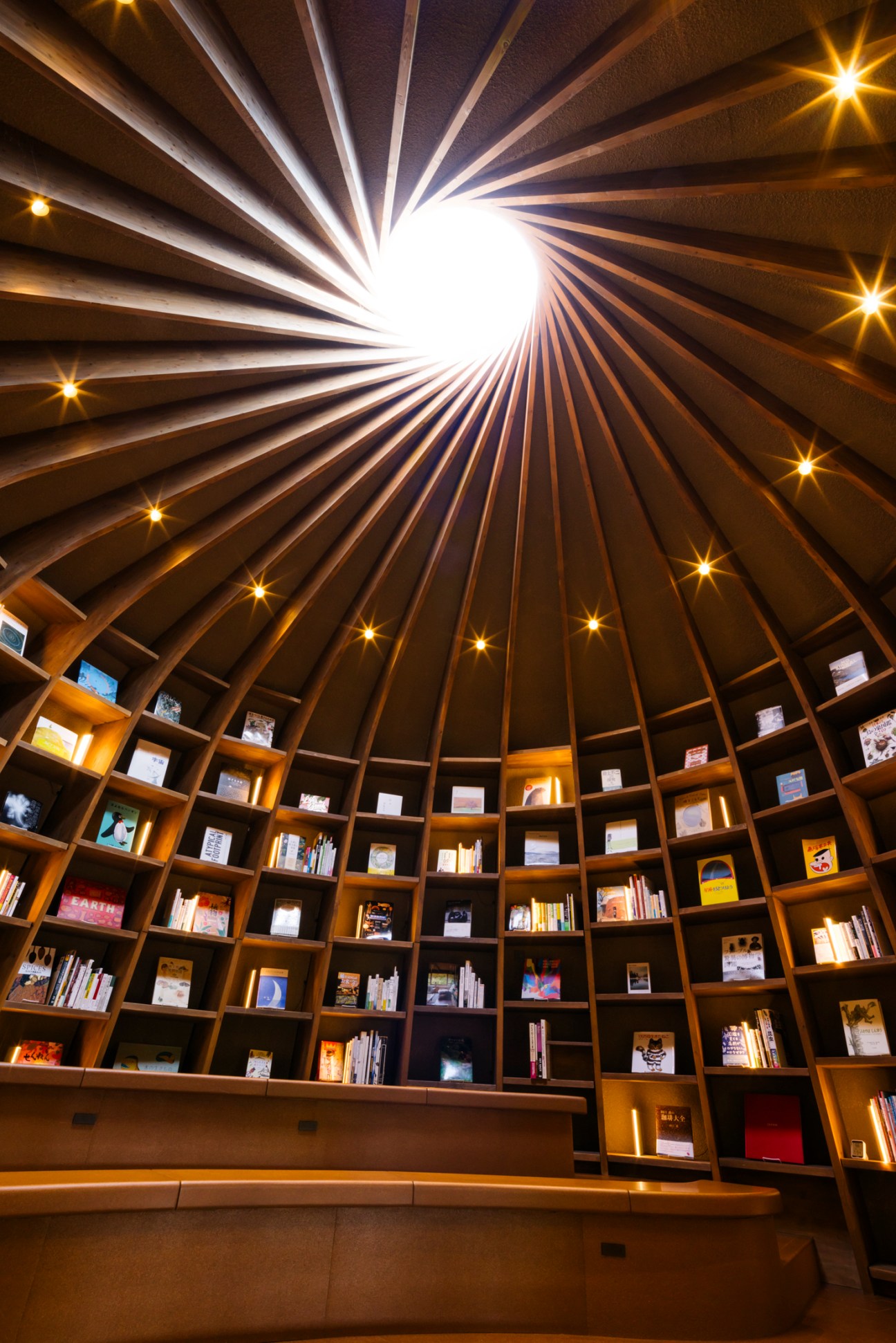
There is much to be gained from a stay at Kurkku Fields but the message never overshadows the simple pleasure of spending time in the countryside so close to Tokyo. For 64-year-old Kobayashi, the project points to his legacy. As he has said, “In the past few years, I have come to realise that the mission of Kurkku is to contribute to the realisation of a sustainable society. It’s something that has to continue into the future.”
Plan your Fields trip
It should take just less than an hour to make the 60km journey by car from central Tokyo to Kisarazu in Chiba, where Kurkku Fields is to be found. It is a scenic drive too: you’ll cross right over Tokyo Bay. Alternatively, take a Keisei bus from Tokyo Station to Kazusa ARC, then pick up a local bus that will take you straight to Kurkku Fields Iriguchi (Kurkku Fields Entrance).