Issues
Four to adore
Q&A
Amina Belouizdad Porter
CEO, PS
Los Angeles-based PS aims to bring a little private-jet panache to the airport experience with a membership model. Based at LAX since 2017 – and formerly called The Private Suite – this year it’s opening a space in Atlanta and is restoring the mid-century Pan Am terminal at Miami International. At the controls is its CEO, Amina Belouizdad Porter.

How does PS work?
If you’re taking a commercial flight, instead of going to the main airport, you arrive at a standalone PS terminal where we check you in and take your luggage. Then you can either head to one of our private suites, each with a well-stocked pantry, or to our salon, which is more social and like a members’ club centred around a bar. At boarding, we take you through our own security and then a BMW will drive you across the airfield to your flight.
What are you planning in Miami?
We’re restoring what was once Pan Am’s regional HQ and will open a terminal there by early 2025. The original, nicknamed “the Taj Mahal” was inspired by the US embassy in New Delhi. Pan Am epitomised the luxury and glamour we associate with the golden age of travel.
What is the future of business travel?
Business has blurred with leisure now we can work from anywhere but the bar is set a lot higher: I need to be able to get on a call before my flight; I need a workspace but also respite. PS is certainly one solution.
reserveps.com
Cruiser electric bike
Cowboy
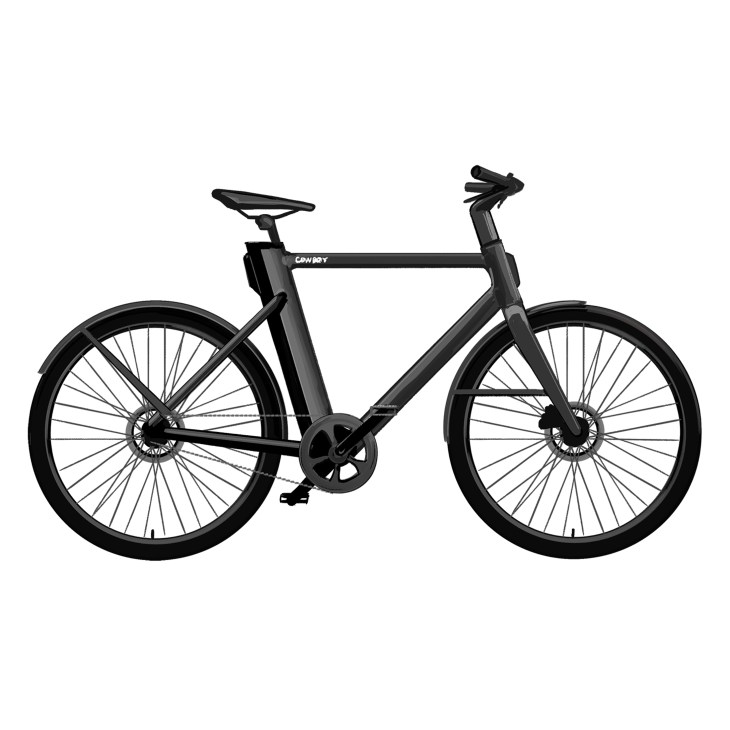
Getting out there is easier on an e-bike, with a battery that adds to the effort you put into pedalling. The latest two-wheeled wonders hide their battery subtly, rather than just placing it under the luggage rack. The newest model from Belgian company Cowboy simply slides it into the back of the frame, which has a rear light built in.
Unlike some, the battery is removable, which means you don’t have to drag the whole bike indoors or – applause please, apartment-dwelling riders – upstairs to charge it. Mind you, the Cruiser only weighs just over 19kg so it’s lighter than a lot of pedal-assist bikes. It also offers a more upright riding position than previous models, the result being an even more relaxed experience, helped by curved handlebars and a wider saddle.
cowboy.com
WF-1000XM5 earphones
Sony

If you find yourself working in lively places, headphones with active noise-cancelling (ANC) allow you to concentrate better, or at the very least hear every note as it was intended. The received wisdom is that heavier earbuds or over-ear cans make for the best ANC. Yet Sony’s latest in-ears are lightweight and 25 per cent smaller than their predecessor but block out noise brilliantly. Audio quality is exemplary and advanced elements such as noise reduction mean that you can make that work call from even the least business-like environments.
sony.com
Galaxy Watch6 Classic
Samsung

Samsung’s new wearable has a cool extra compared with other smartwatches: the bezel around the circular display rotates, letting you scroll through menus, for instance. It’s satisfying to use and makes the smartwatch feel more analogue. Samsung has made the display noticeably bigger without changing the overall dimensions of the watch, and there are now more faces to choose from. There’s a new processor on board too, which means that apps open faster and the overall experience is smoother. The new design also includes a larger battery.
samsung.com
Pixel Fold
Google

The problem with folding phones is that they open up to a display that’s almost square. There’s a reason why nobody has ever built a square tablet. However, Google’s own-brand phone has a wider display when folded, so that when it’s opened it has a rectangular shape that’s much more useful. It also has a 5.8in front display that is big enough to work well when closed. The inside screen (7.6in) has the visible crease common to folding phones but this almost vanishes when the display is on. The build quality is excellent, though folding displays still feel slightly fragile.
store.google.com
Wheels of fortune
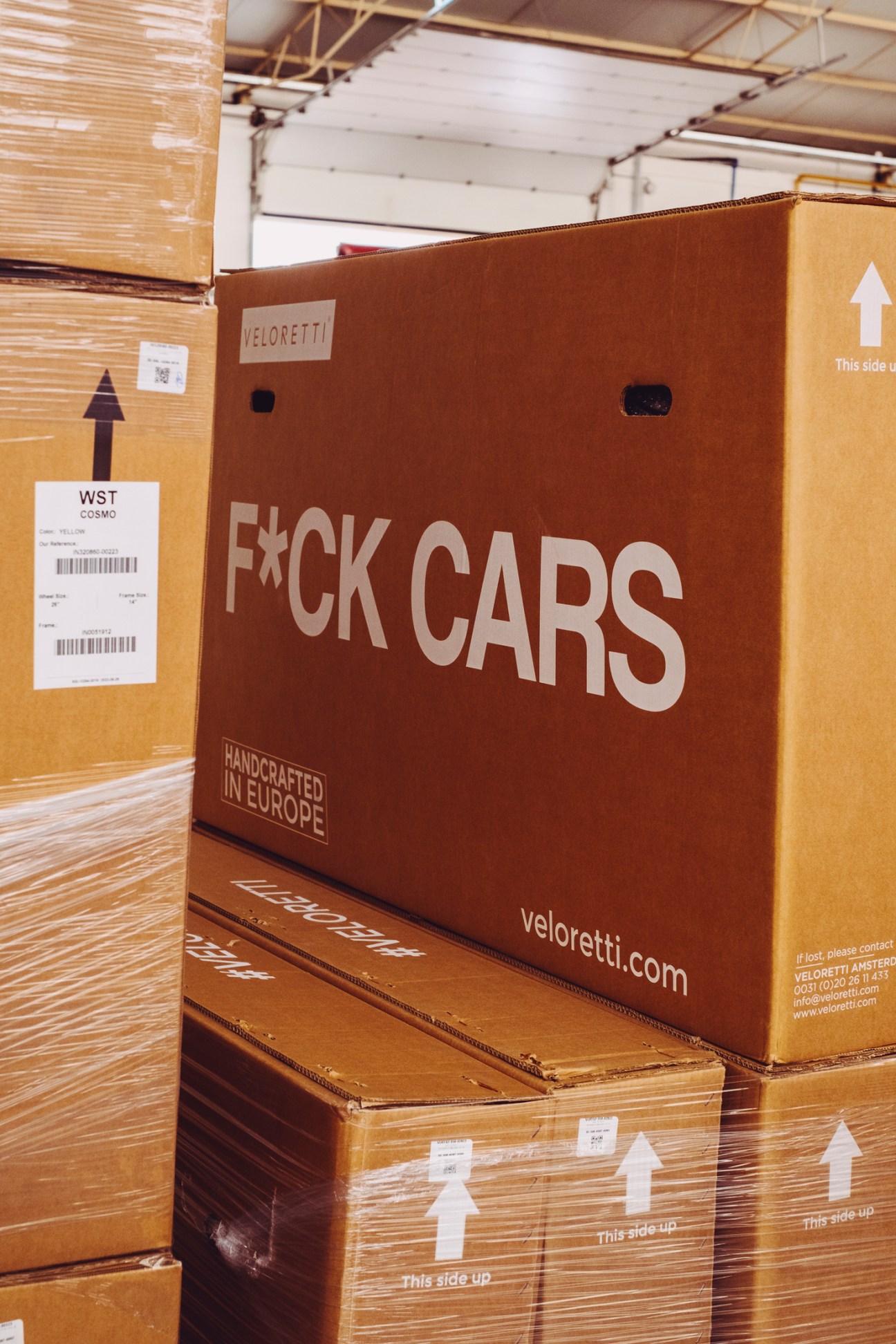
At Incycles, a bicycle manufacturer and assembly plant, sleek cream-coloured Veloretti e-bikes are waiting to be packed. The frames have been painted, the brake cables, wheels and tyres attached, and now they can be placed into large cardboard boxes printed with the slogan “F*ck Cars”. It’s a phrase that, apparently, resonates in the Netherlands, where Veloretti is based and almost a quarter of people cycle every day. But it makes less sense here in Portugal, where the Incycles factory sits. You only need look at the company’s full car park to understand that this country hasn’t yet given the finger to the automobile. But Portugal is Europe’s biggest bicycle manufacturer, exporting three million bikes last year.
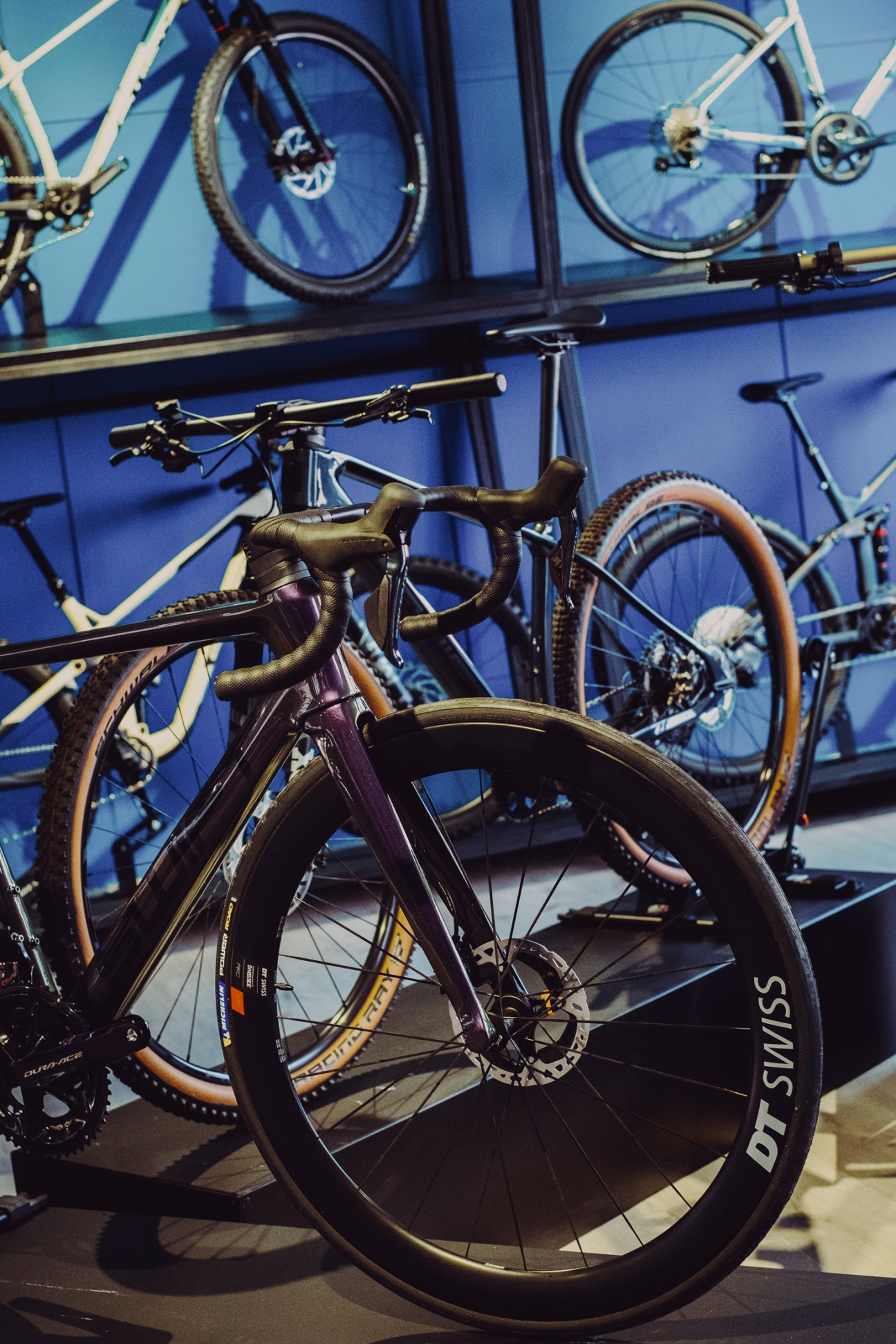
“We’ve just started to add another 10,000 sq m to the plant, which will increase our painting and logistical capacities,” says Filipe Mota, export manager at Incycles, who is giving Monocle a tour of the site in Anadia, central Portugal. Incycles started out in 2009 with its own line of bicycles but its owners soon realised that assembly was a better business model.
The company’s rapid expansion mirrors the growth of the industry in the country. In 2019, Portugal dethroned Italy as Europe’s top bicycle manufacturer, a spot it has held ever since. A year before that, Incycles won a competition to produce Uber’s European e-bikes, an investment that boosted the company’s earnings from €3m in 2018 to €65m in 2022 and increased the number of employees from 30 to 300. “We have already closed deals with clients for the year to come,” says Mota. “Companies now see us as a major player in Europe.”
Most bicycles that are made in Portugal are exported, with France and Germany being two of the biggest markets. For Incycles, though, the Dutch are the best clients and e-bikes represent 90 per cent of the company’s work today. “Since many governments started subsidising purchases, they’re in high demand right now,” says Mota.
E-bikes are just the latest in a series of innovations made to this trusty mode of transport and, as a product, bicycles also tell the story of the development of our global economy. “You can have a bike with tyres from the Czech Republic, spokes from Belgium, rims from Portugal,” says Mota. “There are 60 to 100 parts that go into a bike and they might come from as many as 15 countries.”
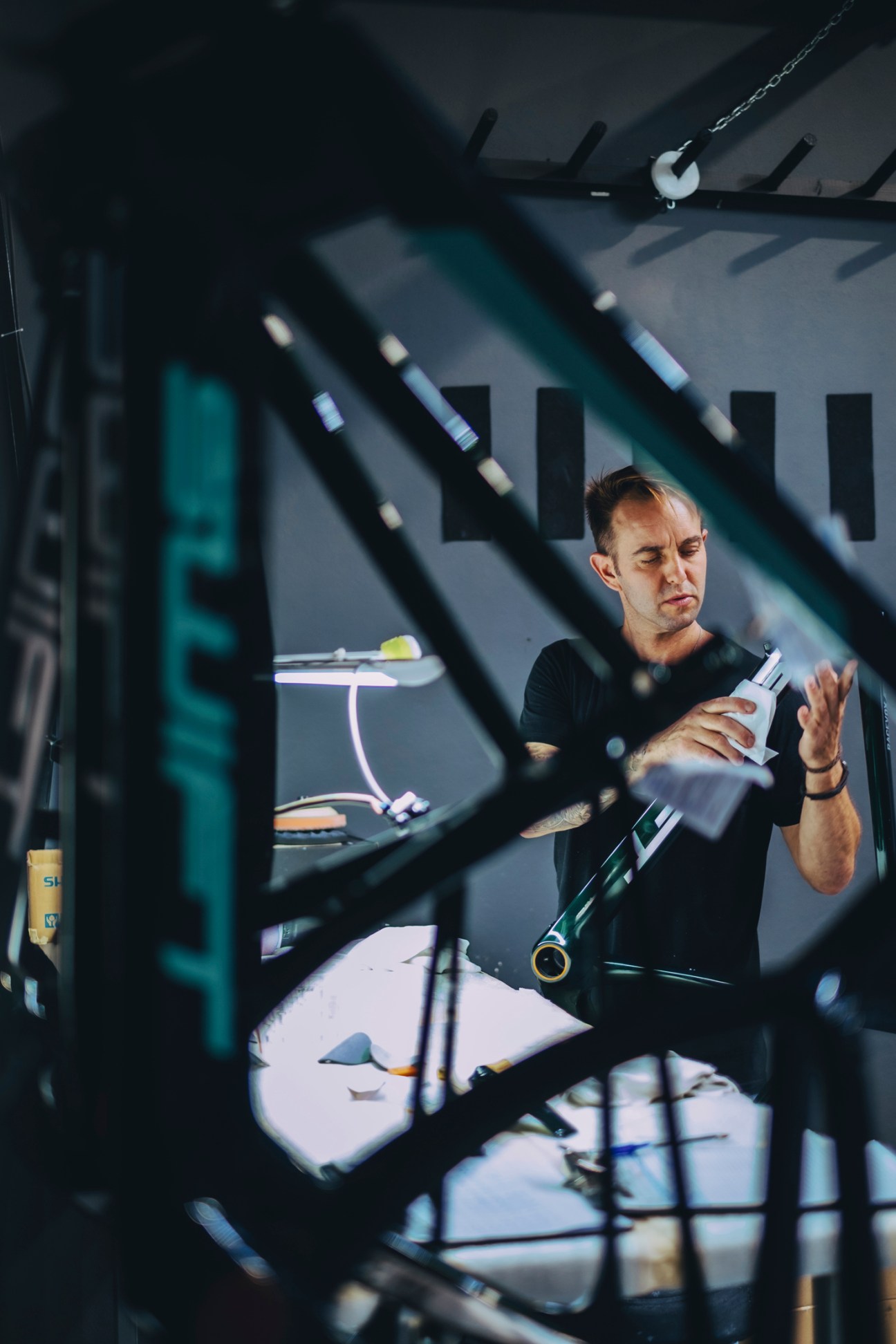
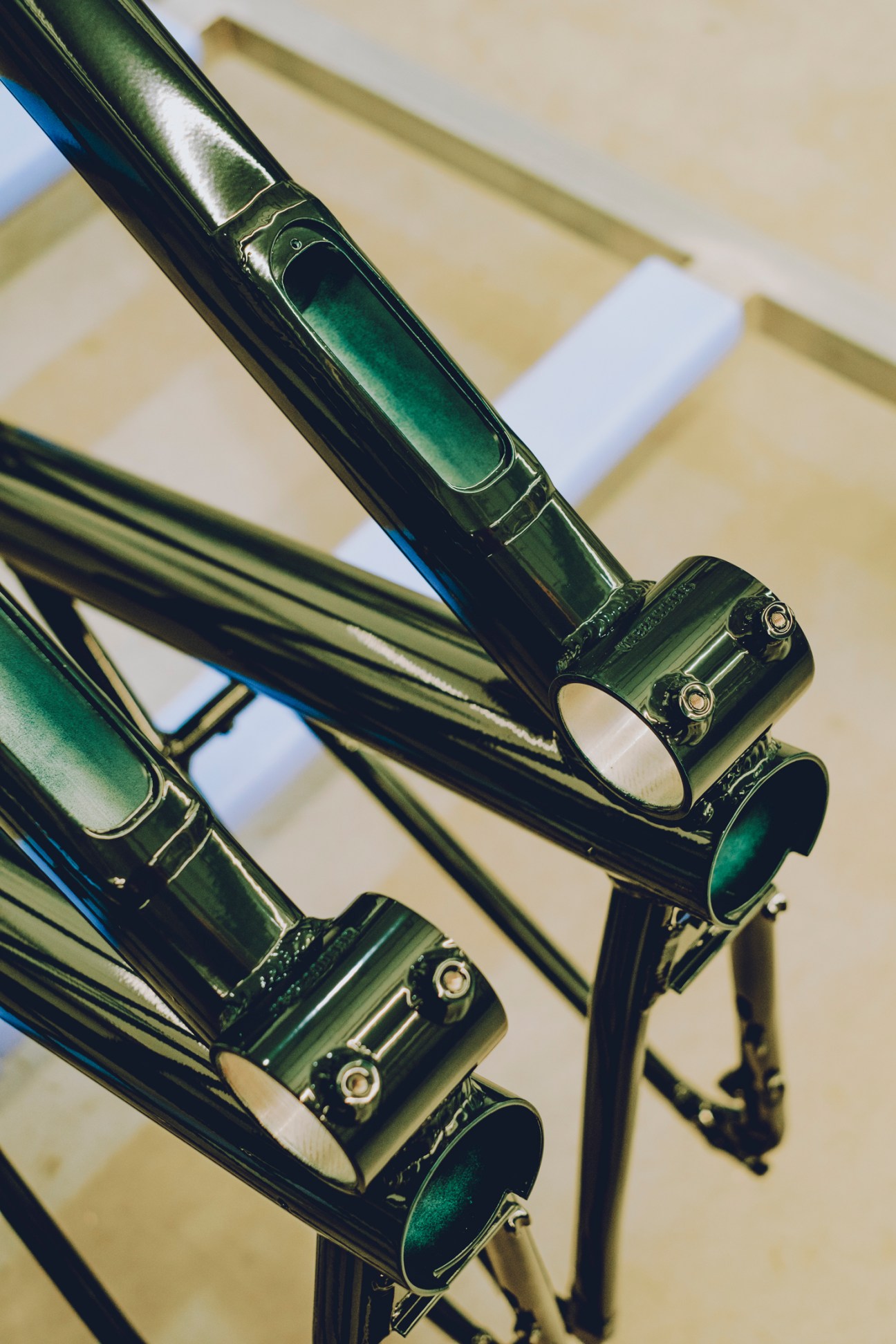
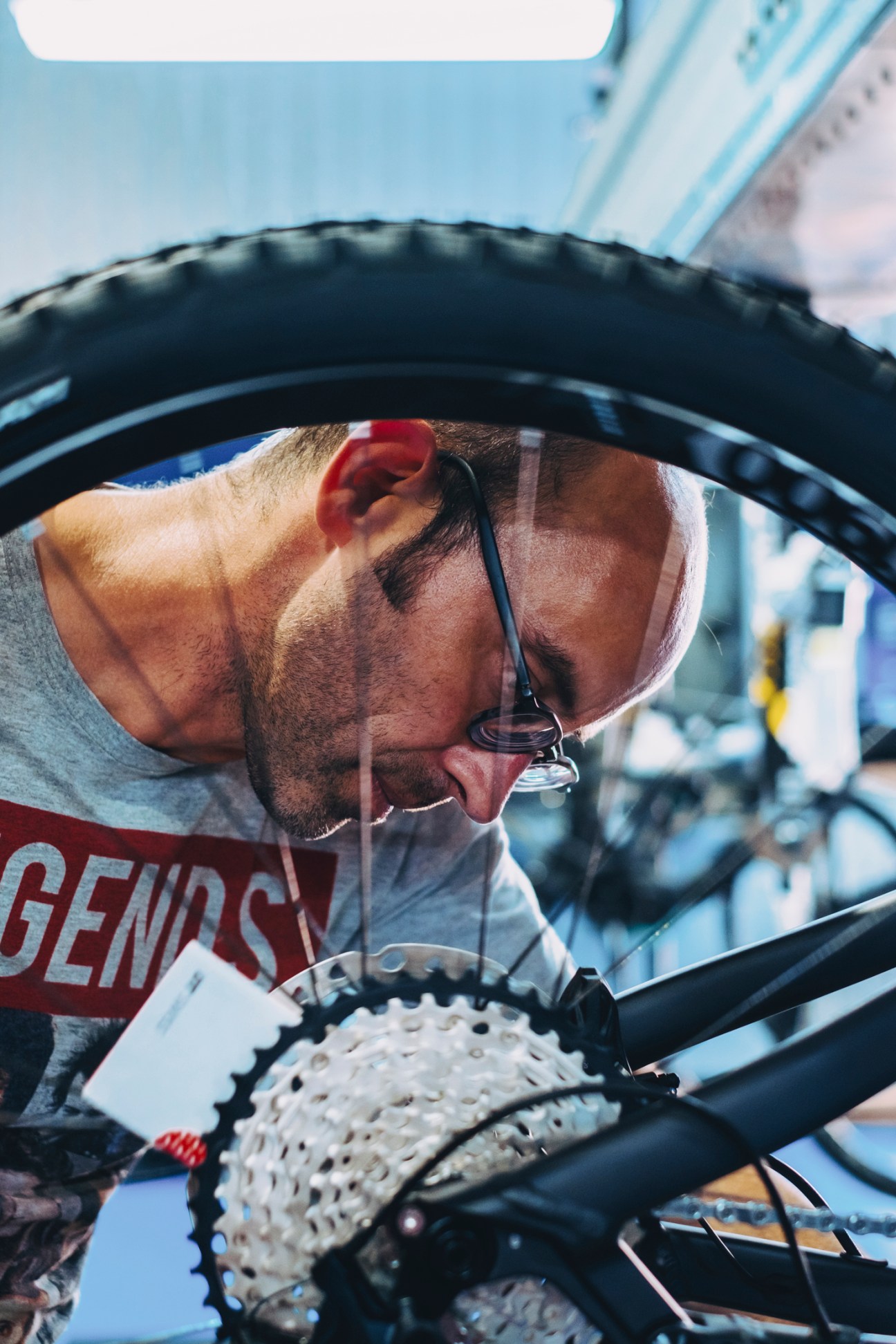
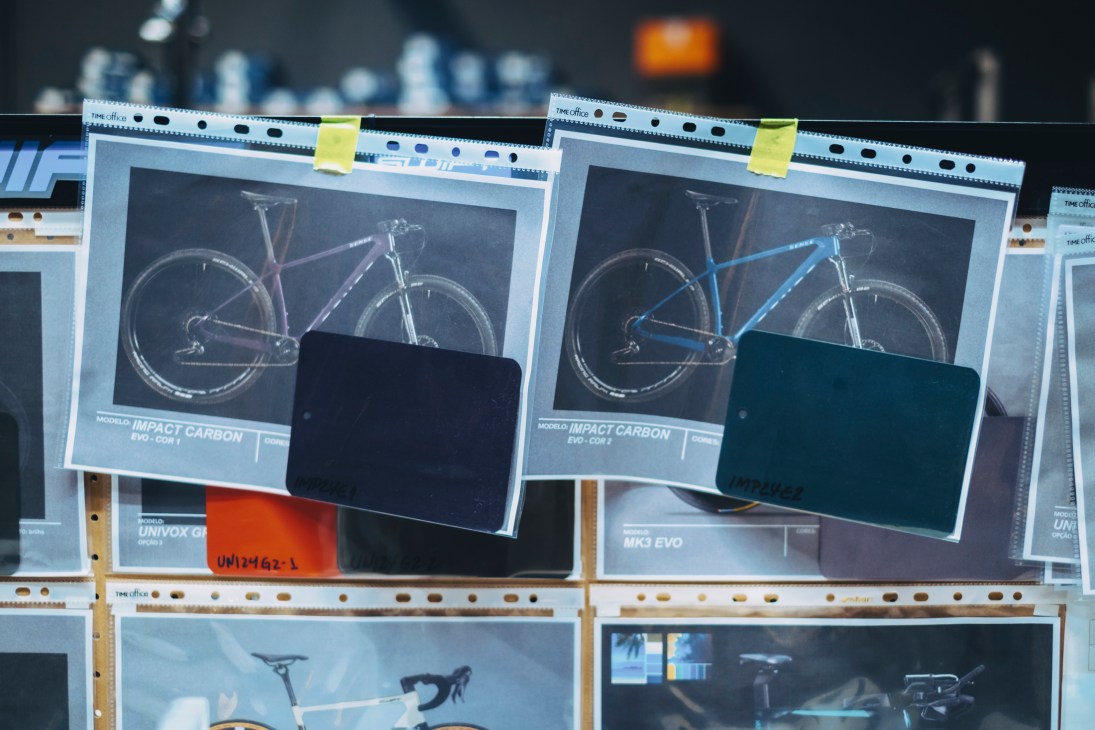
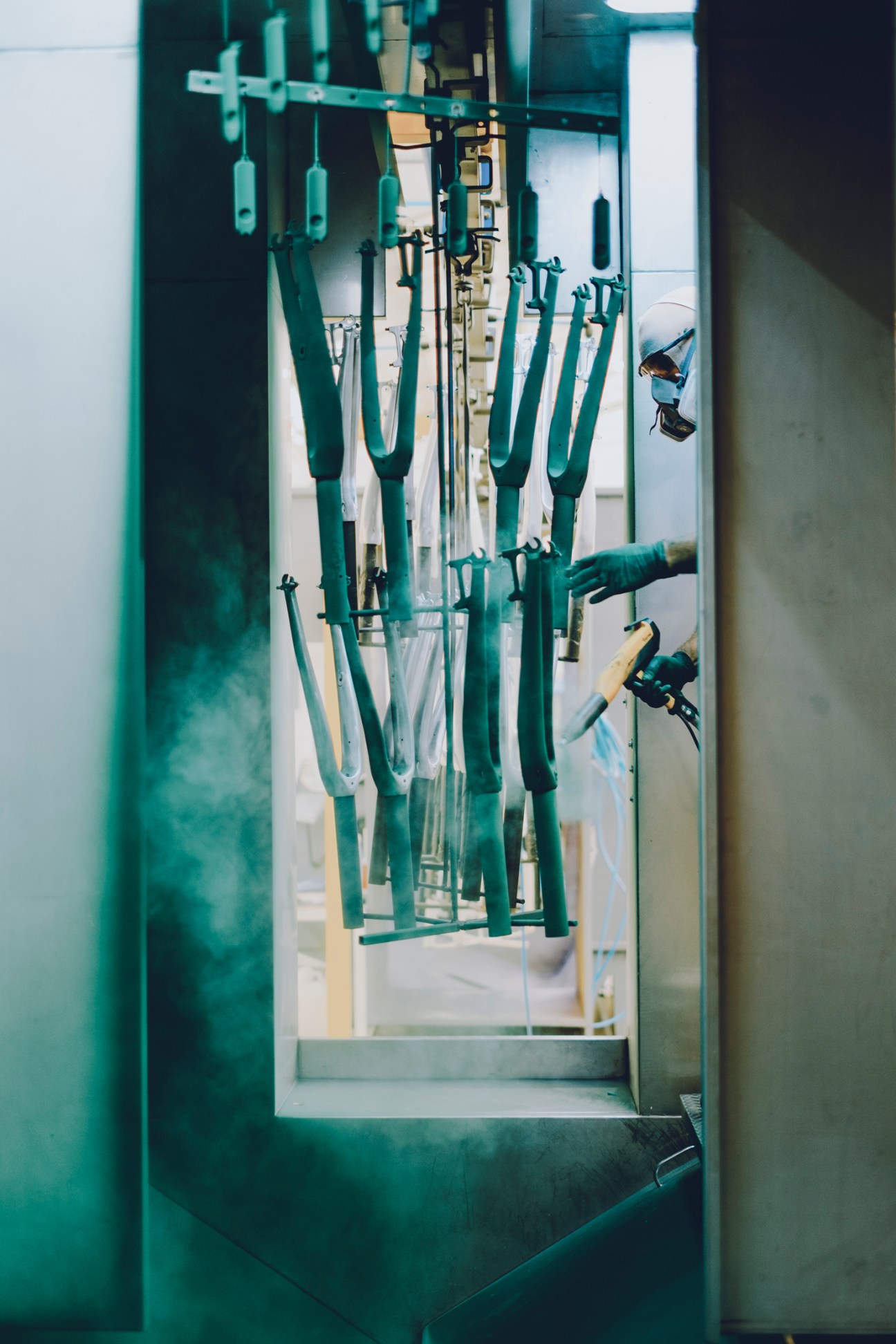
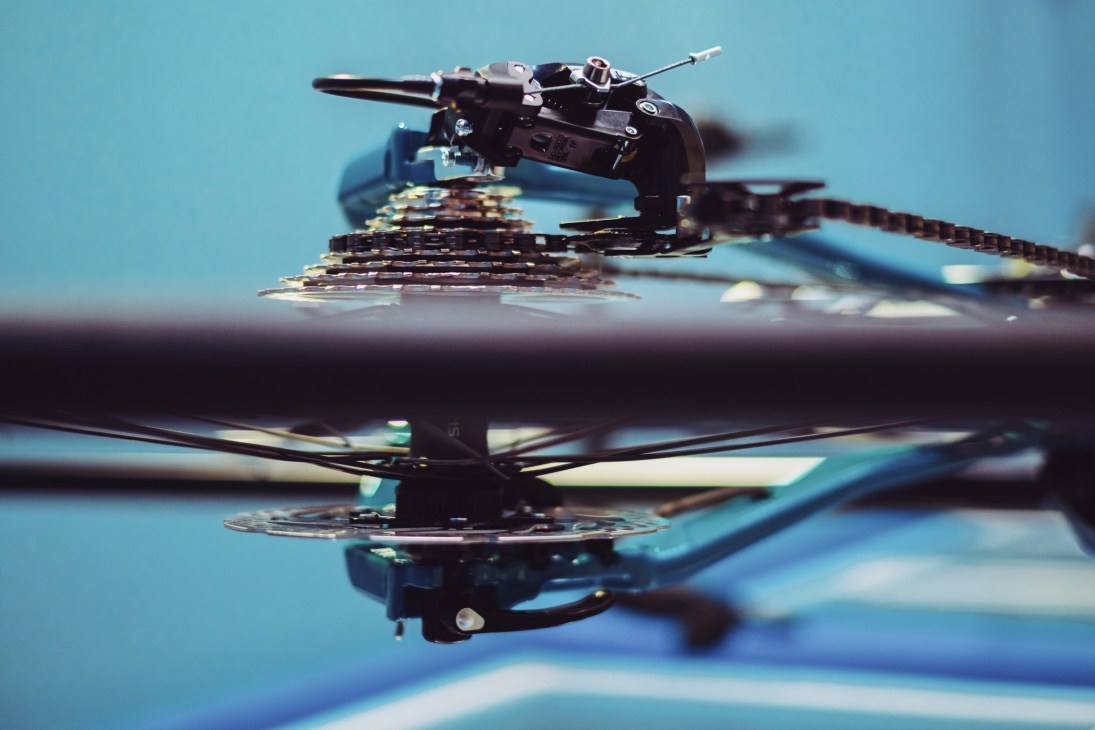
Most of these components come from Asia but there are several established – and a growing number of new – Portuguese manufacturers of parts, including Tabor with its artisanal leather saddles, and high-end frames from Carbon Team (both have factories less than an hour’s drive from Incycles). But assembly is not just about screwing a few nuts and bolts. Components are rolled onto production lines to go through numerous manual processes. Quality-control workers in white vests scour the line ready to step in at the sight of a crooked rim or chipped paint. “But it’s placing the sticker that’s the most important,” says Mota, jokingly. While it’s true that a bicycle’s brand will bestow most of its value, its place of assembly also matters. “Made in Portugal” is now seen to add status.
Portugal is now home to 80 companies in the sector that, combined, employ 8,000 people directly and a further 30,000 indirectly. Last year, Portuguese bicycle exports reached a record high, generating more than €800m. External factors have played a part. Anti-dumping taxes introduced by the EU in 1998 made buying bikes from China, the world’s largest producer, more expensive. “Without these laws, we wouldn’t have been able to keep producing in Europe,” says Mota. The pandemic also resulted in a global cycling boom. Combined with high fuel costs and a desire for greener supply chains, the perfect moment for Portuguese manufacturers has come.
But Portugal taking the manufacturing lead over its European counterparts isn’t down to chance nor cost alone, says Gil Nadais, president of the National Association of Two Wheel Industries (Abimota). “Being the largest manufacturer is interesting but what we are continually proving is our skill in the sector,” he says.
Before becoming Abimota’s general secretary, Nadais was the mayor of Águeda, a town that’s 15 minutes away from Incycles and home to many cycle businesses. “This competition is positive as it leads to salary increases and businesses optimising processes,” he says. Incycles, for instance, has invested in computerising stock with QR codes, as well as upping its game in terms of better benefits and company culture to retain workers. But more than competition, a spirit of collaboration in the sector has been key to the success of Portugal’s bicycle manufacturing.
In 2015, dozens of business owners, as well as Abimota, formed Portugal Bike Value, a project vying to better integrate the sector and advance its interests to attract foreign investment. At Europe’s largest bicycle trading fair, Eurobike in Germany, Portuguese businesses share a stand, working together to present the country’s diverse offerings. “We have projects to create new technology centres, approximate the production processes to the universities and work collaboratively for the sake of the industry as a whole,” says Nadais, also referencing a joint venture that secured an investment of more than €213m from the EU’s recovery and resilience grant.
For all the high hopes for the country’s bicycle production, however, there’s frustration at how little the Portuguese are actually pedalling. Despite a national strategy to encourage cycling, Portugal is still lagging when it comes to the allocation of funds to meet these goals. “Recently the government has taken important steps like the reduction of vat for the purchase of bicycles and school insurance coverage for pupils – but there’s still a long way to go,” says Nadais. However, some businesses are hopeful that they can break new ground. “Portugal has beautiful landscapes and an evolving infrastructure of cycle paths and nature trails but the population hasn’t yet become hooked on cycling,” says Thiago Lemos of Swift Carbon.
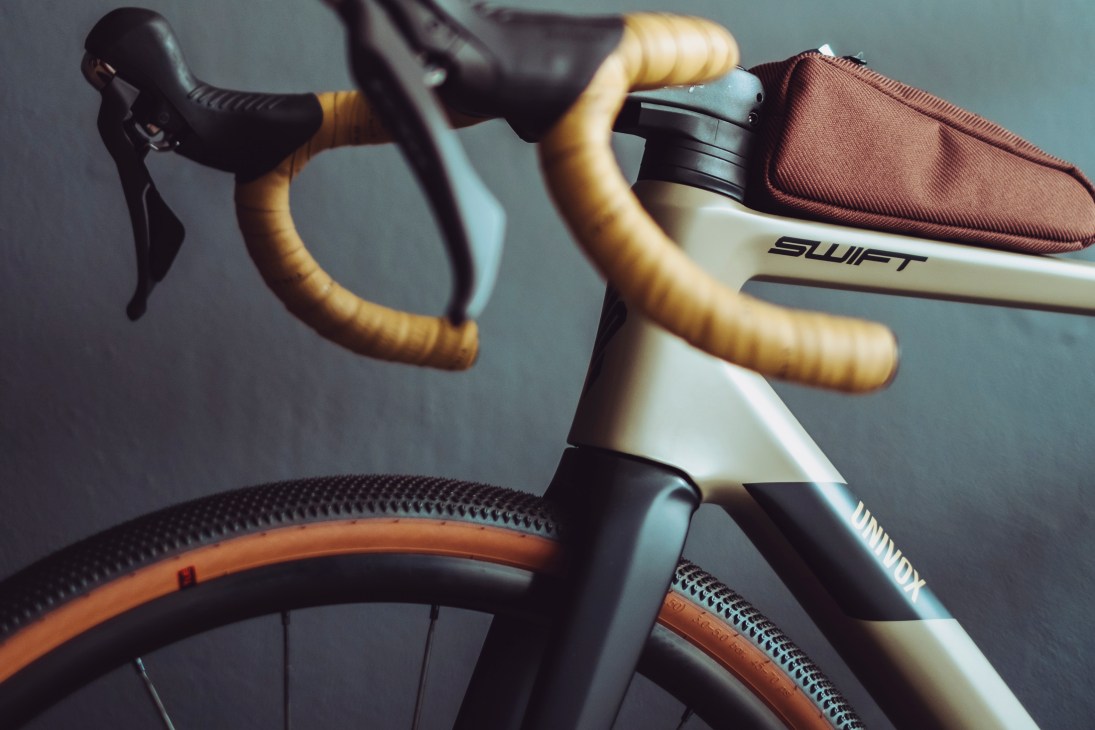
The South African-born brand of performance and competition bicycles moved its headquarters and assembly plant from Cape Town to Porto in 2018. It runs a lean operation of about 25 people working to transform specially engineered carbon frames made in Taiwan into state-of-the-art bicycles for road, gravel and mountain. With only about 200 frames completed a month, the plant’s output isn’t large but Swift bicycles carry a hefty price tag, at €2,000 to €9,000. “Our clients are connoisseurs,” says Lemos. “They’re not just looking for any bike.” Swift Carbon is committed to the Portuguese market and is entering it via sport. “Many national athletes and teams already use our bikes,” says Lemos. “We’ve been champions of the Tour of Portugal three times and are providing spare bicycles for the Portuguese federation in the Paris Olympic Games.”
It might be some time until bicycles become a common mode of transport in Portugal’s cities but the country’s compact size and beautiful scenery might just be the perfect backdrop for another, more adventurous, kind of cycling culture to take root.
Quiet revolution
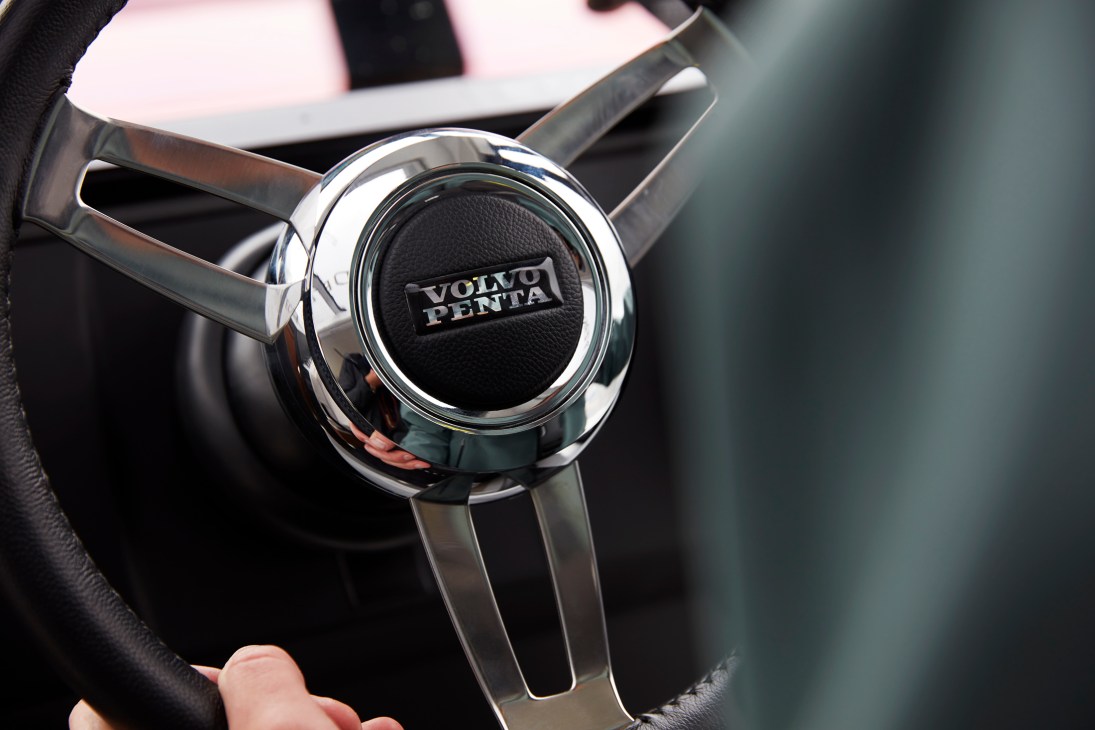
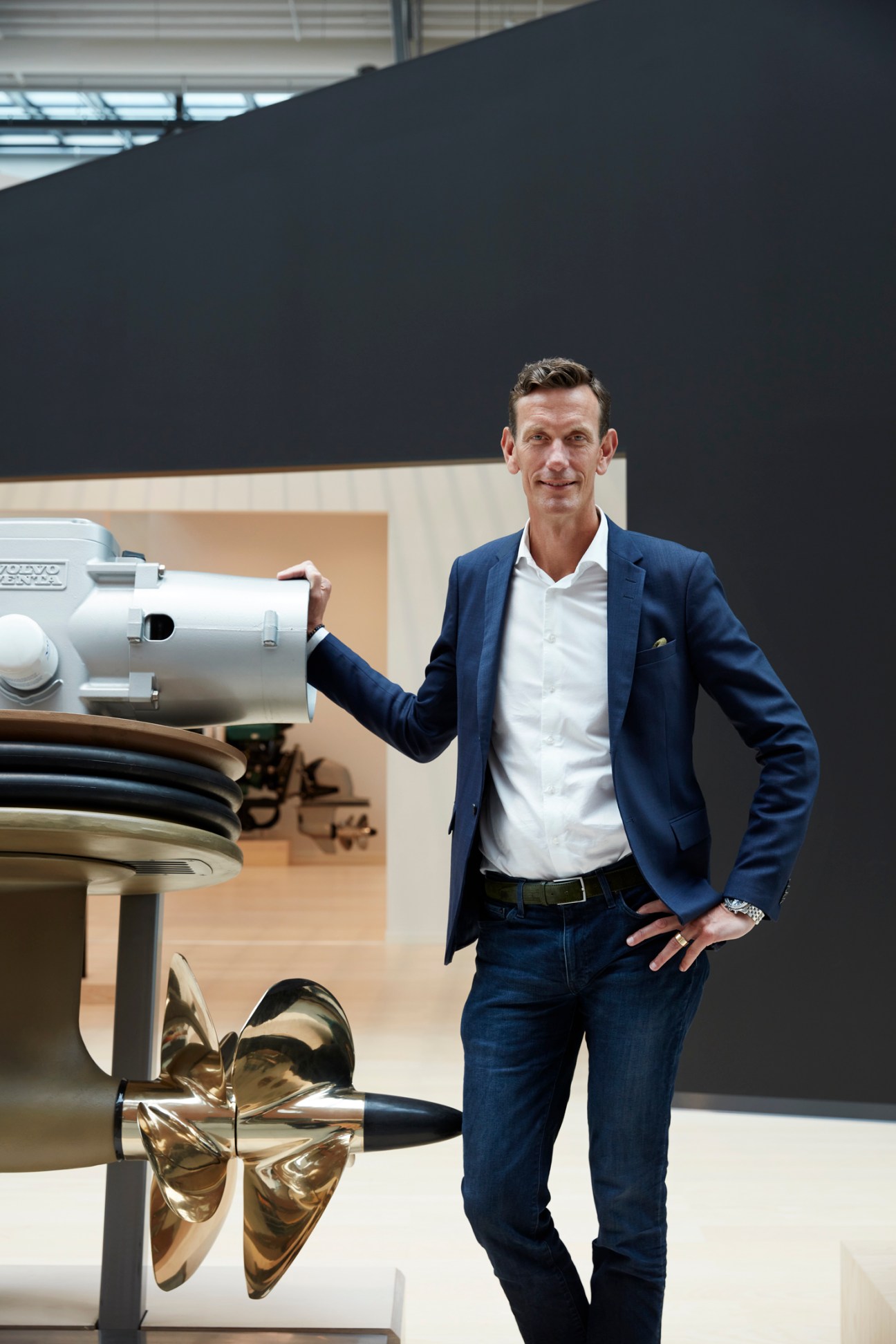
What at first appears to be a quaint Gothenburg harbour, complete with red fishing huts, is in fact a high-security facility. The Krossholmen Test Center, near the mouth of Sweden’s Göta Älv River, belongs to Volvo Penta, part of the Volvo Group. It is one of the best-equipped marine-testing operations in Europe. It’s here that Volvo Penta, long associated with building engines for leisure vessels (and more recently commercial ones), is transforming itself into an electric-mobility brand for the lifestyle boating sector. The shift at Volvo Penta, which had revenues of SEK18.1bn (€1.6bn) in 2022, is driven by the flourishing global market for electric boats, with anticipated growth of 11.2 per cent a year through to 2027.
While there isn’t global legislation forcing boats to go electric, there are increasing environmental regulations at a national and regional level regarding emissions from marine vessels. These are pushing the industry to explore cleaner alternatives, including electric propulsion. Norway is one of the countries that has come farthest in electrifying its leisure boats, with projects supported by cities, municipalities and companies along the Norwegian coastline. And Copenhagen has set aside DKk10m (€1.34m) to electrify its entire fleet of harbour ferries as part of the country’s overall plans to become the world’s first carbon-neutral city by 2025.
When it comes to fully electric vessels, there are several companies working on commercial passenger ferries and recreational use. As well as larger players such as X Shore, Vita Power and Candela speedboats, there are smaller innovative brands such as Stockholm-based Sightseeing Rides, which offers tours in electric boats powered by green energy, as well as Norway’s Kruser, the world’s first boat-sharing platform for electric leisure boats.
Being fully electric has large environmental benefits. Electric boats can significantly reduce air pollution and carbon emissions. However, there are environmental considerations related to the production and disposal of batteries used in electric boats. Additionally, end-of-life battery disposal can cause environmental harm.
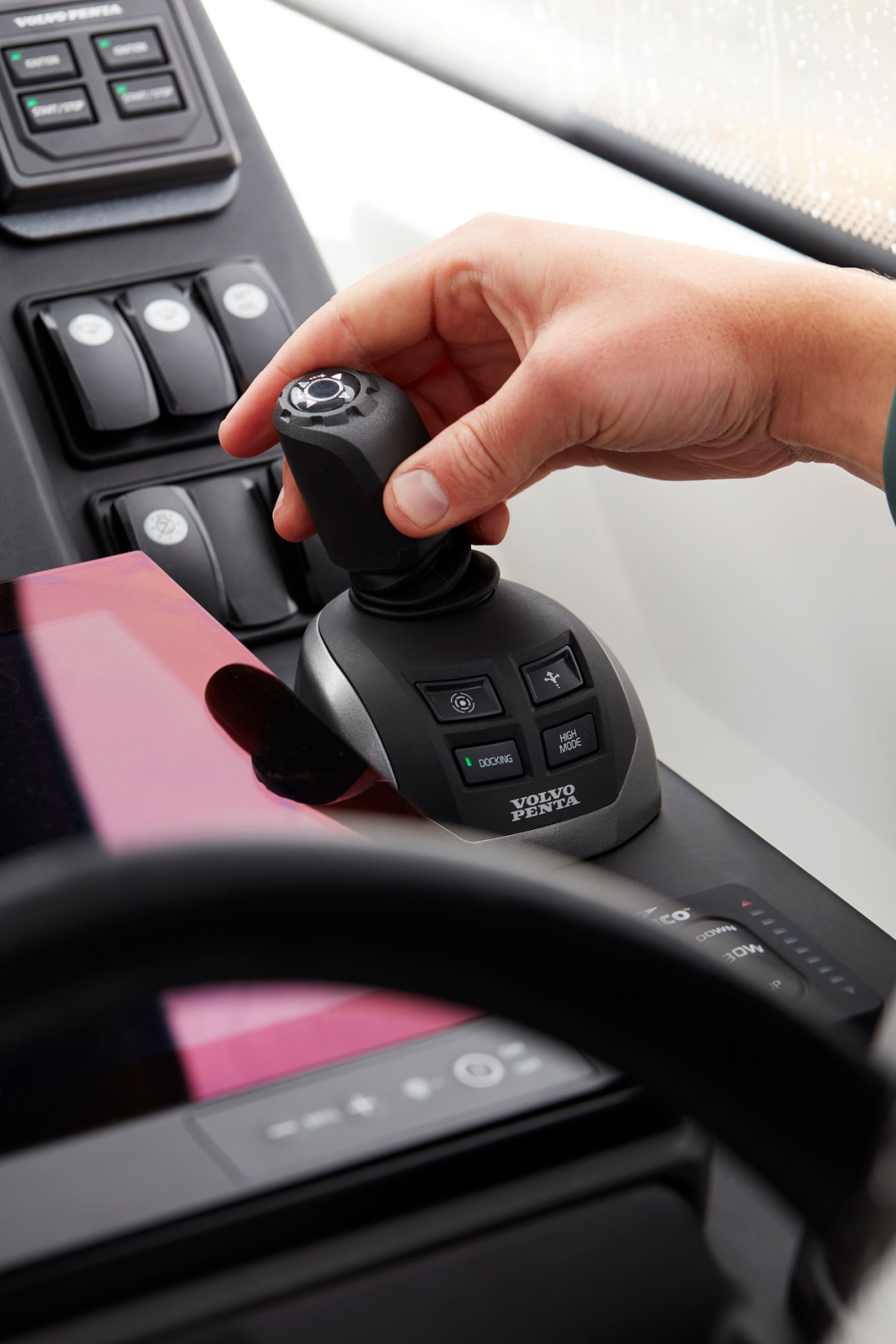
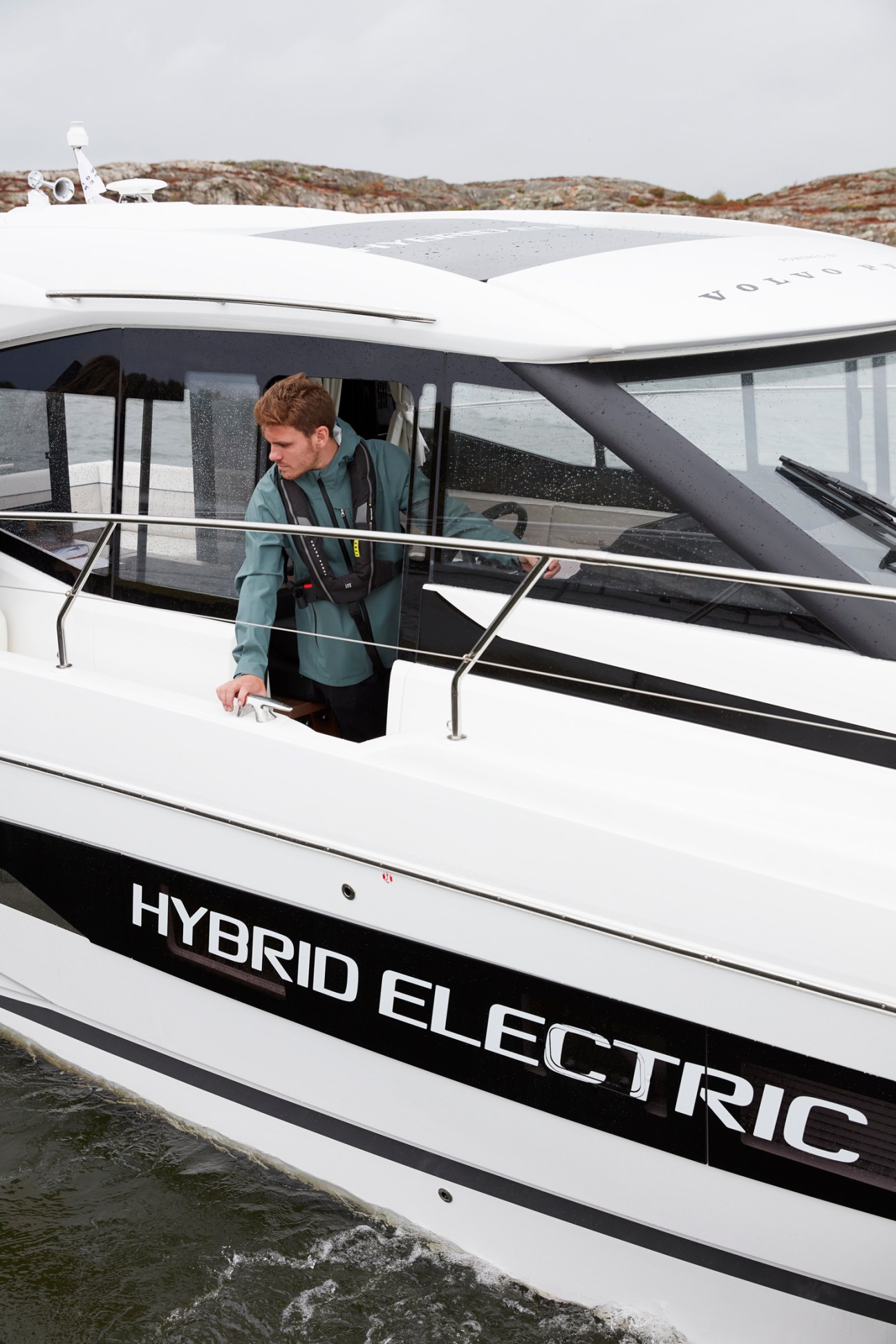
When Monocle visits the Krossholmen Test Center, a team of skilled mechanics, technicians and test engineers is busy preparing and testing what might be one of the answers to the future of more sustainable boating: a new hybrid electric vessel designed in collaboration with French leisure-marine company Groupe Beneteau, a long-standing Volvo Penta partner. Today boat dealers and potential customers have been invited to give their feedback on the Jeanneau nc37 sports-cruiser boat, which is equipped with Volvo Penta’s new hybrid system. Besides powering the engines, it also controls the positioning system that allows users to keep a boat still even when docking in windy conditions or strong currents. “We have a great opportunity to push towards sustainability with the technologies that are now available,” says Johan Inden, president of Volvo Penta’s marine business unit. “There is a big demand from customers to see what is possible in terms of sustainability concepts and better boating experiences.”
Inden believes, however, that it is important to be honest about the limitations. While some passenger ships and ferries are already fully electric, most boats need a way of producing energy too. This is why a hybrid engine will, for now, be the choice for most sustainability-conscious boat owners. “What is great is that we don’t have to wait for batteries to be 100 times better. We can start with this. Then as battery technology becomes more effective, or green fuels become more available, we can start infusing that into the platform,” says Inden. “From my perspective, it is more important to see what is possible today and build robustly for the future.”
Inden also believes that this technology will lower the threshold for people becoming boat owners. During the CES technology fair in Las Vegas earlier this year, Volvo Penta unveiled its concept of “boating for everyone”, which sees a greater future for boat-sharing (just as has happened with cars) and easier access to charging stations – or islands, in this watery instance. “I believe that rental models will play a big part in the marine industry going forward,” he says. “There is a huge opportunity to broaden availability by making it possible for more people to utilise existing boats. We will see more examples of subscription-based models. It will be about having a fantastic experience, not the hassle of owning a boat 12 months a year.”
Meet the Jeanneau NC37 hybrid vessel
The plug-in parallel hybrid, featuring two Volvo Penta d4-320 engines alongside two 60 kilowatt electric motors, offers three driving modes: electric, hybrid and power. The hybrid engine allows for leisure boaters to go long distances without stopping to recharge but be all electric and emission-free when cruising at low speeds (and use the combustion engine when speed is needed). The technology is based on Kvitbjørn, a similar hybrid electric vessel used by Norwegian tour operator Hurtigruten Svalbard that gives people a chance to get closer to wildlife in a near-silent tour experience.
Back to life
Pétanque Social Club
Marrakech
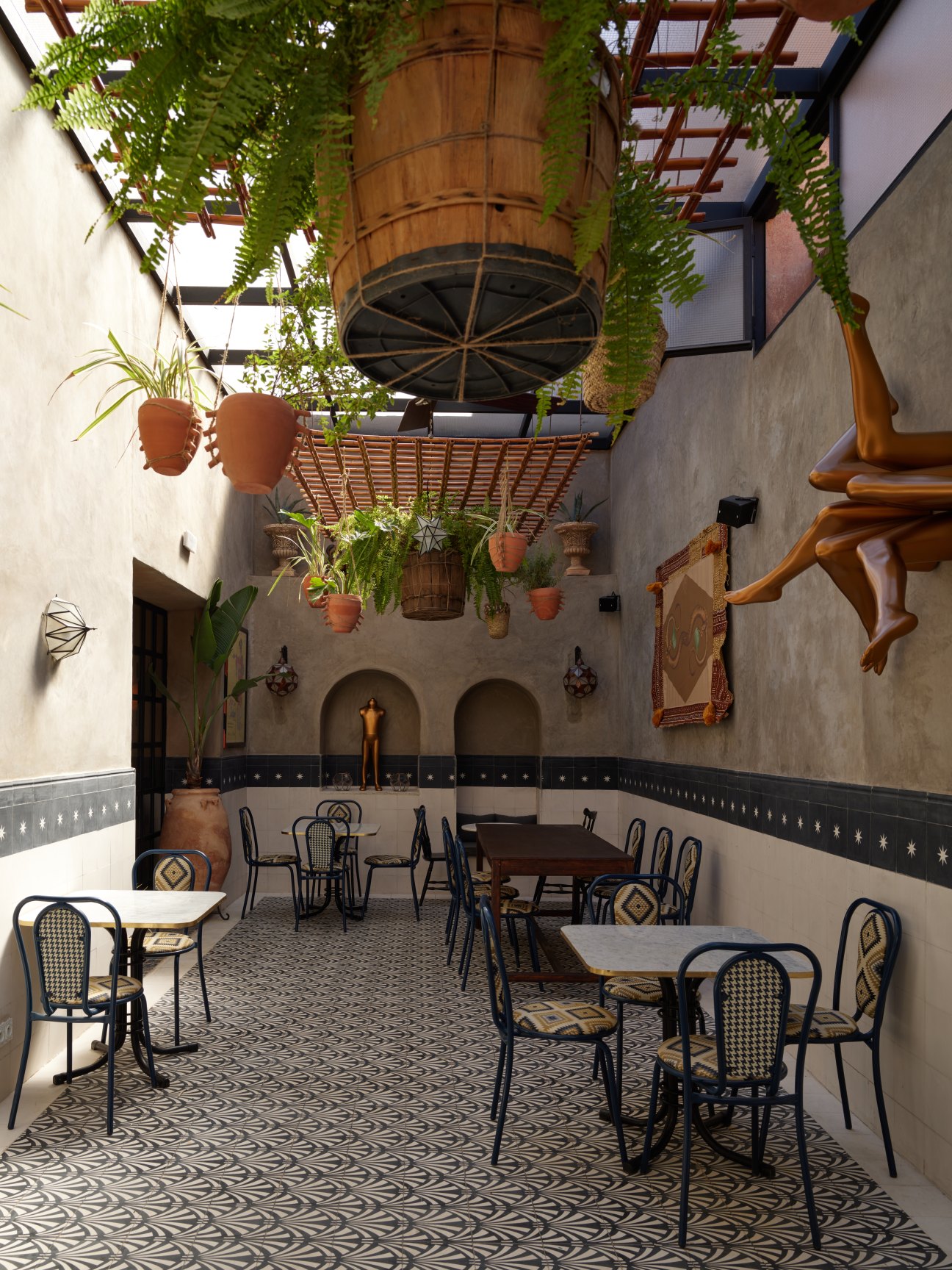
The restoration of a 1930s building – the old site of one of Morocco’s best private members’ clubs – has brought new life to the Gueliz neighbourhood. It was discovered by Marrakech native Kamal Laftimi, the restaurateur behind Nomad, Le Jardin, Café Des Épices and art space DaDa. “This is something we haven’t seen in decades,” says Laftimi. “A space for relaxation and serenity in the heart of the Red City.” Pétanque boasts Moroccan-Mediterranean cuisine, a great bar and a vast garden that’s open to visitors and locals alike. “Marrakech has evolved,” he adds. “It’s home to artists and nomads who bring with them creativity.”
pscmarrakech.com
Hotel San Fernando
Mexico City
The 19-room Hotel San Fernando has opened its doors on the edge of Parque Mexico, a lush patch of greenery in the capital’s La Condesa neighbourhood. This newest member of the Austin-based Bunkhouse Hotels group is set in a 1940s block refurbished by the brand in collaboration with Mexico City-based studio Reurbano. The team has enhanced the building’s art-deco charms by adding metal panes and stained-glass windows to the shell.
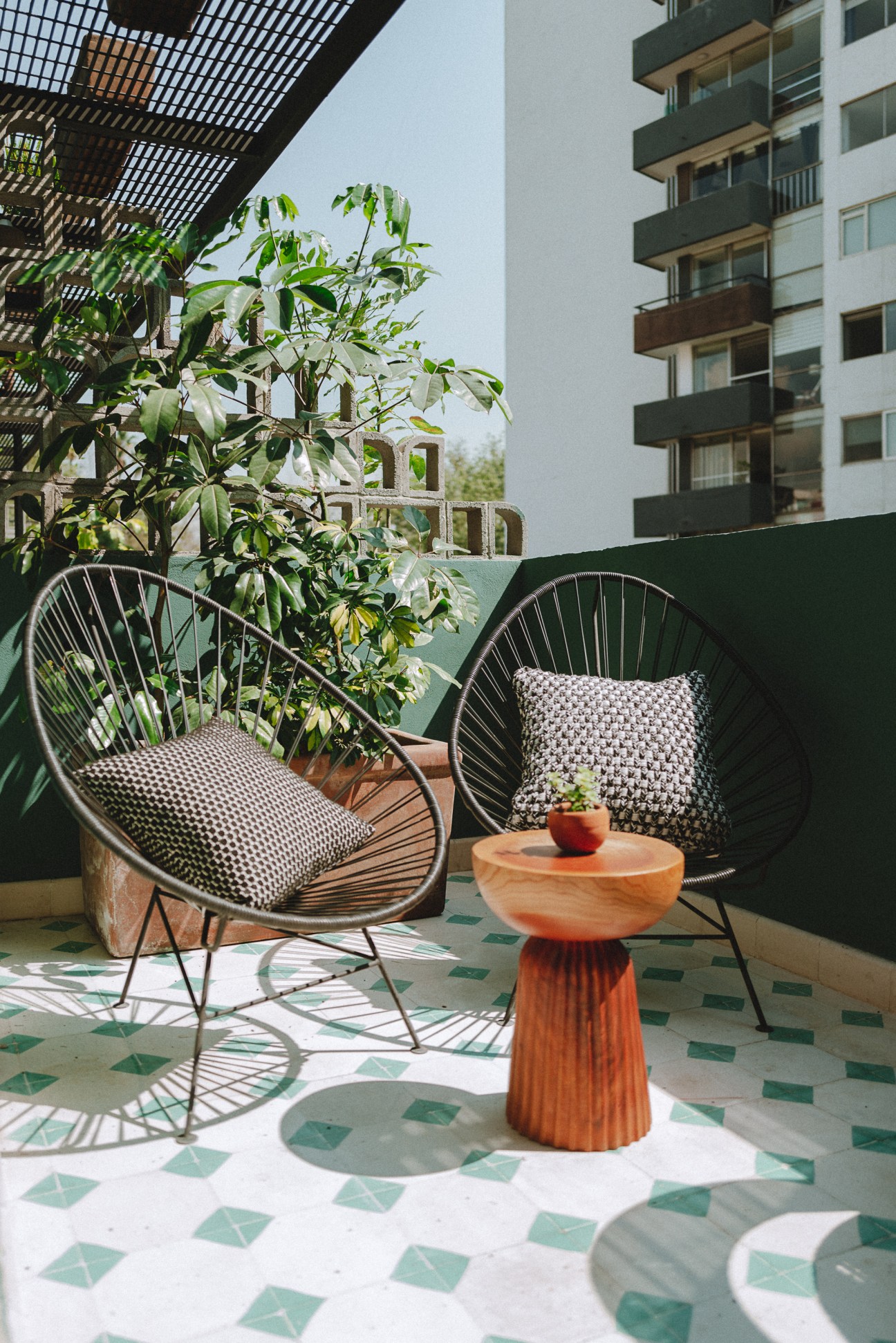
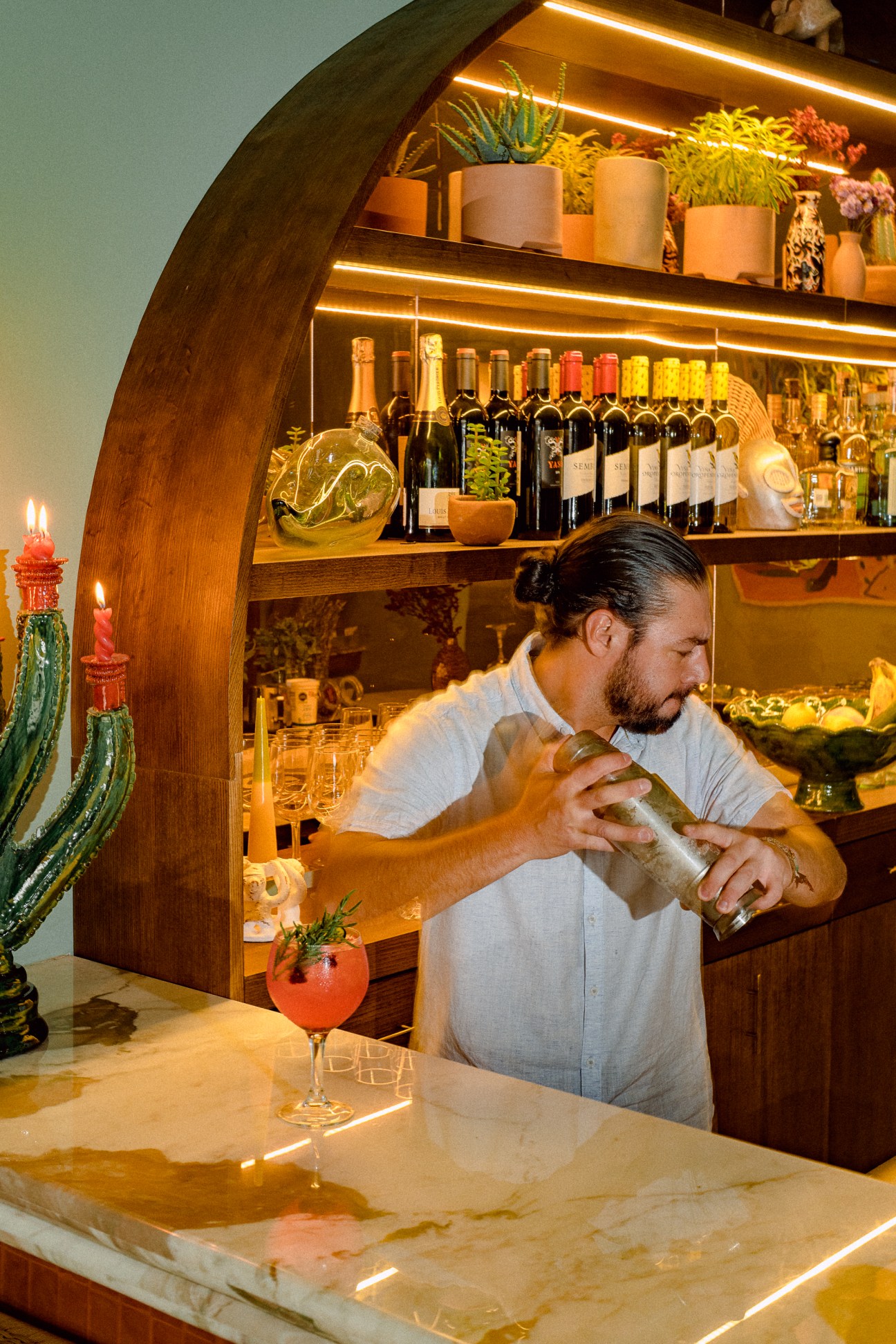
Rooms feature pink-and-green accents and custom wooden furniture by La Metropolitana studio. Elsewhere there are bright patterned rugs handmade by Oaxaca-based Enkelt, plus sconces and pendants by Mexico City-based ceramics studio Anfora. The rooftop bar is the spot for guests to enjoy breakfast and there is a street-facing salon for sipping a rosa mexicana and watching the city tick.
bunkhousehotels.com
The Largo
Porto
Sitting above famed chef Nuno Mendes’ restaurant Cozinha Das Flores and bar Flôr is a new and handsome hotel, The Largo. The 18-key project involved a thorough restoration of five interconnecting buildings, some dating to the 15th century.
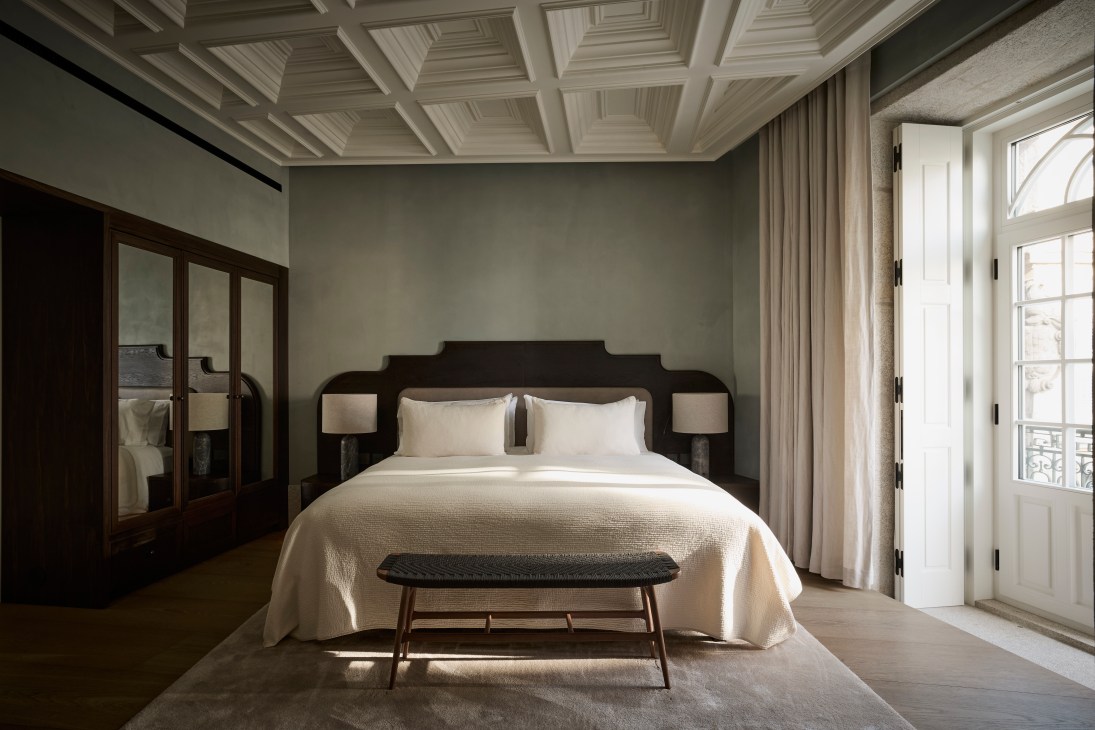
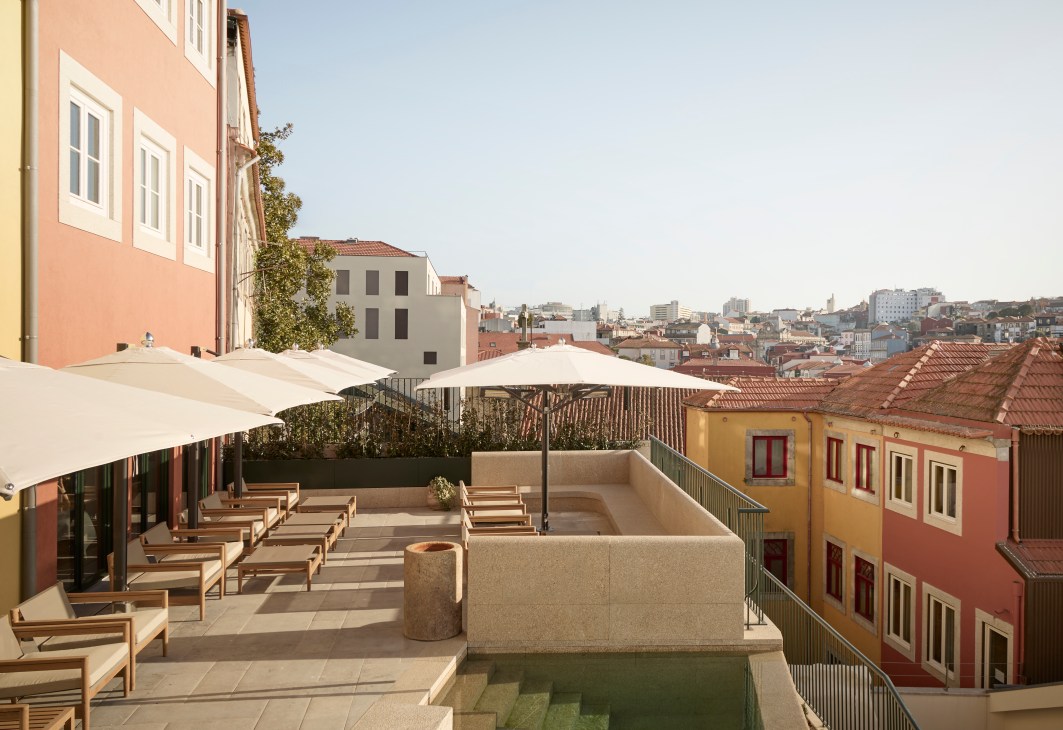
Danish design studio Space Copenhagen was tasked with the job. The designers took aged stone and tarnished wood as starting points and introduced plastered walls in earthy tones alongside blackened steel and brass accents. The wooden flooring and plastered walls bring warmth, while generous beds, sofas and armchairs invite guests to stay that little longer. This is Portuguese hospitality at its best: bijou bar Flôr serves small plates and sparky cocktails, while Cozinha Das Flores showcases northern Portuguese gastronomy with Mendes’s signature flair.
thelargo.com
Q&A
Amina Belouizdad Porter
CEO, PS
Los Angeles-based PS aims to bring a little private-jet panache to the airport experience with a membership model. Based at LAX since 2017 – and formerly called The Private Suite – this year it’s opening a space in Atlanta and is restoring the mid-century Pan Am terminal at Miami International. At the controls is its CEO, Amina Belouizdad Porter.
How does PS work?
If you’re taking a commercial flight, instead of going to the main airport, you arrive at a standalone PS terminal where we check you in and take your luggage. Then you can either head to one of our private suites, each with a wellstocked pantry, or to our salon, which is more social and like a members’ club centred around a bar. At boarding, we take you through our own security and then a BMW will drive you across the airfield to your flight.
What are you planning in Miami?
We’re restoring what was once Pan Am’s regional HQ and will open a terminal there by early 2025. The original, nicknamed “the Taj Mahal” was inspired by the US embassy in New Delhi. Pan Am epitomised the luxury and glamour we associate with the golden age of travel.
What is the future of business travel?
Business has blurred with leisure now we can work from anywhere but the bar is set a lot higher: I need to be able to get on a call before my flight; I need a workspace but also respite. PS is certainly one solution.
reserveps.com
Dream factories
1.
For all seasons
Scala, St Moritz
After more than 80 years of business, Scala in St Moritz closed in 2016. As one of the Engadin valley’s last-remaining cinemas, it was an institution – but because the ground on which the structure stood was unstable, demolishing it and erecting a new building was the only option. Fritz Burkard, president of the St Moritz Bobsleigh Club, was up for the challenge. When Scala’s doors swung open again in June after four years of work, the venue was more than just a refurbished cinema. “It’s important to bring people together, to offer a place to exchange ideas,” says Burkard.
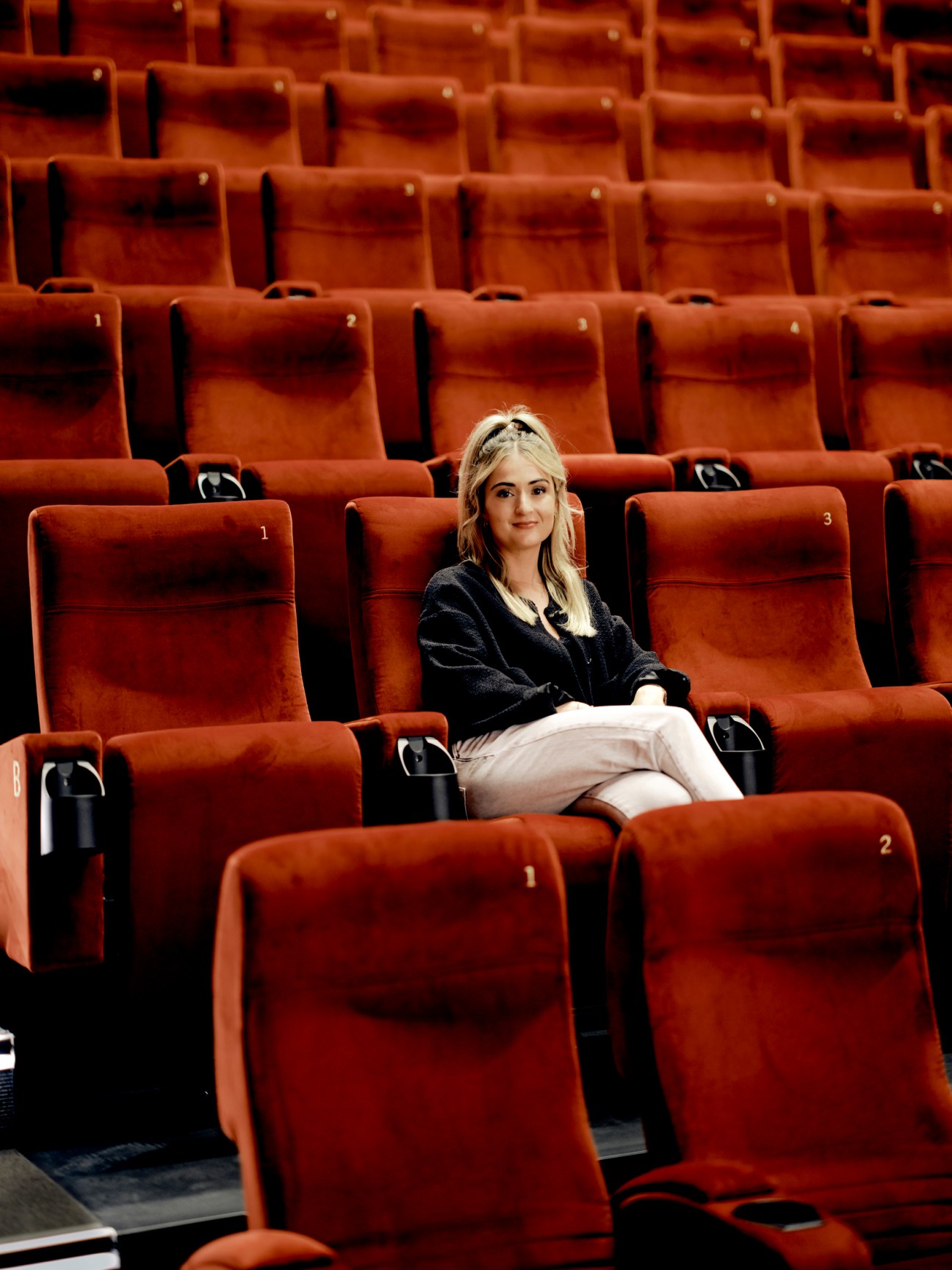
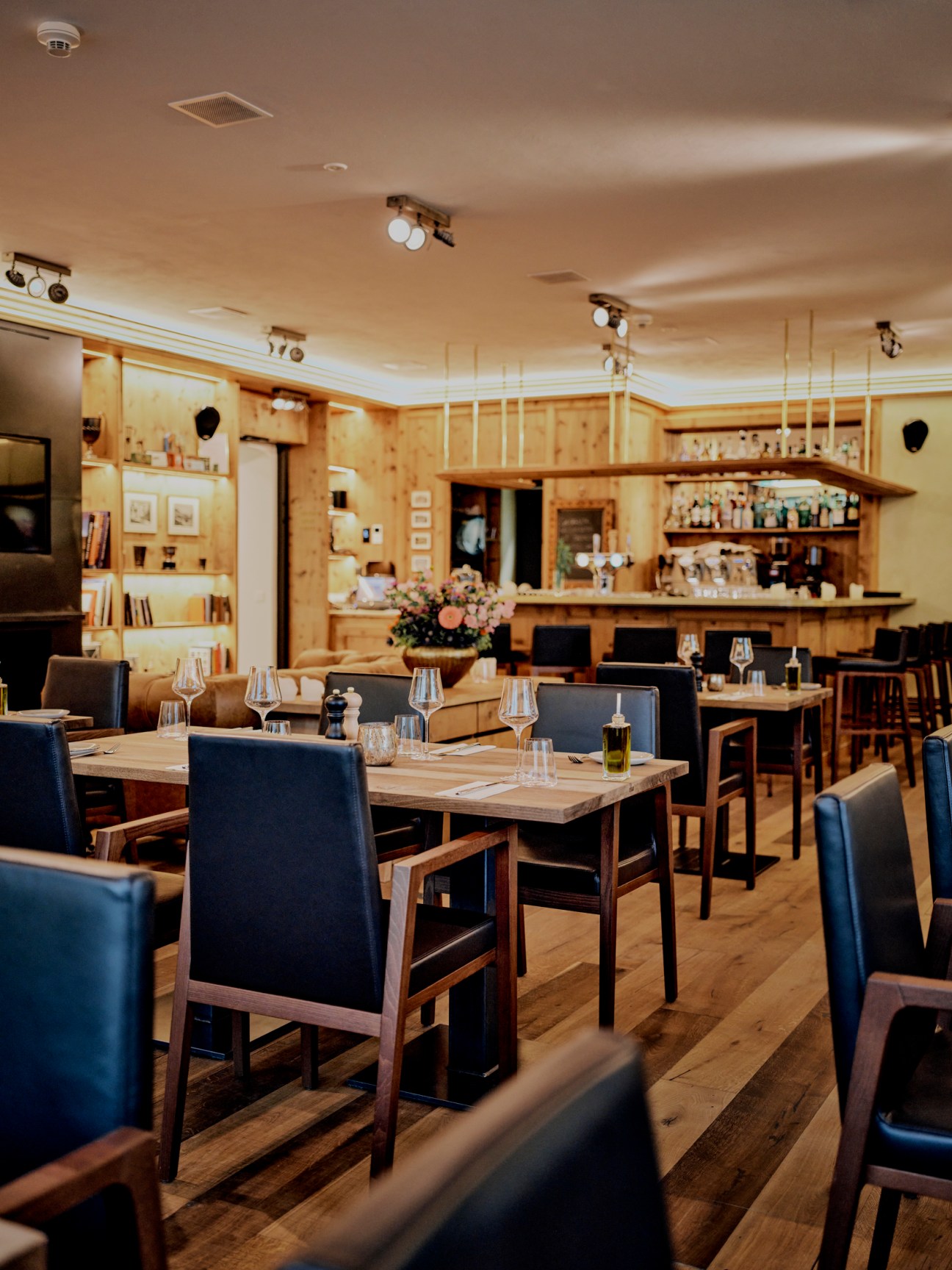

The centrepiece of the space is a slide that runs through the foyer from the second floor to the basement. Upstairs, Burkard has built a museum dedicated to bobsleighing, complete with a replica Cresta Run, an ice route created from scratch every year in St Moritz.
The screening room is equipped with the latest technology but it retains an old-school aesthetic. Its 107 crimson seats are roomy and the front row has been made inviting by the addition of footstools. Burkard’s aim is to keep the doors open all year, unlike many other venues in town. “Scala makes life in St Moritz more attractive,” he says. “The building is primarily for locals. Tourists are welcome but it has to work mostly for residents.”
In its restaurant, dishes made with regional ingredients are served at a long pine table, while screens broadcast bobsleigh races. The bar’s main attraction is a series of installations by artist James Turrell. This room, as with all the others, was designed to be rented out and host a wide range of occasions; in the future, Burkard hopes to collaborate with citywide events such as the Festival da Jazz. “Every space can be adapted to people’s needs,” says Lara Müller, Scala’s executive director. “We want to serve the community.”
scala-stmoritz.ch
2.
Empire of light
Cinema Royal, Beirut
When Karl Hadife and his family bought Cinema Royal in Beirut’s Bourj Hammoud district in 2020, it was on its last legs. Facing a former factory that the family is now in the process of transforming into a cultural centre, the building had been through various incarnations since its heyday – most recently, it was a brothel, until Lebanon’s financial crisis put it out of business.

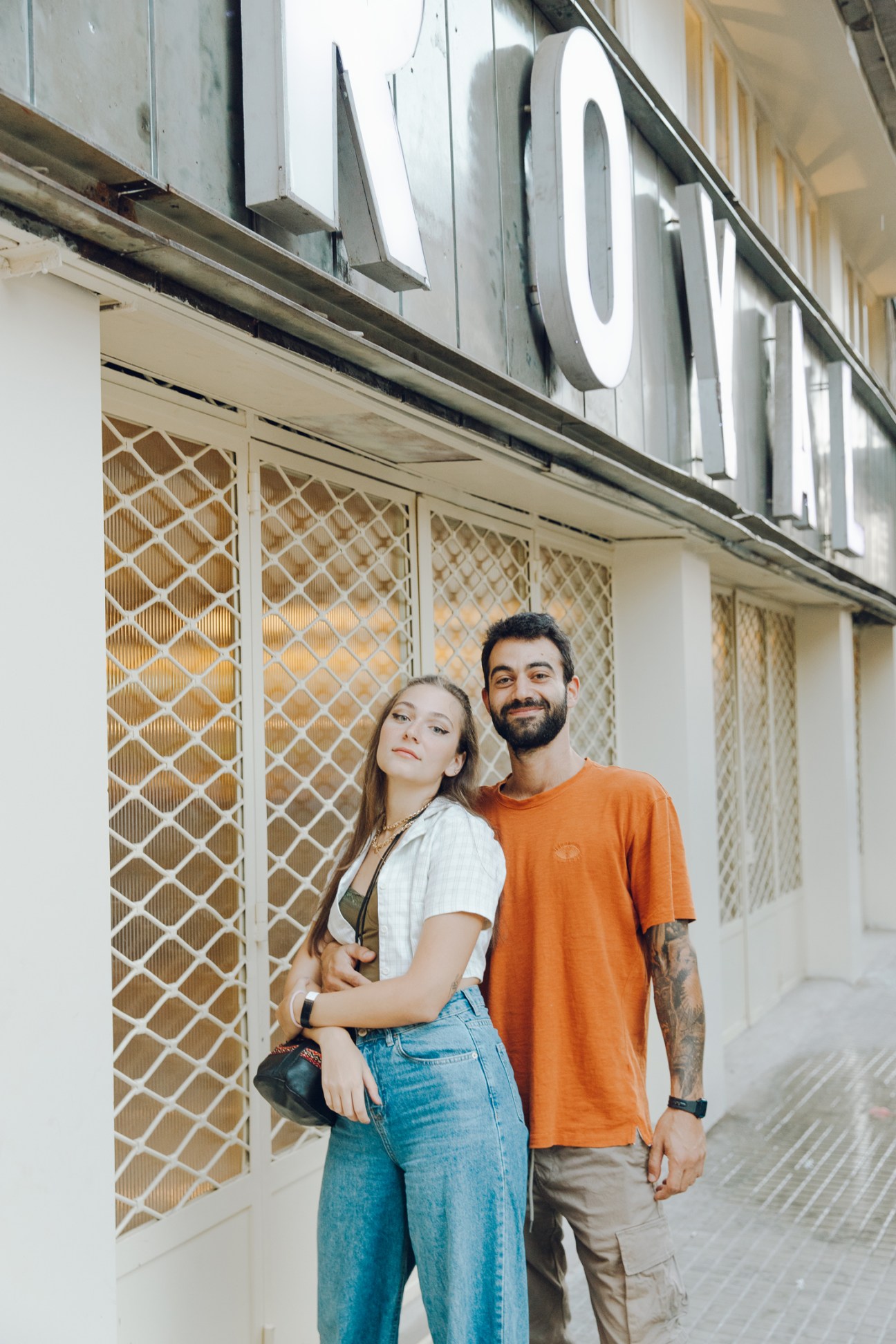
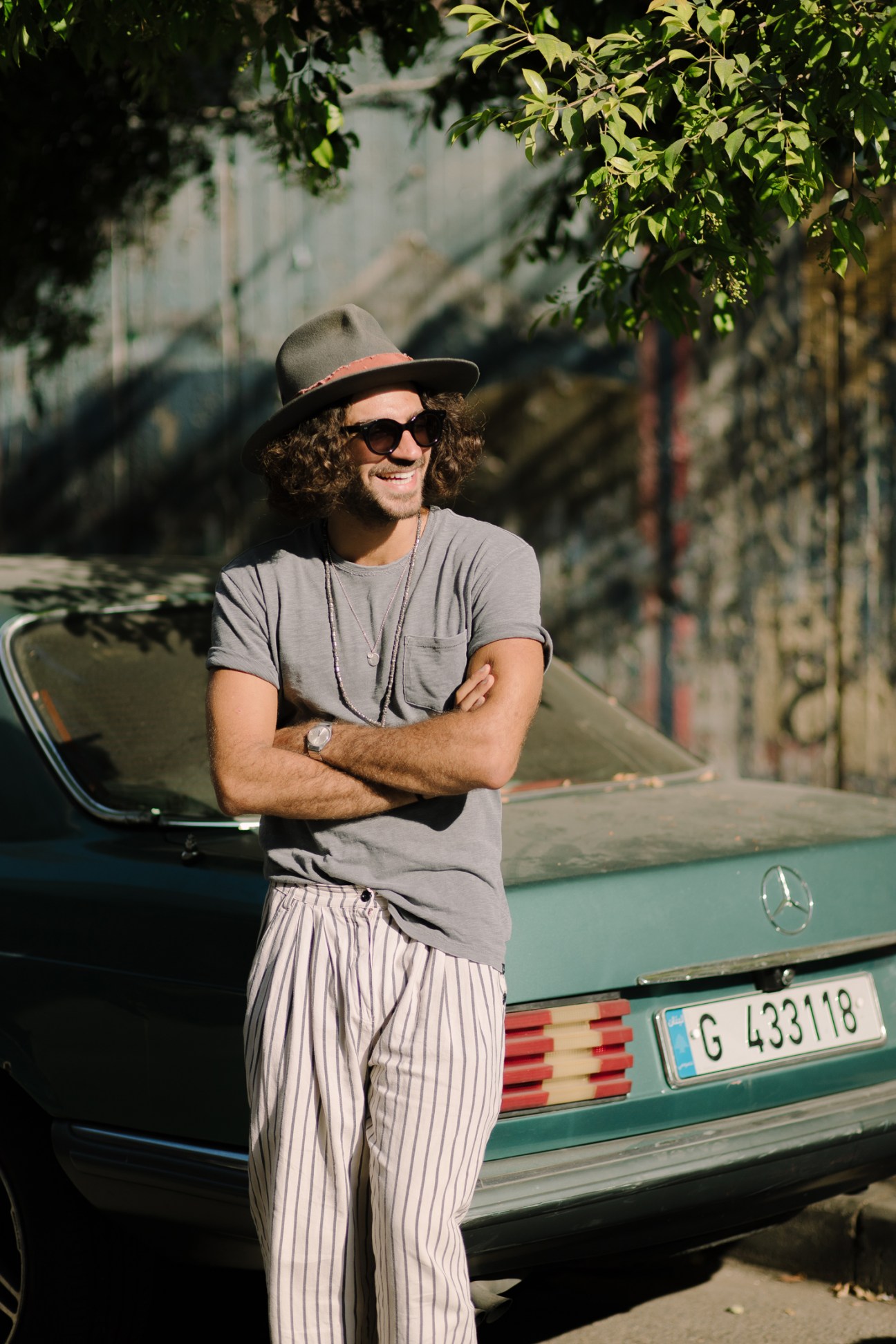
Hadife, a film-maker who had just returned from a stint in New York, decided to restore the weathered picture house from the ground up. “It was in bad shape,” he says. “We had to redo everything, keeping the heritage aspects while making the other elements better.” Sourcing vintage 1950s pieces from the city’s antique traders, the family preserved the aesthetic of the original space, retaining many paintings by Avo and Yervan Hawarian, the cinema’s former owners and designers of some of the most iconic Lebanese film posters of the 1970s and 1980s.
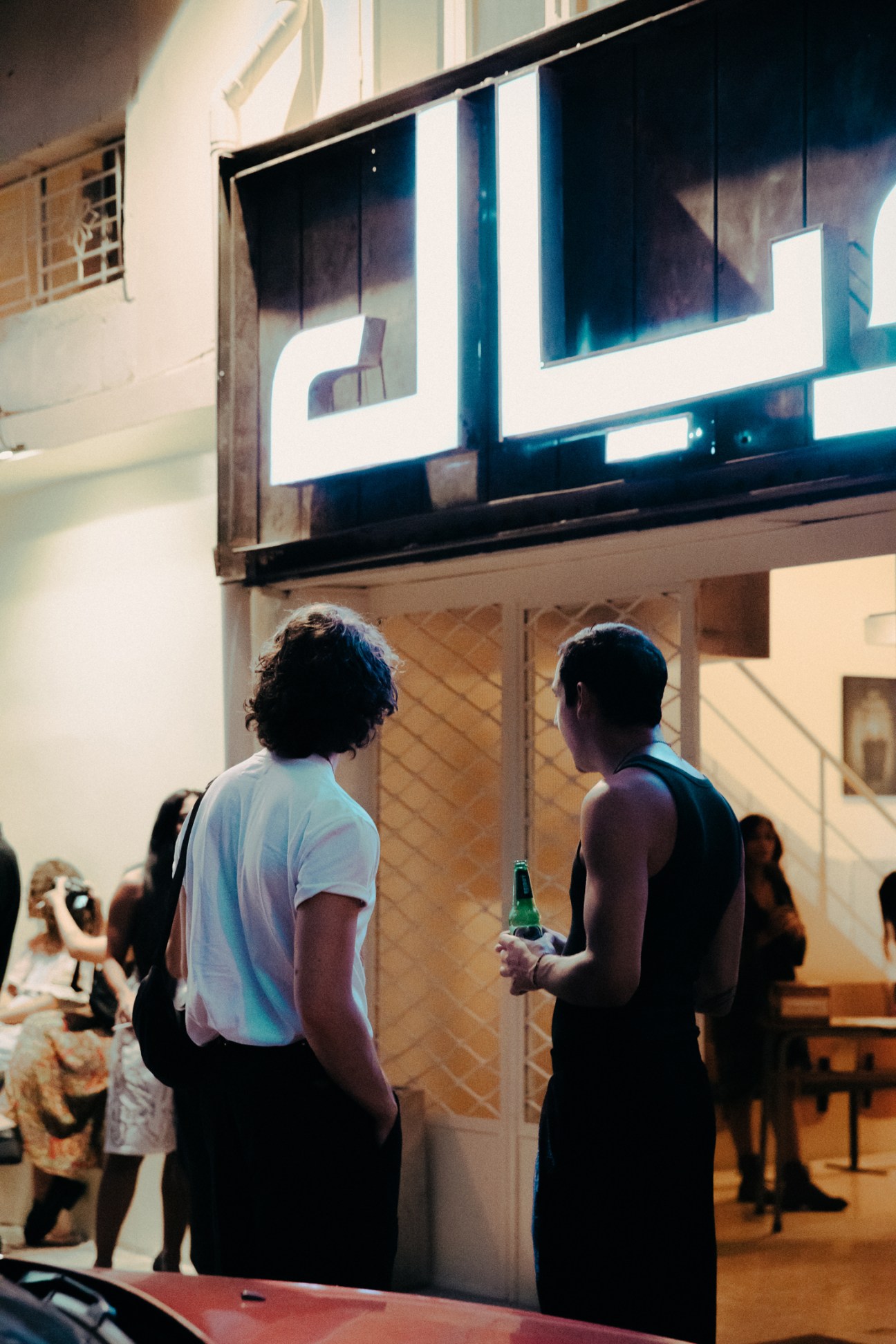
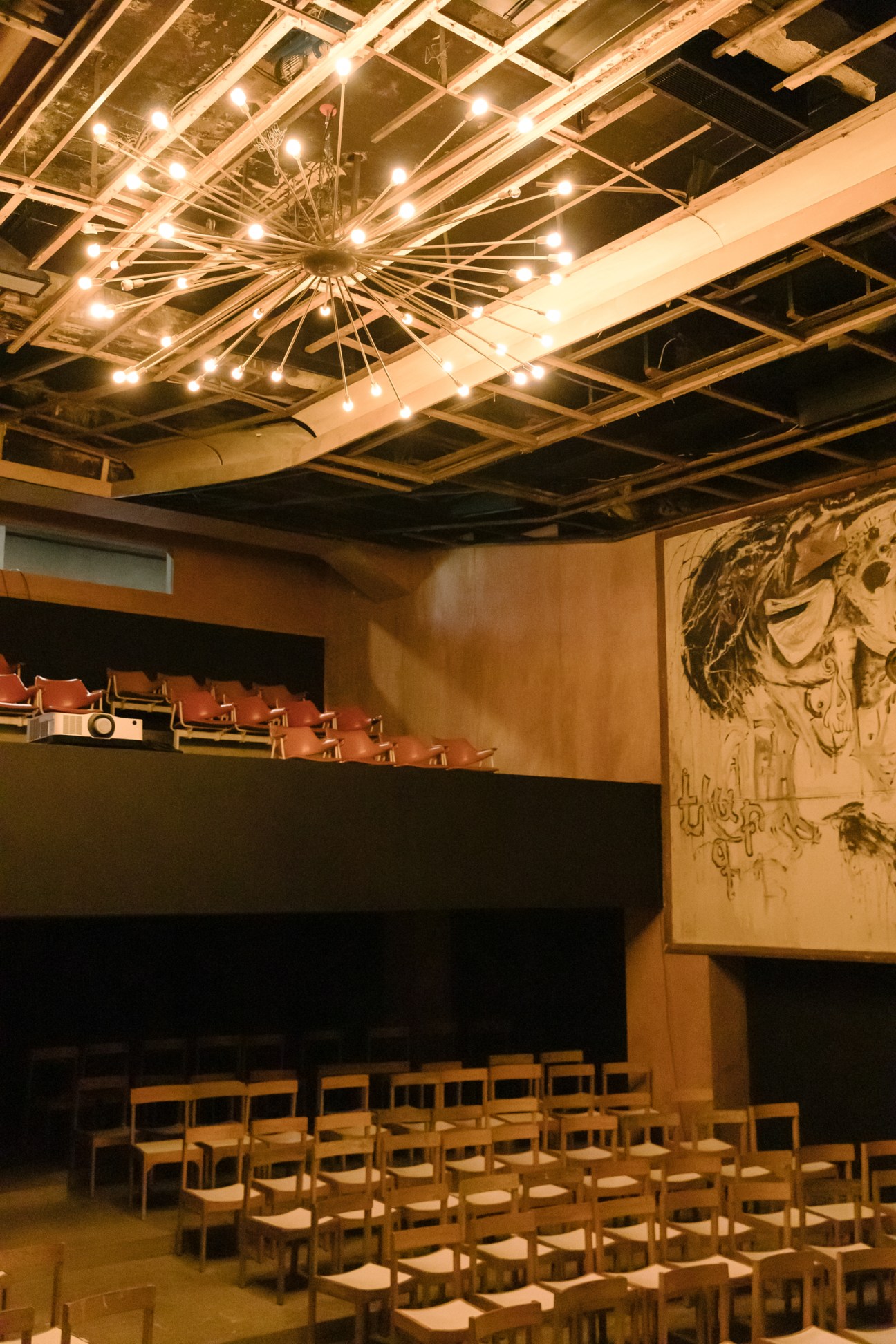
In its freshly refurbished guise, Cinema Royal has become a community space with a screening room, a stage for theatre and dance, and a display area for art exhibitions. “Because of the financial crisis, many cultural institutions and venues closed down,” says Hadife. “I wanted to open a place where we could democratise access to the arts, with a programme that is thought-provoking and promotes debate.”
Having resumed operations last autumn with a theatre festival, the cinema started running regular screenings this spring. Its film programme’s focus spans classic titles and modern Lebanese films, spotlighting rising talent such as director Nicolas Khoury. Next, Hadife wants to make the cinema a place where Arab visual artists and film-makers can collaborate. There’s far more to Cinema Royal than pressing play on a projector.
Rue 42, Bourj Hammoud
3.
Local hero
Riviera, Helsinki
Walk past Riviera in Helsinki’s lively Punavuori neighbourhood and you might mistake it for one of the district’s many chic bars. Indeed, inside the cinema’s elegant, moodily lit bar, filmgoers clink glasses while nibbling on tapas. A happy chatter fills the dark-coral-coloured lobby.
“We wanted this space to feel more personal and intimate than the large multiplexes,” says co-founder Atte Laurila, who launched this venture less than a year ago. Riviera’s two auditoriums feel like living rooms; patrons can sit on comfortable sofas, resting their drinks on the adjacent coffee tables. During screenings, punters can discreetly call waiters by pressing a button to order a glass of wine or Riviera’s signature ipa. “Going to the cinema is about more than just watching a movie, which you can do just as easily at home,” says co-founder Hanna Hynynen. “It’s a social event, something that brings you happiness, and that’s what we want to focus on.”
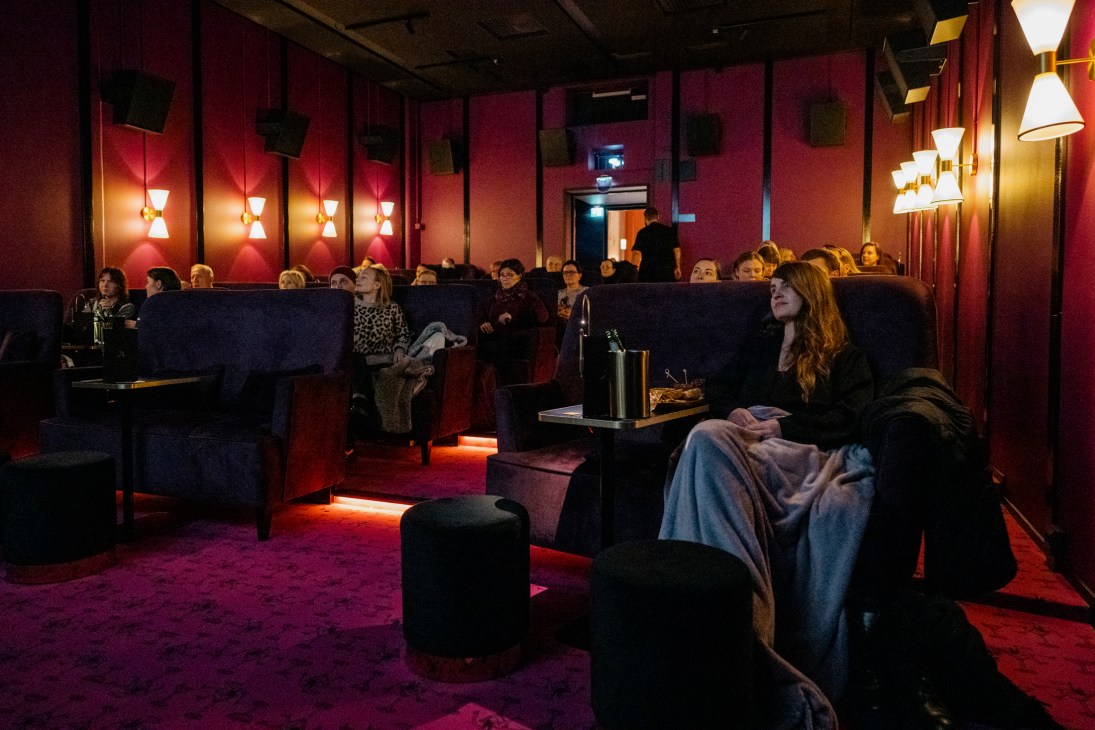
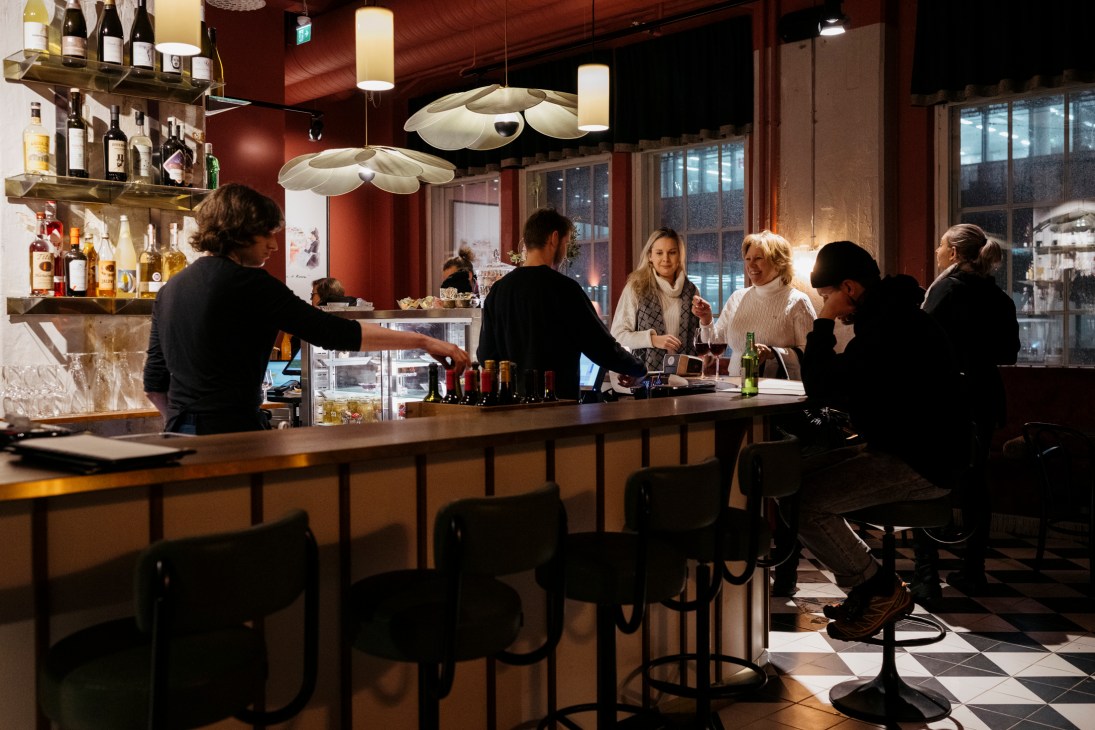
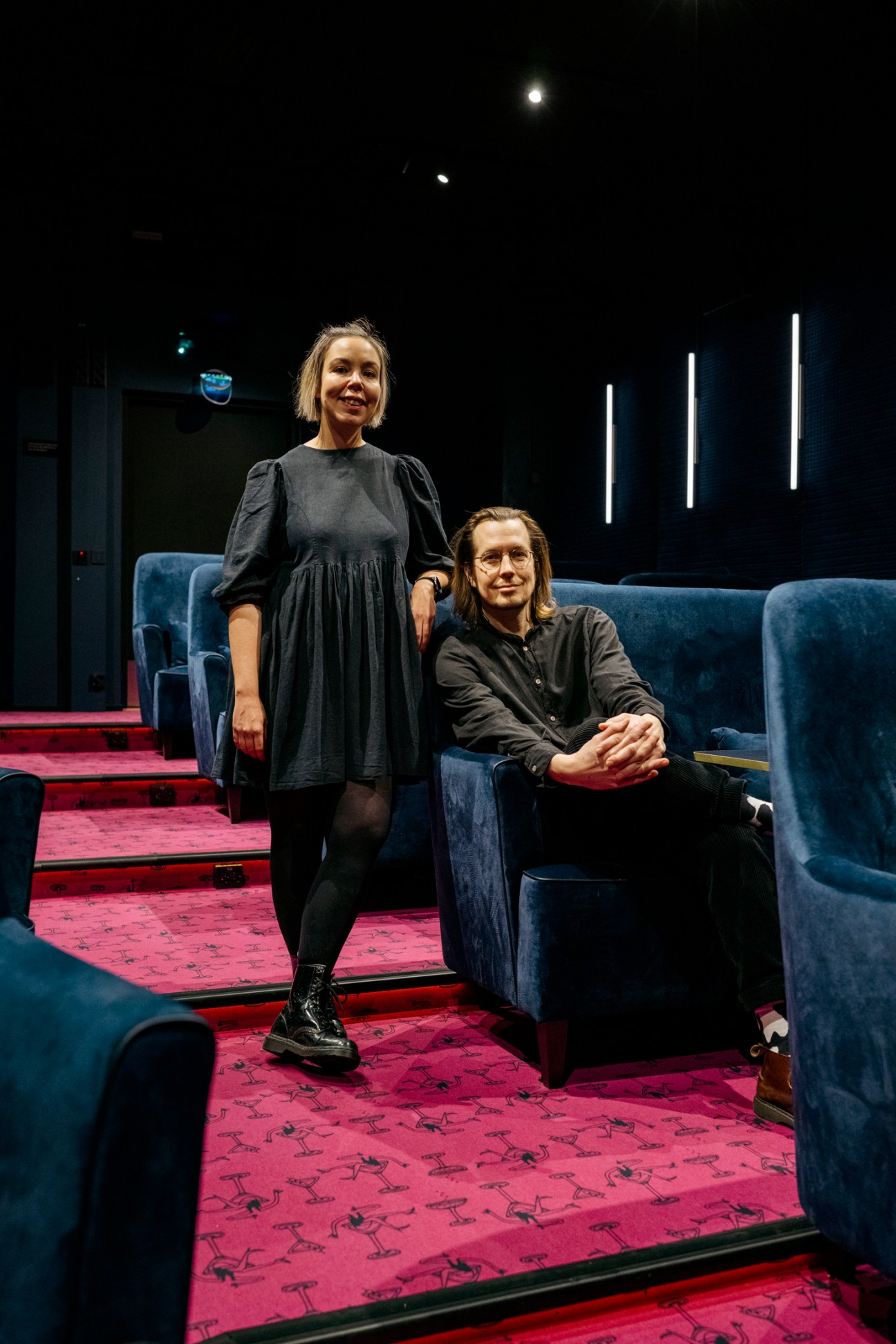
Still, Laurila and Hynynen know that films need to be at the heart of it all. That’s why the cinema features state-of-the-art audio and video technology. Each room is kitted out with a 20-speaker sound system but what sets Riviera apart from the big multiplex chains are details such as the curtains drawing open to reveal the screen as the projection begins.
This careful approach is reflected in Riviera’s programming. When Monocle visits, it includes dozens of films, ranging from Hollywood blockbusters to independent titles from the European festival circuit. “Many small cinemas focus exclusively on art-house content but people also want to watch hit movies, so why deny them that?” asks Hynynen. She is convinced that a great neighbourhood cinema should be “your best movie friend”. Punavuori’s residents can trust that Riviera will have something interesting for everyone, not just cinephiles. Meanwhile, the cinema has just launched a regular music night, with a pianist soundtracking the lobby’s hustle and bustle with film music.
In recent years there has been a boom of new independent cinemas in Helsinki: many central neighbourhoods now have their own movie theatre. “They have played an important role in fostering a sense of community, even pride,” says Laurila. Though Punavuori had long been one of Helsinki’s hot spots for restaurants, bars, art galleries and design shops, it had lacked a picture house for years before Riviera opened its doors. “There is a lot going on here and we wanted to be part of shaping the district’s culture,” says Laurila. So far, it’s all going to plan: showings are consistently fully booked and Riviera has become a treasured neighbourhood fixture.
rivieracinemas.fi
4.
Stepping up
Cineclube Cortina, São Paulo
It’s perhaps apt that Cortina, São Paulo’s newest cinema, should call itself a cine clube. As well as screening the latest films, it also hosts parties and is home to a cocktail bar and restaurant. It’s the kind of place where you can go for a steak tartare, enjoy a caipirinha and be impressed by the attention to detail that has been paid throughout.

In the 1960s downtown São Paulo was home to the city’s most glamorous cinemas but many have since closed. Marcelo Sarti, Paulo Vidiz and Rapha Barreto were determined to reverse this trend; so, along with Metro Arquitetos, they turned a carpark into this multistorey venue in 2022. “We’re bringing the cinema tradition back to the region,” says Sarti.
The team was clear from the outset that Cortina should not be an ordinary multiplex. “We wanted it to be a hybrid space where you can watch a film, then dance the night away,” says Barreto. Accordingly, its foldable chairs can be dismantled for late-night parties for as many as 500 people. The packed events schedule ranges from Súbete, dedicated to the rhythms of Latin America and the Caribbean, to Primavera Te Amo, showcasing new Brazilian music. The film programme is equally diverse, with modern romcoms jostling with the classics. Upstairs, Argentinian bartender Chula serves cinema-inspired cocktails, including a white Russian in tribute to The Big Lebowski.
Cortina has been crucial to the area’s revitalisation and its success signals an appetite among Paulistanos for a cinema that’s not a suburban multiplex. Despite all the extras, its movie curation remains central. “A cine clube is a space where we can discuss film in a deeper way,” says Sarti.
cardapiocortina.com.br
5.
Out of the past
The Piccadilly, Adelaide
Opened in 1940, The Piccadilly stands at the corner of a jacaranda-lined street in North Adelaide. “My great-grandfather purchased the ‘Old Lady’ in 1983,” says its fourth-generation custodian, Deanna Wallis. Despite its longevity, the cinema needed a rethink by 2021. “Even before the pandemic, there was a decline in attendance,” says Wallis. “So we decided to look at what our options were, starting with the building.”
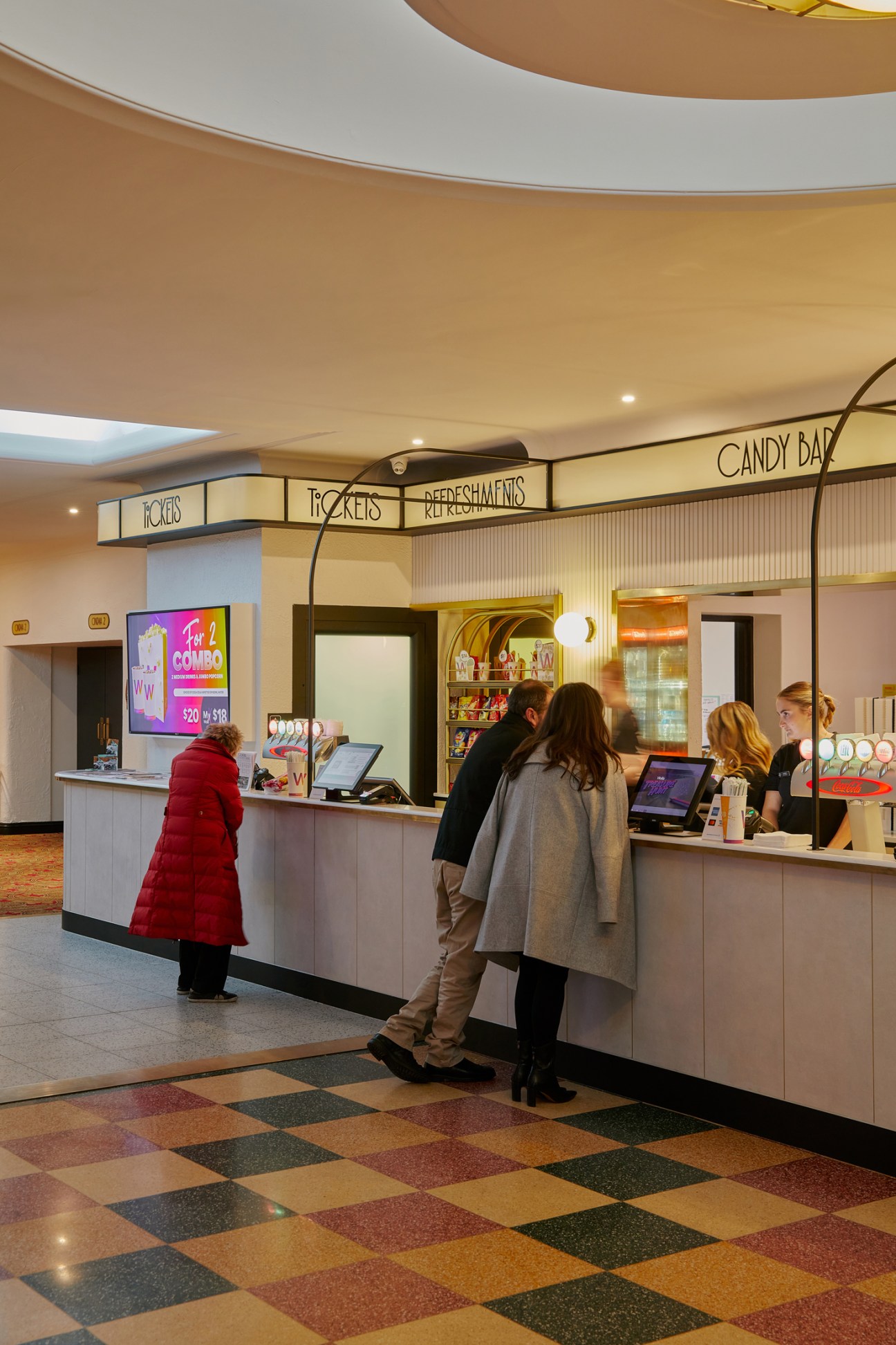

Over a period of 18 months, a au$2m (€1.2m) renovation returned the structure to its former glory. The foyer’s terrazzo tiles have been restored; the staircase has been spruced up, as has a mural of London’s Piccadilly Circus by F Millward Grey. “We have the original bathrooms upstairs and 1940s vents in one of the screening rooms,” says Wallis. But the family’s plan involved more than a structural refit. “People don’t just want to see a film,” she says. “You have to offer other experiences with it.” Now the café serves flat whites and nibbles are available in the lounge. “Events have been successful too,” says Wallis. “We have hosted sold-out q&as during the Adelaide Film Festival for movies such as The Defenders.”
One of South Australia’s longest-running cinemas, The Piccadilly is a landmark that has witnessed the film industry’s evolution. Its refit ensures that it can continue to do so for many years to come.
wallis.com.au
Witness the fitness
1.
Albion
UK
Cycling brand Albion looks to the ever-changing UK skies to inspire its weather-resistant cycling gear. “On a long ride, you might encounter a number of weather conditions: it might be raining in the morning and sunny in the afternoon as you go up and down a mountain,” says Charlie Stewart, who co-founded Albion with two friends, photographer Rupert Hartley and Jack Howker, a former brand consultant. “You need versatile clothing that is packable. British weather definitely offers the right framework for developing such products, even if we don’t get extreme heat or cold.”
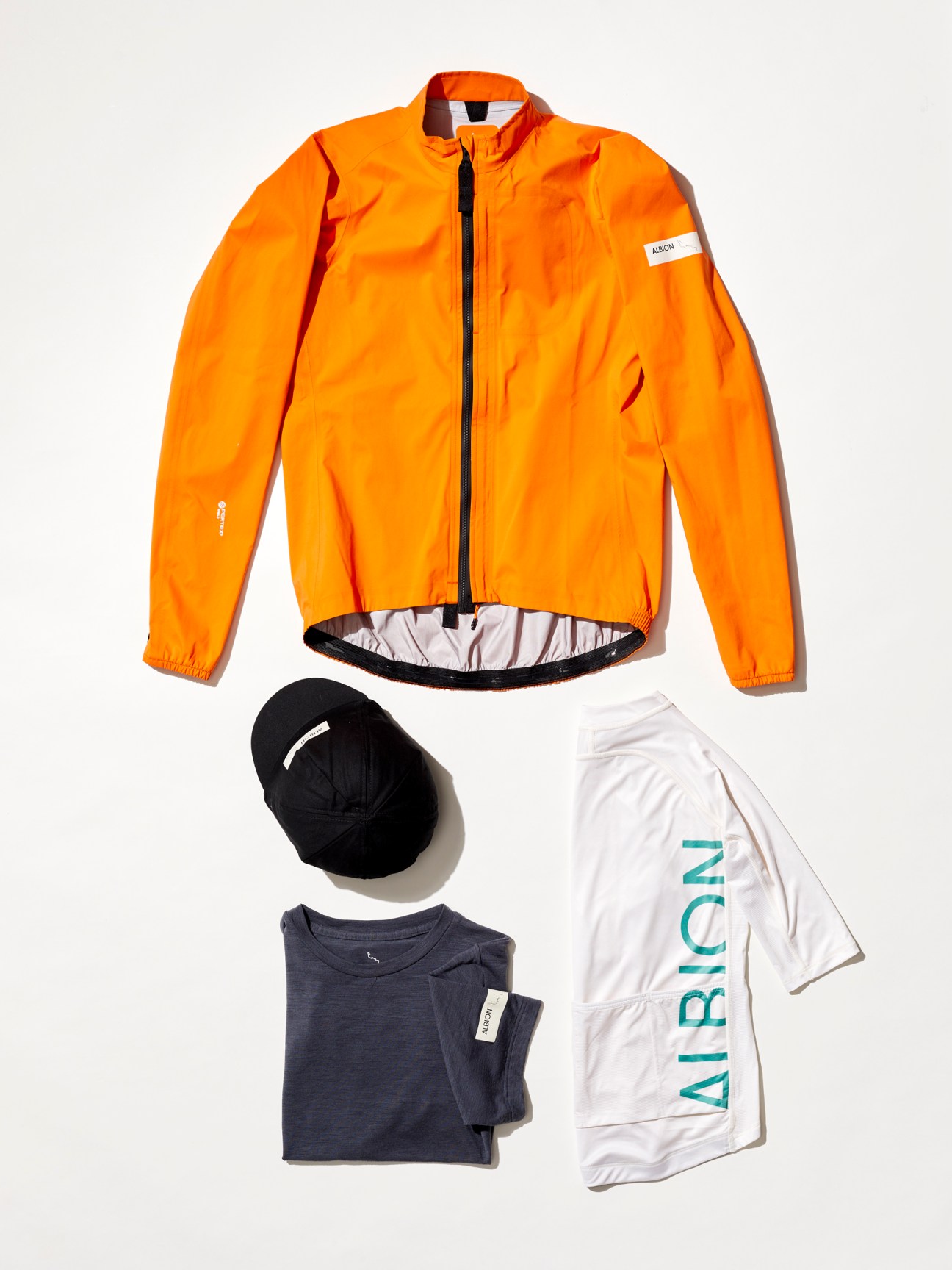
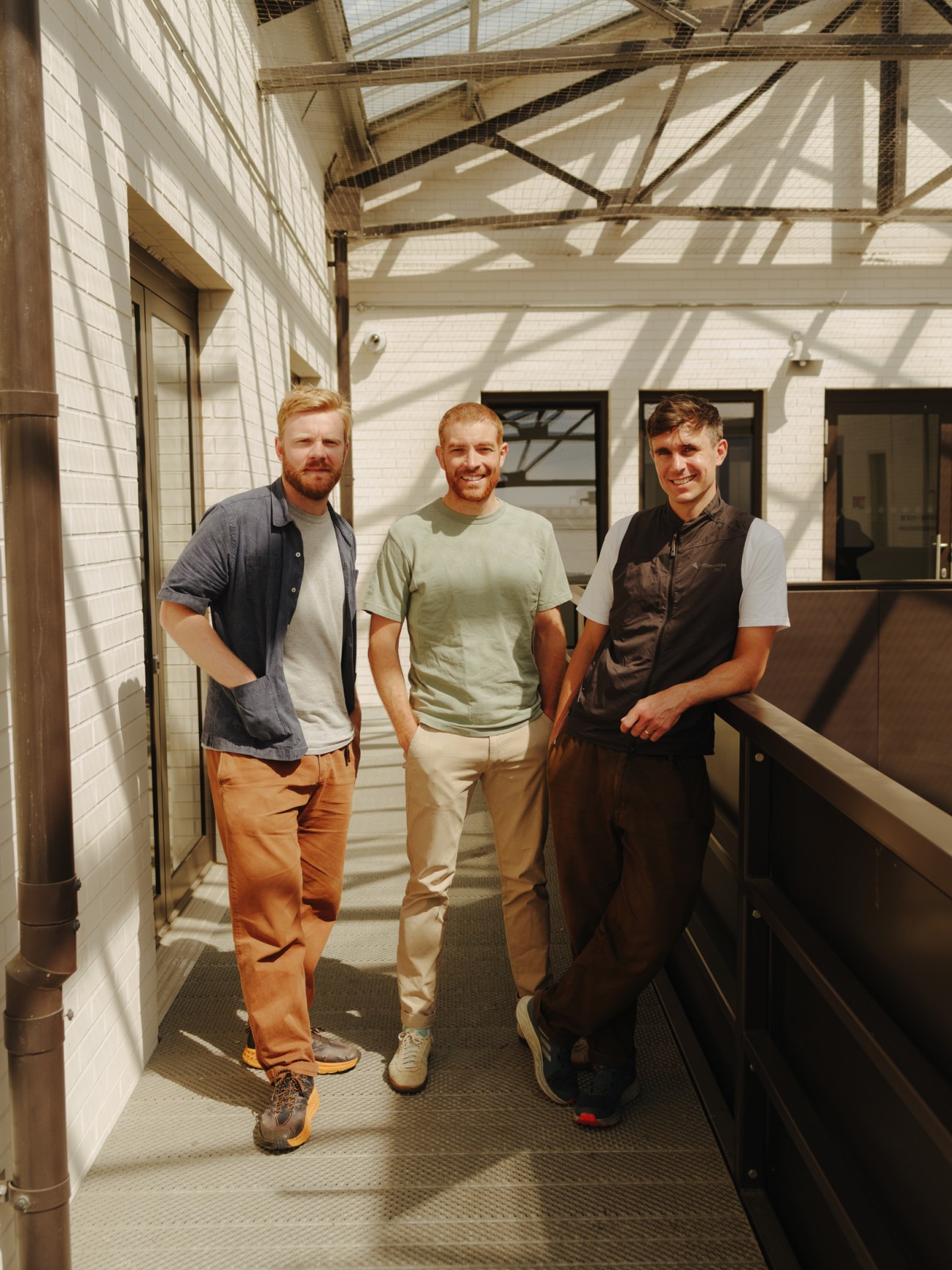
Since the label’s launch in 2016, Albion has been building a community of keen – and at times obsessive – cyclists with an eye for detail. They have come to appreciate the brand’s clever layering system, including breathable rain jackets, merino wool T-shirts and bib shorts, developed in aerodynamic, lightweight fabrics to facilitate racing. “We kept the designs quite simple, without any mad patterns, because we want to make clothing that will last,” says Stewart.
“A jersey or a jacket is meant to be used for years and we offer free repairs for life to keep an open dialogue with our customers.”
Every product is developed in the brand’s studio in southeast London and put to the test by Stewart and his team. Prototypes are sent to Albion’s manufacturing partners in Italy, China and Scotland once perfected, leaving little room for error. “We’re becoming a favourite brand among hardcore cyclists,” says Stewart. “It’s a question of lifestyle. We ride to work and for fun, and watch cycling races on TV. When you’re cycling, you’re exploring the limits of your physical and mental capabilities. Cycling is just a good way to unplug.”
albioncycling.com
2.
Paul Smith cycling essentials
UK
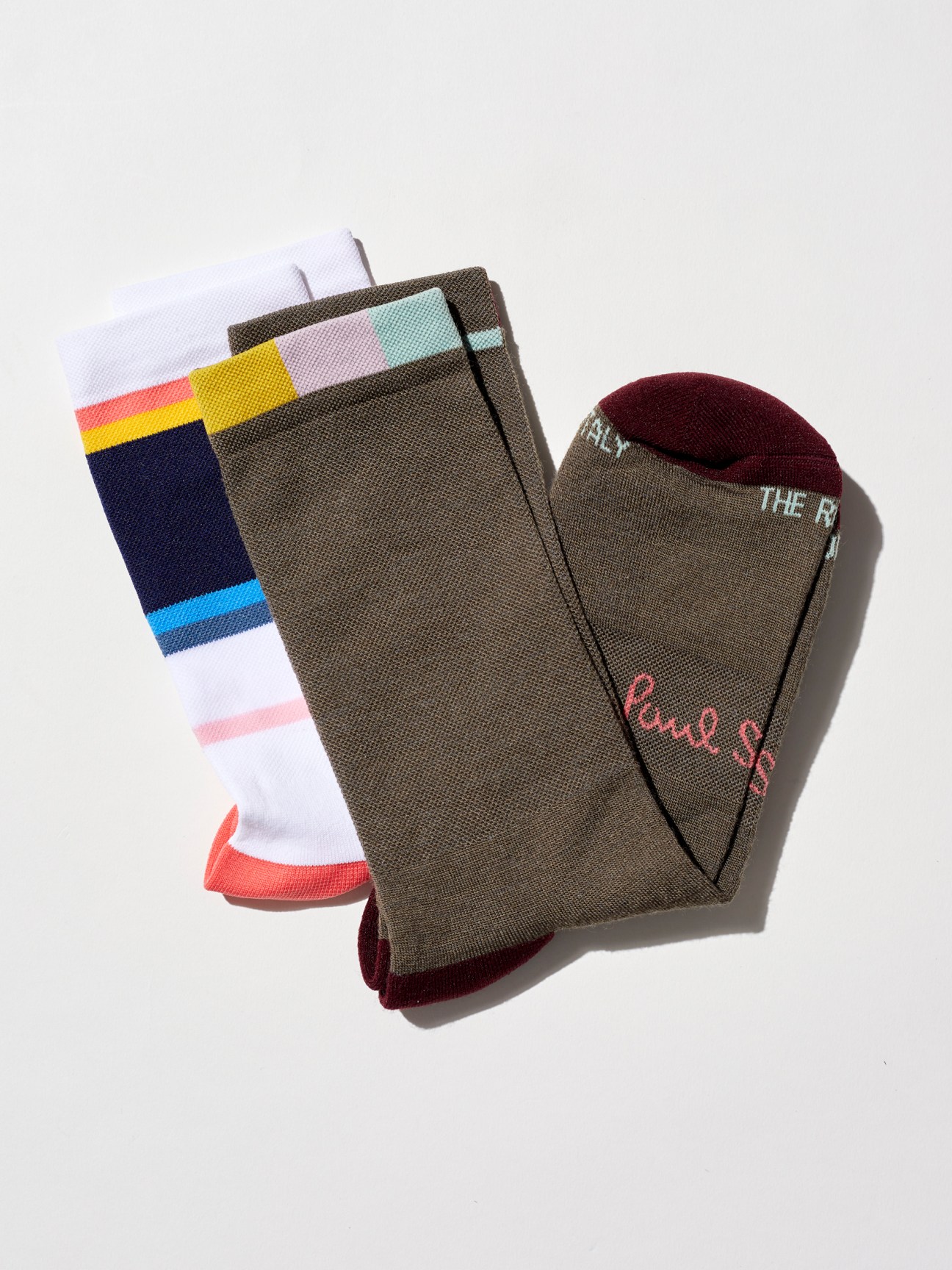
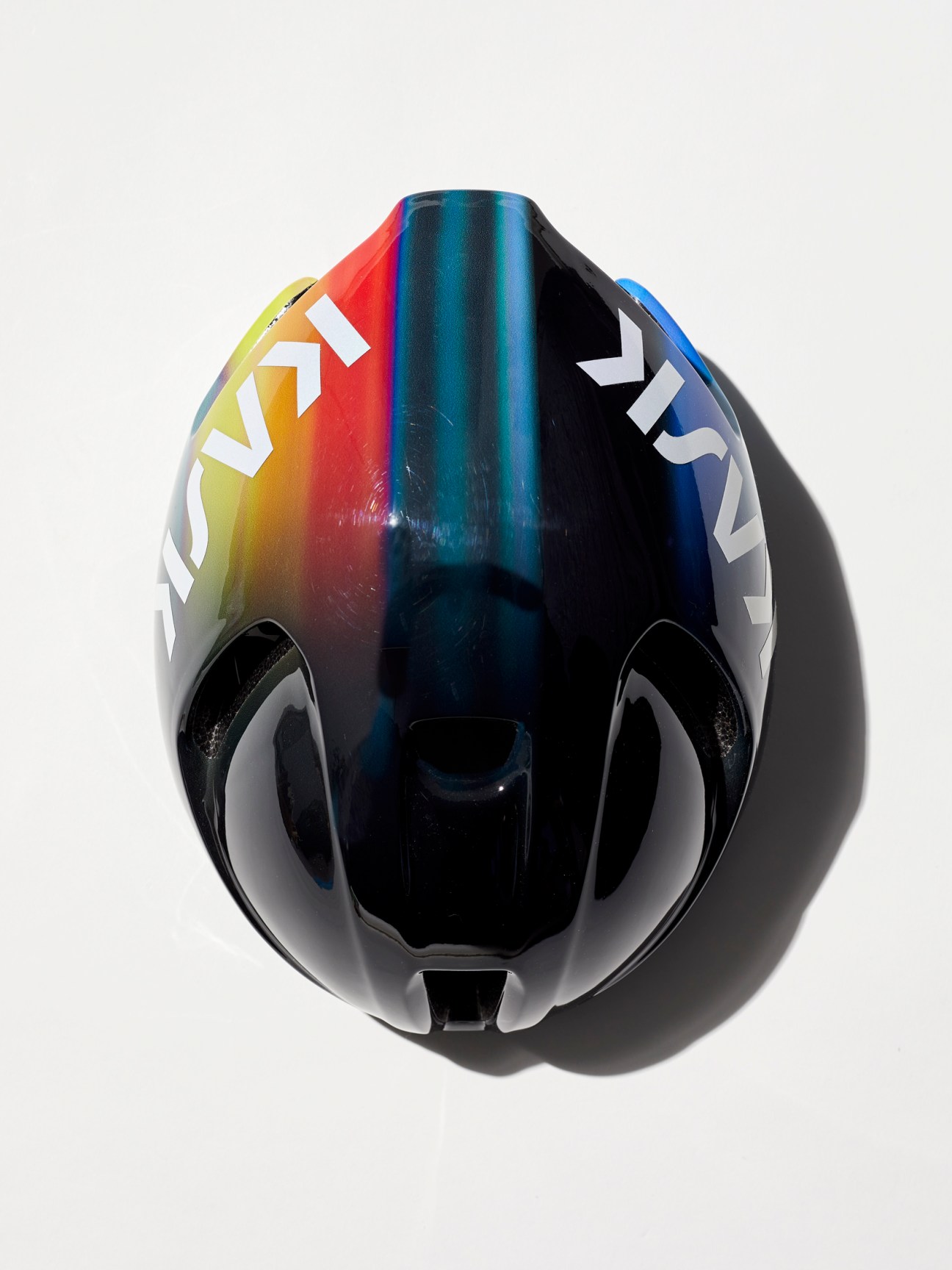
Paul Smith has a passion for cycling and his London HQ is filled with bikes, race trophies and memorabilia that often inspire his runway shows. He also likes to collaborate with cycling labels on capsule collections (among our favourites are the socks he designed with Rapha). The brand’s striking “Artist Stripe” cycling socks are made in Italy using a technical sports yarn with a comfy mid-foot support band. Smith has also joined forces with Italian helmet specialist Kask to design a lightweight helmet for a head-to-toe look.
paulsmith.com
3.
Prada Linea Rossa sunglasses
Italy
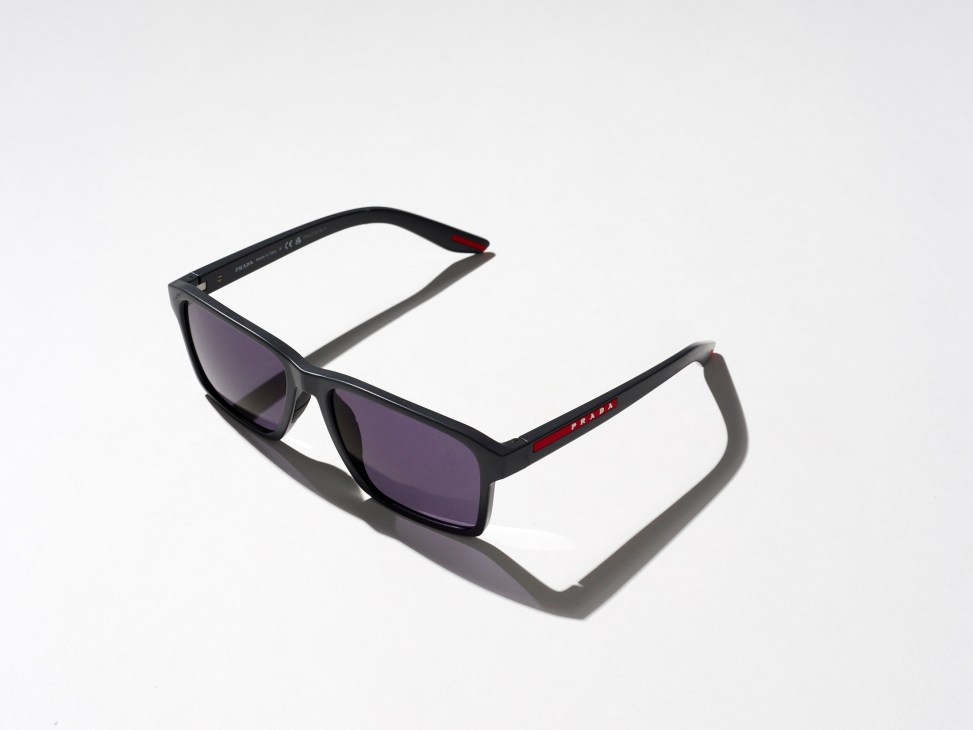
Cycling sunglasses are normally associated with wraparound silhouettes and multicolour lenses. But as the market for cycling fashion diversifies, brands are starting to offer a variety of options. We recommend switching to more modern, understated designs that match your day-to-day style. Prada’s Linea Rossa line offers an array of elegant alternatives, including these rectangular frames featuring monochrome Tuning lenses.
prada.com
4.
Forét vest
Denmark
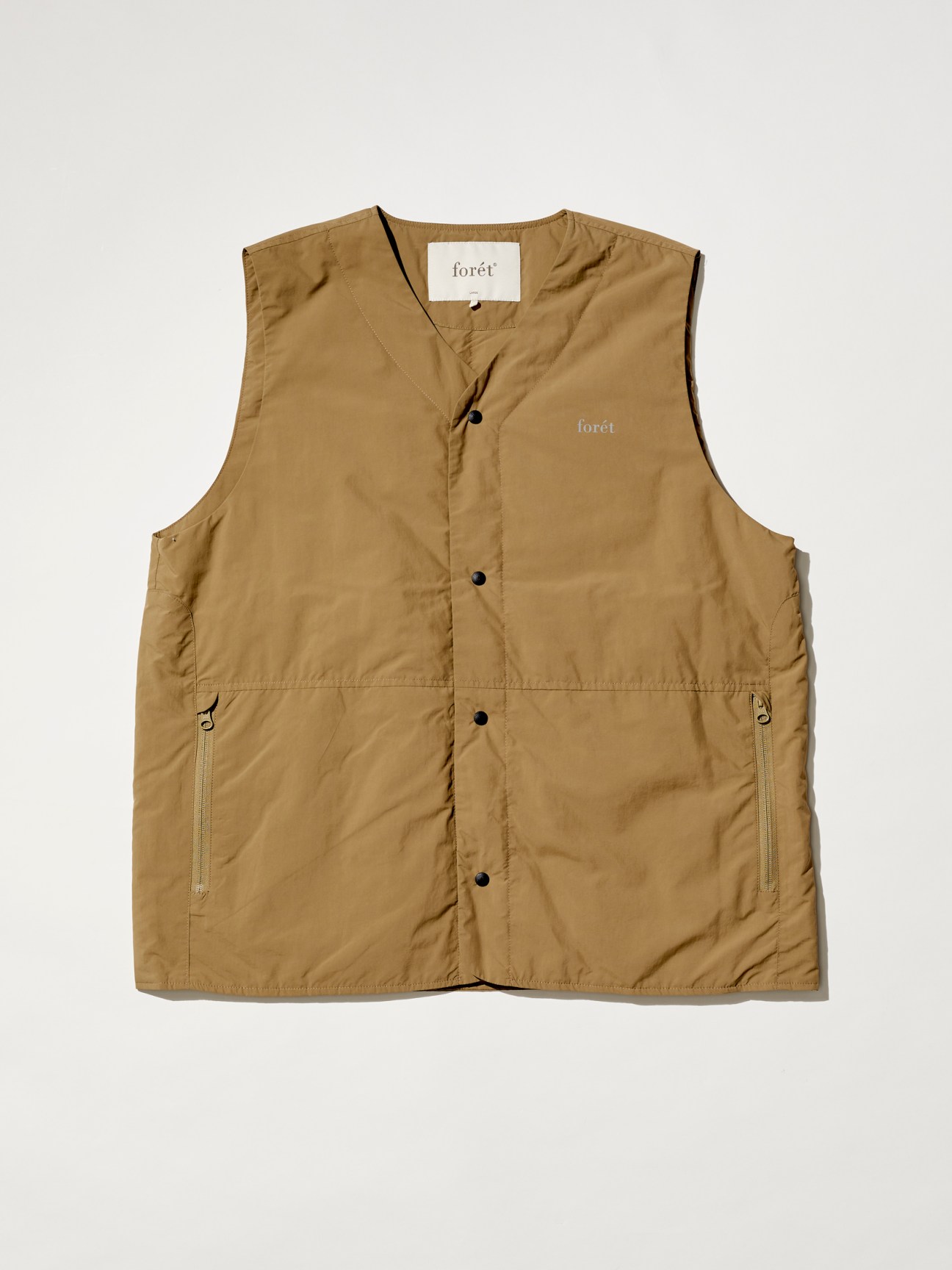
Inspired by Denmark’s forests that founders Jeppe Meier and Jesper Finderup explored as children, Forét’s collections aim to reflect the timeless quality of nature. This khaki vest is coated with eco-friendly, water-repellent materials inspired by the team’s recent canoe trip. “We develop clothing that stays relevant for longer than a season,” says Meier.
foretstudio.co.uk
5.
L/Uniform pannier bag
France
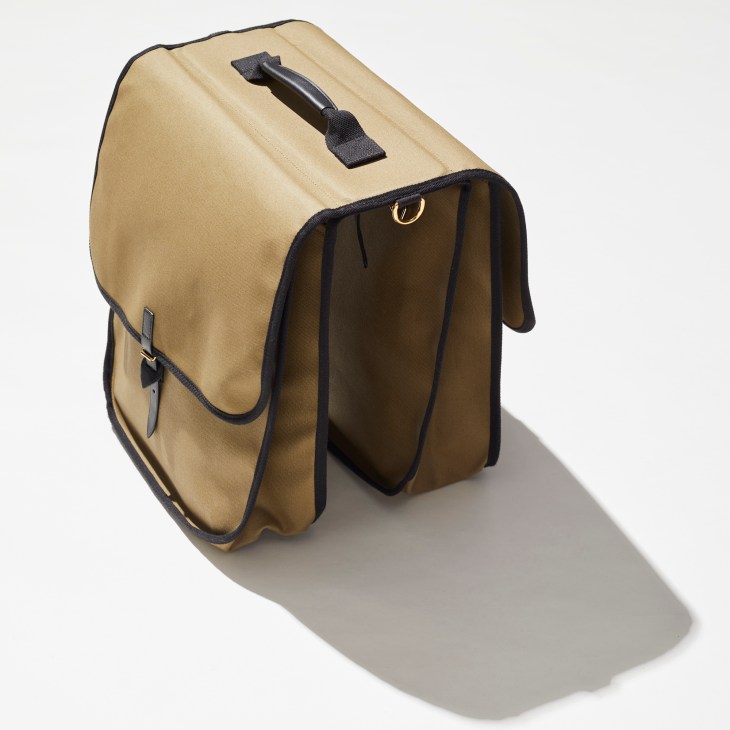
Parisian label L/Uniform offers elegant canvas bags for every occasion, including cyclists’ daily commutes. Its new saddle bag features two roomy pockets on either side and a coat of fluorinated resin makes it water-repellent. Once you reach your destination, you can adjust the straps to turn it into a portable shoulder bag.
luniform.com
6.
Pas Normal Off-Race Stow Away jacket
Denmark
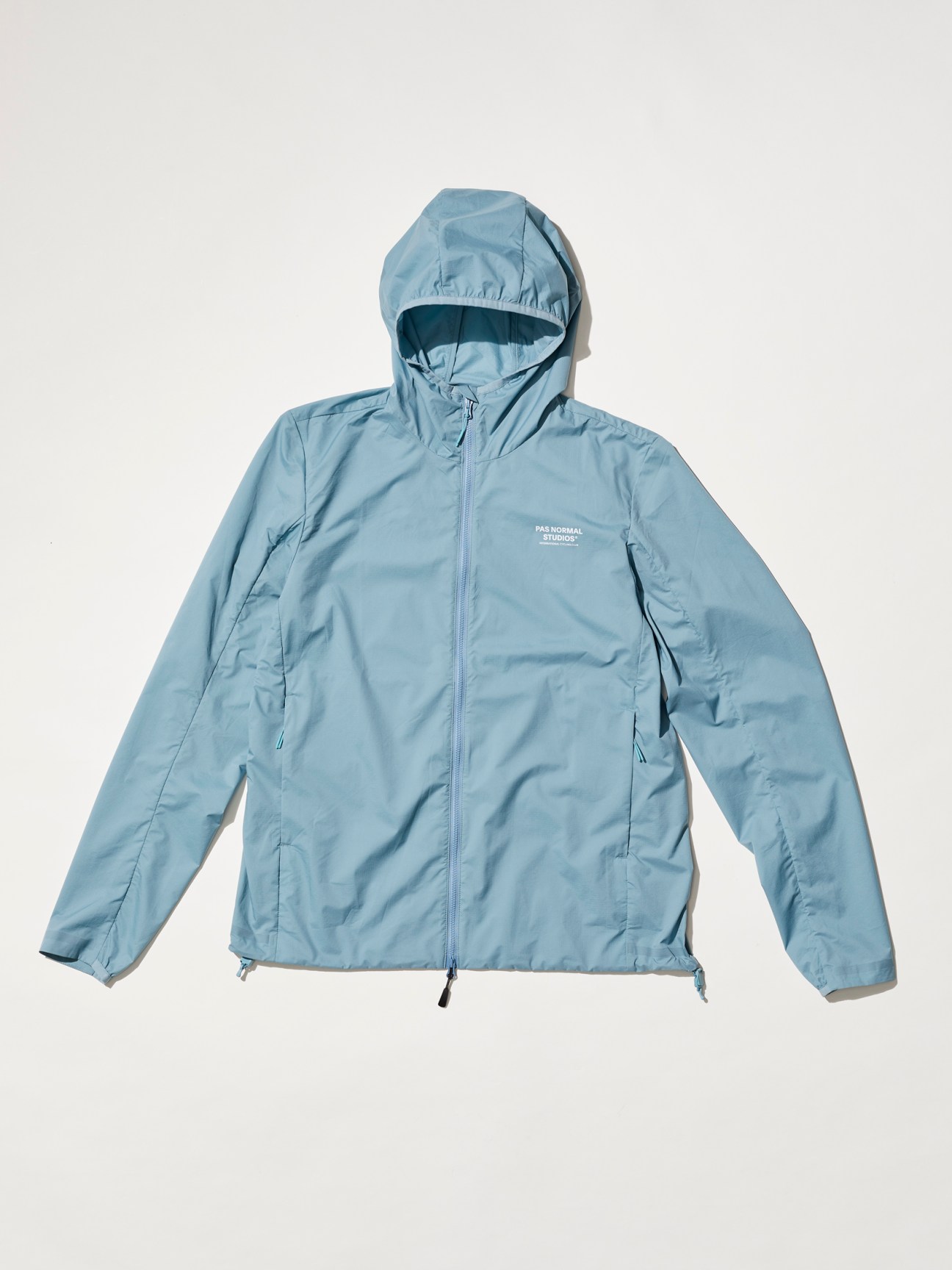
Copenhagen-based Pas Normal Studios offers smart designs suitable for both daily commutes and more adventurous weekend rides. We have our eye on the dusty blue version of the Off-Race Stow Away jacket. Made from a lightweight yet resistant ripstop fabric, this is a jacket that will see you through windy autumnal days. When the sun comes out, it can be stashed away into an integrated back pocket.
pasnormalstudios.com
7.
Qwstion Medium Bucket Bananatex backpack
Switzerland
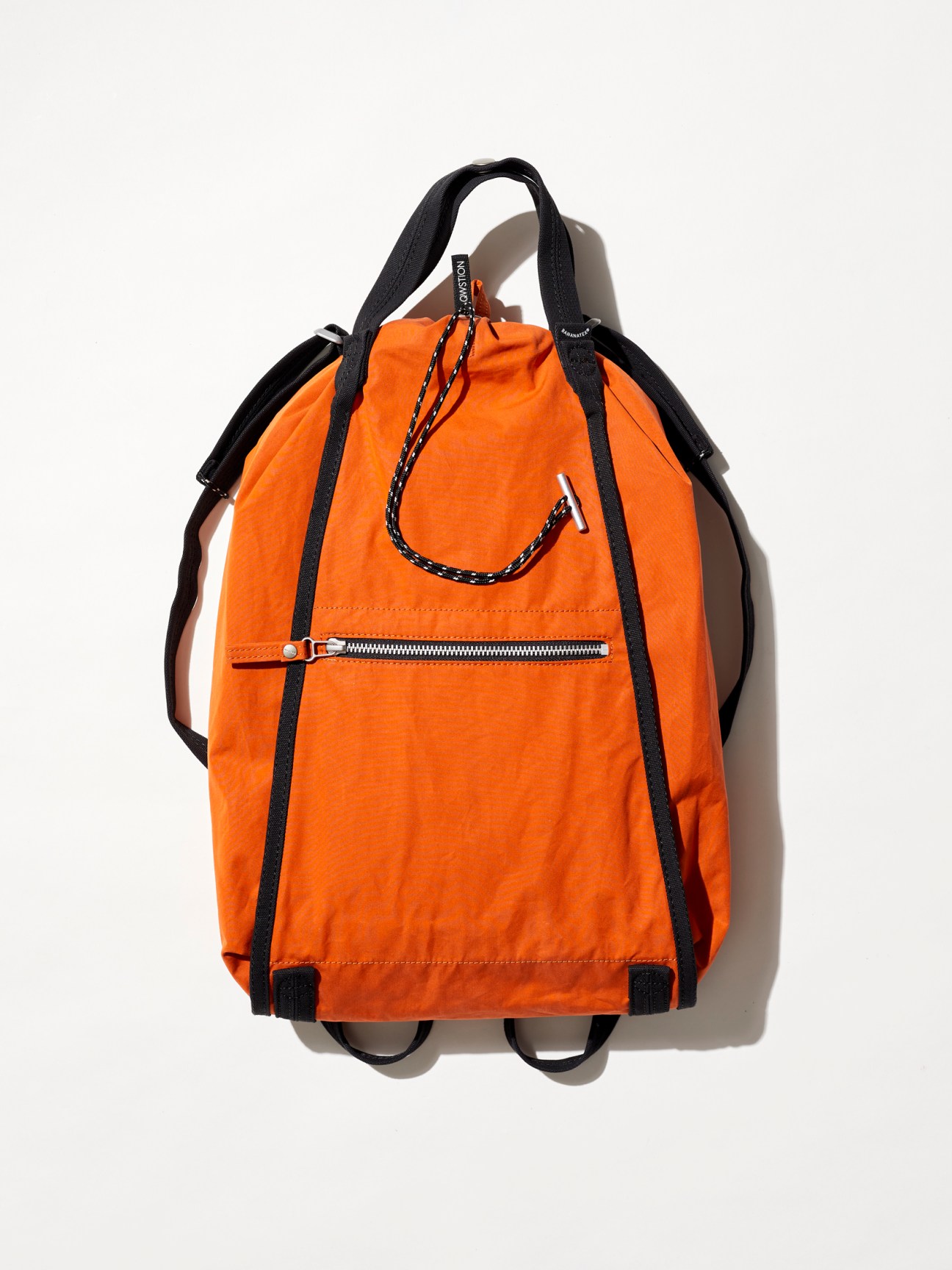
Zürich-based label Qwstion lives up to its name: by using plant-based materials and paying tribute to Swiss modernism, it aims to question design and manufacturing norms. “Our goal is to contribute positively to society – and materials play a fundamental role,” says co-founder Christian Paul Kaegi. “We use plants instead of plastic because they can convert carbon from the air into useful fibres.” The brand’s latest backpack design is made from a durable banana fibre. “Every single part of the bag is plastic-free and can be recycled,” says Kaegi.
qwstion.com
8.
Tracksmith Eliot Runner
US
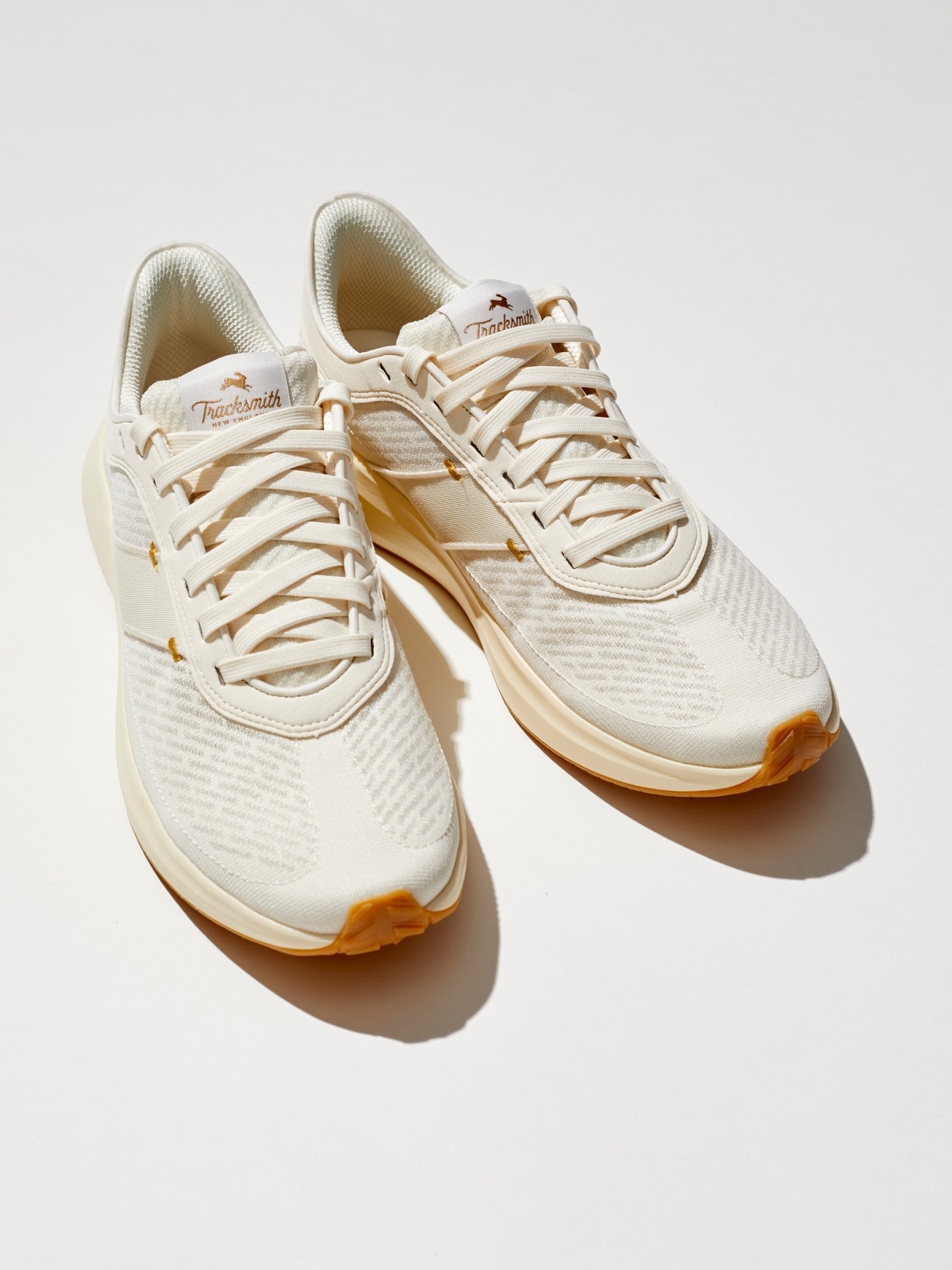
New England-based Tracksmith has a reputation for equipping runners with some of the highest-quality gear in the market. Its first trainers, the Eliot Runner, feature a subtle woven pattern and neutral shades, while the use of ultra-soft synthetic suede and engineered mesh ensures a soft stride and top performance.
tracksmith.com
Pedal power
How cycling fashion has got into gear
I joined my first cycling club when I was 13, right after my father introduced me to mountain biking during one of our family holidays in France (writes Sam Brogan). The feeling of freedom as we sped up mountains in Brittany got me hooked and, 18 years on, I’m still riding around the world. Since then I’ve seen cycling evolve into a highly technical sport where every performance element is carefully considered – clothing included.
Since the pandemic, more people – probably in search of that same sense of freedom – have been buying bikes and joining cycling clubs. They’re also putting a lot more thought into what they wear, meaning cycling fashion has been enjoying its own momentum. There is a continuous push for innovation and hard-working pieces that enhance performance. Today you are not just picking up any old jersey from your local sport shop but investing in quality designs that can also make you faster.
The shift has been a long time coming. The first Lycra cycling shorts were designed by Swiss brand Assos in the 1970s (not to be confused by fast fashion retailer Asos). Taking inspiration from the Swiss skiing team, Assos created lightweight shorts that maximised aerodynamics and helped cyclists gain speed. By the 1980s, most professional riders traded their woollen shorts for Lycra, thus setting a precedent for cycling brands to keep innovating.
Any competitive rider will tell you that function comes first. The brands that I trust offer clothing that enables you to ride in any weather and feel comfortable along the way. UK label Albion’s long-sleeve jersey is a good example: it’s light enough to be worn all year and can be paired with a gilet during the colder months. High-quality socks are another essential for making winter rides more enjoyable.
As Monocle’s art director by day, I find that aesthetics play their own role when it comes to finding the right gear. Why not consider colour and design, just as we do with the rest of our wardrobes? Rapha was one of the first to challenge perceptions by thinking as a fashion brand as much as a sports brand and introducing the cycling community to a more refined aesthetic, free from the traditional, loud logos.
Today more brands are following in its tyre tracks and diversifying the cycling fashion market. Copenhagen-based Pas Normal Studios makes a good case against black bib shorts with elegant, muted shades. It’s refreshing to see a shift towards more solid colours. I have my eye on Velobici’s emerald-green sets, which also happen to be helping to revive the manufacturing industry in my hometown, Leicester.
Gone are the days when you were limited to mass-produced gear. With these new names bringing considered design to the world of cycling, you no longer have to abandon your style – or appreciation for quality – on the bike.
Regent bets its electric sea glider can reshape coastal travel
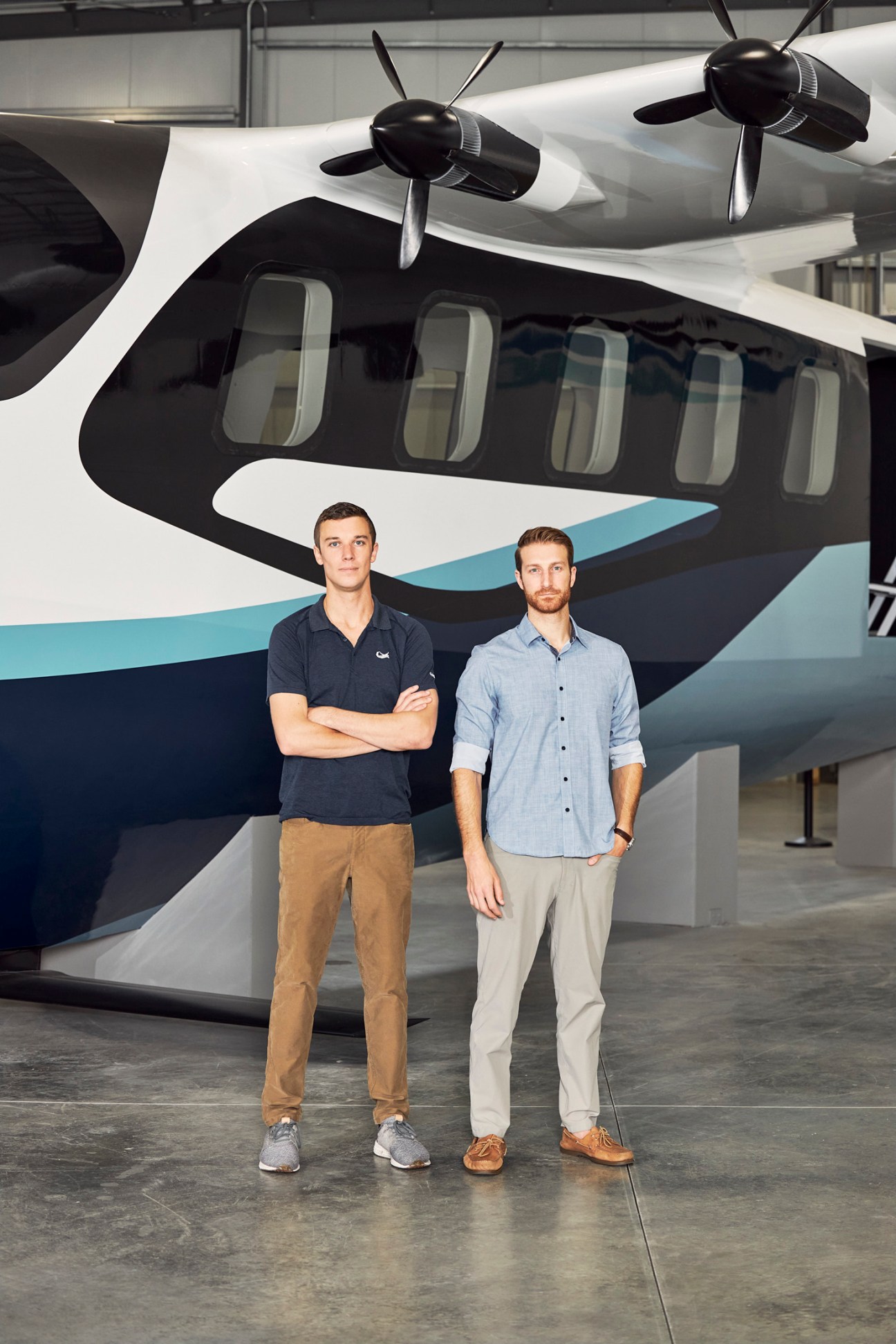
The arrival of a futuristic new aircraft can create hype and excitement but there’s a lot of “vapourware” in this business too. That’s the term for when a start-up touts an electric plane or a flying taxi in a fanfare of 3D renders only for the idea to fizzle out and, eventually, evaporate. Regent’s sea glider could still be one of those stories. Yet at the firm’s headquarters in Rhode Island, you come nose-to-nose with its Viceroy sea glider, even if this one is a mock-up made from wood. “What we’re hearing from investors is, ‘We’re done with CGI, we need to see proof of these vehicles,’” says aeronautical engineer Billy Thalheimer, who co-founded Regent in 2020 with Michael Klinker. “For us, proof also means having humans on board. That’s why we’re moving so fast to a full-scale prototype: we expect to be flying by next year.”
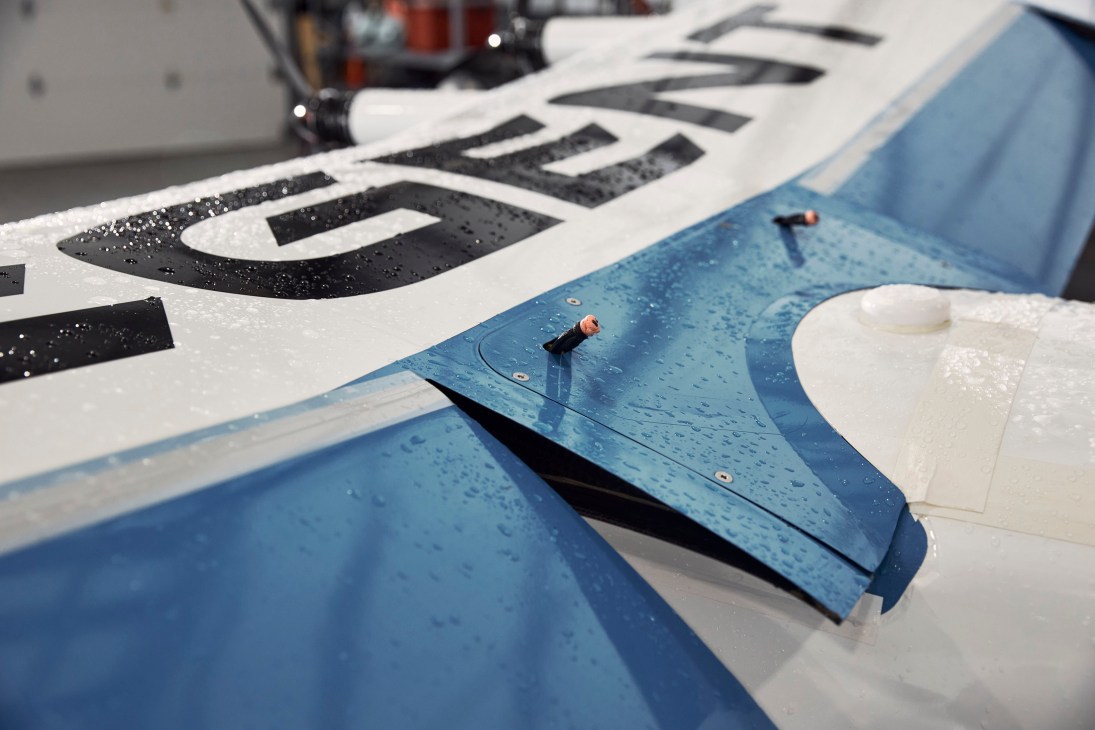
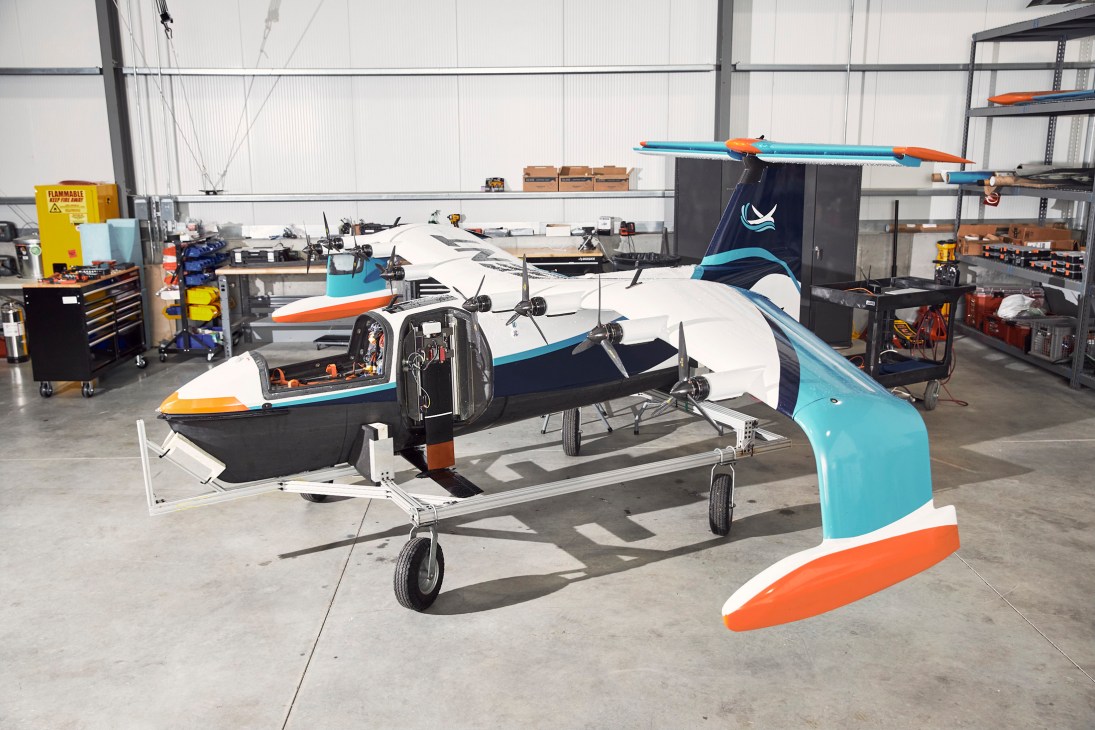
Thalheimer is an enthusiastic ambassador for the Viceroy. He and Klinker designed it after meeting at MIT and working together for years at Boeing. Regent already has orders for more than 400 sea gliders, comprising almost $8bn (€7.1bn) of sales (though the company will not disclose how much a single vessel costs). Meanwhile, defence manufacturer Lockheed Martin has made a strategic investment in Regent, seeing military applications for this sea glider. A vast factory is in development just down the road from the HQ and its new director of manufacturing previously worked for US spacecraft manufacturer SpaceX.
In the workshop stands a quarter-sized version of the Viceroy, nicknamed “Squire”, which commenced sea trials on the Narragansett Bay last September. The wings are still wet from a test flight at dawn and, if the real thing makes it to market by 2025, Regent believes that it will revolutionise how coastal and island communities get around. Fully electric, the Viceroy has a range of about 300km – think Manhattan to the Hamptons, Boston to New York – and the luxuriantly large windows of the 12-seater are more like those found on a train than an aircraft. “You can bring it right up to the harbour or marina and board just as you would a ferry,” says Thalheimer. “You don’t need to get there an hour before either.”
The Viceroy is limited to only flying over water and so is more like an airborne ferry than a typical plane. It has caught the eye of island-hopping commuter carrier Mokulele Airlines in Hawaii, which has bought a fleet. Brittany Ferries in France has signalled that this sea glider could make for a nippy way to get travellers across the English Channel. (A 100-seat sea glider, called the Monarch, is also in the works.) Thalheimer estimates that the Viceroy could do the 290km route from Providence to New York in an hour, with a $60 (€54) ticket each way. That sounds ambitious. “But so much of the cost of aviation on short routes is about maintenance,” he says, as we peer into the simple motor affixed to a carbon-fibre propeller. “With this, there’s no oiling and you don’t need to take apart a jet engine.”
Regent is betting on efficiency to keep costs down. The Viceroy was inspired by watching pelicans fly over water. These sea birds glide just above the waves and harness an uplift from the surf, which minimises drag and allows them to stay aloft using a fraction of the energy. Regent’s sea glider operates on the same principle – what’s known as the “wing-in-ground” effect: it uses sensors to maintain a constant altitude of about nine metres above water, which gives it a boost that the engineers say can make it clock in 45 to 50 knots – about 92km per hour – at full speed. That’s just slightly faster than the America’s Cup racing yachts that carve up Rhode Island’s bays.
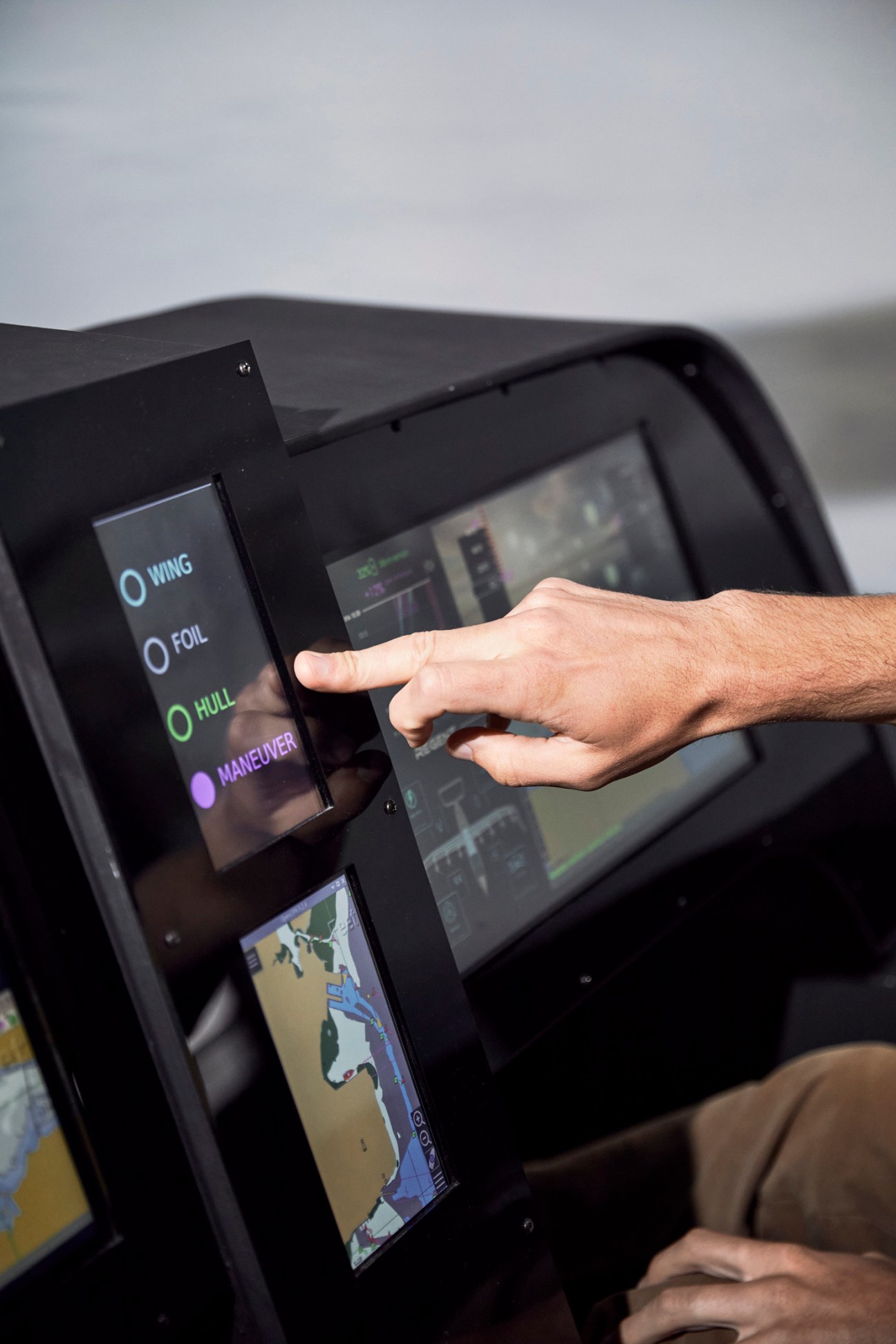
Monocle is shown to a cockpit simulator that allows customers to pilot a Viceroy anywhere in the world. On a panoramic screen we see a sunny day on Narraganset Bay. The interface in front of us was designed for ferry captains, with a simple joystick used to bank left and right. As we click up through the throttle, the chair rumbles and we lift onto the foils and gently into the air.
It’s not all plain sailing. Regent is working with the US Coast Guard with the aim of attaining certification for its craft but the Federal Aviation Administration is still mulling over whether it might certify it as a plane too, which would drastically increase costs.
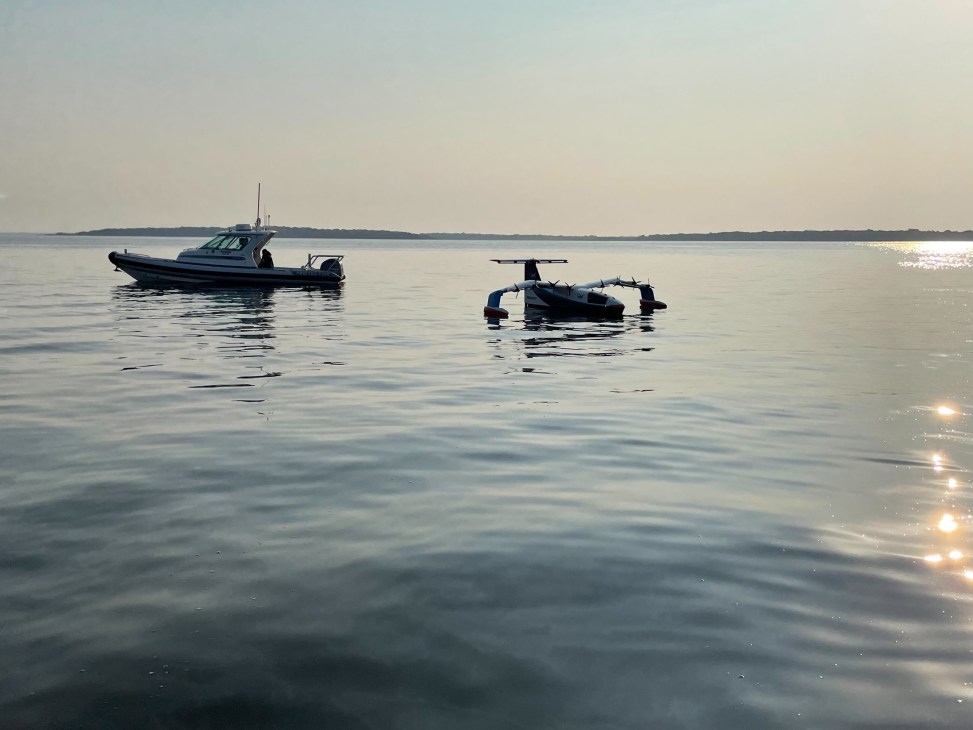
If that happens, the investment from Lockheed Martin could prove vital because the US military does all its own certifying. “When you look back to the Second World War and the island-hopping campaigns towards the end, this is what a [potential] Indo-Pacific fight might have looked like,” says Chris Moran, vice-president at Lockheed Martin Ventures, the firm’s investment arm. “We’re looking at vehicles that would support that.” Moran sees the Viceroy more as a logistics and supply-line vehicle than a fighter but Regent has mocked up a quarter-scale version in Marine Corps grey that looks formidable.
The Viceroy and the Monarch will be electric, despite Lockheed’s concerns that troops in the field could be left reliant on battery power. But Regent is working with Lockheed and other defence partners to explore sustainable fuel technologies that might allow sea gliders to travel distances of up to 1,000 miles. By the end of the decade, Thalheimer believes, battery technology will have scaled up enough that they’ll be able to fly from Los Angeles to San Francisco on a single charge.
Some parts of this business are going ahead on a wing and a prayer but the crew isn’t leaving anything to chance when it comes to safety and testing. Thalheimer recalls watching the Squire’s first successful take-off and landing. “What struck me was how similar it looked to the CGI that we made in the earliest days of the company,” he says. “We’re turning what was, to some extent, vapourware at the beginning – this vision, this dream – into reality.”
Cabin fever
There’s no hard and fast rule about when the alcohol starts to flow at Hamburg’s Aircraft Interiors Expo (AIX). By mid-afternoon, stands have begun to host delegates ready to loosen ties and tongues – and likely get the bulk of the day’s deal-making done. Lufthansa Technik, the design and maintenance arm of the German aviation giant, organises a “beer call”, while Recaro Aircraft Seating’s drinks are accompanied by a saxophonist. Having a well-stocked bar is clearly the key to an auspicious fair. “It’s almost like a fraternity; it’s a really tight community,” says Aix’s British events director, Polly Magraw. “All the top 100 commercial airlines come here, year after year.”
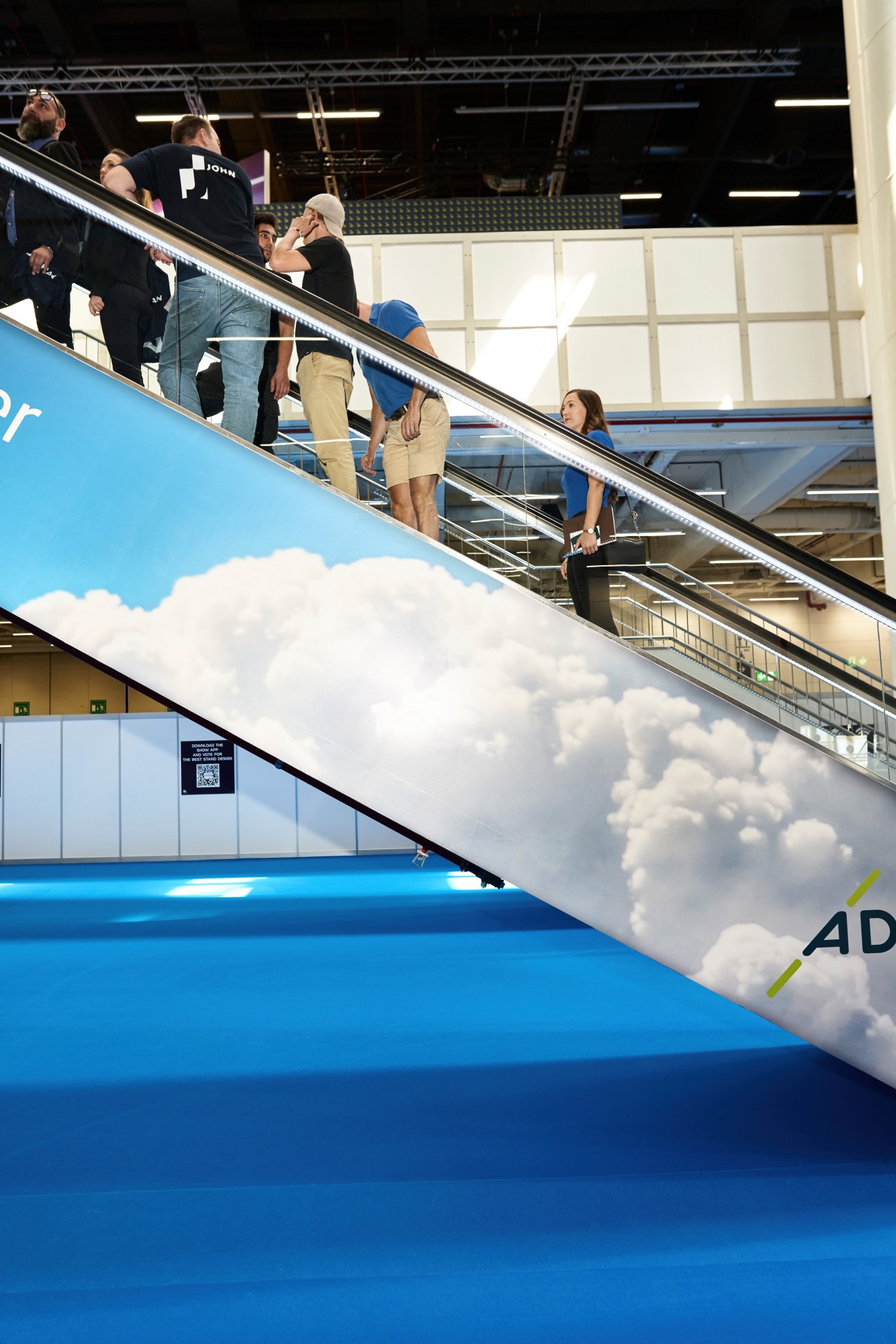

aix and its concurrent sister event, the World Travel Catering & Onboard Services Expo (WTCE), offer a deep dive into the minutiae of the aeroplane cabin experience. Its niche of suppliers, manufacturers, designers and caterers see anchor floor fittings, led-lighting sequencing and optimised ceiling architecture where the average punter might only see seat rows, TV screens and overhead bins. It’s no exaggeration to say that these three days of talks and meetings in Germany’s second city help to shape what flying will look and feel like in the years to come.
Magraw talks about the “resilience of the industry” after the bumpy ride of the past few years. Clearly things are starting to return to schedule. Wandering the whitewashed trade hall buildings of Hamburg Messe in June reveals a show that is busy without ever being overwhelmingly so, despite the breakout parties. With people wanting to travel and airlines recuperating the money they lost, the demand is certainly there, even if there are still supply-chain issues. Delegates clearly come to aix knowing who they want to talk to and what they need to get done.
Alongside the agreements, the expo services airlines’ increasing desire to personalise their brands, a trend also populating life away from aircraft fuselages. “Not a lot of people even really know what aeroplane they’re on, right?” says Andy Mason, the California-based vice-president of product development at Panasonic Avionics, standing in front of a wall of the company’s new screens. “But the cabin is where [airlines] can differentiate.”
That is where Panasonic comes in. Mason is showing off the company’s new in-flight entertainment. Ranging from 13in (33cm) in economy up to 42in (107cm) for first-class, the screens are the first to use colour-popping organic led technology in 4K resolution, which Mason calls a “quantum leap” forward. The new Astrova software platform makes it easier for airlines to customise content and offer what Mason calls “engagement beyond entertainment”.
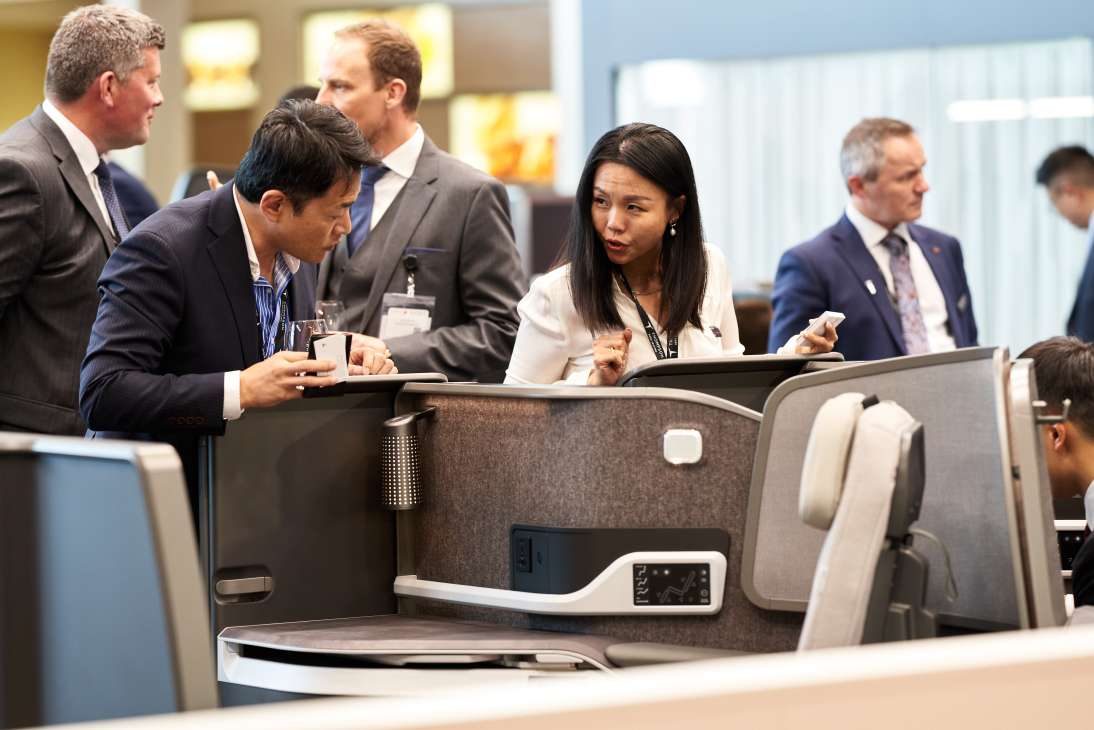
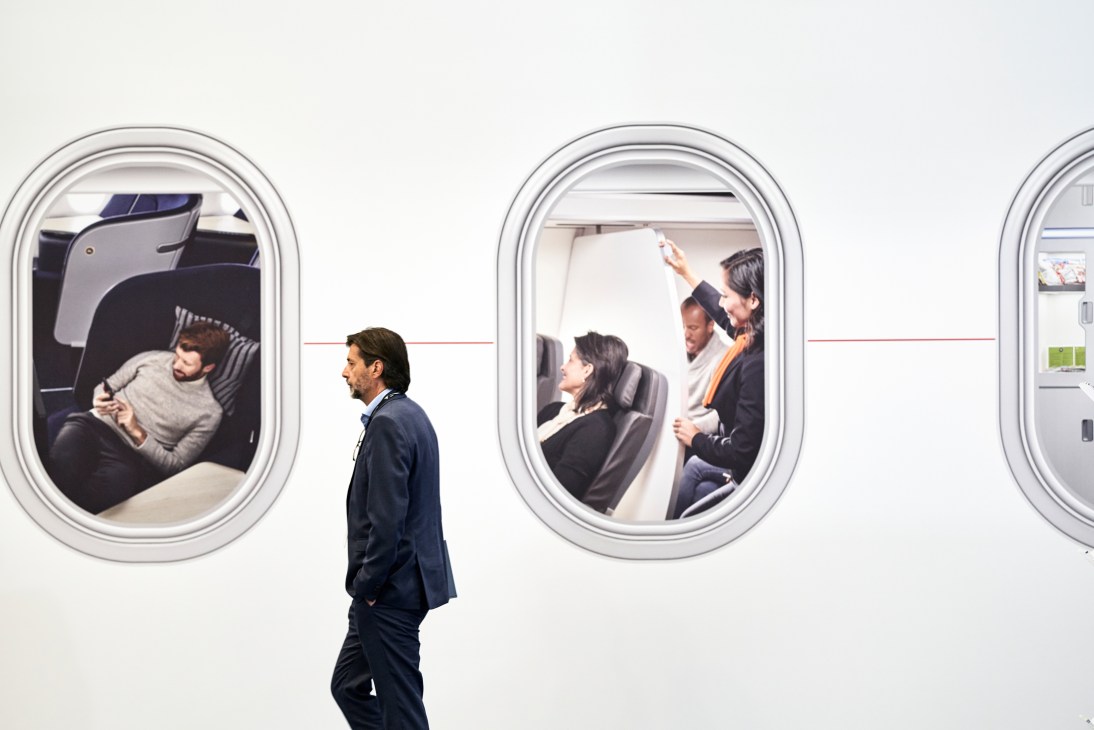
While Mason is adamant that seat-back screens are making a comeback, even if Europe is more reticent than the US and Asia, the real brave new world that aix reveals is how onboard connectivity is set to ramp up – bad news for anyone who enjoyed that last offline refuge up in the sky. Though not the only company doing it (Elon Musk’s Starlink is another player), OneWeb could be changing the way we connect to the internet; it’s working with distribution partners such as Panasonic to make it happen.
For Nick Maynard, marketing director for mobility, OneWeb is helping firms “deliver on the promise of a connected airline”. Since 2019, OneWeb has launched 648 low-Earth-orbit satellites, which he says will deliver high-speed internet anywhere without the latency issues experienced when connecting onboard using only traditional satellites that are about 30 times higher up. The US’s Alaska Airlines is expected to start using the technology next year.
From plane-makers to seating manufacturers, everyone seems to want to roll up to aix with either a prototype or an interactive experience. Monocle finds itself sitting inside a full-size recreation of Boeing’s wide-bodied 777x interior – set to enter service in 2025 – as Brenna Wynhof, regional director of cabin marketing, coos at the “cotton-candy gradients” of the lighting system’s sundown effect. There is also a semi-transparent announcement monitor from Airbus – allowing crews to see through it from one side towards the passengers – and Recaro Aircraft Seating’s Business Class prototype, featuring headphone-free audio built into the seat, where you can feel the bass ripple around your back.
Perhaps the biggest punt is being taken by Italy-based aviation company Aviointeriors, which has come up with a pilot and passenger seat called “Seaty Flyer” for electrical vertical take-off and landing (evtol) aircraft. Small, helicopter-like electric craft are billed as the next big thing in urban mobility but they’re yet to take off – literally. For Aviointeriors, aix is a vital place to get face-to-face feedback from industry insiders who can touch and feel a product, even if there are plenty of specifications and regulations to be worked out. Regular plane seating is still the core of the firm’s business but there’s logic in taking a chance on evtol, argues engineering adviser Gaetano Perugini. “It’s better to be present today,” he says. “When the market explodes, we will already have experience.”
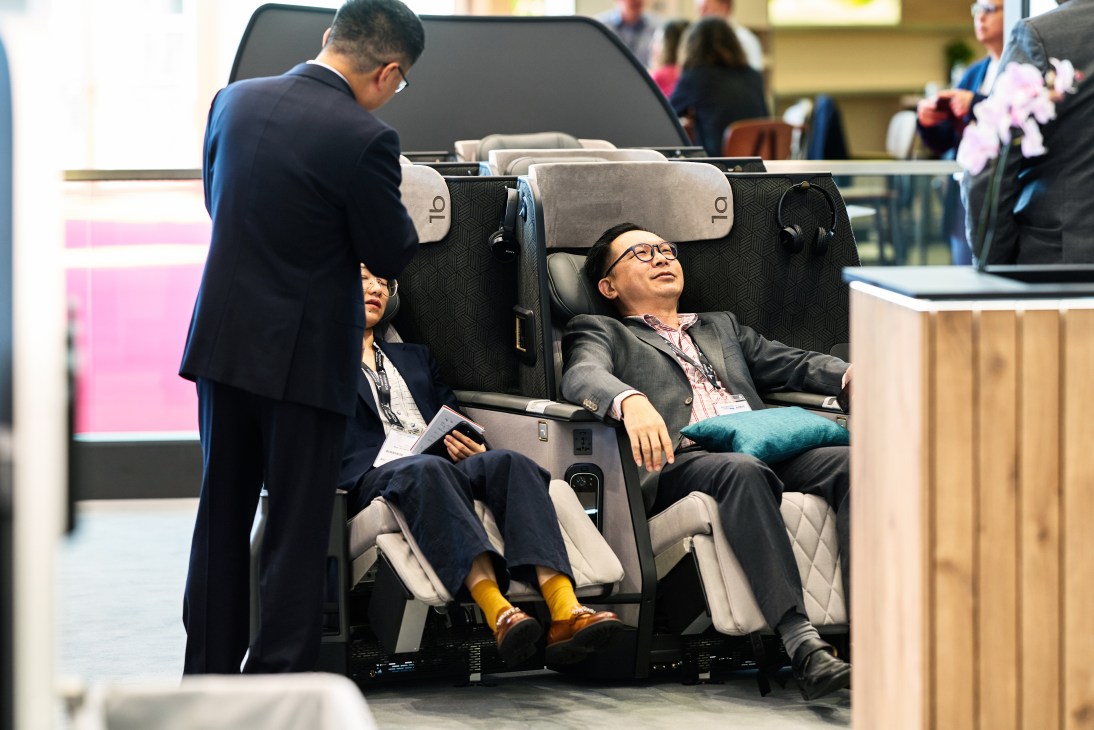
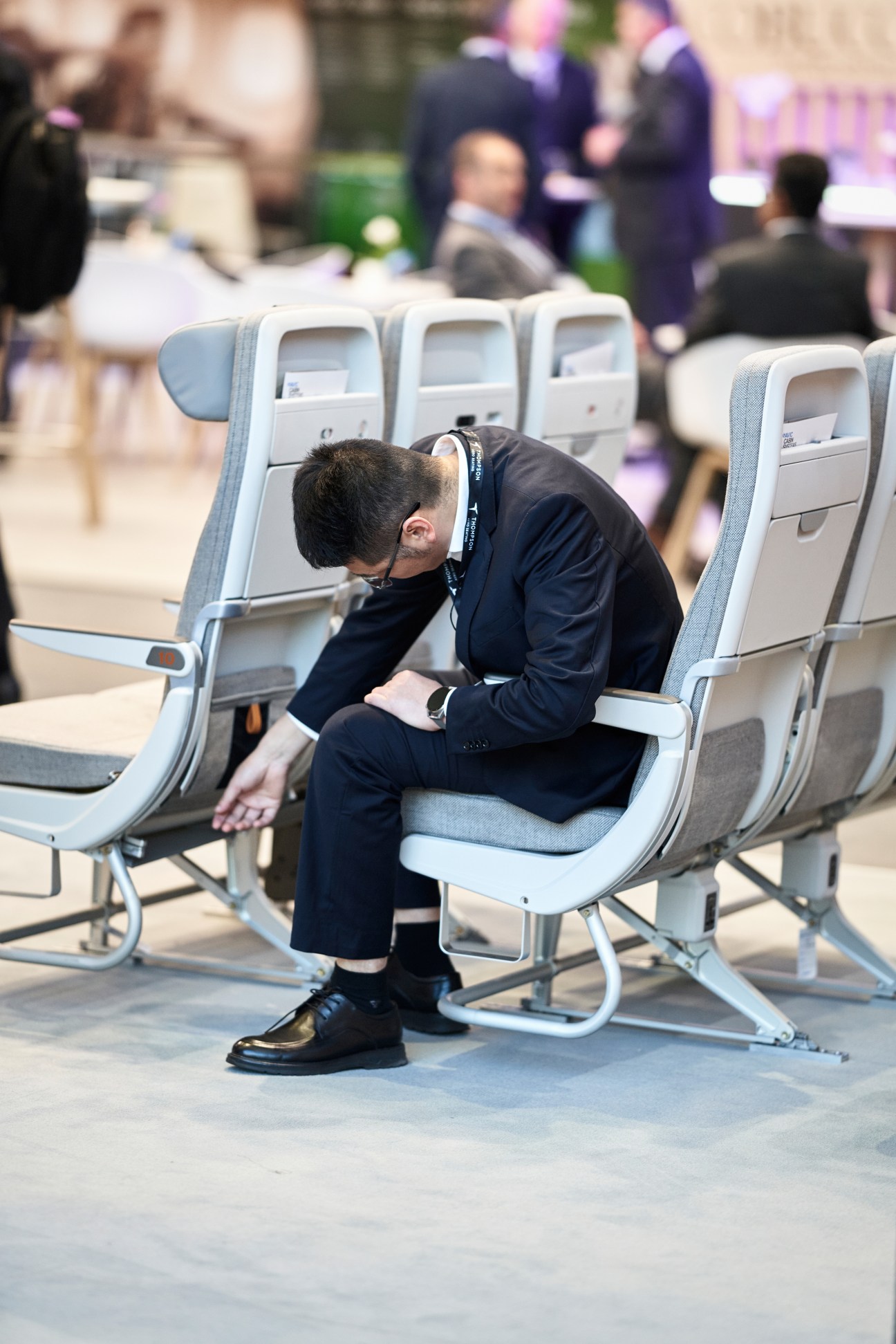
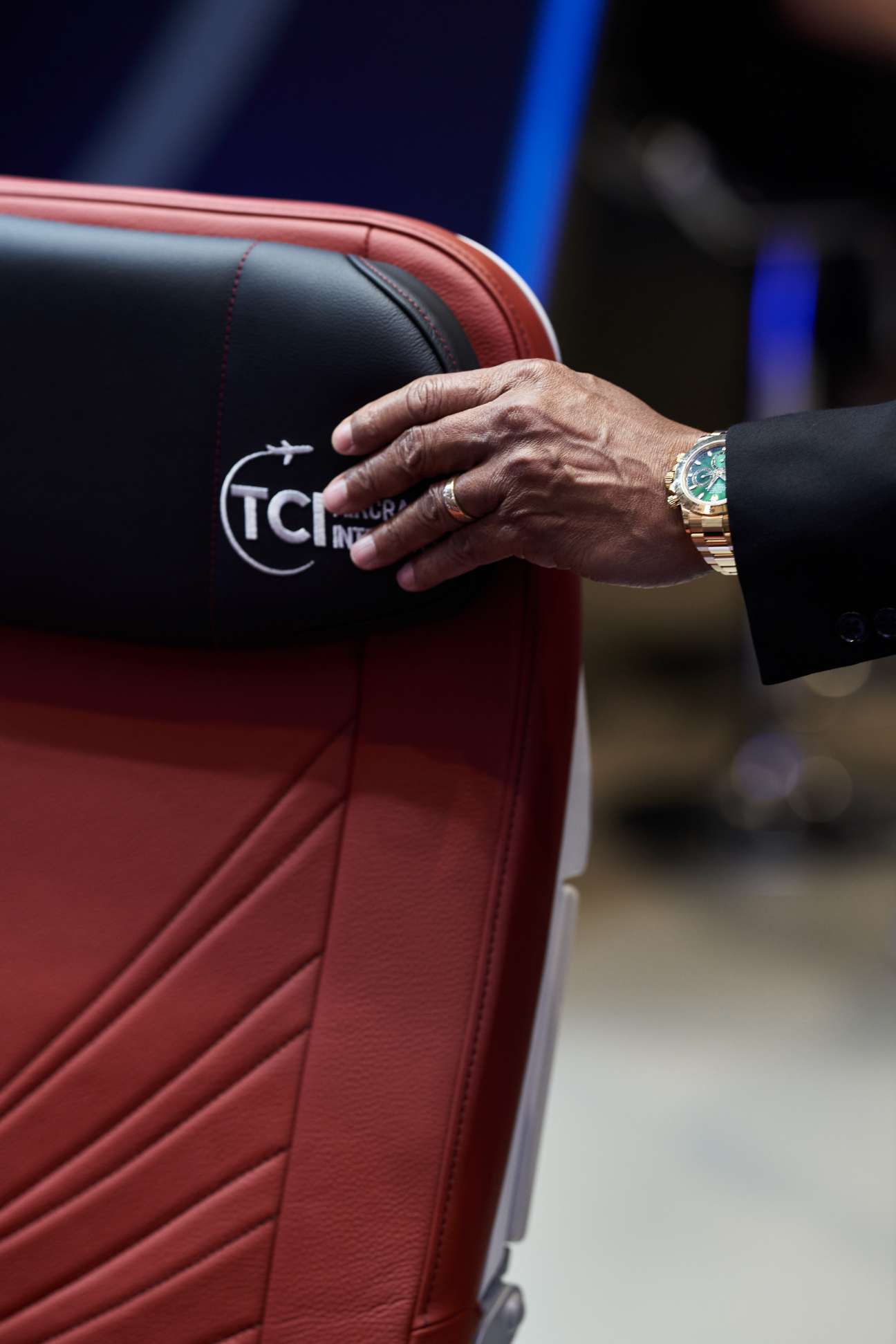
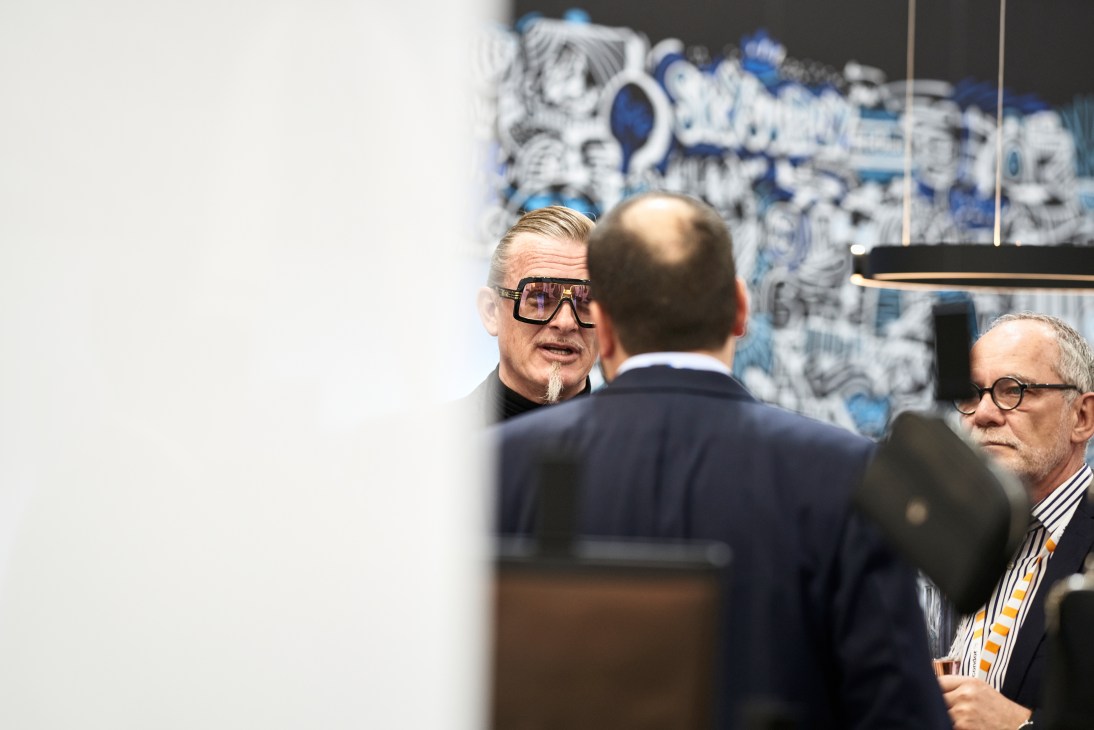
Many of the innovations on display in Hamburg aren’t, however, aimed at new segments; they are plays on existing ideas, often with tweaks to make flying more environmentally friendly. An interiors expo, by its very nature, can’t address the elephant in the room – engine fuel itself – but there are plenty of what event director Polly Magraw calls “quick wins” for those in the business of cabin furnishings, from reducing the weight of fixtures (so that a plane is lighter and consumes less fuel) to recycling materials.
You can’t walk very far at aix and wtce without seeing or hearing the word “sustainability”, applied in every possible context. There are sustainable materials for seats, sustainable waste disposal solutions and sustainable prototype cups partially made from agave. One feels a little sorry for the ice company promoting individually wrapped ice packets: it seems to have misread the room.
While some of the sustainability claims on display are questionable, one company that is looking to shake things up is Northern Ireland’s Plaswire, which works across different industries recycling plastics (its biggest client to date is Danish wind giant Ørsted). It only launched its aviation product in June but Plaswire claims to have a solution for plastic offcuts and even end-of-life fuselages, using its technology to turn them into a polymer that can then be a replacement for precast concrete in the construction industry. “We’re the only company that has addressed this problem,” says CEO Andrew Billingsley, from his stand. “We can’t change what comes out of the back end of the engine very easily but we can deal with the actual aircraft.”
It’s easy to get stuck in the weeds in Hamburg. But it’s also equally possible to zoom out and see the macro trends. Whereas privacy might be increasingly important after the pandemic, there seems little evidence that germophobia has left a mark on cabin interiors. aix does, however, offer further proof of the ever-reducing presence of First Class in favour of more profitable Business seating. And while much of aix is dedicated to the premium end of the market, there is a hint that some of its perks might filter down to coach, if Air New Zealand’s bunk-bed concept, called “Skynest”, is anything to go by.
The trend towards airlines using narrow-bodied planes for longer-range missions also looks set to stay, offering new challenges about how to get the most out of space. “What airlines have are problems,” says Anthony Harcup, senior director of airline experience at Teague, a design consultancy based near Boeing in the US’s Pacific Northwest. “And problems, to us, are design briefs.” Harcup and his team spend their days thinking about how to make a cabin feel airy and spacious, how seats can be redesigned to create more leg room and how people are going to feel after spending 10 hours on board. “Sometimes it takes a vision to inspire people,” he says. Our onboard experience might one day be all the richer for it.
The next AIX and WTCE will run from 28 to 30 May 2024.
aircraftinteriorsexpo.com; worldtravelcateringexpo.com
In the driving seat
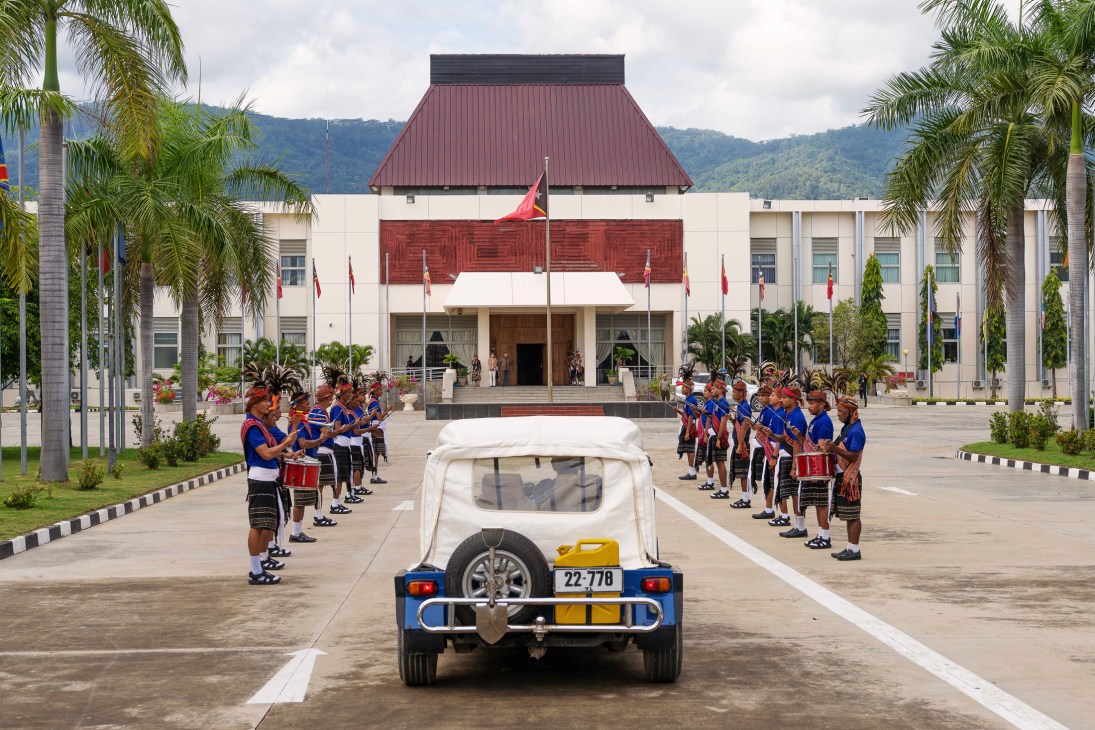
José Ramos-Horta, president of Timor-Leste, doesn’t behave like a leader who has narrowly survived an assassination attempt. The Nobel Peace Prize laureate buzzes around the capital city of Dili in a bright blue Mini Moke, a lightweight British utility vehicle with a convertible canvas top and no windows or doors. On his daily commute to the Nicolau Lobato Presidential Palace, his security detail trails him in a grey Mitsubishi as he weaves through traffic – motorbikes, yellow taxis, 4x4s, rainbow-hued microlets (minibuses) – and leans out to signal a turn or wave at an excited child.
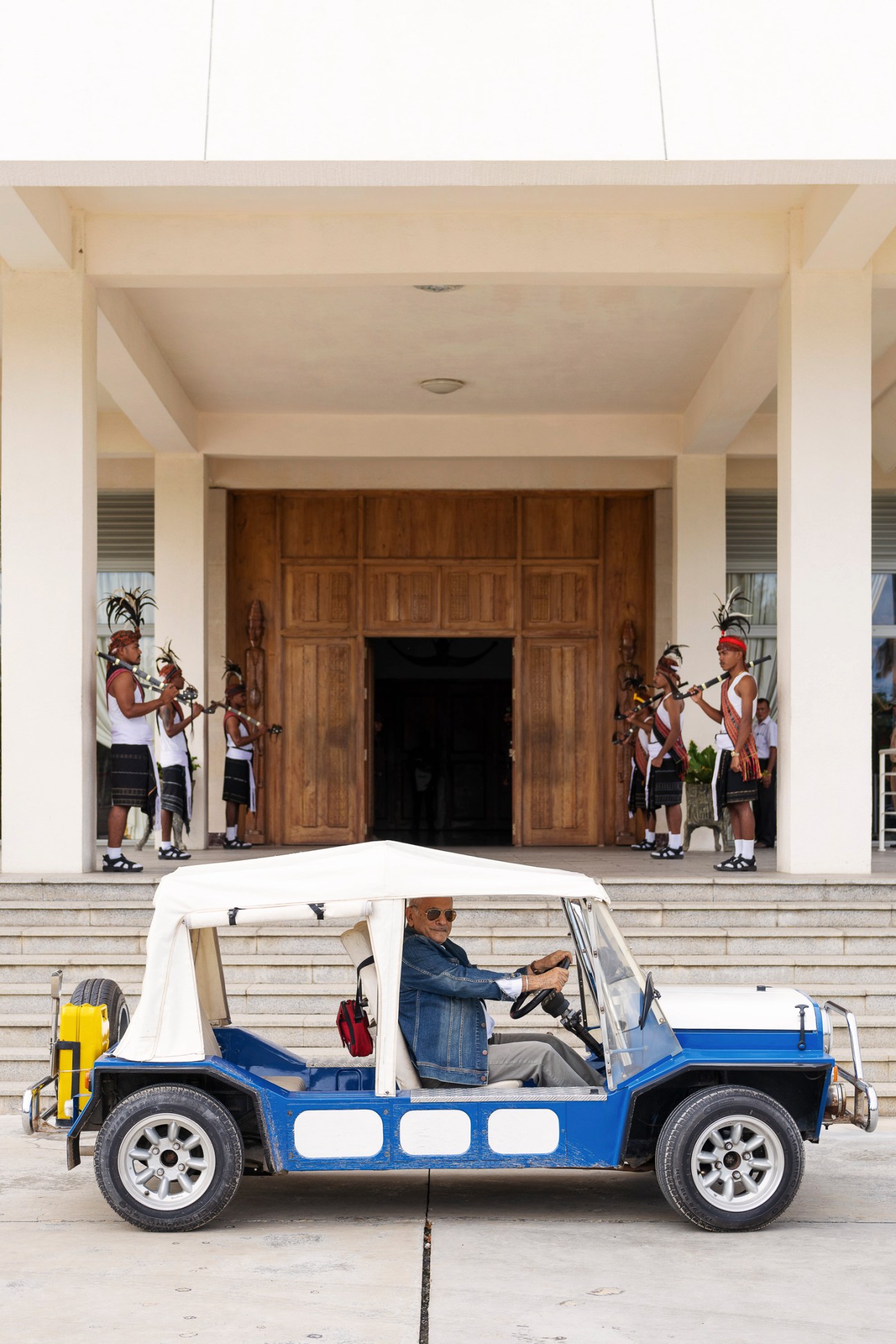
“Some of my staff didn’t understand my thinking,” says Ramos-Horta as he drives. “They had this view that the president is very solemn. I have a different concept of power. Leaders have to be accessible to the people and portray an image that the country is safe. I drive my own car and I go places. I go to a restaurant. I go to a café. I go out in the evening to have a drink somewhere with friends.” A frequent refrain, yelled in the direction of the Moke as it trundles down the street, is “Bomdia, avo!” – “Good morning, grandpa!” in Tetun, the local language. Ramos-Horta says the “avo” caught on about five years ago. The 73-year-old grumbles good-naturedly to Monocle about the nickname, then shouts back: “Bomdia!”
Timor-Leste, a small nation occupying one half of the Southeast Asian island of Timor, is one of the region’s most vibrant democracies, with high voter participation, a committed free press and, at least since Ramos-Horta was shot in 2008, a relatively peaceful political climate. The majority-Catholic country has a petroleum-reliant economy and a youthful population of 1.4 million. Its governing institutions are also young, having emerged just two decades ago from the ashes of Indonesia’s brutal 24-year occupation, which followed a declaration of independence from Portugal in 1975. Ramos-Horta spent the occupation in exile, lobbying for independence. His 1996 Nobel Peace Prize, jointly received with Timorese bishop Carlos Filipe Ximenes Belo, led to a resurgence of global attention for Timor-Leste and helped bring about Ramos-Horta’s lifelong goal in 2002: the establishment of his homeland as a sovereign nation.
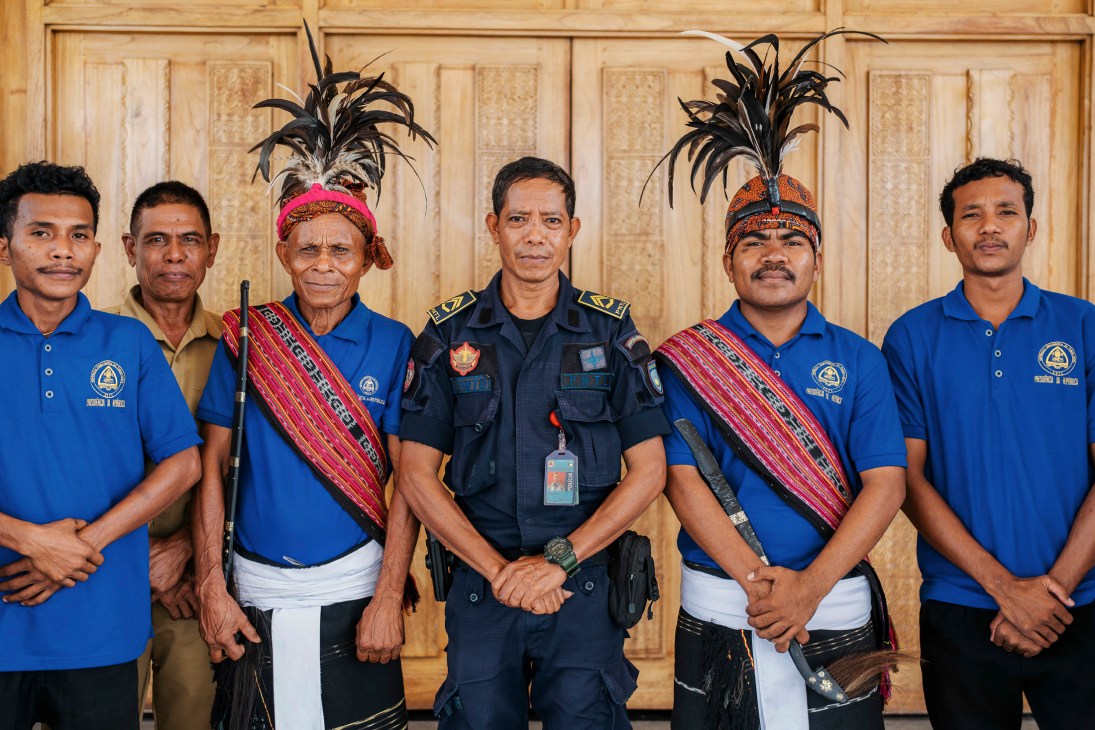
The president noses the Moke, which he bought secondhand in Australia and fixed up himself, past a line of guards in feather headdresses who bang drums on his arrival. After being elected in April 2022 with 62 per cent of the vote, he decided that the gates of the presidential palace would stay open all week. A few neighbourhood children are splashing around in the small pool outside the main building; others race across the grass and holler greetings at the president as he parks his car. This is Ramos-Horta’s second term. It was during his first, in 2008, that he was gravely injured in a failed coup. Now, as head of state once more, he is focused on reducing poverty, strengthening ties with the world’s major economies and securing a place for Timor-Leste in international organisations such as the World Trade Organization (WTO) and the Association of South East Asian Nations (Asean). The National Congress for Timorese Reconstruction (CNRT) backed Ramos-Horta in 2022; its victory in parliamentary elections this May placed resistance hero Xanana Gusmão in office as prime minister. Control of both branches of government should mean more stability, less deadlock and a jumpstart on developing untapped gas fields in the Timor Sea.
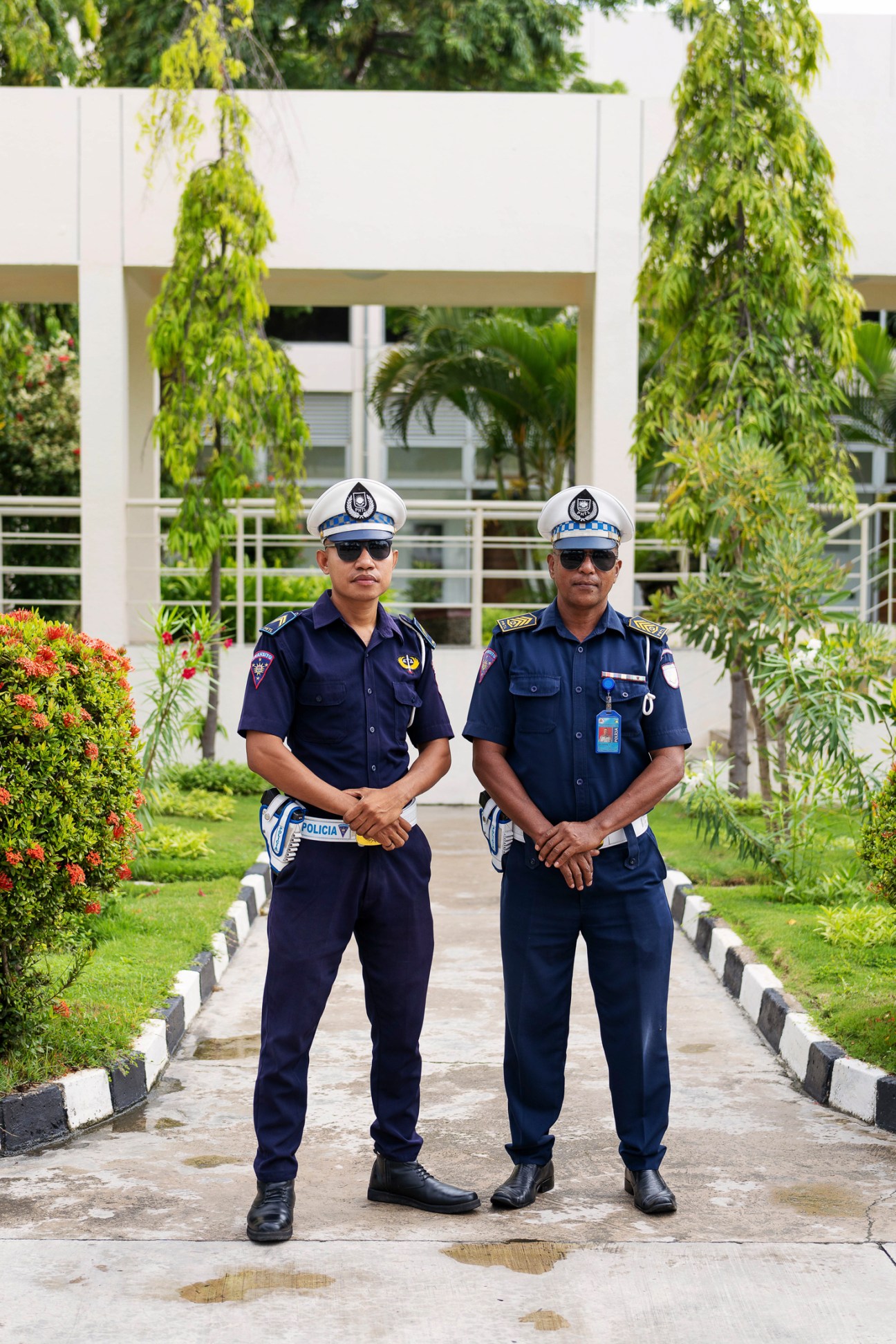
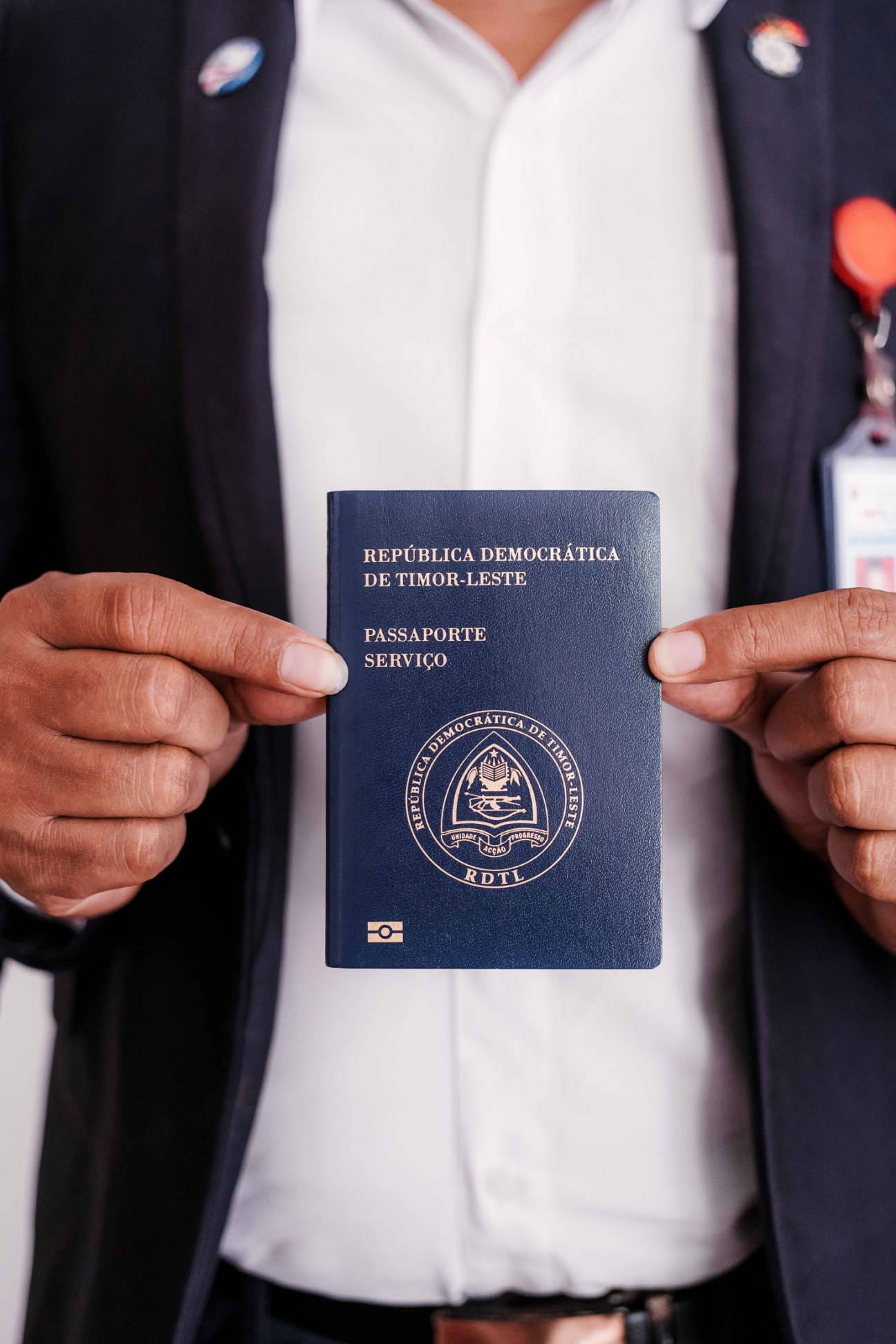
Asean membership will confer economic integration and educational opportunities for Timor-Leste, which has a GDP that’s about a fifth of the bloc’s current smallest economy, Laos. In late 2022, Asean granted Timor-Leste admission in principle, meaning that it will attend meetings as an observer before gaining full membership. In a symbolic twist, Indonesia, Timor-Leste’s erstwhile invader and now staunch ally, is this year’s chair. Timor-Leste’s democratic bona fides will make it an important new voice in Asean as the regional bloc grapples with the ongoing crisis in Myanmar and manages relations with the US and China at a time when the superpower rivalry threatens to sweep countries across Asia into its dragnet.
Ramos-Horta’s many years as an exiled diplomat, pacing the halls of the UN headquarters in New York and travelling the world to win support for Timor-Leste, mean that he has met almost every world leader of the past 50 years. Despite the idealism at the core of his life’s mission – a David and Goliath struggle for independence and freedom – he is often labelled a pragmatist, in particular when it comes to China. He welcomes Chinese support and investment, while many of Timor-Leste’s Western allies – the US, namely, but also Australia and parts of Europe – are experiencing a deterioration of relations with Beijing. A few minutes’ drive from the usaid office in Dili is a football field with signs that read “China Aid For Shared Future”. “We can handle the regional rivalries,” says Ramos-Horta. He is sceptical of the idea that China’s ambitions threaten the global order. “The Chinese know that peace, stability and prosperity in China depend on the prosperity of the region and the world. China developed thanks to the US and European economies. So the idea that China wants to dominate the world – well, no country nowadays can dominate the world.”
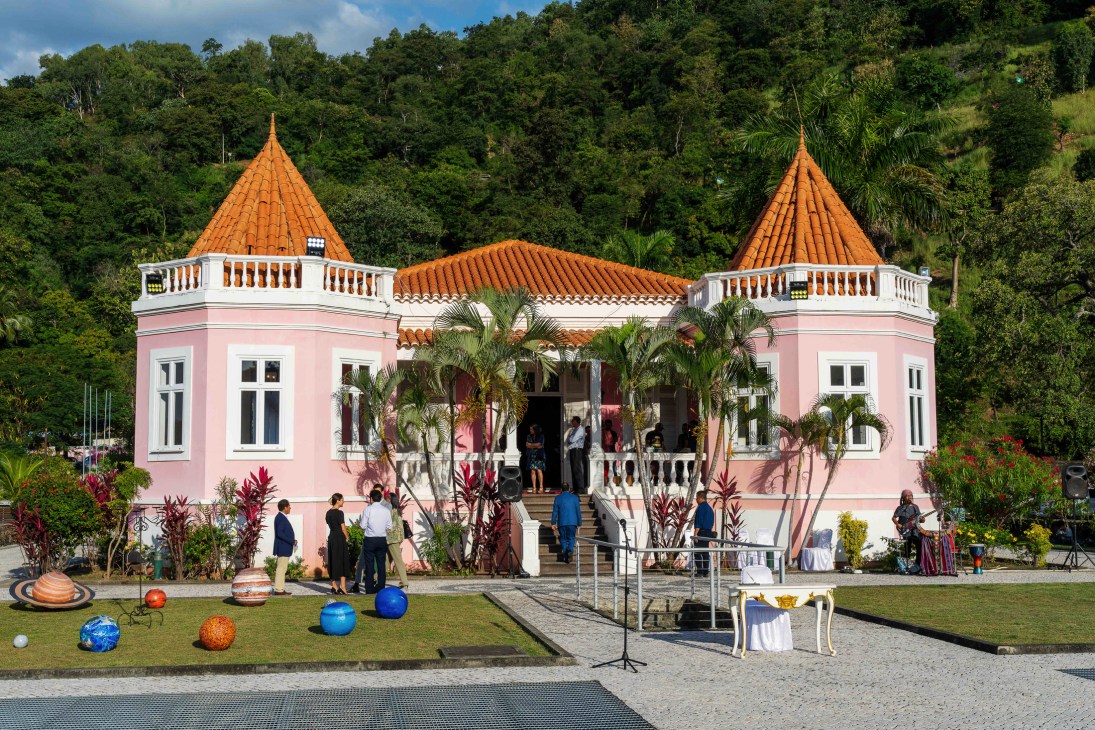
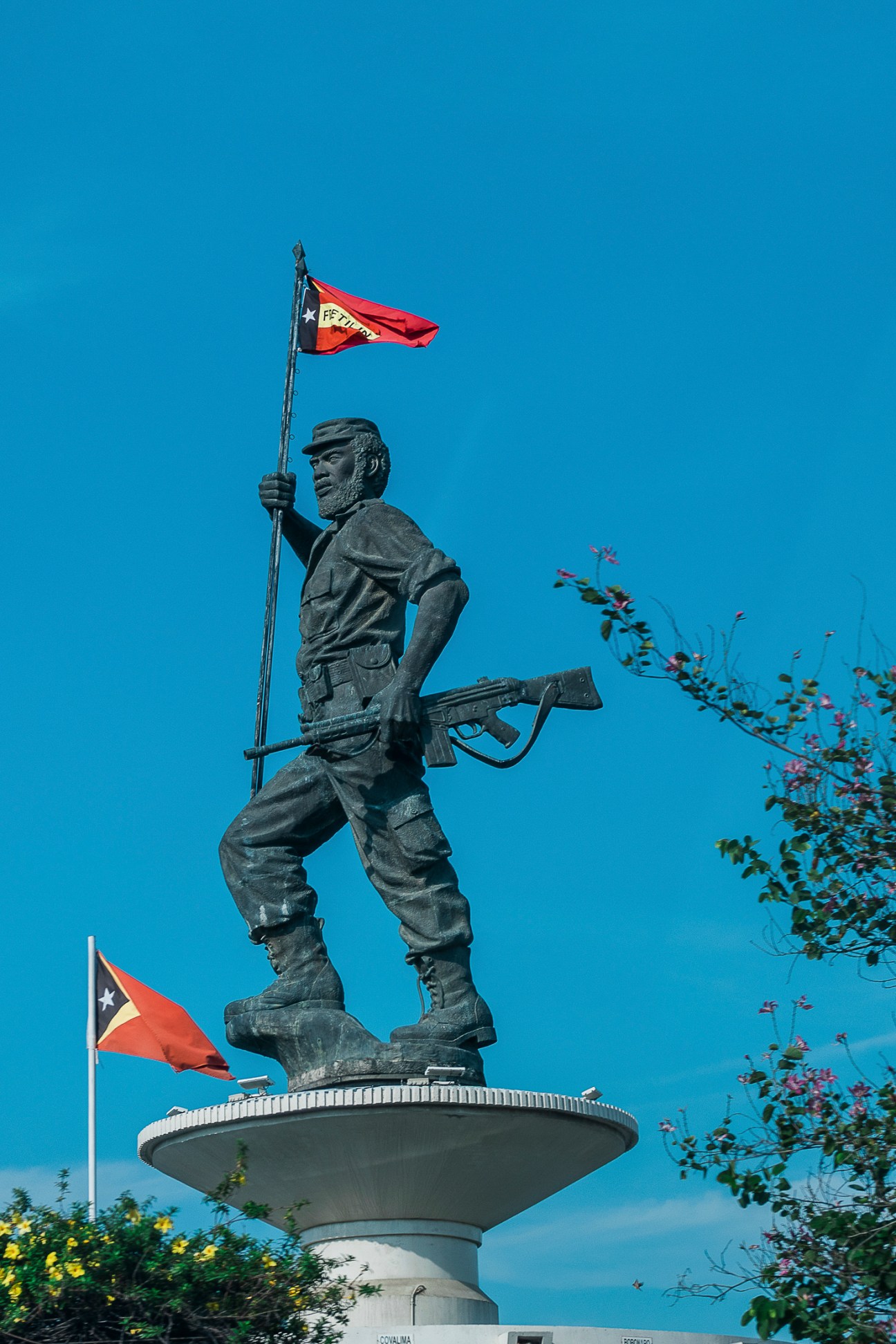
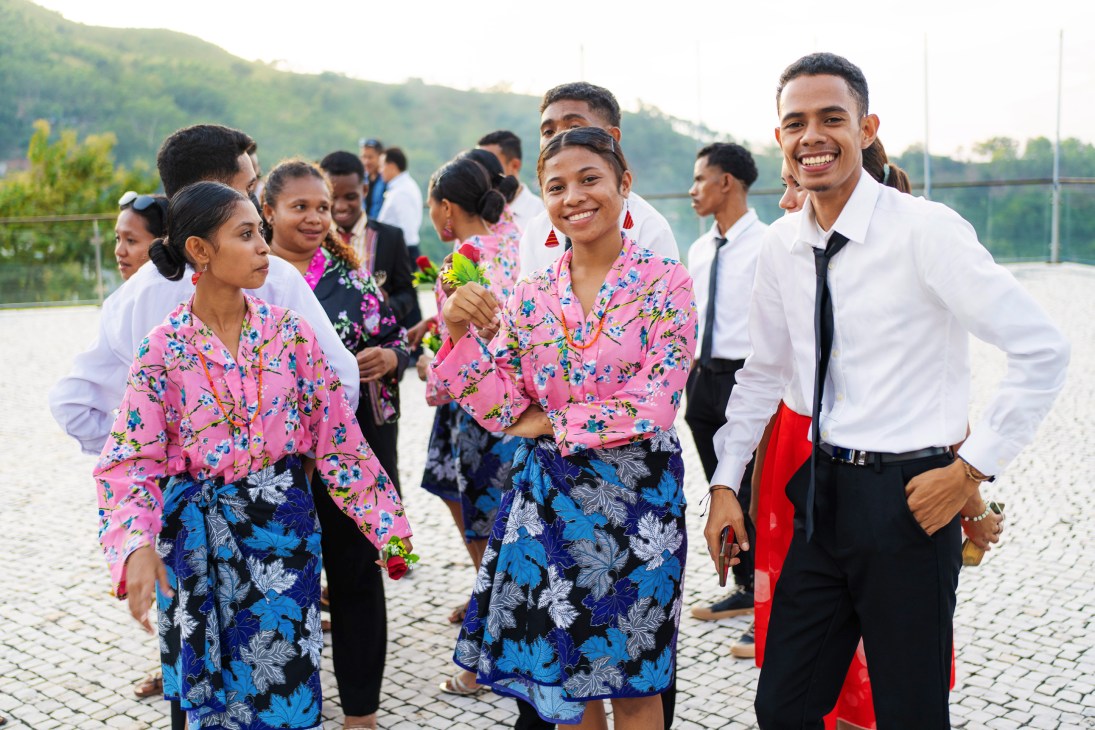
Ramos-Horta makes it clear that a good relationship is not an endorsement of a political system. “I don’t equate the US with China,” he says. “We are a democracy and a very active democracy. We very strongly adhere to human rights. So when I say we try to be neutral, yes, we don’t want to take sides in a conflict but we have more shared principles and shared values with our immediate neighbours in Australia and Indonesia, and with Europe and the US.” At the Asean summit in the Indonesian fishing town of Labuan Bajo in May, Timor-Leste made its debut appearance and Asean leaders released a road map laying out the financial and legal obligations that the country must fulfil before becoming a fully fledged member. Ramos-Horta once said that joining Asean was “harder than getting into heaven”. He first sought membership for Timor-Leste in 1974; now the process is finally under way.
“It’s very important for our regional trade and for investments,” he says. “We would no longer be a small country of 1.4 million people; we would become a market of 700 million people with a joint GDP of $3trn [€2.7trn]. It’s great visibility and it will push Timor-Leste to develop.” It is also an important political symbol in a region where being in Asean is almost synonymous with being Southeast Asian. Timor-Leste officially applied for membership in 2011 but the application languished for a decade. Countries including Singapore raised doubts about Timor-Leste’s readiness, such as whether it had enough English speakers (Asean’s official language) to send to meetings. Ramos-Horta is sanguine about the delay. “Today we are far better prepared,” he says. “There are so many meetings, more than 1,000 a year, on every issue we can imagine, from agriculture to zoos. Anything.” The biggest challenge, he adds, is “to be constructive, effective and not to disappoint our Asean colleagues. For the Singaporeans, everything is numbers. It’s not that they don’t care but they’re very strict and they didn’t think that Timor-Leste could handle the pressures of being a member. But we Timorese work better under pressure.”
Also on the horizon after years of uncertainty is the potential development of the Greater Sunrise gas fields in the Timor Sea, which could net billions of dollars. The project has been held up by disputes between the Australian and Timorese joint venture partners over where to pipe the gas. Ramos-Horta is hoping to reach an agreement this year about connecting the pipeline to Timor-Leste, rather than Australia, which would allow construction and commercial operations to follow in the next decade. Australia is Timor-Leste’s nearest neighbour after Indonesia and one of its most important bilateral relationships. The country is home to a large population of overseas Timorese, and Darwin was a base for the resistance-in-exile during the occupation. Australia led a pre-independence military stabilisation force and maintains a large aid presence and a defence co-operation programme.
In September 2022, Ramos-Horta travelled to Canberra to sign a new defence pact for increased military co-operation. “The relationship has been through ups and downs, there’s no doubt about that, particularly in relation to the Timor Sea oil and gas agreements,” says James Batley, who headed Australia’s mission in Dili between 1999 and 2002 and served as its first ambassador to Timor-Leste. Nevertheless, he says, the bilateral relationship is important to both sides. “We have a very strong stake in Timor-Leste, in its viability as an independent country. It’s one of our closest neighbours. Australian governments want to see Timor-Leste succeed.”
Timor-Leste is a small nation whose fate, until 21 years ago, was dictated by the whims of much larger ones. For half a millennium it was a Portuguese possession, 15,000 sq km of land in the middle of the Dutch East Indies where Dominican friars and Iberian sandalwood traders came to spread the word of God and make a bit of money. In 1974 the Carnation Revolution foisted democratic rule onto Portugal and its overseas empire unravelled. Portugal’s African colonies declared independence and in 1975 so did Timor-Leste, led by an early iteration of Fretilin, the pro-independence movement of which Ramos-Horta was a founding member. Cold War paranoia and concerns that an independent Timor-Leste would inspire domestic secessionists prompted Indonesia, under military dictator Suharto, to invade in 1975. It was the start of a long, bloody occupation. About a quarter of the population died in bombings, executions and enforced starvation; most of Fretilin’s leadership was tracked down and killed. Ramos-Horta left three days before the invasion to plead his country’s case to the UN. He was 25 years old, the youngest person to ever address the Security Council. He would not step foot on Timor again until 1999.
Suharto’s downfall in 1998 paved the way for a long-awaited 1999 referendum offering Timor-Leste “special autonomy” within Indonesia. Almost every eligible voter cast a ballot and nearly 80 per cent opted for full independence. In response, Indonesian soldiers and pro-integration militias razed Dili and other towns, massacring and forcibly displacing civilians. An international peacekeeping unit intervened and Timor-Leste was governed by the UN until 2002. “There were no cars, nothing,” long-time Timorese civil servant Vicky Tchong recalls over a cappuccino and a cigarette in Cantina Matak, an outdoor café behind the presidential palace that serves free meals to schoolchildren. Tchong helped to establish Timor-Leste’s foreign ministry under Ramos-Horta and later served as ambassador to China. She remembers bumping into two Portuguese journalists in Dili in 1999. “They had left a satellite phone, which was still functioning,” she says. “It was the only phone we could use to communicate with abroad.”
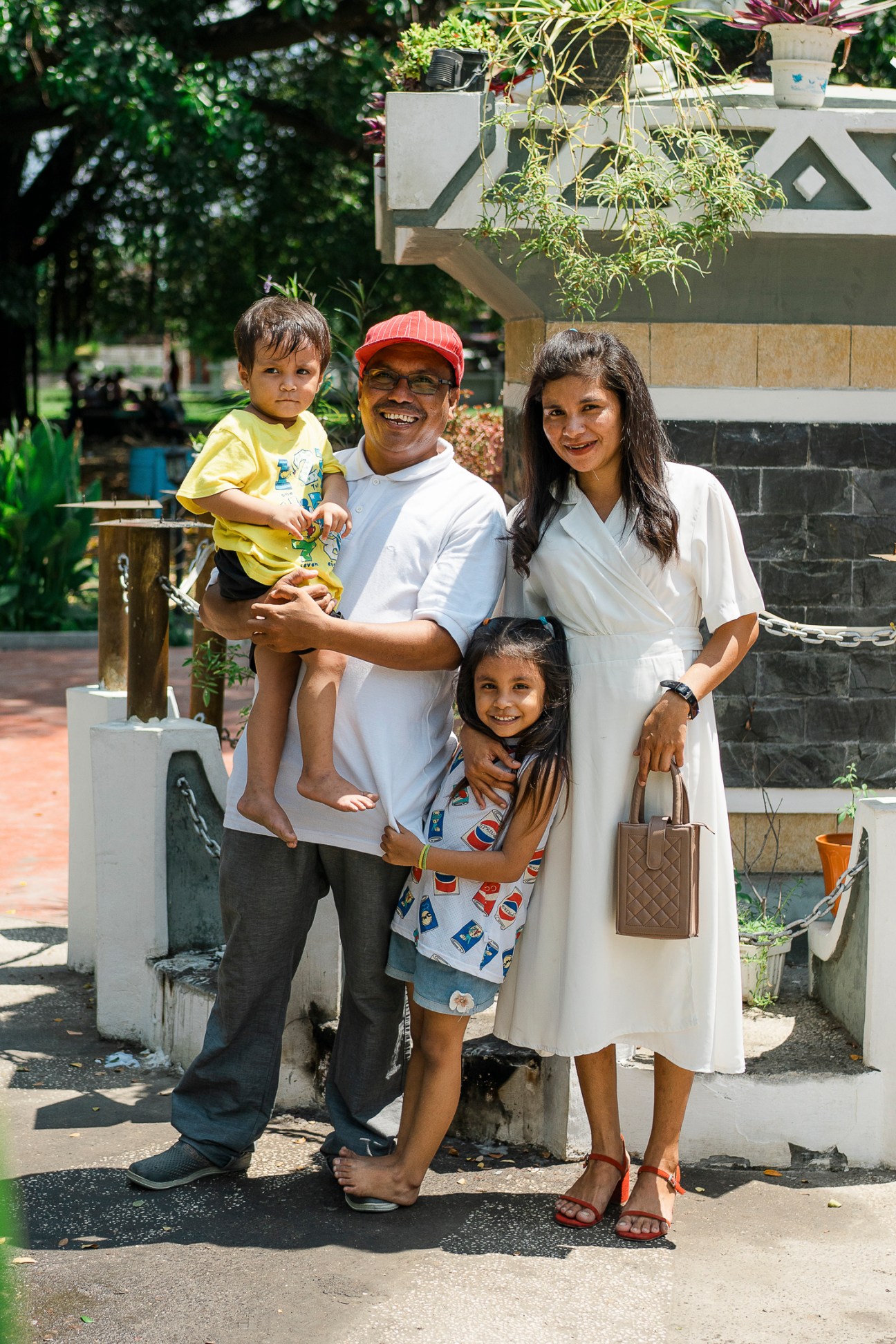
The majority of the buildings in Dili were burned to the ground, including churches and homes. Vital infrastructure – electricity, water, telephone lines – was demolished too. “A great deal of the fabric of the city was destroyed,” says Batley. Today the Timorese capital is peaceful. On a sunny afternoon by the harbour, high-school students huddle in giggling groups under the shade of a banyan tree; a silver-haired coconut seller slices fruit for thirsty pedestrians; fishing boats and ferries stream across the sea. Timor-Leste is the only country in Southeast Asia with a “free” rating from US think-tank Freedom House and it is ranked 10th in the world on the Reporters Without Borders press-freedom index. About 40 per cent of parliamentary seats are held by women and the constitution prohibits the death penalty and life imprisonment. “It’s a real success story that Timor-Leste can tell: the fact that it has held democratic rule and that different leaders from very militaristic backgrounds have respected [election] results,” says Claire Smith, a senior lecturer at the University of York who researches democratisation in Southeast Asia. “It’s a testimony to their respect for the democratic process, which you don’t see in many post-conflict countries around the region.”
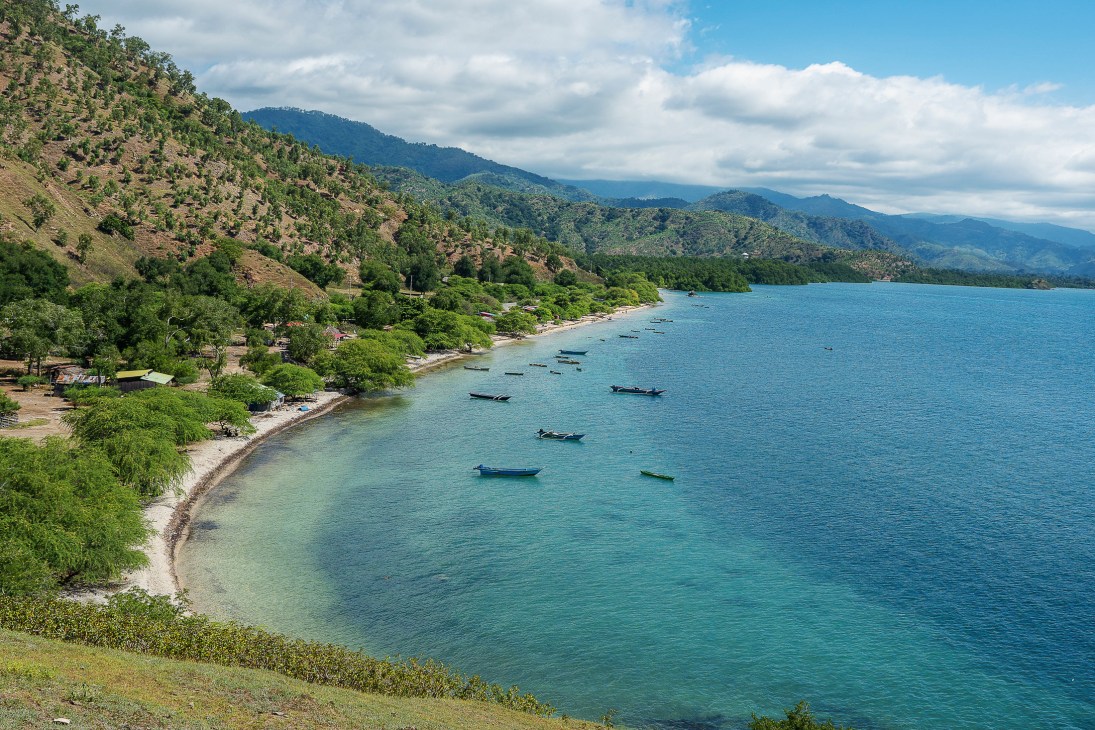
Eastward on the coastal road from the harbour, the city abruptly becomes countryside. On the left are the turquoise waters of the Wetar Strait and the island of Ataúro shimmering in the distance; its pristine beaches and abundant marine life, including some of the world’s most biodiverse coral reefs, have made it a prime attraction for divers. Back on the mainland, there are plans to expand the airport runway, and a Hilton will open in 2024. It will be Timor-Leste’s first international hotel. Last year Singaporean developers announced a 550-hectare resort complex west of Dili; the $700m (€625m) project is the largest foreign investment in the country to date.
The road winds up lush green hills where villages nestle between spindly palms and banana trees, and goats scamper up cliffsides. In the distance, under a dollop of rain clouds, are the mountains where resistance fighters hid and fought for a quarter of a century. Now the slopes are blanketed with plantations of coffee, the country’s most important export after oil and gas. Further inland are other markers of change: a gated compound emblazoned with the logos of PowerChina and Sinohydro, two Chinese state-owned construction and engineering companies; a Heineken factory with billboards that proclaim “#1 Multi-Beverage Factory in Timor-Leste”; a swathe of rehabilitated mangrove forest, replanted to restore damaged ecosystems.
Development is afoot but old challenges persist. Timor-Leste’s labour force participation rate is much lower than regional peers, with many people still mired in subsistence agriculture. “Our poverty rate is still the highest in the region,” says Guteriano Neves, a Dili-based policy analyst. He advocates for better-focused spending on education, infrastructure and agriculture, and improved policies for private investment and land use. Neves is optimistic about the younger generation’s “risk-takers” launching small businesses. He gestures around the seaside café in which he is sitting with Monocle, where foreign embassy staff and young Timorese office workers chat over lattes and banana bread. “So many coffee places and restaurants in Dili right now come from the youth,” says Neves. They are politically engaged as well. “Us Timorese, we have a strong sense of ownership of the government. We have a responsibility towards this country.”
Timor-Leste normalised relations with Indonesia almost immediately after independence and declined to pursue war crimes claims in an international tribunal. Instead of shunning Indonesia, it is deepening ties with new investment treaties and pledges to increase economic activity in the border region. “They could have simply turned their back and forever forgotten about Timor-Leste,” says Ramos-Horta. “No, they turned around and extended a hand of friendship.” He is speaking from his house on Robert F Kennedy Boulevard, where chickens and goats wander the driveway and a deer snoozes underneath a car. (The road was unmarked when he moved in, so he named it after a political idol.) On the breakfast table are copies of foreign magazines; the polyglot statesman also keeps up with Timorese newspapers and reads Le Monde and some Brazilian dailies. On the shelves, Che Guevara’s memoirs abut Lee Kuan Yew’s; there are books on Ottoman history, China’s economy and US foreign policy, as well as a Spanish edition of Plato’s Republic and a Jean-Paul Sartre play in French. “Very hard to understand,” says Ramos-Horta, muttering.
He is wary of how historical feuds can imperil nation-building, impair diplomacy and corrode relationships. He credits Gusmão’s immediate insistence, which he supported, on forgiveness and reconciliation, even in the face of atrocity. Twenty-one years after independence, almost every family has a direct relative who died during the occupation. Ramos-Horta himself lost four siblings. “Human beings are human beings,” he says. “You don’t forget the past, whatever it is, particularly when it’s tragic. No one is talking about legislating or decreeing reconciliation. It comes from the heart and mind of individuals.” In this regard, as in many others, Ramos-Horta is leading by example.
Pushing the boundary
Ulaanbaatar’s Chinggis Khaan International Airport gleams in a lunar landscape that’s bare but for a few bands of roaming animals. On the drive into town, Monocle’s fixer and translator, Batbileg “Babi” Sukhbaatar, cheerfully informs us that the highway connecting Mongolia’s capital to its new airport – both opened in 2021 and built with Japanese money – is the first in the country on which it is illegal to ride a horse. We barely see another soul, hoofed or otherwise, until we hit the city and the traffic.
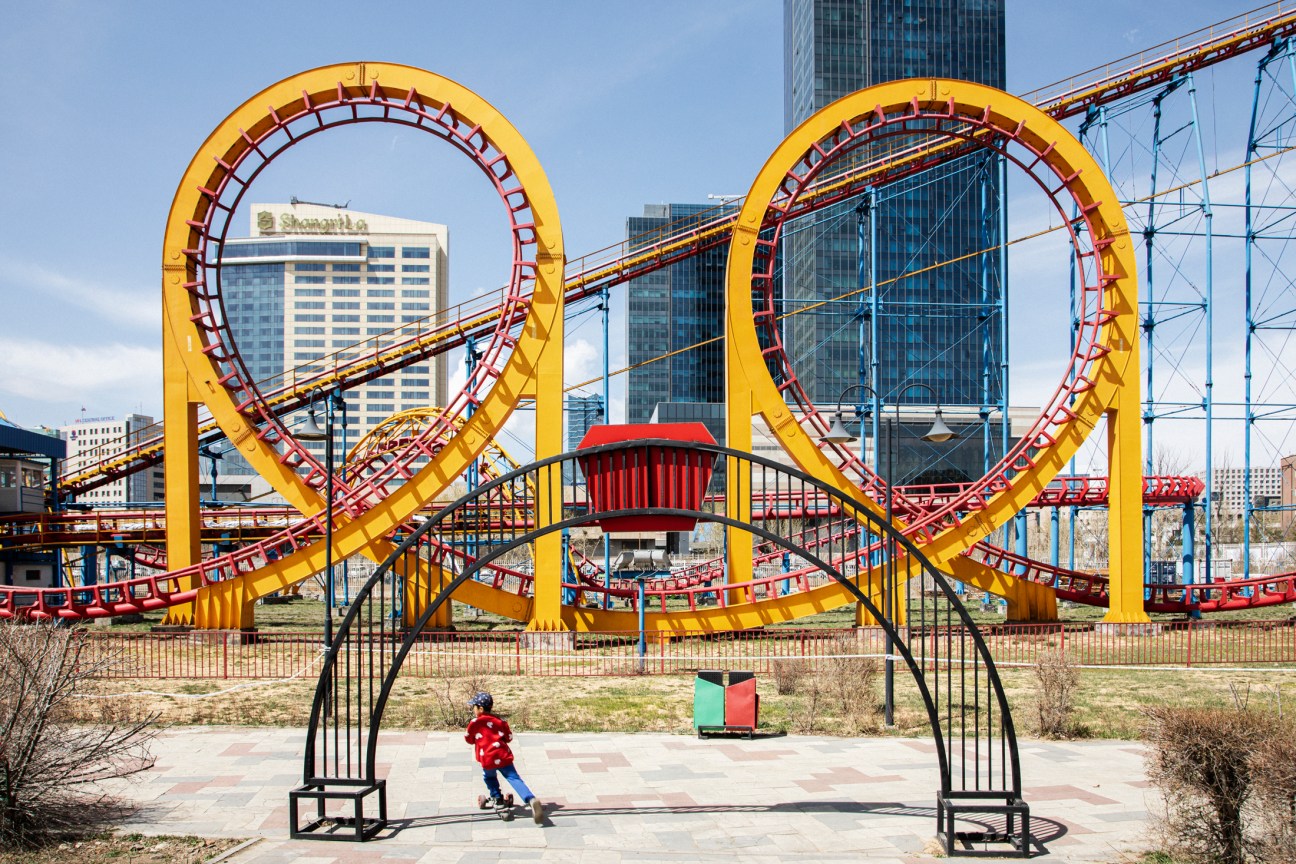
At 07.00 on a Sunday, Ulaanbaatar, the capital of the second-least densely populated country on Earth (after Greenland), is in gridlock. It is a cliché to describe somewhere as a land of contrasts. But despite Mongolia having fewer people per square kilometre than almost anywhere else, its capital, where over half of the population lives, is badly overcrowded, with almost comically awful traffic. Though it has a proud culture of nomadism and a religion, Shamanism, devoted to the worship of nature, Ulaanbaatar is the world’s most polluted capital, while nearly 100 per cent of Mongolia’s exports come from the extraction of abundant natural resources (mostly coal, lithium and copper). And while it is a young country – more than 65 per cent of the population is under 35 – this vast mineral wealth is concentrated in the hands of an aged oligarchy.
That said, a few of these same problems might be viewed, in economic terms at least, as consequences of success. Mongolia is rapidly urbanising because the economy is growing: its gdp per capita recently surpassed $5,000 (€4,500). Its modern rulers have been canny, leveraging Mongolia’s resources to attract money from its neighbours while selling itself to Western nations as a democracy in need of support in a part of the world not famed for such things – a tactic known as the “Third Neighbour” policy.
Indeed, with the immediate neighbours that Mongolia possesses, its leaders need to be canny. As Luvsannamsrai Oyun-Erdene, the country’s 16th prime minister since it transitioned from a communist dictatorship to a parliamentary democracy in 1990, puts it, “Mongolia has great peculiarities as it is located between China and Russia – 95 per cent of our exports go to China and we are 100 per cent reliant on Russia for our energy.” It’s a tricky position to be in and one that has been made more difficult through Russia’s invasion of Ukraine and China’s increasingly confrontational foreign policy. So far, Mongolia has managed to navigate these choppy geopolitical waters but as the fallout from Western sanctions drifts across its northern border, its economic dependency on Russia is beginning to sting.

Moscow’s ejection from international payment systems has made it difficult for Ulaanbaatar to pay for its energy, while Mongolia’s treasury has missed out on “navigation fees” from airlines now banned from Russian airspace. Monocle’s journey to the country demonstrates the complicated nature of this new dispensation. Waiting to take off in Istanbul, the plane’s simulated route map shows a northeasterly trajectory directly over the Crimean Peninsula. “That can’t be right… can it?” we ask the man sitting next to us. It wasn’t, thankfully. But by journey’s end, the jagged nine-hour-long green line on the screen served as testament both to the circuitous nature of our route and the very literal way the rest of the world has found around the Ukraine conflict. It’s a circumnavigation that Mongolia does not have the luxury of.
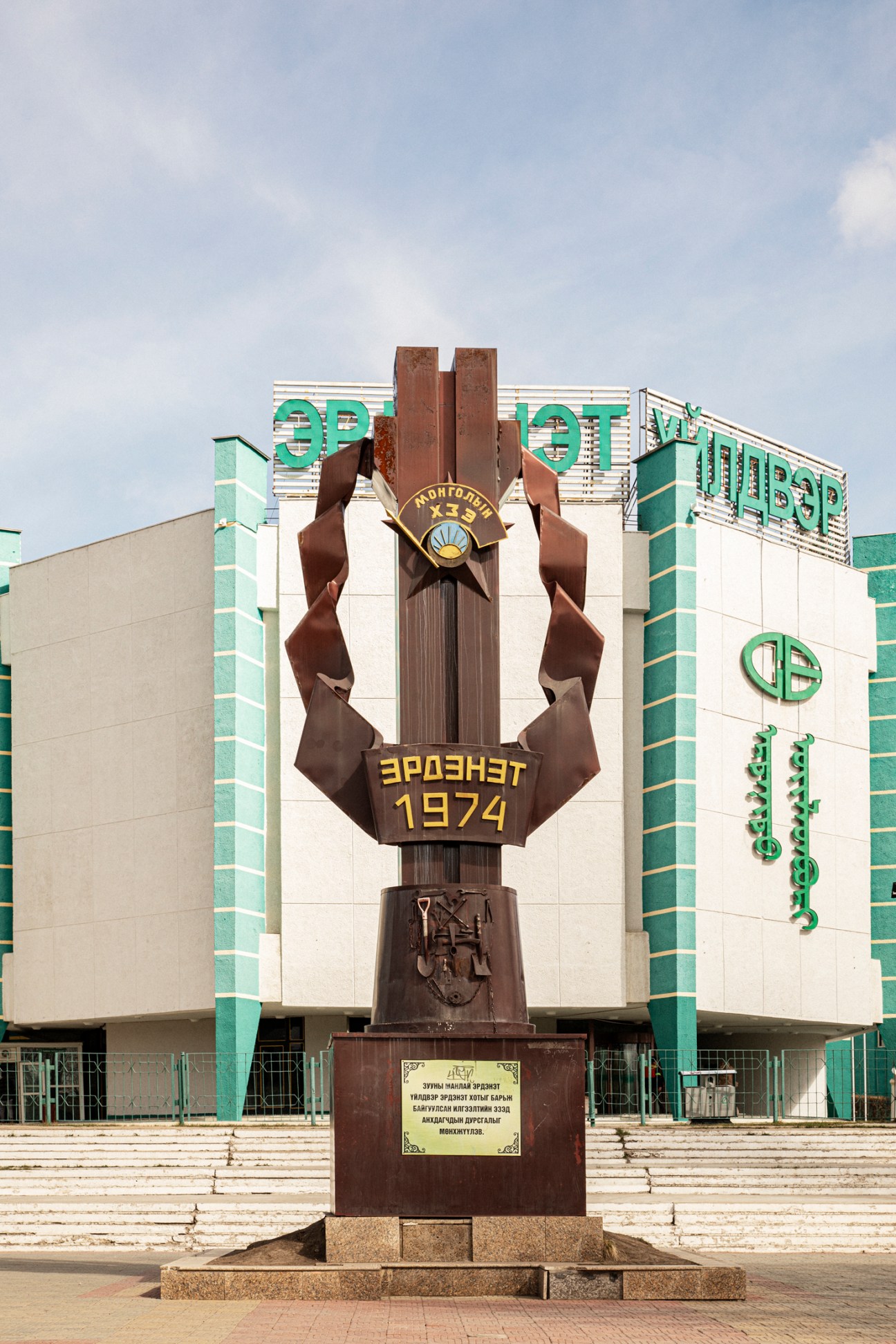
On top of the economic repercussions of the war, which included inflation of nearly 20 per cent last year and a consequent 20 per cent drop in the value of the Mongolian togrog, thousands of men, mostly from the Russian republics of Buryat and Tuva that border Mongolia, have fled south to avoid conscription. “Maybe 12,000 Russian men have come here since the war began,” says Yury Kruchkin, a Russian journalist based in Ulaanbaatar. We meet Kruchkin, a leading figure in Ulaanbaatar’s Russian community, in the wood-panelled bar of the Bayangol Hotel, a shabby socialist-era tower that was for a long time Mongolia’s only hotel. He came to the country in the 1980s to work as an engineer at the massive Erdenet copper mine, the source of 90 per cent of Mongolia’s wealth during socialism. His co-workers included Oleksandr Zelensky, a computer scientist and father of the current Ukrainian president, who brought his young family to live in Mongolia for four years.
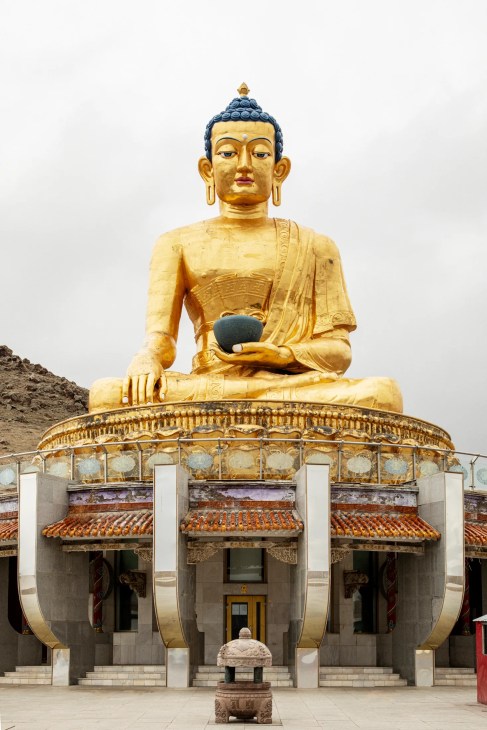
“I organised a Mongolian language club and Zelensky’s father visited every week,” says Kruchkin wistfully. “He was smart, a pioneer of Mongolian computation.” Like Kruchkin, Zelensky was one of thousands of Soviet citizens who came to work in Mongolia, a satellite state that was never officially part of the Soviet Union. Both were members of a diaspora that left a legacy viewed mostly favourably today due to its contribution to the country’s culture and economy. But this legacy is being tested by Vladimir Putin’s war in Ukraine.
Kruchkin describes Ulaanbaatar’s Russians as “divided” over the invasion and, though by no means a dissident himself, he has published a new Russian-Mongolian dictionary to assist those fleeing the fight. Part of the reason why the language barrier is fairly easily surmountable is because Mongolia adopted the Cyrillic alphabet in
1941 after encouragement from Moscow. This, combined with the fact that Buryat and Tuvan Russians share a historical cultural affinity with their Mongolian neighbours, has made the country an attractive destination. Still, after much toing and froing, three Buryat men due to meet Monocle pull out at the last minute citing some vague uncertainty. Are Russians in Mongolia scared of being deported? “Not really,” says Kruchkin. “They usually stay for a month and then go to Thailand or Vietnam.” It seems unlikely that shadowy fsb agents are keeping tabs on their countrymen in Ulaanbaatar. “Mongolia is very open,” says Kruchkin. “Right or wrong – anything goes.” His casual response betrays an astonishing truth: of all the former socialist Central Asian states, Mongolia is the only one that has managed to transition to genuine democracy.
The health of this democracy is apparent in Monocle’s meeting with the prime minister, which is moved several times to accommodate late-night parliamentary debates on constitutional reforms. But it is perhaps most colourfully demonstrated by Mongolia’s rumbustious media culture. The country has a constellation of private news networks vying for its citizens’ eyeballs. And though the state-run Mongolian National Broadcaster initially echoed Moscow’s description of the Ukraine war as a “special military operation”, debates for and against the invasion play out nightly among the country’s coiffed pundits. Their ambivalence is matched by the population at large. Partly this is due to geography. Despite their shared socialist past, Kyiv feels (and is) a long way from Ulaanbaatar. But it’s also due to the largely positive way that Russia is viewed for having hauled Mongolia up from near-feudalism to become an industrialised urban society in the 20th century. And in the 21st century, Russia’s cordial relations with Mongolia could be regarded as one of Putin’s few foreign-policy successes.
In November 2000 the new Russian president became the first of his country’s leaders to visit Mongolia since Leonid Brezhnev in 1974. Three years later, Putin agreed to write off 98 per cent of Mongolia’s Soviet-era debt (about €10.4bn). Then in November 2010 he wrote off another 98 per cent, this time of post-Soviet debt. Coupled with a new visa-free regime, which led to a revival of tourism and trade between the two neighbours, these actions greatly bolstered Russia’s standing in Mongolia. Putin’s charm offensive paid off in September 2019, when he and Mongolia’s then-president, Khaltmaagiin Battulga, signed a treaty that officially upgraded the two countries’ relationship to a “permanent comprehensive strategic partnership”, which included a pledge not to participate in “blocs or military-political alliances” or “any actions or support of such actions” against the other. When he put pen to paper, Battulga probably wasn’t expecting the treaty to be so searchingly tested so soon. Does this document forbid Mongolia from condemning Russia over Ukraine?
“We have expressed our position at the UN that as long as this war goes on it is negatively affecting the whole world,” Oyun-Erdene tells Monocle, without hiding his amusement at the mention of Battulga’s name. The former president is an eccentric mogul and judo obsessive whose close ties with Putin were part of a plan to cultivate a strongman image at home. Battulga’s rise and fall is further proof of Mongolia’s frenetic political system, in which leaders are lucky if they serve their full terms without being wrestled to the mat by an adversary.
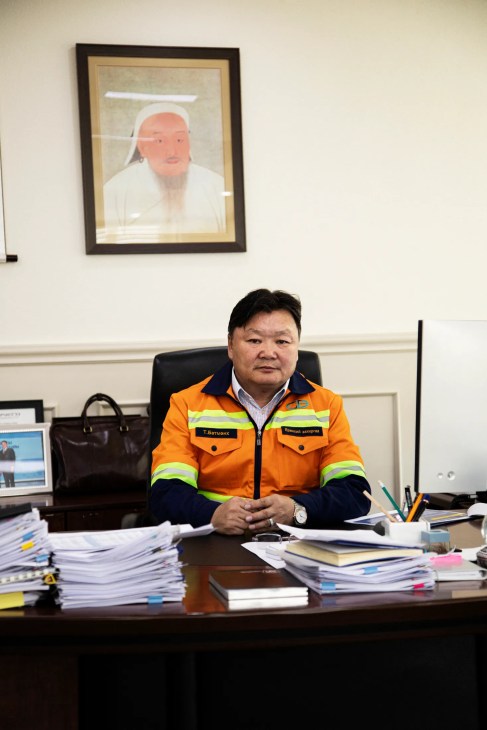
Oyun-Erdene, who has a postgraduate diploma from Harvard, is a more sober figure, focused less on flaunting his physical prowess and more on developing his country’s economy. He has written a manifesto entitled Vision 2050, which aims to make Mongolia a developed economy by the middle of the century. “In 2023, our growth is projected to be 7.9 per cent and our GDP per capita has just reached $5,000 [€4,500],” he says proudly. “If you look at the Asian Tigers – Singapore, South Korea, Taiwan – once they reached $10,000 [€9,000] per capita their social problems became more solvable.” Oyun-Erdene has some pressing social problems to deal with too. Rapidly urbanising Mongolia is suffering several urban maladies in extremis.
Take a lift a few storeys above the traffic-choked streets of Ulaanbaatar and you will see that the hills surrounding the city are dotted with tens of thousands of brightly coloured shacks and white tarpaulin-clad yurts. These are the ger districts, the slums named for the yurts that are a symbol of the country’s identity as well as the challenge of raising the prosperity and quality of life for much of the population.
Almost every Mongolian owns a ger (which translates as “home”), whose easy construction and portability are essential to the country’s traditional nomadic way of life. When rural dwellers, often nomads themselves, move to Ulaanbaatar, they bring their families and their gers, pitching up in the hills looking for a better, more sedentary life. These districts, which have swelled to hold more than half of the city’s population, have no sewage system or electricity – every ger contains a coal-burning stove at its centre. For most of Ulaanbaatar’s long, bitterly cold winters, the world’s coldest capital is subsumed in thick black smog.
In one district, monocle meets Chimgee, who lives in a ger with three generations of her family. Its blank exterior gives no clue of the profuse colour – hand-drawn posters, family portraits, piles of toys – within. Like many of her neighbours, Chimgee suffers from chronic bronchitis, a fate she is keen for her grandchildren to avoid. Sometimes the pollution is so bad that she forbids them from going outside. It’s almost summer but Chimgee still gets through at least two bags of coal a week. “All the politicians talk about reducing pollution but nothing ever changes,” she says.
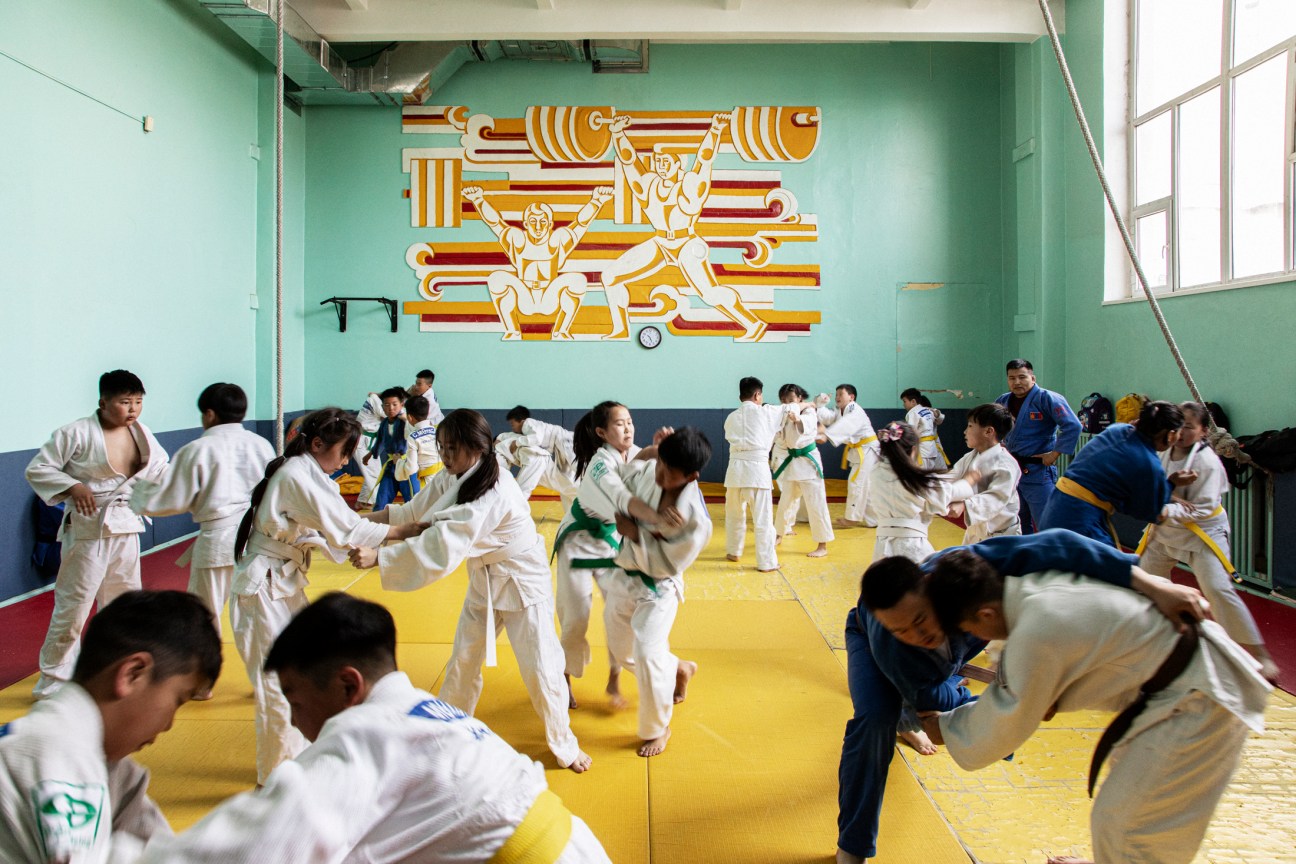
Chimgee is well aware that, along with every one of her fellow ger district dwellers, she is contributing to the pollution problem. But she also knows that Mongolia is a vastly unequal society with a resource-extracting oligarchical elite who get richer while their poorer compatriots choke. Like the pot of salty milk tea that Chimgee has primed for guests, the latter group’s anger occasionally boils over. This was the case in December 2022, when thousands of Mongolians descended on the government palace to protest the theft of billions of dollars of state-owned coal by corrupt officials. Hordes of mostly young people poured into the city’s main Sükhbaatar Square, where they camped out for weeks in temperatures that plumbed minus 30c. A nervous government eventually announced several high-profile suspects (including former president Battulga), at which point the crowd dissolved almost as quickly as it had materialised.
Oyun-Erdene claims that constitutional reform, which will increase the number of MPs in the State Great Khural (Mongolia’s parliament) from 76 to 126, is designed to combat corruption by loosening the grip on the legislature of a small number of party grandees. Some have disputed whether creating more parliamentarians able to be corrupted is the best way to prevent corruption but the prime minister also has a less controversial plan for ensuring that Mongolia’s mineral wealth is shared among its people. “We are in the process of creating a national wealth fund,” he says. “Thirty-three per cent of revenue [from natural resources] will be given to development in three areas: education, health and housing.” Much will depend on whether Oyun-Erdene, himself a scion of the elite, can establish this fund. If not, it’s doubtful his government would survive another bout of unrest such as last winter’s.
For now the prime minister talks up potential solutions to his people’s plight: a metro system or ring road to alleviate Ulaanbaatar’s traffic problem, while diversifying away from burning coal to ameliorate pollution. Despite a push to increase tourism and attract more international film productions to the country, these plans are all dependent on resource extraction that involves, among other unsavoury things, closer ties with Russia.
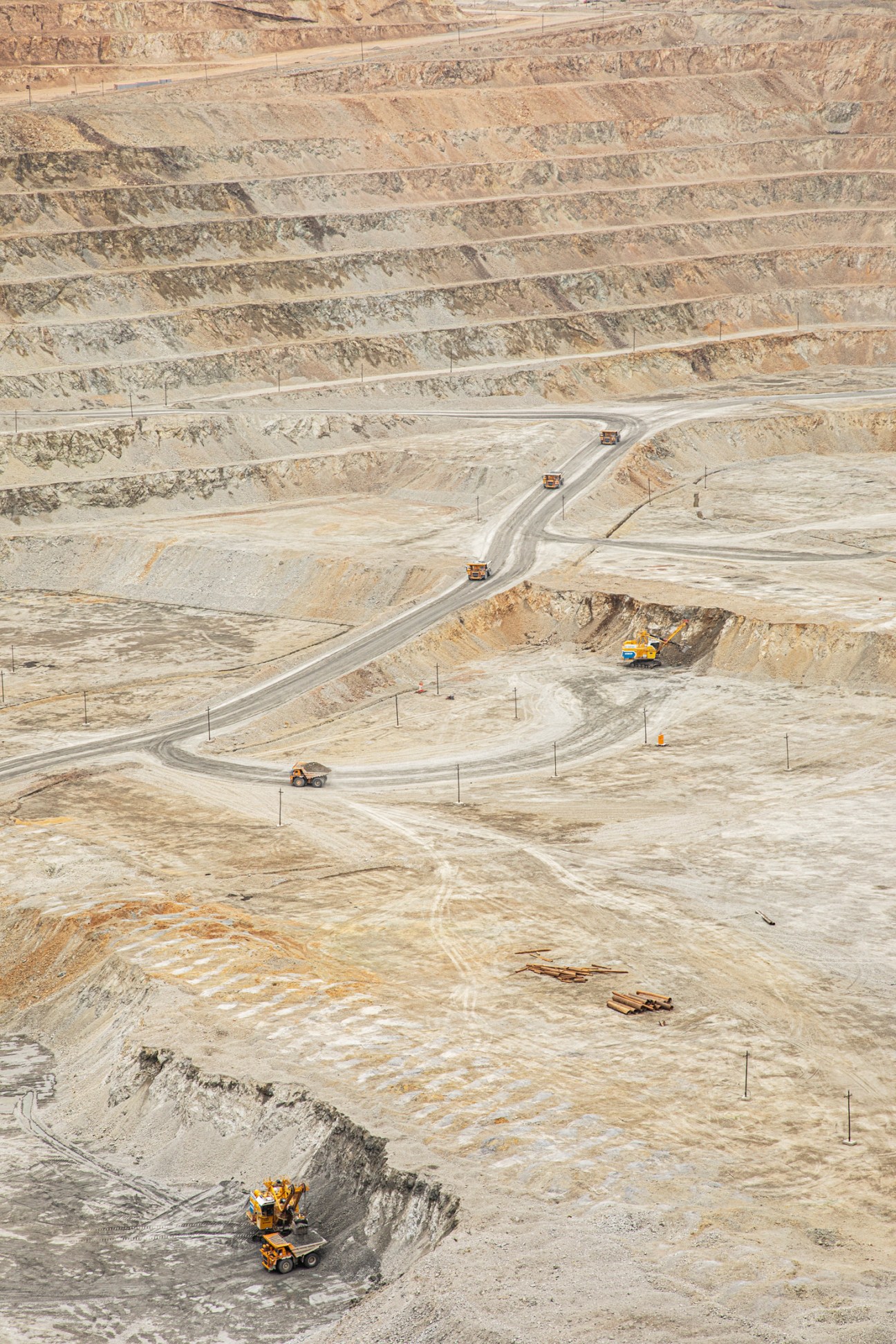
Last September, in the Siberian city of Vladivostok, Oyun-Erdene and Putin agreed in principle to the construction of a gas pipeline connecting Russia and China through Mongolia. The Power of Siberia 2 (pos2) pipeline would enrich Ulaanbaatar’s coffers by an estimated $1bn (€890m) a year in transit fees and attract thousands of construction and maintenance jobs. Ready access to natural gas could also help to reduce pollution. But critics have argued that the pipeline would leave the country more vulnerable to pressure from its neighbours. Indeed, Ukraine’s status as a transit country for Russian gas to western Europe was often used by Moscow to punish Kyiv.
Undesirable? The prime minister disagrees. “Mongolia has a goal to be a transit country and a corridor between Europe and Asia,” he says. “This pipeline has been part of intense talks since before the situation between Russia and Ukraine.”
Oyun-Erdene refuses to concede that pos2 might make his country vulnerable to coercion. Perhaps he can’t afford to. At the moment, Mongolia is happy to play East and West off against one another, even taking advantage of a deterioration in relations between Australia and China to become the latter’s sole supplier of coal. This tactic has served the country well in the past but is now high-risk as the world potentially splits into factions. Sinophobia has always been used by politicians here during elections but with Beijing stoking tensions in the Taiwan Strait, many Mongolians believe that an expansionist China could have designs on them too. “Mongolians think that after Taiwan, they are next,” says monocle fixer Sukhbaatar. But when asked about Taiwan, Oyun-Erdene is less equivocal than over Ukraine. “Mongolia follows the UN Charter, which says that Taiwan is part of China,” he says. “And Mongolia doesn’t comment on the domestic affairs of other countries.”
It’s a sensitive subject and, as in its relationship with Russia, Beijing holds all the cards. Since the full-scale invasion of Ukraine, the importance of China as a buyer of Russian oil and gas has vastly increased. But despite Putin’s desire to sign off on pos2, Beijing is holding up the deal to extract more favourable terms. During a visit to Moscow in March, Chinese premier Xi Jinping refused to discuss the project, even cutting his trip short to avoid it. It’s difficult to imagine Mongolia being the beneficiary of more protracted negotiations over the pipeline.
If the Sino-Russian alliance were to become one half of a new world rift, Mongolia would be even more isolated than before. Oyun-Erdene believes what he describes as a “new Cold War” must be avoided at all costs. “It will go on longer than the first one,” he says. Instead of beefing up their militaries and forming new alliances (such as the Aukus pact between Australia, the UK and the US), developed countries should use the money to help poorer ones, he says. “We should have a mechanism in the UN to control defence spending. People don’t want more weapons and there’s a feeling that leaders are not the great statesmen they were before.” It’s unclear to whom he is referring but Oyun-Erdene sees the Ukraine conflict as a neighbourly spat that has gotten out of hand. “I have compared the situation in Ukraine to a family divorce; should the child follow the father or the mother?” Is the US the mother and Russia the father? He smiles. “The irony is the kid usually follows the mother.”
Unlike Ukraine, Mongolia isn’t desperate to split from its overbearing relatives. In fact, to survive in its modern guise, the country is hoping for reconciliation on a global scale. After all, the next divorce could be even messier.
The decline of nomadic life
Mongolian culture venerates the country’s land and the livestock that sustains its people’s meat- and milk-heavy diet. Until the fall of communism, it is likely that most of the population still lived traditional nomadic lifestyles, raising livestock and moving with the seasons. But in recent years, due to a combination of economic and climatic factors, hundreds of thousands of nomadic families have moved to Ulaanbaatar’s ger districts, the capital’s crowded and polluted slums. As well as exacerbating social problems, this massive internal migration is threatening a way of life that is intrinsic to one of the world’s few remaining nomadic countries.
Mongolia is experiencing the dire consequences of rising global temperatures. Since 1940, the average temperature has risen by more than 2c, leading to a marked increase in the number of extreme summers and winters. During the former, unusually dry weather means that the grass that livestock graze on doesn’t grow, while extreme winters (when temperatures can drop below minus 40c) kill even the most fatted calves. Between 1999 and 2010, extreme weather led to the deaths of more than 20 million livestock and slums in Ulaanbaatar swelled, more than doubling its population.
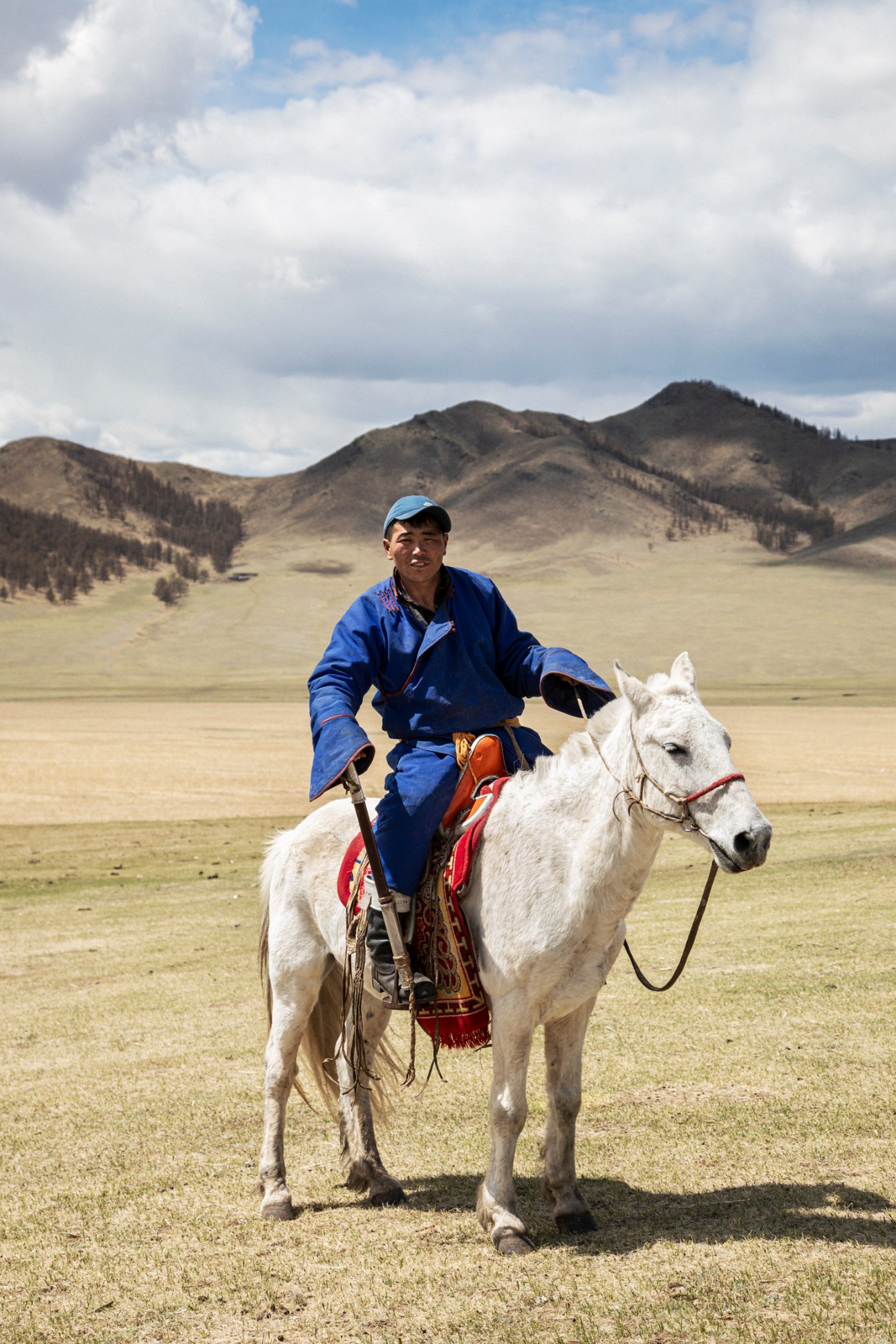
Outside Erdenet, monocle meets Lkhagvaa, a nomadic herder who lives with his wife, Bolortuya, two daughters and their goats, horses and sheep. Their ger, a wedding gift, is decorated with the totems of nomadism: embroidered portraits of Chinggis Khan – the famous Mongol warlord and nomad – and others featuring the five Mongol “jewel animals”: horse, goat, sheep, camel and yak. Lkhagvaa (pictured) had to move from the east of the country to be nearer to the markets that bought his animals for their wool and meat. To get here he travelled for 30 days on horseback, leading some 100 goats and sheep. It’s certainly a tough life but when asked whether he will follow many of his fellow herders in moving to Ulaanbaatar, he smiles and says: “Why, so I can live in squalor surviving from loan to loan?”