Issues
Shining a light
On 16 March dozens of Israeli women wore deep-red cloaks and white bonnets to a protest against their government’s judicial-reform plans. They weren’t the first demonstraters to do so. Conceived by Canadian writer Margaret Atwood for her best-selling 1985 novel The Handmaid’s Tale, the outfit has become a fixture of anti-government demonstrations around the world. In the novel, a repressive regime requires “handmaids” – women who are considered the property of the state and forced to bear children – to wear these bonnets and cloaks; since the release of the book’s hit 2017 television adaptation, the “modesty costume” has become a symbol for activists who see parallels between Atwood’s dystopia and their own lives.
“It’s a visual way of protesting,” says the 83-year-old author, speaking to Monocle in a book-lined boardroom in the Toronto headquarters of her publisher, Penguin Random House. “People can put on this outfit and get into legislative chambers, and they can’t be kicked out for causing a disturbance because they’re silent.”
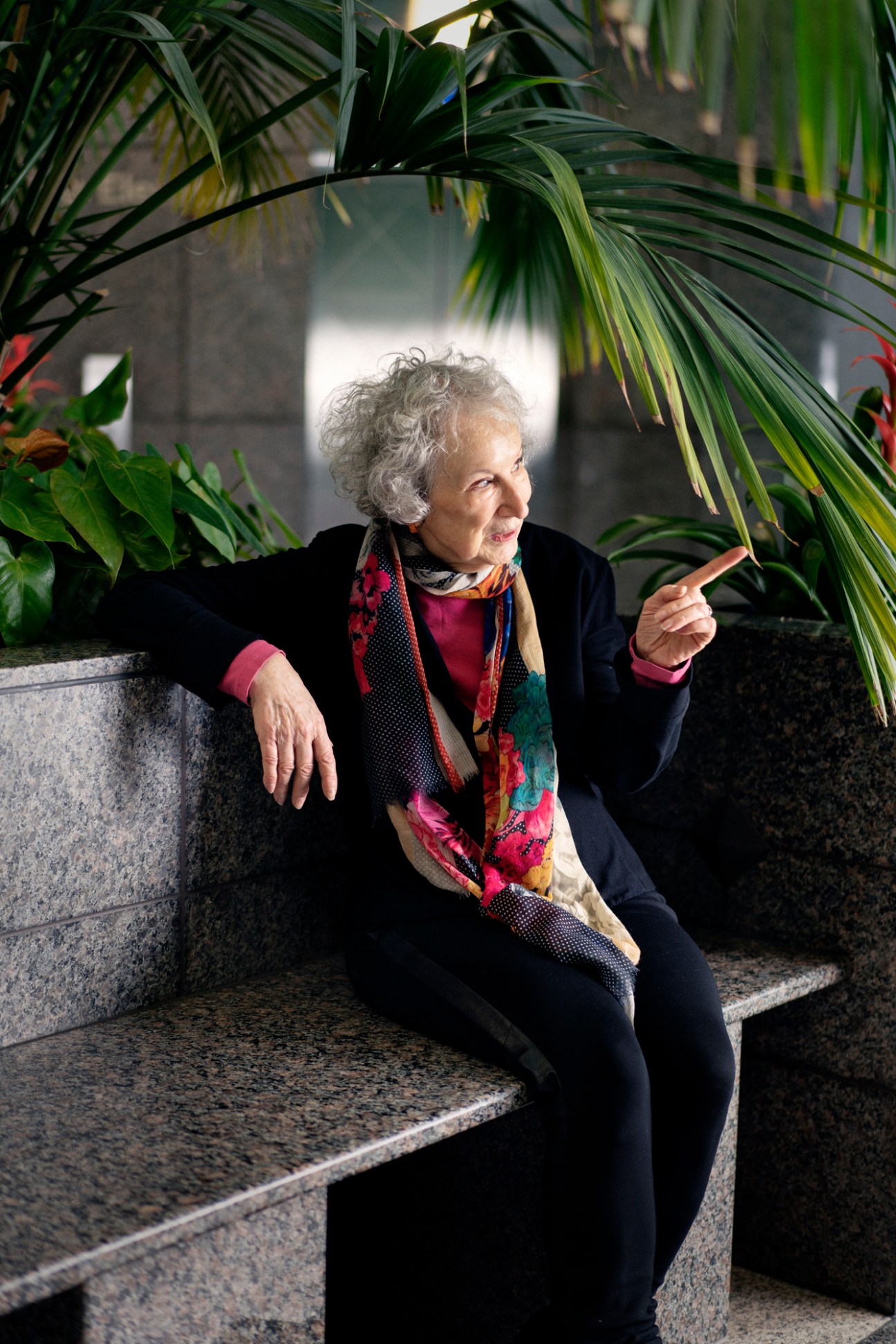
Atwood is a prolific writer whose work has spanned poetry, novels, children’s books and graphic novels; her latest collection of short stories, Old Babes in the Wood, was published in March. Over the years, she has also become a sort of guiding figure for her readers. Consuming her views on everything from the US Capitol attack to the sanitisation of Roald Dahl’s work, they look to her for advice about how to navigate these turbulent times.
She tells Monocle about the morning after Donald Trump’s election in 2016. “We were still filming the first season of The Handmaid’s Tale and there was a lot of, ‘Oh, no! It’s all coming true!’ from people [working on the show] who had never been through really hard times,” she says. “They thought that this was the worst thing that had ever happened. I said, ‘No, actually it’s not. It can get a lot worse.’”
In several ways, it already has. From the US Supreme Court’s decision to overturn the landmark Roe versus Wade court decision that protected the right to have an abortion to the banning of books from schools and libraries in several parts of the US, authoritarianism seems to be on the rise. Atwood has personal experience of it. The American Library Association lists The Handmaid’s Tale as one of the country’s most regularly banned books; to illustrate the point, Penguin Random House even produced a special edition of the novel made from fireproof paper and filmed the author blasting it with a flame-thrower.
Atwood knows that these aren’t new problems. “Since when have we not had authoritarian people trying to get rid of writing that they didn’t like?” she says. “It’s very old stuff. But it is a symptom of a creeping authoritarianism in some parts of the US.”
Government-mandated restrictions that are disguised as “protective measures” – from Tennessee’s ban on drag shows to the hurdles to accessing gender-affirming healthcare across the US – don’t surprise Atwood either. “People go too far and when they realise that they don’t really like the results, it can be hard to claw back from that,” she says. Politicians with totalitarian tendencies “want to keep things static”, she warns. “They’re at the top and they want to stay there.”
But for Atwood, change is inevitable. “I channel Charles Dickens: it was the best of times, it was the worst of times,” she says. “A lot of things have become worse but [the current political landscape] is also energising people who otherwise would have been sitting there saying that nothing ever happens to take countersteps. You can’t say that nothing ever happens any more.”
The CV
1939: Born in Ottawa.
1969: Publishes her first novel, The Edible Woman.
1976: Co-founds the Writers’ Trust of Canada with her partner, Graeme Gibson, and three others to promote the country’s new writing.
1985: The Handmaid’s Tale is published.
2000: Wins the Booker Prize for her novel The Blind Assassin.
2006: Launches the Longpen, a mechanical invention devised to enable authors to sign copies of their books remotely.
2019: Named a Companion of Honour to Queen Elizabeth II for her services to literature and also wins the Booker Prize a second time for The Testaments, the long-anticipated sequel to The Handmaid’s Tale.
2021: Canada’s national postal service unveils a postage stamp in her honour.
Object lessons
Perched on a small island just off the coast of Maine, overlooking the Atlantic Ocean, Haystack is quiet almost by design: the birds seem to chirp louder and the pine trees rustle longer. For the artists and makers who spend their summers here partaking in open-studio residencies and workshops spanning disciplines from ceramics to blacksmithing, the school’s sense of community is also a major draw. “Haystack is isolated, not isolating,” says executive director Perry Price. Designed by US architect Edward Larrabee Barnes in 1961, the school – known for its summer residencies, programmes and workshops – is the type of place where creative types go to escape everyday life. “We welcome people from all over the world so that they can be engaged with what they’re doing and be focused in the studio,” says Price. “But the experience is very communal: we come together for meals and for presentations by faculty.”
These close bonds formed between students, studio technicians and office co-ordinators are, according to Price, what set the school apart from other institutions. “There’s an incredible amount of attention paid to this gem of an architectural campus,” he says, pointing towards the maze of cedar-shingled cabins overlooking the bay. “But this place is really about the people: our board, staff, the faculty that teach here, the constituents that come here to take courses and the community of people that supports us.”
When Monocle visits the campus, the Haystack team is preparing for the start of this year’s summer session, with artists working in ceramics, fibreglass, metal and wood. “We wake up the campus during the spring, welcome the world over the summer and, when the autumn comes, we close everything again and go into a reflective period,” says Price. “The place has its own rhythms, its own lifecycles – it’s something that we should emulate in our own lives as well.” Price, who joined the team earlier this year, is looking forward to finding his own role in that cycle. “There’s an incredible sense of entering into the history of a place and knowing that you are a momentary caretaker for a thing that has had a life prior to you,” he says. “Hopefully a long life after as well.”
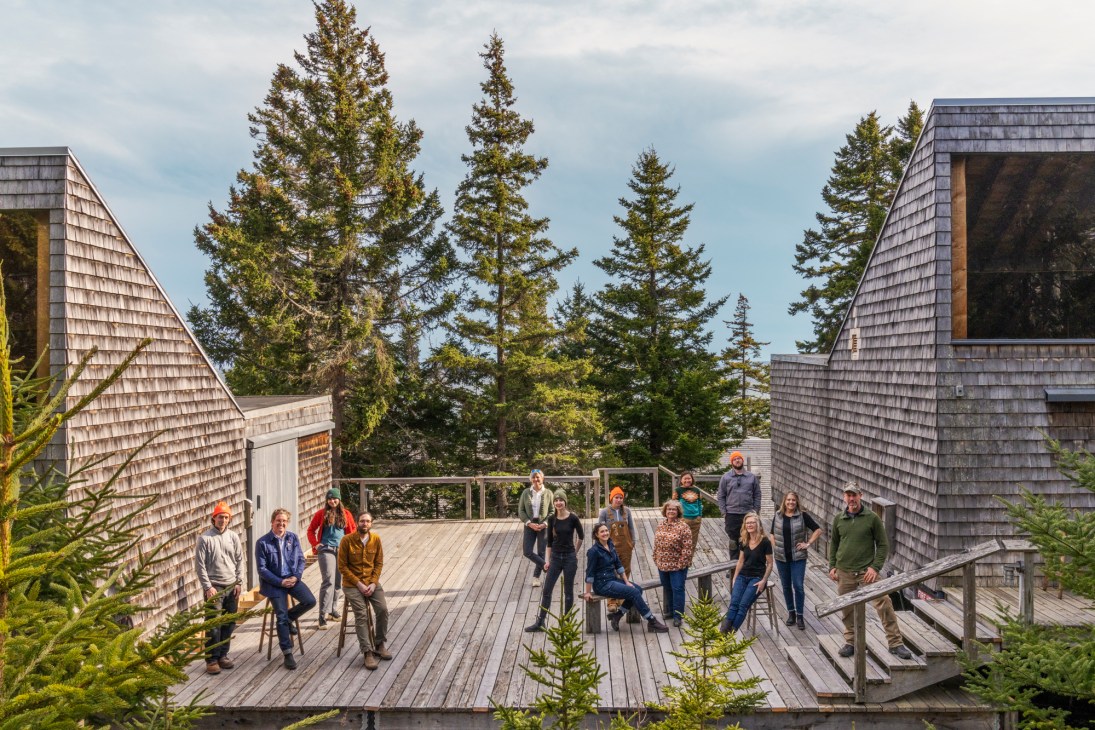
The Cabinet (from left to right)
Brad Willis
Studio technician
Works in the studio spaces and maintains the equipment.
Perry Price
Executive director
Price grew up in Denver and studied at Johns Hopkins University in Baltimore. He was executive director of the Houston Center for Contemporary Craft in Texas before he joined Haystack. “I’ve always been interested in the way that art is fabricated and in the intersection between making and design, so craft was a natural avenue for me,” he says. “What’s remarkable about this field is the people.”
Phoebe Zildjian
Fab Lab community assistant
Designs and facilitates programmes showing people how to use 3D printers, laser cutters, digital embroidery machines and more to empower them to create projects using digital fabrication.
James Rutter
Technology director
Oversees Haystack’s Fab Lab, a digital fabrication studio [established in partnership with the mit’s Center for Bits and Atoms] that integrates technology with craft.
Marissa Hutchinson
Programmes & studio co-ordinator
Connects, collects, organises and processes. Then ensures that all this information properly translates into the studio space and workshop experience that the faculty and participants are hoping for.
Molly Flanigan
Development & database co-ordinator
Keeps the data. Manages the school’s database of donors and programme participants. On a day-to-day basis, Molly processes donations, works on mailings and stares at many, many spreadsheets.
Sarah Tietje-Mietz
Digital content editor
Shares the stories of Haystack’s artists, staff, history and community with the world.
Mia Sartori
Studio technician
Loves working in a beautiful place and being mostly outside.
Ellen Wieske
Former deputy director (retired)
Loves that Haystack fosters a creative spirit with a sauce of learning, doing and nature.
Bich Nguyen Nguyen
Registrar
Communicates with participants about programme acceptances, campus housing and travel.
Isaac Goss
Maintenance assistant
Assists in the maintenance of campus systems and infrastructure.
Julie Adley
Office co-ordinator
The finder, passer and keeper of the little details that keep Haystack up and running.
Ginger Aldrich
Development director
Promotes Haystack and helps steward its award-winning campus and programming through marketing, fundraising and by recording and sharing historical institutional information that honours the foundation, attends to the present and plans for the future.
Josh Worthington
Operations manager
Does carpentry and trail work with a splash of maintenance.
Flight problems
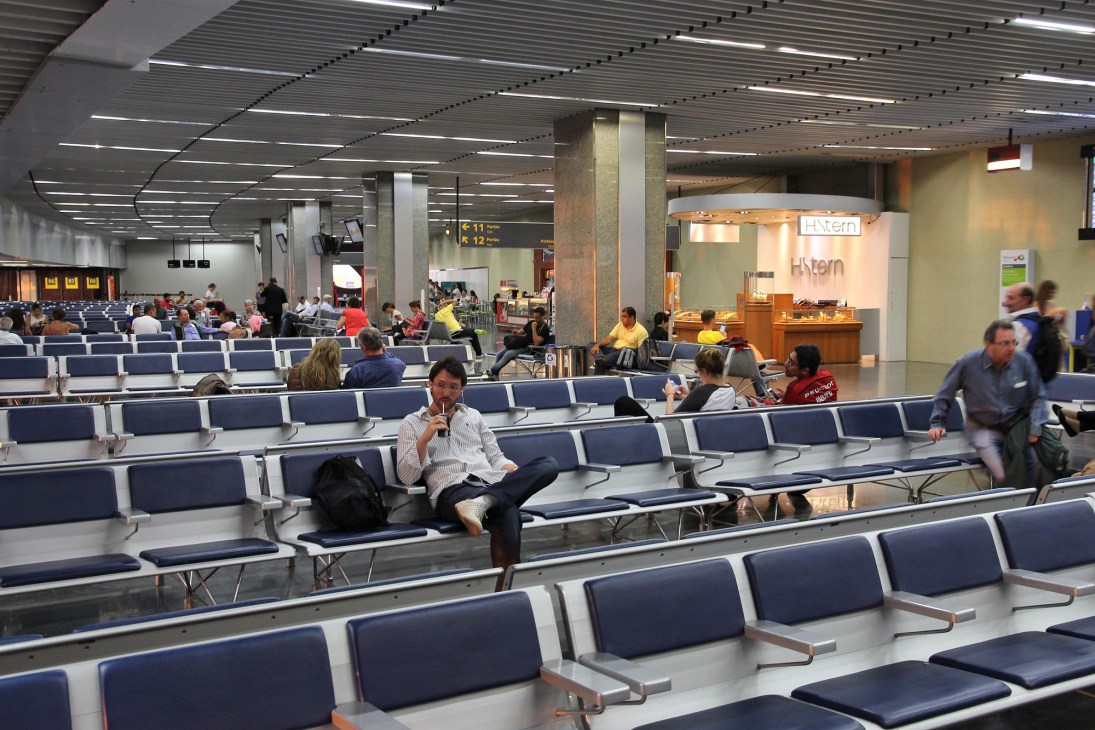
Galeão used to be Rio de Janeiro’s busiest airport but traveller numbers have steeply declined, from 17 million in 2014 to less than six million last year. Coronavirus isn’t to blame: other Brazilian airports have returned to or even exceeded pre-pandemic levels. Among them is Santos Dumont, a smaller airport that also serves Rio; more than 10 million people used it last year, making it the country’s fifth busiest (Galeão is 10th). However, its boost in traveller numbers isn’t enough to compensate for Galeão’s losses.

Rio’s mayor, Eduardo Paes, is concerned that the larger airport’s decline could leave the city increasingly disconnected. (Where São Paulo’s airports link to 57 Brazilian cities, Rio’s link to 27.) He plans to control the number of flights at Santos Dumont but that isn’t enough. The route to Galeão passes through a dangerous expressway; one fix could be to invest more in public transport. And why not expand Santos Dumont, which is suffering from delays and queues as a result of its popularity? To attract more arrivals, Rio needs to set its sights higher.

Q&A
Leslie Thng
CEO, Scoot
Since joining Singapore International Airlines (SIA) in 1999, Leslie Thng has led several of the group’s carriers and is now CEO of its low-cost airline Scoot. A year into the role, he tells us about its recovery following the lifting of pandemic restrictions and its Pikachu Jet.
What has Scoot achieved since you joined as CEO?
We have recruited almost 1,000 new staff, about 80 per cent of whom are crew. And we have launched new routes: Miri in Malaysia and Jeju in South Korea, and direct services from Singapore to Incheon and Narita.
Can you tell us about your Pikachu Jet?
Around our 10th anniversary, when the market started to reopen, we partnered with The Pokémon Company to have one of our aircraft, the 787-9 Dreamliner, painted in Pikachu livery. It has been very well received in Singapore, Thailand, Japan and Taiwan.
What are your plans for the year ahead?
China used to represent a quarter of our network. We aim to have restored about 80 per cent of our former capacity for the country by October. Meanwhile, we had 49 aircraft before the pandemic; we now have 55. We have also decided to lease nine Embraer E2s to expand our network in the region and strengthen our Singapore hub. On top of this, we will be taking delivery of almost 20 new aircraft in the next couple of years. This will let us retire the older a320s and switch to modern narrow-bodies. Our airline will have one of the youngest fleets, allowing us to reduce carbon emissions.
Tom Edwards On…
The value of food and drink
The appointment of Ewan Venters as the first global CEO of art-gallery powerhouse Hauser & Wirth in the autumn of 2020 might have raised a few eyebrows. But those who had followed his previous work as chief executive of London retail institution Fortnum & Mason knew that raising a glass was the smarter option. After he led the department store to record profits and driving its international expansion, the move to head up the gallery (as well as hospitality company Artfarm, also owned by Hauser & Wirth’s founders, Manuela and Iwan Wirth), was the perfect fit for a business leader with a flair for F&B to match his passion for art.
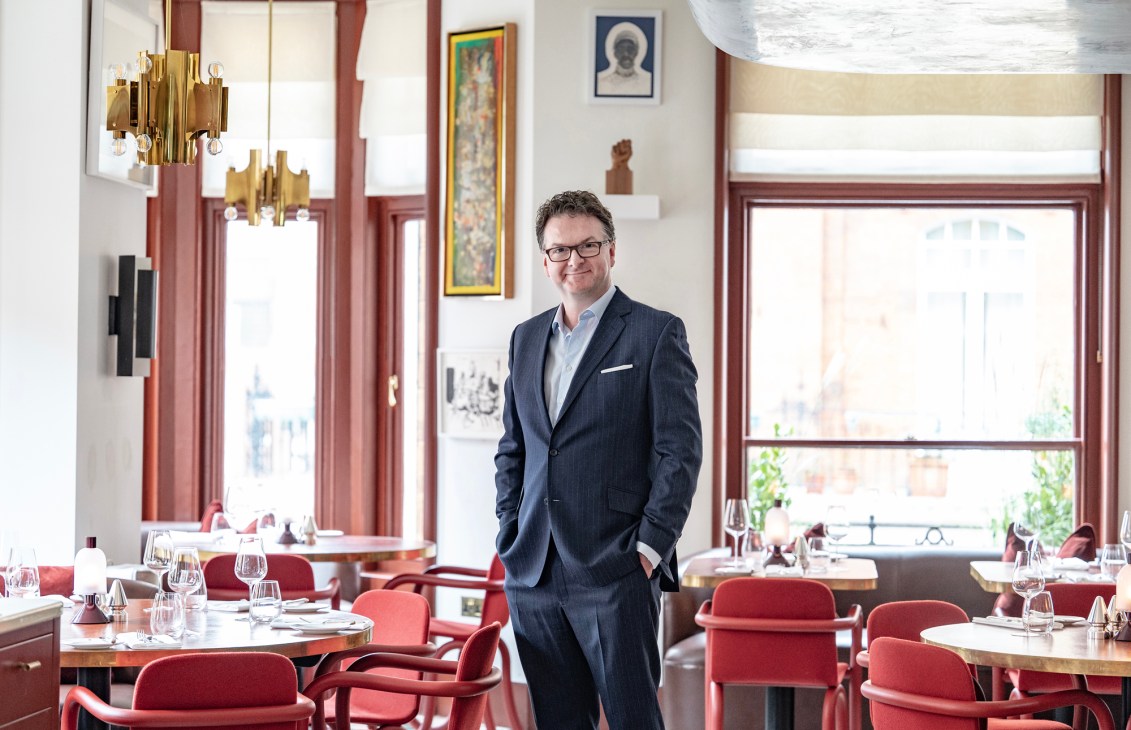
“Iwan and Manuela made their first restaurant investment around the same time as when they opened the gallery more than 30 years ago,” says Venters. “They have always had a deep, personal passion for food and farming, a love of nature. And if you have met many artists in your life, you’ll know that they all adore nothing more than sitting at a restaurant table, breaking bread, drinking good wine and having a great conversation.”
As you might expect from the man behind Selfridges Food Hall and success at Fortnum & Mason – and who is now the custodian of a range of well-appointed drinking, dining and hotel venues, as well as an international gallery business – Venters is good company. He’s also an advocate for the great things that happen at the intersection of hospitality and art. “It’s just natural that [the Wirths] would want to make this more of a business,” he says. “And so Artfarm was created in 2014. Now it’s turning into quite a serious venture and expanding at a great rate, which is exciting.”
Venters is a believer in the value of convening over great food and drink, whether in the name of art or strictly for business. “In every job that I have ever done, when I have been interviewed and the person on the other side of the table says, ‘We’ll be back in touch soon with an offer,’ I always say, ‘If you’re going to make me an offer, let’s meet over lunch or dinner.’ I would never take a job with someone if I hadn’t shared a meal with them first.”
Hear more from Ewan Venters on episode 592 of Monocle Radio’s ‘The Entrepreneurs’ at Monocle.com/radio. Subscribe to the podcast for inspiring business stories every week.
Images: Sim Canetty-Clarke, Alamy, Reuters
The sky’s the limit
War is an accelerator of technology. The Ukraine conflict is doing for drones what the 1991 Gulf War did for cruise missiles and the Second World War did for jet engines: it is ushering an emergent technology into the mainstream. Ukraine’s military is using Portuguese aerospace company Tekever’s kit for “recognition and intelligence missions”. “A year and a bit of war in Ukraine feels like 10 years of information,” Ricardo Mendes, Tekever’s CEO, tells Monocle. “Previously you had large military drones but this war has shown that ordinary people can use the technology.”

Other Tekever operators include the navies of Portugal and the UK, and the Italian Coast Guard, for which the firm’s drones monitor whales and dolphins in the Pelagos Sanctuary. In March the UK gave Tekever a contract for its ar5 and ar3 drones for surveillance of the English Channel.
Tekever is now working on the arx, which will be among the largest uncrewed vehicles in the air. “It’s a significant leap,” says Mendes. “We don’t look at arx as just a plane. It’s a computing platform.” A potential application is swarming: the deployment of smaller drones from a larger “motherdrone”. The possibilities are immense, especially for militaries – if they can keep up. “The typical military procurement curve means that you’re using last decade’s technology,” says Mendes. “That needs to change – and whoever doesn’t change will be at a tremendous disadvantage.”
tekever.com

In the basket: Spike antitank missiles
Who’s buying: Greece
Who’s selling: Israel
Price: €370m (approx)
Delivery date: tbc
Israeli state-owned defence contractor Rafael’s Spike missile is a popular weapon that is already used by 39 countries. Greece’s order includes variants designed to be launched from the ground or from helicopters and naval vessels. For obvious reasons, many European countries are taking a heightened interest in antitank provisions (Croatia and Switzerland will also soon be Spike owners). Israel has become something of a market leader in defensive-missile systems. Greece’s purchase of the Spike comes on top of Finland’s acquisition of the Israeli air-defence system David’s Sling.

Q&A
Admiral James Foggo
Dean of the Center for Maritime Strategy in Arlington, Virginia
Admiral James Foggo led the US naval forces in Europe and Africa until 2020 and, before that, Nato’s Allied Joint Force Command Naples. He tells Monocle about the geopolitical struggle that is under way beneath the waves.
What is the ‘fourth battle of the Atlantic’?
Since the war in Syria there has been a resurgence of Russian presence in places such as the Mediterranean that is primarily felt underwater. The new battle is in the North Atlantic and the tributaries feeding into it from the Arctic, the Baltic, the Med and the Black Sea.
Can the US still build ships and submarines as rapidly as it did in the past?
Manufacturing is starting to return to the US but since the 1960s we have lost 14 shipyards that construct ships for our navy. We should be producing more warships but we can’t do that quickly because of the industrial base’s limitations.
How significant is the Aukus pact?
It is crucial. It’s about more than just nuclear submarines: it sends a message to authoritarian regimes that have encroached on island chains [in the Pacific] and transformed them into military bases.
For more on the new era of naval competition, turn to page 73 for a report on Rhode Island’s underwater weapon manufacturers.
Finding true north
With a conspicuous lack of ceremony, Russia ceded its role as chair of the Arctic Council to Norway on 11 May. The handover marked the beginning of a much-needed fresh chapter for the eight-nation body, whose activities were paused soon after Russia’s full-scale invasion of Ukraine.

Since the Cold War, nations in the High North have increasingly pulled together on science, maritime navigation and environmental management. Indigenous people, meanwhile, have had a bigger seat at the Arctic Council’s table than at most multilateral forums. All of this makes resuming dialogue at the council a pressing concern for many, from Inuit leaders to researchers studying permafrost. In March, Norway’s Arctic affairs ambassador, Morten Høglund, outlined Oslo’s priorities at a symposium in Anchorage, Alaska. These, he said, are climate change, oceans, sustainable economic development and working with the people of the Arctic. None of this is ground-breaking but given that Høglund’s audience included delegates from Belgium, Estonia, the EU, Germany, Japan, Poland and Singapore, it suggests that economy and environment are a welcome change of subject from militarisation, which has dominated Arctic discussions for the past year. As Nato, Russia and China bolster their security postures in the High North, reinvigorating the Arctic Council could help the region to regain its lustre as a global model for peace, diplomacy and co-operation.
Given that Russia has more territory above the Arctic Circle than any other nation, engaging with Moscow is inevitable. As such, the council could become a place for cooler heads to reset relations in the wake of the Ukraine conflict. But Høglund is tempering expectations. “Our measurement of success is that the Arctic Council has survived intact and that work on all relevant areas is ongoing – not necessarily at the level that it once was but at an adequate level,” he tells Monocle. “A functioning Arctic Council without Russia isn’t meaningless but it has a lot less value.”
The Foreign Desk
Andrew Mueller on…
International rescues
There is no sterner test of a country’s commitment to the protection of its citizens than a sudden need to extract them from peril. The deterioration of the situation in Sudan in April presented many governments with this daunting challenge. Such operations are a risk first and foremost to the personnel who have to carry them out but they also present dangers to the prestige of the nation concerned.
The US’s chaotic withdrawal from Afghanistan in 2021 made it look heartless and inept. Such an impression was fair enough, as it was both of those things – and the country’s response to Sudan suggested that it wasn’t a fluke. While special forces flying Chinooks from Djibouti evacuated US embassy staff in Khartoum, other Americans in Sudan received little more than vague directions to possible overland routes. Shortly before shutting up shop, the embassy tweeted that it was “not currently safe” to evacuate US citizens – to which those citizens would have been entitled to retort, as the city erupted around them, “That’s why we’re enquiring.”
The UK also received poor reviews for its early efforts. The Times reported that British staff at the Khartoum American School who contacted the Foreign Office were simply told to seek guidance online. The beleaguered teachers were flown out by France, whose response seems to have been as generous as it was efficient. As of this writing, France has rescued more non-French than French. (Spain and Germany have also evacuated non-citizens.)
The French airlift, Operation Sagittarius, also demonstrates the coercive potential of being perceived as a serious military power, whether one fires a shot or not. France’s media confirmed that Emmanuel Macron personally contacted both of Sudan’s rival warlords before deploying troops. One suspects that during these calls, General Abdel Fattah al-Burhan and General Mohamed Hamdan “Hemedti” Dagalo did rather more listening than speaking.
These are moments when a nation state can demonstrate the best of itself to the world and, in so doing, remind its own citizens of what it is there for. Though the circumstances were different, Israel’s raid on Entebbe airport in Uganda in 1976 to rescue hostages taken by Palestinian militants and German revolutionary weirdos was a significant statement of intent: we look after our people, wherever they are, whatever the odds. When the soldiers returned, the then prime minister, Yitzhak Rabin, told them, “Not only did you save lives; you changed the image of Israel.”
Andrew Mueller hosts ‘The Foreign Desk’ on Monocle Radio. Listen live at monocle.com/radio every Saturday at midday London time or download as a podcast.
Images: Getty Images, Tekever
Personal shoppers
Business
Personal shoppers
The biggest US department stores have endured some tumultuous years, having lost touch with the needs of younger consumers and struggled to translate their brand appeal to the world of e-commerce. But there has been a surprising story of business resilience away from the spotlight: the skill and nimbleness of family-owned department stores in places that aren’t readily associated with retail prowess.

Halls in Kansas City is a shining example. Founded in 1916 and owned by the family behind Hallmark Cards, it has just had its best year of business. “We attract customers from five states because our buyers travel all over to bring the best items to Kansas City,” says Halls’ store director, Todd Epperley. “Mostly they head to New York with specific customers in mind, right down to their sizes.” They also work virtually with European partners.

Epperley believes that his in-house style team and the relationships that they cultivate with their clientele have been crucial to Halls’ longevity. The department store has downsized in recent years and jettisoned its makeover counter but the considered selection of clothing for men and women is still its livelihood – think labels such as Gucci, Zegna and Moncler. When an item suited to a client’s taste comes in, the team drops them a line. There’s no e-commerce; instead, Halls hosts events for top shoppers. It also always keeps red shoes in stock in case a star player from the Kansas Chiefs nfl team drops by (for the uninitiated, the players wear red jerseys).

Such personalised service might seem better suited to smaller markets but the success of Boyds in Philadelphia shows that, done right, it is applicable anywhere. The sales staff of the family-owned luxury retailer, which has been going strong for 85 years, maintain close relationships with clients. Some of the suit specialists keep a notebook in their breast pocket with details of the preferred cut and cuff sizes of their best customers, as well as a log of swatches from previous purchases.

Hanna Struever, founder of California-based Retail Portfolio Solutions, says that the travails of the bigger department stores are “a referendum on more of the same” and that family-run operations have an advantage when shoppers are seeking personality and an authentic experience. “These one-off stores often have a strong point of view,” she says. “You go there because you’re into fashion.”
Reclaiming history
In 1863 four Irish nuns were sent to establish the order of the Sisters of the Good Shepherd in Melbourne. For more than a century, their Abbotsford Convent was home to one of Australia’s largest Catholic congregations, as well as to thousands of women and girls who were placed in its care. While some “penitents” arrived voluntarily, many were confined against their will.
In the 1990s the complex was bought by a developer with plans to turn it into flats but a residents’ group led a campaign that resulted in it going into community ownership. Two decades of restorations later, the building’s dark past is as much a part of its identity as its bright future. Today, Abbotsford Convent Foundation has transformed the site’s 11 buildings into Australia’s largest arts and culture precinct.

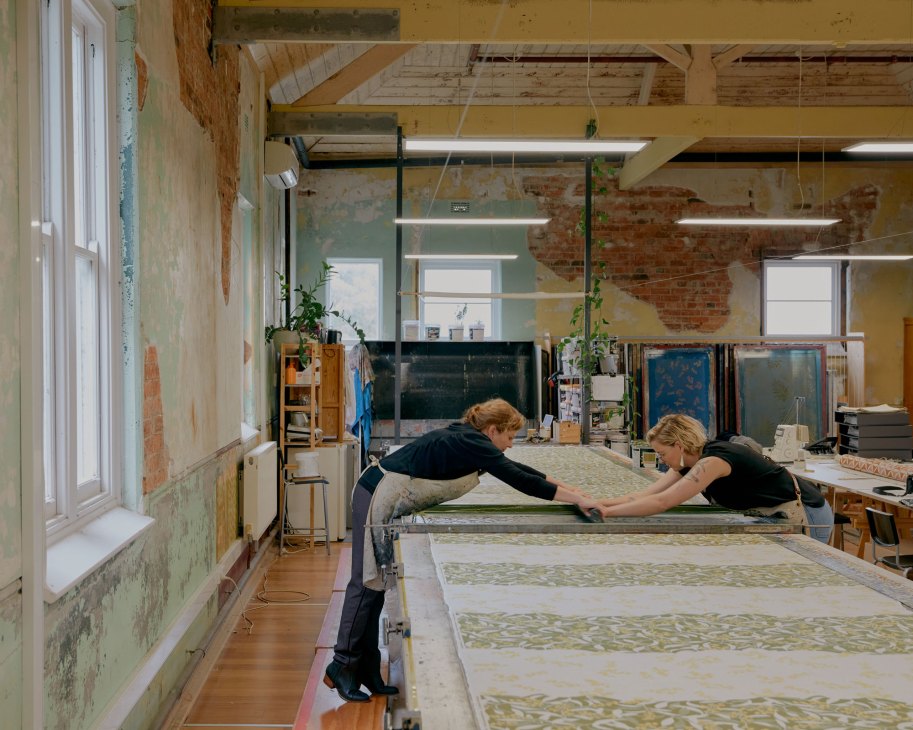
Patricia Sykes spent two years in the convent as a child and left in 1954. Now she is a poet, storyteller, librettist and the author of The Abbotsford Mysteries, a collection of poetry that documents her experience. “Being in the orphanage felt like a form of imprisonment and punishment but it also fed my creativity and imagination,” she says. As an adult, Sykes returned for a six-month residency to work on her book. “As a child I couldn’t choose to leave; later I became free to re-engage with it on my own terms. That such diverse artists can occupy this space speaks of its capacity for metamorphosis.”
Like Sykes, many of the creatives here find inspiration in the buildings’ history. Potter Matthew Vretas, who works in what was once the convent’s finishing school, reflects on the passing of time in his work. “We continually reflect on the life of clay in our work, the idea that mountains erode to create something soft, something that we can form and harden again,” he says.
Johanna Howe, co-founder of clothing label Caves Collect, agrees. “I love being surrounded by design and materials that don’t just last but age with elegance,” she says, pointing to the decades-thick layers of peeling paint and the stone archways that host DJ sets at the weekend. Upstairs, Lara Cameron and Caitlin Klooger handprint homewares in their studio. “As a female-led business, we like to think that we are giving the space a new, more positive and empowered purpose,” says Cameron.
abbotsfordconvent.com.au
World record

Artist Theaster Gates might have recently made headlines with his plans for Liverpool’s waterfront but his seminal work in Chicago’s Southside is also quietly continuing apace.
Building on the activities of his Rebuild Foundation, which works on community spaces, Gates has been acquiring vacant lots that he has transformed into public gardens, as well as abandoned houses and a former school that he plans to turn into residencies for artists of colour. His latest opening is Miyagi Records, a vinyl shop opened in collaboration with the eponymous label stocking everything from blues to house. “We’re at the beginning of a 50-year project,” says Gates. “You need to create a problem that’s big enough for it not to be just yours to solve.”
miyagirecords.com
Q&A
Richard Hoechner
Co-founder and head of community at ‘Republik’ magazine
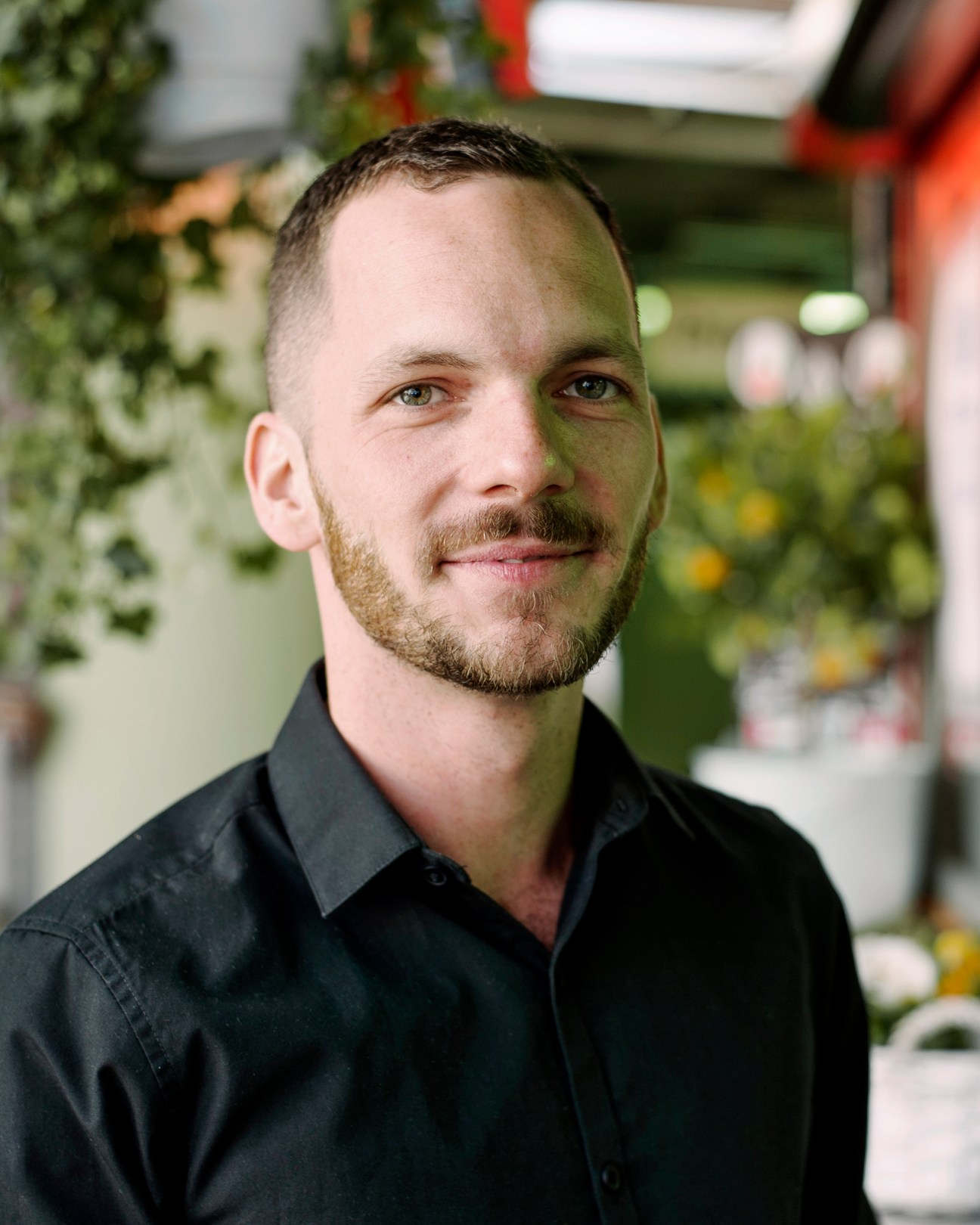
Zürich-based Hoechner joined editors, reporters and CEOs at Perugia’s International Journalism Festival to discuss the future of media. There, he shared insights gathered at the helm of Republik, the reader-owned, slow-news platform he co-founded five years ago.
What is the future of membership models?
We are trying to find new ways to sustain quality journalism; it’s a difficult business and we need to co-operate with our audience to offer what is useful to them. On my panel, we had a long conversation about paywalls: no one likes them but they are part of the business. Our paywall is very strict in most ways – but in other ways it’s fairly open. For example, anyone with a link can access the full story, so our members can share stories with their friends for free. We are looking for creative solutions to paywalls as they are still the future.
Who are your members?
We have a very lively, engaged community [of about 30,000 people] and they are unusual in that they own part of the magazine. In fact, they were there before we started the magazine. They were concerned about the media world and wanted a solution to the changing landscape. We pitched an idea with a crowdfunding subscription and there was clearly a market for this.
What is the future?
We put so much work into our journalism; we want to be a voice that cannot be ignored. We are still young and I’m sure that we will extend our work to larger audiences.
republik.ch
Reading the room
It is probably the most beautiful and grandest space in Washington but at any given moment, you would only find about 20 researchers in the Main Reading Room of the US capital’s Library of Congress, the world’s largest library. Without a research pass, its nearly two million annual visitors could only shuffle into a glass-enclosed mezzanine space and peer down at the room below. It has been that way for decades but such opaqueness isn’t really the style of Carla Hayden, the librarian of Congress. “It’s such an inspirational room. We want people to be able to walk in there,” she says, as streams of visitors line up for the unexpected pleasure of wandering into the heart of the library’s 125-year-old Thomas Jefferson Building. Since April, the public has been getting two one-hour slots each day to visit the Main Reading Room.

The Thomas Jefferson Building, built in Italian renaissance style by architects John L Smithmeyer and Paul J Pelz, was the country’s first public building with electricity and was kept broadly accessible. Nowadays, visitors “walk away thinking, ‘Beautiful building’ but you see that they still don’t have that connection”, says Hayden. A $60m (€45m) overhaul of the building is designed to change that. An orientation centre directly below the Main Reading Room will offer a glimpse of the 1,349km of shelving, include interactive exhibits and a rotating gallery of its most prized possessions. Hayden has also been expanding public events in other spaces. “Live! At the Library” keeps the building’s Great Hall open for concerts, exhibits and drinks every Thursday evening.
Hayden’s approach and the renovations haven’t been without controversy: preservationists have been up in arms about aspects of the plan that would have tampered with the room’s central reception desk. Those interventions were eventually abandoned but Hayden argues that they still provided a great opportunity for people to think what libraries should be about.
Getting such attention is essential as libraries have taken on central roles in US cities in recent years. Here they can provide anything from community spaces and social safety nets to vaccines, mental health care, education and internet access in rural communities. Hayden chuckles at the thought of one library she visited that loans out sewing machines and traffic cones for learning drivers.
The Library of Congress has been busy digitising its own collection (61 million items available for download and counting) and creating lesson plans for teachers and librarians around the country. “There are a lot of common issues with libraries,” she says. “And there’s a feeling that the national library, which is the Library of Congress, should be more involved.”
Images: Laurent Burst, Felton Kizer/Rebuild Foundation
Open to (nearly) all
Charlotte McDonald-Gibson on Amsterdam’s attempts to attract the ‘right kind’ of tourist.
There are few more disappointing arrivals to a great city than emerging from Amsterdam’s Central Station. It’s a beautiful 19th-century cast-iron and red-brick building designed by Rijksmuseum architect Pierre Cuypers. But a few steps from its monumental entrance hall, you are greeted by a tangle of tram tracks, unsteady tourists wobbling on rental bikes and the heavy whiff of marijuana. Then the main stretch down to Dam Square is a gauntlet of low-grade pancake houses, garish coffee shops (as legal cannabis cafés are known) and crowds of visitors, many visibly worse for wear. On a recent visit, I watched a tram conductor escort a tourist off his vehicle so that she could vomit in a bin.
Amsterdam is one of the world’s most visited cities, hitting a record 22 million guests in 2019. There are fewer than one million residents and some, understandably, feel swamped, especially as many tourists are not there for museums or orderly canal trips. As night falls the historic De Wallen red-light district becomes a saturnalia of stag dos and stoners staggering between bars and brothels. It’s certainly rambunctious but would Amsterdam still be Amsterdam without this freewheeling, chaotic heart?
That is the paradox facing mayor Femke Halsema as she embarks on a plan to, ahem, weed out the troublemakers. It was cooked up during the coronavirus lockdowns, when travel bans transformed the city centre back into the quaint oasis it must have been before mass tourism. But now this vision for a tranquil Amsterdam is being put into practice – and it’s not going well. In February the city announced its proposal to close about 100 of the 249 brothel windows in De Wallen and relocate the sex workers to an “erotic centre” on its outskirts offering tantric-yoga courses and lectures on feminism over afternoon tea.
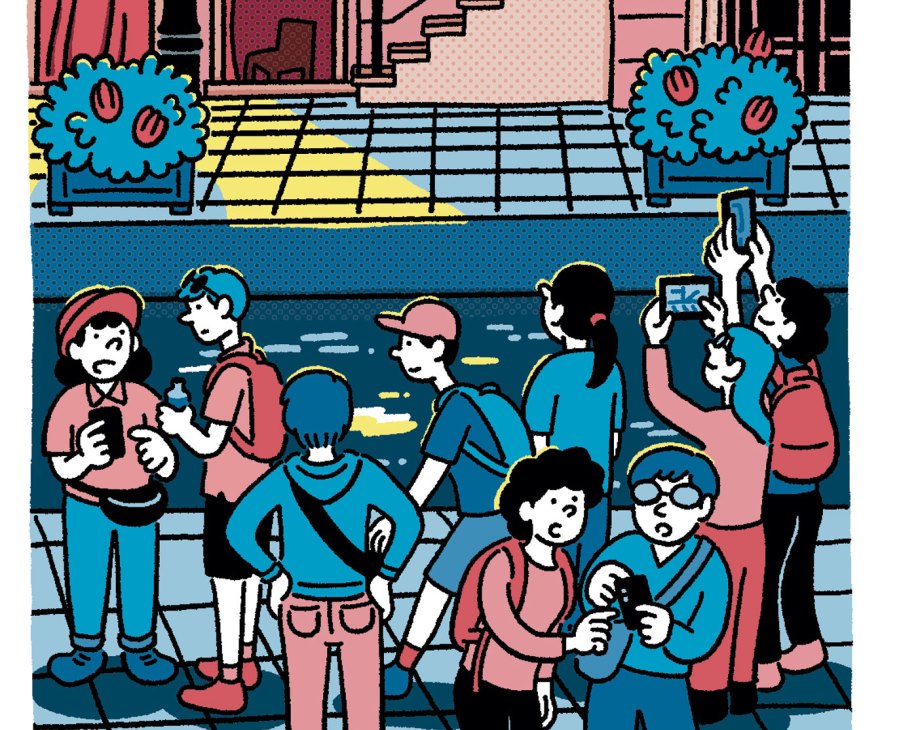
Halsema apparently said that she was inspired by the film Moulin Rouge but it’s not clear whether any affected parties were consulted. The sex workers themselves certainly weren’t: they marched on City Hall saying that the proposed erotic centre and a decision to close the red-light district earlier on weekends would make their jobs more dangerous. The two mooted locations have also provoked an outbreak of Nimbyism, including from the European Medicines Agency, which the Dutch worked hard to woo from London after Brexit. It issued a statement making clear that they didn’t want “drug-dealing, drunkenness and disorderly behaviour” on their doorstep.
Then in April the city released two videos discouraging undesirable tourists from the UK from visiting. With bad acting and botched attempts at British slang – “Coming to Amsterdam for a messy night and to get trashed?” – they fell as flat as a Dutch pancake. Cue the satirists pitching in with their own versions, warning of “over-priced beer”, “oat-milk lattes” and “too many ‘paddos’ [hallucinogenic mushrooms]”. The campaign contradicts the spirit of Amsterdam, a city built on openness, tolerance and free thinking. And this isn’t the first bout of puritanism attempting to tame its wild side: successive rounds have already seen bars close earlier and coffee shops culled.
So are rowdy tourists in an area that has hosted sex work since the 16th century really the issue? Perhaps it’s the ill-planned gentrification that is really threatening to swamp the city’s character? Many say that soaring rents and a housing crisis are pricing out creatives. If Amsterdam wants to remain a celebrated global city, it needs to start thinking about the kinds of people it wants to attract rather than berating those it wants to keep away.
Charlotte McDonald-Gibson is Monocle’s correspondent in The Hague.
Images: Getty Images, Tekever
Making the cut
“The relationship between swordsmith and polisher is similar to that between music composer and performer,” says Sotaro Matsumura, as he sits down on his workshop floor. “You’re creating this thing together – it’s a performance. You need each other for the sword to come to life.”
It is 07.00 and the scent of coffee hangs in the air when we visit Matsumura’s cedar-clad workshop. “Do you like bossa nova? That’s my favourite genre for gentle polishing. Of course, I play techno or dub for heavier, more physical work,” he says, walking over to his record player. “But don’t let this ruin your image of a very traditional Japanese craftsman.”



Looking at Matsumura, it’s clear that he is every bit “traditional”. He wears a dark indigo-hued samue, a robe sported by sword polishers for easy movement. It’s one of his many rituals. Like most togoshis, Matsumura is no stranger to repetition. After all, the discipline requires a lifetime of practice and dedication. It takes 10 years of apprenticeship just to become qualified to work with basic swords. Matsumura has mastered every type of sword: from tachi (his favourite) to katana and naginata. “The nihonto, created in the 10th century, has a distinctive curved shape,” he says. “But these are not just weapons; they’re art forms, treasures, guardians, symbols of wealth and power.”
Sword-polishing has been in his family for three generations. Growing up, he learned by watching his late father. The two worked together in their studio just outside Tokyo, in Funabashi, where they welcomed sword collectors, museum curators, film directors (they assisted Tom Cruise’s team in The Last Samurai) and even yakuza. “These walls hold so much history,” says Matsumura.
Still, there’s a risk that the tradition will die out. Fifty years ago, Japan was home to hundreds of sword polishers; today, only a few are left. Engaging younger generations is vital to keeping the craft alive but it is no easy task. “I have three daughters and, of course, I want them to understand the urgency in saving this cultural tradition,” he says. “But, while I’ve given my life to this, it is their choice. As a child, I watched my father with awe and wonder. It’s all I ever wanted to do. If they feel the same way, I’ll support them.”
Monocle watches Matsumura repeatedly push the metal blade of an 800-year-old katana sword over a whetstone. His movements resemble a choreographed dance. Yet the process isn’t as smooth as it looks, he says. “I’ve cut myself many times. I can only see the true, raw beauty of the sword once I’ve polished the blade with the natural uchigumori [a type of stone], which makes it sharp.” After repeating this process for a few hours, Matsumura will wipe the blade clean and oil it before storing it in a handmade scabbard sewn using fabric from vintage kimonos.
As he prepares to go home, he wraps today’s blade and puts it away for the night. “A togoshi has to honour the sword,” he says. “That’s the whole point. When I’m polishing, I think of all of the togoshis whose hands have worked on this blade in the decades before me.”
For Matsumura, this is part of honouring the masters who went before. “Our ancestors have been taking care of these swords for more than 1,000 years. Now it’s my responsibility to preserve this part of our heritage or our history will fade away,” he says. “But if I do good work, people will treasure these swords for years to come.”
The Opener
Save the date: QOL Conference
Finest forum
As we send this issue off to press (writes Tyler Brûlé), monocle’s editors and correspondents are surveying the streets of key capitals and crunching the numbers (hours of daily sunshine is always a key metric) for our annual quality of life ranking, which will be released in our July/August issue. The team is also pulling together the format for our annual urbanism event under the same banner.
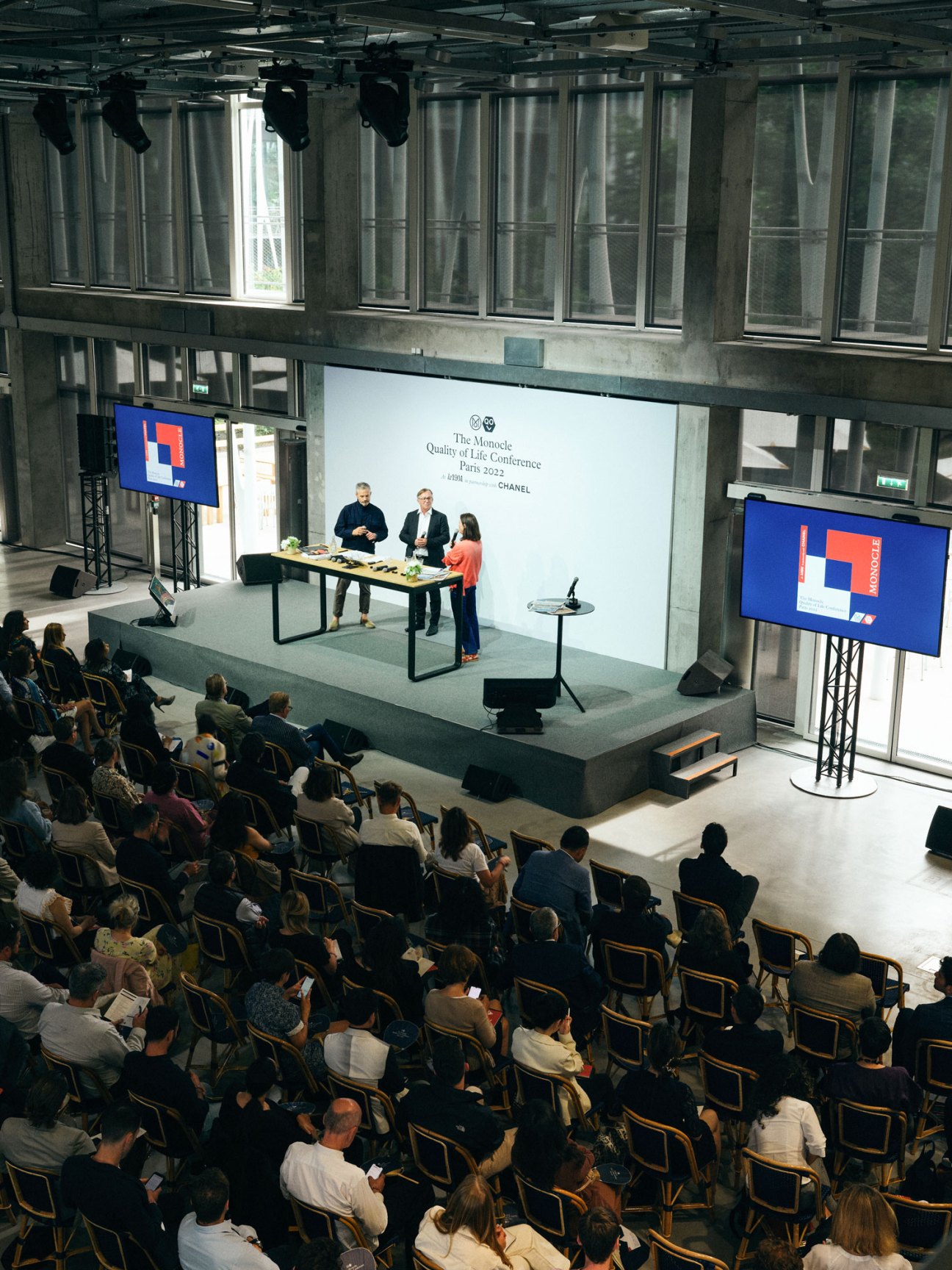
Munich will be the host city for our 2023 edition as we discuss the topics that make for better living in centres large and small over three days. If you’ve never managed to attend one of our summits, you might want to act quickly to not only secure a ticket for a front-row seat but also ensure that you get a choice room at one of our favourite hotels in the Bavarian Hauptstadt. This year, expect a panel of architects who you need to know for future projects (both personal and professional), a session on the finer points of building the perfect community and plenty of pretzels, beer and fine hospitality. For tickets and questions, visit conference.monocle.com or drop my colleague Hannah Grundy a note at [email protected]. See you in Munich.
Reporting from…
Monocle has a network of correspondents in cities around the world. Our brief dispatches include a new transit system in Bangkok, a ‘mini-Hollywood’ in London and alfresco dining in Los Angeles.
Bangkok
Coming on track
Bangkok’s first monorail is launching with a snazzy fleet of Bombardier Innovia 300 trains. Nearly 65km of track will be added to the network and the trains will make it easier to travel across Bangkok without going into the city centre.
London
Star struck
An investment company is hoping to transform a former recycling centre in north London into film studios. Some residents aren’t thrilled but might they change their minds when Timothée Chalamet turns up at the local pub?
Los Angeles
Ray of light
A tussle between restaurateurs and the City of Los Angeles over alfresco dining has been settled, preserving rules making it easier to put tables and chairs on the street. Good. Dining outside in sunny LA is always a bright idea.
Sweet dreams
Come June, much of the art world will decamp to Art Basel – and attendees are seeking a good place to stay (writes Kimberly Bradley). While private jet-setters get themselves luxury suites at the famed Hotel Les Trois Rois and gallery staff book out most other fancy hotels way before the fair opens, for the rest of us it’s slim pickings.

Me? For years, I’ve joined a group of women to stay in the airy live-work studio of an artist friend who is based in Basel. We sleep on fold-out beds and blow-up mattresses surrounded by her works in progress and an art-theory library. In the mornings we have breakfast in a vast kitchen: the Swiss support the arts so well that some buildings, like my friend’s, are set up just for artists.
In this kitchen, year after year, I meet people who crash in art studios by night and schmooze at Art Basel by day. My breakfast companions usually come from around the world and represent the art world’s no-expense-account backbone: they are artists, critics, young curators or emerging collectors.
And maybe we’re onto something: art critic Jerry Saltz once said that Art Basel, in its various locations and iterations, was a giant adult sleepover. He meant this metaphorically but last year at Art Basel Miami Beach, the week’s best party was a massive sleepover in the Miami Design District, hosted by the app Basic Space together with educational platform Secular Sabbath. Art fair or not, we all feel better when we have some good times with our friends – and get some proper shut-eye.
Kimberly Bradley is Monocle’s Berlin correspondent.
Music to their ears


We’re all acquainted with the cacophony of public transport: the phone gossipers, the couple unwittingly dragging the whole train carriage into their argument, the toddler watching Paw Patrol on an iPad. Swiss commuters are about to experience the next auditory frontier. Zürich’s bus and tram drivers will now be allowed to play their music on Bluetooth speakers. Let’s just hope that the esteemed people carriers of Switzerland’s financial capital aren’t into Nickelback.
Line of duty
In 2010 the Royal Spanish Academy scrapped the tilde accent adorning the adverb sólo (Spanish for “only”) – the sole factor that distinguished it from the adjective solo (alone). At the time, the decision angered Nobel prize-winning novelist Mario Vargas Llosa and other language purists. But 13 years later, it looks like his pro-accent brigade finally has its way.
Much to the dismay of the anti-tildistas, who disapprove of the accent, the Academy reversed its original policy this year, restoring the tilde in sentences where there is a real risk of ambiguity. It is a tepid victory for both factions but here’s hoping this means that they can finally leave each other alone.
Special delivery

The field of lunar motoring is more than 50 years old. Each of the last three Apollo missions took a basic moon buggy and, indeed, left them there (low mileage, one careful owner, buyer covers delivery costs). Since then, remote-controlled lunar rovers have been deployed by Russia, China and India (though India’s Pragyan rover was destroyed when the Vikram lander crashed in 2019). Now, US start-up Astrolab wants to put new wheels on the moon. Its Flexible Logistics and Exploration Rover (Flex), which resembles a small rubbish skip on wheels, will be crewed by two astronauts and capable of carrying stuff and picking things up. It can also be controlled remotely. A prototype has been tested – by Canadian astronaut Chris Hadfield, no less – in the deserts of Death Valley. Astrolab is confident that it will operate reliably in the moon’s colder climate.
Astrolab’s CEO, Jaret Matthews, hopes that the rover will be like “UPS for the moon”. There might be many frustrated customers of one notorious British courier wondering if that’s where their parcels have somehow ended up.

Cheers to that!
Scottish whisky-maker Glenmorangie is helping to fund a project that aims to reintroduce four million oysters to the Dornoch Firth – the inlet along which its distillery sits – by 2030. The Dornoch Environmental Enhancement Project was established in 2014 but is now showing considerable results: it is on track to double biodiversity in Dornoch Firth.
The revival of the firth owes much to technology: Glenmorangie claims that the anaerobic digestion plant it opened there in 2017 reduces the distillery’s organic waste by 95 per cent. But the plan is that the remaining 5 per cent will be hoovered up by the returned oysters. By filtering the water in the firth, the shellfish will help to maintain the whisky’s quality – after all, you can’t make whisky without high-quality water – and clean up the inlet.
This happy synergy is yet further refutation of a persistent urban myth that oysters and whisky must never be mixed. In fact, oysters and whisky are often served together in Scotland and work well as a bracing entrée or an even more bracing hangover cure.
Alternative Pest Policies
Rats have been gnawing away at the Big Apple ever since they scurried off boats from Europe nearly 250 years ago. But their days in the city might be short-lived. Earlier this year, mayor Eric Adams appointed New York’s first “rat czar”, Kathleen Corradi, who will spearhead the city’s new rodent mitigation programme. While this might sound like an unusual position, it’s far from the most imaginative strategy officials have deployed to tackle pests. Here are three more, from cats to control rats, to contraception for pigeons and crippling crustacea.
1.
Through a programme called Cats at Work, a Chicago animal shelter placed more than 1,000 (spayed and vaccinated) cats outside residences and businesses to fight rat infestations, calling it a “green” solution to the vermin problem. And it’s possibly more humane to cut out the humans.
2.
Brussels has been dispensing contraceptive corn pellets to humanely decrease the ever-growing number of pigeon births around the city. At Square Clémentine, where the first seed dispenser was installed in 2019, the population halved in just a year.
3.
Dikerogammarus villosus (or “killer shrimp”) are a damaging invasive species. After being found at a UK reservoir, fishermen were asked to rinse their equipment before going elsewhere – to no avail: the shrimp are now troubling native crustacea across western Europe.
Images: Astrolab
Festival season
For many, architecture might seem like a guarded profession. In cities and countries without a strong communal appreciation of design heritage, it can appear to be something that only takes place in creative studios, educational institutions and city halls.

It’s a disappointing state given that architecture impacts all people across the globe, almost all the time. At the most basic level, it provides shelter but it can also affect our health, mood and relationships. Developing a broader understanding of the benefits of good architecture – from the impact of lighting on our sleeping habits to the calming effect of buildings finished with natural materials – can encourage people to advocate for their own right to it, rather than leaving it to those who they perceive to be in the know. It’s something that the famous urbanist and activist Jane Jacobs pushed for, stating that “cities have the capability of providing something for everybody, only because, and only when, they are created by everybody”. And it’s an understanding that the London Festival of Architecture is looking to address.
The annual festival runs throughout June and includes more than 400 events under the theme “In Common”. Event organisers have been invited to find ways to build a broader appreciation of architecture’s effect. As part of the programme, the general public can ask questions at architecture offices such as Zaha Hadid Architects (Studio Lates) and children will have the opportunity to plan their ideal neighbourhood (Build-A-Town). Guests can also learn how to make bricks (Build Together: Community Building at the Story Garden), watch films about the lives of buildings (The Architect Has Left The Building) and explore installations that examine the accessibility of public space (Seats at the Table). The effect? Hopefully to inspire a new generation of Jane Jacobs, who know they have a right to good design and architecture.
For more fresh perspectives on design, listen to Monocle on Design at monocle.com/radio

Roberto Ciccuto
President, Venice Biennale
Award-winning film producer Roberto Cicutto is president of the parent organisation of the architecture biennale. His role includes naming an agenda-setting curator. This year he selected Ghanaian-Scottish architect Lesley Lokko, who set 2023’s “The Laboratory of the Future” theme.
Lesley Lokko is turning Venice into a laboratory of architecture rather than a showcase. Why was this vision important to you?
Having a curator who selects outstanding buildings wasn’t enough. So when Lesley said that Africa was already a laboratory of all the challenges that the rest of the world is experiencing today, from migration to resource shortage, this was a strong starting point to have a dialogue about what architecture is for.
Why is the event important?
The biennale is something that can survive because it has a soul, a DNA and is a part of history. Over 130 years, the biennale has created situations that have changed the course of architectural history, which is a reason to pay attention.
What do you hope that people take away from the Venice Biennale this year?
Cultural institutions understand that they have to take greater responsibility for what happens in real life. With regards to Venice, this means looking at fragility. The city faces all the challenges that we face in a more intense way – climate change, preserving buildings and heritage – and the biennale addresses the need for it to be used, giving access to the rest of the world.
For Havn’s sake
Danes are accustomed to local authorities understanding the benefits of urban greenery. The district of Frederiksberg in Copenhagen, for example, brilliantly brought nature closer to its residents by legislating that every household must be able to see a tree from its windows. The municipality of Køge took things further, making nature an intrinsic part of an entirely new neighbourhood.
Copenhagen-based design studio sla is behind this new Søndre Havn district, which took over a former industrial harbour. The firm’s approach used nature as a means to tie the community together and create a sustainable urban environment resilient to a changing climate.
Central to its development are two components: the pedestrian promenade that encircles the district and the green commons that are spread across it. The 1.4km elevated walkway allows direct access to surrounding sites while doubling as a dyke to protect the area from flooding. The commons not only provide lush greenery and recreational spaces for residents but also enhance the area’s biodiversity and efficiently manage rainwater runoff.
sla wants to demonstrate that water management isn’t limited to ugly swales and pits; it can encompass beautiful parks and human-scaled spaces too. “We’re showing all the benefits of implementing a strong, nature-based design,” says CEO Mette Skjold. “The project can act like a prototype for how to think, plan and develop the surrounding area.”
Model citizen
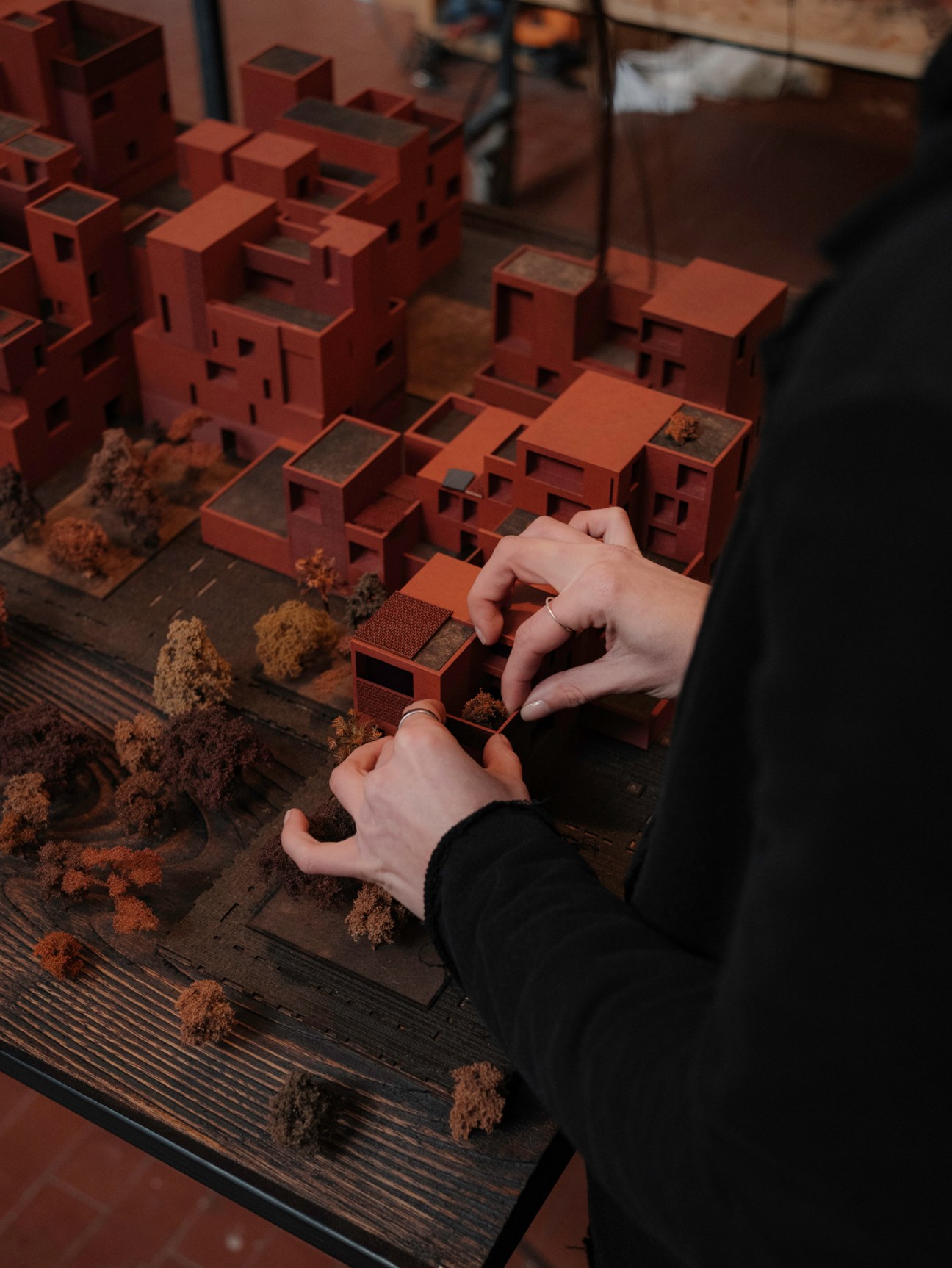
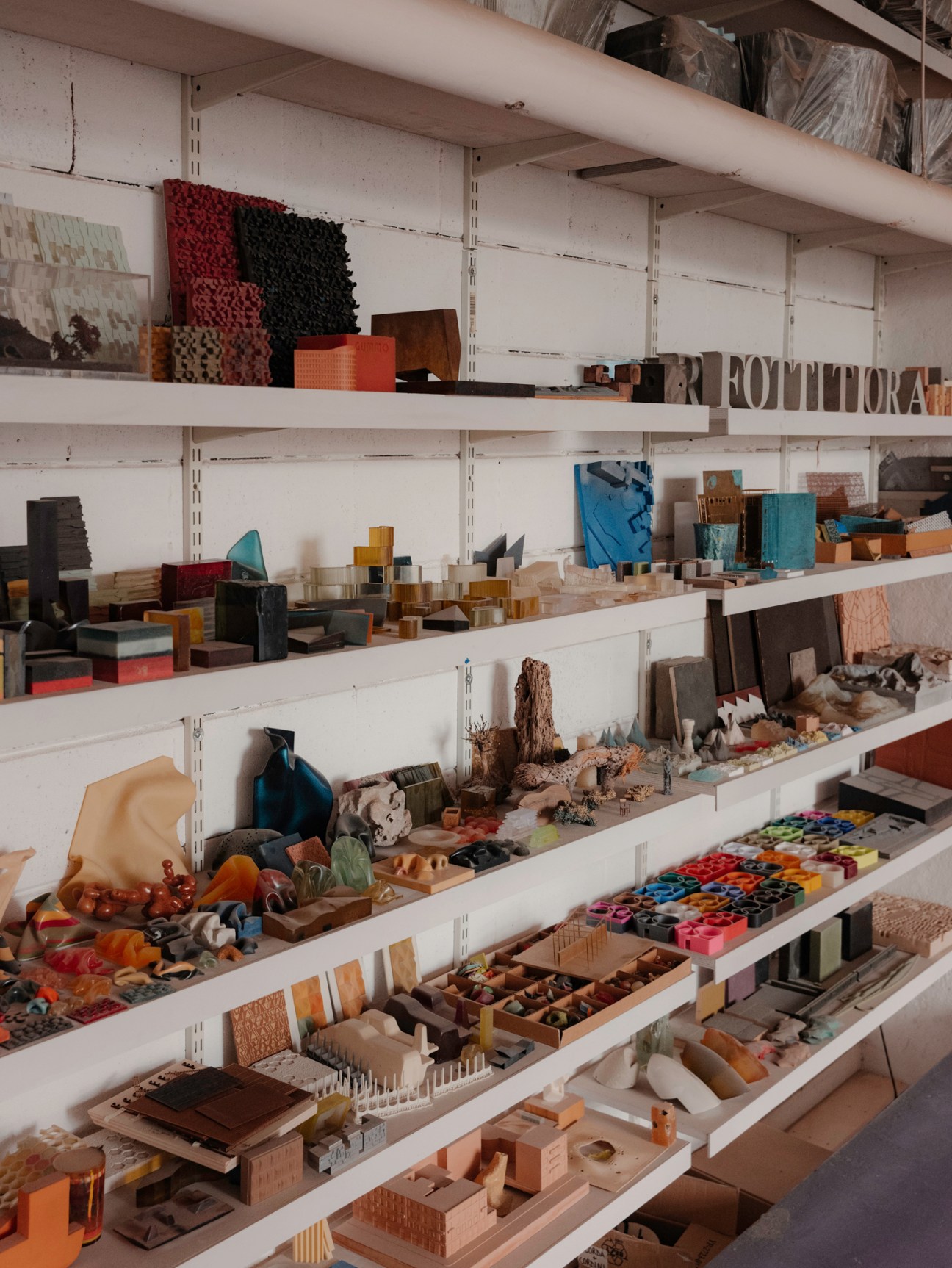
With the rise of photorealistic architectural renders, one might have thought that the need for physical model-making had fallen by the wayside. But, judging by the behaviour of visitors at the Rome workshop of Marco Galofaro, this isn’t the case: here guests find it hard to resist the urge to pick up one of the model-maker’s miniature buildings. “Go ahead,” the bespectacled Galofaro tells Monocle, as a smile breaks out on his face. “It’s a sign that we are doing things right if people’s first instinct is to want to touch the piece.”
Trained as an architect, with stints working at the studios of Peter Eisenman in New York and Massimiliano Fuksas in Rome, Galofaro decided that he preferred working with his hands to drawing up blueprints. In 2002 he set up Modelab to collaborate with architectural firms and artists in need of well-made mock-ups of their designs to impress clients. “A model is the first time that an idea takes physical form so you want to ensure people are engaged with its design,” says Galofaro, as he reaches for a wooden maquette of a tower designed by Jean Nouvel. The model-maker typically uses a different colour scheme to the one requested in the plans to better highlight forms and details.
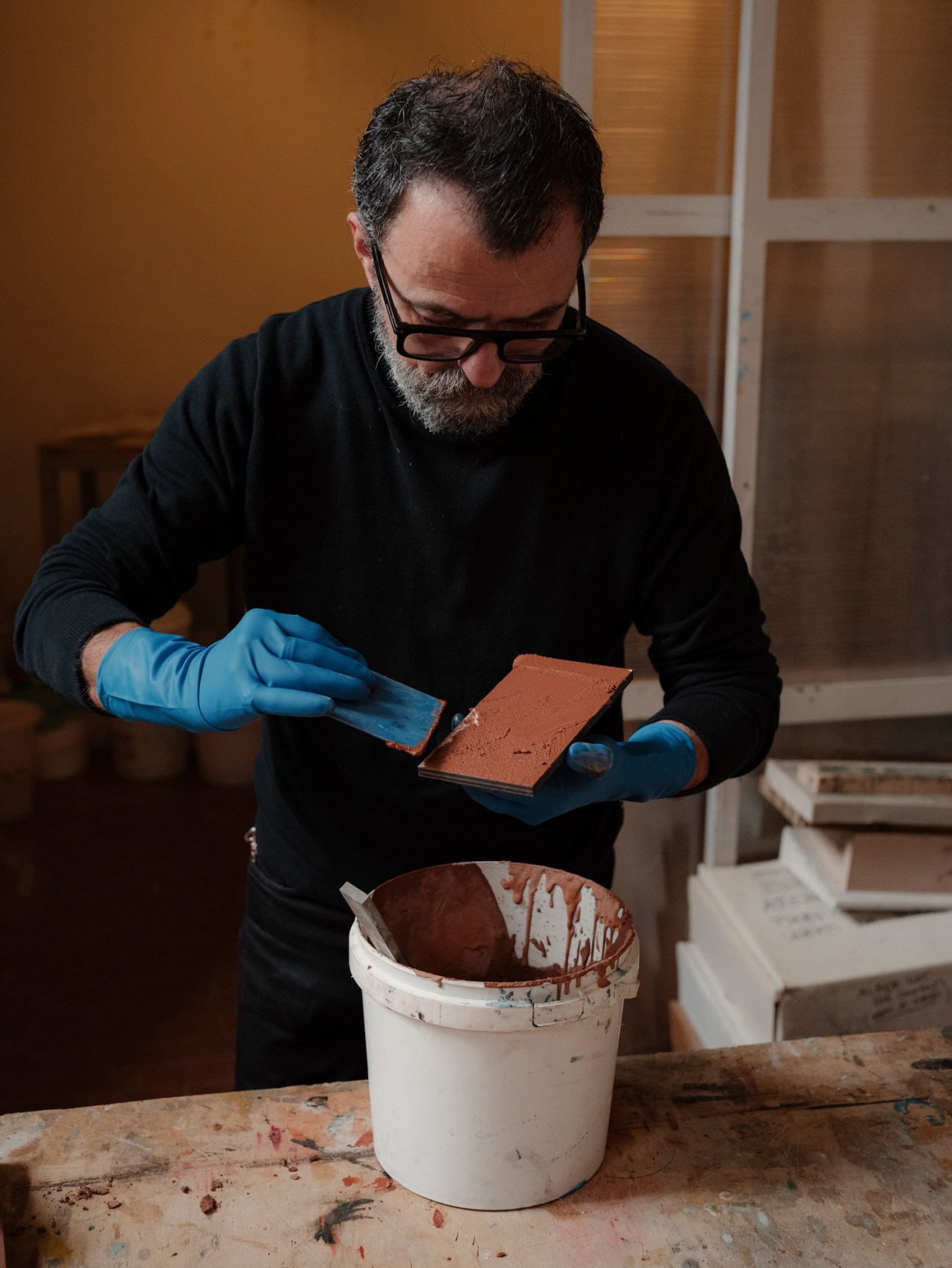
Models are made using a range of different materials, spanning hand-cut mdf boards to resin-based 3D-printed objects but the human touch is never lost in the process. “Too often the plasticity of models gets in the way,” he says. “You need to give them warmth and depth.” He demonstrates by reaching for a thin, flat brush and applying liquid bitumen to wood to give it an aged effect before reaching for jars of sand and earth that he has collected to show how he makes terrain and roads on models.
When monocle visits, Galofaro is completing a model of a Riyadh housing project. To finish the landscaping, he adds tiny packets of glycerine-preserved foliage bought from a supplier in Puglia who caters to clients making nativity scenes. His meticulous approach has earned him important commissions, including an ongoing collaboration with Lebanese architect Lina Ghotmeh. One fan is Chilean artist Alfredo Jaar, whose site-specific installation for the 2013 Venice Art Biennale was built by Galofaro. “If you can dream it,” said Jaar of the collaboration, “Galofaro will make it real.”
Supreme ruler
South Korea
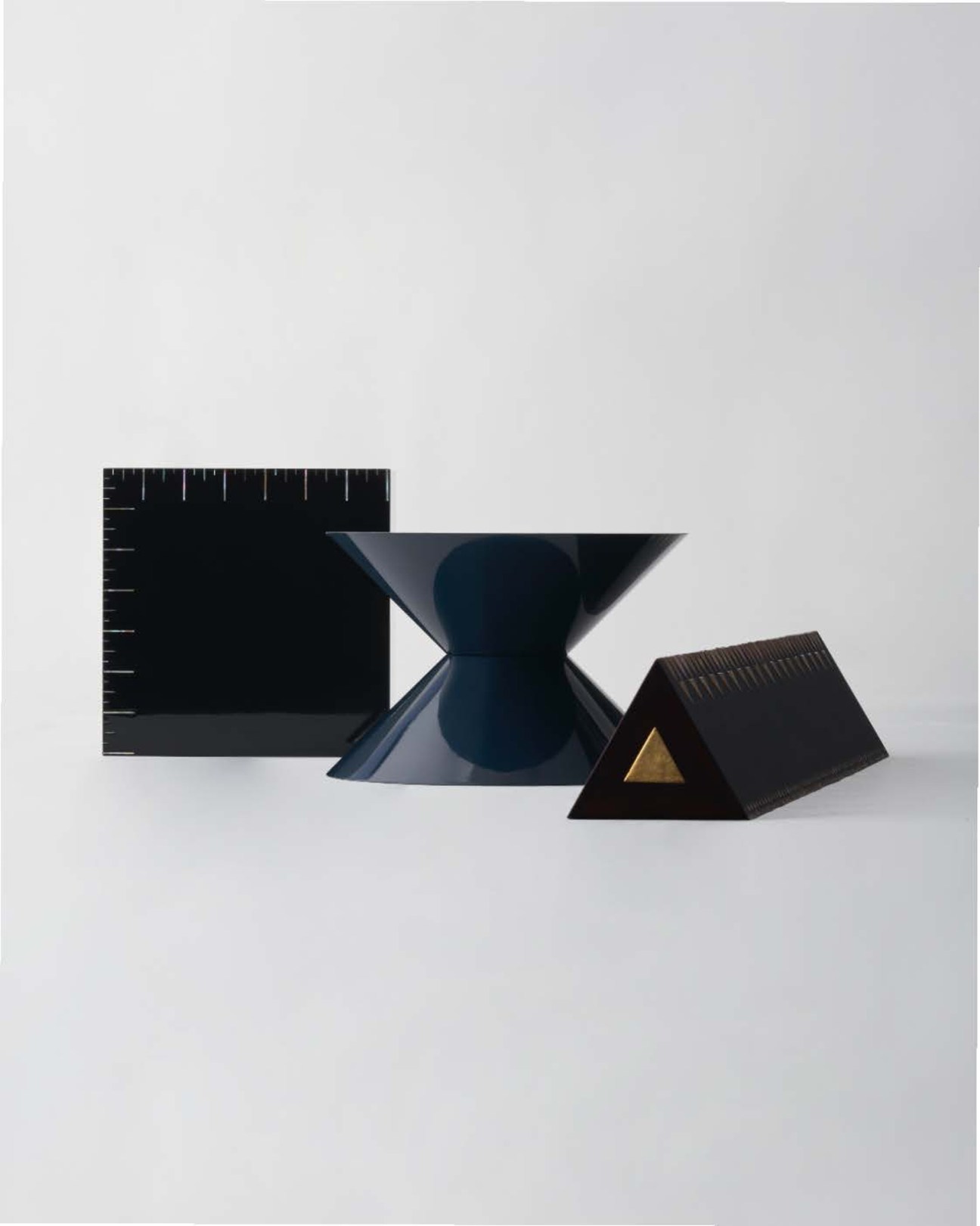
Government-backed promotion of art and design is key to the preservation of many traditional, less commercially lucrative means of production. It’s work to which the Korea Craft and Design Foundation (KCDF)is dedicated. Case in point: its recent Shift Craft exhibition in Milan, which showcased objects made by 20 Korean creatives.
The selected cohort provided contemporary takes on crafts including ceramics, metalwork, woodwork, mother-of-pearl and woodburning. Monocle’s pick of the bunch is a series of rulers by Sungyoul Park. The Daejeon-based artisan, who was a finalist in the Loewe Craft Prize and specialises in the Korean ottchil lacquer technique, made three lacquered wooden rulers finished with mother-of-pearl and gold leaf. It’s work that neatly blends art and design, and shows the potential for traditional crafts to be applied to the making of modern items.
“In the same way that mankind formed unique cultures in different environments, it also developed unique ways of creating with regionality and cultural characteristics,” says Shift Craft art director, Byung-jun Koo. “This work underlines Korea’s unique sense of beauty in its diverse permutations.” And it might just point to the future of craft in the country too.
Images: Korea Craft & Design Foundation, Alamy